Market Overview
| Study Period | 2022 - 2032 |
|---|---|
| Forecast Data Period | 2027 - 2032 |
| Base Year Market Size (2026) | USD 1.30 Billion |
| Market Size (2027) | USD 1.36 Billion |
| Market Size (2032) | USD 1.67 Billion |
| Growth Rate (2027 - 2032) | 4.19 % |
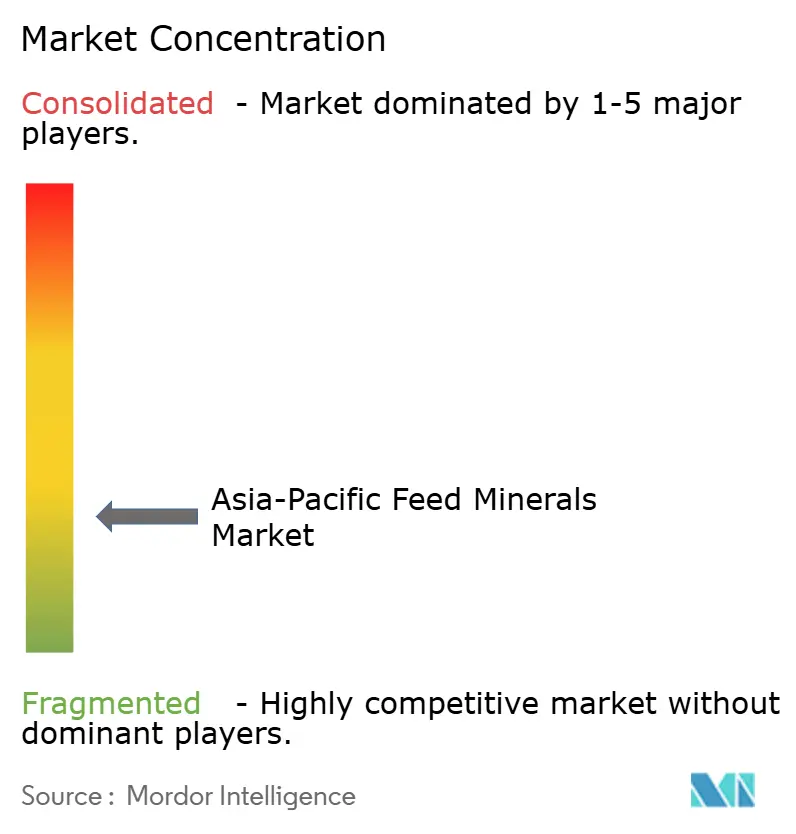
| Market Concentration | Low |
Major Players *Disclaimer: Major Players sorted in no particular order Image © Mordor Intelligence. Reuse requires attribution under CC BY 4.0. | |
Asia-Pacific Feed Minerals Market Analysis by Mordor Intelligence
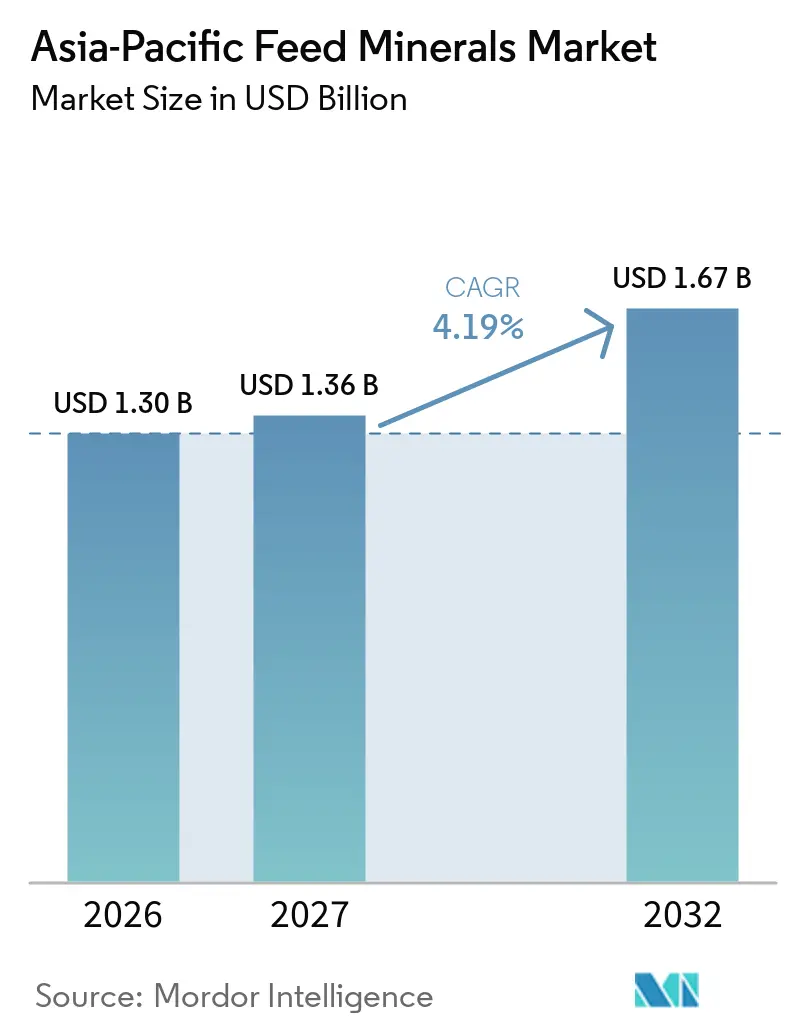
The Asia-Pacific feed minerals market size was valued at USD 1.30 billion in 2026 and is projected to grow from USD 1.36 billion in 2027 to USD 1.67 billion by 2032, at a CAGR of 4.19% during the forecast period 2027 to 2032. The market is supported by expanding commercial livestock production, increasing formal feed procurement, and higher use of species-specific mineral blends. Poultry, dairy, and aquaculture producers increasingly require consistent mineral inputs as production systems grow larger and more controlled. Feed manufacturers are also adapting to stricter regulations on residues, product safety, and mineral discharge across several countries in the region. These changes favor suppliers that can provide validated products, reliable local service, and compliance documentation, while making it more difficult for providers that rely solely on low prices or generic product positioning in individual national markets. The market also presents opportunities for specialized premix providers, as many feed mills continue to operate with decentralized purchasing and variable technical capabilities.
Key Report Takeaways
- By sub additive, macrominerals held an 87.9% share of the Asia-Pacific feed minerals market in 2026 and are forecast to grow at a CAGR of 4.3% from 2027 to 2032.
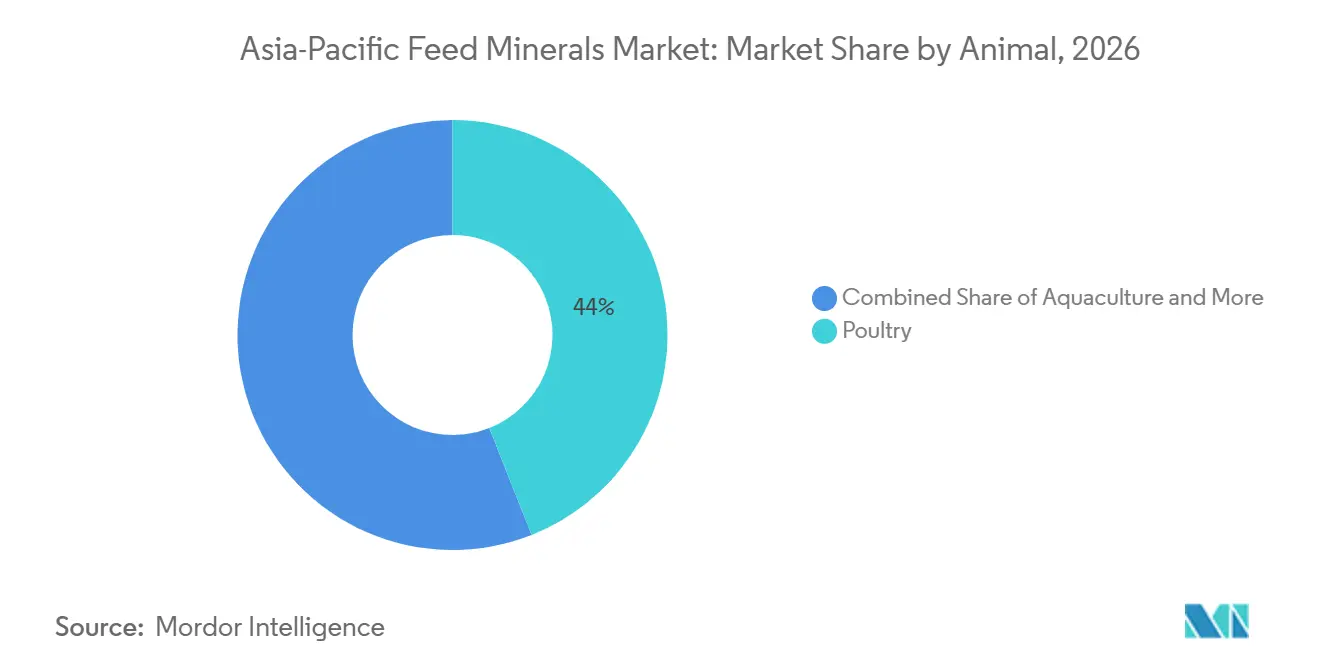
- By animal, poultry was the largest segment and held 44.0% of the Asia-Pacific feed minerals market size in 2026, while aquaculture is the fastest-growing segment and is forecast to expand at a 5.1% CAGR between 2027 and 2032.
- By geography, China was the largest country and held 40.1% of the market share in 2026, while Japan is forecast to grow at a CAGR of 5.2% from 2027 to 2032.
Note: Market numbers in this report are based on Mordor Intelligence's proprietary estimation framework, which combines nine months of actuals with Q4 projections for base year 2026.
Asia-Pacific Feed Minerals Market Trends and Insights
Drivers Impact Analysis*
| Driver | (~) % Impact on CAGR Forecast | Geographic Relevance | Impact Timeline |
|---|---|---|---|
| Expanding Commercial Poultry and Aquaculture Production | +1.4% | China, Vietnam, Indonesia, India | Short term (≤ 2 years) |
| Dairy Productivity and Mineral Deficiency Correction | +0.7% | India, Southeast Asia, Australia | Medium term (2-4 years) |
| Feed Ingredient Authorization and Quality Compliance Requirements | +0.8% | China, Japan, Vietnam, South Korea | Medium term (2-4 years) |
| Organic and Chelated Trace Mineral Adoption | +0.9% | Major Asia-Pacific markets | Long term (≥ 4 years) |
| Mobile Precision Dosing Across Fragmented Feed Mills | +0.5% | China, India, Indonesia, Vietnam | Medium term (2-4 years) |
| Halal and Antibiotic-Free Certification Demand | +0.4% | Indonesia, Malaysia, Philippines, Thailand | Medium term (2-4 years) |
| Source: Mordor Intelligence | |||
Expanding Commercial Poultry and Aquaculture Production
Expanding commercial poultry and aquaculture production is supporting demand for feed minerals across the Asia-Pacific region. According to the Food and Agriculture Organization of the United Nations (FAO) in its State of World Fisheries and Aquaculture 2026 report, Asia produced 130 million metric tons of aquatic animals through aquaculture in 2024, accounting for the majority of global farmed aquatic animal production[1]. The expansion of intensive poultry farming and aquaculture increases the need for balanced feed formulations containing essential minerals such as calcium, phosphorus, zinc, manganese, and selenium to support skeletal development, growth, reproduction, and overall animal health. Commercial broiler, layer, and aquaculture operations require consistent nutrient specifications across production cycles, encouraging the use of standardized mineral premixes and species-specific formulations. Export-oriented poultry and shrimp producers also benefit from reliable feed quality and documented formulation practices to support production consistency and meet buyer requirements. Consequently, feed mineral suppliers offering tailored formulations, reliable product quality, and technical support are positioned to benefit from the continued development of commercial animal production across Asia-Pacific.
Dairy Productivity and Mineral Deficiency Correction
Dairy productivity improvement and the correction of mineral deficiencies support demand for specialized feed mineral formulations across Asia-Pacific, particularly in India. According to the National Dairy Development Board (NDDB), variations in the mineral content of feed and fodder across regions necessitate area-specific mineral mixtures rather than a single standardized formulation. NDDB has completed mineral mapping across multiple states and regions and developed corresponding formulations to address local nutritional requirements. These formulations help dairy producers address deficiencies in essential minerals, including calcium, phosphorus, copper, zinc, and manganese, which are important for animal growth, reproduction, health, and milk production. As dairy operations seek to improve feed utilization and productivity, demand for tailored mineral mixtures and species-specific nutritional solutions can increase. This creates opportunities for feed mineral suppliers to differentiate through regionally adapted formulations, technical guidance on supplementation, and support for balanced dairy rations.
Feed Ingredient Authorization and Quality Compliance Requirements
Feed ingredient regulations across Asia-Pacific are increasing the importance of product specifications, ingredient authorization, and quality documentation in the feed minerals market. According to the United States Department of Agriculture Foreign Agricultural Service (USDA FAS) in July 2026, China issued a revised Feed Ingredients Catalog that added 83 ingredients, revised 173 existing ingredients, and introduced management requirements for fermented feed[2]. In Japan, the Ministry of Agriculture, Forestry and Fisheries (MAFF) maintains specifications and standards governing feed and feed additives, including requirements relating to composition, manufacturing, storage, testing, contaminants, and pesticide residues. These regulatory frameworks increase the importance of verifying ingredient eligibility and ensuring that mineral products meet applicable quality and safety requirements. Feed manufacturers consequently need reliable product specifications, traceability records, and regulatory documentation when selecting mineral sources and incorporating them into commercial formulations. Suppliers that provide consistent product quality and technical compliance support can strengthen relationships with feed manufacturers, while differences in national requirements may increase the complexity of supplying products across multiple Asia-Pacific markets.
Organic and Chelated Trace Mineral Adoption
The adoption of organic and chelated trace minerals is supporting demand for specialized feed mineral formulations, particularly in intensive poultry production, where mineral utilization and reduced excretion are important considerations. According to a study published in Animals in February 2025, supplementation with mineral methionine hydroxyl analogue chelates (MMHACs) of zinc, copper, and manganese helped maintain litter quality and broiler welfare while reducing the excretion of zinc and manganese and potentially lowering the environmental impacts of poultry production. The study also found that copper excretion was higher in birds receiving the inorganic trace mineral treatment containing tribasic copper chloride, highlighting the importance of mineral source and formulation in managing excretion[3]. These findings highlight the potential of chelated minerals to improve mineral utilization and support more sustainable poultry production. In China, the Ministry of Agriculture and Rural Affairs approved six new feed additive varieties and added two feed additives and one feed ingredient to its catalogs in December 2024, as reported by the United States Department of Agriculture Foreign Agricultural Service in January 2025. As commercial livestock producers increasingly focus on mineral utilization, feed efficiency, and environmental management, suppliers offering validated organic mineral formulations and technical guidance can strengthen their position in the Asia-Pacific feed minerals market.
Restraints Impact Analysis*
| Restraint | (~) % Impact on CAGR Forecast | Geographic Relevance | Impact Timeline |
|---|---|---|---|
| Volatile Mineral Prices and Import Dependence | -0.6% | Vietnam, Indonesia, Philippines, and other import-dependent markets | Short term (≤ 2 years) |
| Phosphorus and Heavy-Metal Discharge Regulations | -0.5% | Asia-Pacific | Short term (≤ 2 years) |
| Quality Variance Across Decentralized Premix Mills | -0.4% | India, Indonesia, Vietnam, Philippines | Medium term (2-4 years) |
| Phytate-Rich Rations and Mineral Antagonism | -0.3% | India, Indonesia, Vietnam, Philippines | Medium term (2-4 years) |
| Source: Mordor Intelligence | |||
Volatile Mineral Prices and Import Dependence
Dependence on imported mineral inputs and exposure to international commodity-price fluctuations can constrain growth in the Asia-Pacific feed minerals market. Feed manufacturers that rely on imported phosphate-based ingredients and trace minerals such as zinc, copper, and selenium may face higher procurement costs when global prices, freight charges, or exchange rates fluctuate. For feed manufacturers in import-dependent Asia-Pacific markets, disruptions in the supply of mineral raw materials can increase sourcing costs and create uncertainty in the availability of essential feed ingredients, potentially affecting formulation costs and production planning. When mineral input costs rise, feed manufacturers operating on narrow margins may prioritize lower-cost formulations or delay switching to specialized products, including organic and chelated minerals, if the anticipated performance benefits do not justify the additional expense. Limited inventory capacity can further expose smaller feed mills to supply disruptions and sudden price increases. These cost pressures can make procurement less predictable and restrict the adoption of higher-value mineral formulations, particularly among price-sensitive livestock and aquaculture producers.
Quality Variance Across Decentralized Premix Mills
Variations in manufacturing practices and quality-control capabilities across decentralized premix mills can constrain the growth of the Asia-Pacific feed minerals market. Inconsistent raw-material testing, inadequate mineral potency verification, uneven mixing, and improper storage can affect the uniformity and stability of finished premixes, making it difficult for feed manufacturers to maintain consistent nutrient concentrations across production batches. Smaller feed mills and cooperatives may have limited access to laboratory testing and technical resources to verify product specifications, increasing their reliance on supplier documentation and quality-assurance procedures. These challenges can undermine confidence in premium mineral formulations, including chelated trace minerals, when inconsistent results arise from inadequate handling or application rather than the formulation itself. Although certification and traceability frameworks can improve documentation and supply-chain oversight, they do not replace laboratory analysis, potency testing, or appropriate storage and handling controls. Consequently, differences in quality-assurance capabilities can increase verification costs, complicate supplier selection, and slow the adoption of specialized feed mineral products. Greater access to routine testing, standardized manufacturing procedures, storage guidance, and technical support is therefore important for improving product consistency and building buyer confidence across the regional market.
*Our forecasts treat driver/restraint impacts as directional, not additive. The impact forecasts reflect baseline growth, mix effects, and variable interactions.
Segment Analysis
By Sub Additive: Macrominerals Hold the Largest Position While Microminerals Support Product Innovation
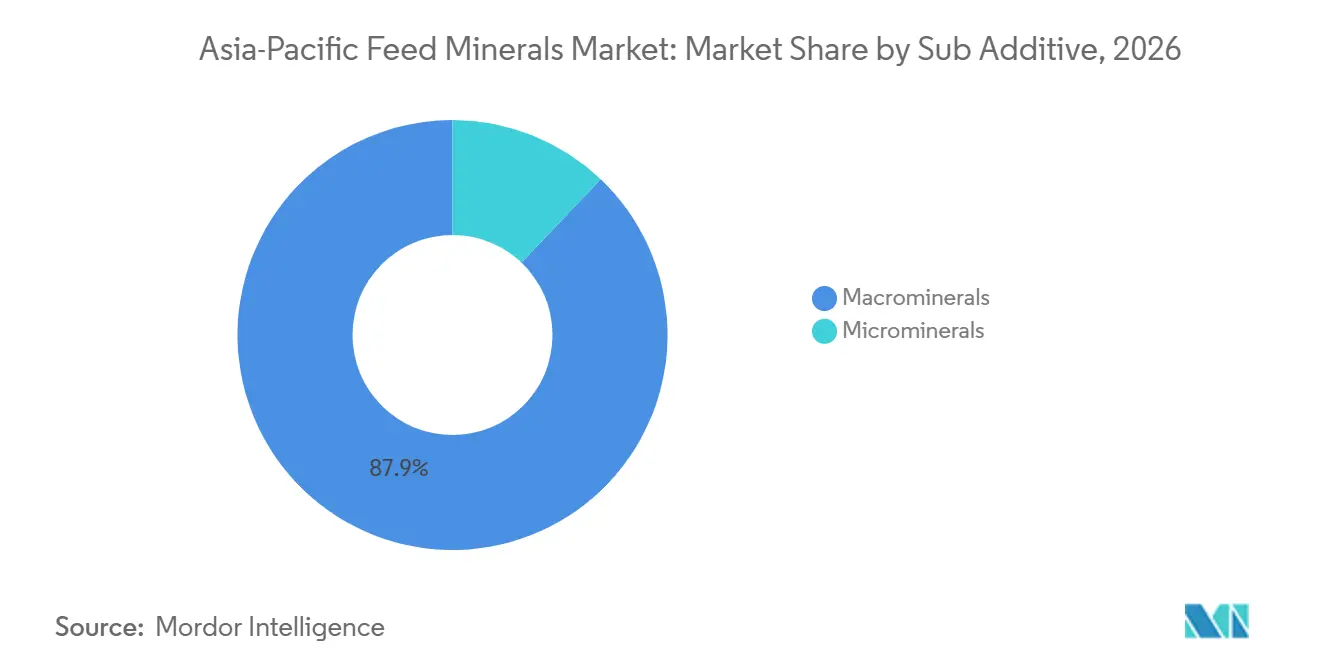
Macrominerals accounted for 87.9% of the Asia-Pacific feed minerals market share in 2026, making them the largest sub additive segment. Their leading position is supported by the essential role of calcium, phosphorus, sodium, and other macrominerals in livestock growth, bone development, reproductive performance, and metabolic functions. The expansion of commercial poultry, dairy, and aquaculture production is sustaining demand for mineral supplementation in compound feed. Increasing emphasis on feed efficiency and balanced animal nutrition is further supporting the use of macrominerals to address nutritional deficiencies and maintain productivity across livestock systems. Feed manufacturers are also focusing on optimized mineral inclusion levels and balanced formulations to meet species-specific nutritional requirements while managing feed costs.
Macrominerals are also forecast to be the fastest-growing sub additive segment, expanding at a 4.3% CAGR between 2027 and 2032. Growth is supported by rising demand for compound feed, increasing livestock production, and greater attention to mineral supplementation in intensive farming systems. Expanding commercial dairy and poultry operations are encouraging feed producers to incorporate balanced mineral formulations to support animal health, growth, and productivity. Improvements in feed formulation and nutritional management are also creating opportunities for tailored mineral blends suited to different species and production stages. However, fluctuations in the prices of mineral raw materials and the need to balance supplementation costs with productivity benefits may influence purchasing decisions among feed manufacturers and livestock producers.

By Animal: Poultry Leads Demand While Aquaculture Grows Fastest
Poultry accounted for 44.0% of the Asia-Pacific feed minerals market share in 2026, making it the largest animal segment. Its leading position is supported by large commercial broiler and layer operations across China, Indonesia, Vietnam, and India, where formula-based feeding and standardized premix procurement help maintain consistent production performance. Layer operations require adequate calcium supplementation to maintain eggshell strength and reduce breakage losses, while broiler producers focus on mineral balance to support growth, feed efficiency, and skeletal development. The expansion of commercial poultry production in Malaysia and the Philippines is further supporting demand for standardized mineral premixes. Swine production also requires specialized mineral formulations at critical stages, particularly for weaned piglets and sows, where nutritional management influences growth, reproductive performance, and animal health. These requirements are encouraging suppliers to develop formulations tailored to species-specific nutritional needs and production cycles.
Aquaculture is the fastest-growing animal segment, forecast to expand at a 5.1% CAGR between 2027 and 2032. Its growth is supported by intensifying shrimp production in Vietnam and Indonesia and freshwater fish farming in China, where higher production intensity is increasing the need for species-specific feed formulations. Fish and shrimp require mineral supplementation suited to their physiological needs, feed composition, and water-based production environments. Regulatory developments are also expanding the scope of approved mineral ingredients in aquafeed. In July 2025, China's Ministry of Agriculture and Rural Affairs (MARA) expanded the permitted use of L-selenomethionine to freshwater fish, widening its authorized application in aquaculture feed. Meanwhile, ruminant nutrition continues to require regionally adapted mineral supplementation, as the National Dairy Development Board's area-specific mineral mixture formulations account for differences in agro-climatic conditions and local feeding practices. These developments create opportunities for feed mineral suppliers to develop targeted formulations that address species-specific requirements, regional feed conditions, and the nutritional demands of intensive aquaculture systems.
Geography Analysis
China accounted for 40.1% of the Asia-Pacific feed minerals market share in 2026, making it the largest country market. Its leading position is supported by large-scale commercial livestock production and an established compound feed manufacturing industry. Vertically integrated feed operations enable major producers to standardize mineral procurement across production networks while maintaining consistent quality, traceability, and animal performance. Regulatory developments are also shaping ingredient selection, as China's Ministry of Agriculture and Rural Affairs revised the Feed Ingredients Catalog in 2026, adding 83 ingredients and revising 173 existing entries, according to the United States Department of Agriculture Foreign Agricultural Service (USDA FAS). These updates increase the importance of regulatory compliance and approved ingredient sourcing for feed manufacturers. In addition, environmental management priorities create opportunities for mineral formulations that improve nutrient utilization and help reduce mineral excretion in intensive livestock systems.
Japan is forecast to be the fastest-growing country market, with a projected CAGR of 5.2% between 2027 and 2032. Growth is supported by greater emphasis on precision nutrition, consistent animal productivity, and quality-assured feed inputs. Japan's feed additive specifications and standards establish regulatory requirements for product approval, composition, and quality, encouraging suppliers to maintain compliance and consistent product standards. As livestock producers focus on improving nutrient utilization and feed efficiency, demand for specialized mineral formulations, including organic and chelated trace minerals, may increase. However, suppliers must demonstrate the nutritional and economic benefits of these formulations to encourage adoption among producers while meeting Japan's regulatory requirements.
India's market is supported by its substantial dairy sector and the need for mineral supplementation tailored to regional feeding conditions. The National Dairy Development Board's area-specific mineral mixture formulations recognize differences in mineral requirements across agro-climatic zones, supporting demand for regionally adapted products. Indonesia, Thailand, and Vietnam offer further opportunities through commercial feed production and export-oriented poultry and aquaculture industries, while halal supply-chain requirements influence feed sourcing and assurance practices in Indonesia and Malaysia. In the Philippines, the commercialization of broiler production supports demand for standardized premixes. Australia presents opportunities in aquaculture and ruminant nutrition, while South Korea's feed quality and residue-control requirements reinforce the importance of compliant, traceable inputs. Cambodia, Myanmar, and Sri Lanka represent longer-term growth opportunities as commercial poultry and aquaculture operations expand and demand develops for cost-effective mineral formulations with more consistent quality.
Competitive Landscape
The Asia-Pacific feed minerals market was fragmented in 2026, with Nutreco N.V. (SHV Holdings N.V.), Archer-Daniels-Midland Company, DSM-Firmenich AG, Alltech, Inc., and Yara International ASA as major players. Competition is distributed across multinational animal nutrition companies, regional mineral suppliers, local distributors, and specialized premix manufacturers. Major players compete through broad mineral portfolios, trace mineral technologies, premix solutions, nutritional expertise, and technical services, while regional providers benefit from established customer relationships and familiarity with local feeding practices. Competition varies across macrominerals, microminerals, and formulated premixes, as commercial poultry integrators, dairy cooperatives, and aquaculture producers have different nutritional requirements and procurement priorities. This fragmented structure sustains competition across product pricing, formulation quality, regulatory compliance, distribution reach, and technical support.
Competitive differentiation is increasingly shaped by application-specific formulations, research-backed nutritional solutions, technical collaboration, and sustainability assessment. DSM-Firmenich and Zenkei Company Limited signed a memorandum of understanding in March 2025 to apply the Sustell life cycle assessment platform to Japanese feed and egg production, linking animal nutrition with environmental performance measurement. In September 2025, Trouw Nutrition Indonesia strengthened its collaboration with PT SHS International, appointing the company as the exclusive distributor of Selko Optimin and Selko IntelliBond products. These developments illustrate how investments in innovation infrastructure, sustainability tools, and localized distribution can strengthen supplier engagement.
The market also offers opportunities for players that address species-specific mineral requirements, improve feed efficiency, and provide reliable technical support across diverse production systems. Poultry producers require consistent mineral supplementation to support growth, skeletal development, and eggshell quality, while dairy operations need formulations adapted to regional feeding conditions. Aquaculture producers require products suited to individual species and intensive production environments. Players that combine consistent product quality with formulation expertise, local regulatory knowledge, and responsive distributor networks can strengthen their positions across these applications. Regional manufacturers can compete with multinational players by offering cost-effective products and customer-specific solutions, while global players can leverage research capabilities, broader portfolios, and technical resources. Consequently, competitive positioning in the Asia-Pacific feed minerals market depends on a player's ability to combine nutritional efficacy, regulatory compliance, product reliability, and localized service rather than relying solely on scale or price.
Asia-Pacific Feed Minerals Industry Leaders
-
Nutreco N.V. (SHV Holdings N.V.)
-
Archer-Daniels-Midland Company
-
DSM-Firmenich AG
-
Alltech, Inc.
-
Yara International ASA
- *Disclaimer: Major Players sorted in no particular order
Recent Industry Developments
- July 2026: China's national standards GB 7300.307-2025 for zinc glycinate complex and GB 7300.308-2025 for zinc threoninate chelate took effect on 1 July 2026. Published in June 2025, the standards specify requirements for these mineral-based feed additives and establish product-specific technical benchmarks for the Chinese feed industry.
- September 2025: Trouw Nutrition Indonesia appointed PT SHS International as the exclusive distributor of Selko IntelliBond hydroxy trace minerals and Selko Optimin organic trace minerals in Indonesia. The products cover trace minerals including copper, zinc, manganese, iron, and selenium, expanding local distribution access for mineral supplementation in livestock nutrition.
- July 2025: Orffa entered into a strategic partnership with Co-Innova Animal Nutrition Technology (Shanghai) Co., Ltd. to expand the distribution of its feed additive products in China. The collaboration includes Excential Selenium 4000, a highly bioavailable selenium source intended to support livestock immunity, fertility, and oxidative stability.
Asia-Pacific Feed Minerals Market Report Scope
Feed minerals are inorganic nutrients added to animal feed to support growth, bone development, reproduction, enzyme activity, metabolism, and overall animal health. They are classified into macrominerals, such as calcium, phosphorus, magnesium, sodium, potassium, and sulfur, which animals require in relatively large quantities, and microminerals, such as zinc, iron, copper, manganese, selenium, iodine, and cobalt, which are needed in smaller amounts. Feed minerals are supplied through mineral salts, chelated minerals, and premixes formulated to meet the nutritional requirements of different animal species and production stages.
The Asia-Pacific feed minerals market is segmented by sub-additive (Macrominerals and Microminerals), by animal (Aquaculture, Poultry, Ruminants, Swine, and Other Animals), and by geography (Australia, China, India, Indonesia, Japan, Philippines, South Korea, Thailand, Vietnam, and Rest of Asia-Pacific). Market forecasts are provided in terms of value (USD) and volume (metric tons) for all segments.
By Sub Additive
| Macrominerals |
| Microminerals |
By Animal
| Aquaculture | Fish |
| Shrimp | |
| Other Aquaculture Species | |
| Poultry | Broiler |
| Layer | |
| Other Poultry Birds | |
| Ruminants | Beef Cattle |
| Dairy Cattle | |
| Other Ruminants | |
| Swine | |
| Other Animals |
By Geography
| Asia-Pacific | China |
| India | |
| Indonesia | |
| Japan | |
| Philippines | |
| South Korea | |
| Thailand | |
| Vietnam | |
| Australia | |
| Rest of Asia-Pacific |
| By Sub Additive | Macrominerals | |
| Microminerals | ||
| By Animal | Aquaculture | Fish |
| Shrimp | ||
| Other Aquaculture Species | ||
| Poultry | Broiler | |
| Layer | ||
| Other Poultry Birds | ||
| Ruminants | Beef Cattle | |
| Dairy Cattle | ||
| Other Ruminants | ||
| Swine | ||
| Other Animals | ||
| By Geography | Asia-Pacific | China |
| India | ||
| Indonesia | ||
| Japan | ||
| Philippines | ||
| South Korea | ||
| Thailand | ||
| Vietnam | ||
| Australia | ||
| Rest of Asia-Pacific | ||
Market Definition
- FUNCTIONS - For the study, feed additives are considered to be commercially manufactured products that are used to enhance characteristics such as weight gain, feed conversion ratio, and feed intake when fed in appropriate proportions.
- RESELLERS - Companies engaged in reselling feed additives without value addition have been excluded from the market scope, to avoid double counting.
- END CONSUMERS - Compound feed manufacturers are considered to be end-consumers in the market studied. The scope excludes farmers buying feed additives to be used directly as supplements or premixes.
- INTERNAL COMPANY CONSUMPTION - Companies engaged in the production of compound feed as well as the manufacturing of feed additives are part of the study. However, while estimating the market sizes, the internal consumption of feed additives by such companies has been excluded.
| Keyword | Definition |
|---|---|
| Feed additives | Feed additives are products used in animal nutrition for purposes of improving the quality of feed and the quality of food from animal origin, or to improve the animals’ performance and health. |
| Probiotics | Probiotics are microorganisms introduced into the body for their beneficial qualities. (It maintains or restores beneficial bacteria to the gut). |
| Antibiotics | Antibiotic is a drug that is specifically used to inhibit the growth of bacteria. |
| Prebiotics | A non-digestible food ingredient that promotes the growth of beneficial microorganisms in the intestines. |
| Antioxidants | Antioxidants are compounds that inhibit oxidation, a chemical reaction that produces free radicals. |
| Phytogenics | Phytogenics are a group of natural and non-antibiotic growth promoters derived from herbs, spices, essential oils, and oleoresins. |
| Vitamins | Vitamins are organic compounds, which are required for normal growth and maintenance of the body. |
| Metabolism | A chemical process that occurs within a living organism in order to maintain life. |
| Amino acids | Amino acids are the building blocks of proteins and play an important role in metabolic pathways. |
| Enzymes | Enzyme is a substance that acts as a catalyst to bring about a specific biochemical reaction. |
| Anti-microbial resistance | The ability of a microorganism to resist the effects of an antimicrobial agent. |
| Anti-microbial | Destroying or inhibiting the growth of microorganisms. |
| Osmotic balance | It is a process of maintaining salt and water balance across membranes within the body's fluids. |
| Bacteriocin | Bacteriocins are the toxins produced by bacteria to inhibit the growth of similar or closely related bacterial strains. |
| Biohydrogenation | It is a process that occurs in the rumen of an animal in which bacteria convert unsaturated fatty acids (USFA) to saturated fatty acids (SFA). |
| Oxidative rancidity | It is a reaction of fatty acids with oxygen, which generally causes unpleasant odors in animals. To prevent these, antioxidants were added. |
| Mycotoxicosis | Any condition or disease caused by fungal toxins, mainly due to contamination of animal feed with mycotoxins. |
| Mycotoxins | Mycotoxins are toxin compounds that are naturally produced by certain types of molds (fungi). |
| Feed Probiotics | Microbial feed supplements positively affect gastrointestinal microbial balance. |
| Probiotic yeast | Feed yeast (single-cell fungi) and other fungi used as probiotics. |
| Feed enzymes | They are used to supplement digestive enzymes in an animal’s stomach to break down food. Enzymes also ensure that meat and egg production is improved. |
| Mycotoxin detoxifiers | They are used to prevent fungal growth and to stop any harmful mold from being absorbed in the gut and blood. |
| Feed antibiotics | They are used both for the prevention and treatment of diseases but also for rapid growth and development. |
| Feed antioxidants | They are used to protect the deterioration of other feed nutrients in the feed such as fats, vitamins, pigments, and flavoring agents, thus providing nutrient security to the animals. |
| Feed phytogenics | Phytogenics are natural substances, added to livestock feed to promote growth, aid in digestion, and act as anti-microbial agents. |
| Feed vitamins | They are used to maintain the normal physiological function and normal growth and development of animals. |
| Feed flavors and sweetners | These flavors and sweeteners help to mask tastes and odors during changes in additives or medications and make them ideal for animal diets undergoing transition. |
| Feed acidifiers | Animal feed acidifiers are organic acids incorporated into the feed for nutritional or preservative purposes. Acidifiers enhance congestion and microbiological balance in the alimentary and digestive tracts of livestock. |
| Feed minerals | Feed minerals play an important role in the regular dietary requirements of animal feed. |
| Feed binders | Feed binders are the binding agents used in the manufacture of safe animal feed products. It enhances the taste of food and prolongs the storage period of the feed. |
| Key Terms | Abbreviation |
| LSDV | Lumpy Skin Disease Virus |
| ASF | African Swine Fever |
| GPA | Growth Promoter Antibiotics |
| NSP | Non-Starch Polysaccharides |
| PUFA | Polyunsaturated Fatty Acid |
| Afs | Aflatoxins |
| AGP | Antibiotic Growth Promoters |
| FAO | The Food And Agriculture Organization of the United Nations |
| USDA | The United States Department of Agriculture |
Research Methodology
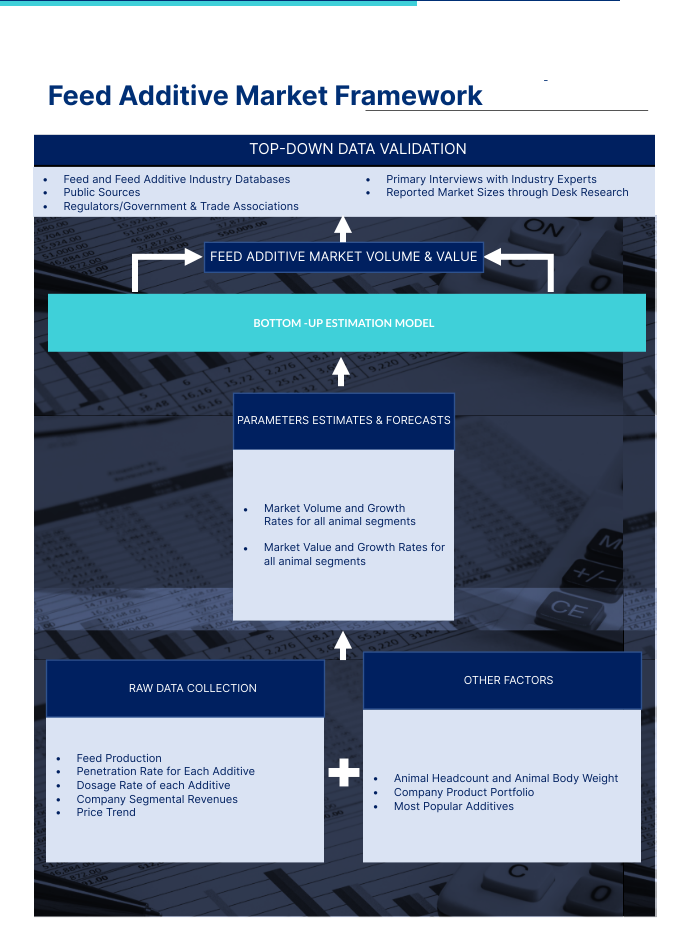
Mordor Intelligence follows a four-step methodology in all our reports.
- Step-1: IDENTIFY KEY VARIABLES: In order to build a robust forecasting methodology, the variables and factors identified in Step-1 are tested against available historical market numbers. Through an iterative process, the variables required for market forecast are set and the model is built on the basis of these variables.
- Step-2: Build a Market Model: Market-size estimations for the forecast years are in nominal terms. Inflation is not a part of the pricing, and the average selling price (ASP) is kept constant throughout the forecast period.
- Step-3: Validate and Finalize: In this important step, all market numbers, variables and analyst calls are validated through an extensive network of primary research experts from the market studied. The respondents are selected across levels and functions to generate a holistic picture of the market studied.
- Step-4: Research Outputs: Syndicated Reports, Custom Consulting Assignments, Databases & Subscription Platforms