
Waste Material Logistics Market Size and Share
| Study Period | 2019 - 2030 |
| Forecast Data Period | 2025 - 2030 |
| Historical Data Period | 2019 - 2023 |
| CAGR | 1.00% |
| Fastest Growing Market | Asia Pacific |
| Largest Market | North America |
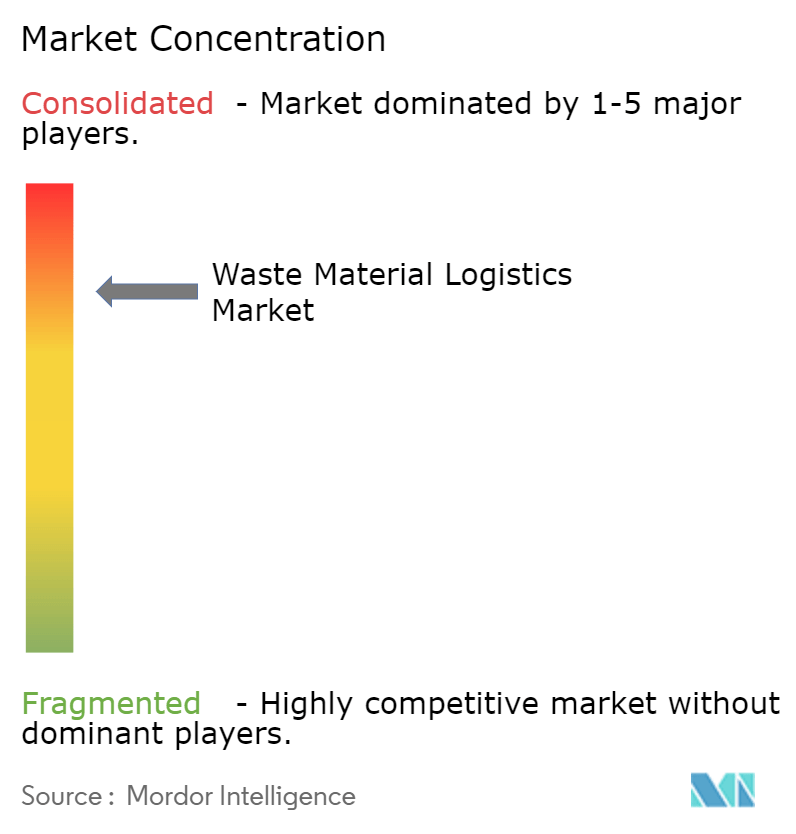
| Market Concentration | High |
Major Players *Disclaimer: Major Players sorted in no particular order |
Waste Material Logistics Market Analysis by Mordor Intelligence
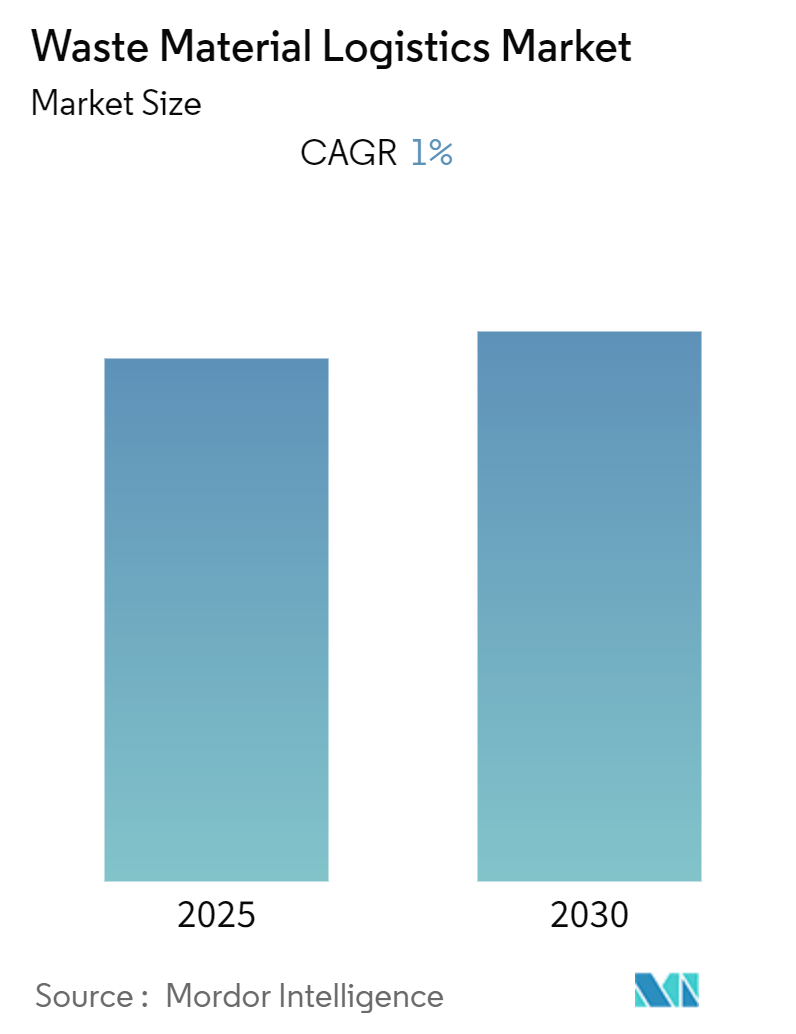
The Waste Material Logistics Market is expected to register a CAGR of 1% during the forecast period.
The waste material logistics sector experienced significant advancements in waste transportation and storage, driven by technological innovations and strategic investments aimed at enhancing efficiency and sustainability. The adoption of smart waste management technologies has transformed waste collection and transportation processes. For instance, the Pello system monitors waste container fill levels in real-time, enabling optimized collection schedules and routes. This reduces unnecessary trips, lowers fuel consumption, and minimizes carbon emissions, fostering a more efficient and environmentally sustainable waste transportation system.
Companies are also prioritizing advancements in waste storage to enhance safety and operational efficiency. The development of advanced containment systems for hazardous waste ensures secure storage, preventing environmental contamination and simplifying transportation to disposal or recycling facilities. These innovations are critical for managing the increasing complexity and volume of waste materials. In April 2024, Sensoneo launched tools designed to automate waste collection across various facilities. Their remote fill-level monitoring tool tracks waste levels in real-time, optimizing collection processes. Additionally, the Smart Waste Management system and collection app streamline operations by enabling drivers to dynamically navigate and collect waste based on the facility's floor plan.
Leading waste management companies are making substantial investments in renewable energy and recycling infrastructure. For example, in February 2024, Republic Services, a major US waste services company, invested approximately USD 500 million in acquisitions. These acquisitions encompass a comprehensive range of services, including recycling, solid waste, special waste, hazardous waste, and field services.
These developments underscore the industry's commitment to adopting innovative technologies and sustainable practices in waste transportation and storage. Such efforts address global waste challenges while minimizing environmental impact.
Global Waste Material Logistics Market Trends and Insights
Expansion of Waste Management and Circular Economy Solutions in Asia-Pacific Region
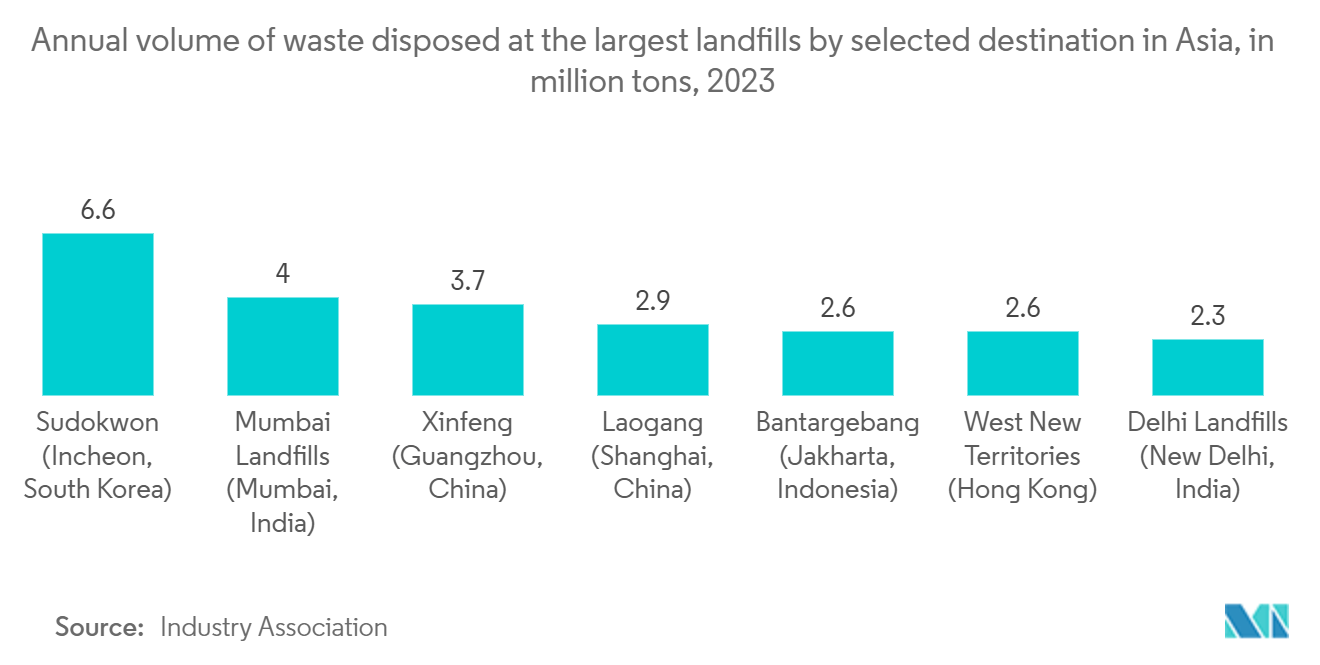
Countries and organizations are adopting sustainable solutions to address growing waste challenges, driving a shift in waste management. The industry is moving from traditional methods to circular economy principles, focusing on resource recovery, recycling, and reducing environmental impact. Global initiatives, partnerships, and grassroots efforts are fostering innovative strategies to cut waste, create economic opportunities, and promote sustainability.
Veolia has positioned itself as a leader in hazardous waste management in China. In September 2024, the company was acknowledged for constructing and operating over 20 hazardous waste treatment projects across 13 provinces, municipalities, and autonomous regions. Veolia's waste-to-energy and landfill operations are critical for managing municipal waste and driving environmental sustainability. This reflects the increasing commitment of major corporations to invest in sustainable waste management solutions, particularly in rapidly industrializing regions.
Similarly, the Bali Provincial Government has entered into a partnership with the Chinese environmental firm CN Weiming, representing a significant advancement in large-scale waste management. This agreement, finalized in September 2024 with a USD 225 million investment, aims to overhaul the island's waste management infrastructure. The collaboration includes the construction of a waste treatment and power plant, utilizing CN Weiming's advanced incineration technology that adheres to China's AAA standards. This project addresses Bali's growing waste challenges and exemplifies the global trend of adopting advanced technologies to resolve environmental issues.
On a localized scale, Kerala’s Haritha Karma Sena (HKS) has introduced a community-driven model for waste management. By engaging local self-governing institutions and women in waste collection, segregation, and recycling, HKS has enhanced grassroots waste management practices. The program converts waste into valuable resources, such as roads and eco-friendly products, showcasing the economic potential of waste management. Additionally, with user fees and waste sales generating over INR 22.43 million (USD 2.6 million), the initiative supports environmental sustainability while fostering sustainable livelihoods. This highlights the critical role of community involvement in developing sustainable waste management systems and aligns with the global transition towards circular economy practices.


Advancements in Plastic Waste Recycling and Processing Technologies
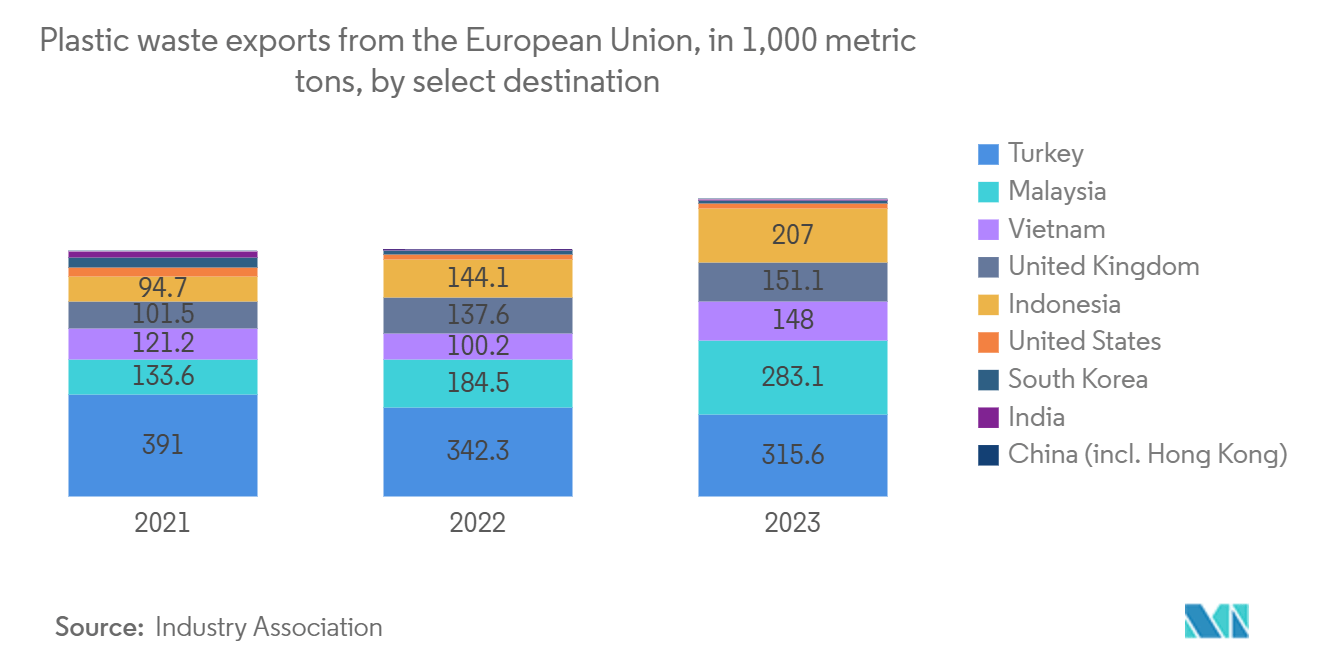
In 2024, the plastic waste recycling and logistics industry is experiencing significant advancements, driven by substantial investments in advanced technologies by key players. Suez, a leading company, has expanded its plastic recycling operations at the Landemont plant in France. With an investment of EUR 30 million (USD 30.9 million), Suez has enhanced the plant’s capacity to recycle agricultural and commercial plastic films, particularly low-density polyethylene (LDPE). This initiative, supported by a EUR 2 million (USD 2.06 million) government grant under the “France 2030” program, demonstrates Suez’s strategic focus on improving recycling technologies and optimizing waste material logistics.
Similarly, Nestlé is advancing global plastic waste management efforts by collaborating in 220 initiatives aimed at strengthening waste collection, sorting, and recycling systems across Europe, Africa, Asia, and North America. This initiative reflects a broader industry trend toward refining waste management logistics, improving collection systems, and fostering a circular economy for plastics.
In a major technological breakthrough, QM Recycled Energy (QMRE) introduced the UK’s first VÍXLA plastic waste-to-oil system at its Kent facility in December 2024. Developed in partnership with Norway's Eagle Technology, the VÍXLA system converts plastic waste into oil, enabling the production of renewable plastic and reducing reliance on fossil-based feedstocks. With an annual processing capacity of 6,600 tonnes, the system produces 1 liter of oil for every kilogram of plastic waste processed. This innovation repositions plastic waste as a valuable resource and offers significant potential to mitigate environmental pollution.
These advancements highlight a broader trend of technological innovation in waste material logistics, as companies increasingly adopt sustainable practices to address the global plastic waste crisis.

Competitive Landscape
The waste material logistics market is driven by the focus on sustainable waste management and strict environmental regulations. Key players are investing in technologies like IoT-enabled tracking systems and automated sorting to boost efficiency and reduce environmental impact. Expanding waste collection infrastructure and improving recycling capabilities are reshaping competition, especially in rapidly urbanizing and industrializing regions. High operational costs and fluctuating fuel prices are prompting innovations in cost-effective, eco-friendly logistics. Companies are prioritizing sustainability and partnerships to manage rising waste volumes and meet global environmental goals.
Waste Material Logistics Industry Leaders
Waste Management (WM)
Republic Services
Waste Connections
Veolia North America
Clean Harbors
- *Disclaimer: Major Players sorted in no particular order

Recent Industry Developments
- November 2024: Earthworks Industries Inc. (“Company” or “EWK”) is progressing with the development of its integrated waste handling project at Cortina Rancheria in Colusa County, California. The project, covering approximately 443 acres, is being executed by the Company's wholly owned U.S. subsidiary, Cortina Integrated Waste Management Inc. Utilizing advanced technology, the Cortina site is designed to capture methane emissions and convert them into energy.
- October 2024: Neste has partnered with Tepsa Netherlands in Rotterdam to enhance chemical recycling by improving the storage and handling of liquefied waste plastic. This collaboration, involving advanced aggregation tanks, supports Neste's goal of processing over one million tons of plastic waste annually. The company is also building capacities to upgrade 150,000 tons of liquefied waste plastic per year, reinforcing its commitment to the circular economy.


Global Waste Material Logistics Market Report Scope
The waste material logistics market focuses on the efficient collection, transportation, and disposal of various waste types, including industrial, hazardous, and municipal waste, to ensure adherence to environmental regulations. This market is integral to driving sustainable waste management practices by utilizing advanced technologies, streamlining supply chains, and implementing innovative recycling solutions.
The report provides a comprehensive background analysis of the waste material logistics market, covering the current market trends, restraints, technological updates, and detailed information on various segments and the industry's competitive landscape. Additionally, the impact of geopolitics and the pandemic has been incorporated and considered during the study. The waste material logistics market is segmented By Cargo Type (Containerized, Non-Containerized and Liquid Bulk), By Service Type (Transportation and Services Allied to Transportation). The report offers the Brazil Rail Freight Transport market size and forecasts in values (USD) for all the above segments.
| Industrial waste |
| Municipal solid waste |
| E-waste |
| Plastic waste |
| Biomedical and Other Waste Types |
| Transportation |
| Storage |
| Value Added Services |
| North America |
| Asia Pacific |
| Europe |
| Others |
| By Waste Type | Industrial waste |
| Municipal solid waste | |
| E-waste | |
| Plastic waste | |
| Biomedical and Other Waste Types | |
| By Function | Transportation |
| Storage | |
| Value Added Services | |
| By Geographical Region | North America |
| Asia Pacific | |
| Europe | |
| Others |


Key Questions Answered in the Report
What is the current Waste Material Logistics Market size?
The Waste Material Logistics Market is projected to register a CAGR of 1% during the forecast period (2025-2030)
Who are the key players in Waste Material Logistics Market?
Waste Management (WM), Republic Services, Waste Connections, Veolia North America and Clean Harbors are the major companies operating in the Waste Material Logistics Market.
Which is the fastest growing region in Waste Material Logistics Market?
Asia Pacific is estimated to grow at the highest CAGR over the forecast period (2025-2030).
Which region has the biggest share in Waste Material Logistics Market?
In 2025, the North America accounts for the largest market share in Waste Material Logistics Market.
What years does this Waste Material Logistics Market cover?
The report covers the Waste Material Logistics Market historical market size for years: 2019, 2020, 2021, 2022, 2023 and 2024. The report also forecasts the Waste Material Logistics Market size for years: 2025, 2026, 2027, 2028, 2029 and 2030.
Page last updated on:
Waste Material Logistics Market Report
Statistics for the 2025 Waste Material Logistics market share, size and revenue growth rate, created by Mordor Intelligence™ Industry Reports. Waste Material Logistics analysis includes a market forecast outlook for 2025 to 2030 and historical overview. Get a sample of this industry analysis as a free report PDF download.


 Your data is secure and never sold or shared.


