
Vietnam Diabetes Care Drugs And Devices Market Size and Share
Market Overview
| Study Period | 2020 - 2031 |
|---|---|
| Forecast Data Period | 2026 - 2031 |
| Historical Data Period | 2020 - 2024 |
| Growth Rate | 2.54 % |
Major Players *Disclaimer: Major Players sorted in no particular order Image © Mordor Intelligence. Reuse requires attribution under CC BY 4.0. | |
Vietnam Diabetes Care Drugs And Devices Market Analysis by Mordor Intelligence
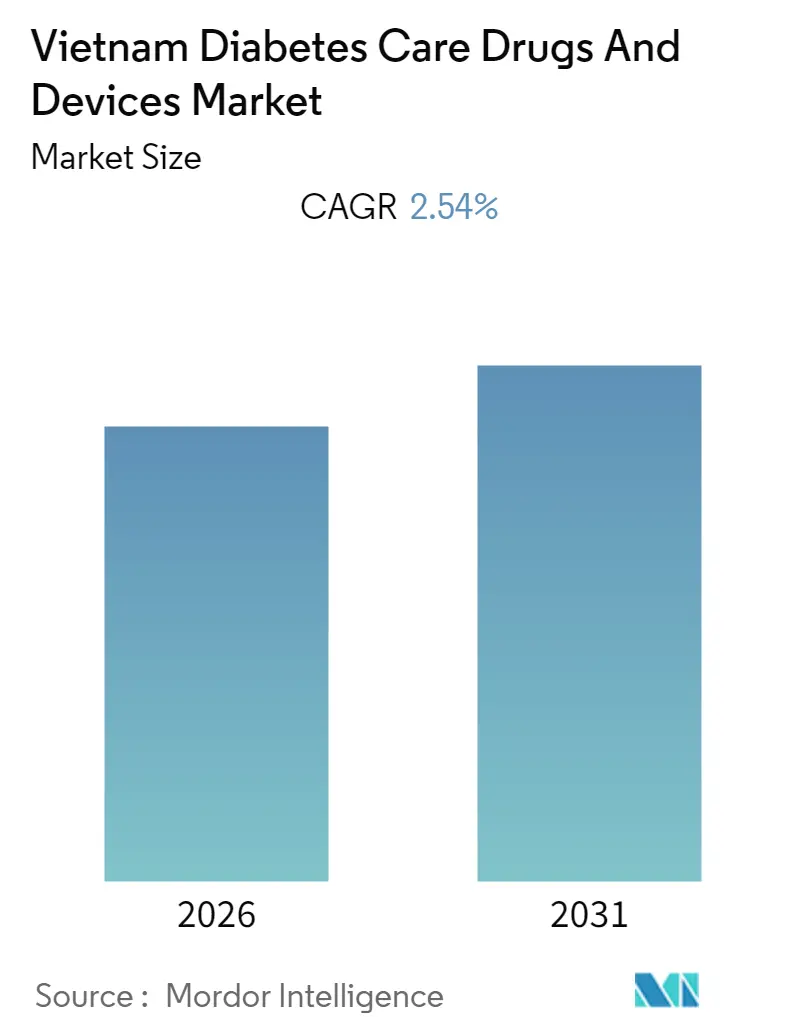
The Vietnam diabetes care drugs and devices market size is expected to register a CAGR of 2.54% during the forecast period (2026-2031).
Vietnam has effectively contained the spread of COVID-19 from the outset and has been dead for months. But since then, a fourth wave of the COVID-19 outbreak has wreaked havoc on Vietnam. According to the Ministry of Health (MOH), Vietnam experienced four waves of the COVID-19 outbreak. COVID-19 (coronavirus disease) has been established to be a highly contagious viral infection caused by coronavirus-2, which causes severe acute respiratory syndrome (SARS-CoV-2). Diabetes is a major risk factor for fatal cases of COVID-19. Diabetic patients are susceptible to infections due to comorbidities such as hyperglycemia, immune dysfunction, vascular problems, hypertension, dyslipidemia, and cardiovascular disease. Additionally, in humans, angiotensin-converting enzyme 2 (ACE2) is the SARS-CoV-2 receptor. Therefore, angiotensin-converting enzyme inhibitors (ACE inhibitors) should be used cautiously in diabetic patients. Severity and mortality from COVID-19 were significantly higher in people with diabetes than non-diabetics. Therefore, people with diabetes should be careful during the COVID-19 outbreak.
Vietnam aims for universal health coverage, decentralizing health administration to the lower levels of the country's administrative structure. Each facility in Vietnam creates individual offers using Ministry of Health guidelines for pricing different medicines. These costs were up to six times higher than the global market. The purchase of branded and generic medicines affects the expenditures of institutions in Vietnam and thus affects individuals and the insurance system. Diabetes is considered a public health burden in Vietnam, and health authorities are taking steps to reduce this burden-the diabetes burden in Vietnam results from several epidemiological trends and factors. Diabetes can become an epidemic and pose a huge health and economic burden to Vietnam. Although the prevalence of diabetes in rural areas remains low, it is on the rise. Diabetes is as common in big cities as in other parts of the West. The government of Vietnam's sponsorship increased the usage of managed devices during the forecast period.
Thus, the above factors are expected to drive market growth over the forecast period.
Note: Market size and forecast figures in this report are generated using Mordor Intelligence’s proprietary estimation framework, updated with the latest available data and insights as of 2026.
Vietnam Diabetes Care Drugs And Devices Market Trends and Insights
The continuous Glucose Monitoring Segment is Expected to Witness the Highest Growth Rate Over the Forecast Period
Vietnam aims for universal health coverage, decentralizing health administration to the lower levels of the country's administrative structure. Each facility in Vietnam creates individual offers using Ministry of Health guidelines for pricing different medicines. These costs were up to six times higher than the global market. The purchase of branded and generic medicines affects the expenditures of institutions in Vietnam and thus affects individuals and the insurance system. Diabetes is considered a public health burden in Vietnam, and health authorities are taking steps to reduce this burden-the diabetes burden in Vietnam results from several epidemiological trends and factors. Diabetes can become an epidemic and pose a huge health and economic burden to Vietnam. Although the prevalence of diabetes in rural areas remains low, it is on the rise. Diabetes is as common in big cities as in other parts of the West. The government of Vietnam's sponsorship increased the usage of managed devices during the forecast period.
Digital companies are trying to improve their condition by reminding people with diabetes when it's time to check their blood sugar levels and sharing that information with doctors and families. A study conducted by GlucoMe (a digital diabetes platform) in collaboration with Merck in several endocrine clinics and hospitals in Vietnam found that using the GlucoMe application reduced the risk of major diabetes-related problems in people with type 2 diabetes. Awareness of diabetes patients in Vietnam is expected to drive the country's management device market growth during the forecast period.

Rising diabetes prevalence
Diabetes is considered a public health burden in Vietnam, and health authorities are taking steps to reduce this burden. Various trends and epidemiological factors influence the diabetes burden in Vietnam. Diabetes is a significant threat and can be a widespread problem, imposing a significant burden on both Vietnam's health and economy. Although the prevalence of diabetes in rural areas is relatively low, it is gradually increasing. Diabetes is as common in major cities in Vietnam as in other parts of the Western world. Health insurance was introduced in Vietnam more than ten years ago. However, the scope of the application is still limited. Vietnam is considered a lower middle-income country with a GDP per capita of around USD 4,310. As a result, the cost of diabetes treatment puts significant financial pressure on patients' families. Human cytomegalovirus (HCMV) diabetes drugs are relatively affordable compared to treating other chronic diseases such as infections, cardiovascular disease, and kidney disease. The country's aging population is straining health and social security regulations and services. Therefore, governments should implement new policy initiatives to reduce the financial burden of diabetes care and improve the affordability of healthcare. Vietnam aims for universal health coverage, decentralizing health care to the lower levels of the country's administrative structure.
Diabetes is among the four most common non-communicable diseases (NCDs), and its global prevalence has increased steadily in recent years. In Vietnam, diabetes is growing by about 6.23% annually, posing a serious health and economic burden to Vietnamese society. Economic growth and changes in the social environment impact disease patterns ranging from communicable to non-communicable diseases, making diabetes one of the top seven causes of death and disability in Vietnam. Obesity rates in Vietnam are still relatively low but have increased significantly in the last decade, especially in the previous five years. Significant changes in dietary habits have coincided with differences in the prevalence of obesity. Smoking is a significant risk factor for diabetes in Vietnam. A recent meta-analysis suggests smokers have a 44% higher risk of developing diabetes than nonsmokers. Although smoking rates among Vietnamese men are high, this trend is declining.
The increasing diabetes prevalence and the above factors will likely drive segment growth over the forecast period.

Competitive Landscape
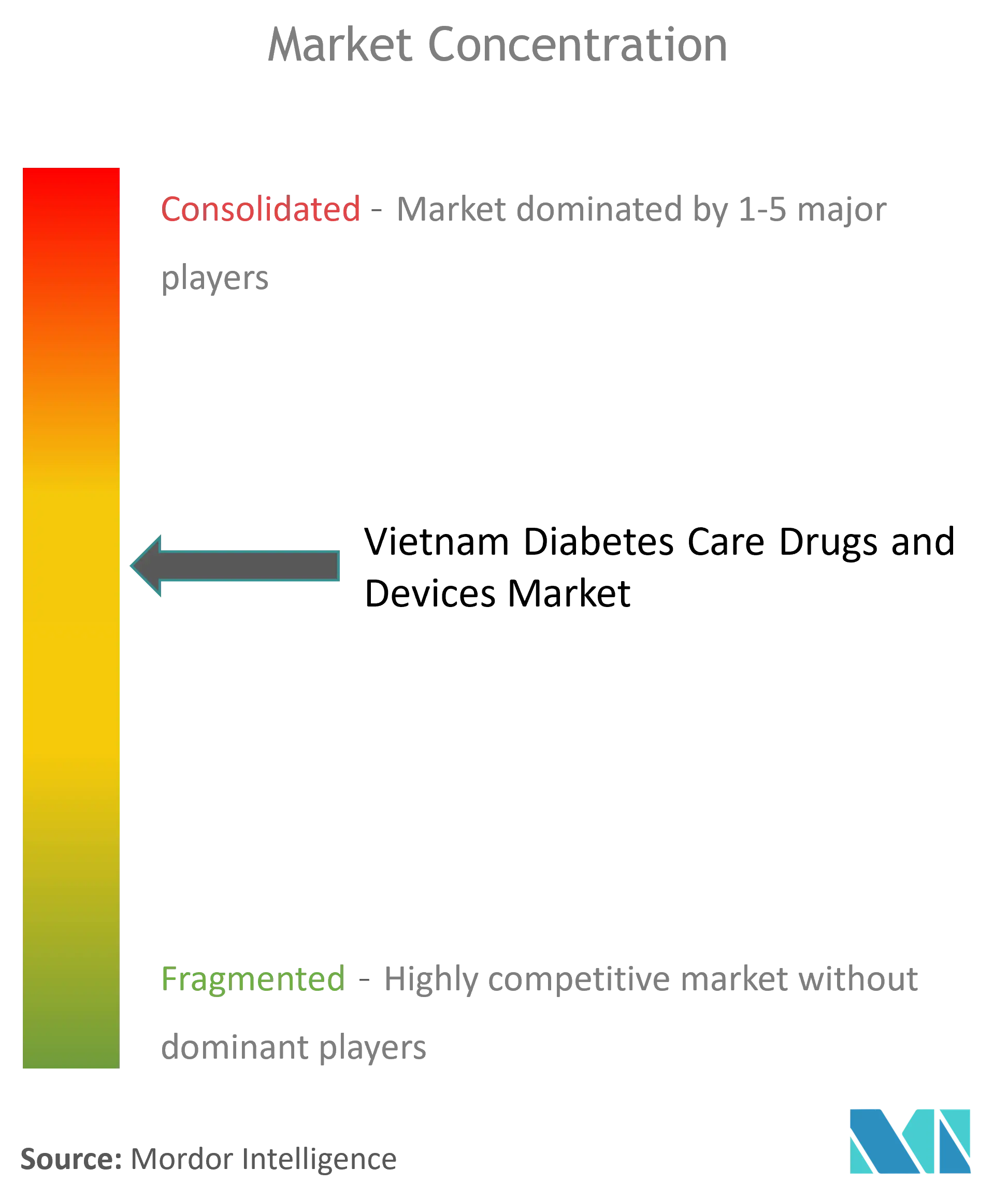
Manufacturers have constantly innovated to survive in the market. Large companies such as Abbott and Medtronic have made numerous mergers, acquisitions, and partnerships to gain market dominance while adhering to organic growth strategies. The manufacturers of insulin delivery devices are spending a huge amount on the R&D of the devices. For example, Novo Nordisk partnered with Abbott Diabetes Care, which may also assist to enable insulin statistics to be shared between Novo Nordisk-connected insulin pens and digital fitness equipment well suited to the FreeStyle Libre portfolio of products.
Vietnam Diabetes Care Drugs And Devices Industry Leaders
-
Medtronics
-
Roche
-
NovoNordisk
-
Sanofi
-
Omnipod
- *Disclaimer: Major Players sorted in no particular order
Market Opportunities and Future Outlook
Vietnam's diabetes care opportunity is increasingly tied to government-led decentralization of NCD services and digitization of longitudinal patient management. National targets referenced in Ministry of Health-aligned programs include reaching 100% implementation at commune-level health stations for prevention, management, and treatment of selected non-communicable diseases by 2030. These targets also call for commune stations to use smart medical devices for at-home monitoring and to operate management platforms, creating space for SMBG and CGM adoption, device connectivity, and clinic-to-community workflows.
Planned linkage of personal health management profiles on an Electronic Health Record Platform connected to VNeID by 2030 is designed to support structured data capture and remote follow-up. This direction also aligns with digital diabetes support models already trialed in Vietnam, including GlucoMe collaboration work in endocrine clinics. On the therapeutics side, efforts to standardize and tighten market authorization and post-market control can improve the operating environment for multinational and local suppliers, while pricing and access remain under scrutiny as facilities apply Ministry of Health pricing guidance. Industry partnerships that connect therapy, education, and distribution offer a pathway to expand access beyond tertiary hospitals, supported by collaboration patterns between diabetes-focused pharmaceutical companies and large pharmacy networks in Vietnam. Across devices and drugs, the clearest near-term whitespace sits in integrated care models that combine screening, monitoring, adherence support, and referral pathways at the community level, where national programs prioritize achieving therapeutic targets for hypertension and diabetes by 2030.
Recent Industry Developments
- January 2026: Medtronic Vietnam signed a Memorandum of Understanding with the Department of Medical Services Administration under the Ministry of Health to implement a program to enhance stroke care and treatment quality from 2026 to 2029. The collaboration expands access to advanced cardiovascular interventions and aligns with national priorities to reduce stroke burden. It advances capacity building and may create opportunities for device utilization in Vietnamese hospitals.
- October 2025: Medtronic Vietnam renewed a two-year collaboration agreement with Hue Central Hospital to expand training, education, and technology adoption in cardiovascular, neurovascular, and minimally invasive surgical specialties. The renewal strengthens training programs and supports the uptake of advanced medical devices across central Viet Nam hospitals. It signals continued public sector engagement and enhances market access for high end therapies.
- August 2025: Novo Nordisk and FPT Long Chau pharmacy chain signed a comprehensive cooperation strategy to provide advanced diabetes and obesity treatment solutions and education programs across Long Chau’s 2,222-pharmacy network. The partnership broadens patient access to innovative diabetes care and education and expands network reach for novel therapies. It reinforces Vietnam market expansion for diabetes care and strengthens distribution and education channels.
Research Methodology Framework and Report Scope
Market Definition and Coverage
For this methodology, the market covers Vietnam spending on diabetes care drugs and diabetes care devices that are used to monitor glucose and deliver therapy for diabetes management across care settings.
Scope exclusions: We exclude general hospital services, diagnostics not specific to diabetes monitoring devices, and non-diabetes lifestyle products.
Segmentation Overview
- Devices
- Monitoring Devices
- Self-monitoring Blood Glucose Devices
- Continuous Blood Glucose Monitoring
- Management Devices
- Insulin Pump
- Insulin Syringes
- Insulin Cartridges
- Disposable Pens
- Monitoring Devices
- Drugs
- Oral Anti-Diabetes Drugs
- Insulin Drugs
- Combination Drugs
- Non-Insulin Injectable Drugs
Data Sources, Market Sizing, and Validation
Desk Research
Desk research was used to map the demand pool and the access constraints that shape diabetes drug availability and monitoring uptake in Vietnam, before any sizing assumptions were locked. We relied on public health indicators and treatment guidance from sources such as the Vietnam Ministry of Health, the World Health Organization, the International Diabetes Federation, and peer reviewed medical journals that report prevalence and care pathways.
We also reviewed pricing and utilization signals from sources such as Vietnam Social Security reimbursement notices, hospital tender disclosures where available, customs and trade statistics for relevant device categories, and public company filings and investor presentations to understand category mix. In addition, paid subscriptions for company financials and intelligence, news and financials, and an import export shipment level database were used selectively to cross check market direction and timing. These desk research sources are illustrative, and many other public documents and references were used for data collection, validation, and clarification.
Primary Interviews and Surveys
Primary work focused on validating what is actually used in day to day diabetes care in Vietnam, and how volumes shift by channel and affordability. We spoke with a mix of clinicians, pharmacists, distributors, device channel participants, and payer facing experts across key provinces, which helped confirm treatment patterns, device adoption pace, and typical pricing corridors used in the model.
Distribution of primary research fieldwork respondents
| Company type | Respondent position |
|---|---|
| Top tier: 39% | CXOs: 16% |
| Mid tier: 44% | Functional/Unit leaders: 34% |
| Smaller Players: 17% | Managers: 50% |
Market-Sizing & Forecasting
Sizing started with a top-down build where the treated diabetes population and testing frequency were translated into annual demand for drug therapy and monitoring, then converted to value using typical price points by category. To keep totals realistic, we added selective bottom-up checks using sampled price times volume logic by channel, along with supplier and distributor sense checks when category gaps showed up.
Key inputs that were used (illustrative) included diabetes prevalence and diagnosis trends, insulin versus oral therapy mix, refill persistence, share of self monitoring blood glucose versus continuous glucose monitoring, device replacement cycles, and public tender and reimbursement signals that affect access. Forecasting was then done using scenario analysis around coverage changes, pricing pressure, and device adoption, and the final trajectory was aligned to what interviewees considered a practical pace of change over 2026 to 2031.
Data Validation & Update Cycle
Outputs were validated through triangulation across independent signals, including demand pool math, price sanity checks, and category shares implied by channel feedback. Where a number looked off, we rechecked unit assumptions, reviewed currency timing and inflation effects, and followed up with additional calls when the variance stayed material.
Before sign-off, the model and write-up go through multi step analyst reviews so that definitions, assumptions, and calculations stay consistent across sections. Reports are refreshed annually, and interim updates are triggered when a material policy shift, reimbursement change, or major product access event could move the market, followed by a fresh pre-delivery pass for the latest view.
Mordor Intelligence's Vietnam Diabetes Care Drugs and Devices Market Size Versus Other Published Estimates
Published market sizes for Vietnam diabetes care drugs and devices can look far apart because different studies mix and match what counts as a diabetes device, how therapy volumes are built, and which year of pricing is applied. Timing also matters since tender prices, reimbursement listings, and adoption of newer monitoring products can shift faster than a report refresh cycle.
The biggest gap drivers usually come from whether monitoring includes only strips and meters or also continuous glucose monitoring, whether hospital and retail channels are both captured, and how the treated population is estimated when diagnosis rates vary by source. Some estimates also blend broader diabetes treatment spending, while others use aggressive price growth or do not reconcile values back to utilization checks, which can inflate totals compared to a demand-linked build.
Benchmark comparison
| Source | Market Size | Gaps in Research Methodology |
|---|---|---|
| Mordor Intelligence | USD 649.17 M (2025) | |
| Industry Tracker A | USD 682.00 M (2025) | This figure appears to use a wider device basket that likely folds in additional diabetes related diagnostics and higher assumed CGM penetration, without making replacement cycles and channel splits explicit. |
| Healthcare Publisher B | USD 590.00 M (2025) | This estimate seems to lean on conservative pricing and may undercount devices sold through private retail and e-commerce, which can lower the device subtotal versus channel-checked assumptions. |
The spread in the table mainly comes from how monitoring devices are defined and how pricing is refreshed versus recent tender and retail movements, which is why the combined 2025 value is kept traceable to treated patient demand, testing frequency, and category price corridors, a modeling choice used by Mordor Intelligence.
Key Questions Answered in the Report
What is the current undefined size?
The undefined is projected to register a CAGR of 2.54% during the forecast period (2026-2031)
Who are the key players in undefined?
Medtronics, Roche, NovoNordisk, Sanofi and Omnipod are the major companies operating in the undefined.
What years does this undefined cover?
The report covers the undefined historical market size for years: 2019, 2020, 2021, 2022, 2023 and 2024. The report also forecasts the undefined size for years: 2026, 2027, 2028, 2029, 2030 and 2031.