
Market Overview
| Study Period | 2020 - 2031 |
|---|---|
| Forecast Data Period | 2026 - 2031 |
| Historical Data Period | 2020 - 2024 |
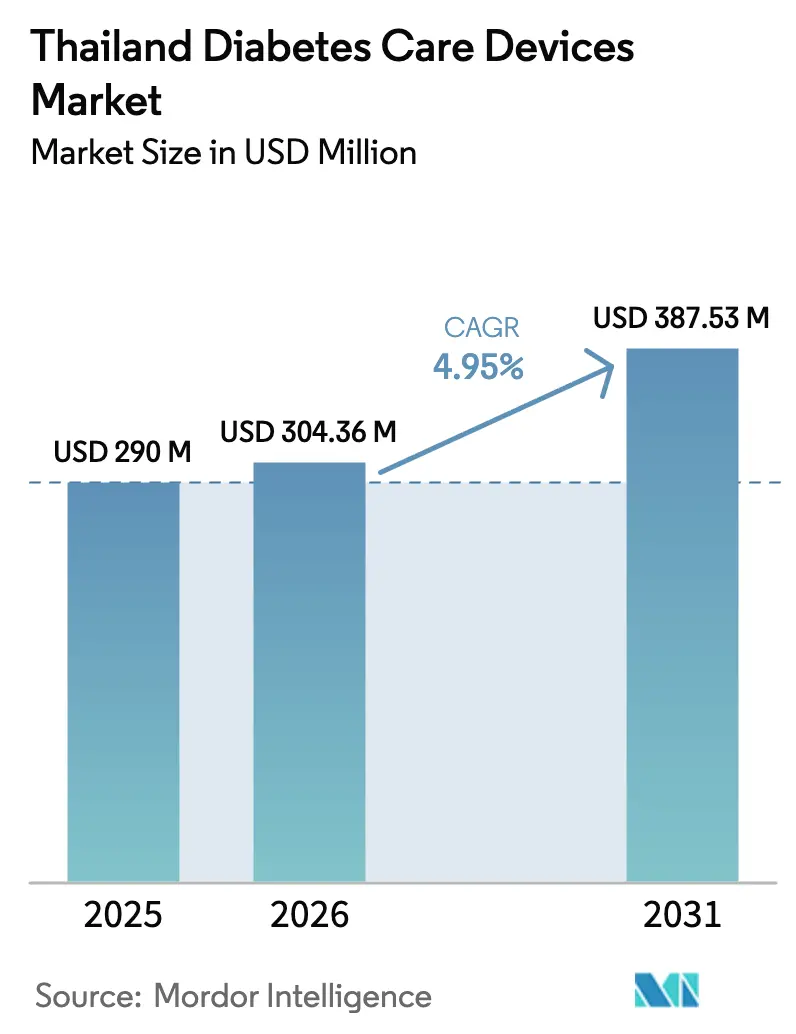
| Base Year Market Size (2025) | USD 290 Million |
| Market Size (2026) | USD 304.36 Million |
| Market Size (2031) | USD 387.53 Million |
| Growth Rate (2026 - 2031) | 4.95 % |
Major Players *Disclaimer: Major Players sorted in no particular order Image © Mordor Intelligence. Reuse requires attribution under CC BY 4.0. | |
Thailand Diabetes Care Devices Market Analysis by Mordor Intelligence
The Thailand diabetes care devices market size is expected to grow from USD 290 million in 2025 to USD 304.36 million in 2026 and is forecast to reach USD 387.53 million by 2031 at 4.95% CAGR over 2026-2031. The expansion is underpinned by widening public reimbursement, rising prevalence of Type 2 diabetes, and ongoing consumer migration from test-strip–based monitoring to continuous glucose monitoring (CGM). Multinational suppliers maintain a strong foothold in premium segments, yet Thailand 4.0 incentives are drawing domestic firms into mid-tier product niches, gradually reducing import reliance. Digital-health pilots inside the government’s “Digital Health Sandbox” are accelerating telemonitoring adoption, especially in urban centers where smartphone penetration is highest. Persistent urban–rural disparities, limited diabetes-education capacity outside Bangkok, and currency-driven pricing volatility temper the near-term growth outlook.
Key Report Takeaways
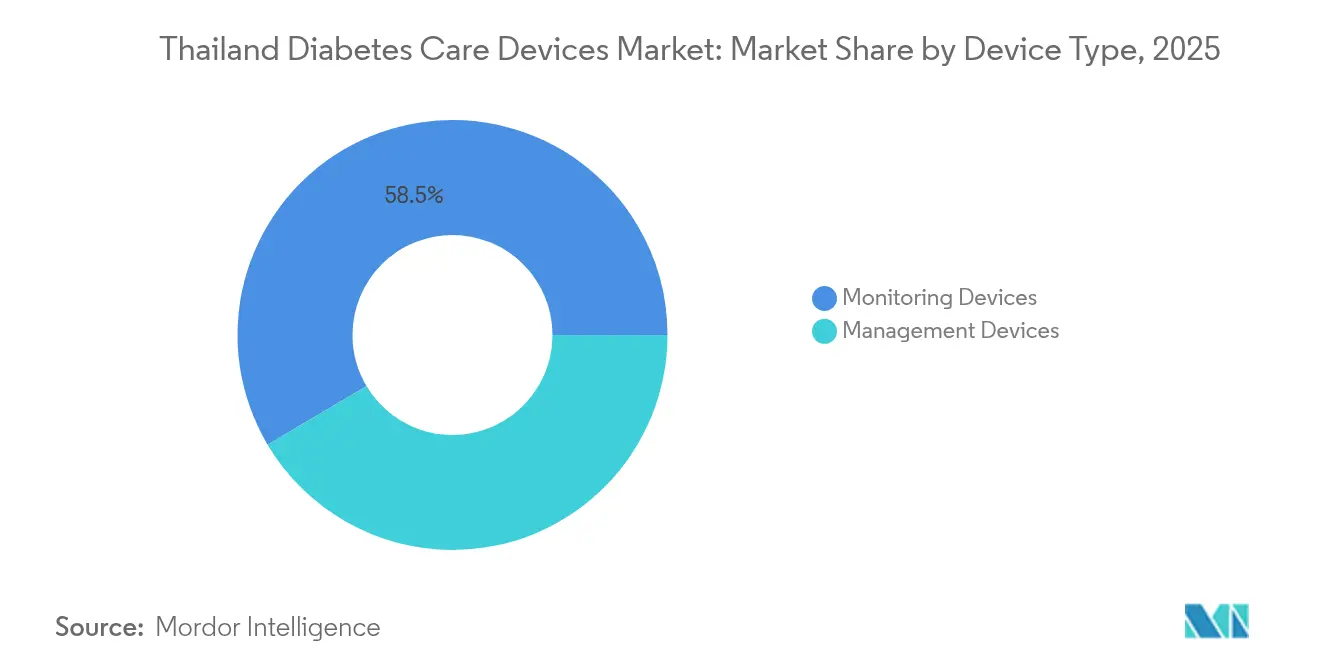
- By device type, monitoring devices led with 58.52% of Thailand diabetes care devices market share in 2025; management devices are projected to register the fastest 7.01% CAGR through 2031 .
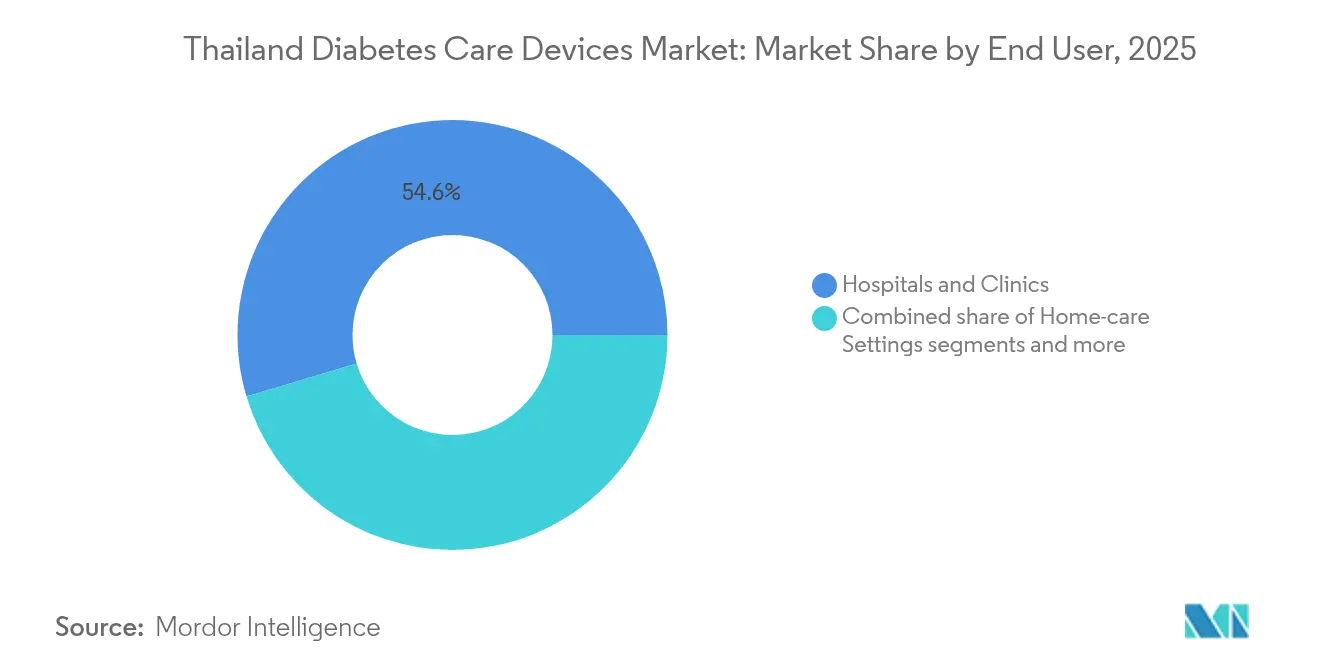
- By end-user setting, hospitals and clinics captured 54.62% of the Thailand diabetes care devices market size in 2025 while home-care settings are expanding at a 7.78% CAGR to 2031 .
- By diabetes type, Type 2 patients accounted for 87.05% of the Thailand diabetes care devices market size in 2025 and continue to underwrite long-run demand momentum.
Note: Market size and forecast figures in this report are generated using Mordor Intelligence’s proprietary estimation framework, updated with the latest available data and insights as of 2026.
Thailand Diabetes Care Devices Market Trends and Insights
Drivers Impact Analysis*
| Driver | (~) % Impact on CAGR Forecast | Geographic Relevance | Impact Timeline |
|---|---|---|---|
| Growing Prevalence of Diabetes and Pre-diabetes in Thailand's Working-age Population | +1.8% | National, with higher impact in urban centers | Long term (≥ 4 years) |
| Universal Coverage Scheme Expansion Increasing Device Reimbursement | +1.2% | National, with emphasis on rural areas | Medium term (2-4 years) |
| Rapid Uptake of CGM Sensors Among Tech-savvy Urban Consumers | +0.9% | Urban centers, particularly Bangkok | Short term (≤ 2 years) |
| Government-led "Digital Health Sandbox" Encouraging Remote Glucose Monitoring | +0.7% | National, with initial focus on urban centers | Medium term (2-4 years) |
| Local Manufacturing Incentives Under Thailand 4.0 Lowering Device Costs | +0.5% | Industrial zones near Bangkok | Medium term (2-4 years) |
| Private Hospital Chains' Chronic-care Programs Boosting Insulin Pump Demand | +0.4% | Urban centers and medical tourism hubs | Short term (≤ 2 years) |
| Source: Mordor Intelligence | |||
Growing Prevalence of Diabetes and Pre-diabetes in Thailand
Roughly 11.6% of Thai adults—nearly 5 million people—live with Type 2 diabetes, and annual incident cases exceed 300,000, creating a sizable pipeline of patients who require long-term device-based management. Demand spans both monitoring and insulin-delivery categories as complications tied to poor glycemic control place new pressure on Thailand’s Universal Coverage Scheme (UCS). Government-backed screening campaigns are gaining traction among seniors, but working-age adults now account for an increasingly high share of new diagnoses, pushing employers to include CGM as an employee-benefit add-on. Urbanization, ultra-processed diets, and sedentary lifestyles remain primary disease drivers. As prevalence rises, device makers are tailoring educational programs to improve self-management and extend sensor usage life, thereby strengthening patient retention. These trends collectively support steady expansion of the Thailand diabetes care devices market across all price tiers.
Universal Coverage Scheme Expansion Increasing Device Reimbursement
The UCS now insures 47.2 million residents, including 4.27 million individuals with diabetes, and its benefits package has recently been expanded to cover CGM sensors, smart glucometers, and select insulin pens. Reimbursement lowers out-of-pocket costs for middle-income Thais, driving unit sales volume even in price-sensitive provinces. Funding flexibility—stemming from Thailand’s tax-based healthcare financing—allows timely inclusion of new diabetes technologies judged cost-effective in preventing expensive complications. Device suppliers are aligning product-registration schedules with the National List of Essential Medicines review cycle to secure faster market access. As more patients transition to reimbursed home-monitoring regimens, refill purchases of test strips, sensors, and lancets rise, reinforcing recurring-revenue streams. This policy evolution is therefore a structural demand catalyst for the Thailand diabetes care devices market.
Rapid Uptake of CGM Sensors Among Urban Consumers
CGM systems are moving from niche to mainstream in Bangkok, Chiang Mai, and Pattaya, propelled by tech-savvy consumers seeking real-time glucose insights. Clinical studies in Thailand show mean HbA1c improvements of 0.87% when CGM is embedded in digital-coaching programs versus standard self-monitoring. Manufacturers have responded by debuting 14-day sensors with smartphone pairing and subscription models that bundle data analytics. Pharmacies have begun stocking starter kits, and insurers now market CGM-linked wellness packages to office workers. Teleconsult platforms integrate CGM dashboards, allowing endocrinologists to adjust insulin doses remotely, which fits the congested urban-clinic environment. Continued price erosion—enabled by local assembly of consumables—should broaden adoption into middle-income cohorts, supporting a higher-than-average growth arc inside the Thailand diabetes care devices market.
Government-Led “Digital Health Sandbox” Encouraging Remote Glucose Monitoring
Thailand’s Digital Health Sandbox fast-tracks pilot rollout of connected diabetes solutions by granting conditional approvals before full Thai FDA certification. This regulatory predictability shortens time-to-market for startups integrating CGM, artificial-intelligence algorithms, and medication-tracking apps. Sandbox status also unlocks corporate-income-tax incentives and dedicated 5G testing zones in major hospitals. Pilot data feed directly into update cycles for the national eHealth strategy (2017-2026), ensuring reimbursement pathways evolve in parallel with technological progress. Early successes—such as the Steno Detektor telemonitoring platform—demonstrate improved glycemic metrics and reduced clinic visits, reinforcing policy momentum. As more solutions graduate from the sandbox, the Thailand diabetes care devices market gains a broader portfolio of locally tailored offerings.
Restraints Impact Analysis*
| Restraint | (~) % Impact on CAGR Forecast | Geographic Relevance | Impact Timeline |
|---|---|---|---|
| High Out-of-Pocket Costs for Advanced Insulin Pumps | -0.8% | National, with higher impact in rural areas | Medium term (2-4 years) |
| Limited Trained Diabetes Educators Outside Bangkok | -0.6% | Rural areas and provincial cities | Medium term (2-4 years) |
| Import Dependency Causing Supply Vulnerability During Baht Volatility | -0.4% | National | Short term (≤ 2 years) |
| Cultural Resistance to Needle-based Self-Injection in Elderly Patients | -0.3% | Rural areas and traditional communities | Long term (≥ 4 years) |
| Source: Mordor Intelligence | |||
Limited Trained Diabetes Educators Outside Bangkok
Only 26.7% of Thai Type 2 diabetes patients achieve adequate glycemic control, well below the Ministry of Public Health’s 40% target, with inadequate self-management education identified as a major gap. Provincial and rural hospitals contend with a shortage of certified diabetes educators, leading to inconsistent training on device usage and suboptimal treatment adherence. The Northeast records an unmet-need rate of 78% versus 58.4% in the South, reflecting stark regional disparities. Patients who do obtain advanced devices often lack follow-up counseling, reducing long-run sensor and pump retention rates. Manufacturers are piloting hybrid tele-education programs, yet bandwidth limitations outside major cities slow roll-out. Unless educator capacity broadens, the Thailand diabetes care devices market will struggle to unlock its full growth potential beyond Bangkok.
Import Dependency Causing Supply Vulnerability During Baht Volatility
Advanced devices such as CGM transmitters, insulin pumps, and automated dosing algorithms depend on imported electronics and pharmaceutical-grade polymers. A sudden 5% Baht depreciation against the USD can raise landed costs enough to trigger unplanned retail price hikes and procurement delays. Distributors hedge by carrying extra inventory, yet this ties up working capital and raises obsolescence risk when next-generation models arrive. Hospitals reliant on capped public-procurement budgets occasionally postpone tenders, forcing patients back to older self-monitoring techniques. Domestic production capabilities remain concentrated in basic consumables, so the supply chain for sophisticated hardware will remain exposed for several years. This currency sensitivity moderates the headline growth trajectory of the Thailand diabetes care devices market.
*Our forecasts treat driver/restraint impacts as directional, not additive. The impact forecasts reflect baseline growth, mix effects, and variable interactions.
Segment Analysis
By Device Type: Monitoring Devices Maintain Leadership While Management Devices Accelerate
Monitoring devices generated USD 0.17 billion in 2025, equal to 58.52% of the Thailand diabetes care devices market size, as finger-stick glucometers and CGM sensors form the backbone of daily diabetes care . Hospitals standardize procurement around trusted monitoring brands, and home users appreciate the familiarity of portable readers. However, a noticeable shift toward sensor-based systems is compressing test-strip margins, encouraging incumbents to bundle analytics subscriptions with hardware to stabilize revenue.
Management devices, chiefly insulin pumps and smart pens, accounted for USD 0.12 billion in 2025 and are projected to grow at 7.01% CAGR. The double-digit adoption of hybrid closed-loop systems in Bangkok’s tertiary centers demonstrates strong latent demand for automation. Price declines, fueled by Thailand 4.0 import-duty waivers on components, are narrowing the affordability gap. Leading global players have begun local algorithm customization to reflect Thai dietary glycemic loads, positioning management devices as the fastest-growing segment in the Thailand diabetes care devices market.

By Diabetes Type: Type 2 Segment Drives Long-Term Demand
Type 2 diabetes represents 87.05% of total diagnosed cases and underpins the bulk of recurrent device consumption. The segment’s high prevalence among working-age adults ensures continuous annual inflows of first-time device users. CGM adoption resonates with Type 2 patients managing diet and exercise regimens, elevating sensor turnover.
Type 1 patients, though numerically smaller, exhibit higher per-capita device spend due to pump therapy and frequent sensor replacement. Many Bangkok specialists now initiate Type 1 adolescents directly on hybrid closed-loop systems, pushing management-device revenue density well above the Type 2 peer group. The combined dynamics keep the Thailand diabetes care devices market diversified across patient profiles.
By End-User Setting: Hospitals Dominate but Home-Care Uptake Outpaces
Hospitals and clinics absorbed 54.62% of Thailand diabetes care devices market share in 2025 due to centralized procurement under the UCS and private insurance networks . In-clinic monitoring remains essential for newly diagnosed cases and for complications screening. Public hospitals leverage bulk-purchase agreements that include training modules, ensuring steady device throughput even in budget-tight quarters.
Home-care settings, though smaller in absolute terms, are advancing at 7.78% CAGR. Sensor-phone pairing technologies and rising smartphone ownership make self-monitoring increasingly convenient, reducing travel burdens for rural patients. The “30 Baht Treat Anywhere” extension allows device refills at any contracted pharmacy, further incentivizing home-based management. As remote-consult platforms embed AI triage, home-care is expected to claim a larger slice of the Thailand diabetes care devices market size by decade-end.
Geography Analysis
Bangkok accounts for an about half of national device sales value, driven by high household incomes, tertiary care institutions, and medical-tourism inflows. Urban patients readily adopt CGM subscriptions, and private insurers subsidize advanced pumps to differentiate benefit packages. Chiang Mai and Chonburi together add a further 17.60% share, reflecting their roles as regional referral hubs. In these provinces, wholesalers maintain cold-chain logistics enabling same-day fulfillment of sensor orders.
The Northeast, despite hosting the highest patient population, captures only 11.40% of Thailand diabetes care devices market size because of lower purchasing power and limited endocrinology coverage. However, the Ministry of Public Health’s THB 275 billion Diabetes Digital Care Initiative is earmarking funds to equip provincial hospitals with cloud-linked glucometers, potentially narrowing the access gap. Southern provinces such as Phuket and Songkhla show above-average penetration of home-care devices thanks to expatriate and medical-tourist demand. Pharmacies in these coastal cities stock imported CGM brands that appeal to visitors seeking short-term monitoring solutions. Collectively, geographic variances imply that successful suppliers tailor channel strategies by province, reinforcing the heterogeneous landscape of the Thailand diabetes care devices market.
Regulatory Landscape
Thailand diabetes care devices fall under Thai FDA oversight within the Ministry of Public Health, primarily via the Medical Device Act B.E. 2551 (2008) and amendments under B.E. 2562 (2019), with risk-based controls spanning notification, licensing, and registration. Foreign manufacturers must appoint a local authorized representative to register and import devices, and higher-risk device-drug combination products face tighter licensing and documentation requirements that can affect launch sequencing for insulin delivery and connected monitoring systems.
Regulatory digitization has been a notable theme in the current study period, including Thai FDA updates to medical-device application forms in March 2026 aimed at reducing redundant procedures and better accommodating diagnostic software and digital data-processing programs. A major compliance inflection occurred on June 20, 2026 when updated labeling rules took effect, introducing mandatory Unique Device Identification (UDI) for risk class 2-4 devices and extending requirements to Software as a Medical Device (SaMD). The change raises labeling, traceability, and post-market readiness expectations for CGM ecosystems and associated digital tools distributed in Thailand.
Competitive Landscape
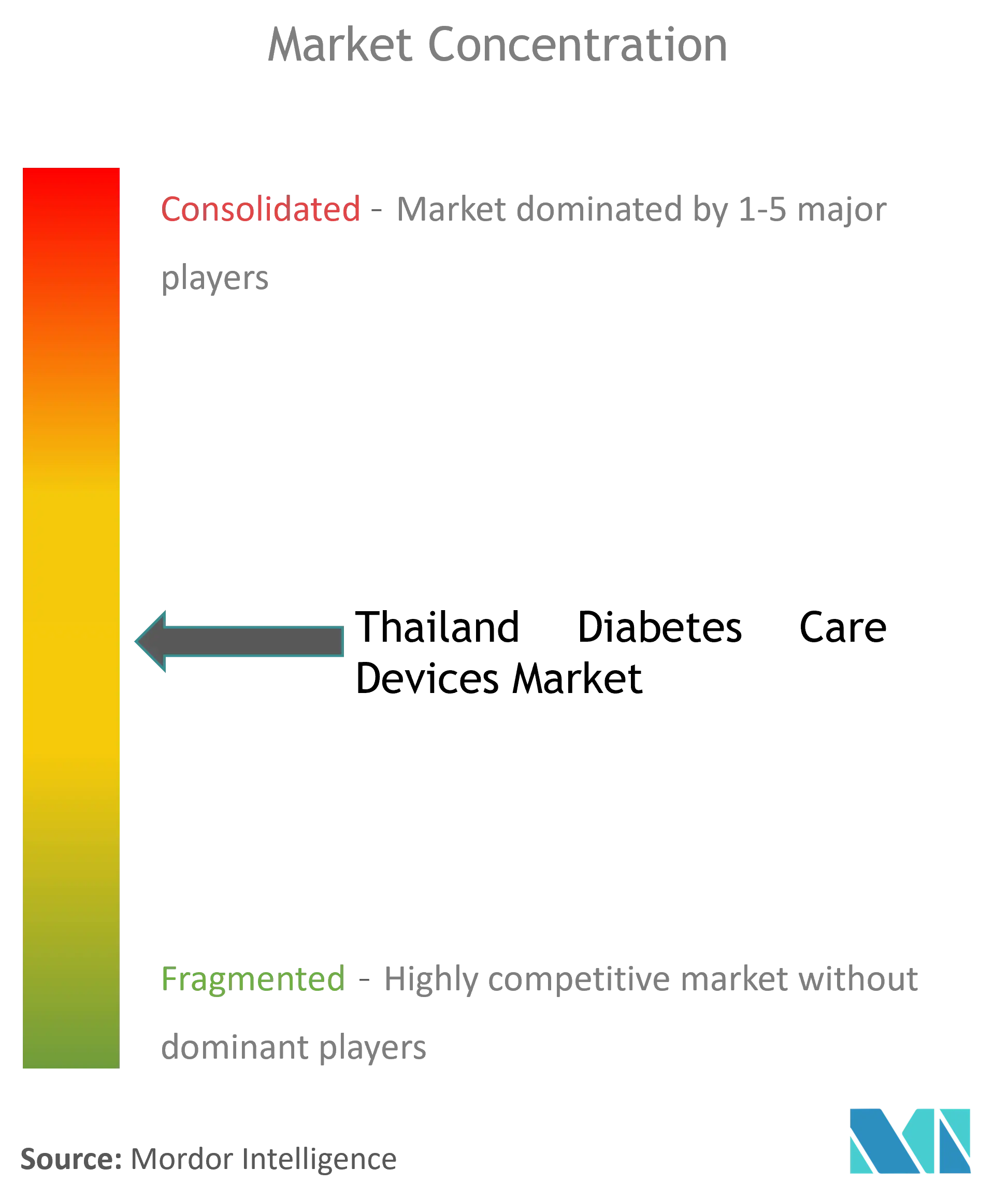
Abbott, Medtronic, and Roche collectively account for an estimated half of device revenue, anchoring premium CGM and insulin-delivery niches. Abbott’s 2025 Bangkok launch of FreeStyle Libre 3, featuring a 14-day sensor, accelerates the firm’s penetration in self-funded urban segments. Medtronic’s MiniMed 780G system integrates Meal Detection algorithms tailored for Thai cuisine, illustrating product-localization as a competitive lever. Roche’s acquisition of Carmot Therapeutics expands its pipeline of glucose-responsive therapies, foreshadowing device-drug combination offerings that could fortify brand stickiness.
Domestic entrants—backed by Thailand 4.0 fiscal incentives—are scaling assembly lines for mid-range glucometers and consumables. Thai Otsuka’s Ayutthaya plant already manufactures strips and lancets at 30% lower landed cost than imports, allowing aggressive retail pricing in rural pharmacies [BOI.GO.TH]. Start-ups such as SIBIONICS leverage partnerships with nationwide pharmacy chains to distribute CGM kits, signalling a pivot toward mass-market retail channels.
Strategic alliances round out competition. Pacific Prime’s telerehab tie-up with HelpDeliver embeds device-sourced data into virtual consults, differentiating insurer offerings. Meanwhile, Danish-Thai collaborations introduce community-based screening models that bundle government funding with private technology, broadening market access. The net effect is intensifying rivalry across both high- and mid-value tiers of the Thailand diabetes care devices market.
Thailand Diabetes Care Devices Industry Leaders
-
Medtronic
-
F. Hoffmann-La Roche AG
-
Novo Nordisk
-
Abbott Diabetes Care
-
Dexcom
- *Disclaimer: Major Players sorted in no particular order
Market Opportunities and Future Outlook
The clearest growth white-space in this market is scaling remote monitoring and care-model tools that support Thailand's shift toward outcomes-driven chronic disease management, beyond traditional test-strip replenishment. The National Diabetes Remission Programme, built on 2023 guidelines and 2024 operational guidance, operationalized Diabetes Remission Clinics within the NCD clinic network (215 sites) and ties provider incentives to defined remission milestones through the National Health Security Office (NHSO) outcome-based payments (including payments for achieving remission and sustaining it for one year). This care pathway places a premium on regular metabolic tracking, including HbA1c-linked monitoring cadence and weight and lifestyle adherence data capture, and it creates room for integrated device-plus-software offerings that connect CGM or smart glucometers with coaching, dashboards, and clinic workflows.
Another opportunity is supported by formal regulatory and digital-health infrastructure changes that reduce friction for connected diabetes solutions. The government's Digital Health Sandbox and Thai FDA process modernization (including March 2026 form updates for digital/diagnostic software) support pilots and faster iteration for telemonitoring platforms and SaMD-linked glucose management. The June 20, 2026 UDI labeling requirements for class 2-4 devices also strengthen traceability for higher-risk connected devices. Taken together with the report context on UCS reimbursement expansion, covering CGM sensors, smart glucometers, and select insulin pens, these shifts support commercialization strategies centered on pharmacy-linked refills, remote titration programs in urban centers, and standardized device identification for procurement and post-market surveillance across hospital and home-care channels.
Recent Industry Developments
- June 2026: ALR Technologies SG Ltd announced an agreement to acquire CGM Medical Technology Singapore and assets of CGM Medical Technology Shenzhen for US$45 million and 200 million shares, with definitive agreements targeted by July 31, 2026. The acquisition expands access to CGM-related technology and manufacturing assets in the region, shaping competitive options for sensor supply and product sourcing into Thailand.
- May 2026: Thailand's Ministry of Industry highlighted a push to move from transactional buying to longer-term partnerships in medical devices and AI, alongside clinical research collaboration themes. This policy direction supports localization and co-development pathways that can lower landed costs and improve supply resilience for diabetes care device suppliers operating in Thailand.
- June 2024: AstraZeneca Thailand announced a 6.2 billion baht investment plan for 2024-2026 to improve healthcare access and address non-communicable diseases in Thailand. While not device-specific, the commitment reinforces ecosystem funding and partnerships around chronic disease programs that influence demand for monitoring and adherence-enabling technologies used in diabetes care.
Research Methodology Framework and Report Scope
Market Definition and Coverage
For this study, the market covers diabetes care devices sold and used in Thailand for monitoring blood glucose and delivering insulin, counted in value terms at the point of sale into healthcare and retail channels.
Scope exclusions: We exclude diabetes drugs, general hospital consumables not specific to diabetes, and broad wellness gadgets that do not measure glucose or support insulin delivery.
Segmentation Overview
- By Device Type
- Monitoring Devices
- Self-Monitoring Blood Glucose
- Glucometer Devices
- Test Strips
- Lancets
- Continuous Glucose Monitoring
- Sensors
- Durables
- Self-Monitoring Blood Glucose
- Management Devices
- Insulin Pumps
- Insulin Pump Device
- Insulin Pump Reservoir
- Infusion Set
- Insulin Syringes
- Insulin Pens
- Jet Injectors
- Insulin Pumps
- Monitoring Devices
- By Patient Type
- Type-1 Diabetes
- Type-2 Diabetes
- Gestational & Others
- By End-user
- Hospitals & Clinics
- Home-care Settings
- Ambulatory Surgical Centres
- Pharmacies & Retail Chains
Data Sources, Market Sizing, and Validation
Desk Research
Desk work starts with building the demand pool and the regulated product universe for Thailand, and then we map which parts are paid by public schemes versus out of pocket. We rely on public sources such as the World Health Organization, the International Diabetes Federation, Thailand Ministry of Public Health publications, the National Statistical Office of Thailand, and the World Bank for population and health system context.
To translate demand into device value, we cross-check with trade and supply signals, including customs trade statistics, medical device regulator and procurement references, and hospital and pharmacy channel commentary that indicates access and pricing direction. Financial filings, annual reports, and investor presentations are used to confirm portfolio focus and regional mix, and paid subscriptions (company financials and intelligence, import-export shipment level data, and patent databases) are used selectively to fill data gaps that are hard to observe in public series. The source list above is not exhaustive, and additional references were used to collect data, clarify assumptions, and validate the final model outputs.
Primary Interviews and Surveys
Primary work focused on confirming the Thailand-specific split between self monitoring and continuous monitoring, and on validating how insulin delivery choices change by care setting. We spoke with a mix of device distributors, channel partners, hospital procurement and diabetes educators, and then checked pricing and usage patterns by region and payer type to close the main gaps left by desk sources.
Distribution of primary research fieldwork respondents
| Company type | Respondent position |
|---|---|
| Top tier: 35% | CXOs: 19% |
| Mid tier: 46% | Functional/Unit leaders: 26% |
| Smaller Players: 19% | Managers: 55% |
Market-Sizing & Forecasting
Sizing is built using a top-down and bottom-up sequence that stays practical for Thailand. We begin with a treated and monitored population build-up, where diabetes prevalence, diagnosis and treatment rates, and monitoring penetration are used to reconstruct the annual device demand pool, followed by an ASP ladder that reflects public reimbursement, private hospital pricing, and retail pharmacy dynamics.
The main inputs we track include the split of patients on insulin versus non-insulin therapy, frequency of testing and strip usage, adoption levels of CGM and sensor replacement cycles, pump and pen utilization, and channel mix between hospitals, retail, and e-commerce (where relevant). When the first pass creates uncertainty, sampled price points and distributor-level volume commentary are used to corroborate totals and adjust outliers. Gaps are handled with conservative proxy assumptions that are later revisited during interviews.
For forecasting, we use scenario analysis because policy and coverage shifts can change device adoption quickly, and it is easier to explain and stress test than a purely statistical approach. Growth paths are guided by expert views on reimbursement expansion, technology substitution from strips to sensors, and expected pricing moves driven by FX and tendering, and then converted into yearly value forecasts.
Data Validation & Update Cycle
Validation is done in several steps so the model stays consistent with real-world signals. We compare outputs against independent checks like import patterns for key device categories, public procurement activity, and reported diabetes program scale, and then we review any sharp year-to-year jumps before sign off.
If a variance is large, we re-check assumptions, revisit the price stack, and re-contact selected experts to confirm whether the change is real or a modeling artifact. Reports are refreshed annually, with interim updates triggered by material events such as reimbursement changes, major regulatory moves, or sudden pricing shocks, and a fresh analyst pass is completed right before delivery so clients receive the most current view.
Mordor Intelligence's Thailand Diabetes Care Devices Market Estimate Compared With Other Published Estimates
Published market values for diabetes care devices in Thailand can look different even when the same end users are being discussed, because each publisher picks its own product basket and pricing build. Differences also show up when one study uses public tender prices as the default and another leans on private hospital prices, which can move the average quickly.
Some estimates group diabetes devices together with drugs or broader diagnostic equipment, and they may also assume faster upgrades into newer monitoring formats without checking replacement cycles. For Mordor Intelligence, the total is limited to diabetes care devices only and is anchored on monitored patient counts, testing frequency, and sensor and strip replenishment patterns, which are then cross-checked with channel level pricing and distribution feedback.
Benchmark comparison
| Source | Market Size | Gaps in Research Methodology |
|---|---|---|
| Mordor Intelligence | USD 290 M (2025) | |
| Industry Association A | USD 320 M (2025) | Often uses a wider basket that blends diabetes supplies with adjacent diagnostic consumables, and applies a higher private-sector price mix without consistently normalizing to national channel splits. |
| Healthcare Analytics B | USD 260 M (2025) | Typically leans on conservative reimbursement-led pricing and slower adoption assumptions for CGM, and may undercount retail pharmacy and online replenishment for strips and sensors. |
The spread in the table mainly comes from what gets counted as a diabetes device versus an adjacent category, and from how pricing is averaged across public and private care settings. By keeping the demand pool tied to usage rates and replacement cycles, and then checking price points with channel feedback, the estimate stays traceable to inputs that can be reviewed and updated in a repeatable way.
Key Questions Answered in the Report
How big is the Thailand Diabetes Care Devices Market?
The Thailand Diabetes Care Devices Market size is expected to reach USD 304.36 million in 2026 and grow at a CAGR of 4.95% to reach USD 387.53 million by 2031.
What is the current Thailand Diabetes Care Devices Market size?
In 2026, the Thailand Diabetes Care Devices Market size is expected to reach USD 304.36 million.
Who are the key players in Thailand Diabetes Care Devices Market?
Medtronic, F. Hoffmann-La Roche AG, Novo Nordisk, Abbott Diabetes Care and Dexcom are the major companies operating in the Thailand Diabetes Care Devices Market.
What years does this Thailand Diabetes Care Devices Market cover, and what was the market size in 2025?
In 2025, the Thailand Diabetes Care Devices Market size was estimated at USD 290 million. The report covers the Thailand Diabetes Care Devices Market historical market size for years: 2019, 2020, 2021, 2022, 2023, 2024 and 2025. The report also forecasts the Thailand Diabetes Care Devices Market size for years: 2026, 2027, 2028, 2029, 2030 and 2031.