
Vietnam Oral Anti-Diabetic Drug Market Size and Share
Market Overview
| Study Period | 2020 - 2031 |
|---|---|
| Forecast Data Period | 2026 - 2031 |
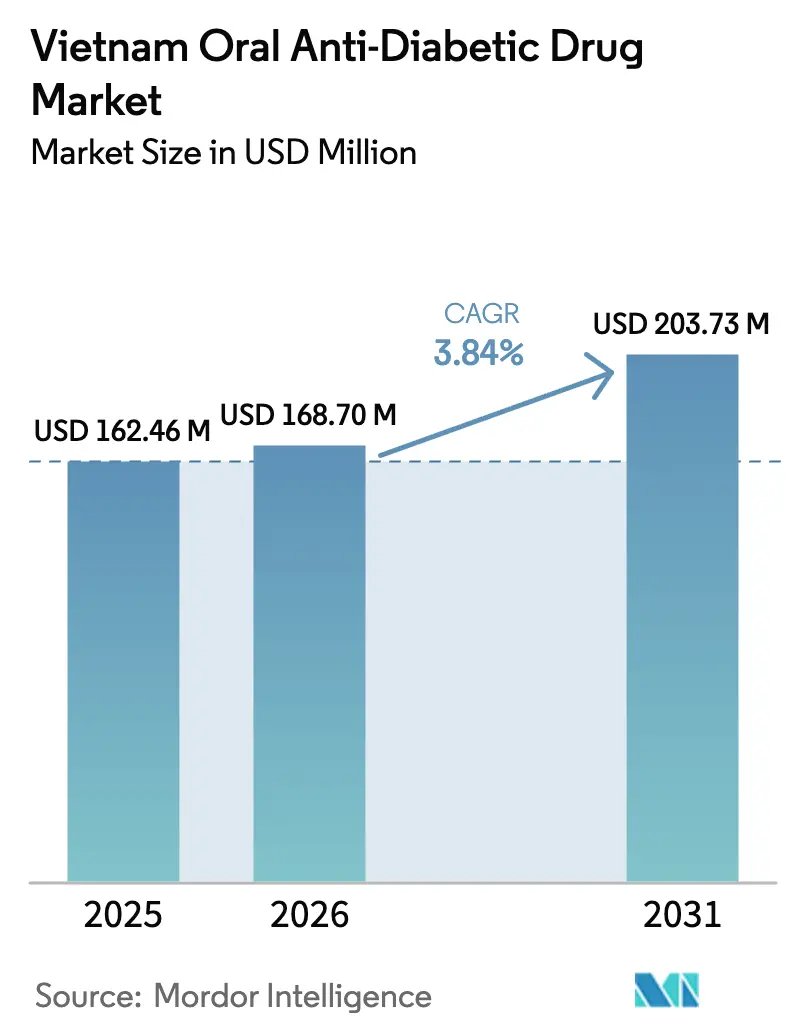
| Base Year Market Size (2025) | USD 162.46 Million |
| Market Size (2026) | USD 168.7 Million |
| Market Size (2031) | USD 203.73 Million |
| Growth Rate (2026 - 2031) | 3.84 % |
| Market Concentration | Medium |
Major Players
*Disclaimer: Major Players sorted in no particular order Image © Mordor Intelligence. Reuse requires attribution under CC BY 4.0. |
|
Vietnam Oral Anti-Diabetic Drug Market Analysis by Mordor Intelligence
The Vietnam oral anti-diabetic drug market size in 2026 is estimated at USD 168.7 million, growing from 2025 value of USD 162.46 million with 2031 projections showing USD 203.73 million, growing at 3.84% CAGR over 2026-2031. Demand is sustained by a 6% diabetes prevalence among 97.3 million inhabitants, growing diagnosis rates, and expanding reimbursement coverage [1]Tran Bao Vuong, "High prevalence of prediabetes and type 2 diabetes, and identification of associated factors, in high-risk adults in Vietnam: A cross-sectional study," Diabetes Epidemiology and Management, sciencedirect.com. The moderate growth reflects a healthcare system shifting toward chronic-disease management, an urban middle class willing to pay for newer therapies, and policy goals to raise domestic pharmaceutical output to 80% by 2030. Multinational corporations continue to introduce innovative products, yet local manufacturers gain ground through cost-efficient production and regulatory incentives. Digital health adoption and pharmacy-chain expansion reshape distribution, while the safety profiles of older drug classes encourage uptake of newer molecules. Regulatory price ceilings and quality-control concerns temper revenue growth but also create white-space opportunities for high-quality generics.
Key Report Takeaways
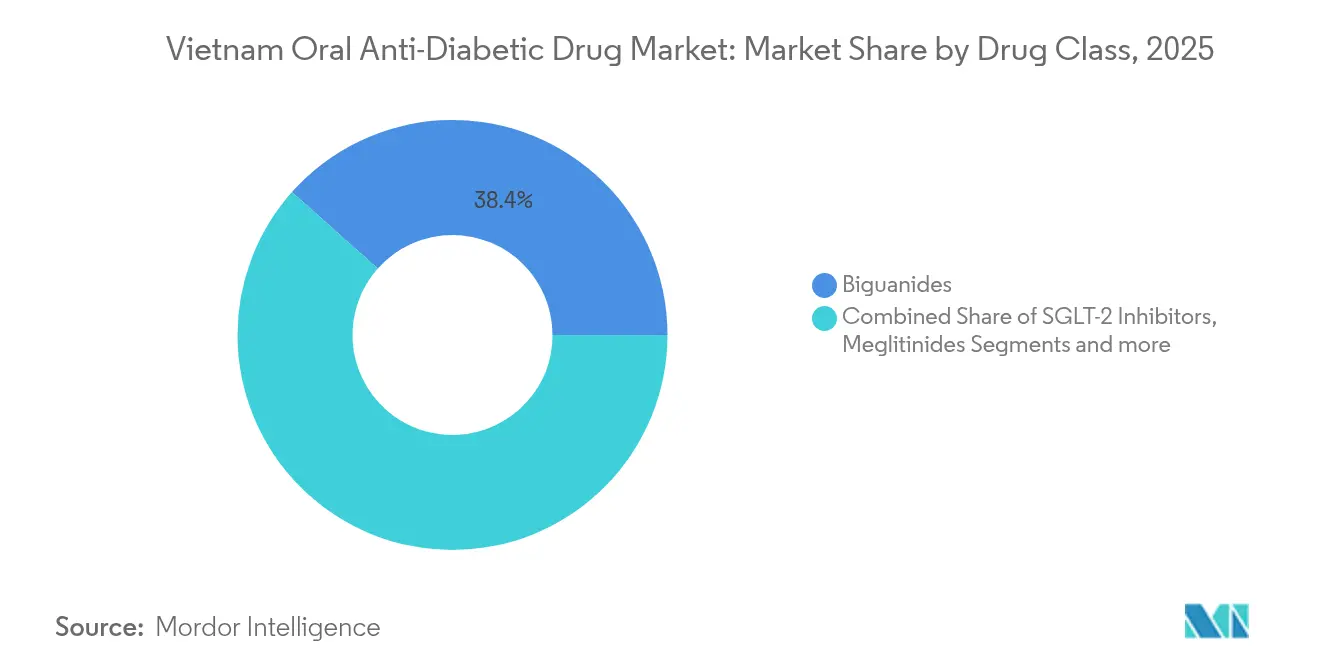
- By drug class, biguanides led with 38.42% of Vietnam oral anti-diabetic drug market share in 2025; SGLT-2 inhibitors are projected to grow at a 4.47% CAGR through 2031.
- By age group, adults held 68.31% of the Vietnam oral anti-diabetic drug market in 2025, while the geriatric segment is expected to expand at a 4.54% CAGR to 2031.
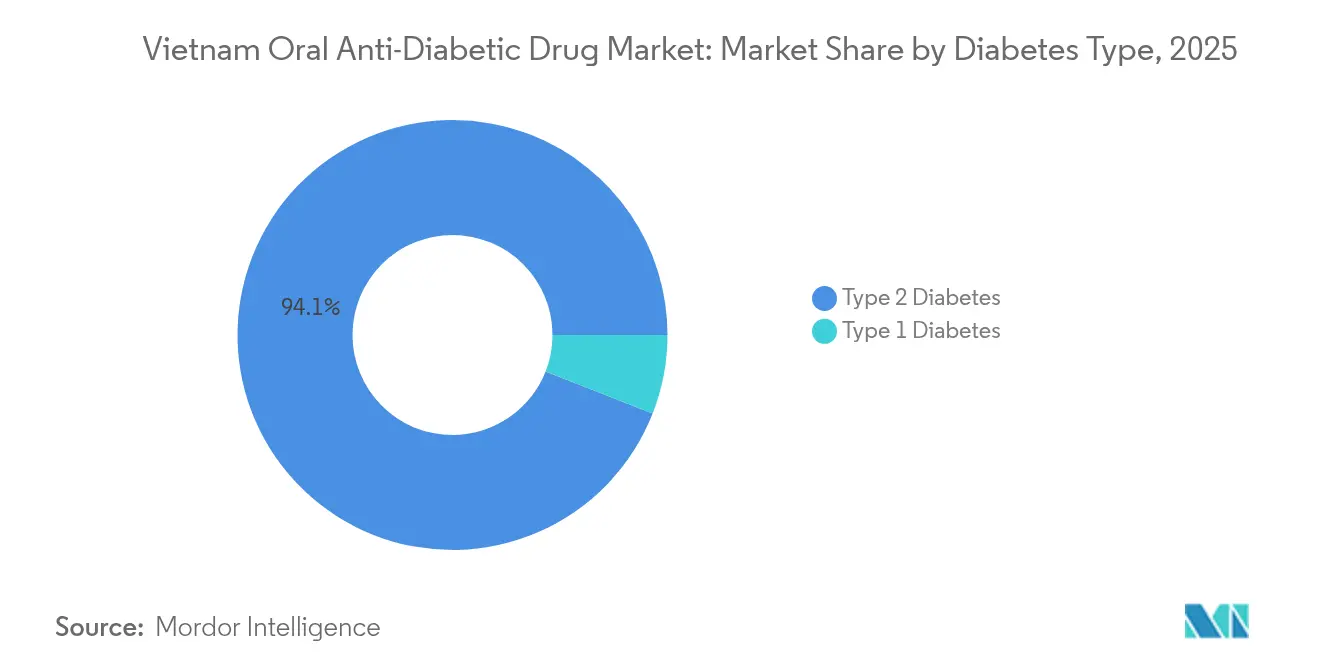
- By diabetes type, Type 2 accounted for 94.05% of the Vietnam oral anti-diabetic drug market size in 2025 and shows the highest 4.49% CAGR outlook.
- By distribution channel, hospital pharmacies captured 69.58% revenue share in 2025; online pharmacies record the fastest 4.87% CAGR to 2031.
Note: Market size and forecast figures in this report are generated using Mordor Intelligence’s proprietary estimation framework, updated with the latest available data and insights as of 2026.
Understanding the full system requires moving beyond Vietnam boundaries into a wider international view. Mordor Intelligence captures the global oral anti-diabetic drugs market scope in its worldwide coverage.
Vietnam Oral Anti-Diabetic Drug Market Trends and Insights
Drivers Impact Analysis*
| Driver | (~) % Impact on CAGR Forecast | Geographic Relevance | Impact Timeline |
|---|---|---|---|
| Rising Prevalence of Type-2 Diabetes | +1.2% | National, concentrated in urban areas | Long term (≥ 4 years) |
| Expansion Of National Health-Insurance Reimbursement | +0.8% | National, with enhanced coverage in rural areas | Medium term (2-4 years) |
| Growing Urban Middle-Class Healthcare Spending | +0.6% | Ho Chi Minh City, Hanoi, Da Nang | Medium term (2-4 years) |
| Launch Of Novel Fixed-Dose Combination OADs | +0.4% | National, early adoption in tier-1 cities | Short term (≤ 2 years) |
| Employer-Sponsored Diabetes Screening Programs | +0.3% | Urban centers, industrial zones | Short term (≤ 2 years) |
| Rice-Fortification Policy Sustaining Glycaemic Load | +0.2% | Rural areas, food-insecure regions | Long term (≥ 4 years) |
| Source: Mordor Intelligence | |||
Rising Prevalence of Type-2 Diabetes
Vietnam’s diabetes burden continues to intensify as urbanization and dietary change drive metabolic syndrome. Projections indicate a 21.1% relative rise in prevalence by 2045, making Vietnam one of the fastest-growing diabetes markets among middle-income countries [2]Centers for Disease Control and Prevention, “Global Diabetes Projections,” cdc.gov . Gestational diabetes affects 22.8% of pregnancies, creating future demand for chronic therapy. Processed-food consumption raises average glycemic load in urban diets, especially among the expanding middle class. Earlier onset of disease lengthens lifetime drug use, and rice-fortification programs aimed at malnutrition may unintentionally sustain high glycemic intake. Together these factors underpin long-run demand in the Vietnam oral anti-diabetic drug market.
Expansion of National Health-Insurance Reimbursement
The amended Health Insurance Law effective July 2025 increases coverage to 100% for vulnerable groups and removes referral barriers, enabling direct specialist access. With 90% insurance penetration but 43% out-of-pocket spending, reimbursement expansion meaningfully lowers financial hurdles for modern therapies. Ho Chi Minh City’s insurance authority is reviewing high-priced products with duplicative active ingredients, signaling tougher cost controls. Nevertheless, clearer reimbursement rules reduce uncertainty for investors and favor uptake of generics and value-added combinations across the Vietnam oral anti-diabetic drug market.
Growing Urban Middle-Class Healthcare Spending
Per-capita pharmaceutical outlay is projected to jump from USD 60.80 in 2021 to USD 88.30 by 2026. Premium traditional-medicine sales at Traphaco climbed 49% in 2024, illustrating willingness to pay for wellness products. Retail chains integrate electronic prescriptions and appointment booking; An Khang’s service links 70+ hospitals, improving chronic-care convenience. The VNeID national app further embeds pharmacy services into daily life, supporting adherence. Rising discretionary income and digital convenience together fuel incremental volumes in the Vietnam oral anti-diabetic drug market.
Launch of Novel Fixed-Dose Combination OADs
Early combination therapy outperforms stepwise titration, driving demand for fixed-dose products. Vietnam approved 692 domestically produced drugs in 2025, including sitagliptin-metformin blends. Simplified registration under the 2025 Pharmacy Law cuts time-to-market, and Imexpharm plans 16 new high-tech launches targeting complex formulations. These advances position domestic firms to co-lead innovation in the Vietnam oral anti-diabetic drug market.
Restraints Impact Analysis*
| Restraint | (~) % Impact on CAGR Forecast | Geographic Relevance | Impact Timeline |
|---|---|---|---|
| Safety & Side-Effect Profile of Certain OAD Classes | -0.6% | National, higher impact in rural areas | Medium term (2-4 years) |
| Competitive Uptake Of GLP-1 Ras & Insulin | -0.4% | Urban centers, private healthcare facilities | Short term (≤ 2 years) |
| MOH Price-Control Ceilings on Reimbursed Drugs | -0.5% | National, stronger impact on public hospitals | Long term (≥ 4 years) |
| Rising Use of Traditional Herbal Alternatives | -0.3% | Rural areas, traditional medicine regions | Medium term (2-4 years) |
| Source: Mordor Intelligence | |||
Safety & Side-Effect Profile of Certain OAD Classes
Polypharmacy affects 7.8% of older diabetes patients, heightening adverse-event risk. Fatal lactic acidosis from herbal products adulterated with undisclosed biguanides exposed regulatory gaps and raised public concern. Sulfonylurea-linked hypoglycemia remains a barrier in settings lacking immediate medical support. Resistance patterns in diabetic-foot infections underscore broader tolerability issues [3]Tan To Anh Le, "Treatment outcomes, antibiotic selection, and related factors in the management of diabetic foot infections in Vietnam," Endocrine and Metabolic Science, sciencedirect.com. Consequently, prescribers shift toward newer drugs with safer profiles, restraining expansion of legacy segments in the Vietnam oral anti-diabetic drug market.
Competitive Uptake of GLP-1 RAs & Insulin
Novo Nordisk reported 52% global GLP-1 sales growth, while Eli Lilly prepares Mounjaro rollouts across key emerging markets. Superior efficacy and cardiometabolic benefits make injectable treatments increasingly attractive for urban patients. As Vietnamese insurance gradually includes advanced therapies, substitution threatens traditional OAD volumes, especially among treatment-naïve cohorts in premium facilities. The Vietnam oral anti-diabetic drug market therefore faces share erosion where affordability barriers recede.
*Our forecasts treat driver/restraint impacts as directional, not additive. The impact forecasts reflect baseline growth, mix effects, and variable interactions.
Segment Analysis
By Drug Class: Biguanides Retain the Largest Share Amid SGLT-2 Momentum
Biguanides held 38.42% of Vietnam oral anti-diabetic drug market share in 2025 due to metformin’s entrenched first-line status. SGLT-2 inhibitors, supported by renal-cardio benefits, are forecast to post a 4.47% CAGR, making them the fastest riser. Sulfonylureas remain relevant for cost-sensitive patients, though hypoglycemia risks curb growth. DPP-4 inhibitors gain urban popularity for once-daily dosing. AstraZeneca’s partnership with FPT Long Châu to broaden dapagliflozin counseling shows multinationals leveraging domestic chains. The segment’s diversification demonstrates evolving therapeutic preferences within the Vietnam oral anti-diabetic drug market.
Early 2025 FDA approval of dapagliflozin for chronic kidney disease enlarges its addressable base, while domestic approvals of sitagliptin-metformin blends highlight growing local capability. Thiazolidinediones lose ground amid safety scrutiny, whereas meglitinides preserve a niche in flexible meal-time dosing. The “others” category, including next-generation combinations, signals further innovation potential as regulatory pathways streamline.



By Age Group: Geriatric Growth Outpaces Adult Dominance
Adults commanded 68.31% revenue in 2025, yet the geriatric cohort posts the highest 4.54% CAGR, echoing Vietnam’s transition toward an aging society. Polypharmacy and comorbidities require simplified regimens, spurring demand for fixed-dose combinations. Community screening programs by Merck Healthcare Vietnam and Long Châu underscore attention to older populations.
Herbal co-usage by 40.8% of patients complicates pharmacovigilance, reinforcing the need for education and monitoring. National EMR deployment by September 2025 will improve oversight and adherence, supporting growth in the Vietnam oral anti-diabetic drug market size for geriatric care.
By Diabetes Type: Type 2 Remains the Core Driver
Type 2 diabetes contributed 94.05% of the Vietnam oral anti-diabetic drug market in 2025 and is set for a 4.49% CAGR. Cost-effectiveness studies favor gliclazide-based control, yet comparative research shows faster glycemic improvement with sitagliptin add-on therapy.
High undiagnosed prevalence (18.3% of high-risk adults) leaves room for volume expansion as screening intensifies. Government targets for 80% of diagnosed patients achieving HbA1c < 7.0% add policy impetus. Cardiovascular and renal comorbidity prevalence further boosts demand for multi-benefit OADs across the Vietnam oral anti-diabetic drug market size.
By Distribution Channel: Digital Platforms Accelerate Online Uptake
Hospital pharmacies retained 69.58% share in 2025, reflecting specialist-led prescriptions. Online pharmacies deliver a 4.87% CAGR, propelled by e-commerce reforms permitting OTC sales and growing consumer confidence. Studies indicate 77.5% intent to continue online purchases.
Integration of prescriptions within the VNeID app creates a unified health ecosystem, fostering adherence. Retail chains combine offline convenience with digital services, enabling omnichannel coverage across the Vietnam oral anti-diabetic drug market.
Geography Analysis
Regional disparities shape demand across the Vietnam oral anti-diabetic drug market. Ho Chi Minh City and Hanoi lead consumption owing to concentrated tertiary hospitals, specialist endocrinologists, and higher disposable income. The Mekong Delta’s aging agricultural populace presents an emerging growth pocket as rural clinics upgrade under universal coverage programs. Northern provinces benefit from proximity to new production hubs, including a bio-pharma park in Thai Binh Province that reduces logistics costs.
Electronic medical records nationwide by September 2025 will harmonize care standards, enabling cross-regional prescription tracking. Local health-insurance authorities exert price oversight: Ho Chi Minh City’s scrutiny of high-cost drugs may pivot prescribers toward generics.
Rural regions show higher reliance on herbal medicine, competing with OAD uptake but also highlighting opportunities for education campaigns. Coastal provinces face transport challenges that favor tele-pharmacy solutions, aligning with the online growth trend. Collectively, these dynamics create a patchwork of opportunities and constraints across the Vietnam oral anti-diabetic drug market.
Mordor Intelligence examines the oral anti-diabetic drugs market across diverse other regional markets as well, including Europe, Asia, and South America, while also offering granular country-level perspectives for Philippines, Thailand, Italy, Brazil, India, and New Zealand and more.
Regulatory Landscape
Vietnam’s oral anti-diabetic drug market is regulated by the Ministry of Health (MOH) through the Drug Administration of Vietnam (DAV), with dossiers aligned to ASEAN CTD/CTR formats for new applications, variations, and renewals. The amended Law on Pharmacy effective July 1, 2025, and Circular No. 12/2025/TT-BYT continue to shape marketing authorization processes. MOH drafting work chaired by Deputy Minister Nguyen Tri Thuc, reported in April 2026, focuses on updates to further encourage digital transformation in drug registration.
In 2026, DAV continued lifecycle and market-access administration through formal decisions and implementing circulars. Circular 18/2026/TT-BYT was issued on June 1, 2026 (effective July 16, 2026) to detail implementation provisions linked to Decree 163/2025/ND-CP for special-control medicines, reinforcing compliance expectations for regulated products and distribution. DAV Decision 402/QD-QLD dated May 29, 2026 covered the renewal/registration list for 117 imported drugs, supporting ongoing portfolio maintenance for multinational and import-reliant therapies relevant to chronic diseases such as diabetes.
Competitive Landscape
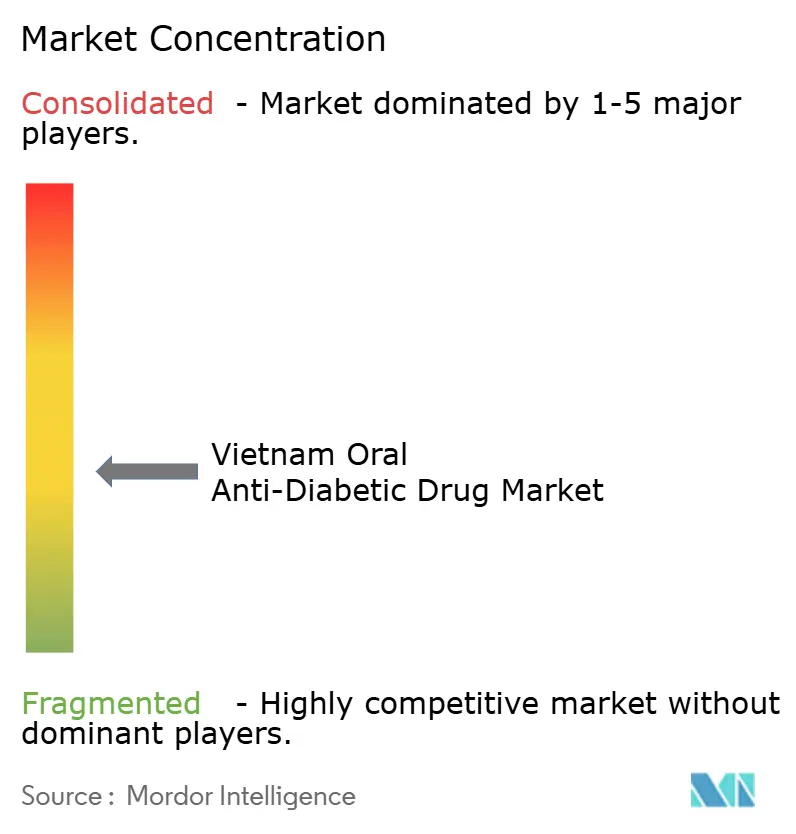
The Vietnam oral anti-diabetic drug market displays moderate fragmentation. Novo Nordisk dominates globally but competes locally with DHG Pharma, Traphaco, Imexpharm, and other domestic producers. Multinationals capitalize on R&D strength, introducing advanced classes like SGLT-2 inhibitors and GLP-1 analogs. Local companies leverage lower costs, government incentives, and EU-GMP plants to supply high-quality generics.
Partnerships typify recent strategy: Vinapharm’s plan to double its stake in Sanofi Vietnam illustrates deeper foreign-local collaboration. AstraZeneca’s alliance with FPT Long Châu uses pharmacist training to expand dapagliflozin reach. Digital health investments, automated factories, and data analytics differentiate competitors, while rural penetration remains an untapped frontier.
Technology adoption accelerates: AI-enabled demand forecasting and blockchain supply-chain tracking reduce counterfeits, addressing quality-control restraints. Domestic firms invest in complex formulations, such as Imexpharm’s EU-GMP antibiotics pipeline, signaling ambition beyond basic generics. The result is a dynamic, innovation-oriented Vietnam oral anti-diabetic drug market.
Vietnam Oral Anti-Diabetic Drug Industry Leaders
-
Astrazeneca
-
Astellas
-
Eli Lilly
-
Sanofi
-
Johnson & Johnson
- *Disclaimer: Major Players sorted in no particular order

Market Opportunities and Future Outlook
Near-term opportunities are centered on faster, more digitized registration and more frequent portfolio refresh cycles, alongside increasing uptake of newer oral classes and combinations in tier-1 cities. MOH work in April 2026 to amend Circular 12/2025/TT-BYT to support digital transformation in drug registration, together with DAV’s ongoing renewal actions such as Decision 402/QD-QLD (May 29, 2026) covering 117 imported drugs, supports operating headroom for companies with dossier readiness (ACTD/ACTR), pharmacovigilance systems, and variation-management capabilities. For diabetes care specifically, this favors manufacturers that can keep supply continuity while updating labels, indications, or fixed-dose combinations without prolonged administrative downtime.
On the supply and affordability side, the amended pharmaceutical framework effective mid-2025 expands incentive mechanisms tied to high-technology medicines and API production, aligning with Vietnam’s policy direction to raise domestic pharmaceutical output. With an installed base of 30+ EU-GMP or equivalent factories noted in market context, local and partnered manufacturers have room to localize high-volume molecules, including metformin combinations, while differentiating generics on quality, particularly where price ceilings and reimbursement scrutiny push buyers toward cost-effective options. Regulatory and market-access engagement also points to structured access pathways, including AstraZeneca Vietnam’s May 2026 engagement with the Ministry of Health on innovative health financing tools such as supplemental insurance and managed access agreements, supporting access to newer oral therapies across public and private channels.
Recent Industry Developments
- July 2026: DKSH expanded its strategic partnership with Eli Lilly in Hong Kong and Macau to reference Lilly’s Vietnam/Singapore commercialization services. The collaboration broadens Lilly product access through DKSH's distribution network, potentially increasing availability of Lilly therapies in Vietnam. This strengthens Lilly's regional reach and creates more diversified channels for market entry and patient access in Vietnam.
- May 2026: AstraZeneca Vietnam and the Ministry of Health held a meeting to discuss strategic cooperation on innovative health financing, supplemental health insurance, and managed access agreements. The engagement informs a broader framework for reimbursement and access to new diabetes therapies in Vietnam. It signals a shift toward financing solutions that can improve patient access to newer treatments.
- April 2025: FPT Long Chau and AstraZeneca launched a partnership to promote dapagliflozin education and a 3-in-1 cardio-renal-metabolic treatment model. The collaboration builds market readiness by engaging clinicians and pharmacists in education around SGLT-2 inhibitors. This supports future uptake of dapagliflozin and related therapies in Vietnam.


Research Methodology Framework and Report Scope
Market Definition and Coverage
For this study, the market covers the revenue generated in Vietnam from prescription oral anti-diabetic medicines used to control blood glucose, counted at the point of sale through established medicine distribution channels.
Scope exclusions: This sizing excludes insulin products and non-oral injectable diabetes therapies, and it also excludes devices and non-drug diabetes management services.
Segmentation Overview
-
By Drug Class
- Biguanides
- Sulfonylureas
- Meglitinides
- Thiazolidinediones
- Alpha-Glucosidase Inhibitors
- DPP-4 Inhibitors
- SGLT-2 Inhibitors
- Others
-
By Age Group
- Adults
- Pediatric
- Geriatric
-
By Diabetes Type
- Type 1 Diabetes
- Type 2 Diabetes
-
By Distribution Channel
- Hospital Pharmacies
- Retail Pharmacies
- Online Pharmacies
Data Sources, Market Sizing, and Validation
Desk Research
Desk work starts with building a clean fact base on diabetes burden, treatment access, and medicine supply conditions in Vietnam, then mapping how these drivers translate into oral therapy demand. Public sources help anchor the demand pool and the pricing context, including the World Health Organization, International Diabetes Federation, Vietnam Ministry of Health publications, the General Statistics Office of Vietnam, and World Bank health spending indicators.
Next, we screen product and policy signals that can shift oral therapy use over time, including essential medicine updates, reimbursement direction, and prescribing guidance that changes which drug classes are preferred. To keep the model practical, we also review company filings, investor materials, and credible press coverage for launches and distribution expansion. Paid subscriptions are used selectively for company financials and intelligence, news and financials, and patent databases to cross-check timelines and pipeline direction. This list is illustrative only, and many other sources were also used for data collection, validation, and clarification.
Primary Interviews and Surveys
Field inputs are used to confirm what desk indicators cannot fully show, especially the real-world class mix, typical lines of therapy, and how channel dynamics affect volumes and net pricing. We covered viewpoints from prescribers, hospital and retail pharmacy stakeholders, distributors, and industry specialists, then rechecked assumptions for major urban centers versus provincial demand to avoid over-weighting one care setting.
Distribution of primary research fieldwork respondents
| Company type | Respondent position |
|---|---|
| Top tier: 33% | CXOs: 14% |
| Mid tier: 50% | Functional/Unit leaders: 42% |
| Smaller Players: 17% | Managers: 44% |
Market-Sizing & Forecasting
Sizing is built using a top-down demand pool assessment where diabetes prevalence and treated population levels are translated into oral therapy users, then adjusted for diagnosis and access patterns in Vietnam. This is followed by class-level allocation so that biguanides, DPP-4 inhibitors, SGLT-2 inhibitors, sulfonylureas, and other oral therapies are captured in a way that reflects actual prescribing behavior.
To keep totals realistic, selective bottom-up checks are added, including sampled price per pack by drug class, channel splits across hospital pharmacies and retail pharmacies, and sanity checks using distributor and pharmacy feedback on unit movement. Inputs that matter most in the model include treated Type 2 share, average number of oral medicines per patient, therapy switching trends, public coverage effects on utilization, and observed net price movement after tenders and discounting (where applicable). For forecasting, scenario analysis is applied around access and class uptake, and then the final curve is smoothed using simple time-series logic so year-to-year movement stays consistent with what respondents expect. Where bottom-up signals are incomplete, gaps are filled using conservative class-mix proxies and are revalidated in follow-up calls.
Data Validation & Update Cycle
Model outputs are checked against independent signals such as diabetes care spending direction, import and supply commentary, and channel feedback on availability, then revisited if an unusual jump appears. A second analyst review is applied to confirm that assumptions, conversions, and unit logic were used consistently across the full time series.
Reports are refreshed annually, and an interim update is triggered when a material event is identified, such as a major policy shift or a sudden pricing reset in a key channel. Before final delivery, we run a last pass to ensure the latest public updates and interview learnings are reflected in the final view.
Mordor Intelligence's Vietnam Oral Anti Diabetic Drug Market Size Compared Against Other Published Estimates
Published market sizes for Vietnam oral anti-diabetic drugs can look different across sources because they often set different product boundaries and pricing conventions, and they also do not always align on which year is treated as the base. Some estimates are built from broad pharma spending splits, while others use therapy-level demand logic, so the starting point alone can change the reported value.
Key gap drivers typically come from whether insulin, non-oral injectables, or combination therapies are included in the same bucket, and from whether hospital pharmacy sales are counted at tender prices or at patient-level transaction prices. By tracking treated patient builds and class mix shifts, and then refreshing net price assumptions with channel checks, Mordor Intelligence keeps the Vietnam total anchored to oral-only demand rather than broader diabetes care spend.
Benchmark comparison
| Source | Market Size | Gaps in Research Methodology |
|---|---|---|
| Mordor Intelligence | USD 162.46 M (2025) | |
| Industry Publisher A | USD 156.21 M (2022) | Uses an earlier base year and appears to anchor the value to a limited class and distribution snapshot, which can understate newer class uptake and post-2022 access changes. |
| Advisory Group B | USD 682.40 M (2026) | Seems to roll up a wider diabetes care drug basket beyond oral therapies, which can inflate totals when insulin and non-oral injectables are counted in the same revenue pool. |
The spread in the table is mostly explained by scope and pricing boundaries, followed by base-year timing. When the model is kept consistent around oral-only revenues, channel coverage, and realistic net prices, the estimate becomes easier to trace back to clear inputs and repeat in future updates.


Key Questions Answered in the Report
What is the current size of the Vietnam oral anti-diabetic drug market?
The market stands at USD 168.7 million in 2026 and is projected to reach USD 203.73 million by 2031.
Which drug class leads the Vietnam oral anti-diabetic drug market?
Biguanides dominate with 38.42% share in 2025, reflecting metformin’s first-line status.
How fast are SGLT-2 inhibitors growing in Vietnam?
SGLT-2 inhibitors are forecast to expand at a 4.47% CAGR through 2031, the fastest among oral classes.
What distribution channel is growing the quickest?
Online pharmacies deliver the highest CAGR at 4.87%, driven by e-commerce adoption and supportive regulation.
Why is the geriatric segment important for future growth?
Vietnam’s aging population pushes the geriatric segment to a 4.54% CAGR, creating demand for simplified, safer therapies.
How will new insurance rules affect the market?
Expanded reimbursement from July 2025 lowers patient costs and is likely to boost prescription volumes, particularly for newer generics and value-added combinations.
Page last updated on:


 Your data is secure and never sold or shared.


