
Global Urinary Catheters Market Size and Share
Market Overview
| Study Period | 2020 - 2031 |
|---|---|
| Market Size (2026) | USD 6.39 Billion |
| Market Size (2031) | USD 8.2 Billion |
| Growth Rate (2026 - 2031) | 5.12 % |
| Fastest Growing Market | Asia Pacific |
| Largest Market | North America |
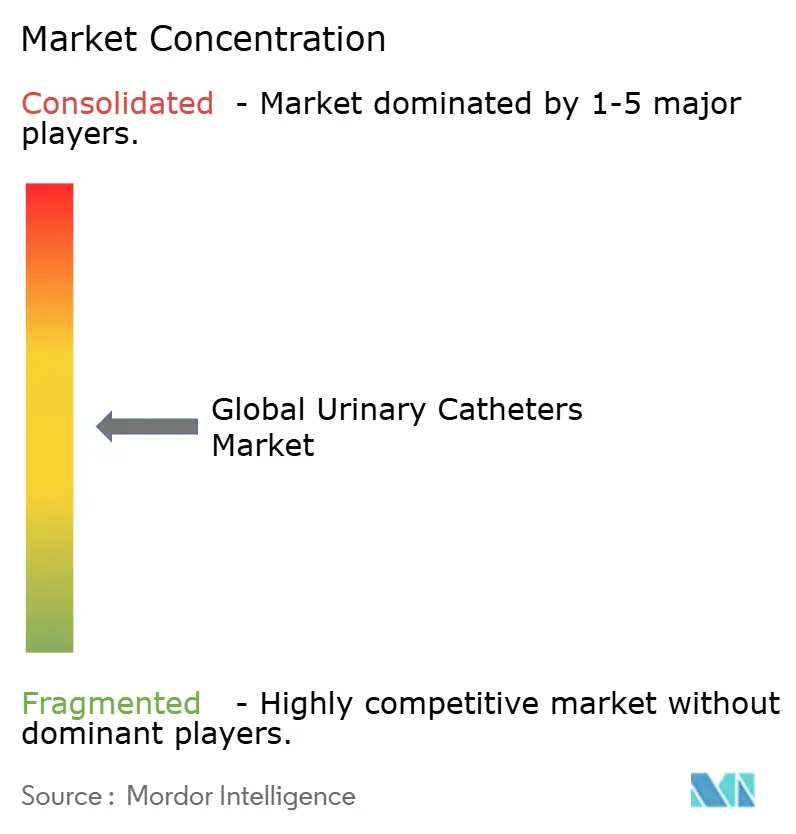
| Market Concentration | Medium |
Major Players *Disclaimer: Major Players sorted in no particular order Image © Mordor Intelligence. Reuse requires attribution under CC BY 4.0. | |
Global Urinary Catheters Market Analysis by Mordor Intelligence
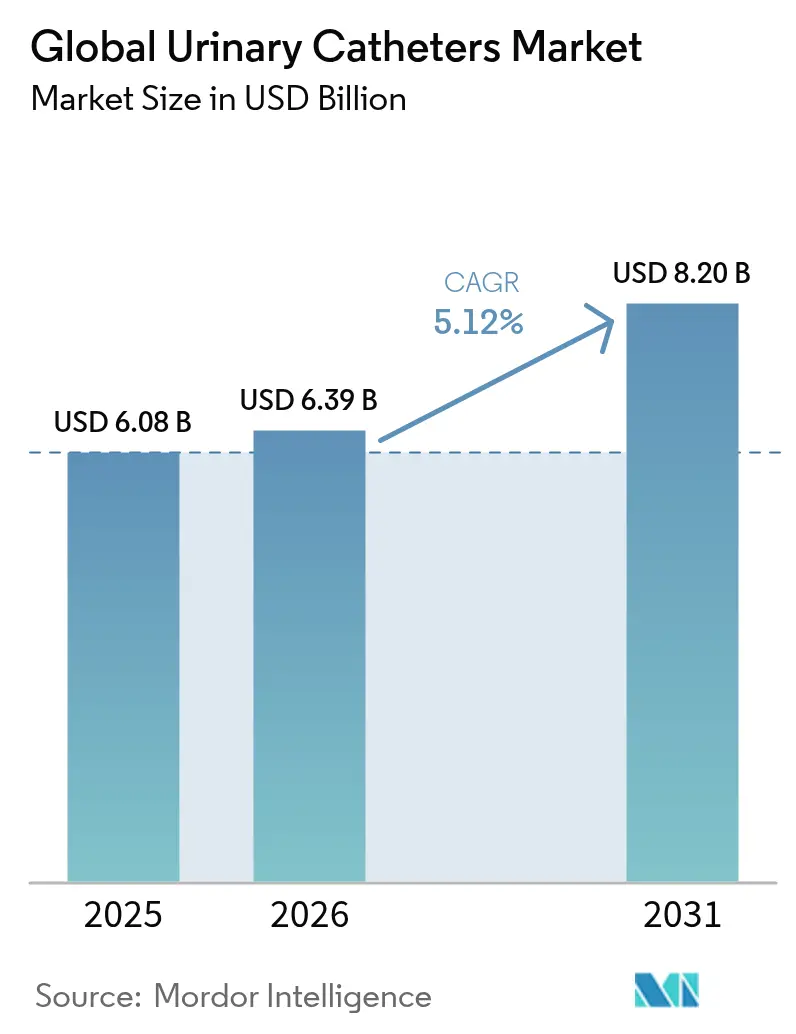
The urinary catheters market size is expected to grow from USD 6.08 billion in 2025 to USD 6.39 billion in 2026 and is forecast to reach USD 8.2 billion by 2031 at 5.12% CAGR over 2026-2031. Growth is supported by population ageing, rising urinary incontinence prevalence, and continuous product innovation that blends antimicrobial coatings with digital monitoring features. Value-based care incentives are steering hospitals toward premium catheters that cut infection risk, while home-care adoption is accelerating as reimbursement expands. Regulatory demands such as the EU Medical Device Regulation and the planned DEHP phase-out are encouraging sustainable biomaterials, lifting development costs but also opening niches for eco-friendly designs. Competitive intensity is heightening as large incumbents acquire, partner or launch new coating chemistries to retain share in an increasingly outcomes-driven market landscape.
Key Report Takeaways
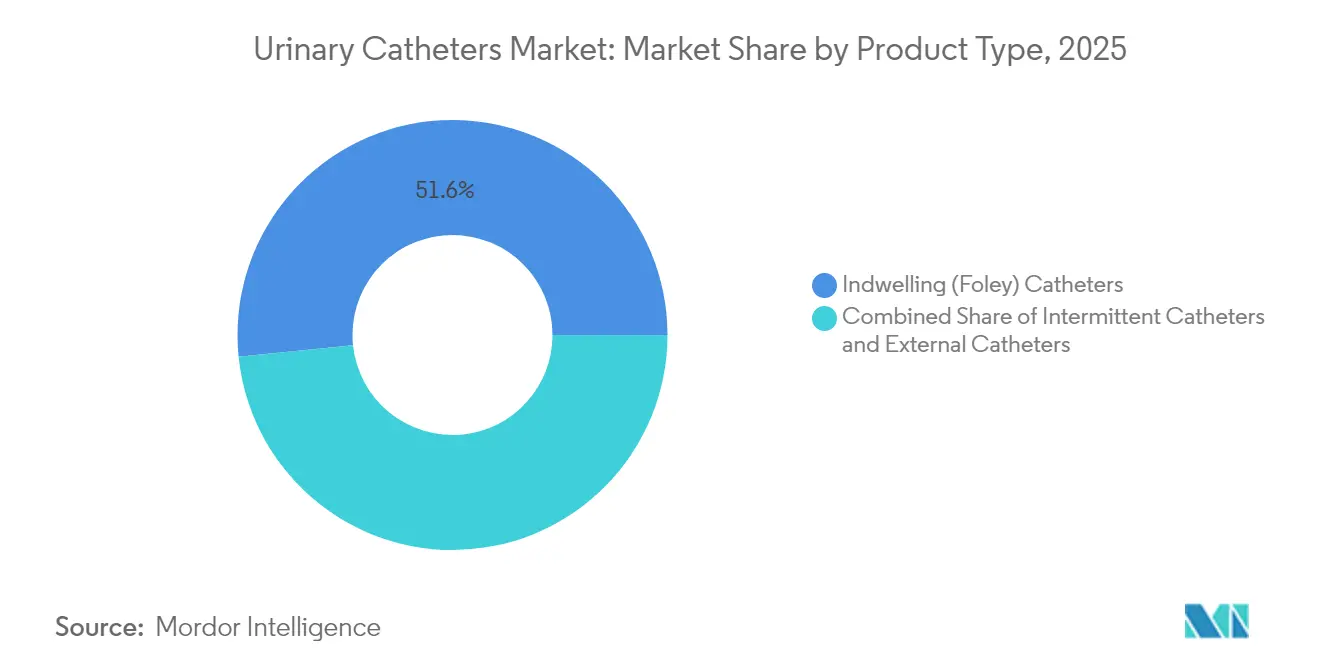
- By product type, indwelling catheters led with 51.62% of the urinary catheters market share in 2025; intermittent catheters are projected to log the fastest 5.73% CAGR to 2031.
- By gender, female patients generated 65.10% of 2025 revenue, while the male segment is set to grow at 6.05% CAGR through 2031.
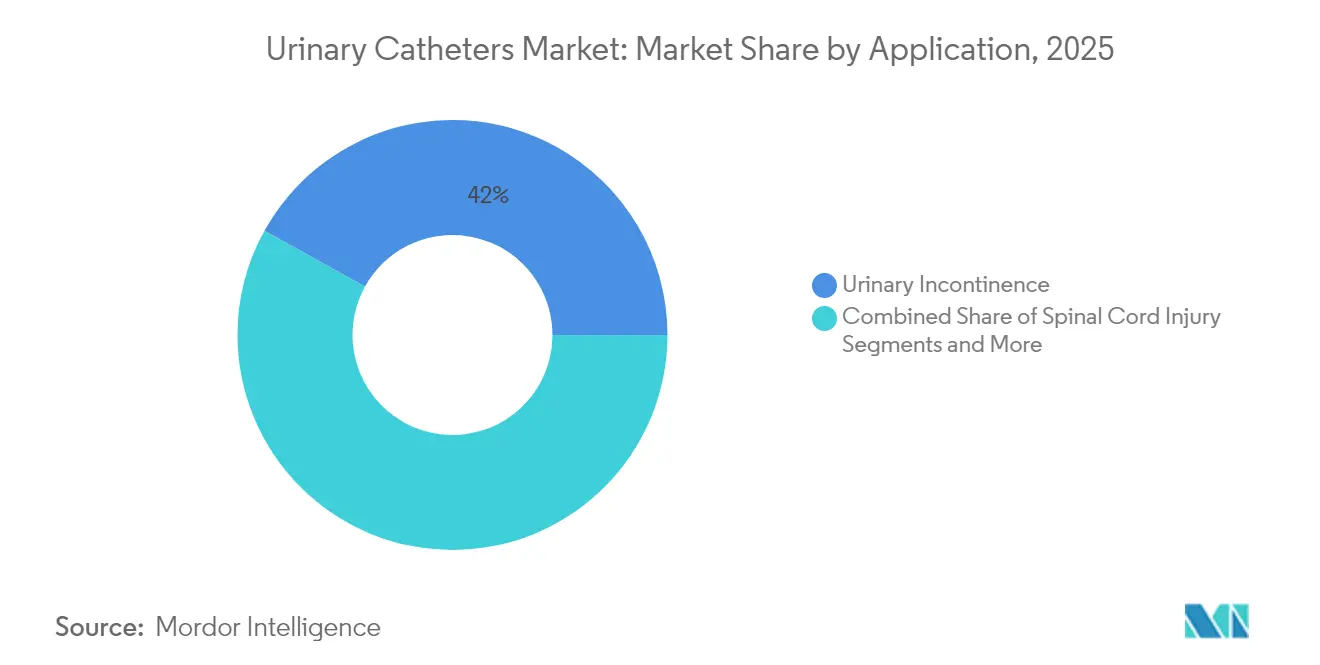
- By application, urinary incontinence accounted for a 41.95% slice of the urinary catheters market size in 2025, whereas spinal cord injury demand is advancing at a 6.44% CAGR to 2031.
- By end user, hospitals captured 66.88% revenue in 2025, yet the home-care channel is forecast to expand 6.79% annually to 2031.
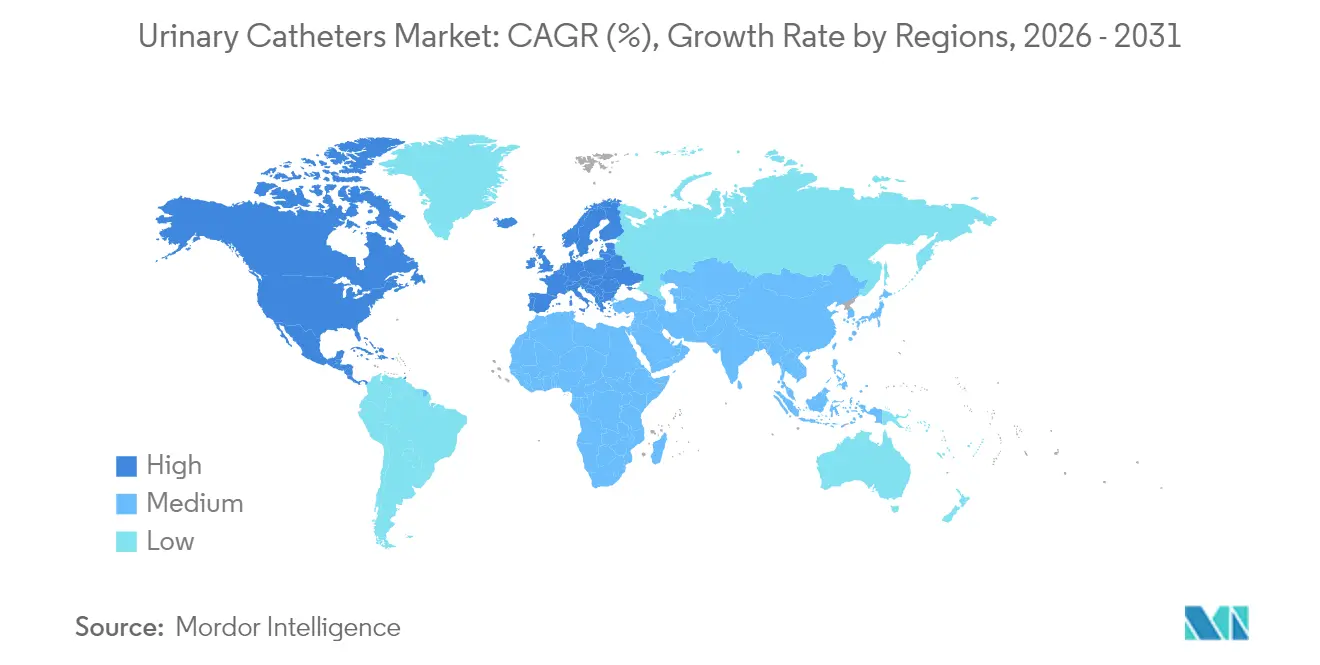
- By geography, North America dominated with 40.05% 2025 sales, and Asia-Pacific is expected to post the quickest 7.12% CAGR to 2031.
Note: Market size and forecast figures in this report are generated using Mordor Intelligence’s proprietary estimation framework, updated with the latest available data and insights as of 2026.
Market Trends and Insights
Drivers Impact Analysis of Global Urinary Catheters Market*
| Driver | (~) % Impact on CAGR Forecast | Geographic Relevance | Impact Timeline |
|---|---|---|---|
| Rising prevalence of urinary incontinence | +1.2% | North America & Europe | Long term (≥ 4 years) |
| Growing geriatric population | +1.0% | Asia-Pacific & North America | Long term (≥ 4 years) |
| Technological advances in coatings & biomaterials | +0.8% | North America, Europe, expanding Asia-Pacific | Medium term (2-4 years) |
| Increasing surgical procedure volumes | +0.7% | Global developed markets | Medium term (2-4 years) |
| E-commerce-enabled rise in self-catheterization | +0.5% | North America & Europe | Short term (≤ 2 years) |
| Introduction of female external urine-management devices | +0.4% | North America & Europe | Short term (≤ 2 years) |
| Source: Mordor Intelligence | |||
Rising Prevalence of Urinary Incontinence
Nursing homes report 76.5% incontinence prevalence, underscoring sustained demand for indwelling, intermittent and external devices [1]Daniela Furlanetto, “Urinary Incontinence in Nursing Homes,” BMC Geriatrics, bmcgeriatrics.biomedcentral.com. Functional incontinence now comprises 45.5% of cases, widening the addressable pool beyond older adults. Associated complications such as dermatitis and falls elevate care costs, positioning catheters as essential therapeutic tools rather than disposable commodities. Annual nursing-home expenditures tied to incontinence approach USD 5 billion, prompting insurers to back products that lower secondary morbidities. Higher diagnosis rates in skilled-nursing facilities versus home-care settings accentuate the importance of robust infection-resistant designs. As prevalence rises among community-dwelling seniors, manufacturers see clear momentum in supplying self-catheterization kits bundled with digital education.
Growing Geriatric Population
Benign prostatic hyperplasia (BPH) cases more than doubled from 1990 to 2022, reaching 112.5 million and affecting 80% of men older than 70. Spinal cord injury incidence of 23.77 per million adds decades-long catheter dependence, while population growth contributes nearly 95% of the uplift in case volumes. These overlapping morbidities create complex multi-indication scenarios that demand device portfolios tuned to neurogenic bladder, post-operative retention and chronic dysfunction in the same patient. As health systems grapple with multimorbidity in ageing cohorts, procurement priorities tilt toward versatile platforms that streamline inventory while satisfying diverging clinical needs.
Technological Advances in Coatings & Biomaterials
Catheter-associated urinary tract infections (CAUTIs) strike 8.5% of catheterized patients and account for 80% of nosocomial UTIs [2]Ibraheem Tay, “Silver-Alloy Catheters and CAUTI,” BMC Urology, bmcurol.biomedcentral.com. Silver-alloy surfaces cut bacterial adherence, and AI-guided drainage designs are emerging to thwart encrustation. ConvaTec embeds hydrophilic additives inside the polymer matrix to keep friction low across repeated insertions. Reusable intermittent systems such as Aurie demonstrated undetectable microbial counts after 100 sterile cycles [3]Mikael Johansson, “Reusable Intermittent Catheter Sterility,” Urology, urologyjournal.org . The pending DEHP phase-out in Europe accelerates the pivot to plant-based polymers even though bioplastics currently carry up to 40% cost premiums.
Increasing Surgical Procedure Volumes
Post-operative urinary retention affects as many as 70% of specific surgical cohorts, making temporary catheterization routine in enhanced recovery protocols. Medicare Part B spends more than USD 120 million each year on BPH interventions, reinforcing predictable peri-operative demand. Minimally invasive BPH solutions such as UroLift rose from 1.4% of procedures in 2015 to 16% in 2022, creating opportunities for specialty catheters suited to office-based settings. Hospitals increasingly seek devices that support same-day discharge and automatic urine-output monitoring, further blurring lines between urology and digital health ecosystems.
Restraints Impact Analysis of Global Urinary Catheters Market*
| Restraint | (~) % Impact on CAGR Forecast | Geographic Relevance | Impact Timeline |
|---|---|---|---|
| High risk & cost burden of CAUTI | –0.9% | Developed markets | Medium term (2-4 years) |
| Availability of non-catheter therapies for incontinence | –0.6% | North America & Europe | Long term (≥ 4 years) |
| Emerging single-use plastics regulation | –0.5% | Europe & North America | Medium term (2-4 years) |
| Limited reimbursement for premium smart/antimicrobial catheters | –0.4% | Emerging markets | Short term (≤ 2 years) |
| Source: Mordor Intelligence | |||
High Risk & Cost Burden of CAUTI
Intensive-care CAUTI rates average 8.83% and extend hospital stays, attracting financial penalties under value-based purchasing. Hospitals are rolling out nurse-led removal algorithms that trimmed retention from 30% to 6.7% in hip-fracture patients, demonstrating that prevention can erode procedure volume. Wide disparity between high- and low-income countries means adoption curves for antimicrobial catheters remain uneven. Payors favor devices with robust infection data, yet spending caps push providers to shorten catheter duration, dampening unit sales even as premium ASPs hold.
Availability of Non-Catheter Therapies for Incontinence
Neuromodulation, implants and new pharmacotherapies are broadening the therapeutic arsenal. UroMems’ smart sphincter implant met all six-month endpoints in the first female feasibility study and secured USD 47 million to scale trials. Boston Scientific’s USD 3.7 billion purchase of Axonics signifies confidence in catheter-free incontinence management. The FDA approved gepotidacin, the first oral antibiotic for uncomplicated UTIs in 30 years, potentially moderating catheter use by preventing recurring infections. These options reduce chronic indwelling dependence and may redirect spending toward curative pathways over time.
*Our forecasts treat driver/restraint impacts as directional, not additive. The impact forecasts reflect baseline growth, mix effects, and variable interactions.
Global Urinary Catheters Market Segment Analysis
By Product Type:
Indwelling Dominance Amid Intermittent InnovationIndwelling Foley devices retained 51.62% revenue in 2025 and remain the cornerstone of acute in-patient care. Intermittent catheters, however, are forecast to grow 5.73% annually, propelled by evidence of lower infection incidence and higher patient comfort. External catheters occupy a niche yet benefit from high user-satisfaction scores and clear reimbursement coding in the United States.
Design competition now hinges on hydrophilic coatings, integrated lubrication packets and antimicrobial alloys. ConvaTec reports that hydrophilic models already contribute 60% of Continence Care turnover, and new HCPCS reimbursement codes effective 2026 are expected to boost premium adoption. Engineering advances such as micro-hole drainage channels lower residual volumes to under 6 mL, a benchmark that supports patient safety in both hospital and home settings.



By Gender:
Female Segment Leadership Drives InnovationFemale users generated 65.10% of 2025 demand due to a 61% prevalence of urinary incontinence in women older than 50. Male demand is projected to advance 6.05% CAGR through 2031 as BPH and post-prostatectomy care require intermittent or temporary devices.
Innovation pathways diverge by anatomy. ConvaTec launched a women-specific intermittent line that is scaling across Europe following strong clinician acceptance. For male patients, clean intermittent self-catheterization yields fewer complications after BPH surgery versus indwelling alternatives. External male systems designed around latex-free sheaths are carving a preventive role by eliminating insertion trauma altogether, positioning the urinary catheters market for differential growth across gender lines.
By Application:
Incontinence Leadership with SCI Growth MomentumUrinary incontinence represented 41.95% of revenue in 2025, anchoring the urinary catheters market amid demographic expansion. Spinal cord injury demand is forecast to post a 6.44% CAGR as survival extends and neurogenic bladder management protocols become standardized worldwide.
Application complexity is rising: hydrophilic intermittent devices reduce UTI incidence in SCI cohorts, while early removal strategies cut complications after pelvic surgery. Technology such as the Optilume BPH Catheter achieved 67.5% patient improvement at two years, illustrating the market’s move toward indication-specific efficacy. Developers focusing on flexible portfolios addressing multiple pathologies are best positioned to capture cross-over purchasing in hospital formularies.
By End User:
Hospital Dominance with Home-Care AccelerationHospitals held 66.88% of consumption in 2025, reflecting mandatory catheterization in surgery, emergency and intensive-care pathways. The home-care channel is forecast to expand 6.79% yearly as Medicare now funds female external systems under durable medical equipment codes at 80% co-pay coverage.
E-commerce distribution platforms, telehealth and automated drainage monitors are simplifying self-catheterization at home. Innovations such as intelligent bladder-irrigation pumps with Bluetooth analytics are enabling continuity of care that rivals inpatient oversight. Long-term-care facilities remain critical, yet rising regulatory scrutiny on CAUTI prevention incentivizes faster discharge to home settings, further lifting ambulatory demand within the urinary catheters market.
Geography Analysis
North America Urinary Catheters Market
North America contributed 40.05% of 2025 sales, underpinned by Medicare reimbursement for premium external systems and an estimated USD 11 billion national spend on urologic disorders. Streamlined 510(k) pathways facilitate innovation: recent clearances include wireless urodynamic platforms that eliminate diagnostic catheters, yet still spur follow-on treatment device uptake.
Europe Urinary Catheters Market
Europe is shaped by stringent regulation. Half of local manufacturers trimmed product lines due to MDR certification costs, concentrating share with well-capitalized multinationals. The DEHP restriction effective July 2030 accelerates the shift to bioplastic substrates despite 20-40% higher input costs . Device makers with early-stage green portfolios are likely to capture hospital tenders that favor sustainability metrics embedded in purchasing frameworks.
APAC Urinary Catheters Market
Asia-Pacific is on track for a 7.12% CAGR, propelled by rising procedure volumes, expanding insurance coverage and a domestic medtech sector expected to top USD 225 billion by 2030. China’s spinal cord injury caseload grew 63% since 1990, translating into sustained intermittent-catheter demand. Emerging hubs such as Taiwan show double-digit gains in catheter imports, benefiting firms that pair off-shore manufacturing with localized regulatory know-how. Diverse reimbursement rules, however, require tailored go-to-market playbooks to avoid pricing misalignment.
Mordor Intelligence provides coverage of the global urinary catheters market across other key regional markets, including Europe, each with their regulatory frameworks and demand patterns.

Regulatory Landscape
Urinary catheters are regulated as medical devices in major markets, and the United States treats urological catheters (including Foley types) as Class II devices under 21 CFR 876.5130. This generally requires FDA 510(k) clearance, along with ongoing post-market surveillance under the agency's Total Product Life Cycle (TPLC) framework. FDA-recognized consensus standards also shape design and verification, including ISO 20696:2018 for sterile urethral catheters for single use, which influences test methods and performance expectations used in submissions.
In Europe, the EU Medical Device Regulation (MDR) continues to raise the bar on clinical evidence and conformity assessment. This is contributing to portfolio rationalization among smaller manufacturers and favoring larger suppliers that can sustain certification and post-market obligations. Regulatory requirements are also tightening expectations around labeling and safety features, illustrated by Teleflex Medical Sdn. Bhd. receiving FDA 510(k) clearance in January 2026 (K252537) for Rusch SoftSimplastic Foley Catheters with MR-conditional labeling aligned to ASTM MRI safety standards, reinforcing MRI-compatibility as a growing compliance and procurement consideration.
Value Chain Analysis
The urinary catheter value chain begins with upstream sourcing of medical-grade polymers (silicone, latex, polyurethane) and specialized inputs such as hydrophilic coatings, antimicrobial additives, and sterilization consumables. Midstream activities include design engineering, extrusion/molding, coating application, and sterile processing under quality-system controls. Downstream, products move through hospital procurement channels (including GPO-linked tenders), distributors, and home-care/DME networks, while retail and e-commerce increasingly support intermittent self-catheterization kits and patient-directed supplies.
Recent shifts point to both innovation and distribution leverage points. In May 2026, Aurie received FDA De Novo marketing authorization for a reusable intermittent urinary catheter system, creating a new Class II regulatory category and enabling reusability-oriented supply models. On the channel side, US reimbursement and distribution mechanics continue to tighten as CMS moves toward national competitive bidding for DMEPOS items and annual supplier accreditation requirements starting in 2026, with supply continuity also remaining a constraint as reflected in 2026 procurement notices citing intermittent supply challenges for certain catheter types.
Competitive Landscape
The urinary catheters market is moderately concentrated, with Coloplast, Becton Dickinson, B.Braun, Teleflex and ConvaTec commanding a majority of global revenue. Players leverage infection-control technology, portfolio breadth and geographic reach to defend share. Boston Scientific’s USD 3.7 billion Axonics purchase underscores escalating interest in adjacent continence solutions that may limit catheter dependency. Teleflex plans to split into two entities by 2026, creating a dedicated urology and acute-care business to sharpen R&D focus.
Manufacturers are racing to differentiate through material science. ConvaTec’s FeelClean platform embeds lubricious agents in the polymer backbone, whereas Bactiguard’s noble-metal alloy Foley line obtained the first MDR approval for an indwelling catheter in 2023, offering proven antimicrobial performance. Smart sensors that enable real-time flow analytics are another frontier, with start-ups licensing AI algorithms to legacy OEMs seeking rapid market entry.
Supply-chain resilience also shapes strategy after pandemic-era shortages drove the FDA to classify urinary catheters among 142 critical devices. Firms with vertically integrated molding, extrusion and coating capacity tout lower risk of back-orders, a factor increasingly factored into long-term hospital purchasing contracts. Sustainable sourcing and recyclable packaging further enter bid evaluations as single-use plastics scrutiny grows.
Global Urinary Catheters Industry Leaders
Boston Scientific Corporation
Hollister Incorporated
Teleflex Incorporated
B Braun Melsungen AG
Medtronic PLC
- *Disclaimer: Major Players sorted in no particular order
Global Urinary Catheters Market Companies Covered in this Report
- Coloplast
- Becton Dickinson & Company (incl. C. R. Bard)
- B. Braun
- Teleflex
- Hollister
- Boston Scientific
- Convatec
- Amsino International
- CompactCath Inc.
- Cure Medical
- Cardinal Health
- Bactiguard AB
- Pennine Healthcare
- Go Medical Industries
- Medical Device Innovations Group
- Medtronic
- UroDev Medical
- WellSpect Healthcare

Market Opportunities and Future Outlook
One opportunity area is premium intermittent and external urine-management solutions that reduce infection risk and improve ease of use across home-care and institutional settings, supported by product activity in 2026. Wellspect HealthCare expanded external management options with the Surity Female External Catheter (launched in the US in January 2026) and added male external coverage with the Surity Male External Catheter (April 2026), reflecting whitespace in female-focused external drainage and broader adoption of non-invasive alternatives to indwelling devices.
Materials and design innovation is another active lane tied to CAUTI prevention and patient comfort, with multiple 2026 launches targeting hydrophilic performance and improved bladder emptying. Wellspect introduced LoFric Elle Pro (March 2026) and LoFric Origo Pro (June 2026), both featuring 12 smooth eyelets, while HR HealthCare expanded its intermittent portfolio with the EZ-Protect Hydrophilic Closed System Intermittent Catheter (March 2026) aimed at touchless catheterization. Upstream enabling technologies are also widening the design space, such as Zeus launching its PFX platform in January 2026 to offer catheter liner alternatives with enhanced lubricity and bond strength, and 2026 clinical research reporting non-inferior short-term bacteriuria outcomes for poly-L-lysine coated catheters versus noble metal alloy coatings, supporting continued R&D and differentiated claims where evidence thresholds are met.
Recent Industry Developments in Global Urinary Catheters Market
- May 2026: Aurie received FDA De Novo authorization for its reusable no-touch intermittent urinary catheter system, establishing a new Class II regulatory category for reusable intermittent catheters. The clearance formalizes a regulatory pathway for reusability-led designs and supports competitive differentiation around sustainability and cost of ownership in home-care and institutional settings.
- March 2026: Boston Scientific received FDA 510(k) clearance for the Asurys Fluid Management System intended for irrigation and distention in urologic procedures. The system supports procedure efficiency and complements broader urology portfolios that influence downstream catheter utilization in peri-operative pathways.
- November 2025: Hollister reported that Medicare Administrative Contractors agreed to expand access to closed system intermittent catheters for Medicare beneficiaries with spinal cord injuries, effective January 1, 2026. The coverage change reduces prior access barriers and strengthens the reimbursement foundation for higher-value closed system intermittent offerings in the US home-care channel.


Global Urinary Catheters Market Report Scope and Research Methodology
Market Definition and Coverage
For this study, the urinary catheter market covers revenues from urinary catheters used to drain urine in hospital, clinic, long-term care, and home-care settings. It includes indwelling (Foley), intermittent, and external (condom) catheters sold globally, valued at net manufacturer-level revenue after standard channel adjustments.
Scope exclusions: Catheter accessories and adjacent consumables such as drainage bags, lubrication gels, and infection-control dressings are not counted in the market value.
Segments Covered in This Report
- By Product Type
- Indwelling (Foley) Catheters
- Intermittent Catheters
- External/Condom Catheters
- By Gender
- Male
- Female
- By Application
- Urinary Incontinence
- Benign Prostate Hyperplasia
- Spinal Cord Injury
- Post-operative Urinary Retention
- Others
- By End User
- Hospitals
- Long-term Care Facilities
- Home-care Settings
- By Geography
- North America
- United States
- Canada
- Mexico
- Europe
- Germany
- United Kingdom
- France
- Italy
- Spain
- Rest of Europe
- Asia-Pacific
- China
- Japan
- India
- Australia
- South Korea
- Rest of Asia-Pacific
- Middle East & Africa
- GCC
- South Africa
- Rest of Middle East & Africa
- South America
- Brazil
- Argentina
- Rest of South America
- North America
Data Sources, Market Sizing, and Validation
Desk Research
Desk work started by aligning product definitions with how urinary catheters are regulated and purchased across regions, and then mapping demand signals to procedure and disease patterns. Public sources were used to anchor the demand pool and treatment pathways, such as health statistics from the World Health Organization, the US CDC, OECD health data, and national health ministries, as well as guidance and clinical evidence from sources such as the NIH and peer-reviewed urology journals.
We also reviewed device safety and recall signals and trade flows that can explain short-term swings in supply, using sources such as the US FDA public databases and UN Comtrade style customs statistics. Company annual reports, investor presentations, earnings commentary, and reputable medical-device press were used to cross-check portfolio mix and pricing direction. Where needed for calibration, we referenced paid subscriptions for company financials and intelligence, patent databases, and an import and export shipment-level database, and then reconciled those signals with the rest of the evidence. The sources listed above are illustrative, and other public references were also used for data collection, validation, and clarification.
Primary Interviews and Surveys
Fieldwork focused on validating how volumes and net prices move by catheter type and care setting, since channel margins and tendering can shift the realized revenue quickly. We spoke with a mix of manufacturers, distributors, procurement teams, and clinicians across major regions so assumptions from desk research could be corrected, and then rechecked when responses showed a wide spread.
Distribution of primary research fieldwork respondents
| Company type | Respondent position | Region |
|---|---|---|
| Top tier: 31% | CXOs: 15% | APAC: 41% |
| Mid tier: 53% | Functional/Unit leaders: 25% | EMEA: 34% |
| Smaller Players: 16% | Managers: 60% | Americas: 25% |
Market-Sizing & Forecasting
Sizing starts with a top-down build where the treated patient pool is translated into catheter consumption. We reconstructed demand using prevalence and incidence signals linked to urinary incontinence, BPH, post-surgery catheterization, and neurogenic bladder care, and then applied typical catheterization rates by setting, along with replacement frequency and average units used per episode.
After the demand pool is built, the value layer is applied using net price points that reflect mix by indwelling, intermittent, and external catheters, plus expected shifts toward coated or infection-reducing designs where adoption is visible. Key inputs that are checked repeatedly include procedure volumes where catheterization is routine, catheter days in acute care, long-term catheter utilization in elderly care, public reimbursement direction for urology supplies, and import intensity in markets that rely on external supply. Bottom-up approximations were then used as a reality check, including selective supplier roll-ups, sampled ASP x volume math by region, and distributor feedback on channel stocking, which helped fill gaps where public data is thin.
For forecasting, we used scenario analysis supported by expert views on adoption pace and pricing, since infection-prevention focus, home-care growth, and policy shifts can move the slope. Volume drivers were projected first, then pricing was updated with expected material mix changes and currency timing, and finally the model was rebalanced when the implied revenue per patient moved outside realistic ranges.
Data Validation & Update Cycle
Validation is handled in steps so the final totals remain traceable to clear inputs. Model outputs are compared against independent signals such as catheter-related procedure counts, trade and supply direction, and safety event patterns, and then large variances are reviewed by another analyst before sign-off.
When interview feedback indicates a sudden pricing move, a change in tender behavior, or an unexpected shift between catheter types, assumptions are revisited and respondents may be re-contacted to confirm what changed and why. Reports are refreshed annually, and interim updates are made when material events occur. Before delivery, a final pass is completed so clients receive the most current view based on the latest available information.
Mordor Intelligence's Urinary Catheter Market Size Compared Against Other Published Estimates
Published market values for urinary catheters can look inconsistent because each publisher draws the line differently on what gets counted, which year is treated as the base, and whether prices reflect list levels or net realized levels. Differences also show up when one model leans more on epidemiology and utilization, while another leans more on supply-side revenue rollups.
The main gap comes from whether catheter accessories are bundled into the total and how net revenue is derived, where Mordor Intelligence keeps the scope to urinary catheters (indwelling, intermittent, and external) and excludes drainage bags and lubrication gels, which can widen the spread versus estimates that count a broader urology consumables basket.
Benchmark comparison
| Source | Market Size | Gaps in Research Methodology |
|---|---|---|
| Mordor Intelligence | USD 6.39 B (2026) | |
| Industry Research Publisher A | USD 6.17 B (2024) | Uses a different base year and may apply alternate segment coverage and pricing logic, which can shift totals when product mix and net discounting are treated differently across regions. |
| Global Consultancy B | USD 6.89 B (2026) | Often reflects broader inclusion choices and a separate forecast window, and the total can rise if adjunct items or higher realized ASP progression assumptions are embedded into the valuation. |
The spread in the table is largely explained by scope and pricing treatment, and then amplified by base-year choice and the assumed pace of mix shift toward higher priced catheter types. By keeping the model tied to a clear treated-demand build and then cross-checking with supplier and channel feedback, the final value stays understandable, repeatable, and easier to audit when assumptions need to be updated.


Key Questions Answered in the Report
What is the current Global Urinary Catheters Market size?
The urinary catheters market size reached USD 6.39 billion in 2026 and is projected to hit USD 8.2 billion by 2031.
Who are the key players in Global Urinary Catheters Market?
Boston Scientific Corporation, Hollister Incorporated, Teleflex Incorporated, B Braun Melsungen AG and Medtronic PLC are the major companies operating in the Global Urinary Catheters Market.
Which is the fastest growing region in Global Urinary Catheters Market?
Asia-Pacific is forecast to expand at a 7.12% CAGR between 2026 and 2031 on the back of rising procedure volumes and improving reimbursement.
Which region has the biggest share in Global Urinary Catheters Market?
In 2025, the North America accounts for the largest market share in Global Urinary Catheters Market.
Which catheter type holds the largest share?
Indwelling Foley catheters led with 51.62% of the urinary catheters market share in 2025.
Page last updated on:


 Your data is secure and never sold or shared.


