
United States Fruit Puree Market Size and Share
Market Overview
| Study Period | 2021 - 2031 |
|---|---|
| Forecast Data Period | 2026 - 2031 |
| Base Year Market Size (2025) | USD 2.67 Billion |
| Market Size (2026) | USD 2.78 Billion |
| Market Size (2031) | USD 3.57 Billion |
| Growth Rate (2026 - 2031) | 5.13 % |
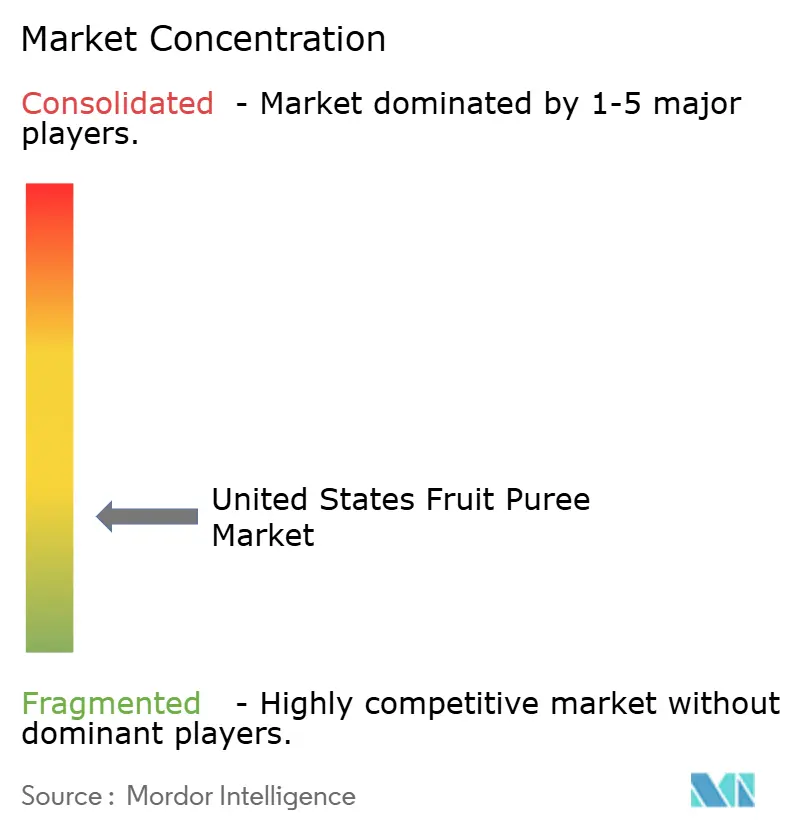
| Market Concentration | Low |
Major Players
*Disclaimer: Major Players sorted in no particular order Image © Mordor Intelligence. Reuse requires attribution under CC BY 4.0. |
|
United States Fruit Puree Market Analysis by Mordor Intelligence
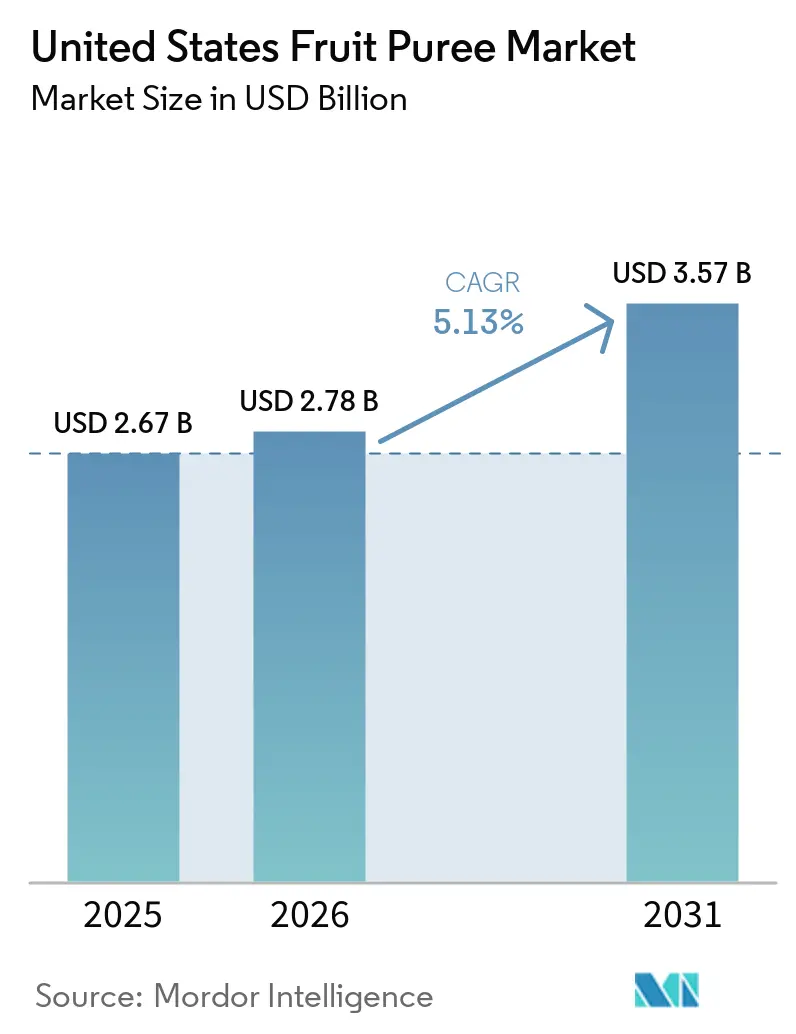
The United States fruit puree market was valued at USD 2.67 billion in 2025 and is expected to reach USD 2.78 billion in 2026. It is projected to grow to USD 3.57 billion by 2031, registering a CAGR of 5.13% during the forecast period (2026–2031). This growth is primarily driven by increasing consumer demand for natural, clean-label, and minimally processed ingredients, as more individuals prefer products with recognizable components and fewer artificial additives. Additionally, market expansion is supported by rising interest in diverse fruit flavors, premium taste experiences, and innovative product formulations. The growing preference for tropical and unique fruit profiles is further boosting the adoption of fruit purees, valued for their ability to provide authentic fruit characteristics while ensuring consistency and convenience.
Key Report Takeaways
- By fruit type, apple held 32.67% share in 2025, while mango recorded the highest forecast CAGR of 5.81% through 2031.
- By category, conventional held 75.89% share in 2025, while organic is projected to expand at a 6.19% CAGR through 2031.
- By application, baby food and infant nutrition accounted for 31.29% share in 2025, while beverages are projected to grow at a 6.81% CAGR through 2031.
Note: Market size and forecast figures in this report are generated using Mordor Intelligence’s proprietary estimation framework, updated with the latest available data and insights as of January 2026.
United States Fruit Puree Market Trends and Insights
Drivers Impact Analysis*
| Driver | (~) % Impact on CAGR Forecast | Geographic Relevance | Impact Timeline |
|---|---|---|---|
| Demand for clean label and natural ingredients | +1.2% | National, with premium adoption in coastal metros (California, New York, Pacific Northwest) | Short term (≤ 2 years) |
| Increasing consumer interest in exotic and tropical flavors | +0.8% | National, with early concentration in Southwest, Southeast, and major urban markets | Medium term (2–4 years) |
| Product innovation and diversification | +0.7% | National, with foodservice-led innovation clusters in California and Northeast | Medium term (2–4 years) |
| Growth of organic and non-GMO fruit puree products | +0.9% | Pacific Northwest, California, and Northeast, high organic retail penetration | Long term (≥ 4 years) |
| Advancements in processing and preservation technologies | +0.6% | National, with HPP adoption concentrated near processing hubs in Pacific Northwest and Midwest | Long term (≥ 4 years) |
| Demand for plant-based and vegan food products | +0.5% | National, with fastest growth in Midwest and coastal metros | Long term (≥ 4 years) |
| Source: Mordor Intelligence | |||
Demand for clean label and natural ingredients
The growing demand for clean-label and natural ingredients is a significant factor driving the expansion of the United States fruit puree market. According to the International Food Information Council (IFIC), by 2025, 41% of Americans are expected to prefer products labeled as “natural,” reflecting an increasing consumer emphasis on ingredient transparency and minimally processed food options [1]Source: International Food Information Council (IFIC), "2025 IFIC Food & Health Survey", ific.org. This trend is strongly promoting the use of fruit purees, which offer natural sweetness, authentic fruit flavor, color, and texture while reducing the need for artificial additives, synthetic flavors, and processed sweeteners. Additionally, heightened awareness of simple ingredient formulations and easily recognizable food components is encouraging manufacturers to actively integrate fruit purees into product development to align with evolving clean-label preferences.
Increasing consumer interest in exotic and tropical flavors
The growing consumer interest in exotic and tropical flavors is a significant factor driving the growth of the United States fruit puree market. Consumers are increasingly seeking unique and globally inspired taste experiences. According to the Observatory of Economic Complexity (OEC), the United States imported USD 5.69 billion worth of tropical fruits in 2025, highlighting strong demand and availability of these varieties [2]Source: Observatory of Economic Complexity (OEC), "Tropical Fruits in United States 🇺🇸", oec.world. The rising popularity of flavors such as mango, passion fruit, guava, and pineapple is boosting the use of fruit purees, which offer authentic taste, natural sweetness, vibrant color, and enhanced sensory appeal. The preference for innovative and premium fruit experiences is prompting manufacturers to use tropical fruit purees as natural alternatives to artificial flavors, colors, and sweeteners. These purees enable the creation of differentiated formulations while aligning with consumer expectations for clean-label and fruit-forward products.
Product innovation and diversification
Product innovation and diversification are significant factors driving the growth of the United States fruit puree market. Manufacturers are increasingly focusing on developing formulations that cater to changing consumer preferences for natural, nutritious, and convenient products. Advances in fruit processing, blending techniques, and preservation technologies are facilitating the production of purees with enhanced taste, texture, color stability, and nutrient retention. Developments such as multi-fruit blends, exotic flavor combinations, reduced-sugar options, organic offerings, and the inclusion of functional ingredients are broadening the applications of fruit purees in various food and beverage products. Furthermore, the rising demand for differentiated and premium fruit-based products is prompting producers to explore new fruit varieties, customized puree solutions, and formulations tailored to specific applications.
Growth of organic and non-GMO fruit puree products
The increasing demand for organic and non-GMO fruit puree products is driving market growth as consumers place greater emphasis on naturally sourced ingredients, transparency, and products free from synthetic pesticides or genetically modified components. This trend has prompted manufacturers to expand their organic fruit ingredient offerings and develop purees that meet clean-label and sustainable food preferences. For example, Global Organics, Ltd. provides a diverse range of organic fruit purees, such as Organic Blackberry Purée, Organic Raspberry Purée, Organic Blueberry Purée, and Organic Wild Blueberry Purée, addressing the growing demand for certified organic fruit-based ingredients. The rising availability of organic fruit varieties, advancements in sourcing practices, and increased adoption of organic formulations continue to drive innovation and support the growth of organic and non-GMO fruit puree products.
Restraints Impact Analysis*
| Restraint | (~) % Impact on CAGR Forecast | Geographic Relevance | Impact Timeline |
|---|---|---|---|
| Seasonal availability and fluctuation in fruit supply | -0.5% | National; most acute for tropical varieties sourced from Mexico and Southeast Asia | Short term (≤ 2 years) |
| Short shelf life and quality degradation challenges | -0.4% | National, particularly for non-aseptic, refrigerated puree formats in inland distribution corridors | Medium term (2–4 years) |
| Complex storage and cold chain requirements | -0.4% | Inland and Southern United States markets with limited cold-chain density | Medium term (2–4 years) |
| High processing and preservation challenges | -0.3% | National; disproportionate impact on smaller regional processors lacking HPP or aseptic infrastructure | Long term (≥ 4 years) |
| Source: Mordor Intelligence | |||
Seasonal availability and fluctuation in fruit supply
Seasonal availability and fluctuations in fruit supply pose significant challenges for the United States fruit puree market, as production relies heavily on a steady supply of high-quality fresh fruits. Factors such as variations in harvesting periods, changing weather conditions, crop diseases, and agricultural uncertainties can affect fruit yield, quality, and supply continuity. Given the perishable nature of fruits, any disruption in availability can hinder consistent production volumes, flavor profiles, color, and nutritional characteristics. Furthermore, variations in fruit maturity, sugar content, and texture across harvest seasons complicate the standardization of puree quality. These supply inconsistencies necessitate effective storage, preservation, and sourcing strategies, making it difficult for manufacturers to ensure year-round product consistency and meet increasing demand.
Short shelf life and quality degradation challenges
Short shelf life and quality degradation present significant challenges for the United States fruit puree market. Due to their high moisture content, fruit purees are highly susceptible to microbial growth, oxidation, and changes in sensory properties. Preserving the original taste, color, aroma, texture, and nutritional profile of the fruit during storage and distribution is challenging without effective preservation methods. Exposure to temperature fluctuations, oxygen, and prolonged storage can result in flavor deterioration, discoloration, nutrient loss, and changes in consistency, ultimately reducing product quality and usability. Furthermore, the requirement for advanced processing technologies, specialized packaging, and controlled storage conditions adds to the operational complexity for manufacturers. These factors make it difficult to produce minimally processed, clean-label fruit puree products while ensuring freshness, safety, and extended shelf life.
*Our forecasts treat driver/restraint impacts as directional, not additive. The impact forecasts reflect baseline growth, mix effects, and variable interactions.
Segment Analysis
By Fruit Type: Apple Dominates, but Tropical Varieties Reframe the Growth Story
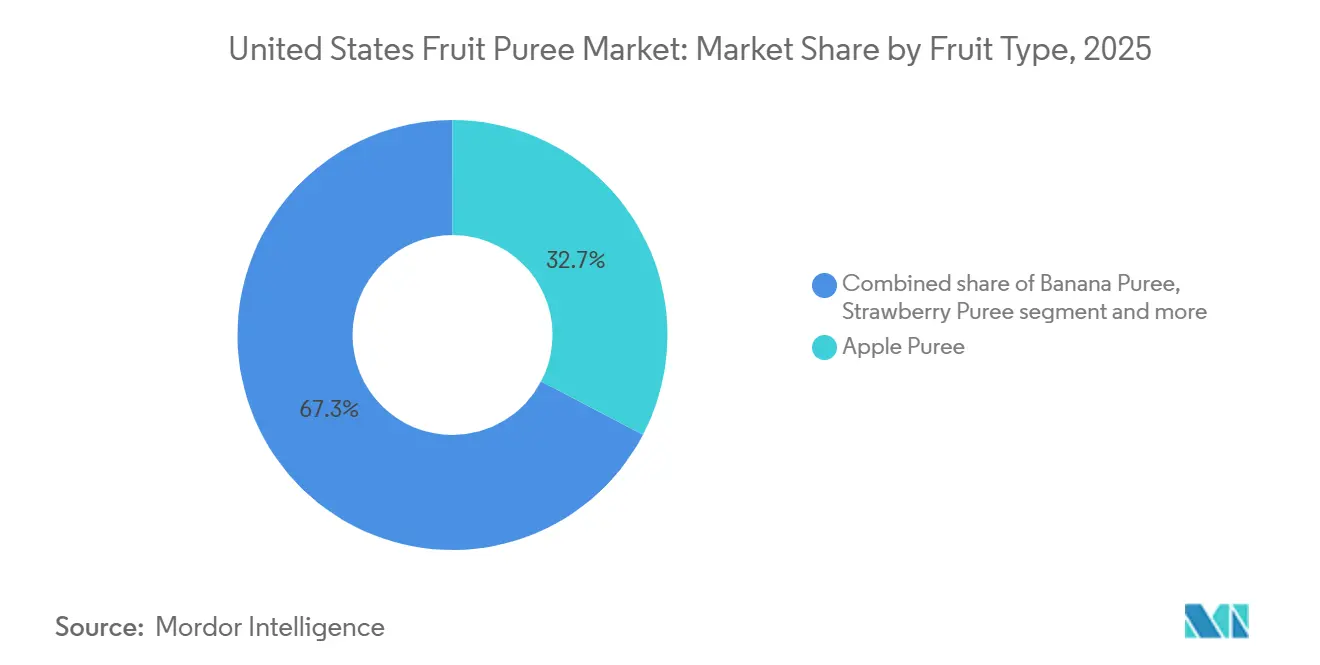
Apple puree accounted for 32.67% of the market share in 2025, supported by the abundant availability of apples as a raw material and their adaptable processing characteristics. According to the National Agricultural Statistics Service (NASS), apple production increased from 5,452.5 thousand tons in 2024 to 5,551 thousand tons in 2025, ensuring a consistent supply for puree manufacturing [3]Source: National Agricultural Statistics Service (NASS), "Production volume of apple in the United States", nass.usda.gov. This growth is primarily attributed to apples’ naturally balanced sweetness, mild flavor, smooth texture, and high compatibility with various processed food formulations. Additionally, apples contain natural pectin, which enhances thickness, mouthfeel, and consistency, reducing the need for additional stabilizing ingredients. The rising preference for natural, minimally processed, and clean-label ingredients has further driven the adoption of apple puree as a substitute for artificial sweeteners, flavors, and texturizing agents.
Mango puree is expected to grow at a CAGR of 5.81% through 2031, driven by increasing consumer demand for tropical and naturally flavorful fruit ingredients. This growth is supported by mango’s unique taste profile, natural sweetness, vibrant color, and smooth consistency, making it ideal for premium and innovative food formulations. The rising demand for clean-label and fruit-based ingredients is promoting the use of mango puree as a natural alternative to artificial flavors, colors, and sweeteners. Furthermore, mango puree offers nutritional benefits, including vitamins, antioxidants, and dietary fiber, aligning with the growing emphasis on healthier and minimally processed products. Advancements in processing technologies, such as aseptic packaging and improved preservation methods, are also enhancing shelf stability while retaining fresh taste, aroma, and nutritional quality.



By Category: Conventional Holds the Volume Base While Organic Redefines the Value Ceiling
Conventional fruit puree accounted for 75.89% of the market share in 2025, driven by its widespread availability, established production infrastructure, and suitability for large-scale processing. This segment benefits from consistent raw material sourcing, standardized quality, and efficient manufacturing processes that enable high-volume production. Conventional purees are preferred for their ability to maintain desired taste, texture, color, and functionality while offering formulation flexibility across various processed products. Additionally, advancements in processing, preservation, and packaging technologies have enhanced product stability, extended shelf life, and preserved nutritional and sensory characteristics. The consistent performance, year-round availability, and broad compatibility with diverse formulations continue to reinforce the strong dominance of conventional fruit puree in the market.
Organic fruit puree is projected to grow at a CAGR of 6.19% through 2031, fueled by the increasing shift toward natural, chemical-free, and sustainably produced food ingredients. According to the Organic Trade Association, organic food sales rose from USD 63.8 billion in 2023 to USD 65.4 billion in 2024, reflecting growing consumer preference for organic-certified products. This rising demand is driving the adoption of organic fruit purees, as consumers increasingly seek products free from synthetic pesticides, artificial additives, and genetically modified ingredients. Greater awareness of ingredient transparency, clean-label formulations, and minimally processed foods is further supporting demand, as organic purees align with preferences for simple and naturally sourced ingredients.
By Application: Baby Food Anchors Revenue, Beverages Drive Incremental Growth
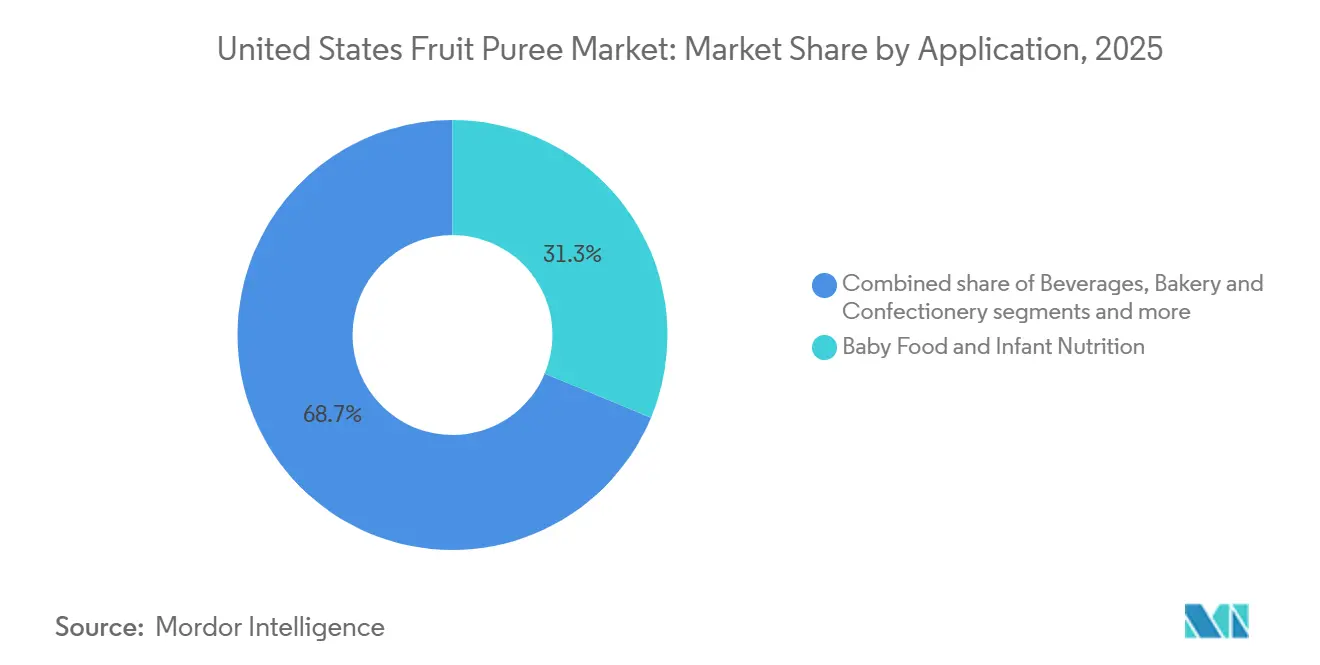
Baby food and infant nutrition accounted for the largest application share at 31.29% in 2025, driven by a strong preference for fruit-based ingredients that offer natural sweetness, smooth texture, and essential nutrients suitable for early-stage nutrition. Fruit purees are widely utilized due to their ease of consumption, digestibility, and ability to deliver vitamins, minerals, antioxidants, and dietary fiber in convenient formats. The growing demand for clean-label, minimally processed, and additive-free nutritional products has led to increased use of fruit purees as alternatives to artificial flavors, colors, and sweeteners. Additionally, the focus on balanced nutrition, early introduction of diverse fruit flavors, and convenient ready-to-use formats continues to support their consumption.
The beverages segment is projected to grow at a CAGR of 6.81% through 2031, fueled by the increasing preference for natural fruit-based ingredients in drink formulations. The rising demand for clean-label beverages with authentic flavors, natural sweetness, and reduced reliance on artificial additives is driving the adoption of fruit purees. These purees enhance beverages by improving taste, texture, mouthfeel, color, and nutritional value, while also supporting product innovation. Growing consumer interest in wellness-focused drinks, smoothies, functional beverages, and nutrient-rich formulations is further boosting the use of fruit purees as a key ingredient. Moreover, advancements in processing and preservation technologies are enabling better retention of fresh fruit characteristics, flavor stability, and extended shelf life, allowing manufacturers to develop high-quality fruit-based beverage solutions.
Geography Analysis
The United States fruit puree market is geographically divided between production-focused regions in the Pacific Northwest and major fruit-producing states, where robust agricultural output ensures raw material availability and supports processing operations. States such as Washington, Oregon, and Idaho serve as key supply hubs due to extensive fruit cultivation, established cold storage facilities, and advanced processing infrastructure. Washington, in particular, plays a significant role, driven by its large-scale apple production, which ensures a steady supply of fruits for puree manufacturing and further processing.
The West and Southeast regions also contribute significantly to fruit puree production. States like California, Florida, and Georgia benefit from diverse fruit cultivation and well-established food processing networks. California supports production with its wide variety of fruit crops, including berries and stone fruits, while Florida contributes through its tropical and citrus fruit availability. The presence of processing facilities, efficient supply chains, and proximity to fruit-growing areas further strengthens these regions' ability to meet the demand for fruit-based ingredients.
On the demand side, fruit puree consumption is concentrated in highly developed food manufacturing regions such as New York, Illinois, Texas, Pennsylvania, and New Jersey. These states have well-established food and beverage processing ecosystems, facilitating the integration of fruit purees into various packaged food products. Growing demand for natural ingredients, clean-label formulations, and fruit-based innovations continues to drive the geographic expansion of fruit puree production and utilization across the United States.
Competitive Landscape
The United States fruit puree market is fragmented, with global ingredient manufacturers, fruit processors, and specialized puree suppliers competing based on product quality, sourcing capabilities, and customized ingredient solutions. Key players in the market include Döhler Group, Fénix S.A., Ingredion Inc., AGRANA Beteiligungs-AG, and Brothers International Food Holdings, LLC. These companies aim to strengthen their market position by offering extensive fruit ingredient portfolios, leveraging advanced processing capabilities, and consistently delivering high-quality products that align with the growing demand for natural, clean-label, and minimally processed fruit-based solutions
Market participants are increasingly prioritizing supply chain optimization and raw material sourcing strategies to ensure consistent fruit availability, traceability, and quality control. Companies are expanding partnerships with growers, enhancing procurement networks, and investing in advanced storage, preservation, and processing infrastructure to mitigate supply disruptions caused by seasonal fruit availability. Strong supply chain integration allows manufacturers to maintain year-round availability, improve operational efficiency, and support large-scale production requirements.
Product innovation remains a critical competitive strategy, with manufacturers focusing on developing differentiated puree solutions that offer improved flavor profiles, nutritional value, texture, and application flexibility. Investments in technologies such as aseptic processing, advanced packaging solutions, and clean-label formulation development are enabling companies to enhance shelf stability while preserving the natural characteristics of fruit. The rising demand for organic, reduced-sugar, functional, and premium fruit-based ingredients is driving companies to expand their product portfolios and introduce innovative puree solutions, further intensifying competition within the market.
United States Fruit Puree Industry Leaders
-
Döhler Group
-
Fénix S.A.
-
Ingredion Inc.
-
AGRANA Beteiligungs-AG
-
Brothers International Food Holdings, LLC.
- *Disclaimer: Major Players sorted in no particular order

Recent Industry Developments
- April 2026: SK Capital Partners has completed the acquisition of Brothers International Food Holdings, a prominent company specializing in fruit concentrates and purees. The partnership aims to build on the existing foundation and execute a shared vision for growth.
- November 2025: SVZ announced its decision to fully integrate the tropical fruit ingredient brand Netra Agro into its core portfolio. Netra Agro specializes in reliably and sustainably sourced tropical fruit ingredients, including IQF (Individually Quick Frozen) fruit pieces, purees, and concentrates.


United States Fruit Puree Market Report Scope
Fruit puree is a thick, smooth, and uniform paste made by mashing, blending, or sieving whole fruits. The United States fruit puree market is segmented by fruit type, category, and application. Based on fruit type, the market is segmented into apple puree, banana puree, strawberry puree, mango puree, mixed fruit puree, and other fruit types. Based on category, the market is segmented into conventional and organic fruit puree. Based on application, the market is segmented into baby food and infant nutrition, beverages, bakery and confectionery, dairy and frozen desserts, sauces, toppings and fillings, and others. The report provides market size and forecasts in both value (USD) and volume (tons) for all the mentioned segments.
| Apple Puree |
| Banana Puree |
| Strawberry Puree |
| Mango Puree |
| Mixed Fruit Puree |
| Other Fruit Types |
| Conventional |
| Organic |
| Baby Food and Infant Nutrition |
| Beverages |
| Bakery and Confectionery |
| Dairy and Frozen Desserts |
| Sauces, Toppings, and Fillings |
| Others |
| By Fruit Type | Apple Puree |
| Banana Puree | |
| Strawberry Puree | |
| Mango Puree | |
| Mixed Fruit Puree | |
| Other Fruit Types | |
| By Category | Conventional |
| Organic | |
| By Application | Baby Food and Infant Nutrition |
| Beverages | |
| Bakery and Confectionery | |
| Dairy and Frozen Desserts | |
| Sauces, Toppings, and Fillings | |
| Others |


Key Questions Answered in the Report
What is the size outlook for the United States fruit puree space through 2031?
The United States fruit puree market size was USD 2.67 billion in 2025, is estimated at USD 2.78 billion in 2026, and is projected to reach USD 3.6 billion by 2031 at a 5.1% CAGR.
Which fruit type leads current demand in the United States?
Apple led with 32.67% share in 2025 because it benefits from strong domestic processing depth and broad use across baby food, bakery, and sauces.
Which fruit type is growing fastest in the United States fruit puree market?
Mango is the fastest-growing fruit type, with a projected 5.81% CAGR through 2031, supported by rising tropical flavor demand and more organized import supply.
Why is baby food still the largest application for fruit puree?
Baby food and infant nutrition held 31.29% share in 2025 because it combines repeat purchasing with premium pricing and strict quality requirements that favor established suppliers.
Page last updated on:


 Your data is secure and never sold or shared.


