
Tocotrienol Market Size and Share
Market Overview
| Study Period | 2021 - 2031 |
|---|---|
| Market Size (2026) | USD 536.21 Million |
| Market Size (2031) | USD 749.45 Million |
| Growth Rate (2026 - 2031) | 6.93 % |
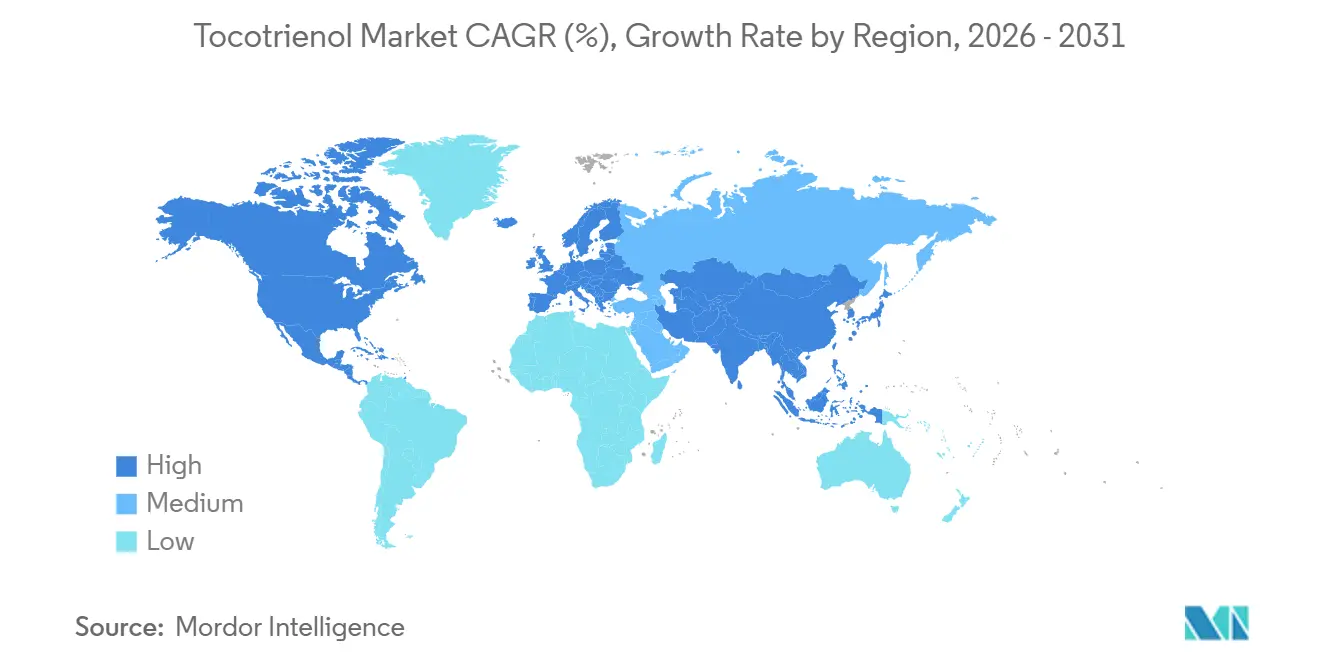
| Fastest Growing Market | Asia Pacific |
| Largest Market | North America |
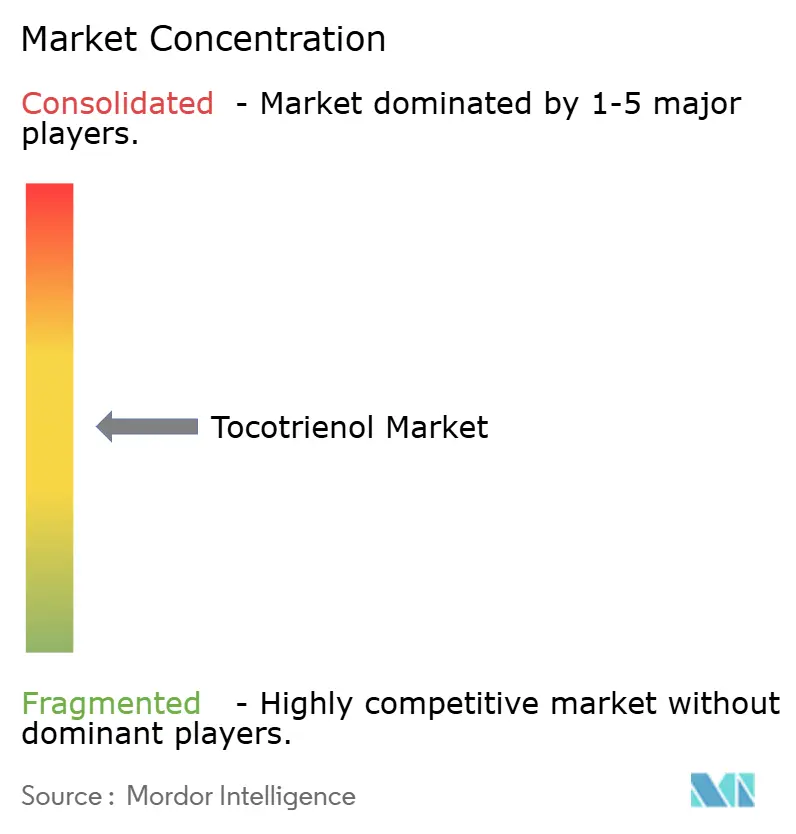
| Market Concentration | Medium |
Major Players
*Disclaimer: Major Players sorted in no particular order Image © Mordor Intelligence. Reuse requires attribution under CC BY 4.0. |
|
Tocotrienol Market Analysis by Mordor Intelligence
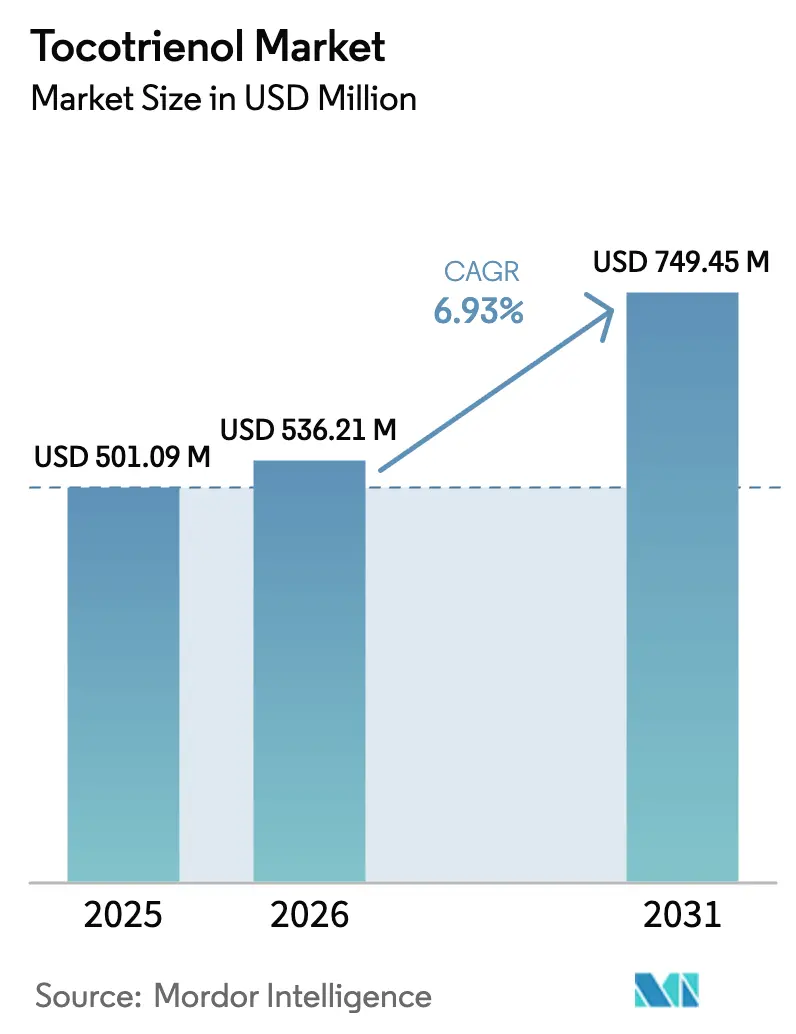
The tocotrienol market was valued at USD 501.09 million in 2025 and is expected to reach USD 536.21 million in 2026, with a projected value of USD 749.45 million by 2031, growing at a CAGR of 6.93% during the forecast period. The market's growth is driven by a shift from synthetic alpha-tocopherol to full-spectrum natural tocotrienol complexes, which offer enhanced antioxidant properties and cardio-metabolic benefits. Regulatory advancements, such as GRAS status in the United States, nutrient-source approval in the European Union, and cognitive-health claims in Malaysia, have reduced commercialization timelines and facilitated multinational labeling opportunities. While palm-derived fractions dominate the market, annatto and rice-bran sources are emerging as premium alternatives, addressing sustainability concerns and offering biochemical purity. Additionally, formulators are increasingly utilizing self-emulsifying delivery systems to address poor aqueous solubility, enabling applications in beverages, gummies, and functional foods. Despite cost challenges associated with supercritical CO₂ extraction, integrated palm refiners are mitigating these issues by leveraging byproducts like deodorizer distillate, ensuring a stable ingredient supply to meet growing demand.
Key Report Takeaways
- By source, palm oil led with 75.49% revenue share in 2025, while annatto seeds are expanding at a 9.05% CAGR through 2031.
- By product type, gamma-tocotrienol held 60.28% of the tocotrienols market share in 2025; alpha-tocotrienol is forecast to post the fastest 8.95% CAGR through 2031.
- By application, dietary supplements captured 42.35% of 2025 revenue, whereas beauty and personal-care products are progressing at an 8.80% CAGR through 2026-2031.
- By geography, North America dominated with a 38.78% share in 2025, while Asia-Pacific is on track for the highest 8.56% CAGR through 2026-2031.
Note: Market size and forecast figures in this report are generated using Mordor Intelligence’s proprietary estimation framework, updated with the latest available data and insights as of January 2026.
Market Trends and Insights
Drivers Impact Analysis of Tocotrienol Market*
| Driver | (~) % Impact on CAGR Forecast | Geographic Relevance | Impact Timeline |
|---|---|---|---|
| Rising consumer awareness of antioxidant and cardiovascular benefits | +1.2% | Global, with concentration in North America, Western Europe, and urban Asia-Pacific | Medium term (2-4 years) |
| Expanding use in dietary supplements and functional foods | +1.4% | Global, led by North America and Europe; accelerating in Asia-Pacific | Short term (≤ 2 years) |
| Clean-label demand for natural ingredients | +0.9% | North America, Western Europe, Australia; emerging in urban China and India | Medium term (2-4 years) |
| Demand shift toward natural vitamin E over synthetic | +1.1% | Global, particularly North America and Europe where synthetic vitamin E faces regulatory scrutiny | Short term (≤ 2 years) |
| Growing adoption in cosmetics and personal care | +0.8% | Asia-Pacific (China, South Korea, Japan), North America, Europe | Long term (≥ 4 years) |
| Regulatory green-light for higher natural vitamin E inclusion in animal feed | +0.6% | Asia-Pacific (poultry and aquaculture hubs), Europe (livestock), North America | Long term (≥ 4 years) |
| Source: Mordor Intelligence | |||
Rising consumer awareness of antioxidant and cardiovascular benefits
Increasing consumer awareness of the health benefits of antioxidants, particularly their role in cardiovascular health, is driving global demand for tocotrienol-based products. Consumers are prioritizing functional ingredients that reduce oxidative stress, support heart health, and enhance overall wellness. This trend is creating opportunities for tocotrienols in supplements, functional foods, and nutraceuticals. In 2023, cardiovascular disease accounted for 919,032 deaths, representing 1 in every 3 deaths, underscoring the critical public health need and strengthening consumer interest in heart-healthy ingredients [1]Source: Centers for Disease Control and Prevention, "Heart Disease Facts", cdc.gov. Tocotrienols, recognized for their strong antioxidant properties and potential cardiovascular benefits, are increasingly included in dietary supplements and fortified products to address this demand. Growing health awareness among consumers is prompting manufacturers to develop clean-label, scientifically validated tocotrienol formulations, fostering market growth and innovation in both human and animal nutrition segments.
Expanding use in dietary supplements and functional foods
The increasing interest in dietary supplements and functional foods is driving the demand for tocotrienols, as consumers prioritize ingredients offering specific health benefits such as antioxidant protection, heart health, and anti-aging support. Products highlighting health-related claims are gaining significant traction in the market. For instance, healthy snack products with low-fat or reduced-fat claims are projected to achieve the highest unit sales growth in 2025, followed by products with antioxidant claims, according to the Institute of Food Technologists [2]Source: Institute of Food Technologists organization, "The Top 10 Functional Food Trends", ift.org. This trend underscores a broader movement toward functional, nutrient-enriched options across snacks, beverages, and supplements. Tocotrienols, known for their strong antioxidant properties and clean-label attributes, are increasingly being utilized in capsules, powders, functional bars, beverages, and fortified foods. This allows manufacturers to meet the demands of health-conscious consumers while distinguishing their offerings in the competitive functional food and nutraceutical market.
Clean-label demand for natural ingredients
Consumer preference for clean-label and naturally sourced ingredients is driving growth in the tocotrienols market, as buyers increasingly prioritize functional ingredients with transparent sourcing and minimal processing. In 2024, 12% of the U.S. population preferred clean-label ingredients in food products, highlighting the rising demand for naturally derived antioxidants and nutraceuticals [3]Source: International Food Information Council, "2024 IFIC Food & Health SURVEY", ific.org. Tocotrienols, typically sourced from palm oil or annatto, align with these preferences by offering scientifically supported health benefits such as cardiovascular support, anti-inflammatory properties, and antioxidant effects, while adhering to clean-label standards. This trend is prompting manufacturers to create plant-based, minimally processed tocotrienol formulations for dietary supplements, functional foods, and beverages. These formulations not only cater to health-conscious consumers but also address the growing interest in sustainable and ethical production practices, fostering consumer trust and supporting market expansion in the functional ingredient category.
Demand shift toward natural vitamin E over synthetic
Regulatory and consumer pressures are diminishing the cost advantage of synthetic dl-alpha-tocopherol as formulators recognize the superior bioavailability and retention of natural d-alpha-tocopherol and tocotrienols. Natural d-alpha-tocopherol demonstrates twice the bioavailability of synthetic dl-alpha-tocopherol due to its preferential binding by alpha-tocopherol transfer protein (α-TTP) in the liver. This biochemical selectivity makes synthetic forms less effective in maintaining plasma vitamin E levels, as supported by peer-reviewed nutrition studies. Tocotrienols further enhance efficacy with their unsaturated isoprenoid side chains, which allow better cell membrane penetration and distribution to tissues such as the brain, liver, and adipose tissue, where alpha-tocopherol accumulation is limited. In the European Union, health claims for vitamin E are permitted only for natural forms, including d-alpha-tocopherol and tocotrienols, effectively excluding synthetic dl-alpha-tocopherol from functional food positioning in the EU market. This regulatory distinction is driving the adoption of natural vitamin E by multinational brands aiming for global label harmonization.
Restraints Impact Analysis of Tocotrienol Market*
| Restraint | (~) % Impact on CAGR Forecast | Geographic Relevance | Impact Timeline |
|---|---|---|---|
| High extraction and purification costs | -0.7% | Global, most acute in regions without integrated palm oil refining infrastructure | Short term (≤ 2 years) |
| Palm-oil sustainability limits ESG-driven buyers | -0.5% | Western Europe, North America; emerging in Australia and urban Asia-Pacific | Medium term (2-4 years) |
| Regulatory ambiguity on new therapeutic claims | -0.4% | Global, particularly North America (FDA) and Europe (EFSA) for disease-specific positioning | Long term (≥ 4 years) |
| Limited certified non-GMO raw-material supply chains | -0.3% | North America, Western Europe; minimal impact in Asia-Pacific where non-GMO certification is less prioritized | Medium term (2-4 years) |
| Source: Mordor Intelligence | |||
High extraction and purification costs
The isolation of tocotrienols from sources such as palm oil, rice bran oil, or annatto seeds involves multi-stage processes, including supercritical CO2 extraction, molecular distillation, and chromatographic purification. These processes require significant capital investments, with costs exceeding USD 5 million per production line, and incur operating expenses that are 40-60% higher compared to the synthesis of synthetic vitamin E. Supercritical CO2 extraction operates under conditions of 300-400 bar pressure and 40-60°C, necessitating specialized pressure vessels and CO2 recycling systems. Such infrastructure is typically feasible only for vertically integrated refiners like ExcelVite and KLK Oleo, which can distribute these costs across high-volume production, as noted in industrial process engineering literature. Molecular distillation, or short-path distillation, is used to further concentrate tocotrienols to pharmaceutical-grade purity (≥90% tocotrienol content). However, this process achieves a recovery rate of only 60-70%, resulting in raw material waste that smaller processors may find challenging to manage.
Palm-oil sustainability limits ESG-driven buyers
Although RSPO certification has advanced, palm oil's links to deforestation and biodiversity loss limit tocotrienol adoption among ESG-focused brands and retailers that enforce palm-oil-free mandates. Annatto-derived tocotrienols are benefiting significantly from this trend. For instance, American River Nutrition's DeltaGold brand promotes annatto as inherently sustainable, citing no deforestation risks and smallholder cultivation in Peru and Brazil. Additionally, its tocopherol-free composition supports "palm-free" label claims, which appeal to consumers in Europe and North America. However, annatto cultivation is largely concentrated in Latin America, leading to supply chain vulnerabilities and price fluctuations. In contrast, palm oil benefits from a diversified production base across Malaysia, Indonesia, and Thailand. This trade-off between sustainability perception and supply chain stability is driving market fragmentation, with palm oil dominating in the Asia-Pacific region and annatto gaining preference in Western markets.
*Our forecasts treat driver/restraint impacts as directional, not additive. The impact forecasts reflect baseline growth, mix effects, and variable interactions.
Tocotrienol Market Segment Analysis
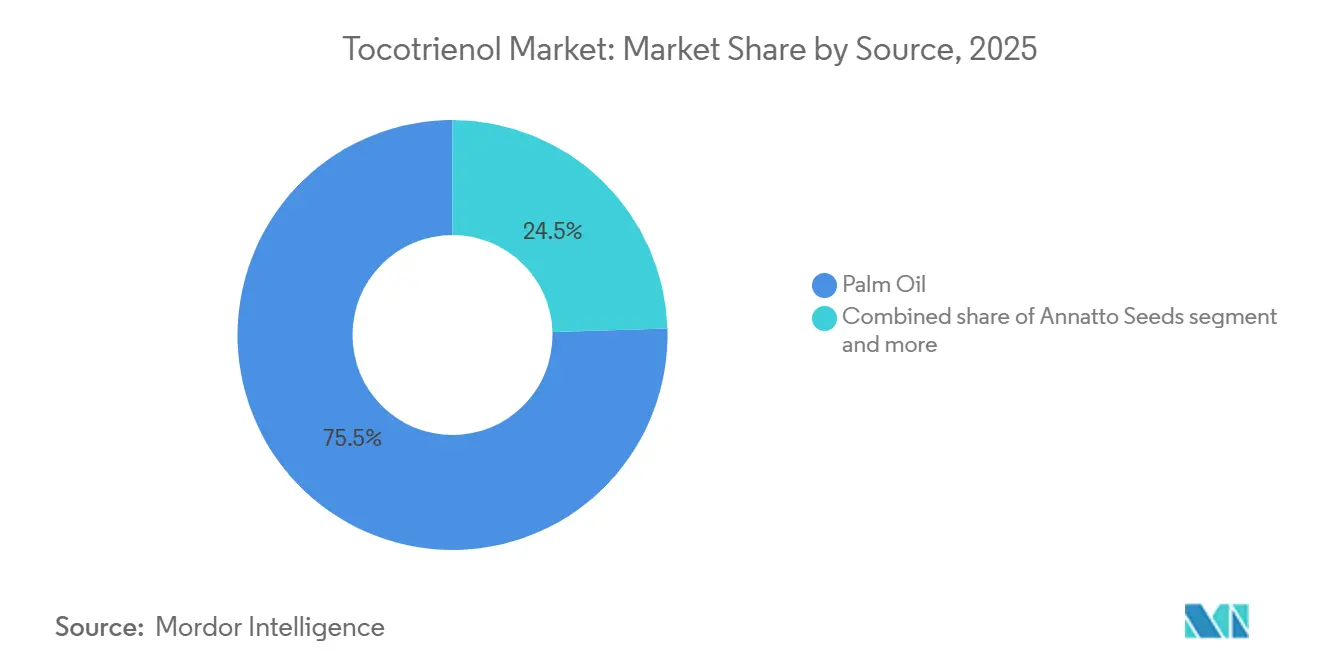
Palm oil accounted for 75.49% of the source-based market share in 2025, supported by Malaysia and Indonesia's integrated refining infrastructure, which processes 85% of global palm oil output. This infrastructure enables the capture of tocotrienol-rich fractions, such as deodorizer distillate, as a byproduct with minimal additional capital investment. Annatto seeds are projected to grow at a CAGR of 9.05% through 2031, driven by their unique tocopherol-free composition (≥95% delta- and gamma-tocotrienols). This composition eliminates alpha-tocopherol's competitive inhibition of tocotrienol absorption, a biochemical advantage highlighted by American River Nutrition during the rebranding of its DeltaGold line in 2025.
In Q1 2025, Sawit Kinabalu's Kunak Lipids subsidiary began large-scale tocotrienol extraction from palm oil refinery byproducts. This initiative targets Chinese cosmetics manufacturers through a memorandum of understanding (MoU) with Shanghai-based Boce Trade Service Company. This vertical integration strategy transforms waste streams into high-margin nutraceutical feedstock, positioning Malaysia as a cost-competitive supplier for Asia-Pacific demand. Annatto's growth trajectory demonstrates a strategic bifurcation in the market. Palm oil caters to cost-sensitive applications, including animal feed, mass-market supplements, and functional foods. In contrast, annatto secures a premium position in cardiovascular and cognitive health supplements, where its tocopherol-free purity justifies price premiums of 40-60%. Rice bran oil occupies an intermediate position, appealing to Japanese and Indian formulators seeking regional sourcing and non-GMO certification, while avoiding the sustainability concerns associated with palm oil.



By Product Type:
Gamma-Tocotrienol Leads, Alpha-Tocotrienol Gains Clinical ValidationGamma-tocotrienol accounted for 60.28% of the product-type market share in 2025, driven by its high concentration in palm-derived tocotrienol complexes (40-50% of total tocotrienol content) and extensive clinical validation for lipid modulation and neuroprotection. Alpha-tocotrienol is projected to grow at a CAGR of 8.95% through 2031, supported by emerging evidence of its superior bioavailability and distribution to brain tissue compared to gamma- and delta-isoforms. Self-emulsifying drug delivery systems (SEDDS) pre-disperse tocotrienols in surfactant-oil mixtures that form nanoemulsions upon contact with gastrointestinal fluids, enhancing lymphatic absorption and bypassing first-pass hepatic metabolism.
This technology is particularly beneficial for functional beverages and softgel formats, where rapid onset and dose consistency are essential. Other product types, such as mixed tocotrienol complexes (containing all four isoforms) and tocotrienol-tocopherol blends, are utilized in applications requiring full-spectrum vitamin E activity, including multivitamins and fortified foods. American River Nutrition's DeltaGold, standardized to ≥90% delta-tocotrienol, focuses on isoform purity for condition-specific supplementation, where eliminating alpha-tocopherol interference is critical.
By Application:
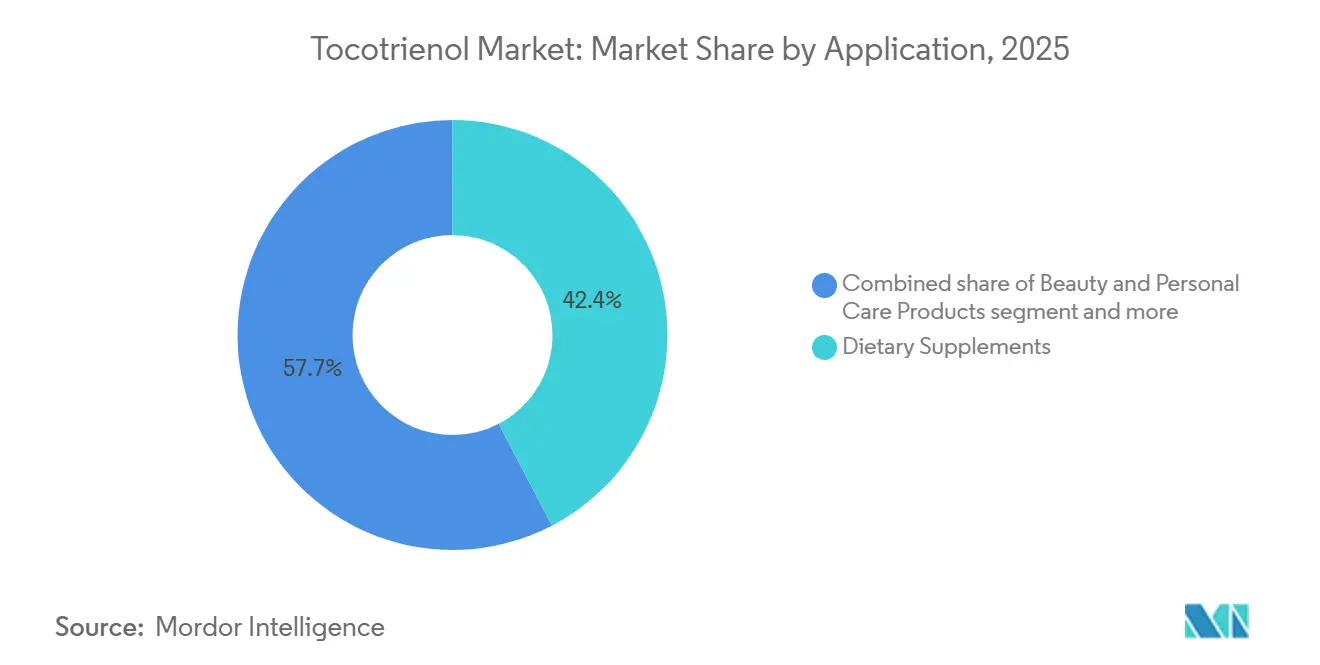
Dietary Supplements Lead, Cosmetics AccelerateDietary supplements accounted for 42.35% of the application market share in 2025, driven by their use in cardiovascular, cognitive, and bone health. The mechanistic differentiation of tocotrienols from alpha-tocopherol supports premium pricing and condition-specific label claims. Beauty and personal care products are projected to grow at a CAGR of 8.80% through 2031, supported by clinical evidence highlighting tocotrienols' benefits in skin-barrier protection, UV-damage mitigation, and anti-inflammatory effects, which surpass alpha-tocopherol in dermatological applications. Pharmaceutical applications, including drug delivery systems for cancer chemoprevention and metabolic syndrome management, represent 8-12% of market volume but are expanding as more clinical trial data becomes available.
AAFCO (Association of American Feed Control Officials) and EU feed additive regulations allow tocotrienols to be used as vitamin E sources. Early adoption in premium pet foods and organic livestock production demonstrates potential for broader penetration in the feed industry. Other applications, such as industrial antioxidants for food preservation and polymer stabilization, remain niche but present diversification opportunities as tocotrienol production scales and pricing becomes more competitive.
Geography Analysis
North America Tocotrienol Market
In 2025, North America accounted for 38.78% of the geographic market share, supported by the demand for clean-label supplements, FDA GRAS status for palm tocotrienol complexes, and well-established distribution networks through natural product retailers such as Whole Foods, Sprouts, and Vitamin Shoppe, as well as e-commerce platforms like Amazon and iHerb. The region's regulatory framework under the Dietary Supplement Health and Education Act (DSHEA) allows structure-function claims, enabling brands to market tocotrienols for purposes such as "cardiovascular support," "antioxidant protection," and "healthy aging" without requiring pre-market approval, provided the claims are substantiated and avoid references to disease treatment.
APAC Tocotrienol Market
The Asia-Pacific market is projected to grow at a CAGR of 8.56% through 2031, driven by Malaysia and Indonesia's integrated palm-oil-to-tocotrienol supply chains, increasing middle-class demand for premium supplements in China and India, and regulatory approvals for cognitive health claims in Malaysia. Japan and South Korea focus on rice bran oil-derived tocotrienols for domestic supplement and cosmetic formulations, emphasizing regional sourcing and non-GMO attributes. India's dietary supplement market is expanding at double-digit rates, with tocotrienols positioned for cardiovascular and diabetic health applications, supported by clinical evidence that resonates with physicians and health-conscious consumers. Australia and New Zealand contribute 8-10% of the Asia-Pacific volume, with clean-label and sustainability-certified tocotrienols (e.g., RSPO, non-GMO) commanding premium pricing in natural product channels.
Europe Tocotrienol Market
Europe accounts for 20-25% of global market volume, with Germany, France, and the United Kingdom leading consumption. The European Food Safety Authority (EFSA) permits tocotrienols as nutrient sources under EU Regulation 1170/2009. However, restrictive health claim approvals limit marketing language to generic statements such as "antioxidant" and "cell protection," rather than condition-specific claims. This regulatory conservatism restricts premium pricing and channels tocotrienols primarily into multivitamins and fortified foods, rather than standalone therapeutic supplements.

Regulatory Landscape
Regulatory pathways for tocotrienols vary by use case (food antioxidant, nutrient source, or dietary supplement) and by jurisdiction, shaping labeling and commercialization timelines. In the United States, tocotrienol ingredients for conventional foods commonly rely on the FDA GRAS notice framework, including palm tocotrienol-rich fractions (for broad food-category uses) and annatto-derived tocotrienol preparations, supporting deployment across multiple packaged-food and beverage formats when used within the stated conditions of use.
In the European Union, tocotrienols positioned as vitamin E sources for food supplements fall under the nutrient source and supplement rules supported by EFSA safety assessments, while disease-risk reduction or therapeutic-like claims face higher substantiation thresholds. In China, the national food additive standard GB 2760-2024 (announced March 13, 2024) formally includes mixed tocotrienol-tocopherol concentrates as antioxidants in specified vegetable oil categories, which clarifies compliance for fortified edible oils. Brazil regulates tocotrienols across supplement and pharmaceutical-adjacent frameworks, including ANVISA rules for supplements and DCB listings for certain annatto-derived tocotrienol materials, reinforcing the need for region-specific dossiers and claim strategies.
Value Chain Analysis
The tocotrienol value chain starts with feedstock sourcing, dominated by palm oil-derived streams (notably deodorizer distillate and related refinery byproducts), with smaller but growing inputs from annatto seeds and rice bran oil for palm-free and regionally sourced positioning. Upstream advantage concentrates among vertically integrated palm refiners that can recover tocotrienols as part of existing refining operations, while annatto-based supply chains rely more heavily on agricultural origin and specialized extraction partners.
Midstream processing typically combines extraction and concentration (solvent or supercritical CO2), followed by molecular or short-path distillation and chromatographic steps to produce high-purity tocotrienol concentrates for dietary supplements, cosmetics, and food applications. Regulatory compliance serves as a commercialization gate at this stage, with the United States commonly anchored by FDA GRAS notices (including GRN 307 for palm-derived materials and GRN 471 for annatto-derived preparations) and the European Union relying on permitted vitamin E source frameworks supported by EFSA assessments. Downstream, ingredient marketers and distributors supply branded and private-label concentrates to supplement formulators and functional food and beverage manufacturers, where delivery-format specialists (self-emulsifying systems, powders, and encapsulation) help address solubility and stability constraints for beverages, gummies, and fortified foods.
Competitive Landscape
The tocotrienols market demonstrates moderate fragmentation, with vertically integrated palm oil refiners such as ExcelVite and KLK Oleo leveraging economies of scale and sustainability certifications to cater to cost-sensitive applications. Meanwhile, annatto specialists like American River Nutrition and diversified nutrition companies, including BASF, DSM, and ADM, focus on source purity, bioavailability enhancement, and regulatory compliance.
Opportunities for growth lie in bioavailability-enhanced delivery systems, such as self-emulsifying complexes, nanoemulsions, and liposomal encapsulation, which address tocotrienols' poor aqueous solubility and enable their use in functional beverages and pharmaceutical applications. For example, ExcelVite's EVNol SupraBio claims a 250% improvement in oral absorption through self-emulsifying technology. However, broader adoption of such innovations depends on clinical validation and regulatory approval of these novel delivery formats. Emerging disruptors include Sawit Kinabalu's Kunak Lipids, which began large-scale tocotrienol extraction from palm oil refinery byproducts in Q1 2025. If waste-stream processing proves scalable and maintains consistent quality, ingredient pricing could decrease by 15-25%.
Technological advancements are driving a bifurcation in the market. Established players are investing in supercritical CO2 extraction and molecular distillation to achieve pharmaceutical-grade purity. In contrast, niche players are exploring fermentation-based tocotrienol production through microbial biosynthesis, which could eliminate reliance on agricultural feedstocks and address sustainability concerns. However, the commercial viability of this approach remains uncertain.
Tocotrienol Industry Leaders
-
Everwell Health Holdings, LLC
-
ExcelVite Sdn. Bhd.
-
Kuala Lumpur Kepong Berhad
-
Fuji Chemical Industries Co., Ltd.
-
Phytochem Products Inc.
- *Disclaimer: Major Players sorted in no particular order
Tocotrienol Market Companies Covered in this Report
- Everwell Health Holdings, LLC
- ExcelVite Sdn. Bhd.
- Kuala Lumpur Kepong Berhad
- Fuji Chemical Industries Co., Ltd.
- BASF SE
- BGG World
- Phytochem Products Inc.
- Yichun Dahaigui Life Science
- Cayman Chemical
- AC Grace Company
- Musim Mas Group
- SourceOne Global Partners
- Parchem Fine & Specialty Chemicals
- BTSA Biotechnologias Aplicadas
- Matrix Fine Sciences
- Orah Nutrichem Exim
- Phytogaia Sdn. Bhd.
- Archer Daniels Midland
- DSM Nutritional Products
- Palm Nutraceuticals

Market Opportunities and Future Outlook
Near-term opportunity centers on expanding food and beverage adoption beyond capsules and softgels by addressing formulation barriers, particularly aqueous dispersion and oxidative stability in ready-to-drink and fortified oil systems. Supplier focus on solubility-enabling formats is visible in activity at major commercialization platforms, including Everwell Health featuring beverage-positioned ingredient solutions and branded annatto tocotrienols (DeltaGold) at BevNET Live 2026, along with Vitafoods Europe 2026 showcasing. This supplier-led push supports more functional beverage, nutrition bar, spread, and fortified staple uses where tocotrienols compete with conventional antioxidants and vitamin E forms.
A second opportunity area is supply-side repositioning through waste-stream recovery and palm-free alternatives. Malaysia provides a clear proof point, with Kunak Lipids (Sawit Kinabalu Group) commissioning large-scale tocotrienol production from palm oil refinery byproducts, which improves access to industrial-scale supply for Asia-focused supplement and beauty pipelines while improving the economics of tocotrienol recovery. At the same time, annatto-derived, tocopherol-free tocotrienols commercialized through platforms such as DeltaGold, now under Everwell Health following its 2025 acquisition of American River Nutrition, broaden options for palm-free labeling and differentiated isoform profiles, which is relevant for premium supplements and clean-label brand portfolios that face ESG-driven sourcing requirements.
Recent Industry Developments in Tocotrienol Market
- June 2026: Everwell Health highlighted its science-backed functional ingredient portfolio at BevNET Live 2026, including solutions positioned for beverage formulation. The focus on solubility and delivery formats supports broader use of tocotrienols in ready-to-drink and other beverage-adjacent applications where dispersion and stability are key constraints.
- May 2025: Everwell Health acquired American River Nutrition, adding annatto-derived DeltaGold tocotrienols and related intellectual property to its functional ingredient platform. The transaction consolidated a palm-free tocotrienol franchise under a larger commercialization engine, strengthening reach across dietary supplement and functional nutrition channels.
- July 2024: ExcelVite shared research tied to its EVNol SupraBio tocotrienol complex in connection with hair growth and weight-management positioning. The continued evidence-building around differentiated tocotrienol delivery and application claims supports premiumization strategies for suppliers competing on bioavailability and efficacy narratives.


Tocotrienol Market Report Scope and Research Methodology
Market Definition and Coverage
For this study, the tocotrienol market is defined as the value of tocotrienol ingredients and concentrates sold for use in supplements, functional food and beverages, beauty and personal care, pharmaceutical uses, and other similar end uses, tracked on a global revenue basis.
Scope exclusions: This sizing excludes raw agricultural oils sold primarily as edible oils (even if they naturally contain tocotrienols) and excludes standalone tocopherol-only vitamin E products when tocotrienol content is not the commercial basis of sale.
Segments Covered in This Report
-
By Source
- Palm Oil
- Rice Bran Oil
- Annatto Seeds
- Others
-
By Product Type
- γ-Tocotrienol
- α-Tocotrienol
- Others
-
Application
- Dietary Supplements
- Fortified/Functional Food and Beverage
- Beauty and Personal Care Products
- Pharmaceuticals
- Others
-
Geography
-
North America
- United States
- Canada
- Mexico
- Rest of North America
-
Europe
- Spain
- United Kingdom
- Germany
- France
- Italy
- Rest of Europe
-
Asia-Pacific
- China
- Japan
- India
- Australia
- Rest of Asia-Pacific
-
South America
- Brazil
- Argentina
- Rest of South America
-
Middle East and Africa
- Saudi Arabia
- South Africa
- Rest of Middle East and Africa
-
North America
Data Sources, Market Sizing, and Validation
Desk Research
Desk research started with public science and regulatory information so the product boundaries were clear before any modeling was done. We reviewed sources such as the US National Institutes of Health Office of Dietary Supplements, the US FDA (including GRAS-related notices where relevant), the European Food Safety Authority publications, UN Comtrade for trade context on relevant preparations, and peer reviewed nutrition and lipid science journals that discuss tocotrienol forms and usage.
After that, the market view was anchored with supplier and channel signals that are visible in public materials, including company annual reports, investor presentations, product specification sheets, association websites, and reputable press coverage of capacity changes and new ingredient launches. Where needed, paid subscriptions were used selectively for company financials and intelligence, patent searching, and shipment-level import and export context. These examples are not exhaustive, and additional sources were reviewed to collect data points, validate assumptions, and clarify open questions.
Primary Interviews and Surveys
Primary work focused on validating what tocotrienol volumes and pricing look like in the real market, and on checking how demand differs across supplements, functional foods, personal care, and pharma linked uses. We spoke with a mix of ingredient manufacturers, formulators, distributors, and downstream brand or product teams across key regions, so model inputs could be confirmed where desk research was thin and then cross-checked before finalizing totals.
Distribution of primary research fieldwork respondents
| Company type | Respondent position | Region |
|---|---|---|
| Top tier: 35% | CXOs: 15% | APAC: 45% |
| Mid tier: 46% | Functional/Unit leaders: 37% | EMEA: 32% |
| Smaller Players: 19% | Managers: 48% | Americas: 23% |
Market-Sizing & Forecasting
Market sizing was built using a combined top-down and bottom-up approach, with the top-down view reconstructed from the vitamin E ingredient pool and then narrowed to tocotrienol concentrates using application adoption patterns and regional demand signals. To keep the totals grounded, the numbers were corroborated through selective bottom-up checks, where sampled supplier revenue, channel splits, and typical ASP by grade were multiplied by estimated volumes and then reconciled back to the global total.
Key inputs that shaped the model included the share of supplements within tocotrienol demand, the pace of uptake in functional foods and beverages, the typical purity and grade mix (which influences ASP), regional mix shifts across North America, Europe, and Asia-Pacific, and regulatory and claims readiness that affects commercialization timelines. When a bottom-up input was missing for smaller countries, the gap was handled through proxying with comparable markets using per-capita supplement consumption and import reliance indicators, followed by expert checks.
For forecasting, we used scenario analysis supported by a simple multivariate view of demand drivers. Variables like supplement category growth, pricing progression by grade, and regional expansion plans were stress-tested with primary inputs. The final forecast was only accepted once it remained consistent with the expected product adoption curve across the main end uses.
Data Validation & Update Cycle
Outputs were validated in multiple steps so we did not rely on a single data stream. Model totals and regional splits were compared against independent signals such as trade movements for relevant preparations, disclosed business line direction in public filings, and the price bands shared in interviews, and then any large variance was investigated and corrected.
Before sign-off, the work went through analyst review checks where assumptions, arithmetic, and unit consistency were re-tested, and experts were re-contacted if an update caused noticeable shifts in share or growth. Reports are refreshed annually, with interim updates when material events occur, such as major capacity additions, regulatory changes, or sharp pricing movements. Right before delivery, a fresh pass is done to ensure the latest public updates are reflected in the final view.
Mordor Intelligence's Tocotrienol Market Sizing Compared With Other Published Estimates
Published market values for tocotrienol can look far apart, even when everyone is talking about the same ingredient family, because the year selection, end-use coverage, and what counts as a tocotrienol sale are not handled in the same way. Differences also come from how pricing is treated, since high-purity concentrates and mixed vitamin E preparations can carry very different average selling prices.
The benchmark table highlights this spread clearly, and in Mordor Intelligence's model the market is counted as extracted and commercialized tocotrienol ingredients across supplements, functional foods and beverages, beauty and personal care, pharmaceuticals, and other uses, rather than including broader vitamin E or raw edible oil value that only contains trace tocotrienols. When other estimates use an earlier base year, apply a different forecast window, or blend adjacent vitamin E categories into the same bucket, the current-year number can shift materially after currency timing and ASP assumptions are applied.
Benchmark comparison
| Source | Market Size | Gaps in Research Methodology |
|---|---|---|
| Mordor Intelligence | USD 536.21 M (2026) | |
| Global Consultancy A | USD 363.60 M (2023) | Uses an earlier base year and a different forecast window, and the scope appears to emphasize select end uses and forms, which can understate newer demand areas and later-year pricing and volume expansion. |
| Industry Publisher B | USD 392.91 M (2025) | Works off a different base year and long horizon forecast, and it can apply broader regional roll-ups and alternate ASP progression, which shifts the market value even if the underlying demand trend is similar. |
Taken together, the comparison shows that most of the gap is explainable once the scope boundary, base year, and pricing logic are aligned. By tying the totals to clear end-use demand pools and then rechecking them with supplier and channel inputs, the estimate stays traceable to repeatable steps rather than being driven by a single assumption.


Key Questions Answered in the Report
What was the value of the tocotrienols market in 2026?
It is projected to reach USD 536.21 million in 2026, with a projected climb to USD 749.45 million by 2031.
Which source currently dominates supply?
Palm oil provides about 75% of global volume, thanks to integrated refining in Malaysia and Indonesia.
Why are annatto-derived tocotrienols gaining traction?
They are naturally free of alpha-tocopherol, meet palm-free label needs, and post the fastest 9.05% CAGR through 2031.
Which application segment is growing the quickest?
Beauty and personal-care products are advancing at an 8.80% CAGR as formulators seek natural UV-protective antioxidants.
Page last updated on:





