
Spirulina Market Size and Share
Market Overview
| Study Period | 2021 - 2031 |
|---|---|
| Market Size (2026) | USD 0.84 Billion |
| Market Size (2031) | USD 1.27 Billion |
| Growth Rate (2026 - 2031) | 8.58 % |
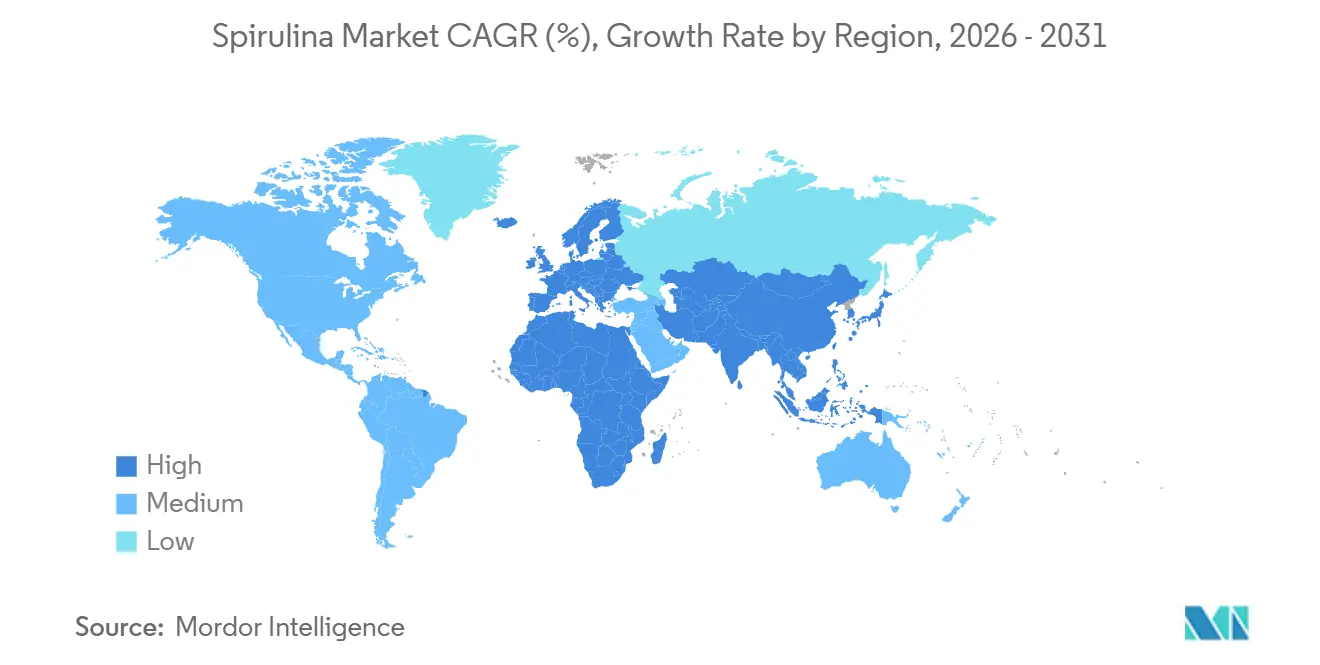
| Fastest Growing Market | Europe |
| Largest Market | North America |
| Market Concentration | Medium |
Major Players
*Disclaimer: Major Players sorted in no particular order Image © Mordor Intelligence. Reuse requires attribution under CC BY 4.0. |
|
Spirulina Market Analysis by Mordor Intelligence
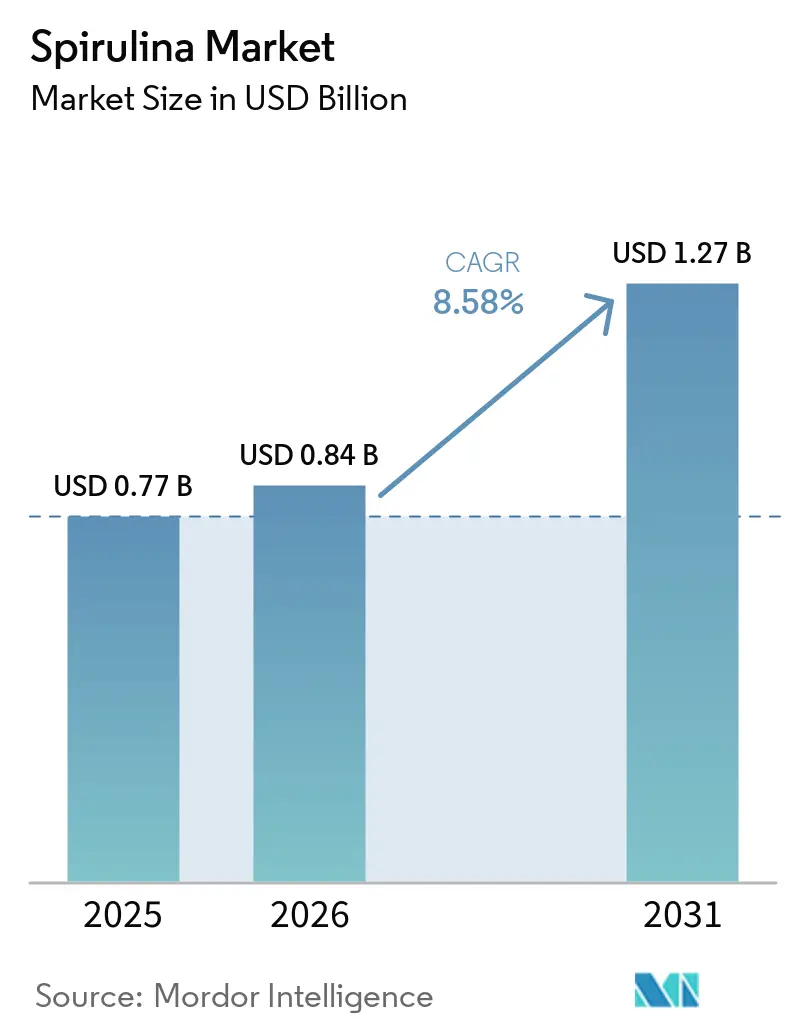
The spirulina market is valued at USD 0.84 billion in 2026 and is expected to grow to USD 1.27 billion by 2031, registering a compound annual growth rate (CAGR) of 8.58% during the forecast period of 2026-2031. This growth is primarily driven by the increasing demand for plant-based protein, the expanding use of spirulina-derived phycocyanin as a natural food coloring agent, and the growing preference for environmentally sustainable ingredients over traditional animal-based protein sources. Regulatory changes are playing a significant role in expanding the market. Food authorities are approving the use of spirulina extracts in a wider range of food products and encouraging manufacturers to replace synthetic, petroleum-based dyes with natural alternatives. The competitive landscape of the spirulina market is becoming more organized. Larger, vertically integrated suppliers are leveraging their scale and regulatory compliance, while premium producers are focusing on offering traceable, organic products and high-value extracts. These factors, combined with regulatory support, increased awareness of spirulina's health benefits, and its broader applications in food and feed, are driving stable, growing demand for spirulina products over the forecast period.
Key Report Takeaways
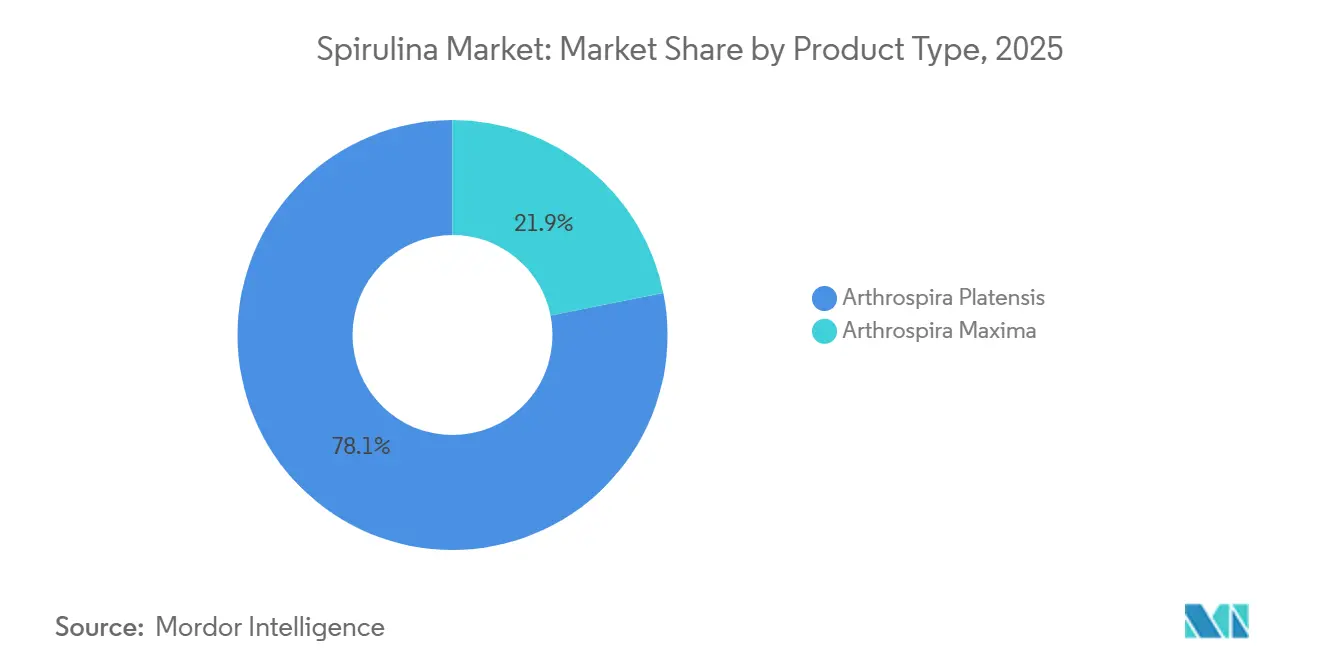
- By product type, Arthrospira platensis held 78.13% of revenue in 2025, while Arthrospira maxima is projected to grow at a 9.24% CAGR through 2031.
- By form, powder accounted for 48.25% of revenue in 2025, while liquid is projected to expand at a 9.57% CAGR through 2031.
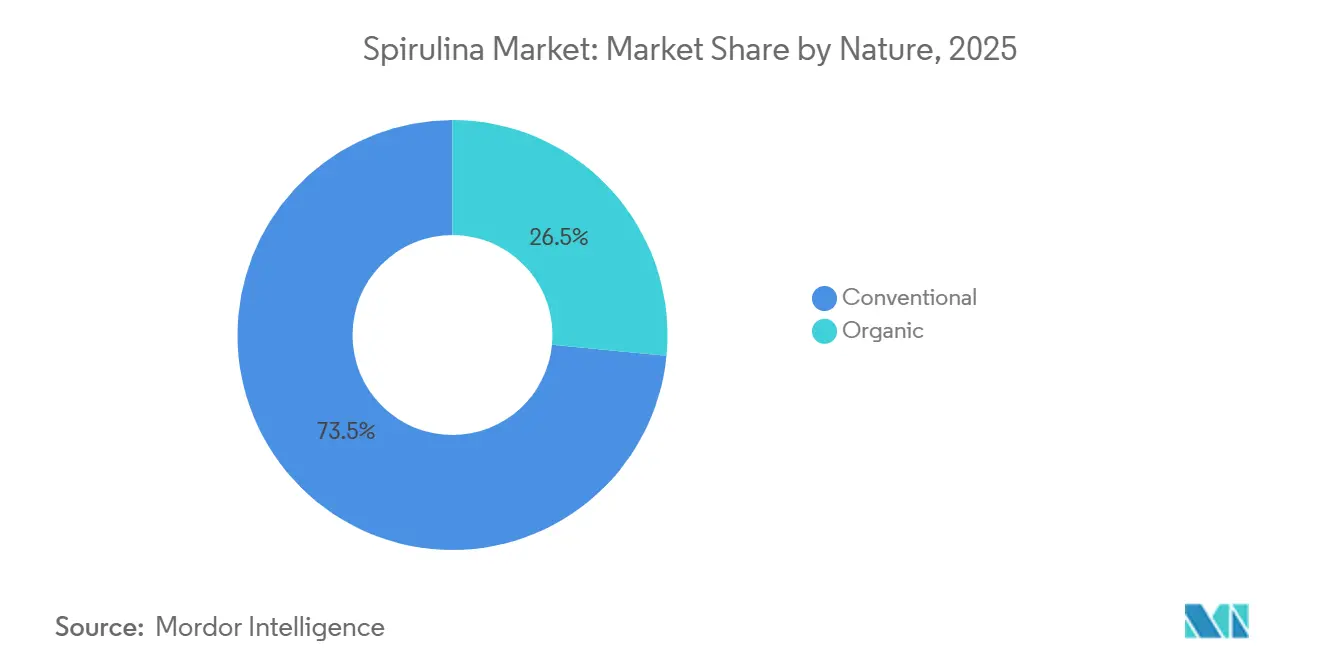
- By nature, conventional spirulina held 73.46% of revenue in 2025, while organic is forecast to grow at a 9.87% CAGR through 2031.
- By application, dietary supplements accounted for 47.33% of revenue in 2025, while food and beverages are projected to grow at a 10.05% CAGR through 2031.
- By geography, North America held 45.61% of revenue in 2025, while Europe is forecast to expand at a 9.72% CAGR through 2031.
Note: Market size and forecast figures in this report are generated using Mordor Intelligence’s proprietary estimation framework, updated with the latest available data and insights as of January 2026.
Market Trends and Insights
Drivers Impact Analysis of Spirulina Market*
| Driver | (~) % Impact on CAGR Forecast | Geographic Relevance | Impact Timeline |
|---|---|---|---|
| Rising demand for nutrient-dense plant-based protein sources | +2.0% | Global | Medium term (2-4 years) |
| Expanding incorporation of spirulina in dietary supplements | +1.8% | North America and Europe | Medium term (2-4 years) |
| Increasing utilization of phycocyanin as a natural blue food colorant | +1.5% | North America and Europe | Short term (≤ 2 years) |
| Growing demand for sustainable and environmentally friendly protein ingredients | +1.2% | Global | Long term (≥ 4 years) |
| Adoption of spirulina-based ingredients in aquaculture and animal nutrition | +0.8% | Asia-Pacific, with spill-over to South America | Long term (≥ 4 years) |
| Application of spirulina in functional food and beverage formulations | +1.0% | North America, Asia-Pacific | Medium term (2-4 years) |
| Source: Mordor Intelligence | |||
Rising demand for nutrient-dense plant-based protein sources
The spirulina market is growing as more consumers focus on high-protein, nutrient-rich foods. According to the International Food Information Council (IFIC) Food and Health Survey 2025, 23% of Americans reported following a high-protein diet, making it the most popular dietary choice among those surveyed[1]Source: International Food Information Council, "2025 IFIC Food & Health Survey", ific.org. This shift in dietary preferences is increasing the demand for plant-based, protein-rich ingredients like spirulina. Spirulina is a natural source of protein, containing about 60%–70% protein by dry weight, along with essential amino acids, vitamins, minerals, and antioxidants. Its nutritional benefits make it an attractive option for consumers seeking sustainable, functional protein sources. As a result, spirulina is being widely used in dietary supplements, sports nutrition products, protein powders, and functional foods.
Expanding incorporation of spirulina in dietary supplements
The growing use of dietary supplements to maintain health and prevent illness is driving significant global demand for spirulina-based products. More consumers are seeking natural ingredients that boost immunity, provide energy, and improve overall nutrition. Spirulina, known for its rich nutritional profile, has become a preferred ingredient in many supplement formulations. For instance, a report by Frontiers Org revealed that 39.1% of consumers in Poland regularly used dietary supplements during the three months ending December 2025[2]Source: Frontiers Org, "Sociodemographic Differences in the Use of Dietary Supplements in a Representative Sample of Adults in Poland—a Secondary Analysis", frontiersin.org. This indicates a rising trend of incorporating supplements into daily health routines. In response, manufacturers are focusing on creating spirulina-based products tailored to meet specific health needs and wellness goals.
Increasing utilization of phycocyanin as a natural blue food colorant
The increasing demand for clean-label, naturally sourced food ingredients is driving the use of phycocyanin, a blue pigment derived from spirulina, as a natural food colorant. Consumers are becoming more conscious of the ingredients in their food, leading manufacturers in the food and beverage industry to replace synthetic dyes with natural, plant-based alternatives. Phycocyanin, extracted from spirulina, is widely used in products such as confectionery, beverages, dairy products, and nutritional foods because of its bright blue color and natural origin. Companies such as Sensient Technologies Corporation, DIC Corporation, and Fermentalg are actively expanding their range of natural blue color solutions to help manufacturers reformulate their products to meet these changing demands.
Growing demand for sustainable and environmentally friendly protein ingredients
The growing demand for sustainable, eco-friendly food ingredients is driving the global spirulina market. Spirulina is gaining popularity as a protein source because it requires significantly less land and water than traditional protein sources like meat or soy. This makes it an environmentally efficient choice. Consumers are becoming more conscious of sustainability when making purchasing decisions. For instance, the International Food Information Council (IFIC) Food & Health Survey 2025 revealed that 5% of Americans consider environmentally sustainable production as the most important factor influencing their food choices[3]Source: International Food Information Council, "2025 IFIC Food & Health Survey", ific.org. Furthermore, spirulina production helps capture carbon, which adds to its appeal for both environmentally aware consumers and manufacturers.
Restraints Impact Analysis of Spirulina Market*
| Restraint | (~) % Impact on CAGR Forecast | Geographic Relevance | Impact Timeline |
|---|---|---|---|
| High production and cultivation costs compared to conventional protein sources | -1.2% | Global | Long term (≥ 4 years) |
| Quality variability and contamination risks during cultivation | -0.8% | Global (especially Asia-Pacific suppliers) | Medium term (2-4 years) |
| Premium pricing of spirulina-based products | -0.7% | South America, Middle East and Africa, emerging markets | Medium term (2-4 years) |
| Regulatory complexities related to food ingredients and health claims | -0.5% | Europe, North America | Medium term (2-4 years) |
| Source: Mordor Intelligence | |||
High production and cultivation costs compared to conventional protein sources
The high cost of producing and cultivating spirulina is a major challenge for the global spirulina market. Compared to traditional protein sources like soy protein, pea protein, and fishmeal, spirulina is more expensive. This is because its production involves specialized processes such as cultivation, harvesting, drying, and strict quality control to ensure its purity and nutritional benefits. These processes drive up costs, making spirulina less affordable for applications where price is a critical factor. As a result, it struggles to compete with more cost-effective protein options in the mainstream market. Producers often face difficulties improving operational efficiency and maintaining profitability, especially when scaling up production. While there is growing demand for high-quality, functional nutrition products, spirulina's high production costs continue to limit its wider adoption and market reach.
Quality variability and contamination risks during cultivation
Ensuring consistent product quality throughout cultivation cycles is a significant challenge in the global spirulina market. Factors such as changes in water quality, environmental conditions, and cultivation methods can affect nutrient levels, phycocyanin content (a key pigment in spirulina), and the overall purity of the product. Additionally, contamination risks from heavy metals, harmful microorganisms, and other impurities have made it essential for producers to implement strict testing and quality control measures. As regulatory standards become more stringent and buyers increasingly prioritize safety and traceability, manufacturers are required to adopt advanced monitoring systems, obtain certifications, and conduct thorough laboratory testing. These processes not only increase operational costs but also create barriers for smaller producers who may lack the resources to meet these requirements.
*Our forecasts treat driver/restraint impacts as directional, not additive. The impact forecasts reflect baseline growth, mix effects, and variable interactions.
Spirulina Market Segment Analysis
By Product Type:
Platensis Dominates Supply, Maxima Emerges as Premium TierIn 2025, Arthrospira platensis held the largest share of the spirulina market, accounting for 78.13% of total revenue. This is largely due to its high nutritional value, as it is rich in proteins, vitamins, and antioxidants, making it a popular choice for dietary supplements, functional foods, and animal feed. Its dominance is further supported by reliable cultivation methods and widespread availability. The growing consumer preference for natural and plant-based health products has further strengthened its position in the global market.
Arthrospira maxima, however, is expected to grow at the fastest rate in the spirulina market, with a projected CAGR of 9.24% through 2031. This growth is driven by rising demand for sustainable and alternative protein sources and by advancements in microalgae cultivation technologies. Its increasing use in nutraceuticals and functional foods has also attracted significant investments in research and product development. As more consumers seek nutrient-rich, innovative ingredients, Arthrospira maxima is expected to gain substantial momentum during the forecast period.


By Form:
Powder Underpins the Market, Liquid Gains in BeveragesThe powdered form of spirulina is the dominant form in the global market, accounting for 48.25% of total revenue in 2025. This popularity is due to its easy storage, long shelf life, and wide range of uses in products like dietary supplements, food and beverages, cosmetics, and animal feed. Manufacturers prefer powdered spirulina because it is cost-effective and simple to use in product formulations. Additionally, the increasing demand for plant-based, nutrient-rich ingredients among consumers has further strengthened the market position of powdered spirulina.
On the other hand, the liquid spirulina segment is expected to grow at the fastest rate, with a CAGR of 9.57% through 2031. This growth is driven by the rising demand for ready-to-use nutritional products, functional beverages, and liquid dietary supplements. Liquid spirulina is favored for its convenience, better absorption, and ease of use in health-focused products. The growing trend of functional nutrition and continuous innovation in wellness products is likely to boost the demand for liquid spirulina during the forecast period.
By Nature:
Conventional Anchors Volume, Organic Commands PremiumIn 2025, conventional spirulina was the largest segment in the global spirulina market, accounting for 73.46% of the total revenue. This segment's strong position is due to its affordability, ease of availability, and widespread use in products such as dietary supplements, food items, animal feed, and nutraceuticals. Many manufacturers and consumers prefer conventional spirulina because it offers a cost-effective way to meet nutritional needs. Additionally, its well-established supply chains and large-scale production make it a reliable option for various industries worldwide.
On the other hand, the organic spirulina segment is expected to grow at the fastest rate, with a projected CAGR of 9.87% through 2031. The rising demand for clean-label, chemical-free, and environmentally sustainable products is driving this growth. Consumers are increasingly drawn to organic spirulina because it aligns with their preference for natural and premium-quality products. As awareness of organic certifications and sustainability continues to grow, the organic spirulina segment is likely to see significant expansion during the forecast period, especially among health-conscious buyers.
By Application:
Supplements Lead Revenues, Food and Beverages Drives Volume GrowthDietary supplements were the largest application segment in the global spirulina market, accounting for 47.33% of total revenue in 2025. This segment's growth is mainly driven by rising focus on preventive healthcare and by efforts to boost consumer immunity. Spirulina, known for its high nutritional content like proteins, vitamins, minerals, and antioxidants, is widely used in tablets, capsules, and powdered supplements. The growing preference for natural, plant-based health products has further strengthened demand for spirulina in this segment.
The food and beverages segment is projected to grow at the fastest rate in the global spirulina market, with a 10.05% CAGR through 2031. The growing popularity of functional foods and beverages, along with clean-label and nutrient-rich products, is driving this growth. Spirulina is increasingly being added to snacks, smoothies, baked goods, and health drinks to improve their nutritional value. Manufacturers are focusing on product innovation to meet the rising demand for health-conscious food options, which is expected to significantly boost this segment during the forecast period.
Geography Analysis
North America Spirulina Market
North America was the largest contributor to the global spirulina market, accounting for 45.61% of the total revenue in 2025. This growth is largely driven by rising demand for dietary supplements and a preference for natural food ingredients. The United States leads the region due to its well-developed supplement industry and the growing use of spirulina in food and beverages. Canada and Mexico are also contributing to the market's growth by promoting plant-based diets and sustainable farming practices, which align with consumer preferences for healthier and eco-friendly options.
Europe Spirulina Market
Europe is expected to grow at the fastest rate in the spirulina market, with a projected CAGR of 9.72% through 2031. The rising demand for organic and clean-label products is a major driver of this growth, along with the growing use of natural food colorants across industries. Countries like Germany, France, and the United Kingdom are leading this expansion, supported by strong distribution networks and premium product offerings. Favorable regulations and a growing focus on certified, high-quality ingredients are creating a supportive environment for market growth in the region.
APAC and MEA Spirulina Market
The Asia-Pacific region plays a dual role in the spirulina market as both a major producer and an emerging consumer base. China and India dominate production due to their large-scale cultivation capabilities and established manufacturing infrastructure. Meanwhile, rising health awareness and the growing popularity of functional nutrition products are driving spirulina consumption across the region. In the Middle East and Africa, the market is still in its early stages, but increasing interest in wellness products, food security initiatives, and nutrient-rich dietary solutions is opening up new opportunities for growth.

Competitive Landscape
The spirulina market is moderately consolidated, with a few key players dominating. Major companies such as DIC Corporation, Cyanotech Corporation, E.I.D. Parry (India) Limited, Far East Bio-Tec Co., Ltd. (FEBICO), and Sensient Technologies Corporation lead the market. These companies manage operations that include cultivation, processing, quality control, and product development. Their strong distribution networks and well-known brands give them a competitive edge, especially in both standard and premium spirulina products. This has enabled them to maintain a significant market share.
Competition in the spirulina market is increasingly focused on innovation and sustainability rather than on production volume alone. Leading companies are focusing on advanced cultivation methods, creating natural color solutions, and developing nutraceutical products to strengthen their positions. Many are also expanding production capacity and improving environmental practices to meet consumer demands. By offering specialized spirulina extracts and addressing changing preferences, these companies are differentiating themselves in a market that values quality and innovation.
The market is gradually shifting toward high-value products and specialized ingredient solutions. While large-scale producers dominate the bulk supply, other companies are focusing on creating functional products and ensuring regulatory compliance. The growing demand for clean-label ingredients, natural colorants, and premium nutritional products is driving investment in research and development. Companies that prioritize quality, innovation, and the ability to meet strict regulations are expected to gain a stronger foothold as the market continues to evolve.
Spirulina Industry Leaders
-
DIC Corporation
-
Cyanotech Corporation
-
E.I.D. - Parry (India) Limited
-
Far East Bio-Tec Co., Ltd. (FEBICO)
-
Sensient Technologies Corporation
- *Disclaimer: Major Players sorted in no particular order

Spirulina Market Companies Covered in this Report
- DIC Corporation
- Cyanotech Corporation
- E.I.D. - Parry (India) Limited
- Far East Bio-Tec Co., Ltd. (FEBICO)
- Sensient Technologies Corporation
- Fuqing King Dnarmsa Spirulina Co., Ltd.
- Zhejiang Binmei Biotechnology Co., Ltd.
- Dongtai City Spirulina Bio-Engineering Co., Ltd.
- Prolgae Spirulina Supplies Pvt. Ltd.
- Yunnan Green A Biological Project Co., Ltd.
- Jiangshan Comp Spirulina Co., Ltd.
- Inner Mongolia Rejuve Biotech Co., Ltd.
- Tianjin Norland Biotech Co., Ltd.
- Taiwan Chlorella Manufacturing Company
- Vedan Biotechnology Corporation
- Allmicroalgae Natural Products S.A.
- Necton S.A.
- BlueBioTech Group
- Aliga Microalgae
- Roquette Klötze GmbH and Co. KG

Recent Industry Developments in Spirulina Market
- November 2025: Nutri&Co launched a limited-edition French organic spirulina sourced from Provence, highlighting local production, short supply chains, and superior nutritional quality. The product was created to address the increasing consumer demand for traceable, sustainably produced, and high-quality spirulina supplements.
- May 2025: Sun Chemical established a sustainable, smart-farming facility for spirulina cultivation in California. The facility incorporated AI, automation, renewable energy, and advanced water management systems to enhance production efficiency, minimize environmental impact, and promote sustainable spirulina cultivation.
- May 2025: Scottish biotech company ScotBio introduced a sustainable protein ingredient derived from spirulina, specifically designed for plant-based food applications. This innovation aimed to help manufacturers improve the nutritional profiles and functionality of alternative protein products while promoting environmentally sustainable food production.
- October 2024: Parry Nutraceuticals became the first Indian company in nearly two years to obtain an EU import license for organic spirulina, allowing it to resume exports to Europe after regulatory restrictions had previously halted shipments from Indian suppliers.


Global Spirulina Market Report Scope
Spirulina is a filamentous cyanobacterium (blue-green microorganism) that performs photosynthesis and naturally thrives in alkaline aquatic environments. The global spirulina market is segmented by product type, form, nature, application, and geography. Based on product type, the market is classified into Arthrospira maxima and Arthrospira platensis. Based on form, the market is classified into powder, tablets/capsules, and liquid. Based on nature, the market is classified into organic and conventional. Based on application, the market is classified into food and beverages, animal feed, dietary supplements, cosmetics and personal care, pharmaceuticals, and others. Based on geography, the market is classified into North America, Europe, Asia-Pacific, South America, and the Middle East and Africa. The market forecasts are provided in terms of value (USD).
| Arthrospira Maxima |
| Arthrospira Platensis |
| Powder |
| Tablets/Capsules |
| Liquid |
| Organic |
| Conventional |
| Food and Beverages |
| Animal Feed |
| Dietary Supplements |
| Cosmetics and Personal Care |
| Pharmaceuticals |
| Others |
| North America | United States |
| Canada | |
| Mexico | |
| Rest of North America | |
| Europe | Germany |
| United Kingdom | |
| Italy | |
| France | |
| Spain | |
| Poland | |
| Belgium | |
| Sweden | |
| Rest of Europe | |
| Asia-Pacific | China |
| Japan | |
| India | |
| Australia | |
| Indonesia | |
| South Korea | |
| Thailand | |
| Singapore | |
| Rest of Asia-Pacific | |
| South America | Brazil |
| Argentina | |
| Colombia | |
| Chile | |
| Peru | |
| Rest of South America | |
| Middle East and Africa | South Africa |
| Saudi Arabia | |
| United Arab Emirates | |
| Nigeria | |
| Egypt | |
| Morocco | |
| Turkey | |
| Rest of Middle East and Africa |
| By Product Type | Arthrospira Maxima | |
| Arthrospira Platensis | ||
| By Form | Powder | |
| Tablets/Capsules | ||
| Liquid | ||
| By Nature | Organic | |
| Conventional | ||
| By Application | Food and Beverages | |
| Animal Feed | ||
| Dietary Supplements | ||
| Cosmetics and Personal Care | ||
| Pharmaceuticals | ||
| Others | ||
| By Geography | North America | United States |
| Canada | ||
| Mexico | ||
| Rest of North America | ||
| Europe | Germany | |
| United Kingdom | ||
| Italy | ||
| France | ||
| Spain | ||
| Poland | ||
| Belgium | ||
| Sweden | ||
| Rest of Europe | ||
| Asia-Pacific | China | |
| Japan | ||
| India | ||
| Australia | ||
| Indonesia | ||
| South Korea | ||
| Thailand | ||
| Singapore | ||
| Rest of Asia-Pacific | ||
| South America | Brazil | |
| Argentina | ||
| Colombia | ||
| Chile | ||
| Peru | ||
| Rest of South America | ||
| Middle East and Africa | South Africa | |
| Saudi Arabia | ||
| United Arab Emirates | ||
| Nigeria | ||
| Egypt | ||
| Morocco | ||
| Turkey | ||
| Rest of Middle East and Africa | ||


Key Questions Answered in the Report
What is the 2026 size of the global spirulina market?
The global spirulina market size stands at USD 0.84 billion in 2026 and is projected to reach USD 1.27 billion by 2031, expected to grow at a CAGR of 8.58% CAGR.
What is driving demand for spirulina in food and beverage products?
Demand is rising because food companies are shifting toward natural blue colorants and because the FDA expanded the approved use of spirulina extract in human foods in 2026.
Which application leads revenue in spirulina?
Dietary supplements led with 47.33% of revenue in 2025, reflecting spirulina’s strong position in daily nutrition, immune support, and wellness products.
Which segment is growing fastest by application?
Food and beverages is the fastest-growing application, with a projected 10.05% CAGR through 2031, supported by clean-label reformulation and color additive approvals.
Page last updated on:


 Your data is secure and never sold or shared.


