
Market Overview
| Study Period | 2021 - 2031 |
|---|---|
| Forecast Data Period | 2026 - 2031 |
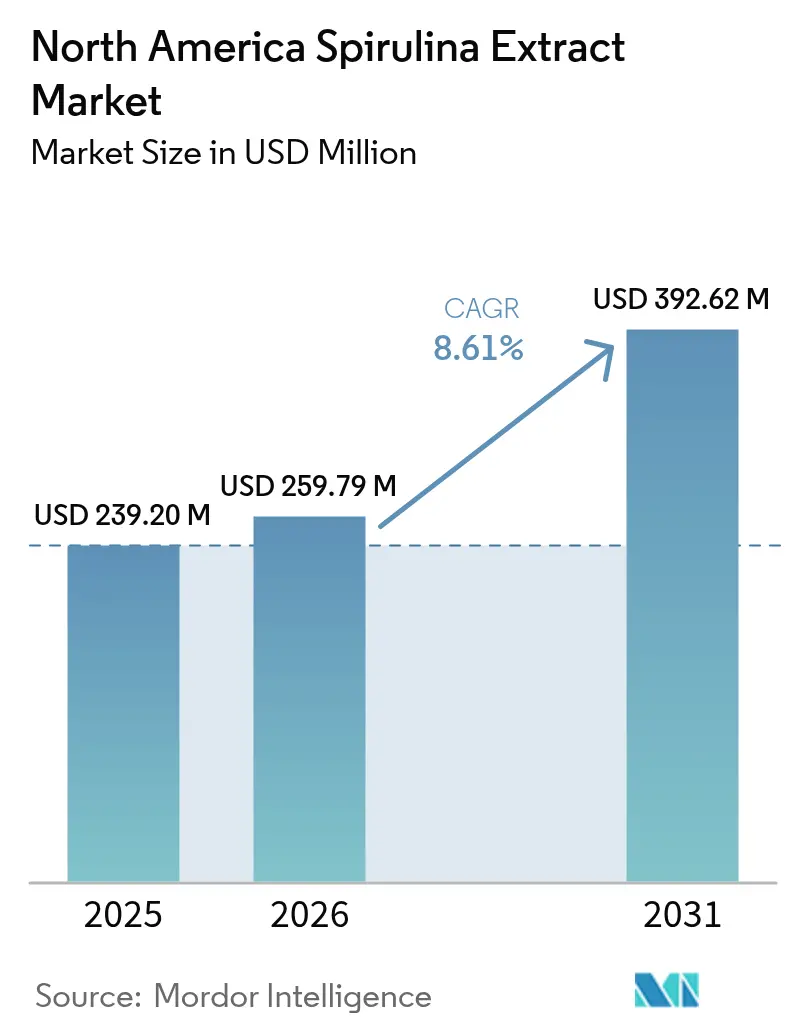
| Base Year Market Size (2025) | USD 239.20 Million |
| Market Size (2026) | USD 259.79 Million |
| Market Size (2031) | USD 392.62 Million |
| Growth Rate (2026 - 2031) | 8.61 % |
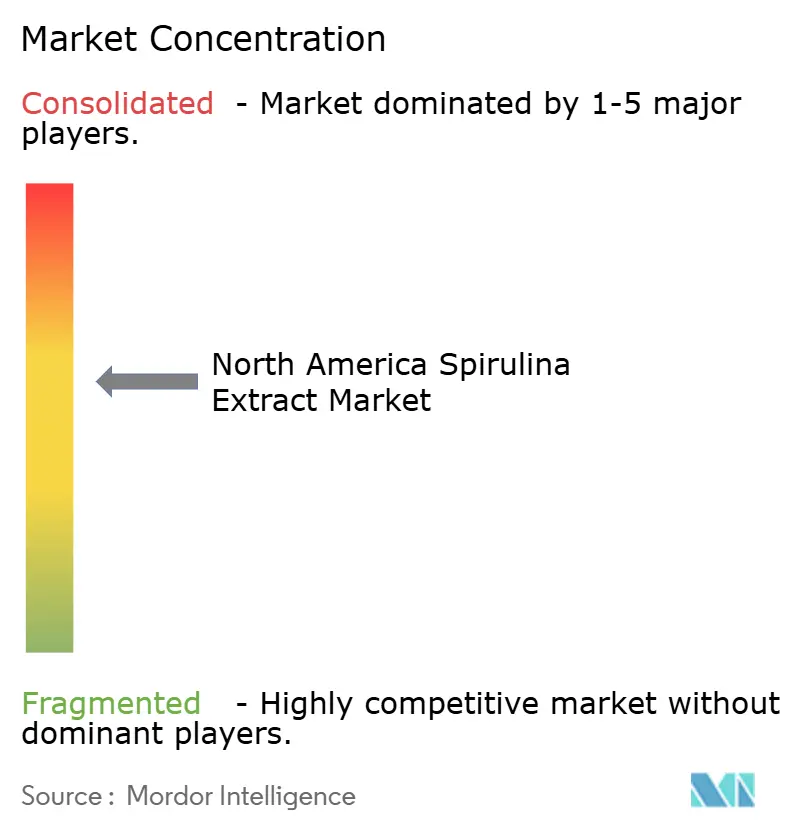
| Market Concentration | Medium |
Major Players *Disclaimer: Major Players sorted in no particular order Image © Mordor Intelligence. Reuse requires attribution under CC BY 4.0. | |
North America Spirulina Extract Market Analysis by Mordor Intelligence
The spirulina ingredient market size in North America in 2026 is estimated at USD 259.79 million, growing from 2025 value of USD 239.20 million with 2031 projections showing USD 392.62 million, growing at 8.61% CAGR over 2026-2031. This growth path is anchored in spirulina’s dual roles as a vibrant natural colorant and a rich source of complete protein, aligning with the growing trend of plant-based eating habits. Formulators are adopting micro-algae to simplify ingredient decks, replace synthetic blues, and meet the rising demand for preventive health solutions. Regulatory approvals covering broader food categories, third-party safety verifications, and continuous process innovation jointly expand commercial headroom. At the same time, vertically integrated suppliers are scaling extraction technologies that lower unit costs and free up capacity for premium applications.
Key Report Takeaways
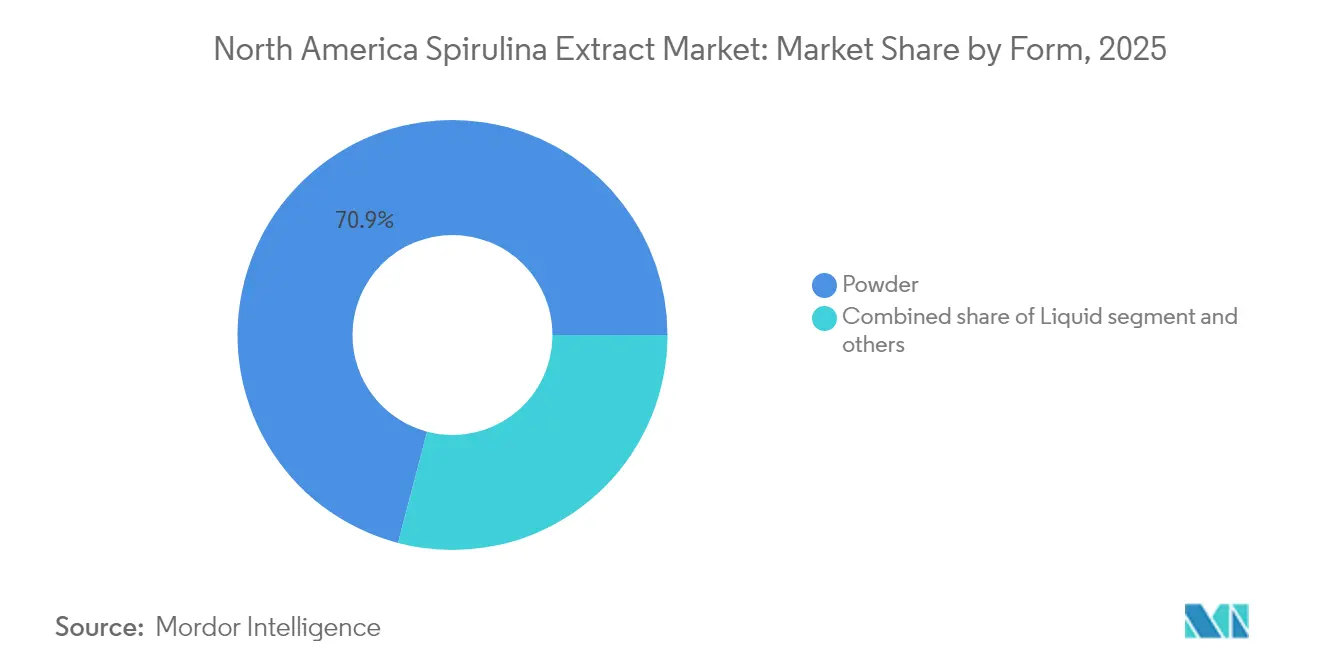
- By form, powder captured 70.92% of the spirulina ingredient market share in 2025, while liquid extracts are forecast to expand at a 10.65% CAGR to 2031.
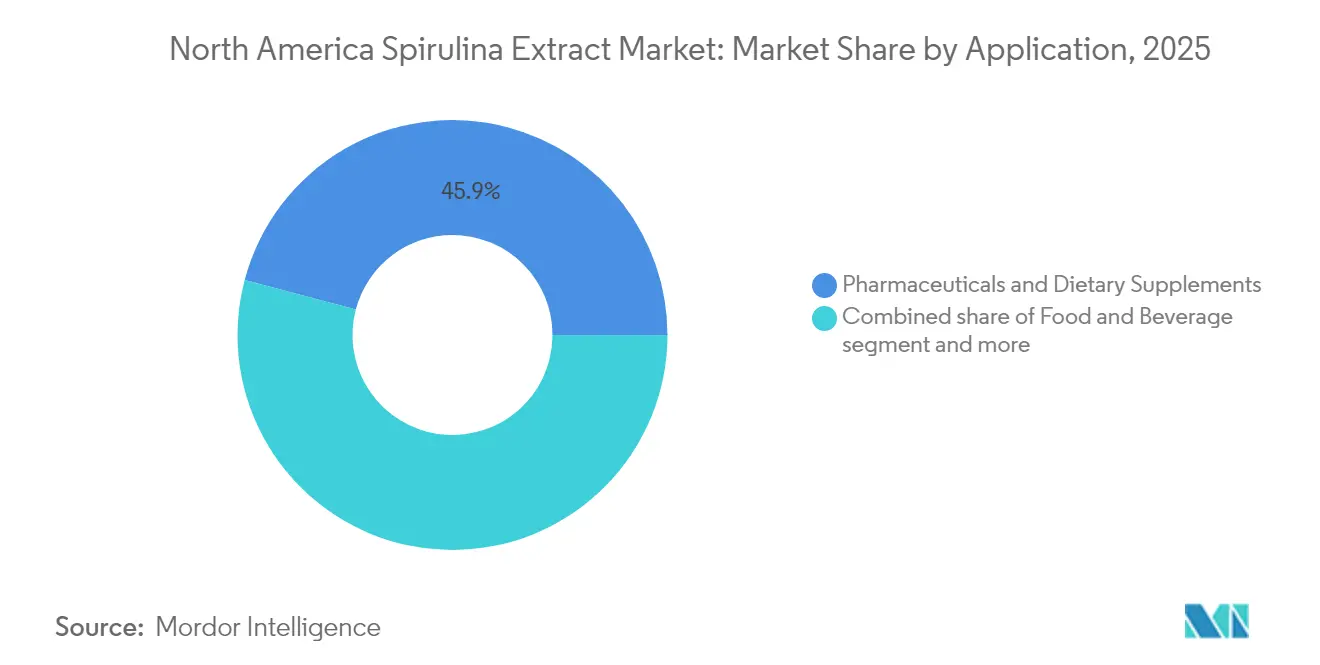
- By application, pharmaceuticals and dietary supplements held a 45.88% revenue share in 2025; the food and beverage sector is projected to advance at a 9.89% CAGR through 2031.
- By geography, the United States accounted for 78.02% of regional demand in 2025, whereas Mexico is projected to record the fastest growth of 9.44% from 2026 to 2031.
Note: Market size and forecast figures in this report are generated using Mordor Intelligence’s proprietary estimation framework, updated with the latest available data and insights as of 2026.
Market Trends and Insights
Drivers Impact Analysis of North America Spirulina Extract Market*
| Driver | (~) % Impact on CAGR Forecast | Geographic Relevance | Impact Timeline |
|---|---|---|---|
| Growing use of spirulina in dietary supplements and functional foods | +1.8% | United States, Canada; emerging in Mexico | Medium term (2-4 years) |
| Expansion of clean-label and organic product formulations | +1.5% | United States, Canada | Short term (≤ 2 years) |
| Rising demand for plant-based and natural nutritional ingredients | +1.6% | North America-wide, strongest in urban US markets | Medium term (2-4 years) |
| Increasing consumer focus on preventive healthcare and immunity support | +1.4% | United States, Canada | Short term (≤ 2 years) |
| Advancements in spirulina cultivation and extraction technologies | +1.2% | United States (California, Hawaii production hubs) | Long term (≥ 4 years) |
| Favorable regulatory acceptance of spirulina-based ingredients | +1.0% | United States (FDA), Canada (CFIA) | Medium term (2-4 years) |
| Source: Mordor Intelligence | |||
Growing Use of Spirulina in Dietary Supplements and Functional Foods
Spirulina’s high protein content (55–70% dry weight) makes it an efficient, sustainable source of amino acids, supporting the growing US organic supplement market, which reached USD 5.9 billion in 2023[1]. A 2025 meta-analysis confirmed the benefits for body composition, providing formulators with clinical evidence for labeling and marketing. E.I.D. Parry’s USP Dietary Ingredient Verification highlights the rising importance of third-party quality assurance, while Lonza’s 2025 Organicaps pullulan capsules enable fully organic spirulina supplements without gelatin, opening premium retail shelf space. The market is also shifting toward multi-ingredient blends that include ashwagandha, turmeric, or omega-3 fatty acids, thereby expanding overall volume despite the fragmentation of SKUs.
Expansion of Clean-Label and Organic Product Formulations
Clean-label trends are driving the growth of spirulina, whose single-ingredient profile provides transparency that synthetic colorants cannot. The FDA’s 2025 updates to the “healthy” claim and GNT USA’s 2022 approval for dairy alternatives and plant-based beverages position spirulina for front-of-pack nutrition messaging and 15–20% price premiums. Canada’s SFC traceability rules favor local producers with farm-to-facility documentation, limiting offshore imports. While organic certification adds USD 0.50–1.00/kg in costs, certified organic spirulina commands wholesale prices 40–60% higher, making it attractive for mid-sized premium brands.
Rising Demand for Plant-Based and Natural Nutritional Ingredients
Plant-based diets are driving demand for spirulina, valued for its complete amino acid profile and allergen-free properties. SimpliiGood’s 2025 launch of spirulina-based smoked salmon shows its potential in whole-food analogs, while its natural blue-green color is now a selling point in vibrant smoothies and functional beverages. In Mexico, the wellness food market grew 14.7% CAGR to USD 33.8 billion (2019–2023), with fortified foods gaining traction. Rising incomes and the Canada-Mexico Organic Equivalency Arrangement enable Canadian producers to expand spirulina-fortified products into Mexico without duplicative certification.
Increasing Consumer Focus on Preventive Healthcare and Immunity Support
Spirulina’s immunomodulatory benefits, driven by phycocyanin and polysaccharides, are becoming a key commercial selling point as consumers prioritize clinically supported immune ingredients. Its antioxidant activity, at phycocyanin levels of 10–15 g per 100 g biomass, supports claims of reducing oxidative stress, aligning with post-pandemic wellness trends. Spirulina’s Class A safety rating allows formulators to recommend higher daily doses (3–5 g) with regulatory confidence, setting it apart from newer botanicals that lack long-term safety data[2]. Canada’s 2024 update to the Natural Health Product framework has shortened licensing timelines, enabling faster launches of immunity-focused blends during peak seasonal demand. However, substantiating structure-function claims remains a challenge, as the FDA requires NDI filings for novel extracts with concentrated phycocyanin, which can delay responses to trending formulations.
Restraints Impact Analysis of North America Spirulina Extract Market*
| Restraint | (~) % Impact on CAGR Forecast | Geographic Relevance | Impact Timeline |
|---|---|---|---|
| High production cost and input-price volatility | -0.9% | United States (California, Hawaii), Canada | Short term (≤ 2 years) |
| Complex FDA/CFIA compliance for novel ingredients | -0.6% | United States, Canada | Medium term (2-4 years) |
| Taste, odor, and color challenges in food and beverage applications | -0.7% | North America-wide | Medium term (2-4 years) |
| Limited scalability of premium extraction technologies | -0.5% | United States (production hubs) | Long term (≥ 4 years) |
| Source: Mordor Intelligence | |||
High Production Cost and Input-Price Volatility
Spirulina cultivation is energy- and cost-intensive, with fluctuations in electricity prices directly affecting margins. Open-pond systems in California benefit from sunlight but face rising water costs, while Hawaii’s Cyanotech facility contends with peak electricity rates exceeding USD 0.30/kWh. Nutrient inputs, such as sodium bicarbonate and nitrogen, are subject to commodity cycles; a 20% increase in bicarbonate can reduce gross margins by 3–5 points[3]. Closed photobioreactors offer contamination control and year-round output but require USD 2–5 million per hectare, limiting access for smaller producers and concentrating production among integrated firms. Labor for harvesting, drying, and quality control accounts for 15–25% of costs, with wage inflation prompting producers to consider automation or margin erosion. The market is bifurcated between commodity powder (USD 8–12/kg) and pharmaceutical-grade extracts (USD 40–60/kg), forcing producers to focus on either volume or premium supply chains, which limits flexibility and exacerbates fluctuations in electricity prices.
Complex FDA/CFIA Compliance for Novel Ingredients
The FDA’s NDI pathway requires manufacturers of novel spirulina products, such as fermented spirulina, concentrated phycocyanin, or hydrolysates, to submit safety dossiers 75 days prior to launch, at a cost of USD 50,000-150,000 per ingredient. In Canada, CFIA licensing now includes GMP audits and site inspections, adding 6-12 months to development and requiring dedicated regulatory staff. Mexico’s COFEPRIS permits must be filed through a local entity, which can delay foreign launches by 12–18 months. Established spirulina powders benefit from GRAS status, while innovative extracts face stricter scrutiny, which slows market entry and favors incumbents.
*Our forecasts treat driver/restraint impacts as directional, not additive. The impact forecasts reflect baseline growth, mix effects, and variable interactions.
North America Spirulina Extract Market Segment Analysis
By Form:
Powder Dominates, Liquid Extracts Gain in BeveragesSensient’s March 2024 launch of a heat-stable spirulina ingredient is opening up high-temperature applications that were previously unavailable, including baked snacks and UHT beverages. In 2025, powder dominated the market with a 70.92% share, primarily due to its compatibility with tablets, capsules, and protein blends. In contrast, liquid extracts are projected to grow at a 10.65% CAGR through 2031, offering water-dispersible solutions that eliminate the gritty mouthfeel associated with powders. Tablets remain popular for dosing convenience, but demand is shifting toward capsules, especially pullulan-based organic options like Lonza’s 2025 Organicaps, that avoid gelatin and synthetic polymers. Fresh, texturized spirulina, exemplified by SimpliiGood’s 2025 smoked salmon analog, preserves heat-sensitive nutrients and delivers whole-food texture, appealing to flexitarian consumers.
Other innovative forms, including gummies, chews, and “candyceuticals,” are capturing younger consumers who prefer fun, convenient formats, though these require premium extracts with minimal off-flavors. Liquid spirulina products, such as YANGGE BIOTECH’s blue honey-like extract, target beverage manufacturers seeking natural blue colorants that comply with FDA 21 CFR 73.530 standards. While powder maintains volume leadership at USD 8–12/kg wholesale, liquid and fresh formats are carving out premium niches, commanding 2–3× price premiums due to superior sensory performance and clean-label appeal.

By Application:
Pharma/Supplements Lead, Food/Beverage AcceleratesPharmaceuticals and dietary supplements accounted for 45.88% of spirulina extract applications in 2025, driven by its USP Class A safety rating, clinical evidence supporting improvements in body composition, and compatibility with multi-nutrient blends targeting immunity, energy, and cognitive health. Food and beverage applications, although smaller in volume, are growing at a 9.89% CAGR through 2031, supported by the FDA’s 2022 approval, which expands the use of spirulina as a natural colorant in confections, ice cream, yogurt, cereals, and ready-to-drink beverages. This enables formulators to replace synthetic Blue 1 while adding protein and micronutrients. Animal feed applications, particularly in aquaculture and poultry, benefit from research showing improvements in growth performance and partial to full replacement of soybean meal, although adoption is largely limited to premium operations due to cost sensitivity.
Industrial applications, including cosmetics, biofuels, and biostimulants, remain niche but are attracting R&D investment as producers seek to monetize byproducts and improve biorefinery economics. For example, DIC Corporation’s investment in Back of the Yards Algae Sciences’ zero-waste platform demonstrates how extracting colorants, biostimulants, and heme analogs from the same biomass can diversify revenue streams. Overall, while supplements provide stable demand, the fastest growth is in food and beverage, where spirulina’s dual functionality, nutrition plus natural color, supports clean-label positioning. Regulatory clarity, such as FDA approval for specific coloring uses, is critical for market expansion, whereas animal feed growth remains constrained by inconsistent offshore quality and the lack of standardized dosing guidelines.
Geography Analysis
United States Spirulina Extract Market
The United States dominated North America’s spirulina ingredient market in 2025, accounting for 78.02% of regional revenue. Key production hubs include California’s Earthrise facility (108 acres in Calipatria) and Hawaii’s Cyanotech operation (96 acres in Kona), both of which benefit from year-round sunlight, established supply chains, and proximity to downstream nutraceutical formulators in Southern California and the Pacific Northwest. Cyanotech reported Q3 FY2025 net sales of USD 6.172 million, up 10.6% year-over-year, reflecting strong demand from contract manufacturers for USP-verified, GMP-certified spirulina for private-label supplements and functional foods. The FDA’s 2022 approval, which expands the use of spirulina as a natural colorant in confections, ice cream, yogurt, cereals, and beverages, has further opened up margin-rich food and beverage applications. High production costs in California and Hawaii, driven by electricity (USD 0.15–0.30/kWh), labor, and environmental compliance, push producers to compete on quality, traceability, and regulatory alignment rather than price.
Canada Spirulina Extract Market
Canada’s spirulina market is shaped by CFIA regulations, which require site licensing, GMP audits, and product-specific approvals, adding 6–12 months to commercialization but creating a quality moat that protects compliant producers. The Canada Organic Regime (COR) mandates certification for organic spirulina, while the February 2023 Canada-Mexico Organic Equivalency Arrangement enables Canadian producers to access Mexico’s growing middle-class market without duplicative audits. Canada’s 2024 modernization of its self-care framework has accelerated Natural Health Product licensing, allowing faster launches of spirulina-based immunity blends to capitalize on seasonal demand peaks. Though smaller than US producers, Canadian companies such as C.B.N. Spirulina Canada Co. leverage regulatory alignment and proximity to US markets to serve cross-border supply chains for both organic and non-GMO formulations.
Mexico and Caribbean Spirulina Extract Market
Mexico is the fastest-growing North American market, projected to expand at a 9.44% CAGR through 2031, supported by a health-and-wellness packaged food sector valued at USD 33.8 billion in 2023. Fortified and functional foods account for 30.4% of this market, creating opportunities for spirulina-fortified tortillas, protein bars, and beverages. Rising population and per capita income, alongside COFEPRIS regulations and NOM-051 labeling requirements, shape market entry, often favoring partnerships with US and Canadian producers. Currently, Mexico receives a significant portion of processed food exports from the US (65.2%), suggesting spirulina ingredients are largely imported through US-based formulators and contract manufacturers. Other North American regions, primarily Caribbean markets, remain limited in size due to low local production, high import costs, and nascent consumer awareness.
Regulatory Landscape
In the United States, spirulina extract is regulated as a color additive exempt from certification under FDA 21 CFR 73.530, with use limited to specific food categories and subject to Good Manufacturing Practice (GMP) and specifications (including limits tied to contaminants such as heavy metals). A key 2026 inflection point occurred when FDA published a February 6, 2026 final order to expand approved uses of spirulina extract as a color additive in human foods generally (with exclusions such as infant formula). FDA then announced an indefinite delay on March 20, 2026 after receiving objections and a request for a hearing, leaving the narrower, currently listed use scope in effect pending further action.
In Canada, spirulina extract is managed through Health Canada permissions for food use via the List of Permitted Colouring Agents (notably for unstandardized foods) and is also referenced for natural health products through the Natural Health Products Ingredients Database (NHPID) with established quality and labeling expectations. Across North America, companies commercializing novel spirulina-derived ingredients with higher concentrations or altered processing may still face additional compliance burdens (for example, dossiers and notifications in the United States for new dietary ingredient pathways), which can extend timelines compared with established spirulina powders.
Value Chain Analysis
The North American spirulina extract value chain begins with inputs and cultivation infrastructure, including water, nutrients such as sodium bicarbonate and nitrogen sources, energy, and controlled growing systems. Biomass is produced in open-pond raceways and, for higher-control output, in photobioreactors. Large integrated producers such as DIC Corporation's Earthrise Nutritionals (Imperial Valley, California) and Cyanotech (Hawaii) anchor domestic supply, while other participants focus on specialized extraction or formulation capabilities for phycocyanin-rich color systems and nutraceutical grades.
Midstream operations include harvesting, drying (for powder), and pigment/protein extraction, where phycocyanin is typically recovered through water-based processing and purified to meet customer specifications and regulatory limits. Downstream, B2B channels supply dietary supplement brand owners, contract manufacturers, and food and beverage formulators seeking natural blue and blue-green shades, with additional QA requirements (GMP programs and third-party certifications) shaping supplier selection. Distribution includes direct contracting for consistent lots and formulation support, as well as ingredient distributors for smaller buyers. Managing variability, including batch-to-batch color strength, taste and odor control, and contaminant specifications, remains a key gating factor for scale in high-volume food applications.
Competitive Landscape
The North American spirulina ingredient market is moderately concentrated, with the top five players being Cyanotech Corporation, DIC Corporation/Earthrise Nutritionals, Sensient Technologies, and Chr. Hansen, and DDW–The Color House, accounting for an estimated 55–65% of regional revenue. These companies leverage vertical integration strategies that span cultivation, extraction, and ingredient sales. Cyanotech’s 96-acre Hawaiian facility and DIC’s 108-acre California operation anchor domestic supply, while Sensient and DDW focus on downstream value capture through heat-stable extracts and application-specific color solutions that command 2–3× premiums over commodity powder. DIC’s 2022 investment in Back of the Yards Algae Sciences illustrates a shift toward zero-waste biorefineries, which extract food colorants, biostimulants, and spirulina-based heme analogs from the same biomass, thereby lowering effective production costs and reshaping competitive dynamics. Sensient’s Q3 2025 Color Group revenue of USD 178.2 million, up 9.9%, reflects the prioritization of spirulina-derived phycocyanin as a growth vector, intensifying competition for cultivation capacity and potential M&A among mid-sized producers[4].
White-space opportunities exist in fresh and texturized spirulina formats, as evidenced by SimpliiGood’s April 2025 EU approval for spirulina-based smoked salmon, which bypasses the sensory limitations of powders while commanding premium pricing. Fermented spirulina is another emerging segment, with preliminary research indicating enhanced bioavailability and reduced off-flavors. Technology is a key differentiator: investments in photobioreactor automation, real-time contamination monitoring, and advanced extraction methods such as ultrasonication and membrane filtration allow producers to achieve pharmaceutical-grade purity at near-commodity costs, compressing margins for open-pond incumbents. Third-party quality assurance, exemplified by E.I.D. Parry’s USP Dietary Ingredient Verification, is increasingly essential for contract manufacturers serving risk-averse multinational brands.
Regulatory compliance further shapes market dynamics. FDA NDI notifications, CFIA site licensing, and COFEPRIS sanitary permits impose fixed costs that favor larger players with dedicated regulatory teams, while simultaneously protecting incumbents from low-cost offshore suppliers unable to meet North American purity and traceability standards. As competition intensifies, success in the market will depend on the ability to combine technological innovation, high-quality verification, and regulatory alignment, particularly for companies seeking to expand into high-margin food, beverage, and specialty supplement applications.
North America Spirulina Extract Industry Leaders
-
Cyanotech Corporation
-
DIC Corporation- Earthrise Nutritionals
-
Sensient Technologies Corporation
-
Chr. Hansen A/S
-
Givaudan
- *Disclaimer: Major Players sorted in no particular order
North America Spirulina Extract Market Companies Covered in this Report
- Cyanotech Corporation
- DIC Corporation / Earthrise Nutritionals
- Sensient Technologies Corporation
- Chr. Hansen A/S
- DDW – The Color House
- Döhler Group
- NOW Health Group Inc.
- Naturex (Givaudan)
- Parry Nutraceuticals (E.I.D. Parry)
- Lumen Bioscience
- C.B.N. Spirulina Canada Co.
- Algama Foods
- Aim Grow Biotech Co. Ltd
- Fuqing King Dnarmsa Spirulina Co. Ltd
- Prolgae Spirulina Supplies Pvt. Ltd
- Allmicroalgae Natural Products
- Bluetec Naturals Co. Ltd
- Dongtai City Spirulina Bio-Engineering
- Roquette Klötze GmbH & Co. KG
- GNT Group
Market Opportunities and Future Outlook
A primary opportunity lies in substituting synthetic blue dyes in mainstream food and beverage, supported by the established FDA listing for spirulina extract under 21 CFR 73.530 and ongoing product innovation aimed at improving stability and application range. Sensient's March 2024 introduction of a heat-stable spirulina ingredient expands addressable processing conditions, including baking, extrusion, and pasteurization, creating whitespace in categories that historically avoided spirulina color due to thermal instability.
Supply-side investments and process modernization also expand commercial headroom in North America, especially where buyers prioritize traceability and consistent phycocyanin specifications. Earthrise Nutritionals commenced operations at a new Calipatria, California edible algae cultivation facility in March 2025 (reported at about a 1.2 billion yen investment), aligning capacity expansion with smart-farming controls and food-safety positioning for colorant-grade applications. At the same time, the March 2026 indefinite delay of FDA's February 2026 final order to broaden permitted uses keeps the US market operating under a narrower list of approved food categories for spirulina extract color. That constrains some near-term expansion, while concentrating opportunity around applications already covered by 21 CFR 73.530 and increasing the value of formulation workarounds, including heat-stable formats and optimized dosing under GMP.
Recent Industry Developments in North America Spirulina Extract Market
- April 2026: Cyanotech Corporation signed a commercial-scale manufacturing agreement with Zivo Bioscience to cultivate and process proprietary algal biomass for the Zivolife product line. The agreement leverages Cyanotech's existing cultivation and processing footprint to add contract-manufacturing revenue alongside its established spirulina and astaxanthin businesses. It also signals broader utilization of North American microalgae capacity by third parties that want scaled biomass without building new facilities.
- October 2025: Lonza launched Organicaps, USDA organic-certified pullulan capsules for the North American market. The launch supports fully organic spirulina supplement positioning by replacing gelatin and synthetic polymers, improving label alignment for organic and clean-label brands. It strengthens the packaging component of the spirulina supplement value chain by reducing a known capsule-format constraint for premium formulations.
- March 2024: Sensient Technologies introduced a proprietary heat-stable spirulina ingredient designed to withstand baking, extrusion, and pasteurization with reduced color degradation. The capability expands where spirulina-derived color systems can be deployed in food processing conditions that previously limited natural blues. It also increases competitive pressure on suppliers that rely on conventional spirulina extracts with narrower stability windows.
North America Spirulina Extract Market Report Scope and Research Methodology
Market Definition and Coverage
For this methodology, the North America spirulina extract market covers revenues generated from spirulina extract sold for use as a functional ingredient and natural colorant across end uses in the region, measured in current US dollars.
Scope exclusions: This sizing excludes conventional spirulina biomass products that are sold as whole powder or tablets without an extraction step.
Segments Covered in This Report
- By Form
- Powder
- Liquid
- Others
- By Application
- Food and Beverage
- Pharmaceuticals and Dietary Supplements
- Animal Feed
- Other Industrial Uses
- By Country
- United States
- Canada
- Mexico
- Rest of North America
Data Sources, Market Sizing, and Validation
Desk Research
To build the basic market picture, we first reviewed public references that describe the ingredient, how it is regulated, and where demand comes from for spirulina extract in North America. Sources used included, as examples, US FDA materials for food ingredients and color additive related references, USDA and USITC trade statistics for relevant algae and extract movements, and Statistics Canada for manufacturing and trade context.
We also relied on documents that help confirm end use pull, such as association websites and technical notes linked to dietary supplements and natural colorants, peer reviewed articles on spirulina extraction yields and quality markers, and company annual reports and investor presentations that discuss nutrition ingredients portfolios. Select paid subscriptions were used only for company financials and for patent databases, mainly to cross check capacity signals and product innovation activity. The desk sources listed here are illustrative, and other public references were also used for data collection, validation, and clarifying gaps.
Primary Interviews and Surveys
We validated the desk findings through interviews and surveys with ingredient manufacturers, distributors, contract processors, and downstream buyers in supplements and food and beverage. Discussions focused on typical pricing by format (powder versus liquid), demand seasonality tied to product launches, and what quality and compliance checks are actually required before a sale is counted.
Respondents were spread across the United States, Canada, and Mexico so that differences in channel structure and regulatory handling could be reflected back into the assumptions used in the model.
Distribution of primary research fieldwork respondents
| Company type | Respondent position |
|---|---|
| Top tier: 37% | CXOs: 20% |
| Mid tier: 42% | Functional/Unit leaders: 22% |
| Smaller Players: 21% | Managers: 58% |
Market-Sizing & Forecasting
The model starts from a top down build where production and trade signals are used to reconstruct the regional demand pool for spirulina extract, then it is allocated into major consuming industries based on penetration and usage intensity. In parallel, we corroborate the totals with selective bottom up checks, such as sampled average selling price ranges by format multiplied by estimated volumes moving through key channels, then adjustments when the two views do not align.
Inputs that matter for this market include extract yield assumptions from biomass, the share of extract used as natural colorant versus functional nutrition ingredient, average pricing differences between powder and liquid formats, and the pace of clean label reformulations in food and beverage. We also tracked indicators like supplement category growth and import patterns, which can act as early signals when local supply is tight.
For forecasting, scenario analysis was used with a base case anchored to the expected expansion of supplement launches and broader use of natural pigments, and then stress tested using slower pricing progression and tighter quality compliance scenarios. When bottom up inputs were missing for smaller channels, gaps were handled through conservative share assumptions that were validated in follow up calls and kept consistent with the observed price bands.
Data Validation & Update Cycle
Before finalizing the market number, we compare outputs against independent signals such as format level price ranges, trade movements, and stated capacity or expansion commentary found in public documents. Large variances are flagged, and assumptions are revisited, followed by another round of internal review so the calculation logic and units stay consistent.
Reports are refreshed on an annual cycle, and interim updates are made when material events occur, such as major capacity additions, regulatory changes, or sharp movements in pricing. Right before delivery, an analyst completes a fresh pass through key inputs so clients receive the latest view tied to clear data points.
Mordor Intelligence's North America Spirulina Extract Market Size Versus Other Published Estimates
Published market sizes for spirulina extract in North America can look different because each study draws the line around what is counted, which year is treated as the base, and how pricing is converted into a single value number. Differences also show up when some models lean more on stated growth targets, while others tie the estimate back to measurable demand signals.
Whole spirulina powder and tablet sales are kept outside Mordor Intelligence's scope, which is one reason our value differs from estimates that treat the broader spirulina ingredient market as the same thing as extract.
Benchmark comparison
| Source | Market Size | Gaps in Research Methodology |
|---|---|---|
| Mordor Intelligence | USD 259.79 M (2026) | |
| Regional Consultancy A | USD 182.41 M (2024) | Uses an earlier base year and a slower growth curve, and the write up suggests a broader ingredient framing where extract specific pricing and yield differences are not clearly separated. |
| Industry Publisher B | USD 284.50 M (2026) | Reports a higher 2026 value that may reflect wider inclusion of emerging pharma and personal care uses and a more aggressive price progression assumption for concentrated extracts. |
The spread in the table is mainly explained by scope clarity and by how price and volume are paired for extract formats, especially when powder and liquid are priced very differently. By keeping the estimate tied to repeatable signals like format mix, realistic price bands, and end use penetration checks, we deliver a number that is easier to reconcile and update over time.
Key Questions Answered in the Report
How large is the spirulina ingredient market in North America today?
The market reached USD 259.79 million in 2026 and is projected at USD 392.62 million by 2031, representing an 8.61% CAGR.
Which form of spirulina captures the highest market share?
Powder formats account for 70.92% of 2025 revenue because they fit existing supplement and food manufacturing lines.
What is driving food and beverage adoption of spirulina?
FDA approval for expanded color uses lets brands replace synthetic blue dyes while adding protein and micronutrients.
Why is Mexico the fastest-growing geography?
Rising disposable income and a USD 33.8 billion health-and-wellness food sector are opening retail space for spirulina-fortified products.
Which companies dominate supply?
Cyanotech, DIC Corporation’s Earthrise, Sensient Technologies, Chr. Hansen, and DDW collectively control about 55%-65% of regional revenue.