
Sperm Count Test Market Size and Share
Market Overview
| Study Period | 2019 - 2030 |
|---|---|
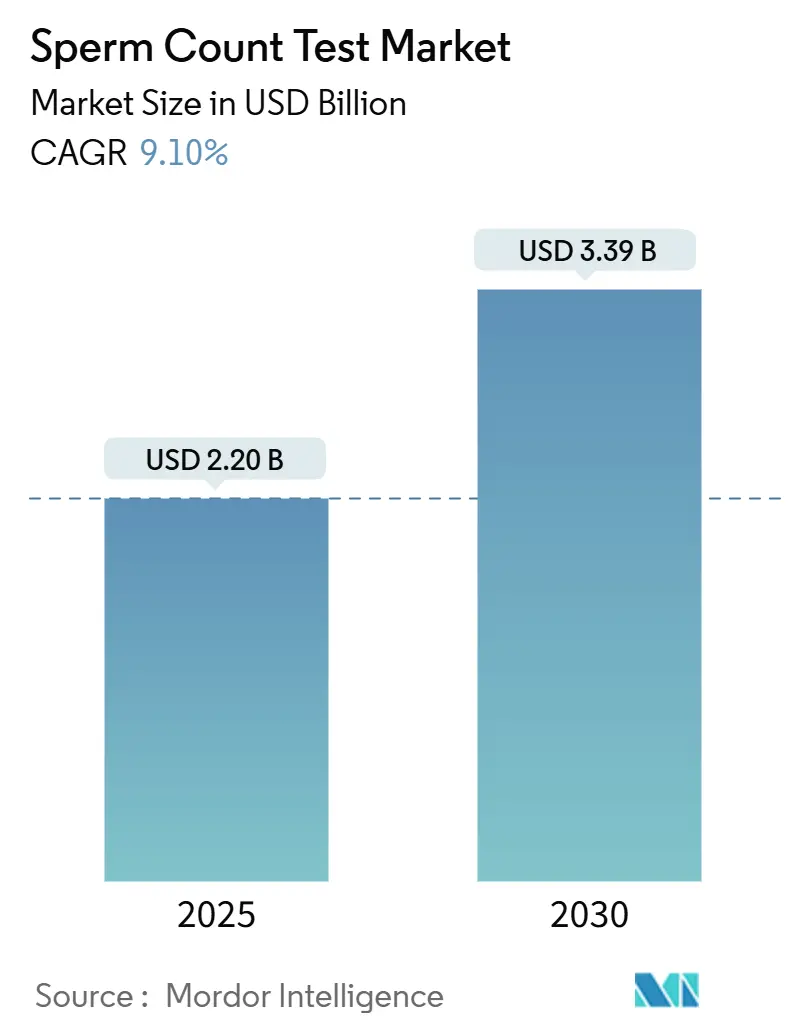
| Market Size (2025) | USD 2.20 Billion |
| Market Size (2030) | USD 3.39 Billion |
| Growth Rate (2025 - 2030) | 9.10 % |
| Fastest Growing Market | Asia Pacific |
| Largest Market | North America |
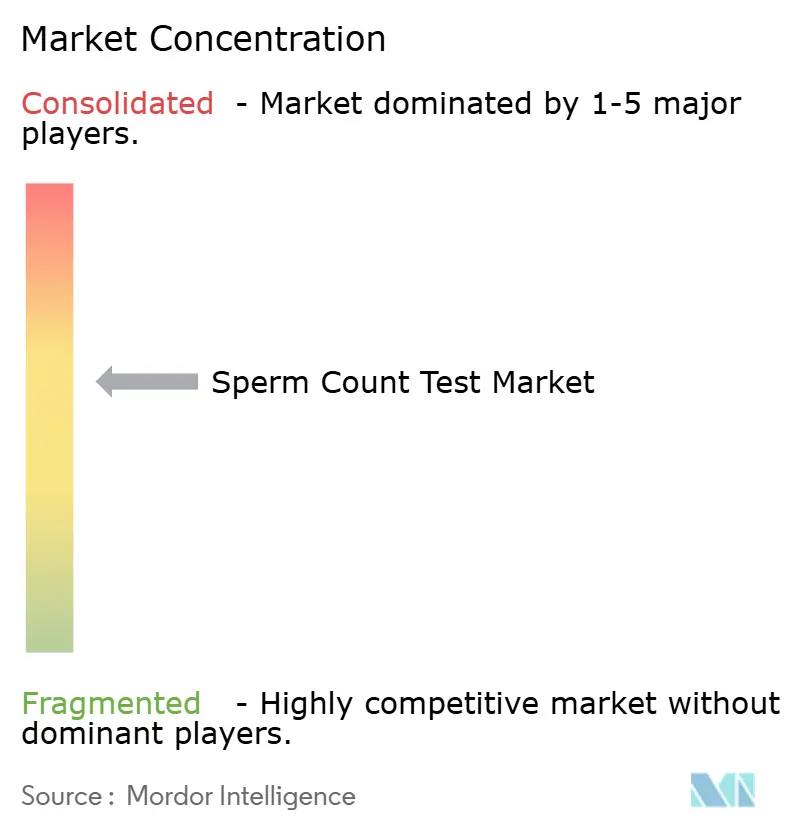
| Market Concentration | Medium |
Major Players *Disclaimer: Major Players sorted in no particular order Image © Mordor Intelligence. Reuse requires attribution under CC BY 4.0. | |
Sperm Count Test Market Analysis by Mordor Intelligence
The sperm count test market size stood at USD 2.20 billion in 2025 and is forecast to reach USD 3.39 billion by 2030, advancing at a 9.10% CAGR over 2025-2030. Heightened recognition that male factors contribute to about 50% of global infertility cases fuels sustained demand, while smartphone-enabled diagnostics delivering up to 98% accuracy democratize access to fertility testing. Growing venture funding for artificial-intelligence (AI) platforms, wider reimbursement for diagnostic procedures, and employer-sponsored fertility benefits further catalyze adoption. At the same time, social stigma in emerging markets and regulatory ambiguity around digital health applications temper growth potential. Competitive rivalry is intensifying as established assisted-reproductive-technology (ART) vendors acquire niche innovators and AI-first startups secure multimillion-dollar rounds, reshaping the industry’s technology roadmap.
Key Report Takeaways
- By product category, home-use kits captured 41.3% of sperm count test market share in 2024; software and AI platforms are projected to expand at a 14.8% CAGR through 2030.
- By technology, CASA systems led with 46.5% share of the sperm count test market size in 2024, while smartphone-enabled solutions are advancing at a 16.2% CAGR over the forecast period.
- By end user, fertility centers accounted for 38.1% of the sperm count test market size in 2024; direct-to-consumer channels are poised to grow at a 15.4% CAGR to 2030.
- By geography, North America commanded 35.1% share of the sperm count test market size in 2024, whereas Asia Pacific is registering the fastest growth at an 11.4% CAGR through 2030.
Note: Market size and forecast figures in this report are generated using Mordor Intelligence’s proprietary estimation framework, updated with the latest available data and insights as of January 2026.
Market Trends and Insights
Drivers Impact Analysis of Sperm Count Test Market*
| Driver | ( ~ ) % Impact on CAGR Forecast | Geographic Relevance | Impact Timeline |
|---|---|---|---|
| Rising prevalence of male infertility | +2.10% | Global, highest in Asia Pacific and North America | Long term (≥ 4 years) |
| Growing adoption of at-home semen analysis kits | +1.80% | North America and Europe, expanding to Asia Pacific | Medium term (2-4 years) |
| Wider reimbursement for fertility diagnostics | +1.30% | North America and Europe | Medium term (2-4 years) |
| Integration of smartphone-based readers | +1.60% | Global, early uptake in developed markets | Short term (≤ 2 years) |
| Direct-to-consumer tele-andrology platforms | +1.20% | North America and Europe | Short term (≤ 2 years) |
| Venture funding in micro-fluidic CASA startups | +0.90% | North America and Europe | Medium term (2-4 years) |
| Source: Mordor Intelligence | |||
Rising Prevalence of Male Infertility
Global Burden of Disease (GBD) 2021 analysis, which calculated about 55 million affected men in 2021, equivalent to an age-standardized prevalence rate of 1,355 cases per 100,000 males.[1]Jiale Feng, “Epidemiological Characteristics of Infertility, 1990–2021, and 15-Year Forecasts: An Analysis Based on the Global Burden of Disease Study 2021,” Reproductive Health, reproductive-health-journal.biomedcentral.com Pacific displays the steepest climb, with China’s burden peaking in the 35-39 age bracket before easing as health programs mature. Revised 2021 WHO reference values produced minimal clinical reclassification, underscoring the persistent need for diagnostic clarity. Because male factors independently cause 20-30% of infertility and contribute to another 20-30% in combination cases, sustained test utilization is assured.
Growing Adoption of At-Home Semen Analysis Kits
Privacy concerns and convenience propel demand for FDA-cleared home devices such as the YO Home Sperm Test, which reports 97% accuracy and high user satisfaction. Harvard researchers built a sub-USD 5 smartphone attachment that delivers results in 5 seconds, illustrating how low-cost optics bridge gaps in care.[2]Jeremy Hsu, “Harvard Develops a Cheap Smartphone Test for Male Fertility,” IEEE Spectrum, spectrum.ieee.org Direct-to-consumer providers log compliance rates above 90%, while general laboratories scale back services amid reimbursement cuts. Pandemic-era social distancing further normalized self-testing and teleconsultation.
Wider Reimbursement for Fertility Diagnostics
Several Canadian provinces reimburse up to CAD 19,000 (USD 14,420) for in-vitro-fertilization (IVF) procedures or grant 50% tax credits, and U.S. employers now cover comprehensive male work-ups. Health-economic modeling shows every USD 1 invested in male evaluation can cut female treatment costs by USD 2.30. Nevertheless, specialized andrology labs often remain cash-pay settings, limiting access in lower-income populations.
Integration of Smartphone-Based Readers
Miniaturized optical modules coupled with AI achieve laboratory-grade accuracy at a fraction of CASA capital costs. Studies demonstrate 98% concordance between smartphone systems and benchtop analyzers, and AI augments motility tracking and morphology classification. Ubiquity of smartphones broadens point-of-care reach, yet experts warn that quick tests cannot fully replace comprehensive clinical evaluation, emphasizing referral pathways.
Restraints Impact Analysis of Sperm Count Test Market*
| Restraint | ( ~ ) % Impact on CAGR Forecast | Geographic Relevance | Impact Timeline |
|---|---|---|---|
| Social stigma in emerging markets | -1.40% | Asia Pacific, Africa, Latin America | Long term (≥ 4 years) |
| Limited clinical accuracy of OTC kits | -0.80% | Global, highest where specialized labs are scarce | Medium term (2-4 years) |
| Absence of fertility benefits in SMEs | -0.60% | North America and Europe | Medium term (2-4 years) |
| Regulatory ambiguity on digital semen apps | -0.50% | North America and Europe | Short term (≤ 2 years) |
| Source: Mordor Intelligence | |||
Social Stigma in Emerging Markets
Cultural norms in India, Ghana, and parts of sub-Saharan Africa often attribute childlessness to women, deterring men from testing and delaying treatment. Studies document social exclusion and marital stress linked to male factor infertility, underscoring the need for public education, peer support, and clinician training.[3]Abdulai Mohammed Musa, “Men and Infertility in The Gambia: Limited Biomedical Knowledge and Awareness Discourage Male Involvement,” PLOS ONE (open-access version), pmc.ncbi.nlm.nih.gov Media campaigns and school curricula targeting misconceptions can gradually shift attitudes, but progress is incremental.
Limited Clinical Accuracy of OTC Kits
Over-the-counter devices typically measure only concentration and motility, omitting morphology and DNA fragmentation parameters essential to therapy planning. FDA adverse-event databases cite false-negative and false-positive outcomes, risking inappropriate reassurance or anxiety. In regions lacking andrology expertise, reliance on partial metrics can postpone needed interventions. Regulatory bodies therefore urge clear disclaimers and recommend confirmatory laboratory testing for abnormal or borderline results.
*Our forecasts treat driver/restraint impacts as directional, not additive. The impact forecasts reflect baseline growth, mix effects, and variable interactions.
Sperm Count Test Market Segment Analysis
By Product:
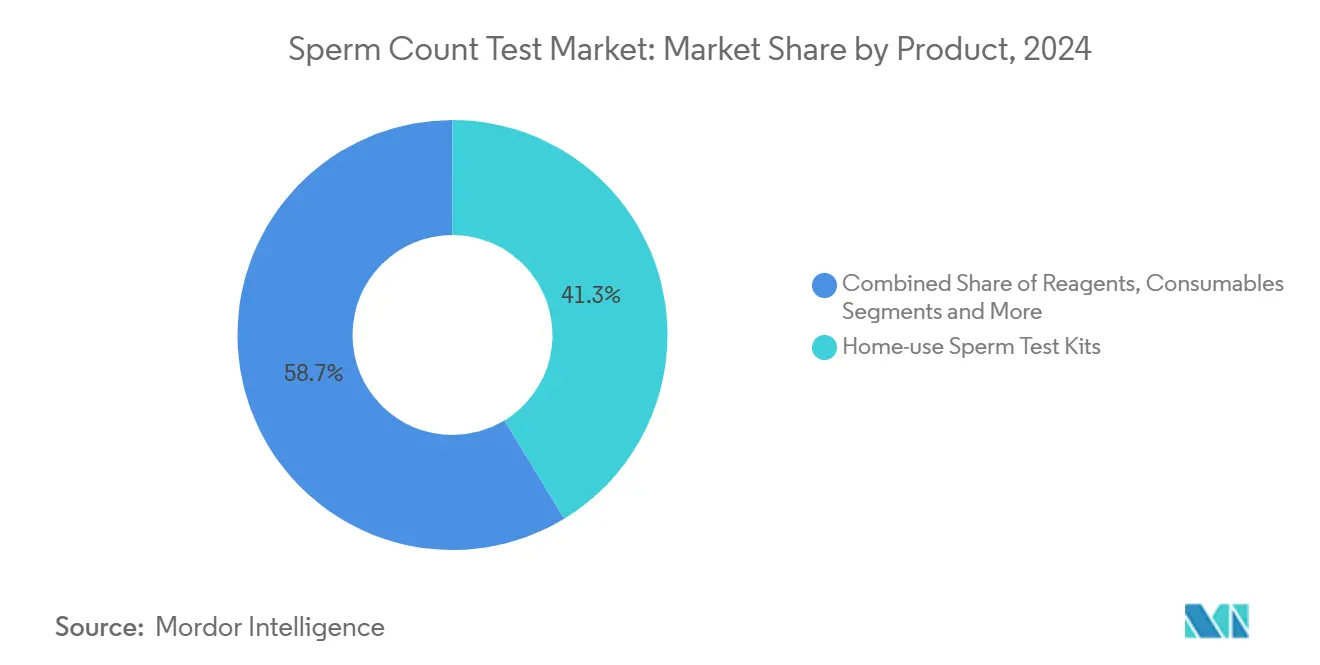
Home-use Kits Drive Accessibility RevolutionHome-use kits held 41.3% of the sperm count test market share in 2024, reflecting consumer desire for privacy and immediacy. The sperm count test market size for this segment is projected to rise steadily as FDA-cleared devices integrate AI guidance and smartphone connectivity. Recurring cartridge sales secure predictable revenue, while clinical-grade CASA reagents sustain laboratory adoption. Software and AI platforms, expected to grow at 14.8% CAGR, transform raw data into actionable insights, improving result interpretation and enabling longitudinal tracking.
Despite dominance of kits, professional laboratories remain crucial for complex diagnostics such as morphology scoring and DNA integrity testing. Vendors increasingly bundle at-home collection with centralized AI analysis, merging convenience and accuracy. Funding momentum—illustrated by USD 2 million raised by Illumicell AI—validates investor confidence in data-centric approaches.



By Technology:
Smartphone Integration Disrupts Traditional CASACASA systems controlled 46.5% of the sperm count test market size in 2024, favored for precision and multi-parameter output. Yet smartphone imaging solutions are scaling at a 16.2% CAGR, lowering entry barriers. Hybrid devices that plug into phones leverage high-resolution cameras to deliver near-real-time counts. Microfluidic chips enrich motile sperm, opening premium sub-markets such as pre-IVF selection.
Manual microscopy persists in lower-resource clinics, though its subjectivity motivates transition to automated tools. Spectrophotometric and colorimetric readers satisfy quick screening needs where morphology data are less critical. Standards like ISO 23162 reinforce interoperability across platforms, accelerating clinician confidence.
By End User:
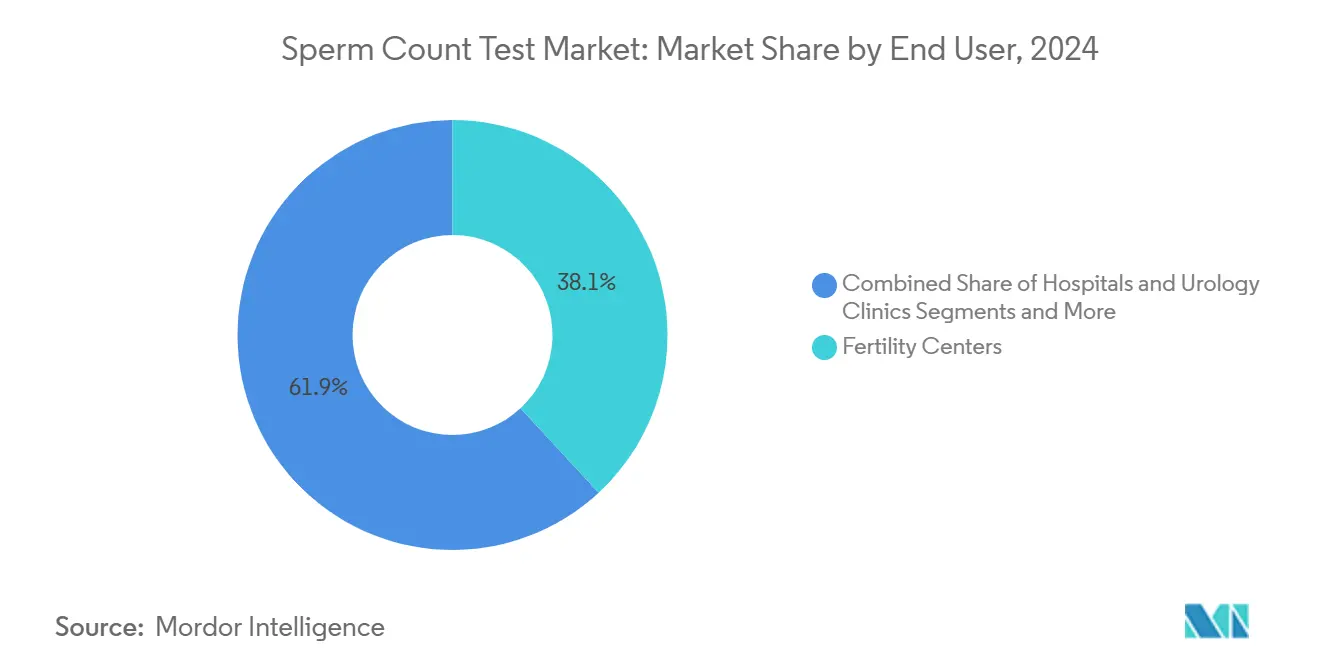
Direct-to-Consumer Models Challenge Clinical DominanceFertility centers generated 38.1% of spending in 2024, but home-care channels are growing 15.4% annually as men sidestep stigma and cost hurdles. Tele-andrology firms ship collection kits, run AI assessments, and schedule virtual consults within days. Hospitals and urology clinics sustain demand for comprehensive work-ups including hormonal panels and ultrasonography.
Diagnostic laboratories navigate tighter reimbursements by offering value-added services such as DNA fragmentation and oxidative-stress testing. Research institutions support pipeline innovation, validating new biomarkers and device prototypes that may soon reach consumers.
Geography Analysis
North America Sperm Count Test Market
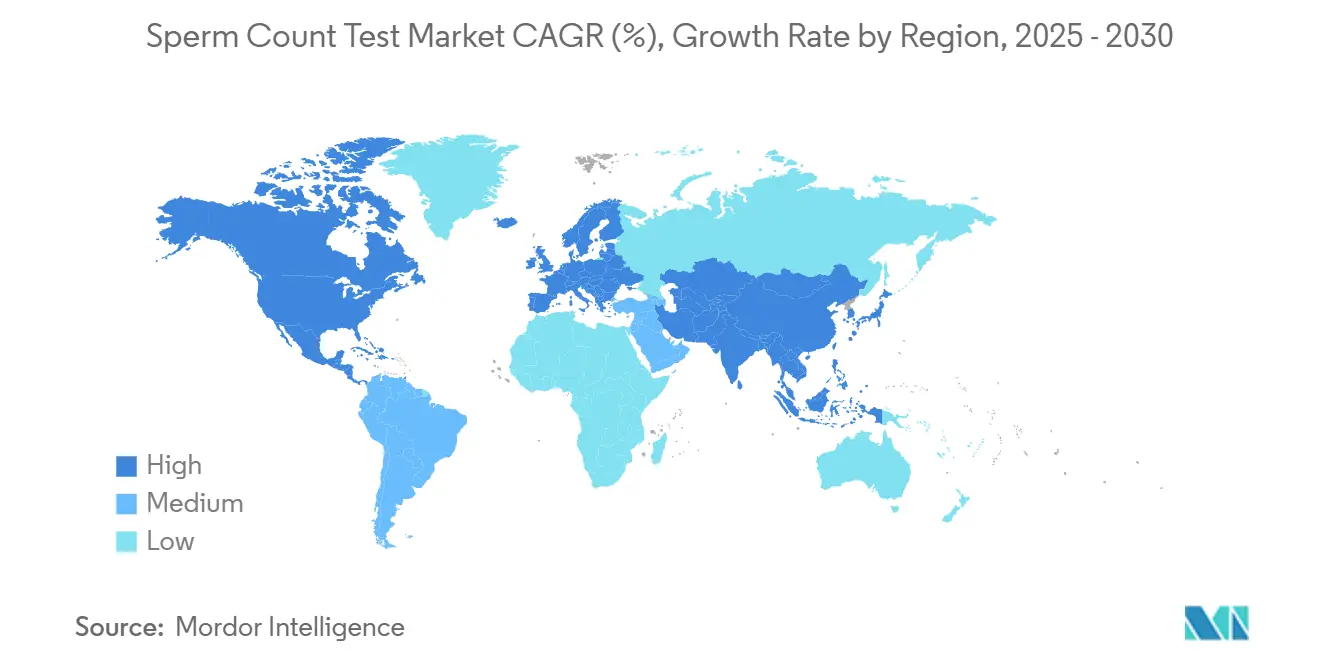
North America retained 35.1% of revenue in 2024 through robust insurance coverage, high awareness, and dense ART clinic networks. Venture investment, exemplified by Posterity Health’s USD 13 million Series A, nurtures platform scalability. Canada’s province-level subsidies further expand access, while Mexico leverages medical tourism to attract cross-border clientele.
APAC Sperm Count Test Market
Asia Pacific is the fastest-growing region at 11.4% CAGR, propelled by rising infertility incidence and swift smartphone penetration. China’s adoption of WHO guidelines improves test standardization, though quality-control deficits create openings for automated devices. Indian consumers embrace low-priced kits launched at INR 1,990 (USD 24), bridging affordability gaps.
EMEA Sperm Count Test Market
Europe posts steady gains under the IVDR framework that harmonizes safety and performance criteria. Strategic buys, such as Hamilton Thorne’s EUR 18.3 million acquisition of Gynetics, expand product suites targeting regional clinics. Middle East and Africa present untapped potential; male factors represent 45.4% of infertility cases, suggesting latent demand once socio-cultural hurdles ease.

Competitive Landscape
Moderate fragmentation defines the field as multinationals compete with nimble startups. Hamilton Thorne’s integration with Cook Medical’s reproductive unit broadens an end-to-end ART portfolio covering over 115 countries. Merck introduces embryo culture media and fertilization protocols, leveraging pharmaceutical scale to cross-sell diagnostics. AI-centric entrants such as Illumicell AI and ExSeed Health differentiate through real-time analytics and direct-to-consumer distribution.
Microfluidic innovators file patents on sperm-sorting chips delivering 90% purity, while academic spin-offs collaborate with device makers to commercialize nanoparticle-based assays. Regulatory compliance forms a strategic moat; FDA 510(k) clearances and EU CE marks demand rigorous validation, favoring capitalized players but not deterring venture-backed disruptors.
Sperm Count Test Industry Leaders
Hamilton Thorne Ltd.
Merck KGaA (Sigma-Aldrich)
Medical Electronic Systems
Microptic SL
ExSeed Health
- *Disclaimer: Major Players sorted in no particular order
Sperm Count Test Market Companies Covered in this Report
- Hamilton Thorne Ltd.
- Merck
- Medical Electronic Systems (MES)
- Proiser R+D
- SpermCheck (DST Technologies)
- ExSeed Health
- YO Home Sperm Test (Medical Electronic Systems)
- DNA Diagnostics Center
- Microptic SL
- Vitrolife
- Fertility Focus (OvuSense)
- Teco Diagnostics
- Andrology Solutions
- Genea Biomedx
- IVFtech ApS
- LogixSmart
- Mojo Fertility
- Sandstone Diagnostics (Trak)
- DiagCor Bioscience
- PulseLife Inc.

Recent Industry Developments in Sperm Count Test Market
- April 2025: Illumicell AI raised USD 2 million to advance real-time AI semen diagnostics.
- March 2025: Spermosens partnered with Scalania AG to speed up the JUNO-Checked fertility-diagnostic rollout.
- December 2024: Astorg finalized the take-private of Hamilton Thorne and Cook Medical Reproductive Health.


Global Sperm Count Test Market Report Scope
| Semen Analyzer Systems (CASA) |
| Home-use Sperm Test Kits |
| Reagents & Consumables |
| Software & AI Analysis Platforms |
| Accessories & Disposables |
| Manual Microscopy |
| Computer-Assisted Sperm Analysis (CASA) |
| Microfluidics-Based Counting |
| Smartphone-Enabled Imaging |
| Spectrophotometric / Colorimetric |
| Fertility Centers |
| Hospitals & Urology Clinics |
| Home Care / Direct-to-Consumer |
| Diagnostic Laboratories |
| Research Institutes |
| North America | United States |
| Canada | |
| Mexico | |
| Europe | Germany |
| United Kingdom | |
| France | |
| Italy | |
| Spain | |
| Rest of Europe | |
| Asia Pacific | China |
| Japan | |
| India | |
| South Korea | |
| Australia | |
| Rest of Asia Pacific | |
| Middle East & Africa | GCC |
| South Africa | |
| Rest of Middle East & Africa | |
| South America | Brazil |
| Argentina | |
| Rest of South America |
| By Product | Semen Analyzer Systems (CASA) | |
| Home-use Sperm Test Kits | ||
| Reagents & Consumables | ||
| Software & AI Analysis Platforms | ||
| Accessories & Disposables | ||
| By Technology | Manual Microscopy | |
| Computer-Assisted Sperm Analysis (CASA) | ||
| Microfluidics-Based Counting | ||
| Smartphone-Enabled Imaging | ||
| Spectrophotometric / Colorimetric | ||
| By End User | Fertility Centers | |
| Hospitals & Urology Clinics | ||
| Home Care / Direct-to-Consumer | ||
| Diagnostic Laboratories | ||
| Research Institutes | ||
| By Geography | North America | United States |
| Canada | ||
| Mexico | ||
| Europe | Germany | |
| United Kingdom | ||
| France | ||
| Italy | ||
| Spain | ||
| Rest of Europe | ||
| Asia Pacific | China | |
| Japan | ||
| India | ||
| South Korea | ||
| Australia | ||
| Rest of Asia Pacific | ||
| Middle East & Africa | GCC | |
| South Africa | ||
| Rest of Middle East & Africa | ||
| South America | Brazil | |
| Argentina | ||
| Rest of South America | ||


Key Questions Answered in the Report
What is the forecast value of the sperm count test market in 2030?
The market is projected to reach USD 3.39 billion by 2030, growing at a 9.10% CAGR from 2025.
Which region is expanding fastest in sperm count testing?
Asia Pacific is advancing at an 11.4% CAGR through 2030, driven by rising infertility awareness and smartphone adoption.
How accurate are smartphone-based sperm count tests?
Clinical studies show up to 98% concordance with laboratory methods when using validated smartphone attachments.
Why are home-use kits gaining traction?
They offer privacy, convenience, and costs lower than in-clinic testing, with FDA-cleared devices reporting 97% accuracy.
What limits over-the-counter fertility tests?
Many OTC kits measure only count and motility, omitting morphology and DNA fragmentation, so abnormal results still require full laboratory evaluation.
How does reimbursement affect adoption?
Provinces in Canada and many U.S. employers now subsidize male testing, reducing out-of-pocket expenses and boosting uptake.
Page last updated on:





