
Market Overview
| Study Period | 2021 - 2031 |
|---|---|
| Forecast Data Period | 2026 - 2031 |
| Base Year Market Size (2025) | USD 8.15 Billion |
| Market Size (2026) | USD 8.74 Billion |
| Market Size (2031) | USD 12.38 Billion |
| Growth Rate (2026 - 2031) | 7.22 % |
| Market Concentration | High |
Major Players *Disclaimer: Major Players sorted in no particular order Image © Mordor Intelligence. Reuse requires attribution under CC BY 4.0. | |
South America Oral Care Market Analysis by Mordor Intelligence
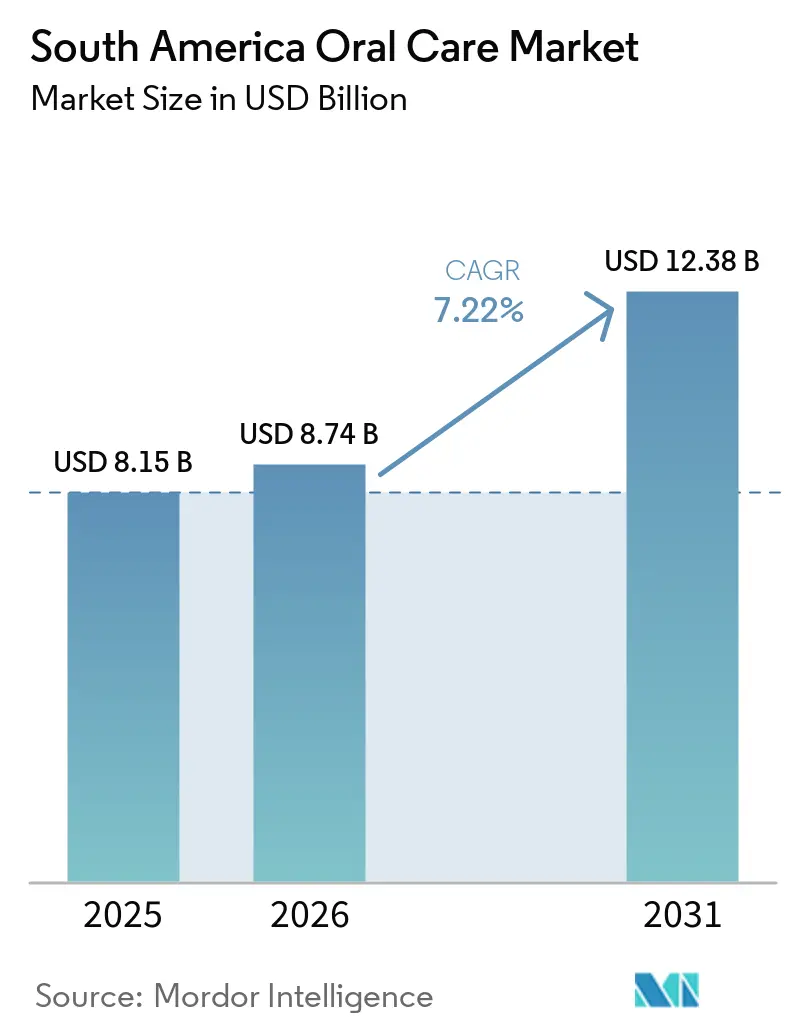
The South America oral care market size was valued at USD 8.15 billion in 2025 and estimated to grow from USD 8.74 billion in 2026 to reach USD 12.38 billion by 2031, at a CAGR of 7.22% during the forecast period (2026-2031). This growth trajectory reflects the region's increasing health consciousness and evolving consumer preferences toward premium and specialized oral care solutions. Multinational companies leverage R&D and distribution networks, while local players focus on natural formulations and cultural relevance. Online retail channels are disrupting traditional distribution networks, registering the fastest growth at 9.10% CAGR (2026-2031) and reshaping how oral care products reach consumers. The integration of smart technologies into electric toothbrushes is creating premium-segment opportunities, while counterfeit products remain a significant challenge, particularly affecting brand reputation in price-sensitive markets. Government initiatives promoting oral hygiene, such as Brazil's "Smiling Brazil" program, are creating favorable market conditions by expanding access to oral health services and raising awareness about preventive care, according to the International & American Associations for Dental Research.
Key Report Takeaways
- By product type, toothpaste led with 52.04% of the South America Oral Care market share in 2025; mouthwash/rinses are projected to expand at a 7.81% CAGR through 2031.
- By ingredient, conventional formulations held 93.89% of the market in 2025, while natural/organic products are poised for an 8.12% CAGR through 2031.
- By end user, adults represented 98.34% of total volume in 2025; the kids segment is set to grow at an 8.62% CAGR through 2031.
- By distribution channel, supermarkets/hypermarkets captured 32.13% of sales in 2025; online retail is growing at a 9.14% CAGR as digital adoption rises.
- By geography, Brazil accounted for 43.12% of market revenue in 2025, while Argentina remains the fastest-growing country, with a 9.48% CAGR through 2031.
Note: Market size and forecast figures in this report are generated using Mordor Intelligence’s proprietary estimation framework, updated with the latest available data and insights as of 2026.
Market Trends and Insights
Drivers Impact Analysis of South America Oral Care Market*
| Driver | (~) % Impact on CAGR Forecast | Geographic Relevance | Impact Timeline |
|---|---|---|---|
| Deterring Oral Health | +1.2% | Brazil, Argentina | Medium term (2-4 years) |
| Product Differentiation in Terms of Ingredients | +1.0% | Chile, urban Brazil | Medium term (2-4 years) |
| Integration of Smart Technologies in Electric Toothbrush | +0.9% | Brazil, Argentina, Colombia | Short term (1-2 years) |
| Favorable Government Initiatives on Oral Hygiene | +1.1% | Brazil, Peru | Long term (4-6 years) |
| Rising Awareness of Oral Health in Rural Areas | +0.6% | Bolivia, rural Brazil, Peru | Medium term (2-4 years) |
| Increasing Adoption of Herbal Oral Care Products | +0.7% | Chile, Peru, Colombia | Short to Medium term (1-3 years) |
| Source: Mordor Intelligence | |||
Oral Health Concerns Propel Market Growth
The increasing prevalence of oral health issues in South America is driving a significant shift in consumer behavior toward preventive care products. Chronic conditions such as severe periodontitis and edentulism continue to strain healthcare systems and are projected to remain critical challenges through 2050, thereby boosting the demand for advanced oral care solutions. In response to these rising concerns, dental professionals are recommending improved oral care practices. As of 2024, Brazil had 423,873 registered dental surgeons, according to the Conselho Federal de Odontologia (Brazilian Federal Council of Dentistry)[1]. This persistent health burden is accelerating the transition from reactive treatments to preventive care strategies, with consumers increasingly acknowledging the connection between oral health and overall well-being. The World Health Organization's initiative to prioritize oral health as a key component of universal health coverage by 2030 further strengthens this trend, driving market growth beyond basic hygiene products toward therapeutic and preventive offerings.
Product Differentiation in Terms of Ingredients
The ingredient composition of oral care products has emerged as a critical differentiation factor, with natural and organic formulations gaining significant traction. This shift is exemplified by companies like Biorigen in Chile, which has developed 100% organic oral hygiene products in response to growing consumer demand for sustainable alternatives. This change is primarily attributed to heightened consumer awareness and scrutiny regarding the composition of oral care products. Companies are proactively adapting their strategies to align with these evolving consumer preferences, recognizing the importance of catering to this growing segment. Furthermore, the industry's strategic priorities are expanding beyond ingredient innovation to address broader sustainability goals. Recyclable packaging has emerged as a critical competitive differentiator in this regard. For instance, Colgate's adoption of recyclable toothpaste tubes highlights a deliberate and forward-looking commitment to environmentally sustainable product development. This approach not only aligns with the region's increasing eco-conscious consumer base but also positions the company as a leader in sustainability-driven innovation within the oral care market.
Integration of Smart Technologies in Electric Toothbrush
The electric toothbrush market is experiencing a technological transformation, with smart features driving premium-tier growth in a traditionally commoditized category. This shift is particularly prominent in Brazil and Argentina, where increasing disposable incomes are enabling consumers to adopt connected oral care devices that deliver personalized brushing solutions. Innovations such as app connectivity, pressure sensors, and real-time feedback are elevating these products from basic cleaning tools to advanced oral health management systems. This technological advancement aligns with a broader industry trend, where oral care is adopting a holistic health approach inspired by skincare practices. The premiumization strategy has been successful for brands like Oral-B, as demonstrated by the performance of their iO power toothbrushes. As consumers become more health-conscious, the demand for technologically advanced oral care products is set to surge. Industry experts predict that this trend will not only reshape the market dynamics but also redefine consumer expectations in the coming years.
Favorable Government Initiatives on Oral Hygiene
Government-driven oral health initiatives are addressing access challenges and enhancing awareness, creating a conducive environment for market growth. Brazil's universal health system (SUS) has emphasized oral health through its "Smiling Brazil" program, which has improved oral health metrics and expanded care accessibility, serving as a model for other nations in the region according to International & American Associations for Dental Research [2]. More recently, legislative proposals like PL 2888/2021 aim to establish July as "Julho Laranja" to promote annual orthodontic examinations for children aged 6-12 in Brazil, potentially influencing future dental care practices and market dynamics. Colgate's Bright Smiles Bright Futures initiative underscores a strong corporate commitment to fostering global oral health awareness and education, including South America. The program has set an ambitious target of educating two billion children worldwide by 2025, building on its milestone of already reaching over one billion children. By offering free oral health education, the initiative leverages strategic partnerships with globally recognized organizations, such as the World Health Organization, to maximize its reach and deliver a lasting, positive impact on communities across the globe.
Restraints Impact Analysis of South America Oral Care Market*
| Restraint | (~) % Impact on CAGR Forecast | Geographic Relevance | Impact Timeline |
|---|---|---|---|
| Prevalence of Traditional Way of Tooth Cleaning | -1.3% | Rural areas across South America, particularly Andean regions and interior Brazil | Long term (≥ 4 years) |
| Counterfeit Products Affecting Brand Reputation | -1.6% | Pan-regional, strongest in border regions and unregulated markets | Medium term (2-4 years) |
| Regulatory Hurdles Delay Launches for New Formulations | -0.8% | Brazil, Argentina, with spillover effects to smaller markets | Medium term (2-4 years) |
| High Costs of Premium Oral Care Products | -1.1% | Price-sensitive segments across South America, particularly in Colombia, Peru, and rural areas | Short term (≤ 2 years) |
| Source: Mordor Intelligence | |||
Prevalence of Traditional Way of Tooth Cleaning
Traditional tooth cleaning methods continue to present significant resistance to market penetration in rural and low-income communities across South America. Although the market is experiencing overall growth, cultural practices and economic challenges restrict the adoption of modern oral care products within specific segments. This issue is particularly evident in remote regions of Brazil and the Andean areas, where limited access to dental care and reliance on traditional remedies persist. In Brazil, the dental insurance market remains underdeveloped compared to mature markets like the United States. Odontoprev, the largest dental insurance provider in Brazil, reports only 8.6 million beneficiaries in 2023, highlighting both substantial growth opportunities and barriers to the adoption of modern oral care solutions. This underpenetration indicates significant growth potential but also highlights the barriers to modern oral care adoption. The challenge for manufacturers lies in developing products and educational initiatives that can bridge the gap between traditional practices and contemporary oral health science, particularly as the connection between oral health and overall wellbeing becomes increasingly recognized.
Counterfeit Products Affecting Brand Reputation
Counterfeit oral care products present a significant business challenge by undermining brand equity, eroding consumer trust, and posing serious health risks. This issue is particularly acute in price-sensitive markets, where consumers are more likely to unknowingly purchase counterfeit products through unregulated distribution channels. These counterfeit items frequently contain inferior or harmful ingredients, which not only endanger consumer health but also compromise the overall standards of oral care. For well-established companies such as Colgate-Palmolive, the proliferation of counterfeit products directly impacts financial performance by reducing revenue streams and weakening long-term consumer loyalty. Furthermore, the rapid growth of e-commerce in the region has intensified this challenge, as it facilitates the distribution of counterfeit goods. This scenario highlights the critical need for companies to implement robust authentication and verification systems to safeguard their brand integrity and protect consumers.
*Our forecasts treat driver/restraint impacts as directional, not additive. The impact forecasts reflect baseline growth, mix effects, and variable interactions.
South America Oral Care Market Segment Analysis
By Product Type:
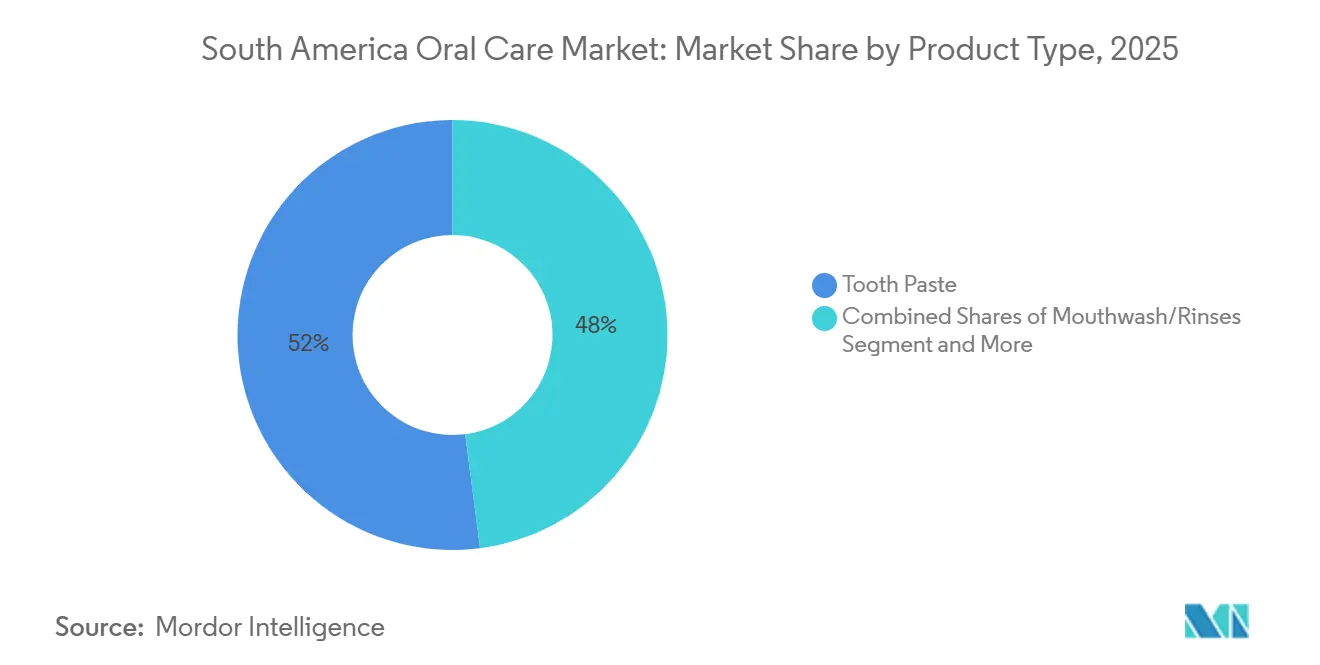
Toothpaste Dominates While Mouthwash AcceleratesToothpaste commands the largest market share at 52.04% in 2025, benefiting from its status as an essential daily care product across all demographic segments. The segment's leadership is driven by continuous advancements in specialized formulations addressing key oral health needs, including sensitivity, whitening, and gum care. Meanwhile, the mouthwash and rinses segment is poised for rapid growth, with a projected CAGR of 7.81% from 2026 to 2031. This growth is attributed to rising consumer awareness of comprehensive oral hygiene practices and the therapeutic benefits of mouthwash beyond basic freshening. Clinical research further supports this trend by demonstrating mouthwash's effectiveness in reducing plaque and improving gum health.
The toothbrush segment is undergoing significant premiumization, particularly in urban markets where demand for electric and smart models is increasing despite their higher price points. Oral-B's iO power toothbrushes have driven high single-digit growth globally, signaling similar growth potential in South America's emerging premium segment. Additionally, products such as dental floss, interdental cleaners, and tongue cleaners, while representing a smaller market share, are gaining traction. This growth is fueled by consumers adopting more comprehensive oral care routines, influenced by recommendations from dental professionals and heightened awareness of oral health.

By Ingredient:
Natural Formulations Gaining GroundConventional/synthetic ingredients maintain market dominance with a 93.89% share in 2025, reflecting established consumer trust and widespread availability across price points. These formulations leverage decades of research, proven performance, and cost efficiency, ensuring broad accessibility. However, the natural and organic segment is gaining traction, projected to grow at a robust 8.12% CAGR from 2026 to 2031. This growth is driven by increasing consumer focus on ingredient transparency and a shift toward sustainable products.
The ingredient landscape is undergoing significant evolution as advanced compounds from the skincare industry are adopted. Innovations such as peptides and hydroxyapatite for remineralization, along with probiotics aimed at balancing oral ecosystems, are driving the emergence of premium market segments. These developments are redefining the boundaries between oral care and the broader health and wellness categories. Leading brands are responding by developing hybrid formulations that combine natural ingredients with scientifically validated active compounds, targeting both health-conscious consumers and those seeking clinically proven efficacy.
By End User:
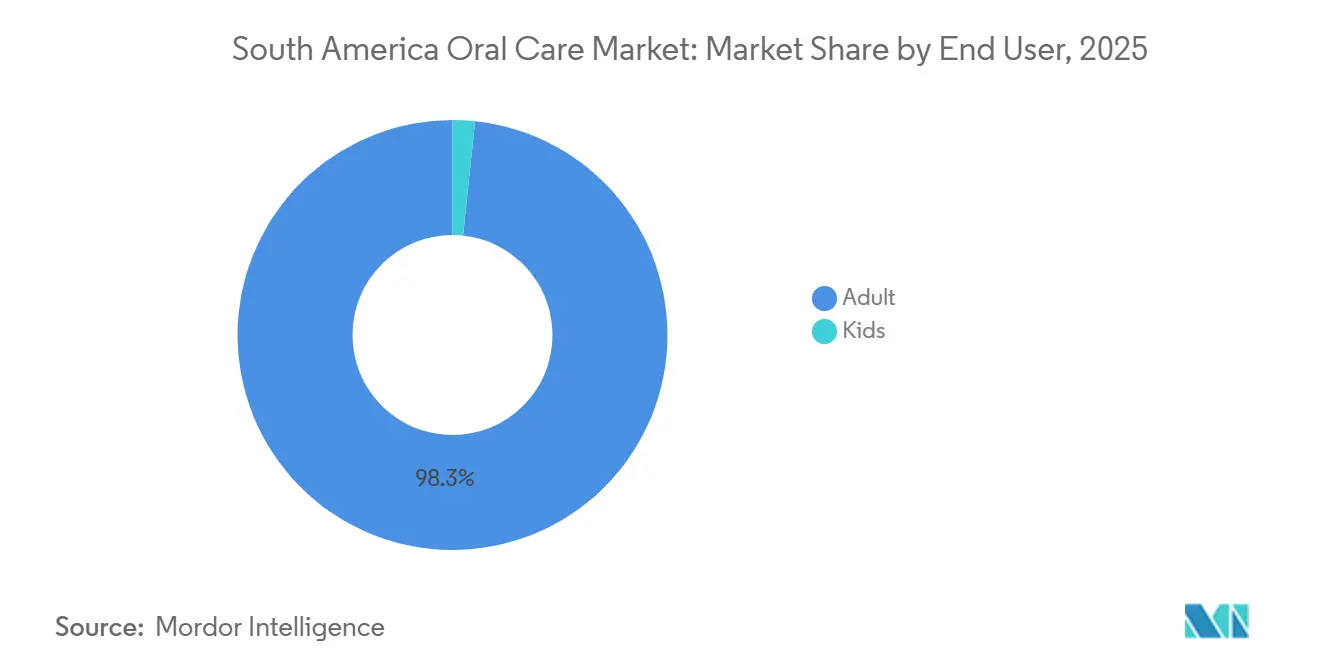
Adult Segment Dominates While Kids Segment Grows FasterThe adult segment commands an overwhelming 98.34% market share in 2025, reflecting the broader consumer base and higher spending power of this demographic. Adult oral care products cater to a wide range of needs, from basic hygiene to specialized therapeutic and cosmetic solutions, addressing concerns from cavity prevention to whitening and sensitivity relief. Meanwhile, the kids' segment, though smaller, is set to outpace with an 8.62% CAGR (2026-2031). This growth is fueled by rising parental awareness of early oral health and the introduction of child-friendly formulations featuring enticing flavors and packaging.
Recent legislative initiatives, such as Brazil's proposed "Julho Laranja" campaign, which aims to promote annual orthodontic examinations for children aged 6-12, highlight the growing institutional focus on pediatric oral health. This regulatory support, combined with educational programs like Colgate's Bright Smiles Bright Futures, which aims to reach 2 billion children globally by 2025, is creating a favorable environment for growth in the kids segment. Manufacturers are responding with innovative products designed specifically for different age groups, recognizing the distinct oral care needs from early childhood through adolescence.
By Distribution Channel:
Digital Transformation Reshaping AccessSupermarkets/hypermarkets lead the distribution landscape with a 32.13% market share in 2025, leveraging their extensive physical presence and one-stop shopping convenience. Their leadership is attributed to an extensive physical network and the convenience of one-stop shopping. These traditional channels capitalize on high customer footfall and effectively present a broad product portfolio, supported by strategic in-store promotions. As consumer preferences shift towards convenience, these giants are also expanding their online presence to capture both in-store and digital shoppers. The Brazilian Supermarket Association (ABRAS) reported supermarket revenues of USD183 billion in 2023.
Drug stores and pharmacies maintain a strong market position, driven by their alignment with health-related products and the credibility of professional recommendations, particularly for therapeutic oral care solutions. However, online retail stores are disrupting the market as the fastest-growing channel, with a projected 9.14% CAGR from 2026 to 2031. This trend is redefining consumer purchasing patterns for oral care products. Brazil's e-commerce sector is undergoing significant growth, fueled by advancements in digital infrastructure and shifting consumer preferences. Four critical clusters define the Brazilian e-commerce landscape: consumer behavior, e-commerce structure, product distribution, and environmental sustainability. Additionally, other distribution channels, such as specialty stores and direct sales, continue to address niche markets, with their relevance varying between urban and rural regions across the country.
Geography Analysis
Brazil Oral Care Market
Brazil, holding 43.12% of the South American oral Care market size in 2025, benefits from the Smiling Brazil program that has embedded oral care within primary health offerings. Although currency fluctuations have impacted nominal sales for multinational manufacturers, strong organic volume growth reflects resilient local demand, effectively mitigating broader economic challenges. Urban centers like São Paulo are driving early adoption of smart brushes, a trend expected to expand to secondary cities as unit prices decrease, further boosting market value.
Argentina Oral Care Market
Argentina, while smaller in market size, is forecasted to achieve a 9.48% CAGR, surpassing regional averages. Inflationary pressures are prompting consumers to selectively prioritize spending on health-related categories, positioning oral care as a defensive growth segment. Sales data indicate double-digit growth in premium whitening strips in Buenos Aires, highlighting the intersection of health-conscious and aspirational purchasing behaviors. Additionally, the expansion of private dental clinics in urban areas is fueling demand for post-procedure maintenance products, such as desensitizing toothpaste.
South America Oral Care Market
Other South American markets, including Colombia, Chile, and Peru, offer fragmented but significant growth opportunities. In Colombia, specialty retailers in urban areas are promoting probiotic mouthwashes, demonstrating that innovation is not confined to Brazil and Argentina. Chile's consumer preference for organic products, driven by domestic startups, showcases the scalability of brands that embed sustainability into their offerings. Meanwhile, Peru's strong demand for economical pack sizes underscores the importance of segmentation based on purchasing power. E-commerce platforms are playing a critical role in bridging distribution gaps, enabling broader regional market access.
Competitive Landscape
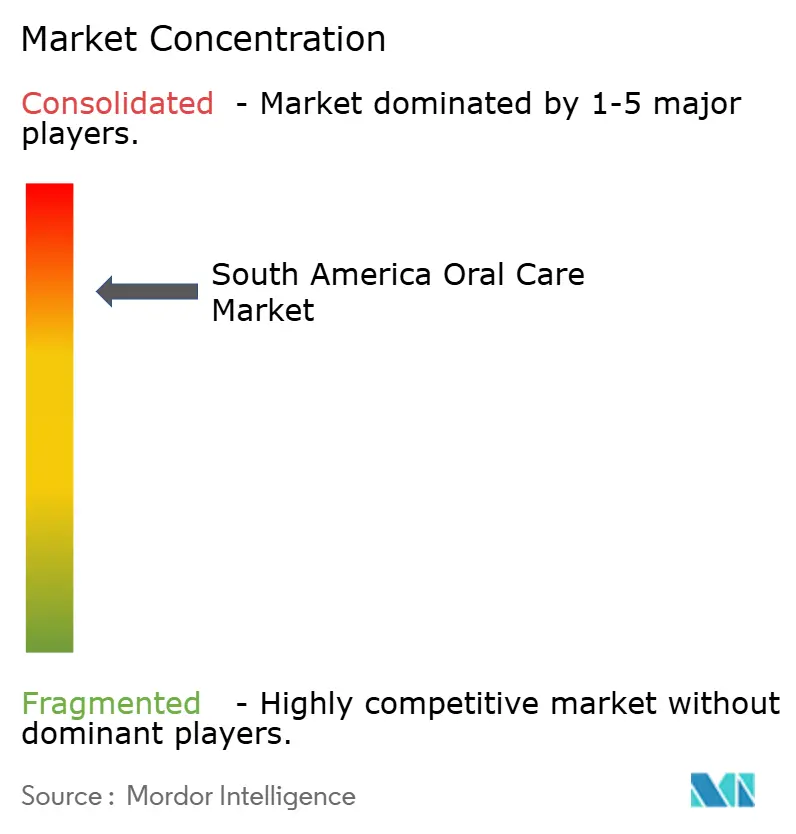
The South American oral care market is consolidated with dominated by leading global players, including Colgate-Palmolive Company, Procter & Gamble Company, Sunstar Suisse S.A., Unilever plc, and Haleon plc, making it highly consolidated. Companies are focusing on introducing advanced oral care solutions, particularly in areas such as natural formulations, smart connected devices, and specialized therapeutic products targeting specific oral health needs.
The competitive environment is transforming as businesses invest in digital capabilities and e-commerce. This digital shift is reshaping competitive dynamics, challenging traditional distribution models, and driving a stronger emphasis on direct-to-consumer strategies and omnichannel engagement to sustain market relevance. Regional challengers are capitalizing on the use of locally sourced flora and transparent labeling to establish a competitive edge in the market. For instance, Biorigen, a company based in Chile, markets its portfolio of 100% organic products packaged in recyclable materials. This approach appeals to health-conscious consumers who perceive natural ingredients as a safer alternative.
Social media platforms such as Instagram and TikTok have become instrumental in amplifying brand visibility, enabling companies to achieve extensive audience reach with relatively low investments in content creation. Recognizing the growing influence of these platforms and the traction gained by smaller players, larger corporations are proactively setting up venture arms to invest in early-stage start-ups. This strategy allows them to secure stakes in promising businesses before their valuations become prohibitively high. This trend mirrors the developments observed in the skincare industry a decade ago and indicates that mergers and acquisitions could emerge as a key strategy for established companies to rapidly enhance their green or ethical credentials.
South America Oral Care Industry Leaders
-
Colgate-Palmolive Company
-
Procter & Gamble Company
-
Sunstar Suisse S.A.
-
Unilever plc
-
Haleon plc
- *Disclaimer: Major Players sorted in no particular order
South America Oral Care Market Companies Covered in this Report
- Colgate-Palmolive Company
- Procter & Gamble Company
- Sunstar Suisse S.A.
- Unilever plc
- Haleon plc
- Katjes International GmbH & Co. KG
- Kenvue Inc.
- Lion Corporation
- Dentek Oral Care Inc.
- Maquira Dental Group
- Laboratorios Pierre Fabre SA
- Industrias Suavetex Ltda.
- Curaden
- Church and Dwight Co.
- Philips Oral Healthcare
- Ultradent Products Inc
- JGB S.A
- Alicorp S.A
- W. R. Grace & Co.
- Salt Oral Care
Recent Industry Developments in South America Oral Care Market
- February 2026: Cimed acquired oral-care manufacturer Ice Fresh, adding a 7,000 m² manufacturing facility. The plant can manufacture around 5 million units/month per shift, potentially reaching 15 million units/month under three-shift operation.
- September 2025: Colgate-Palmolive introduced a limited-edition Sorriso toothpaste inspired by the historic Kolynos brand, bringing the well-known Brazilian oral-care identity back to shelves through retro packaging and positioning.
- December 2024: Granado, a Brazilian cosmetics company, acquired Care Natural Beauty, expanding its product portfolio with plans to enter new categories, including oral care, targeting significant revenue growth by 2028.
- January 2024: Maquira, a leading Brazilian dental materials company, acquired Criteria, a leader in biomaterials in Latin America, as part of its strategy to consolidate the dental sector, increasing its annual revenue to over BRL 150 million, with the aim of reaching BRL 500 million within five years.
South America Oral Care Market Report Scope
The oral care products market encompasses dental hygiene items manufactured for maintaining oral health, including toothpaste, toothbrushes, mouthwash, dental floss, and teeth whitening solutions. The consistent application of these products prevents dental caries, periodontal diseases, and halitosis while maintaining optimal oral hygiene standards.
The South American oral care market is segmented by product type, ingredient, end user, distribution channels, and country. Based on product type, the market is segmented into toothpaste, mouthwash/rinses, toothbrush, and other product types. Based on ingredients, the market is segmented into conventional and natural/organic. Based on the end user, the market is segmented into kids/children and adults. Based on the distribution channel, the market is segmented into supermarkets/hypermarkets, drug stores/pharmacies, online retail stores, and other distribution channels. Based on the country, the market is segmented into Brazil, Argentina, and the Rest of South America. The market sizing has been done in value terms in USD for all the abovementioned segments.
Segmentation Overview
By Product Type
| Toothpaste |
| Mouthwash/Rinses |
| Toothbrush |
| Other Product Types |
By Ingredient
| Conventional |
| Natural/Organic |
By End User
| Kids/Children |
| Adult |
By Distribution Channel
| Supermarkets/Hypermarket |
| Drug Stores/Pharmacies |
| Online Retail Stores |
| Others Distribution Channel |
By Geography
| Brazil |
| Argentina |
| Rest fof South America |
| By Product Type | Toothpaste |
| Mouthwash/Rinses | |
| Toothbrush | |
| Other Product Types | |
| By Ingredient | Conventional |
| Natural/Organic | |
| By End User | Kids/Children |
| Adult | |
| By Distribution Channel | Supermarkets/Hypermarket |
| Drug Stores/Pharmacies | |
| Online Retail Stores | |
| Others Distribution Channel | |
| By Geography | Brazil |
| Argentina | |
| Rest fof South America |
Key Questions Answered in the Report
What is the current South America oral care market size?
The market is valued at USD 8.74 billion in 2026, indicating solid demand for both every day and premium oral-care goods.
How fast will the market grow over the next five years?
It is projected to expand at a 7.22% CAGR between 2026 and 2031, which places it among the faster-growing personal-care segments in the region.
Which country owns the largest South America oral care market share?
Brazil leads with 43.12% share in 2025, helped by population scale and government-backed public-health programs.
Which product category shows the strongest growth outlook?
Mouthwash is forecast to deliver a 7.81% CAGR as shoppers adopt full-mouth hygiene routines and seek therapeutic benefits.