
Soap Dispenser Market Size and Share
Market Overview
| Study Period | 2021 - 2031 |
|---|---|
| Market Size (2026) | USD 2.13 Billion |
| Market Size (2031) | USD 3.01 Billion |
| Growth Rate (2026 - 2031) | 7.09 % |
| Fastest Growing Market | Asia-Pacific |
| Largest Market | North America |
| Market Concentration | Medium |
Major Players
*Disclaimer: Major Players sorted in no particular order Image © Mordor Intelligence. Reuse requires attribution under CC BY 4.0. |
|
Soap Dispenser Market Analysis by Mordor Intelligence
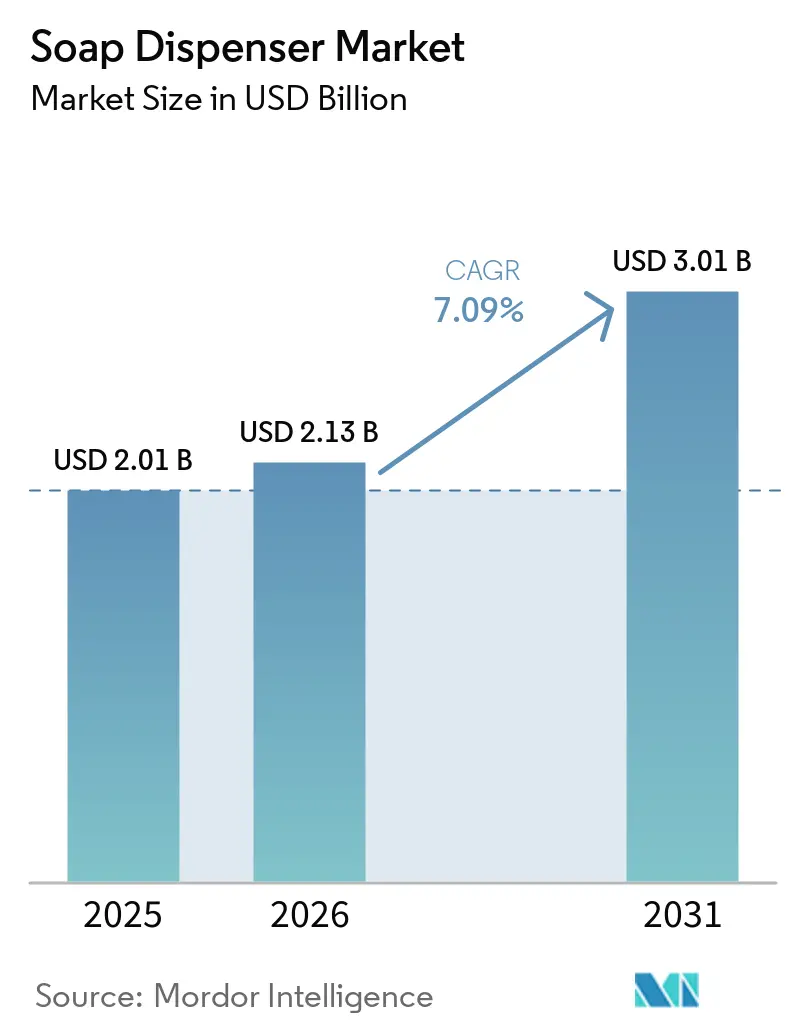
The global soap dispenser market was valued at USD 2.01 billion in 2025 and is projected to reach USD 2.13 billion in 2026, with further growth expected to USD 3.01 billion by 2031, registering a CAGR of 7.09% during the forecast period of 2026–2031. This growth is primarily attributed to the increasing integration of hygiene practices into daily routines, driving consistent demand for convenient and reliable dispensing solutions. Advancements in product features, such as improved dispensing mechanisms, enhanced durability, refill-friendly designs, touch-free technologies, and smart monitoring capabilities, are further boosting adoption by enhancing user convenience and operational efficiency. Sustainability trends are also influencing product development, with increasing demand for reusable, refillable, and longer-lasting dispenser formats that help minimize packaging waste.
Key Report Takeaways
- By product type, manual dispensers led with 68.92% revenue share in 2025, while automatic and touchless dispensers are forecast to expand at a 9.03% CAGR through 2031.
- By material type, plastic led with 46.72% revenue share in 2025, while stainless steel is forecast to expand at an 7.96% CAGR through 2031.
- By mounting type, wall-mounted dispensers led with 62.31% revenue share in 2025, while countertop dispensers are forecast to expand at an 8.41% CAGR through 2031.
- By application, residential use led with 38.93% revenue share in 2025 and is also forecast to expand at an 8.34% CAGR through 2031.
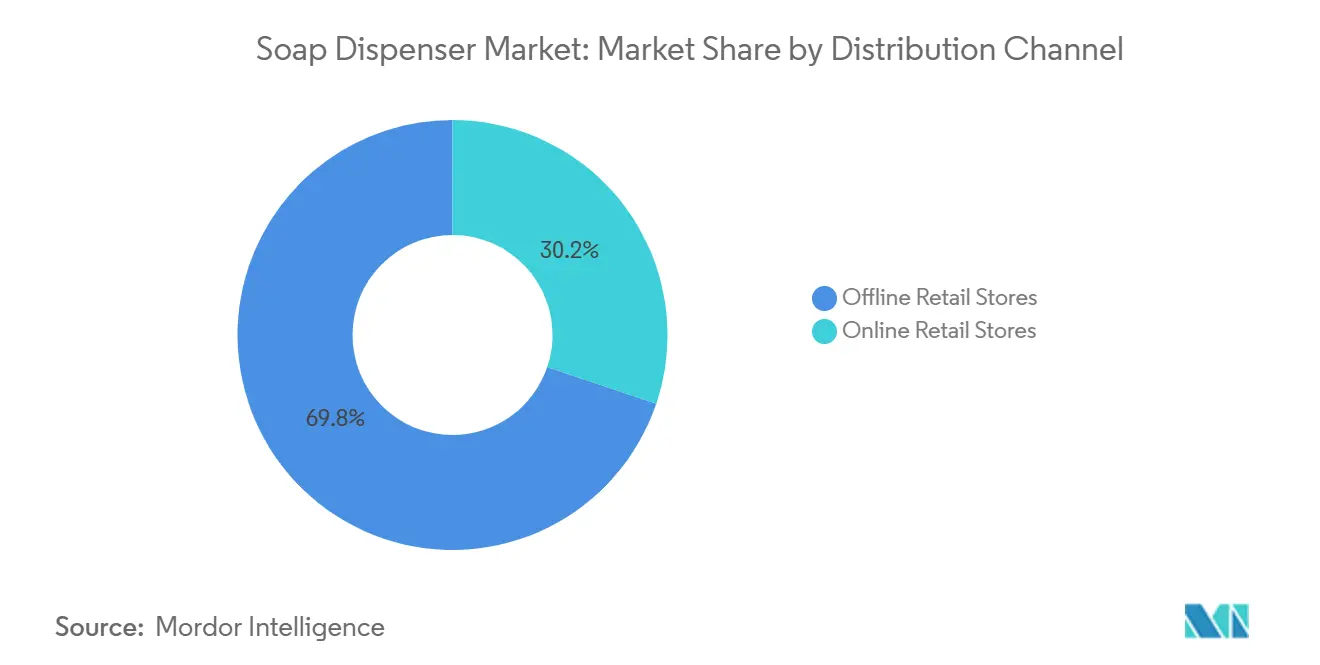
- By distribution channel, offline retail stores led with 69.81% revenue share in 2025, while online retail is forecast to expand at a 9.11% CAGR through 2031.
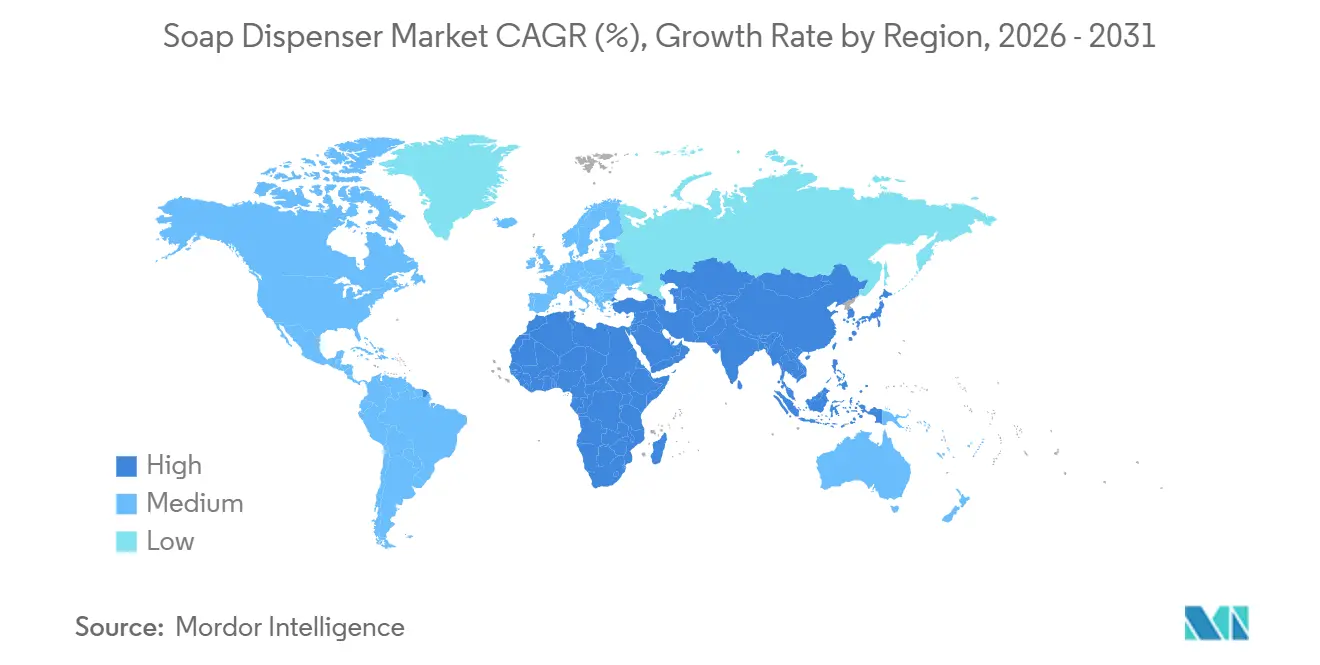
- By geography, North America led with 32.23% revenue share in 2025, while Asia-Pacific is forecast to expand at an 8.56% CAGR through 2031.
Note: Market size and forecast figures in this report are generated using Mordor Intelligence’s proprietary estimation framework, updated with the latest available data and insights as of January 2026.
Market Trends and Insights
Drivers Impact Analysis of Soap Dispenser Market*
| Driver | (~) % Impact on CAGR Forecast | Geographic Relevance | Impact Timeline |
|---|---|---|---|
| Increased emphasis on hand hygiene | +1.8% | Global | Short term (≤ 2 years) |
| Preference for sustainable and refillable hygiene solutions | +1.2% | Europe, North America; spill-over to Asia-Pacific | Medium term (2-4 years) |
| Innovations in design, durability, and functionality | +1.0% | Global; concentration in North America and Europe | Medium term (2-4 years) |
| Focus on hygiene standards and sanitation regulations | +0.9% | North America, Europe; early gains in Asia-Pacific | Short to Medium term (≤ 4 years) |
| Growth of smart restroom and connected hygiene technologies | +0.7% | North America, Europe, urban Asia-Pacific | Long term (≥ 4 years) |
| Retrofit demand from hospitality and healthcare expansion | +0.7% | Asia-Pacific core; spill-over to Midlle-East and Africa and South America | Medium to Long term (2+ years) |
| Source: Mordor Intelligence | |||
Increased emphasis on hand hygiene
The growing emphasis on hand hygiene as a critical preventive measure has increased the demand for reliable, accessible, and efficient dispensing solutions that promote consistent cleaning practices. The adoption of soap dispensers is more closely associated with structured cleanliness protocols rather than individual hygiene preferences. Ensuring the continuous availability of handwashing products has become a key priority. According to the American Cleaning Institute’s 2025 survey, 97% of respondents identified hygiene and cleaning as essential for public health, underscoring the ongoing importance of cleanliness practices [1]Source: American Cleaning Institute, "ACI Survey", cleaninginstitute.org. This heightened awareness is driving a shift from traditional soap formats to dedicated dispensing systems, which enhance convenience, minimize contamination risks, regulate product usage, and provide a more organized approach to hygiene.
Preference for sustainable and refillable hygiene solutions
Sustainability requirements are transforming the role of soap dispensers, extending their purpose beyond basic hygiene to emphasize reusable designs, refill compatibility, material durability, and reduced reliance on single-use containers. Manufacturers are increasingly focusing on developing dispensers that support bulk refill systems, incorporate recyclable materials, feature replaceable components, and offer longer product lifecycles to meet evolving environmental standards. Regulatory initiatives are driving this shift further, as sustainability policies push for redesigning packaging and dispensing formats ahead of compliance deadlines. For example, the European Packaging and Packaging Waste Regulation (PPWR) mandates binding recycled content requirements starting in 2030, prompting manufacturers to enhance refill models and adopt circular packaging solutions in preparation.
Innovations in design, durability, and functionality
Innovations in design, durability, and functionality are driving growth in the soap dispenser market as manufacturers transition from traditional dispensing systems to advanced solutions that enhance performance, usability, and maintenance efficiency. Developments in sensor technologies, smart monitoring features, and connected systems are transforming dispensers into intelligent hygiene management tools. These advancements enable functionalities such as usage tracking, refill optimization, and predictive maintenance. For example, in November 2025, GOJO Industries launched the PURELL CX10 Countermount Dispensing System, incorporating service alerts and IoT integration capabilities. These innovations help operators monitor dispenser performance, minimize downtime, and ensure consistent product availability.
Focus on hygiene standards and sanitation regulations
The growing emphasis on hygiene standards and sanitation regulations is a significant driver of the soap dispenser market. Structured cleanliness requirements have made reliable hand hygiene systems a critical aspect of facility management. Hygiene practices are now increasingly governed by formal compliance frameworks, safety protocols, and quality standards, rather than voluntary efforts, leading to sustained demand for accessible and well-maintained dispensing solutions. Soap dispensers contribute to meeting these requirements by enabling controlled product delivery, minimizing direct contact with soap supplies, and ensuring the continuous availability of handwashing resources. Regulatory focus on infection prevention, workplace cleanliness, and sanitation monitoring is further promoting the adoption of dispensers with enhanced durability, efficient refill management, and easy maintenance features.
Restraints Impact Analysis of Soap Dispenser Market*
| Restraint | (~) % Impact on CAGR Forecast | Geographic Relevance | Impact Timeline |
|---|---|---|---|
| High initial cost of automatic and smart soap dispensers | -1.6% | Global; most acute in South/Southeast Asia, Africa, Latin America | Short to Medium term (≤ 4 years) |
| Maintenance and technical issues in automatic dispensers | -0.8% | Global; most acute in markets with limited servicing infrastructure | Medium term (2-4 years) |
| Compatibility issues with different soap formulations | -0.5% | Global | Medium to Long term (2+ years) |
| Availability of low-cost traditional alternatives | -0.8% | Emerging markets: South/Southeast Asia, Africa, South America | Short term (≤ 2 years) |
| Source: Mordor Intelligence | |||
High initial cost of automatic and smart soap dispensers
The high initial cost of automatic and smart soap dispensers serves as a restraint for the soap dispenser market. Advanced models demand a greater investment compared to traditional dispensing solutions due to the incorporation of technologies such as motion sensors, infrared detection systems, IoT connectivity, touchless operation, rechargeable power systems, and smart monitoring features. These technological integrations increase manufacturing complexity and elevate overall product pricing. Additionally, users must account for expenses related to installation, battery replacement, electronic component maintenance, and system servicing, which may deter adoption among buyers seeking simple, low-maintenance hygiene solutions. Cost concerns are further amplified when multiple units are required, as transitioning from basic dispensers to automated or connected systems entails a higher upfront investment.
Maintenance and technical issues in automatic dispensers
Maintenance and technical challenges associated with automatic dispensers serve as a restraint for the soap dispenser market. The inclusion of electronic components increases the likelihood of operational issues compared to simpler dispensing formats. Automatic dispensers rely on sensors, circuits, motors, batteries, and dispensing mechanisms, all of which must function consistently to ensure reliable performance. Issues such as sensor failure, delayed response, inaccurate dispensing, battery depletion, clogging, leakage, and malfunctioning internal components can negatively impact user experience and elevate maintenance demands. Regular servicing, cleaning, calibration, and part replacement may add to operational efforts, especially when managing multiple dispenser units. Additionally, factors such as exposure to moisture, frequent usage, and improper refilling practices can compromise the durability of electronic systems and shorten the product's lifespan.
*Our forecasts treat driver/restraint impacts as directional, not additive. The impact forecasts reflect baseline growth, mix effects, and variable interactions.
Soap Dispenser Market Segment Analysis
By Product Type:
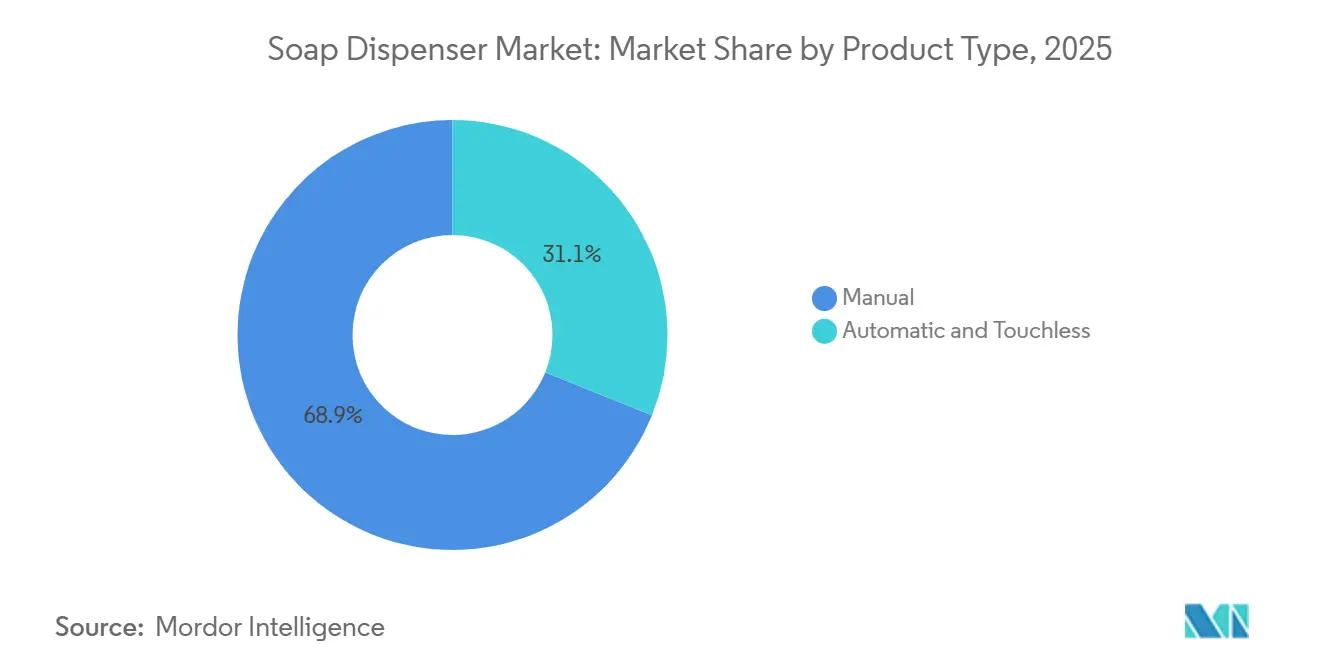
Touchless Formats Accelerate Within a Manual-Dominant BaseThe manual dispensers segment accounted for 68.92% in 2025, primarily due to their practical usability, reliability, and ability to meet everyday hygiene requirements without relying on advanced mechanisms. The growth of this segment is attributed to the simple operating structure of manual dispensers, which minimizes the risk of technical failures and ensures consistent performance over extended periods. Their ease of installation, low maintenance requirements, and compatibility with various soap formulations make them a preferred choice for users seeking convenient and durable dispensing solutions. Manual dispensers provide uninterrupted functionality with fewer replacement concerns, reinforcing their long-term adoption.
The automatic and touchless dispensers segment is projected to grow at a CAGR of 9.03% during 2026–2031, driven by the increasing demand for advanced hygiene solutions that reduce physical contact and enhance user convenience. This segment is gaining traction due to the incorporation of motion-sensing technologies, enabling controlled and hands-free soap dispensing, which minimizes surface contamination and enhances overall hygiene efficiency. Innovations in infrared sensors, adjustable dispensing controls, energy-efficient components, and rechargeable power systems are improving product reliability and user experience. Additionally, the ability of automatic dispensers to deliver precise soap quantities supports their adoption by reducing wastage and improving refill efficiency.


By Material Type:
Stainless Steel Commands the Premium Commercial TierThe plastic material segment accounted for a 46.72% share of the soap dispenser market in 2025, driven by its durability, flexibility, and ease of manufacturing. These characteristics make plastic one of the most preferred materials for dispenser production. Plastic-based dispensers are increasingly popular due to their lightweight nature, resistance to breakage, and ability to endure frequent handling during daily use. The material also offers design flexibility, enabling manufacturers to produce dispensers in various shapes, sizes, colors, and finishes while maintaining functionality. Advances in plastic molding technologies have further improved dispenser quality by enhancing pump integration, leak resistance, and structural strength. Additionally, the availability of recyclable and higher-quality plastic variants is facilitating the shift toward more sustainable designs without compromising convenience or durability.
The stainless steel material segment is expected to be the fastest-growing category, with a projected CAGR of 7.96% during 2026–2031. This growth is attributed to the rising demand for high-strength, durable, and premium-quality dispenser materials. Stainless steel dispensers are increasingly adopted due to their exceptional durability, corrosion resistance, and ability to perform well under frequent usage. The material's resistance to moisture, stains, scratches, and external damage ensures long-term maintenance of appearance and functionality. Furthermore, stainless steel supports modern dispenser designs with sleek finishes that cater to the growing preference for aesthetically pleasing hygiene products. Innovations in surface treatments, fingerprint-resistant coatings, and manufacturing processes are further enhancing product quality and reducing maintenance needs.
By Mounting Type:
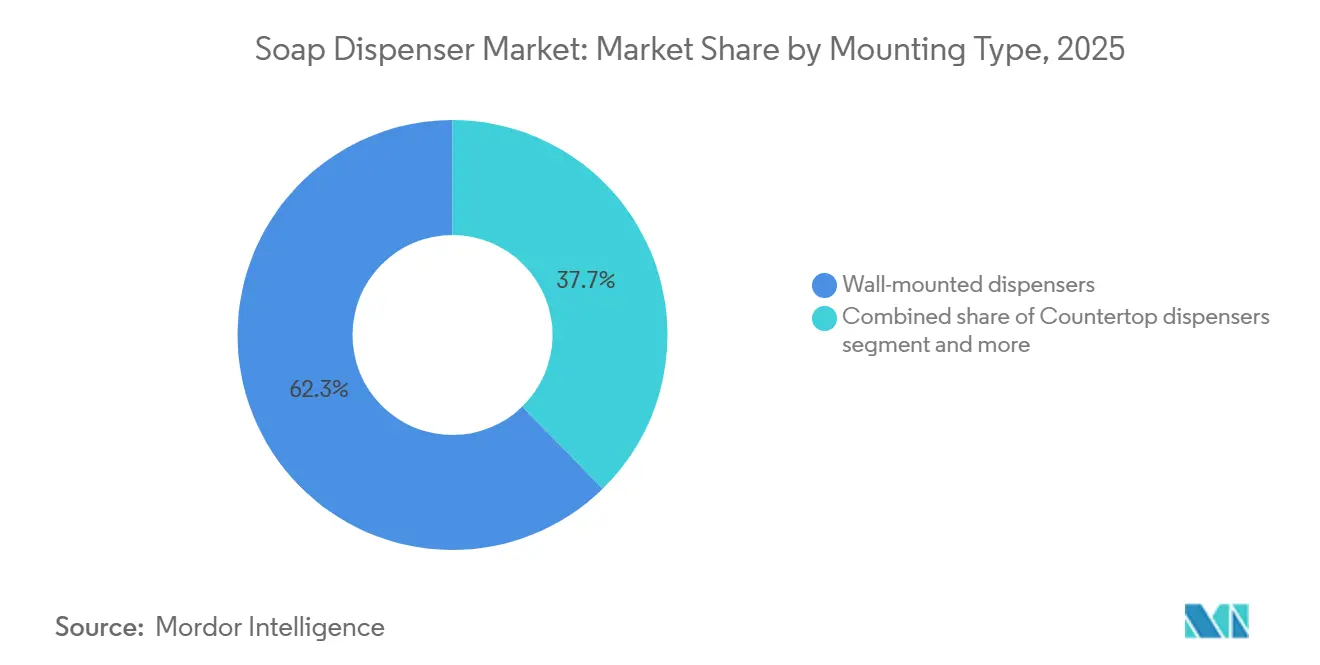
Countertop Formats Gain Ground in Residential PremiumizationThe wall-mounted dispensers segment accounted for a significant market share of 62.31% in 2025, primarily due to their efficient space utilization, organized placement, and convenient accessibility in hygiene setups. These dispensers benefit from a fixed installation design, which prevents misplacement, reduces clutter, and ensures consistent availability during regular use. Key advantages include larger refill capacities, controlled dispensing mechanisms, and reduced refilling frequency, contributing to improved operational efficiency. Additionally, their sturdy structure and secure fitting minimize accidental damage, leakage, and product wastage compared to movable alternatives. Ongoing advancements in installation designs, refill systems, transparent level indicators, anti-drip mechanisms, and compact structures have further enhanced their usability and ease of maintenance.
The countertop dispensers segment is anticipated to be the fastest-growing mounting format, with a projected CAGR of 8.41% during 2026–2031. This growth is driven by increasing consumer preference for dispensers offering greater placement flexibility and personalization compared to fixed installations. Countertop dispensers are gaining popularity as they can be easily repositioned, replaced, and adapted to match changing interior styles without requiring installation modifications. Their standalone structure makes them ideal for frequent design updates, allowing users to switch between various capacities, finishes, and dispensing styles based on evolving preferences. The rising trend of coordinated bathroom and kitchen accessories is further boosting demand for visually appealing dispenser designs that combine functionality with decorative appeal.

By Application:
Residential Segment Drives Both Volume and GrowthThe residential application segment accounted for a leading share of 38.93% in 2025 and is expected to be the fastest-growing application, with a projected CAGR of 8.34% during 2026–2031. This growth is attributed to the evolving role of soap dispensers from basic utility items to essential household hygiene and lifestyle products. The increasing emphasis on maintaining cleaner and more organized personal spaces is driving the shift from conventional soap packaging to dedicated dispensing solutions, which offer enhanced convenience, controlled usage, and improved aesthetics. Additionally, the expansion of housing availability is bolstering the consumer base for household hygiene products. According to the United States Census Bureau, housing units increased from 146.84 million in 2024 to 148.09 million in 2025, creating further opportunities for the adoption of home hygiene accessories [2]Source: United States Census Bureau, "Number of housing units and annual percentage increase in the United States", census.gov.
The commercial application segment remains a key contributor to the soap dispenser market, driven by the demand for efficient, durable, and high-capacity dispensing solutions suitable for high-traffic environments. This demand is fueled by the growing focus on maintaining clean and well-equipped facilities, where consistent access to hygiene products is critical for users. Meanwhile, the institutional application segment is experiencing robust growth, supported by the need for reliable hygiene infrastructure that facilitates large-scale and frequent handwashing practices. This segment benefits from the rising demand for dispensers designed to endure heavy daily usage while ensuring controlled soap delivery and ease of maintenance.
By Distribution Channel:
Online Retail Gains as Procurement DigitizesThe offline retail stores segment accounted for a significant share of 69.81% in 2025, driven by consumer preference for direct product evaluation and immediate purchase decisions when selecting soap dispensers. Physical stores provide a hands-on buying experience, enabling customers to assess key product attributes such as material quality, dispenser mechanism, size, finish, durability, and overall design compatibility before making a purchase. This is particularly relevant for buyers seeking visually appealing and premium dispenser formats, where factors like appearance, texture, and build quality play a crucial role in purchasing decisions. Additionally, offline channels facilitate bulk purchasing by allowing easier product comparison, supplier interaction, and access to a variety of models suitable for large-volume requirements.
The online retail stores segment is anticipated to grow at a CAGR of 9.11% during 2026–2031, driven by the increasing shift toward digital purchasing platforms. These platforms offer broader product accessibility, customization options, and convenient comparison capabilities. The growth of this segment is supported by the availability of a wider variety of soap dispensers featuring diverse designs, materials, capacities, and functional features, many of which may not be found in traditional retail formats. Detailed product descriptions, customer reviews, ratings, images, and demonstration content assist buyers in evaluating dispenser quality and performance prior to purchase. Furthermore, online platforms simplify the discovery of innovative products, including smart designs, premium finishes, and specialized dispenser formats, thereby accelerating the adoption of newer solutions.
Geography Analysis
North America Soap Dispenser Market
In 2025, North America accounted for a significant 32.23% share of the soap dispenser market. This dominance is attributed to the widespread adoption of advanced hygiene solutions, the shift from traditional soap usage formats, and a preference for convenient dispensing systems. The region's growth is further supported by increasing demand for modern restroom solutions that offer improved functionality, controlled dispensing, and reduced maintenance requirements. The higher acceptance of touchless technologies, refill-based systems, and premium dispenser designs has enhanced product penetration across various usage environments. Additionally, the focus on cleanliness standards, efficient hygiene management, and upgrading existing facilities continues to reinforce North America’s leading position in the market.
APAC Soap Dispenser Market
The Asia-Pacific region is projected to grow at the fastest rate, with a CAGR of 8.56% during 2026–2031. This growth is driven by rapid urban development, the expansion of hygiene infrastructure, and increasing awareness of organized hand hygiene practices among middle-income households. The construction of modern facilities and the adoption of structured sanitation solutions are fueling demand for soap dispensers in countries such as China, India, Indonesia, and across Southeast Asia. Institutional development, particularly the expansion of healthcare facilities, is further accelerating adoption. For example, according to the National Bureau of Statistics of China, the number of hospitals in China increased from 38,355 in 2023 to 38,710 in 2024, supporting greater deployment of hygiene products [3]Source: National Bureau of Statistics of China, "Number of hospitals in China", stats.gov.cn. The rising preference for convenient, refillable, and technology-enabled dispensing solutions is expected to sustain regional growth throughout the forecast period.
EMEA and South America Soap Dispenser Market
Europe, South America, and the Middle East and Africa are experiencing steady growth in the soap dispenser market due to increasing emphasis on hygiene practices, facility modernization, and the adoption of efficient dispensing solutions. In Europe, demand is driven by a preference for sustainable, durable, and design-oriented hygiene products, with a growing focus on refillable systems and long-lasting materials. South America is witnessing increased adoption as awareness of organized sanitation solutions improves, supported by modern infrastructure development. Meanwhile, the Middle East and Africa are seeing market expansion due to rising investments in healthcare, hospitality, and public hygiene facilities, which encourage the adoption of reliable and easy-to-maintain soap dispensing systems.

Competitive Landscape
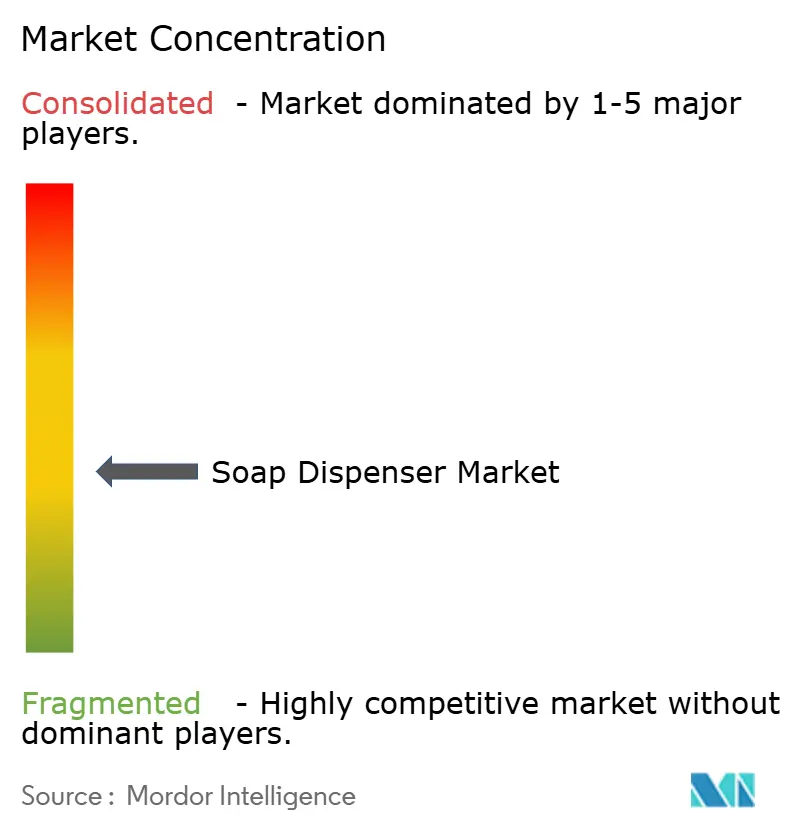
The global soap dispenser market is moderately fragmented, with established professional hygiene companies competing through robust product portfolios, extensive installed bases, advanced dispensing technologies, and comprehensive service capabilities. Meanwhile, regional manufacturers focus on competitive pricing, rapid product customization, and innovative designs. Leading players are prioritizing product durability, touch-free dispensing systems, refill efficiency, sustainable materials, and connected hygiene solutions to differentiate their offerings. The market includes global brands and specialized washroom equipment manufacturers such as The Clorox Company (GOJO Industries), Kimberly-Clark Corporation, TOTO Ltd., Bobrick Washroom Equipment, Inc., and ASI American Specialties, Inc., which continue to strengthen their presence through product enhancements and expanded distribution networks.
Companies in the soap dispenser market are focusing on mergers, acquisitions, partnerships, and portfolio expansion to enhance their competitive positions and meet the growing demand for modern hygiene solutions. Strategic investments are increasingly directed toward expanding professional hygiene capabilities, advancing dispenser technologies, and integrating comprehensive hand hygiene systems that combine hardware, refills, and maintenance services. For example, in January 2026, The Clorox Company announced a definitive agreement to acquire GOJO Industries, a provider of skin health and hygiene solutions, for USD 2.25 billion in cash. This acquisition strengthens Clorox’s position in the hygiene solutions market by incorporating GOJO’s established dispenser systems, refill platforms, and professional hygiene expertise.
Innovation remains a critical competitive strategy as manufacturers develop touchless dispensers, smart monitoring capabilities, improved refill mechanisms, and sustainable product designs. Companies are investing in sensor-based technologies, high-capacity dispensing systems, and user-friendly designs to enhance operational efficiency and improve the hygiene experience. Simultaneously, regional players are intensifying competition by offering cost-effective products, diverse designs, and quicker adaptation to evolving customer preferences. As demand for reliable, automated, and sustainable hygiene solutions continues to grow, competition in the soap dispenser market is expected to increase, driven by technological advancements, strategic collaborations, and the expansion of product offerings.
Soap Dispenser Industry Leaders
-
The Clorox Company (GOJO Industries)
-
Kimberly-Clark Corporation
-
TOTO Ltd.
-
Bobrick Washroom Equipment, Inc.
-
ASI American Specialties, Inc.
- *Disclaimer: Major Players sorted in no particular order
Soap Dispenser Market Companies Covered in this Report
- The Clorox Company (GOJO Industries)
- Kimberly-Clark Corporation
- TOTO Ltd.
- Bobrick Washroom Equipment, Inc.
- ASI American Specialties, Inc.
- Sloan Valve Company
- Simplehuman, LLC
- Umbra Ltd.
- Bradley Corporation
- Georgia-Pacific LLC
- Essity AB
- OPHARDT Hygiene-Technik GmbH
- SVAVO Group
- Rubbermaid Commercial Products LLC
- Lovair Ltd.
- Frost Products Ltd.
- Dudley Industries Ltd.
- Duravit AG
- Kohler Co.
- Zurn Elkay Water Solutions Corporation

Recent Industry Developments in Soap Dispenser Market
- May 2026: Meadow has unveiled its MEADOW KAPSUL SleeveLock, a wall-mounted dispenser tailored for personal care products, specifically targeting hotels and spas in the hospitality sector.
- September 2025: CWS Hygiene unveiled its new dispenser line, PureLine EcoBlack, crafted from as much as 98% recycled plastics. This bold design, complemented by circular consumables, epitomizes genuine sustainability.
- June 2025: Diversey, in collaboration with its Netherlands-based partner Slimstones, has unveiled the LESSEAU Manual dispenser. This innovative dispenser is designed for a range of institutional settings, from commercial washrooms and healthcare facilities to educational institutions, hospitality venues, and other public environments.


Global Soap Dispenser Market Report Scope
A soap dispenser is a device that stores and releases a controlled, single-use quantity of liquid or foam soap. The soap dispenser market is segmented by product type, material type, mounting type, application, distribution channel, and geography. Based on product type, the market is segmented into manual and automatic/touchless soap dispensers. Based on material type, the market is segmented into plastic, stainless steel, glass, and other materials. Based on mounting type, the market is segmented into wall-mounted dispensers, countertop dispensers, and others. Based on application, the market is segmented into residential, commercial, and institutional. Based on distribution channel, the market is segmented into offline retail stores and online retail stores. Based on geography, the market is segmented into North America, Europe, Asia-Pacific, South America, and Middle East and Africa. For each segment, the market sizing and forecast have been done based on the value (in USD million).
| Manual |
| Automatic/Touchless |
| Plastic |
| Stainless Steel |
| Glass |
| Other Materials |
| Wall-mounted dispensers |
| Countertop dispensers |
| Others |
| Residential |
| Commercial |
| Institutional |
| Offline Retail Stores |
| Online Retail Stores |
| North America | United States |
| Canada | |
| Mexico | |
| Rest of North America | |
| Europe | Germany |
| United Kingdom | |
| Italy | |
| France | |
| Spain | |
| Netherlands | |
| Poland | |
| Belgium | |
| Sweden | |
| Rest of Europe | |
| Asia-Pacific | China |
| India | |
| Japan | |
| Australia | |
| Indonesia | |
| South Korea | |
| Thailand | |
| Singapore | |
| Rest of Asia-Pacific | |
| South America | Brazil |
| Argentina | |
| Colombia | |
| Chile | |
| Peru | |
| Rest of South America | |
| Middle East and Africa | South Africa |
| Saudi Arabia | |
| United Arab Emirates | |
| Nigeria | |
| Egypt | |
| Morocco | |
| Turkey | |
| Rest of Middle East and Africa |
| By Product Type | Manual | |
| Automatic/Touchless | ||
| By Material Type | Plastic | |
| Stainless Steel | ||
| Glass | ||
| Other Materials | ||
| By Mounting Type | Wall-mounted dispensers | |
| Countertop dispensers | ||
| Others | ||
| By Application | Residential | |
| Commercial | ||
| Institutional | ||
| By Distribution Channel | Offline Retail Stores | |
| Online Retail Stores | ||
| By Geography | North America | United States |
| Canada | ||
| Mexico | ||
| Rest of North America | ||
| Europe | Germany | |
| United Kingdom | ||
| Italy | ||
| France | ||
| Spain | ||
| Netherlands | ||
| Poland | ||
| Belgium | ||
| Sweden | ||
| Rest of Europe | ||
| Asia-Pacific | China | |
| India | ||
| Japan | ||
| Australia | ||
| Indonesia | ||
| South Korea | ||
| Thailand | ||
| Singapore | ||
| Rest of Asia-Pacific | ||
| South America | Brazil | |
| Argentina | ||
| Colombia | ||
| Chile | ||
| Peru | ||
| Rest of South America | ||
| Middle East and Africa | South Africa | |
| Saudi Arabia | ||
| United Arab Emirates | ||
| Nigeria | ||
| Egypt | ||
| Morocco | ||
| Turkey | ||
| Rest of Middle East and Africa | ||


Key Questions Answered in the Report
What is the forecast value of the soap dispenser market by 2031?
2031? The soap dispenser market is forecast to reach USD 3.01 billion by 2031, rising from USD 2.13 billion in 2026 at a 7.1% CAGR.
Which product category is growing fastest in soap dispensers?
Automatic and touchless dispensers are projected to post the fastest product type growth, with a 9.03% CAGR through 2031.
Why are touchless dispensers gaining more attention?
Demand is rising because buyers want lower hand contact, more reliable hygiene presentation, and better monitoring in healthcare, hospitality, and commercial buildings.
Which region leads current demand for soap dispensers?
North America held the largest regional share at 32.23% in 2025, supported by strong institutional demand and established hygiene distribution.
Page last updated on:


 Your data is secure and never sold or shared.


