
Bath Soaps Market Size and Share
Market Overview
| Study Period | 2021 - 2031 |
|---|---|
| Market Size (2026) | USD 29.82 Billion |
| Market Size (2031) | USD 38.44 Billion |
| Growth Rate (2026 - 2031) | 5.21 % |
| Fastest Growing Market | Middle East and Africa |
| Largest Market | Asia-Pacific |
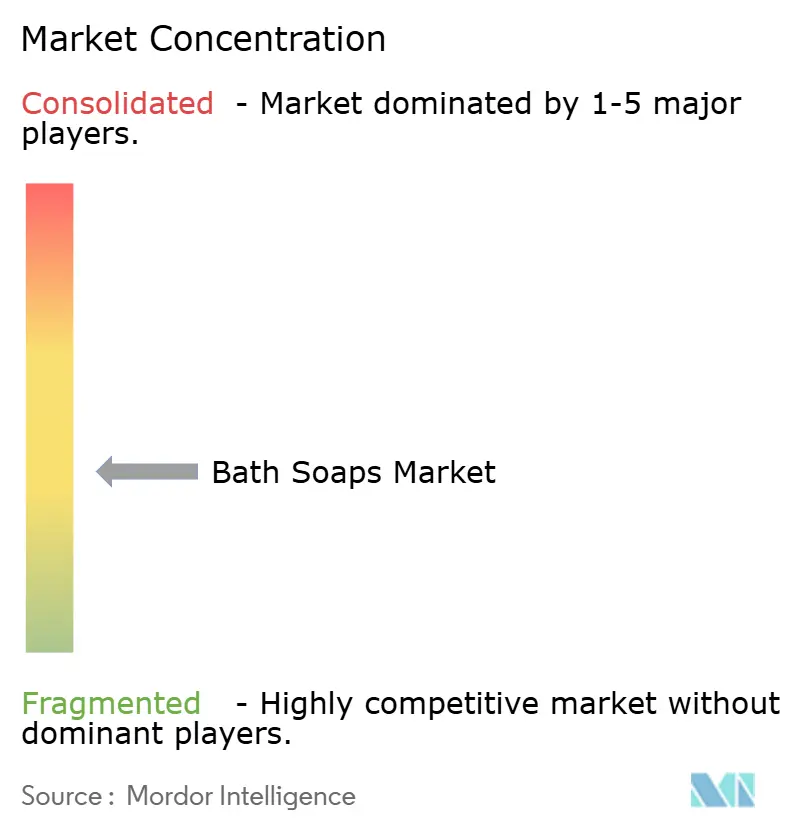
| Market Concentration | Medium |
Major Players
*Disclaimer: Major Players sorted in no particular order Image © Mordor Intelligence. Reuse requires attribution under CC BY 4.0. |
|
Bath Soaps Market Analysis by Mordor Intelligence
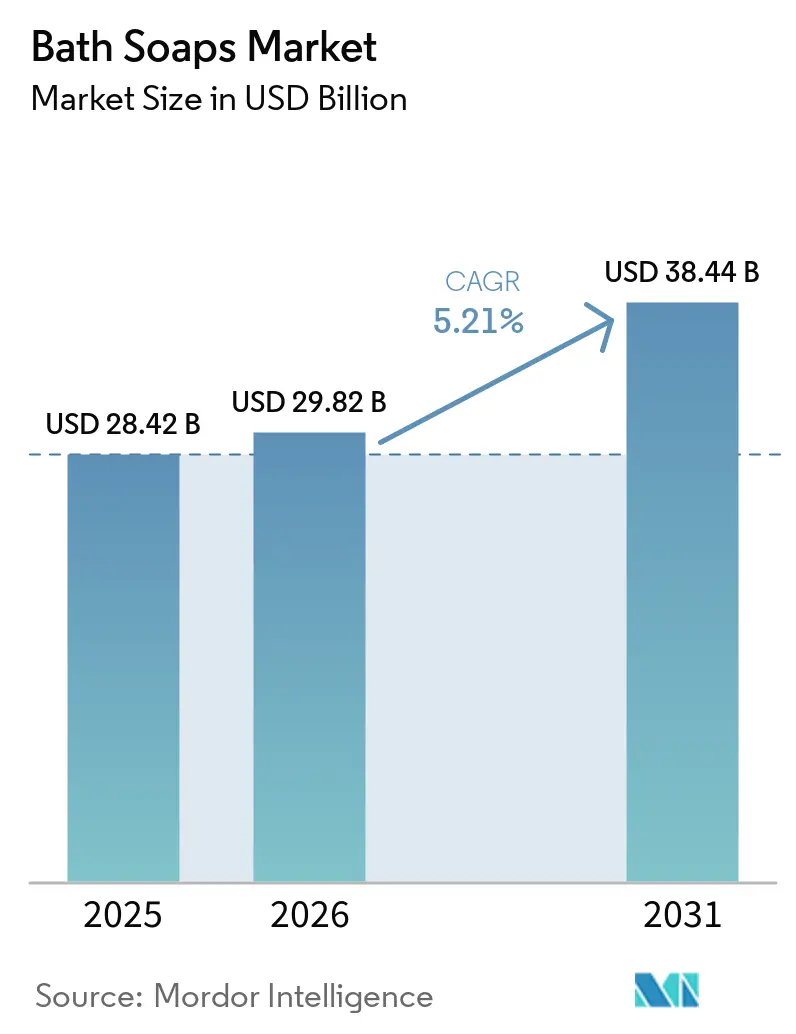
The global bath soaps market size is expected to grow from USD 28.42 billion in 2025 to USD 29.82 billion in 2026 and is forecast to reach USD 38.44 billion by 2031 at a 5.21% CAGR over 2026-2031. The global bath soaps market is primarily driven by increasing consumer awareness of personal hygiene, rising demand for daily cleansing products, and a growing focus on skin health and wellness. Consumers are showing a preference for soaps made with natural, herbal, organic, and skin-friendly ingredients that provide additional benefits such as moisturization, antibacterial protection, exfoliation, and aromatherapy. The trend of premiumization is also contributing to market growth, with increasing demand for artisanal, handcrafted, and dermatologist-recommended products tailored to specific skin types and concerns. Furthermore, rapid urbanization, improving living standards, and the expanding middle-class population in emerging economies are driving the adoption of branded personal care products. The growth of e-commerce platforms and modern retail channels has improved product accessibility, while ongoing innovations in formulations, fragrances, sustainable packaging, and multifunctional products are encouraging repeat purchases and appealing to environmentally conscious consumers. These factors collectively support the steady growth of the global bath soaps market.
Key Report Takeaways
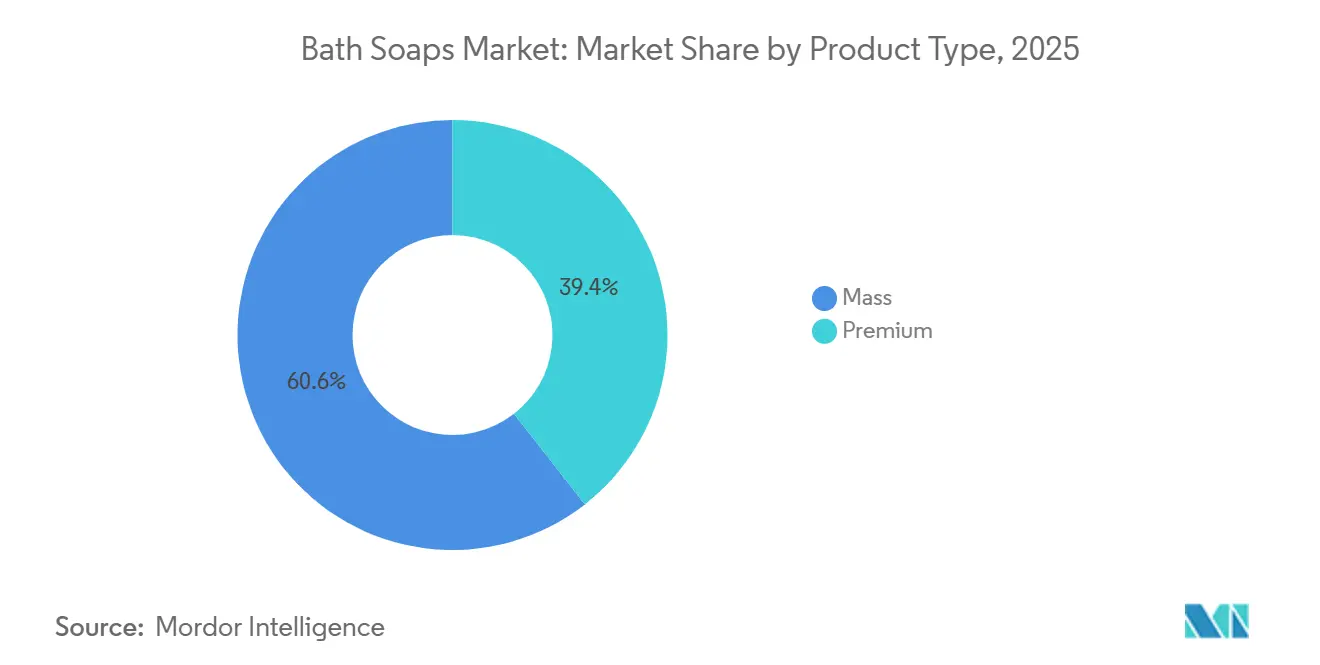
- By product type, mass bath soaps held 60.56% of 2025 revenue, while premium bath soaps are forecast to expand at 6.82% CAGR during 2026-2031.
- By form, solid bath soaps accounted for 73.55% of 2025 revenue, while liquid bath soaps are projected to grow at 6.13% CAGR during 2026-2031.
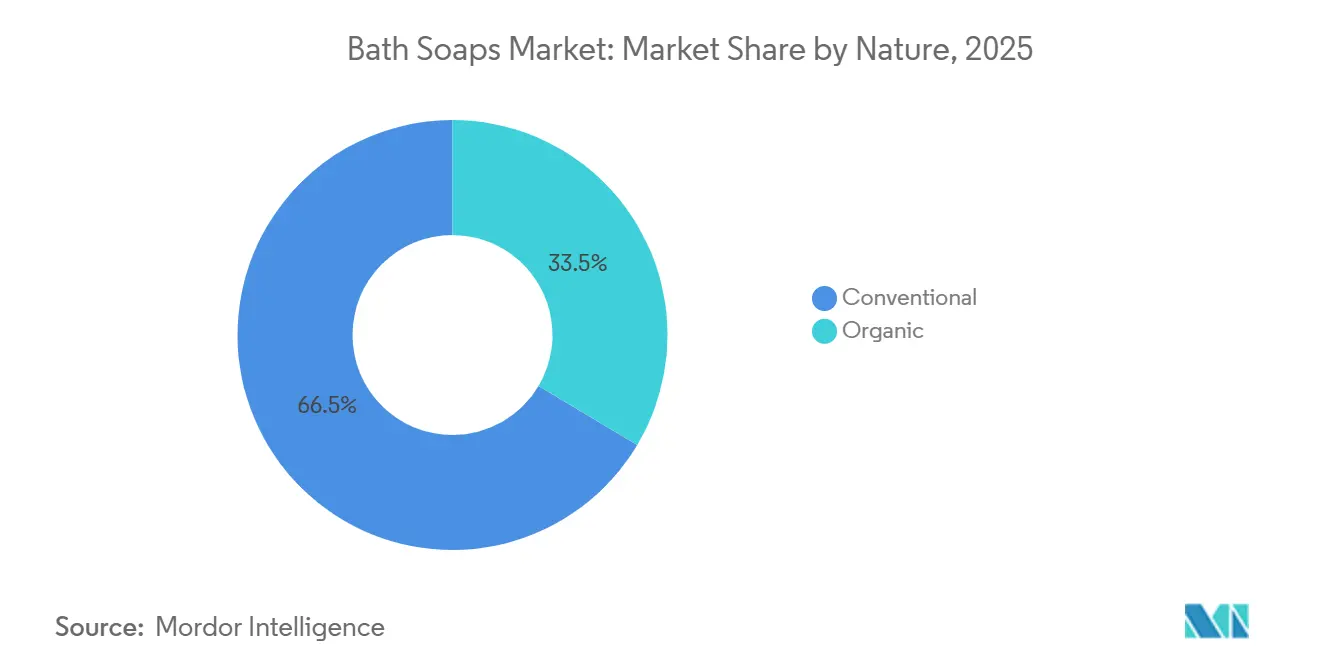
- By nature, conventional bath soaps captured 66.46% of 2025 revenue, while organic bath soaps are forecast to record the highest segment growth at 7.06% CAGR during 2026-2031.
- By distribution channel, supermarkets and hypermarkets held 34.75% of 2025 revenue, while online retail stores are projected to advance at 7.15% CAGR during 2026-2031.
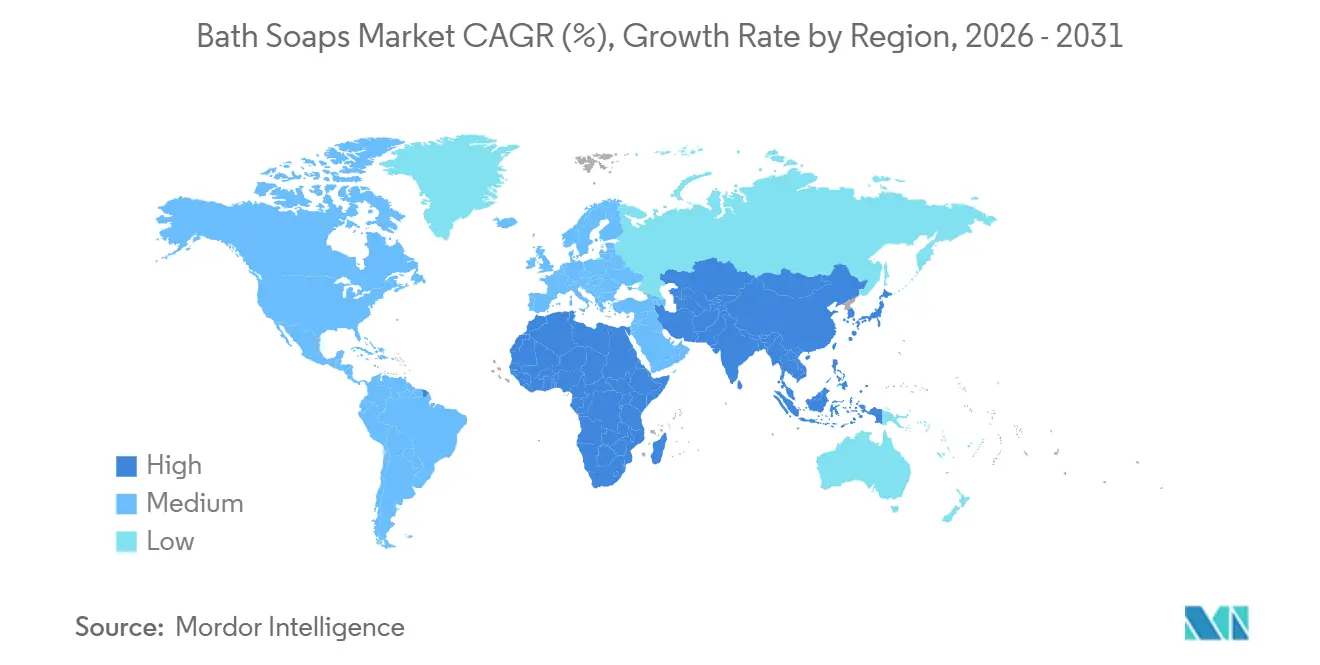
- By geography, Asia-Pacific represented 38.61% of 2025 revenue, while the Middle East and Africa is forecast to grow at 6.04% CAGR during 2026-2031.
Note: Market size and forecast figures in this report are generated using Mordor Intelligence’s proprietary estimation framework, updated with the latest available data and insights as of January 2026.
Market Trends and Insights
Drivers Impact Analysis of Bath Soaps Market*
| Driver | (~) % Impact on CAGR Forecast | Geographic Relevance | Impact Timeline |
|---|---|---|---|
| Increasing demand for natural, organic, and plant-based formulations | +1.2% | Global, highest in North America and Europe | Medium term (2-4 years) |
| Growing preference for skin-friendly and dermatologically tested products | +0.7% | Global, led by North America, Europe and Asia-Pacific premium cities | Long term (≥4 years) |
| Product innovation in functional bath soaps | +0.8% | Global, strongest in North America and Western Europe | Medium term (2-4 years) |
| Growing sustainability and eco-friendly product preferences | +0.5% | Global, highest in European Union and North America | Long term (≥4 years) |
| Expansion of premium and specialty soap categories | +0.9% | Global, concentrated in North America, Europe and Asia-Pacific | Medium term (2-4 years) |
| Increasing demand for ethical and transparent beauty products | +0.4% | Global, with early gains in North America and Western Europe | Long term (≥4 years) |
| Source: Mordor Intelligence | |||
Increasing demand for natural, organic, and plant-based formulations
The increasing consumer preference for natural, organic, and plant-based formulations is a significant driver of the global bath soaps market. Buyers are prioritizing products perceived as safer, gentler, and more environmentally responsible. Consumers are actively seeking soaps formulated with botanical extracts, essential oils, plant-derived surfactants, and naturally sourced moisturizing ingredients, while avoiding synthetic chemicals such as parabens, sulfates, artificial fragrances, and harsh preservatives. This shift has led manufacturers to expand their product portfolios with clean-label, vegan, and organic-certified bath soaps that address both skin health and sustainability concerns. Transparency in ingredient sourcing and labeling has also emerged as a critical purchasing factor, encouraging brands to clearly communicate product composition and safety claims. Supporting this trend, data from NSF indicates that in 2024, 74% of consumers considered organic ingredients important in personal care products, while 65% prioritized a clear ingredient list to identify potentially harmful components[1]Source: NSF, "74% of Consumers Consider Organic Ingredients Important in Personal Care Products," nsf.org. These changing consumer preferences are driving innovation and product differentiation, contributing to sustained growth in the global bath soaps market.
Growing preference for skin-friendly and dermatologically tested products
The rising demand for skin-friendly and dermatologically tested products is a key factor driving the global bath soaps market. Consumers are increasingly focused on maintaining healthy skin and avoiding irritation caused by harsh cleansing agents. The prevalence of sensitive skin, allergies, eczema, and dryness has led to a preference for soaps formulated with mild surfactants, moisturizing agents, balanced pH levels, and hypoallergenic ingredients that help protect the skin's natural barrier. Products with dermatologist-tested and clinically validated claims are particularly appealing to families, children, and individuals with sensitive skin, as they offer greater assurance of safety and effectiveness. In response to this trend, manufacturers are diversifying their product offerings with fragrance-free, sulfate-free, and dermatologist-recommended bath soaps. These products are often enriched with ingredients such as glycerin, ceramides, aloe vera, oatmeal, and shea butter. The focus on gentle yet effective cleansing solutions is fostering product innovation, enhancing consumer trust, and supporting the continued growth of the global bath soaps market.
Growing sustainability and eco-friendly product preferences
Increasing consumer emphasis on sustainability and environmentally conscious consumption is a significant factor driving the global bath soaps market. Consumers are showing a growing preference for products that reduce environmental impact through responsibly sourced ingredients, biodegradable formulations, cruelty-free production processes, and recyclable or plastic-free packaging. This trend is particularly pronounced among younger demographics, who prioritize brands that demonstrate transparency in sourcing, ethical manufacturing practices, and efforts to reduce their carbon footprints. In response to these preferences, bath soap manufacturers are focusing on sustainable product development. This includes the use of plant-based raw materials, minimizing packaging, introducing refillable and zero-waste options, and implementing certified sustainable supply chains. Additionally, companies are working to reduce water and energy consumption during production and are obtaining environmental certifications to enhance brand credibility. As sustainability becomes a key purchasing criterion alongside product performance, eco-friendly bath soaps are gaining broader consumer acceptance. This shift is fostering innovation and contributing to the long-term growth of the global bath soaps market.
Expansion of premium and specialty soap categories
The rapid growth of premium and specialty soap categories is contributing significantly to the expansion of the global bath soap market. Consumers are increasingly seeking products that provide superior quality, unique formulations, and enhanced skincare benefits beyond basic cleansing. Premium soaps incorporating organic ingredients, botanical extracts, essential oils, luxury fragrances, therapeutic properties, and handcrafted designs are gaining traction among consumers willing to invest in personalized, wellness-oriented personal care products. Specialty soaps, including those with moisturizing, exfoliating, anti-aging, sensitive skin, and aromatherapy properties, are further expanding the market's appeal across diverse consumer groups. This trend toward premiumization allows manufacturers to differentiate their product portfolios, enhance profit margins, and build stronger brand loyalty through innovative formulations and premium packaging. Supporting this shift, data from NSF indicates that in 2024, 45% of survey respondents expressed a willingness to pay more for certified personal care products containing organic ingredients. Among younger consumers aged 18–29, this willingness was even higher, with 62% ready to pay a premium[2]Source: NSF, "74% of Consumers Consider Organic Ingredients Important in Personal Care Products," nsf.org. The increasing acceptance of value-added personal care products continues to drive innovation and fuel the growth of the global bath soaps market.
Restraints Impact Analysis of Bath Soaps Market*
| Restraint | (~) % Impact on CAGR Forecast | Geographic Relevance | Impact Timeline |
|---|---|---|---|
| Increasing regulatory scrutiny of ingredients | -0.6% | Global, highest compliance burden in European Union and North America | Short term (≤2 years) |
| Environmental concerns related to palm oil sourcing | -0.5% | Global, especially European Union supply chain and Asia-Pacific production hubs | Medium term (2-4 years) |
| Raw material supply chain volatility | -0.4% | Global, strongest impact in Asia-Pacific and Middle East and Africa | Short term (≤2 years) |
| Product counterfeiting and brand imitation | -0.3% | Asia-Pacific, South America, Middle East and Africa | Medium term (2-4 years) |
| Source: Mordor Intelligence | |||
Increasing regulatory scrutiny of ingredients
Increasing regulatory scrutiny of cosmetic ingredients and product safety requirements is constraining the growth of the global bath soaps market. This is primarily due to higher compliance costs and extended product development timelines. Regulatory authorities in major markets are imposing stricter restrictions on the use of surfactants, preservatives, fragrances, colorants, and other chemical ingredients. Additionally, they are enforcing more rigorous standards for biodegradability, labeling, environmental impact, and supply chain transparency. As a result, manufacturers are required to reformulate products, conduct additional safety and performance testing, update packaging, and maintain extensive regulatory documentation to comply with evolving legal requirements. These challenges are particularly significant for small and medium-sized manufacturers with limited regulatory resources. For instance, Regulation (EU) 2026/405, which replaces Regulation (EC) No. 648/2004, mandates the use of biodegradable surfactants in consumer-facing products and introduces digital product passports. These passports must be established before products are placed on the EU market, with full implementation set for September 2029[3]Source: EUR-Lex, "REGULATION (EU) 2026/405 OF THE EUROPEAN PARLIAMENT AND OF THE COUNCIL of 11 February 2026 on detergents and surfactants, and repealing Regulation (EC) No 648/2004," eur-lex.europa.eu. Such increasingly stringent regulatory frameworks add to operational complexity and compliance costs, thereby limiting market growth and delaying the introduction of new bath soap products.
Environmental concerns related to palm oil sourcing
Environmental concerns related to palm oil sourcing pose a significant challenge to the global bath soaps market. Palm oil and its derivatives are widely used in soap formulations due to their cleansing properties and cost-effectiveness. However, the expansion of palm oil cultivation has been closely associated with deforestation, habitat destruction, biodiversity loss, and greenhouse gas emissions. These issues have drawn heightened attention from consumers, environmental organizations, and regulatory bodies. This scrutiny has driven demand for responsibly sourced and certified sustainable palm oil, along with increased transparency in supply chains. Manufacturers relying on conventional palm oil face reputational risks, while transitioning to certified sustainable alternatives often results in higher procurement costs and more complex supplier verification processes. Smaller producers, in particular, may find it challenging to manage these additional costs or secure consistent supplies of certified raw materials. As sustainability expectations continue to grow, the environmental challenges linked to palm oil sourcing are increasing operational complexities, reducing sourcing flexibility, and creating obstacles to growth in the global bath soaps market.
*Our forecasts treat driver/restraint impacts as directional, not additive. The impact forecasts reflect baseline growth, mix effects, and variable interactions.
Bath Soaps Market Segment Analysis
By Product Type:
Premium Quietly Narrows the Mass LeadMass bath soaps accounted for a 60.56% share of the global market value in 2025, driven by the universal demand for affordable daily hygiene products. This category remains the largest and most widely consumed across both developed and emerging markets. The strong demand is attributed to factors such as population growth, rising urbanization, expanding middle-income households, and increasing awareness of personal hygiene. In developing countries, bar soaps continue to be an economical cleansing option. Consumers in this segment prioritize value for money, long-lasting usage, effective cleansing performance, and easy product availability. The widespread availability of mass bath soaps in supermarkets, convenience stores, pharmacies, traditional retail outlets, and e-commerce platforms enhances market penetration. Additionally, manufacturers consistently introduce improved formulations with antibacterial, moisturizing, deodorizing, and family-oriented benefits while maintaining competitive pricing. These efforts sustain high purchase frequency and foster brand loyalty. Government-led hygiene awareness campaigns and improved access to personal care products in rural and underserved regions further support the steady growth of the mass bath soaps segment.
The premium bath soap segment is projected to expand at a 6.82% CAGR from 2026 to 2031, fueled by increasing consumer willingness to invest in high-quality personal care products. These products offer enhanced skincare benefits, luxurious experiences, and unique formulations. Consumers are increasingly drawn to soaps enriched with natural and organic ingredients, essential oils, botanical extracts, vitamins, exfoliating agents, and dermatologist-tested formulations that address specific skin concerns while delivering a spa-like bathing experience. Rising health consciousness, premiumization trends, and higher disposable incomes are driving a shift from basic cleansing products to specialty soaps that provide moisturization, anti-aging benefits, aromatherapy, sensitive skin care, and sustainable attributes. Premium brands attract consumers with sophisticated fragrances, aesthetically appealing packaging, handcrafted production methods, ethical sourcing, and eco-friendly certifications that align with evolving lifestyle preferences. The rapid growth of online retail, specialty beauty stores, and direct-to-consumer channels has further improved access to premium bath soaps, enabling brands to cater to consumers seeking personalized, wellness-focused, and environmentally responsible personal care products.


By Form:
Solid Holds Ground as Liquid Gains MomentumSolid bath soaps accounted for a significant 73.55% share of the global market value in 2025, driven by their affordability, durability, and widespread consumer acceptance as a dependable daily cleansing product. These soaps provide excellent value for money due to their longer usage life, minimal product wastage, and lower production and transportation costs compared to liquid alternatives. Increasing consumer awareness of sustainability has further boosted demand, as bar soaps typically require less plastic packaging, generate lower packaging waste, and have a smaller environmental footprint. Manufacturers are enhancing their offerings with innovative formulations, incorporating natural oils, botanical extracts, moisturizing ingredients, activated charcoal, and exfoliating agents to attract consumers seeking skincare benefits alongside cleansing. The availability of solid soaps across various retail channels, including supermarkets, pharmacies, convenience stores, traditional outlets, and online platforms, supports their widespread adoption. Additionally, strong demand in emerging markets, where bar soaps remain the preferred format, continues to drive growth. The rising interest in plastic-free personal care products and travel-friendly formats further reinforces the global demand for solid bath soaps.
The liquid bath soaps segment is projected to grow at a CAGR of 6.13% during 2026-2031, fueled by increasing consumer demand for convenience, hygiene, and premium personal care experiences. Liquid soaps are widely favored in households due to their hygienic dispensing, reduced risk of cross-contamination, and ease of use. Consumers often associate liquid formulations with enhanced skincare benefits, as they are enriched with moisturizing ingredients, vitamins, essential oils, botanical extracts, and specialized formulations for sensitive, dry, or problem-prone skin. Product innovations, including new fragrances, foaming technologies, antibacterial formulations, refill packs, and sustainable packaging, have broadened consumer appeal. The growing adoption of modern bathrooms, increased penetration of pump dispensers and refill systems, and the expansion of premium personal care brands through supermarkets, specialty stores, and e-commerce platforms are further driving demand. Rising disposable incomes and evolving consumer preferences for aesthetically appealing, multifunctional, and wellness-oriented cleansing products continue to support the global growth of the liquid bath soaps segment.
By Nature:
Organic Demand Rewrites Conventional Growth StoryThe conventional bath soap segment is projected to hold a 66.46% market share in 2025, driven by its affordability, widespread availability, and strong consumer familiarity. These products cater to a broad customer base by delivering reliable cleansing performance at accessible price points, making them a preferred choice for daily use across households. Established brands benefit from extensive retail distribution networks, including supermarkets, convenience stores, pharmacies, and traditional trade channels, ensuring high product visibility and easy accessibility. Continuous advancements in conventional formulations, such as antibacterial protection, enhanced moisturization, pleasant fragrances, and skin-conditioning ingredients, have enabled manufacturers to meet evolving consumer expectations without significantly increasing costs. Additionally, strong brand recognition, large-scale promotional campaigns, and high demand in emerging economies with growing populations and improved hygiene awareness continue to drive the global growth of the conventional bath soaps segment.
The organic bath soaps segment is expected to register a compound annual growth rate (CAGR) of 7.06% during 2026-2031, driven by increasing consumer preference for clean-label personal care products made with naturally derived, sustainably sourced, and chemical-free ingredients. Growing awareness of the potential effects of synthetic additives, artificial fragrances, parabens, sulfates, and preservatives has led consumers to opt for organic alternatives, which are perceived as gentler on the skin and safer for long-term use. Demand is particularly strong among health-conscious, environmentally aware, and premium-oriented consumers who prioritize certified organic ingredients, cruelty-free production, vegan formulations, and eco-friendly packaging. In response, manufacturers are developing soaps that incorporate plant oils, herbal extracts, essential oils, natural butters, and certified organic ingredients, while emphasizing ingredient transparency and ethical sourcing. The rapid expansion of e-commerce, specialty natural product retailers, and direct-to-consumer brands has further improved access to organic bath soaps. Additionally, rising interest in sustainable lifestyles and holistic wellness continues to accelerate adoption, supporting the segment's long-term global growth.
By Distribution Channel:
Online Becomes the Growth EngineSupermarkets and hypermarkets accounted for a 34.75% distribution share in 2025, attributed to their extensive product range, competitive pricing, and convenient one-stop shopping experience. These retail formats are preferred by consumers as they allow for the comparison of multiple brands, fragrances, formulations, sizes, and price points in a single location before making purchasing decisions. High product visibility through dedicated personal care aisles, in-store promotions, discounts, bundle offers, and loyalty programs further drives impulse purchases and repeat buying. Additionally, large retail chains provide manufacturers with valuable shelf space to introduce new products, premium variants, seasonal collections, and exclusive product lines, enhancing brand visibility and consumer engagement. The ongoing expansion of organized retail in emerging economies, combined with increasing urbanization and evolving shopping habits, has solidified the role of supermarkets and hypermarkets as significant sales channels, contributing to consistent growth in the global bath soaps market.
Online retail stores are projected to grow at a 7.15% CAGR from 2026 to 2031, driven by increasing internet penetration, widespread smartphone usage, and shifting consumer preferences toward convenient and personalized shopping experiences. E-commerce platforms offer consumers access to a wide variety of domestic and international bath soap brands, including premium, organic, artisanal, and niche products that may not be readily available in physical stores. Features such as detailed product descriptions, ingredient transparency, customer reviews, ratings, and personalized recommendations enable consumers to make informed purchasing decisions and find products suited to their skincare needs. Additionally, attractive discounts, subscription services, doorstep delivery, flexible payment options, and frequent promotional campaigns encourage online purchases. The growth of direct-to-consumer brand websites and social commerce platforms has further allowed manufacturers to strengthen customer relationships, launch exclusive products, gather consumer insights, and accelerate market penetration, establishing online retail as one of the fastest-growing distribution channels in the global bath soaps market.
Geography Analysis
APAC Bath Soaps Market
Asia-Pacific is projected to hold a 38.61% share of the global bath soaps market by 2025, driven by rapid urbanization, population growth, rising disposable incomes, and increased awareness of personal hygiene in both urban and rural areas. The expanding middle-class populations in countries such as China, India, Indonesia, Vietnam, and the Philippines are driving demand for branded personal care products that balance affordability with enhanced skincare benefits. Consumers are increasingly favoring soaps formulated with herbal, Ayurvedic, botanical, and natural ingredients, reflecting regional preferences for traditional wellness practices. The growth of modern retail formats and e-commerce platforms has improved product accessibility, while manufacturers are introducing specialized products for whitening, moisturizing, antibacterial protection, and sensitive skin. Rising health consciousness, higher spending on personal grooming, and ongoing product innovation are further boosting demand, positioning Asia-Pacific as the largest and fastest-growing regional market for bath soaps.
MEA Bath Soaps Market
The Middle East and Africa is the fastest-growing geographic segment, with a projected CAGR of 6.04% from 2026 to 2031. This growth is driven by improving hygiene awareness, population growth, urban expansion, and increased access to personal care products through organized retail and digital commerce. Rising living standards and the expansion of middle-income consumer groups are encouraging the adoption of branded bath soaps that provide added skincare benefits, such as moisturization, antibacterial protection, and fragrance enhancement. The region's hot climate also supports frequent bathing habits, sustaining consistent demand for cleansing products. Additionally, growing consumer interest in premium soaps containing natural oils, botanical extracts, and halal-certified ingredients is creating opportunities for product differentiation. Manufacturers are strengthening their regional presence through localized product offerings, expanded distribution networks, and affordable product formats, enabling steady growth in bath soap consumption across both established and emerging markets in the region.
The Americas and Europe Bath Soaps Market
The bath soaps market in North America, Europe, and South America is driven by premiumization, wellness-focused consumer behavior, and increasing demand for sustainable personal care products. In North America and Europe, consumers are gravitating toward dermatologist-tested, organic, vegan, cruelty-free, and environmentally friendly soaps with clean-label formulations, biodegradable ingredients, and recyclable packaging. Innovation in specialty soaps offering anti-aging, exfoliating, moisturizing, aromatherapy, and sensitive skin benefits continues to drive growth in the premium segment. In South America, urbanization, rising hygiene awareness, expanding retail infrastructure, and a growing preference for value-added personal care products enriched with locally sourced botanical ingredients are key growth drivers. Across all three regions, the rapid expansion of e-commerce, direct-to-consumer brands, and specialty beauty retailers has enhanced product availability. Continuous innovation in formulations, fragrances, and sustainable packaging further supports the growing demand for bath soaps.

Competitive Landscape
The global bath soaps market is moderately fragmented, with competition spanning multinational consumer goods manufacturers, regional brands, and emerging niche players. Large international companies maintain a strong presence in the mass-market and dermatologically tested soap segments through extensive distribution networks, established brand portfolios, and broad product availability. Regional manufacturers, particularly in Asia-Pacific, remain competitive by offering cost-effective products tailored to local consumer preferences, cultural traditions, and ingredient preferences. Their ability to combine localized product development with efficient manufacturing allows them to maintain strong positions in high-volume, price-sensitive markets.
Competitive strategies in the bath soaps market are increasingly diverging based on target consumer segments. Leading market participants are investing significantly in advanced formulation technologies, clinical validation, dermatologist collaborations, and sustainable ingredient innovations to enhance product differentiation and meet evolving consumer expectations. Meanwhile, many regional companies focus on manufacturing efficiency, locally sourced raw materials, and value-oriented product offerings to defend their market share in emerging economies. Across the industry, investments in research and development, regulatory compliance, ingredient transparency, and environmentally responsible formulations are becoming critical competitive advantages as consumer demand shifts toward safer and more sustainable personal care products.
Independent direct-to-consumer brands and artisanal soap manufacturers are expanding rapidly by targeting premium, organic, handcrafted, and functional bath soap categories. These companies utilize digital commerce, social media marketing, and personalized branding to reach consumers without relying heavily on traditional retail channels. Significant growth opportunities exist in specialized segments such as medicated, hypoallergenic, and dermatologist-validated soaps, where consumers are willing to pay premium prices for proven skin benefits. Additionally, demand for halal-certified products in the Middle East, Africa, and parts of Asia-Pacific is creating attractive opportunities for manufacturers with verified sourcing and certification capabilities. Advances in bio-based surfactants, fermentation-derived cleansing ingredients, and sulfate-free formulations are also expected to drive product innovation and intensify competition as the industry transitions toward more sustainable alternatives to conventional soap chemistries.
Bath Soaps Industry Leaders
-
Reckitt Benckiser Group plc
-
Johnson and Johnson Services, Inc.
-
Colgate-Palmolive Company
-
Unilever Plc
-
Procter and Gamble
- *Disclaimer: Major Players sorted in no particular order
Bath Soaps Market Companies Covered in this Report
- Procter and Gamble
- Unilever Plc
- Colgate-Palmolive Company
- Johnson & Johnson Services, Inc.
- Reckitt Benckiser Group plc
- Henkel AG & Co. KGaA
- Beiersdorf AG
- Kao Corporation
- Godrej Consumer Products Limited
- ITC Limited
- Dabur India Limited
- Nirma Limited
- The Himalaya Drug Company
- L'Oréal S.A.
- The Body Shop International Limited
- Natura &Co Holding S.A.
- L'Occitane International S.A.
- Method Products, PBC
- Laverana GmbH & Co. KG
- Paris Presents, Inc.

Recent Industry Developments in Bath Soaps Market
- February 2026: A leading Indian soap manufacturer, KSDL, relaunched its flagship sandalwood soap with refreshed packaging and appointed a new celebrity brand ambassador as part of a two-year marketing strategy to strengthen brand visibility and expand market reach. The initiative reflects the growing industry focus on brand modernization, premium positioning, and enhanced consumer engagement to drive sales in the competitive global bath soaps market.
- February 2026: Dove expanded its premium cleansing portfolio by introducing a serum-infused oil-to-foam body wash collection. This range features dermatologist co-developed formulations enriched with glycerin serum and nourishing oils. The sulfate-free, paraben-free, vegan, and cruelty-free products align with the industry's increasing emphasis on premium skincare.
- August 2025: Lincoln University College, under its ZYVIA brand, introduced the Zyvia Moringa & Ginger Herbal Bath Soap, signifying the commercialization of a research-based handmade herbal soap. This launch underscores the rising trend of research-driven product innovation and the growing demand for natural, plant-based bath soaps in the global personal care market.


Global Bath Soaps Market Report Scope
| Mass |
| Premium |
| Solid Bath Soaps |
| Liquid Bath Soaps |
| Conventional |
| Organic |
| Supermarkets and Hypermarkets |
| Convenience Stores |
| Online Retail Stores |
| Other Distribution Channels |
| North America | United States |
| Canada | |
| Mexico | |
| Rest of North America | |
| Europe | Germany |
| United Kingdom | |
| Italy | |
| France | |
| Spain | |
| Netherlands | |
| Poland | |
| Belgium | |
| Sweden | |
| Rest of Europe | |
| Asia-Pacific | China |
| India | |
| Japan | |
| Australia | |
| Indonesia | |
| South Korea | |
| Thailand | |
| Singapore | |
| Rest of Asia-Pacific | |
| South America | Brazil |
| Argentina | |
| Colombia | |
| Chile | |
| Peru | |
| Rest of South America | |
| Middle East and Africa | South Africa |
| United Arab Emirates | |
| Saudi Arabia | |
| Nigeria | |
| Egypt | |
| Morocco | |
| Turkey | |
| Rest of Middle East and Africa |
| By Product Type | Mass | |
| Premium | ||
| By Form | Solid Bath Soaps | |
| Liquid Bath Soaps | ||
| By Nature | Conventional | |
| Organic | ||
| By Distribution Channel | Supermarkets and Hypermarkets | |
| Convenience Stores | ||
| Online Retail Stores | ||
| Other Distribution Channels | ||
| By Geography | North America | United States |
| Canada | ||
| Mexico | ||
| Rest of North America | ||
| Europe | Germany | |
| United Kingdom | ||
| Italy | ||
| France | ||
| Spain | ||
| Netherlands | ||
| Poland | ||
| Belgium | ||
| Sweden | ||
| Rest of Europe | ||
| Asia-Pacific | China | |
| India | ||
| Japan | ||
| Australia | ||
| Indonesia | ||
| South Korea | ||
| Thailand | ||
| Singapore | ||
| Rest of Asia-Pacific | ||
| South America | Brazil | |
| Argentina | ||
| Colombia | ||
| Chile | ||
| Peru | ||
| Rest of South America | ||
| Middle East and Africa | South Africa | |
| United Arab Emirates | ||
| Saudi Arabia | ||
| Nigeria | ||
| Egypt | ||
| Morocco | ||
| Turkey | ||
| Rest of Middle East and Africa | ||


Key Questions Answered in the Report
What is the 2026 to 2031 growth outlook for bath soaps worldwide?
The bath soaps market is forecast to rise from USD 29.82 billion in 2026 to USD 38.44 billion by 2031 at a 5.21% CAGR, supported by hygiene demand, premiumization, and natural formulations.
Which product type leads bath soaps sales today?
Mass bath soaps led in 2025 with 60.56% revenue share, mainly because they remain the most accessible format across South and Southeast Asia, Sub-Saharan Africa, and Latin America.
Which bath soaps segment is growing the fastest?
Organic bath soaps are projected to expand at 7.06% CAGR through 2031, making them the fastest-growing segment as certification, cleaner labels, and premium pricing become more important.
Why are liquid bath soaps gaining share in some countries?
Liquid formats are expected to grow at 6.13% CAGR because premium urban buyers are adopting serum-like, pH-balanced, and skin-focused body wash formats more quickly.
Page last updated on:


 Your data is secure and never sold or shared.


