
Smart Cat Litter Box Market Size and Share
Market Overview
| Study Period | 2020 - 2030 |
|---|---|
| Market Size (2025) | USD 1.09 Billion |
| Market Size (2030) | USD 2.56 Billion |
| Growth Rate (2025 - 2030) | 18.62 % |
| Fastest Growing Market | Asia Pacific |
| Largest Market | North America |
| Market Concentration | Medium |
Major Players *Disclaimer: Major Players sorted in no particular order Image © Mordor Intelligence. Reuse requires attribution under CC BY 4.0. | |
Smart Cat Litter Box Market Analysis by Mordor Intelligence
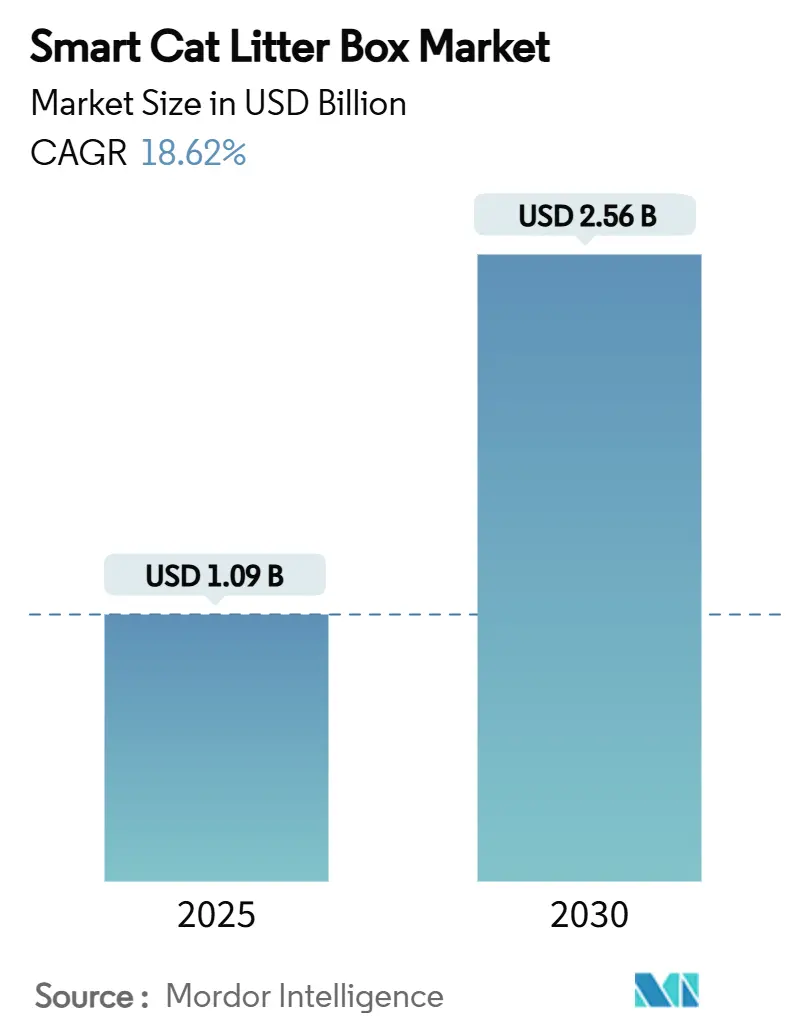
The smart cat litter box market size stands at USD 1.09 billion in 2025 and is forecast to climb to USD 2.56 billion by 2030, representing an 18.6% CAGR. Rapid advances in artificial intelligence and IoT connectivity are turning the humble litter tray into a frontline diagnostic device, shifting consumer expectations from simple waste removal to continuous wellness tracking. Hardware makers are bundling mobile applications, data analytics, and tele-veterinary links to create subscription revenue streams that can outlast a single hardware sale. Early adopters in North America favor premium devices that promise time savings and odor control, while Asian households view smart litter systems as an affordable entry point into the connected-home category. Digital commerce channels shorten the learning curve by providing side-by-side feature comparisons and reviews that build confidence in high-ticket purchases. Meanwhile, venture funding and high valuations encourage entrants with niche technologies such as UV sterilization and carbon capture odor filtration, sustaining a pipeline of product upgrades.
Key Report Takeaways
- By product type, self-cleaning units led with 71.2% revenue share in 2024, while hybrid clean-and-monitor models are projected to expand at a 19.4% CAGR to 2030.
- By connectivity, Wi-Fi devices commanded 64.4% of the smart cat litter box market share in 2024, and bluetooth systems record the highest projected CAGR at 18.2% through 2030.
- By distribution channel, online platforms accounted for 57.4% of the smart cat litter box market size in 2024 and are projected to continue growing at a 17.6% CAGR through 2030.
- By geography, North America held a 42.7% revenue share in 2024, and the Asia-Pacific region is advancing at a 16.3% CAGR through 2030.
- Whisker (Automated Pet Care Products, LLC), PetSafe (Radio Systems Corporation), Casa Leo (Smarty Pear), CatGenie (Petnovations, Inc.), and PETKIT Smart Technology Limited together are the key players in the market.
Global Smart Cat Litter Box Market Trends and Insights
Drivers Impact Analysis*
| Driver | (~) % Impact on CAGR Forecast | Geographic Relevance | Impact Timeline |
|---|---|---|---|
| Increasing Pet-humanization and Premium Pet-tech Spend | +3.2% | Global, strongest in North America and Europe | Long term (≥ 4 years) |
| Surge in Multi-cat Households Demanding Convenience | +2.8% | North America and Asia-Pacific core markets | Medium term (2-4 years) |
| Expansion of E-commerce and DTC Channels | +2.1% | Global, with Asia-Pacific leading growth | Short term (≤ 2 years) |
| AI-based Health-monitoring Features Enabling Early Vet Intervention | +3.7% | North America and Europe, expanding to Asia-Pacific | Long term (≥ 4 years) |
| Venture Capital Inflow and High Valuations Accelerating Innovation | +2.5% | Global, concentrated in the United States and China | Medium term (2-4 years) |
| UV-sterilization and Carbon-capture Odor Tech Widening Urban Adoption | +1.9% | Urban centers globally, strongest in Asia-Pacific | Medium term (2-4 years) |
| Source: Mordor Intelligence | |||
Increasing Pet Humanization and Premium Pet-tech Spend
The strong emotional connection between Millennial and Gen Z pet owners and their cats drives the growth of the smart cat litter box market. According to the World Animal Foundation study, 37% of pet guardians consider their pets the most important aspect of their lives, leading to increased spending on healthcare-focused technology. AI-enabled litter boxes monitor weight, elimination frequency, and patterns, aligning with owners' focus on preventive care. This trend is particularly evident in Asia, where more than 50% of Chinese pet owners regard their animals as children, and urban pet populations surpass those of young children. The demand for premium pet products remains stable during economic downturns, as consumers prioritize convenience and preventive care. The market benefits from recurring revenue through app subscriptions and veterinary monitoring services, complementing hardware sales.
Surge in Multi-cat Households Demanding Convenience
Ninety-four million United States households have pets, with Gen Z families showing a higher tendency to own multiple cats. According to the American Pet Products Association (APPA), cat-owning households in the United States grew from 45.3 million in 2022 to 46.5 million in 2023[1]Source: American Pet Products Association, “2023–2024 National Pet Owners Survey,” americanpetproducts.org. This trend increases daily maintenance requirements, as each additional cat requires more frequent cleaning of the litter box. Automated litter boxes that self-clean after each use address this growing need. Advanced systems incorporate camera-enabled ID tags to identify individual cats and monitor their health data separately. The demand for these solutions is particularly high in urban apartments, where space constraints necessitate efficient pet care solutions. Nearly 50% of American pet owners prioritize spending on products that streamline daily pet care tasks, contributing to sustained product sales through repeat purchases and recommendations.
Expansion of E-commerce and DTC (Direct-to-Consumers) Channels
Online sales are anticipated to dominate pet product purchases by 2024, with Amazon and Chewy leading the market. Digital platforms offer features like search filters, unboxing videos, and verified reviews, which help consumers make informed decisions for purchases ranging from USD 300-600[2]Source: U.S. Census Bureau, “Computer and Internet Use in the United States: 2021,” census.gov. Companies are increasing profitability through direct-to-consumer platforms and subscription services for consumables such as liners and odor filters. In the Asia-Pacific region, particularly China, pet owners' existing familiarity with online food purchases has enabled the smooth adoption of connected pet care devices. Fast delivery options, multiple payment methods, and growing interest in technology-enabled pet care solutions support this transition.
AI-based Health-monitoring Features Enabling Early Vet Intervention
Artificial intelligence enables litter boxes to function as diagnostic tools for detecting urinary tract infections, diabetes, and kidney disease in cats. The Purina Petivity system, which received the 2025 Product of the Year award based on 40,000 American consumer votes, exemplifies this shift toward preventive care. The system integrates with veterinary telehealth applications, enabling early detection of health issues and facilitating timely consultations rather than emergency visits. As cats typically conceal symptoms of illness, early detection reduces medical expenses and provides peace of mind to owners. The growing demand for health monitoring capabilities increases subscription adoption, establishing AI-based analytics as a core feature in pet care products. This transition to proactive, data-driven wellness is driving the smart cat litter box market size, as pet owners seek solutions that match human healthcare standards.
Restraints Impact Analysis*
| Restraint | (~) % Impact on CAGR Forecast | Geographic Relevance | Impact Timeline |
|---|---|---|---|
| High upfront device cost | −2.9% | Global, pronounced in emerging markets | Short term (≤ 2 years) |
| Product reliability and maintenance concerns | −2.1% | Global, early adopters most affected | Medium term (2-4 years) |
| Cyber-security and data-privacy risks | −1.8% | North America and Europe | Long term (≥ 4 years) |
| Limited compatibility with eco-friendly litter substrates | −1.4% | Europe and North America | Medium term (2-4 years) |
| Source: Mordor Intelligence | |||
High Upfront Device Cost
Smart litter boxes cost between USD 300 and USD 600, significantly higher than traditional litter pans priced under USD 50. This price difference creates adoption barriers, particularly in emerging markets where price sensitivity remains high despite increasing disposable income. Additional expenses for specialized litter, liners, and maintenance further influence purchasing decisions. Research indicates that 60% of pet owners cite cost as the primary factor preventing the adoption of smart pet products. While manufacturers face pressure to develop lower-priced versions, reducing features could compromise product functionality. Some companies now offer modular designs, enabling consumers to make gradual upgrades and manage initial costs while maintaining product quality.
Cyber-security and Data-privacy Risks
According to surveys, 83% of connected-device owners in North America and Europe express concerns about security, while 14% have experienced security breaches. Academic studies have identified hard-coded credentials and vulnerable firmware in popular feeders, which compromise personal data and device control systems. The absence of standardized security protocols has attracted regulatory attention and led consumers to choose traditional non-connected models over smart devices, despite the benefits of data analytics. To maintain consumer trust, manufacturers need to implement encryption systems and clear privacy policies.
*Our forecasts treat driver/restraint impacts as directional, not additive. The impact forecasts reflect baseline growth, mix effects, and variable interactions.
Segment Analysis
By Product Type: Hybrid Systems Lead Future Adoption
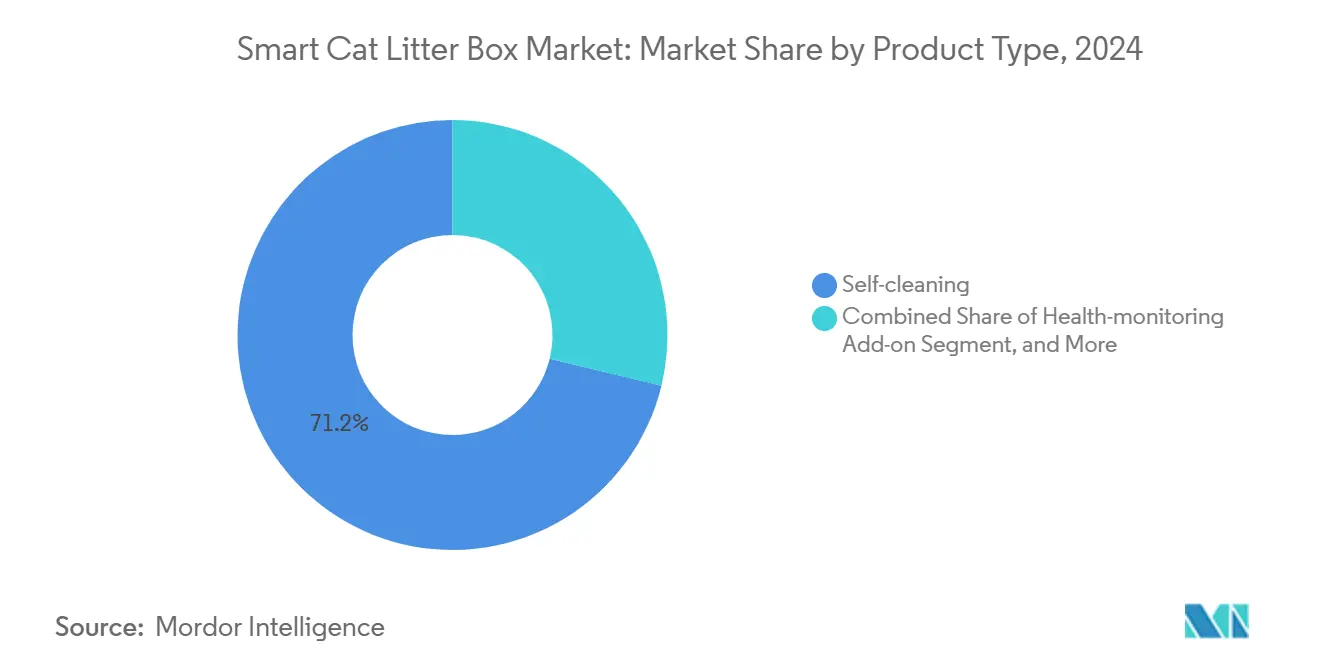
Self-cleaning models accounted for 71.2% of the smart cat litter box market size in 2024, indicating that basic automation has become a standard feature in the smart cat litter box market. The hybrid clean-and-monitor segment is projected to grow at 19.4% CAGR through 2030, driven by pet owners seeking both health monitoring capabilities and convenience. Despite commanding premium prices, hybrid units demonstrate a strong value proposition by enabling early health issue detection and reducing veterinary costs. The market size for hybrid systems is anticipated to expand as AI capabilities improve and mobile applications receive diagnostic certifications. Manufacturers have evolved from offering simple mechanical cleaning mechanisms to incorporating sensors and cloud software, enabling extended product lifespans and subscription-based services. Smart sifting manual-assist models serve price-sensitive consumers who prefer partial automation while awaiting price reductions in fully autonomous units.
Next-generation hybrid systems emphasize multiple cat identification and detailed health monitoring capabilities. Whisker combines weight measurement systems with feeding monitors to provide comprehensive intake and output data in a unified interface. PETKIT's Purobot Ultra uses facial recognition technology to distinguish between cats and maintain individual health profiles. These features enhance user retention as the accumulated historical data improves diagnostic accuracy. The growing installed base of hybrid systems generates sustained revenue through consumables and software updates, exceeding initial hardware sales profits.



By Connectivity: Wi-Fi Dominates While Bluetooth Gains Ground in Emerging Markets
Wi-Fi units account for 64.4% of the smart cat litter box market share in 2024, as continuous cloud connectivity becomes the standard. The market for Wi-Fi-enabled smart cat litter boxes is anticipated to grow with increasing broadband adoption and 2.4 GHz compatibility, which appears in most new model FCC filings[3]Source: Federal Communications Commission filing, “Popur X5 Self-Cleaning Litter Box,” fcc.report. Wi-Fi connectivity enables features such as real-time notifications, software updates, and integration with smart home systems, including voice assistants.
Bluetooth units are projected to achieve the highest CAGR of 18.2%, signaling increased demand for portable and low-power smart cat litter box solutions. These devices continue to hold market relevance, particularly in environments with limited or unreliable internet access. Their proximity-based functionality makes them ideal for mobile use cases, travel scenarios, and locations where cloud connectivity is impractical. As consumers seek flexible, offline alternatives, bluetooth models are poised to boost future market growth in developing countries.
By Distribution Channel: Online Leads, Physical Retail Reinvents
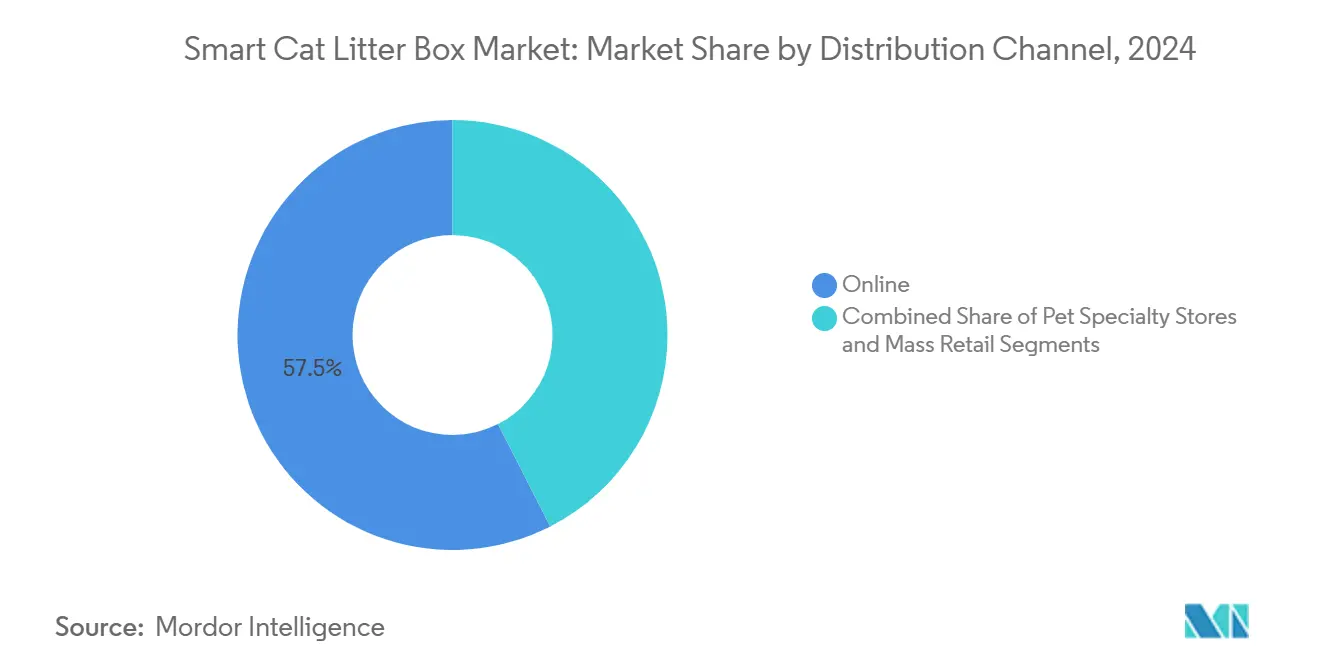
Digital storefronts generated 57.4% of revenue in 2024 and maintain the highest CAGR at 17.6%. The e-commerce market share continues to expand as consumers research premium appliances online, compare product ratings, and view demonstration videos that simulate in-store experiences. Direct-to-consumer companies increase profit margins and customer retention through automated replenishment services for liners and filters. Subscription-based models reduce customer turnover by creating dependence on brand-specific consumables.
Physical pet specialty retailers adapt by providing in-store demonstrations, package deals, and immediate fulfillment options. Mass retailers target new pet owners through competitive pricing on basic models. Hybrid services like click-and-collect bridge online and offline channels, enabling customers to inspect products personally after online research. The growth of e-commerce compels physical stores to maintain competitive pricing while providing personalized expertise unavailable through online reviews.
Geography Analysis
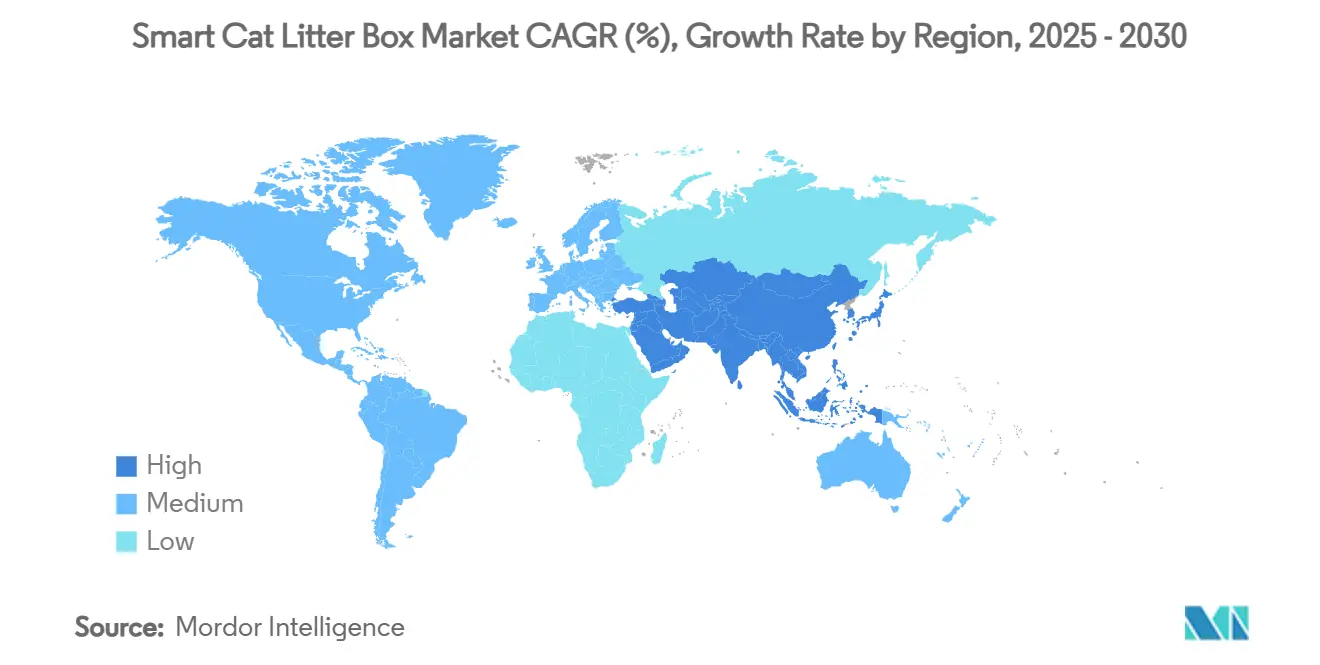
North America accounted for 42.7% of the smart cat litter box market size in 2024, driven by high pet ownership rates and widespread e-commerce adoption. United States consumers accept devices priced at USD 400, as the convenience and monitoring capabilities justify the cost. Clear IoT regulations support market growth. Multi-cat suburban households particularly benefit from automated waste removal systems that eliminate odors and reduce maintenance time. The market in Canada and Mexico continues to grow as urban pet owners increasingly purchase smart litter boxes through e-commerce channels, prioritizing hygiene solutions.
Asia-Pacific is the fastest-growing region with a 16.3% CAGR to 2030. China’s pet sector is forecast to expand to RMB 756.5 billion (USD 105.8 billion) by 2030, and connected-home penetration supports rapid uptake. Local manufacturers keep production costs low, enabling competitive price points that satisfy the expanding middle class. Compact apartment living reinforces demand for odor control and self-cleaning functions. Governments in Japan and South Korea offer subsidies or tax incentives on domestic robots, indirectly supporting smart litter appliances.
Europe maintains double-digit growth driven by strict sustainability requirements. Pet owners prefer devices that work with biodegradable litter and energy-efficient motors. The GDPR and other data protection laws affect cloud connectivity, leading manufacturers to establish local data centers and offline operating modes. In Africa and the Middle East, pet ownership increases in urban centers like Johannesburg, Nairobi, and Dubai. However, inadequate infrastructure, limited e-commerce access, and high import duties restrict market growth. South America demonstrates initial market acceptance through expatriate communities and rising disposable income, though fragmented distribution networks and high tariffs impede broader market penetration.

Competitive Landscape
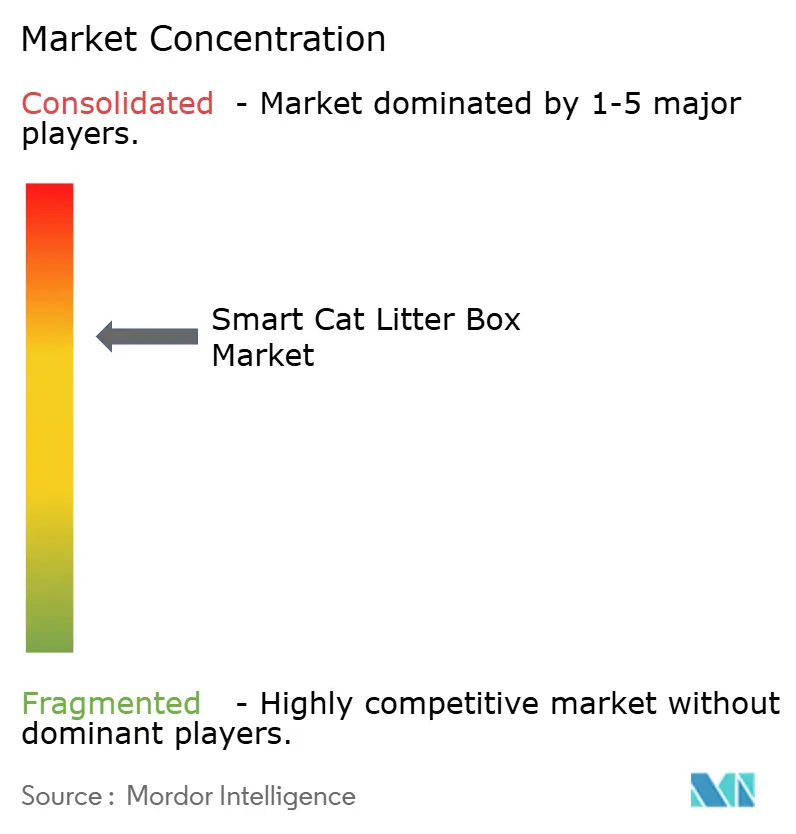
The smart cat litter box market shows moderate concentration, with the top five brands accounting for nearly half of the market in 2024 sales. Whisker demonstrates significant technological capabilities through its engineering expertise and app ecosystem, serving over 750,000 active users. PETKIT Smart Technology has established a competitive advantage with its AI-powered multi-cat recognition and facial ID tagging, which has been particularly successful in Asian markets where health monitoring is essential. PetSafe Brands (formerly Radio Systems Corporation) maintains its market presence through an extensive retail distribution network and a diverse product range, particularly in North America and Europe.
Companies are transitioning from single hardware sales to sustainable revenue models. Subscription services for consumables, including liners, filters, and cleaning supplies, are becoming standard offerings. Manufacturers are implementing vertical integration strategies to enhance firmware control and minimize supply chain vulnerabilities. New market entrants are developing specialized solutions for veterinary practices and commercial pet care facilities, focusing on batch monitoring capabilities. Product development roadmaps include UV sterilization and carbon-capture technologies to address odor management in urban environments.
Product distinction increasingly depends on algorithmic accuracy, security measures, and maintenance simplicity rather than mechanical features. Integrated cloud platforms that combine feeding, hydration, and litter box data into comprehensive health assessments are strengthening user retention. Companies pursuing medical-grade certification for their analytics systems may access pet insurance markets, potentially creating additional revenue opportunities while building consumer trust in data handling.
Smart Cat Litter Box Industry Leaders
Whisker (Automated Pet Care Products, LLC)
PetSafe (Radio Systems Corporation)
Casa Leo (Smarty Pear)
PETKIT Smart Technology Limited
CatGenie (Petnovations, Inc.)
- *Disclaimer: Major Players sorted in no particular order

Recent Industry Developments
- July 2025: PETKIT Smart Technology Limited pre-launched the Purobot Crystal Duo, an open-top AI-powered litter box that features urine pH detection and real-time health monitoring capabilities. The product, developed in collaboration with veterinarians, focuses on preventive care for households with multiple cats.
- March 2025: Invoxia acquired Caremitou, a French company that developed a medical-grade smart litter box. The device monitors cats' renal and liver functions, along with weight measurements, and will operate under the Invoxia brand name.
- February 2025: Shenzhen Catlink Intelligence Co., Ltd. (CATLINK) launched the Scooper Pro Ultra, a self-cleaning litter box featuring 5G WiFi, multi-cat recognition, and two-way audio. Its five-stage odor control and large waste drawer offer up to 20 days of scoop-free operation.
- September 2024: Elspet introduced the Spaceship Automatic Litter Box, which includes four safety sensors, odor control capabilities, and health monitoring through a mobile application. The litter box, developed for households with multiple cats, provides automated maintenance for up to 30 days and allows users to manage schedules through their smartphones.


Global Smart Cat Litter Box Market Report Scope
| Self-cleaning |
| Health-monitoring Add-on |
| Hybrid (Clean + Monitor) |
| Smart Sifting (Manual Assist) |
| Wi-Fi |
| Bluetooth |
| Non-connected |
| Online |
| Pet-specialty Stores |
| Mass Retail |
| North America | United States |
| Canada | |
| Mexico | |
| Rest of North America | |
| Europe | Germany |
| France | |
| Spain | |
| Italy | |
| Russia | |
| Rest of Europe | |
| Asia-Pacific | China |
| India | |
| Japan | |
| Australia | |
| Rest of Asia-Pacific | |
| South America | Brazil |
| Argentina | |
| Rest of South America | |
| Middle East | United Arab Emirates |
| Saudi Arabia | |
| Turkey | |
| Rest of Middle East | |
| Africa | South Africa |
| Rest of Africa |
| By Product Type | Self-cleaning | |
| Health-monitoring Add-on | ||
| Hybrid (Clean + Monitor) | ||
| Smart Sifting (Manual Assist) | ||
| By Connectivity | Wi-Fi | |
| Bluetooth | ||
| Non-connected | ||
| By Distribution Channel | Online | |
| Pet-specialty Stores | ||
| Mass Retail | ||
| By Geography | North America | United States |
| Canada | ||
| Mexico | ||
| Rest of North America | ||
| Europe | Germany | |
| France | ||
| Spain | ||
| Italy | ||
| Russia | ||
| Rest of Europe | ||
| Asia-Pacific | China | |
| India | ||
| Japan | ||
| Australia | ||
| Rest of Asia-Pacific | ||
| South America | Brazil | |
| Argentina | ||
| Rest of South America | ||
| Middle East | United Arab Emirates | |
| Saudi Arabia | ||
| Turkey | ||
| Rest of Middle East | ||
| Africa | South Africa | |
| Rest of Africa | ||


Key Questions Answered in the Report
What is the current value of the smart cat litter box market?
The smart cat litter box market size stands at USD 1.09 billion in 2025.
How fast is the category anticipated to grow?
Revenue is projected to reach USD 2.56 billion by 2030, reflecting an 18.6% CAGR.
Which product segment is expanding the quickest?
Hybrid clean-and-monitor systems are forecast to grow at 19.4% CAGR through 2030.
Which region shows the highest growth momentum?
Asia-Pacific leads with a projected 16.3% CAGR as urban middle-class households adopt smart home technology.
What is the main barrier to wider adoption?
High upfront device cost, typically USD 300-600, remains the most cited obstacle.
Page last updated on:


 Your data is secure and never sold or shared.


