
Self-testing Market Size and Share
Market Overview
| Study Period | 2020 - 2031 |
|---|---|
| Market Size (2026) | USD 14.24 Billion |
| Market Size (2031) | USD 23.35 Billion |
| Growth Rate (2025 - 2030) | 10.40 % |
| Fastest Growing Market | Asia Pacific |
| Largest Market | North America |
| Market Concentration | Medium |
Major Players *Disclaimer: Major Players sorted in no particular order Image © Mordor Intelligence. Reuse requires attribution under CC BY 4.0. | |
Self-testing Market Analysis by Mordor Intelligence
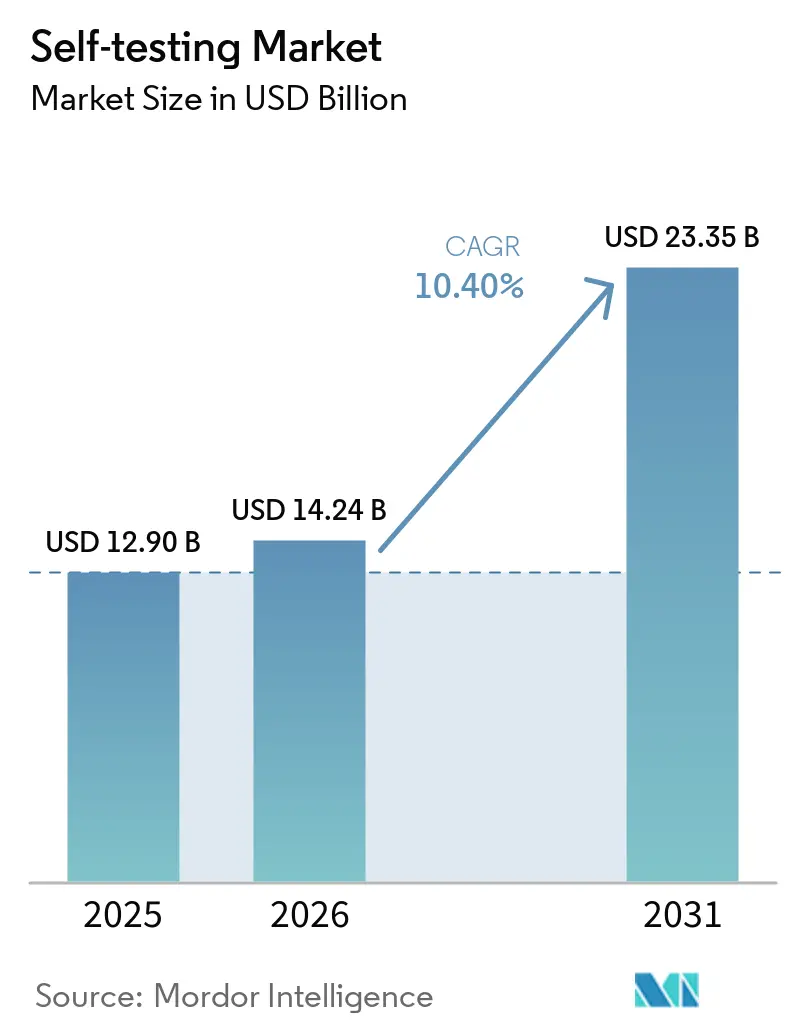
The Self-testing Market size is expected to grow from USD 12.90 billion in 2025 to USD 14.24 billion in 2026 and is forecast to reach USD 23.35 billion by 2031 at 10.40% CAGR over 2026-2031.
Continual consumer preference for at-home diagnostics, reinforced by virtual-care reimbursement, sustains double-digit growth. Streamlined U.S. and E.U. authorization pathways accelerate time-to-market for multi-pathogen and molecular self-tests, lowering development risk. Rapid uptake of smartphone-linked devices transforms service billing, allowing physicians to code virtual consultations directly from cloud-shared results. Intensifying chronic-disease prevalence and employer-sponsored wellness programs broaden the addressable user base, while integration with telehealth platforms positions connected tests as core elements of decentralized care. Competitive differentiation now gravitates toward analytics, whereby artificial-intelligence algorithms embedded in readers deliver predictive insights that elevate clinical utility and fuel additional hardware sales.[1]U.S. Food and Drug Administration, “FDA Authorizes Marketing of First Home Flu and COVID-19 Combination Test Outside of Emergency Use Authorities,” fda.gov
Key Report Takeaways
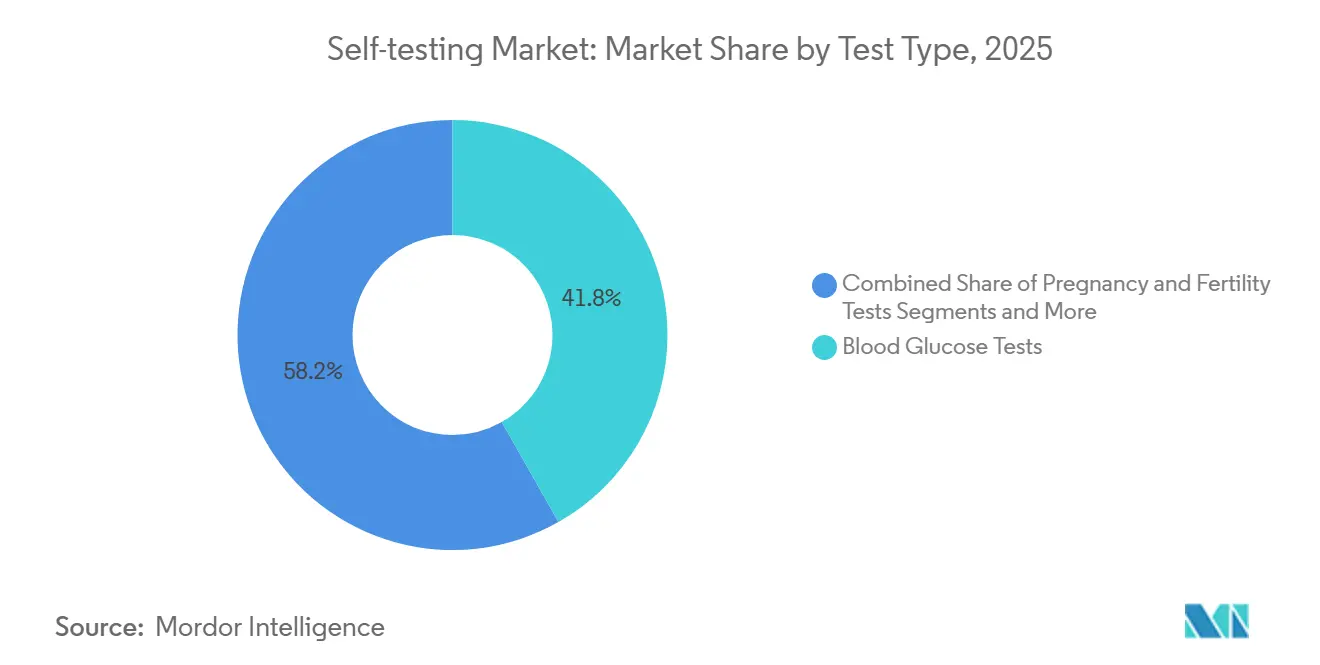
- By test type, blood-glucose kits held 41.8% of the self-testing market share in 2025, while genetic and ancestry self-tests are advancing at an 11.8% CAGR through 2031.
- By sample type, finger-stick blood accounted for a 46.6% share of the self-testing market in 2025; saliva-based tests are expanding at a 10.2% CAGR between 2026 and 2031.
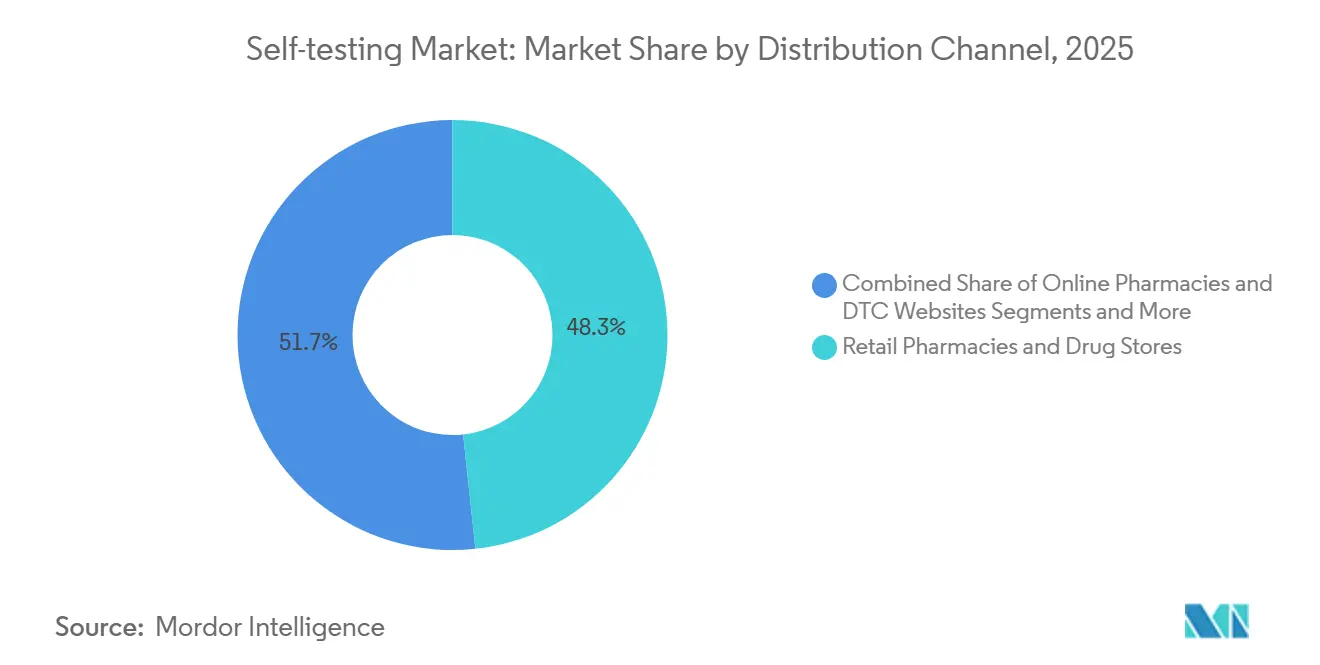
- By distribution channel, retail pharmacies captured a 48.3% revenue share in 2025, whereas online platforms recorded the fastest projected growth at a 13.3% CAGR.
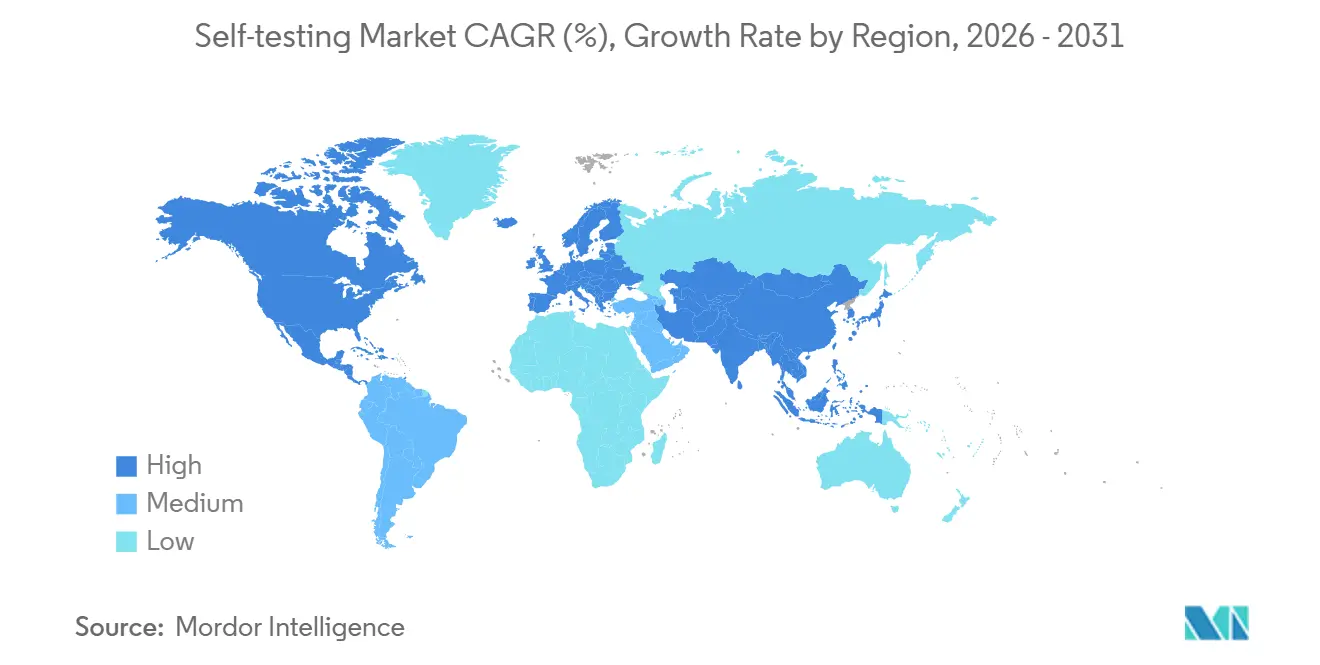
- By geography, North America led with 49.7% of 2025 revenue; Asia Pacific is forecast to grow at a 12.8% CAGR to 2031.
Note: Market size and forecast figures in this report are generated using Mordor Intelligence’s proprietary estimation framework, updated with the latest available data and insights as of January 2026.
Market Trends and Insights
Drivers Impact Analysis of Self-testing Market*
| Driver | (~) % Impact on CAGR Forecast | Geographic Relevance | Impact Timeline |
|---|---|---|---|
| Explosion Of Post-COVID Consumer Acceptance Of Home Diagnostics | +2.80% | Global, with strongest adoption in North America & Europe | Short term (≤ 2 years) |
| Rising Diabetes & Chronic-Disease Burden Prompting Frequent Self-Monitoring | +2.10% | Global, particularly Asia Pacific & North America | Long term (≥ 4 years) |
| Regulatory Relaxation For OTC/At-Home Test Approvals In Key Markets | +1.90% | North America, EU, with spillover to APAC | Medium term (2-4 years) |
| Smartphone-Linked LFA Readers Enabling Tele-Consult Billing | +1.50% | Global, with early gains in urban centers | Medium term (2-4 years) |
| Employer-Sponsored Wellness Testing Programs Expanding Access | +1.40% | North America & Europe, expanding to APAC corporate markets | Medium term (2-4 years) |
| Self-Collected Specimens Driving Faster Antiviral Prescriptions Via Telehealth | +1.20% | Global, with highest impact in regions with established telehealth infrastructure | Short term (≤ 2 years) |
| Source: Mordor Intelligence | |||
Explosion of Post-COVID Consumer Acceptance of Home Diagnostics
Sustained behavioral change following pandemic lockdowns keeps home testing the preferred first step for everyday health queries. Over-the-counter antigen kits familiarized households with sample collection, and satisfaction scores from hospital-at-home programs remain high, prompting health systems to expand remote-first care pathways. Connected lateral-flow readers now transmit time-stamped results to clinicians, supporting prescription workflows without in-person visits. Medicare billing codes for remote monitoring reinforce physician adoption, and major pharmacy chains curate dedicated aisles for multi-condition self-tests. These shifts anchor recurring demand across metabolic, infectious, and hormonal panels.
Rising Diabetes & Chronic-Disease Burden Prompting Frequent Self-Monitoring
Global escalation of type 2 diabetes creates continuous need for finger-stick glucose strips and emerging continuous glucose monitors (CGMs). Abbott’s Lingo sensor targets an expanding pre-diabetic population that seeks lifestyle guidance rather than insulin titration. Beyond glycemia, at-home lipid, renal and coagulation kits support proactive management of cardiovascular and renal conditions. Population aging amplifies multi-morbidities, and clinical guidelines increasingly endorse patient-initiated testing between clinic visits, sustaining long-term volume growth.
Regulatory Relaxation for OTC/At-Home Test Approvals in Key Markets
The U.S. FDA’s 2024 framework for laboratory-developed tests introduces phased oversight that clarifies evidentiary requirements while preserving expedited routes for low-risk products.[2]U.S. Food and Drug Administration, “FDA Takes Action Aimed at Helping to Ensure the Safety and Effectiveness of Laboratory Developed Tests,” fda.gov Combined with Europe’s In Vitro Diagnostics Regulation transition periods, sponsors face more predictable review timelines, lowering capital costs. Authorization of the first home syphilis test under the De Novo pathway demonstrates regulators’ willingness to broaden consumer access to molecular assays, encouraging venture funding for next-generation platforms.
Smartphone-Linked LFA Readers Enabling Tele-Consult Billing
Optical adaptors convert ubiquitous mobile cameras into quantitative readers of lateral-flow strips, transforming qualitative yes/no tests into data-rich instruments. Cloud APIs feed results into electronic health records, permitting clinicians to bill for interpretation and follow-up counseling. Published studies on paper-based biosensors for C-reactive protein illustrate laboratory-grade correlation, validating reimbursement potential. Device makers bundle subscription analytics that forecast disease exacerbation, intensifying switching costs and creating new recurring-revenue models.
Restraints Impact Analysis of Self-testing Market*
| Restraint | (~) % Impact on CAGR Forecast | Geographic Relevance | Impact Timeline |
|---|---|---|---|
| Accuracy & False-Negative Concerns Limiting Clinical Adoption | -1.20% | Global, particularly affecting professional healthcare settings | Long term (≥ 4 years) |
| Fragmented Reimbursement & Regulatory Complexity Across Regions | -0.80% | Europe, Asia Pacific, with limited impact in North America | Medium term (2-4 years) |
| Data-Privacy Risks From Cloud-Connected Home Tests | -0.70% | Global, with heightened concerns in EU due to GDPR compliance | Medium term (2-4 years) |
| Environmental Waste From Single-Use Plastic Test Kits | -0.50% | Europe & North America leading sustainability regulations, expanding globally | Long term (≥ 4 years) |
| Source: Mordor Intelligence | |||
Accuracy & False-Negative Concerns Limiting Clinical Adoption
Sensitivity gaps between home antigen kits and centralized PCR assays prompt clinician requests for confirmatory testing, prolonging diagnostic pathways and dampening full substitution. Pre-analytic errors—such as insufficient sample volume—represent the majority of discrepancies, yet user education materials remain inconsistent. While regulatory post-market surveillance captures serious adverse events, real-world nuisance errors continue to erode physician confidence, particularly for complex multi-analyte panels.
Fragmented Reimbursement & Regulatory Complexity Across Regions
Self-testing reimbursement diverges sharply across geographies. U.S. Medicare readily covers glucose supplies yet lacks unified pathways for emerging biomarker panels, forcing code-by-code adjudication. In Europe, national health funds decide test coverage independently, producing asynchronous launch dates that complicate inventory planning. Small manufacturers struggle to finance multi-jurisdictional dossiers, inhibiting innovation diffusion outside high-income markets.
*Our forecasts treat driver/restraint impacts as directional, not additive. The impact forecasts reflect baseline growth, mix effects, and variable interactions.
Self-testing Market Segment Analysis
By Test Type:
Blood-Glucose Dominance Coupled with Rapid Genetic UpswingBlood-glucose kits captured 41.8% of 2025 revenue, making them the largest contributor to the self-testing market size. Strong insurance coverage, embedded care guidelines and continuous innovation—ranging from micro-sampling strips to factory-calibrated CGMs—consolidate this lead. Digital platforms now overlay behavior-change nudges, shifting value from consumables to data services.
Growing consumer appetite for ancestry and health-trait insights propels genetic self-tests at an 11.8% CAGR, the fastest pace among all panels. Lower sequencing costs allow multi-gene reporting, and saliva collection simplifies logistics. Industry partnerships with oncology networks position hereditary cancer screens for mainstream pharmacy shelves, signaling further share expansion within the self-testing market. Steady pregnancy-test turnover, a relaunch of respiratory panels targeting RSV and flu, and cholesterol kits leveraging smartphone colorimetry round out the menu. Each category benefits from retail brand diversification, yet none rival the scale of glucose in present-day sales.



By Sample Type:
Finger-Stick Pre-eminence as Saliva Gains TractionFinger-stick blood retained 46.6% of 2025 sales, reflecting entrenched diabetic monitoring protocols and clinicians’ comfort with capillary specimens. Miniaturized lancet systems concentrate analytes onto microfluidic chips, improving user tolerance and enabling high-accuracy immunoassays.
Saliva testing is rising at a 10.2% CAGR, fueled by non-invasive collection that broadens eligibility to pediatric and needle-averse populations. HIV, genetic-risk, and hormone assays now leverage stabilized saliva buffers to achieve laboratory-equivalent sensitivity, enhancing clinical credibility. Urine remains pivotal for pregnancy and substance-abuse screens, whereas nasal swabs have normalized post-pandemic to seasonal volumes. Niche matrices such as hair and stool address toxicology and colorectal precancer detection, contributing incremental diversity rather than major volume.
By Distribution Channel:
Pharmacy Pillar Meets E-Commerce MomentumBrick-and-mortar drug stores accounted for 48.3% of sales in 2025, underscoring consumers’ desire for on-the-spot purchase paired with pharmacist counsel. Chains integrate digital result-reading kiosks that upsell follow-on telehealth visits, reinforcing their central role in the self-testing market.
Online pharmacies and direct-to-consumer logistics platforms are climbing at a 13.3% CAGR, the result of subscription replenishment models and discreet shipping. API links to virtual-care providers convert test purchases into accompanied medical encounters, monetizing beyond unit margins and attracting venture investment into fulfillment automation. Supermarkets and big-box retailers benefit from foot-traffic synergy, with pre-checkout displays capturing impulse pregnancy and ovulation kit purchases. Healthcare provider channels distribute professional-grade kits to chronic-care patients, sustaining a steady baseline independent of retail seasonality.
Geography Analysis
North America Self-testing Market
North America’s 49.7% revenue share derives from reimbursement alignment for chronic-disease supplies, early adoption of telehealth billing, and high smartphone ownership that facilitates connected diagnostics. FDA clearances of OTC syphilis and combo flu/COVID-19 kits underscore regulatory agility, while payer policy endorsements for remote physiologic monitoring codes underpin usage continuity.[3]U.S. Food and Drug Administration, “FDA Marketing Authorization Enables Increased Access to First Step of Syphilis Diagnosis,” fda.gov
APAC Self-testing Market
The Asia Pacific self-testing market is projected to expand at 12.8% CAGR through 2031, outpacing all regions. Urban middle-class growth intersects with national e-health blueprints that incentivize remote diagnostics to combat physician shortages. Governments in Japan, South Korea, and Australia grant accelerated review to telehealth-linked tests, and rising digital-wallet penetration eases direct-to-consumer sales. Supply-chain localization initiatives further reduce import dependency, spurring domestic manufacturing investments.
Europe Self-testing Market
Europe holds meaningful volume but confronts fragmented reimbursement. While the In Vitro Diagnostics Regulation harmonizes safety standards, individual payer debates over cost-effectiveness prolong country-by-country launches. Green-procurement rules, however, position the region as a leader in sustainability-driven product redesign.
LATAM and MEA Self-testing Market
Latin America, the Middle East and Africa collectively advance from low bases. Pilot programs in Brazil and Saudi Arabia couple rapid antigen tests with tele-consult stalls inside pharmacies, illustrating localized innovation. Yet limited insurance coverage and import tariffs temper acceleration, leaving multinational corporations to pursue phased rollouts aligned with economic modernization efforts.

Competitive Landscape
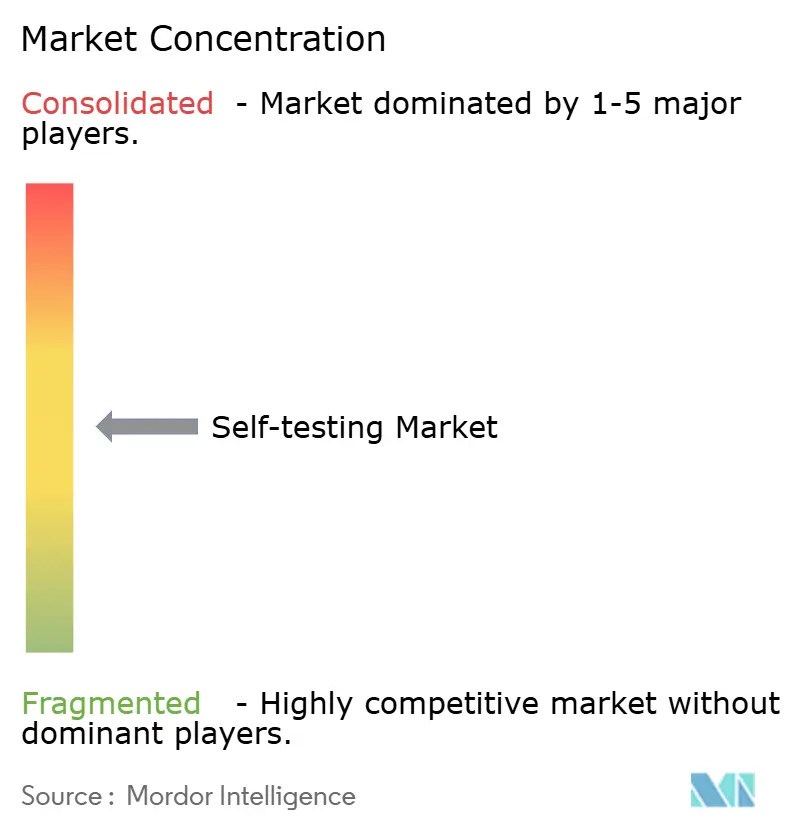
The market shows moderate consolidation: the top five suppliers account for roughly 55% of global revenue. Abbott pairs deep strip manufacturing scale with consumer-oriented wearables, launching the OTC Lingo sensor at USD 49 per unit to tap wellness segments formerly outside reimbursed diabetes care. Roche strengthened its point-of-care breadth by acquiring LumiraDx’s microfluidic platform, gaining speed advantages for decentralized workflows.
Siemens Healthineers advances automation, claiming 75% manual-step reduction in lab integrations that feed companion self-tests for confirmatory use. OraSure uses targeted acquisitions, such as Sherlock Biosciences, to expand saliva molecular testing, while BD prepares a diagnostics spin-off to sharpen strategic focus.
Digital disruptors leverage subscription-first models; Visby Medical secured FDA De Novo clearance for an at-home PCR panel covering three STIs, marking the first non-antigen molecular OTC clearance. Their data-heavy approach may pressure incumbents to accelerate analytics roadmaps or pursue partnership buy-ins.
Self-testing Industry Leaders
Abbott Laboratories
F. Hoffmann-La Roche AG
Siemens Healthineers
QuidelOrtho Corporation
Becton, Dickinson and Company
- *Disclaimer: Major Players sorted in no particular order
Self-testing Market Companies Covered in this Report
- Abbott Laboratories
- Roche
- Siemens Healthineers
- QuidelOrtho
- Beckton Dickinson
- Thermo Fisher Scientific
- Danaher Corp. (Cepheid)
- Bio-Rad Laboratories
- Orasure Technologies
- Everlywell Inc.
- LetsGetChecked
- Cue Health
- Acon Laboratories
- Access Bio
- Mylab Discovery Solutions
- Arkray
- Bionime
- Genomex (23andMe)
- Chembio Diagnostics
- Binx Health

Recent Industry Developments in Self-testing Market
- January 2025: OraSure Technologies received FDA approval to extend OraQuick HIV Self-Test to adolescents aged 14+, expanding preventive screening coverage.
- September 2024: Abbott introduced Lingo, its first OTC CGM for non-insulin users, priced at USD 49 per sensor.
- August 2024: FDA granted marketing authorization for NOWDiagnostics’ First To Know Syphilis Test, delivering results in 15 minutes from a finger-stick sample.
- July 2024: FDA cleared Healgen’s Rapid Check COVID-19/Flu A&B Antigen Test, the first non-EUA OTC combo kit.


Global Self-testing Market Report Scope
Segmentation Overview
| Blood Glucose Tests |
| Pregnancy & Fertility Tests |
| Infectious Disease Tests (HIV, COVID-19, Flu, etc.) |
| Cholesterol & Lipid Tests |
| Genetic & Ancestry Tests |
| Blood |
| Urine |
| Saliva |
| Nasal / Throat Swab |
| Other Specimens (Stool, Hair, etc.) |
| Retail Pharmacies & Drug Stores |
| Online Pharmacies & DTC Websites |
| Supermarkets / Hypermarkets |
| Others |
| North America | United States |
| Canada | |
| Mexico | |
| Europe | Germany |
| United Kingdom | |
| France | |
| Italy | |
| Spain | |
| Rest of Europe | |
| Asia Pacific | China |
| Japan | |
| India | |
| South Korea | |
| Australia | |
| Rest of Asia Pacific | |
| Middle East & Africa | GCC |
| South Africa | |
| Rest of Middle East & Africa | |
| South America | Brazil |
| Argentina | |
| Rest of South America |
| By Test Type | Blood Glucose Tests | |
| Pregnancy & Fertility Tests | ||
| Infectious Disease Tests (HIV, COVID-19, Flu, etc.) | ||
| Cholesterol & Lipid Tests | ||
| Genetic & Ancestry Tests | ||
| By Sample Type | Blood | |
| Urine | ||
| Saliva | ||
| Nasal / Throat Swab | ||
| Other Specimens (Stool, Hair, etc.) | ||
| By Distribution Channel | Retail Pharmacies & Drug Stores | |
| Online Pharmacies & DTC Websites | ||
| Supermarkets / Hypermarkets | ||
| Others | ||
| By Geography | North America | United States |
| Canada | ||
| Mexico | ||
| Europe | Germany | |
| United Kingdom | ||
| France | ||
| Italy | ||
| Spain | ||
| Rest of Europe | ||
| Asia Pacific | China | |
| Japan | ||
| India | ||
| South Korea | ||
| Australia | ||
| Rest of Asia Pacific | ||
| Middle East & Africa | GCC | |
| South Africa | ||
| Rest of Middle East & Africa | ||
| South America | Brazil | |
| Argentina | ||
| Rest of South America | ||


Key Questions Answered in the Report
What is the projected revenue for the self-testing field by 2030?
The self-testing market is forecast to reach USD 19.8 billion by 2030, growing at a 10.4% CAGR from 2025.
Which product type generates the greatest sales?
Blood-glucose self-tests hold 41.8% of 2024 revenue, the largest share within the broader category.
Which region is expanding the fastest?
Asia Pacific is expected to rise at a 12.8% CAGR through 2030 on the back of digitization and growing middle-class demand.
How are regulatory changes affecting product launches?
Faster OTC pathways—exemplified by FDA clearances for syphilis and combo respiratory kits—shorten development cycles and encourage investment.
What role do smartphones play in home diagnostics?
Camera-based readers convert lateral-flow strips into quantitative data, enabling reimbursable telehealth visits and driving device adoption.
How concentrated is supplier power?
The top five companies command around 55% of global revenue, reflecting moderate consolidation but leaving space for disruptive entrants.
Page last updated on:


 Your data is secure and never sold or shared.


