
Pulmonary Drug Delivery Systems Market Size and Share
Market Overview
| Study Period | 2020 - 2031 |
|---|---|
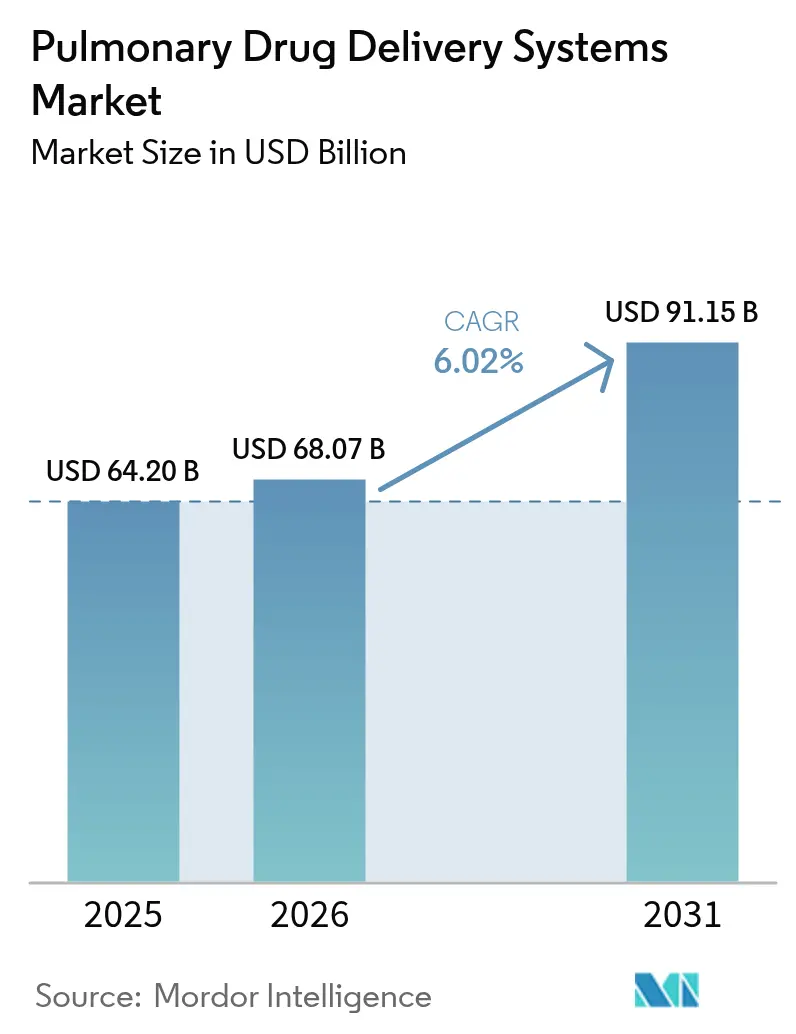
| Market Size (2026) | USD 68.07 Billion |
| Market Size (2031) | USD 91.15 Billion |
| Growth Rate (2026 - 2031) | 6.02 % |
| Fastest Growing Market | Asia Pacific |
| Largest Market | North America |
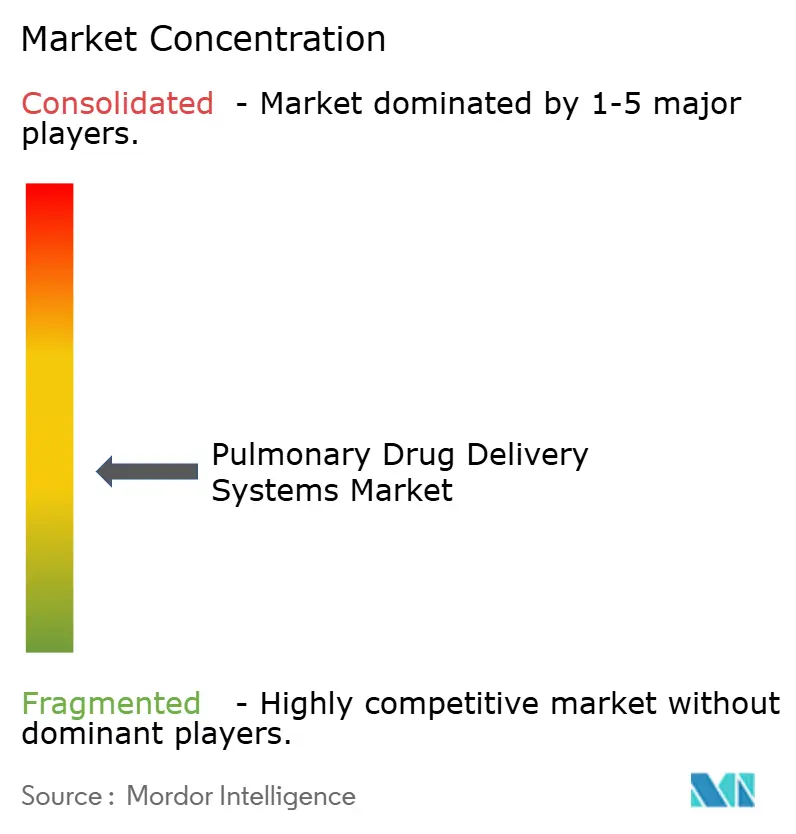
| Market Concentration | Medium |
Major Players *Disclaimer: Major Players sorted in no particular order Image © Mordor Intelligence. Reuse requires attribution under CC BY 4.0. | |
Pulmonary Drug Delivery Systems Market Analysis by Mordor Intelligence
The pulmonary drug delivery system market size was valued at USD 64.20 billion in 2025 and estimated to grow from USD 68.07 billion in 2026 to reach USD 91.15 billion by 2031, at a CAGR of 6.02% during the forecast period (2026-2031). This pulmonary drug delivery system market size expansion reflects steady technology gains, demographic aging, and a global shift toward at-home respiratory care. Device makers are embedding sensors, AI-powered dose counters, and cloud dashboards into familiar inhalers, enabling physicians to track adherence in real time. Environmental rules that mandate low-GWP propellants are catalyzing rapid reformulation programs, creating a multi-billion-dollar pipeline for climate-friendly inhalers. Breakthroughs in mRNA and gene-therapy aerosols are widening the therapeutic canvas, opening possibilities that go well beyond conventional asthma and COPD management. Asia Pacific’s fast-expanding patient base and supportive procurement policies keep the region on a double-digit growth path, while North America retains leadership through sizeable R&D budgets and early digital adoption.[1]
Key Report Takeaways
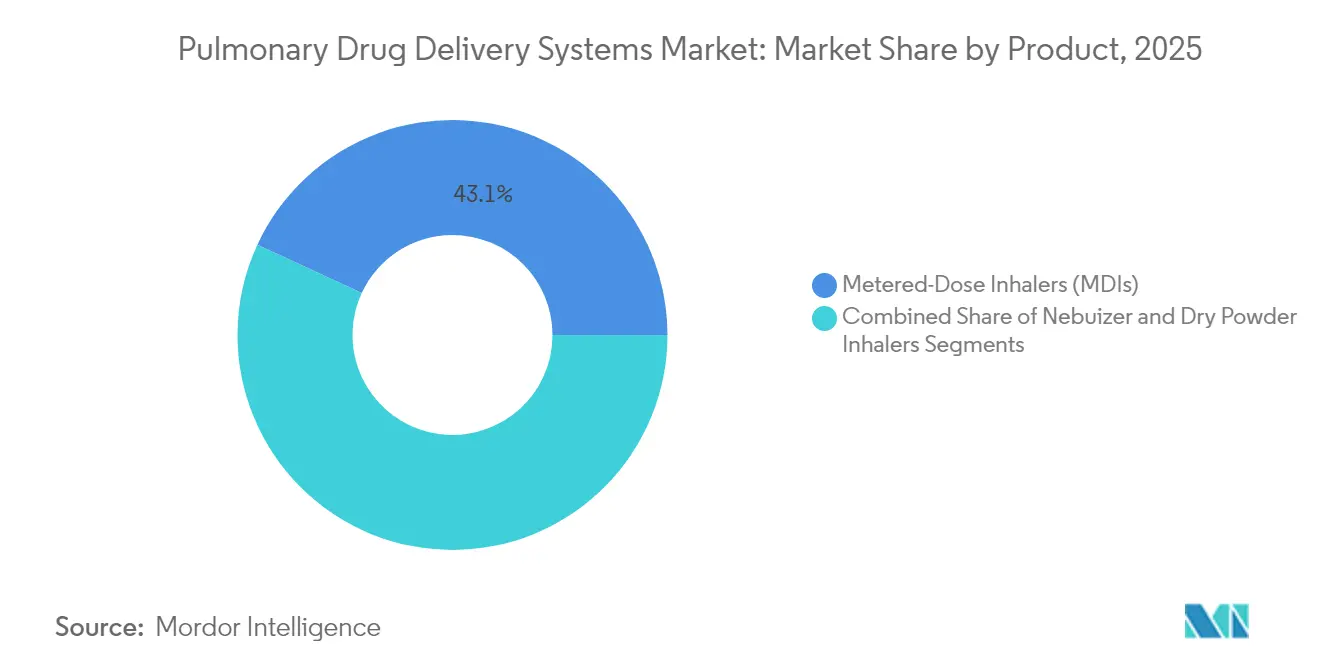
- By product type, metered-dose inhalers led with 43.10% of the pulmonary drug delivery system market share in 2025, whereas dry-powder inhalers are set to post the fastest 9.12% CAGR through 2031.
- By application, asthma captured 39.05% share of the pulmonary drug delivery system market size in 2025; cystic fibrosis is forecast to expand at an 8.31% CAGR to 2031.
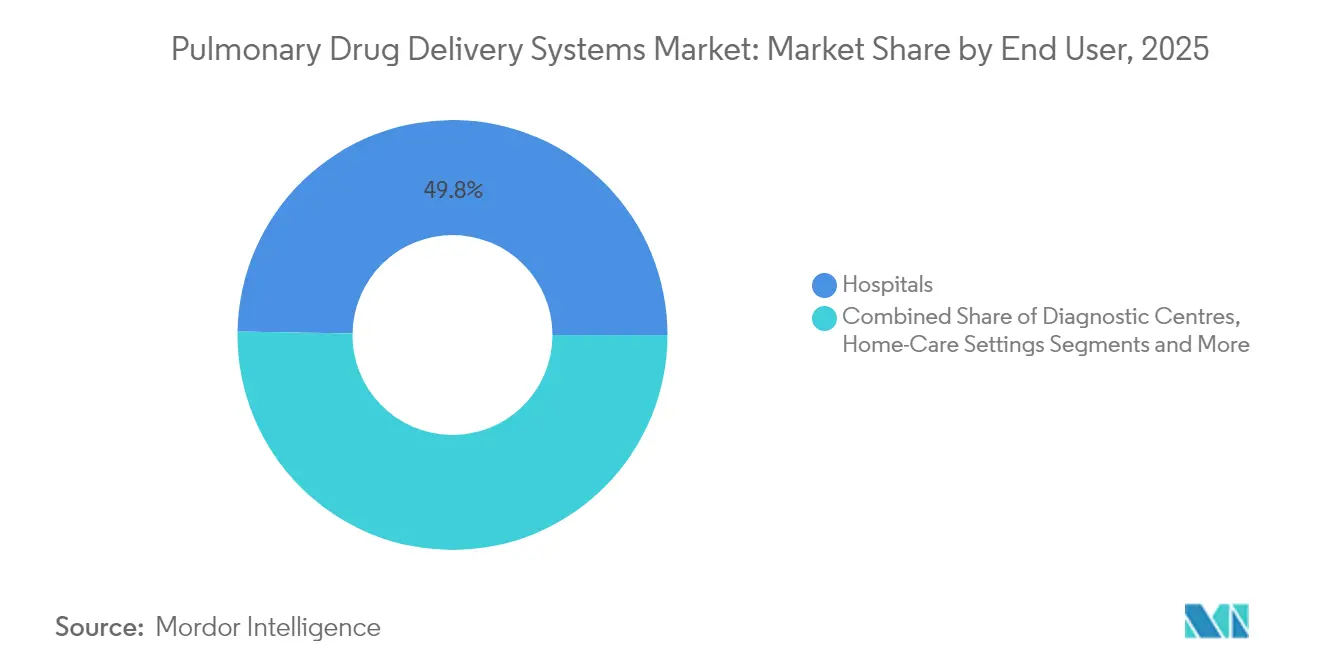
- By end user, hospitals held the largest portion with 49.75% of the pulmonary drug delivery system market in 2025, while home care is projected to accelerate at 10.05% CAGR by 2031.
- By technology, manually-operated devices controlled 67.60% revenue in 2025; digitally enabled smart devices will grow at 10.42% CAGR to 2031.
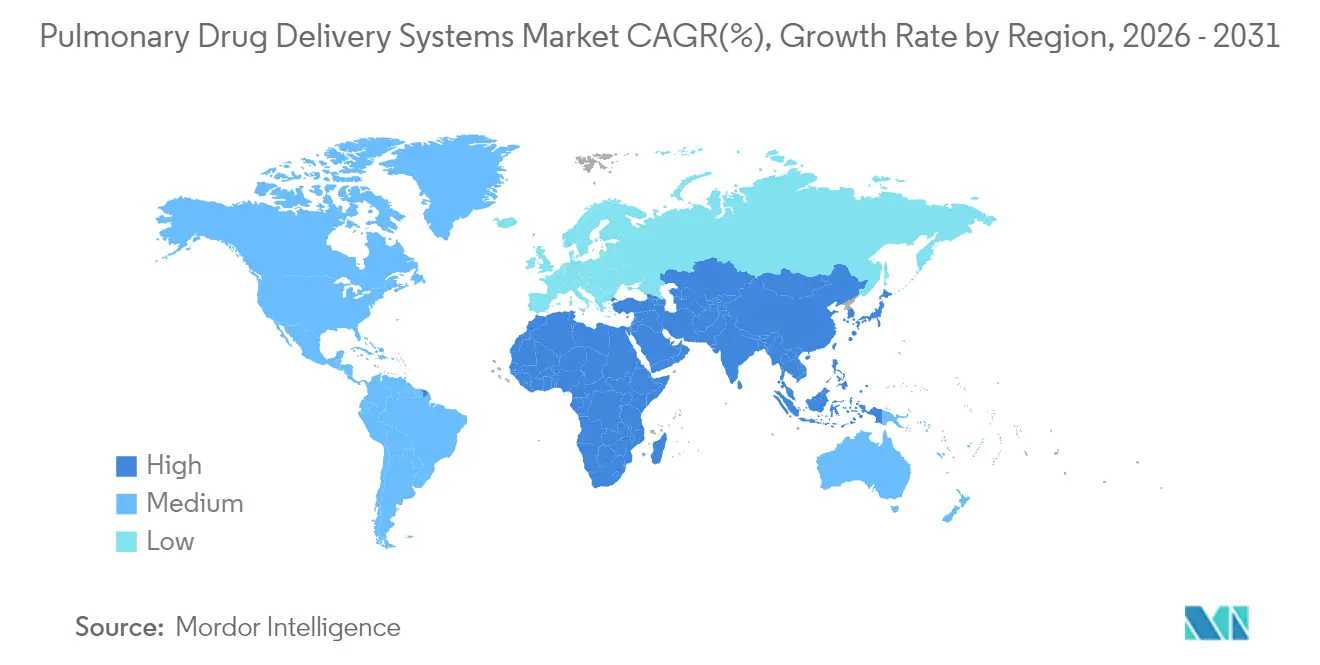
- By geography, North America commanded 45.10% share of the pulmonary drug delivery system market in 2025; Asia Pacific is the fastest-growing region at a 9.29% CAGR.
Note: Market size and forecast figures in this report are generated using Mordor Intelligence’s proprietary estimation framework, updated with the latest available data and insights as of 2026.
Market Trends and Insights
Drivers Impact Analysis of Pulmonary Drug Delivery Systems Market*
| Driver | (~) % Impact on CAGR Forecast | Geographic Relevance | Impact Timeline |
|---|---|---|---|
| Technological advancements in device engineering | +1.2% | Global, early uptake in North America & EU | Medium term (2-4 years) |
| Rising respiratory-disease burden & shift to inhalation route | +1.8% | Global, high in APAC and emerging markets | Long term (≥ 4 years) |
| Ageing population & chronic-care adherence push | +0.9% | North America & EU, expanding to APAC | Long term (≥ 4 years) |
| Environmental regulations spurring propellant-free inhalers | +0.7% | EU & UK leading, North America following | Medium term (2-4 years) |
| mRNA / gene-therapy pipelines targeting lung delivery | +0.5% | North America & EU | Long term (≥ 4 years) |
| Home-based smart, prefillable inhalers for connected care | +0.8% | Global, highest in developed markets | Short term (≤ 2 years) |
| Source: Mordor Intelligence | |||
Technological Advancements in Device Engineering
Smart actuators, breath-actuated triggers, and vibrating mesh nebulizers now deliver more drug into the small airways than earlier jet models, improving the sub-5 µm particle fraction from 54.6% to 59.25%. The FDA clearance of Adherium’s Smartinhaler adds real-time adherence feeds for Airsupra and Breztri, giving clinicians objective dose data. Meta-analysis confirms that vibrating mesh systems outperform jet nebulizers in COPD care, lowering exacerbations and treatment time.[2] Manufacturers are testing AI modules that adjust flow rates in response to a patient’s inspiratory profile, a feature that improves pediatric and geriatric outcomes. These engineering gains make inhalers easier to train on, reducing technique errors and hospital readmissions.
Rising Respiratory-Disease Burden & Shift to Inhalation Route
COPD affected 213.39 million people in 2021 and accounted for 4.0 million deaths, solidifying inhalation as the preferred route for both symptom relief and preventive care. China alone reports 45.7 million asthma and 99.9 million COPD patients, a volume that strains clinical capacity and lifts demand for devices that deliver drug directly to the lungs. Air pollution contributes 41.79% of COPD burden among young adults, pushing governments to subsidize inhaled therapies. Benralizumab, the first major asthma-COPD advance in five decades, demonstrated a 30% drop in treatment failures versus steroid regimens, reinforcing the relevance of targeted pulmonary delivery. Payers see inhaled formulations as a path to fewer systemic side effects and shorter hospital stays, underpinning formulary shifts toward aerosol products.
Ageing Population & Chronic-Care Medication Adherence Push
Only 40.9% of surveyed COPD patients exhibit high adherence, with older age a key predictor of missed doses. Digital inhalers have shown a three-point gain in asthma-control scores and lowered severe flare-ups, proving that feedback loops can reshape behavior. The albuterol Digihaler study confirmed that 78% of at-home inhalations generated analyzable flow data, letting physicians coach users remotely.[3]Home nebulization now ranks high in patient satisfaction surveys among elderly COPD cohorts, especially those unable to coordinate pMDI use.[4] These shifts align with value-based care models that reward outcomes, turning simple adherence tools into powerful market differentiators.
Environmental Regulations Spurring Propellant-Free Inhalers
The EU’s F-gas rulebook is forcing industry to replace hydrofluoroalkanes with low-GWP options such as HFC-152a and HFO-1234ze(E), slashing carbon footprints by up to 99%. AstraZeneca’s Trixeo Aerosphere won UK approval with the new propellant, setting a template for global filings. Dry-powder inhalers and reusable soft-mist devices already meet carbon goals without pressurized gases and could sidestep costly valving redesigns. Early movers enjoy positive brand equity and faster regulatory pathways, though reformulation programs often exceed USD 100 million per molecule. Hospitals and payers are adding sustainability metrics to tenders, accelerating demand for green inhalers.
Restraints Impact Analysis of Pulmonary Drug Delivery Systems Market*
| Restraint | (~) % Impact on CAGR Forecast | Geographic Relevance | Impact Timeline |
|---|---|---|---|
| Stringent multi-jurisdiction device & drug-combo approvals | -0.8% | Global, complex in EU & US | Medium term (2-4 years) |
| Propellant phase-out costs & supply bottlenecks | -0.6% | Global, highest in EU | Short term (≤ 2 years) |
| Reimbursement uncertainty for digital add-on sensors | -0.4% | North America & EU | Medium term (2-4 years) |
| Micro-plastic & lithium-ion waste scrutiny on disposables | -0.3% | EU leading, expanding globally | Long term (≥ 4 years) |
| Source: Mordor Intelligence | |||
Stringent Multi-Jurisdiction Device & Drug-Combo Approvals
Combination inhalers must satisfy both drug efficacy and device-performance tests, prolonging development cycles by years and inflating trial budgets. Intellectual-property overlaps around actuator geometries complicate generic entry, limiting price relief in many regions. Digital add-ons invite an additional layer of software validation, often triggering separate submissions under medical-device directives. Smaller firms lack capital to navigate dual pathways, risking innovation attrition and narrowing patient choice.
Propellant Phase-Out Costs & Supply Bottlenecks
Europe has already experienced salbutamol shortages in 21 member states as manufacturers re-tool pMDI lines for new propell ants. The Flovent phase-out lifted patient out-of-pocket costs from USD 14 to USD 25 per month, a jump that could depress adherence in price-sensitive segments. Reformulation costs range from USD 100–200 million per product, including stability tests and bioequivalence studies. Manufacturers face a race to secure HFC-152a and HFO-1234ze(E) allocations, with early movers gaining supply-chain advantages.
*Our forecasts treat driver/restraint impacts as directional, not additive. The impact forecasts reflect baseline growth, mix effects, and variable interactions.
Pulmonary Drug Delivery Systems Market Segment Analysis
By Product:
Innovation Drives Competitive DynamicsMetered-dose inhalers claimed 43.10% of the pulmonary drug delivery system market share in 2025 but face mounting environmental pressure to replace high-GWP propellants with sustainable alternatives. Dry-powder inhalers are gaining ground at 9.12% CAGR through 2031, appealing to elderly patients who struggle with MDI coordination and environmentally conscious consumers seeking propellant-free options. Nebulizers remain essential for acute care and patients with limited dexterity, though the segment is shifting from traditional jet models toward advanced vibrating mesh and soft-mist technologies that deliver medication more efficiently.
AstraZeneca's AIRSUPRA launch as the first FDA-approved anti-inflammatory rescue inhaler demonstrates how product innovation can reshape treatment protocols and create new market segments. Soft-mist nebulizers are gaining traction due to their reusable design and reduced environmental impact, with studies confirming 57-71% carbon footprint reduction compared to traditional pMDIs. Ultrasonic nebulizers are experiencing renewed interest as technological advances improve droplet formation control and reduce treatment times, making them particularly valuable for pediatric applications where patient compliance presents challenges. The pulmonary drug delivery system market size for dry-powder inhalers is projected to expand at 9.12% CAGR between 2026-2031, reflecting growing preference for coordination-free devices.

By Application:
Therapeutic Breakthroughs Reshape Treatment ParadigmsAsthma applications dominated with 39.05% of the pulmonary drug delivery system market in 2025, reflecting high disease prevalence and established treatment protocols across global healthcare systems. Cystic fibrosis emerges as the fastest-growing application segment with 8.31% CAGR through 2031, driven by breakthrough gene therapy developments including the LENTICLAIR 1 trial testing BI 3720931 inhalable gene therapy across multiple European countries. COPD applications are benefiting from innovative treatments like ensifentrine (Ohtuvayre), which represents the first novel mechanism of action for COPD in over two decades by combining bronchodilator and anti-inflammatory effects. Allergic rhinitis applications are expanding with needle-free delivery systems like Neffy nasal spray for severe allergic reactions, broadening the addressable patient population beyond traditional inhaler users.
The application landscape is undergoing transformation through mRNA and gene therapy innovations, with multiple clinical trials demonstrating the potential for lung-targeted genetic interventions that could fundamentally change treatment paradigms. BioNTech's BNT116 lung cancer vaccine trials across seven countries represent a significant expansion of pulmonary delivery beyond respiratory diseases into oncology applications. Other applications are advancing through specialized formulations, such as novel hyaluronic acid-vancomycin complex powders for pulmonary infections in cystic fibrosis patients, which demonstrate extended release profiles exceeding 24 hours. The pulmonary drug delivery system market size for cystic fibrosis applications is forecast to grow at 8.31% CAGR through 2031, reflecting the impact of these therapeutic innovations.
By End User:
Care Setting Evolution Drives Adoption PatternsHome care settings are advancing at 10.05% CAGR through 2031, outpacing other end-user segments as healthcare systems embrace decentralized care models and patients prioritize treatment convenience. This shift accelerated during the COVID-19 pandemic, which fundamentally altered healthcare delivery preferences by encouraging remote monitoring and telehealth adoption for respiratory disease management. Hospitals maintain their position as the largest end-user segment with 49.75%, leveraging advanced nebulization systems and staff expertise to manage acute exacerbations and initiate treatment protocols. Diagnostic centers are experiencing steady growth as respiratory disease screening becomes more prevalent, particularly in emerging markets where early detection programs are expanding access to care.
The end-user landscape is being reshaped by technological innovations that enable effective home-based therapy management without compromising clinical outcomes. Smart nebulizers and connected inhalers facilitate remote patient monitoring, allowing healthcare providers to track medication adherence and adjust treatment protocols without requiring in-person visits. Home nebulization therapy is gaining acceptance among elderly COPD patients who cannot effectively use handheld inhalers, with studies showing high patient satisfaction rates and improved quality of life outcomes. The transition to home care is supported by reimbursement policy changes that favor cost-effective treatment settings, though challenges remain in ensuring proper device maintenance and patient education in non-clinical environments.
By Technology:
Digital Integration Transforms Patient EngagementManually-operated devices held 67.60% of the pulmonary drug delivery system market share in 2025, reflecting their established presence and reliability in emergency situations and resource-constrained settings. Digitally-operated smart devices are experiencing rapid adoption with 10.42% CAGR through 2031, driven by healthcare's digital transformation and growing demand for connected health solutions that improve treatment outcomes. This technology shift reflects fundamental changes in patient care expectations, with digital inhalers providing objective data on medication adherence and inhalation technique that enables personalized treatment optimization. Despite clinical guidelines supporting their use, smart inhaler adoption remains low with only 14.5% of adults with moderate to severe asthma prescribed SMART therapy regimens, indicating significant growth potential as awareness and reimbursement improve.
Digital health integration is creating new competitive dynamics within the pulmonary drug delivery system market, with companies developing connected devices such as the Enerzair Breezhaler digital companion for asthma treatment. The technology evolution extends beyond simple connectivity to include artificial intelligence-powered dose optimization and predictive analytics for exacerbation prevention, creating value beyond basic medication delivery. The integration of sensors and connectivity features adds USD 50-100 per device to manufacturing costs, creating pricing pressures that may limit adoption in price-sensitive markets. However, the long-term value proposition of improved adherence and reduced hospitalizations is driving payer interest in covering digital device premiums, supporting continued growth in this segment.
Geography Analysis
North America Pulmonary Drug Delivery Systems Market
North America commanded45.10% of the pulmonary drug delivery system market in2025, benefiting from robust insurance coverage, early uptake of smart inhalers, and swift FDA approvals for breakthrough devices. Recent launches such as AIRSUPRA and Yutrepia sustain demand while public–private R&D programs speed next-generation propellant transitions. Canada and Mexico expand steadily on the back of aging populations and broader access to maintenance therapies, though premium-device use trails the United States.
APAC Pulmonary Drug Delivery Systems Market
Asia Pacific is advancing at a9.29% CAGR through2031, propelled by large asthma and COPD pools, widening reimbursement, and local manufacturing that trims device costs. China alone counts45.7million asthma and99.9million COPD patients, driving bulk tenders for dry-powder and mesh-nebulizer systems. India is preparing for Afrezza inhaled insulin, signalling openness to innovative aerosols. Japan, Australia, and South Korea lead regional adoption of connected inhalers as governments push telehealth.
EMEA and South America Pulmonary Drug Delivery Systems Market
Europe focuses on sustainability, with the UK’s approval of HFO-1234ze(E) propellant inhalers setting a low-carbon benchmark. Germany and France supply critical valve and actuator technology, while EU-wide shortages of salbutamol expose supply-chain risk during propellant changeovers. Eastern Europe, the Middle East & Africa, and South America register rising volumes as funding flows toward air-quality initiatives and local assembly plants.
Regulatory Landscape
Pulmonary drug delivery systems commonly sit at the drug-device combination interface, with oversight split by primary mode of action (for example, US FDA pathways led by CDER or CDRH) and additional scrutiny when software-enabled adherence and connectivity features are included. In Europe, the European Medicines Agency (EMA) adopted revisions to key orally inhaled product guidance on July 14, 2025 (pharmaceutical quality for inhalation and nasal medicinal products, and therapeutic equivalence between OIPs for asthma/COPD), and both revisions took effect on February 1, 2026, tightening expectations for product characterization, comparability, and equivalence packages used for approvals and lifecycle changes.
Sustainability-driven reformulation is now a regulatory workstream for pMDIs in the EU as the shift toward low global warming potential (LGWP) propellants is supported by EMA scientific guidance aligned with Regulation (EU) 2024/573 on fluorinated greenhouse gases. That approach increases the amount of multidisciplinary data required when transitioning established products to new propellants. Device standards continue to evolve in parallel, including ISO 80369-1:2025 (small-bore connectors, published October 10, 2025) and ISO 80601-2-74:2026 (respiratory humidifying equipment, published April 10, 2026), which influence design controls, testing, and documentation practices for connected respiratory delivery ecosystems used across hospital and home-care settings.
Value Chain Analysis
The value chain spans API and excipient suppliers, particle-engineering and formulation specialists (including spray drying for DPIs), device and component manufacturers (canisters, valves, actuators, and micro-machined mesh elements for advanced nebulizers), combination-product integrators, and pharmaceutical brand owners that run clinical evidence, regulatory filings, and commercialization. Downstream, distribution runs through hospital procurement, retail and specialty pharmacy, and home-care channels. Digitally enabled devices add cloud, analytics, and data-governance layers that extend the chain into software validation and cybersecurity compliance.
Propellant transition and high-precision components are key pinch points. Securing LGWP propellants (such as HFA-152a or HFO-1234ze(E)) and qualifying compatible valves and actuator geometries can constrain capacity and lengthen changeovers. Recent partnerships point to ongoing chain reconfiguration, including Chiesi Group and Bespak expanding collaboration to increase pMDI manufacturing capacity at Bespak's Holmes Chapel site under the Carbon Minimal Inhaler program, and Experic partnering with Flurry Powders to combine formulation, spray-drying, and GMP clinical manufacturing capabilities for inhalation and nasal products. Regional licensing and local commercialization moves, such as AeroDel's exclusive licensing arrangement with Zydus Lifesciences for the Aerolife Mini pMDI enhancer in India, also show how companies use local partners to improve access and training for inhaler technique while keeping core device know-how centralized.
Competitive Landscape
The pulmonary drug delivery system market is moderately fragmented. AstraZeneca, GlaxoSmithKline, and Boehringer Ingelheim dominate branded therapies and control critical patent estates on propellants and actuator geometries. Philips, PARI, and Omron lead device engineering, pushing vibrating-mesh and soft-mist platforms that cut drug waste and carbon load.
Competition now hinges on two themes: climate-friendly propellants and digital add-ons. Early movers like AstraZeneca finished clinical work for next-generation HFO-based MDIs, gaining a regulatory head start and brand goodwill. Smart-sensor suppliers such as Adherium secure FDA clearances that transform legacy inhalers into connected care tools, creating sticky software-as-a-service revenue.
M&A and licensing remain active as pharma firms seek device know-how and tech companies pursue therapeutic payloads. Regional manufacturers in China and India scale low-cost DPIs, challenging multinationals on price-sensitive tenders. Emerging mRNA and gene-therapy entrants court partners with aerosol expertise to reach distal airways. The result is dynamic rivalry where sustainability credentials, data analytics, and rapid reformulation capacity decide pulmonary drug delivery system market share.
Pulmonary Drug Delivery Systems Industry Leaders
-
Novartis AG
-
Boehringer Ingelheim International GmbH
-
GlaxoSmithKline plc.
-
Cipla
-
AstraZeneca
- *Disclaimer: Major Players sorted in no particular order
Pulmonary Drug Delivery Systems Market Companies Covered in this Report
- AstraZeneca
- Boehringer Ingelheim
- Chiesi Farmaceutici
- Cipla
- ElevateBio / Aerogen
- GF Health Products
- GlaxoSmithKline
- Gilbert Technologies
- H&T Presspart
- Koninklijke Philips
- Merck
- Novartis
- OMRON
- PARI Pharma
- Propeller Health
- Resmed
- Sunovion Pharma
- Teva Pharmaceutical Industries
- Vectura Group
- Aptar Pharma
Market Opportunities and Future Outlook
An opportunity area is accelerating the shift to lower-carbon inhalation platforms by pairing LGWP propellant programs with scalable component and fill-finish capacity, particularly in Europe where EMA guidance for LGWP propellant transitions aligns with Regulation (EU) 2024/573. Clinical and regulatory milestones in the period reinforce commercialization pathways for newer pulmonary formats. Liquidia's YUTREPIA (treprostinil) inhalation powder received US FDA approval in May 2025 using the company's PRINT technology for deep-lung delivery, and GSK reported positive phase III data in October 2025 for a next-generation Ventolin MDI using the low carbon propellant HFA-152a, indicating sustained investment in pMDIs rather than a pure shift to DPIs.
Whitespace is also visible in smart and assisted-use delivery for home care, where cleared devices and interfaces expand adoption beyond coordinated inhaler users. FDA clearances for specialized delivery hardware, such as Hcmed Innovations' AdheResp Smart Breath-actuated Mesh Nebulizer (June 2025) and FindAir ONE for pMDI as a nebulizer direct patient interface (June 2, 2026), support new care models that combine adherence tracking and guided inhalation with established drug products. In parallel, inhaled biologics, nucleic acids, and gene-therapy programs broaden the payload landscape for pulmonary delivery systems, increasing demand for CDMO capabilities in particle engineering and for device platforms that can reliably deliver complex formulations while meeting combination-product and software validation requirements.
Recent Industry Developments in Pulmonary Drug Delivery Systems Market
- May 2026: MannKind Corporation announced the development of a dry powder inhalation (DPI) formulation of ralinepag (MNKD-1501) for United Therapeutics under an expanded license and collaboration. The program targets pulmonary hypertension and fibrotic lung diseases and strengthens the role of DPI platforms beyond asthma and COPD. It also highlights how biopharma developers are using specialized inhalation partners to accelerate formulation and device-enabled delivery for cardiopulmonary indications.
- July 2025: AstraZeneca reported a positive EU CHMP opinion for Trixeo Aerosphere as an inhaled medicine using a next-generation propellant with near-zero global warming potential. The milestone advances the regulatory path for climate-aligned pMDIs and provides a reference point for future variation filings and line conversions. It also increases competitive pressure on other MDI portfolios to generate comparable data packages for propellant transitions.
- September 2024: AstraZeneca completed the clinical program supporting the transition of Breztri/Trixeo Aerosphere to a next-generation propellant (HFO-1234ze) with substantially lower global warming potential. Completing clinical work de-risks subsequent regulatory submissions and supply-chain planning for large-volume inhalers. This signaled an earlier commitment to propellant changeovers that can reshape manufacturing schedules and component qualification across the pMDI ecosystem.
Pulmonary Drug Delivery Systems Market Report Scope and Research Methodology
Market Definition and Coverage
This market covers devices and systems used to deliver medicines into the lungs through inhalation in clinical and home settings. It includes inhalers and nebulization-based systems used for conditions like asthma and COPD, where the intended route is pulmonary deposition.
Scope exclusions: We exclude oral and injectable respiratory drugs, stand-alone nasal delivery products, and accessories that do not deliver a dose by themselves.
Segments Covered in This Report
- By Product
- Dry Powder Inhalers
- Metered Dose Inhalers
- Nebulizers
- Jet Nebulizers
- Soft-Mist Nebulizers
- Ultrasonic Nebulizers
- By Application
- Asthma
- COPD
- Cystic Fibrosis
- Allergic Rhinitis
- Other Applications
- By End User
- Hospitals
- Diagnostic Centres
- Home-Care Settings
- Other End Users
- By Technology
- Manually-Operated Devices
- Digitally-Operated / Smart Devices
- By Geography
- North America
- United States
- Canada
- Mexico
- Europe
- Germany
- United Kingdom
- France
- Italy
- Spain
- Rest of Europe
- Asia-Pacific
- China
- Japan
- India
- Australia
- South Korea
- Rest of Asia-Pacific
- Middle East and Africa
- GCC
- South Africa
- Rest of Middle East and Africa
- South America
- Brazil
- Argentina
- Rest of South America
- North America
Data Sources, Market Sizing, and Validation
Desk Research
Desk work starts with building a clean fact base on disease burden, treatment patterns, and device usage by care setting, since these inputs shape the demand pool. We reference public sources such as the World Health Organization, the US CDC, the Global Initiative for Asthma (GINA), the Global Initiative for Chronic Obstructive Lung Disease (GOLD), and selected peer reviewed clinical and aerosol science journals to understand how inhalation delivery is used in practice.
We then layer in manufacturer annual reports, product labels and regulatory databases (including FDA device and drug databases, and public EU guidance where relevant), along with investor presentations and credible press to track launches, propellant transitions, and pricing signals. Import and export trade statistics and an import export shipment-level database are also used selectively to sanity-check device flows in major hubs. These sources are not exhaustive, and we reviewed additional public materials for data capture, cross-checks, and clarification.
Primary Interviews and Surveys
Primary work is used to pressure-test assumptions that desk sources do not answer well, especially patient adherence behavior, switching between MDI, DPI, and nebulizers, and how homecare adoption is changing by region. We speak with a mix of device value chain participants, clinicians, and channel stakeholders across Americas, EMEA, and APAC so inputs reflect procurement and prescribing behavior, and we close gaps through follow-up checks when numbers do not line up.
Distribution of primary research fieldwork respondents
| Company type | Respondent position | Region |
|---|---|---|
| Top tier: 37% | CXOs: 13% | APAC: 47% |
| Mid tier: 45% | Functional/Unit leaders: 37% | EMEA: 33% |
| Smaller Players: 18% | Managers: 50% | Americas: 20% |
Market-Sizing & Forecasting
Our model starts from a top-down demand build that links diagnosed and treated respiratory populations to inhalation therapy usage, and then converts that into device system demand by care setting. To keep results realistic, we corroborate them with selective bottom-up approximations, such as sampled country roll-ups using typical device mix shares and average selling price bands, followed by channel checks to adjust totals when the first pass appears off.
Key inputs used in the sizing include asthma and COPD prevalence and diagnosis rates, treated patient share, device mix split across MDI, DPI, and nebulizers, replacement frequency and utilization assumptions for nebulizers, and average price progression for devices and consumables in local currency before conversion. Where country level splits are thin, we use proxy ratios from similar markets with close reimbursement and care pathways, and then validate again through interviews. For forecasting, we run scenario analysis so adoption of low-GWP inhalers, smart or digitally enabled devices, and homecare shift can be flexed up or down, and the final outlook is aligned to a practical rollout pace experts described.
Data Validation & Update Cycle
Validation is handled through cross-checks that compare modeled totals against independent signals, such as respiratory patient pools, therapy uptake, and region-level device mix logic. Outliers are flagged early, assumptions are revisited, and we re-contact sources when a key input moves the market noticeably or when a new regulatory or product update changes the mix.
A multi-step analyst review is followed so calculation logic, currency handling, and year-to-year transitions are consistent before sign-off. Reports are refreshed annually, and interim updates are made when material events occur. Before delivery, the latest public updates are rechecked so clients receive an up-to-date view.
Mordor Intelligence's Pulmonary Drug Delivery System Market Estimate Compared With Other Published Estimates
Published market sizes for pulmonary drug delivery systems can differ even when the topic sounds the same, because the boundaries and counting rules are not always aligned. The year used for the starting point, what is treated as a device system versus an accessory, and how pricing is converted across currencies can all move the final value.
By tracking device mix shifts, pricing bands, and annual currency timing checks, Mordor Intelligence keeps the pulmonary drug delivery system estimate anchored to inhalers and nebulization systems used for pulmonary deposition, which avoids inflating totals with loosely defined accessories or broader respiratory device baskets.
Benchmark comparison
| Source | Market Size | Gaps in Research Methodology |
|---|---|---|
| Mordor Intelligence | USD 64.20 B (2025) | |
| Global Consultancy A | USD 58.33 B (2025) | Uses a narrower system value capture in some reads by placing more weight on core inhaler device revenues, while treating parts of nebulizer-related consumables and adjacent smart enablement as outside scope in several regions. |
| Industry Research Group B | USD 60.11 B (2025) | Applies different assumptions on product mix and price progression across MDI, DPI, and nebulizers, and may use alternate currency conversion timing, which can compress the current-year value when local pricing is volatile. |
The spread in values is largely explained by what each study counts inside the system boundary and how pricing and conversion are handled for the same year. When scope is kept tight to pulmonary delivery devices and key inputs are rechecked across regions, the resulting number is easier to trace back to patient use, device mix, and realistic price movement.
Key Questions Answered in the Report
What is driving growth in the pulmonary drug delivery system market?
The market is primarily driven by rising respiratory disease prevalence, technological advancements in device engineering, environmental regulations promoting sustainable inhalers, and increasing adoption of home-based care models that require user-friendly delivery systems.
Which pulmonary drug delivery device type is growing fastest?
Dry-powder inhalers are experiencing the highest growth at 9.12% CAGR through 2031, driven by their propellant-free design, environmental benefits, and ease of use for patients who struggle with coordination requirements of traditional metered-dose inhalers.
How are environmental regulations affecting inhaler technologies?
Environmental regulations are accelerating the transition from high-GWP propellants to sustainable alternatives like HFC-152a and HFO-1234ze(E), which reduce carbon footprint by 85-99% compared to traditional HFA propellants, creating both challenges and opportunities for manufacturers.
Which region leads the pulmonary drug delivery system market?
North America leads with 45.10% market share in 2025, driven by advanced healthcare infrastructure, favorable reimbursement policies, and early adoption of digital health technologies, while Asia Pacific is the fastest-growing region at 9.29% CAGR through 2031.