
Polarized Sunglasses Market Size and Share
Market Overview
| Study Period | 2020 - 2030 |
|---|---|
| Market Size (2025) | USD 6.25 Billion |
| Market Size (2030) | USD 8.31 Billion |
| Growth Rate (2025 - 2030) | 5.87 % |
| Fastest Growing Market | Asia Pacific |
| Largest Market | North America |
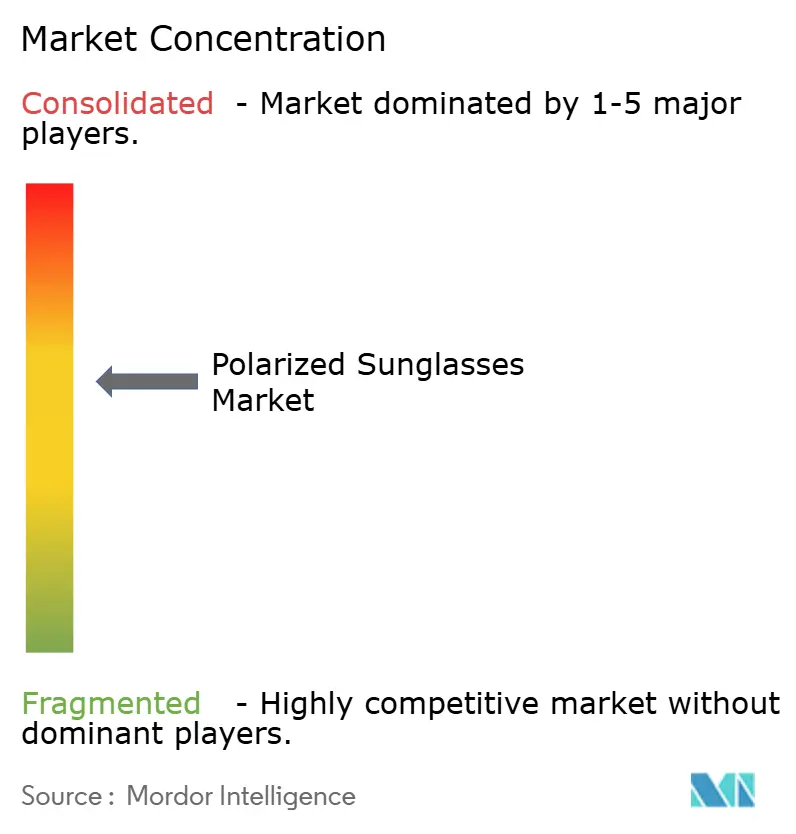
| Market Concentration | Medium |
Major Players
*Disclaimer: Major Players sorted in no particular order Image © Mordor Intelligence. Reuse requires attribution under CC BY 4.0. |
|

Polarized Sunglasses Market Analysis by Mordor Intelligence
The polarized sunglasses market size is estimated to be USD 6.25 billion in 2025 and is forecast to climb to USD 8.31 billion by 2030, reflecting a CAGR of 5.87% over the period. This expansion derives from rising consumer awareness of UV-related eye disorders, broader participation in outdoor recreation, and continuous advances in lens technology. Regulatory initiatives, such as the WHO’s SPECS 2030 program aimed at closing gaps in refractive-error coverage, reinforce the need for high-quality protective eyewear. Technology innovators are also shortening product-development cycles, allowing brands to refresh assortments in line with seasonal fashion cues while improving optical performance. Parallel growth in e-commerce, coupled with virtual try-on tools, reduces buying friction and brings premium eyewear to consumers in regions historically served only by brick-and-mortar outlets. Finally, manufacturers are scaling capacity closer to demand centers to contain logistics costs and hedge against global supply-chain disruptions.
Key Report Takeaways
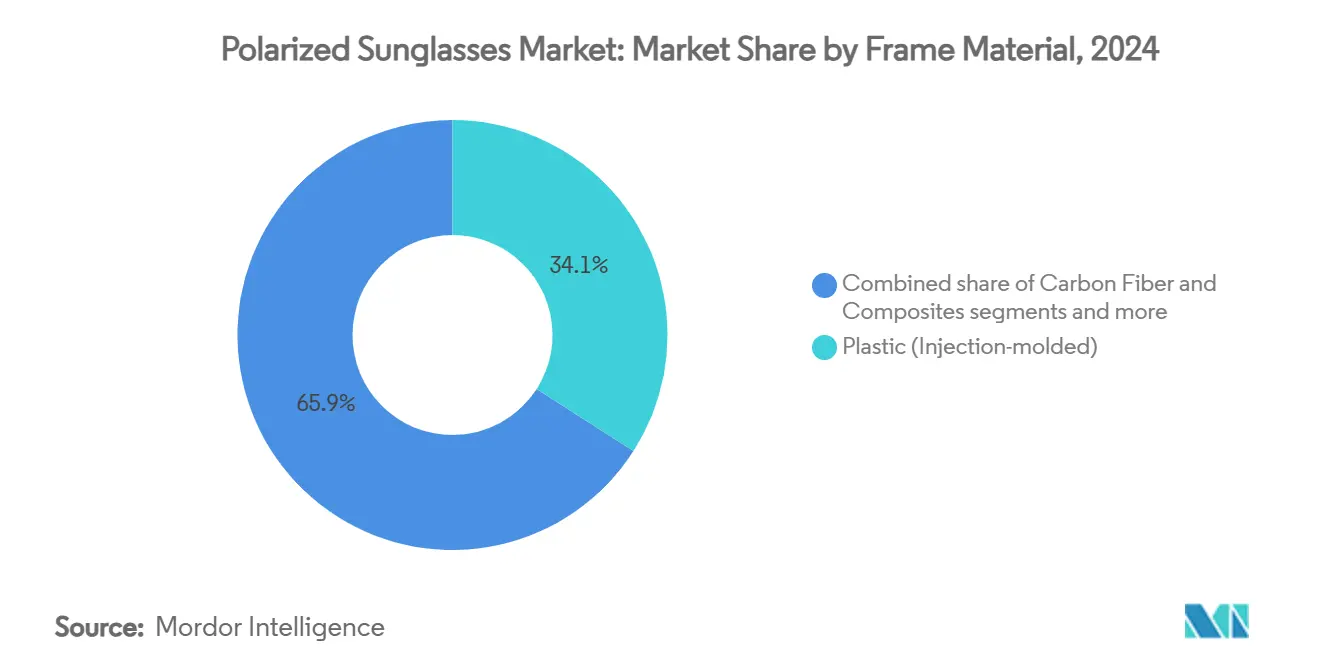
- By frame material, plastic (injection-molded) designs led with 34.07% revenue share in 2024; carbon fiber and composites are projected to expand at a 7.37% CAGR to 2030.
- By application, lifestyle and fashion products commanded 38.18% of the polarized sunglasses market size in 2024, yet sports and outdoor recreation are set to grow the quickest at a 6.06% CAGR through 2030.
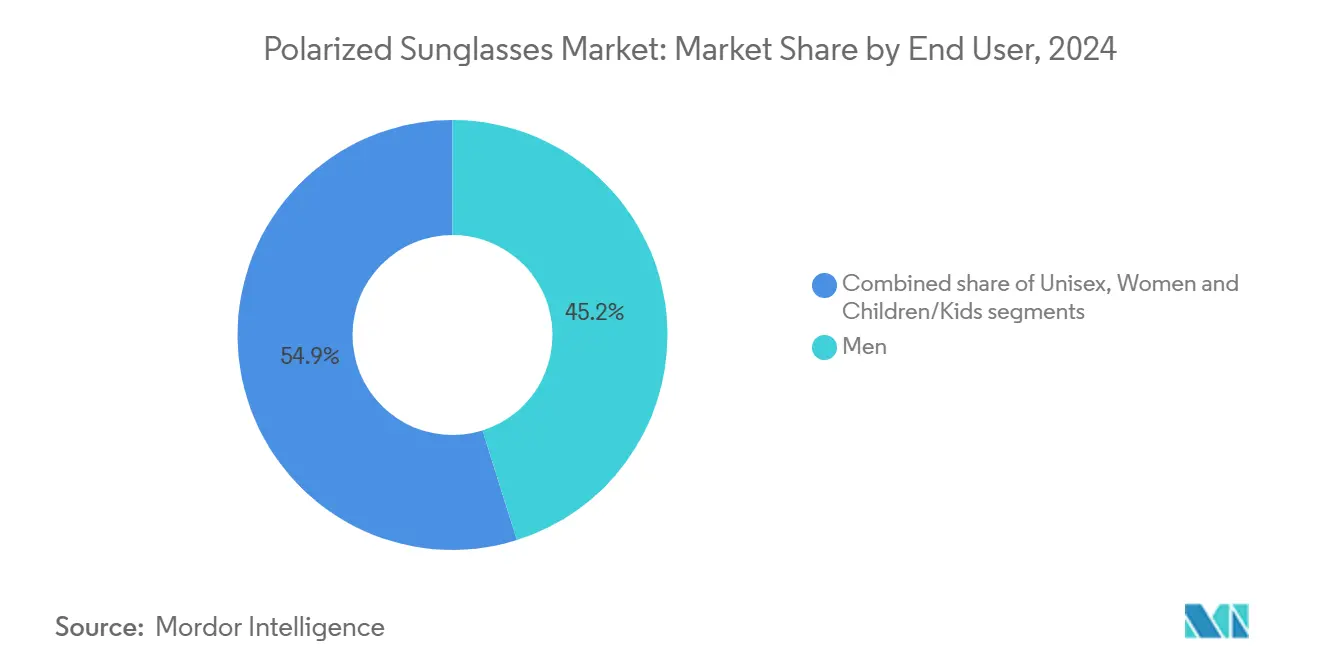
- By end user, men represented 45.15% of global sales in 2024, while unisex styles are expected to see the sharpest increase, advancing at a 6.84% CAGR over the forecast period.
- By distribution channel, offline retail stores captured 88.02% of sales in 2024; online channels, however, will post the highest growth momentum with a 5.90% CAGR to 2030.
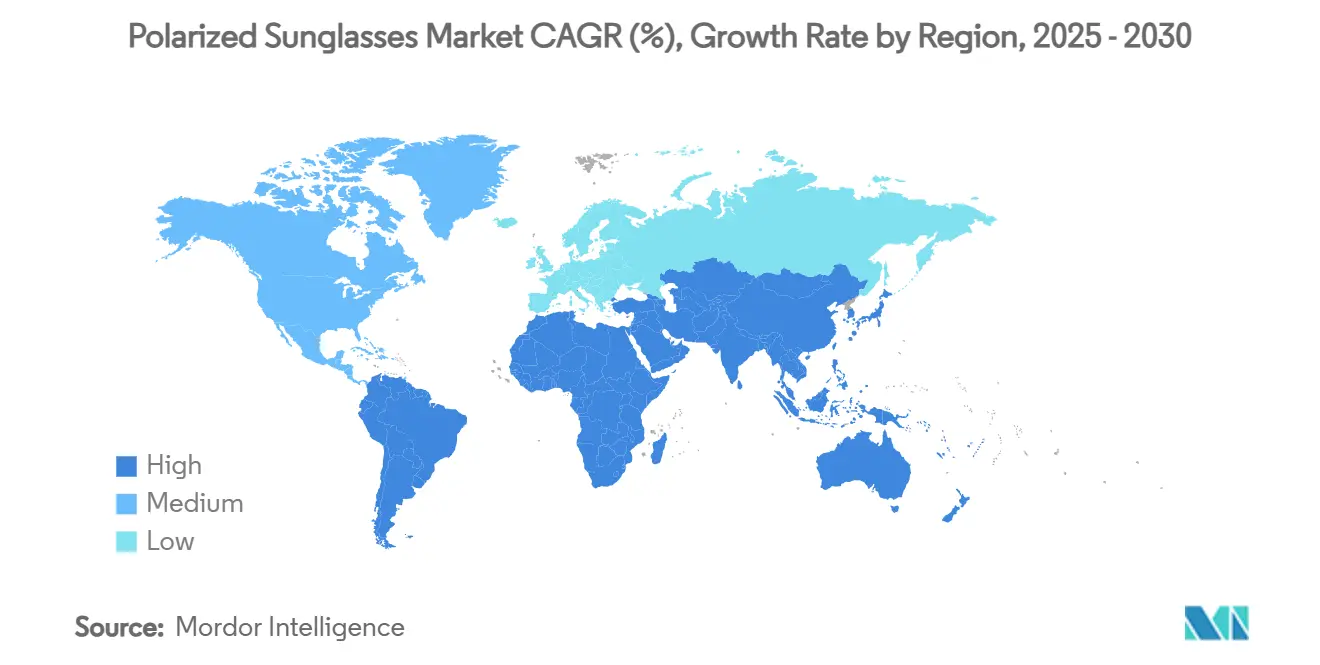
- By geography, North America accounted for a 35.82% polarized sunglasses market share in 2024, whereas Asia-Pacific is anticipated to post the fastest regional CAGR at 7.15% through 2030.
Note: Market size and forecast figures in this report are generated using Mordor Intelligence’s proprietary estimation framework, updated with the latest available data and insights as of January 2026.
Market Trends and Insights
Drivers Impact Analysis of Polarized Sunglasses Market*
| Driver | (~) % Impact on CAGR Forecast | Geographic Relevance | Impact Timeline |
|---|---|---|---|
| Rising awareness of eye protection | +1.2% | Global, with stronger penetration in North America and European Union | Medium term (2-4 years) |
| Advancement in lens technology | +1.0% | Global, led by developed markets | Long term (≥ 4 years) |
| Increased participation in outdoor and recreational activities | +0.8% | North America, Europe, and Asia-Pacific urban centers | Short term (≤ 2 years) |
| Expansion of online eyewear retail platforms | +0.6% | Global, accelerated in Asia-Pacific and South America | Short term (≤ 2 years) |
| Evolving eyewear fashion trends | +0.5% | Global, fashion-forward markets | Medium term (2-4 years) |
| Prevalence of vision health issues | +0.4% | Global, aging populations in developed markets | Long term (≥ 4 years) |
| Source: Mordor Intelligence | |||
Rising awareness of eye protection
The global polarized sunglasses market demonstrates substantial growth driven by increased awareness of eye protection requirements, particularly against UV radiation and glare. Consumers engaging in sports, travel, and outdoor activities select polarized lenses due to their effectiveness in reducing reflections from water, roads, and snow, thereby improving visual performance and reducing eye fatigue. This development corresponds with health data from the World Health Organization, in 2023, which indicates that 1 billion cases of vision impairment could have been prevented through adequate eye care [1]Source: World Health Organization, "Blindness and vision impairment", who.int . The vertical filtering technology in polarized sunglasses effectively blocks horizontal light, enhancing visibility and safety during activities such as driving, fishing, and skiing. Market requirements now encompass both performance and design elements, with manufacturers developing diverse frame configurations and lens variations. The market expansion is additionally supported by consumers' investment in preventive healthcare measures, specifically addressing long-term vision risks from UV exposure. Advancements in lens materials and coating technologies have increased the accessibility of advanced eye protection across consumer segments. Industry participants and eye care professionals implement educational initiatives regarding polarization benefits, contributing to increased market penetration. Consequently, polarized sunglasses have evolved from optional accessories to essential components for eye health protection and design requirements in the global market.
Advancement in lens technology
Lens manufacturing advancements are driving growth in polarized sunglasses through improved polarization efficiency and visual comfort. EssilorLuxottica's Transitions GEN S lenses, launched in April 2024, provide 39% faster vision recovery from bright lights and filter up to 85% of blue violet light when fully transitioned. Similarly, ZEISS's LightPro Technology offers up to 80% higher contrast compared to standard polarized lenses, maintaining visual clarity in varying light conditions. Corning's PolarCoat technology addresses delamination concerns through advanced surface treatments, achieving 99% polarization efficiency while enabling the production of thinner, cost-effective lenses. Moreover, research and development investments across the industry have improved multiple aspects of lens performance, including glare reduction, color accuracy, durability, and adaptability. The integration of multilayer polarization, hybrid photochromic-polarized lenses, and durable coatings enhances eyewear functionality for various outdoor and lifestyle activities. Industry data confirms that modern polarized lenses block over 99% of reflected glare while incorporating additional features like blue-light filtering and anti-reflective coatings. These improvements benefit drivers, outdoor enthusiasts, and urban consumers, contributing to market growth and product diversification within the industry.
Increased participation in outdoor and recreational activities
The outdoor and recreational activities segment continues to influence polarized sunglasses sales, as indicated by the 2025 Outdoor Participation Trends Report from the Outdoor Industry Association. The report shows that gateway activities, including hiking, camping, and fishing, each gained over 2 million new participants, increasing the demand for high-performance eyewear [2]Source: Outdoor Industry Association, "2025 Outdoor Participation Trends Report", oia.outdoorindustry.org . The rise in outdoor activities has heightened the need for polarized sunglasses, as participants face intense sunlight and glare from water, rocks, and pavement. Polarized sunglasses filter horizontal light to reduce reflective glare, providing clearer vision and improved contrast, essential features for trail navigation, fishing, and general outdoor activities. These sunglasses offer enhanced UV ray protection, minimizing eye fatigue and potential long-term vision issues during extended outdoor exposure. The eyewear reduces headaches and eye strain, enabling users to participate in outdoor activities for longer periods. The adoption of polarized sunglasses among outdoor enthusiasts has prompted eyewear manufacturers to develop activity-specific products with enhanced fit, durable materials, and specialized lens tints. This development reflects increased consumer awareness of eye health and establishes polarized sunglasses as an essential item for the growing outdoor recreation market.
Expansion of online eyewear retail platforms
Online eyewear retail platforms have increased their market share in the polarized sunglasses segment. This growth stems from the convenience these platforms offer, allowing consumers to explore extensive product ranges, compare features, and access international brands not found in local stores. Online retailers and direct-to-consumer brands use virtual try-on technology, customer reviews, and personalized recommendations to improve the shopping experience. Moreover, e-commerce platforms attract consumers through promotions, discounts, and online-exclusive launches, making digital retail essential for polarized sunglasses brands. Major brands like Maui Jim, Costa Del Mar, and Oakley offer premium, performance, and fashion-oriented models through online channels, catering to both active outdoor enthusiasts and casual users. Besides, online platforms provide detailed product information and educational content, helping consumers understand the benefits of polarized lenses for eye protection and glare reduction. The digital marketplace has enabled quick product development and adaptation to global trends, making a strong online presence crucial for market growth.
Restraints Impact Analysis of Polarized Sunglasses Market*
| Restraint | (~) % Impact on CAGR Forecast | Geographic Relevance | Impact Timeline |
|---|---|---|---|
| Higher cost of polarized sunglasses compared to regular sunglasses | -0.8% | Emerging markets like Asia-Pacific, South America, and Africa | Medium term (2-4 years) |
| Visual distortion with digital displays | -0.5% | Global, (Urban markets in North America, Europe, Asia-Pacific) | Short term (≤ 2 years) |
| Availability of counterfeit products | -0.4% | Global, and emerging market like Asia-Pacific, South America, Middle East and Africa | Short term (≤ 2 years) |
| Environmental impact of plastics | -0.3% | Environmentally conscious regions in North America and Europe | Long term (≥ 4 years) |
| Source: Mordor Intelligence | |||
Higher cost of polarized sunglasses compared to regular sunglasses
The substantial price differential between polarized and non-polarized sunglasses creates a market entry barrier. While non-polarized sunglasses are available from USD 10, quality polarized options typically cost between USD 40 to USD 300 or more. This price gap results from the advanced polarization technology in the lenses, which includes specialized chemical films and multilayer coatings that filter glare and enhance visual clarity. Premium polarized sunglasses incorporate additional features that increase production costs, including high-quality lens materials, durable frame construction, anti-reflective coatings, and scratch-resistant treatments. In comparison, lower-priced non-polarized sunglasses often provide basic darkened lenses without effective glare reduction and may offer inadequate UV protection. While polarized sunglasses prove valuable for activities requiring clear vision, such as driving, fishing, and outdoor sports, the higher cost deters price-sensitive consumers and those primarily interested in fashion. To address price sensitivity, retailers have implemented various strategies, including limited-time promotions, outlet pricing, and affordable private-label options. However, polarization continues to command a premium price across global markets. During sales, basic polarized lenses may be available for USD 8, while premium designer brands can exceed USD 300 to USD 500, reflecting variations in quality and durability. Despite the clear technological and functional benefits of polarized sunglasses, their higher price remains a crucial factor in consumer purchasing decisions.
Visual distortion with digital displays
The incompatibility between polarized sunglasses and digital displays creates operational challenges for users. When viewed through polarized lenses, LCD and certain LED displays can appear dim, distorted, or completely black due to the conflict between the linear polarization of screens and the glare-blocking properties of the lenses. This interference affects the visibility of smartphones, GPS devices, vehicle dashboards, and airplane cockpits, impacting drivers, pilots, athletes, and outdoor professionals who depend on clear digital readouts. Users frequently report difficulties with vehicle heads-up displays (HUDs) and climate control settings in bright conditions, leading some to choose non-polarized alternatives for frequent screen use. Companies like Apple are developing solutions, including displays that emit circularly-polarized light, to minimize dimming and distortion when viewed through polarized lenses. However, until these technological solutions become widespread in consumer devices, this limitation continues to influence consumer eyewear decisions as they weigh glare reduction against digital screen visibility.
*Our forecasts treat driver/restraint impacts as directional, not additive. The impact forecasts reflect baseline growth, mix effects, and variable interactions.
Polarized Sunglasses Market Segment Analysis
By Frame Material:
Carbon Fiber Drives Premium InnovationPlastic injection-molded frames hold the largest market share at 34.07% in 2024, benefiting from cost-effectiveness and design versatility. Carbon fiber and composites represent the fastest-growing segment, with a projected CAGR of 7.37% through 2030. The high market share of plastic frames stems from efficient manufacturing processes and wide consumer accessibility. Companies like TBD Eyewear have adopted bio-acetate materials derived from cotton and wood-pulp fibers to enhance sustainability. In the premium segment, metal frames, including stainless steel and aluminum variants, remain significant, with MYKITA producing eyewear using 90% recycled Swedish spring steel. The market also includes alternative materials, such as Neubau Eyewear's natural acetate, which uses plant-based plasticizers and offers biodegradable certification.
The carbon fiber and composites segment maintains premium pricing, offering high strength-to-weight ratios and enhanced aesthetics, particularly in sports and luxury markets. Oakley demonstrates this segment's technological advancement through its Velo Kato and Velo Mach performance eyewear, developed using wind tunnel analysis and 3D athlete scanning. The eyewear industry's focus on sustainability extends across material categories, exemplified by Eastman's partnership with Mazzucchelli to produce acetate sheets containing 60% biobased and 40% certified recycled content, enabling circular manufacturing processes.



By Application:
Sports Performance Accelerates GrowthThe lifestyle and fashion applications segment accounts for 38.18% market share in 2024, as polarized sunglasses become increasingly integrated into daily wear. The sports and outdoor recreation segment shows the highest growth rate at 6.06% CAGR through 2030. The lifestyle segment growth stems from contemporary designs and celebrity endorsements, demonstrated by products like EssilorLuxottica's Ray-Ban Change frames with light-responsive color technology. The driving and commuting segment emphasizes glare reduction capabilities, essential for both general consumers and professional drivers. Fishing and marine users value water glare reduction, while military and tactical applications require specific features, including impact resistance and optical clarity.
The sports and outdoor recreation segment growth aligns with the Outdoor Industry Association's data showing 4.1% increased participation, with 57.3% of Americans engaging in outdoor activities in 2023. This trend is exemplified by the EssilorLuxottica and Meta collaboration on Oakley Meta HSTN glasses, which combine weather resistance and AI features at USD 499. The "others" category, including snow sports applications, incorporates specialized technologies such as Evil Eye's e-sense next, which adjusts tint in 0.6 seconds for varying mountain light conditions.
By End User:
Unisex Segment Expands Market ReachThe men's segment holds the largest eyewear market share at 45.15% in 2024, driven by high participation rates in outdoor activities and sports. The unisex segment is projected to grow at the highest CAGR of 6.84% through 2030. Men's segment dominance stems from established consumer behavior in sports and outdoor recreation, with manufacturers developing performance-focused products for athletes and enthusiasts. The women's segment expansion reflects increased participation in outdoor activities and emphasis on style-conscious purchases, with manufacturers offering specialized designs and fit options. The children's segment focuses on UV protection and eye safety, supported by FDA requirements for impact-resistant lenses across all age categories.
Consumer demand for unisex eyewear is driving growth in polarized sunglasses, reflecting a shift toward gender-neutral designs and shared product usage within households. This trend aligns with consumer preferences for versatile and inclusive products. The children's segment is also expanding as parents become more aware of the importance of protecting young eyes from UV rays and glare during outdoor activities. Manufacturers are responding by developing polarized sunglasses specifically for children, incorporating features such as flexible frames, durable materials, and appealing colors. These products prioritize safety and comfort while maintaining style, demonstrating the market's commitment to serving diverse age groups and gender preferences.
By Distribution Channel:
Digital Transformation AcceleratesOffline retail stores accounted for 88.02% of polarized sunglasses sales in 2024. Consumers prefer physical outlets where they can try on sunglasses, receive personalized fitting services, and interact with trained staff. The in-store experience, along with immediate access to premium brands and products, drives strong offline sales, particularly in the premium and prescription segments. This trend is most evident in regions with well-developed retail networks, where customers value direct product interaction and quality assurance when purchasing polarized eyewear.
Online retail channels are growing at a CAGR of 5.90% through 2030, driven by consumer demand for convenience and wider product selection. E-commerce platforms offer virtual try-on capabilities, user reviews, online-exclusive products, and access to international brands. The growth of online sales has accelerated due to evolving consumer preferences, time efficiency, and integrated retail strategies by major eyewear manufacturers. Despite this growth, offline retail maintains its market leadership by providing higher consumer confidence, particularly for customers who prioritize proper fit, comfort, and professional guidance in their polarized sunglasses purchase decisions.
Geography Analysis
North America Polarized Sunglasses Market
North America accounts for 35.82% of the polarized sunglasses market in 2024, driven by market maturity, regulatory compliance, and consumer purchasing power. The FDA's classification of nonprescription sunglasses as Class I medical devices implements quality standards that strengthen market positioning and consumer confidence [3]Source: United States Food and Drug Administration, "Guidance Document For Nonprescription Sunglasses - Guidance for Industry", fda.gov . Besides, the Outdoor Industry Association's 2024 report shows 57.3% of the United States population aged 6 and older engages in outdoor activities, creating sustained market demand for protective eyewear. Moreover, in January 2024, EssilorLuxottica allocated USD 300 million to construct two production facilities in northwest Mexico, establishing an annual production capacity of 10 million prescription eyeglasses. This demonstrates regional production capacity expansion to serve growing demand while managing supply chain proximity.
APAC Polarized Sunglasses Market
The Asia-Pacific region is achieving a CAGR of 7.15% through 2030. Market growth is driven by accelerated urbanization, increased disposable incomes, and higher participation in outdoor activities across multiple countries. EssilorLuxottica's financial reports indicate double-digit growth in Japan and India, demonstrating sustained demand for premium and performance eyewear despite market challenges in China. Consumer preferences differ by market, with Japanese buyers focusing on product quality and design specifications, while Chinese consumers gravitate toward luxury brands and domestic manufacturers. The market continues to expand as international eyewear corporations and regional manufacturers compete for market share, supported by increased outdoor recreation and fashion awareness.
EMEA and South America Polarized Sunglasses Market
Europe retains a substantial market share through established luxury brands and sustainability initiatives. However, the Middle East and Africa market expanded through MAGRABi's merger with Rivoli Vision, establishing a retail network of over 290 locations across the UAE, Qatar, Oman, and Bahrain, projecting double-digit revenue growth in September 2024. Furthermore, the South American polarized sunglasses market shows consistent growth due to increased consumer demand for premium and high-performance eyewear. The polarized segment maintains a substantial market share in the premium sunglass category in 2025, driven by greater awareness of eye protection benefits and increased outdoor activities. The male demographic constitutes the primary consumer base, while manufacturers focus on diversifying product lines and strengthening distribution channels to increase market presence in Brazil, Argentina, and other regional markets. Also, the market demonstrates growth potential as consumers prioritize product quality and brand value in polarized sunglasses. This trend aligns with global market patterns that integrate eye protection requirements with consumer preferences.

Competitive Landscape
The global polarized sunglasses market demonstrates moderate consolidation, balancing established companies and new market entrants. EssilorLuxottica holds market leadership through integrated operations in manufacturing, retail, and distribution networks. The company expanded its market presence through licensing agreements, including a 10-year renewal with Prada in 2024, and acquisitions of Supreme from VF Corporation and Optical Investment Group. These acquisitions strengthened its retail operations and technological capabilities, enabling EssilorLuxottica to control pricing and industry standards.
Luxury companies are expanding their premium eyewear operations. LVMH's Thélios unit acquired Barton Perreira in November 2023, strengthening its distribution operations in Europe and Asia. This acquisition positions Thélios to compete with established eyewear manufacturers by combining luxury brand recognition with optical manufacturing expertise. Companies are addressing market demand for functional and design-focused eyewear, as consumers integrate polarized sunglasses into their daily requirements. This market environment has increased competition and product diversity.
The industry is developing through technology implementation and sustainable operations. The partnership between Meta and EssilorLuxottica demonstrates this development, with Ray-Ban Meta smart glasses recording sales of over 2 million units since 2023. Manufacturing capacity for these smart glasses will increase to 10 million units by 2026. Moreover, in sustainability operations, MYKITA's implementation of Acetate Renew has influenced industry-wide sustainable manufacturing standards. Growth opportunities exist in smart eyewear development, sustainable material implementation, and market expansion in emerging regions, specifically in Asia-Pacific, where domestic and international manufacturers compete for market share.
Polarized Sunglasses Industry Leaders
-
EssilorLuxottica S.A.
-
Safilo Group S.p.A.
-
Kering S.A.
-
Marcolin S.p.A.
-
LVMH Moët Hennessy Louis Vuitton
- *Disclaimer: Major Players sorted in no particular order
Polarized Sunglasses Market Companies Covered in this Report
- EssilorLuxottica,
- Warby Parker Inc.
- Maui Jim Inc,
- Safilo Group
- Le Specs,
- Marcolin S.p.A,
- Titan Company Limited
- LVMH Moet Hennessy Louis Vuitton
- Estee Lauder Companies
- Kering S.A
- Nike Inc
- Bolle Brands
- Blenders Eyewear
- Randolph Engineering
- ROKA Sports
- Wiley X Inc
- Boardriders Inc
- AO Eyewear,
- Garrett Leight California Optical (GLCO)
- Beautaste Eyewear
- Vuarnet

Recent Industry Developments in Polarized Sunglasses Market
- January 2025: Revo and Lexus formed a partnership to release a collection of premium sunglasses. The Revo | Lexus collection comprised four styles: Crafted, Spindle, Podium, and Double Stint. The designs incorporated Lexus-inspired elements such as specific color palettes, carbon fiber inlays, and rubber accents, combined with Revo's polarized lenses.
- November 2024: Zenni Optical launched Zunnies, a sub-brand that provided zero-bounce polarized sunglasses for athletes with prescription and non-prescription options. The initial collection focused on sports eyewear for runners, incorporating lightweight frames, adjustable nose pads, and anti-fog technology.
- May 2024: Innovative Eyewear, Inc., which developed smart eyewear under the Lucyd, Nautica, Eddie Bauer, and Reebok brands, launched the Eddie Bauer Smart Eyewear collection. The collection incorporated voice access to ChatGPT and included the first rimless smart eyewear design. The product line comprised four styles, each equipped with polarized sunglass lenses for outdoor use.


Global Polarized Sunglasses Market Report Scope
| Plastic (Injection-molded) |
| Metal (Stainless Steel, Aluminum) |
| Carbon Fiber and Composites |
| Others |
| Lifestyle and Fashion |
| Driving and Commuting |
| Sports and Outdoor Recreation |
| Fishing and Marine |
| Military and Tactical |
| Others (Snow Sports, etc.) |
| Men |
| Women |
| Unisex |
| Children/Kids |
| Offline Retail Stores |
| Online Retail Stores |
| North America | United States |
| Canada | |
| Mexico | |
| Rest of North America | |
| Europe | Germany |
| United Kingdom | |
| Italy | |
| France | |
| Spain | |
| Netherlands | |
| Poland | |
| Belgium | |
| Sweden | |
| Rest of Europe | |
| Asia-Pacific | China |
| India | |
| Japan | |
| Australia | |
| Indonesia | |
| South Korea | |
| Thailand | |
| Singapore | |
| Rest of Asia-Pacific | |
| South America | Brazil |
| Argentina | |
| Colombia | |
| Chile | |
| Peru | |
| Rest of South America | |
| Middle East and Africa | South Africa |
| Saudi Arabia | |
| United Arab Emirates | |
| Nigeria | |
| Egypt | |
| Morocco | |
| Turkey | |
| Rest of Middle East and Africa |
| By Frame Material | Plastic (Injection-molded) | |
| Metal (Stainless Steel, Aluminum) | ||
| Carbon Fiber and Composites | ||
| Others | ||
| By Application | Lifestyle and Fashion | |
| Driving and Commuting | ||
| Sports and Outdoor Recreation | ||
| Fishing and Marine | ||
| Military and Tactical | ||
| Others (Snow Sports, etc.) | ||
| By End User | Men | |
| Women | ||
| Unisex | ||
| Children/Kids | ||
| By Distribution Channel | Offline Retail Stores | |
| Online Retail Stores | ||
| By Geography | North America | United States |
| Canada | ||
| Mexico | ||
| Rest of North America | ||
| Europe | Germany | |
| United Kingdom | ||
| Italy | ||
| France | ||
| Spain | ||
| Netherlands | ||
| Poland | ||
| Belgium | ||
| Sweden | ||
| Rest of Europe | ||
| Asia-Pacific | China | |
| India | ||
| Japan | ||
| Australia | ||
| Indonesia | ||
| South Korea | ||
| Thailand | ||
| Singapore | ||
| Rest of Asia-Pacific | ||
| South America | Brazil | |
| Argentina | ||
| Colombia | ||
| Chile | ||
| Peru | ||
| Rest of South America | ||
| Middle East and Africa | South Africa | |
| Saudi Arabia | ||
| United Arab Emirates | ||
| Nigeria | ||
| Egypt | ||
| Morocco | ||
| Turkey | ||
| Rest of Middle East and Africa | ||


Key Questions Answered in the Report
What is the current size of the polarized sunglasses market?
The polarized sunglasses market size is valued at USD 6.25 billion in 2025 and is projected to reach USD 8.31 billion by 2030.
Which region will grow the fastest through 2030?
Asia-Pacific is expected to post the quickest expansion, advancing at a 7.15% CAGR on rising incomes and outdoor activity uptake.
Which application segment is expanding most rapidly?
Sports and outdoor recreation is the fastest-growing application segment, forecast to record a 6.06% CAGR over the period to 2030.
How dominant are online channels in polarized sunglass sales?
Offline retail still commands 88.02% of 2024 sales, but online channels are expanding at a 5.90% CAGR thanks to virtual try-on tools and direct-to-consumer strategies.
Page last updated on:


 Your data is secure and never sold or shared.


