
Platysmaplasty Treatment Market Size and Share
Market Overview
| Study Period | 2019 - 2030 |
|---|---|
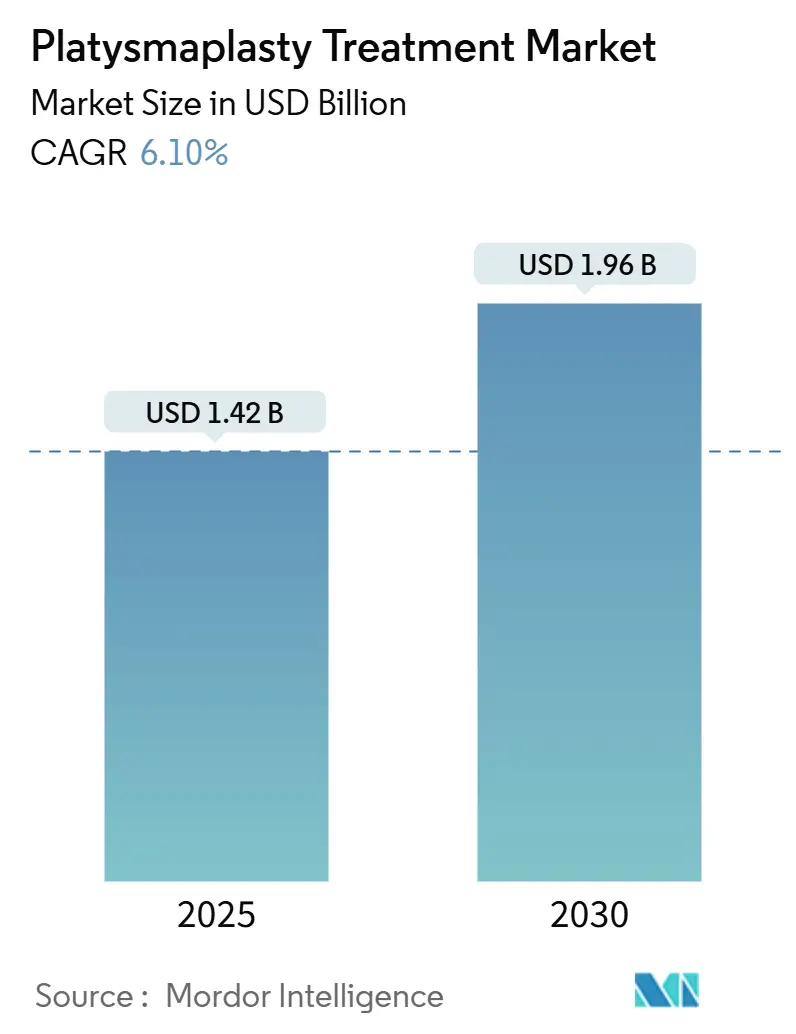
| Market Size (2025) | USD 1.42 Billion |
| Market Size (2030) | USD 1.96 Billion |
| Growth Rate (2025 - 2030) | 6.10 % |
| Fastest Growing Market | Asia Pacific |
| Largest Market | North America |
| Market Concentration | Medium |
Major Players *Disclaimer: Major Players sorted in no particular order Image © Mordor Intelligence. Reuse requires attribution under CC BY 4.0. | |
Platysmaplasty Treatment Market Analysis by Mordor Intelligence
The global platysmaplasty treatment market size stands at USD 1.42 billion in 2025 and is forecast to climb to USD 1.96 billion by 2030, reflecting a 6.1% CAGR over the period. Heightened visibility of the neck and jawline on video calls, a surge in minimally invasive technology, and recent regulatory clearances—most notably the U.S. FDA’s October 2024 approval of Botox Cosmetic for platysma band treatment—are accelerating procedure volumes. Growing discretionary income, especially across Asia Pacific, has expanded the patient base, while expanding male interest and social-media influence reinforce demand for both surgical and injectable solutions. Technology vendors continue to release energy-based devices that raise efficacy and reduce downtime, enabling providers to reach patients earlier in the aging cycle. North America retains spending leadership, yet Asia Pacific delivers the fastest revenue growth as rising middle-class populations prioritize appearance, travel for care, and emulate regional beauty icons. Competitive intensity remains moderate, with private-equity-backed roll-ups of medical spas and aesthetic clinics underway and device makers racing to secure new clearances.
Key Report Takeaways
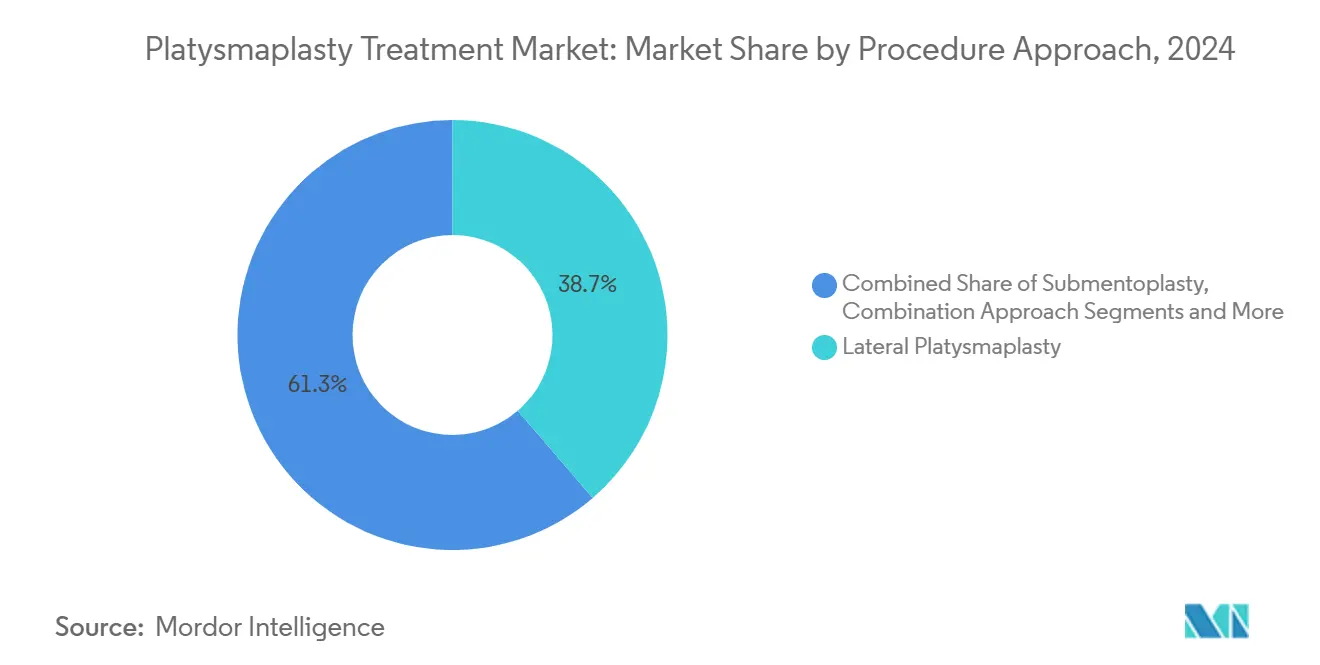
- By procedure approach, lateral platysmaplasty held 38.7% of platysmaplasty treatment market share in 2024, while botulinum-toxin neck rejuvenation is projected to expand at a 10.8% CAGR through 2030.
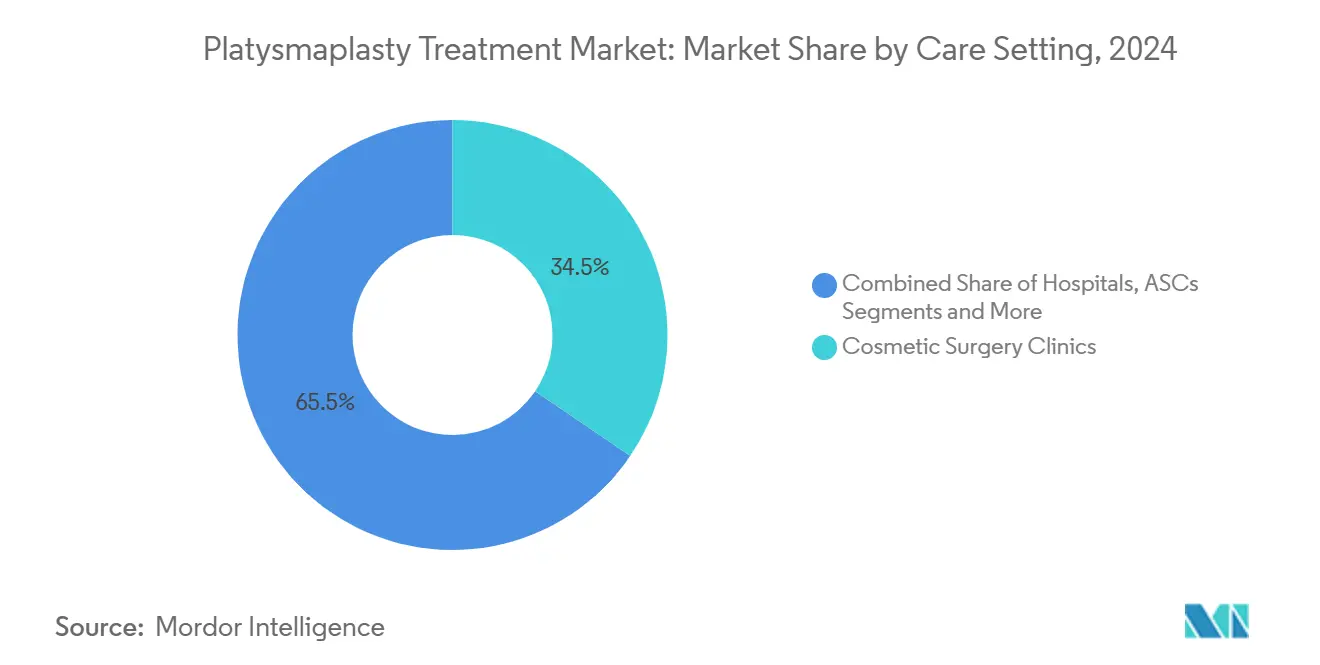
- By care setting, cosmetic surgery clinics accounted for 34.5% of the platysmaplasty treatment market size in 2024 and ambulatory surgical centers are forecast to grow at an 11.3% CAGR between 2025 and 2030.
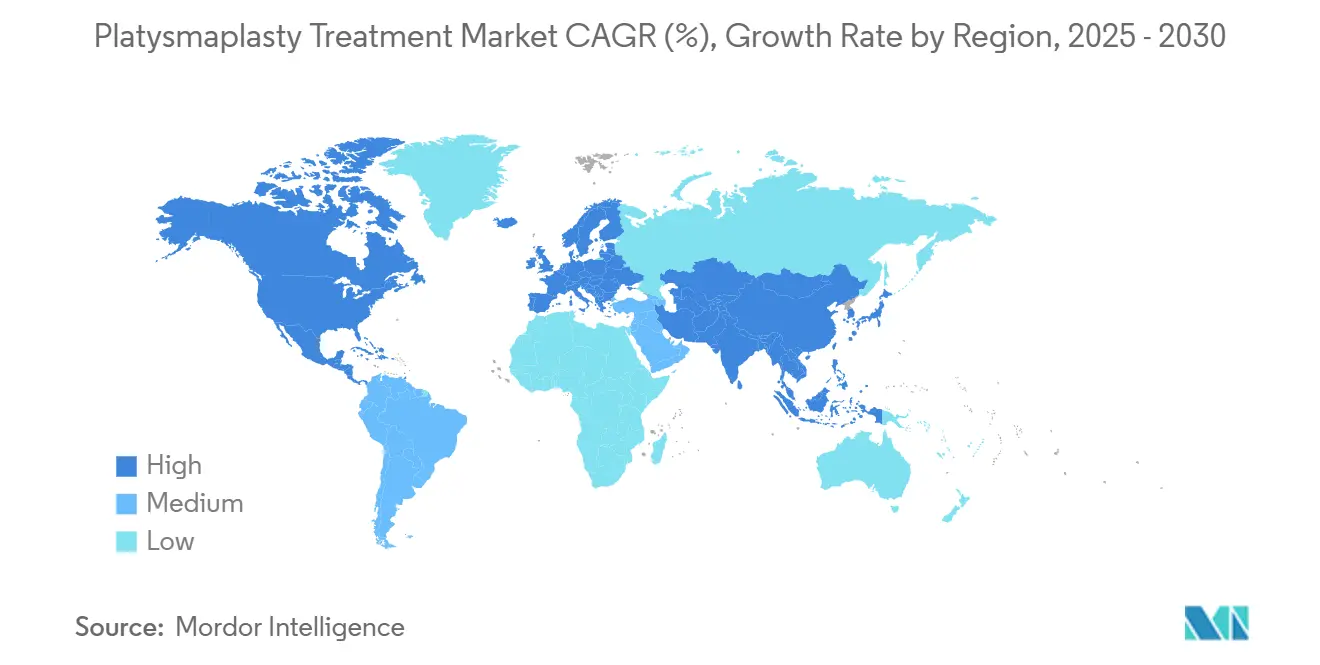
- By geography, North America led with 38.8% revenue share in 2024, whereas Asia Pacific is advancing at an 8.2% CAGR to 2030.
Note: Market size and forecast figures in this report are generated using Mordor Intelligence’s proprietary estimation framework, updated with the latest available data and insights as of January 2026.
Market Trends and Insights
Drivers Impact Analysis of Platysmaplasty Treatment Market*
| Driver | (~) % Impact on CAGR Forecast | Geographic Relevance | Impact Timeline |
|---|---|---|---|
| Growing Demand For Minimally-Invasive Cosmetic Procedures | +1.80% | Global, with strongest adoption in North America & Asia Pacific | Medium term (2-4 years) |
| Rising Geriatric Population Seeking Anti-Aging Aesthetics | +1.50% | Global, concentrated in developed markets | Long term (≥ 4 years) |
| Increasing Disposable Income In Emerging Markets | +1.20% | Asia Pacific core, spill-over to Latin America | Medium term (2-4 years) |
| Technological Advances In Energy-Based Skin-Tightening Devices | +0.90% | Global, led by North America & Europe | Short term (≤ 2 years) |
| Social-Media "Zoom-Neck" Effect Driving Neck-Focused Treatments | +0.70% | Global, particularly urban demographics | Short term (≤ 2 years) |
| Growing Male Interest In Aesthetic Surgery | +0.40% | North America & Europe, emerging in Asia Pacific | Medium term (2-4 years) |
| Source: Mordor Intelligence | |||
Growing Demand for Minimally Invasive Cosmetic Procedures
Patient preference has shifted toward treatments that achieve visible neck tightening without the risks of surgery. Radiofrequency microneedling, high-intensity focused ultrasound (HIFU), and injectable neuromodulators can correct mild to moderate laxity while allowing patients to resume daily activities within days.[1]Michael H. Gold, “Efficacy and Safety of High-Intensity, High-Frequency Ultrasound,” onlinelibrary.wiley.com Combination regimens—such as the “Gold Protocol” blending calcium hydroxyapatite, botulinum toxin, and hyaluronic acid—demonstrate that single-session synergy is both technically feasible and commercially attractive. Device makers now market full-body platforms, creating revenue continuity for clinics and med spas. Short procedure times and rising male uptake further widen the addressable base. Ambulatory centers report average plastic-surgery case revenue of USD 2,264, underscoring robust provider economics.
Rising Geriatric Population Seeking Anti-Aging Aesthetics
Longer life expectancy and changing social attitudes extend interest in aesthetic improvement well beyond traditional midlife cohorts. Peer-reviewed evidence shows favorable safety profiles for neck surgery among patients aged 65 and older when comorbidity is controlled. Older candidates often possess greater disposable income and value predictable, reversible therapies; consequently, botulinum toxin injections for platysmal bands remain popular because they can be repeated or modified as aging progresses.[2]U.S. National Library of Medicine, “Ultrasonic Deep-Plane Platysmaplasty Treatment,” PubMed, pubmed.ncbi.nlm.nih.gov As active seniors spend more time in the workforce and on social media, the willingness to invest in appearance drives steady procedure demand across surgical and non-surgical categories.
Increasing Disposable Income in Emerging Markets
Rapid GDP growth and urbanization have unlocked aesthetic spending in Asia Pacific. China’s medical beauty market reached USD 52.4 billion in 2023 and continues to expand due to rising female workforce participation and influencer-driven beauty trends. Medical tourism hubs such as South Korea and Thailand offer competitively priced platysmaplasty packages that draw travelers from Japan, Australia, and the Middle East. Regional clinics aggressively market injectable neck rejuvenation to consumers aged 20-35, a group comfortable with preventative procedures and installment-payment plans. Social commerce platforms amplify treatment visibility, shortening the decision cycle.
Technological Advances in Energy-Based Skin-Tightening Devices
Next-generation HIFU, fractional RF, and synchronized RF-emSculpt systems deliver collagen remodeling at precise depths, reducing the need for open surgery. For example, the Ultraformer MPT applies parallel ultrasound beams to achieve uniform thermal coagulation and reports 80% improvement in laxity at three-month follow-up. Emface combines electromagnetic stimulation with RF to address cervicomental angle definition by strengthening muscular support rather than excising tissue. The FDA draft guidance issued in March 2024 for thermal devices underscores regulatory engagement that should speed innovation by clarifying performance tests.[3]U.S. Food and Drug Administration, “Evaluation of Thermal Effects of Medical Devices That Produce Tissue Heating and/or Cooling; Draft Guidance for Industry and FDA Staff,” Federal Register, federalregister.gov
Restraints Impact Analysis of Platysmaplasty Treatment Market*
| Restraint | (~) % Impact on CAGR Forecast | Geographic Relevance | Impact Timeline |
|---|---|---|---|
| High Procedure Cost & Lack Of Reimbursement | -1.40% | Global, most pronounced in price-sensitive markets | Long term (≥ 4 years) |
| Procedure-Related Complications & Need For Skilled Surgeons | -1.10% | Global, particularly acute in emerging markets with limited training infrastructure | Medium term (2-4 years) |
| Regulatory Scrutiny Of Off-Label Neuromodulator Use | -0.80% | North America & Europe, emerging in Asia Pacific | Medium term (2-4 years) |
| Shift Toward Topical / Non-Invasive Neck-Rejuvenation Alternatives | -0.60% | Global, led by cost-conscious consumers in developed markets | Short term (≤ 2 years) |
| Source: Mordor Intelligence | |||
High Procedure Cost & Lack of Reimbursement
Platysmaplasty surgery ranges from USD 6,267 to USD 28,000, depending on scope and setting, which is a barrier because cosmetic services are self-funded under most health systems. Insurers seldom cover aesthetic intervention unless functional impairment is documented, placing full cost on the patient. Price differentials encourage medical tourism: South Korean clinics advertise neck-lift packages for USD 5,600–8,400, drawing U.S. and Middle-East residents seeking savings. In downturns, discretionary spending tightens, yet historical rebounds suggest aesthetic demand recovers quickly once economic confidence returns. Providers offset cost hurdles by offering financing or bundling complementary procedures.
Regulatory Scrutiny of Off-Label Neuromodulator Use
A March 2024 CDC alert on counterfeit toxin illnesses renewed focus on authentication and clinic protocols. Although the FDA’s 2024 clearance of Botox Cosmetic for platysma bands legalized one key indication, many rejuvenation techniques—such as vertical necklace line smoothing—remain off-label. Variability in international oversight further complicates compliance: gaps in some Asian medical-tourism destinations can expose practitioners to liability if adverse events occur. Larger clinic networks with formal quality programs may gain share as lone providers grapple with rising paperwork and training costs.
*Our forecasts treat driver/restraint impacts as directional, not additive. The impact forecasts reflect baseline growth, mix effects, and variable interactions.
Platysmaplasty Treatment Market Segment Analysis
By Procedure Approach:
Non-Surgical Modalities Drive GrowthBotulinum-toxin neck rejuvenation leads forecast expansion at 10.8% CAGR, outpacing the 6.1% overall platysmaplasty treatment market CAGR as patients pivot toward minimal downtime. The 2024 FDA clearance has validated injectables for platysmal bands, prompting multi-specialty adoption in dermatology, plastic surgery, and otolaryngology offices. Lateral platysmaplasty still commands the largest 2024 share at 38.7%, reflecting its ability to correct advanced skin laxity and restore cervicomental angle definition for older patients. The platysmaplasty treatment market size for lateral approaches is projected to rise steadily, yet share will edge down as injectables claim prophylactic cases.
Demand for hybrid protocols signals a nuanced shift from “either-or” to “and” solutions. Surgeons now supplement open neck lifts with radiofrequency tightening to minimize post-operative irregularities, while injectors pair toxin with biostimulatory fillers to mask platysmal bands and crepe-like skin in a single sitting. Emerging ultrasonic deep-plane techniques aim to shorten recovery, but adoption hinges on capital budgets and learning curves. As evidence accumulates, combination therapy could mature into a discrete category capturing an incremental share of the platysmaplasty treatment market.



By Care Setting:
Specialized Facilities Capture Market ShareCosmetic surgery clinics generated the highest 2024 revenue, claiming 34.5% of the platysmaplasty treatment market share due to integrated consult-to-aftercare pathways and premium branding. These centers retain complex surgical cases requiring general anesthesia, leveraging in-house OR capability and seasoned teams. The platysmaplasty treatment market size attributable to clinics is forecast to expand at mid-single-digit rates, sustained by affluent clientele and cross-selling of facial procedures.
Ambulatory surgical centers (ASCs) are the growth engine, advancing 11.3% annually through 2030 as payers and patients embrace cost control and convenience. ASCs obtain device clearances faster than hospitals, enabling rapid deployment of next-generation RF or ultrasonic systems. Office-based practices and dermatology clinics complement the channel mix by targeting injectable-only visits, accounting for short appointment slots that keep overhead low. Hospitals cede share as elective OR blocks shrink, but retain relevance for patients with comorbidities or revisional surgery.
Geography Analysis
North America Platysmaplasty Treatment Market
North America anchored global revenue at 38.8% in 2024, supported by strong consumer purchasing power, entrenched social acceptance, and a dense network of accredited surgeons. The United States hosts more than 4,200 board-certified plastic surgeons who regularly expand service menus to include toxin and energy-based neck lifts, insulating revenue from economic cycles. Cross-state telemedicine follow-up, legalized in many jurisdictions, eases patient logistics and sustains case volumes. Canada mirrors U.S. trends, with growth tempered by a smaller population and seasonal travel that channels patients to warm-weather destinations for recovery.
Europe Platysmaplasty Treatment Market
Europe presents a mature but stable outlook. Countries such as Germany and France uphold rigorous device certification under the EU Medical Device Regulation, slowing launches yet reassuring patients on safety. Private insurance seldom covers purely cosmetic interventions, so clinics emphasize finance plans and package pricing. Southern European destinations capitalize on favorable climates and luxury post-operative resorts, drawing intra-EU travelers for combined vacation-procedure trips.
APAC Platysmaplasty Treatment Market
Asia Pacific represents the fastest¬-moving region, rising at an 8.2% CAGR. Cultural affinity for smooth jawlines and “V-line” profiles fuels early adoption of toxin and ultrasonic tightening among individuals in their twenties. South Korea pioneered the medical-tourism model whereby package pricing, translator services, and after-care apps manage the end-to-end patient journey. China’s market scaling at double-digit rates reflects wider acceptance of cosmetic enhancement and enthusiastic social-commerce marketing. Regulations tightening around practitioner licensing should favor accredited hospitals and chain clinics, accelerating consolidation. Elsewhere, India’s burgeoning middle class and large physician pool create opportunity, though inconsistent regulation and price sensitivity moderate premium device uptake.
LATAM and MEA Platysmaplasty Treatment Market
Latin America and the Middle East & Africa are emerging contributors. Brazil maintains a strong surgical culture, yet currency volatility influences import pricing for energy-based devices. Gulf Cooperation Council nations invest in medical tourism infrastructure and premium spas that offer neck rejuvenation alongside wellness programs. Africa’s nascent private healthcare segment increasingly advertises minimally invasive neck procedures to affluent urban consumers.

Competitive Landscape
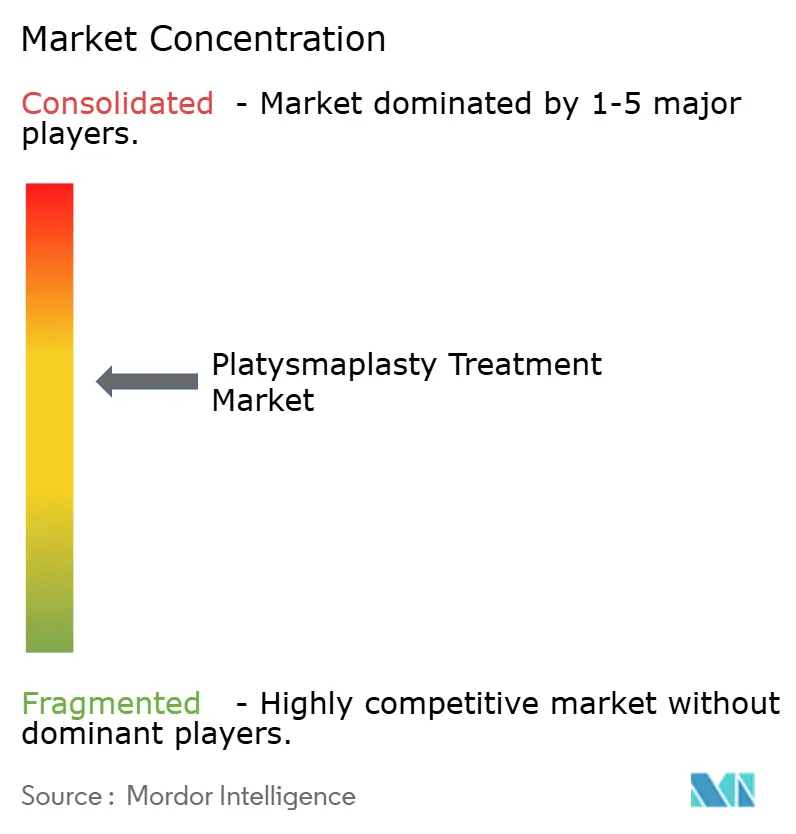
The platysmaplasty treatment market is moderately fragmented; no single company holds more than 15% of global device or neuromodulator sales. Pharmaceutical leaders such as Allergan Aesthetics, Galderma, and Merz Aesthetics maintain durable brand equity through comprehensive portfolios, physician-training academies, and loyalty rebates. Their capital strength supports multicenter trials for new toxin indications, yielding a first-mover advantage upon approval. Device manufacturers, including Candela and the recently merged Cynosure-Lutronic entity, compete by bundling service contracts and cloud-based analytics that monitor utilization.
Private-equity interest has intensified, targeting multipractice clinic platforms that can negotiate supply pricing, invest in marketing, and standardize protocols. As compliance costs related to neuromodulator tracking and device maintenance climb, small practices seek acquisition to gain scale benefits. Some chains pursue vertical integration, adding proprietary skin-care lines or tele-consult platforms. Intellectual-property litigation over toxin biosimilars and handpiece patents remains an ongoing risk, though settlements typically avoid supply disruption. Strategic partnerships with luxury consumer brands—exemplified by L’Oréal’s minority stake in Galderma—signal convergence between consumer skincare and professional aesthetics.
Clinician skill remains a key differentiator. Institutions that host cadaver labs, digital planning workshops, and AR-guided injection tutorials attract fast-growing patient panels. Consumers rely heavily on before-and-after imagery posted on social channels; thus, providers with consistent, reproducible outcomes enjoy compounding referral momentum.
Platysmaplasty Treatment Industry Leaders
Allergan Aesthetics (Botox)
Galderma SA
Merz Pharma GmbH & Co.
Cynosure LLC
InMode Ltd.
- *Disclaimer: Major Players sorted in no particular order
Platysmaplasty Treatment Market Companies Covered in this Report
- Allergan Aesthetics (AbbVie Inc.)
- Galderma
- Merz Pharma
- Ipsen
- InMode Ltd.
- Cynosure LLC (Hologic)
- Cutera
- Candela Medical
- BTL
- Lutronic Corp.
- Apyx Medical
- Sientra
- Surgical Specialties Corp.
- Ethicon (Johnson & Johnson)
- B. Braun
- Zimmer Biomet
- Integra LifeSciences
- Stryker
- Medtronic
- Ulthera Inc. (Merz)

Recent Industry Developments in Platysmaplasty Treatment Market
- June 2025: The FDA accepted for review Allergan Aesthetics’ PMA for SKINVIVE by Juvéderm to improve neck lines, positioning the first hyaluronic-acid injectable specifically labeled for the cervical region.
- January 2025: Allergan Aesthetics launched the AA Signature Program at IMCAS 2025, focusing on personalized lower-face and neck regimens for injectors worldwide.
- October 2024: The FDA approved Botox Cosmetic for platysma band treatment, opening a validated pathway for neuromodulator neck rejuvenation.


Global Platysmaplasty Treatment Market Report Scope
| Midline (Corset) Platysmaplasty |
| Lateral Platysmaplasty |
| Submentoplasty |
| Combination Approach |
| Botulinum-toxin Neck Rejuvenation |
| Hospitals |
| Ambulatory Surgical Centers |
| Cosmetic Surgery Clinics |
| Dermatology Clinics |
| Office-based Physician Practices |
| North America | United States |
| Canada | |
| Mexico | |
| Europe | Germany |
| United Kingdom | |
| France | |
| Italy | |
| Spain | |
| Rest of Europe | |
| Asia Pacific | China |
| Japan | |
| India | |
| South Korea | |
| Australia | |
| Rest of Asia Pacific | |
| Middle East & Africa | GCC |
| South Africa | |
| Rest of Middle East & Africa | |
| South America | Brazil |
| Argentina | |
| Rest of South America |
| By Procedure Approach | Midline (Corset) Platysmaplasty | |
| Lateral Platysmaplasty | ||
| Submentoplasty | ||
| Combination Approach | ||
| Botulinum-toxin Neck Rejuvenation | ||
| By Care Setting | Hospitals | |
| Ambulatory Surgical Centers | ||
| Cosmetic Surgery Clinics | ||
| Dermatology Clinics | ||
| Office-based Physician Practices | ||
| By Geography | North America | United States |
| Canada | ||
| Mexico | ||
| Europe | Germany | |
| United Kingdom | ||
| France | ||
| Italy | ||
| Spain | ||
| Rest of Europe | ||
| Asia Pacific | China | |
| Japan | ||
| India | ||
| South Korea | ||
| Australia | ||
| Rest of Asia Pacific | ||
| Middle East & Africa | GCC | |
| South Africa | ||
| Rest of Middle East & Africa | ||
| South America | Brazil | |
| Argentina | ||
| Rest of South America | ||


Key Questions Answered in the Report
What is the current value of the global platysmaplasty treatment market?
The market is valued at USD 1.4 billion in 2025.
How fast is the platysmaplasty treatment market expected to grow?
Revenue is projected to rise at a 6.1% CAGR, reaching USD 1.9 billion by 2030.
Which procedure approach is expanding the quickest?
Botulinum-toxin neck rejuvenation is forecast to grow at a 10.8% CAGR through 2030.
Which region shows the strongest growth momentum?
Asia Pacific leads with an expected 8.2% CAGR between 2025 and 2030.
Why are ambulatory surgical centers gaining share?
ASCs offer lower costs and quicker scheduling, supporting an 11.3% CAGR in platysmaplasty cases.
What recent FDA clearance impacts the market?
In October 2024, the FDA approved Botox Cosmetic for treating platysma bands, validating neuromodulator use in the neck.
Page last updated on:





