
Myomectomy Market Size and Share
Market Overview
| Study Period | 2020 - 2031 |
|---|---|
| Market Size (2026) | USD 0.74 Billion |
| Market Size (2031) | USD 1.07 Billion |
| Growth Rate (2026 - 2031) | 7.58 % |
| Fastest Growing Market | Asia Pacific |
| Largest Market | North America |
| Market Concentration | Medium |
Major Players *Disclaimer: Major Players sorted in no particular order Image © Mordor Intelligence. Reuse requires attribution under CC BY 4.0. | |
Myomectomy Market Analysis by Mordor Intelligence
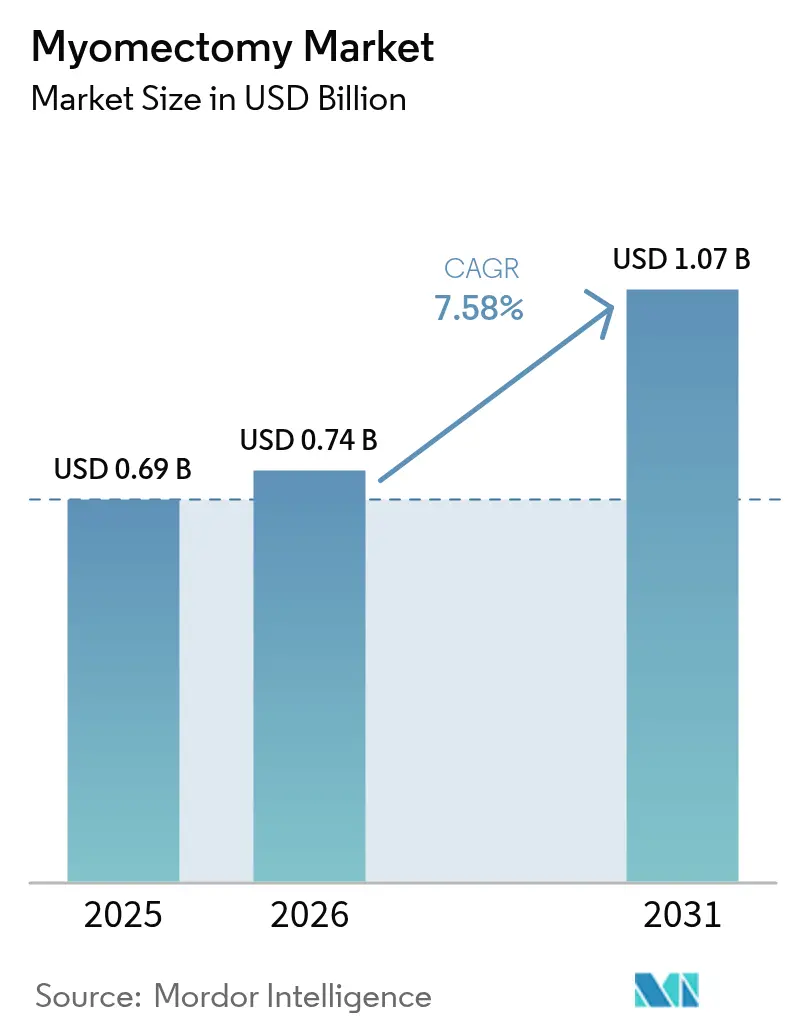
Myomectomy market size in 2026 is estimated at USD 742.3 million, growing from 2025 value of USD 0.69 billion with 2031 projections showing USD 1.07 billion, growing at 7.58% CAGR over 2026-2031. Sustained demand arises from women who postpone childbirth into their 30s and 40s, when fibroid incidence peaks, and who therefore favor uterus-sparing surgery over hysterectomy. Laparoscopic techniques still dominate but face increasing competition from robotic platforms that offer force-feedback precision and improved ergonomics. Regulatory endorsement of contained morcellation systems is steering product design toward safety without sacrificing minimally invasive access. At the care-delivery level, outpatient reimbursement for ambulatory surgical centers (ASCs) is expanding, encouraging procedure migration out of hospitals. Geographic growth patterns are split: North America preserves its lead share through established infrastructure, while Asia-Pacific (APAC) posts the fastest gains as governments invest in surgical capacity.
Key Report Takeaways
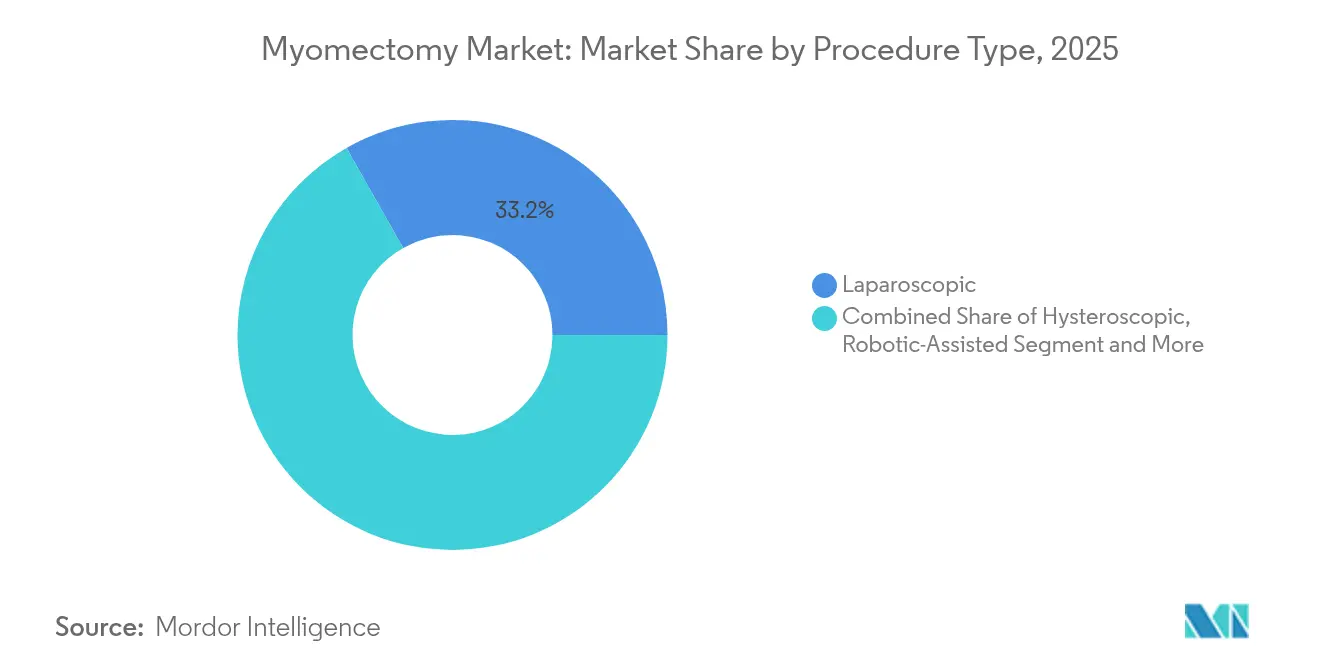
- By procedure type, laparoscopic surgery held 33.20% of myomectomy market share in 2025; robotic-assisted techniques are projected to grow at 9.46% CAGR to 2031.
- By product, laparoscopic power morcellators accounted for 21.10% share of the myomectomy market size in 2025, whereas tissue-removal systems are advancing at 9.92% CAGR through 2031.
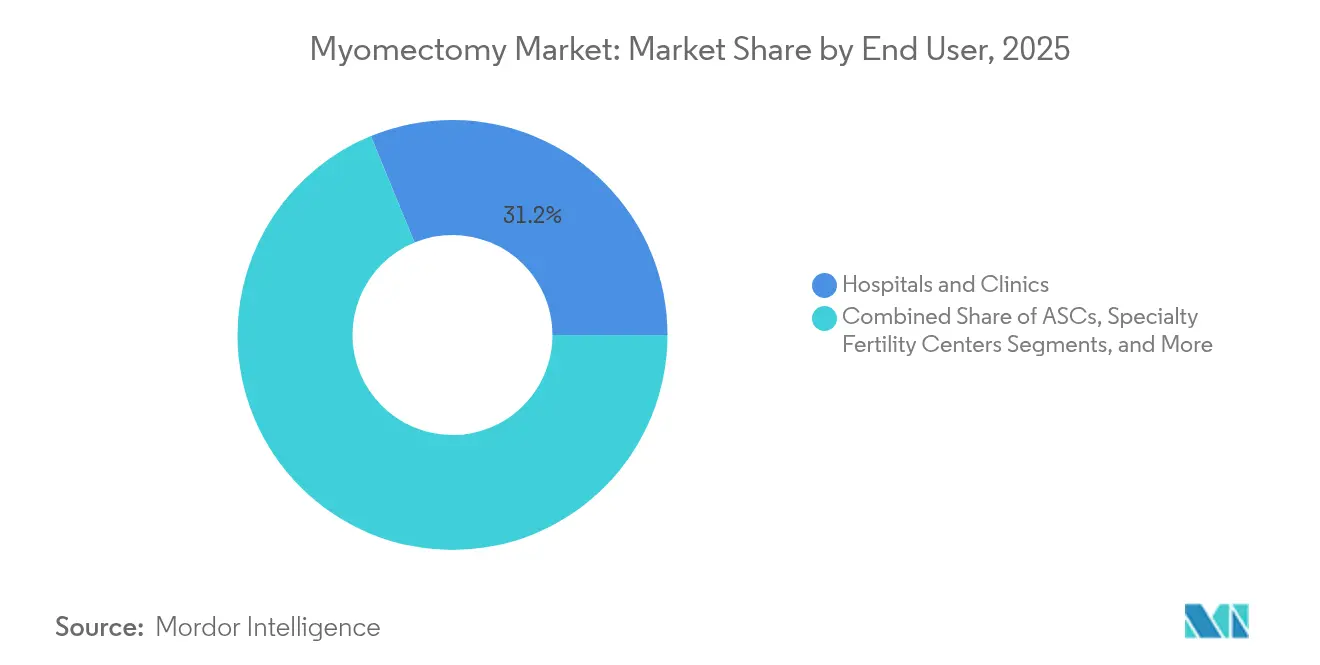
- By end user, hospitals & clinics led with 31.20% revenue share in 2025; ASCs display the highest forecast CAGR at 6.85% through 2031.
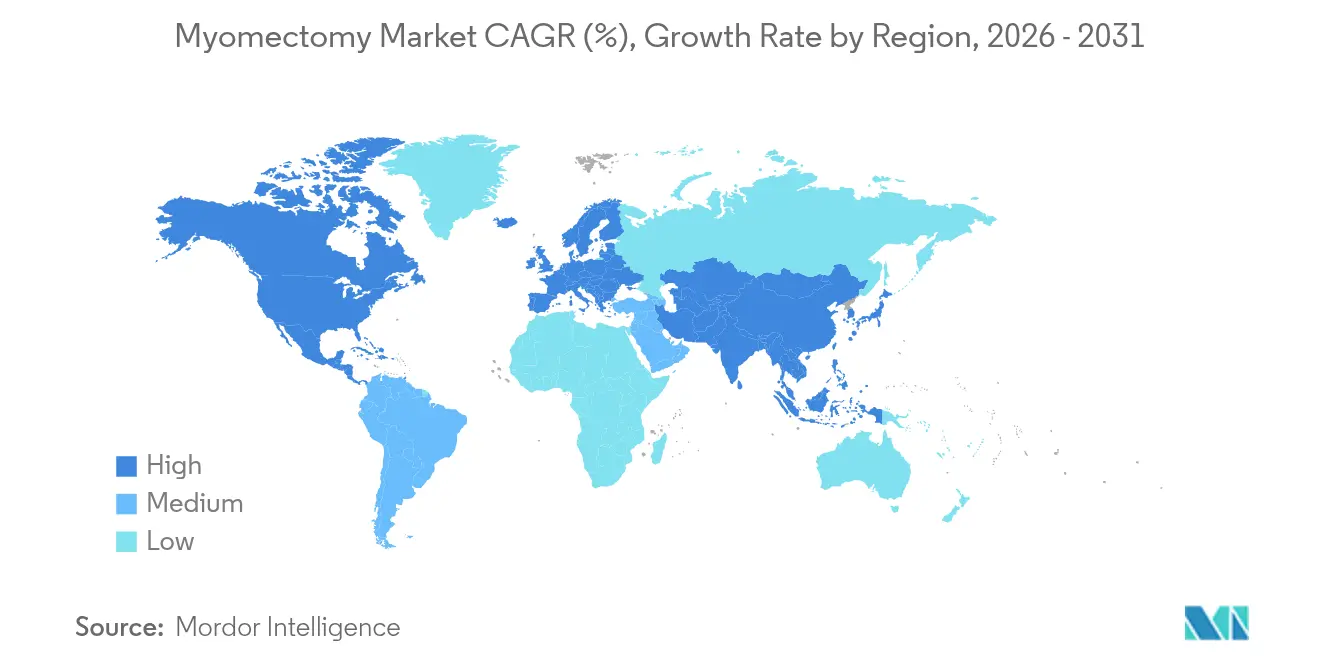
- By geography, North America controlled 31.40% myomectomy market share in 2025, while APAC is set to expand at 8.52% CAGR to 2031.
Note: Market size and forecast figures in this report are generated using Mordor Intelligence’s proprietary estimation framework, updated with the latest available data and insights as of 2026.
Market Trends and Insights
Drivers Impact Analysis of Myomectomy Market*
| Driver | (~) % Impact on CAGR Forecast | Geographic Relevance | Impact Timeline |
|---|---|---|---|
| Growing Incidence Of Uterine Fibroids Among Reproductive-Age Women | +1.80% | Global, with higher prevalence in North America and Sub-Saharan Africa | Long term (≥ 4 years) |
| Rising Adoption Of Minimally Invasive & Robotic-Assisted Surgeries | +2.10% | North America & Europe leading, APAC catching up | Medium term (2-4 years) |
| Increasing Fertility-Preservation Preference Delaying Hysterectomy | +1.50% | Global, particularly in developed markets | Long term (≥ 4 years) |
| Emergence Of Outpatient Reimbursement Models For ASC Procedures | +1.20% | North America primarily, expanding to Europe | Short term (≤ 2 years) |
| FDA Approval Of Contained Power Morcellators & New CPT Codes | +0.90% | North America, with regulatory spillover to other regions | Medium term (2-4 years) |
| Surge In Adjunct Uterine-Sparing Technologies | +1.00% | Global, with innovation centers in North America and Europe | Medium term (2-4 years) |
| Source: Mordor Intelligence | |||
Growing Incidence of Uterine Fibroids Among Reproductive-Age Women
Fibroids now affect up to 70-80% of women by age 50, but the burden is most acute for those aged 25-44, the prime fertility window. Global surveillance recorded 9.6 million newly diagnosed cases in 2024.[1]Y. Zhang et al., “Global Trends in Uterine Fibroids Incidence,” cmj.orgAfrican ancestry doubles to triple the risk, compelling healthcare systems to prioritize uterus-sparing options. United States payers already spend USD 34.4 billion annually on fibroid care, reinforcing surgical demand. As delayed childbirth trends intersect with higher fibroid prevalence, the myomectomy market continues to expand.
Rising Adoption of Minimally Invasive & Robotic-Assisted Surgeries
From 2013 to 2019, robotic procedures grew from 16.3% to 30.3% of total U.S. surgeries; gynecology accounted for a substantial share.[2]A. Reynolds et al., “Robotic Surgical Volumes 2013-2019,” ajog.org The da Vinci 5 platform adds tactile feedback that lowers tissue trauma by 43%, addressing concerns over knot-tying accuracy and ergonomic strain. Nonetheless, capital outlays exceed USD 2 million per unit, and surgeons need 20–40 cases to achieve competence, slowing uptake in resource-constrained settings. Technical advantages, however, are gradually overriding cost hesitancy, feeding double-digit segment growth.
Increasing Fertility-Preservation Preference Delaying Hysterectomy
Prospective cohorts reveal similar quality-of-life outcomes for myomectomy and hysterectomy at 12 months, while pregnancy rates surpass 80% after minimally invasive myomectomy.[3]M. Bedient et al., “Fertility Outcomes after Myomectomy,” fertstert.org These clinical gains align with societal shifts toward later motherhood, reinforcing myomectomy as a first-line surgical option even for large or multiple fibroids. Body-image and sexual-function scores further tilt patient choice toward uterus preservation, strengthening procedure volumes.
Emergence of Outpatient Reimbursement Models for ASC Procedures
Medicare’s 2025 Outpatient Prospective Payment System added separate payment ladders for laparoscopic and robotic myomectomy, narrowing hospital–ASC parity gaps. Private insurers typically reimburse 200% of Medicare, enabling ASCs to cover capital and staffing costs efficiently. Clinical data confirm safety equivalence: it means blood loss averages 192 mL and discharge occurs within 23 hours. Pandemic-era patient preference for short stay further propels ASC share.
Restraints Impact Analysis of Myomectomy Market*
| Restraint | (~) % Impact on CAGR Forecast | Geographic Relevance | Impact Timeline |
|---|---|---|---|
| High Cost Of Advanced Laparoscopic & Robotic Systems | -1.40% | Global, particularly affecting emerging markets | Long term (≥ 4 years) |
| Safety Concerns Over Morcellation-Related Malignancy Spread | -0.80% | Global, with strictest regulations in North America | Medium term (2-4 years) |
| Skill Gap In Minimally Invasive Gynecologic Surgery In Emerging Markets | -1.10% | APAC, Latin America, Middle East & Africa | Long term (≥ 4 years) |
| Socio-Racial Disparities Limiting Access To Minimally Invasive Care | -0.60% | Global, with highest impact in North America | Medium term (2-4 years) |
| Source: Mordor Intelligence | |||
High Cost of Advanced Laparoscopic & Robotic Systems
Hospitals face USD 2 million up-front costs plus maintenance when adopting robotic platforms, stretching capital budgets. Even with volume sharing, reaching economic break-even demands 150–200 annual cases. Emerging markets, where reimbursement is nascent, delay procurement and rely on conventional laparoscopy, restricting global diffusion.
Safety Concerns over Morcellation-Related Malignancy Spread
FDA advisories on power morcellation lowered usage rates until the bags, such as PneumoLiner, were contained and cleared. Trials record significant drops in peritoneal cell dissemination when containment is used. Nevertheless, additional device cost and longer operative time temper adoption, particularly for lower-resource centers.
*Our forecasts treat driver/restraint impacts as directional, not additive. The impact forecasts reflect baseline growth, mix effects, and variable interactions.
Myomectomy Market Segment Analysis
By Procedure Type:
Robotic Precision Challenges Laparoscopic DominanceLaparoscopic surgery maintained a 33.20% myomectomy market share in 2025, thanks to surgeon familiarity and broad availability. Robotic-assisted procedures, advancing at 9.46% CAGR, are eroding this lead by offering 3-dimensional vision and articulated instruments that simplify suturing in confined pelvic spaces. Abdominal open myomectomy persists for very large or numerous fibroids, but steadily declines as minimally invasive proficiency climbs. Hysteroscopic resection holds traction for submucosal fibroids, aided by improved single-use shavers that lessen fluid overload risk. Vaginal approaches remain niche, reserved for select posterior wall tumors.
Technological progress reinforces the shift: force-feedback sensors in next-generation robots decrease unintended tissue strain, while single-port laparoscopy enhances cosmesis for select cases. Training initiatives from professional societies are accelerating skilled labor supply, which in turn widens patient access to minimally invasive care across tertiary centers. The combined impact cements robots as a future mainstream modality within the myomectomy market.



By Product:
Contained Morcellation Drives InnovationIn 2025, laparoscopic power morcellators represented 21.10% revenue, yet face heightened scrutiny. Contained tissue-removal systems are rising at 9.92% CAGR as surgeons adopt bag-in-bag devices that satisfy regulatory guidance. Energy and sealing platforms, such as advanced bipolar or ultrasonic generators, deliver fine thermal control, improving hemostasis and shortening operative duration. Knotless barbed sutures accelerate closure, while enhanced visualization stacks integrate near-infrared imaging to delineate vasculature.
Product pipelines emphasize safety first: bagged morcellators reduce parasitic tissue implantation, and modular energy devices minimize collateral thermal spread. Smaller form-factor cameras with 4K resolution assist depth perception. Ancillary disposables, although low in unit price, generate repeatable revenue streams and incentivize vendors to bundle full procedural kits, shaping procurement dynamics in the myomectomy market.
By End User:
ASCs Challenge Hospital DominanceHospitals and clinics accounted for 31.20% of procedures in 2025, benefiting from comprehensive perioperative infrastructure and resident training capacity. ASCs are gaining 6.85% CAGR momentum, underpinned by shorter scheduling queues, predictable operating costs, and physician ownership models that align incentives. Specialty fertility centers carve out a growing sub-segment, blending reproductive endocrinology services with fertility-preserving surgery to offer an integrated patient pathway.
Outcomes data favor outpatient care when patient selection protocols are strictly adhered to; conversion to inpatient status remains below 2%. Pay-for-performance frameworks increasingly reimburse on bundled episodes, awarding efficiency and low complication rates. Consequently, ASCs will continue to siphon elective, low-acuity myomectomy cases away from inpatient settings.
Geography Analysis
North America Myomectomy Market
North America led the myomectomy market size at 31.40% share in 2025 due to robust insurance coverage and the world’s highest concentration of robotic systems, over 6,000 installed units. Early adoption of FDA-cleared containment devices sustains minimally invasive momentum despite heightened morcellation scrutiny. Yet access inequity persists; Black women are 30% less likely than their counterparts to receive laparoscopic myomectomy even when clinically eligible. Federal and state programs are funding surgeon-training scholarships to narrow this gap.
APAC Myomectomy Market
Asia Pacific is forecast to post the fastest regional CAGR of 8.52% to 2031, propelled by national health-insurance expansions, rising middle-class expectations, and localized medical-device manufacturing. China’s domestic robot makers are filing for National Medical Products Administration approvals, aiming to lower unit costs by up to 35% relative to imported systems. Japan and South Korea maintain procedure volumes comparable to Western peers, while India and Indonesia prioritize capacity building with laparoscopic platforms first who.int. Professional exchanges, online simulation modules, and traveling fellowships are lifting surgical skill levels.
Europe Myomectomy Market
Europe retains steady growth under the harmonized Medical Device Regulation that guarantees high safety standards. Public health systems reimburse minimally invasive gynecology widely, though austerity policies limit robotic capital budgets in certain markets.
MEA and LATAM Myomectomy Market
Middle East & Africa are nascent but promising; flagship hospitals in Saudi Arabia and South Africa have adopted robotic programs, often via public-private partnerships. Latin America shows moderate expansion; in Mexico’s public sector only 16.5% of fibroid procedures are laparoscopic, yet private institutions in Brazil have introduced comprehensive myomectomy centers that double as regional training hubs.

Regulatory Landscape
Regulatory pathways for myomectomy enabling devices vary by geography. In the United States, devices are routed through FDA CDRH processes with Premarket Notification (510(k)) or PMA, along with establishment registration and listing, and quality system compliance under the FDA Quality Management System Regulation (QMSR). A key anchor is the FDA stance on laparoscopic power morcellators, reinforced through safety communications and guidance directing use toward contained morcellation and validated performance testing when applicable, which in turn shapes labeling and containment strategy. In Europe, market access is governed by EU MDR 2017/745 and notified-body conformity assessment, with higher-risk technologies requiring clinical data and post-market surveillance. ISO standards such as ISO 13485 and sterilization requirements also influence design controls and documentation across regions.
Value Chain Analysis
The value chain starts with suppliers of surgical-grade materials such as stainless steels, polymers, and precision optics, along with specialized components used in energy generators, camera stacks, and robotic accessories. It then moves to OEMs that integrate systems and disposables used across laparoscopic, hysteroscopic, and robotic-assisted myomectomy. Core OEM participants in this ecosystem include Intuitive Surgical (robotic systems), Medtronic (energy and robotic platform development), Hologic (gynecology portfolio including tissue removal and fibroid solutions), and CooperSurgical (gynecology devices and consumables). Manufacturing and final assembly rely on validated processes, including sterilization and packaging controls for sterile disposables. Quality agreements and supplier controls carry outsized weight because many kits combine reusable capital equipment with single-use components.
Commercialization is split between direct-to-facility sales and channel-led distribution. Group purchasing organization contracting and hospital standardization shape purchasing decisions, while recurring revenue is supported by procedure-based consumables, including containment bags, shavers, sutures, and energy handpieces. Key bottlenecks include single-source dependencies for advanced imaging sensors and delays in service or spare-parts availability for visualization and robotic subsystems, which can affect uptime in hospitals and ambulatory surgical centers.
Competitive Landscape
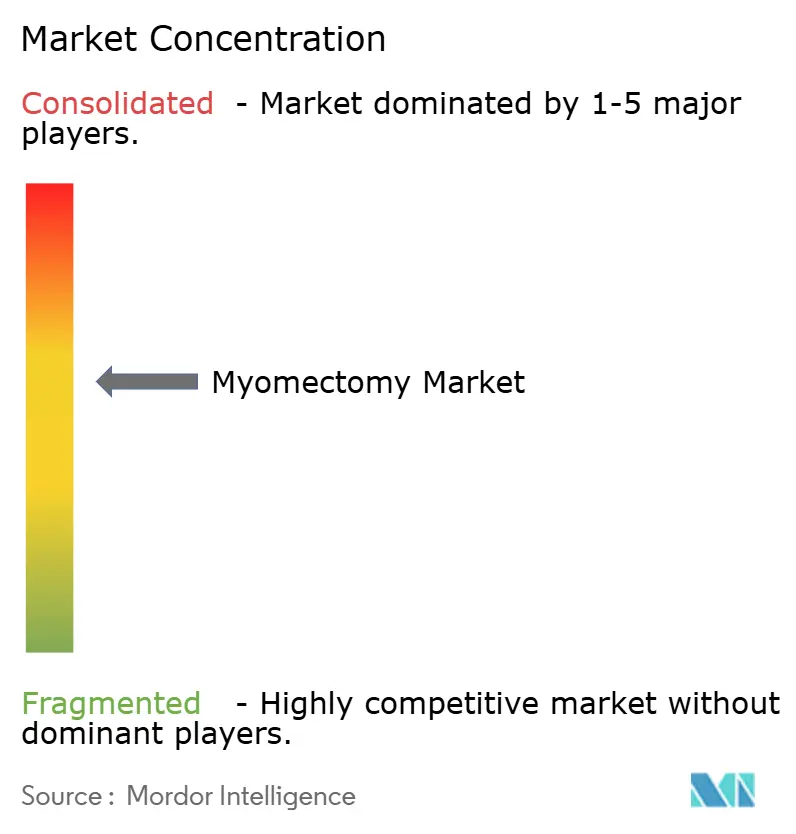
The myomectomy market is moderately fragmented, with Intuitive Surgical anchoring the robotic niche, Medtronic and Stryker supplying multi-specialty energy and visualization tools, and Hologic leading hysteroscopic tissue-extraction solutions. The collective market share of the top five suppliers reached 42% in 2024, leaving room for specialist entrants focused on contained morcellation or AI-guided image analytics.
Strategic consolidation is accelerating. Hologic finalized a USD 350 million acquisition of Gynesonics in January 2025, adding radiofrequency ablation to its fibroid portfolio and broadening cross-selling opportunities within gynecologic surgery. Medtronic expanded the footprint of its Hugo robot by signing multi-year procurement agreements with leading U.S. hospital chains. Intuitive Surgical, meanwhile, rolled out the da Vinci 5 with 150 improvements, most notably force-feedback haptics and enhanced 3D optics.
Emerging companies are disrupting cost structures. Domestic Asian manufacturers aim to supply sub-USD 1 million robotic platforms, and start-ups such as Anovo have demonstrated 97.6% performance equivalence to established electrosurgical tools while offering improved thermal safety margins. Portfolio differentiation now hinges on AI-driven workflow orchestration, reusable versus single-use instrumentation economics, and comprehensive post-sale training services. Competitive intensity is projected to rise as proprietary patents expire and regional players pursue CE marking and FDA clearance.
Myomectomy Industry Leaders
Medtronic PLC
Intuitive Surgical Inc.
Johnson & Johnson
Stryker Corporation
Karl Storz SE & Co. KG
- *Disclaimer: Major Players sorted in no particular order
Myomectomy Market Companies Covered in this Report
- Medtronic
- Stryker
- Intuitive Surgical
- Johnson & Johnson
- Karl Storz
- Olympus
- B. Braun
- Conmed
- Hologic
- The Cooper Companies
- INSIGHTEC
- Gynesonics Inc.
- Minerva Surgical
- Richard Wolf
- Boston Scientific
- Smiths Group
- Zimmer Biomet
- Lumenis
- Canyon Medical Inc.

Market Opportunities and Future Outlook
A major whitespace is the continued shift from uncontained to validated contained tissue extraction across both laparoscopic morcellation workflows and newer integrated containment-and-extraction concepts. In July 2026, Claria Medical received FDA De Novo marketing authorization for the Claria System, an integrated uterine tissue containment and extraction device, which reinforces labeling and workflow requirements relevant to tissue containment. It also creates room for adjacent product offerings aimed at addressing dissemination concerns.
Another opportunity is expanding robotic access for gynecologic procedures beyond large tertiary hospitals, supported by regulatory filings, clinical evidence generation, and ASC-centric positioning. In April 2026, Distalmotion disclosed an FDA submission to expand US indications for the DEXTER Robotic Surgery System and noted an IDE for a US myomectomy clinical trial. In March 2026, Hospital Israelita Albert Einstein described feasibility of Hugo RAS use in myomectomy with contained cold-scalpel morcellation and transvaginal specimen extraction. Together, these signals point to differentiated offerings around smaller-footprint robotics, training and service bundling, and outpatient-oriented procedure pathways where reimbursement mechanisms and operational efficiency influence adoption decisions.
Recent Industry Developments in Myomectomy Market
- June 2026: Medtronic submitted 510(k) filings to the US FDA to expand the Hugo robotic-assisted surgery system into gynecologic specialties, alongside additional general surgery indications. The submission strengthens Medtronic's pathway to compete for minimally invasive gynecology procedure volumes where robotic suturing and ergonomics are key differentiators for complex cases.
- April 2026: Distalmotion disclosed an FDA submission to expand US indications for the DEXTER Robotic Surgery System and noted an IDE for a US myomectomy clinical trial. The action signals a push to broaden usage of smaller-footprint robotics and to accelerate training and service bundling for outpatient pathways.
- June 2024: The European Medical Device Coordination Group extended MDR transition provisions, helping maintain continuity for legacy device certifications during the MDR shift. This reduced near-term supply disruption risk for minimally invasive gynecologic instrument and accessory portfolios sold under CE marking while manufacturers complete MDR conformity assessments.


Myomectomy Market Report Scope and Research Methodology
Market Definition and Coverage
For this study, the myomectomy market includes the value linked to surgical removal of uterine fibroids, covering the common procedure approaches and the related device and consumable use during these procedures across major care settings.
Scope exclusions: We exclude non-surgical fibroid management (drug therapy, embolization, ablation) and post-op supportive care that is not directly tied to the myomectomy procedure and its enabling devices.
Segments Covered in This Report
- By Procedure Type
- Abdominal (Open) Myomectomy
- Laparoscopic Myomectomy
- Hysteroscopic Myomectomy
- Robotic-Assisted Myomectomy
- Vaginal Myomectomy
- By Product
- Laparoscopic Power Morcellators
- Tissue Removal Systems (Hysteroscopic Morcellators)
- Energy & Sealing Devices
- Suturing & Closure Devices
- Imaging & Navigation Systems
- Ancillary Instruments & Consumables
- By End User
- Hospitals & Clinics
- Ambulatory Surgical Centers
- Specialty Fertility Centers
- By Geography
- North America
- United States
- Canada
- Mexico
- Europe
- Germany
- United Kingdom
- France
- Italy
- Spain
- Rest of Europe
- Asia Pacific
- China
- Japan
- India
- South Korea
- Australia
- Rest of Asia Pacific
- Middle East & Africa
- GCC
- South Africa
- Rest of Middle East & Africa
- South America
- Brazil
- Argentina
- Rest of South America
- North America
Data Sources, Market Sizing, and Validation
Desk Research
Desk research was used to set the demand pool and to avoid sizing the market from anecdotal signals. We relied on public health statistics and clinical guidance to understand uterine fibroid prevalence, care-seeking behavior, and when myomectomy is preferred, using sources such as the CDC, NIH, WHO, and ACOG publications.
We also reviewed procedure setting shifts and adoption patterns for minimally invasive surgery using sources such as OECD health data, national hospital statistics where available, peer-reviewed journals, and regulatory safety communications that affect device usage (for example, tissue containment expectations). Company annual reports, investor materials, and reputable news helped us interpret product mix and pricing direction, and then a paid subscription for company financials, news, and patent tracking was used to cross-check timelines and innovation activity. The sources listed here are illustrative, and many other public documents and datasets were also used for data collection, validation, and clarification.
Primary Interviews and Surveys
Primary work was used to pressure-test model inputs that desk research cannot confirm cleanly, especially procedure mix splits, setting-level utilization, and typical device consumption per case. We spoke with clinicians, procurement and OR managers, distributors, and product specialists across APAC, EMEA, and the Americas, and then used follow-up questions to reconcile differences by hospital type and outpatient centers.
Distribution of primary research fieldwork respondents
| Company type | Respondent position | Region |
|---|---|---|
| Top tier: 30% | CXOs: 14% | APAC: 46% |
| Mid tier: 53% | Functional/Unit leaders: 28% | EMEA: 31% |
| Smaller Players: 17% | Managers: 58% | Americas: 23% |
Market-Sizing & Forecasting
The core model starts from a top-down build that reconstructs annual myomectomy procedure volumes by country using public population and women health indicators, adjusted by diagnosis and treated-rate logic shared by clinicians. Those volumes are then converted to value using procedure approach mix and the related device and consumable spend per case, which is where we've used interviews heavily.
To keep the totals realistic, we corroborated the outputs with selective bottom-up approximations, such as supplier revenue direction checks, sampled price points for key enabling tools, and channel feedback on how many systems and disposables are typically used in laparoscopic, hysteroscopic, abdominal, and robotic cases. Key variables used in the sizing and forecast include fibroid prevalence proxies by age band, myomectomy share within surgical fibroid management, outpatient migration to ambulatory surgical centers, adoption of minimally invasive approaches, and average selling price progression for energy and tissue removal tools. When data was thin for smaller countries, gaps were handled through regional analogs with similar care infrastructure and then corrected through expert review.
For forecasting, we used scenario analysis supported by trend smoothing so the model could reflect slower or faster adoption of minimally invasive techniques, reimbursement shifts that change site of care, and safety-driven device preference changes. Assumptions were finalized only after the variable-level direction was validated by primary respondents.
Data Validation & Update Cycle
Validation is done through step-by-step checks so the final market value is consistent with real-world signals. We review whether implied procedure rates per eligible population are sensible, and then compare the device spend per case against what procurement teams report for different settings.
If an output looks unusual, the assumption behind it is revisited, and respondents are re-contacted when the variance cannot be explained by documented country-level care patterns. Before sign-off, another analyst reviews the chain of inputs, conversions, and calculations to confirm that the result can be reproduced. Reports are refreshed annually, and interim updates are made when material events occur, followed by a final pre-delivery pass so clients receive the latest updated view.
Mordor Intelligence's Myomectomy Market Size Compared With Other Published Estimates
Published market values for myomectomy do not always match, even when the topic sounds the same, because the counted revenue pool and the conversion steps can be different. The most common differences come from what is treated as a myomectomy-only revenue stream, how procedure volume is derived, and how pricing is updated across countries.
Some external estimates appear to fold the wider uterine fibroid treatment ecosystem into the total, including non-surgical options and broader gynecology device baskets. For Mordor Intelligence, value is counted only when it is tied to myomectomy procedures and the enabling device and consumable use, and then it is kept consistent through country-level procedure mix checks and refreshed pricing inputs.
Benchmark comparison
| Source | Market Size | Gaps in Research Methodology |
|---|---|---|
| Mordor Intelligence | USD 0.74 B (2026) | |
| Trade Journal B | USD 0.79 B (2023) | Uses an earlier base year and often reflects a broader interpretation of treated cases and related tools, which can pull adjacent fibroid intervention revenues into the total and reduce comparability to a procedure-linked spend model. |
| Regional Consultancy A | USD 0.56 B (2025) | Leans on a narrower demand pool and simpler adoption assumptions, which can undercount outpatient migration and minimally invasive tool usage intensity that changes per-case value over time. |
The comparison mainly shows that the spread is driven by scope choices, year alignment, and how procedure volume is translated into spend. By keeping inputs tied to observable procedure signals and validating per-case economics with practitioners and buyers, the final number stays traceable and easier to replicate.


Key Questions Answered in the Report
What is the current myomectomy market size?
The myomectomy market size stands at USD 742.3 million in 2026 and is projected to hit USD 1.07 billion by 2031.
Which procedure type is growing fastest?
Robotic-assisted myomectomy is expanding at 9.46% CAGR, outpacing laparoscopic and open techniques.
Why are ambulatory surgical centers important for myomectomy?
Enhanced reimbursement and patient preference for outpatient care allow ASCs to grow at 6.85% CAGR while delivering comparable safety outcomes.
What regions hold the greatest growth opportunity?
Asia Pacific leads with an 8.52% CAGR forecast, driven by rising healthcare investment and technology localization.
How do FDA guidelines influence morcellation products?
Containment mandates have sparked innovation in tissue-extraction systems, shifting demand toward compliant devices.
Page last updated on:


 Your data is secure and never sold or shared.


