
Platelet Rich Plasma Market Size and Share
Market Overview
| Study Period | 2020 - 2031 |
|---|---|
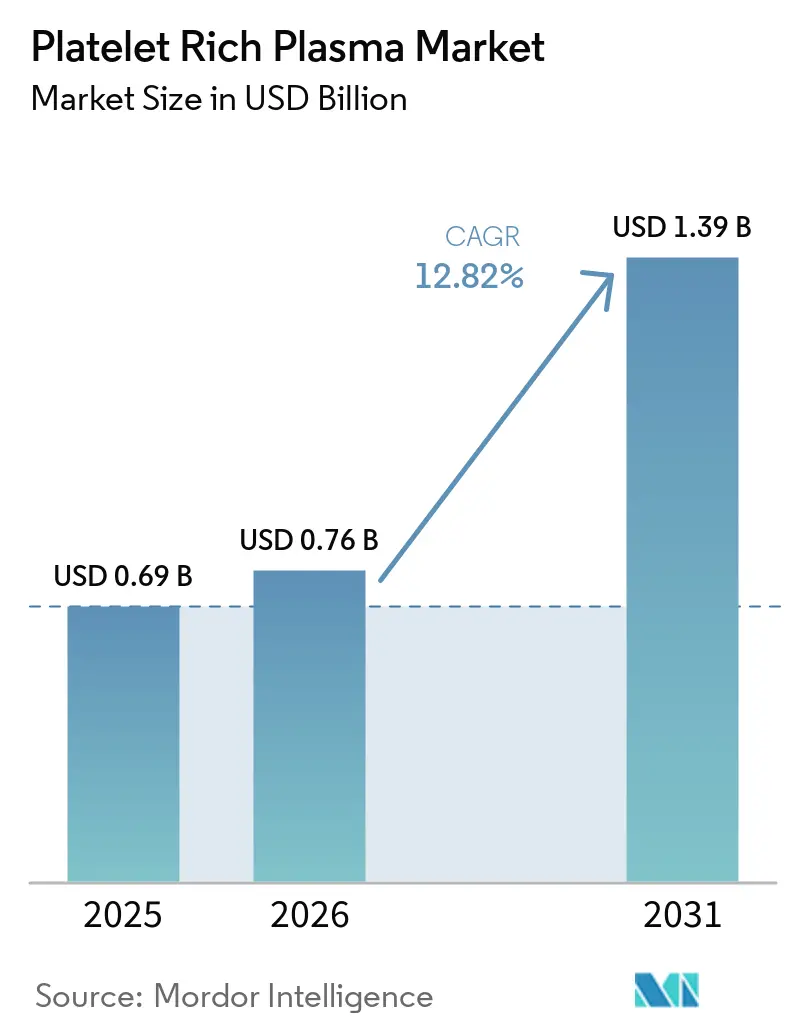
| Market Size (2026) | USD 0.76 Billion |
| Market Size (2031) | USD 1.39 Billion |
| Growth Rate (2026 - 2031) | 12.82 % |
| Fastest Growing Market | Asia Pacific |
| Largest Market | North America |
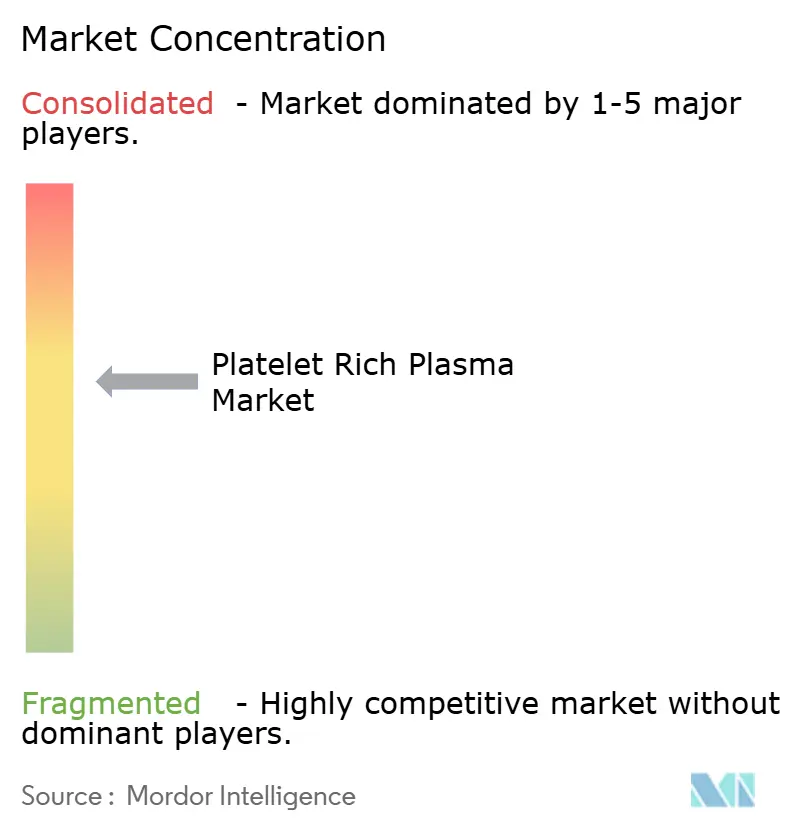
| Market Concentration | Medium |
Major Players *Disclaimer: Major Players sorted in no particular order Image © Mordor Intelligence. Reuse requires attribution under CC BY 4.0. | |
Platelet Rich Plasma Market Analysis by Mordor Intelligence
The Platelet-Rich Plasma Market size was valued at USD 0.69 billion in 2025 and is estimated to grow from USD 0.76 billion in 2026 to reach USD 1.39 billion by 2031, at a CAGR of 12.82% during the forecast period (2026–2031). Demand accelerates as hospitals migrate regenerative therapies into office settings, automated preparation systems eliminate operator variability, and clinical evidence broadens across orthopedic, aesthetic, and dental indications. Orthopedic sports medicine keeps the widest clinical footprint, yet facial rejuvenation, hair restoration, and other cosmetic uses now set the growth pace. Companies differentiate by pairing microfluidic centrifuges with AI-guided separation algorithms, while regulatory clarity around autologous protocols sustains provider confidence. Asia-Pacific’s medical tourism boom and rising disposable income amplify global momentum, even as standardization gaps and reimbursement limits temper uptake in cost-sensitive markets.
Key Report Takeaways
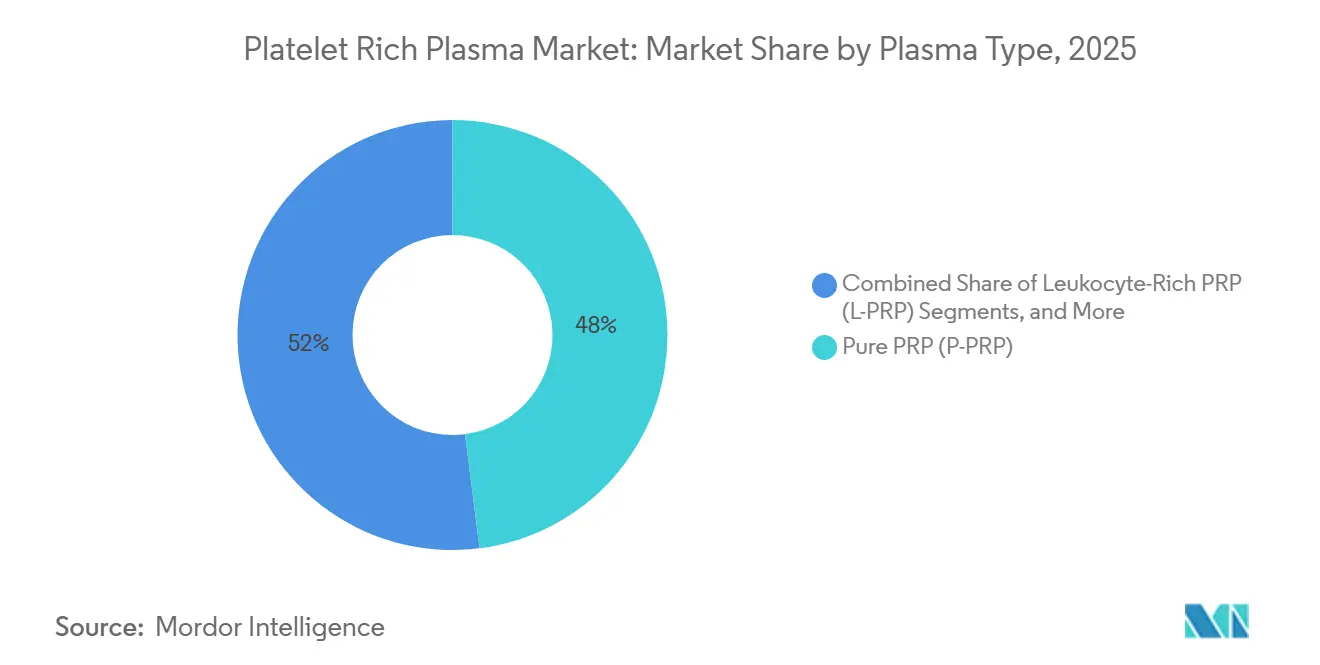
- By plasma type, Pure PRP led with 47.99% revenue share in 2025, whereas Leukocyte-Rich Fibrin is poised for the fastest expansion at an 14.11% CAGR through 2031.
- By application, orthopedic and sports medicine dominated with 36.76% of the platelet-rich plasma market share in 2025, while cosmetic and dermatological procedures are projected to escalate at a 14.72% CAGR to 2031.
- By end user, specialty and ambulatory clinics controlled 47.44% of the platelet-rich plasma market size in 2025, and are advancing the quickest at 13.38% CAGR.
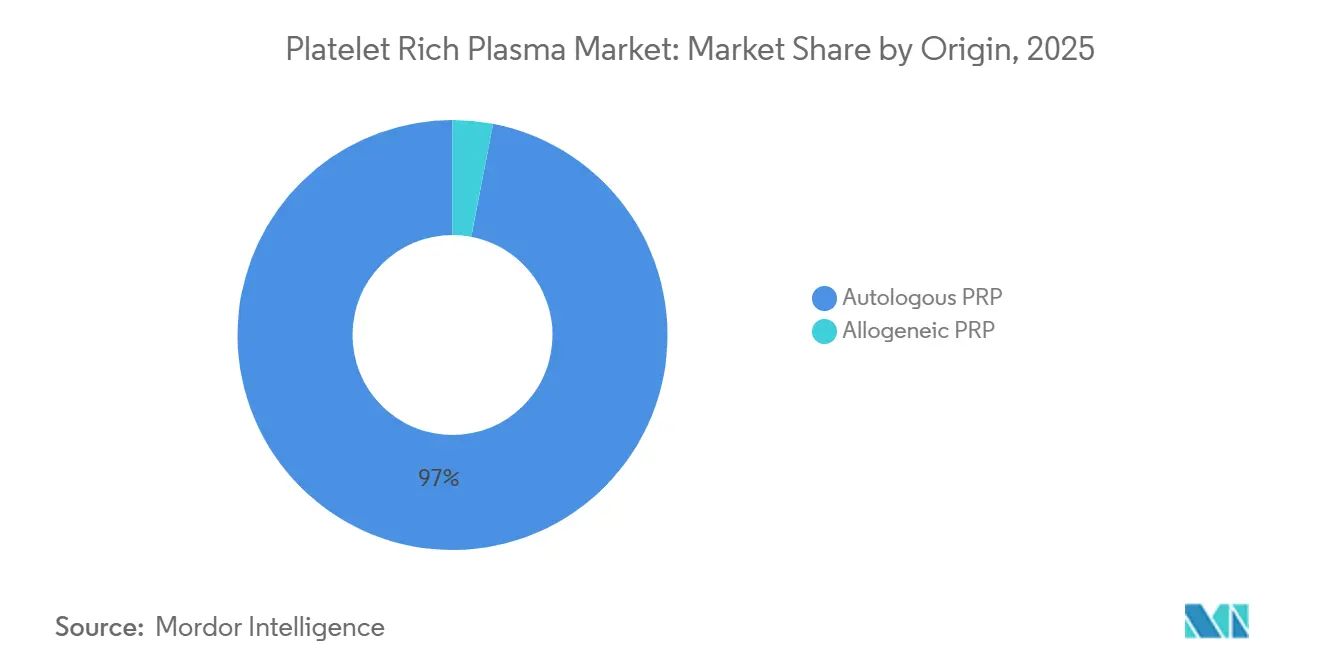
- By origin, autologous products represented 96.98% of 2025 revenue, yet allogeneic offerings are registering an impressive 16.42% CAGR as standardized donor protocols mature.
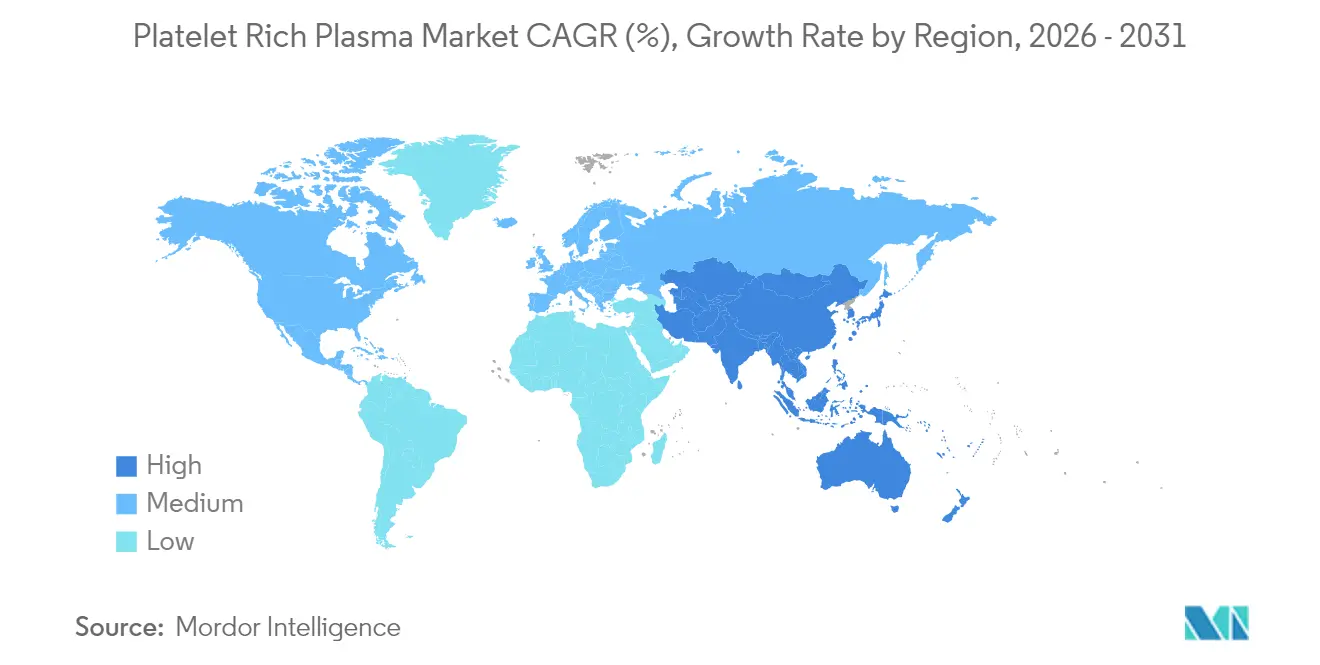
- By geography, North America held 40.25% share in 2025, although Asia-Pacific is forecast to generate the highest 15.10% CAGR through 2031.
Note: Market size and forecast figures in this report are generated using Mordor Intelligence’s proprietary estimation framework, updated with the latest available data and insights as of 2026.
Market Trends and Insights
Drivers Impact Analysis of Platelet Rich Plasma Market*
| Driver | (~) % Impact on CAGR Forecast | Geographic Relevance | Impact Timeline |
|---|---|---|---|
| Rising incidence of sports injuries & orthopedic disorders | +2.8% | North America, Europe, global spread | Medium term (2-4 years) |
| Growing cosmetic & aesthetic procedures volume | +3.2% | Asia-Pacific, North America | Short term (≤ 2 years) |
| Technological advances in PRP preparation systems | +2.1% | Early adoption in developed markets | Long term (≥ 4 years) |
| Aging population driving chronic musculoskeletal cases | +2.5% | Developed economies worldwide | Long term (≥ 4 years) |
| Surge in PRP + adjunct combo protocols | +1.4% | North America, Europe, expanding to Asia-Pacific | Medium term (2-4 years) |
| Hospital shift to in-office autologous regenerative care | +1.8% | North America leading | Short term (≤ 2 years) |
| Source: Mordor Intelligence | |||
Rising Incidence of Sports Injuries & Orthopedic Disorders
Elite and amateur athletes increasingly select PRP as a first-line intervention for tendon and ligament trauma, with National Football League data showing a 15% uptick in regenerative therapy usage over traditional surgery in 2024[1]. Standard protocols involve three injections across six weeks, yielding faster return-to-play timelines and lower reinjury risk compared with lengthy physical therapy. Sports governing bodies continue to approve PRP while banning synthetic growth factors, preserving competitive integrity and steering demand toward autologous options. Weekend athletes mirror this shift, pursuing minimally invasive relief for chronic overuse injuries. Together, these trends enlarge the platelet rich plasma market by funneling a wider patient spectrum into orthopedic clinics that now view biologics as cost-effective adjuncts to conventional care.
Growing Cosmetic & Aesthetic Procedures Volume
Aesthetic medicine has embedded PRP into microneedling, laser resurfacing, and “vampire facial” protocols, with the American Society of Plastic Surgeons reporting a 47% surge in PRP-based cosmetic sessions in 2024[2]. Younger consumers opt for preventive skin rejuvenation, while hair-restoration seekers embrace autologous options over synthetic implants. Social media and celebrity endorsements have scaled consumer awareness, enabling medical spas to expand beyond metropolitan hubs. Premium pricing remains acceptable because PRP avoids foreign fillers and provides a “natural” outcome narrative. Regulatory oversight, however, varies across markets, signaling future harmonization needs to safeguard treatment consistency and practitioner accreditation.
Technological Advances in PRP Preparation Systems
Automated microfluidic centrifuges deliver standardized platelet concentrations in under 15 minutes, shrinking chair time and boosting patient throughput. Terumo BCT’s AI-enabled platforms adjust spin parameters to each patient’s hematocrit, securing reproducible dosing and better outcomes. Integrated leukocyte filters allow clinicians to tailor inflammatory profiles per indication, for example selecting leukocyte-poor PRP for tendon healing and leukocyte-rich PRF for wound care. These advances address historical skepticism about biologic variability and support greater insurer confidence. Equipment vendors now bundle disposables, software, and training into subscription models that lower upfront costs, further expanding the platelet rich plasma market into small clinics.
Aging Population Driving Chronic Musculoskeletal Cases
Populations in Japan, the United States, and Western Europe are aging, and degenerative joint disease prevalence rises in parallel. Seniors prefer biologic injections to postpone or avoid joint replacement surgery, creating recurring treatment revenue and broadening payer discussions on cost offsets. Longevity trends also boost elective procedures such as anti-aging skin therapies, extending PRP demand outside orthopedic walls. Healthcare systems view PRP as a pathway to mitigate high surgical costs and rehab stays for older adults, positioning the therapy within value-based care initiatives that reward improved function and reduced hospitalization.
Restraints Impact Analysis of Platelet Rich Plasma Market*
| Restraint | (~) % Impact on CAGR Forecast | Geographic Relevance | Impact Timeline |
|---|---|---|---|
| Lack of standardized preparation protocols | -1.8% | Higher in emerging markets | Medium term (2-4 years) |
| High out-of-pocket cost & weak reimbursement | -2.4% | Global, acute in developing economies | Short term (≤ 2 years) |
| Growing evidence-based scrutiny of PRP clinics | -1.2% | North America & Europe | Medium term (2-4 years) |
| Competing cell-free biologics cannibalizing demand | -0.9% | Developed markets first | Long term (≥ 4 years) |
| Source: Mordor Intelligence | |||
Lack of Standardized Preparation Protocols
Systematic reviews have cataloged more than 40 preparation methods, each producing different platelet counts and growth-factor profiles, undercutting reproducibility and payer acceptance. Equipment disparities, staff training gaps, and inconsistent leukocyte filtration compound variability, especially in smaller or resource-constrained clinics. The FDA and international societies promote harmonized guidelines, yet global implementation trails regulatory intent. Until protocols converge, insurers label many PRP applications investigational, and peer-reviewed studies struggle to aggregate comparable outcome data. This ambiguity dampens referral confidence and slows broad clinical adoption, restraining the platelet rich plasma market in several regions.
High Out-of-Pocket Cost & Weak Reimbursement
Typical PRP injections cost USD 500–2,000 per session, and most insurers classify treatments outside a few orthopedic indications as elective, shifting payment responsibility to patients[3]. Multiple sessions amplify financial burden, limiting repeat uptake among middle-income populations. Some European health systems reimburse partially, while several Asian markets depend entirely on self-pay models. Providers experiment with financing plans and bundle pricing, but affordability remains a hurdle in emerging economies. Unless evidence drives policy change, reimbursement gaps will cap market penetration despite demonstrated clinical advantages.
*Our forecasts treat driver/restraint impacts as directional, not additive. The impact forecasts reflect baseline growth, mix effects, and variable interactions.
Platelet Rich Plasma Market Segment Analysis
By Plasma Type:
Advanced Variants Drive InnovationIn 2025, Pure PRP captured 47.99% of the platelet rich plasma market, translating to USD 0.33 billion. However, the platelet rich plasma market size for Leukocyte-Rich Fibrin is projected to expand at an 14.11% CAGR between 2026 and 2031 as clinicians leverage its dense fibrin matrix for sustained growth-factor release. Orthopedic specialists favor leukocyte-poor formulations to minimize inflammation, whereas oral surgeons adopt L-PRF to bolster bone graft stability. Equipment makers respond with programmable centrifuges that toggle white-cell content on demand, encouraging precision medicine protocols. Emerging alternatives like advanced PRF and injectable-PRF fit niche applications, enhancing segment depth and fueling incremental revenue for system suppliers.
Across hospitals and dental offices, comparative studies from the International Association of Oral and Maxillofacial Surgeons document higher bone-to-implant contact rates using L-PRF than conventional graft material. The data prompt insurers in select European markets to pilot partial reimbursement, signalling mainstream acceptance. Meanwhile, autologous platelet lysate and plasma gel derivatives reach dermatology and wound-care niches, diversifying clinician toolkits. Collectively, the plasma-type spectrum broadens therapeutic flexibility and keeps innovation pipelines active, thus underpinning sustained growth in the platelet rich plasma market.

By Application:
Cosmetics Disrupts Traditional HierarchyOrthopedic and sports medicine held 36.76% of the platelet-rich plasma market share in 2025, equal to USD 0.29 billion. Yet cosmetic and dermatological interventions are accelerating at a 14.72% CAGR to 2031, supported by medical-spa proliferation and consumer appetite for minimally invasive anti-aging options. The platelet-rich plasma market size for aesthetic procedures is expected to double by 2031 as younger demographics seek preventive skin quality improvements and hair-loss solutions. Dental and oral-maxillofacial indications follow, driven by PRP’s role in implant osseointegration and periodontal regeneration.
In ophthalmology, autologous PRP eye drops gain traction for severe dry-eye syndrome and corneal surface repair, receiving clinical-practice endorsement from the American Academy of Ophthalmology. Wound-care teams employ PRP dressings to accelerate postsurgical healing and chronic ulcer closure, expanding payer discussions around hospital cost avoidance. Neurology and spine specialties remain exploratory yet promising, with early trials assessing PRP injections for discogenic pain. Application diversity cushions revenue streams and shields the platelet-rich plasma market from specialty-specific slowdowns.
By End User:
Specialty Clinics Challenge Hospital DominanceSpecialty and ambulatory clinics accounted for 47.44% of the platelet-rich plasma market size in 2025, and are tracking a 13.38% CAGR as patients opt for shorter wait times and transparent pricing. Portable systems free providers from centralized labs, enabling procedure rooms to deliver same-day treatments. The Veterans Health Administration logged 40% year-on-year growth in outpatient regenerative therapies in 2024, underscoring institutional confidence. Clinics leverage social-media marketing and subscription models that bundle multiple injections, cultivating repeat business and community referral loops.
Academic research centers, though smaller in revenue, propel evidence generation and protocol refinement. Hospital networks respond by redesigning orthopedic and sports-medicine units into clinic-style suites, preserving referral traffic and capturing self-pay revenue. Equipment vendors facilitate the shift by offering lease programs responsive to variable outpatient volumes, ensuring continuous capital formation for the platelet-rich plasma market.
By Origin:
Allogeneic Solutions Gain MomentumAutologous PRP commanded 96.98% revenue share in 2025, reflecting established safety and regulatory preference. Nevertheless, the allogeneic PRP segment is anticipated to grow at a 16.42% CAGR as clear FDA guidance in 2024 catalyzes investment in donor screening and pathogen testing. Off-the-shelf solutions cut preparation time, a crucial advantage in emergency departments and trauma units where immediate intervention is vital. Quality-assured donor batches also promise reproducibility, addressing current variability critiques.
Pilot programs in U.S. academic hospitals evaluate allogeneic PRP for acute fracture care, while European biotech firms scale manufacturing to clinical-grade volumes. Cost reductions from centralized production could unlock payer willingness to reimburse standardized biologics, potentially redefining competitive dynamics. Homologous autologous composites remain niche due to regulatory hurdles, yet they exemplify ongoing exploration in origin-based differentiation that sustains innovation within the platelet-rich plasma market.
Geography Analysis
North America Platelet Rich Plasma Market
North America generated USD 0.27 billion in platelet-rich plasma market revenue in 2025 and preserved a 40.25% lead by leveraging robust clinical research networks, payer familiarity with biologics, and early FDA guidance. United States providers bundle PRP with arthroscopic procedures, advancing insurer acceptance, while Canada’s single-payer system selectively covers knee-osteoarthritis injections. Mexico’s cross-border clinics attract global patients seeking lower-cost packages that combine sports-injury repair and cosmetic enhancements, illustrating medical tourism’s effect on regional demand.
APAC Platelet Rich Plasma Market
Asia-Pacific’s platelet-rich plasma market is forecast to grow at 15.10% CAGR, the fastest worldwide. China’s 2024-2030 regenerative-medicine roadmap earmarks funding for PRP research centers, accelerating technology transfer and local device manufacturing. Japan’s super-aged society embraces PRP to delay hip and knee replacements, aligning with government efforts to contain elder-care expenditures. South Korea’s aesthetics sector integrates PRP into popular K-beauty regimens, while India’s multispecialty hospitals bundle orthopedic PRP packages for inbound medical tourists, strengthening foreign-exchange revenue and driving domestic adoption.
EMEA Platelet Rich Plasma Market
Europe maintains steady momentum, benefiting from harmonized EMA guidelines and multiple large-scale randomized controlled trials led by German and U.K. centers. Partial reimbursement for specific orthopedic and dental indications in Germany and Italy improves affordability. France and Spain record heightened cosmetic uptake, supported by stringent practitioner training mandates that enhance consumer trust. Middle East & Africa remain nascent yet attractive; Gulf Cooperation Council hospitals import premium centrifuges to capitalize on rising wellness tourism, and South Africa’s private clinics pilot PRP protocols in sports-injury rehabilitation.
Regulatory Landscape
In the United States, PRP preparation systems are regulated by the FDA as medical devices and commonly fall under Class II controls, with market entry typically pursued through the 510(k) clearance pathway. Device clearances frequently reference specific intended uses such as bone graft handling, while many downstream injection applications in orthopedics, sports medicine, aesthetics, and other specialties are performed under clinician discretion and vary by product labeling, institutional policy, and payer requirements.
In Europe, PRP-related devices and products operate under the Medical Device Regulation (EU) 2017/745, and device configurations that incorporate blood-derived substances can trigger notified-body consultation with the European Medicines Agency (EMA) for the ancillary medicinal substance assessment. Separately, PRP as a substance of human origin is shaped by evolving quality and safety requirements, and manufacturers and providers increasingly align documentation with recognized characterization frameworks (for example, ASTM guides for describing autologous PRP and related gels) to support comparability across clinics and studies.
Competitive Landscape
Market concentration is moderate, with orthopedic giants Stryker and Zimmer Biomet bundling PRP systems alongside implants to cross-sell into existing accounts. Terumo BCT and Arthrex fortify positions through automated centrifuges featuring AI-based platelet optimization, targeting hospitals that demand repeatable outcomes. Specialty firms such as Harvest Technologies and EmCyte innovate around closed-loop cartridges and micro-volume kits ideal for aesthetic clinics, creating entry barriers grounded in intellectual property.
White-space opportunities lie in standardized allogeneic products, combination regimens that marry PRP with hyaluronic acid or stem-cell exosomes, and specialty niches like ophthalmology. Patent filings on microfluidic channels and optical platelet-count sensors surged 18% year-on-year in 2024, reflecting investment in precision devices. Strategic collaborations emerge: device makers partner with academic hospitals to produce high-quality trial data, while pharma companies explore topical PRP gels that complement wound-healing drug portfolios. Competitive success pivots on regulatory compliance, evidence generation, and service models that blend capital equipment, disposables, and clinical training.
Platelet Rich Plasma Industry Leaders
-
EmCyte Corporation
-
Johnson & Johnson (DePuy Synthes)
-
Arthrex Inc.
-
Zimmer Biomet
-
Globus Medical, Inc.
- *Disclaimer: Major Players sorted in no particular order
Platelet Rich Plasma Market Companies Covered in this Report
- APEX Biologix
- Arthrex
- Celling Biosciences, Inc.
- Crown (Crown Aesthetics)
- Dr. PRP USA
- EmCyte
- ESTAR Medical Ltd
- Factor Medical, Inc.
- Fidia Farmaceutici
- Globus Medical
- Integrity PRP
- ISTO Biologics
- Johnson & Johnson
- Juventix Regenerative Medical, LLC
- Nuo Therapeutics, Inc.
- Regen Lab SA
- Royal Biologics (Vertical Spine LLC)
- Smith+Nephew plc
- T-Biotechnology
- Zimmer Biomet
Market Opportunities and Future Outlook
A primary whitespace sits between broad clinical adoption and narrow device labeling. In the United States, several FDA clearances for PRP systems emphasize bone graft handling, while higher-volume use cases such as tendon, joint, and dermatology injections depend on practice patterns, evidence generation, and local reimbursement. That gap creates room for companies to expand indications support through standardized protocols, training, and clinical datasets that reduce variability across the more than 40 preparation methods cited in the literature, improving comparability for payers and professional societies.
Standardization and reproducibility are also becoming a commercial lever as automated systems deliver consistent outputs in under 15 minutes and vendors bundle software, disposables, and training into clinic-friendly models. Efforts to harmonize characterization and reporting, including ASTM guidance for describing autologous PRP, platelet gels, and whole blood gels, support differentiation around measurable attributes (platelet concentration, leukocyte profile, dose volume) and enable targeted formulations such as leukocyte-rich fibrin for dental and wound-care workflows. On the demand side, self-pay settings in aesthetics and ambulatory clinics are expanding, and institutional adoption signals, including rising outpatient regenerative therapy volumes in large systems, provide a practical pathway for broader protocol-driven uptake even where reimbursement remains limited.
Recent Industry Developments in Platelet Rich Plasma Market
- July 2026: EmCyte Corporation introduced the PurePRP AspiraDome 120 mL Protein-Rich Platelet Concentrating System. The launch adds higher-volume processing and aspiration-focused design to its PRP portfolio, supporting clinics that want more consistent preparation for regenerative and aesthetic workflows.
- January 2025: Smith+Nephew introduced the CENTRIO Platelet-Rich-Plasma System, positioned as a biodynamic hematogel for maintaining a moist wound environment. The move broadened competitive intensity in PRP-adjacent wound care by linking preparation and application formats to specific clinical settings.
- December 2024: Illuminate PRP received FDA clearance for a point-of-care device that prepares autologous PRP for clinical use. The clearance reinforced the role of 510(k)-cleared preparation systems as a route to adoption in office-based care and supports further device-led standardization in the United States.
Platelet Rich Plasma Market Report Scope and Research Methodology
Market Definition and Coverage
This market counts revenue generated from platelet-rich plasma (PRP) preparation and use in clinical and research settings. In practice, a patient's own blood is processed to concentrate platelets and support healing or tissue repair, which is reflected in both medical and aesthetic applications.
Scope exclusions: We exclude platelet transfusion products and general blood banking services because they are not PRP preparation or PRP-based therapy.
Segments Covered in This Report
- By Plasma Type
- Pure PRP (P-PRP)
- Leukocyte-Rich PRP (L-PRP)
- Pure Platelet-Rich Fibrin (P-PRF)
- Leukocyte-Rich Fibrin (L-PRF)
- Other / Advanced Variants (A-PRF, i-PRF)
- By Application
- Orthopedics & Sports Medicine
- Cosmetic Surgery & Dermatology
- Dentistry & Oral-Maxillofacial
- Neurology & Spine
- Cardiology
- Ophthalmology
- Wound Care & Others
- By End User
- Hospitals
- Specialty & Ambulatory Clinics
- Research Institutes
- By Origin
- Autologous PRP
- Allogeneic PRP
- Geography
- North America
- United States
- Canada
- Mexico
- Europe
- Germany
- United Kingdom
- France
- Italy
- Spain
- Rest of Europe
- Asia-Pacific
- China
- Japan
- India
- Australia
- South Korea
- Rest of Asia-Pacific
- Middle East and Africa
- GCC
- South Africa
- Rest of Middle East and Africa
- South America
- Brazil
- Argentina
- Rest of South America
- North America
Data Sources, Market Sizing, and Validation
Desk Research
Desk work starts with understanding how PRP is used and where volumes can be tracked in a realistic way, before any market math is done. We refer to public sources such as the US FDA databases for device clearances, the US National Library of Medicine for clinical trial activity, the WHO and World Bank for health system indicators, and OECD health statistics for procedure and spend context.
We also review materials like annual reports, investor presentations, product brochures, scientific publications, and reputable medical society pages to map common PRP workflows and typical clinical settings. When needed, we use paid subscriptions for company financials and intelligence and for patent databases to cross-check activity levels and product launches. This list is not exhaustive, and we also used other public and paid sources for data collection, validation, and clarification.
Primary Interviews and Surveys
Primary work is used to pressure-test what desk sources cannot show clearly, especially real-world adoption, typical price ranges, and how PRP is purchased and delivered across settings. We speak with clinicians, hospital and clinic procurement staff, distributors, and product specialists across APAC, EMEA, and the Americas, so the assumptions can be corrected before the final totals are locked.
Distribution of primary research fieldwork respondents
| Company type | Respondent position | Region |
|---|---|---|
| Top tier: 35% | CXOs: 13% | APAC: 45% |
| Mid tier: 44% | Functional/Unit leaders: 31% | EMEA: 30% |
| Smaller Players: 21% | Managers: 56% | Americas: 25% |
Market-Sizing & Forecasting
The model is built by first reconstructing the demand pool using procedure and treatment adoption signals, then translating that demand into value using typical price points for PRP preparation and therapy use. We apply a top-down approach by mapping addressable procedures in orthopedics and sports medicine, cosmetic and dermatology use, and other clinical areas, followed by adjustments for realistic PRP penetration and repeat use.
To avoid an output that is only theoretical, we corroborate it with selective bottom-up approximations, such as sampled price per treatment multiplied by estimated volumes in key care settings. We also run channel checks on kit and system movement when interview feedback is strong. Inputs used in the model include the mix of PRP types used in practice, procedure growth trends in relevant specialties, average treatments per patient, the share of procedures performed in hospitals versus clinics, and observed price variation by region.
For forecasting, we use scenario analysis so we can reflect how clinical evidence, reimbursement friendliness, and training availability may accelerate or slow adoption. Where country-level data is thin, we handle gaps using proxy indicators like specialist density and healthcare spending, and then validate those assumptions through re-checks with regional experts.
Data Validation & Update Cycle
Validation is done in several passes so the market totals remain consistent with what can be observed in real life. We compare model outputs against independent signals like procedure trends, clinical trial momentum, and the reported direction of pricing and utilization, then investigate any large jumps that do not match the supporting indicators.
A second analyst reviews key assumptions and calculations. A re-contact is triggered when interview feedback conflicts with desk signals, or when a regional outlier appears. The report is refreshed annually, with interim updates when material events occur, and a final pre-delivery check is completed so clients receive the most current view possible.
Mordor Intelligence's Platelet Rich Plasma Market Estimate Compared With Other Published Estimates
Published PRP market sizes often do not match because the underlying counting rules are not the same, even when the topic name looks identical. Differences typically come from what is included as PRP revenue, which years are treated as the base, and how adoption and pricing are projected forward.
By tracking procedure-linked demand signals and refreshing the adoption and pricing inputs with interviews, Mordor Intelligence keeps the PRP total tied to where PRP is actually used, instead of blending in adjacent biologics or broader regenerative care revenues.
Benchmark comparison
| Source | Market Size | Gaps in Research Methodology |
|---|---|---|
| Mordor Intelligence | USD 0.73 B (2025) | |
| Trade Publisher A | USD 0.85 B (2024) | Uses an earlier base year and may include a wider set of PRP sources and care settings, which can lift the starting value when compared with a stricter PRP-only revenue boundary. |
| Industry Research Group B | USD 0.73 B (2024) | Anchors the model on a different year and applies a higher growth path driven by aggressive uptake assumptions, with limited visibility on how price erosion and setting mix are treated. |
The spread shown above is mainly explained by scope boundaries, base-year choices, and how fast adoption and average pricing are allowed to change over time. When the market is built from clear demand drivers and then checked back to realistic price and utilization ranges, the final number stays easier to repeat and defend in planning discussions.
Key Questions Answered in the Report
What is the current global value of the platelet rich plasma market?
The market stands at USD 0.76 billion in 2026 and is projected to grow to USD 1.39 billion by 2031.
Which segment is expanding the quickest?
Cosmetic and dermatological applications are rising at a 14.72% CAGR through 2031.
How dominant are autologous products?
Autologous formulations represented 96.98% of 2025 revenue, although allogeneic options are gaining ground.
Which region offers the highest growth potential?
Asia-Pacific is forecast to register the fastest 15.10% CAGR between 2026 and 2031.
How are preparation technologies evolving?
AI-guided microfluidic centrifuges now deliver standardized platelet concentrations in under 15 minutes, boosting clinical confidence.
What limits wider adoption today?
High out-of-pocket costs and inconsistent preparation protocols remain the chief barriers to broader uptake.