
Pipe Coatings Market Size and Share
Market Overview
| Study Period | 2021 - 2031 |
|---|---|
| Market Size (2026) | USD 10.48 Billion |
| Market Size (2031) | USD 13.13 Billion |
| Growth Rate (2026 - 2031) | 4.61 % |
| Fastest Growing Market | North America |
| Largest Market | North America |
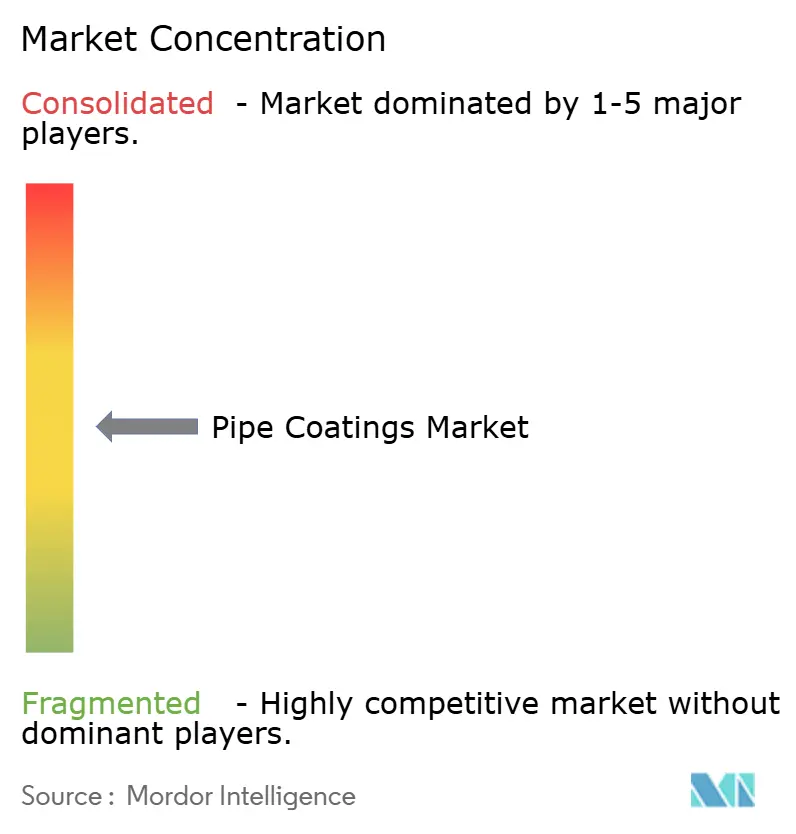
| Market Concentration | Medium |
Major Players *Disclaimer: Major Players sorted in no particular order Image © Mordor Intelligence. Reuse requires attribution under CC BY 4.0. | |
Pipe Coatings Market Analysis by Mordor Intelligence
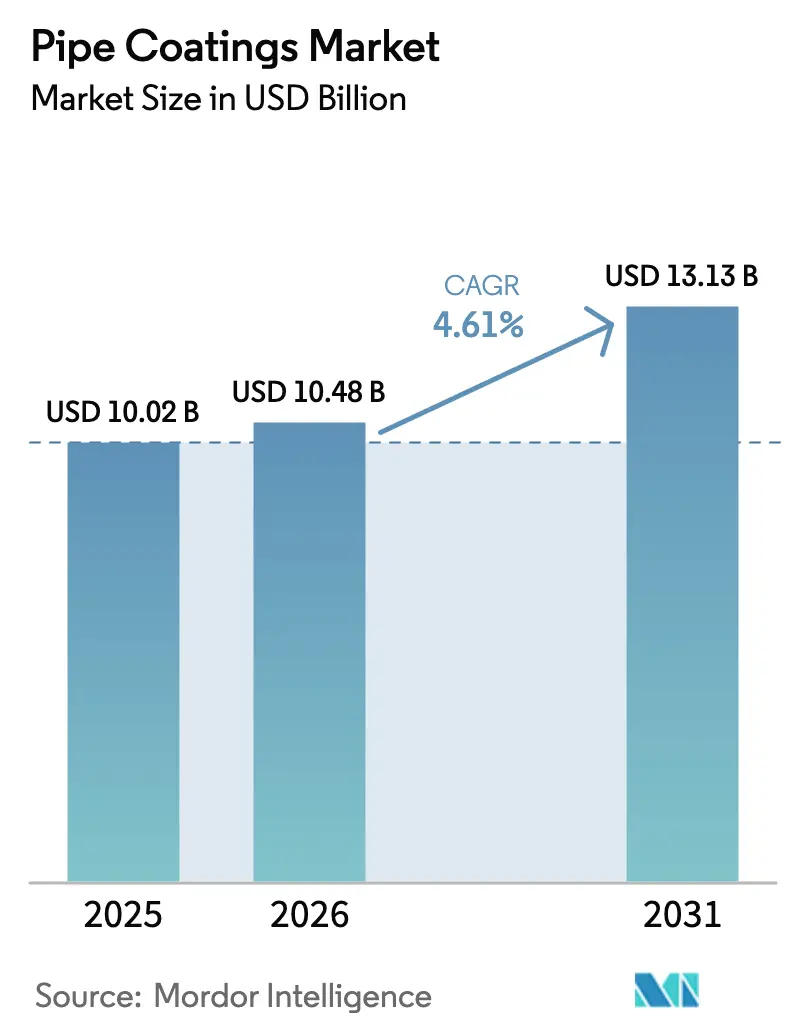
The Pipe Coatings Market size is projected to expand from USD 10.02 billion in 2025 and USD 10.48 billion in 2026 to USD 13.13 billion by 2031, registering a CAGR of 4.61% between 2026 to 2031. Robust pipeline build-outs for shale gas in North America, large-scale oil and gas corridors in Asia-Pacific, and stricter corrosion-protection mandates for aging networks collectively underpin this steady expansion. Operators are prioritizing high-performance external systems to curb soil-side failures, while tightening volatile-organic-compound (VOC) rules in Europe and the United States accelerate the switch to water-borne and powder alternatives. Material innovation—most notably self-healing zinc-rich primers, graphene-reinforced barriers, and UV LED-curable field-joint products—continues to raise performance benchmarks and shorten maintenance cycles. Competitive strategies revolve around regional application hubs, vertical integration into field services, and portfolio realignment away from legacy coal-tar and asphalt enamels.
Key Report Takeaways
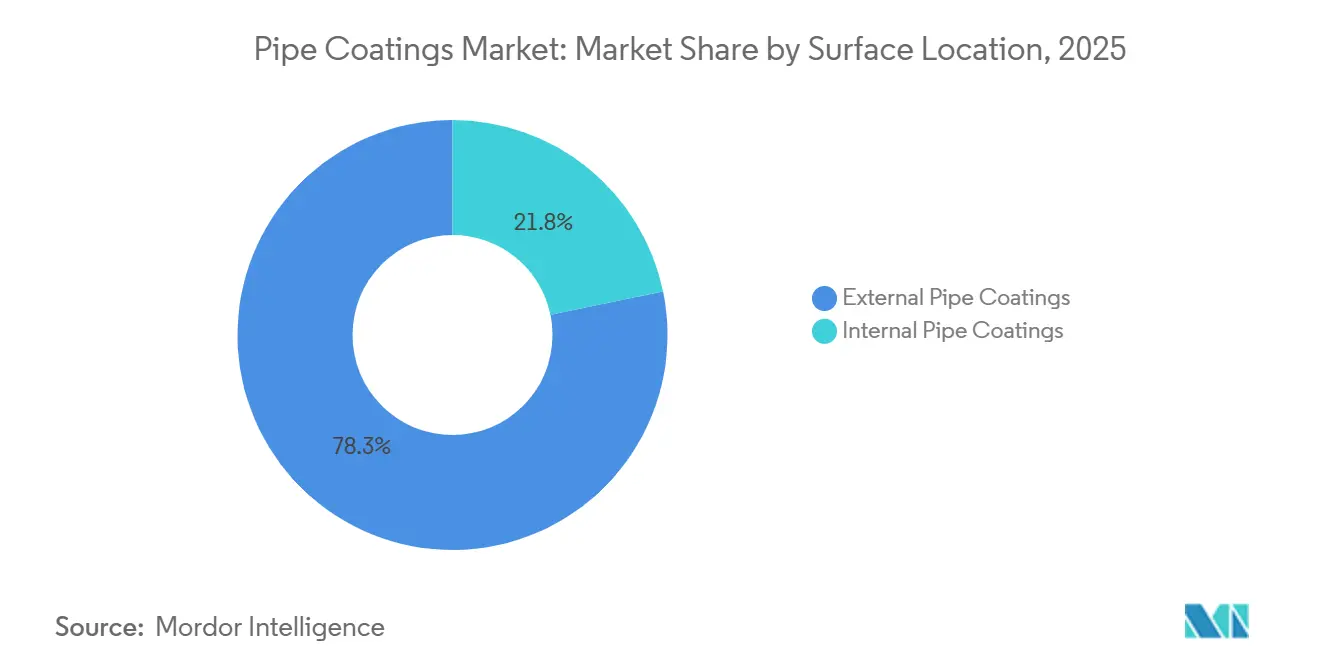
- By material type, epoxy and polyurethane led with 40.81% of the pipe coatings market share in 2025 and are forecast to expand at a 4.95% CAGR through 2031.
- By surface location, external coatings accounted for 78.25% of the pipe coatings market size in 2025 and are advancing at a 5.26% CAGR to 2031.
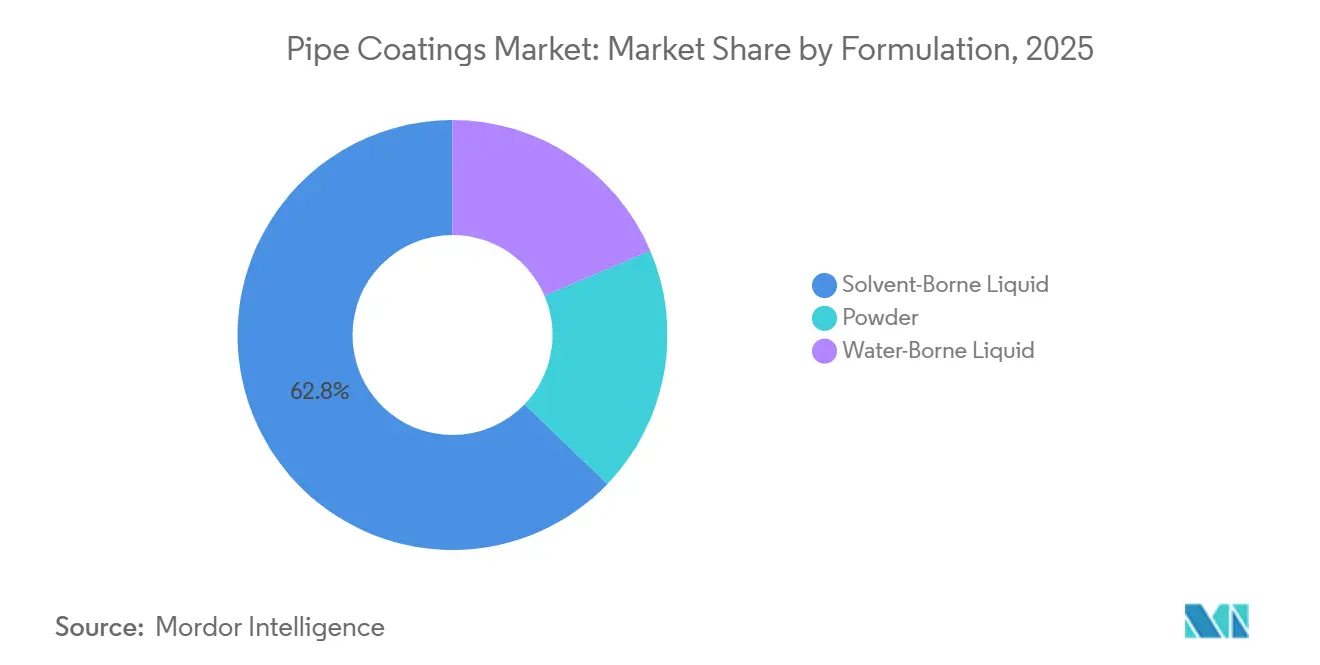
- By formulation, solvent-borne liquid held 62.81% share in 2025, whereas water-borne liquid is registering the fastest 5.12% CAGR to 2031.
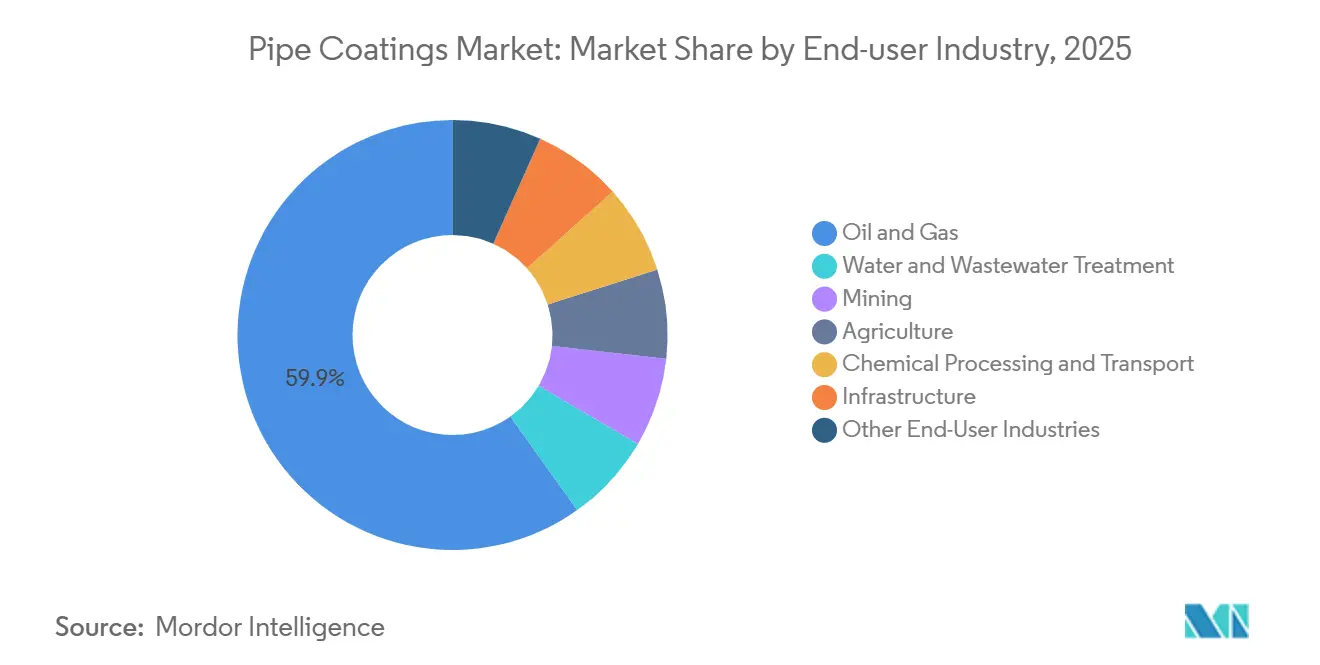
- By end-user industry, oil and gas commanded 59.85% of the pipe coatings market share in 2025 and is set to grow at a stronger 4.84% CAGR to 2031.
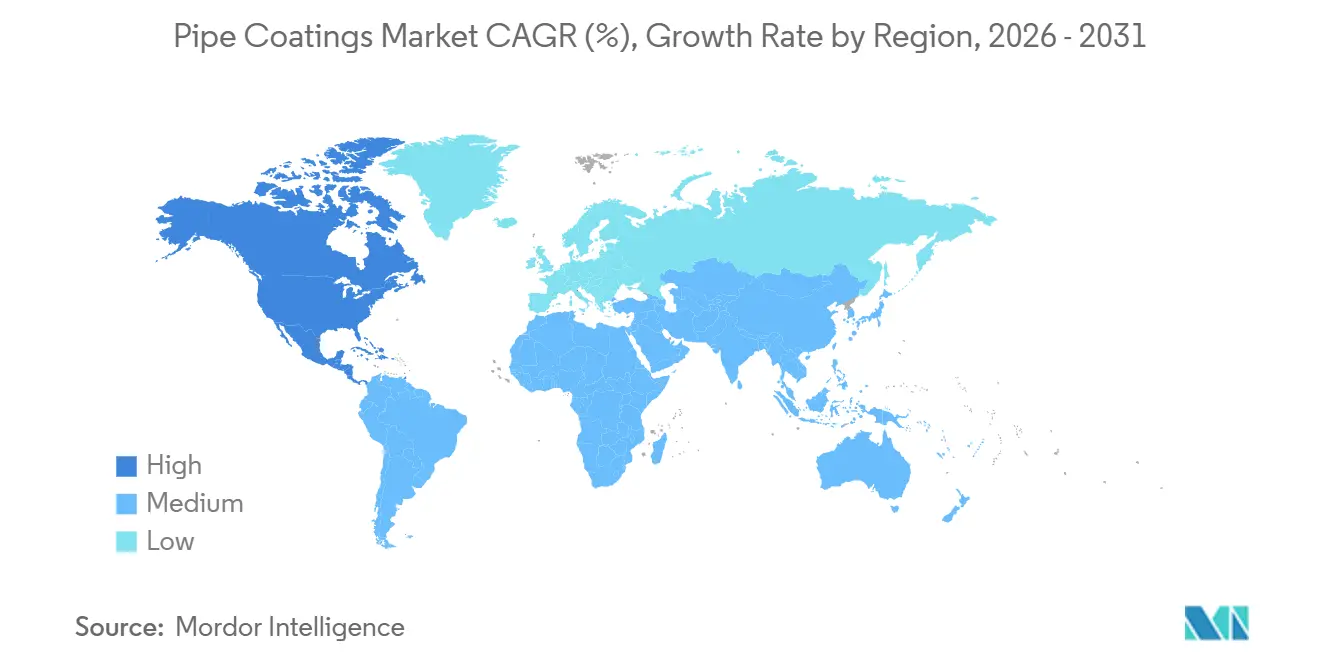
- By geography, North America captured 31.57% of the pipe coatings market in 2025 and is projected to log a 5.45% CAGR to 2031.
Note: Market size and forecast figures in this report are generated using Mordor Intelligence’s proprietary estimation framework, updated with the latest available data and insights as of January 2026.
Market Trends and Insights
Drivers Impact Analysis of Pipe Coatings Market*
| Driver | (~) % Impact on CAGR Forecast | Geographic Relevance | Impact Timeline |
|---|---|---|---|
| Increasing Shale Gas Capacity Additions Accelerating Maintenance Cycles | +0.9% | North America, with spillover to Canada and Mexico | Medium term (2-4 years) |
| Rising Adoption of High-Performance Coatings for Corrosion Protection in Pipelines | +1.2% | Global, with concentration in North America, Europe, and Middle East | Long term (≥ 4 years) |
| Growing Infrastructure and Industrialization in the Asia-Pacific Region | +1.1% | APAC core (China, India, ASEAN), spillover to South Asia | Long term (≥ 4 years) |
| Rise in Irrigation and Agricultural Activities in Southeast Asia | +0.4% | Southeast Asia (Indonesia, Vietnam, Thailand, Philippines) | Medium term (2-4 years) |
| Accelerating Demand for Energy Infrastructure in Europe | +0.8% | Europe, with concentration in Germany, Netherlands, Belgium, and Nordic countries | Long term (≥ 4 years) |
| Source: Mordor Intelligence | |||
Increasing Shale Gas Capacity Additions Accelerating Maintenance Cycles
Natural-gas pipeline construction in the United States added 17.8 billion cubic feet per day of capacity in 2024, compressing inspection intervals and pushing operators toward faster-curing fusion-bonded epoxy (FBE) and three-layer polyethylene systems. Federal Energy Regulatory Commission dockets list 127 additional projects spanning 15,000 miles, each subject to stringent Pipeline and Hazardous Materials Safety Administration integrity rules. To minimize downtime during tie-ins, suppliers are commercializing rapid-cure epoxies that achieve handling strength in less than 30 minutes. Liquids-rich shale plays such as the Marcellus and Haynesville introduce erosion-corrosion, elevating demand for abrasion-resistant overcoats. As a result, maintenance cycles that once stretched 10–15 years now average 7–10 years, creating recurring revenue streams for applicators concentrated in Texas, Oklahoma, and Pennsylvania.
Rising Adoption of High-Performance Coatings for Corrosion Protection in Pipelines
Corrosion drives roughly one-quarter of global pipeline failures, propelling uptake of advanced FBE, polyurethane, and zinc-rich systems that extend service life past 50 years under moderate soil conditions. Breakthroughs include zinc-based self-healing primers validated by the National Energy Technology Laboratory that galvanically repair micro-cracks, eliminating emergency recoats[1]National Energy Technology Laboratory, “Self-Healing Zinc-Rich Primers for Pipelines,” netl.doe.gov . Graphene-oxide and carbon-nanotube fillers cut water permeation by 40%, and UV LED-curable field-joint products shrink laydown schedules. Updated ISO 21809 standards published in 2024 tightened cathodic-disbondment thresholds, essentially phasing out coal-tar enamels for new builds. Middle-East operators are specifying high-temperature epoxies rated at 150 °C for sour-gas lines, a requirement that extends qualification cycles to 18 months.
Growing Infrastructure and Industrialization in the Asia-Pacific Region
China commissioned more than 4,000 kilometers of new pipelines in 2024, highlighted by the 5,111-kilometer China–Russia eastern-route gas trunkline that required over 2 million m² of three-layer polyethylene coating to resist permafrost and seismic stresses. India targets a gas network of 35,000 kilometers by 2030, supported by a 60% rise in demand to 103 billion m³ annually. Regional projects such as the Mumbai–Nagpur–Jharsuguda pipeline specify epoxy–polyurethane systems, while the Asian Development Bank anticipates USD 200 billion in yearly ASEAN infrastructure outlays, 40% earmarked for energy and water. Regulatory harmonization toward ISO 21809 and NACE SP0169 is trimming reliance on asphalt enamels that fall short on longevity.
Rise in Irrigation and Agricultural Activities in Southeast Asia
Government-backed irrigation upgrades across Vietnam, Thailand, Indonesia, and the Philippines are swapping open canals for pressurized steel and HDPE pipelines. Vietnam alone installed 1,200 kilometers in 2024, integrating epoxy linings to prevent contamination of fertilizer-laden waters. Thailand’s Royal Irrigation Department is retrofitting canals with FBE-coated buried lines to combat seepage losses that historically exceeded 30%. Seasonal wet–dry cycles accelerate delamination, prompting hybrid epoxy-polyurethane blends that absorb thermal expansion. The migration to pipe networks is most intense on Java and Sumatra, where land scarcity squeezes rice cultivation and demands efficient water delivery.
Restraints Impact Analysis of Pipe Coatings Market*
| Restraint | (~) % Impact on CAGR Forecast | Geographic Relevance | Impact Timeline |
|---|---|---|---|
| Operational Challenges in Newly Discovered Energy Reserves | -0.5% | Arctic, ultra-deepwater Gulf of Mexico, offshore West Africa | Medium term (2-4 years) |
| Rising Adoption of Trenchless PE Pipe in Municipal Water Supply | -0.3% | North America and Europe, with early adoption in urban centers | Short term (≤ 2 years) |
| Competition from Renewable Energy Substitutes | -0.7% | Europe, North America, with early adoption in Scandinavia and California | Long term (≥ 4 years) |
| Source: Mordor Intelligence | |||
Operational Challenges in Newly Discovered Energy Reserves
Ultra-deepwater fields at depths beyond 2,000 meters expose coatings to 3,000 psi hydrostatic pressure and near-freezing temperatures that accelerate cathodic disbondment. Arctic projects face freeze–thaw micro-cracking and permafrost-induced bending stress, limiting conventional epoxy performance. High-temperature sour-gas reservoirs such as Saudi Arabia’s Jafurah demand epoxies rated 150 °C and verified hydrogen-sulfide resistance, extending material qualification timelines and adding 20–40% to per-kilometer costs. Some operators gravitate toward corrosion-resistant alloys that bypass coatings, constraining market volume growth.
Rising Adoption of Trenchless PE Pipe in Municipal Water Supply
Municipal utilities in North America and Europe are increasingly turning to high-density polyethylene (HDPE) for trenchless rehabilitation because it offers 50-year service lives without exterior coatings. The U.S. Environmental Protection Agency’s latest needs survey earmarks USD 625 billion for drinking-water infrastructure, with a growing slice allocated to HDPE and PVC rather than coated steel[2]U.S. Environmental Protection Agency, “7th Drinking Water Infrastructure Needs Survey,” epa.gov . As urban dig-sites tighten, horizontal-directional drilling favors welded PE strings, suppressing demand for internal epoxy linings in distribution mains.
*Our forecasts treat driver/restraint impacts as directional, not additive. The impact forecasts reflect baseline growth, mix effects, and variable interactions.
Pipe Coatings Market Segment Analysis
By Material Type:
Epoxy Formulations Anchor Market ShareEpoxy and polyurethane held 40.81% of the pipe coatings market in 2025, underlining their strong hold over high-pressure gas and sour-service pipelines. Fusion-bonded epoxy remains the go-to external solution, with field data confirming 50-year service life for moderate soils. Self-healing zinc-rich primers verified by NETL promise to trim recoating cycles and are drawing interest from North American and Middle-Eastern operators seeking life-cycle cost reductions. In contrast, coal-tar enamel is in structural decline following the 2024 ISO 21809 revision. Polyethylene and polypropylene tri-layer wraps dominate ultra-deepwater and Arctic deployments where flexibility and low-temperature resilience outweigh cost premiums.
Graphene-infused epoxies that slash water permeation by 40% are graduating from pilot to commercial scale in 2026. Polyethylene demand receives a lift from China’s permafrost corridors and Brazil’s pre-salt flowlines, whereas cement-mortar linings stay entrenched in large-diameter municipal mains. Suppliers are increasingly pairing powder-applied FBE primers with liquid polyurethane topcoats to achieve dual-layer protection without disrupting shop throughput.



By Surface Location:
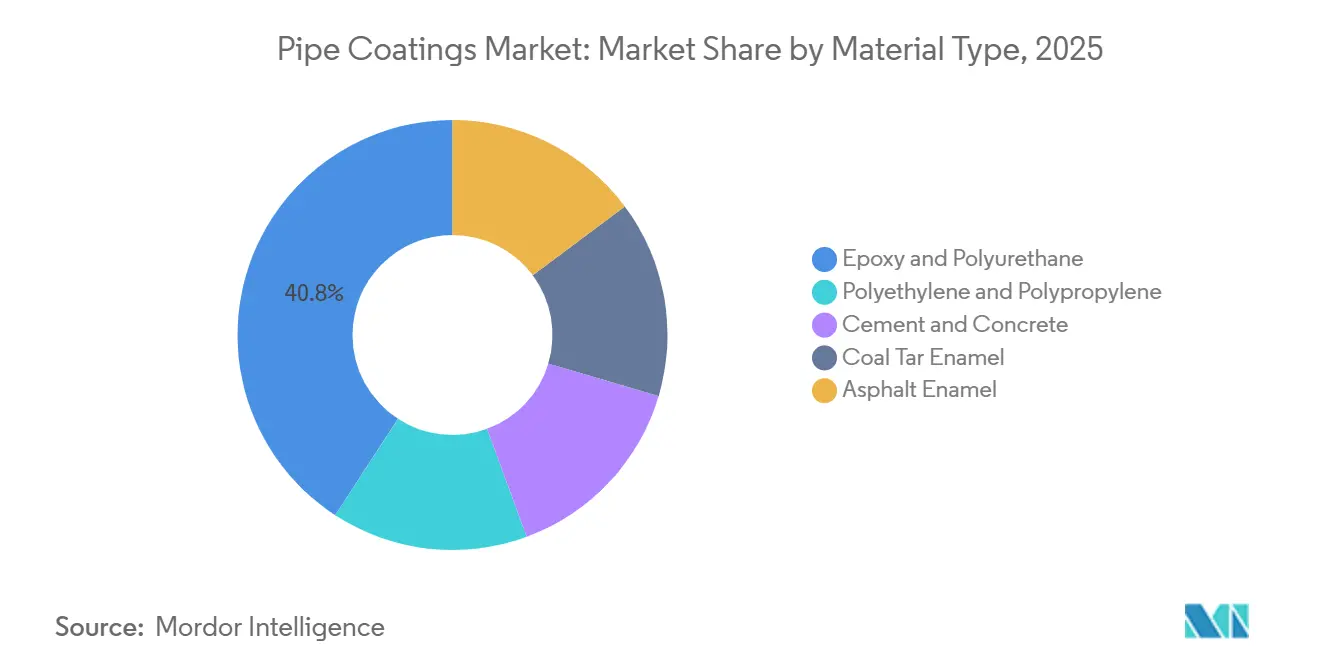
External Coatings Dominate on Soil-Side PrioritiesExternal pipe coatings comprised 78.25% of 2025 revenue and are set to expand at a 5.26% CAGR, reflecting operator emphasis on soil-side corrosion, which is responsible for roughly one-fifth of pipeline failures. Cathodic-protection retrofits and drone-enabled inspection regimes are reinforcing demand, while tightening high-consequence-area rules in the United States accelerate recoating intervals. Internal linings retain a niche in water, chemical, and multiphase oil lines, where flow-efficiency improvements offset higher upfront costs.
Operators are trialing UV LED-curable overwraps for field-joint protection, cutting cure times from hours to minutes. Internal linings grow alongside U.S. lead-service-line removals and Asian city-gas expansion, though HDPE substitution in municipal water tempers upside. Advanced phenolic epoxies rated for 180 °C service are gaining share in ethylene and ammonia lines, where product purity is critical.
By Formulation:
Solvent-Borne Liquids Face Environmental HeadwindsSolvent-borne liquid commanded a 62.81% share in 2025, buoyed by ease of application for field joints and repairs in remote oilfields. However, water-borne liquid is advancing at a 5.12% CAGR under VOC pressure from the European Industrial Emissions Directive, which caps emissions at 50 g/L. Powder coatings enjoy zero-VOC status but remain largely shop-applied due to oven-curing requirements.
Akzo Nobel and PPG have launched water-borne systems that meet ISO 21809 adhesion norms, eroding the historical performance gap with solvent-borne rivals. Middle-Eastern and Southeast Asian contractors still prefer solvent-borne liquids where ambient humidity and limited power supply complicate water-borne deployment.
By End-user Industry:
Oil and Gas Sustains Leadership Amid Energy TransitionOil and gas generated 59.85% of revenue in 2025 and continues to anchor demand despite the energy transition. Saudi Aramco’s USD 110 billion Jafurah unconventional program alone calls for more than 1,000 kilometers of high-temperature epoxy-covered lines. Deepwater tie-backs in the Gulf of Mexico and West Africa require tri-layer polypropylene for thermal insulation and hydrostatic resistance. The water and wastewater segment is the fastest-growing vertical as the U.S. EPA identifies USD 422.9 billion in pipe replacement needs and Europe accelerates lead-service-line retirement.
Mining tailings pipelines favor polyurethane topcoats to resist abrasion, while agricultural irrigation lines in Southeast Asia increasingly specify hybrid epoxy-polyurethane blends to manage thermal cycling.
Geography Analysis
North America Pipe Coatings Market
North America maintained leadership with 31.57% share in 2025, underpinned by 17.8 billion cfd of new U.S. gas-pipeline capacity in 2024 and 127 additional projects in FERC queues. Trans Mountain’s expansion wrapped up in 2024, adding 590,000 bpd of epoxy-coated capacity between Alberta and British Columbia. Canada is also testing graphene-reinforced FBE on its Arctic-bound Mackenzie corridor, while Mexico’s Pemex plans to swap 500 kilometers of legacy steel lines for epoxy-polyurethane variants by 2027. Federal infrastructure grants worth USD 6 billion to modernize water mains further buoy internal lining demand across U.S. cities.
APAC Pipe Coatings Market
Asia-Pacific is closing the gap, anchored by China’s 5,111-kilometer eastern-route pipeline delivering 38 billion m³ per year and India’s goal of 35,000 kilometers of gas grid by 2030. ASEAN governments commit over USD 200 billion annually to energy and water projects, pushing the pipe coatings market in Indonesia, Vietnam, and Thailand into double-digit growth for municipal and irrigation lines. Powder coating adoption is rising in South Korea and Japan, where factory-prefabricated spools streamline labor and quality control.
Europe, South America and Africa Pipe Coatings Market
Europe, while pivoting from hydrocarbons, channels substantial funds into hydrogen-ready lines. The European Hydrogen Backbone envisions 31,000 kilometers by 2040, providing a medium-term floor for demand even as fossil pipelines wane. Strict VOC caps propel water-borne uptake, and Germany’s offshore wind-to-X energy islands call for novel polyurethane formulations that withstand hydrogen embrittlement. South America’s growth stems from Brazil’s pre-salt cluster and Argentina’s Vaca Muerta shale, whereas African demand hinges on Nigerian LNG corridors and East African crude initiatives.

Value Chain Analysis
The pipe coatings value chain starts with upstream petrochemical and mineral feedstocks, which are converted into resins, curing agents, pigments, and additives (notably epoxy chemistries, isocyanates for polyurethane, and polyolefins for multilayer systems). Coating formulators then produce powder, solvent-borne, and water-borne products, which reach two main application channels: factory-applied systems on line pipe (FBE, 3LPE/3LPP, concrete weight coating, and insulation systems) and field-applied coatings for joints, repairs, and rehabilitation. Downstream, certified applicators, inspection and testing labs (for adhesion, holiday detection, cathodic disbondment, and impact resistance), and pipeline EPCs and operators determine specification and qualification, with ISO 21809 and operator integrity programs shaping material selection and documentation requirements.
The main bottlenecks are specialized application capability and constrained inputs. Fusion-bonded epoxy needs dedicated application equipment and controlled processes, and field work relies on a limited pool of NACE-qualified technicians, which tightens scheduling on large build-outs and maintenance programs. The chain is also exposed to rapid raw-material cost and lead-time swings tied to energy, logistics, and geopolitics, with 2026 price actions such as LANXESS increasing sulfur-based intermediates and Nouryon announcing ketone-derivative increases that highlight procurement volatility for formulators and applicators. In response, incumbents are pairing coatings with service-led differentiation (technical support, QA/QC, warranties) while building regional hubs and inventory strategies to protect delivery performance for oil and gas, water, and industrial projects.
Competitive Landscape
The top five suppliers—PPG Industries, The Sherwin-Williams Company, Akzo Nobel, 3M, and Jotun—control roughly 45–50% of global revenue, giving the sector a moderate level of concentration. These majors leverage bulk raw-material contracts, regional application centers, and long-term maintenance frameworks to secure annuity-style cash flows. BASF’s EUR 7.7 billion carve-out of its coatings division to Carlyle in October 2025 marks a strategic retreat from commoditized architectural paints toward higher-margin industrial and protective niches. Sherwin-Williams expanded its South American footprint by acquiring BASF’s Brazilian decorative business for USD 1.15 billion, improving access to Petrobras-linked pipeline contractors.
Regional challengers in Southeast Asia and the Middle-East differentiate through agile technical support and shorter lead times for project-specific blends, chipping away at tier-one incumbents. Innovation themes include zinc-nanoparticle self-healing primers that NETL pilot-tested on Permian Basin lines and graphene-oxide hybrids moving into commercial batches in 2026. ISO 21809’s stricter 2024 update heightens entry barriers by mandating verified cathodic-disbondment data, favoring integrated suppliers with certified labs. M&A activity is expected to continue as majors shed non-core units and private equity funds pursue bolt-ons to build protective-coatings platforms.
Pipe Coatings Industry Leaders
Akzo Nobel N.V.
Jotun
PPG Industries, Inc.
The Sherwin-Williams Company
3M
- *Disclaimer: Major Players sorted in no particular order
Pipe Coatings Market Companies Covered in this Report
- 3M
- A.W. Chesterton Company
- Abdel Hadi A. Al-Qahtani & Sons Group of Companies
- Aegion Corporation (Bayou)
- Akzo Nobel N.V.
- Allan Edwards, Inc.
- Axalta Coating Systems, LLC
- BASF
- Bauhuis B.V.
- Blocher Oberflachentechnik GmbH
- Borusan Mannesmann
- Celanese Corporation
- CENERGY HOLDINGS
- Dura-Bond Industries
- GBA Products Co Ltd
- Hempel A/S
- Jotun
- LyondellBasell Industries Holdings B.V.
- Mutares SE & Co. KGaA
- Nippon Paint Holdings Co., Ltd.
- NOV
- PERMAA-PIPE International Holdings, Inc.
- PPG Industries, Inc.
- Tenaris
- The Sherwin-Williams Company
- Wasco Berhad

Market Opportunities and Future Outlook
Opportunity is concentrated in higher-performance, faster-to-apply systems that reduce downtime in integrity-driven maintenance and field-joint work, particularly as operators compress inspection cycles and pursue quicker tie-ins. Technologies moving from validation to field deployment, including NETL-tested self-healing metallic and zinc-rich concepts for corrosion control, support premium primers and repair solutions that extend coating life without lengthening shutdown windows. There is also room for automation and semi-mechanized application methods for field-joint coating, aimed at improving film build consistency and impact resistance versus manual wraps, which directly addresses labor constraints and quality variability on large pipeline spreads.
Capacity localization and energy-transition infrastructure are also creating demand for specialized external coatings, insulation systems, and HDD-capable multilayer solutions. Examples include Welspun Tubulars’ announced USD 150 million investment in a US LSAW pipe mill and coating line aimed at hydrogen, carbon capture, and LNG end uses, and East Pipes Integrated Company’s plan to double annual coating capacity at its Dammam facility for an additional external coating line. On performance, subsea flow assurance requirements support thicker insulation and syntactic systems, illustrated by TenarisShawcor applying record-thickness 5-layer syntactic polypropylene for a subsea flowline, which reinforces the premium segment for deepwater and harsh-environment pipelines where coating specs extend beyond corrosion protection into thermal management and mechanical durability.
Recent Industry Developments in Pipe Coatings Market
- June 2026: Sherwin-Williams launched Heat-Flex AEB (Advanced Energy Barrier) for tanks, process vessels, and piping as a coating-based alternative to mineral insulation designed to mitigate corrosion under insulation. The introduction broadens addressable demand in industrial piping where CUI risk drives maintenance spend, and it strengthens positioning in retrofit-heavy facilities that prioritize faster turnaround and reduced insulation handling.
- May 2026: AkzoNobel began commercial availability of ecosparc-enhanced Interzone 954 in Australia for offshore and petrochemical protective applications. Commercialization of a graphene-enabled protective platform targets higher-specification pipe and asset coatings where barrier performance and durability are purchase criteria, raising competitive pressure on incumbents focused on premium anti-corrosion systems.
- June 2025: Sherwin-Williams highlighted the adoption of Pipeclad 2000 LAT powder coating for pipeline girth welds in cold-condition work, with the user reporting a reduction in heat requirements by 85 degrees Fahrenheit. Lower application temperature capability improves field productivity and energy use on weld coating operations, supporting broader conversion from liquid systems where schedule and site constraints favor powder solutions.


Pipe Coatings Market Report Scope and Research Methodology
Market Definition and Coverage
For this study, the pipe coatings market includes factory and field applied protective coatings used on the internal or external surface of pipes to reduce corrosion, abrasion, and flow related losses across operating environments.
Scope exclusions: This sizing excludes pipe insulation, pipe wraps and tapes sold as stand-alone products, and non-coating corrosion protection methods such as cathodic protection systems.
Segments Covered in This Report
- By Material Type
- Epoxy and Polyurethane
- Polyethylene and Polypropylene
- Cement and Concrete
- Coal Tar Enamel
- Asphalt Enamel
- By Surface Location
- External Pipe Coatings
- Internal Pipe Coatings
- By Formulation
- Solvent-Borne Liquid
- Powder
- Water-Borne Liquid
- By End-user Industry
- Oil and Gas
- Water and Wastewater Treatment
- Mining
- Agriculture
- Chemical Processing and Transport
- Infrastructure
- Other End-user Industries
- Geography
- Asia-Pacific
- China
- India
- Japan
- South Korea
- ASEAN Countries
- Rest of Asia-Pacific
- North America
- United States
- Canada
- Mexico
- Europe
- Germany
- United Kingdom
- France
- Italy
- Spain
- NORDIC Countries
- Rest of Europe
- South America
- Brazil
- Argentina
- Rest of South America
- Middle-East and Africa
- Saudi Arabia
- South Africa
- Rest of Middle-East and Africa
- Asia-Pacific
Data Sources, Market Sizing, and Validation
Desk Research
Desk research was first used to map the demand pool for coated pipes and to anchor the model to repeatable public indicators. We relied on sources such as EIA pipeline and energy statistics, USGS materials data, World Bank infrastructure indicators, UN Comtrade trade flows for coating resins and pipe inputs, and standards and guidance published by bodies such as NACE/AMPP and ISO.
To translate those indicators into market value, we also reviewed company annual reports and investor presentations for coatings and pipe related businesses, along with reputable press coverage on pipeline awards, refurbishments, and regulatory changes. In parallel, we used paid subscriptions for company financials and intelligence, patent databases, and an import-export shipment level database to cross-check directionally where capacity additions and cross-border movements were rising. These examples are not exhaustive, and many other public and paid references were also used to collect data, validate assumptions, and clarify gaps.
Primary Interviews and Surveys
Primary work was done to pressure-test what desk signals could not fully explain, mainly coating mix by pipe type, typical spec thickness and system choice, and how pricing changes move through project bids and maintenance cycles. We spoke with stakeholders across coating formulators, applicators, pipe mills, EPC related roles, and end users in oil and gas, water infrastructure, and industrial piping. We then reconciled differences across regions to reduce the risk of applying the same assumptions in markets with different spec practices or maintenance cadence.
Distribution of primary research fieldwork respondents
| Company type | Respondent position | Region |
|---|---|---|
| Top tier: 37% | CXOs: 20% | APAC: 37% |
| Mid tier: 42% | Functional/Unit leaders: 27% | EMEA: 37% |
| Smaller Players: 21% | Managers: 53% | Americas: 26% |
Market-Sizing & Forecasting
Market sizing was built using a top-down and bottom-up approach, where pipeline build and rehabilitation activity is reconstructed from energy and water infrastructure indicators and then converted into coated surface demand by applying coating intensity factors (for example, typical square meters per kilometer by diameter bands). After that, the value layer is created using a coated area to pricing bridge, where coating system mix and application share are used to arrive at an average realized price. To keep the totals realistic, we also corroborated the output with selective bottom-up checks, such as sampled supplier and applicator revenue bands, and channel conversations on volumes and price ranges.
Key inputs that were used in the model include pipeline length additions and replacement rates, splits between internal and external coating adoption, material system mix (for example epoxy based, polyethylene or polypropylene layers, and polyurethane systems), field joint share versus mill coating share, and regional project timing that affects utilization and pricing. Forecasting was done using scenario analysis supported by simple time-series smoothing on the most stable drivers, and then the forward path was adjusted based on expert views on capex cycles, regulatory shifts toward low-VOC systems, and the cadence of repair and maintenance work. When bottom-up signals were missing for smaller geographies, gaps were handled using per kilometer coating spend benchmarks that were validated through interviews and then scaled to the local pipeline activity level.
Data Validation & Update Cycle
Outputs were checked through triangulation across independent signals, and large variances were investigated before sign-off. Our team ran consistency checks across regional totals, coating mix assumptions, and implied price per square meter, and then compared these to trade movement, capacity additions, and public project pipelines so outliers could be corrected.
The estimates go through multi-step analyst review, and follow-up calls are triggered when a single assumption changes the total materially, such as a sharp resin price move or a major pipeline delay. Reports are refreshed annually, with interim updates when major events occur, and a final pre-delivery review is completed so clients receive the latest updated view.
Mordor Intelligence's Pipe Coatings Market Size Compared With Other Published Estimates
Published market sizes for pipe coatings do not always match because the scope is not set the same way, and because inputs like coated area, coating system mix, and price progression can be treated differently. Differences also come from which year is treated as the anchor point and how currency conversion timing is handled.
Some external estimates bundle adjacent pipe protection spends beyond coatings or use broader pipeline protection groupings, and then the totals move depending on how much rehabilitation work is assumed. Mordor Intelligence counts coating materials and coating application value only when it is tied to internal or external pipe coating systems, and items like insulation, wraps or tapes sold stand-alone, and cathodic protection systems are kept out of scope.
Benchmark comparison
| Source | Market Size | Gaps in Research Methodology |
|---|---|---|
| Mordor Intelligence | USD 10.02 B (2025) | |
| Global Consultancy A | USD 9.20 B (2025) | Uses a narrower value capture that can undercount field joint coatings and maintenance recoating, and it can apply more conservative realized pricing when project mix shifts toward municipal water networks. |
| Industry Publisher B | USD 7.61 B (2024) | Anchors the model on an earlier base year and a smaller starting demand pool, and it can miss inflation passthrough in resin-linked coating prices when converting coated volume to value. |
The spread in values is mostly explained by what gets counted as pipe coating spend, plus how quickly pricing is allowed to move with project mix and input costs. By keeping the model tied to coated area, system mix, and region-specific pricing checks, the outcome stays transparent and repeatable for decision-making.


Key Questions Answered in the Report
What is the current valuation of the pipe coatings market and its growth outlook?
The pipe coatings market size stands at USD 10.48 billion in 2026 and is projected to reach USD 13.13 billion by 2031 at a 4.61% CAGR.
Which segment holds the largest share in surface location in 2025?
External pipe coatings lead with 78.25% share in 2025 because operators focus on soil-side corrosion protection.
Why are epoxy and polyurethane systems preferred in high-pressure gas lines?
They combine strong adhesion, chemical resistance, and compatibility with cathodic protection, delivering service lives beyond 50 years.
How will hydrogen infrastructure influence coating demand?
Europe’s planned 31,000-kilometer hydrogen backbone will require specialized coatings that resist hydrogen embrittlement, creating a new medium-term market niche.
Page last updated on:


 Your data is secure and never sold or shared.


