
PCR Packaging Market Size and Share
Market Overview
| Study Period | 2020 - 2031 |
|---|---|
| Market Size (2026) | USD 7.43 Billion |
| Market Size (2031) | USD 10.11 Billion |
| Growth Rate (2026 - 2031) | 6.34 % |
| Fastest Growing Market | Africa |
| Largest Market | Asia Pacific |
| Market Concentration | Medium |
Major Players *Disclaimer: Major Players sorted in no particular order Image © Mordor Intelligence. Reuse requires attribution under CC BY 4.0. | |
PCR Packaging Market Analysis by Mordor Intelligence
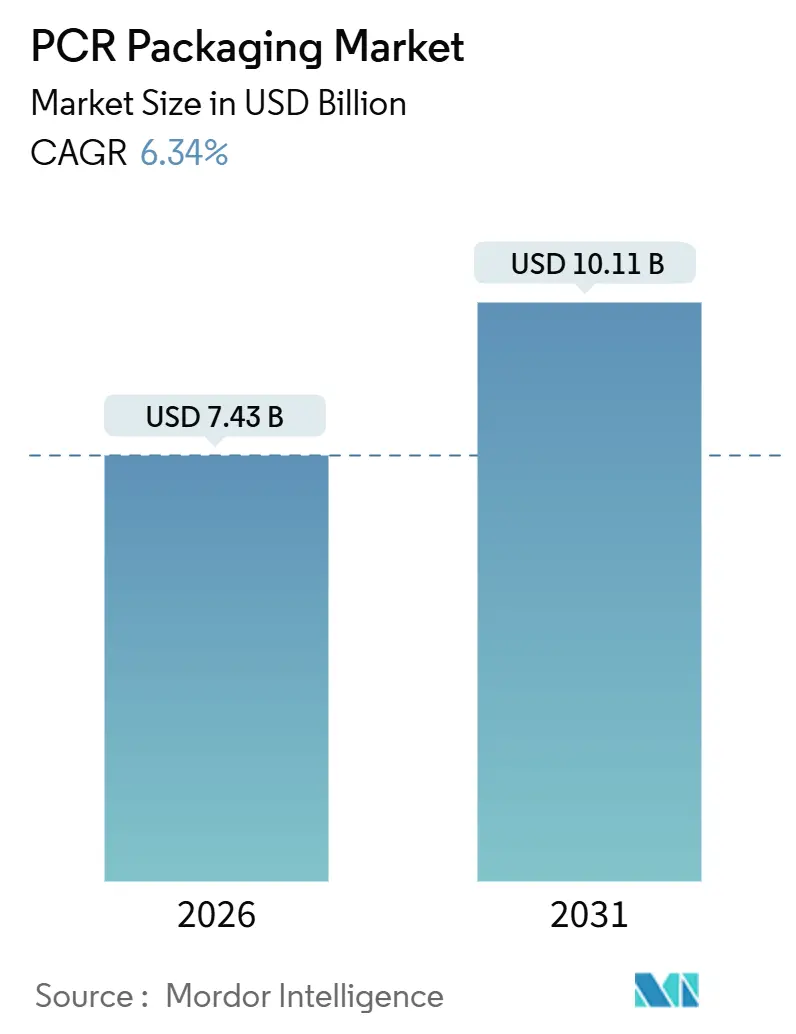
The PCR packaging market size stands at USD 7.43 billion in 2026 and is projected to reach USD 10.11 billion by 2031, reflecting a 6.34% CAGR. Across global value chains, brand-owner pledges, recycled-content mandates, and converter integration into washing and pelletizing capacity continue to shift demand away from virgin polymers toward certified circular feedstock. Polyethylene terephthalate remains the workhorse material thanks to bottle-to-bottle loops and food-contact approvals, yet mono-material pouches are scaling fastest as cosmetics and personal-care brands prioritize lightweight designs compatible with mechanical recycling. Tightening extended producer responsibility (EPR) schemes in California, the European Union, and Japan provide a regulatory floor for post-consumer resin, while Africa’s rising deposit-return systems attract fresh capital in wash-line infrastructure. Consolidation among converters accelerates, creating procurement scale and closed-loop capabilities that secure long-term supply agreements with multinational fast-moving consumer goods companies.
Key Report Takeaways
- By material type, polyethylene terephthalate held 46.50% of PCR packaging market share in 2025 and is forecast to expand at a 10.80% CAGR through 2031.
- By product type, bottles captured 37.90% revenue in 2025, whereas pouches are projected to grow at an 11.50% CAGR to 2031.
- By end-use industry, beverage applications led with 32.60% share in 2025; cosmetics and personal care is advancing at a 12.20% CAGR through 2031.
- By recycling source, post-consumer feedstock accounted for 71.45% of PCR packaging market size in 2025 and is rising at a 13.40% CAGR over the forecast period.
- By geography, Asia-Pacific commanded 38.50% of global demand in 2025, while Africa is poised for the fastest growth at a 14.10% CAGR to 2031.
Note: Market size and forecast figures in this report are generated using Mordor Intelligence’s proprietary estimation framework, updated with the latest available data and insights as of January 2026.
Market Trends and Insights
Drivers Impact Analysis of PCR Packaging Market*
| Driver | (~) % Impact on CAGR Forecast | Geographic Relevance | Impact Timeline |
|---|---|---|---|
| FMCG Brands' Recycled-Content Pledges Accelerate Volume Demand | +1.2% | North America, Europe, urban Asia-Pacific | Medium term (2-4 years) |
| Government EPR and Recycled-Content Mandates Tighten After 2025 | +1.5% | Europe, California, Japan, South Korea, India, Brazil | Long term (≥4 years) |
| Improved Global PCR Resin Supply Narrows Price Gap with Virgin Plastics | +1.0% | North America, Europe, Southeast Asia | Medium term (2-4 years) |
| Closed-Loop Brand Take-Back Programs Unlock New Feedstock Pools | +0.8% | North America and Europe, pilot Asia-Pacific cities | Short term (≤2 years) |
| Advanced Decontamination Technologies Enable Food-Grade PCR | +0.7% | North America, Europe, Japan, India, China | Medium term (2-4 years) |
| Blockchain Traceability Platforms Boost Compliance Confidence | +0.4% | Global | Short term (≤2 years) |
| Source: Mordor Intelligence | |||
FMCG Brands' Recycled-Content Pledges Accelerate Volume Demand
Global consumer-goods companies have locked in public targets that require minimum recycled content across packaging portfolios. Nestlé Purina converted its Friskies canisters to 100% mechanically recycled plastic in 2025, removing 500 metric tons of virgin material annually [1]Amcor plc, “Sustainability Report FY25,” AMCOR.COM. Mars Petcare Australia followed with Schmackos packs that integrate 60% ISCC PLUS-certified resin, demonstrating price-tolerant adoption even in treat categories. Multi-year supply contracts arising from these pledges give converters the demand certainty needed to finance new extrusion lines and decontamination assets. Beverage and personal-care brands feel the greatest consumer scrutiny, yet industrial film categories are beginning to align as Scope 3 emissions enter procurement scorecards. The overall effect is a structural pull that disciplines recycled-resin demand even when virgin-polymer prices soften.
Government EPR and Recycled-Content Mandates Tighten After 2025
Regulators are translating voluntary frameworks into enforceable quotas. California’s Plastic Pollution Prevention and Packaging Producer Responsibility Act sets a 25% cut in single-use plastics by 2032, subjecting non-compliant producers to per-ton fees. The European Union’s updated Packaging and Packaging Waste Regulation widens recycled-content thresholds beyond polyethylene terephthalate bottles to include flexible films and closures. Japan revised its recycling targets in 2024, and South Korea now pilots deposit-return for polyethylene pouches. These policies create a compliance floor: brand owners must secure certified post-consumer resin regardless of the virgin-to-recycled price spread. Certification frameworks such as ISCC PLUS and RecyClass have consequently become market-access passports for converters serving multinational clients.
Improved Global PCR Resin Supply Narrows Price Gap with Virgin Plastics
Mechanical recycling investments and commercial-scale advanced recycling projects expand the volume of food-grade post-consumer resin. ALPLA will channel EUR 15 million (USD 16.9 million) per year into recycling lines from 2026, doubling its output capacity to 700,000 metric tons by 2030. Amcor’s agreement with ExxonMobil grants it access to chemically recycled polyethylene via the Exxtend process, accelerating circular feedstock for healthcare and food pouches. As converters co-locate wash lines beside extrusion assets, freight costs fall and quality consistency rises, compressing the historical 20%–30% price premium over virgin resin.
Closed-Loop Brand Take-Back Programs Unlock New Feedstock Pools
Retail collection bins, refill schemes, and e-commerce reverse logistics secure mono-polymer streams that bypass municipal contamination. Amcor’s refillable milk bottle, reused up to 16 times before recycling, underscores the synergy between reuse and closed-loop systems. Cosmetics houses deploy in-store drop-boxes for empty jars, yielding high-purity material that meets food- and cosmetic-contact standards. Although economics favor high-margin categories today, pilot programs in quick-service restaurants suggest scalable reverse-logistics automation could extend closed-loop benefits to mass-market applications by 2028.
Restraints Impact Analysis of PCR Packaging Market*
| Restraint | (~) % Impact on CAGR Forecast | Geographic Relevance | Impact Timeline |
|---|---|---|---|
| Quality Variability and Contamination of PCR Resins | -0.9% | Africa, South Asia, Latin America | Medium term (2-4 years) |
| Under-Developed Collection and Sorting in Emerging Markets | -1.2% | Africa, South Asia, Southeast Asia | Long term (≥4 years) |
| Recycled-Resin Price Volatility from Oil-Price Swings | -0.6% | Global | Short term (≤2 years) |
| ESG-Audit Failures Cause Recalls and Brand-Equity Risk | -0.5% | Global | Short term (≤2 years) |
| Source: Mordor Intelligence | |||
Quality Variability and Contamination of PCR Resins
Mixed-polymer bales, adhesive residues, and food soils degrade melt flow and color, compelling converters to blend recycled resin with virgin feedstock at 30%–50% ratios [2]Packaging Insights, “Amcor adopts advanced recycling module at UK facility,” PACKAGINGINSIGHTS.COM . Optical sorters reach 98% accuracy on clear polyethylene terephthalate but stumble on black pigments and multilayer sachets. Hot-caustic washes remove labels, yet residual adhesive manifests as gels during extrusion, limiting film aesthetics. Odor-causing volatiles generated from food soils restrict usage in dairy and bakery packaging. Super-clean wash lines and reactive extrusion can restore virgin-like quality, though each line costs upward of USD 10 million, restricting adoption to large converters with assured feedstock.
Under-Developed Collection and Sorting in Emerging Markets
In Nigeria and Egypt, municipal collection rates remain below 30%, and informal yards introduce cross-contamination that limits production of single-polymer bales. India’s fragmented aggregators supply mixed plastics commanding a 15%–25% discount versus virgin resin because of inconsistent melt flow. South Africa’s deposit-return lifts polyethylene terephthalate recovery above 70%, but flexible packaging remains uncollected owing to inadequate optical sorting. Converters must transfer technology and capital for modular wash lines, yet currency and regulatory risks deter investment without guaranteed offtake.
*Our forecasts treat driver/restraint impacts as directional, not additive. The impact forecasts reflect baseline growth, mix effects, and variable interactions.
PCR Packaging Market Segment Analysis
By Material Types:
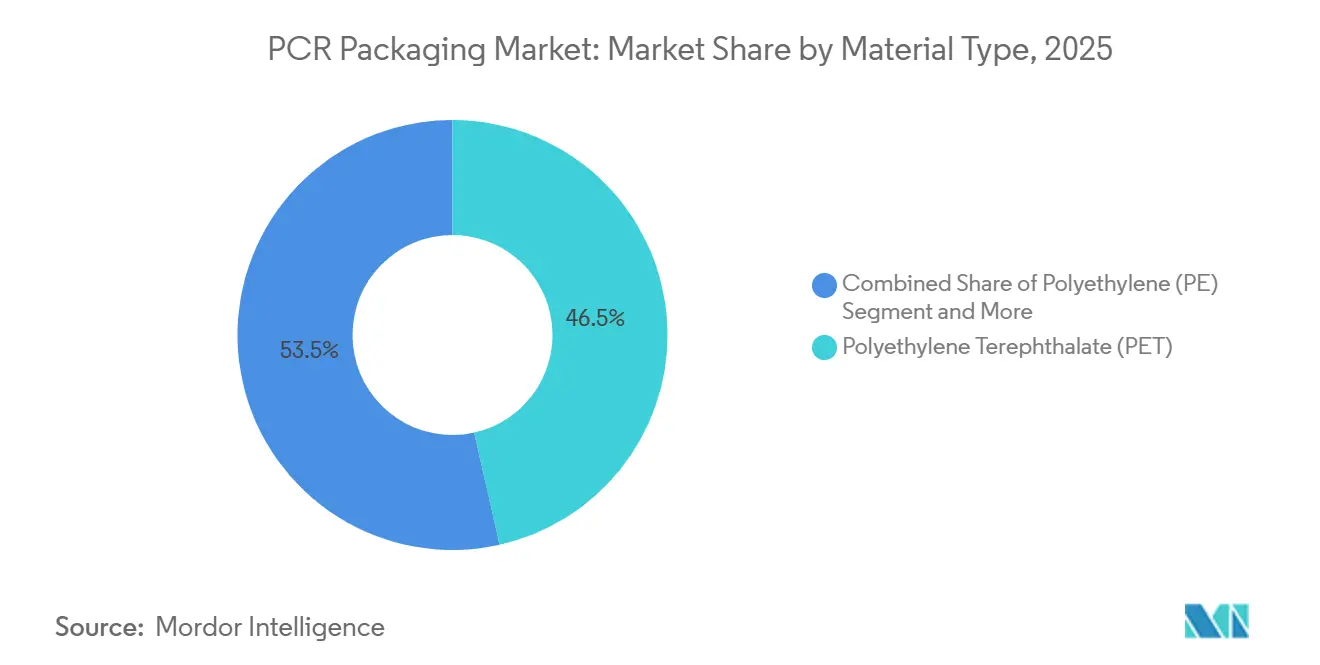
PET Dominance Anchored by Bottle Recycling InfrastructurePolyethylene terephthalate accounted for 46.50% of PCR packaging market share in 2025. Strong bottle-to-bottle loops, FDA and EFSA approvals, and brand commitments collectively drive a forecast 10.80% CAGR to 2031. Klöckner Pentaplast’s 15,000-metric-ton expansion backs kpNext blister films and kp Elite trays made with up to 100% recycled content. Polyethylene follows on industrial and agricultural films but faces sensory hurdles in food-contact formats despite advances in vacuum distillation. Polypropylene gains traction in hot-fill and retort packaging via mono-material retort pouches such as Huhtamäki’s Blueloop PP Retort, yet limited recycling infrastructure inflates price premiums. Polyvinyl chloride and polystyrene together remain below 10%, restricted by adverse regulations and limited end-of-life pathways.
Mono-material design trends cut across all polymers, spurring investment in co-extrusion lines that eliminate aluminum foil and ethylene-vinyl-alcohol layers. Advanced barrier coatings now enable polyethylene and polypropylene pouches to meet oxygen-transmission targets without multi-layer laminates, widening the addressable scope for high-recycled-content solutions. As regulators raise recycled-content thresholds, these materials will need decontamination innovations to match polyethylene terephthalate’s established food-grade pathways.



By Product Type:
Bottles Lead, Pouches Surge on Mono-Material InnovationBottles retained 37.90% revenue contribution in 2025, bolstered by deposit-return systems that secure high-quality feedstock and permit multiple closed-loop cycles. Trays remain pivotal for meat and ready-meal applications, with Amcor and kp expanding clear recycled-polyethylene terephthalate thermoforms that satisfy modified-atmosphere packaging needs. The standout growth, however, comes from pouches, projected at an 11.50% CAGR through 2031. Huhtamäki’s Blueloop PE pouch replaces multi-layer structures, cutting carbon footprint by 73% and retaining mechanical recyclability.
Converter investments support this shift. TC Transcontinental’s USD 60 million biaxially oriented polyethylene film line in South Carolina delivers recyclability without sacrificing form-fill-seal efficiency. Caps, closures, and clamshells round out the portfolio, with molded-fiber formats beginning to displace polystyrene foam in takeaway channels.
By End-Use Industry:
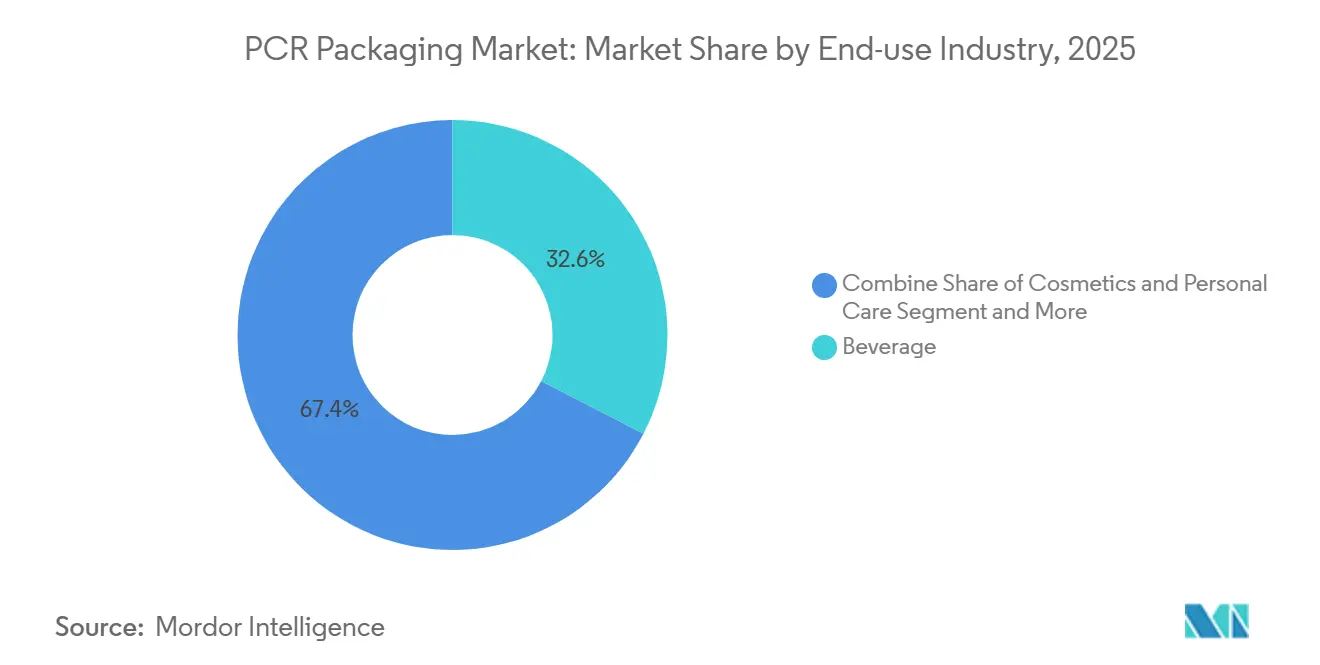
Beverage Leads, Cosmetics Accelerates on Prestige PositioningBeverage brands consumed 32.60% of PCR packaging market size in 2025, leveraging clear on-pack recycled-content claims that resonate with consumers. Closed-loop polyethylene terephthalate schemes provide high collection yields, enabling soda, water, and juice bottlers to meet 25%–50% recycled-content targets. Cosmetics and personal care represent the fastest climb, charting a 12.20% CAGR to 2031. Aptar’s Color Code PCR fragrance pump integrates up to 67% post-consumer resin and cuts production carbon dioxide emissions by 39%. Haleon’s Otrivin pump, incorporating 60% circular material, doubles down on bio-based feedstock to satisfy brand sustainability roadmaps.
Food trays, bakery films, and ready-meal containers absorb a solid share, aided by advanced recycling modules such as Greenback’s Enval system installed at Amcor’s Heanor site. Healthcare adoption lags but rises steadily as regulators clarify post-consumer content pathways for non-contact components. Industrial films remain cost-sensitive, responding acutely to crude-oil-linked virgin-resin price swings.
By Recycling Source:
Post-Consumer Dominates, Driven by Regulatory MandatesPost-consumer streams supplied 71.45% of global demand in 2025 and are growing at 13.40% CAGR. Amcor alone consumed 218,000 metric tons of post-consumer resin in fiscal 2025, equating to 10% of its plastic throughput. Deposit-return expansion, blockchain-enabled chain-of-custody, and super-clean wash lines underpin this advance. Post-industrial scrap, at 28.55%, remains valuable for in-plant reuse yet lacks regulatory credit, limiting its strategic weight in brand sustainability metrics. Rising EPR targets in emerging markets are expected to tilt the balance further toward post-consumer inputs by 2031.
Geography Analysis
APAC PCR Packaging Market
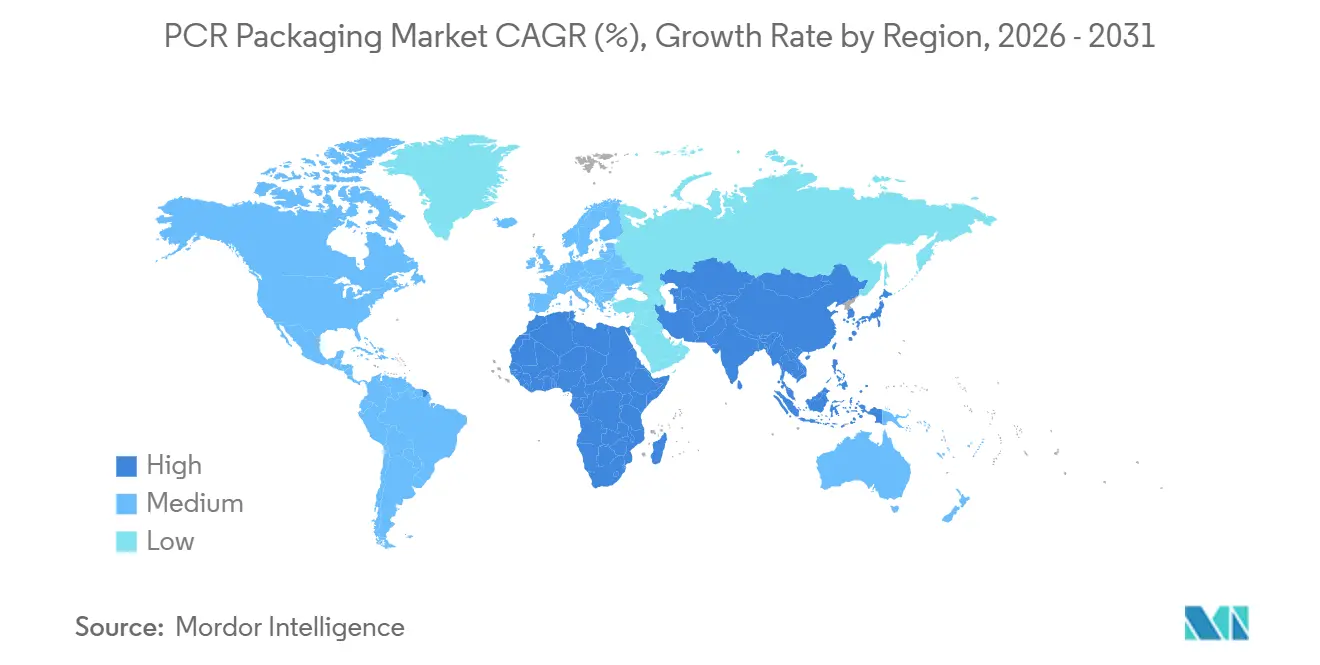
Asia-Pacific remained the largest regional hub, holding 38.50% share in 2025. China’s updated packaging-waste rules and Japan’s mature bottle-recycling networks ensure a steady supply of food-grade resin. India’s informal aggregators fill volume gaps, although inconsistent quality constrains applications in dairy and ready meals. Australia and New Zealand achieve over 80% polyethylene terephthalate bottle recovery via container-deposit laws, giving converters reliable feedstock.
Africa PCR Packaging Market
Africa is set to record a 14.10% CAGR, the highest globally. South Africa’s deposit-return system secures more than 70% polyethylene terephthalate recovery, attracting converter investments in wash-line capacity. Nigeria and Egypt deploy optical sorters through public-private partnerships, lifting bale purity and enabling production of mechanically recycled polyethylene suitable for personal-care packaging. Infrastructure gaps persist for flexible films, yet pilot modular wash lines signal momentum.
North America and Europe PCR Packaging Market
North America benefits from California’s producer-responsibility act and well-established polyethylene terephthalate recycling infrastructure. Flexible formats remain under-collected, but investments such as Novolex’s plastic-film recycling centers elevate supply. Mexico gains traction as brands localize supply chains, yet collection rates hover below 40%. Europe sustains strong demand through the Packaging and Packaging Waste Regulation, with Germany, France, Italy, Spain, and the United Kingdom offering comprehensive curbside and deposit-return coverage and stringent thresholds for recycled content.

Regulatory Landscape
Regulation is increasingly codifying recycled-content, traceability, and EPR obligations that affect PCR packaging specifications and procurement decisions. In the European Union, the Packaging and Packaging Waste Regulation (PPWR, EU 2025/40) entered into force on 11 February 2025 and applies generally from 12 August 2026. It introduces requirements such as a packaging Declaration of Conformity and restrictions on substances of concern, including PFAS in food-contact packaging, which shape material selection and decontamination choices.
Outside the EU, regulatory pressure remains multi-layered and region-specific, with recycled-content mandates and EPR programs expanding at the state level in the United States, including activity in California and New Jersey for recycled content, plus EPR legislation in Colorado and Minnesota. For regulated segments such as pharmaceutical and OTC packaging, PPWR alignment from 12 August 2026 adds compliance workload on top of established controls. That dynamic is increasing demand for certified chain-of-custody programs, such as ISCC PLUS and RecyClass, as packaging placed on regulated shelves depends on market-access documentation.
Value Chain Analysis
The PCR packaging value chain runs from post-consumer collection (municipal systems, deposit-return, retailer take-back) to aggregation and sorting (MRFs and specialized film or pouch sortation), washing and flake preparation, pelletizing and compounding (including PCR blending and additive packages), conversion into rigid and flexible packaging formats, and brand-owner filling and distribution. The main operational trend is vertical and horizontal integration to stabilize quality and supply, with converters and packaging suppliers adding or partnering into wash lines, pellet capacity, and controlled blending systems to reduce variability and meet brand and regulatory requirements.
Collaboration and digitalization are also becoming embedded across the chain. Programs such as California-based CalFFlex, which delivers a blueprint for film and flexible packaging recycling by April 2026, show how multi-stakeholder design-for-recycling, collection, and end-market alignment can expand flexible-PCR volumes, while industrial closed-loop models such as Mauser Packaging Solutions Recover Syst-M target higher-purity return streams. At the plant level, AI and robotics-assisted sorting, along with batch-level digital traceability tools, are used to improve yield, document chain-of-custody, and narrow root-cause investigations when PCR lots deviate on color, odor, or melt properties.
Competitive Landscape
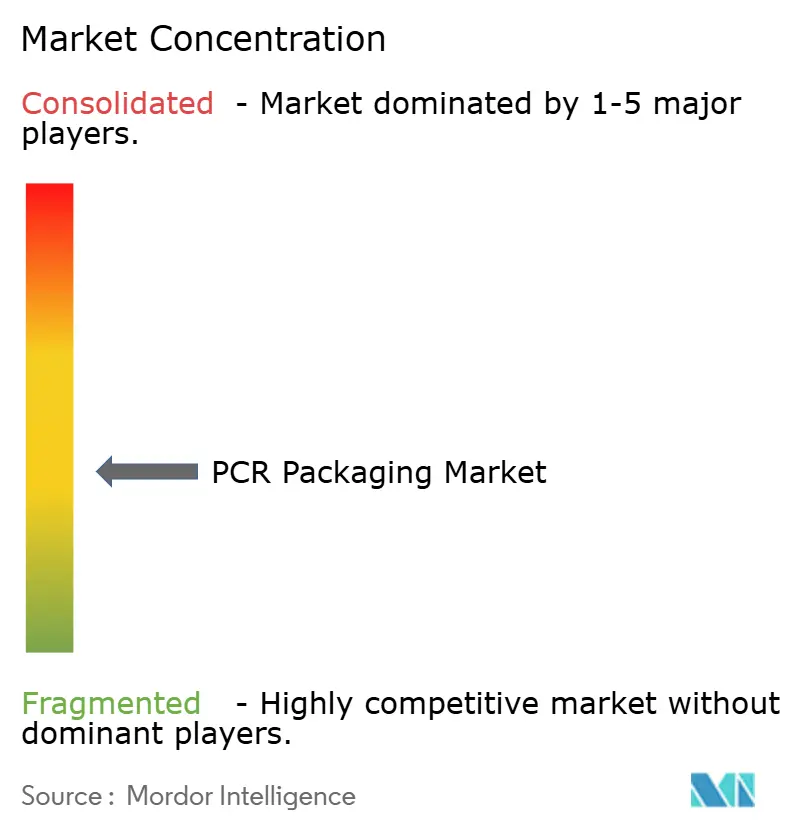
Competition is moderately fragmented: the top 20 converters control 55% of global capacity. Consolidation, however, is accelerating. Novolex’s USD 6.7 billion purchase of Pactiv Evergreen in April 2025 merged over 250 brands and integrated two plastic-film recycling centers, leveraging procurement scale and diverse substrates [3]Source: Newswire, “Novolex and Pactiv Evergreen Complete Combination,” NEWSWIRE.CA. ProAmpac’s pending USD 1.51 billion acquisition of TC Transcontinental Packaging, expected to close in Q1 2026, adds dairy, meat, medical, and pharmaceutical capacity across four continents.
Strategic themes center on backward integration into feedstock and forward integration into brand partnerships. Amcor operates CleanStream facilities and hosts Greenback’s Enval advanced-recycling modules, tying recycled-content supply to converter assets. Blockchain traceability platforms document chain-of-custody, reducing ESG-audit risk. Smaller converters lacking certified feedstock or advanced decontamination lines face displacement as multinational brands tighten supplier criteria. White-space opportunity lies in high-barrier flexible packaging: converters that master super-clean wash lines and reactive extrusion will capture margin as brand owners extend recycled-content targets beyond rigid bottles.
PCR Packaging Industry Leaders
Amcor plc
ALPLA Group
Plastipak
Mondi plc
Sonoco Products Co.
- *Disclaimer: Major Players sorted in no particular order
PCR Packaging Market Companies Covered in this Report
- Amcor plc
- ALPLA Group
- Mondi plc
- Sonoco Products Co.
- Transcontinental Inc.
- ePac Holdings
- Sealed Air Corporation
- Plastipak
- Huhtamaki Oyj
- Klockner Pentaplast
- Spectra Packaging
- IDEALPAK
- Genpak LLC
- PakTech
- Pactiv Evergreen
- Greiner Packaging
- AptarGroup
- Gerresheimer AG
- Logoplaste
- Consolidated Container Co.

Market Opportunities and Future Outlook
The near-term opportunity set concentrates on compliance-grade PCR for flexible packaging and high-spec applications, where traceability, consistent quality, and documented recycled content increasingly act as purchase qualifiers. PPWR general application from 12 August 2026 raises the importance of documented conformity and substance restrictions for packaging sold into the EU, which creates whitespace for suppliers pairing recycle-ready structures with certified PCR and robust chain-of-custody. Large converter execution is already visible, including Amcor consuming 218,000 metric tons of post-consumer resin in FY2025 (10% of its plastic throughput) and continuing to invest in PCR-related capabilities, such as PCR blending enablement at its Nicholasville, Kentucky site, indicating repeatable platforms that can be scaled across customer programs.
Advanced and digitally enabled feedstock pathways also widen addressable lanes for food-grade and high-performance PCR where mechanical routes face contamination and specification drift. In July 2026, INEOS and Recuro announced work toward an advanced recycling facility at INEOS Inovyns Bamble site in Norway, targeting 33,000 tonnes per year of end-of-life plastics into feedstock for high-performance packaging, while tools such as RESYCURE GmbHs digital traceability platform, launched in July 2026, are designed to reduce batch-to-batch variability by tracking data from pellets through to finished packs. As buyers shift from spot purchasing to longer-term supply partnerships with shared forecasting and quality specifications, converters and recyclers with auditable traceability, decontamination know-how, and regional feedstock access gain a clearer basis to monetize premium PCR grades across beverage, personal care, and regulated packaging niches.
Recent Industry Developments in PCR Packaging Market
- June 2026: Amcor secured RecyClass Recycled Plastics Traceability Certification (EN15343) for flexible products produced at UK facilities to support UK Plastic Packaging Tax changes. The certification strengthens supply-chain integrity for recycled-content targets and improves compliance across UK operations.
- March 2026: Amcor achieved UN certification for 5.5 and 5.8 liter industrial containers using 50% PCR for hazardous goods (Pamplona, Spain). The certification reinforces premium PCR-grade offerings for regulated packaging applications and expands access to markets demanding recycled content.
- March 2026: Plastipak highlighted five global recycling facilities converting post-consumer material into high-quality PCR for recycled-content goals. The network broadens recycled content supply and supports brand-mandated targets across regions.


PCR Packaging Market Report Scope and Research Methodology
Market Definition and Coverage
For this study, the market covers packaging products made using post-consumer recycled (PCR) plastics, where demand is driven by brand requirements, regulations, and the availability of recycled resin that can be converted into packs.
Scope exclusions: It excludes recycled paper and metal packaging, and it also excludes reuse systems where no new packaging is produced (such as refill-only models).
Segments Covered in This Report
- By Material Types
- Polyethylene Terephthalate (PET)
- Polyethylene (PE)
- Polyvinyl Chloride (PVC)
- Polypropylene (PP)
- Polystyrene (PS)
- Other Material Types
- By Product Type
- Bottles
- Trays
- Pouches
- Other Product Types
- By End-Use Industry
- Food
- Beverage
- Healthcare
- Cosmetics and Personal Care
- Industrial
- Other End-Use Industry
- By Recycling Source
- Post-Consumer
- Post-Industrial
- By Geography
- North America
- United States
- Canada
- Mexico
- Europe
- Germany
- United Kingdom
- France
- Italy
- Spain
- Russia
- Rest of Europe
- Asia-Pacific
- China
- Japan
- India
- South Korea
- Australia
- Rest of Asia-Pacific
- Middle East
- Saudi Arabia
- United Arab Emirates
- Turkey
- Rest of Middle East
- Africa
- South Africa
- Nigeria
- Rest of Africa
- South America
- Brazil
- Argentina
- Rest of South America
- North America
Data Sources, Market Sizing, and Validation
Desk Research
Desk work started with public and official sources to understand the supply and demand base for recycled plastics used in packaging. Typical inputs include plastics and packaging statistics from sources such as the OECD and UNEP, recycling and circular economy publications from the European Commission, and national datasets from agencies such as the US EPA, along with customs and trade data where relevant for resin and packaging flows.
We also reviewed company annual reports, sustainability disclosures, and investor presentations to map PCR commitments, capacity additions, and purchasing patterns, then used trusted press and association updates to track recycled-content rules and EPR moves. A paid subscription for company financials and news was used selectively to cross-check timelines and scale, and patent databases were referred to when claims around food-contact suitable PCR and processing improvements needed context. These examples are illustrative only, and many other sources were also reviewed for data collection, validation, and research clarification.
Primary Interviews and Surveys
Primary work was used to validate how PCR is specified and purchased across packaging value chains, and to fill gaps that desk sources do not show clearly, such as effective PCR content levels by application. We spoke with participants across resin supply, recycling, and packaging converting, and then checked assumptions with procurement and sustainability stakeholders across major end-use industries in APAC, EMEA, and the Americas.
Distribution of primary research fieldwork respondents
| Company type | Respondent position | Region |
|---|---|---|
| Top tier: 36% | CXOs: 13% | APAC: 49% |
| Mid tier: 50% | Functional/Unit leaders: 35% | EMEA: 29% |
| Smaller Players: 14% | Managers: 52% | Americas: 22% |
Market-Sizing & Forecasting
The market was modeled using a top-down approach where recycled resin availability, recycling output, and packaging demand pools are rebuilt by region, then filtered through estimated PCR adoption rates for packaging. To keep the totals realistic, we corroborated results with selective bottom-up checks, such as sampled application-level volumes multiplied by observed price ranges, along with channel conversations on what is being contracted versus what is only announced.
Key inputs that shaped the model included recycled-content mandates and effective dates, brand owner PCR targets by packaging format, mechanical recycling collection and sorting rates, food-contact approval limitations that affect usable resin, and PCR price premiums versus virgin resins that can slow or accelerate adoption. Where country or format level data was missing, we applied proxy indicators, such as packaged goods production trends and recycling throughput changes, and then corrected them after interview feedback. For forecasting, scenario analysis was used to reflect different speeds of regulation enforcement and capacity build-outs, and the final path was chosen after aligning with consensus views from primary respondents on supply tightness and expected pricing direction.
Data Validation & Update Cycle
Validation was done by checking model outputs against independent signals, including recycling output trends, announced capacity expansions, and shifts in recycled-content rules that should change procurement behavior. When large variances appeared, assumptions were rechecked, followed by additional calls to confirm whether the gap came from timing, pricing, or scope interpretation.
Before numbers are finalized, the work goes through multi-step internal review so the logic, inputs, and arithmetic align across regions and applications. The study is refreshed annually, and interim updates are triggered when material events occur, such as major regulation changes or new recycling capacity that can alter PCR availability. Right before delivery, a final pass is completed so clients receive the most current view based on the latest public signals and interview feedback.
Mordor Intelligence's Pcr Packaging Market Size Versus Other Published Estimates
Published market sizes for PCR packaging often differ because each publisher draws the line differently on what qualifies as PCR packaging value, and they also use different base years and price assumptions. The most common differences show up in whether the estimate follows packaging conversion value versus resin value, and how quickly PCR penetration is assumed to ramp in food-contact and healthcare uses.
The main gap comes from scope and pricing treatment, where Mordor Intelligence counts PCR packaging based on packaging outputs tied to end-use demand and then applies price logic refreshed for PCR premiums, rather than using a single blended resin price across all formats. Other estimates may fold in adjacent recycled plastics not used in packaging, rely on older commitment statements without checking conversion feasibility, or apply aggressive penetration rates that are not aligned with recycling throughput and approval constraints.
Benchmark comparison
| Source | Market Size | Gaps in Research Methodology |
|---|---|---|
| Mordor Intelligence | USD 7.43 B (2026) | |
| Trade Publication A | USD 12.40 B (2026) | Often reflects PCR resin value and broader recycled plastics used in packaging-related applications, which can lift totals, and it may apply a single average price without separating higher-priced, food-contact suitable PCR. |
| Industry Commentary B | USD 6.10 B (2026) | Tends to stay conservative by assuming slower PCR adoption in flexible formats and by excluding markets where collection and sorting infrastructure is still ramping, which suppresses near-term demand capture. |
Across the table, the spread is mostly explained by what is counted as value and how quickly PCR content is assumed to scale in regulated and high-spec applications. By keeping the model tied to observable demand pools, enforceable policy timing, and practical supply constraints, the final market number remains traceable to clear variables and repeatable sizing steps.


Key Questions Answered in the Report
How large is the PCR packaging market in 2026?
The PCR packaging market is valued at USD 7.43 billion in 2026 and is forecast to reach USD 10.11 billion by 2031.
Which material holds the largest share in PCR-based packaging?
Polyethylene terephthalate leads with 46.50% share in 2025 due to mature bottle-to-bottle recycling and food-contact approvals.
What region is expected to grow fastest through 2031?
Africa is projected to record a 14.10% CAGR, fueled by deposit-return systems and new wash-line investments.
Why are pouches gaining traction in recycled packaging?
Mono-material design, lightweight formats, and cosmetics-sector demand push pouches to an 11.50% CAGR, outpacing rigid formats.
Page last updated on:





