Patient Lateral Transfer Devices Market Size and Share
Market Overview
| Study Period | 2020 - 2031 |
|---|---|
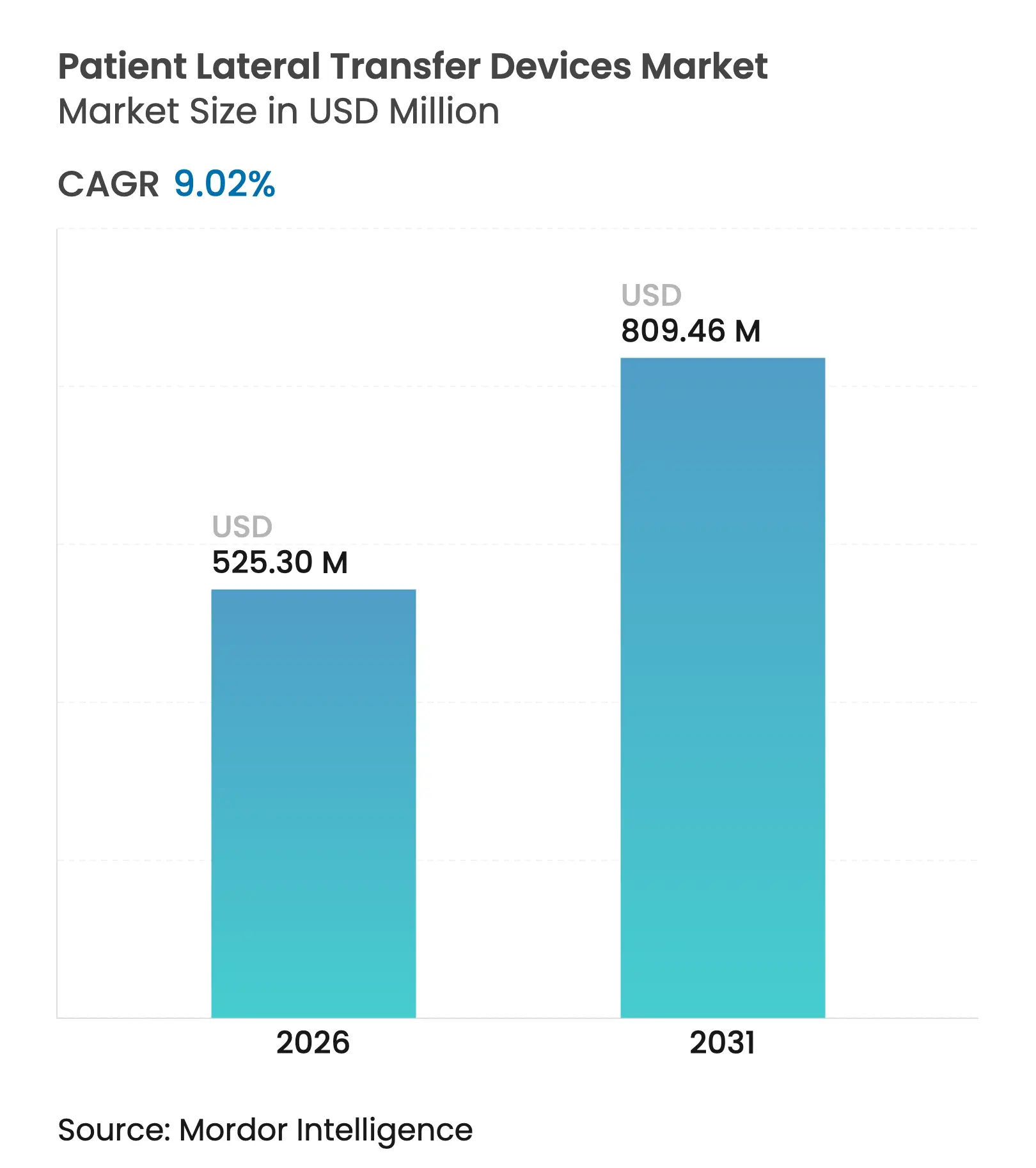
| Market Size (2026) | USD 525.3 Million |
| Market Size (2031) | USD 809.46 Million |
| Growth Rate (2026 - 2031) | 9.02 % CAGR |
| Fastest Growing Market | Asia Pacific |
| Largest Market | North America |
| Market Concentration | Medium |
Major Players *Disclaimer: Major Players sorted in no particular order. Image © Mordor Intelligence. Reuse requires attribution under CC BY 4.0. |

Patient Lateral Transfer Devices Market Analysis by Mordor Intelligence
The patient lateral transfer devices market size was valued at USD 481.79 million in 2025 and estimated to grow from USD 525.3 million in 2026 to reach USD 809.46 million by 2031, at a CAGR of 9.02% during the forecast period (2026-2031). The upswing reflects heightened regulatory focus on caregiver injury prevention, sharper reimbursement incentives, and the clinical need to safeguard frail or bariatric patients. Existing safe-patient-handling statutes in North America and Europe now intersect with Medicare’s 2025 HCPCS code changes, creating clearer payment pathways that accelerate procurement of air-assisted systems.[1]Meanwhile, hospitals and ambulatory surgical centers (ASCs) are turning to sensor-enabled mats that feed usage data into connected-care platforms, supporting both compliance documentation and staffing optimization. Asia-Pacific health systems add further momentum through infrastructure upgrades and updated quality-management rules that mirror ISO 13485, while looming PFAS restrictions begin reshaping slide-sheet material choices.
Key Report Takeaways
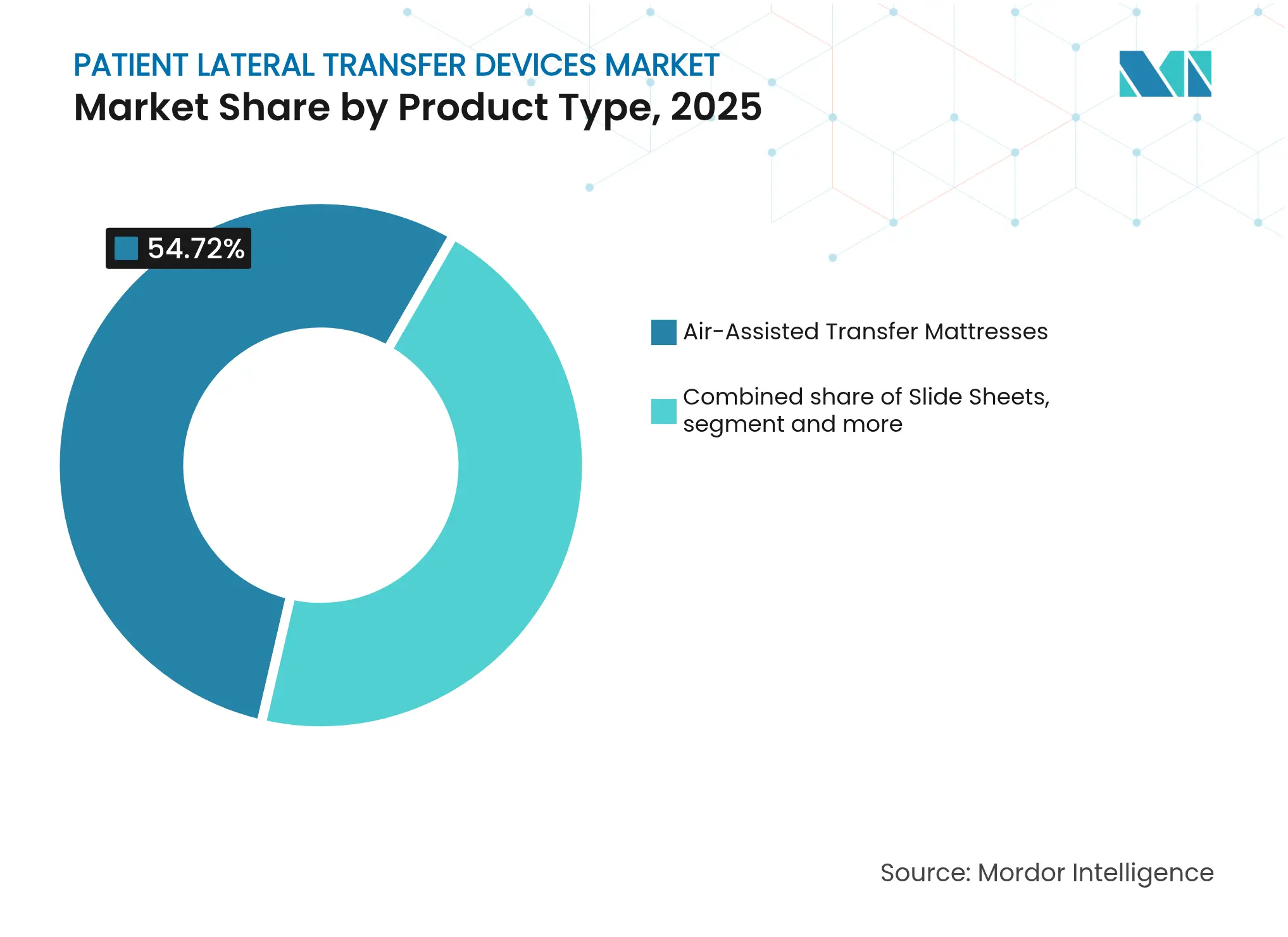
- By product type, air-assisted transfer mattresses led with 54.72% of patient lateral transfer devices market share in 2025; slide sheets are set to expand at a 9.55% CAGR through 2031.
- By usage pattern, reusable systems held 62.10% share of the patient lateral transfer devices market size in 2025, versus a 10.05% CAGR forecast for disposable formats to 2031.
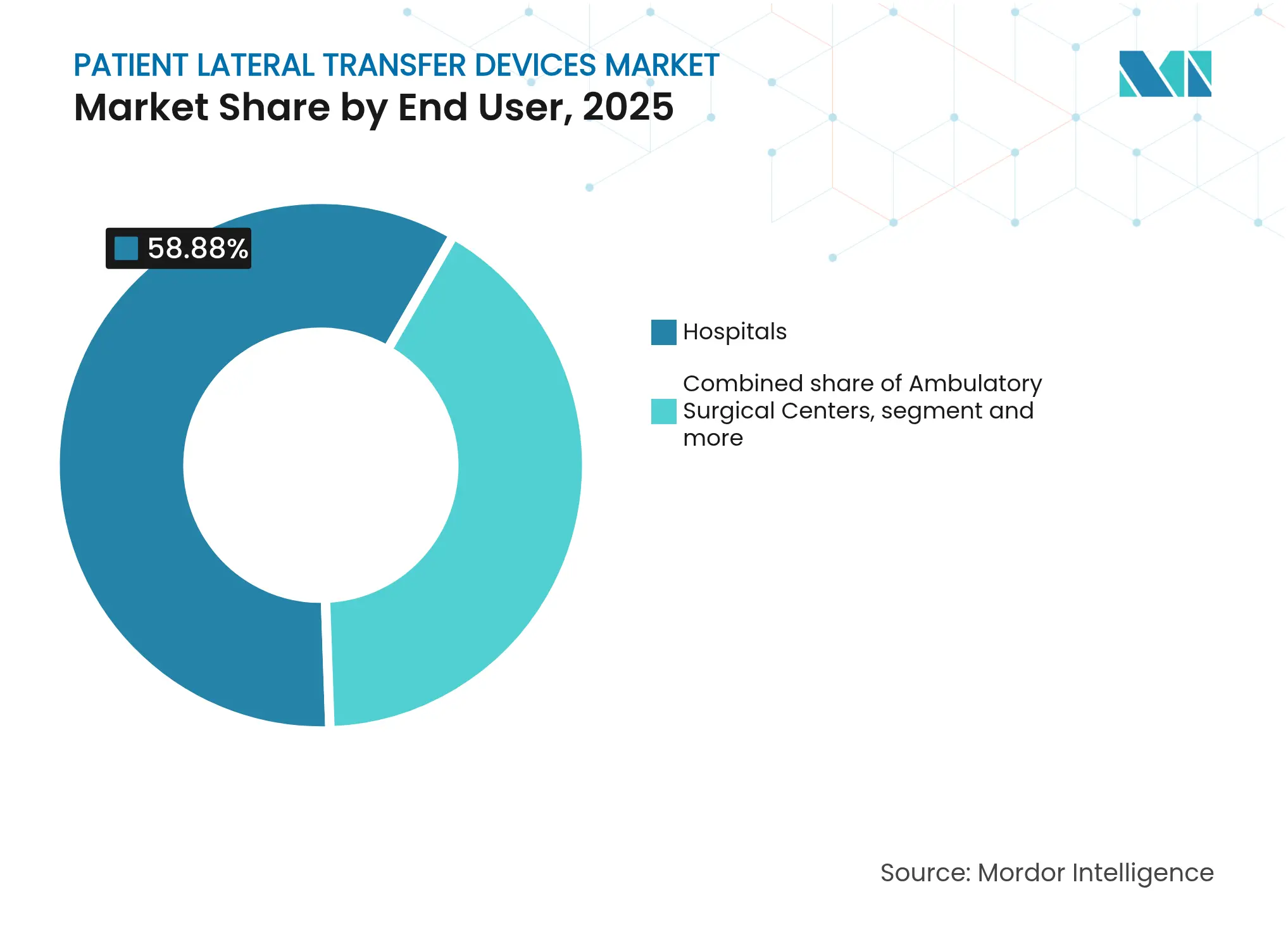
- By end user, hospitals commanded 58.88% of the patient lateral transfer devices market in 2025, while ASCs record the highest projected growth at 10.22% through 2031.
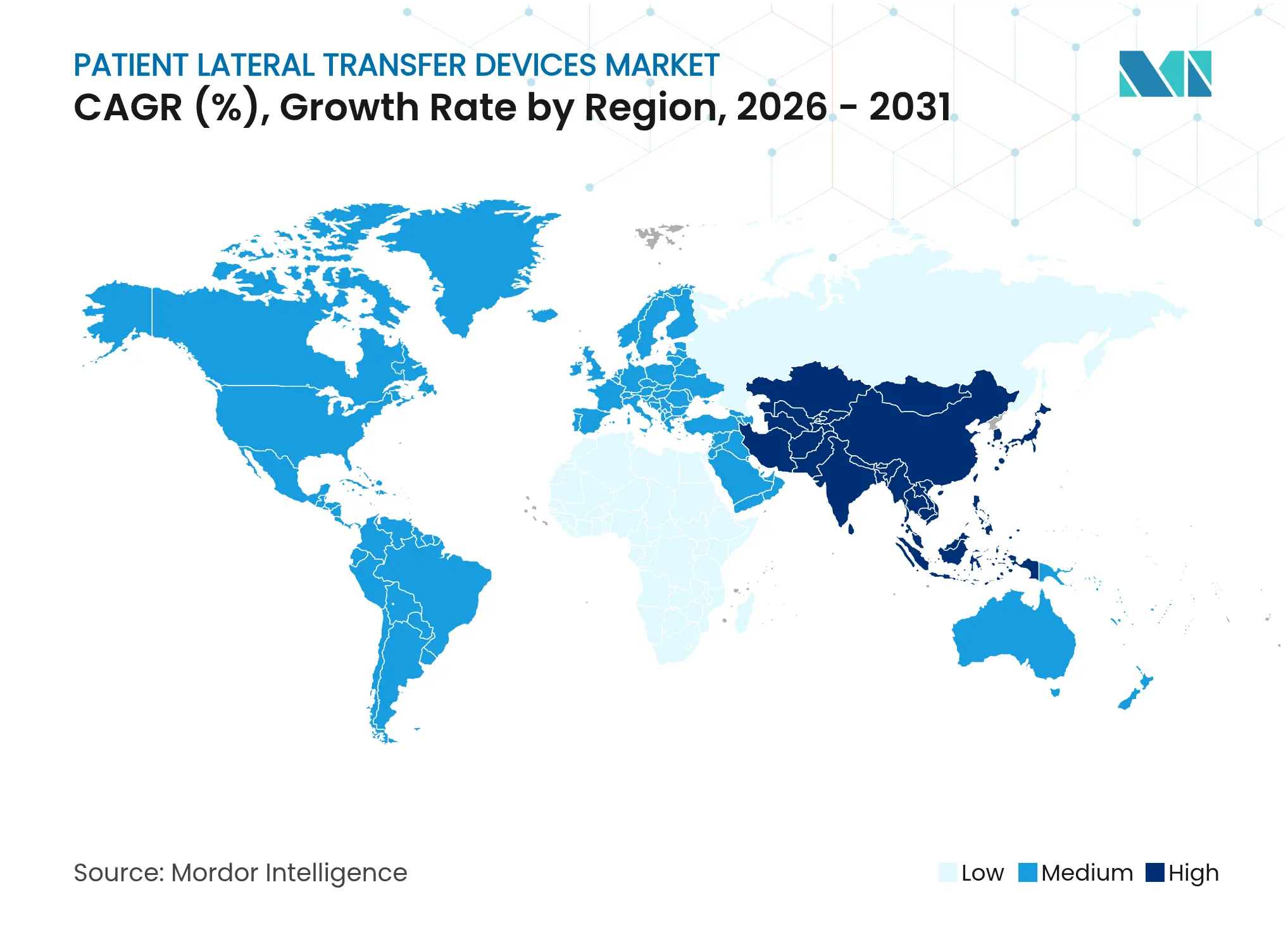
- By geography, North America retained 42.40% share of the patient lateral transfer devices market size in 2025; Asia-Pacific is progressing at an 10.78% CAGR to 2031.
Note: Market size and forecast figures in this report are generated using Mordor Intelligence's proprietary estimation framework, updated with the latest available data and insights as of 2026.
Global Patient Lateral Transfer Devices Market Trends and Insights
Drivers Impact Analysis
| Driver | (~) % Impact on CAGR Forecast | Geographic Relevance | Impact Timeline |
|---|---|---|---|
Growing risk-of-injury regulations for caregivers | +2.1% | Global, with North America & EU leading | Medium term (2-4 years) |
Rapid rise in bariatric & geriatrics hospitalizations | +1.8% | Global, concentrated in developed markets | Long term (≥ 4 years) |
Expansion of home-care reimbursement for SPHM devices | +1.4% | North America & EU, expanding to APAC | Medium term (2-4 years) |
Procurement mandates for air-assisted systems in imaging suites | +1.1% | North America & EU, emerging in APAC | Short term (≤ 2 years) |
ESG-driven shift toward single-patient-use slide sheets | +0.9% | EU leading, expanding globally | Medium term (2-4 years) |
Sensor-enabled "smart" transfer mats improving data capture | +0.7% | APAC core, spill-over to developed markets | Long term (≥ 4 years) |
| Source: Mordor Intelligence | |||
Growing Risk-of-Injury Regulations for Caregivers
State and federal safe-patient-handling statutes increasingly oblige facilities to invest in mechanical aids rather than rely on manual lifts, a shift underscored by OSHA’s updated hazard-communication standards that took effect in July 2024. The Centers for Disease Control and Prevention cites musculoskeletal disorders as 84.3% of healthcare worker injuries, intensifying compliance scrutiny. Procurement decisions now pivot on demonstrable injury-reduction metrics that air-assisted mattresses can provide, repositioning the devices from optional gear to mandatory risk-control assets.
Rapid Rise in Bariatric & Geriatric Hospitalizations
Obesity prevalence and population aging converge to pressure facilities to source equipment rated for 850–1,200 lb capacities, as standard boards pose liability exposure when transferring heavier or frail patients. The patient lateral transfer devices market benefits from premium pricing on bariatric-grade systems because few substitutes meet weight-management requirements, creating durable, high-margin demand.
Expansion of Home-Care Reimbursement for SPHM Devices
Medicare’s 2025 home-health payment rule introduced new HCPCS codes for dynamic adjustable devices, enabling patient lateral transfer solutions to qualify under Durable Medical Equipment coverage. Providers delivering remote care can now claim equipment costs, strengthening the business case for lightweight, single-operator transfer mats. Home-care agencies also face new acceptance-to-service mandates, making safe handling protocol a prerequisite for admission.
Procurement Mandates for Air-Assisted Systems in Imaging Suites
Imaging departments have begun writing air-assisted platforms into capital budgets after guidance from radiology societies stressed low-friction transfers to reduce shear injuries during MRI and CT positioning. Short-term replacement cycles, particularly among level-I trauma centers, favor vendors whose devices integrate seamlessly with diagnostic tables.
Restraints Impact Analysis
| Restraint | (~) % Impact on CAGR Forecast | Geographic Relevance | Impact Timeline |
|---|---|---|---|
Shortage of trained patient-handling professionals | -1.2% | Global, acute in developed markets | Short term (≤ 2 years) |
High upfront cost of powered air-assisted mats | -0.8% | Emerging markets, budget-constrained facilities | Medium term (2-4 years) |
Cross-contamination concerns with reusable devices | -0.6% | Global, heightened in post-pandemic environment | Short term (≤ 2 years) |
Upcoming PFAS bans affecting fluoropolymer slide fabrics | -0.4% | EU leading, expanding to North America | Medium term (2-4 years) |
| Source: Mordor Intelligence | |||
Shortage of Trained Patient-Handling Professionals
The American Hospital Association warns of a projected deficit of 100,000 critical healthcare workers by 2028, with certified nursing assistants hardest hit. Facilities cannot fully exploit mechanical aids without staff who understand friction-reduction techniques, limiting near-term adoption despite available funding.
High Upfront Cost of Powered Air-Assisted Mats
An air-assisted mattress can cost three to five times more than a basic slide sheet. Although devices such as the HoverMatt cut required transfer force by up to 90%, smaller hospitals struggle to justify capital outlays under tightening CMS reimbursement rates. This financing gap slows diffusion in price-sensitive regions and indirectly sustains manual-handling practices.
Segment Analysis
By Product Type: Air-Assisted Leadership Meets Rising Slide-Sheet Demand
Air-assisted transfer mattresses retained 54.72% share of the patient lateral transfer devices market in 2025 thanks to clinical data showing 80–90% reductions in caregiver exertion during horizontal moves. The patient lateral transfer devices market size for air-assisted systems is on course to expand at a steady rate through 2031 as large hospitals factor OSHA-reportable injury savings into payback models.
Slide sheets, however, are the fastest-growing category with a 9.55% CAGR. Single-patient-use variants answer infection-control protocols that intensified post-COVID while aligning with ESG purchasing policies that discourage laundries reliant on high-heat cycles. Transfer boards remain a value option for constrained budgets, but sensor-ready mats that record weight distribution hint at the next upgrade cycle, knitting transfer data into enterprise analytics.
Note: Segment shares of all individual segments available upon report purchase
By Usage: Disposable Formats Capitalize on Infection-Control Pressure
Reusable devices accounted for 62.10% of the patient lateral transfer devices market in 2025 because sterilizable textiles optimize cost per use in high-volume wards. Yet disposable counterparts are accelerating at a 10.05% CAGR as infection-prevention teams favor guaranteed clean surfaces. The patient lateral transfer devices market share for disposables is rising fastest in oncology and transplant units, where immune-suppressed patients demand stringent bioburden thresholds.
Device makers now prototype hybrid platforms that pair a disinfectable base with a recyclable top layer, balancing sustainability with safety. Reprocessing programs saved hospitals USD 451 million in 2024, but the administrative burden of tracking chain-of-custody documentation nudges facilities toward single-patient-use alternatives.
By End User: ASCs Fuel the Growth Engine
Hospitals continue to command 58.88% of the patient lateral transfer devices market size in 2025 owing to the breadth of acuity levels they manage. However, ASCs are logging a 10.22% CAGR as procedures migrate to outpatient settings under value-based-care models. Device vendors now design compact air-assisted trolleys that fit ASC floor plans without compromising lift capacity.
In home-health environments, Medicare’s new DME codes unlock reimbursement for lateral transfer kits, bringing the patient lateral transfer devices industry into living rooms and skilled-nursing facilities. Adoption in long-term-care facilities also edges upward as state safe-handling laws spread beyond acute-care walls, solidifying a distributed-care market footprint.
Note: Segment shares of all individual segments available upon report purchase
Geography Analysis
North America held 42.40% of the patient lateral transfer devices market in 2025, supported by OSHA mandates and Medicare payment reforms that introduced HCPCS codes for dynamic devices starting January 2025. The Bureau of Labor Statistics recorded 2.6 million nonfatal workplace injuries in 2023, a figure that keeps musculoskeletal-risk mitigation high on procurement agendas. Yet persistent nurse shortages temper rollout velocity, especially in rural hospitals without dedicated safe-handling educators.
Asia-Pacific is the fastest-growing region at an 10.78% CAGR through 2031. Japan’s Pharmaceuticals and Medical Devices Agency aligned quality-management requirements with ISO 13485 in 2024, paving the way for global brands that can document compliance. Concurrently, China’s updated medical-device law tightened clinical-evidence mandates, favoring suppliers with proven injury-reduction data. Infrastructure-investment packages in India elevate capital budgets for SPHM equipment, while an expanding private-hospital chain sector elevates purchasing power.
Europe delivers steady single-digit growth under ESG-centric procurement. The European Chemicals Agency’s draft PFAS ban compels suppliers to redesign fluoropolymer slide sheets, accelerating the shift to bio-based or single-use fabrics.Arjo capitalized on the change by acquiring Tech Med and GerroMed for SEK 70 million in 2024, consolidating its rental service network in Germany and France. Hospitals leverage the vendor’s service bundles to meet circular-economy targets without inflating capital budgets.

Competitive Landscape
Market Concentration
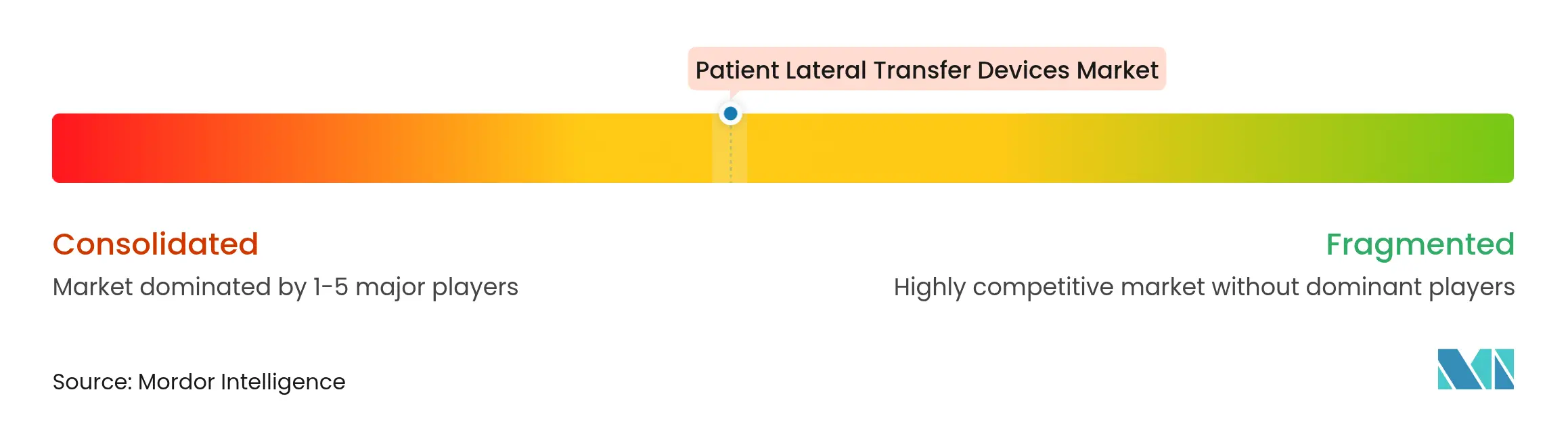
The competitive field remains moderately fragmented, yet the direction of travel is toward a more structured hierarchy anchored by Arjo, Stryker, and HoverTech. These companies bundle air-assisted mattresses, slide sheets, and connected platforms, giving procurement teams one-stop sourcing for safe-patient-handling programs. Smaller specialists still occupy regional niches, but the top tier now captures the majority of contracts with hospital networks that want single-vendor standardization. Technology leadership, proven clinical data, and post-sale training now outweigh pure price competition.
Arjo strengthened its rental and service footprint through the 2024 acquisitions of Tech Med and GerroMed, transactions that add European distribution depth and lower up-front costs for hospitals by shifting spend to operating budgets. Stryker channels a sizeable share of R&D into IoT-equipped mattresses that push movement and fall-risk analytics to clinical dashboards, positioning the firm at the center of connected-care initiatives. HoverTech differentiates with a clinician-training platform that helps facilities translate equipment investment into measurable injury-rate reductions, while also offering an expanded size range tailored to bariatric populations. Together, these strategic moves tighten customer lock-in and raise the competitive bar for feature depth.
New entrants gravitate toward lower-priced slide sheets assembled in-country to avoid tariffs, targeting budget-sensitive buyers in emerging markets. FDA’s revised 21 CFR 880.6775 classification for powered horizontal transfer stretchers, effective May 2025, gives early-compliant suppliers a promotional advantage when bidding for U.S. health-system contracts. Competitive emphasis now centers on audited proof of injury-rate reduction, subscription-style service contracts that smooth cash flow, and sustainability credentials tied to single-patient-use or recyclable fabrics. As a result, vendors that marry compliance, data analytics, and green design are best positioned to consolidate share during the forecast period.
Patient Lateral Transfer Devices Industry Leaders

*Disclaimer: Major Players sorted in no particular order
Recent Industry Developments
- February 2025: HoverTech International released a new video training series for HoverMatt Air Transfer Mattress, highlighting correct technique to maximize musculoskeletal protection
- February 2025: Trualta issued an educational guide on slide-board transfers, stressing caregiver posture and patient alignment
- December 2024: Solution Health deployed the Hercules Patient Repositioner system across multiple facilities and reported reduced caregiver injuries and improved patient outcomes.
- June 2024: The Association of periOperative Registered Nurses (AORN) updated its safe-patient-handling guidelines, making lateral transfer devices a recommended standard.
Table of Contents for Patient Lateral Transfer Devices Industry Report
1. Introduction
- 1.1 Study Assumptions & Market Definition
- 1.2 Scope of the Study
2. Research Methodology
3. Executive Summary
4. Market Landscape
- 4.1 Market Overview
- 4.2 Market Drivers
- 4.2.1 Growing risk-of-injury regulations for caregivers
- 4.2.2 Rapid rise in bariatric & geriatrics hospitalizations
- 4.2.3 Expansion of home-care reimbursement for SPHM* devices
- 4.2.4 Procurement mandates for air-assisted systems in imaging suites
- 4.2.5 ESG-driven shift toward single-patient-use slide sheets
- 4.2.6 Sensor-enabled “smart” transfer mats improving data capture
- 4.3 Market Restraints
- 4.3.1 Shortage of trained patient-handling professionals
- 4.3.2 High upfront cost of powered air-assisted mats
- 4.3.3 Cross-contamination concerns with reusable devices
- 4.3.4 Upcoming PFAS bans affecting fluoropolymer slide fabrics
- 4.4 Value / Supply-Chain Analysis
- 4.5 Regulatory Landscape
- 4.6 Technological Outlook
- 4.7 Porter’s Five Forces Analysis
- 4.7.1 Bargaining Power of Buyers/Consumers
- 4.7.2 Bargaining Power of Suppliers
- 4.7.3 Threat of New Entrants
- 4.7.4 Threat of Substitute Products
- 4.7.5 Intensity of Competitive Rivalry
5. Market Size & Growth Forecasts (Value)
- 5.1 By Product Type
- 5.1.1 Air-Assisted Transfer Mattresses
- 5.1.2 Slide Sheets
- 5.1.3 Transfer Boards and Accessories
- 5.2 By Usage
- 5.2.1 Reusable
- 5.2.2 Disposable
- 5.3 By End User
- 5.3.1 Hospitals
- 5.3.2 Ambulatory Surgical Centers
- 5.3.3 Home Healthcare
- 5.3.4 Others
- 5.4 By Geography
- 5.4.1 North America
- 5.4.1.1 United States
- 5.4.1.2 Canada
- 5.4.1.3 Mexico
- 5.4.2 Europe
- 5.4.2.1 Germany
- 5.4.2.2 United Kingdom
- 5.4.2.3 France
- 5.4.2.4 Italy
- 5.4.2.5 Spain
- 5.4.2.6 Rest of Europe
- 5.4.3 Asia-Pacific
- 5.4.3.1 China
- 5.4.3.2 Japan
- 5.4.3.3 India
- 5.4.3.4 Australia
- 5.4.3.5 South Korea
- 5.4.3.6 Rest of Asia-Pacific
- 5.4.4 Middle East and Africa
- 5.4.4.1 GCC
- 5.4.4.2 South Africa
- 5.4.4.3 Rest of Middle East and Africa
- 5.4.5 South America
- 5.4.5.1 Brazil
- 5.4.5.2 Argentina
- 5.4.5.3 Rest of South America
6. Competitive Landscape
- 6.1 Market Concentration
- 6.2 Market Share Analysis
- 6.3 Company Profiles (includes Global level Overview, Market level overview, Core Segments, Financials as available, Strategic Information, Market Rank/Share for key companies, Products & Services, and Recent Developments)
- 6.3.1 Arjo
- 6.3.2 Stryker Corporation
- 6.3.3 Baxter (Hill-Rom)
- 6.3.4 Handicare (Savaria)
- 6.3.5 Medline Industries
- 6.3.6 HoverTech (an etac Company)
- 6.3.7 Patient Positioning Systems LLC
- 6.3.8 AliMed Inc.
- 6.3.9 Wy’East Medical
- 6.3.10 Haines Medical
- 6.3.11 Air-Matt, Inc.
- 6.3.12 Agiliti Health, Inc.
- 6.3.13 DJO Global (Enovis Corporation)
- 6.3.14 McAuley Medical, Inc
- 6.3.15 Wellell Inc.
- 6.3.16 ALVO Medical Sp. z o.o.
- 6.3.17 SPH Medical
7. Market Opportunities & Future Outlook
- 7.1 White-Space & Unmet-Need Assessment
Global Patient Lateral Transfer Devices Market Report Scope
As per the scope, patient lateral transfer devices are used for the transposition of a patient with minimal stress on the care provider. The diminishing level of friction in lateral transfers of patients aids in increasing the comfort of both patients and healthcare workers. The market report also covers the estimated market sizes and trends pertaining to 17 different countries across major regions, globally. The market is segmented by product type (air-assisted transfer mattresses, slide sheets, and lateral transfer accessories), usage (reusable and disposable), end user (hospitals, ambulatory surgical centers, and other end users), and geography (North America, Europe, Asia Pacific, and Rest of the World). The report offers values (in USD million) for the above segments. The market report also covers the estimated market sizes and trends pertaining to 17 different countries across major regions, globally.
| By Product Type | Air-Assisted Transfer Mattresses | |
| Slide Sheets | ||
| Transfer Boards and Accessories | ||
| By Usage | Reusable | |
| Disposable | ||
| By End User | Hospitals | |
| Ambulatory Surgical Centers | ||
| Home Healthcare | ||
| Others | ||
| By Geography | North America | United States |
| Canada | ||
| Mexico | ||
| Europe | Germany | |
| United Kingdom | ||
| France | ||
| Italy | ||
| Spain | ||
| Rest of Europe | ||
| Asia-Pacific | China | |
| Japan | ||
| India | ||
| Australia | ||
| South Korea | ||
| Rest of Asia-Pacific | ||
| Middle East and Africa | GCC | |
| South Africa | ||
| Rest of Middle East and Africa | ||
| South America | Brazil | |
| Argentina | ||
| Rest of South America | ||

