
Pain Management Market Size and Share
Market Overview
| Study Period | 2020 - 2031 |
|---|---|
| Market Size (2026) | USD 85.63 Billion |
| Market Size (2031) | USD 106.86 Billion |
| Growth Rate (2026 - 2031) | 4.53 % |
| Fastest Growing Market | Asia Pacific |
| Largest Market | North America |
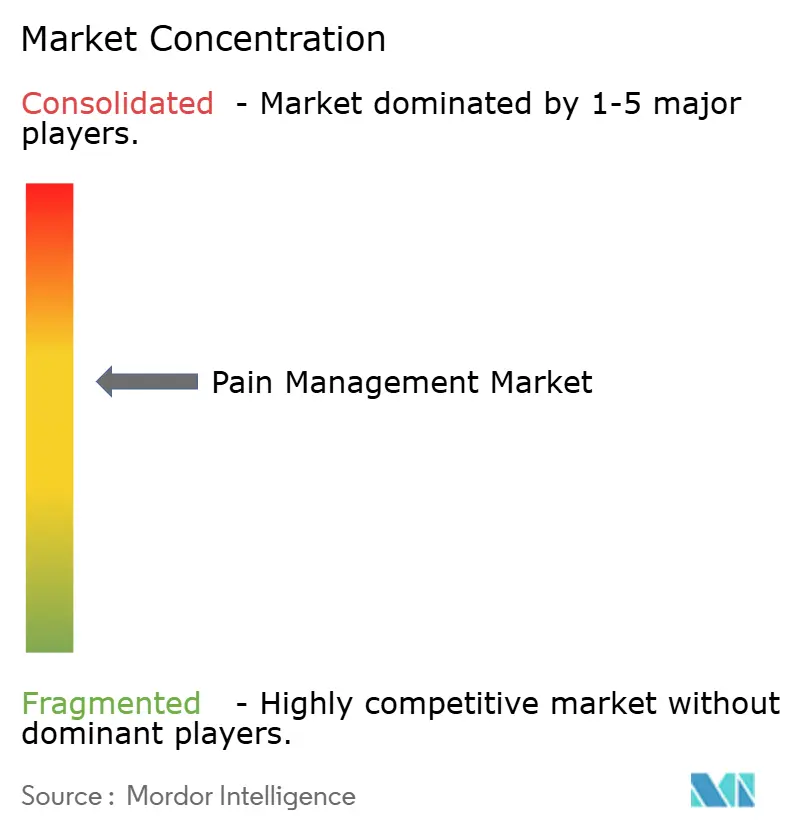
| Market Concentration | Medium |
Major Players *Disclaimer: Major Players sorted in no particular order Image © Mordor Intelligence. Reuse requires attribution under CC BY 4.0. | |
Pain Management Market Analysis by Mordor Intelligence
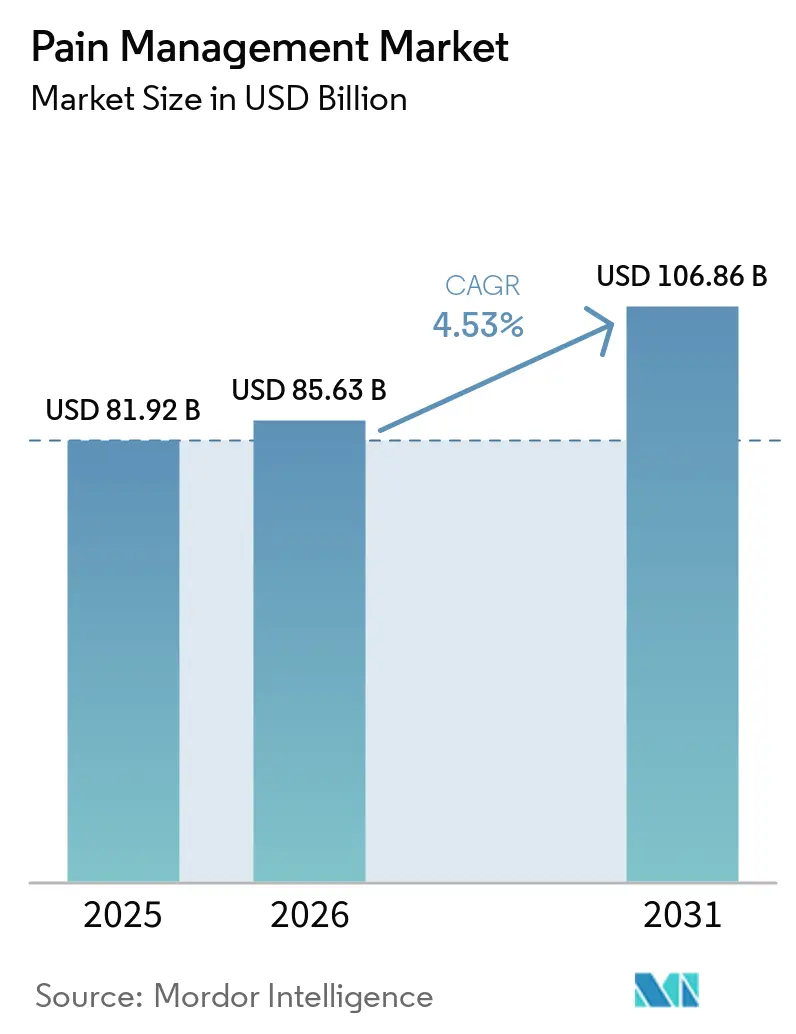
pain management market size in 2026 is estimated at USD 85.63 billion, growing from 2025 value of USD 81.92 billion with 2031 projections showing USD 106.86 billion, growing at 4.53% CAGR over 2026-2031. Greater life expectancy, stringent opioid regulations and expanding use of connected neuromodulation platforms anchor this growth trajectory. Clinicians now favor multimodal regimens that blend non-opioid pharmacology with device-based therapies, a shift reinforced by payer incentives rewarding durable outcomes over pill counts. Digital health integration improves longitudinal monitoring, aligning treatment intensity with real-time patient-reported pain scores while curbing hospital readmissions. Heightened ESG scrutiny of legacy opioid makers meanwhile accelerates capital flows toward developers of non-addictive alternatives and AI-driven dosing algorithms.
Key Report Takeaways
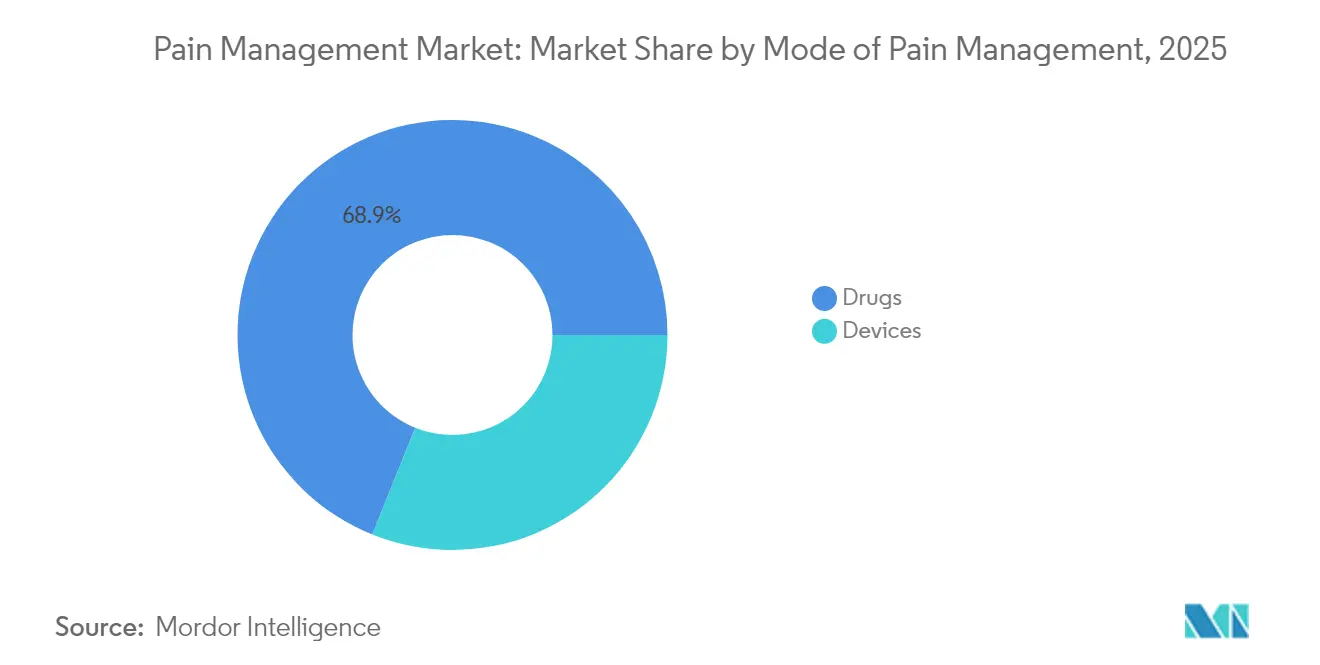
- By mode of pain management, drugs commanded 68.92% pain management market share in 2025, while devices are forecast to record the fastest 9.99% CAGR through 2031.
- By application, neuropathic pain led with 32.10% revenue share in 2025; facial pain and migraine therapies are set to expand at an 8.67% CAGR to 2031.
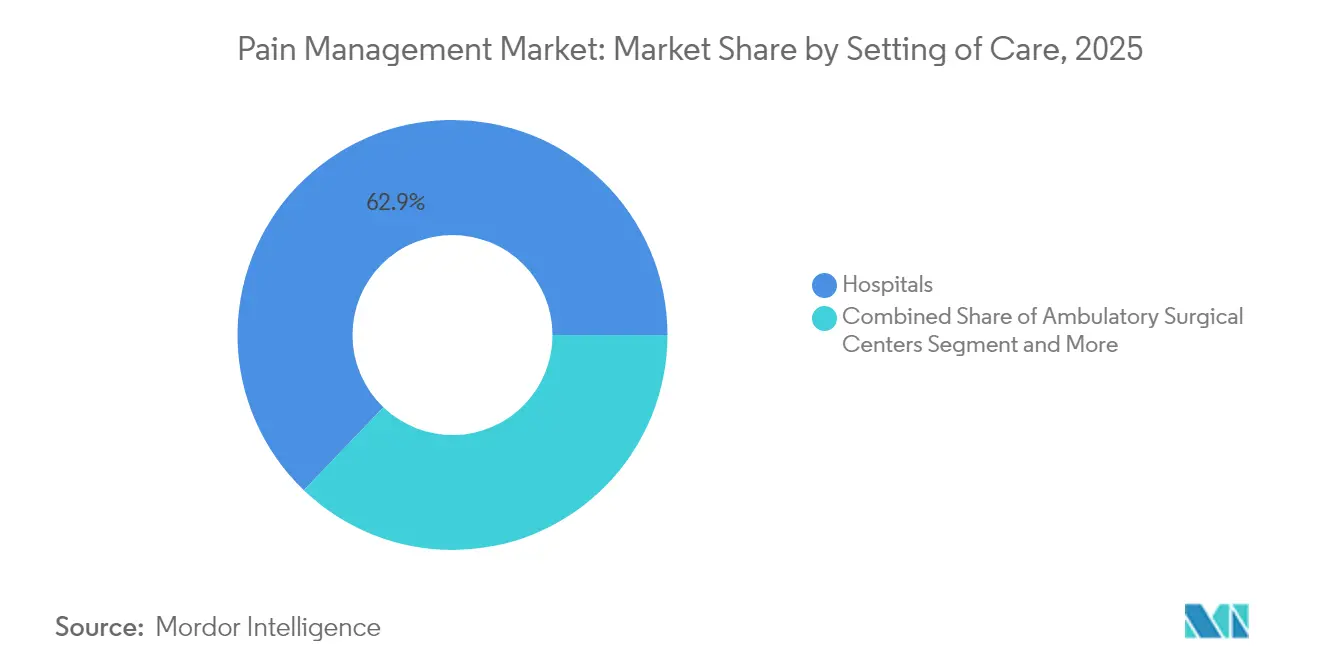
- By setting of care, hospitals accounted for 62.85% of the pain management market size in 2025 and home-care is projected to grow at an 11.55% CAGR through 2031.
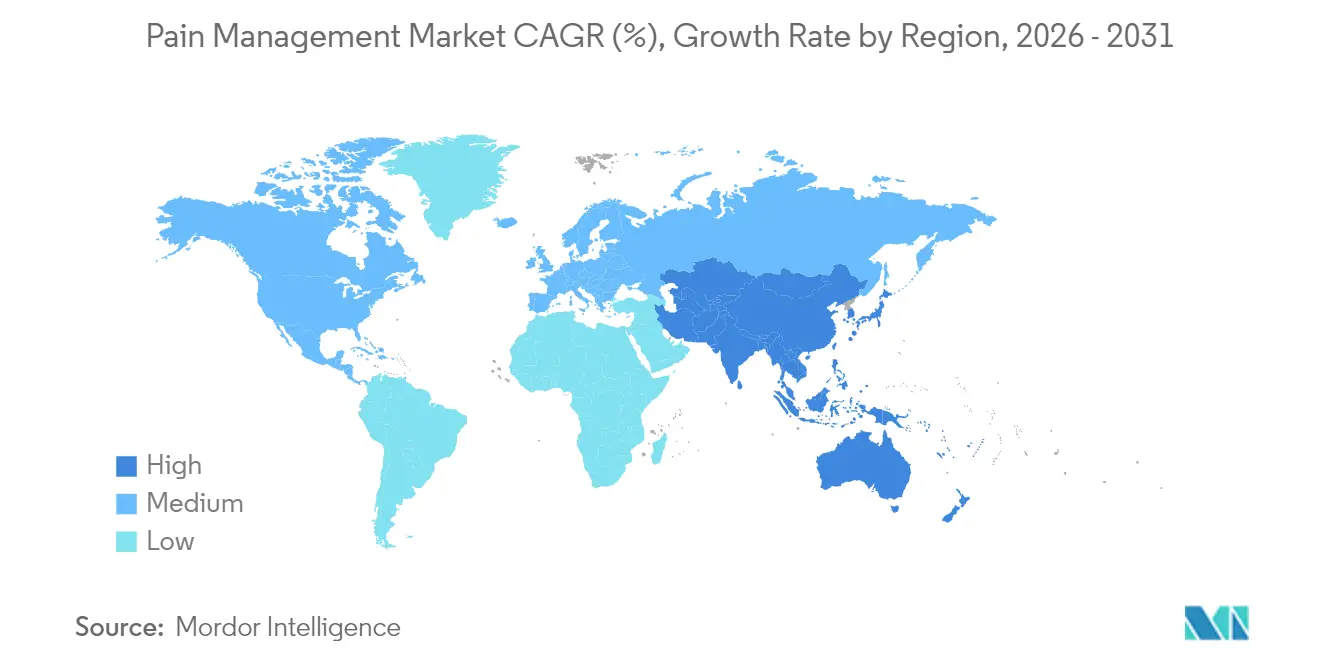
- By geography, North America contributed 38.10% revenue in 2025, whereas Asia-Pacific is expected to post a 10.55% CAGR during the forecast period.
Note: Market size and forecast figures in this report are generated using Mordor Intelligence’s proprietary estimation framework, updated with the latest available data and insights as of 2026.
Market Trends and Insights
Drivers Impact Analysis of Pain Management Market*
| Driver | (~) % Impact on CAGR Forecast | Geographic Relevance | Impact Timeline |
|---|---|---|---|
| Ageing-Related Rise in Chronic Pain Prevalence | +1.2% | Global, with concentration in North America & Europe | Long term (≥ 4 years) |
| Clinical Validation of Neuro-Modulation Efficacy | +0.8% | North America & Europe, expanding to Asia-Pacific | Medium term (2-4 years) |
| Shift Toward Opioid-Sparing Multimodal Protocols | +0.9% | Global, led by North America regulatory frameworks | Medium term (2-4 years) |
| Rapid ASC Adoption for Pain Procedures | +0.6% | North America & Europe | Short term (≤ 2 years) |
| Venture Funding for Closed-Loop Stimulation Platforms | +0.4% | North America & Europe | Long term (≥ 4 years) |
| AI-Driven, Patient-Specific Dosing Algorithms | +0.3% | North America & Europe, pilot programs in Asia-Pacific | Long term (≥ 4 years) |
| Source: Mordor Intelligence | |||
Ageing-Related Rise in Chronic Pain Prevalence
Growing cohorts aged ≥ 45 now represent the highest incidence of chronic musculoskeletal and neuropathic complaints. In 2024, 24.3% of U.S. adults reported chronic pain, with prevalence peaking in the 65+ group. European meta-analysis places adult prevalence at 21.45%, propelled by diabetes, arthritis, and postsurgical syndromes. Patients living with persistent pain incur double the healthcare expenditure of age-matched peers and lose USD 12,167 annually in productivity within high-income countries[1]. Payers, therefore, channel funds toward longitudinal programs combining pharmaceutical, device, and behavioral elements. Recognition of chronic pain as a standalone disease entity further unlocks dedicated reimbursement codes and specialty clinic capacity worldwide.
Clinical Validation of Neuromodulation Efficacy
Landmark cost-utility studies show spinal cord stimulation paired with best medical therapy remains cost-effective over 10 years, outperforming pharmacologic management at typical willingness-to-pay thresholds[2]. Dorsal root ganglion technology delivers even higher quality-adjusted life years for focal neuropathic syndromes, despite steeper upfront costs. High-concentration capsaicin patches (8% w/w) have demonstrated particular efficacy in various neuropathic pain conditions, with clinical studies showing significant pain reduction and improved quality of life. Closed-loop platforms now auto-adjust amplitude based on evoked compound action potentials, sustaining analgesia as physiologic states shift. Regulatory bodies accelerate market entry through Breakthrough Device designations, trimming review times and incentivizing venture investment. Expanded reimbursement in select EU member states confirms recognition of durable neuromodulation value, increasing hospital purchasing confidence and physician adoption rates.
Shift Toward Opioid-Sparing Multimodal Protocols
Enhanced Recovery After Surgery programs institutionalize multimodal analgesia that blends NSAIDs, regional blocks and non-opioid adjuncts, matching or exceeding opioid-based regimens for pain control. Insurers reward such protocols with bundled-payment bonuses and prior-authorization waivers. Early opioid exposure correlates with long-term disability, spurring professional societies to elevate non-opioid options as first-line therapy. Pharma pipelines respond through non-addictive sodium-channel inhibitors and peripherally acting kappa agonists, several of which now carry FDA Breakthrough Therapy labels. Multimodal platforms that integrate digital coaching with pharmacologic and interventional tools improve adherence and document patient-reported outcomes for pay-for-performance contracts.
Rapid ASC Adoption for Pain Procedures
Ambulatory surgical centers (ASCs) deliver radiofrequency ablation, neurolytic blocks and generator replacements at 30-50% lower facility cost than inpatient theaters while maintaining similar safety profiles. Advanced imaging, lighter anesthesia requirements and rapid mobilization protocols let patients return home the same day, boosting satisfaction scores. U.S. state regulators have expanded licensure scopes, letting ASCs add intrathecal pump refills and trial stimulator placements. Device makers now design low-profile leads and single-incision insertion kits tailored to the ASC workflow. Health systems form joint ventures with surgeons to capture this outpatient volume, further decentralizing the pain management market.
Restraints Impact Analysis of Pain Management Market*
| Restraint | (~) % Impact on CAGR Forecast | Geographic Relevance | Impact Timeline |
|---|---|---|---|
| High CAPEX/OPEX for Implantable Devices | -0.7% | Global, particularly emerging markets | Medium term (2-4 years) |
| Limited Reimbursement in Emerging Markets | -0.5% | Asia-Pacific, Latin America, MEA | Long term (≥ 4 years) |
| Cyber-Security Risks in Connected Pumps | -0.3% | Global, concentrated in developed markets | Short term (≤ 2 years) |
| ESG Scrutiny on Opioid Manufacturers | -0.4% | North America & Europe | Medium term (2-4 years) |
| Source: Mordor Intelligence | |||
High CAPEX/OPEX for Implantable Devices
Implantable pulse generators priced between USD 20,000 – 50,000 per patient exceed many public-sector budgets in emerging economies. Replacement surgeries every 4-7 years add anesthesia and hospitalization charges, straining payer tolerance. Health technology assessment agencies now demand ten-year real-world evidence before approving high-cost neuromodulation reimbursement lines. Manufacturers react by migrating to rechargeable batteries and automated programming that lower clinician touchpoints. Leasing models and outcome-based contracts have begun surfacing, yet capital intensity remains a gating factor across low- and middle-income settings.
Limited Reimbursement in Emerging Markets
National insurance schemes in India, Indonesia and Brazil prioritize infectious disease and maternal health, leaving limited coverage for chronic pain interventions. Out-of-pocket spend still represents more than 50% of total medical expenditure in several ASEAN states, restricting access to spinal cord stimulators and novel biologics. Lengthy regulatory timelines compound launch costs, often delaying product availability by three to five years versus the United States. Localized clinical-evidence mandates further lift trial expenses. Stakeholders explore tiered-pricing strategies and public-private partnerships to widen therapy reach, but meaningful reimbursement expansion is unlikely before broader health-system funding reforms mature.
*Our forecasts treat driver/restraint impacts as directional, not additive. The impact forecasts reflect baseline growth, mix effects, and variable interactions.
Pain Management Market Segment Analysis
By Mode of Pain Management:
Devices Drive Innovation Despite Drug DominanceDrugs retained 68.92% of pain management market share in 2025, anchored by NSAIDs, anticonvulsants and selective antidepressants used for neuropathic indications. Non-opioid innovations, including sodium-channel blockers, sustain momentum as guideline authors promote opioid-sparing regimens. In value terms, the drugs segment added USD 3.2 billion year-over-year, supported by strong generic uptake in Asia-Pacific and Latin America. Devices are set to outpace pharmaceuticals at a 9.99% CAGR, adding roughly USD 11 billion to the pain management market size by 2031.
Closed-loop spinal cord stimulators and dorsal root ganglion systems headline this surge, leveraging real-time physiologic feedback to fine-tune amplitude and pulse width. Analgesic infusion pumps shrink in form factor while gaining Bluetooth-enabled dosage logs that feed clinician dashboards. FDA Breakthrough Device designations granted in 2024 and 2025 shave six to nine months from review cycles, accelerating commercial rollout. As value-based procurement spreads, hospital buyers increasingly weigh total cost of ownership, a metric favoring rechargeable stimulators with extended battery life.

By Application:
Neuropathic Pain Leadership Faces Migraine InnovationNeuropathic disorders captured 32.10% revenue in 2025, underpinned by rising diabetes incidence and postsurgical nerve injuries. Peripheral neuropathy cases now account for one in four clinic visits at tertiary pain centers, prompting expanded use of dual-mechanism anticonvulsants and high-frequency stimulators. Cancer pain remains sizable but grows more modestly as palliative care protocols mature.
Facial pain and migraine present the swiftest trajectory, advancing 8.67% annually on the back of CGRP monoclonal antibodies and small-molecule gepants. Digital therapeutics delivering cognitive-behavioral modules for migraine prophylaxis reached U.S. Medicare coverage in 2025, broadening patient access. Targeted occipital nerve stimulators also move into pivotal trials, promising device-based relief for refractory migraineurs. Precision medicine approaches that genotype sodium-channel variants could soon guide therapy selection across both neuropathic and migraine cohorts, deepening clinical adoption.
By Setting of Care:
Home-Care Revolution Challenges Hospital DominanceHospitals still represent 62.85% of pain management market size in 2025 owing to complex implantations, pump refills and comorbidity management. Tertiary centers retain an edge in imaging infrastructure and multidisciplinary staffing, sustaining procedure volumes. Yet the cost differential between inpatient and outpatient venues widens under bundled-payment schemes, nudging health systems toward decentralized models.
Home-care and remote monitoring are projected to climb 11.55% annually. Connected intrathecal pumps now transmit dose logs and battery status to cloud dashboards, letting clinicians pivot therapy before adverse events occur. Wearable biosensors capture gait, sleep and heart-rate variability, producing objective endpoints for reimbursement and clinical decision support. Cybersecurity protocols grounded in zero-trust architecture safeguard data streams, reinforcing payer and patient confidence in distributed care.
Geography Analysis
North America Pain Management Market
North America retained 38.10% revenue in 2025, supported by mature reimbursement, extensive ASC networks and swift FDA clearance pathways. Continued litigation over opioid marketing drives diversification toward non-addictive modalities, inflating demand for neuromodulation and non-opioid analgesics. Medicaid expansion in additional U.S. states during 2025 further widens patient pools for comprehensive pain management programs.
Europe Pain Management Market
Europe displays balanced maturation; Western states sustain incremental gains while Eastern markets accelerate device adoption under EU cohesion funding. The European Medicines Agency’s rolling review procedures shortened average approval times for biosimilars and novel analgesics by 15% in 2025. National health technology assessment bodies increasingly recognize quality-of-life outcomes, prompting broader reimbursement for validated neuromodulation indications.
APAC Pain Management Market
Asia-Pacific delivers the fastest regional CAGR at 10.55% through 2031. China’s Healthy 2030 blueprint earmarks chronic pain as a priority, enabling tier-two hospitals to establish specialty pain clinics. India’s telemedicine guidelines passed in 2025 legitimize e-prescriptions of non-schedule drugs, spurring digital consultation platforms. However, uneven insurance penetration and fragmented provider markets still limit uptake of high-cost implantables, constraining absolute market size relative to demographic potential.
Regulatory Landscape
Regulation in pain management continues to tighten around opioid risk while creating clearer pathways for non-opioid innovation. In the United States, the FDA updated the Opioid Analgesic Risk Evaluation and Mitigation Strategy (REMS) in October 2024, reinforcing safety requirements tied to dispensing and use. In September 2025, the FDA published draft guidance, Development of Non-Opioid Analgesics for Chronic Pain, to standardize evidence expectations, endpoint selection, and trial design for chronic pain programs.
International and European frameworks are also emphasizing balanced access and strengthened pharmacovigilance. In September 2025, the WHO released its full guideline report to help countries implement balanced controlled-medicines policies that support equitable access to essential pain medicines while limiting misuse and diversion. In the EU, EMA/CMDh PSUSA-driven safety conclusions triggered label and product-information updates for analgesic combinations, including codeine/paracetamol (implementation actions referenced in January 2026 and May 2026 CMDh timelines), reinforcing treatment-duration limits and risk communication that shape prescribing patterns and lifecycle management for legacy analgesics.
Competitive Landscape
Competitive intensity stays moderate as legacy pharmaceutical firms leverage expansive patent estates and global distribution to defend share. Their pipelines now tilt toward peripheral sodium-channel blockers, N-type calcium-channel inhibitors and biologics targeting inflammatory cascades. Several multinationals divested opioid portfolios into separate legal entities during 2025 to mitigate ESG risk, reallocating capital to non-addictive assets.
Device players differentiate through algorithmic personalization, battery longevity and MRI conditionality. First-in-class closed-loop stimulators launched in 2025 showcase double-digit improvements in responder rates versus open-loop comparators at 12 months. Hybrid cloud platforms overlay predictive analytics onto stimulation logs, letting providers tune settings remotely.
Digital therapeutics innovators secure regulatory nods for app-based behavioral programs treating low back pain, migraine and fibromyalgia. Strategic alliances pair these apps with pharmacologic starter kits, creating bundled offerings that satisfy payer preferences for holistic care. The top five enterprises collectively control roughly 48% of global revenue, underscoring a moderately concentrated structure that still leaves ample room for specialized entrants.
Pain Management Industry Leaders
-
Abbott Laboratories
-
Becton, Dickinson and Company
-
Boston Scientific Corporation
-
Johnson & Johnson (DePuy Synthes, Ethicon)
-
Baxter International Inc.
- *Disclaimer: Major Players sorted in no particular order
Pain Management Market Companies Covered in this Report
- Abbott Laboratories
- Baxter
- Beckton Dickinson
- Boston Scientific
- Endo International
- Fresenius
- Grunenthal GmbH
- Hikma Pharmaceuticals
- Hisamitsu Pharmaceutical
- Insulet
- Johnson & Johnson (DePuy Synthes, Ethicon)
- Medtronic
- Nevro
- Novartis
- OMRON
- Pfizer
- Smiths Group
- Stryker
- Terumo
- Teva Pharmaceutical Industries
Market Opportunities and Future Outlook
A major opportunity area is the expansion of differentiated non-opioid pharmacology across acute and chronic indications, supported by recent regulatory actions and clinical milestones. The FDA approval of Vertex Pharmaceuticals' suzetrigine (Journavx) in January 2025 as a first-in-class non-opioid analgesic for moderate to severe acute pain provides a high-visibility proof point for novel mechanisms. The June 2025 FDA approval of Azurity Pharmaceuticals' XIFYRM (meloxicam injection) adds a hospital-oriented, once-daily IV NSAID option that aligns with opioid-sparing protocols. Taken together with the FDA's September 2025 draft guidance on development of non-opioid analgesics for chronic pain, these actions create whitespace for sponsors to build indication-specific evidence packages aligned to evolving endpoint and safety expectations.
Device and hybrid care models offer additional room as cost and workflow fit improve for outpatient and longitudinal monitoring settings. Abbott's January 2026 FDA approval enabling prone MRI scans with multiple systems in its chronic pain neuromodulation portfolio reduces a practical access barrier for implanted-patient imaging and supports broader use of MRI-conditional neuromodulation in routine care pathways. At the same time, EU pharmacovigilance actions (EMA/CMDh PSUSA conclusions affecting codeine-containing combinations in 2026) increase compliance and labeling burden on some legacy combinations, which can shift portfolio attention toward therapies with clearer safety narratives, digital monitoring capabilities, and reimbursement-ready outcomes documentation across hospitals, ASCs, and home-care programs.
Recent Industry Developments in Pain Management Market
- June 2026: BD (Becton, Dickinson and Company) was awarded a Vizient Innovative Technology contract for its BD CentroVena One Insertion System. While the product is positioned around central line insertion, the contracting win strengthens BD's GPO-driven access in hospital procedure settings where peri-procedural analgesia workflows and device standardization decisions are commonly made.
- August 2025: The FDA cleared Tonmya (cyclobenzaprine HCl sublingual) for fibromyalgia, expanding non-opioid options for widespread chronic pain. The authorization reinforces continued regulatory openness to non-opioid pharmacologic approaches in chronic pain conditions that often require long-duration therapy.
- October 2024: The FDA implemented modifications to the Opioid Analgesic REMS, tightening requirements tied to safe opioid use and dispensing. The change further institutionalized opioid-risk controls across prescribers and manufacturers, reinforcing clinical and commercial emphasis on opioid-sparing regimens and alternatives.
Pain Management Market Report Scope and Research Methodology
Market Definition and Coverage
The pain management market is defined here as the revenue generated from products used to reduce or control pain in clinical and home settings. This includes prescription and non-prescription drug therapies, as well as pain management devices when they are part of documented treatment pathways.
Scope exclusions: Services-only revenue (such as standalone physical therapy sessions, counseling, and general wellness programs) is excluded unless it is bundled with a reportable product sale.
Segments Covered in This Report
- By Mode of Pain Management
- Drugs
- Opioids
- Non-narcotic Analgesics
- NSAIDs
- Anesthetics
- Anticonvulsants
- Antidepressants
- Devices
- Neuro-modulation Devices
- TENS
- Spinal Cord Stimulation (SCS)
- Dorsal Root Ganglion (DRG)
- Vagus & Peripheral Nerve Stimulators
- Analgesic Infusion Pumps
- Intrathecal Pumps
- External PCA Pumps
- Radio-frequency Ablation Systems
- Neuro-modulation Devices
- Drugs
- By Application
- Neuropathic Pain
- Cancer Pain
- Musculoskeletal Pain
- Facial Pain & Migraine
- Post-operative & Acute Pain
- By Setting of Care
- Hospitals
- Ambulatory Surgical Centers
- Home-care & Remote Monitoring
- Geography
- North America
- United States
- Canada
- Mexico
- Europe
- Germany
- United Kingdom
- France
- Italy
- Spain
- Rest of Europe
- Asia-Pacific
- China
- Japan
- India
- Australia
- South Korea
- Rest of Asia-Pacific
- Middle East and Africa
- GCC
- South Africa
- Rest of Middle East and Africa
- South America
- Brazil
- Argentina
- Rest of South America
- North America
Data Sources, Market Sizing, and Validation
Desk Research
To set the base structure of the market, we start by reviewing public health and utilization signals that connect directly to pain care. This includes sources such as the World Health Organization, the US CDC, OECD health statistics, the US FDA safety communications and labeling updates, and clinical guideline publications in peer reviewed journals, which help us map treatment patterns and shifts in therapy choice.
We also cross-check pricing and access context using sources such as national payer references where available, government procurement and reimbursement updates, customs and trade releases for relevant device categories, and company annual reports, investor presentations, and press releases. For harder-to-track items like device revenue splits and product mix changes, we selectively use paid subscriptions for company financials and intelligence, patent databases, and shipment-level trade databases to sanity check directional movements. The examples listed above are not exhaustive, and many other public sources were reviewed for data collection, validation, and clarification.
Primary Interviews and Surveys
Primary discussions were used to test what we built from desk inputs, especially around how drug classes and device adoption are shifting by indication and care setting. We spoke with manufacturers, distributors, clinicians, and procurement and reimbursement stakeholders across APAC, EMEA, and the Americas, so assumptions on utilization, pricing, and switching behavior could be corrected before finalizing the model.
Distribution of primary research fieldwork respondents
| Company type | Respondent position | Region |
|---|---|---|
| Top tier: 37% | CXOs: 15% | APAC: 45% |
| Mid tier: 46% | Functional/Unit leaders: 42% | EMEA: 33% |
| Smaller Players: 17% | Managers: 43% | Americas: 22% |
Market-Sizing & Forecasting
Sizing is anchored in a top-down build that reconstructs the demand pool by linking pain prevalence and treated patient flows to the typical therapy mix across drugs and devices, then translating that into value using observed price bands. After shaping the totals, we apply selective bottom-up checks through sampled product-level pricing, channel feedback on volumes, and supplier roll-ups for key device categories, which helps us adjust the output when a sub-market looks overstated.
Key inputs used in the model include the treated share of major pain indications, such as neuropathic, cancer, migraine, and musculoskeletal pain, opioid versus non-opioid switching trends, and procedure volumes that influence infusion pump and neurostimulation usage. Regional access factors are also reflected, including reimbursement tightening and safety actions that affect prescribing. Forecasts are generated using scenario analysis, with short time series smoothing for stable categories, then refined using expert views on how guidelines, misuse concerns, and non-addictive options are likely to move therapy selection. Where bottom-up detail is not consistently available by country, we fill gaps using region-level benchmarks and then re-check the implied per patient spend against clinician and channel feedback.
Data Validation & Update Cycle
Outputs are validated by comparing the final market values with independent signals such as drug class revenue direction, device placement activity, and the implied spend per treated patient by region. When a value changes too sharply or conflicts with utilization logic, the assumptions are revisited, and when needed, respondents are re-contacted to confirm what changed in practice.
Before sign-off, the model goes through multi-step analyst reviews that check currency conversion timing, year alignment, and internal consistency between applications and care settings. Reports are refreshed annually, and interim updates are done when material events occur (for example, a major safety warning or a reimbursement shift). Right before delivery, a final pass is completed so clients receive the most current view supported by the underlying data.
Mordor Intelligence's Pain Management Market Size Compared With Other Published Estimates
Published market values for pain management can look different even when the topic sounds similar, because the included products and the year used as the current point are not always matched. Differences also come from how pricing is treated across regions and whether assumptions are checked against real prescribing and device utilization signals.
The benchmark table shows a higher figure versus some drug-only views, and in Mordor Intelligence's model the scope explicitly counts both pain management drugs and pain management devices. This changes the total, particularly in markets where neurostimulation and infusion pumps have meaningful uptake.
Benchmark comparison
| Source | Market Size | Gaps in Research Methodology |
|---|---|---|
| Mordor Intelligence | USD 85.63 B (2026) | |
| Global Consultancy A | USD 78.84 B (2024) | This estimate is scoped to pain management drugs only and uses an earlier base year, so device revenue and later-year demand shifts are not reflected in the reported total. |
| Industry Publisher B | USD 72.60 B (2023) | The number is built around pharmaceuticals by drug class and a 2023 starting point, which can understate the full pain management spend when device-based therapy is included and when pricing is updated to later years. |
Looking at the spread, most of the gap is explained by whether devices are included alongside drugs and by the base year chosen for the current market value. By keeping the scope tied to a clear product boundary and then checking implied use and pricing against interviews, the final figure stays traceable to practical demand signals that can be re-tested in future updates.
Key Questions Answered in the Report
What is the current value of the pain management market?
The market generated USD 85.63 billion in 2026 and is projected to climb to USD 106.86 billion by 2031.
Which therapy class leads global revenue?
Pharmacological products remain dominant, contributing 68.92% of 2025 revenue.
Which region is expanding the fastest?
Asia-Pacific is forecast to grow at a 10.55% CAGR through 2031 due to healthcare digitization and rising incomes.
Which application is growing quickest?
Facial pain and migraine interventions are on track for an 8.67% CAGR, propelled by CGRP-based drugs and targeted neurostimulation.
How quickly are pain management devices advancing?
The devices category is projected to post a 9.99% CAGR between 2026 and 2031, led by closed-loop neuromodulation platforms.