
Online Clothing Rental Market Size and Share
Market Overview
| Study Period | 2021 - 2031 |
|---|---|
| Market Size (2026) | USD 2.01 Billion |
| Market Size (2031) | USD 2.73 Billion |
| Growth Rate (2026 - 2031) | 6.35 % |
| Fastest Growing Market | North America |
| Largest Market | Asia Pacific |
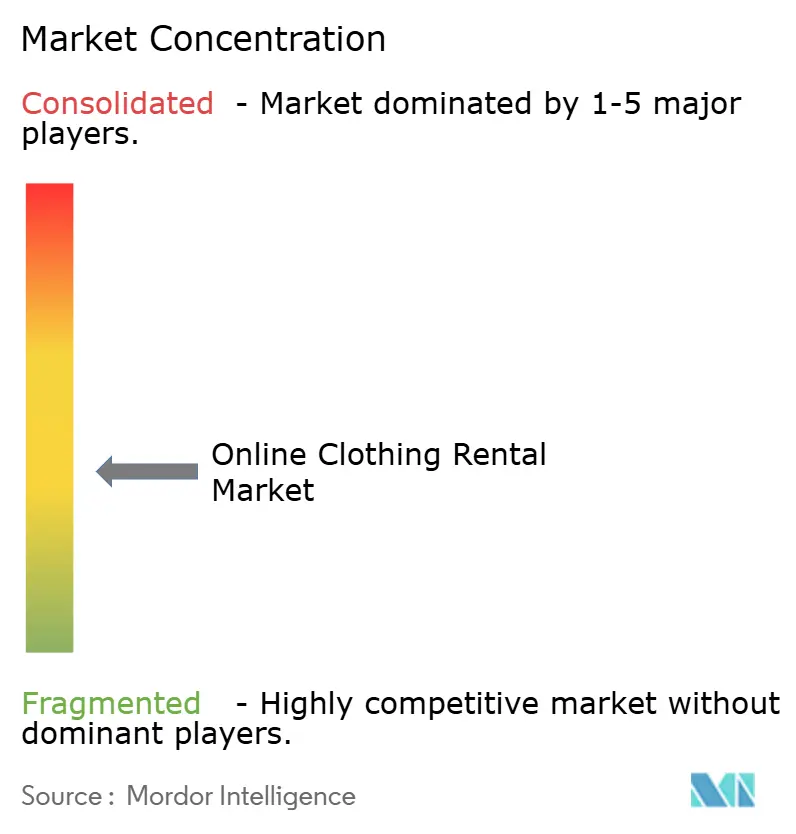
| Market Concentration | Medium |
Major Players
*Disclaimer: Major Players sorted in no particular order Image © Mordor Intelligence. Reuse requires attribution under CC BY 4.0. |
|
Online Clothing Rental Market Analysis by Mordor Intelligence
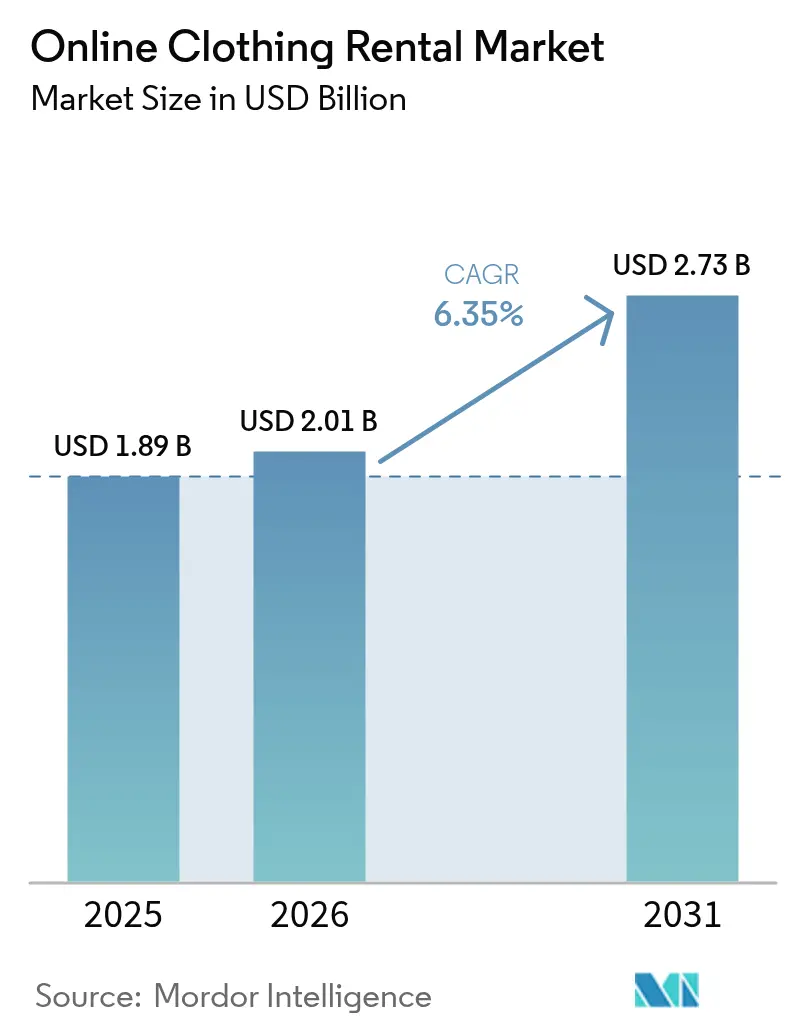
Online clothing rental market size in 2026 is estimated at USD 2.01 billion, growing from 2025 value of USD 1.89 billion with 2031 projections showing USD 2.73 billion, growing at 6.35% CAGR over 2026-2031. This growth is driven by urban consumers shifting from ownership to access, a broader acceptance of circular economy principles, and technological advancements enhancing fit, hygiene, and delivery reliability. While North America leads in revenue, the Asia Pacific region is witnessing the fastest growth, fueled by younger middle-class shoppers desiring variety without long-term commitment. Rentals of ethnic wear for special occasions bolster demand, and subscription plans enhance customer lifetime value through consistent revenue. Supporting this trend, the surge in special occasions and consumers' inclination to don distinct outfits for each event propels market growth. Highlighting this, the India Brand Equity Foundation noted that between November 23 and December 15, 2023, India witnessed over 3.5 million weddings, a notable increase of 10 million compared to the same period in 2021[1]Source: India Brand Equity Foundation, "Number of weddings in India", www.ibef.org. Furthermore, new regulatory frameworks in California and the European Union are spurring platforms to document environmental benefits, leading to heightened investments in industrial laundering, route optimization, and extending garment life.
Key Report Takeaways
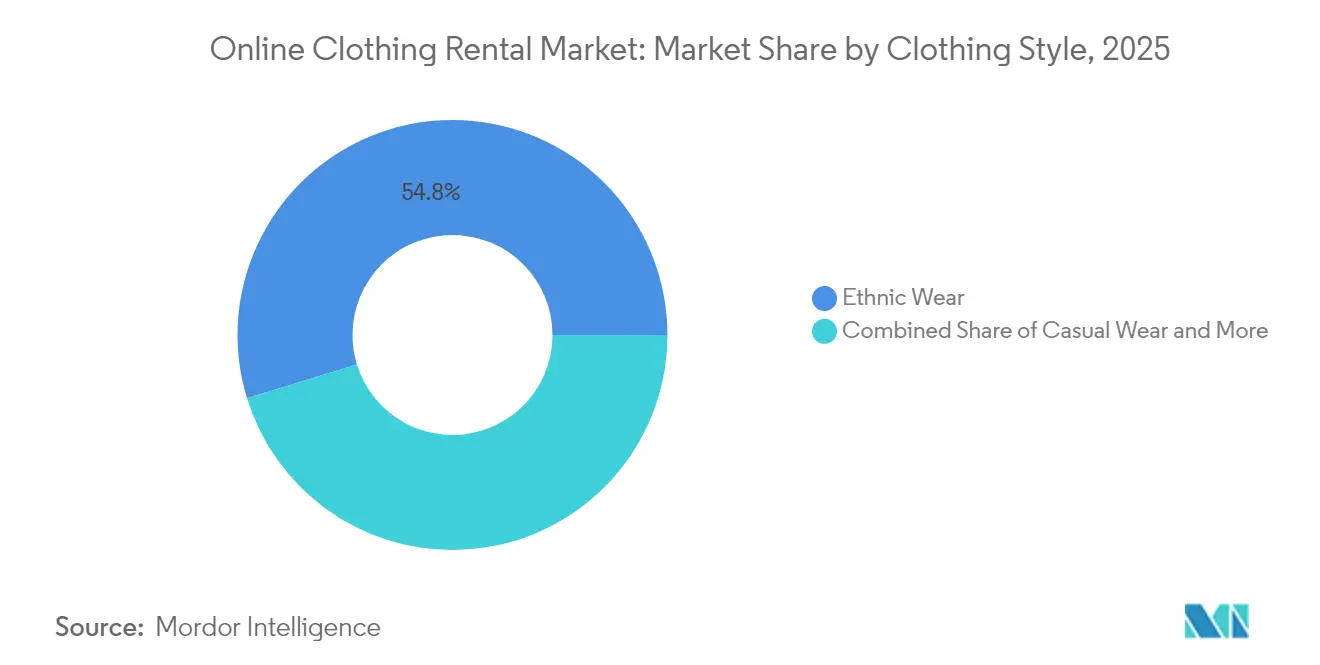
- By clothing style, ethnic wear captured 54.75% of the online clothing rental market share in 2025, while casual wear is projected to post the fastest 8.2% CAGR through 2031.
- By end user, women commanded 65.10% of the online clothing rental market size in 2025 and are on track for a 7.05% CAGR to 2031.
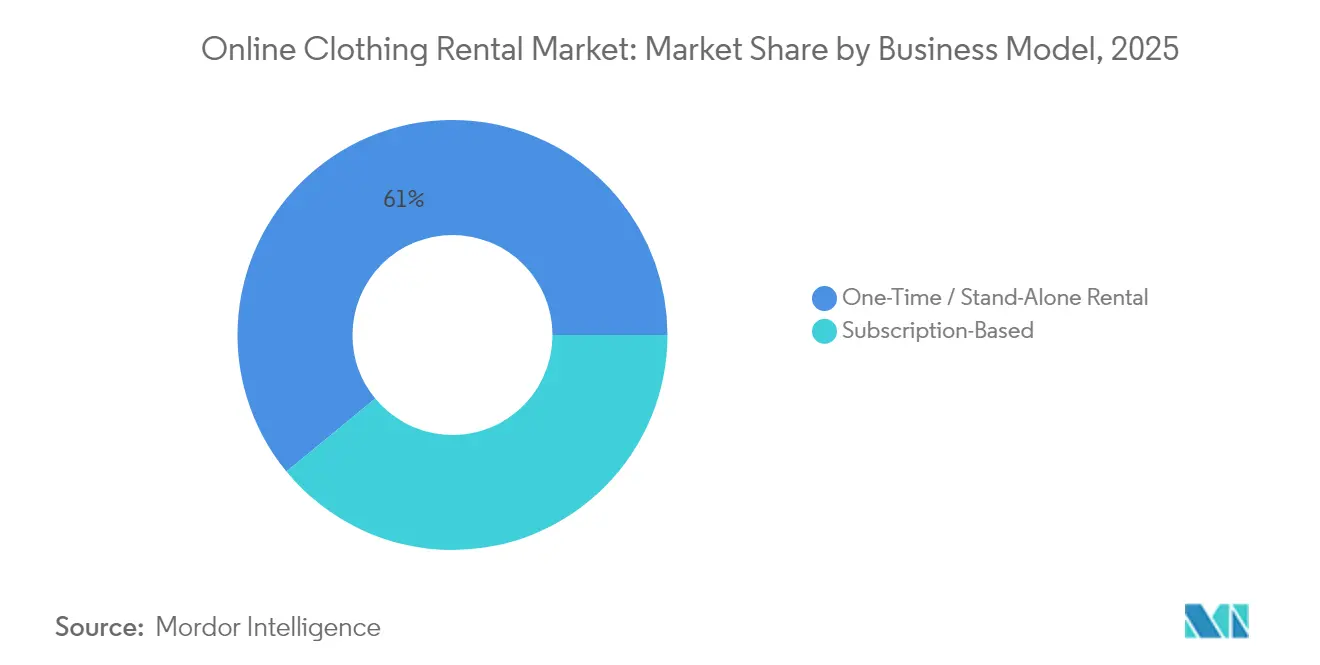
- By business model, one-time rentals accounted for 60.95% of revenue in 2025, whereas subscription plans are forecast to expand at a 6.95% CAGR over the same horizon.
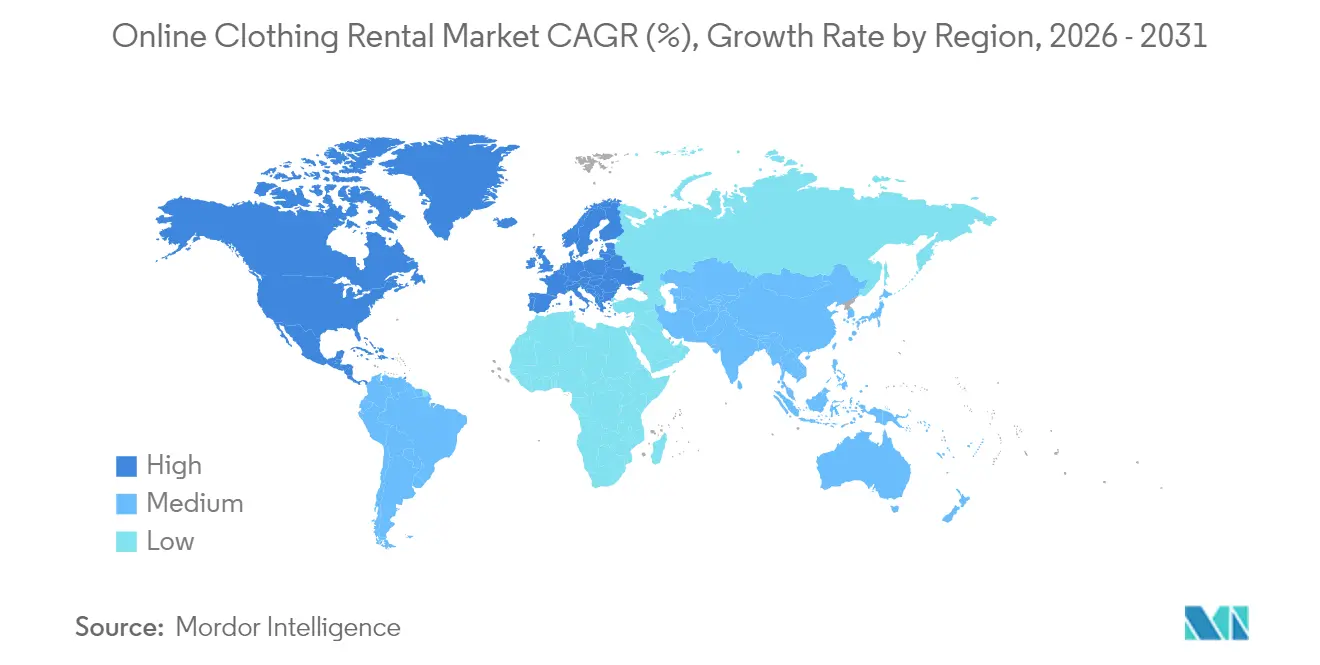
- Regionally, North America led with 48.90% of 2025 revenue, yet Asia Pacific is positioned for the highest 9.1% CAGR through 2031.
- Rent the Runway, HURR Collective, and ASOS-owned services collectively held under 15% of global revenue in 2025, underscoring a low-concentration structure.
Note: Market size and forecast figures in this report are generated using Mordor Intelligence’s proprietary estimation framework, updated with the latest available data and insights as of 2026.
Market Trends and Insights
Drivers Impact Analysis of Online Clothing Rental Market*
| Driver | (~) % Impact on CAGR Forecast | Geographic Relevance | Impact Timeline |
|---|---|---|---|
| Shift towards experience over ownership | +1.8% | Global, strongest in North America and Europe | Medium term (2-4 years) |
| Sustainability and circular economy | +1.5% | Global, led by the European regulatory framework | Long term (≥ 4 years) |
| Demand for variety and novelty | +1.2% | Global, particularly the Asia Pacific | Short term (≤ 2 years) |
| Need for occasional and special-event wear | +1.0% | Global, with cultural variations | Medium term (2-4 years) |
| Desire for high-end fashion access | +0.9% | North America and Europe, expanding to Asia | Medium term (2-4 years) |
| Social media influence and trends | +0.7% | Global, strongest among Gen Z demographics | Short term (≤ 2 years) |
| Source: Mordor Intelligence | |||
Shift Towards Experience Over Ownership
Young consumers are leading a shift in preferences from accumulating material goods to prioritizing experiences. Research shows that many consumers rent clothing to explore new brands, highlighting the rental model's role in brand discovery rather than just cost-saving. This trend is especially evident among millennials and Gen Z, who see fashion as self-expression and favor access over ownership. For example, the Office for National Statistics (UK) reported that in October 2024, small retailers saw weekly clothing sales drop to about GBP 93.43 million, down from GBP 111.41 million the month prior[2]Source: Office for National Statistics (UK), "Retail sales - Pounds data, November 2024, table 'VAlNSAWD'", www.ons.gov.uk. Urbanization, with its smaller living spaces and storage challenges, further fuels this trend. Digital-savvy consumers appreciate the freedom to try various styles without the obligation to buy, driving consistent demand for rental platforms that provide curated choices and tailored suggestions.
Sustainability and Circular Economy
Driven by a growing environmental consciousness, fashion consumption patterns are undergoing significant shifts, with rental models emerging as a pivotal solution to the industry's sustainability dilemmas. For instance, YouGov reported that in January 2025, more than 40% of Brits aged 18 to 24 prioritized sustainability in their clothing choices. The fashion sector is responsible for at least one-third of global carbon emissions, intensifying both regulatory scrutiny and consumer demand for circular alternatives. The EU's Waste Framework Directive, which mandates separate textile collection by January 2025, along with Extended Producer Responsibility schemes, bolster incentives for reuse and rental models. Research indicates that rentals can slash per-wear greenhouse gas emissions by up to 84% for formal dresses, provided these garments see heightened utilization. Yet, the extent of these environmental advantages hinges on operational efficiency; without optimization, industrial laundering and transportation could negate the benefits.
Demand for Variety and Novelty
Fashion cycles, now driven by social media, are pushing consumers to refresh their wardrobes more frequently. Trends that once spanned entire seasons now shift in just weeks. Platforms like TikTok and Instagram amplify this urgency, especially among younger users who showcase their fashion choices online. This has birthed a "see now, buy now" mentality, fueling a demand for new styles. Rental platforms, in contrast to traditional ownership, can meet this demand more affordably. Moreover, as trend cycles quicken, rental platforms find opportunities: items can be rented out once their initial social media spotlight dims. Research indicates that in the Asia Pacific, where social media is deeply entrenched and fashion awareness is on the rise, the appetite for variety in fashion is particularly pronounced.
Need for Occasional and Special-Event Wear
Clothing rentals, especially for formal wear and ethnic attire, thrive on event-driven demand. Research highlights that consumers lean towards renting garments used occasionally or seasonally, with formal dresses, suits, jackets, and coats leading the charge. Dominating the market with a 55.30% share, the ethnic wear segment underscores the robust demand for traditional attire rentals. This is especially evident during weddings, religious ceremonies, and cultural celebrations, where reusing an outfit can be socially frowned upon. Such demand patterns are notably pronounced in South Asian, Middle Eastern, and African markets, emphasizing their cultural significance. The business model capitalizes on these predictable seasonal demands, with consumers showing a pronounced willingness to splurge on premium items meant for limited occasions.
Restraints Impact Analysis of Online Clothing Rental Market*
| Restraint | (~) % Impact on CAGR Forecast | Geographic Relevance | Impact Timeline |
|---|---|---|---|
| Hygiene and sanitation concerns | -1.4% | Global, strongest in the Asia Pacific | Medium term (2-4 years) |
| Competition from the secondhand market | -1.1% | Global, particularly Europe and North America | Long term (≥ 4 years) |
| Perceived lack of control and customization | -0.8% | Global cultural variations | Medium term (2-4 years) |
| Risk and liability for damage | -0.6% | Global, regulatory variations | Short term (≤ 2 years) |
| Source: Mordor Intelligence | |||
Hygiene and Sanitation Concerns
Concerns over garment cleanliness and hygiene pose the most significant hurdle to the adoption of rental services, with these apprehensions varying widely across cultural contexts and product categories. Research focusing on Chinese consumers highlights that worries about performance, particularly hygiene and quality, dampen both the perceived enjoyment and the likelihood of embracing fashion rental services. In response, the industry has rolled out sophisticated cleaning protocols. Infrastructure providers, such as Advanced Clothing Solutions, have adopted measures like ozone sanitization, microplastic filtration, and eco-friendly detergents. Yet, there's a pressing need for consumer education; many potential renters remain oblivious to professional cleaning standards, which often surpass typical home laundering. The industry's acknowledgment of this communication gap is underscored by the Textile Rental Services Association's introduction of a "Clean Green Marketing Toolkit" in 2025, aimed at standardizing messages around hygiene practices[3]Source: Textile Rental Services Association (TRSA), "Clean Green Marketing Toolkit", www.trsa.org.
Competition from the Secondhand Market
Secondhand clothing is gaining traction, posing a challenge to the online clothing rental market. While online rentals offer variety without the commitment of ownership, especially for upscale or occasional attire, platforms like ThredUP and Poshmark are championing the resale model. They not only emphasize eco-friendliness but also grant consumers the perk of permanent ownership at a fraction of the cost. Bolstering the secondhand market's momentum is a surge in governmental and organizational backing for circular economy initiatives. A case in point: the European Union's Ecodesign for Sustainable Products Regulation (ESPR), effective July 2024, introduces the Digital Product Passport (DPP) for textiles, aiming to boost product circularity. The DPP mandates comprehensive product details, enhancing transparency and fostering trust in a garment's sustainability and history. Such regulations amplify consumer confidence in buying pre-owned items, directly challenging the rental market's allure of temporary access.
*Our forecasts treat driver/restraint impacts as directional, not additive. The impact forecasts reflect baseline growth, mix effects, and variable interactions.
Online Clothing Rental Market Segment Analysis
By Clothing Style:
Ethnic Wear Dominates Occasion-Driven DemandIn 2025, ethnic wear captures a commanding 54.75% of the market share, underscoring a robust global demand for traditional attire rentals. This dominance is largely attributed to the high costs and infrequent use of traditional garments, making rentals an economically savvy choice for weddings, religious ceremonies, and cultural celebrations. Social norms further bolster this segment, as there's often a cultural stigma attached to wearing the same ethnic outfit multiple times during special occasions. Meanwhile, casual wear is rapidly gaining ground, boasting an impressive 8.2% CAGR, largely fueled by subscription models that facilitate daily wardrobe rotations.
While formal wear and sports and activewear hold notable positions, they remain smaller segments. Formal wear sees a boost from corporate events and gatherings, whereas activewear appeals to fitness aficionados who desire premium brands without the full ownership price tag. The "Others" category, encompassing maternity and children's formal wear, taps into niche markets with high-value use cases, despite their limited usage periods. Platforms like By Rotation highlight the potential in ethnic wear rentals, showcasing Pakistani, Indian, and Asian traditional garments fetching rental prices of GBP 14 per day, despite retail values soaring to GBP 350.



By End User:
Women Drive Market LeadershipIn 2025, women command a 65.10% share of the market and are the fastest-growing segment, boasting a 7.05% CAGR. This surge mirrors their heightened fashion consumption and a pronounced embrace of sharing economy models. This trend is consistent with the broader fashion landscape, where women's apparel not only dominates but also showcases a deeper engagement with social media trends. The women's segment, spanning professional attire, occasion dresses, maternity wear, and luxury accessories, enjoys diverse use cases, leading to multiple rental opportunities at various life stages.
While men's involvement in clothing rentals is on the rise, it's still curtailed by cultural norms and a limited fashion palate. Yet, there's burgeoning interest in areas like formal wear and luxury watches. Meanwhile, the kids and teens segment is emerging as a lucrative frontier. Platforms like thelittleloop, which focus on children's clothing subscriptions, are securing funding, capitalizing on the rapid growth and evolving size needs of kids. Furthermore, research highlights a pronounced acceptance of rental models among younger consumers, hinting at a potential market expansion as these digital natives age and their buying power swells.
By Business Model:
Subscription Models Gain MomentumIn 2025, one-time or stand-alone rentals dominate the market, capturing a 60.95% share, underscoring a consumer trend favoring flexibility and sporadic use. This approach caters to event-driven demands, where patrons seek specific items for unique occasions without the burden of long-term commitments. Yet, subscription-based models are on the rise, boasting a 6.95% CAGR, as platforms pivot towards consistent revenue and maximizing customer lifetime value. These subscriptions not only promise steady income but also foster deeper customer engagement and leverage AI for tailored recommendations.
Major platforms are pivoting towards subscriptions, with Rent the Runway proudly announcing a subscriber base exceeding 119,778 in 2024. A new hybrid model is surfacing, merging both strategies, enabling customers to enhance their subscriptions with occasional one-time rentals for special events. However, the triumph of subscription models hinges on adept inventory curation, efficient logistics, and top-notch customer service. This is highlighted by Rent the Runway's operational hurdles and subsequent workforce cuts in 2024.
Geography Analysis
North America Online Clothing Rental Market
In 2025, North America commands a dominant 48.90% share of the market, supported by its well-established e-commerce infrastructure, robust disposable incomes, and broad acceptance of the sharing economy. Within the region, the United States stands out with a commanding 90.3% share, driven by prominent platforms such as Rent the Runway, a mature digital payments ecosystem, and substantial venture capital investments that continue to support platform expansion, customer acquisition, and technology upgrades.
APAC and Europe Online Clothing Rental Market
Asia Pacific is emerging as the fastest-growing region, registering a 9.1% CAGR, driven by rapid urbanization, an expanding middle class, and rising fashion awareness among younger consumers. Increasing smartphone penetration, growing social media influence, and greater exposure to global fashion trends are encouraging consumers to explore rental models, particularly for occasion wear and premium apparel. Europe is also witnessing consistent growth, supported by stringent sustainability regulations and proactive circular economy initiatives. The EU's Extended Producer Responsibility framework is incentivizing rental models, while established platforms such as HURR Collective continue to strengthen the market. After securing USD 15.4 million in funding in December 2023, HURR Collective partnered with Deliveroo in November 2024 to offer expedited delivery services.
South America and MEA Online Clothing Rental Market
South America and the Middle East and Africa are emerging as markets with significant growth potential, especially in countries where cultural ties to formal and ethnic attire remain strong. In these regions, rental models address affordability concerns while supporting societal expectations around outfit novelty for weddings, festivals, religious events, and other formal occasions. As consumer awareness improves and digital retail infrastructure expands, these markets are expected to create new opportunities for apparel rental platforms seeking geographic diversification.
Mordor Intelligence provides coverage of the online clothing rental market across other key regional markets, including Asia, each with their regulatory frameworks and demand patterns.

Competitive Landscape
In the fragmented online clothing rental market, the top five players command less than 20% of global revenue. This opens the door for local specialists and niche peer-to-peer platforms to thrive. While Rent the Runway dominates U.S. subscriptions, HURR Collective is rapidly expanding its U.K. peer marketplace. In a move underscoring their commitment to the rental space, ASOS and Flannels introduced house-branded rental capsules in 2025.
Today, technological advantages eclipse mere inventory size. AI-driven fit engines are slashing return costs, while virtual try-on features are enhancing conversions and alleviating sizing concerns. Veesual's recent USD 7.5 million funding round, aimed at establishing a New York office in April 2024, underscores the strong venture interest in tech solutions that cater to multiple merchants. Meanwhile, backend firms like Advanced Clothing Solutions are streamlining operations for smaller brands by offering laundering, quality control, and fulfillment services, eliminating the need for complex in-house operations.
Strategic partnerships are becoming the norm for market entry. Luxury brand Karen Millen has launched its own rental "rotates," ensuring they retain direct consumer data while entrusting logistics to specialized partners. Such collaborations not only enhance authenticity and justify premium rental prices but also safeguard the brand's reputation in a market increasingly leaning towards resale.
Online Clothing Rental Industry Leaders
-
Urban Outfitters, Inc.
-
GlamCorner Pty Ltd
-
Rent the Runway
-
Flyrobe
-
HURR Collective
- *Disclaimer: Major Players sorted in no particular order
Online Clothing Rental Market Companies Covered in this Report
- Rent the Runway
- Urban Outfitters (Nuuly)
- Rent An Attire
- Byrdie
- GlamCorner
- Flyrobe
- The Clothing Rental
- Dress & Go
- StyleLend
- HURR Collective
- By Rotation
- Girl Meets Dress
- Chic by Choice
- Hirestreet
- Front Row
- MyWardrobeHQ
- Armoire
- Rotaro
- FashionPass
- ModLux.Rent
- Baro
- GlamouRental

Recent Industry Developments in Online Clothing Rental Market
- January 2025: The clothing rental platform Poshmark introduced an innovative AI-powered tool called Smart List AI. This feature aims to streamline and expedite the listing process for sellers. The tool scans a seller's photos and automatically generates key product details like title, size, brand, and color, eliminating the need for manual input. The company highlighted that Smart List AI is also designed to optimize content for search, potentially increasing the visibility of listings.
- December 2024: Rent the Runway introduced a new collection of luxury designer items available for rent online. This initiative expanded their offerings to include high-end pieces from major fashion houses, providing customers with access to premium fashion without the significant investment of purchasing.
- June 2024: The fashion tech platform lookingGlass unveiled a new monthly subscription plan tailored for millennial mothers. This service provides on-demand fashion guidance and personalized wardrobe recommendations, catering to a specific demographic with evolving fashion needs and busy lifestyles.
- May 2024: The UK-based fashion rental service HURR launched "Hurr Flex," a new model designed to offer greater flexibility for everyday fashion rentals. Unlike traditional subscriptions, Hurr Flex operates on a credit-based system where customers purchase a "Flex pass," which unlocks a certain amount of rental credit. This allows renters to bundle several items and rent them for extended periods, up to 30 days, rather than being limited to shorter, event-specific rentals.


Global Online Clothing Rental Market Report Scope
Online clothing rental is a service that enables customers to rent clothes for a specific period. This service benefits consumers looking for a designer dress for theme parties, wedding parties, corporate parties, and filmmaking occasions.
The online clothing rental market is segmented by end users, dress code, and geography. Based on end-users, the market is segmented into men, women, and children. On the basis of dress code, the market is segmented into formal, casual, partywear, and traditional. The report also offers a detailed analysis of the major economies across North America, Europe, Asia-Pacific, South America, and Middle-East & Africa.
The market sizing has been done in value terms in USD for all the abovementioned segments.
| Ethnic Wear |
| Casual Wear |
| Formal Wear |
| Sports and Activewear |
| Others (Maternity, Kids’ Formal, etc.) |
| Women |
| Men |
| Kids and Teens |
| Subscription-Based |
| One-Time / Stand-Alone Rental |
| North America | United States |
| Canada | |
| Mexico | |
| Rest of North America | |
| South America | Brazil |
| Argentina | |
| Colombia | |
| Chile | |
| Rest of South America | |
| Europe | United Kingdom |
| Germany | |
| France | |
| Italy | |
| Spain | |
| Russia | |
| Sweden | |
| Belgium | |
| Poland | |
| Netherlands | |
| Rest of Europe | |
| Asia-Pacific | China |
| Japan | |
| India | |
| Thailand | |
| Singapore | |
| Indonesia | |
| South Korea | |
| Australia | |
| New Zealand | |
| Rest of Asia Pacific | |
| Middle East and Africa | United Arab Emirates |
| South Africa | |
| Saudi Arabia | |
| Nigeria | |
| Egypt | |
| Morocco | |
| Turkey | |
| Rest of Middle East and Africa |
| By Clothing Style (Value) | Ethnic Wear | |
| Casual Wear | ||
| Formal Wear | ||
| Sports and Activewear | ||
| Others (Maternity, Kids’ Formal, etc.) | ||
| By End User (Value) | Women | |
| Men | ||
| Kids and Teens | ||
| By Business Model (Value) | Subscription-Based | |
| One-Time / Stand-Alone Rental | ||
| By Geography | North America | United States |
| Canada | ||
| Mexico | ||
| Rest of North America | ||
| South America | Brazil | |
| Argentina | ||
| Colombia | ||
| Chile | ||
| Rest of South America | ||
| Europe | United Kingdom | |
| Germany | ||
| France | ||
| Italy | ||
| Spain | ||
| Russia | ||
| Sweden | ||
| Belgium | ||
| Poland | ||
| Netherlands | ||
| Rest of Europe | ||
| Asia-Pacific | China | |
| Japan | ||
| India | ||
| Thailand | ||
| Singapore | ||
| Indonesia | ||
| South Korea | ||
| Australia | ||
| New Zealand | ||
| Rest of Asia Pacific | ||
| Middle East and Africa | United Arab Emirates | |
| South Africa | ||
| Saudi Arabia | ||
| Nigeria | ||
| Egypt | ||
| Morocco | ||
| Turkey | ||
| Rest of Middle East and Africa | ||


Key Questions Answered in the Report
How large is the online clothing rental market in 2026?
It stands at USD 2.01 billion and is forecast to reach USD 2.73 billion by 2031.
Which region grows fastest in online clothing rentals?
Asia Pacific leads with a 9.1% CAGR thanks to rising middle-class incomes and social-media-driven fashion adoption.
Why does ethnic wear dominate rental demand?
High garment prices and cultural expectations against outfit repetition make renting traditional attire cost-effective for weddings and ceremonies.
What business model is gaining traction among rental platforms?
Subscription plans are expanding at a 6.95% CAGR because they secure predictable recurring revenue and deepen customer engagement.
What is the main consumer concern limiting rental adoption?
Hygiene and sanitation worries remain the primary barrier, shaving 1.4% off the forecast CAGR despite industry-wide cleaning certifications.
Page last updated on:





