
Oman Diabetes Care Drugs And Devices Market Size and Share
Market Overview
| Study Period | 2020 - 2031 |
|---|---|
| Forecast Data Period | 2026 - 2031 |
| Base Year Market Size (2025) | USD 209.02 Million |
| Market Size (2026) | USD 219.09 Million |
| Market Size (2031) | USD 277.29 Million |
| Growth Rate (2026 - 2031) | 4.82 % |
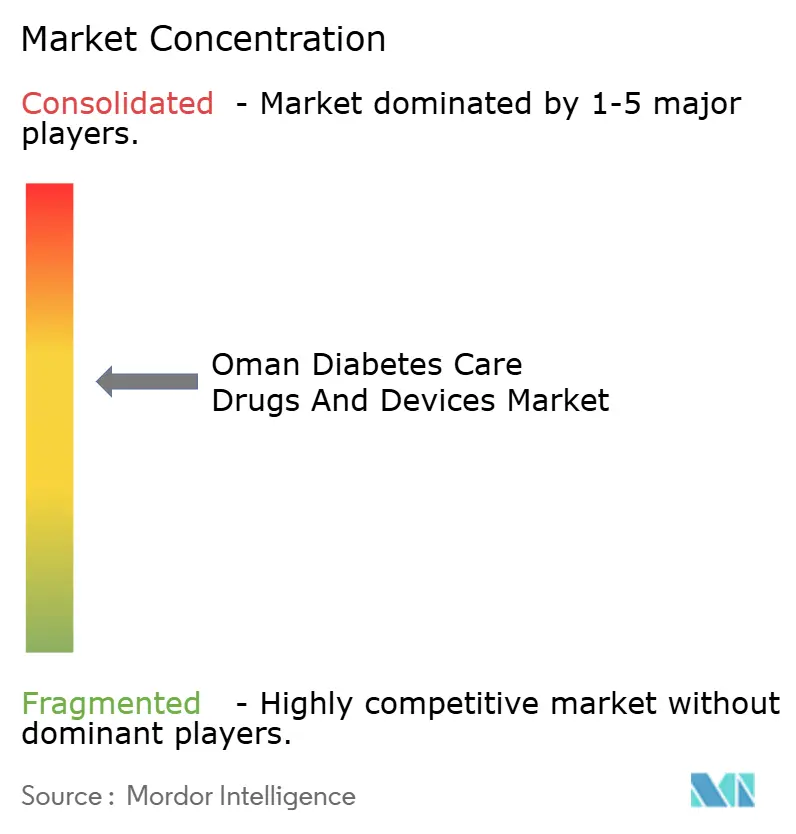
| Market Concentration | Medium |
Major Players *Disclaimer: Major Players sorted in no particular order Image © Mordor Intelligence. Reuse requires attribution under CC BY 4.0. | |
Oman Diabetes Care Drugs And Devices Market Analysis by Mordor Intelligence
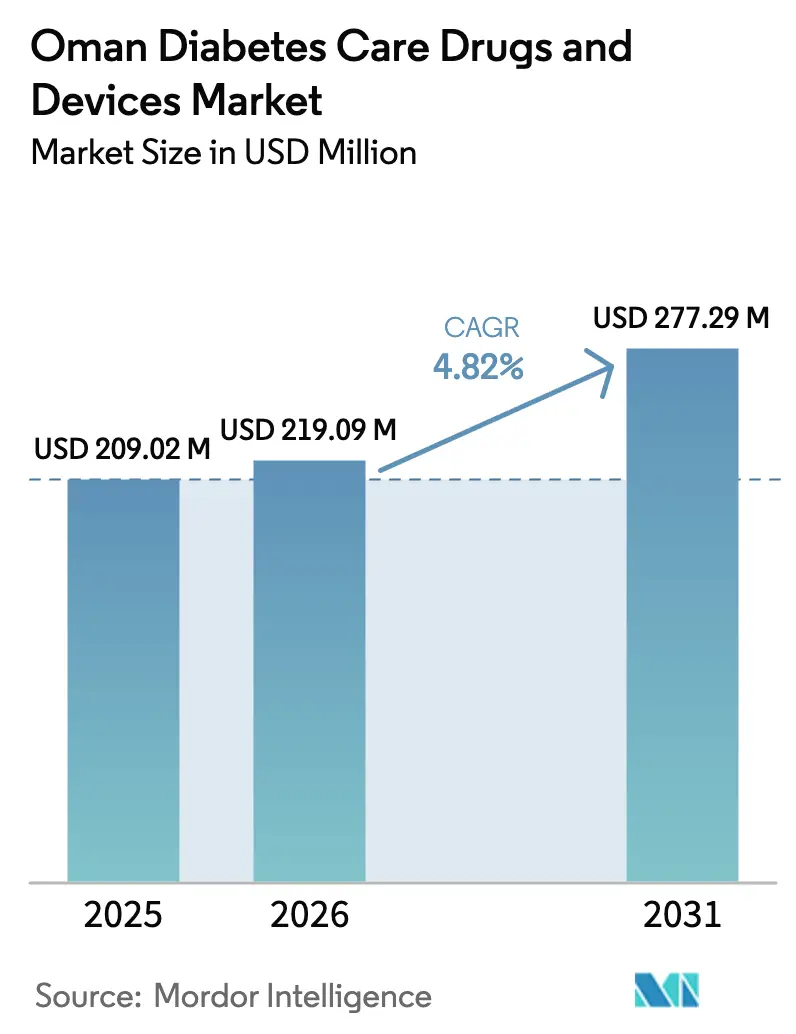
The Oman Diabetes Care Drugs And Devices Market size in 2026 is estimated at USD 219.09 million, growing from 2025 value of USD 209.02 million with 2031 projections showing USD 277.29 million, growing at 4.82% CAGR over 2026-2031.
The COVID-19 pandemic has positively impacted the Oman diabetes care equipment market growth. Diabetics infected with SARS-CoV-2 experience additional stress and increased secretion of hyperglycemic hormones, leading to elevated blood sugar levels, abnormal blood sugar fluctuations, and diabetic complications. Diabetes and uncontrolled hyperglycemia are risk factors for poor prognosis in COVID-19 patients, including increased risk of serious illness and death. To avoid complications, the patient's blood glucose level must be normal. Diabetic device makers are scrambling to ship devices to diabetics with the help of local governments during the COVID-19 crisis. The pandemic emergency has increased telemedicine by both patients and healthcare workers, removing many long-standing regulatory barriers.
Diabetes is associated with many health complications. People with diabetes need to make multiple corrections throughout the day to maintain nominal blood sugar levels, such as administering additional insulin or monitoring blood sugar levels and ingesting other carbohydrates.
Diabetes is a growing health burden nationwide and is a leading cause of premature death, morbidity, and loss of economic growth. Oman's Ministry of Health recently attended the virtual launch of the WHO Global Diabetes Compact, co-hosted by the World Health Organization and the Government of Canada. The compact aims to raise awareness of diabetes as a global disease and expand prevention and treatment as part of primary health care. Care and general health care.
Diabetes is an expensive chronic disease that requires medical devices to monitor blood sugar levels, according to the Oman Diabetes Association. This poses a challenge for low-income and social security patients, and efforts are being made to reduce the burden on these patients and promote carbohydrate restriction.
As part of an ODA initiative, Oman is trying to educate people with diabetes on the use of blood glucose meters. In addition, there are about 60 new pediatric infections per year. According to local studies and reports of reasonable diabetes control, the rate is 32-35% in adult patients but reaches 10-12% in children and adolescents. Governments are working to raise awareness of diabetes and increase access to blood glucose meters to improve diabetes management in children.
Based on the abovementioned factors, the market under study is expected to grow during the analysis period.
Note: Market size and forecast figures in this report are generated using Mordor Intelligence’s proprietary estimation framework, updated with the latest available data and insights as of 2026.
Oman Diabetes Care Drugs And Devices Market Trends and Insights
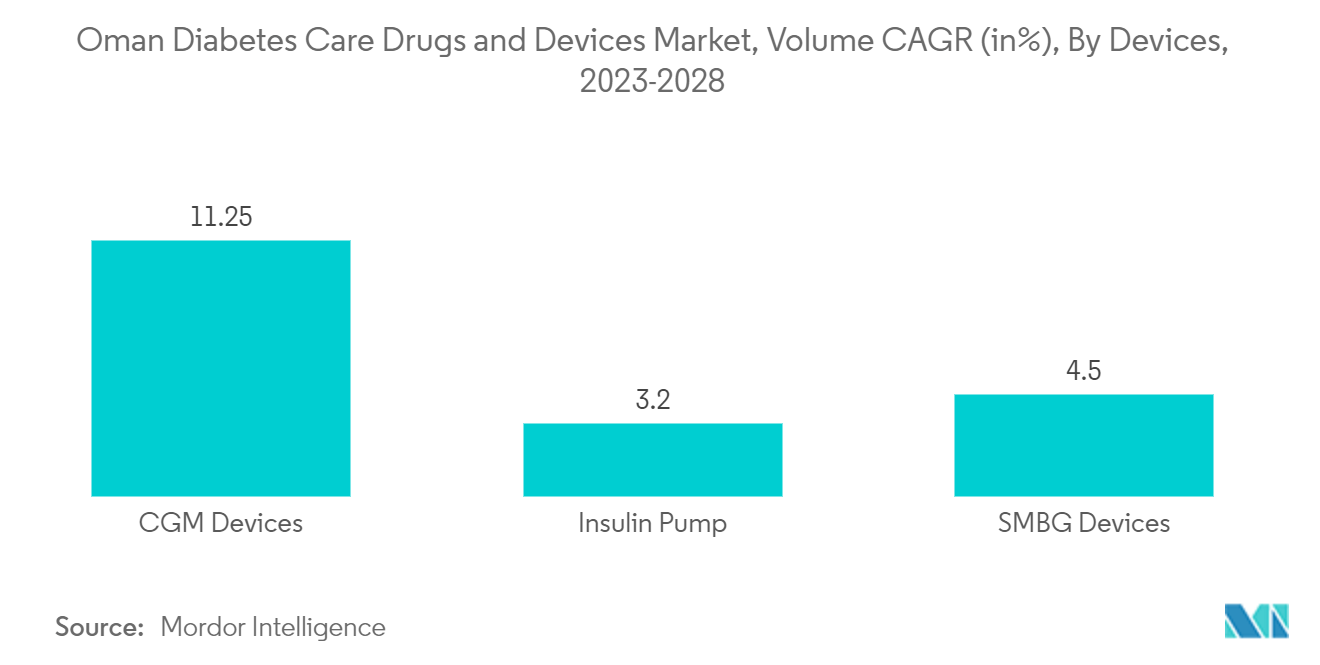
The continuous Glucose Monitoring Segment is Expected to Witness the Highest Growth Rate Over the Forecast Period
In CGM, a small sensor is inserted into the abdomen or arm, and a small plastic tube called a cannula is inserted into the top layer of skin. An adhesive patch holds the sensor in place, allowing it to measure glucose levels in interstitial fluid day and night. In general, the sensor should be replaced every 7-14 days. A small, reusable transmitter attached to the sensor allows the system to wirelessly transmit real-time readings to a monitor displaying blood glucose data. Some systems have their monitors, while others display information via smartphone apps.
The frequency of monitoring blood glucose levels depends on the type of diabetes and is different for each patient. People with type 1 diabetes should have their blood sugar checked regularly, monitor their blood sugar levels, and adjust their insulin dosage accordingly. His CGM device now details blood glucose patterns and trends compared to routine blood glucose monitoring at set intervals. In addition, current continuous blood glucose monitors can retroactively check blood glucose trends by downloading data or providing real-time images of blood glucose levels via the receiver display.
Continuous glucose monitoring sensors use glucose oxidase to measure blood sugar levels. Glucose oxidase converts glucose to hydrogen peroxidase, which reacts with platinum in the sensor to send an electrical signal to a transmitter. The sensor is the most important part of any continuous blood glucose monitoring device. Technological advances in improving sensor accuracy are expected to drive the growth of the segment during the forecast period.
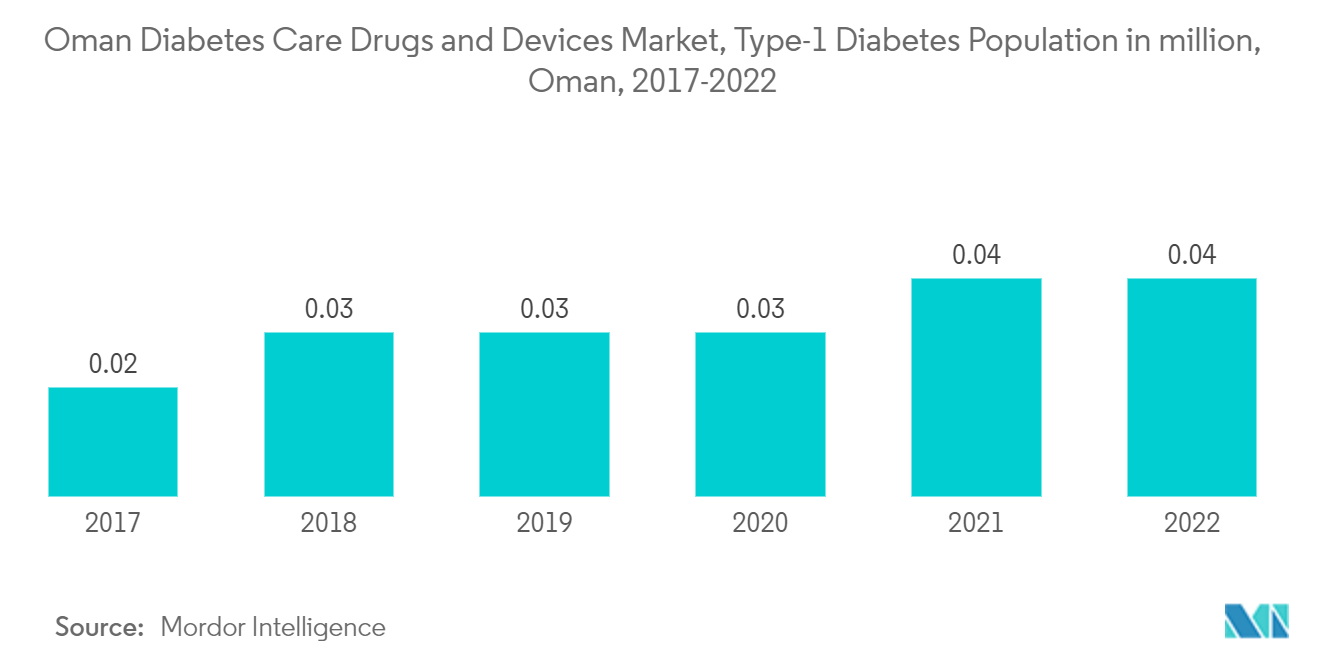
Rising diabetes prevalence in Oman driving the market in the forecast year
According to the Oman Diabetes Association, diabetes is an expensive chronic disease requiring blood sugar level control. This poses a challenge for low-income and social security patients, and efforts are being made to reduce the burden on these patients and promote carbohydrate restriction. In addition, there are about 60 new pediatric infections per year. According to local studies and reports of good diabetes control, the rate is 32-35% in adult patients but reaches 10-12% in children and adolescents. Governments are committed to raising awareness of diabetes and increasing access to medicines to improve diabetes management.
Diabetes shortens life, and people with the disease are more likely to go blind and be hospitalized for amputations, kidney failure, heart attack, stroke, and heart failure. Metformin is the first-line treatment for hyperglycemia in T2DM. Metformin is not only an essential hypoglycemic agent but also has important anti-inflammatory properties. Other options should be considered if metformin is contraindicated or not tolerated or if treatment goals are not achieved after three months of maximum tolerated dose. Dipeptidyl peptidase four inhibitors, sodium glucose cotransporter two inhibitors, and glucagon-like peptide one agonist are commonly used as adjuncts to metformin treatment.
The Ministry of Health, Oman is strategically planning to contain the growing burden of diabetes and invest in all means to control it, stating that their work needs to ensure equitable and affordable access to treatment, and it is essential that they advocate for investments in diabetes education and prevention programs in Oman. Risk factors such as insufficient physical activity and the consumption of unhealthy diets are contributing to the development and progression of the disease.
The increasing diabetes prevalence and the above factors will likely drive segment growth over the forecast period.
Competitive Landscape
In order to survive in the market, manufacturers have constantly innovated. Large companies like Abbott and Medtronic have made numerous mergers, acquisitions and partnerships to gain market dominance while adhering to organic growth strategies. Manufacturers of insulin dosing devices spend a lot of money on R&D of the drugs and devices.
Oman Diabetes Care Drugs And Devices Industry Leaders
-
Medtronics
-
Roche
-
NovoNordisk
-
Sanofi
-
Omnipod
- *Disclaimer: Major Players sorted in no particular order
Market Opportunities and Future Outlook
Oman is tightening entry and operating pathways for diabetes drugs and devices through Ministry of Health (MOH) functions led by the Drug Safety Center and the Directorate General of Pharmaceutical Affairs and Drug Control. This includes structured requirements for medical device manufacturer registration (for example, GD 22) and low-risk medical device registration (GD 9). On the drug side, the MOH framework covers verification and abridged registration procedures and eCTD preparation and submission guidance, which can reduce administrative friction for multinational and regional suppliers that already manage dossiers aligned to reference markets.
In the near term, the most visible whitespace is access expansion and service enablement around monitoring and digital diabetes management, consistent with the report trend that continuous glucose monitoring is gaining share. A specific in-market signal is the June 2026 collaboration in which GenomaLab Medical LLC became the authorized partner for Yuwell Global Health CGM systems in Oman and committed to a dedicated local service center, pointing to demand for onboarding, after-sales support, and broader channel enablement beyond product supply. On the supply side, government actions to strengthen local procurement and industrial participation, including the MOH advance purchase agreements with local medical factories (February 2025) and the 2026 push to tighten authorized-agent sourcing for medicines and health products, create openings for compliant manufacturers and authorized distributors to expand availability of diabetes medicines, insulin delivery consumables, and glucose monitoring supplies.
Recent Industry Developments
- July 2026: Daewoong Pharmaceutical signed a supply and export agreement with Acino Pharma AG to introduce Envlo (enavogliflozin) to the MENA region, including Oman. The launch expands access to a new diabetes therapy across Oman and neighboring markets, reinforcing market entry for diabetes drugs. The collaboration strengthens regional distribution and supports Oman patients through expanded availability.
- February 2025: Opal BioPharma signed Local Content Commitment Agreement with the Ministry of Health and Nazdaher to localize biopharmaceutical production and expand manufacturing infrastructure in Oman. Localization of biopharmaceutical production in Oman enhances domestic manufacturing capacity and supply security for diabetes care medicines and related devices through local-to-market manufacturing. The arrangement anchors domestic capabilities aligned with national health security objectives.
- February 2025: Ministry of Health Oman executed preliminary advance purchase agreements with six local medical factories to support local medical industry content, including Opal BioPharma, Philex Pharmaceuticals, Menagene Pharmaceuticals, Dhofar Pharma, Izz Pharma, and Health Supplies Factory. Local procurement reduces import dependency and strengthens the resilience of the Oman diabetes care supply chain. These agreements advance content goals and enable local manufacturers to scale production for diabetes care needs.
Research Methodology Framework and Report Scope
Market Definition and Coverage
This market tracks the value of diabetes care medicines and diabetes care devices sold and used in Oman for day to day blood glucose management and treatment, including insulin and non insulin therapies, plus monitoring and delivery devices.
Scope exclusions: Diabetes diagnostics and lab testing services, general hospital consumables, and broader endocrine care not directly tied to diabetes drug and device sales are excluded.
Segmentation Overview
- Devices
- Monitoring Devices
- Self-monitoring Blood Glucose Devices
- Continuous Blood Glucose Monitoring
- Management Devices
- Insulin Pump
- Insulin Syringes
- Insulin Cartridges
- Disposable Pens
- Monitoring Devices
- Drugs
- Oral Anti-Diabetes Drugs
- Insulin Drugs
- Combination Drugs
- Non-Insulin Injectable Drugs
Data Sources, Market Sizing, and Validation
Desk Research
Desk research was first used to set the demand pool and care pathway for diabetes in Oman, and to confirm what gets reimbursed or procured through public channels. We used public health statistics and policy cues to estimate patient volume and treatment intensity, which then supports later volume and price checks.
Sources reviewed included, for example, World Health Organization diabetes indicators, International Diabetes Federation country facts, Oman Ministry of Health publications, customs and trade statistics where relevant, and peer reviewed clinical literature on insulin and oral therapy use. We also reviewed company annual reports, investor presentations, and reputable press for product launches and pricing context, and used paid subscriptions for company financials and intelligence, patent databases, and shipment level import export checks where data gaps appeared. This list is not exhaustive, and many other sources were also used for collection, validation, and clarifications.
Primary Interviews and Surveys
Primary work was used to validate therapy mix and device adoption in Oman, since secondary sources often do not reflect current switching patterns. We spoke with clinicians, pharmacists, distributors, procurement experts, and device channel participants. Their input helped us confirm assumptions on utilization, pricing ranges, and the pace of CGM uptake across key care settings.
Distribution of primary research fieldwork respondents
| Company type | Respondent position |
|---|---|
| Top tier: 34% | CXOs: 14% |
| Mid tier: 50% | Functional/Unit leaders: 42% |
| Smaller Players: 16% | Managers: 44% |
Market-Sizing & Forecasting
Sizing starts from a demand pool view where treated diabetes patients in Oman are built up and then mapped to therapy classes and device use rates, which are then translated into annual volumes and value. We describe the top down approach as a treated cohort and utilization reconstruction, then corroborate totals using selective bottom-up approximations, including sampled price points by channel and roll ups from a small set of supplier and distributor checkpoints.
Inputs used in the model include diabetes prevalence and treated share, insulin versus oral therapy split, intensity markers like injections per day for insulin users, average test strip or sensor consumption, CGM penetration by patient type, and replacement cycles for meters and delivery devices. Forecasting uses scenario analysis supported by expert views. The base case reflects expected shifts toward newer therapies and monitoring, with steady access through public and private care. Where bottom-up data was missing for smaller sub categories, we used conservative proxy volumes tied to patient counts and then pressure-tested these in follow up calls.
Data Validation & Update Cycle
Outputs were checked against independent signals such as diabetes population trends, treatment guideline direction, and observed channel movement for insulin and monitoring supplies. If a segment result looked out of line, we revisited assumptions, rechecked price points, and re-contacted experts to confirm whether the change was real or whether it came from a modeling issue.
Before sign off, a multi step review is done where another analyst tests the arithmetic, logic, and year on year movements, and then a final pass is completed close to delivery to reduce stale inputs. Reports are refreshed annually, and interim updates are made when material events occur, such as major reimbursement changes or sharp price movements that can shift value quickly.
Mordor Intelligence's Oman Diabetes Care Drugs and Devices Market Sizing Compared With Other Published Estimates
Published market values for Oman diabetes care drugs and devices can look far apart because the included product list and the end year being quoted are not always aligned. Differences also come from how each publisher treats patient growth, price changes, and the speed of switching from fingerstick testing to CGM.
Some external estimates fold in adjacent areas like diabetes diagnostics, prediabetes programs, and complication management, and they may extend the horizon to a later year with a higher growth assumption. In Mordor Intelligence, the count is limited to diabetes drugs plus monitoring and delivery devices, and the model is refreshed around a clear base year so pricing and utilization inputs stay consistent.
Benchmark comparison
| Source | Market Size | Gaps in Research Methodology |
|---|---|---|
| Mordor Intelligence | USD 209.02 M (2025) | |
| Global Consultancy A | USD 285.40 M (2026) | Uses a later start year and a broader inclusion set that appears to add adjacent diabetes related categories beyond core drug and monitoring or delivery devices, which lifts the total. |
| Industry Publisher B | USD 200.00 M (2025) | Looks focused on insulin only, which excludes oral therapies, non insulin injectables, and most monitoring device value, so the total comes out lower than an all drugs plus devices view. |
The comparison mainly shows that timing and what is counted drive the spread, not just math differences. By keeping the scope tied to therapy and device usage in Oman and then checking pricing and utilization through interviews, the final number stays traceable to clear inputs that can be revisited when conditions change.
Key Questions Answered in the Report
How big is the Oman Diabetes Care Drugs And Devices Market?
The Oman Diabetes Care Drugs And Devices Market size is expected to reach USD 219.09 million in 2026 and grow at a CAGR of 4.82% to reach USD 277.29 million by 2031.
What is the current Oman Diabetes Care Drugs And Devices Market size?
In 2026, the Oman Diabetes Care Drugs And Devices Market size is expected to reach USD 219.09 million.
Who are the key players in Oman Diabetes Care Drugs And Devices Market?
Medtronics, Roche, NovoNordisk, Sanofi and Omnipod are the major companies operating in the Oman Diabetes Drugs And Devices Market.
What years does this Oman Diabetes Care Drugs And Devices Market cover, and what was the market size in 2025?
In 2025, the Oman Diabetes Care Drugs And Devices Market size was estimated at USD 219.09 million. The report covers the Oman Diabetes Drugs And Devices Market historical market size for years: 2019, 2020, 2021, 2022, 2023 and 2024. The report also forecasts the Oman Diabetes Drugs And Devices Market size for years: 2026, 2027, 2028, 2029, 2030 and 2031.