
Oleoresin Market Size and Share
Market Overview
| Study Period | 2021 - 2031 |
|---|---|
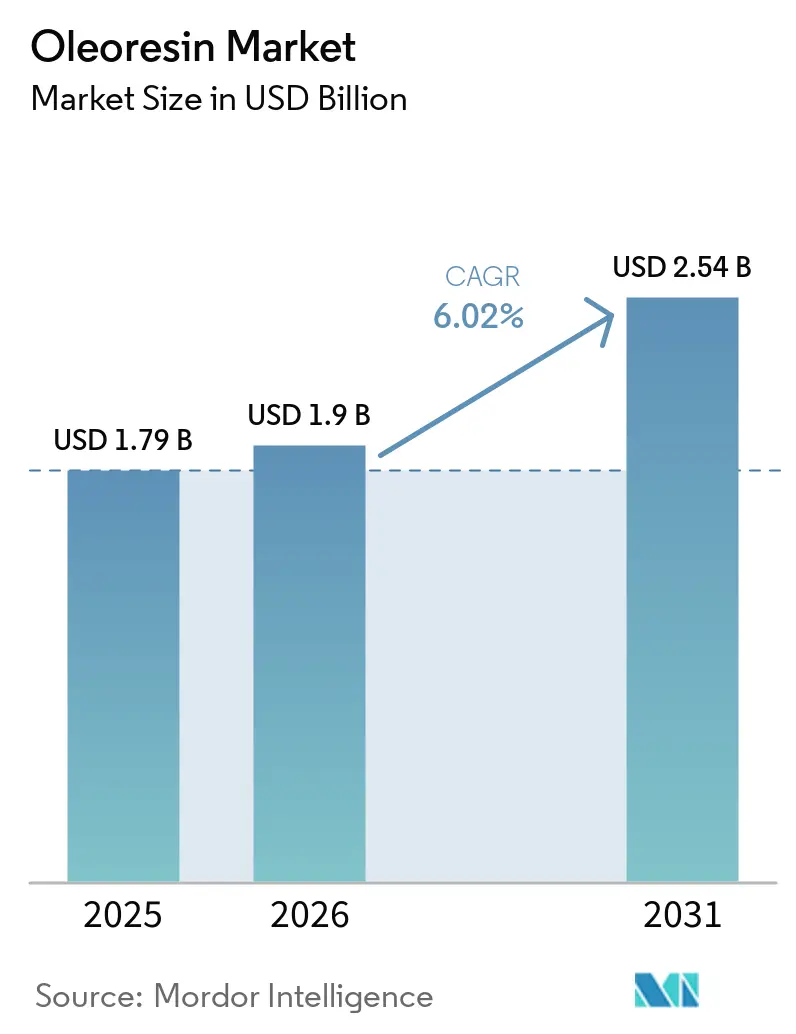
| Market Size (2026) | USD 1.9 Billion |
| Market Size (2031) | USD 2.54 Billion |
| Growth Rate (2026 - 2031) | 6.02 % |
| Fastest Growing Market | Asia Pacific |
| Largest Market | Europe |
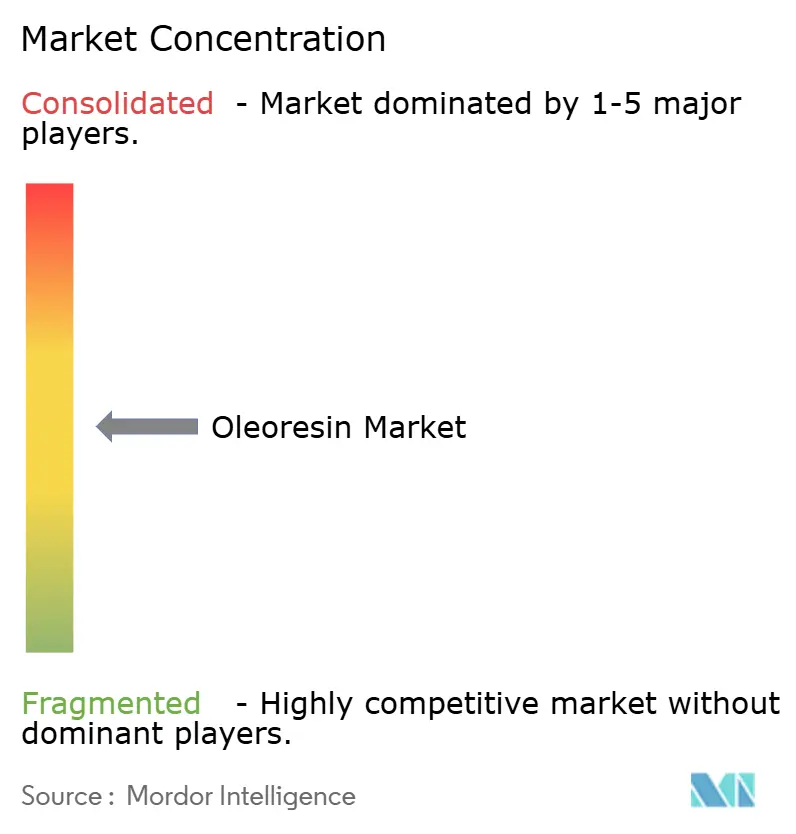
| Market Concentration | Medium |
Major Players *Disclaimer: Major Players sorted in no particular order Image © Mordor Intelligence. Reuse requires attribution under CC BY 4.0. | |
Oleoresin Market Analysis by Mordor Intelligence
The oleoresin market size is expected to grow from USD 1.79 billion in 2025 to USD 1.9 billion in 2026 and is forecast to reach USD 2.54 billion by 2031 at 6.02% CAGR over 2026-2031. The market expansion is driven by increasing global demand for natural and clean-label ingredients across industries. Oleoresins are preferred over synthetic additives due to their stability, longer shelf life, concentrated flavor, and health benefits, including antioxidant, antimicrobial, and anti-inflammatory properties. Growing consumer health consciousness has increased the use of turmeric, black pepper, ginger, and capsicum oleoresins in nutraceuticals and functional foods. The market growth is further supported by improved extraction methods, such as supercritical CO₂ and solvent-free extraction, which enhance product quality and efficiency. Additionally, favorable regulations for natural ingredients and increased Research and Development investments are expanding oleoresin applications.
Key Report Takeaways
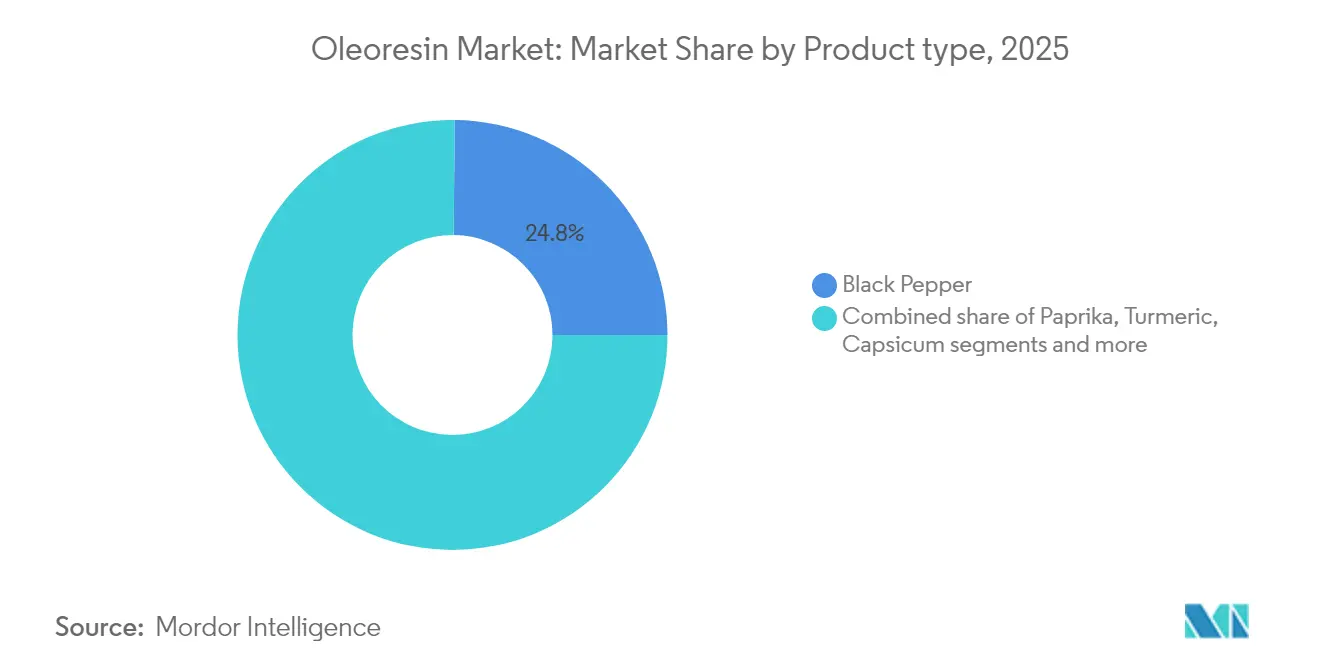
- By product type, black pepper led with 24.83% of oleoresin market share in 2025, while turmeric is forecast to climb at an 8.02% CAGR to 2031.
- By form, oil-soluble liquid variants accounted for 50.76% of the oleoresin market size in 2025; water-soluble liquids are the fastest rising at a 7.12% CAGR through 2031.
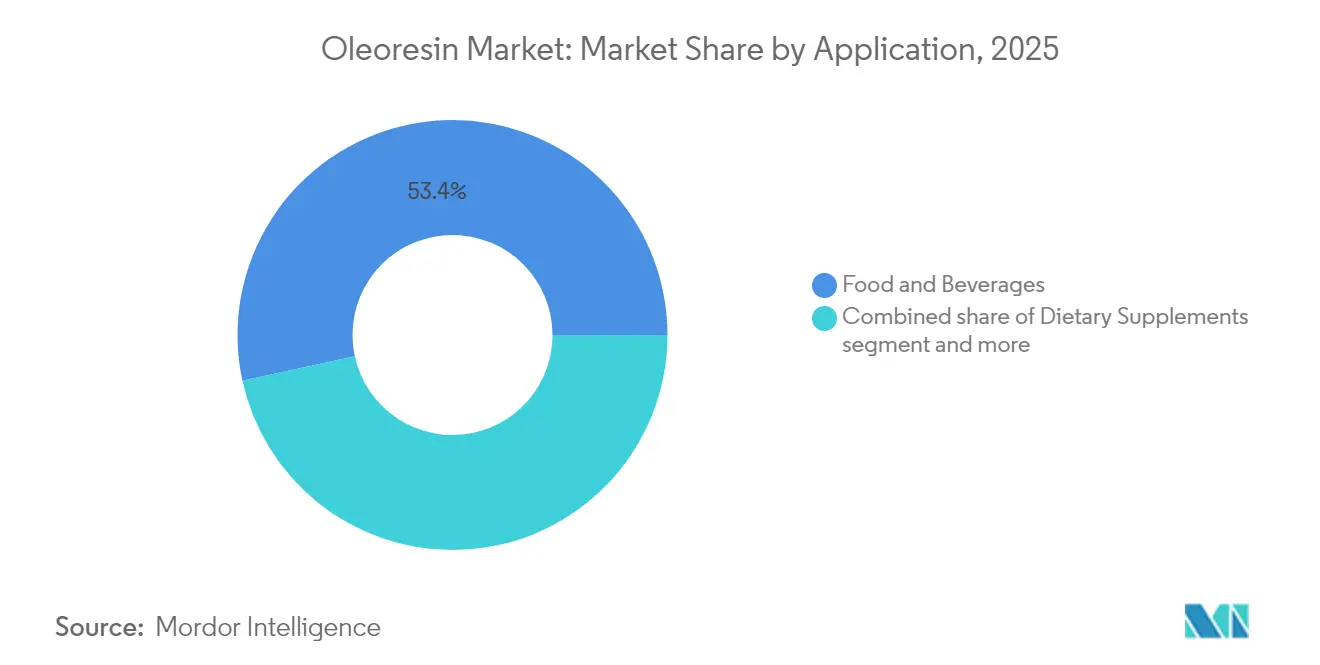
- By application, food and beverages dominated with 53.42% revenue contribution in 2025; dietary supplements are advancing at a 6.98% CAGR to the end of the decade.
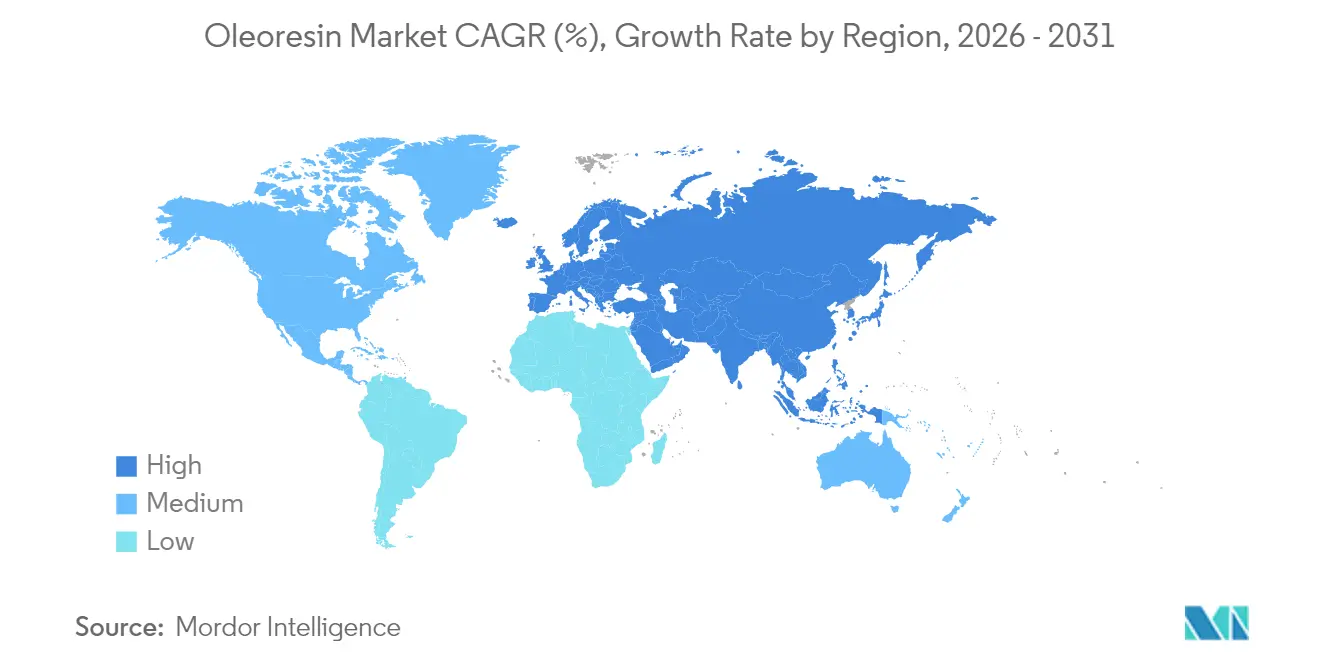
- By geography, Europe held 28.75% of 2025 revenue, but Asia-Pacific is projected to register a 6.78% CAGR, the quickest regional pace.
Note: Market size and forecast figures in this report are generated using Mordor Intelligence’s proprietary estimation framework, updated with the latest available data and insights as of 2026.
Market Trends and Insights
Drivers Impact Analysis of Oleoresin Market*
| Driver | (~) % Impact on CAGR Forecast | Geographic Relevance | Impact Timeline |
|---|---|---|---|
| Regulatory push for natural colors and flavors in processed foods | +1.8% | Global, with strongest impact in North America and European Union | Medium term (2-4 years) |
| Rising clean-label demand in food, beverages, and nutraceuticals | +1.5% | Global, led by North America and the Europe, expanding to Asia-Pacific | Long term (≥ 4 years) |
| Growing global demand for ethnic and spicy flavors | +1.2% | Global, with highest growth in North America and Europe | Medium term (2-4 years) |
| Extended shelf life and logistical advantages of oleoresins | +0.9% | Global, particularly beneficial for export-oriented markets | Long term (≥ 4 years) |
| Expanding use in personal care and cosmetic products | +0.7% | Global, with premium markets in North America and Europe | Long term (≥ 4 years) |
| Rising adoption in the nutraceutical industry for dietary supplements | +1.1% | Global, with fastest growth in Asia-Pacific and North America | Medium term (2-4 years) |
| Source: Mordor Intelligence | |||
Regulatory Push for Natural Colors and Flavors in Processed Foods
Regulatory developments have significantly influenced oleoresin market dynamics, following the Food and Drug Administration's authorization of three natural color additives in 2025. The approved substances comprise butterfly pea flower extract, galdieria extract blue, and calcium phosphate for food applications. This regulatory modification demonstrates a systematic transition from petroleum-derived synthetic dyes, generating substantial opportunities for oleoresin manufacturers specializing in natural alternatives. The European Union's enforcement of Regulation 1334/2008 reinforces these requirements by mandating all food flavorings to be registered in the European Union flavoring database, thereby necessitating natural ingredient procurement. Furthermore, the European Food Safety Authority's scientific assessments of rosemary extracts and paprika oleoresins have established comprehensive protocols for natural ingredient utilization across multiple product categories, facilitating consistent market expansion.
Rising Clean-Label Demand in Food, Beverages, and Nutraceuticals
Consumer preferences for clean-label products are changing ingredient selection criteria, with oleoresins emerging as solutions that provide both functionality and label transparency. The clean-label movement includes sustainability credentials and processing methods, creating opportunities for oleoresin suppliers offering ethical sourcing and environmentally friendly extraction technologies. According to the International Food Information Council (IFIC), in 2023, approximately 29% of respondents in the United States regularly purchased food and beverages labeled as containing clean ingredients, which has directly influenced the demand for natural oleoresins in food applications [1]. The European market shows the highest clean-label adoption rate, with organic certification becoming a basic requirement for market entry. Beverage manufacturers are adapting to clean-label demands, incorporating water-soluble oleoresin formulations that provide natural coloring and flavoring while maintaining product clarity and stability. This trend enables premium pricing, as consumers are willing to pay more for products with clean-label credentials, creating potential for increased margins for oleoresin suppliers who meet these requirements.
Growing Global Demand for Ethnic and Spicy Flavors
The increasing globalization of culinary preferences generates substantial demand for ethnic flavor profiles, with oleoresins functioning as the primary delivery mechanism for authentic taste experiences in processed foods. Thai-Cajun and Middle Eastern-Mexican fusion seasonings demonstrate significant market presence, particularly among Millennial and Generation Z consumers who actively pursue diverse flavor combinations. This demographic transformation corresponds with the expansion of plant-based products, where manufacturers utilize specific spice profiles to enhance the flavor characteristics of meat alternatives, establishing new applications for oleoresins that provide consistent heat levels and complex flavor attributes. The applications extend beyond food manufacturing, as cosmetic producers incorporate spice-derived oleoresins for their antioxidant properties and sensory characteristics in natural skincare formulations.
Extended Shelf Life and Logistical Advantages of Oleoresins
Oleoresins offer significant stability advantages over traditional spices, making them valuable as supply chains face disruptions and manufacturers focus on inventory optimization. They provide extended shelf life compared to ground spices, require minimal storage space, and eliminate contamination risks associated with whole spice handling. These benefits result in reduced total ownership costs for food manufacturers. The logistical advantages of oleoresins become strategically important during supply chain volatility, as spice commodity markets experience price fluctuations and availability issues due to climate changes and geopolitical factors. Oleoresins enable manufacturers to maintain consistent product quality despite seasonal variations in raw material quality, meeting growing consumer demands for consistency across global markets. Their transportation efficiency is particularly beneficial for international trade, as oleoresins require less freight volume than equivalent spice quantities, reducing both logistics costs and carbon footprint.
Restraints Impact Analysis of Oleoresin Market*
| Restraint | (~) % Impact on CAGR Forecast | Geographic Relevance | Impact Timeline |
|---|---|---|---|
| High production costs due to raw material price volatility and complex extraction processes | -1.4% | Global, with highest impact in cost-sensitive markets | Short term (≤ 2 years) |
| Limited availability of raw materials due to seasonal variations and climate conditions | -1.1% | Global, with particular impact on tropical spice origins | Medium term (2-4 years) |
| Competition from synthetic alternatives and flavor substitutes | -0.8% | Global, with strongest impact in price-sensitive applications | Long term (≥ 4 years) |
| Storage and handling challenges due to the sensitive nature of oleoresins | -0.5% | Global, with higher impact in regions with inadequate cold chain infrastructure | Medium term (2-4 years) |
| Source: Mordor Intelligence | |||
High Production Costs Due to Raw Material Price Volatility and Complex Extraction Processes
Raw material price volatility poses a significant constraint on oleoresin market growth, as spice commodity prices fluctuate due to climate disruptions and geopolitical tensions. Black pepper prices have increased substantially due to strong domestic and export demand, creating cost pressures for oleoresin manufacturers. According to the Office of the Economic Adviser, the Wholesale Price Index of black pepper across India during the financial year 2024 reached 185.4, showing an increase from the previous year [2]. Production costs across the supply chain have increased, with Indian spice markets experiencing higher expenses for fertilizer and labor. Extraction technology costs present additional challenges, as supercritical CO2 systems require significant capital investment and specialized expertise, despite offering better yield and quality compared to traditional solvent extraction methods.
Limited Availability of Raw Materials Due to Seasonal Variations and Climate Conditions
Climate-related disruptions are affecting raw material availability in the oleoresin market, as traditional spice-growing regions face increased weather volatility that impacts crop yields and quality. The seasonal nature of spice cultivation creates supply constraints, as most raw materials are harvested during specific periods, making manufacturers susceptible to weather-related crop failures. Climate change effects are evident in traditional growing regions, where changing rainfall patterns and temperature extremes affect crop quality and harvest timing. This has prompted oleoresin manufacturers to expand their sourcing locations and develop resilient supply chains. The geographic concentration of spice production increases market vulnerability, as disruptions in key growing areas affect global oleoresin availability, emphasizing the importance of supply chain diversification to manage risks while maintaining operational efficiency.
*Our forecasts treat driver/restraint impacts as directional, not additive. The impact forecasts reflect baseline growth, mix effects, and variable interactions.
Oleoresin Market Segment Analysis
By Product Type:
Turmeric Drives Innovation Despite Black Pepper's Market LeadershipBlack pepper oleoresin holds 24.83% market share in 2025, maintaining its dominant position through its applications in food, pharmaceutical, and cosmetic industries. Turmeric oleoresin exhibits the highest growth rate at 8.02% CAGR through 2031, driven by its expanding use in nutraceuticals and increased regulatory approvals for curcumin-based products. The growth difference between these segments reflects consumer preferences, as turmeric gains prominence due to its anti-inflammatory and antioxidant properties, particularly in dietary supplements and functional foods. Paprika oleoresin maintains a strong market presence by functioning as both a colorant and flavoring agent, especially in processed meat products, where it provides natural coloring while meeting clean-label standards.
Capsicum oleoresin fills specific applications requiring standardized heat levels, with demand increasing due to the rising popularity of spicy foods and the need for consistent pungency in commercial food production. Supercritical CO2 extraction technology improves product quality across segments by delivering higher purity levels and better preservation of bioactive compounds compared to conventional solvent methods. Ginger oleoresin sees increased use in beverages and confectionery, while garlic and onion oleoresins serve specific markets requiring sulfur compound preservation for authentic flavors. The segment dynamics align with industry trends toward functional ingredients, as demonstrated by turmeric's transformation from a traditional spice to a recognized health-promoting compound.

By Form:
Water-Soluble Innovation Challenges Oil-Soluble DominanceOil-soluble liquid oleoresins hold 50.76% market share in 2025, due to their established use in fat-based food applications and traditional processing methods. Water-soluble liquid oleoresins are growing at 7.12% CAGR through 2031 as manufacturers adopt them for beverage and aqueous applications. The expansion of water-soluble variants stems from improvements in emulsification and encapsulation technologies, enabling stable dispersion in water-based systems while maintaining bioactivity and sensory properties. Powdered oleoresins serve specific applications requiring extended shelf life and ease of handling, particularly in dry seasoning blends and instant food products where moisture content must be controlled.
The evolution in oleoresin forms aligns with industry demands for application-specific solutions, as water-soluble variants enable product development in categories previously limited by traditional oil-soluble formats. Manufacturing processes differ across forms, with water-soluble variants requiring specialized emulsification equipment and stabilization technologies, creating entry barriers for smaller producers. Companies with strong research and development capabilities maintain competitive advantages, as successful water-soluble formulations require extensive knowledge of ingredient interactions and processing parameters.
By Application:
Dietary Supplements Accelerate Beyond Traditional Food UsesFood and beverages account for 53.42% of oleoresin applications in 2025, remaining the primary demand driver through their use in processed foods, condiments, and ready meals. Dietary supplements represent the fastest-growing application segment with a 6.98% CAGR through 2031, driven by increasing consumer focus on preventive healthcare and functional nutrition. The European Food Safety Authority (EFSA) evaluations have validated the safety of botanical extracts, supporting the expansion of oleoresins in nutraceutical formulations. In pharmaceutical applications, oleoresins provide standardized bioactive compound content, ensuring consistent dosing and therapeutic efficacy in medicinal products.
The cosmetics and personal care segment shows growth due to the edible beauty trend, which increases demand for food-grade ingredients in skincare products. Oleoresins serve both functional and natural product requirements in these formulations. While animal feed applications maintain steady demand, they face competition from synthetic alternatives in price-sensitive markets. New opportunities are emerging in biodegradable packaging and sustainable materials as circular economy adoption increases. This expansion demonstrates oleoresins' evolution from traditional flavoring ingredients to functional components that provide health, sustainability, and performance benefits across various end-use markets.
Geography Analysis
Europe Oleoresin Market
Europe holds a dominant 28.75% market share in 2025, driven by strict regulations favoring natural ingredients and robust supply chains connecting Germany, Spain, and the Netherlands with global oleoresin suppliers. The region's mature market emphasizes premium pricing for organic and sustainably sourced oleoresins as standard requirements. Supply chain traceability and environmental responsibility create opportunities for ethical suppliers, while the established food processing industry maintains consistent demand across applications
APAC Oleoresin Market
Asia-Pacific exhibits the highest growth rate at 6.78% CAGR through 2031, with India's position as the world's largest spice producer. The Ministry of Agriculture and Farmers Welfare reports India's spice production reached 11.8 million metric tons in fiscal year 2024, supporting the country's oleoresin manufacturing and export capabilities . China's significant paprika oleoresin imports influence market dynamics, with trade requirements emphasizing organic production and traceability standards.
North America Oleoresin Market
North America demonstrates a mature market with strong regulatory frameworks supporting natural ingredients and clean-label demands. Food manufacturers' shift away from artificial ingredients creates opportunities for natural oleoresin alternatives. The region prioritizes supply chain resilience following pandemic disruptions, focusing on domestic sourcing and strategic inventory management. The advanced food processing industry, high consumer purchasing power, and expanding nutraceutical sector support premium oleoresin product growth.
Regulatory Landscape
In the United States, oleoresins used as color additives are regulated under FDA color additive listings, with paprika oleoresin and turmeric oleoresin covered as color additives exempt from certification (21 CFR Part 73, including 21 CFR 73.345 for paprika oleoresin and 21 CFR 73.615 for turmeric oleoresin). In April 2026, FDA accepted a petition to amend 21 CFR Part 73 to remove certain chlorinated solvents (including dichloromethane, trichloroethylene, and dichloroethane) as permitted extraction solvents for specified color additives, including capsicum oleoresin, reinforcing tighter residue and processing expectations for manufacturers supplying food and beverage applications.
In Europe, the regulatory framework continues to separate food additive authorization from other agricultural pathways: capsicum oleoresin remains authorized as a food additive (E160c) and also appears in the EU feed additive framework (4d11), while a separate plant-protection basic substance pathway did not progress following a 2026 non-approval outcome tied to a withdrawn application. In India, FSSAI released proposed amendments for public comment in 2026 to the Food Safety and Standards (Food Products Standards and Food Additives) Regulations, including draft updates related to standards for minor seed oils, an input area relevant to some botanical and spice-derived ingredient supply chains that feed into oleoresin manufacturing.
Competitive Landscape
The oleoresin market demonstrates moderate fragmentation, characterized by a diverse competitive environment. The market structure encompasses established multinational corporations and specialized regional manufacturers, each utilizing distinct operational strengths to secure market position. Major market participants include Synthite Industries Ltd, Kalsec Inc., Mane SA, Plant Lipids Private Limited, and Oterra A/S, with their market presence supported by extensive research and development capabilities and comprehensive regulatory expertise.
The competitive dynamics are significantly influenced by technological advancement and regulatory compliance capabilities. Companies maintaining strong positions in the market have established their competitive advantage through patent-protected extraction technologies and adherence to stringent food safety regulations. This technological emphasis has created substantial barriers to entry, particularly for new market entrants lacking the necessary capital and technical expertise.
The market structure indicates an ongoing trend toward consolidation, primarily affecting smaller market participants who face challenges in maintaining technological competitiveness and regulatory compliance. However, the market presents strategic opportunities for organizations capable of vertical integration across the value chain, from raw material procurement to final product distribution. Companies that successfully implement advanced extraction methods, such as supercritical CO2 systems, demonstrate enhanced market positioning through superior product quality and environmental sustainability credentials.
Oleoresin Industry Leaders
-
Synthite Industries Ltd
-
Kalsec Inc.
-
Mane SA
-
Plant Lipids Private Limited
-
Oterra A/S
- *Disclaimer: Major Players sorted in no particular order
Oleoresin Market Companies Covered in this Report
- Synthite Industries Ltd
- Kalsec Inc.
- Mane SA
- Plant Lipids Private Limited
- Oterra A/S
- Olam Food Ingredients
- Silverline Chemicals Ltd
- Universal Oleoresins Private Limited
- Naturite Agro Products Ltd
- Givaudan SA
- McCormick and Company
- Sensient Technologies
- Lionel Hitchen Limited
- Natura Vitalis Industries Pvt. Ltd.
- Ozone Naturals
- AVT Group
- Mul Group
- Arjuna Natural Private Limited
- Rakesh Sandal Industries
- Natures Natural India Oils Private Limited
Market Opportunities and Future Outlook
Natural color replacement activity and clean-label formulation work are creating openings for oleoresins that can deliver standardized color and flavor with tighter solvent and contaminant control. A concrete example is the 2026 shift reported among Indian processors from chilli oleoresin toward turmeric processing to serve demand for natural curcumin, which aligns with substitution away from certain synthetic colors and supports higher-throughput, standardized turmeric oleoresin lines across export-oriented supply chains.
Capacity and capability build-outs in botanical extraction and liquid flavor systems also increase downstream pull for oleoresin-type ingredients, particularly in beverage and functional applications that benefit from water-dispersible formats. In June 2026, Dohler expanded its Cartersville, Georgia facility to upgrade hydroethanolic extraction capabilities for botanical extracts and to increase liquid flavor production capacity, while Plant-Ex Ingredients reported a new Bristol facility that doubled UK production capacity after a 2025 infrastructure investment program. Alongside these moves, investment in supercritical CO2 and solvent-reduction pathways, plus encapsulation and emulsification know-how for water-soluble delivery, supports new product development across food and beverages and helps extend oleoresin use into nutraceutical-style formulations where dosing consistency and stability are purchasing criteria.
Recent Industry Developments in Oleoresin Market
- June 2026: Mane announced the creation of an experimental garden at its La Rose St Jean site to explore plant hybrids and advance natural extraction technologies, including its JUNGLE ESSENCE platform. The initiative strengthens upstream control over botanical inputs and supports proprietary extraction know-how that can translate into differentiated natural ingredient and extract portfolios used across food, beverage, and personal-care applications.
- July 2025: Kalsec Inc. rebranded and enhanced its hops division as KalHops, positioning the business around innovation for brewing and beverage customers. The step reinforces its focus on natural ingredient systems for beverage applications, where stability, sensory consistency, and clean-label positioning overlap with capabilities used for spice extracts and related oleoresin solutions.
- August 2024: Kalsec Inc. opened its Mildenhall Finishing and Distribution Centre in Suffolk, United Kingdom, expanding local finishing, customization, and distribution for European customers. The site improves regional service levels and supply chain responsiveness, which is important for customers managing lead times and compliance requirements for natural colors, flavors, and spice-derived ingredients.
Oleoresin Market Report Scope and Research Methodology
Market Definition and Coverage
In this methodology, the oleoresin market covers the sales value of concentrated spice and herb extracts used as ingredients, where demand is tied to food, beverage, personal care, and pharma formulations that use oleoresins for flavor, color, or functional traits.
Scope exclusions: We exclude farm level spice cultivation value, in-house captive extraction that is not sold, and finished consumer products where oleoresins are only one of many inputs.
Segments Covered in This Report
- By Product Type
- Paprika
- Black Pepper
- Turmeric
- Capsicum
- Ginger
- Garlic
- Onion
- Others
- By Form
- Oil-Soluble Liquid Oleoresins
- Water-Soluble Liquid Oleoresins
- Powdered Oleoresins
- By Application
- Food and Beverages
- Bakery Goods
- Spices and Condiments
- Meat and Seafood Products
- Ready Meals and Snacks
- Other Food and Beverages
- Dietary Supplements
- Pharmaceuticals
- Cosmetics and Personal-Care
- Animal Feed and Pet Food
- Food and Beverages
- By Geography
- North America
- United States
- Canada
- Mexico
- Rest of North America
- South America
- Brazil
- Argentina
- Rest of South America
- Europe
- United Kingdom
- Germany
- France
- Italy
- Spain
- Russia
- Rest of Europe
- Asia-Pacific
- China
- India
- Japan
- Australia
- Rest of Asia-Pacific
- Middle East and Africa
- Saudi Arabia
- South Africa
- Rest of Middle East and Africa
- North America
Data Sources, Market Sizing, and Validation
Desk Research
Desk work was used to set the market boundary, identify demand drivers, and pressure-test assumptions using sources that can be rechecked. Key references included FAOSTAT and UN Comtrade for spice production and trade flows, USDA and Eurostat for food manufacturing and ingredient demand indicators, and Codex Alimentarius and the US FDA for the regulatory language that shapes permitted uses and labeling.
We also reviewed company annual reports, investor decks, sustainability updates, and reputable press to map capacity additions and sourcing shifts, which tend to change oleoresin availability and pricing. For harder-to-compile items like multi-country import splits and patent activity around extraction processes, we selectively used paid subscriptions for import and export shipment-level data and patent databases. These examples are not exhaustive, and we also drew from other public sources during data collection, validation, and research clarification.
Primary Interviews and Surveys
Primary inputs were collected through expert calls and structured surveys with manufacturers, ingredient distributors, and downstream users, then reconciled against observable signals from trade and production data. Because this is a global market, fieldwork was balanced across APAC, EMEA, and the Americas, so regional sourcing, processing, and consumption patterns could be validated instead of treated as assumptions.
Distribution of primary research fieldwork respondents
| Company type | Respondent position | Region |
|---|---|---|
| Top tier: 39% | CXOs: 18% | APAC: 45% |
| Mid tier: 42% | Functional/Unit leaders: 40% | EMEA: 36% |
| Smaller Players: 19% | Managers: 42% | Americas: 19% |
Market-Sizing & Forecasting
The core sizing logic is top-down, reconstructing demand from spice and herb processing volumes, trade movement, and usage intensity in end industries, then translating that demand to value using typical conversion yields and price ranges seen in market transactions. To keep the totals realistic, the model is corroborated with selective bottom-up approximations such as sampled supplier revenues, channel checks, and a volume times average selling price cross-check for high-volume oleoresins.
Inputs were selected because they are observable and can be refreshed each year. Key indicators included spice crop output and export volumes for major raw materials, oleoresin penetration in processed foods and seasonings, extraction method mix (solvent versus supercritical CO2), average realized pricing by application (food versus pharma), and regional consumption trends that shift procurement. Where bottom-up signals were incomplete for smaller private firms, we filled gaps using capacity ranges, utilization bands, and import and export footprints shared during interviews.
For forecasting, scenario analysis was used so that growth could be tied to a few clear levers, including raw material availability swings, pricing pass-through speed, and the pace of clean-label reformulation. Assumptions for these levers were aligned to what primary respondents expected, then applied consistently across regions and the main end-use categories.
Data Validation & Update Cycle
Outputs are checked against independent signals such as trade directionality, reported capacity moves, and the implied per-ton value ranges, then the largest variances are reviewed before final sign-off. When a gap appears that cannot be explained by seasonality, currency timing, or a one-off supply disruption, we re-contact sources to confirm whether a scope item was counted differently or whether a pricing assumption has shifted.
The report is refreshed annually, and interim updates are triggered when material events occur, including major extraction capacity additions, sharp raw material price swings, or regulatory changes that affect allowed uses. Before delivery, an analyst runs a fresh pass on the model and key inputs so the final view reflects the most recent data available.
Mordor Intelligence's Oleoresin Market Size Compared Against Other Published Estimates
Published market numbers for oleoresins can differ even when they look similar on the surface, because the scope boundary and the anchor year are not always aligned. The biggest spreads appear when one estimate relies more on broad ingredient revenue pools, while another ties the total to spice-extract demand signals.
Trade flows of spice inputs and oleoresin-containing ingredient shipments, plus conversion-yield checks shared by processors, are the main evidence points that keep Mordor Intelligence's 2026 estimate linked to a defined extract demand pool rather than a wider natural-ingredients basket. Differences also show up when studies use 2023 or 2025 as the base year and project forward using different price progression rules, or when they include adjacent botanical extracts beyond oleoresins and do not spell out the exclusion line clearly.
Benchmark comparison
| Source | Market Size | Gaps in Research Methodology |
|---|---|---|
| Mordor Intelligence | USD 1.90 B (2026) | |
| Global Consultancy A | USD 1.89 B (2024) | Uses a different anchor year and forecast window, and its sizing leans more on 2023 to 2024 revenue framing with less explicit conversion-yield linkage to spice processing and trade indicators, which can shift the value when pricing cycles change. |
| Industry Publisher B | USD 1.64 B (2025) | Starts from a 2025 base year and applies a longer forecast horizon with a different price-growth path, and the inclusion line can be tighter on certain applications or product groupings, which reduces the counted demand pool in the base year. |
The table shows that timing choices and scope boundaries explain most of the gap, not a single right or wrong number. By keeping the demand drivers traceable to spice supply, trade movement, and application-level usage, the final estimate stays repeatable and easier to validate during client discussions.
Key Questions Answered in the Report
What is the current size of the oleoresin market?
The oleoresin market stands at USD 1.9 billion in 2026 and is projected to reach USD 2.54 billion by 2031, growing at a 6.02% CAGR over 2026-2031.
Which product type holds the largest oleoresin market share?
Black pepper oleoresin leads with 24.83% revenue share in 2025.
Why are water-soluble oleoresins gaining popularity?
Advances in nano-emulsion and encapsulation allow water-soluble oleoresins to disperse cleanly in beverages, driving a 7.12% CAGR for this form.
Which region is expected to grow fastest?
Asia-Pacific is forecast to expand at a 6.78% CAGR through 2031, supported by India’s large spice base and expanding extraction capacity.