
Nucleic Acid Isolation, Quantitation, and Purification Market Size and Share
Market Overview
| Study Period | 2020 - 2031 |
|---|---|
| Market Size (2026) | USD 6.11 Billion |
| Market Size (2031) | USD 9.55 Billion |
| Growth Rate (2026 - 2031) | 9.33 % |
| Fastest Growing Market | Asia-Pacific |
| Largest Market | North America |
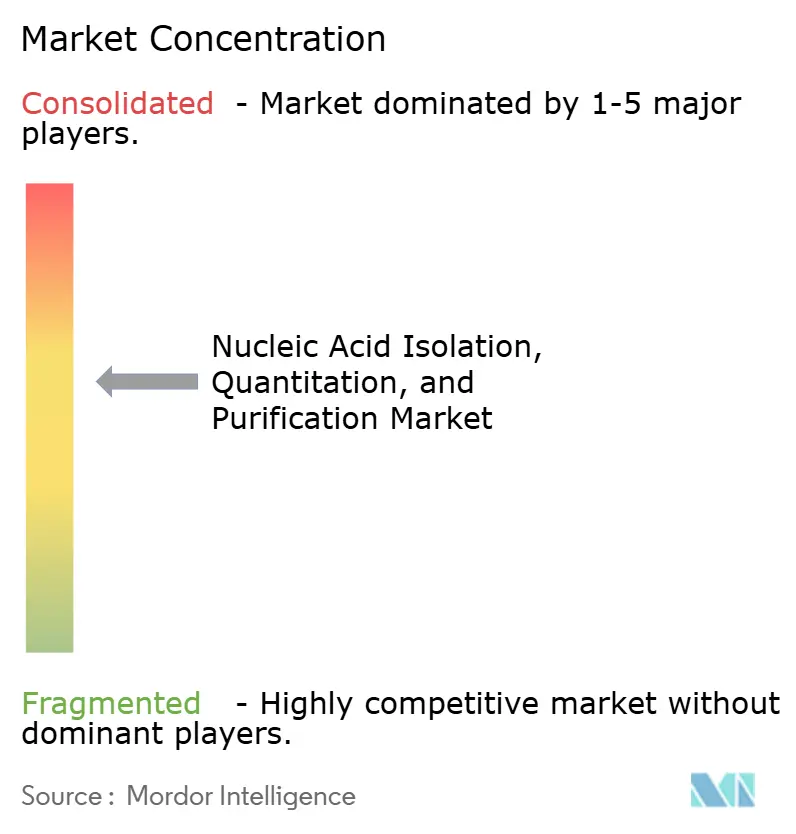
| Market Concentration | Medium |
Major Players *Disclaimer: Major Players sorted in no particular order Image © Mordor Intelligence. Reuse requires attribution under CC BY 4.0. | |
Nucleic Acid Isolation, Quantitation, and Purification Market Analysis by Mordor Intelligence
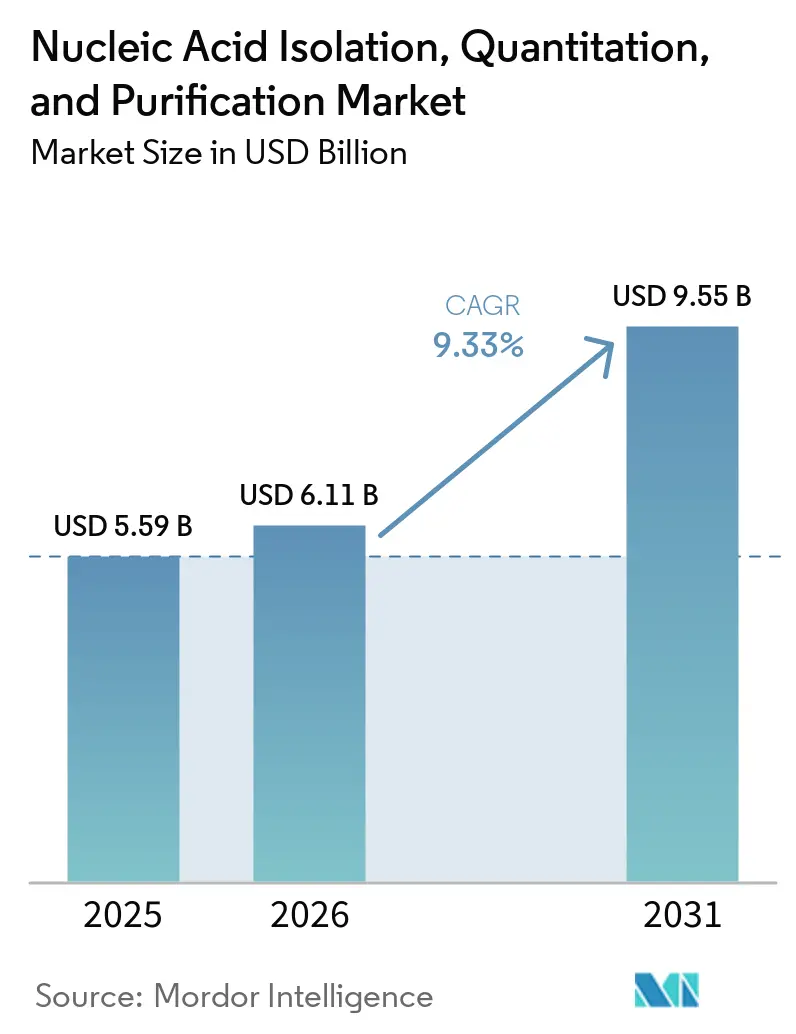
The Nucleic Acid Isolation, Quantitation, And Purification market size is expected to grow from USD 5.59 billion in 2025 to USD 6.11 billion in 2026 and is forecast to reach USD 9.55 billion by 2031 at 9.33% CAGR over 2026-2031.
Demand rises as clinical laboratories embed next-generation sequencing into routine oncology workflows, national genomics programs expand sample throughput, and automation curbs staffing shortages. DeepMind’s AlphaGenome has shown the capacity to read 1 million DNA bases in a single run, underscoring how extraction quality now directly influences downstream analytics[1]Ewen Callaway, “DeepMind’s AI Cracks Millions of DNA Letters,” Nature, nature.com. Magnetic bead systems, improved microfluidics and point-of-care formats reinforce this shift by cutting contamination and hands-on time. Capital inflows from biopharmaceutical firms and public research agencies sustain product development across high-throughput platforms, kits and consumables.
Key Report Takeaways
- By technology, magnetic bead-based purification led with 51.60% revenue share in 2025; the segment is projected to expand at an 11.06% CAGR through 2031.
- By product, kits and reagents accounted for 47.85% of 2025 sales, while equipment records the fastest growth at an 11.32% CAGR to 2031.
- By application, genomic DNA isolation held 20.25% share in 2025; microRNA isolation is advancing at an 11.15% CAGR through 2031.
- By end-user, the pharmaceutical and biotechnology sector captured 42.70% of demand in 2025, whereas contract research organizations are set to grow at a 12.05% CAGR.
- By geography, North America retained 41.95% market share in 2025, while Asia-Pacific is on track for a 10.12% CAGR up to 2031.
Note: Market size and forecast figures in this report are generated using Mordor Intelligence’s proprietary estimation framework, updated with the latest available data and insights as of 2026.
Global Nucleic Acid Isolation, Quantitation, and Purification Market Trends and Insights
Drivers Impact Analysis*
| Driver | % Impact on CAGR Forecast | Geographic Relevance | Impact Timeline |
|---|---|---|---|
| Surge in clinical-grade NGS demand | +2.8% | North America, Europe, global roll-out | Medium term (2-4 years) |
| National genomics initiatives | +2.1% | US, Australia, UK, global networks | Long term (≥ 4 years) |
| Increased molecular-biology R&D funding | +1.9% | North America, Europe, expanding Asia-Pacific | Medium term (2-4 years) |
| Workflow automation and high-throughput kits | +1.6% | Mature markets worldwide | Short term (≤ 2 years) |
| Microfluidic extraction for PoC devices | +0.7% | Core Asia-Pacific, spill-over to Middle East-Africa | Medium term (2-4 years) |
| Synthetic biology and CRISPR screening boom | +0.3% | North America, Europe, early Asia-Pacific uptake | Long term (≥ 4 years) |
| Source: Mordor Intelligence | |||
Surge in Clinical-Grade NGS Demand
Growing use of NGS in oncology raises extraction specifications for formalin-fixed and liquid biopsy samples. Labcorp reports threefold better DNA quality from FFPE tissue when using focused acoustics instruments that minimize fragmentation. Liquid biopsy assays require purification systems able to enrich circulating tumor DNA constituting under 1% of total cell-free DNA. Suppliers therefore price premium kits that safeguard integrity, reduce PCR inhibitors and match regulatory documentation for clinical accreditation.
National Genomics Initiatives
Government sequencing programs keep order volumes stable by standardizing high-throughput protocols. Australia’s Genomics Health Futures Mission has committed USD 500.1 million for more than 200 000 citizens, fuelling demand for automated bead platforms that can process diverse blood and tissue inputs. Similar multi-omics efforts in the US and UK reinforce global harmonization, encouraging vendors to ship pre-validated chemistries that deliver consistent yield across distributed sites.
Increased R&D Funding in Molecular Biology
The NIH earmarked USD 3.1 billion for genomic medicine research, enabling laboratories to replace manual columns with robotic workflows that raise reproducibility[2]National Institutes of Health, “Fiscal Year 2025 Budget for Genomic Medicine,” nih.gov. Grants favour multi-omics studies that co-purify DNA, RNA and proteins, spurring innovation in integrated kits that minimize batch variation. Continuous funding also underwrites validation studies that shorten regulatory review for extraction consumables.
Microfluidic Extraction for PoC Devices
Paper-based and chip-scale modules now bind nucleic acids without power-hungry centrifuges. The PRECISE card separates plasma and purifies viral RNA from whole blood in one step[3]J. Zhang et al., “PRECISE Plasma-On-Chip Device,” Royal Society of Chemistry, rsc.org. Such devices allow frontline clinics to run infectious-disease assays inside 30 minutes, particularly in low-resource regions where laboratory infrastructure is scarce.
Restraints Impact Analysis*
| Restraints Impact Analysis | (~) % Impact on CAGR Forecast | Geographic Relevance | Impact Timeline |
|---|---|---|---|
| High instrument and reagent costs | −1.8% | Global, acute in cost-sensitive regions | Short term (≤ 2 years) |
| Low penetration in emerging markets | −1.2% | Asia-Pacific, Latin America, Africa | Medium term (2-4 years) |
| Resin and silica supply-chain risks | −0.9% | Concentrated Asian production | Short term (≤ 2 years) |
| Hazardous waste-disposal regulation tightening | −0.6% | Primarily North America and Europe | Long term (≥ 4 years) |
| Source: Mordor Intelligence | |||
High Instrument & Reagent Costs
Automated extractors can cost USD 100 000–500 000 and consumables add USD 10–50 per sample, limiting adoption in smaller labs. Low-cost alternatives such as filter paper-spin columns have reduced per-sample expense while retaining adequate purity. Some vendors now market reusable resin cartridges and long-life beads to trim operating budgets.
Low Penetration in Emerging Markets
Infrastructure gaps delay uptake of gene-based diagnostics in low- and middle-income countries. Only 5 of 32 approved gene therapies are presently accessible in these regions, highlighting the need for equipment-free extraction that tolerates ambient temperatures. Indian manufacturers are piloting protocols that drive CAR-T costs under USD 50 000, a move that could stimulate demand for affordable purification kits.
*Our forecasts treat driver/restraint impacts as directional, not additive. The impact forecasts reflect baseline growth, mix effects, and variable interactions.
Segment Analysis
By Technology: Magnetic Bead Dominance Increases Automation
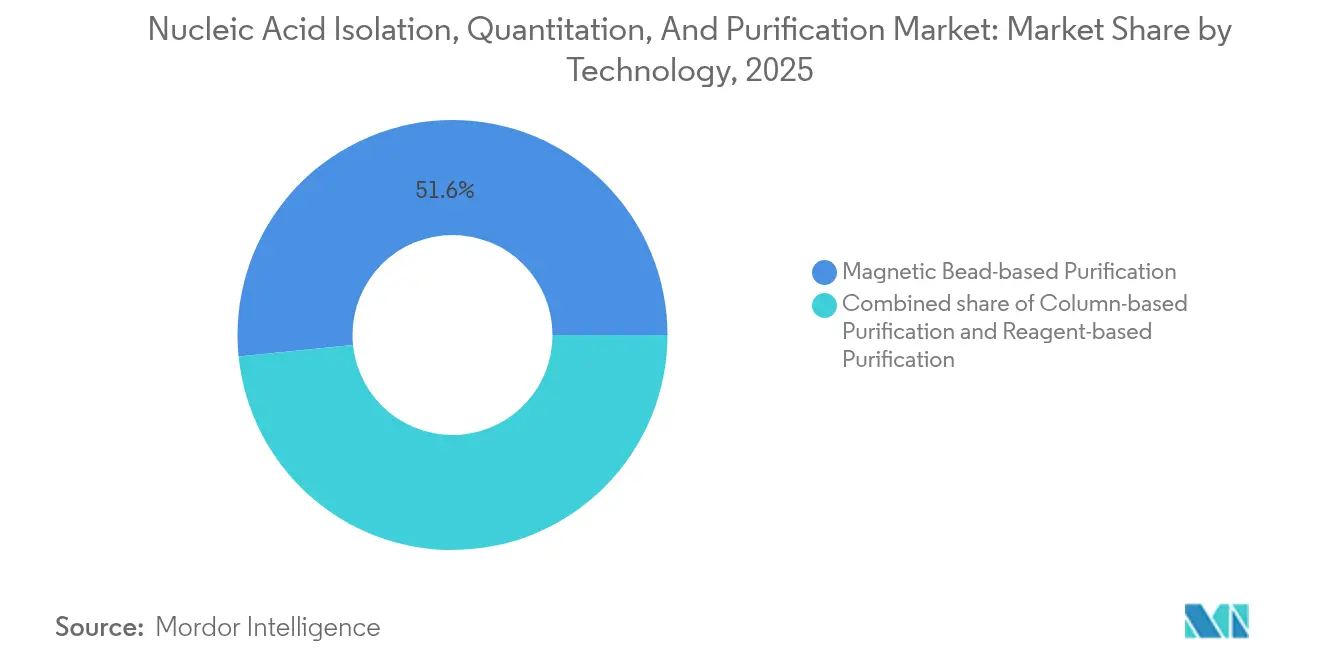
Magnetic beads delivered the largest contribution to the nucleic acid isolation and purification market size, with 51.60% of 2025 revenue and an 11.06% growth trajectory to 2031. This format binds DNA or RNA to silica-coated beads under chaotropic salts, then allows magnet-assisted washing that avoids centrifugation. Workflow speed improves further with formulations such as Cytiva’s guanidinium-thiocyanate chemistry, which inhibits nucleases while ensuring high recovery.
Column-based kits still serve manual setups because their cost per extraction remains lower, yet adoption declines in high-throughput labs. New bead protocols like SHIFT-SP reach near-complete recovery inside seven minutes, supporting clinical turnaround demands. Their compatibility with liquid handlers anchors their long-term advantage.



By Product: Equipment Upswing Strengthens Automation
Kits and reagents secured 47.85% of 2025 sales, reflecting routine replenishment cycles in diagnostics and research. However, equipment revenue grows fastest at 11.32% CAGR as laboratories invest in robotic extractors that enforce standardization. Beckman Coulter’s OptiMATE Gradient Maker cut ultracentrifugation from three days to six hours, underscoring how instrumentation improves virus-vector workflows.
Spectrophotometers and fluorometers meet stricter quality-control rules that accompany clinical sequencing. Revvity’s chemagic 360 spans 50 µl to 18 ml inputs, pairing software tracking with barcode integration for audit readiness. Consumables such as tips and magnetic rods keep recurring revenues resilient.
By Application: MicroRNA Isolation Accelerates
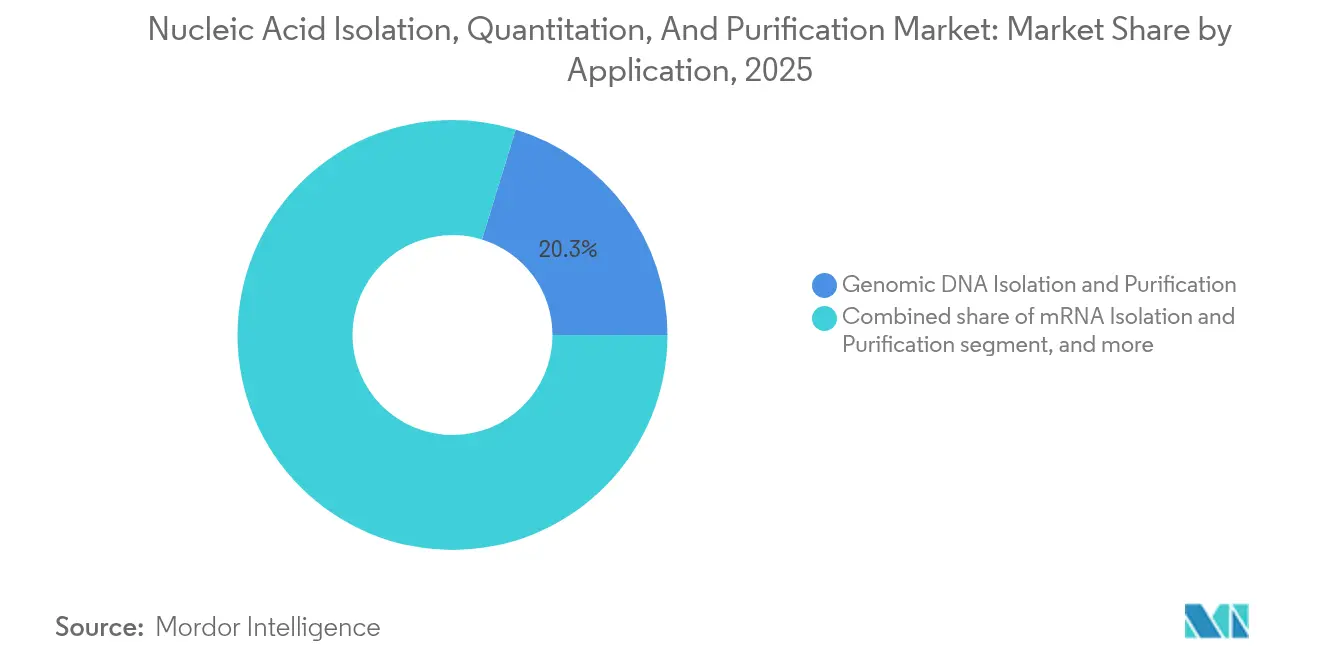
Genomic DNA purification represented 20.25% of the nucleic acid isolation and purification market share in 2025. Yet microRNA extraction logs the highest 11.15% CAGR as liquid biopsy assays widen adoption. High-throughput microfluidic chips have achieved 90% sensitivity for a seven-marker panel that screens non-small-cell lung cancer, demanding kits that preserve short fragments.
mRNA isolation retains relevance after vaccine successes, while plasmid DNA systems cater to synthetic-biology cloning and gene-therapy seed stock. PCR clean-up kits benefit from next-generation sequencing workflows that need adapter-dimer removal. Biobanking protocols rely on unified chemistries that maintain sample stability over decades for retrospective studies.
By End-User: CRO Expansion Reshapes Demand
Pharmaceutical and biotechnology companies commanded 42.70% of spending in 2025, with pipelines embracing genomic biomarkers. Contract research organizations will, however, grow at a 12.05% CAGR as sponsors outsource high-complexity extraction to control fixed costs. Tecan and BioSkryb’s single-cell multi-omics package demonstrates how CROs combine automation with advanced analytics to deliver overnight results.
Hospitals remain steady adopters for routine virology and oncology tests, while academic institutes spearhead pilot protocols that later migrate into regulated environments. Vendors nurture these relationships through grant-friendly pricing models and co-development projects.
Geography Analysis
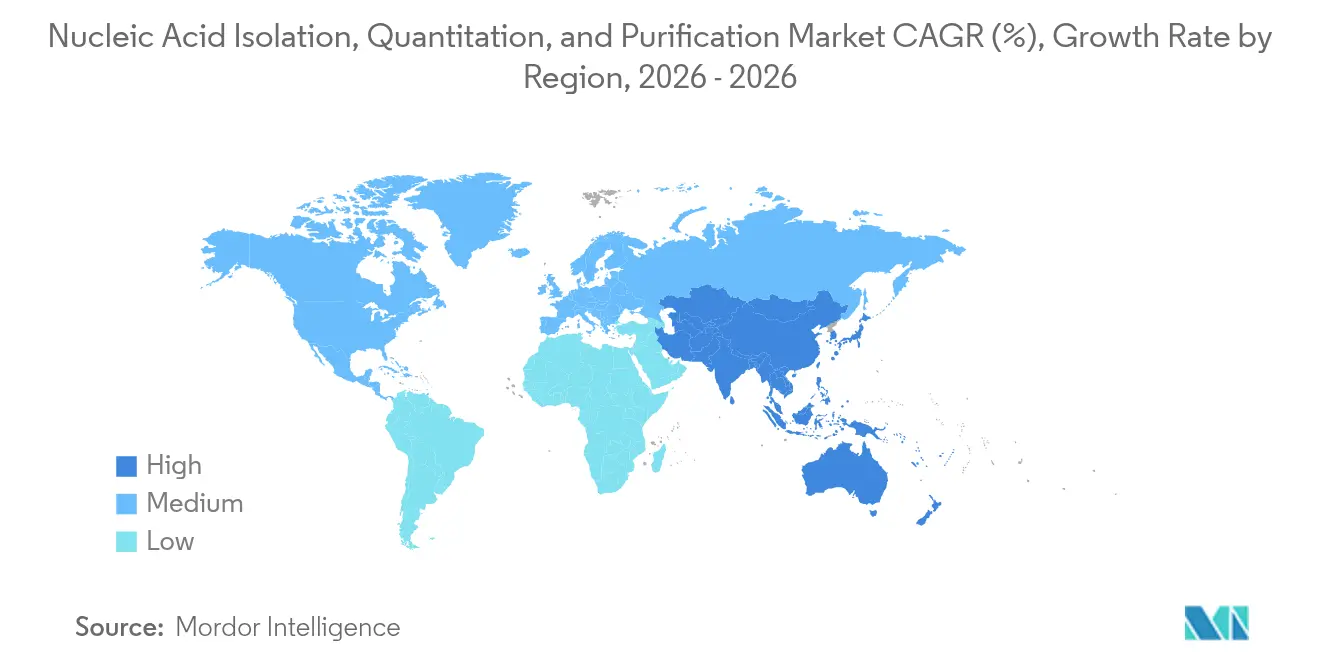
North America retained 41.95% of the nucleic acid isolation and purification market in 2025 thanks to NIH-funded translational genomics, dense biotech clusters and an FDA decision to reclassify high-risk in-vitro diagnostics to Class II, trimming approval timelines. The United States anchors sales, while Canadian and Mexican labs enlarge regional throughput with cross-border clinical-trial activity.
Europe follows with harmonized regulatory frameworks that ease multi-nation research. Germany, the UK and France command instrument procurements driven by established pharmaceutical manufacturing. Wellcome Trust funding of population biobanking sustains demand for automated bead platforms that ensure data integrity across consortium sites. Emphasis on data privacy increases sales of software-embedded extractors that log sample identity.
Asia-Pacific is projected to post a 10.12% CAGR through 2031, fastest worldwide. China’s pharmaceutical policy backs local nucleic acid drug production, fostering large reagent orders, while India’s cost-efficient gene-therapy initiatives encourage adoption of flexible microfluidic kits. Australia’s Genomics Health Futures Mission adds institutional budgets for high-throughput sequencers and extraction robots. Japan and South Korea emphasize precision medicine, lifting demand for high-purity, multi-analyte purification consumables.

Regulatory Landscape
Regulatory oversight focuses on how extraction, purification, and quantitation steps affect end-test performance in clinical use, with the US FDA typically reviewing these components within IVD submissions through 510(k) and de novo pathways. In May 2026, FDA established special controls for a nucleic acid device category for detecting microbial sequences and resistance markers in orthopedic infections (21 CFR 866.3988), reinforcing requirements around validated collection devices, workflow verification, and labeling that can translate into tighter expectations for sample prep performance claims and compatibility statements.
In Europe, Regulation (EU) 2017/746 (IVDR) generally treats nucleic acid extraction and purification components as IVD devices that must meet General Safety and Performance Requirements, backed by technical documentation and a Declaration of Conformity. For higher-risk IVD categories (for certain infectious disease uses), notified body involvement can increase, with batch verification expectations under MDCG guidance. In parallel, manufacturers and laboratories align methods and documentation to relevant ISO frameworks for nucleic-acid-based testing quality and traceability, raising the emphasis on reproducibility, contamination control, and audit-ready records for automated platforms and associated consumables.
Competitive Landscape
Industry consolidation continues as leaders widen portfolios. Thermo Fisher Scientific is acquiring Solventum’s purification and filtration unit for USD 4.1 billion, integrating upstream cell-culture clarification with nucleic acid cleanup. Danaher merged Cytiva and Pall into a USD 7.5 billion bioprocess group that now bundles bead resins, columns and automated instruments across gene therapy workflows.
Emerging players leverage cost-reduction to penetrate price-sensitive segments. Paper-based kits that run at room temperature open fresh markets in field diagnostics, applying ambient-stable chemistries that sidestep cold chains. QIAGEN recorded USD 1.97 billion revenue in 2024, with consumables forming 88% of sales, illustrating the market’s recurring-revenue structure. Vendors incorporate cloud-linked software to lock-in users through protocol libraries, while CRISPR-ready kits and point-of-care microfluidic modules create new differentiation points.
Nucleic Acid Isolation, Quantitation, and Purification Industry Leaders
Thermo Fisher Scientific, Inc.
F. Hoffmann-La Roche AG
Agilent Technologies
Bio-Rad Laboratories Inc.
Merck KGaA
- *Disclaimer: Major Players sorted in no particular order

Market Opportunities and Future Outlook
Automation-ready workflows remain a key whitespace for vendors, as high-throughput labs move away from manual columns toward magnetic bead chemistries that integrate with liquid handlers and tracked instruments, despite cost and staffing constraints in routine testing. Product roadmaps that pair extraction with quantitation and traceability, such as barcode-enabled workflows and audit-ready software on automated systems, create room for standardized, pre-validated protocols that reduce operator variability across oncology NGS and liquid biopsy sample types where short-fragment recovery and inhibitor removal are critical.
A second opportunity is in miniaturized and alternative chemistries that reduce reagent burden and simplify deployment beyond centralized labs. In 2026, peer-reviewed studies reported integrated microfluidic and filtration-based approaches reaching high genomic DNA extraction efficiency, an aqueous two-phase system for cell-free DNA extraction from plasma as a scalable, reagent-lean option, and poly(ionic liquid)-coated membranes for greener solid-phase DNA extraction in point-of-care testing. These directions support vendors that can translate academic prototypes into manufacturable consumables and instrument-compatible formats, particularly where room-temperature handling and lower hazardous waste profiles help address procurement and disposal constraints.
Recent Industry Developments
- June 2026: Thermo Fisher Scientific introduced the Applied Biosystems MagMAX HMW DNA Kit to streamline long-read sequencing sample preparation, with compatibility across KingFisher Duo Prime, KingFisher Flex, and KingFisher Apex automation. The launch targets higher-molecular-weight DNA recovery needs for emerging long-read clinical and research workflows, reinforcing pull-through demand for automated extraction platforms and associated consumables.
- April 2025: QIAGEN disclosed plans for three sample-prep instruments, QIAmini, QIAsymphony Connect, and QIAsprint Connect, spanning 24 to 192-sample batch sizes. The lineup emphasizes instrument connectivity and scaling flexibility, aligning with laboratories standardizing protocols across distributed sites and tightening documentation for clinical-grade workflows.
- June 2024: Thermo Fisher Scientific introduced the KingFisher PlasmidPro Maxi Processor, positioned as a fully automated maxi-scale plasmid DNA purification system. By extending automation into higher-yield plasmid prep, it supports faster turnaround for cell and gene therapy research and other plasmid-intensive workflows that rely on consistent nucleic acid purity.


Research Methodology Framework and Report Scope
Market Definition and Coverage
This market covers revenues from products used to isolate, quantify, and purify DNA and RNA from biological samples, and to check yield and purity before downstream lab work, covering clinical diagnostics workflows, research use cases, and industrial lab testing.
Scope exclusions: Protein or peptide clean-up consumables, stand-alone sequencers, PCR thermocyclers, and service fees are excluded from this sizing.
Segmentation Overview
- By Technology
- Column-based Purification
- Magnetic Bead-based Purification
- Reagent-based Purification
- By Product
- Kits & Reagents
- NA Isolation & Purification Kits
- NA Quantitation Kits
- DNA Quantitation Kits
- RNA Quantitation Kits
- Equipment
- NA Isolation & Purification Instruments
- NA Quantitation Instruments
- Spectrophotometer
- Fluorometer
- Other Products
- Kits & Reagents
- By Application
- Total RNA Isolation & Purification
- mRNA Isolation & Purification
- microRNA Isolation & Purification
- Plasmid DNA Isolation & Purification
- Genomic DNA Isolation & Purification
- Blood DNA Isolation & Purification
- PCR Clean-up
- Biobanking
- Clinical Research
- Forensics
- Drug Development
- Other Applications
- By End-user
- Hospitals
- Academia
- Pharmaceutical / Biotechnology Industry
- CRO
- Geography
- North America
- United States
- Canada
- Mexico
- Europe
- Germany
- United Kingdom
- France
- Italy
- Spain
- Rest of Europe
- Asia-Pacific
- China
- Japan
- India
- Australia
- South Korea
- Rest of Asia-Pacific
- Middle East & Africa
- GCC
- South Africa
- Rest of Middle East & Africa
- South America
- Brazil
- Argentina
- Rest of South America
- North America
Data Sources, Market Sizing, and Validation
Desk Research
Desk research helped us set the boundary of what is counted and build the first demand story across regions and end users. We mainly referenced public life science spending and activity signals, including NIH budgets and award databases, OECD health and R&D indicators, and WHO health systems and diagnostics context where it was relevant.
To keep the market model grounded in real lab throughput, we also reviewed sources such as CDC and FDA communications for diagnostic testing and lab practice changes, plus peer reviewed papers indexed in PubMed that describe extraction workflows, throughput, and common methods (spin columns, magnetic beads, and measurement approaches). Company annual reports, investor decks, and reputable press were used to cross-check product mix language, price direction, and major capacity expansions. In a few cases, we used paid subscriptions for company financials and a patent database to confirm innovation intensity and to sanity check the timing of new platform launches. These desk research sources are illustrative and not exhaustive, and other public references were also used for data collection, cross-checking, and clarification.
Primary Interviews and Surveys
Primary work was used to confirm what labs actually buy for isolation, quantitation, and purification, and how purchasing shifts between manual kits and automated workflows as throughput changes. We spoke with a mix of suppliers, distributors, lab managers, and procurement-linked roles across major regions to validate pricing logic, replacement cycles, and adoption patterns, and then we tightened assumptions where desk research left gaps.
Distribution of primary research fieldwork respondents
| Company type | Respondent position | Region |
|---|---|---|
| Top tier: 28% | CXOs: 14% | APAC: 43% |
| Mid tier: 54% | Functional/Unit leaders: 27% | EMEA: 34% |
| Smaller Players: 18% | Managers: 59% | Americas: 23% |
Market-Sizing & Forecasting
The core sizing was built using the top-down logic of linking regional demand to lab activity and workflow penetration, then translating that demand into product revenues using price and mix assumptions. Results were corroborated with selective bottom-up approximations so totals stayed realistic, using sampled ASP times volume checks informed by supplier disclosures and channel feedback.
Model inputs included indicators such as genomics and molecular biology research funding direction, diagnostic testing intensity in molecular labs, adoption of automated extraction in routine settings, and typical consumables usage per sample for common DNA and RNA workflows. Pricing was handled through an ASP ladder that separates manual kits and reagents from automation-adjacent consumables and quantitation tools, and then it is adjusted for region-level purchasing behavior and currency timing. Where bottom-up checks could not cover a niche application, gaps were filled using conservative penetration assumptions that were re-tested with interview feedback.
For the forecast, scenario analysis was used so growth could be tied to a few drivers that respondents could validate, including automation adoption, throughput growth linked to sequencing and molecular diagnostics, and expected price movement for kits and reagents as workflows standardize.
Data Validation & Update Cycle
Outputs were validated through triangulation across demand indicators, pricing logic, and independent signals such as research funding direction and reported lab workflow shifts. When a region or product cluster showed a jump that could not be explained by a known driver, the assumptions were re-checked, and experts were re-contacted to confirm whether the change was real or timing related.
Before sign-off, the model goes through multi-step analyst reviews, where calculations, unit consistency, and currency conversions are checked, followed by reasonability tests against adjacent lab consumables and tool spending. Reports are refreshed annually, and interim updates are made when material events occur, such as step changes in diagnostic testing, regulation, or notable platform launches. Right before delivery, a fresh pass is completed so the client receives the latest view available at that time.
Mordor Intelligence's Nucleic Acid Isolation Quantitation and Purification Market Size Measured Against Other Published Estimates
Published market sizes for nucleic acid isolation, quantitation, and purification rarely match perfectly, because each publisher draws the scope edge differently and then applies its own pricing and timing assumptions. Differences also show up when one estimate leans more toward instruments and platforms, and another stays closer to recurring kit and reagent demand.
Key gap drivers in this market usually come from whether quantitation readers are counted with extraction and clean-up workflows, how automated systems are treated versus consumables, and whether services are mixed into product revenue. It also matters if the forecast starts from an aggressive post-surge recovery view or a more gradual normalization, and whether currency conversion uses a single point-in-time rate or a blended annual rate that smooths short-term moves.
Benchmark comparison
| Source | Market Size | Gaps in Research Methodology |
|---|---|---|
| Mordor Intelligence | USD 6.11 B (2026) | |
| Global Consultancy A | USD 6.05 B (2025) | Uses an isolation and purification scope that can exclude quantitation devices, and it anchors the time series one year earlier, which changes the starting value when recent price movement is meaningful. |
| Industry Publisher B | USD 8.50 B (2024) | Starts from a broader kit-and-consumables definition with a different base year, and it may include adjacent nucleic acid workflow items that are not strictly part of isolation, quantitation, and purification product revenue. |
Checks such as sequencing sample-prep activity signals, extraction workflow mix feedback, and typical per-sample consumables usage are what tie Mordor Intelligence to the defined demand pool and included product set. The remaining spread mainly reflects scope edges, base-year choice, and how pricing progression is carried into the stated year.


Key Questions Answered in the Report
What is the current size of the nucleic acid isolation and purification market?
The market produced USD 6.11 billion in revenue during 2026 and is projected to climb to USD 9.55 billion by 2031 at a 9.33% CAGR.
Which technology leads the nucleic acid isolation and purification market?
Magnetic bead-based purification held 51.60% of 2025 revenue and is expanding fastest due to compatibility with laboratory automation.
Why is microRNA isolation growing so quickly?
Liquid biopsy adoption in oncology needs sensitive microRNA extraction, driving this segment at an 11.15% CAGR through 2031.
Which region is growing fastest?
Asia-Pacific is forecast to advance at a 10.12% CAGR as China, India, Japan and Australia scale precision-medicine programs.
How does automation influence purchasing decisions?
Robotic extractors reduce hands-on time and errors, prompting laboratories to shift capex toward equipment that integrates magnetic bead kits and software-guided protocols.
What restrains wider adoption in emerging markets?
High capital costs and limited laboratory infrastructure slow deployment, though cost-effective paper-based and room-temperature protocols are easing barriers.
Page last updated on:





