
DNA/RNA Extraction Kit Market Size and Share
Market Overview
| Study Period | 2020 - 2031 |
|---|---|
| Market Size (2026) | USD 1.89 Billion |
| Market Size (2031) | USD 2.68 Billion |
| Growth Rate (2026 - 2031) | 7.23 % |
| Fastest Growing Market | Asia-Pacific |
| Largest Market | North America |
| Market Concentration | Medium |
Major Players *Disclaimer: Major Players sorted in no particular order Image © Mordor Intelligence. Reuse requires attribution under CC BY 4.0. | |
DNA/RNA Extraction Kit Market Analysis by Mordor Intelligence
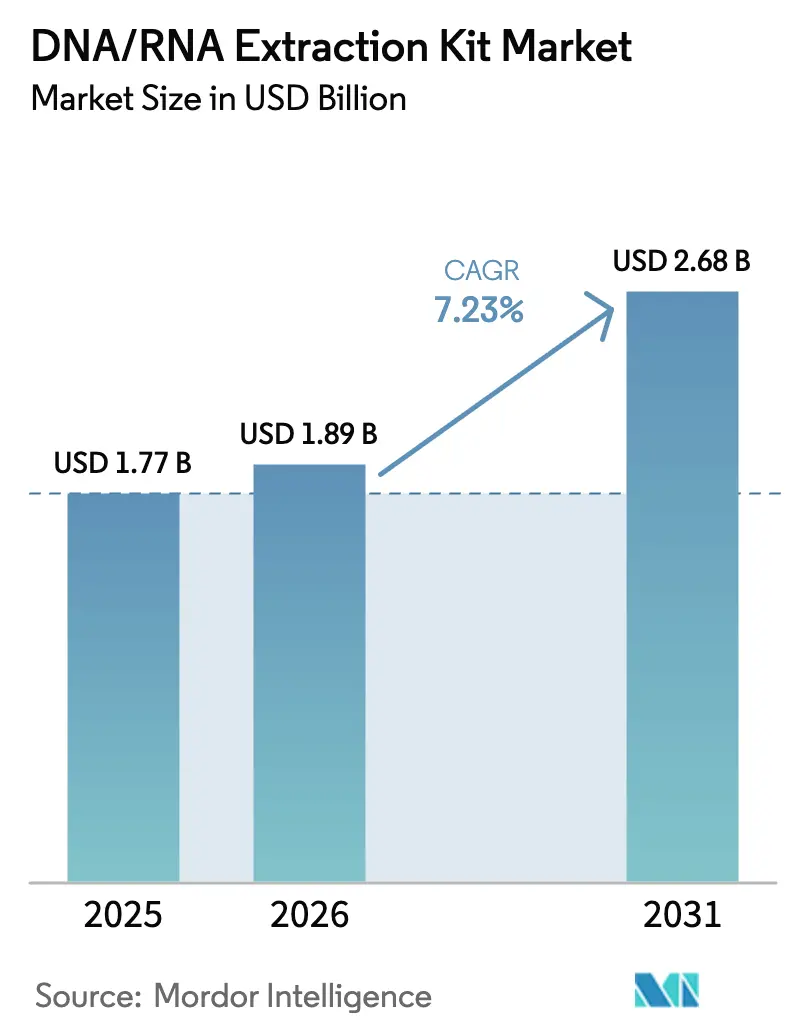
The DNA/RNA Extraction Kit Market size is expected to grow from USD 1.77 billion in 2025 to USD 1.89 billion in 2026 and is forecast to reach USD 2.68 billion by 2031 at 7.23% CAGR over 2026-2031.
This growth is driven by oncology's transition to liquid biopsies, the expansion of wastewater pathogen surveillance programs, and the increasing demand for precision medicine, which requires consistent and reliable nucleic acid purification. The adoption of magnetic-bead automation is accelerating, reducing technician time and minimizing error rates, prompting clinical laboratories to replace outdated reagent protocols. Public health authorities are institutionalizing viral RNA monitoring in wastewater, thereby expanding the application of RNA kits beyond traditional hospital use. Additionally, pharmaceutical companies are embedding validated extraction methods into drug and diagnostic submissions to streamline regulatory approvals, fostering strong vendor relationships and increasing switching costs. The competitive landscape is shaped by established players defending manual spin-column volumes, while emerging competitors promote cartridge systems that integrate extraction, library preparation, and analysis into a single consumable.
Key Report Takeaways
- By sample type, blood and plasma held 42.45% of the DNA/RNA extraction kit market share in 2025. Wastewater and environmental matrices are projected to advance at a leading 9.65% CAGR through 2031.
- By product, cell-free DNA kits captured 36.43% of the DNA/RNA extraction kit market size in 2025. Total RNA solutions are projected to post the fastest 9.54% CAGR between 2026 and 2031.
- By technology, silica columns commanded 48.43% revenue in 2025, while automated cartridges recorded a 10.01% CAGR to 2031.
- By end user, diagnostic centers contributed 41.46% revenue in 2025, whereas biotechnology and pharmaceutical firms expanded at a 10.34% CAGR through 2031.
- By region, North America accounted for 42.67% revenue in 2025; Asia-Pacific is projected to grow at 8.54% CAGR through 2031.
Note: Market size and forecast figures in this report are generated using Mordor Intelligence’s proprietary estimation framework, updated with the latest available data and insights as of January 2026.
Market Trends and Insights
Drivers Impact Analysis of DNA/RNA Extraction Kit Market*
| Driver | (~) % Impact on CAGR Forecast | Geographic Relevance | Impact Timeline |
|---|---|---|---|
| Rising Adoption of Liquid Biopsy in Oncology Diagnostics | +2.1% | North America, Europe, Global centers | Medium term (2-4 years) |
| Technological Advancements in Automated High-Throughput Extraction Platforms | +1.8% | North America, Europe, APAC (China, Japan) | Short term (≤2 years) |
| Growing Investments in Molecular Diagnostic R&D | +1.3% | United States, China, Germany, Japan | Long term (≥4 years) |
| Expansion of Precision Medicine Programs and Companion Diagnostics | +1.5% | North America, Europe, Selected APAC countries | Long term (≥4 years) |
| Increasing Use of Residential Point-of-Care Genomic Testing Kits | +0.8% | United States, United Kingdom, South Korea | Medium term (2-4 years) |
| Wastewater Epidemiology Demand for Viral RNA Surveillance | +1.2% | North America, Europe, Selected APAC cities | Medium term (2-4 years) |
| Source: Mordor Intelligence | |||
Rising Adoption of Liquid Biopsy in Oncology Diagnostics
Guardant360 CDx received FDA approval in 2024, requiring labs to validate extraction methods that preserve plasma DNA fragments under 200 base pairs. Reference centers report a 40% year-over-year growth in liquid biopsy sample volumes, necessitating upgrades to 96-well magnetic platforms that reduce handling steps. Roche’s cfDNA kit on the cobas system captures 85% of circulating tumor DNA from 2 mL of plasma, enabling the detection of minimal residual disease at an allele frequency of 0.01%. Prenatal testing also benefits, as cell-free fetal DNA replaces invasive procedures in high-income markets. Net effect raises throughput and purity requirements that manual spin columns struggle to meet.
Technological Advancements in Automated High-Throughput Extraction Platforms
Thermo Fisher’s KingFisher Apex processes 96 samples in 30 minutes with full LIMS integration, improving traceability for ISO 15189 labs. Beckman Coulter liquid handlers pair with magnetic processors to run blood, saliva, and tissue samples simultaneously, reducing the risk of cross-contamination. Tecan’s Fluent workstation combines extraction, quantification, and normalization, cutting labor costs by 60% while holding a coefficient of variation below 5%. Leasing contracts and shared-service models ease capital barriers, widening access in mid-tier hospitals. Automation thus accelerates kit conversion from low-margin manual protocols to premium cartridges.
Expansion of Precision Medicine Programs and Companion Diagnostics
FoundationOne CDx, cleared in 2024 for 324 genes, stipulates extraction yields above 10 ng/µL from FFPE tissue, disqualifying phenol-chloroform workflows. Pharmaceutical sponsors now specify extraction reagents in Phase III biomarker studies, locking vendors into drug-diagnostic packages. QIAGEN’s therascreen EGFR test bundles its extraction kit and PCR chemistry, harmonizing results across global labs. Centralized reference networks in the United Kingdom route purified DNA to regional hospitals, demanding room-temperature stability for multi-day shipping. Tight linkage between extraction fidelity and therapeutic eligibility secures recurring kit revenue per patient.
Wastewater Epidemiology Demand for Viral RNA Surveillance
The CDC monitors over 1,200 treatment plants, driving bulk procurement of RNA kits that remove inhibitors like humic acids[1]Centers for Disease Control and Prevention, “National Wastewater Surveillance System 2025,” cdc.gov. QIAGEN’s wastewater-adapted viral RNA kit increases recovery to 70% compared to 40% for generic options. WHO guidance endorses wastewater surveillance for polio, prompting UNICEF deployments in Africa and South Asia. The private sector joins in, from agricultural firms testing soil microbiomes to environmental consultants tracking the DNA of invasive species. Non-clinical buyers often opt for cost-efficient reagent kits, thereby diversifying their channel mix and pricing tiers.
Restraints Impact Analysis of DNA/RNA Extraction Kit Market*
| Restraint | (~) % Impact on CAGR Forecast | Geographic Relevance | Impact Timeline |
|---|---|---|---|
| High Capital and Reagent Costs of Automated Extraction Systems | −0.9% | Global, acute in low- and middle-income countries | Short term (≤2 years) |
| Limited Skilled Workforce in Low-Resource Settings | −0.7% | Africa, South Asia, Latin America | Long term (≥4 years) |
| Regulatory Scrutiny over Microplastic Waste from Single-Use Plastics in Kits | −0.5% | European Union, Canada, Australia | Medium term (2-4 years) |
| Supply Chain Vulnerabilities for Silica and Magnetic Bead Raw Materials | −0.6% | North America, Europe reliant on Asian supply | Medium term (2-4 years) |
| Source: Mordor Intelligence | |||
High Capital and Reagent Costs of Automated Extraction Systems
Automated instruments cost USD 150,000–300,000, with cartridges priced at USD 200 per sample for systems like Genexus Dx, which limits viability to labs processing more than 1,000 samples per month. Manual spin columns run USD 2–5 per sample but require skilled technicians and record higher failure rates. Pay-per-use models shift capital risk to vendors but raise per-test pricing by 15%. Medicare pays USD 18 for a PCR assay, compressing margins and nudging labs toward the lowest cost extraction consumables. The resulting affordability gap stalls automation uptake in community hospitals and emerging markets.
Supply Chain Vulnerabilities for Silica and Magnetic Bead Raw Materials
Silica membranes and magnetic beads primarily originate from China and Japan. The semiconductor prioritization in 2024 delayed bead deliveries by up to 12 weeks, resulting in kit rationing. QIAGEN faced a 12% increase in raw-material costs amid tariffs and passed some of these costs on to customers. Thermo Fisher vertically integrated by buying a membrane supplier in 2024 to stabilize inputs. Meanwhile, the EU Single-Use Plastics Directive pushes vendors to switch columns to recyclable polypropylene, extending development cycles by up to 9 months[2]European Commission, “Single-Use Plastics Directive 2025,” eur-lex.europa.eu. These supply pressures threaten lead times and pricing discipline.
*Our forecasts treat driver/restraint impacts as directional, not additive. The impact forecasts reflect baseline growth, mix effects, and variable interactions.
DNA/RNA Extraction Kit Market Segment Analysis
By Product:
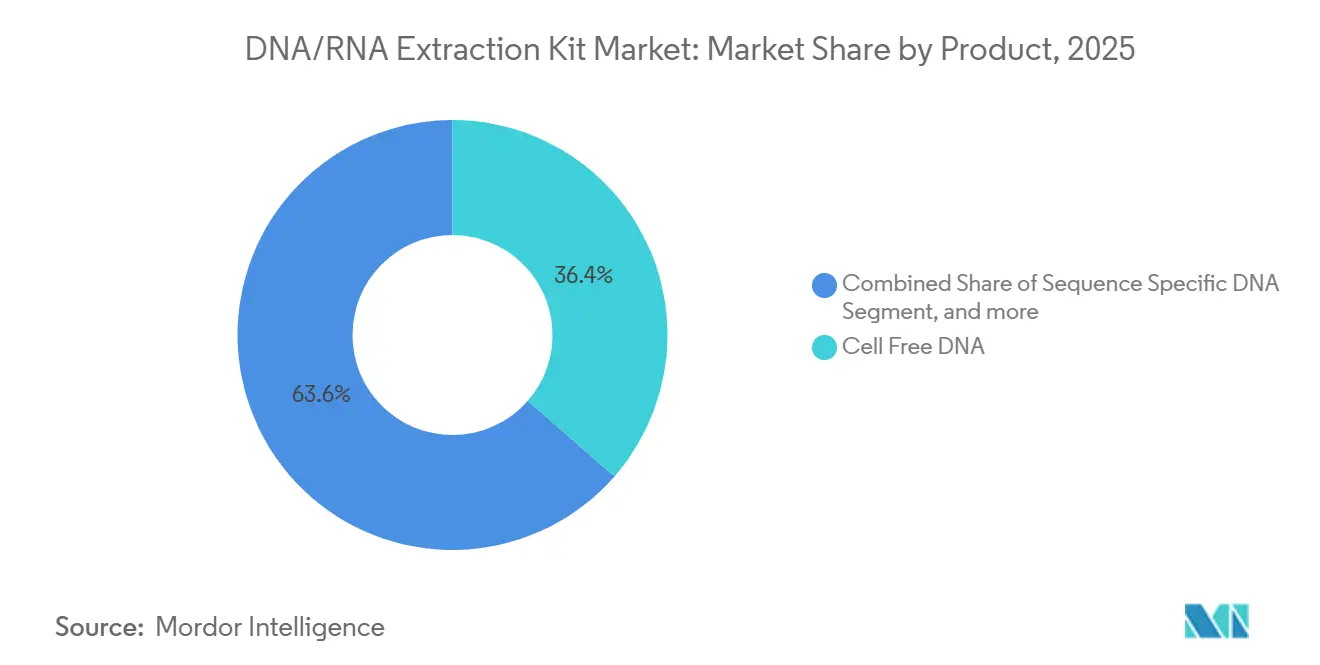
Cell-Free DNA Remains the Revenue Anchor, Total RNA Gains MomentumCell-free DNA kits accounted for 36.43% of product revenue in 2025, reflecting their widespread adoption for liquid biopsy and prenatal testing. Total RNA kits are growing at a 9.54% CAGR as single-cell transcriptomics and spatial assays surge, requiring integrity numbers above 8.0 for downstream library preparation[3]Nature Publishing Group, “Spatial Transcriptomics Market Uptake 2025,” nature.com. Sequence-specific DNA kits remain in legacy PCR workflows, yet they are gradually ceding share to broad-capture formats aligned with next-generation sequencing. Viral RNA and microbial DNA kits remain stable after the pandemic spike, yet they continue to support wastewater and microbiome niches. Roche’s MagNA Pure 96, QIAGEN’s RNeasy Plus, and Zymo’s Quick-DNA/RNA Miniprep illustrate how vendors differentiate via automation, purity, or co-isolation advantages.
The DNA/RNA extraction kit market size for cell-free DNA kits is projected to rise at 6.4% CAGR through 2031, while total RNA solutions advance at 9.54% and are on track to close the revenue gap by 2029. Labs now standardize on dual-protocol devices to future-proof capacity against shifting assay demand, uplifting average selling prices and service revenue.



By Sample Type:
Blood Dominates Today, Wastewater Fastest TomorrowBlood and plasma generated 42.45% of the revenue in 2025, as clinicians rely on venipuncture for molecular diagnostics. Wastewater samples expand at 9.65% CAGR on the back of institutionalized epidemiological programs, elevating demand for high-volume RNA kits that handle PCR inhibitors. Tissue extraction remains critical for oncology pathology, while saliva and buccal swabs power consumer genomics and remote testing models. Stool, CSF, and niche matrices add fragmented incremental growth.
The DNA/RNA extraction kit market share for blood workflows is expected to decline to 37% by 2031 as wastewater and environmental use rise, balancing the sample mix. Vendors that optimize binding chemistries for turbid matrices stand to capture outsized gains in the expanding surveillance sector.
By Technology:
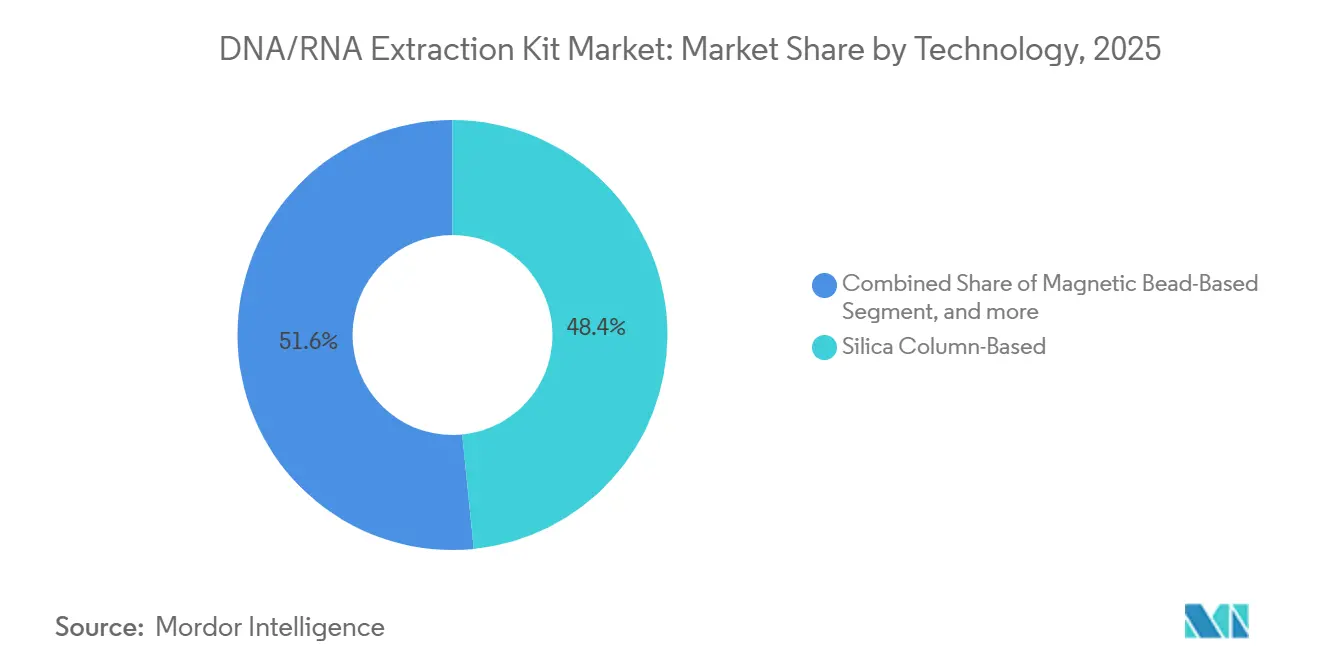
Columns Still Lead, Cartridge Automation SurgesSilica spin columns retained a 48.43% revenue share in 2025, thanks to their low per-sample cost and broad familiarity. Cartridge and lab-on-chip platforms are projected to exhibit a 10.01% CAGR from 2026 to 2031, driven by walk-away convenience and integrated analytics. Magnetic beads underpin most high-throughput systems, while reagent-based phenol-chloroform protocols persist in grant-funded academic labs that trade safety for budget relief.
The DNA/RNA extraction kit market size for automated cartridge formats is forecast to reach USD 1.1 billion by 2031, up from USD 530 million in 2026, narrowing the gap with the column-based market. Hybrids like QIAcube Connect bridge the transition by automating traditional columns, easing buyers into higher price points without forklift replacements.
By End User:
Diagnostic Laboratories Hold Lead, Pharma Drives Incremental GainsDiagnostic centers and clinical labs generated 41.46% of revenue in 2025 from routine PCR, oncology panels, and inherited-disease testing. Biotechnology and pharmaceutical firms are logging the fastest 10.34% CAGR as they integrate extraction into biomarker discovery pipelines and companion diagnostics. Hospitals strive for timely results and adopt cartridge systems that interface seamlessly with point-of-care analyzers. Academic institutes favor versatile manual kits under constrained budgets.
The DNA/RNA extraction kit market size for pharmaceutical and biotech buyers is expected to double between 2026 and 2031, driven by regulatory guidance that links extraction quality to therapeutic labeling. Vendors that bundle consumables with regulatory support command premium pricing and longer contract tenures.
Geography Analysis
The Americas, EMEA and APAC DNA/RNA Extraction Kit Market
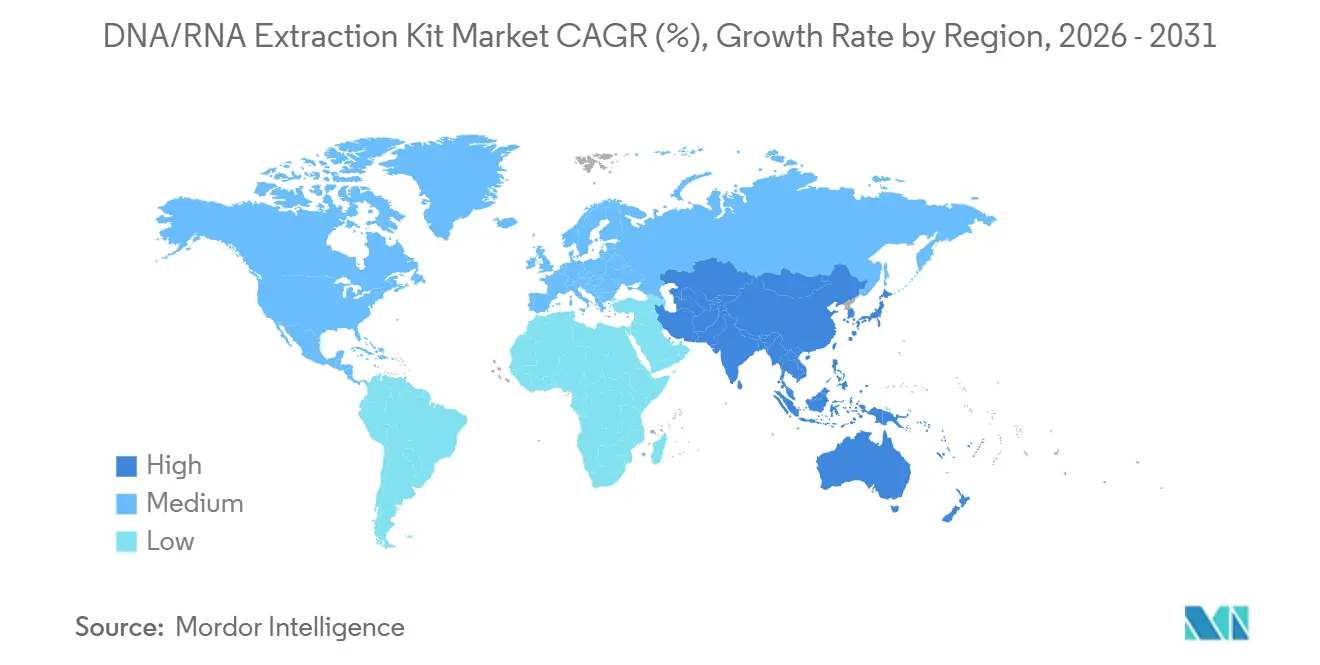
North America accounted for 42.67% of the revenue in 2025, driven by high liquid biopsy volumes, well-funded precision medicine initiatives, and reimbursement that supports companion diagnostics. Europe maintains steady demand but contends with tighter budgets that shift preferences toward cost-efficient columns, despite stricter IVDR rules. Asia-Pacific is set to grow at 8.54% CAGR, propelled by the Chinese government's genomics subsidies and India’s contract-research expansion. The Middle East and Africa remain nascent, but they benefit from donor-funded infectious disease programs. South America sees moderate gains via dengue and Zika molecular surveillance.
Europe, North America and APAC DNA/RNA Extraction Kit Market
China earmarked USD 1.2 billion in 2024 to equip provincial hospitals with automated extraction systems, cementing supplier footholds. India’s CRO industry increased its molecular testing capacity by 35% year-over-year, favoring magnetic-bead robotics that meet Good Laboratory Practice requirements. Europe’s IVDR raises compliance hurdles and nudges smaller suppliers toward mergers or exits. North American vendors pursue vertical integration to insulate raw-material supply and protect margins in a mature region. Collectively, geographic expansion rebalances growth toward emerging Asia while reinforcing regulatory-driven stickiness in developed economies.

Regulatory Landscape
Regulatory requirements for DNA/RNA extraction kits have tightened as sample preparation is increasingly treated as part of in vitro diagnostics. In the European Union, Regulation (EU) 2017/746 (IVDR) places extraction kits intended for IVD use under CE marking and notified-body conformity assessment expectations, supported by European Commission MDCG 2024-11 guidance that clarifies documentation and intended-use boundaries for sample preparation products.
In the United States, FDA's 2024 Laboratory Developed Tests (LDT) Final Rule sets a staged compliance approach, with Stage 2 beginning May 6, 2026. At that point, FDA expects compliance with registration and listing, labeling, and investigational use requirements for LDTs previously under enforcement discretion. Standards activity is also adding compliance anchors for performance and pre-examination processes, including ISO 18704:2026 (published February 2026) on pre-examination processes for cell-free DNA from body fluids beyond blood, which raises validation expectations for extraction steps and traceability in regulated clinical workflows.
Value Chain Analysis
The value chain begins with upstream suppliers of magnetic beads, silica membranes, chaotropic salts and alcohols used in lysis and washing, enzymes such as Proteinase K, and single-use plastics that define columns, cartridges, and collection hardware. Midstream manufacturers convert these inputs into validated chemistries and consumables, including spin columns, magnetic-bead reagents, and automated cartridges, and then align formats to instruments and software needs, such as LIMS-ready workflows used in accredited laboratories. This includes verification, stability studies, and lot-to-lot quality control.
Downstream distribution typically runs through direct sales and channel partners into diagnostic centers and clinical laboratories, hospitals, biotechnology and pharmaceutical companies, CROs, and research institutes. Consolidated procurement and multi-year consumable contracting tied to instrument placements are becoming a stronger influence. Supply risk concentrates around specialized substrates and geographically concentrated inputs, notably silica and magnetic bead streams, which encourages dual sourcing and vertical integration among larger vendors, while end users push for platform compatibility across blood and plasma, tissue and FFPE, saliva, and wastewater matrices to reduce workflow fragmentation across assays.
Competitive Landscape
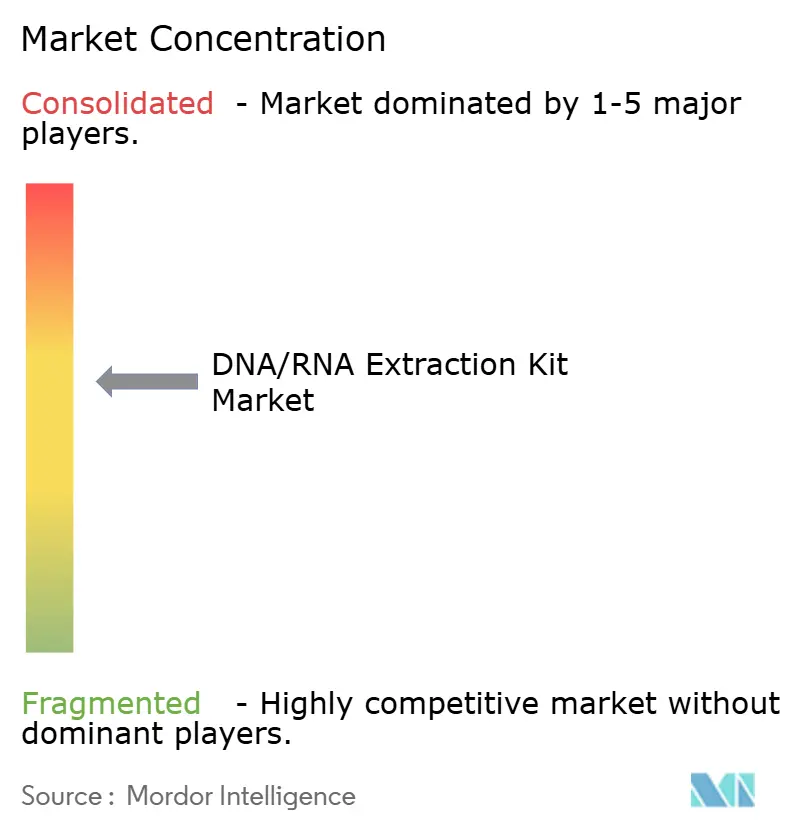
Thermo Fisher Scientific, QIAGEN, and Roche collectively capture approximately 55% of the revenue, indicating a moderately concentrated market. Thermo Fisher’s vertical supply control and FDA-cleared Genexus Dx system strengthen its moat. QIAGEN leverages co-development with pharmaceutical partners to integrate its kits into regulatory filings, thereby increasing exit costs for laboratories. Roche integrates extraction with mutation assays on MagNA Pure and cobas lines to offer end-to-end oncology solutions.
Niche players carve share in specialized workflows. Zymo Research’s FFPE RNA kits deliver 30% higher yield for archived tissue studies. Promega removes xylene from tissue extraction, lowering fume-hood requirements and winning pathology accounts. Bio-Rad miniaturizes extraction into droplet-based chips to cut reagent spend in low-throughput labs. Strategic moves include Takara Bio’s USD 50 million expansion of bead manufacturing in Japan, aimed at shortening Asian lead times.
Regulatory dynamics heighten competitive barriers. FDA and IVDR approvals require validated extraction protocols, favoring incumbents with large quality teams. ISO 13485 certification supports CE marking in Europe, as achieved by Zymo Research in 2024, enabling research suppliers to enter clinical channels. The resulting structure sustains premium pricing and limits rapid commoditization.
DNA/RNA Extraction Kit Industry Leaders
Promega Corporation
F Hoffmann-La Roche AG
Qiagen N.V.
Agilent Technologies
Bio-Rad Laboratories Inc.
- *Disclaimer: Major Players sorted in no particular order
DNA/RNA Extraction Kit Market Companies Covered in this Report
- Agilent Technologies
- Bio-Rad Laboratories
- bioMérieux
- Danaher Corp. (Beckman Coulter)
- DiaSorin
- Roche
- GenScript Biotech Corp.
- Illumina
- Merck KGaA (MilliporeSigma)
- New England Biolabs
- Omega Bio-Tek Inc.
- PerkinElmer
- Promega Corp.
- QIAGEN
- Takara Bio
- Thermo Fisher Scientific
- Tecan Group
- Zymo Research Corp.

Market Opportunities and Future Outlook
Automation-centered workflows create whitespace where extraction is bundled with downstream analytics and compliance documentation, which reduces variability across multi-site testing networks. This shows up in platform-level moves such as QIAGEN scheduling the QIAsymphony Connect system as an automated nucleic acid purification option for clinical and research laboratories, aligning with demand for traceable, standardized throughput and supporting kit pull-through via instrument-tied consumables.
Method innovation also supports opportunities in rapid, integrated extraction formats that shorten time-to-result and broaden sample coverage. Peer-reviewed work in Scientific Reports (May 2026) demonstrated an integrated microfluidic lab-on-a-chip approach for automating genomic DNA extraction with about 90% extraction efficiency, reinforcing development pathways for cartridge and lab-on-chip segments where walk-away operation and minimal hands-on steps are key. At the demand side, the continued expansion of wastewater surveillance programs, including the CDC National Wastewater Surveillance System monitoring over 1,200 treatment plants, diversifies use cases into environmental matrices that require inhibitor-tolerant RNA extraction chemistries and scalable procurement models.
Recent Industry Developments in DNA/RNA Extraction Kit Market
- June 2026: Promega and Countable Labs announced a co-marketing agreement to pair Promega's Maxwell nucleic acid extraction workflow with Countable PCR instruments. The combined positioning targets streamlined biological sample preparation through readout, supporting integrated purchasing decisions in labs seeking tighter workflow standardization and sensitivity for rare-variant detection.
- February 2026: Thermo Fisher Scientific introduced the Thermo Scientific Sequential Protein/DNA/RNA Extraction Kit, enabling sequential extraction of protein, DNA, and RNA from a single sample. The launch supports multi-omic sample utilization in research settings and strengthens differentiated consumables positioning beyond single-analyte extraction kits.
- April 2024: New England Biolabs launched the Monarch Mag Viral DNA/RNA Extraction Kit, designed to improve recovery of low amounts of viral nucleic acids across sample types including saliva, respiratory swabs, and wastewater. The magnetic bead workflow reinforces the market shift toward scalable, automation-compatible extraction formats used in high-throughput and surveillance testing.


DNA/RNA Extraction Kit Market Report Scope and Research Methodology
Market Definition and Coverage
This market covers revenues generated from DNA and RNA extraction kits used to isolate nucleic acids from different sample materials, so they can be used in downstream molecular workflows in research and clinical settings.
Scope exclusions: instruments and automation platforms used to run extraction workflows, as well as downstream PCR and sequencing consumables, are not counted as kit revenue.
Segments Covered in This Report
- By Product
- Cell Free DNA
- Sequence Specific DNA
- Sequence Specific RNA
- Total RNA
- Other Products
- By Sample Type
- Blood & Plasma
- Tissue & FFPE
- Saliva & Buccal Swab
- Wastewater & Environmental Samples
- Other Samples
- By Technology
- Silica Column-Based
- Magnetic Bead-Based
- Anion-Exchange Resin
- Reagent-Based (Phenol-Chloroform, Trizol, Etc.)
- Automated Cartridge & Lab-On-Chip
- By End User
- Diagnostic Centers & Clinical Labs
- Hospitals
- Research & Academic Institutes
- Biotechnology & Pharmaceutical Companies
- CROs & Others
- Geography
- North America
- United States
- Canada
- Mexico
- Europe
- Germany
- United Kingdom
- France
- Italy
- Spain
- Rest Of Europe
- Asia-Pacific
- China
- Japan
- India
- Australia
- South Korea
- Rest Of Asia-Pacific
- Middle East And Africa
- GCC
- South Africa
- Rest Of Middle East And Africa
- South America
- Brazil
- Argentina
- Rest Of South America
- North America
Data Sources, Market Sizing, and Validation
Desk Research
Desk work starts with building the demand context for nucleic acid testing and research, then mapping how that activity translates into extraction kit usage. We typically refer to public and official sources such as CDC laboratory guidance, FDA communications for diagnostics, NIH funding and publications signals, WHO updates, and OECD health statistics to understand testing intensity and research direction by region.
To convert that context into usable sizing inputs, we lean on company filings and investor materials for product mix cues, association websites and conference abstracts for workflow shifts, and reputed press for major capacity expansions or supply constraints. Where needed, we also use paid subscriptions for company financials and news screening, patent databases to track method migration (for example, magnetic bead and cartridge workflows), and an import and export shipment-level database to sanity-check cross-border flow of kit-like consumables. The desk sources listed above are illustrative only, and other public materials were reviewed to fill gaps, cross-check assumptions, and clarify terminology.
Primary Interviews and Surveys
Primary interviews focus on translating lab behavior into measurable kit demand. We validate average runs per lab, typical extraction frequency by sample type, and how often labs switch between manual and automated formats. We also speak with kit suppliers, distributors, hospital and diagnostic labs, research institutes, and biotech and pharma users across major regions so we can adjust assumptions on pricing, channel margins, and adoption timing before finalizing totals.
Distribution of primary research fieldwork respondents
| Company type | Respondent position | Region |
|---|---|---|
| Top tier: 33% | CXOs: 17% | APAC: 43% |
| Mid tier: 49% | Functional/Unit leaders: 39% | EMEA: 30% |
| Smaller Players: 18% | Managers: 44% | Americas: 27% |
Market-Sizing & Forecasting
We size the market mainly by reconstructing the demand pool from testing and research activity, then applying realistic kit usage rates and pricing by workflow type and sample type, using a top-down and bottom-up approach in parallel. We corroborate the result with selective bottom-up approximations, such as supplier revenue roll-ups where public splits exist, sampled ASP x estimated volume checks for key sample types, and distributor channel feedback to adjust for overstatement.
Key inputs used in the model include the share of workflows using silica column versus magnetic bead methods, the mix of sample types (such as blood and plasma versus tissue and FFPE), adoption of automated cartridge formats, average extraction runs per lab per week, and ASP progression tied to pack sizes and procurement cycles. Where direct volume visibility is weak, gaps are handled by using conservative penetration ranges that are validated in interviews and constrained by known lab capacity and testing intensity signals.
Forecasts are developed using scenario analysis, since shifts in clinical testing demand, automation adoption, and research funding can move volumes in different directions across regions. Assumptions are iterated until the forward path aligns with expert expectations on workflow change, price pressure, and the pace at which new assays translate into routine extraction demand.
Data Validation & Update Cycle
Outputs are validated through cross-checks against independent signals, including whether implied kit volumes are consistent with known lab throughput patterns and procurement behavior. Variance checks are run at the country and regional level, and any large jumps are reviewed to confirm whether they are driven by real assumption changes (for example, a shift toward automated cartridges) or by a data issue.
Before sign-off, the model and key assumptions go through multiple analyst reviews, and follow-up calls are triggered when interview feedback conflicts with desk signals on prices or adoption. Reports are refreshed annually, with interim updates made when material events affect demand or pricing. Right before delivery, a final pass is done so clients receive the latest view aligned to the current information set.
Mordor Intelligence's Dna Rna Extraction Kit Market Size Measured Against Other Published Estimates
Published figures for DNA and RNA extraction kits can look far apart because each source draws the line around slightly different items and applies different pricing and usage assumptions. Differences usually come from what is counted as a kit, which sample types are emphasized, and whether automated cartridge formats are treated as consumables, accessories, or part of an instrument workflow.
In practice, gaps also show up when one estimate blends in broader nucleic acid purification reagents or includes instrument and service revenue, or when pricing is assumed from list prices without adjusting for tender and bulk procurement patterns. The spread can widen further if the forecast is anchored to an aggressive test-volume scenario, or if currency conversion timing and refresh cadence are not kept consistent across regions.
Benchmark comparison
| Source | Market Size | Gaps in Research Methodology |
|---|---|---|
| Mordor Intelligence | USD 1.89 B (2026) | |
| Industry Data Aggregator A | USD 1.51 B (2025) | Uses a 2025 base and appears to rely on narrower kit definitions and limited workflow detail, which can undercount automated cartridge and lab-on-chip extraction formats and region-level pricing dispersion. |
| Market Publisher B | USD 2.83 B (2025) | Tracks a wider "extraction and isolation" scope that can pull in broader purification consumables and related offerings beyond kits, and it can also embed different clinical volume assumptions that inflate the demand pool. |
The table shows that the main split is driven by whether adjacent purification items and broader workflow spend get included, and by how kit usage and ASP are grounded in lab behavior. Keeping the count limited to true extraction kits and validating run rates, sample mix, and discounting patterns is what anchors the 2026 value used by Mordor Intelligence.


Key Questions Answered in the Report
How large is the DNA/RNA extraction kit market in 2026?
The market is valued at USD 1.89 billion in 2026 and is projected to grow to USD 2.68 billion by 2031.
What is driving the fastest segment growth?
Wastewater and environmental sample kits lead with a 9.65% CAGR as agencies formalize pathogen surveillance programs.
Which technology segment is expanding quickest?
Automated cartridge and lab-on-chip platforms record a 10.01% CAGR because laboratories want walk-away workflows and reduced errors.
Which region offers the highest future growth?
Asia-Pacific shows the strongest outlook at an 8.54% CAGR thanks to government genomics funding and CRO expansion.
Who are the leading companies in this space?
Thermo Fisher Scientific, QIAGEN, and Roche jointly hold around 55% of global revenue through broad product portfolios and regulatory clearances.
What is the biggest adoption barrier for automation?
Capital cost of USD 150,000-300,000 per instrument plus premium cartridge pricing limits uptake in low-volume or resource-limited labs.
Page last updated on:





