
Market Overview
| Study Period | 2021 - 2031 |
|---|---|
| Forecast Data Period | 2026 - 2031 |
| Base Year Market Size (2025) | USD 4.72 Billion |
| Market Size (2026) | USD 4.95 Billion |
| Market Size (2031) | USD 6.37 Billion |
| Growth Rate (2026 - 2031) | 5.18 % |
| Market Concentration | Medium |
Major Players
*Disclaimer: Major Players sorted in no particular order Image © Mordor Intelligence. Reuse requires attribution under CC BY 4.0. |
|
North America Seasonings And Spices Market Analysis by Mordor Intelligence
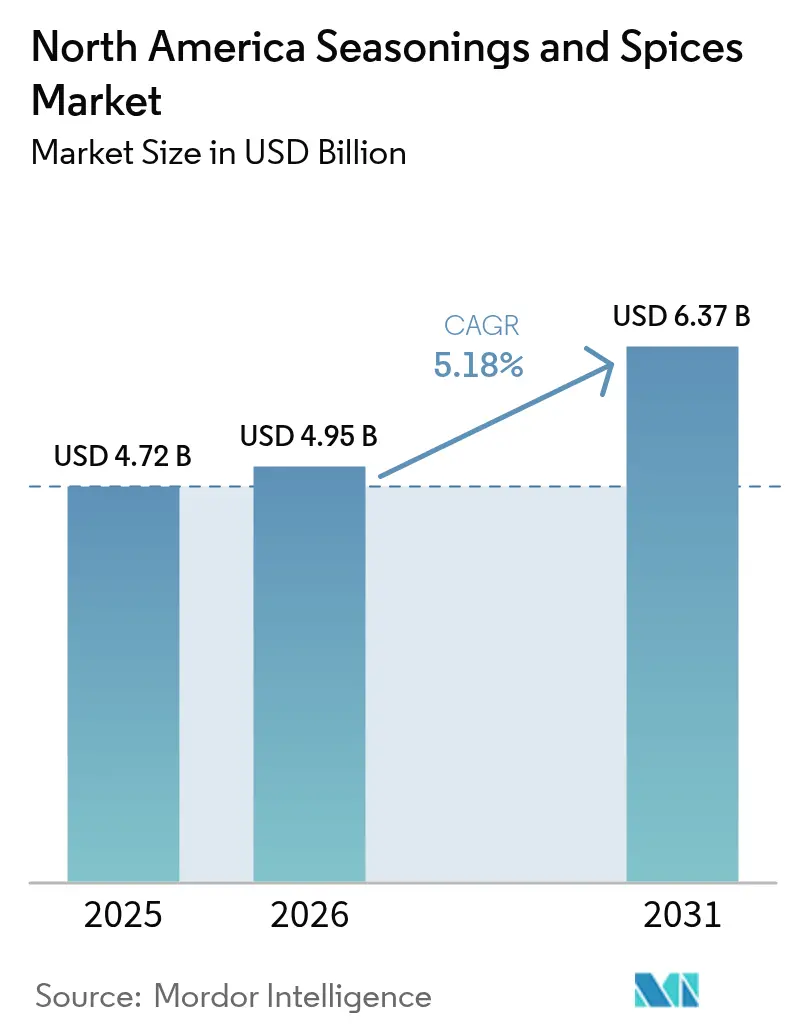
The North America seasonings and spices market size in 2026 is estimated at USD 4.95 billion, growing from 2025 value of USD 4.72 billion with 2031 projections showing USD 6.37 billion, growing at 5.18% CAGR over 2026-2031. Growth in the seasonings and spices segment is being driven by shifting consumption patterns in processed and packaged foods, along with tighter food safety regulations and evolving supply chain structures. Large-scale food manufacturers are prioritizing consistent, high-performance blends that deliver standardized flavor profiles across production batches, while also responding to demand for clean-label and sodium-reduction formulations. Expansion in ready-to-eat, snacks, and convenience meal categories is further accelerating bulk demand. At the same time, stricter controls on pesticide residues, microbial limits, and traceability requirements are increasing compliance complexity, favoring suppliers with advanced quality assurance systems and integrated sourcing networks.
Key Report Takeaways
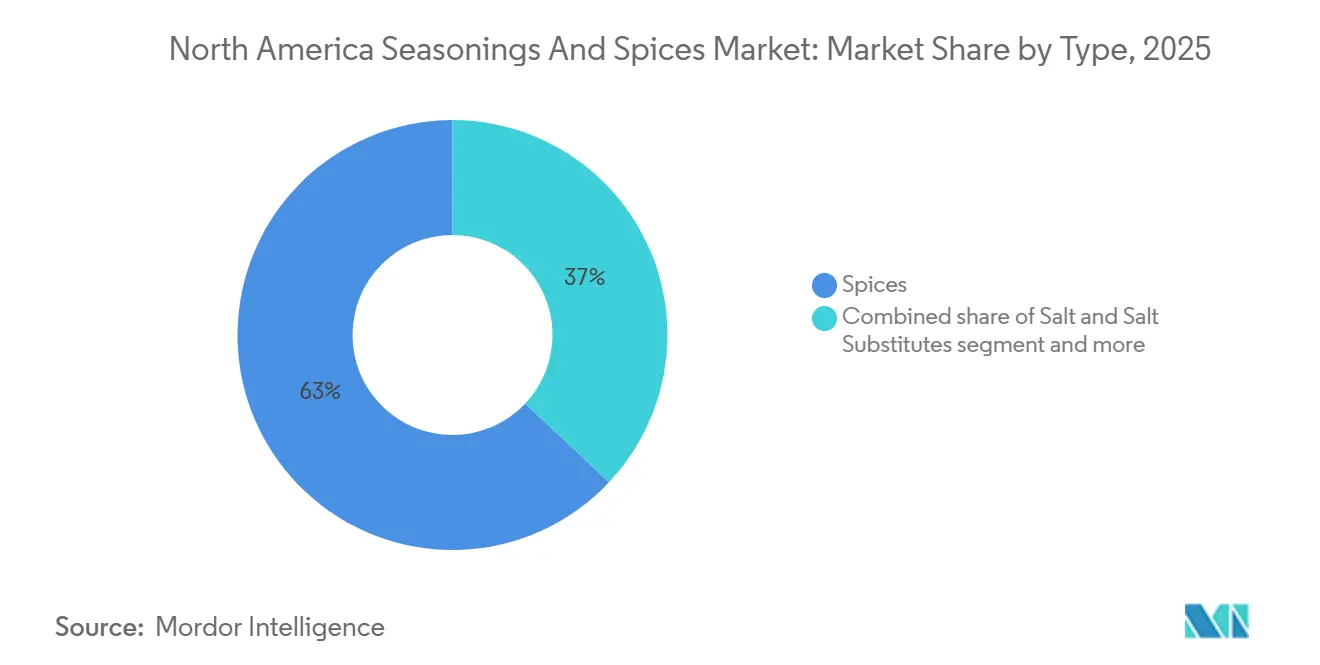
- By type, spices led with 62.98% of North America seasonings and spices market share in 2025 while herbs and seasonings are advancing at a 5.84% CAGR through 2031.
- By category, the conventional segment held 82.95% share of the North America seasoning and spices market size in 2025, while organic products are projected to grow at a 5.62% CAGR to 2031.
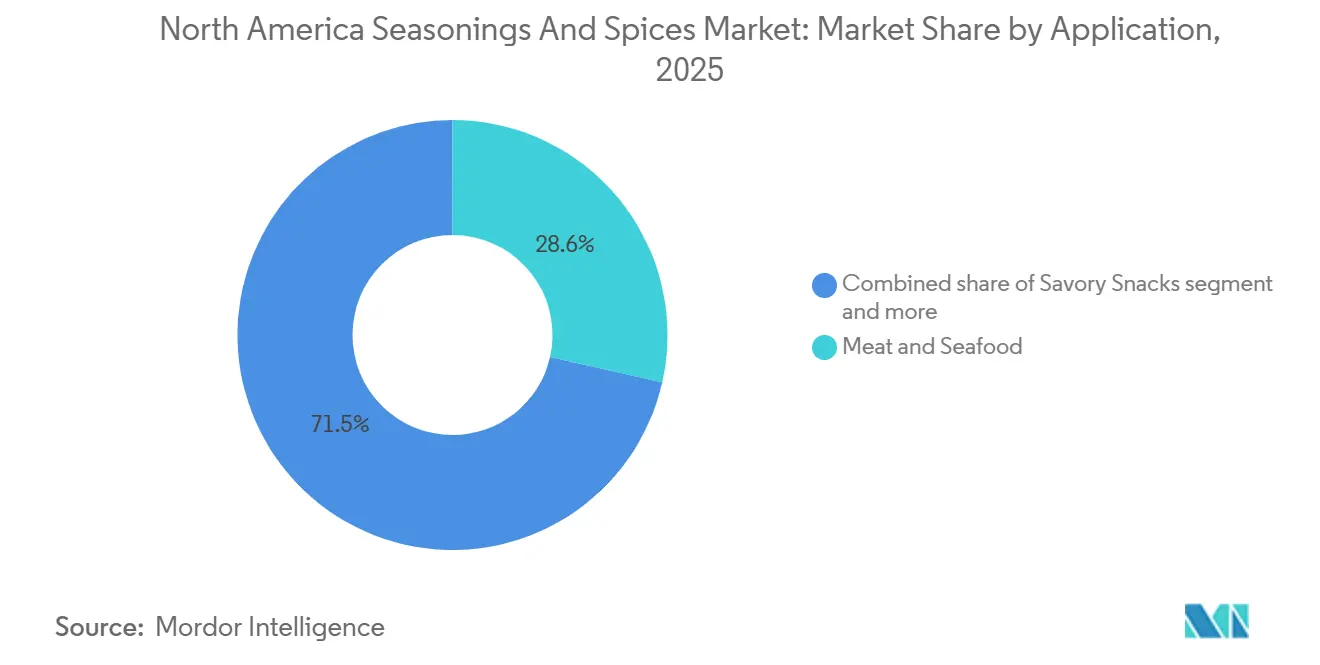
- By application, meat and seafood accounted for a 28.55% share of the North America seasoning and spices market size in 2025, whereas savory snacks are forecast to post a 6.02% CAGR through 2031.
- By geography, the United States commanded 72.55% revenue share in 2025, while Mexico is poised to record the fastest expansion at a 5.89% CAGR to 2031.
Note: Market size and forecast figures in this report are generated using Mordor Intelligence’s proprietary estimation framework, updated with the latest available data and insights as of 2026.
Market Trends and Insights
Drivers Impact Analysis of North America Seasonings And Spices Market*
| Driver | (~) % Impact on CAGR Forecast | Geographic Relevance | Impact Timeline |
|---|---|---|---|
| Rising consumer preference for healthier and higher-quality ingredients | +0.80% | United States coastal metros and Canadian urban hubs | Medium term (2-4 years) |
| Increasing multicultural demographics driving demand for diverse ethnic and global flavors | +0.90% | Toronto, Vancouver, Los Angeles, Houston, Miami | Long term (≥ 4 years) |
| Expansion of the convenience, ready-to-cook, and processed food sectors | +1.00% | United States and Canada, spill-over to northern Mexico | Short term (≤ 2 years) |
| Growing preference for convenient, ready-to-use seasoning blends | +0.70% | United States, Canada, emerging in Mexico City and Monterrey | Medium term (2-4 years) |
| Trending demand for organic and clean-label spices and seasonings | +0.90% | United States and Canada | Medium term (2-4 years) |
| Stronger focus on sustainable and environmentally responsible sourcing practices | +0.50% | Led by United States and Canadian retailers | Long term (≥ 4 years) |
| Source: Mordor Intelligence | |||


Rising consumer preference for healthier and higher-quality ingredients
Premium positioning remains central to differentiation in the spices and seasonings market as food manufacturers and processors face heightened consumer expectations for ingredient authenticity and transparent sourcing. Ethnically diverse eating habits continue to shape product demand, with global regulators like the Food and Drug Administration (FDA)’s Food Safety Modernization Act elevating quality standards and boosting confidence in compliant suppliers. The import of spices in the United States increased from USD 1.64 billion in 2023 to USD 1.98 billion in 2025, underscoring robust industrial use and reliance on international supply chains [1]Source: Trade Map, "Trade Map Database", trademap.org. Robust oversight from agencies such as the Canadian Food Inspection Agency and traceability programs enforced by bodies like India’s Spices Board enhance trust through systematic testing and certification. Industry initiatives on environmentally responsible sourcing further reinforce premium status by reflecting values important to discerning buyers. To justify higher price points, manufacturers increasingly spotlight traceable origin, advanced processing technologies, and improved nutritional or functional benefits. Investments in analytical quality assurance, such as spectroscopy and DNA verification, raise production costs marginally but reduce compliance risks, strengthening end‑market confidence in premium spice ingredients for food manufacturing applications.
Increasing multicultural demographics driving demand for diverse ethnic and global flavors
The growing presence of diverse ethnic populations in the United States and Canada is reshaping demand for seasonings and spices in food manufacturing. Asian communities, particularly South Asian and Chinese households, consistently consume higher amounts of fruits, vegetables, and seafood, while Hispanic households favor meat-based dishes, driving demand for culturally tailored spice blends. Food producers are responding by expanding ethnic product lines and experimenting with fusion flavors that combine traditional tastes with contemporary culinary trends. This shift has created lucrative opportunities for specialty spice importers and regional distributors who leverage strong community connections and deep knowledge of flavor preferences. Ethnic retailers are increasing dedicated shelf space, while co-packing operations in North America are producing localized blends to reduce tariffs and accelerate delivery times. Overall, the market is evolving toward more customized, culturally resonant seasoning solutions that support both mainstream and niche food manufacturing needs.
Expansion of the convenience, ready-to-cook, and processed food sectors
The shift in consumer lifestyles is reshaping meal preparation, prompting food manufacturers to innovate in advanced seasoning systems tailored for ready-to-cook and ready-to-eat applications. Busy households and professionals increasingly seek efficient ways to achieve complex, restaurant-quality flavors at home, driving investment in pre-measured and multifunctional spice blends. Companies like Kerry Group have demonstrated strong growth in the Americas by integrating cutting-edge seasoning technologies, such as Tastesense Salt, which reduces sodium without compromising flavor. Ready-meal and meal-kit segments are rapidly expanding, supported by precise portion-controlled spice solutions that simplify cooking. Protein processors are enhancing per-unit seasoning to deliver diverse global flavor profiles across poultry and meat products. Centralized blending and seasoning hubs now streamline operations for quick-service chains, reducing in-store labor requirements. Regulatory frameworks from the Food and Drug Administration (FDA) provide guidance on seasoning labeling, while clean-label initiatives encourage the use of natural spice extracts, facilitating reformulation without artificial additives. These trends collectively highlight the critical role of sophisticated spice systems in modern food manufacturing.
Growing preference for convenient, ready-to-use seasoning blends
Pre-mixed seasoning solutions are increasingly driving growth in food manufacturing, as producers seek efficient, reliable flavor delivery without manual measurement. Urban-focused production facilities prioritize convenience, supporting dual-income households with ready-to-use formulations that maintain taste quality. Investments in industrial blending lines and advanced packaging technologies are helping extend shelf life while meeting volume demands. E-commerce channels enable direct access to niche and specialty blends that conventional retail may not carry. Meanwhile, foodservice operations favor portion-controlled systems, ensuring consistent flavor across multiple locations. Regulatory frameworks, such as Canadian preventive controls for spice processing, guide safety and compliance in large-scale blend production. Companies respond by developing proprietary recipes that differentiate products while adhering to labeling and ingredient disclosure requirements, supporting both innovation and operational efficiency.
Restraints Impact Analysis of North America Seasonings And Spices Market*
| Restraint | (~) % Impact on CAGR Forecast | Geographic Relevance | Impact Timeline |
|---|---|---|---|
| Perishability and limited shelf life | -0.40% | Fresh-herb segments in United States and Canada | Short term (≤ 2 years) |
| Regulatory challenges on quality and labeling | -0.50% | Under USMCA harmonization | Medium term (2-4 years) |
| Supply-chain volatility and raw-material swings | -0.60% | India-sourced pepper, turmeric, chili | Short term (≤ 2 years) |
| Adulteration and authenticity concerns | -0.30% | Ground spice categories globally | Medium term (2-4 years) |
| Source: Mordor Intelligence | |||
Volatility in supply chains and fluctuations in raw material availability
Supply chain challenges continue to strain the food manufacturing spice and seasoning market, pushing up costs and limiting availability, particularly for smaller processors with limited sourcing options. Rising input prices and labor costs have led farmers in major producing regions to cut planted acreage, while unpredictable weather is adding pressure on specialty varieties, even as standard powders and granules remain accessible. In response, industry bodies like the American Spice Trade Association (ASTA) have partnered with logistics groups to secure better freight rates and streamline supply chains. Importers are increasingly diversifying sourcing geographically and investing in advanced inventory management systems to mitigate disruptions, though these measures tie up working capital and add operational complexity. Recent trade policy changes and tariffs have amplified import costs, prompting companies to adopt strategic approaches such as extended stockpiling and tariff-focused planning. These supply pressures are reflected in Food and Agriculture Organization (FAO)’s 2024 global food import bill, which rose 3.6 percent to nearly USD 2.1 trillion, largely driven by a 29.3 percent surge in costs for coffee, tea, cocoa, and spices [2]Source: Food and Agriculture Organization, "FAO Food Outlook", fao.org. Looking ahead, market participants are expected to continue prioritizing resilience and agility in sourcing and logistics to navigate ongoing volatility and secure steady supply for food manufacturing applications.
Increasing concerns over adulteration and authenticity of spices and seasonings
In North America, growing concerns over adulteration and the authenticity of spices and seasonings are driving stringent regulatory requirements that challenge food manufacturers, especially smaller importers and specialty producers. The FDA and Canadian authorities have intensified monitoring for contaminants such as pesticides, heavy metals, ethylene oxide, and undeclared fillers, while demanding robust documentation and testing systems to verify product integrity. Ensuring authenticity through methods like DNA barcoding, NIR analysis, and blockchain traceability requires substantial investment, often feasible only for large processors. These measures are critical to prevent issues such as fraudulent substitution, contamination, or mislabeling, which have led to recalls and delistings in past years. Established companies with strong quality control and compliance infrastructure are able to maintain credibility and retailer trust, whereas new entrants struggle with technical and financial barriers. As a result, retailers are increasingly limiting their supplier base to certified and verifiable partners, emphasizing traceability, purity, and product authenticity in their procurement decisions.
*Our forecasts treat driver/restraint impacts as directional, not additive. The impact forecasts reflect baseline growth, mix effects, and variable interactions.
North America Seasonings And Spices Market Segment Analysis
By Type:
Spices Dominate Traditional ApplicationsIn 2025, traditional spices held a dominant 62.98% share of the North America seasonings and spices market, driven by black pepper, chili, garlic, and mustard. Their widespread integration into meat, seafood, sauces, and ethnic food production underscores their essential role in flavor development. Key spices such as sesame, cinnamon, paprika, and onion continue to support both large-scale food manufacturing and specialty processed products, maintaining market stability even amid fluctuating raw material availability. Processors are increasingly exploring oleoresins and spice extracts to manage cost volatility and ensure consistent flavor quality.
Meanwhile, herbs and blended seasonings are projected to grow at a 5.84% CAGR through 2031, fueled by consumer demand for fresh, natural, and health-oriented flavor solutions in prepared foods. Innovative applications in ready-to-cook and clean-label products are expanding the use of basil, oregano, mint, and other botanicals, while chili and paprika remain popular for visual appeal and bold taste. Manufacturers are increasingly experimenting with less conventional spices, including galangal and za’atar, to diversify flavor offerings and respond to evolving culinary trends in processed and packaged food segments. Urban hydroponic cultivation and improved supply chains are enabling fresher herbs with longer shelf life for industrial applications.


By Category:
Organic Acceleration Despite Conventional DominanceConventional seasonings and spices continue to dominate the food manufacturing segment, capturing 82.95% of the market in 2025. Their stronghold is supported by well‑developed supply chains that guarantee reliable inventory, cost‑effective pricing that appeals to large buyers, and far‑reaching distribution networks that efficiently serve mainstream production needs. Sterilization practices such as ethylene oxide treatment further extend shelf life, making these products a preferred choice for conventional food processors. Manufacturers also benefit from predictable quality and consistent sensory profiles that help standardize recipes at scale. As a result, conventional offerings remain deeply integrated into industrial kitchens and packaged food production lines, reinforcing their market leadership and cost advantage.
Meanwhile, organic spices are gaining momentum within food manufacturing, projected to grow at a 5.62% CAGR through 2031, driven by rising demand for USDA‑certified ingredients as clean‑label and health‑oriented formulations expand. Health benefits, reduced pesticide residues, and sustainability claims enhance their appeal, allowing manufacturers to sustain premium pricing even amid supply constraints. According to a recent 2025 IFIC consumer survey, about 30% of United States shoppers report that they look for “organic” labels when choosing foods, reflecting meaningful consumer interest in organic attributes [3]Source: International Food Information Council, "IFIC Food and Health Survey", ific.org. However, limited domestic cultivation and certification costs continue to constrain supply, keeping premiums elevated. This tiered market positioning allows food manufacturers to balance cost, quality, and clean‑label appeal while meeting evolving consumer expectations and premium product trends.
By Application:
Meat and Seafood Leadership Alongside Savory Snacks GrowthThe meat and seafood segment commands a 28.55% share of the North America seasonings and spices market, driven by processors increasing the use of global rubs, marinades, and flavor enhancers. Rising protein consumption among Hispanic communities and strong seafood demand in non-Hispanic Asian populations support sustained growth. Advanced seasoning systems are critical in elevating flavor profiles, masking off-notes, and extending shelf life for protein products. Manufacturers are increasingly experimenting with bold and ethnic flavors, such as smoked paprika, fermented garlic, and citrus blends, to meet evolving consumer palates. This trend is also fueling innovation in ready-to-cook and pre-marinated protein offerings for retail and foodservice channels.
Savory snacks are set to grow at a 6.02% CAGR through 2031 as manufacturers innovate with flavor delivery technologies to meet demand for convenient, restaurant-quality taste experiences. Leading players like Kerry Group’s Americas division have reported notable volume gains, particularly through integrating sophisticated seasoning solutions in chips, puffs, and other snack coatings. Brands are reformulating coatings with natural extracts, reducing sodium while retaining bold flavor appeal. Additionally, the segment benefits from growing consumer preference for on-the-go snacking and premium taste experiences that mimic restaurant or artisanal flavors.
Geography Analysis
United States Seasonings and Spices Market
The United States accounted for 72.55% of the North American seasoning and spices market in 2025, driven by its expansive food manufacturing sector and a well-established distribution network that supplies both mainstream and niche spice formulations. Manufacturers increasingly cater to health-conscious and sustainability-focused products, including organic and specialty seasonings. Demographic trends, highlighted by USDA data, show non-Hispanic Asian communities consuming more vegetables and seafood, while Hispanic populations favor meat-based formulations. The mature retail and wholesale landscape ensures wide availability of packaged seasonings to both industrial processors and foodservice operators. Growing interest in premium and authentic ingredients supports consistent demand for higher-margin products.
Mexico Seasonings and Spices Market
Mexico emerges as the fastest-growing market, expanding at a 5.89% CAGR through 2031, fueled by urbanization, rising disposable incomes, and growth in the food manufacturing and processing sectors. Cities such as Monterrey and Guadalajara see rising industrial spice consumption as new production facilities and meat processing plants scale operations. Exposure to international culinary trends through media and tourism boosts demand for both traditional and exotic seasonings. The market also benefits from improving logistics and retail infrastructure, enhancing distribution of packaged spices to industrial buyers. While organic spice adoption is still limited due to cost sensitivity, government incentives for organic cultivation could increase production capacity after 2026. Overall, Mexico’s industrial base positions it as a key growth driver for the region.
Canada and Broader North America Seasonings and Spices Market
Canada posts a steady growth, underpinned by its regulated food manufacturing sector and predictable industrial demand. CFIA standards enforce strict food safety, labeling, and quality benchmarks, enabling premium seasoning positioning and filtering out substandard imports. Immigration-driven population growth lifts per-capita spice usage above the national average, while private-label organic lines continue to expand with higher margins. Beyond Canada, other North American markets exhibit stable growth, with consistent industrial demand from processors and cross-border trade with the United States supporting supply continuity. Import patterns largely mirror United States sourcing, but freight volatility from India and Southeast Asia drives manufacturers to maintain extended safety stocks, impacting working capital.
Regulatory Landscape
In North America, seasonings and spices sold into food manufacturing are governed mainly by the US Food and Drug Administration (FDA) under the FD&C Act and FSMA, and by the Canadian Food Inspection Agency (CFIA) and Health Canada under the Food and Drugs Act and the Safe Food for Canadians Regulations (SFCR). In the United States, labeling and identity conventions for spices and seasonings are addressed through FDA guidance and 21 CFR 101.22, including permitted use of umbrella terms such as "spice" and "natural flavor" depending on the ingredient and use case. In Canada, ingredient and allergen declaration requirements are handled under SFCR and the Food and Drug Regulations, including category-based declarations for spices and herbs where applicable.
Food safety controls are increasingly data-driven across preventive controls, foreign supplier verification, and import oversight. A key compliance anchor is the FDA implementation of the FSMA Final Rule on Requirements for Additional Traceability Records for Certain Foods (with implementation in July 2026), which tightens recordkeeping expectations for faster containment in contamination events. The FDA also activated FSMA Section 801(q) import certification authority in October 2025 for spices from specified regions of Indonesia (Java and Lampung) tied to Cesium-137 risk, reinforcing the need for documented supplier controls, contaminant testing, and shipment-level compliance readiness for import-reliant spice supply chains.
Value Chain Analysis
In North America, the seasonings and spices value chain starts with domestic cultivation for some herbs and a large import base for key spices, followed by primary processing such as cleaning, drying, and grinding. Processing can also include microbial reduction steps (for example, steam treatment or irradiation where used), then blending and packaging into bulk formats for food manufacturers and foodservice operators. Major players and specialized blenders differentiate through consistent sensory performance, standardized particle size and volatile retention, and validated food safety systems aligned with FDA preventive controls and Canada’s preventive control expectations under SFCR. Authenticity and contaminant screening for pathogens, pesticides, and heavy metals are also becoming embedded operating requirements.
Downstream, distribution runs through importers, brokers, regional distributors, and direct supply into large processors, with traceability and documentation shaping how handoffs work between nodes. A notable operational shift is the January 2026 effective date for FDA Food Traceability List (FTL) requirements under FSMA Section 204 for applicable products (including herbs), which increases the need for lot-level record capture of Key Data Elements across Critical Tracking Events. Compliance work is reinforced by the FDA biennial food facility registration renewal cycle (2026), pushing both domestic and foreign facilities that supply the region to keep registrations and documentation current and, in practice, favoring suppliers with mature QA systems, digital traceability, and coordinated foreign supplier verification processes.
Competitive Landscape
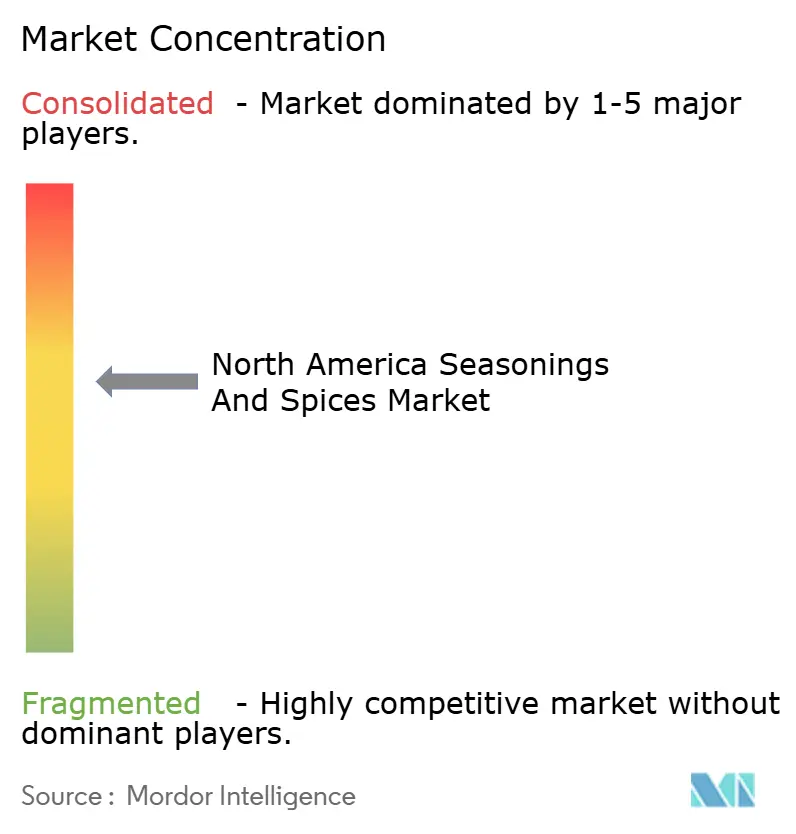
The North America seasoning and spices market exhibits a moderate level of concentration, with major players like McCormick, Kerry, Döhler, All Seasonings Ingredients, and Olam controlling a significant portion of supply through vertically integrated sourcing and long-term contracts with processors. These companies leverage operational scale, advanced compliance systems, and continuous innovation to maintain strong market positions, creating high barriers for smaller entrants. Mid-tier manufacturers focus on agile production and niche ethnic flavors, catering to specialized food manufacturers and regional processors. This competitive landscape encourages smaller innovators to target overlooked applications, though regulatory and capital demands remain a challenge.
Opportunities in the market are concentrated in health-conscious and specialty segments, including sodium-reduced, plant-based, and allergen-friendly seasoning solutions. Single-origin and certified organic spices, such as Tellicherry pepper or Kashmiri chili, present premium growth potential, though limited supply can constrain rapid scaling. Some firms are experimenting with controlled-environment farming and local herb cultivation to reduce transportation costs, extend shelf life, and enhance freshness, despite the substantial capital investment required. Consumer demand for clean-label and traceable ingredients further drives investment in specialty and sustainably sourced lines.
Technological adoption is increasingly shaping operational efficiency and product quality. Leading firms are deploying AI-driven demand forecasting, automated blending systems, and real-time supply chain monitoring to optimize production and maintain compliance with FDA and CFIA standards. Strategic initiatives include R&D expansion for novel fermentation-based flavor systems, acquisition of encapsulation technologies to extend shelf life, and QR-code traceability to assure authenticity and transparency for food manufacturers. Collaboration with industry associations and sustainability programs also helps companies meet evolving regulatory and environmental expectations.
North America Seasonings And Spices Industry Leaders
-
McCormick & Company Inc.
-
Olam International
-
Kerry Group PLC
-
Döhler Group
-
All Seasonings Ingredients Inc.
- *Disclaimer: Major Players sorted in no particular order
North America Seasonings And Spices Market Companies Covered in this Report
- McCormick & Company Inc.
- Olam International
- Kerry Group PLC
- Döhler Group
- All Seasonings Ingredients Inc.
- Ajinomoto Co. Inc.
- Cargill Incorporated
- Associated British Foods PLC
- Horton Spice Mills Ltd.
- Newly Weds Foods Inc.
- Sensient Technologies Corporation
- Givaudan SA
- International Flavors & Fragrances Inc.
- Kalsec Inc.
- US Spice Mills Inc.
- Archer Daniels Midland Company
- Pacific Spice Company, Inc.
- Badia Spice Inc.
- Symrise AG
- FUCHS Groupe

Market Opportunities and Future Outlook
In North America, opportunities cluster around higher-value seasoning systems that help manufacturers reformulate for sodium reduction, cleaner labels, and consistent flavor delivery in high-throughput production lines. Kerry’s Tastesense Salt platform shows commercial momentum behind sodium-reduction solutions that preserve perceived saltiness, which supports product development across categories such as savory snacks and ready meals where seasoning performance and label requirements intersect. Alongside this, regulatory tightening around contaminants, authenticity, and traceability is raising demand for suppliers that can provide verified documentation, validated pathogen controls, and end-to-end lot traceability for imported and blended products.
Investment in capacity and capabilities in the region is also opening room for co-manufacturing and quicker innovation cycles, including more localized blends tied to regional taste profiles. In June 2026, PS Seasoning and Pro Smoker broke ground on an approximately 200,000-square-foot headquarters and manufacturing campus in Wisconsin to integrate production and R&D, pointing to continued build-out in integrated blending and manufacturing infrastructure. Companies are also strengthening around Mexican and Latin American flavor profiles as a near-term growth pathway: McCormick completed the acquisition of an additional 25% stake in McCormick de Mexico for USD 750 million in January 2026, aligning with industrial demand for authentic regional flavors across North American processed foods.
Recent Industry Developments in North America Seasonings And Spices Market
- June 2026: PS Seasoning and Pro Smoker broke ground on an approximately 200,000-square-foot headquarters and manufacturing campus at the West Bend Manufacturing Center in Wisconsin. The project consolidates corporate operations with manufacturing and R&D capabilities, strengthening speed-to-market for new blends and improving scale economics for co-manufacturing and foodservice-oriented seasoning systems.
- September 2025: Kerry Group announced a multi-million-dollar investment to establish its first manufacturing facility in Pennsylvania, located in Hanover Township, focused on coffee roasting and extraction for the food and beverage market. The expansion adds regional production capacity and supports broader taste and ingredient systems supply into North American manufacturers that use flavor building blocks alongside seasoning components.
- April 2024: Kerry launched Tastesense Salt, a sodium-reduction solution designed to deliver salty taste without adding sodium. The launch supports reformulation programs in packaged foods and snacks where sodium targets are tightening, increasing demand for seasoning systems that preserve flavor intensity while meeting nutrition-driven product specifications.


North America Seasonings And Spices Market Report Scope and Research Methodology
Market Definition and Coverage
This market covers packaged seasonings and spices sold for food flavoring across North America, including salt and salt substitutes, herbs and seasonings, and spices, across retail and foodservice demand where products are bought and used within the region.
Scope exclusions: this sizing does not count fresh culinary herbs sold as produce, or prepared sauces and condiments where seasoning is not the primary product.
Segments Covered in This Report
-
By Type
- Salt and Salt Substitutes
-
Herbs and Seasonings
- Thyme
- Basil
- Oregano
- Parsley
- Mint
- Other Herbs and Seasonings
-
Spices
- Pepper
- Sesame
- Cinnamon
- Mustard
- Onion
- Garlic
- Paprika
- Chili Pepper
- Other Spices
-
By Category
- Organic
- Conventional
-
By Application
- Bakery and Confectionery
- Soup, Noodles, and Pasta
- Meat and Seafood
- Sauces, Salads, and Dressing
- Savory Snacks
- Other Applications
-
By Geography
- United States
- Canada
- Mexico
- Rest of North America
Data Sources, Market Sizing, and Validation
Desk Research
For the initial build, we map regional supply and demand signals that can be checked in public data. Typical inputs include food manufacturing output and price series from sources such as the US Bureau of Labor Statistics and the US Census Bureau, and trade flows from sources such as USITC DataWeb and Statistics Canada. When we needed regulatory context that impacts marketability and import acceptance, we also used sources such as USDA and FDA pages, plus Codex guidance that is commonly referenced for food safety limits.
To keep the model grounded, we review company annual reports, investor presentations, and reputable press coverage to understand portfolio mix, format shifts, and capacity or expansion commentary that can affect volumes. Patent databases were also reviewed selectively to spot activity in sodium reduction, seasoning blends, and processing, which helps us sanity check innovation-led demand. For cross-checking financial context and news, we used a paid subscription focused on company financials and another focused on news and financials, then refined assumptions through follow-up validation. These sources are illustrative only, and many other public and paid references were used for data collection, validation, and clarification.
Primary Interviews and Surveys
Primary work was used to pressure-test what desk sources cannot show clearly, including channel mix between retail and foodservice, typical pricing behavior by format, and how organic penetration is changing. We spoke with a mix of ingredient suppliers, brand and private-label stakeholders, importers, distributors, and food manufacturing users across the US, Canada, and Mexico. Responses were then used to confirm growth drivers and close gaps in volume and pricing assumptions.
Distribution of primary research fieldwork respondents
| Company type | Respondent position |
|---|---|
| Top tier: 35% | CXOs: 18% |
| Mid tier: 47% | Functional/Unit leaders: 34% |
| Smaller Players: 18% | Managers: 48% |
Market-Sizing & Forecasting
Sizing starts with a top-down approach where food category consumption, processed food output, and import-export flows are used to reconstruct a realistic demand pool for seasonings and spices in North America, then it is translated into value using observed price and mix signals. In parallel, we use selective bottom-up approximations as checks, such as sampled brand and private-label pricing across key formats and a limited roll-up of reported revenues where business lines are clearly disclosed.
A few inputs that mattered in this market model include: the split between salt and salt substitutes, herbs and seasonings, and spices, the organic versus conventional mix, food manufacturing activity in categories that absorb seasonings (like soups, noodles, pasta, meat, and savory snacks), and trade intensity for commonly imported spices. We also track inflation and pass-through patterns using publicly available price indexes and interviewed expectations, because pricing can move differently by commodity, blend complexity, and packaging size.
For forecasting, we use scenario analysis so the outlook stays tied to identifiable drivers, and then align the final path with what most interviewed experts described as likely for pricing, premiumization, and processed food demand. When some bottom-up pieces are not visible, we handle gaps by using conservative ranges from interviews and then validating totals against the top-down demand pool before finalizing the numbers.
Data Validation & Update Cycle
Outputs are checked against independent signals like regional trade values, food price movements, and category growth in packaged foods, which helps catch results that are too high or too low for the observed environment. Where anomalies show up, assumptions are revisited, and targeted re-contacts are triggered to confirm whether it was a real shift, for example a spike in input costs, or a modeling artifact.
Before sign-off, the model goes through a multi-step internal review so major inputs, conversions, and growth logic are consistent across countries and product types. The report is refreshed annually, and interim updates are made when material events occur, such as sharp commodity price changes or major regulatory actions. Right before delivery, we run a final pass to make sure clients receive the most current view that can be traced back to clear inputs.
Mordor Intelligence's North America Seasoning and Spices Market Size Compared Against Other Published Estimates
Published market values for seasonings and spices in North America can vary because each publisher makes different calls on what to include, what year to anchor the model on, and how pricing is converted into USD. Differences also come from how organic mix, salt substitutes, and foodservice demand are treated, which can move totals even when the same countries are covered.
The benchmark table shows a noticeable spread. In Mordor Intelligence's model, the value reflects packaged seasonings and spices consumed in the region, including salt and salt substitutes, herbs and seasonings, and spices, but it excludes broader condiment categories that some sources fold into a single bucket.
Benchmark comparison
| Source | Market Size | Gaps in Research Methodology |
|---|---|---|
| Mordor Intelligence | USD 4.72 B (2025) | |
| Trade Data Publisher A | USD 17.60 B (2024) | Uses a wider definition that combines sauces and seasonings, which pulls in categories beyond seasonings and spices, and the year and currency timing are not aligned to a seasoning-only scope. |
| Industry Data Platform B | USD 7.30 B (2025) | Often reflects a broader seasoning-and-spice basket with limited clarity on whether salt substitutes and organic premiums are treated consistently, and it may rely on a single price series rather than format and channel mix checks. |
Looking across the three figures, most of the gap is explained by scope boundaries and how prices and mix are carried into the current year. Our approach stays traceable by tying value to a defined product set, checking it against demand signals like food output and trade, and then using interviews to keep pricing and mix assumptions realistic over the forecast period.


Key Questions Answered in the Report
How large will the North America seasonings and spices market be by 2031?
It is projected to reach USD 6.37 billion by 2031 at a 5.18% CAGR between 2026 and 2031.
Which application segment shows the highest growth?
Savory snacks, as brands reformulate coatings with natural turmeric and chili extracts, are advancing at a 6.02% CAGR through 2031.
Which product type leads current sales?
In 2025, spices held a 62.98% market share, led by growing demand for authentic flavors and ready-to-use blends.
Which geography is expanding the fastest?
Mexico is projected to grow steadily at 5.89% a year through 2031.
Page last updated on:


 Your data is secure and never sold or shared.



