
Market Overview
| Study Period | 2020 - 2031 |
|---|---|
| Forecast Data Period | 2026 - 2031 |
| Base Year Market Size (2025) | USD 14.96 Billion |
| Market Size (2026) | USD 17.19 Billion |
| Market Size (2031) | USD 34.43 Billion |
| Growth Rate (2026 - 2031) | 14.92 % |
| Market Concentration | Medium |
Major Players *Disclaimer: Major Players sorted in no particular order Image © Mordor Intelligence. Reuse requires attribution under CC BY 4.0. | |
North America Regenerative Medicines Market Analysis by Mordor Intelligence
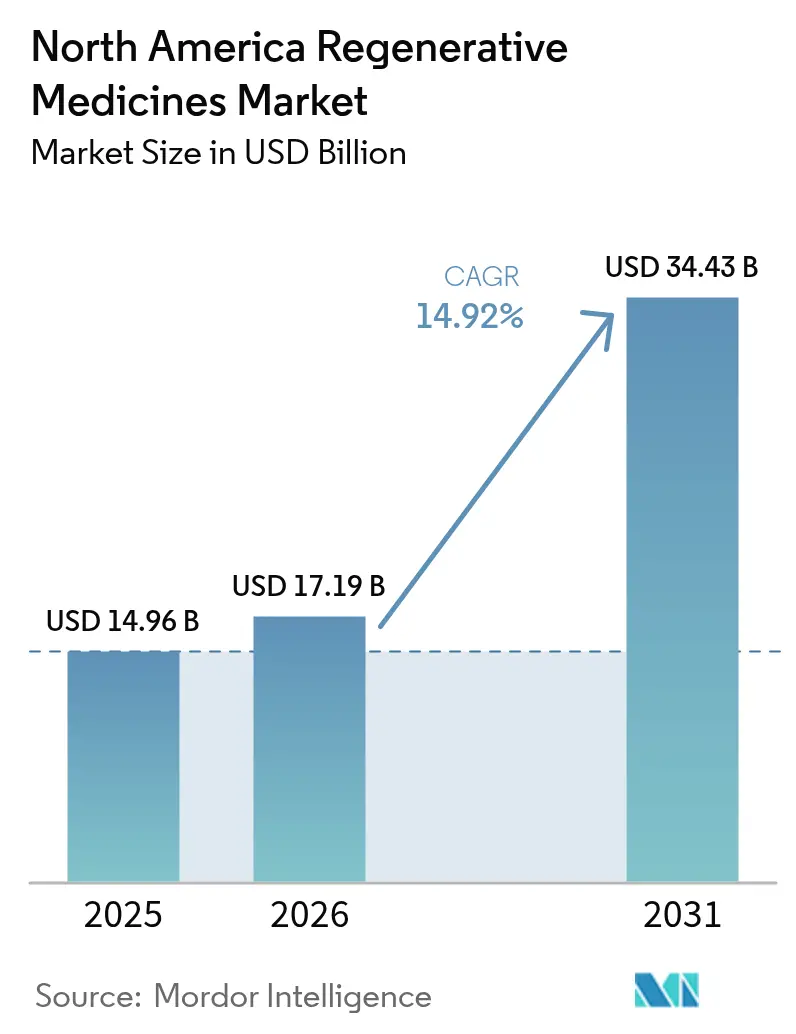
North America Regenerative Medicines Market size in 2026 is estimated at USD 17.19 billion, growing from 2025 value of USD 14.96 billion with 2031 projections showing USD 34.43 billion, growing at 14.92% CAGR over 2026-2031.
Commercial adoption is accelerating as therapies that were once confined to academic settings now secure reimbursement for high-burden conditions such as osteoarthritis, hemophilia A and relapsed multiple myeloma. The United States accounts for 84.11% of total 2024 revenue, while Mexico delivers the highest growth trajectory on the continent as regulatory modernization and medical-tourism flows converge. Cell therapies retain leadership on volume, yet gene therapies deliver the steepest revenue ramp as manufacturing economies of scale materialize, particularly in viral-vector production. Heightened strategic investment in in-house manufacturing, spurred by the need for batch-control and intellectual-property protection, is reshaping site-selection patterns throughout the North America regenerative medicine market.
Key Report Takeaways
- By product type, cell therapies led with 42.13% North America regenerative medicine market share in 2025; gene therapies are advancing at a 23.82% CAGR through 2031.
- By origin of cells, allogeneic approaches commanded 55.22% of the North America regenerative medicine market size in 2025, while autologous therapies are forecast to grow at 20.61% CAGR to 2031.
- By source, adult stem cells held 60.05% revenue share in 2025; the induced pluripotent stem-cell segment is expanding at a 26.10% CAGR.
- By application, orthopedics and musculoskeletal indications captured 31.12% of the market in 2025; oncology applications exhibit the fastest growth at 25.27% CAGR.
- By end user, hospitals and surgical centers accounted for 45.71% of 2025 revenue; biobanks and cell banks register the quickest rise at 18.15% CAGR.
- By country, the United States dominated with an 83.64% share in 2025, whereas Mexico is forecast to accelerate at an 17.93% CAGR through 2031.
Note: Market size and forecast figures in this report are generated using Mordor Intelligence’s proprietary estimation framework, updated with the latest available data and insights as of 2026.
Market Trends and Insights
Drivers Impact Analysis of North America Regenerative Medicines Market*
| Driver | (~) % Impact on CAGR Forecast | Geographic Relevance | Impact Timeline |
|---|---|---|---|
| Growing prevalence of chronic degenerative & age-related disorders | +3.2% | United States, Canada | Medium term (2–4 years) |
| Robust government & private funding for advanced therapies | +2.8% | United States, Canada | Short term (≤2 years) |
| Expanded FDA expedited pathways fueling pipeline | +2.1% | Primarily United States; spillover to Canada | Short term (≤2 years) |
| Big-pharma–biotech alliances accelerating commercialization roadmaps | +1.9% | U.S. biotech hubs; expanding impact in Canada | Medium term (2–4 years) |
| Increasing adoption of stem-cell technology | +1.7% | Pan-regional | Long term (≥4 years) |
| Advancements in 3D bioprinting and tissue-engineering technologies | +1.5% | U.S. research clusters; emerging capacity in Canada | Long term (≥4 years) |
| Source: Mordor Intelligence | |||
Growing Prevalence of Chronic Degenerative & Age-Related Disorders
An expanding cohort of older adults is amplifying the clinical urgency behind regenerative solutions. More than 54 million Americans live with arthritis, and projections place the figure at 78 million by 2040, driving orthopedic demand within the North America regenerative medicine market.[1] Parallel surges in cardiovascular and neurodegenerative conditions add to the therapeutic backlog, prompting sponsors to pursue FDA’s Regenerative Medicine Advanced Therapy (RMAT) designation for age-related indications. The cumulative economic burden, measured in lost productivity and direct medical expenditure, intensifies payer willingness to underwrite curative options that offset lifetime costs. Collectively, these epidemiological factors add substantial momentum to pipeline activity across cell, gene and tissue-engineered modalities.
Robust Government & Private Funding for Advanced Therapies
Funding velocity underscores the maturing innovation cycle. The National Institutes of Health allocated USD 2.8 billion to regenerative-medicine projects for fiscal-year 2024, a 23% budgetary rise over 2023.[2] Simultaneously, Canada’s Strategic Innovation Fund committed CAD 1.2 billion (USD 890 million) to construct three advanced-therapy manufacturing hubs, a move designed to anchor domestic capacity and attract technology transfer agreements.[3] Venture investors are mirroring the trend by preferentially channeling capital toward late-stage assets with defined regulatory pathways, signaling confidence in near-term revenue realization within the North America regenerative medicine market.
Expanded FDA Expedited Pathways Fueling Pipeline
The U.S. Food and Drug Administration granted 27 new RMAT designations during 2024, a 42% increase versus the prior year, trimming median review time for qualifying cell therapies from 12.8 months to 7.3 months. Faster agency feedback loops lower development risk and have enticed non-traditional entrants, including technology firms building data-infrastructure platforms to support cell-and-gene therapy logistics. These dynamics strengthen the competitive tempo inside the North America regenerative medicine market and reduce time-to-clinic for high-unmet-need indications.
Big-Pharma–Biotech Alliances Accelerating Commercialization
Thirty-seven partnership transactions worth more than USD 28 billion were executed in 2024, targeting manufacturing technology transfer rather than traditional royalty structures. Pharmaceutical majors seek end-to-end control over viral-vector and cell-processing know-how, while smaller biotechs retain higher program equity in exchange for sharing later-stage risk. The collaboration trend lifts aggregate production capacity and supports faster scale-up milestones, directly benefitting growth prospects for the North America regenerative medicine market.
Restraints Impact Analysis of North America Regenerative Medicines Market*
| Restraint | (~) % Impact on CAGR Forecast | Geographic Relevance | Impact Timeline |
|---|---|---|---|
| High cost & complex GMP manufacturing infrastructure | −2.5% | United States, Canada, Mexico | Medium term (2–4 years) |
| Stringent & evolving regulatory compliance for ATMPs | −1.8% | Primarily United States | Short term (≤2 years) |
| Limited long-term clinical evidence and outcome data | −1.6% | Pan-regional | Long term (≥4 years) |
| Ethical and public-perception challenges around cell-based therapies | −1.2% | United States, Canada | Short term (≤2 years) |
| Source: Mordor Intelligence | |||
High Cost & Complex GMP Manufacturing Infrastructure
Specialized clean-room construction averages USD 2,000 per square foot, quadruple that of conventional biologics facilities, and skilled-labor shortages persist, with two-thirds of regenerative-medicine firms citing hiring difficulties in 2024. Manual processing steps amplify batch variability; industry surveys place 15% of runs outside release specifications, five-times the failure rate observed for monoclonal antibodies. While automation is advancing, capital intensity remains a formidable hurdle stifling wider roll-out across the North America regenerative medicine market.
Stringent & Evolving Regulatory Compliance for ATMPs
Between trial readout and biologics license application, regenerative-medicine sponsors spend an average 14.7 months navigating documentation requirements—nearly double that for traditional drugs. Eleven new FDA guidance documents in 2024 alone underscore the fluid nature of regulatory expectations. Post-approval, Risk Evaluation and Mitigation Strategies frequently mandate 15-year patient follow-up. Such extended surveillance elevates operating costs for smaller firms, raising entry barriers across the North America regenerative medicine market.
*Our forecasts treat driver/restraint impacts as directional, not additive. The impact forecasts reflect baseline growth, mix effects, and variable interactions.
North America Regenerative Medicines Market Segment Analysis
By Product Type:
Gene Therapies Disrupting Treatment ParadigmsCell therapies led the revenue tables in 2025 with 42.13% North America regenerative medicine market share, benefitting from established reimbursement in oncology and orthopedics. Gene therapies, however, post a 23.82% CAGR outlook, propelled by manufacturing efficiencies that have trimmed viral-vector costs by 35% since 2023.
Across 2024 pipelines, 43% of candidates now blend multiple regenerative modalities, reflecting a strategic pivot toward combination constructs. Three such hybrid products gained FDA clearance in early 2025, confirming regulatory openness to category-blurring solutions that will likely enlarge the North America regenerative medicine market.


By Origin of Cells:
Autologous Momentum BuildingAllogeneic therapies commanded 55.22% of the North America regenerative medicine market size in 2025, aided by off-the-shelf scalability and established distribution chains. Autologous approaches are closing the gap, advancing at 20.61% CAGR as process optimization compresses vein-to-vein timelines from 28 days in 2023 to 14 days in early 2025.
Efficacy differentials remain indication-specific: autologous CAR-T retains a clinical edge in hematologic malignancies, whereas allogeneic constructs offer rapid deployment in cardiovascular emergencies. Hybrid sourcing models, marrying autologous targeting with allogeneic manufacturing, received their first approval in March 2025, further diversifying the North American regenerative medicine market.
By Source:
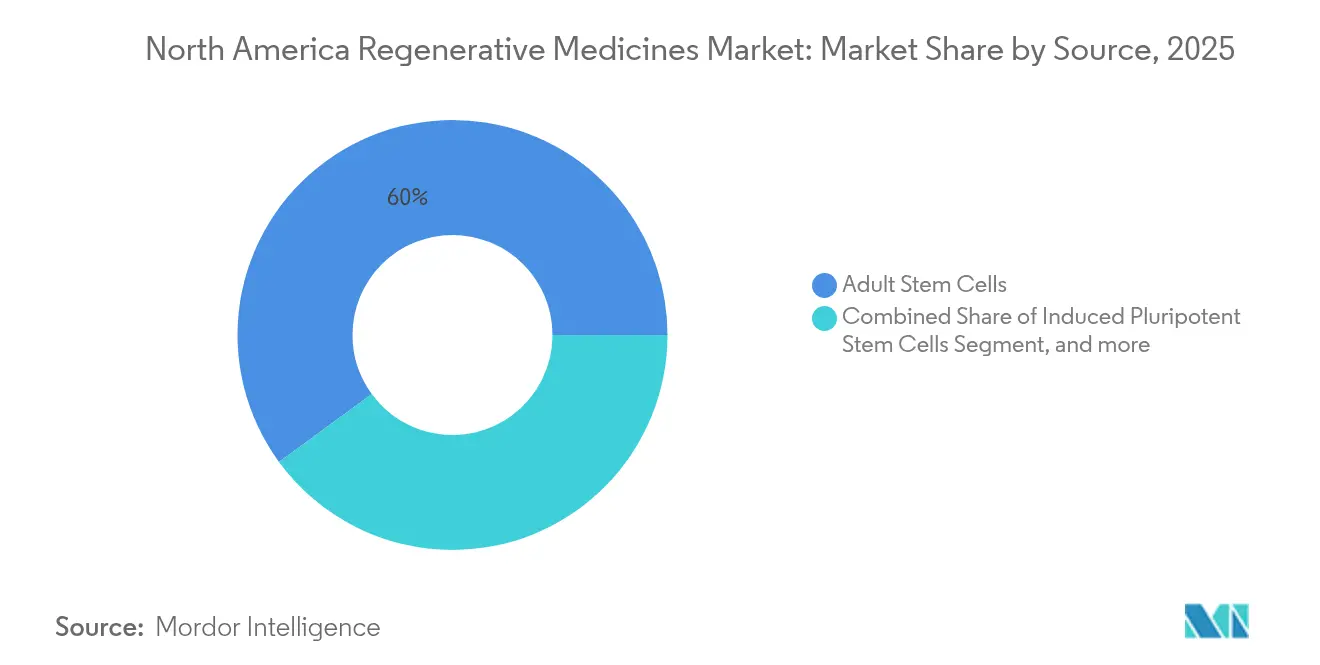
iPSCs Reshaping Development EconomicsAdult stem cells dominated 2025 revenue with a 60.05% share, supported by safety track records across graft-versus-host and cartilage repair. Yet induced pluripotent stem cells are the growth engine, expanding at 26.10% CAGR through process-control advances that have sliced production costs by 45% since 2023.
ClinicalTrials.gov lists 11 new CRISPR-edited stem-cell protocols launched during 2024, underscoring a convergence of gene editing and pluripotent biology. These innovations enhance differentiation fidelity and could push the North American regenerative medicine market toward broader organ-repair indications.
By Application:
Oncology Catalyzing InnovationOrthopedics retained 31.12% revenue share in 2025, anchored by high-volume cartilage and disc-repair procedures. Oncology, however, exhibits the sharpest ascent with a 25.27% CAGR forecast, as CAR-T and gene-edited NK-cell platforms expand from hematologic to solid-tumor settings.
Regulators have launched an indication-expansion pilot that lowers evidentiary thresholds for follow-on approvals, cutting supplemental timelines by up to 40%. Sponsors are now running an average 3.7 expansion trials per approved therapy, intensifying competitive jockeying inside the North America regenerative medicine market.
By End User:
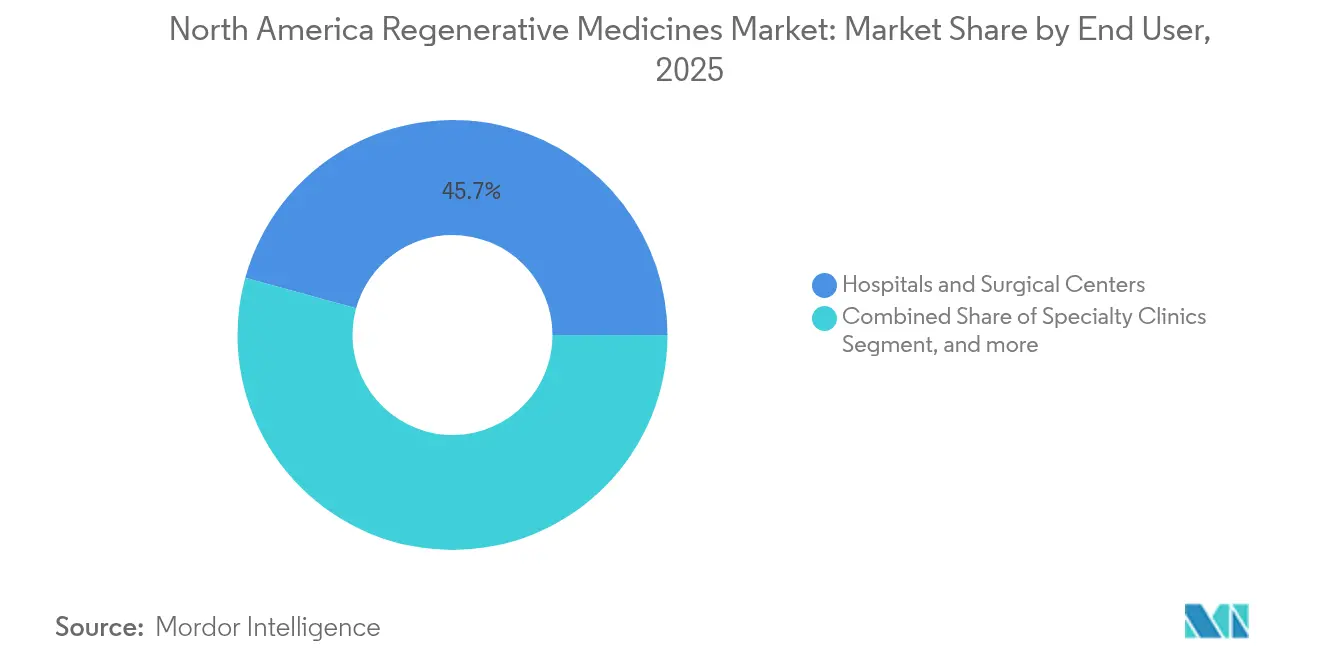
Specialized Centers Setting Adoption PaceHospitals and surgical centers contributed 45.71% of 2025 revenue owing to entrenched referral networks and established payer contracts. Biobanks and cell banks represent the quickest-growing customer group at 18.15% CAGR, reflecting their evolution from storage utilities to value-added processing hubs.
Twenty-seven U.S. hospital systems opened dedicated cell-and-gene therapy centers during 2024, creating procedural learning curves that cut administration time by 32% and ancillary costs by 28%. Such efficiencies widen patient access and sustain momentum within the North America regenerative medicine market.
Geography Analysis
Southeast and Midwest United States Regenerative Medicines Market
The United States underpins the North America regenerative medicine market, holding 83.64% of 2025 revenue, driven by 27 fresh RMAT designations that shortened median regulatory review by 5.5 months. Regional footprints are diversifying as 14 GMP facilities broke ground in the Southeast and Midwest during 2024, catalyzed by state incentive programs in Texas, North Carolina and Indiana. These geographic shifts mitigate bottlenecks traditionally concentrated in coastal biotech hubs and further embed the North America regenerative medicine market across the national landscape.
Canada Regenerative Medicines Market
Canada’s contribution, although smaller in absolute terms, is strategically amplified by CAD 1.2 billion in federal backing for three new advanced-therapy plants announced in March 2024. Universal healthcare financing simplifies reimbursement negotiations, and the pan-Canadian Pharmaceutical Alliance is piloting value-based contracts for one-time gene therapies. Patent filings originating from Canadian universities rose 37% year over year in 2024 CIPO, confirming upstream innovation strength that feeds the continental pipeline of the North America regenerative medicine market.
Mexico Regenerative Medicines Market
Mexico provides the highest growth vector at an 17.93% CAGR outlook to 2031. Regulatory modernization by COFEPRIS in late 2024 clarified clinical trial and commercial pathways, triggering five foreign direct-investment projects in allogeneic manufacturing during the same year. Lower labor costs make the country an attractive production base, while CENETEC’s new regenerative-medicine assessment unit, launched January 2025, institutionalizes evidence-based adoption for public hospitals. These shifts bolster demand and reinforce the trilateral ecosystem that defines the broader North America regenerative medicine market.
Regulatory Landscape
The United States remains the primary rule-setter for regenerative medicines in North America through the FDA, which continues to operationalize the 21st Century Cures Act (Section 3033) via the Regenerative Medicine Advanced Therapy (RMAT) designation and an expanding body of cellular and gene therapy guidance. In 2024, the FDA issued 11 new guidance documents for advanced therapy medicinal products (ATMPs) and granted 27 new RMAT designations, reinforcing a development model built around earlier agency interaction, rolling review options, and pathways tied to accelerated or priority approval.
Canada and Mexico are modernizing in parallel. Health Canada maintains distinct policy positions for cell therapies while exploring more tailored, risk-based approaches for advanced therapeutic products, and CADTH has highlighted in its 2026 Watch List that the ecosystem is still adapting to evaluate and adopt emerging regenerative modalities within publicly funded care. In Mexico, COFEPRIS modernization in late 2024 clarified clinical trial and commercial pathways for regenerative approaches, supporting cross-border development strategies that combine US regulatory execution with regional manufacturing and adoption initiatives.
Competitive Landscape
Competitive structure in the North America regenerative medicine market is barbell-shaped: multinational pharmaceutical groups and early-stage biotechs dominate, leaving a sparse mid-tier. Gene-therapy commercialization is relatively concentrated; the top five players control major share in marketed vectors, whereas tissue-engineering remains fragmented. Intellectual-property focus has moved downstream into manufacturing science; USPTO data show a 67% rise in processing-oriented filings during 2024, outpacing therapeutic-mechanism patents.
Vertical integration is now the prevailing strategy. Seventy-three percent of companies owning commercial assets announced internal capacity expansions during 2024 to overcome vector shortages and to maintain proprietary cell-handling protocols. These moves effectively realign supply-chain power dynamics, embedding production knowledge inside corporate walls and strengthening competitive moats across the North America regenerative medicine market.
White-space opportunities lie at modality junctions, particularly in combining gene-editing precision with off-the-shelf cell constructs. Oncology remains the fiercest battleground, with 43 developers pursuing overlapping hematologic indications, while neurodegeneration attracts fewer entrants but offers high-value upside. Market participants differentiate less on scientific novelty and more on consistent, cost-efficient release specifications, underlining manufacturing excellence as the principal lever for sustained leadership in the North America regenerative medicine market.
North America Regenerative Medicines Industry Leaders
-
Integra Lifesciences
-
Abbvie Inc (Allergan Plc)
-
Cook Medical (Cook Biotech Incorporated)
-
Organogenesis Holdings Inc.
-
Smith & Nephew plc (Osiris Therapeutics)
- *Disclaimer: Major Players sorted in no particular order

North America Regenerative Medicines Market Companies Covered in this Report
- AbbVie Inc (Allergan Aesthetics)
- Smiths Group
- Organogenesis
- Medtronic
- Thermo Fisher Scientific
- Merck
- Cook Group
- MiMedx Group Inc.
- Vericel
- Integra LifeSciences
- Mesoblast Limited
- Novartis
- Bristol Myers Squibb (Celgene)
- Gilead Sciences
- bluebird bio Inc.
- Spark Therapeutics Inc. (Roche)
- CRISPR Therapeutics AG
- Sangamo Therapeutics
- Takeda Pharmaceuticals
- 3-D Systems Corp. (Allevi)
Read Analysis of North America Regenerative Medicines Companies
Market Opportunities and Future Outlook
Manufacturing capacity and localization remain the most actionable whitespace, with 2026 capital and facility actions concentrating in established US hubs. Johnson & Johnson announced a more than USD 1 billion investment (July 2026) in a next-generation cell therapy manufacturing facility in Pennsylvania, and Kincell Bio announced expansion of its Research Triangle Park, North Carolina site (April 2026) to support late-stage and commercial cell therapy programs. These moves point to continued demand for GMP-ready space and operational know-how. Vericel also received FDA approval (March 2026) for commercial manufacturing of MACI at its new Burlington, Massachusetts facility, which reinforces how regulatory-ready manufacturing infrastructure can become a differentiator for orthopedic and musculoskeletal indications.
Reimbursement and evidence-generation pathways create a second opportunity layer that spans therapies and enabling services. In Canada, the pan-Canadian Pharmaceutical Alliance is piloting value-based contracts for one-time gene therapies, and CADTH continues to track pipeline technologies, which elevates the role of real-world evidence, pharmacoeconomics support, and outcome-linked contracting capabilities for developers and providers. In the United States, ongoing FDA use of RMAT and published lists of approved cellular and gene therapy products provide visible benchmarks for sponsors. Clinical networks (including dedicated cell-and-gene therapy centers opened across hospital systems in 2024) also broaden the addressable base for administration, logistics, and specialized biobanking and cell-banking services.
Recent Industry Developments in North America Regenerative Medicines Market
- July 2026: Johnson & Johnson announced a more than USD 1 billion investment in a next-generation cell therapy manufacturing facility in Montgomery County, Pennsylvania, as part of a broader US investment plan. The project strengthens domestic manufacturing depth for advanced therapies and supports supply assurance and scale-up needs that influence commercialization timelines across North America.
- November 2025: Integra LifeSciences issued a statement following finalized CMS 2026 Medicare Physician Fee Schedule and Outpatient Prospective Payment System rules affecting skin substitute reimbursement. The policy clarity supports more standardized coverage conditions for tissue-based regenerative products used in wound care and can influence purchasing decisions across hospital outpatient settings.
- February 2024: RTI Surgical completed the acquisition of Cook Biotech Incorporated to integrate Cook Biotech's extracellular matrix (ECM) technology and manufacturing capabilities. The combination consolidates tissue-processing expertise and expands platform breadth for regenerative biomaterials used across multiple surgical applications.
North America Regenerative Medicines Market Report Scope and Research Methodology
Market Definition and Coverage
This market covers regenerative medicines sold in North America that are intended to repair, replace, or regenerate cells, tissues, or organs, and the related treatment solutions used in clinical care and regulated therapeutic use.
Scope exclusions: We exclude purely cosmetic wellness offerings and non-therapeutic consumer products that are not positioned or used as regenerative medical treatments.
Segments Covered in This Report
- By Product Type
- Cell Therapies
- Gene Therapies
- Tissue-Engineered Products
- Biomaterials
- Acellular Regenerative Products
- By Origin of Cells
- Autologous
- Allogeneic
- Xenogeneic
- By Source
- Adult Stem Cells
- Induced Pluripotent Stem Cells
- Embryonic Stem Cells
- Hematopoietic Stem Cells
- By Application
- Orthopedics & Musculoskeletal
- Dermatology & Wound Care
- Cardiovascular
- Neurology
- Oncology
- Ophthalmology
- Others (Endocrine, Renal etc.)
- By End User
- Hospitals & Surgical Centers
- Specialty Clinics
- Academic & Research Institutes
- Biobanks & Cell Banks
- By Country
- United States
- Canada
- Mexico
Data Sources, Market Sizing, and Validation
Desk Research
Desk research was used to set the market boundaries, build a clean list of addressable therapies, and understand demand signals that can be checked year over year. We relied on public and official sources such as the US FDA (approvals, labels, and safety updates), NIH and PubMed indexed literature for therapy trends, clinical trial registries for pipeline visibility, and CDC health statistics for disease burden indicators that influence utilization.
We also grounded assumptions using company annual reports, investor presentations, earnings call transcripts, and reputable press coverage on pricing and access changes. In some cases, we used paid subscriptions for company financials and intelligence, patent databases, and shipment-level import and export checks to validate manufacturing and supply chain activity where it could be observed. The desk research sources listed here are illustrative only, and many other public and paid sources were reviewed for data collection, cross-checks, and clarification.
Primary Interviews and Surveys
Primary work focused on interviews and structured surveys with manufacturers, distributors, providers, and domain experts who track adoption and reimbursement in the United States and Canada. We used these discussions to confirm what is actually counted as regenerative medicines in contracts and invoices, refine average selling price ranges by therapy class, and sanity-check treatment volumes by major clinical use areas.
Distribution of primary research fieldwork respondents
| Company type | Respondent position |
|---|---|
| Top tier: 32% | CXOs: 17% |
| Mid tier: 47% | Functional/Unit leaders: 35% |
| Smaller Players: 21% | Managers: 48% |
Market-Sizing & Forecasting
The core sizing starts with a top-down build where the treated patient pool and procedure volumes for key regenerative use cases are translated into demand, and then priced using observed therapy-level ASP ranges in North America. Once the demand pool is constructed, it is split by technology groups and adjusted for access factors that came up repeatedly in interviews.
To keep the totals realistic, we corroborate the output with selective bottom-up checks, such as supplier revenue direction checks, sampled ASP times volume for specific therapy classes, and channel feedback on mix shifts. The model is guided by a short list of inputs that move the market in a visible way, including FDA approval timing and label expansions, clinical trial progression for late-stage assets, reimbursement and coverage changes, site-of-care mix, and ASP movement driven by competition and contracting.
Forecasts are built using scenario analysis supported by a simple multivariate regression layer where adoption rate, eligible population trends, and ASP progression are the main drivers, followed by expert review to avoid overreacting to single-year spikes. Where bottom-up information is incomplete for smaller therapy areas, we fill gaps using penetration assumptions validated with providers, and then constrain results with known capacity and utilization signals.
Data Validation & Update Cycle
Validation happens in stages, with each stage meant to catch a different type of error. We compare modeled totals against independent signals such as approval counts, major pricing moves, public revenue disclosures, and changes in treatment settings, and then investigate any variances that do not match the story from interviews.
Before sign-off, the dataset and assumptions go through multi-step analyst reviews, and re-contact is triggered when a large gap appears in ASPs, utilization, or scope interpretation. The report is refreshed annually, and interim updates are made when material events occur, such as major approvals, safety actions, or reimbursement shifts. Right before delivery, a final pass is completed so the latest public information is reflected in the published view.
Mordor Intelligence's North America Regenerative Medicines Market Sizing Compared With Other Published Estimates
Published market sizes for North America regenerative medicines can look far apart even when the topic name is the same. Differences usually come from what each study counts as regenerative medicines, the year used for pricing and currency conversion, and how quickly assumptions are refreshed after approvals, label changes, or reimbursement updates.
When refresh timing is handled differently, the gap can widen quickly because ASPs can shift within a year and new therapy launches can change the mix. By locking a consistent currency timing rule, rechecking ASP ranges with fresh field feedback, and running variance checks against observed adoption signals, Mordor Intelligence arrives at a 2026 figure that stays aligned to what is actually being used and paid for in North America.
Benchmark comparison
| Source | Market Size | Gaps in Research Methodology |
|---|---|---|
| Mordor Intelligence | USD 17.19 B (2026) | |
| Industry Publisher A | USD 9.36 B (2024) | Uses an earlier base year and a longer forward window, and the scope description is broader but less explicit on what is excluded, which can compress the starting value when priced with older ASP bands. |
| Global Consultancy B | USD 21.04 B (2025) | Often aggregates regenerative medicine with adjacent biologics and materials under a wider product and material lens, and the North America number is sensitive to how gene and cell therapies are priced and converted across the chosen year. |
The comparison mainly points to timing and boundary choices, rather than a single right or wrong number. When the scope is tied to therapies that meet clear clinical and commercial criteria, and the ASP and utilization checks are refreshed close to the estimate year, the resulting market size becomes easier to trace and repeat.
Key Questions Answered in the Report
What is the current size of the North America regenerative medicine market?
The North America regenerative medicine market size is USD 17.19 billion in 2026 and is set to climb to USD 34.43 billion by 2031.
Which segment is growing the fastest?
Gene therapies show the highest growth, advancing at a 23.82% CAGR through 2031 due to improved manufacturing and pivotal clinical results.
Why is Mexico the fastest-growing geography?
Regulatory modernization, cost-efficient manufacturing and expanding medical tourism will propel Mexico at an 17.93% CAGR over the forecast period.
How are FDA expedited pathways influencing the market?
RMAT, Breakthrough Therapy and Fast-Track programs have reduced median review times by up to 5.5 months, accelerating time-to-market for innovative therapies.
What are the main challenges to large-scale manufacturing?
High capital costs for GMP facilities, skilled-labor shortages and batch variability impose significant hurdles, especially for smaller developers.