
Market Overview
| Study Period | 2021 - 2031 |
|---|---|
| Forecast Data Period | 2026 - 2031 |
| Base Year Market Size (2025) | USD 12.51 Billion |
| Market Size (2026) | USD 12.9 Billion |
| Market Size (2031) | USD 14.99 Billion |
| Growth Rate (2026 - 2031) | 3.10 % |
| Market Concentration | Medium |
Major Players
*Disclaimer: Major Players sorted in no particular order Image © Mordor Intelligence. Reuse requires attribution under CC BY 4.0. |
|
North America Oral Care Market Analysis by Mordor Intelligence
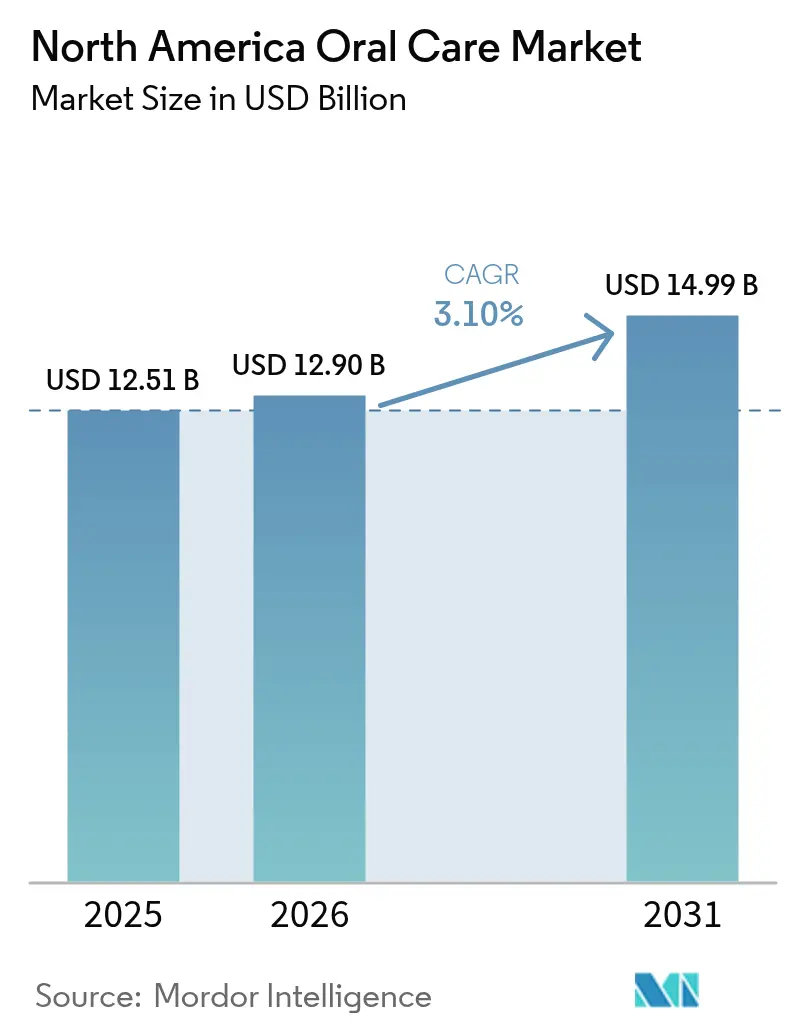
North America oral care market size in 2026 is estimated at USD 12.9 billion, growing from 2025 value of USD 12.51 billion with 2031 projections showing USD 14.99 billion, growing at 3.1% CAGR over 2026-2031. A maturing competitive landscape means value growth now hinges on premiumization, life-stage solutions, and digitally enabled product experiences, rather than simple volume expansion. The aging population, which retains natural teeth longer, fuels sustained demand for therapeutic products that address xerostomia, sensitivity, and gum health. Rising e-commerce penetration broadens consumer access to niche brands while enabling subscription models that lock in recurring revenue. At the same time, regulatory bodies in the United States, Canada, and Mexico place stronger emphasis on proven clinical efficacy, encouraging manufacturers to align Research and Development with evidence-based claims and driving differentiation through science-backed innovation.
Key Report Takeaways
- By product type, toothpaste held 46.62% of North America oral care market share in 2025, while mouthwashes and rinses record the highest projected CAGR at 3.98% to 2031.
- By ingredient, conventional formulations accounted for 84.92% share in 2025; organic alternatives expand fastest at a 4.38% CAGR through 2031.
- By end user, adults generated 88.05% revenue in 2025, whereas the children’s segment advances at a 3.75% CAGR over the forecast horizon.
- By distribution channel, supermarkets and hypermarkets led with 39.25% revenue share in 2025, but online retail shows the strongest growth trajectory at 3.86% CAGR.
Note: Market size and forecast figures in this report are generated using Mordor Intelligence’s proprietary estimation framework, updated with the latest available data and insights as of 2026.
North America Oral Care Market Trends and Insights
Drivers Impact Analysis*
| Driver | (~) % Impact on CAGR Forecast | Geographic Relevance | Impact Timeline |
|---|---|---|---|
| Growing awareness of oral hygiene | +0.8% | North America, with stronger impact in United States urban centers | Medium term (2-4 years) |
| Rise in electric toothbrush adoption | +0.6% | United States and Canada primarily, emerging in Mexico | Short term (≤ 2 years) |
| Increasing dental disease prevalence | +0.5% | Regional with acute impact across all US States | Long term (≥ 4 years) |
| Aging population focusing on oral health | +0.4% | United States and Canada, moderate impact in Mexico | Long term (≥ 4 years) |
| Demand for advanced oral care products | +0.3% | North America, concentrated in affluent demographics | Medium term (2-4 years) |
| Shift toward personalized oral care | +0.2% | United States primarily, gradual expansion to Canada and Mexico | Medium term (2-4 years) |
| Source: Mordor Intelligence | |||
Growing awareness of oral hygiene
Public health initiatives drive fundamental behavior change as oral-systemic health connections gain mainstream recognition. The Centers for Disease Control and Prevention's (CDC) 2024 surveillance data underscores the critical need for preventive care protocols, revealing that 90% of adults are affected by dental caries [1]Source: Centers for Disease Control and Prevention, "Older Adult Oral Health", www.cdc.gov. Educational campaigns are effectively highlighting the links between oral health and major health concerns such as cardiovascular disease, diabetes management, and cognitive function. These campaigns resonate strongly with aging populations, who not only face these health challenges but also account for the highest per-capita spending on oral care. Professional dental associations are increasingly advocating for the daily use of fluoride and mechanical plaque removal. Their endorsements are legitimizing premium product categories within the market. This growing awareness is driving a sustained demand for therapeutic formulations, accelerating the trend of market premiumization. Additionally, consumer behavior is undergoing a notable transformation. As the focus shifts from reactive treatment to proactive prevention, purchasing patterns are evolving. Consumers are now prioritizing brands that demonstrate clinical efficacy, moving away from those that primarily emphasize cosmetic benefits.
Rise in electric toothbrush adoption
The rise in electric toothbrush adoption is a key driver of the North America Oral Care Market, fueled by increasing consumer awareness of oral hygiene and the superior effectiveness of electric toothbrushes compared to manual options. Technological advancements such as AI integration, smart sensors, and app connectivity have significantly enhanced the user experience, making these devices more attractive to consumers seeking tailored oral care solutions. Preventive health care is gaining prominence, with growing recognition of the link between oral health and systemic diseases like heart conditions and diabetes, motivating consumers to invest in advanced dental care products. Additionally, high disposable incomes and a strong presence of leading oral care brands driving innovation contribute to market growth. Government initiatives, public health campaigns, and increased dental professional endorsements further support the widespread adoption of electric toothbrushes. As a result, the market is witnessing robust expansion, reinforced by the convergence of health technology and oral care, positioning electric toothbrushes as an essential part of modern oral hygiene routines.
Increasing dental disease prevalence
Oral health challenges continue to persist despite significant advancements in preventive care and improved access to treatments, as evidenced by epidemiological trends. The CDC highlights that 57% of children aged 6-11 and an alarming 90% of adults have experienced dental caries, which reflects systemic issues that extend beyond individual hygiene practices [2]Source: Centers for Disease Control and Prevention, "Older Adult Oral Health", www.cdc.gov. In Mexico, the situation remains particularly severe, with over 90% of the population suffering from caries or gum disease. This creates a substantial market opportunity for therapeutic oral care products. Periodontal disease impacts approximately 95% of Mexico's population and often progresses without noticeable symptoms until it reaches advanced stages that require intensive medical intervention. The increasing consumption of processed foods, sugar-sweetened beverages, and tobacco products has further exacerbated the prevalence of these diseases across various demographic groups. As dental treatment costs continue to rise, the economic burden of untreated oral diseases has driven consumers to actively invest in preventive products to mitigate future expenses and health complications.
Aging population focusing on oral health
As North America's population continues to age and retain their natural teeth longer, the demand for specialized oral care solutions is steadily increasing. Statistics Canada reports a decline in edentulism rates, which signifies that more seniors are maintaining their natural teeth and require consistent care instead of relying on dentures [3]Source: Statistics Canada, "Factors associated with the use of oral health care services among seniors in Canada", ww.statcan.gc.ca. These seniors face common age-related oral health challenges, including xerostomia (dry mouth), a higher risk of developing caries, and the progression of periodontal disease. These issues drive the need for targeted therapeutic products designed to address these specific conditions. Seniors consistently demonstrate strong brand loyalty and a willingness to pay premium prices for oral care products that effectively address concerns such as tooth sensitivity and gum recession. The 65+ demographic remains the fastest-growing population segment across North America, supported by disposable income levels that enable them to invest in premium oral care solutions. Additionally, medication-induced oral health side effects, such as drug-related xerostomia and taste alterations, create further opportunities for the development of specialized formulations tailored to these needs.
Restraints Impact Analysis*
| Restraint | (~) % Impact on CAGR Forecast | Geographic Relevance | Impact Timeline |
|---|---|---|---|
| Raw material supply disruptions | -0.4% | Regional wide, particularly affecting United States manufacturing hubs | Short term (≤ 2 years) |
| High manufacturing and operational costs | -0.3% | North America, with acute impact on domestic production | Medium term (2-4 years) |
| Potential ingredient side effects | -0.2% | United States and Canada primarily, due to regulatory scrutiny | Medium term (2-4 years) |
| Limited insurance coverage for treatments | -0.1% | US primarily, moderate impact in Canada | Long term (≥ 4 years) |
| Source: Mordor Intelligence | |||
Raw material supply disruptions
Raw material supply disruptions pose a significant restraint to the North America Oral Care Market. These disruptions arise from ongoing geopolitical tensions, trade wars, and tariff increases, particularly between major trading partners like the U.S. and China. Such challenges delay the procurement of essential raw materials and specialized components needed for manufacturing oral care products, including toothbrushes, toothpaste ingredients, and high-tech dental devices. The disruptions increase production lead times and elevate costs, ultimately impacting pricing structures across the supply chain. Dental practices and consumers may face higher costs and reduced availability of products due to supply shortages. To mitigate these risks, manufacturers are diversifying their supplier base, exploring alternative materials, and adopting strategic sourcing, yet these efforts add complexity and operational cost.
High manufacturing and operational costs
High manufacturing and operational costs act as a significant restraint on the North America Oral Care Market. The costs associated with advanced dental technology development, research and development, and sophisticated manufacturing processes have escalated substantially. These expenses are further exacerbated by rising prices of raw materials, energy, labor, and stringent regulatory compliance requirements. Small and medium-sized enterprises often face challenges in bearing these high overheads, impacting their competitiveness and market entry. Additionally, tariffs and import duties on essential components and products increase production costs, which can translate to higher prices for consumers and reduced market accessibility for certain segments. These cost pressures limit profit margins and may slow down market growth, as consumers and dental practices weigh affordability against the premium features of advanced oral care products.
*Our forecasts treat driver/restraint impacts as directional, not additive. The impact forecasts reflect baseline growth, mix effects, and variable interactions.
Segment Analysis
By Product Type: Toothpaste Dominates, Mouthwash Accelerates
The toothpaste segment holds the largest market share in the North America oral care market, commanding a dominant position with approximately 46.62% share in 2025. This strong leadership stems from its widespread use and essential role in daily oral hygiene routines. Toothpaste remains the cornerstone of oral care due to its proven benefits in preventing dental caries, plaque, and gum diseases. The sustained demand is supported by continuous innovations such as organic and herbal formulations, fluoride variants, and products targeting sensitivity and whitening. Major players in the market invest heavily in research and development and marketing to maintain the appeal and effectiveness of toothpaste products. Its overwhelming market presence underscores its significance as the primary oral care product among consumers in North America.
Meanwhile, mouthwashes and rinses are emerging as the fastest-growing segment in the North America oral care market, projected to grow at a CAGR of 3.98% through 2031. Despite toothpaste’s dominant share, growing consumer interest in supplementary oral hygiene solutions is driving this category's rapid expansion. Mouthwashes provide added benefits such as freshening breath, reducing oral bacteria, and promoting gum health, making them attractive to health-conscious consumers. Innovations in medicated and non-medicated formulas, combined with increasing awareness of oral diseases, contribute to their growing popularity. Retail expansion and marketing campaigns emphasizing convenience and comprehensive oral health care further fuel this growth. As awareness rises about the limitations of toothpaste alone, mouthwashes and rinses are becoming an essential part of daily oral care regimens, strengthening their market position.




By Ingredient: Organic Segment Accelerates
Conventional ingredients continue to dominate the North America oral care market, accounting for 84.92% of the market share in 2025. These conventional formulations primarily include fluoride, synthetic abrasives, and triclosan derivatives, which have long been supported by clinical evidence and dental professional endorsements. Their widespread use is attributed to their proven effectiveness in preventing dental caries, plaque, and gum disease, which makes them a staple in oral hygiene products. The cost-effective mass production of these ingredients helps maintain stable prices, supporting broad accessibility across different consumer segments. Despite rising awareness around health and environmental impacts, conventional ingredients remain the backbone of oral care products due to their reliability and efficacy. Brands continue investing in optimizing these classic formulations to meet diverse dental needs and maintain market leadership.
On the other hand, the organic and natural ingredient segment is the fastest-growing category within the North America oral care market, exhibiting a 4.38% CAGR through 2031. This growth is fueled by health-conscious consumers seeking cleaner, safer formulations that avoid synthetic additives and embrace plant-based, sustainable alternatives. Increasing demand for products free from parabens, sulfates, and artificial sweeteners reflects a broader consumer shift toward natural and eco-friendly personal care. Innovations include the use of botanicals, essential oils, and mineral whiteners that match or exceed the efficacy of traditional ingredients. Supply chains are adapting to support sustainably sourced components and environmentally friendly packaging, further driving consumer appeal and trade-up behavior. Although organic alternatives hold a smaller share today, their rapid expansion underscores a significant trend reshaping consumer preferences and product development in oral care.
By End User: Adult Segment Dominates Spending
Adults hold the largest demand share in the North America oral care market, representing 88.05% of total market demand in 2025. This dominance is largely due to adults' higher purchasing power and their role as primary decision-makers for household oral care products. Adults typically require a broader range of oral care solutions, including toothpaste, mouthwash, floss, and specialized products addressing sensitivity or whitening. Their frequent consumption and variety in preferences ensure sustained market demand and product innovation targeting this demographic. Moreover, adults are more likely to invest in premium and technologically advanced oral care items. The consolidated purchasing behavior of adults thus makes them a key segment driving the oral care market's revenue base.
Conversely, the children's segment is the fastest-growing demographic within the North America oral care market, progressing at a CAGR of 3.75%. This growth is fueled primarily by increasing parental focus on preventive oral healthcare from an early age. Parents are becoming more aware of the importance of developing good oral hygiene habits in children to avert dental problems later in life. Consequently, there is rising demand for child-friendly oral care products, including flavored toothpaste, gentle mouthwashes, and educational oral care kits. Pediatric dental care is further supported by pediatricians and dentists promoting preventive care. The growth of this segment reflects both an expanding young population base and heightened health consciousness among caregivers. Over time, this trend is expected to contribute significantly to the overall growth of the oral care market.
By Distribution Channel: E-commerce Transforms Retail
Supermarkets and hypermarkets hold the largest market share in the North America oral care market, capturing 39.25% of the distribution channel market in 2025. These outlets are favored by consumers for their wide range of oral care products that cater to various needs and budgets, providing the convenience of one-stop shopping. They often offer products from multiple leading brands, making them accessible and popular among a diverse customer base. The extensive presence and often extended operating hours of supermarkets and hypermarkets further enhance consumer convenience and frequent purchasing. Additionally, strategic promotions and discounts at these locations help drive consistent foot traffic and sales volume. Their entrenched position in consumer shopping habits ensures that supermarkets and hypermarkets remain critical channels for oral care product distribution.
In contrast, online retail stores represent the fastest-growing distribution channel, expanding at a CAGR of 3.86% as of 2025. This rapid growth highlights the increasing digital shift in consumer shopping behaviors, driven by convenience and evolving preferences for direct-to-consumer brand engagement. Online platforms offer advantages such as a broad product selection, competitive pricing, easy comparison, and home delivery services that cater to busy lifestyles. Brands leverage online stores to build closer relationships with consumers, employing targeted marketing, subscription models, and exclusive product launches. Enhanced digital infrastructure and the rise in smartphone usage further facilitate this shift towards online shopping. As more consumers embrace e-commerce for oral care needs, online retail is poised to gain a steadily larger share of the market.

Geography Analysis
In 2025, the United States dominates with a commanding 78.85% market share, capitalizing on its vast population, robust disposable incomes, and a well-entrenched oral care infrastructure. U.S. consumers, known for their brand loyalty, readily embrace premium oral care innovations, bolstering the trend of premiumization across various product categories. As the U.S. population ages, there's a consistent demand for therapeutic oral care solutions. However, variations in health insurance coverage sway decisions between preventive and treatment-focused products. The FDA's regulatory oversight not only ensures safety and efficacy in oral care products, bolstering consumer trust, but also imposes compliance costs that can squeeze manufacturer margins and extend product development timelines.
Mexico stands out as a key growth market in the region, driven by rising disposable incomes, urbanization, and heightened health awareness among the youth. The country faces significant oral health challenges, creating a strong demand for therapeutic oral care solutions. Recognizing this potential, Haleon, a major player, is strategically targeting Mexico, the region's second-largest economy. They've introduced products like Sensodyne Sensitivity & Gum, catering to the dual concerns of tooth sensitivity and gum issues, which affect nearly half of the Mexican populace.
Canada's oral care market remains stable, buoyed by a robust healthcare infrastructure and consumer habits akin to those in the U.S. Yet, its smaller population curtails absolute growth. Thanks to universal healthcare, many Canadians enjoy coverage for preventive dental services, steering their purchases more towards maintenance than therapeutic solutions. Meanwhile, the "Rest of North America" segment, encompassing smaller Caribbean and Central American markets, shows promise as they evolve with better economic conditions and healthcare access. Cross-border trade agreements play a pivotal role, streamlining product distribution across North America and allowing manufacturers to fine-tune their supply chains and navigate regulatory landscapes more efficiently.
Regulatory Landscape
Oral care products in North America sit across multiple regulatory pathways depending on intended use and claims. In the United States, the FDA regulates anticaries actives such as fluoride toothpaste under the OTC drug framework, including the Oral Healthcare Products monograph, M022, issued as a Final Administrative Order under section 505G. Products making cosmetic-only claims (for example, certain whitening formats) fall under cosmetics oversight and associated labeling expectations. Dental instruments and powered oral-care hardware with medical-device functionality align with FDA medical device requirements, including the dental devices framework under 21 CFR Part 872, which affects product design controls, documentation, and market-entry timelines for connected and professional-adjacent devices.
In Canada, Health Canada regulates oral health products through defined monographs and authorization pathways, including requirements tied to Drug Identification Numbers (DINs) or Natural Product Numbers (NPNs) for applicable products, alongside the Cosmetic Regulations (C.R.C., c. 869). The Cosmetic Regulations were amended in April 2026, which increases the operational need to keep compliance processes current for multinational portfolios. Health Canada also maintains specific safety evidence expectations for tooth whitening products containing peroxide-generating compounds, including clinical-study based demonstration that salivary peroxide exposure does not exceed the 3% hydrogen peroxide equivalent threshold during use, shaping claim strategy and formulation choices for whitening-focused SKUs.
Competitive Landscape
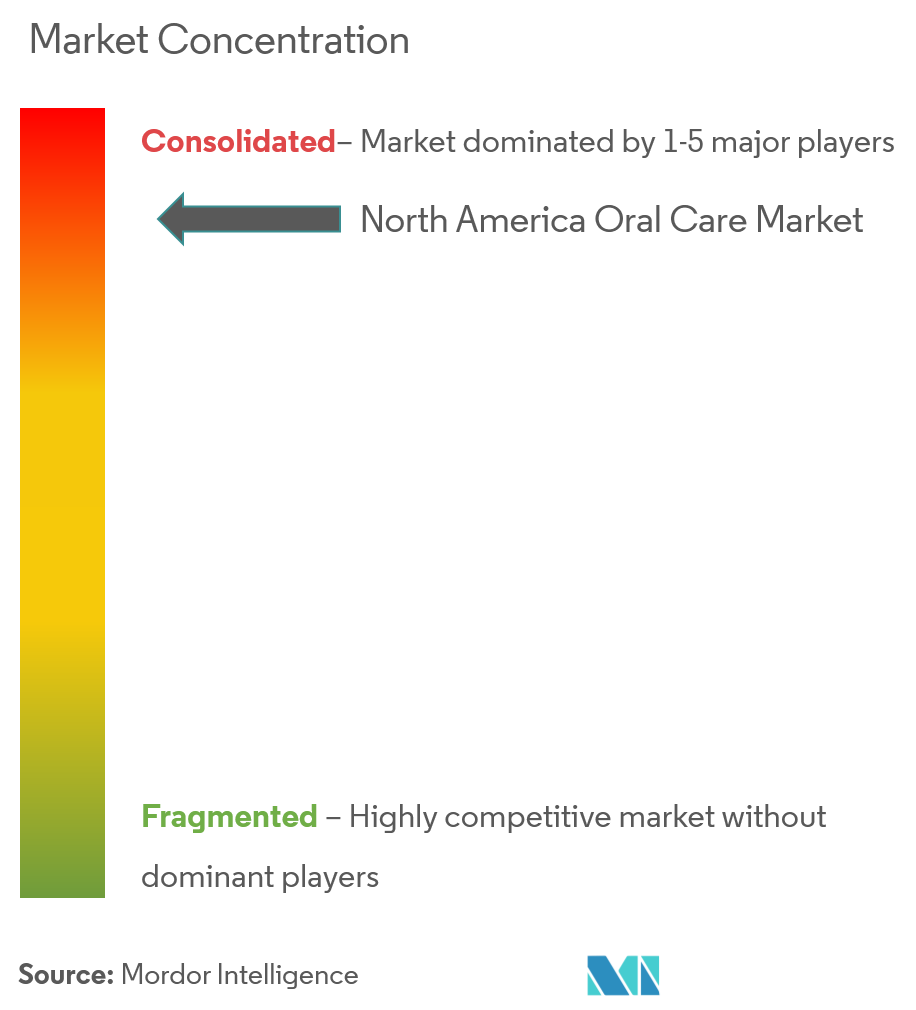
The North America Oral Care Market demonstrates a moderate concentration, with a score of 5 indicating balanced competitive dynamics. This market is characterized by the presence of established multinational corporations, emerging direct-to-consumer brands, and regional specialists. The competitive environment fosters innovation and diversification, as companies strive to cater to the evolving preferences of consumers. The interplay between these players ensures a dynamic market landscape, where both established and newer entrants have opportunities to thrive. Additionally, the market is witnessing increased consumer awareness regarding oral hygiene, which is driving demand for a wide range of oral care products, including natural and organic options.
Market leaders such as Procter & Gamble, Colgate-Palmolive, and Unilever dominate the space by leveraging their extensive distribution networks, substantial marketing budgets, and robust innovation capabilities. These companies consistently introduce new products and technologies to maintain their competitive edge. Their ability to scale operations and invest in research and development enables them to address consumer demands effectively, ensuring their stronghold in the market. Additionally, their global presence and brand recognition further solidify their leadership positions. Furthermore, these companies are increasingly focusing on sustainability initiatives, such as eco-friendly packaging and biodegradable products, to align with consumer preferences and regulatory requirements.
On the other hand, technology-driven companies like Philips are driving premiumization within the market. By focusing on connected oral care devices, these firms are tapping into the growing demand for advanced and personalized oral care solutions. This trend reflects a shift in consumer preferences toward high-tech, convenience-oriented products. The presence of regional specialists and direct-to-consumer brands also adds to the competitive intensity, as these players often target niche markets and offer unique value propositions to differentiate themselves from larger competitors. Moreover, the rise of e-commerce platforms has provided smaller players with a cost-effective channel to reach a broader audience, further intensifying competition in the market.
North America Oral Care Industry Leaders
-
Colgate-Palmolive Company
-
Church & Dwight Co. Inc.
-
Unilever PLC
-
The Procter & Gamble Company
-
Haleon PLC
- *Disclaimer: Major Players sorted in no particular order

Market Opportunities and Future Outlook
Premium, connected oral-care devices create whitespace for competition across hardware, consumables, and digital coaching. In July 2026, Royal Philips announced a next-generation Sonicare DiamondClean 9900 Prestige featuring on-device AI for real-time, spatially aware guidance. This reinforces a device-led path where differentiated software and user feedback loops can support recurring revenue through replacement heads and app engagement. A second device-oriented opportunity is condition-specific solutions, supported by launches such as SuperMouths Ultim8 SmartBrush Ortho-Edition (April 2026), which targets consumers in active orthodontic treatment and aligns with life-stage and need-state segmentation.
Sustainable packaging and refill architectures also create a more defined lane for innovation in toothpaste and adjacent consumables, especially in online-first models where replenishment can be structured. In July 2026, SURI launched Restore Gel Refillable Toothpaste using a refillable airless pump and home-compostable refills (Vivomer), pointing to differentiation focused on packaging-led usability and waste reduction alongside product performance. At the same time, the United States OTC framework for oral healthcare products (Monograph M022 via Final Administrative Order) and heightened FDA attention on unapproved ingestible fluoride products aimed at children increase the value of compliant, evidence-backed claims. This tends to favor brands that can connect formulation efficacy with documented regulatory alignment in therapeutic segments such as anticaries and gum-health routines.
Recent Industry Developments
- July 2026: Royal Philips announced the next-generation Sonicare DiamondClean 9900 Prestige electric toothbrush, adding on-device AI for real-time, spatially aware brushing guidance. The update raises the competitive bar in premium electric toothbrushes by shifting differentiation toward embedded intelligence rather than app-only coaching. It also supports ecosystem selling through compatible heads and connected experiences.
- February 2025: Colgate-Palmolive launched the Colgate Total Active Prevention System in North America, combining a reformulated toothpaste with a matching toothbrush and mouthwash positioned around bacteria reduction. Framing the regimen as a coordinated system supports premiumization and strengthens cross-category basket-building across toothpaste, brushes, and rinses. The launch also underscores the importance of science-backed positioning in therapeutic everyday oral care.
- April 2024: Church & Dwight launched ARM & HAMMER Plus TheraBreath Toothpaste, pairing baking soda whitening cues with TheraBreath breath-freshening equity. Extending TheraBreath into toothpaste broadens the brand's presence beyond mouthwash and helps the company compete more directly in daily-use paste formats. The combination targets consumers seeking an all-in-one fresh-breath and whitening proposition at mass retail.


Research Methodology Framework and Report Scope
Market Definition and Coverage
This market covers consumer oral hygiene products sold in North America for routine dental cleaning and breath care, measured in value terms. The scope includes products bought through retail and online channels across the United States, Canada, Mexico, and the rest of North America.
Scope exclusions: Professional dental procedures and clinic-administered treatments are excluded, along with prescription-only dental drugs.
Segmentation Overview
-
By Product Type
- Toothpaste
- Mouthwash/Rinses
- Toothbrush
- Other Product Types
-
By Ingredient
- Conventional
- Organic
-
By End User
- Kids/Children
- Adults
-
By Distribution Channel
- Supermarkets/Hypermarkets
- Drug Stores/Pharmacies
- Online Retail Stores
- Other Distribution Channels
-
By Geography
- United States
- Canada
- Mexico
- Rest of North America
Data Sources, Market Sizing, and Validation
Desk Research
Desk research starts by mapping the demand context and category boundaries, then collecting public indicators that can be checked year over year. We typically use sources such as US Census Bureau retail trade data, Statistics Canada consumer price and household spending series, and Mexico INEGI statistical releases to track category movement and inflation effects.
To validate what is happening inside oral care, we also use sources such as the US FDA recall and safety communication databases, Centers for Disease Control and Prevention oral health publications, and trade and tariff statistics that help explain import-driven supply shifts. Company filings, investor decks, earnings call comments, and trade press are used to cross-check changes in portfolio mix and pricing actions. Where public data is not granular enough, we may supplement with paid company financials and a shipment-level import-export database. The sources listed here are illustrative only, and many other public and paid references were also consulted for data collection, validation, and research clarification.
Primary Interviews and Surveys
Primary inputs come from interviews and structured surveys with manufacturers, distributors, large retailers, and category specialists who track oral care pricing and shelf dynamics. We also speak with participants in the dental channel and with packaging or ingredient-focused experts to check assumptions on premium mix, promotion frequency, and replacement cycles across the United States, Canada, and Mexico.
Distribution of primary research fieldwork respondents
| Company type | Respondent position |
|---|---|
| Top tier: 27% | CXOs: 15% |
| Mid tier: 55% | Functional/Unit leaders: 36% |
| Smaller Players: 18% | Managers: 49% |
Market-Sizing & Forecasting
Sizing is built using a combination of top-down and bottom-up work, where category consumption is reconstructed using country-level demand signals and then split across North America based on retail structure and trade flows. The totals are corroborated with selective bottom-up approximations, such as sampled brand and private label price bands multiplied by estimated volumes, along with channel checks to confirm what is being sold and at what price.
Key inputs in the model include oral care consumer price inflation, estimated unit consumption per capita for core products, household penetration for specialized items (like whitening and electric devices), import and export movement for fast-changing subcategories, and the share of sales shifting to e-commerce. When data is missing for smaller countries or thin subcategories, the gaps are filled using ratio-based allocations anchored to population, retail sales weight, and observed shelf assortment depth.
For forecasting, scenario analysis is applied using a main case that reflects expected pricing normalization and a steadier premium mix, while alternative cases test stronger promotion intensity or faster premium adoption. The forward path is adjusted using expert consensus on likely price realization, innovation cadence, and retailer margin behavior so the forecast remains practical and explainable.
Data Validation & Update Cycle
Validation is done through several checks so the numbers do not rely on a single data stream. We compare model outputs against independent signals such as retail sales direction, CPI movement, and import trends, and then re-check any unusual jumps at the country and category level before sign-off.
If a large variance appears, assumptions are revisited and relevant experts are re-contacted to confirm whether the change is driven by pricing, mix shift, or a true volume move. Reports are refreshed annually, and interim updates are made when material events occur, such as major pricing resets, regulatory actions, or supply disruptions. Before delivery, a final review pass is completed so clients receive the latest updated view.
Mordor Intelligence's North America Oral Care Market Size Measured Against Other Published Estimates
Published market sizes for North America oral care can differ even when the topic name is the same, because update timing and pricing math are not always aligned. When exchange rates move, promotions deepen, or premium products grow faster than the rest, the same category can show a different value depending on the refresh month and the average selling price approach used.
Key gap drivers usually come from what is counted as oral care, how inflation and promotions are treated in the price build, and whether the model is kept current with new trade and retail signals. With oral care seeing frequent price pack changes and promotional swings, the refresh cadence and currency timing are handled tightly, supported by channel checks on price realization. This is one reason the 2025 number published by Mordor Intelligence can differ from older snapshots.
Benchmark comparison
| Source | Market Size | Gaps in Research Methodology |
|---|---|---|
| Mordor Intelligence | USD 12.51 B (2025) | |
| Global Consultancy A | USD 13.20 B (2024) | Uses a different base year and forecast window. The public summary does not clarify how promotional intensity and currency conversion timing are handled, which can lift the value when ASPs are smoothed. |
| Industry Publisher B | USD 13.90 B (2024) | Presents a single point value without detailing included product boundaries or the split between volume growth and price inflation, which makes it harder to reconcile with channel-level checks and trade signals. |
The spread in estimates is mostly explained by timing, pricing assumptions, and how clearly the category is defined. By tying the value back to observable price and demand indicators and then re-checking outliers through expert feedback, we provide a number that is easier to trace and repeat across future updates.


Key Questions Answered in the Report
How large is the North America oral care market in 2026?
The market is valued at USD 12.9 billion in 2026, with a projected 3.1% CAGR to 2031.
Which product category is growing fastest within North American oral hygiene?
Mouthwashes and rinses lead growth with a 3.98% CAGR through 2031 as consumers adopt full-routine regimens.
Why is Mexico the fastest-growing geography for oral care products?
Rising disposable income, high caries incidence above 90%, and accelerating e-commerce adoption drive Mexico’s 4.42% CAGR.
How are electric toothbrushes reshaping the category?
Connected models priced at USD 50–300 deliver superior plaque removal, app-based coaching, and subscription head refills that lift segment revenue.
Page last updated on:





