
North America E-Commerce Watch Market Size and Share
Market Overview
| Study Period | 2021 - 2031 |
|---|---|
| Forecast Data Period | 2026 - 2031 |
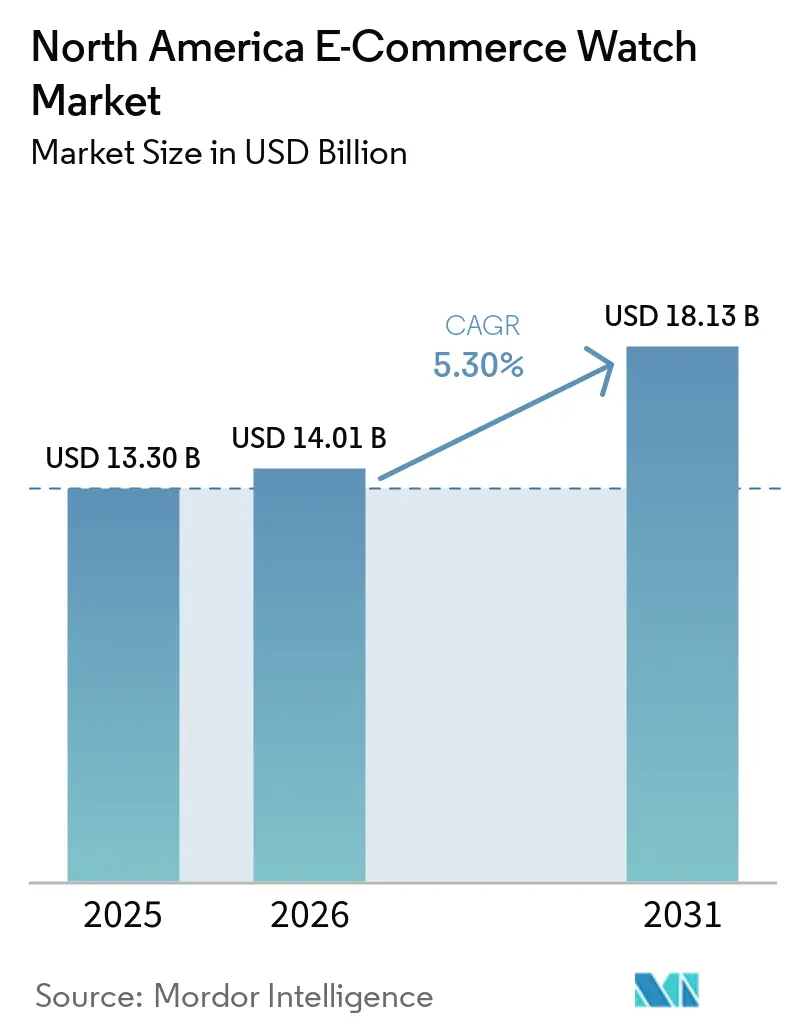
| Base Year Market Size (2025) | USD 13.30 Billion |
| Market Size (2026) | USD 14.01 Billion |
| Market Size (2031) | USD 18.13 Billion |
| Growth Rate (2026 - 2031) | 5.30 % |
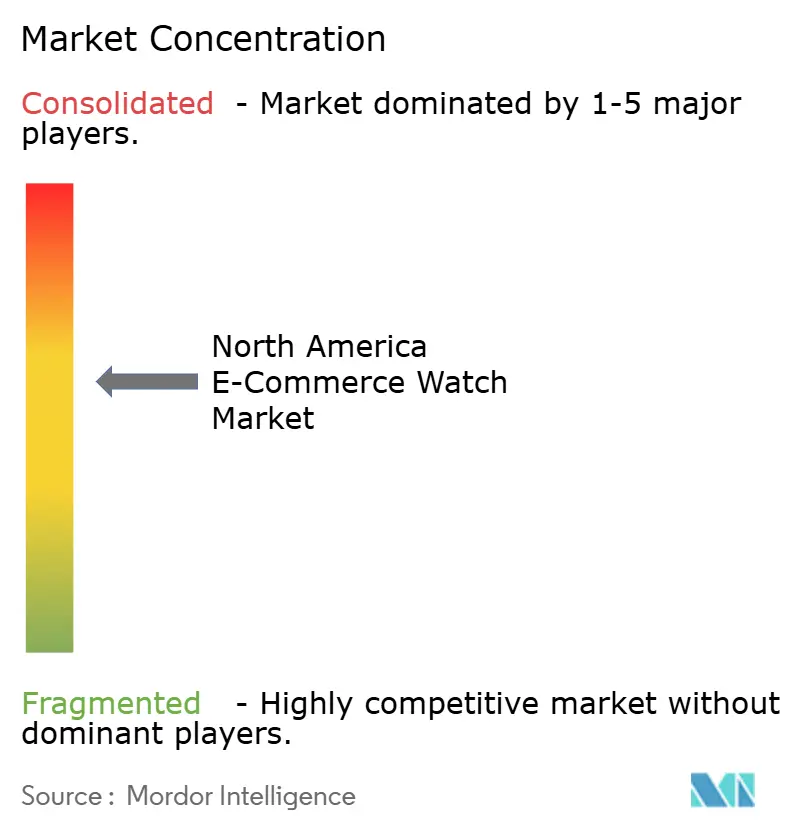
| Market Concentration | Medium |
Major Players *Disclaimer: Major Players sorted in no particular order Image © Mordor Intelligence. Reuse requires attribution under CC BY 4.0. | |
North America E-Commerce Watch Market Analysis by Mordor Intelligence
The North America E-commerce Watch Market size was valued at USD 13.30 billion in 2025 and estimated to grow from USD 14.01 billion in 2026 to reach USD 18.13 billion by 2031, at a CAGR of 5.30% during the forecast period (2026-2031). This upward trajectory reflects the deep penetration of digital commerce, the growing popularity of friction-free payment options, and sustained consumer appetite for connected devices and premium mechanical timepieces. Smartphone ubiquity, a sophisticated logistics backbone, and the growing convergence of fashion and health technology are amplifying demand across every price tier. Competitive intensity is rising as traditional luxury houses, consumer electronics leaders, and medical-grade wearable specialists each pursue distinct propositions that resonate with differing demographics. Despite challenges such as counterfeiting, complexities in cross-border fulfillment, and fierce competition for customer attention on bustling third-party marketplaces, the growth outlook remains intact.
Key Report Takeaways
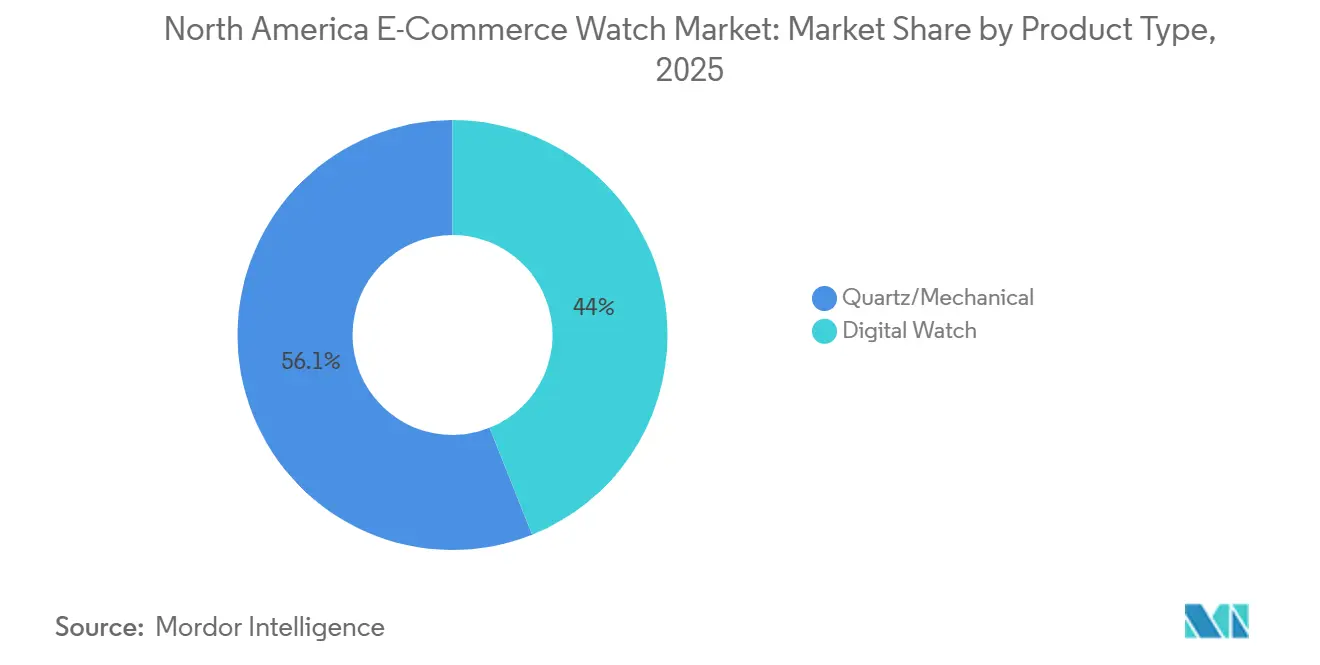
- By product type, quartz/mechanical watches led with 56.05% of the North America online watch market share in 2025, while digital watches are set to record the quickest 5.68% CAGR through 2031.
- By category, mass-market models accounted for 66.92% of the North American online watch market in 2025; the premium tier is forecast to advance at a 5.86% CAGR through 2031.
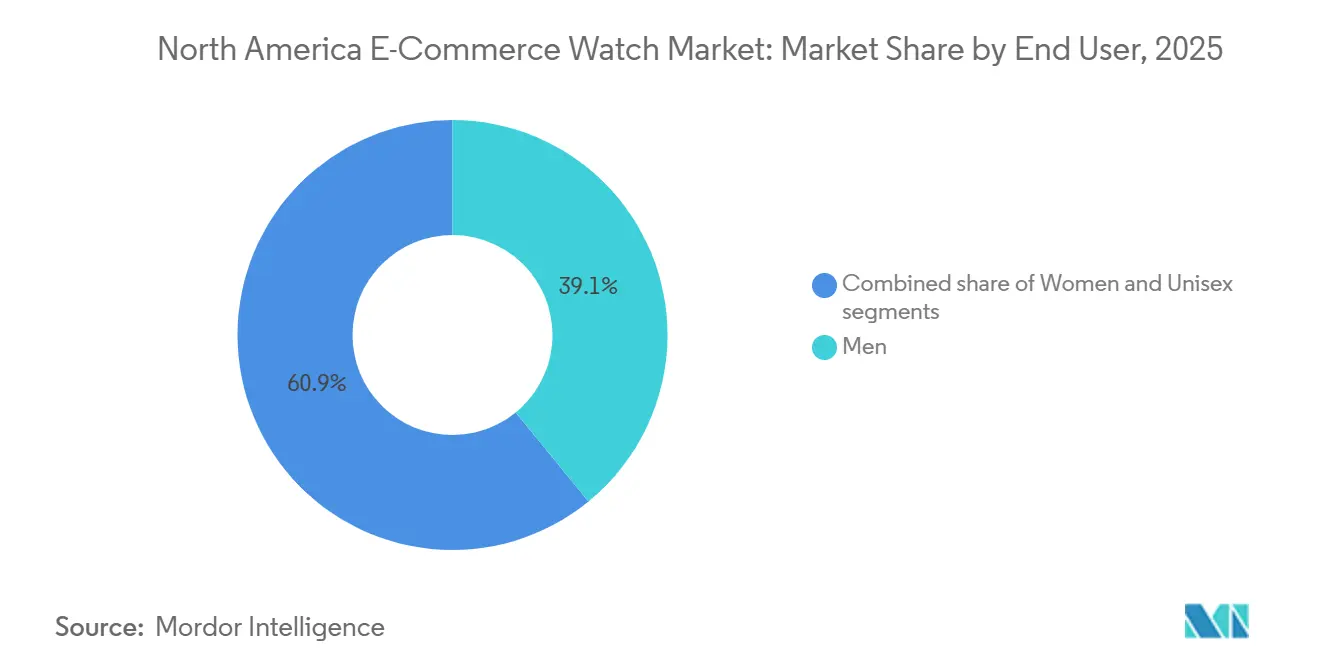
- By end user, men’s models held 39.10% share in 2025, whereas unisex references will climb at a 6.31% CAGR, outpacing all other demographic groupings.
- By platform, third-party marketplaces dominated, with an 82.93% share in 2025, and are also projected to post the fastest CAGR of 6.61% through the forecast period.
- By country, the United States commanded an 84.10% share in 2025; Mexico is the fastest-expanding geography, set to grow at a 7.02% CAGR to 2031.
Note: Market size and forecast figures in this report are generated using Mordor Intelligence’s proprietary estimation framework, updated with the latest available data and insights as of January 2026.
North America E-Commerce Watch Market Trends and Insights
Drivers Impact Analysis*
| DRIVER | (~) % IMPACT ON CAGR FORECAST | GEOGRAPHIC RELEVANCE | IMPACT TIMELINE |
|---|---|---|---|
| Flexible and diverse payment options | +1.2% | North America, with strongest adoption in United States urban centers | Short term (≤ 2 years) |
| Promotion and discounts enticing consumers to make purchases | +0.8% | United States and Canada, particularly during holiday seasons | Short term (≤ 2 years) |
| Technological advancement in terms of design | +0.6% | North America, with premium segments in major metropolitan areas | Medium term (2–4 years) |
| Growing smartphone and internet penetration | +0.4% | Mexico and rural North America, spillover to urban centers | Medium term (2–4 years) |
| Influence of social media platforms and celebrity endorsements | +0.3% | United States and Canada, strongest among younger demographics | Short term (≤ 2 years) |
| Rising demand for premium and luxury watches | +0.2% | United States premium markets, expanding to Canada | Long term (≥ 4 years) |
| Source: Mordor Intelligence | |||
Flexible and Diverse Payment Options
Payment flexibility has emerged as a critical competitive differentiator, with digital wallet adoption fundamentally reshaping transaction patterns across North American e-commerce. Consumers increasingly prefer platforms that provide diverse payment methods, including credit/debit cards, digital wallets, and buy-now-pay-later (BNPL) services. Additionally, BNPL (Buy Now, Pay Later) services have gained substantial traction. These payment options not only enhance customer convenience but also reduce cart abandonment rates, which is a critical factor in driving e-commerce sales. Furthermore, the integration of secure payment gateways and the adoption of advanced technologies, such as tokenization and encryption, have bolstered consumer trust in online transactions. The availability of secure and diverse payment methods has become a key differentiator for e-commerce platforms, further fueling the growth of the e-commerce watch market in the region.
Promotion and Discounts Enticing Consumers to Make Purchases
Promotional strategies have transitioned from relying solely on traditional seasonal sales to incorporating advanced dynamic pricing algorithms and personalized discount mechanisms. These approaches actively adapt to individual consumer behavior patterns, enabling brands to engage more effectively with their target audience. The Consumer Technology Association reports that 233 million American adults are expected to make technology purchases during the 2024 holiday season. Among these consumers, 41% began shopping before November, creating an extended promotional period that benefits online watch retailers[1]. This extended purchase window allows brands to implement tiered promotional strategies that help maximize revenue while preserving their brand positioning. These strategies not only help maximize revenue but also strengthen customer relationships and preserve brand positioning in a competitive market.
Technological Advancement in Terms of Design
Design innovation has evolved from focusing solely on aesthetics to emphasizing functionality, seamlessly integrating traditional watch aesthetics with sophisticated health-monitoring capabilities. In 2024, the FDA approved Masimo's W1 medical watch, enabling its connectivity with telemonitoring systems[2]. This regulatory approval signifies a pivotal moment in the wearable technology industry, underscoring the increasing demand for clinically validated devices that extend far beyond basic consumer wellness tracking. By achieving this milestone, Masimo has not only demonstrated the potential of wearable devices in healthcare but has also set a benchmark for other watch manufacturers to actively pursue medical device classifications. This shift encourages manufacturers to explore new avenues for growth by aligning with healthcare providers, forming strategic partnerships, and leveraging insurance reimbursements. These developments are poised to unlock substantial, sustainable revenue streams while reinforcing the role of wearable technology as a critical component of modern healthcare systems.
Growing Smartphone and Internet Penetration
Smartphones and internet connectivity are driving the e-commerce watch market in North America. The National Telecommunications and Information Administration reported that Internet usage in the United States increased by 13 million users between 2021 and 2023, indicating significant market expansion potential[3]. The proliferation of smartphones and internet connectivity has strengthened the e-commerce watch market in North America, as consumers leverage digital platforms to browse, compare, and complete watch purchases efficiently. The convenience of accessing e-commerce platforms through mobile devices has significantly enhanced the shopping experience, enabling users to make informed decisions by comparing prices, reading reviews, and exploring a wide range of options. Additionally, the growing popularity of mobile payment solutions such as Apple Pay and Google Pay has simplified the buying process by enabling secure, quick transactions. These advancements have collectively motivated more consumers to shift towards online shopping for watches, contributing to the market's growth.
Restraints Impact Analysis*
| RESTRAINT | (~) % IMPACT ON CAGR FORECAST | GEOGRAPHIC RELEVANCE | IMPACT TIMELINE |
|---|---|---|---|
| Availability of counterfeit products | -0.7% | North America, with highest impact through online marketplaces | Medium term (2–4 years) |
| Logistical challenges in fulfillment and delivery | -0.5% | Rural North America and cross-border Mexico–United States trade | Short term (≤ 2 years) |
| Competition from brick-and-mortar stores and alternative retail channels | -0.4% | United States metropolitan areas with established luxury retail presence | Medium term (2–4 years) |
| Rising production and operational costs | -0.3% | United States and Canada, strongest among younger demographics | Long term (≥ 4 years) |
| Source: Mordor Intelligence | |||
Availability of Counterfeit Products
Counterfeit products are widely available, posing a significant restraint on the North American e-commerce watch market. The proliferation of counterfeit watches undermines consumer trust and affects the revenue of legitimate sellers. These fake products are often sold at lower prices, making it challenging for authentic brands to compete. Additionally, the presence of counterfeit goods can damage brand reputation and increase costs for companies investing in anti-counterfeiting measures. Counterfeit products also create confusion among consumers, as it becomes difficult to distinguish genuine from fake items, further eroding confidence in online platforms. The lack of stringent regulations and enforcement mechanisms in some areas exacerbates the issue, allowing counterfeiters to exploit loopholes and continue their operations. This persistent challenge not only impacts the profitability of established brands but also discourages new entrants from entering the market.
Logistical Challenges in Fulfillment and Delivery
Fulfillment and delivery face logistical hurdles that pose a significant restraint on the North American e-commerce watch market. These challenges include inefficiencies in supply chain management, delays in last-mile delivery, and high costs of ensuring timely and accurate order fulfillment. Additionally, the complexity of managing inventory across multiple locations and the need for advanced technological solutions to streamline operations further exacerbate these issues. The growing demand for faster delivery times has placed additional pressure on e-commerce businesses to optimize their logistics networks, often requiring substantial investments in infrastructure and technology. Furthermore, the region's vast geographical expanse adds another layer of complexity, as companies must navigate varying regulations, transportation costs, and delivery timelines across different states and territories.
*Our forecasts treat driver/restraint impacts as directional, not additive. The impact forecasts reflect baseline growth, mix effects, and variable interactions.
Segment Analysis
By Product Type: Digital Innovation Reinforces Traditional Craft
Quartz/mechanical models accounted for 56.05% of the market share in 2025. This dominance highlights the sustained popularity of heritage engineering and the tactile appeal these watches offer. Quartz watches, known for their precision and low maintenance, continue to attract a significant consumer base. Additionally, mechanical watches, often regarded as luxury items, appeal to enthusiasts who value craftsmanship and intricate designs. The combination of these factors has solidified the position of quartz and mechanical watches as a cornerstone of the North American e-commerce watch market, catering to both practical and luxury-oriented consumers.
On the other hand, digital watches, led by the growing adoption of smartwatches, are forecast to grow at a 5.68% CAGR through 2031. The increasing demand for smartwatches is driven by their multifunctionality, including fitness tracking, connectivity, and health monitoring. These watches have become an integral part of the wearable technology trend, appealing to tech-savvy consumers and fitness enthusiasts alike. Furthermore, advancements in smartwatch technology, such as improved battery life, enhanced user interfaces, and compatibility with various devices, are expected to further boost their adoption. This growth reflects a shift in consumer preferences toward technologically advanced and versatile timepieces in the North American e-commerce watch market.

By Category: Premium Acceleration within Mass-Market Dominance
In 2025, price-sensitive consumers in the North American e-commerce watch market gravitated towards mass-market SKUs, which dominated the market with a 66.92% share. These products appeal to a broad audience by offering reliable style statements at affordable prices. The mass-market segment benefits from high consumer demand among those who prioritize cost-effectiveness without compromising basic quality and design. Additionally, the availability of a wide range of designs, colors, and functionalities in this segment has further fueled its popularity. E-commerce platforms have played a significant role in driving sales for mass-market watches by offering competitive pricing, discounts, and convenient delivery options.
However, the premium segment is poised to grow at a faster pace, with a projected CAGR of 5.86%. This growth is driven by increasing consumer interest in high-quality, luxury timepieces that offer exclusivity and superior craftsmanship. Premium watches are gaining traction among affluent buyers and style-conscious individuals who view these products as status symbols and long-term investments. The segment's robust growth reflects a shift in consumer preferences toward premiumization within the e-commerce watch market. Furthermore, the rising influence of social media and celebrity endorsements has amplified the appeal of premium watches, making them aspirational products for a growing segment of consumers.
By End User: Unisex Appeal Outpaces Traditional Gender Segments
In 2025, men's watches accounted for a significant 39.10% share of the North American e-commerce watch market. This dominance is deeply rooted in the region's long-standing culture of collecting mechanical complications, which are often seen as symbols of craftsmanship and prestige. Additionally, corporate gifting rituals continue to drive demand for men's watches, as they are frequently chosen as premium gifts for employees and business associates. The availability of a wide range of designs, from classic to modern, further strengthens the appeal of men's watches in the e-commerce space, catering to diverse consumer preferences.
The unisex sub-segment, characterized by minimalist dials and adjustable straps, is emerging as a key growth driver in the North American e-commerce watch market. This segment is expected to grow at a robust 6.31% CAGR, the fastest among all demographic categories. The rising popularity of gender-neutral fashion trends and the increasing demand for versatile accessories are fueling this growth. Unisex watches appeal to a broad audience, offering a blend of functionality and style that resonates with modern consumers. Their adaptability to various occasions and outfits makes them a preferred choice, particularly among younger demographics seeking simplicity and elegance.
By Platform Type: Marketplace Gravity Intensifies
In 2025, third-party marketplaces in the North American e-commerce watch market captured a dominant 82.93% share of the revenue pool. These platforms have become a critical component of the market, offering consumers a wide range of watch brands and models while providing sellers with an extensive customer base. The convenience, competitive pricing, and variety offered by these marketplaces have significantly contributed to their stronghold in the region. Additionally, the growing adoption of online shopping, coupled with advancements in logistics and payment systems, has further bolstered the prominence of third-party marketplaces in the e-commerce watch market across North America.
Projections indicate that third-party marketplaces in this market will continue to expand at a robust 6.61% CAGR through 2031. This growth is driven by increasing consumer preference for online platforms, rising smartphone penetration, and the growing influence of social media on purchasing decisions. Furthermore, the integration of advanced technologies, such as artificial intelligence and augmented reality, is enhancing the online shopping experience, enabling customers to make more informed decisions. As a result, third-party marketplaces are expected to maintain their dominance and play a pivotal role in shaping the future of the North American e-commerce watch market.
Geography Analysis
In 2025, the United States dominates the North American online watch market, holding an impressive 84.10% market share. This dominance is driven by the country's advanced e-commerce infrastructure, which ensures a seamless and efficient online shopping experience for consumers. The U.S. market benefits from high disposable income levels, enabling a significant portion of the population to invest in luxury goods, including premium watches. Additionally, the strong consumer preference for purchasing luxury items online highlights the maturity of the U.S. e-commerce ecosystem. The presence of major global and domestic e-commerce platforms, coupled with a well-established logistics and delivery network, further strengthens the U.S.'s position as the leading market in the region. Moreover, the U.S. market is characterized by a high level of competition among brands, which drives innovation in product offerings and marketing strategies, ensuring sustained consumer interest and engagement.
Mexico emerges as the fastest-growing market in the region, with a projected CAGR of 7.02% through 2031. This growth is fueled by significant advancements in digital infrastructure, which have improved internet penetration and online shopping capabilities across the country. The rising purchasing power of the middle class is another critical factor, as more consumers in this segment are now able to afford luxury and premium products, including watches. Mexico's increasing integration with North American supply chains has also facilitated efficient cross-border e-commerce, enabling international brands to expand their presence in the market. Furthermore, the widespread adoption of smartphones has created new opportunities for wearable device adoption, particularly among previously offline consumer groups.
Canada and other North American markets, while not experiencing the rapid growth seen in Mexico, provide stable and consistent opportunities for market players. These markets often serve as strategic testing grounds for new product launches and innovative marketing strategies before broader regional rollouts. The relatively smaller scale of these markets allows companies to experiment and refine their approaches, ensuring greater success in larger markets like the U.S. and Mexico. Additionally, the steady growth in these regions complements the dynamic U.S.-Mexico relationship, contributing to the overall development of the North American online watch market. Canada, in particular, benefits from a tech-savvy population and a growing preference for online shopping, which supports the adoption of e-commerce platforms for luxury goods.
Competitive Landscape
The North American e-commerce watch market operates within a highly competitive landscape, influenced by several factors that shape its growth trajectory. Counterfeit activities remain a significant challenge, as they undermine consumer trust and impact the reputation of legitimate sellers. Companies are increasingly investing in advanced technologies, such as blockchain and AI-based authentication systems, to combat counterfeit products and ensure the authenticity of their offerings. These technologies not only help in identifying fake products but also provide transparency across the supply chain, which is critical for building consumer confidence. This proactive approach is essential to maintaining customer trust and sustaining market growth in the region, where consumers are becoming more vigilant about product authenticity.
Cross-border fulfillment complexities further add to the competitive dynamics of the market. The intricate logistics involved in managing international shipping, customs regulations, and varying tax structures create hurdles for e-commerce players. These challenges are particularly pronounced for smaller players who may lack the resources to navigate such complexities effectively. To address these issues, companies are adopting innovative solutions, such as localized fulfillment centers, advanced inventory management systems, and partnerships with third-party logistics providers, to streamline operations and enhance delivery efficiency. By optimizing their supply chains and reducing delivery times, businesses can meet customer expectations and maintain a competitive edge in a market where convenience and speed are key differentiators.
Additionally, the race for customer attention on crowded third-party marketplaces intensifies competition among players. With numerous brands vying for visibility, companies are leveraging data-driven marketing strategies and personalized customer experiences to stand out. Advanced analytics tools are being used to understand consumer behavior and preferences, enabling businesses to tailor their offerings and marketing campaigns effectively. Investments in digital advertising, influencer collaborations, and loyalty programs are becoming common practices to capture and retain consumer interest. Despite these challenges, the North American e-commerce watch market continues to exhibit a positive growth outlook, driven by innovation, strategic initiatives, and the ability of players to adapt to evolving market dynamics.
North America E-Commerce Watch Industry Leaders
-
Apple Inc.
-
Fossil Group Inc.
-
Timex Group B.V.
-
Rolex SA
-
Garmin Ltd.
- *Disclaimer: Major Players sorted in no particular order
Recent Industry Developments
- August 2024: Garmin introduced the fēnix 8 Series, its next-generation premium multisport GPS smartwatches that featured either a bright AMOLED display or a solar charging display for extended battery life. The company made the watch available at retail prices starting from USD 999.99 in stores and online.
- June 2024: Casio released a limited-edition G-Shock watch (DW6900US24-2) commemorating the 4th of July. The timepiece incorporated red, silver, and blue colors reflecting the American flag theme. The watch became available for purchase directly from Casio in the United States at USD 130.
- January 2023: Citizen Watch Canada introduced the CZ Smart smartwatch at CES 2023. The device incorporated a wellness application developed with IBM Watson technology and provided mobile connectivity. The application utilized data from the watch to monitor the wearer's patterns, behaviors, and individual characteristics. The smartwatch became available through the company's online store.
North America E-Commerce Watch Market Report Scope
The North America E-commerce Watch Market is segmented based on product type, platform type, and geography. Based on product type, the market is segmented into quartz/mechanical and smart. By platform type, the market is segmented into third-party retailers and the company's own website. By geography, the report analyses the major economies of countries in the region, like the United States, Canada, Mexico, and the Rest of North America. The market sizing has been done in USD terms for all the above-mentioned segments.
| Quartz/Mechanical | |
| Digital Watch | Smart Watches |
| Other Digital Types |
| Mass |
| Premium |
| Men |
| Women |
| Unisex |
| Third-Party Marketplace |
| Company-owned Platform |
| United States |
| Canada |
| Mexico |
| Rest of North America |
| By Product Type | Quartz/Mechanical | |
| Digital Watch | Smart Watches | |
| Other Digital Types | ||
| By Category | Mass | |
| Premium | ||
| By End User | Men | |
| Women | ||
| Unisex | ||
| By Platform Type | Third-Party Marketplace | |
| Company-owned Platform | ||
| By Country | United States | |
| Canada | ||
| Mexico | ||
| Rest of North America | ||
Key Questions Answered in the Report
How large is the North America E-Commerce Wtach market today?
The North America online watch market size stands at USD 14.01 billion in 2026 and is forecast to reach USD 18.13 billion by 2031.
Which product segment is growing fast?
Digital watches, led by smartwatches, are projected to expand at 5.68% CAGR through 2031, outpacing all other product types.
Why are third-party marketplaces so dominant in the online watch sales?
Shoppers prefer aggregated platforms for price comparison, rapid delivery, and built-in trust protections, giving marketplaces 82.93% revenue share in 2025.
Which country is expected to add the most growth?
Mexico is set to deliver the highest relative expansion at 7.02% CAGR, owing to improving broadband access and rising disposable incomes.