
Nerve Repair And Regeneration Market Size and Share
Market Overview
| Study Period | 2020 - 2031 |
|---|---|
| Market Size (2026) | USD 11.92 Billion |
| Market Size (2031) | USD 20.97 Billion |
| Growth Rate (2026 - 2031) | 11.96 % |
| Fastest Growing Market | Asia Pacific |
| Largest Market | North America |
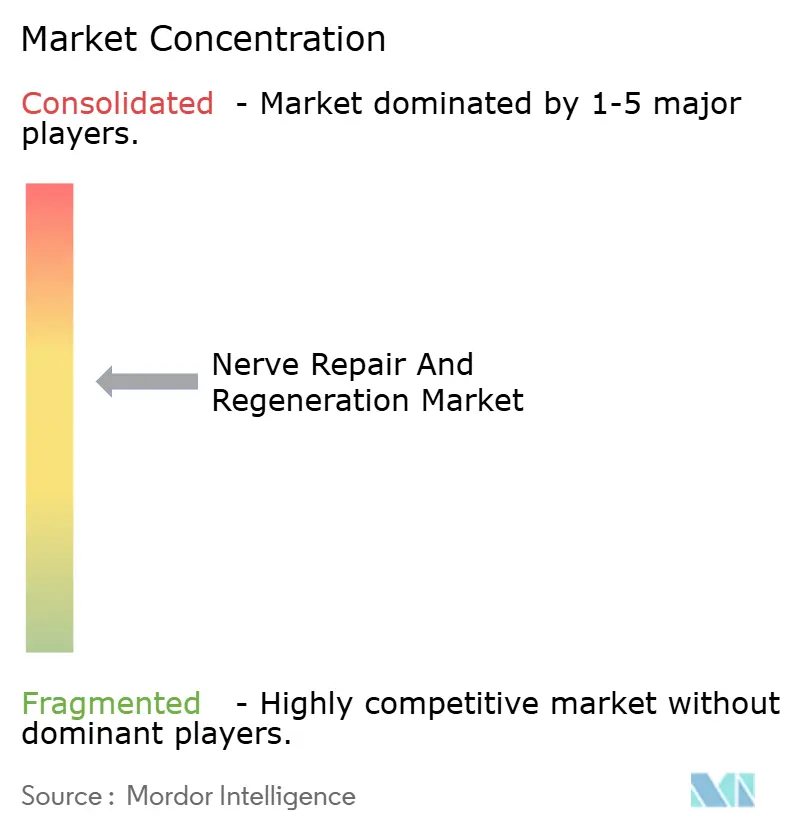
| Market Concentration | Medium |
Major Players *Disclaimer: Major Players sorted in no particular order Image © Mordor Intelligence. Reuse requires attribution under CC BY 4.0. | |
Nerve Repair And Regeneration Market Analysis by Mordor Intelligence
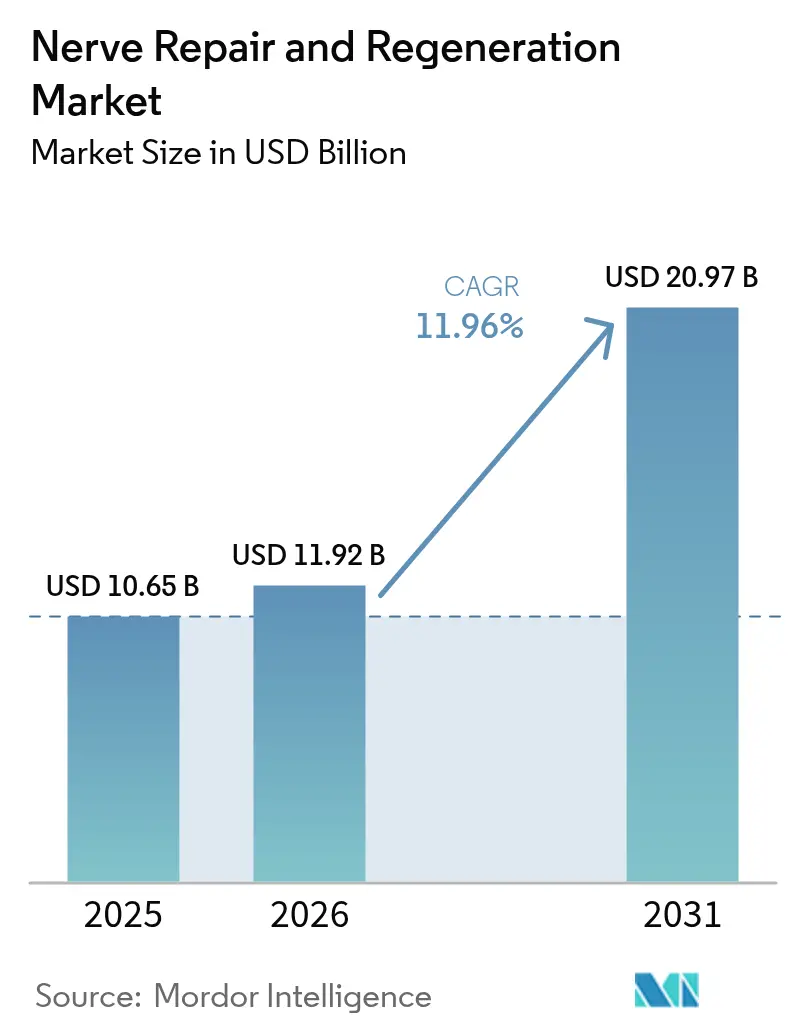
The nerve repair and regeneration market size is expected to grow from USD 10.65 billion in 2025 to USD 11.92 billion in 2026 and is forecast to reach USD 20.97 billion by 2031 at 11.96% CAGR over 2026-2031. Continued progress in bioelectronic medicine, the growing burden of neurological disorders, and supportive public funding anchor this expansion. AI-enabled closed-loop neurostimulation, 3D-bioprinted patient-specific nerve grafts, and real-time brain-signal monitoring systems are reshaping clinical practice from reactive procedures to precision-guided regeneration. Intensifying adoption of these innovations reveals fresh opportunities across both device and biomaterial categories inside the nerve repair and regeneration market. Demand is reinforced by a demographic shift toward aging populations that experience more diabetes-linked peripheral neuropathies and by increasing battlefield and industrial traumas that require advanced reconstruction therapies. Robust reimbursement in North America, large untapped patient pools in Asia-Pacific, and deep venture funding for emerging biotechnology firms together underpin the global growth outlook.
Key Report Takeaways
- By product type, neurostimulation and neuromodulation devices held 58.74% of nerve repair and regeneration market share in 2025, while biomaterials are forecast to grow at 14.01% CAGR through 2031.
- By application, traditional neuro-stimulation surgeries captured 42.98% revenue in 2025; stem-cell therapy is projected to expand at an 18.54% CAGR to 2031.
- By end-user, hospitals commanded 59.88% of the nerve repair and regeneration market size in 2025, while ambulatory surgical centers are advancing at 14.29% CAGR through 2031.
- By geography, North America led with 41.35% revenue share in 2025; Asia-Pacific posts the fastest regional CAGR at 12.45% during the forecast horizon.
Note: Market size and forecast figures in this report are generated using Mordor Intelligence’s proprietary estimation framework, updated with the latest available data and insights as of 2026.
Market Trends and Insights
Drivers Impact Analysis of Nerve Repair And Regeneration Market*
| Driver | (~) % Impact on CAGR Forecast | Geographic Relevance | Impact Timeline |
|---|---|---|---|
| Growing Incidence Of Nerve Injuries & Neurological Disorders | +2.8% | Global, with highest impact in North America & Europe | Medium term (2-4 years) |
| Technological Advances In Neuro-Modulation & Biomaterials | +3.2% | Global, led by North America & Asia-Pacific | Long term (≥ 4 years) |
| Rising Healthcare Expenditure & Favourable Reimbursement | +2.1% | North America & Europe primarily | Short term (≤ 2 years) |
| AI-Enabled Closed-Loop Bio-Electronic Medicine Adoption | +1.9% | North America, expanding to Asia-Pacific | Long term (≥ 4 years) |
| Military & Elite-Sports Funding For Peripheral-Nerve Repair | +0.8% | North America, with spillover to allied nations | Medium term (2-4 years) |
| 3-D Bioprinted, Patient-Specific Nerve Graft Breakthroughs | +1.4% | Global, early adoption in developed markets | Long term (≥ 4 years) |
| Source: Mordor Intelligence | |||
Growing Incidence Of Nerve Injuries & Neurological Disorders
Upper-extremity nerve injuries affect 43.8 per million people annually in the United States, with average charges of USD 47,004 per case. Diabetes-linked peripheral neuropathy and age-related neurodegeneration further enlarge the candidate pool for regenerative interventions. The burden extends beyond acute trauma to long-term disability, pushing health systems to embrace earlier nerve reconstruction. Military conflicts and industrial accidents keep peripheral nerve trauma on policy agendas, while better understanding of nerve pathophysiology broadens eligibility for advanced therapies. Collectively these patterns expand the addressable population in the nerve repair and regeneration market.
Technological Advances In Neuro-Modulation & Biomaterials
Medtronic’s Percept RC neurostimulator captures real-time brain signals and personalizes therapy delivery[1]. Closed-loop control represents a shift from static to dynamic intervention, potentially improving outcomes and lowering adverse events. Concurrently, 3D-bioprinted chitosan conduits embedded with neurotrophin-3 create bionic microenvironments for peripheral repair. Conductive silk-fibroin scaffolds combined with electrical stimulation have surpassed traditional guides in preclinical recovery metrics. These breakthroughs position biomaterials as a regeneration-first alternative, signalling a major product-mix shift inside the nerve repair and regeneration market.
Rising Healthcare Expenditure & Favourable Reimbursement
Direct outlays on brain disorders reached USD 1.14 trillion worldwide and USD 409 billion in the United States in 2025[2]. Medicare and private payers now cover spinal cord stimulation for conditions such as diabetic peripheral neuropathy, broadening patient access. The National Institute of Neurological Disorders and Stroke budgeted USD 2.833 billion in 2025 for gene-based and device research. Enhanced coverage, coupled with rising per-capita spending, immediately accelerates revenue realization in the nerve repair and regeneration market.
AI-Enabled Closed-Loop Bio-Electronic Medicine Adoption
Adaptive systems adjust stimulation up to 50 times per second based on biologic feedback, improving precision therapy. Wireless optogenetic microsystems link artificial intelligence with real-time circuit modulation to speed research translation. Integration with multimodal large language models under development could refine algorithmic adjustment for complex conditions such as post-traumatic stress disorder. These digital therapies signal a future in which personalized neuro-regeneration becomes a routine care pathway in the nerve repair and regeneration market.
Restraints Impact Analysis of Nerve Repair And Regeneration Market*
| Restraint | (~) % Impact on CAGR Forecast | Geographic Relevance | Impact Timeline |
|---|---|---|---|
| High Cost Of Implants & Procedures | -1.8% | Global, most pronounced in emerging markets | Short term (≤ 2 years) |
| Dearth Of Trained Neurosurgeons & Rehab Specialists | -1.2% | Global, acute in Asia-Pacific & developing regions | Medium term (2-4 years) |
| Medical-Grade Polymer (Chitosan, PTFE) Supply Constraints | -0.7% | Global, supply chain dependent regions | Short term (≤ 2 years) |
| Cyber-Security & Data-Privacy Risks In Connected Implants | -0.9% | Developed markets with high connectivity adoption | Long term (≥ 4 years) |
| Source: Mordor Intelligence | |||
High Cost Of Implants & Procedures
Spinal cord stimulators range from USD 20,000 to USD 50,000 per implant, excluding surgical expenses, and lifetime costs can surpass USD 100,000 even in insured regions. Supply chain shortages in medical-grade components have inflated prices and elongated lead times. High up-front costs dampen early adoption in low-resource settings and slow diffusion of advanced technologies in the nerve repair and regeneration market.
Cyber-Security & Data-Privacy Risks In Connected Implants
Section 524B of the Federal Food, Drug and Cosmetic Act requires premarket cyber risk mitigation strategies for implantable devices[3]. Potential malicious manipulation of stimulation parameters or patient data exposure can undermine clinician and consumer confidence. Manufacturers must invest in encryption, firmware updates, and secure over-the-air communication. These requirements add cost and delay product launches, imposing a structural restraint on the nerve repair and regeneration market.
*Our forecasts treat driver/restraint impacts as directional, not additive. The impact forecasts reflect baseline growth, mix effects, and variable interactions.
Nerve Repair And Regeneration Market Segment Analysis
By Product Type:
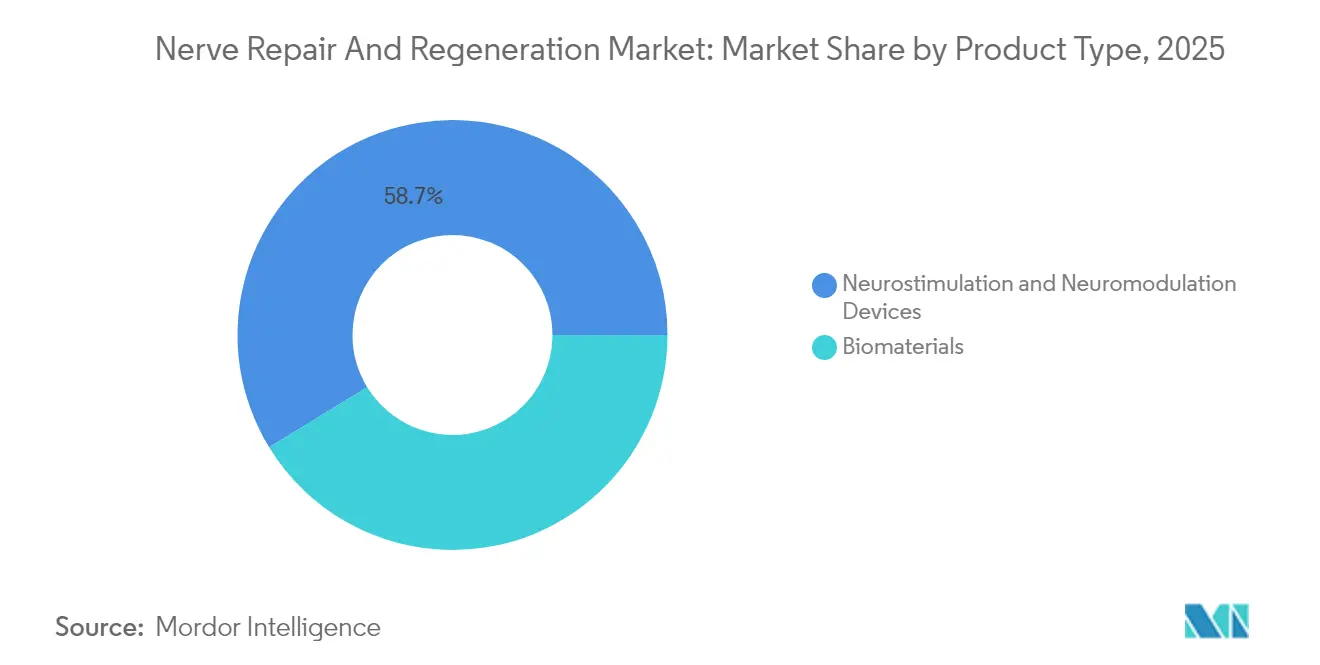
Biomaterials Accelerate Despite Device DominanceNeurostimulation and neuromodulation devices accounted for 58.74% of the nerve repair and regeneration market share in 2025, powered by extensive clinical evidence, surgeon familiarity, and established reimbursement channels. Within the same year, biomaterials began reshaping demand patterns through scaffold-free conduits derived from autologous fibroblasts that passed early human safety benchmarks. The nerve repair and regeneration market size tied to biomaterials is expected to grow at 14.01% CAGR, riding on 3D-printing that fabricates patient-specific grafts and chitosan conduits delivering controlled neurotrophic factors.
Internal neurostimulators dominate revenue with higher average selling prices and preferred indications like chronic neuropathic pain, Parkinson’s disease, and spinal injury. External stimulators, including transcranial magnetic and trans-cutaneous electrical devices, post steady uptake in rehabilitation therapy. Conductive silk-fibroin scaffolds loaded with gold nanoparticles are yielding superior axonal growth in preclinical work, hinting at future substitution potential for traditional leads. As cost curves of biofabrication decline and clinical data matures, biomaterials are poised to transform long-term product mix inside the nerve repair and regeneration market.

By Application:
Stem-Cell Therapy Disrupts Traditional ParadigmsConventional neuro-stimulation surgeries held 42.98% of 2025 revenue, underscoring their entrenched role as the workhorse intervention for chronic pain and movement disorders. Direct neurorrhaphy and nerve grafting continue as standards for acute gaps yet face donor-site morbidity and limited graft length. In contrast, stem-cell therapy posts the fastest 18.54% CAGR, reflecting mounting trial successes such as mesenchymal stem cells delivering one-grade motor improvements in 60% of cervical spinal injury cases.
The nerve repair and regeneration market size attributable to stem-cell therapy is expected to expand exponentially as long-term safety data accumulate. Olfactory ensheathing cell transplantation has moved into first-in-human trials with USD 8.5 million funding and regulatory support in Australia. Neural stem cell infusions for chronic spinal lesions showed sustained benefits over five years without serious adverse events. These findings support a rising shift away from implantable hardware toward biologic reconstruction, rewriting competitive playbooks within the nerve repair and regeneration market.
By End-User:
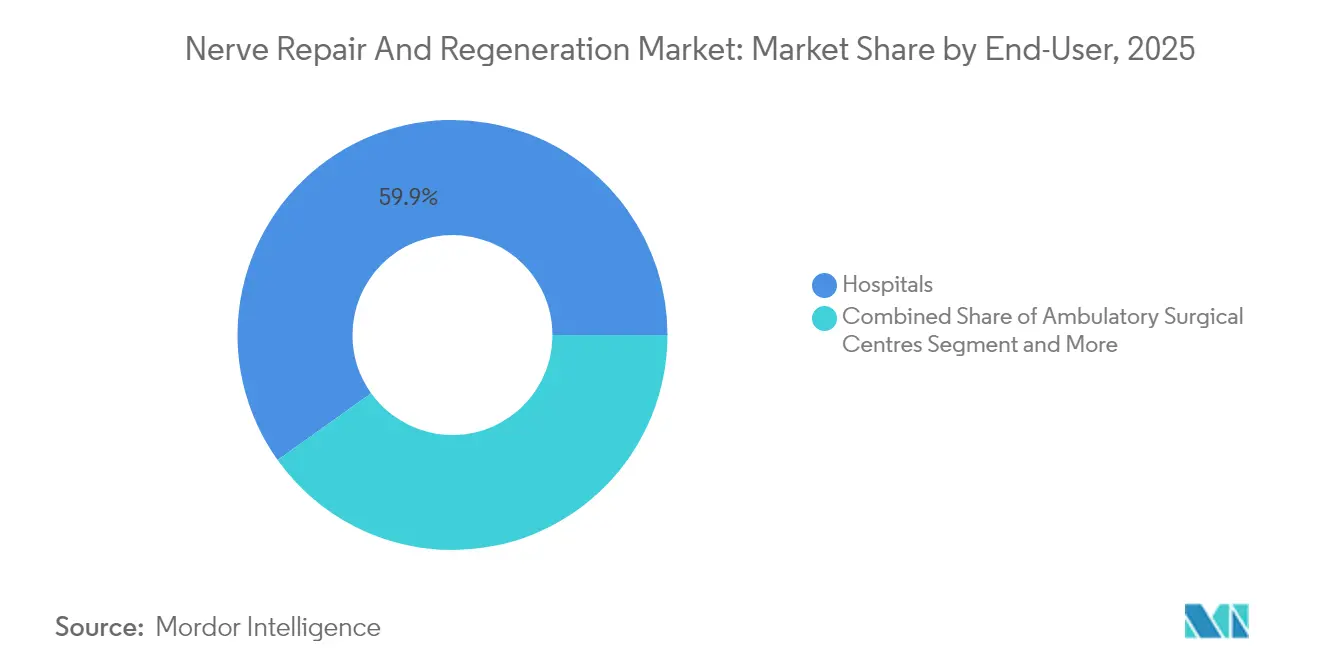
Ambulatory Centers Challenge Hospital DominanceHospitals captured 59.88% of 2025 revenue owing to integrated operating theaters, imaging, and specialist teams that manage complex neurosurgical cases. Ambulatory surgical centers, however, are the fastest-growing venue at 14.29% CAGR as minimally invasive devices allow same-day discharge and lower facility fees. Medicare and commercial insurers increasingly reimburse spinal cord stimulation in outpatient settings, encouraging shift of volume outside tertiary centers.
Closed-loop stimulators with longer battery life and wireless programming reduce follow-up visits, a key driver for ambulatory adoption. Stand-alone pain clinics are also expanding implantation capabilities, capturing referrals with quicker scheduling and transparent cost packages. The nerve repair and regeneration market is therefore recalibrating across the care continuum, with hospitals focusing on complex revisions while ambulatory centers build critical mass in routine procedures.
Geography Analysis
North America Nerve Repair and Regeneration Market
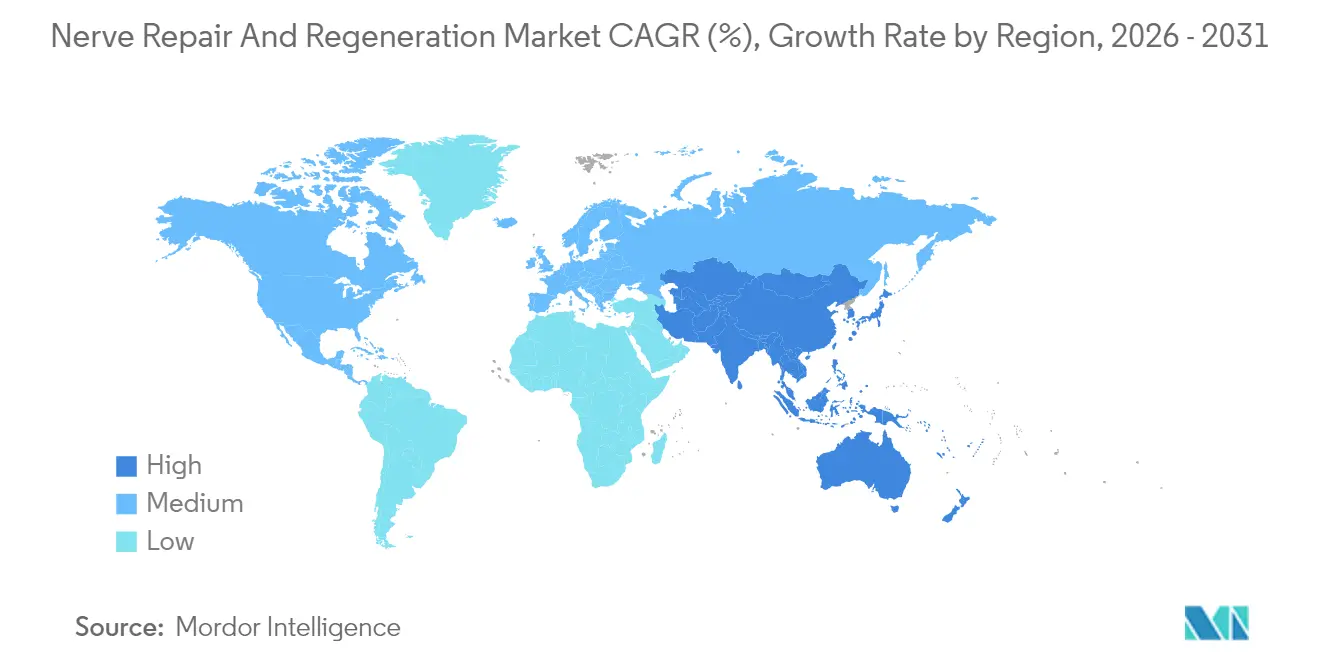
North America retained 41.35% revenue share in 2025 on the back of advanced insurance coverage, deep clinical trial density, and continuous public R&D investment such as the USD 2.833 billion NINDS budget. Military research through DARPA’s Bridging the Gap Plus program and the USD 650 million Military Burn Research Program further accelerates innovation in peripheral nerve repair. Canada adds incremental growth via universal health benefits that support equitable access, and Mexico improves cross-border procedure volumes through medical tourism packages. Cybersecurity regulation from the FDA shapes device certification standards and influences global export success.
APAC Nerve Repair and Regeneration Market
Asia-Pacific is forecast to deliver a 12.45% CAGR, the highest regional pace, propelled by large patient pools and active government promotion of brain-computer interfaces. China’s National Healthcare Security Administration formally recognized neural care services, paving the way for scaled reimbursement. Japan contributes sophisticated engineering and an aging demographic with high neurological disease prevalence. India advances through private hospital expansion and lower-cost procedural pricing that attract regional medical tourism. Australia’s world-first olfactory ensheathing cell trial positions the country as a translational research hub.
EMEA and South America Nerve Repair and Regeneration Market
Europe maintains solid share through coordinated healthcare systems and device adoption. Germany leverages industrial design strengths, while the United Kingdom spearheads early-stage stem-cell studies. Regulatory harmonization under the Medical Device Regulation streamlines continental approvals, speeding dissemination of next-gen implants. Middle East and Africa begin scaling high-acuity centers in urban corridors, though limited specialist availability caps penetration. South America exhibits steady improvements as Brazil and Argentina allocate more budget to neurological care, ensuring that the nerve repair and regeneration market continues its global diffusion.
Competitive Landscape
The nerve repair and regeneration industry shows moderate consolidation as legacy multinationals guard neurostimulation franchises while nimble biotechs pursue regenerative breakthroughs. Medtronic, Boston Scientific, and Abbott hold entrenched portfolios, exclusive distribution, and large sales forces that underpin global reach. These leaders invest heavily in adaptive algorithms and cloud-based monitoring that wrap hardware into data-rich care platforms. Boston Scientific’s entry-level cordless products target outpatient centers, while Medtronic’s adaptive brain pacemaker for Parkinson’s delivers on closed-loop promise.
Scaling opportunities emerge in patient-specific biomaterials and stem-cell processing. Axogen’s Avance Nerve Graft pursued FDA biologics licensure and posted 17.4% revenue growth in Q1 2025. Auxilium Biotechnologies enrolled its first patient in the NeuroSpan Bridge trial, indicating momentum for scaffold-based solutions. Partnerships between material scientists, software engineers, and device manufacturers proliferate, aiming to provide end-to-end regeneration ecosystems rather than single components.
Competitive advantage is shifting toward integrated platforms that align implantable stimulators, AI analytics, and regenerative adjuvants. Players lacking software expertise risk commoditization as reimbursement increasingly links payment to functional outcomes and data transparency. Supply chain resilience and cybersecurity compliance now weigh heavily in procurement decisions. Consequently, the nerve repair and regeneration market rewards companies that blend regulatory mastery, cross-disciplinary R&D, and robust digital infrastructure.
Nerve Repair And Regeneration Industry Leaders
-
Abbott Laboratories
-
Axogen Corporation
-
Boston Scientific Corporation
-
Integra LifeSciences Corporation
-
Medtronic plc
- *Disclaimer: Major Players sorted in no particular order
Nerve Repair And Regeneration Market Companies Covered in this Report
- Medtronic
- Boston Scientific
- Abbott Laboratories
- Stryker
- Integra LifeSciences
- LivaNova
- Axogen
- Baxter
- Neuronetics
- NeuroPace
- Phagenesis
- MyndTec
- CheckPoint Surgical
- Synapse Biomedical
- Polyganics
- Renishaw
- Collagen Matrix
- BlueWind Medical
- ElectroCore
- Stimwave
Market Opportunities and Future Outlook
Opportunities are concentrating in therapies that shorten recovery time and expand the treatable population for peripheral nerve injury and chronic pain, particularly where existing clinical workflows already support neurostimulation and outpatient implantation. In the United States, upper-extremity nerve injuries are cited at 43.8 per million people annually, with average charges of USD 47,004 per case, which creates an economic incentive for hospitals and ambulatory surgical centres to adopt solutions aimed at reducing re-operations, complications, and long follow-up pathways. Product whitespace is forming at the interface of biomaterials and bioelectronic medicine, including patient-specific nerve conduits, electrical-stimulation-enabled repair approaches, and connected implants that can document functional outcomes, alongside expanded payer coverage for spinal cord stimulation in conditions such as diabetic peripheral neuropathy.
Regulatory acceleration and late-stage clinical activity are also opening commercialization and partnering opportunities for both established device OEMs and regenerative biotechs. In September 2024, Neuraptive Therapeutics received FDA Breakthrough Therapy Designation for NTX-001 in peripheral nerve injury repair, indicating an active pathway for differentiated regenerative candidates. In August 2025, Checkpoint Surgical reported first in-human use of its investigational Regen10 Nerve Regeneration System in the FASTR-TEN clinical trial, where brief targeted electrical stimulation is being evaluated for digital nerve injuries, reinforcing a shift toward intraoperative and perioperative neuromodulation adjuncts. On the research front, April 2026 work on vasculogenic tissue nanotransfection for long-segment defects points to continued innovation aimed at long-gap repair, where conventional grafting approaches face donor-site morbidity and length constraints.
Recent Industry Developments in Nerve Repair And Regeneration Market
- January 2026: Abbott reported five-year data showing its neuromodulation systems reduced pain-related healthcare visits by an average of 75% for BurstDR spinal cord stimulation and 73% for dorsal root ganglion stimulation. The readout supports longer-term outcomes in chronic pain pathways where payers and providers increasingly emphasize durable utilization reduction alongside pain relief.
- December 2025: Axogen received US FDA approval of the Biologics License Application for AVANCE (acellular nerve allograft-arwx), moving the product into a biologic regulatory framework. The approval sets a higher regulatory bar for acellular nerve allografts and supports broader institutional adoption, with commercial availability scheduled for early Q2 2026.
- August 2024: The US FDA granted 510(k) clearance (K232415) for the Nalu Neurostimulation System for Peripheral Nerve Stimulation, later tied to Boston Scientific through its agreement to acquire Nalu Medical. The clearance expanded the range of PNS system options and added competitive pressure on incumbent neuromodulation portfolios targeting outpatient and chronic pain indications.
Nerve Repair And Regeneration Market Report Scope and Research Methodology
Market Definition and Coverage
This market is defined as revenue generated from products and therapies used to repair damaged nerves and support functional recovery, including implantable biomaterials and stimulation-based systems used in clinical care across major regions.
Scope exclusions: We exclude spinal fusion biologics, stand-alone pain management drugs, and basic wound dressings that do not include a nerve repair or regeneration claim.
Segments Covered in This Report
- By Product Type
- Neurostimulation & Neuromodulation Devices
- Internal Neurostimulation Devices
- Spinal Cord Stimulation (SCS)
- Deep Brain Stimulation (DBS)
- Vagus Nerve Stimulation (VNS)
- Sacral Nerve Stimulation (SNS)
- Gastric Electrical Stimulation (GES)
- External Neurostimulation Devices
- Trans-cutaneous Electrical Nerve Stimulation (TENS)
- Trans-cranial Magnetic Stimulation (TMS)
- Internal Neurostimulation Devices
- Biomaterials
- Nerve Conduits
- Nerve Protectors
- Nerve Connectors
- Other Biomaterials
- Neurostimulation & Neuromodulation Devices
- By Application
- Neuro-stimulation & Neuro-modulation Surgeries
- Direct Nerve Repair / Neurorrhaphy
- Nerve Grafting
- Stem-Cell Therapy
- Other Applications
- By End-User
- Hospitals
- Ambulatory Surgical Centres
- Specialty Neurology & Orthopaedic Clinics
- Rehabilitation Centres
- Geography
- North America
- United States
- Canada
- Mexico
- Europe
- Germany
- United Kingdom
- France
- Italy
- Spain
- Rest of Europe
- Asia-Pacific
- China
- Japan
- India
- South Korea
- Australia
- Rest of Asia-Pacific
- Middle East and Africa
- GCC
- South Africa
- Rest of Middle East and Africa
- South America
- Brazil
- Argentina
- Rest of South America
- North America
Data Sources, Market Sizing, and Validation
Desk Research
Desk research starts by mapping the care pathway and product boundaries, since this market sits between surgery, neurology, and medical devices. We reviewed public sources such as US CDC injury statistics, World Health Organization health indicators, OECD health data, and US FDA public device and safety databases to understand procedure volumes and adoption constraints.
To translate demand signals into dollars, we also used sources such as national health systems and payer references where available, peer-reviewed clinical journals on peripheral nerve repair outcomes, and society and association publications that discuss nerve injury management. Company annual reports, earnings materials, and press releases were used to sanity check product mix changes, geographic exposure, and pricing commentary. A few paid subscriptions that support company financials and patent landscaping were referenced to speed up validation, while the final model still stands on explainable assumptions. These examples are not exhaustive, and many other public sources were also used for collection, validation, and clarification.
Primary Interviews and Surveys
Primary inputs were gathered through expert discussions and structured questionnaires with clinicians involved in nerve repair, hospital procurement and supply chain teams, and device and biomaterial participants across the value chain. Because this is a global market, we balanced feedback across APAC, EMEA, and the Americas so regional procedure patterns and pricing differences could be tested. When desk research left gaps, we rechecked the key assumptions using the same respondent groups.
Distribution of primary research fieldwork respondents
| Company type | Respondent position | Region |
|---|---|---|
| Top tier: 37% | CXOs: 12% | APAC: 37% |
| Mid tier: 45% | Functional/Unit leaders: 32% | EMEA: 37% |
| Smaller Players: 18% | Managers: 56% | Americas: 26% |
Market-Sizing & Forecasting
For sizing, we used a top-down build that reconstructs the demand pool from nerve injury incidence, the share that becomes surgically treated, and the typical product use per procedure, then converts this into value using region-specific pricing ranges. To keep totals realistic, we corroborated the results with selective bottom-up approximations, including roll-ups from a sampled set of suppliers, channel checks on unit volumes, and ASP times volume spot checks for high-share categories.
Inputs that mattered included peripheral nerve repair procedure volumes, neurostimulation implantation trends, mix shift between autograft substitutes and direct repair tools, average selling price movement by product class, and regional reimbursement and hospital budget signals. Where coverage gaps appeared, such as limited public visibility into smaller hospital purchasing, we adjusted using primary feedback on penetration ranges and validated outputs against adjacent procedure benchmarks.
Forecasts were produced using multivariate regression supported by scenario analysis, since adoption and pricing do not move in a straight line. The forward view was anchored to expected procedure growth, pipeline-led adoption timing shared by experts, and realistic price progression assumptions based on recent tender and procurement behavior.
Data Validation & Update Cycle
Checks were applied at multiple steps so the numbers do not rely on a single dataset. We compared model outputs against independent signals such as procedure trend direction, regulatory activity, and company-reported regional momentum, then investigated outliers before internal sign-off.
If primary feedback and desk indicators disagreed beyond a practical range, respondents were re-contacted and assumptions were rewritten rather than averaged. Reports are refreshed annually, and interim updates are made when material events occur, such as major approvals, recalls, or sharp pricing changes. Before delivery, an analyst performs a final review pass so clients receive the most current view available at that time.
Mordor Intelligence's Nerve Repair and Regeneration Market Size Compared Against Other Published Estimates
Published market values for nerve repair and regeneration do not always match. In practice, this usually happens when the product boundary, base year choice, and pricing assumptions differ across studies. Differences also come from how authors translate procedure activity into revenue and how often the model is refreshed after regulatory or reimbursement shifts.
Key gaps in this space often show up around what gets counted as nerve repair, such as whether neurostimulation systems are included in full, and whether adjacent biologics or general wound care items are accidentally pulled in. Some estimates also rely on a single base year and apply a flat growth rate, even though procedure mix and ASPs can change unevenly by region and by care setting.
Benchmark comparison
| Source | Market Size | Gaps in Research Methodology |
|---|---|---|
| Mordor Intelligence | USD 11.92 B (2026) | |
| Industry Data Publisher A | USD 10.10 B (2024) | Uses an earlier base year and a broader study window, and the application emphasis suggests a different weighting of neurostimulation versus repair biomaterials, which can shift ASP and revenue mix. |
| Healthcare Research Publisher B | USD 9.10 B (2023) | Base year is set further back and inclusions are not clearly stated on the public summary, which can lead to undercounting newer regenerative tools and slower capture of mix shift effects. |
Procedure volume direction checks, approval and safety signals, and primary price sanity checks are used as the evidence set to keep Mordor Intelligence tied to the treated patient pool and to prevent adjacent categories from inflating the total. Overall, the spread in published values looks more like a scope and timing issue than a true disagreement on demand, so the most useful number is the one traceable to clear procedures, product use, and realistic pricing steps.
Key Questions Answered in the Report
What is the projected value of the nerve repair and regeneration market in 2031?
The market is forecast to reach USD 20.97 billion by 2031 driven by a 11.96% CAGR.
Which product category currently leads global revenue?
Neurostimulation and neuromodulation devices held 58.74% share in 2025.
Why are biomaterials growing faster than devices?
Patient-specific 3D-printed conduits and conductive scaffolds foster true tissue regeneration, pushing biomaterials at a 14.01% CAGR.
Which region promises the fastest growth?
Asia-Pacific is projected to expand at 12.45% CAGR through 2031 due to large patient populations and proactive government programs.
How is reimbursement influencing market adoption?
Expanded Medicare and private insurance coverage for spinal cord stimulation and outpatient implants supports faster utilization in high-income countries.
What emerging therapy shows the highest CAGR?
Stem-cell therapy leads with an 18.54% CAGR, supported by improving safety and efficacy data.