
Mussel Oil And Powder Market Size and Share
Market Overview
| Study Period | 2021 - 2031 |
|---|---|
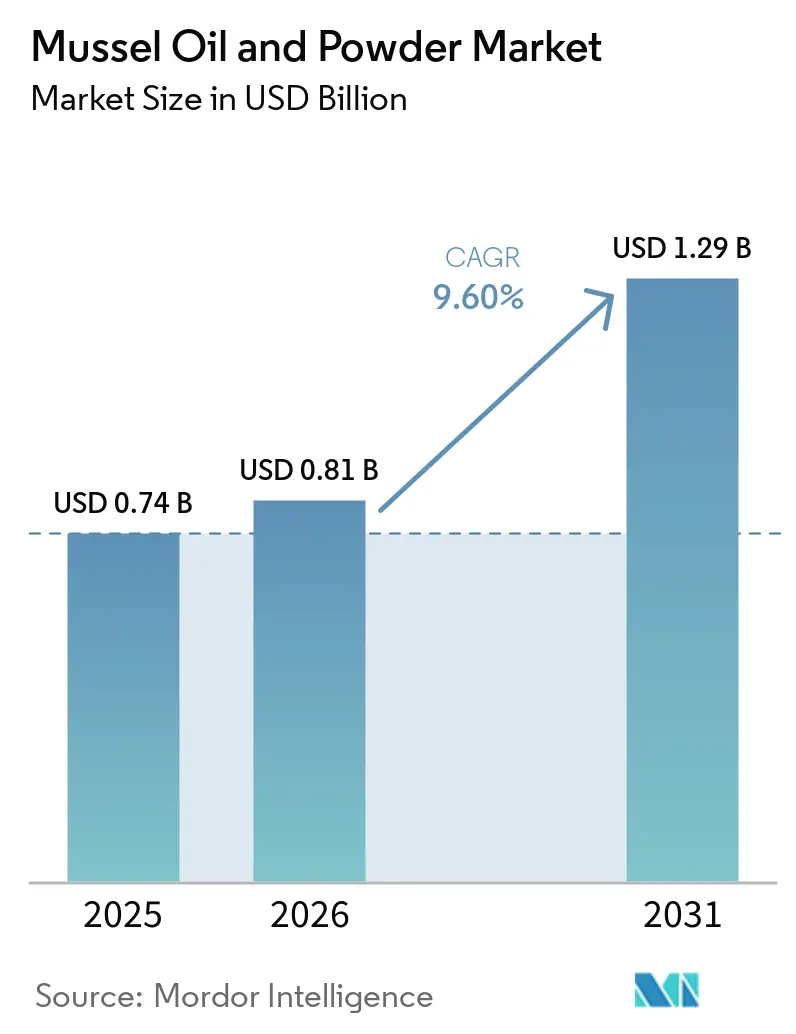
| Market Size (2026) | USD 0.81 Billion |
| Market Size (2031) | USD 1.29 Billion |
| Growth Rate (2026 - 2031) | 9.60 % |
| Fastest Growing Market | South America |
| Largest Market | Asia Pacific |
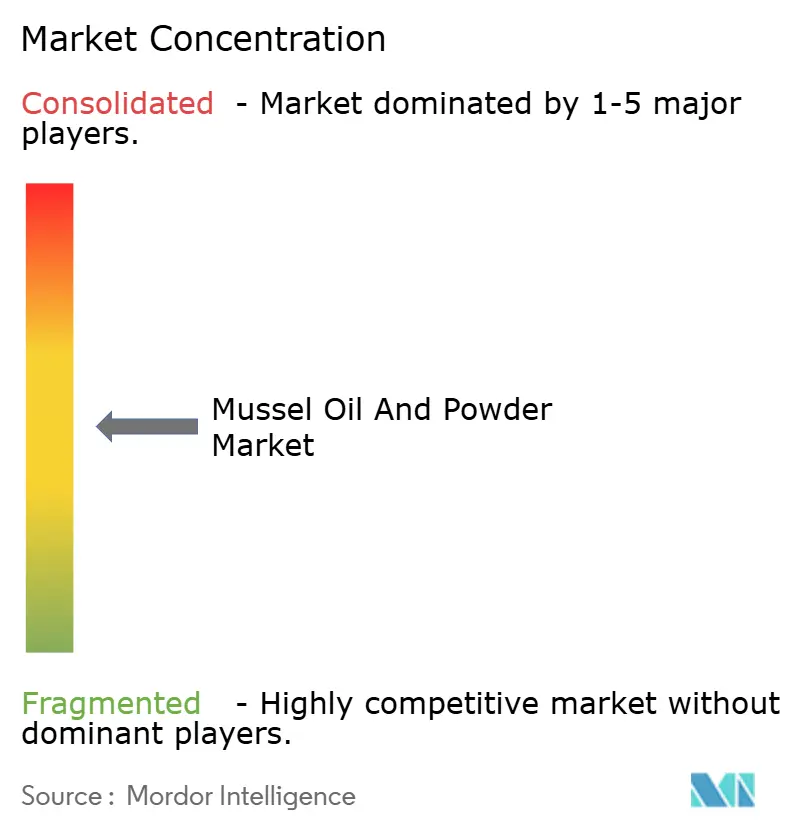
| Market Concentration | Medium |
Major Players *Disclaimer: Major Players sorted in no particular order Image © Mordor Intelligence. Reuse requires attribution under CC BY 4.0. | |
Mussel Oil And Powder Market Analysis by Mordor Intelligence
The Mussel Oil and Powder Market reached USD 0.74 billion in 2025, is valued at USD 0.81 billion in 2026, and will expand to USD 1.29 billion by 2031, registering a 9.60% CAGR during the forecast period. This trajectory signals a structural redefinition of marine-derived bioactives, from commoditized omega-3 inputs to high-value, clinically validated ingredients with targeted applications in osteoarthritis management, cardiovascular health, and inflammation control. New Zealand’s established leadership in Perna canaliculus (green-lipped mussel) aquaculture secures its position as the dominant supply hub. However, Chile’s expanding mussel farming capacity introduces a strategic alternative source, creating geographic diversification and the potential to rebalance value-chain dynamics over the next five years.
Key Report Takeaways
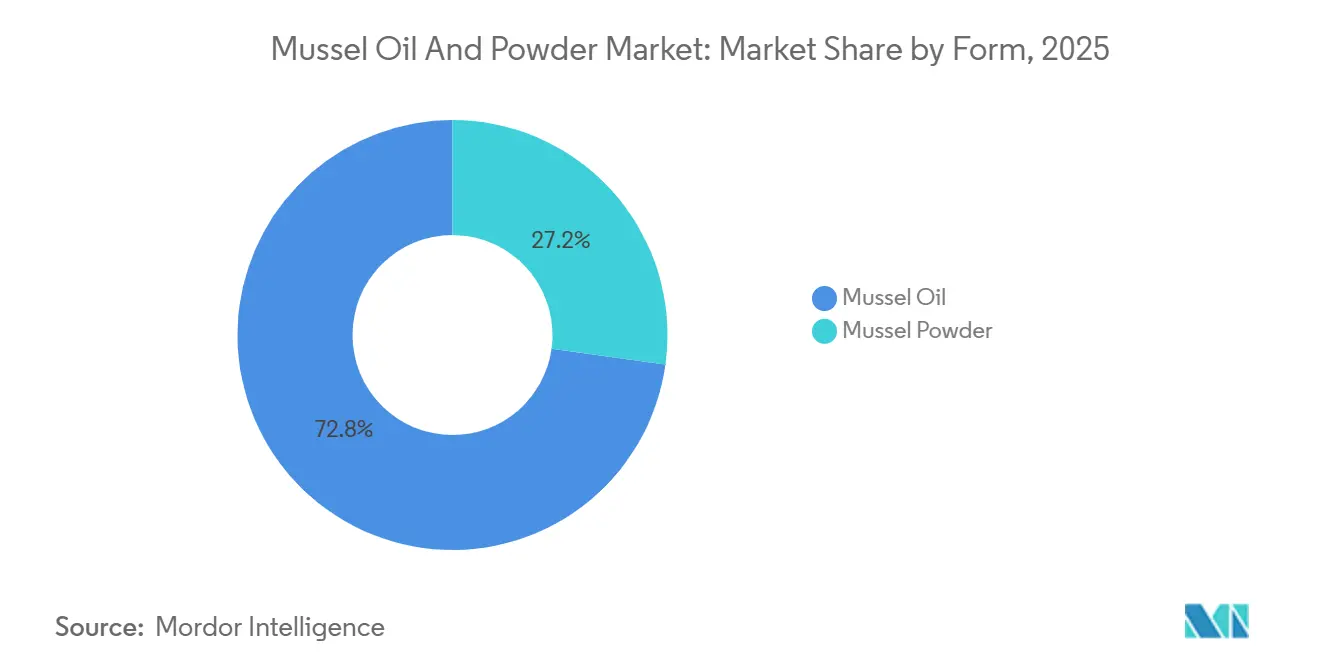
- By form, mussel oil captured 72.80% of the mussel oil and powder market share in 2025, whereas mussel powder is forecast to expand at an 11.70% CAGR through 2031.
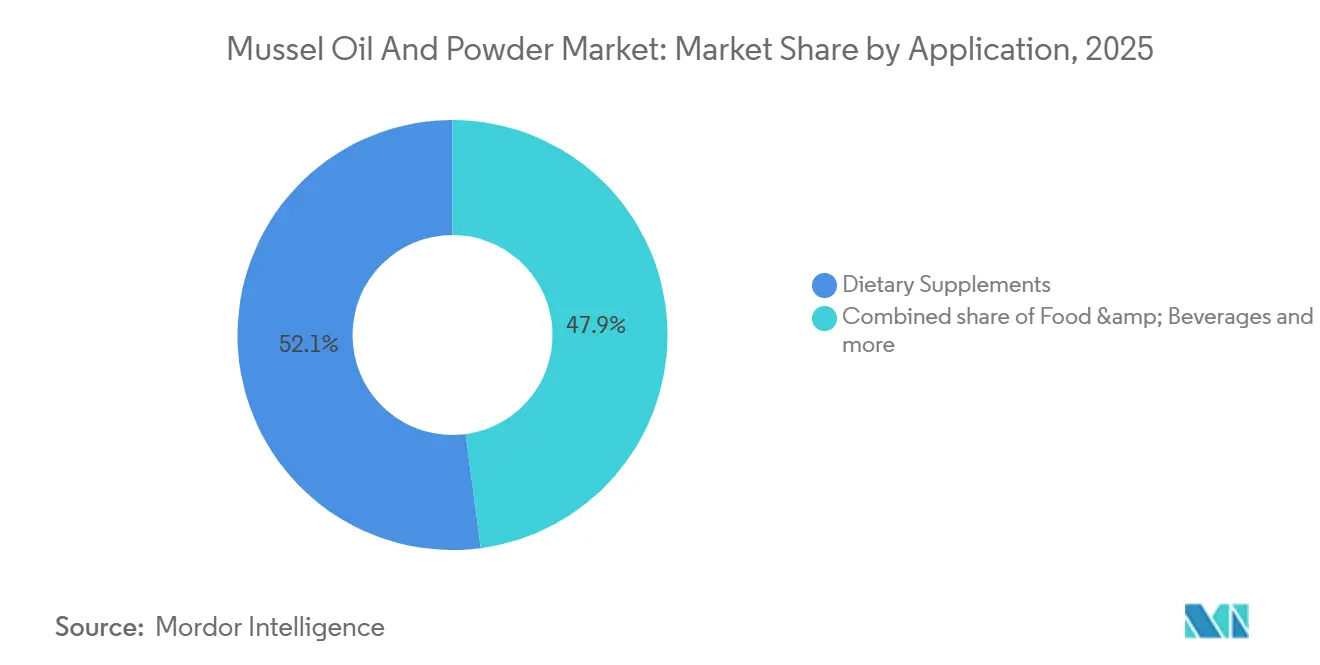
- By application, dietary supplements led with 52.10% revenue share in 2025, while foods and beverages are projected to post a 11.05% CAGR over 2026-2031.
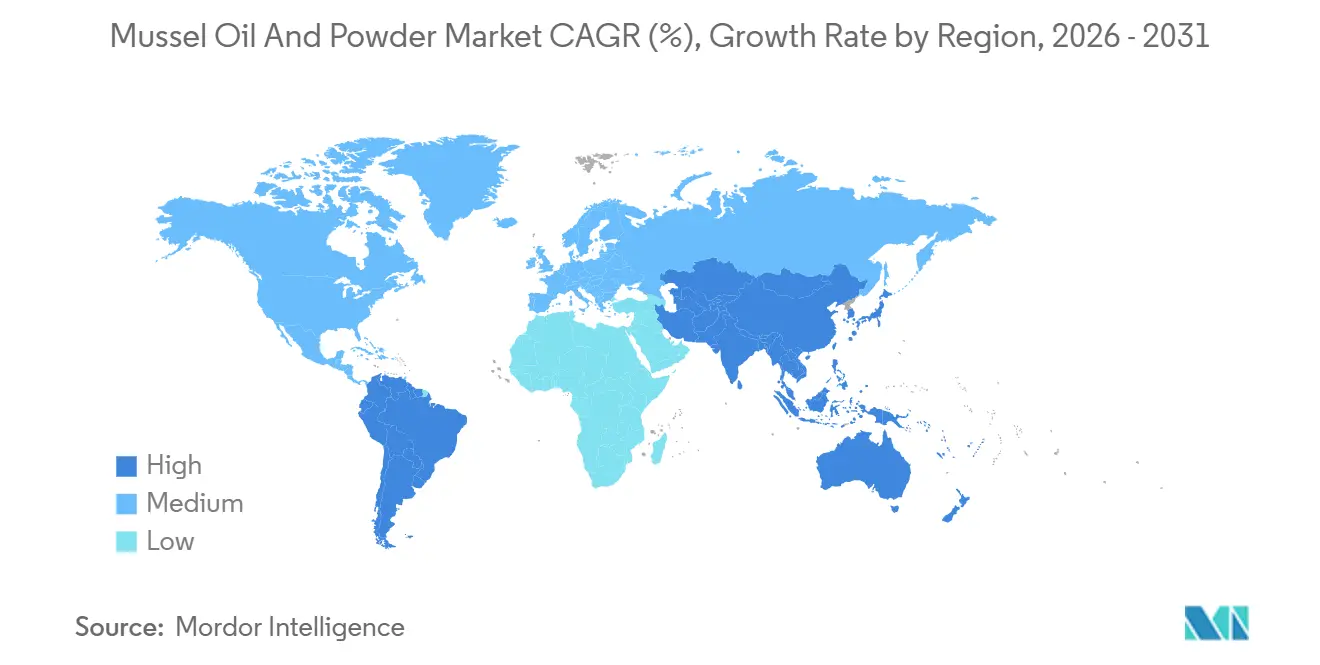
- By geography, Asia-Pacific commanded a 45.10% share in 2025; South America is expected to record the highest regional CAGR at 10.50% during the forecast period.
Note: Market size and forecast figures in this report are generated using Mordor Intelligence’s proprietary estimation framework, updated with the latest available data and insights as of January 2026.
Market Trends and Insights
Drivers Impact Analysis of Mussel Oil And Powder Market*
| Driver | (~) % Impact on CAGR Forecast | Geographic Relevance | Impact Timeline |
|---|---|---|---|
| Rising Consumer Awareness of Anti-Inflammatory and Joint Health Benefits of Mussel-Derived Ingredients | +2.1% | Global, with strongest uptake in North America and Europe | Medium term (2-4 years) |
| Expanding Demand for Omega-3-Rich Marine Ingredients in Functional Nutrition | +1.8% | Asia-Pacific core, spill-over to global markets | Long term (≥ 4 years) |
| Accelerating Shift Toward Marine-Based, Clean-Label Health Solutions | +1.5% | North America and European Union, expanding to Asia-Pacific | Medium term (2-4 years) |
| Advancements and Innovation in Extraction and Processing Technologies | +1.2% | Global, led by New Zealand and Nordic countries | Short term (≤ 2 years) |
| Strong Quality Assurance Standards Enhancing Product Credibility and Market Acceptance | +0.9% | Global, regulatory-driven compliance | Medium term (2-4 years) |
| Emerging Clinical Evidence Supporting Anti-Atherosclerotic and Cardiovascular Benefits | +1.1% | Global, clinical evidence-based adoption | Long term (≥ 4 years) |
| Source: Mordor Intelligence | |||
Rising Consumer Awareness of Anti-Inflammatory and Joint Health Benefits of Mussel-Derived Ingredients
The clinical validation of green-lipped mussel extract for osteoarthritis management has shifted the ingredient from niche supplement to evidence-based intervention. A 2024 systematic review published in Marine Drugs confirmed that mussel oil's unique omega-3 fatty acid profile, particularly eicosatetraenoic acid (ETA), inhibits both COX-2 and 5-LOX pathways, offering dual anti-inflammatory action that synthetic NSAIDs cannot replicate without adverse gastrointestinal effects. This mechanistic differentiation appeals to aging populations in Japan and Germany, where healthcare systems incentivize non-pharmaceutical pain management. The FDA's revised guidelines on dietary supplement health claims and the removal of molluscan shellfish from major allergen categories have increased market confidence by providing clear communication guidelines and reducing allergy-related concerns [1]. The ingredient's positioning as a marine alternative to glucosamine-chondroitin combinations is gaining traction among orthopedic practitioners who prescribe it as adjunct therapy, creating a physician-driven demand channel that bypasses traditional retail supplement distribution.
Expanding Demand for Omega-3-Rich Marine Ingredients in Functional Nutrition
Omega-3 phospholipids derived from mussel oil offer materially higher bioavailability than the triglyceride forms found in conventional fish oil, allowing formulators to achieve equivalent physiological outcomes at lower inclusion rates. Evidence from the Liggins Institute indicates that mussel oil phospholipids deliver approximately 1.7 times greater plasma EPA incorporation versus fish oil on a dose-equivalent basis. This enables manufacturers to meet nutritional label claims with reduced ingredient loadings, improving formulation efficiency and supporting margin optimization, particularly in cost-sensitive formats such as protein bars and ready-to-drink beverages. Rising disposable incomes across Asia-Pacific, especially in China and India, are accelerating demand for premium functional foods that deliver clinically meaningful omega-3 levels without the sensory drawbacks of traditional marine oils. Mussel oil’s relatively neutral taste profile provides a competitive advantage in this context, aligning with consumer preferences for both efficacy and palatability.
Accelerating Shift Toward Marine-Based, Clean-Label Health Solutions
Evolving clean-label requirements in North America and Europe are steering formulators toward minimally processed ingredients with fully traceable supply chains. Mussel oil produced supercritical CO₂ extraction, a solvent-free process, fits squarely within this positioning, supporting “chemical-free” marketing claims despite the absence of a formal regulatory definition. New Zealand’s mussel industry benefits from strong sustainability credentials, including certification from the Marine Stewardship Council for Perna canaliculus aquaculture. Producers actively incorporate these third-party validations into brand narratives, reinforcing provenance and environmental stewardship [2]. This positioning resonates particularly well with European consumers, who increasingly verify sustainability claims through independent databases. As a result, New Zealand suppliers maintain a defensible competitive advantage over lower-cost Chilean producers that have yet to establish comparable certification frameworks.
Advancements and Innovation in Extraction and Processing Technologies
The commercial rollout of subcritical dimethyl ether (DME) extraction by Japanese processors in 2024 expands the range of recoverable compounds from mussel biomass by preserving heat-sensitive bioactives such as fucoidan and chondroitin sulfate, components that are partially degraded under supercritical CO₂ conditions. This approach also enables simultaneous extraction of lipid and polysaccharide fractions in a single processing step, lowering capital requirements and improving yield efficiency, particularly for smaller-scale operators. In parallel, the transition from batch to continuous extraction systems, piloted by Aroma NZ in 2025, has materially improved processing throughput. Cycle times have been reduced from approximately eight hours to 90 minutes, driving down energy consumption and supporting just-in-time production models that minimize inventory holding costs and reduce working capital intensity.
Restraints Impact Analysis of Mussel Oil And Powder Market*
| Restraint | (~) % Impact on CAGR Forecast | Geographic Relevance | Impact Timeline |
|---|---|---|---|
| Elevated Production and Processing Costs Impacting Price Competitiveness | -1.4% | Global, acute in developed markets | Short term (≤ 2 years) |
| Increasing Adoption of Plant-Based and Vegan Diets Constraining Demand for Mussel-Derived Products | -0.8% | North America and European Union, expanding globally | Medium term (2-4 years) |
| Complex Regulatory Compliance Requirements Across Global Food and Supplement Markets | -0.6% | Global, regulatory complexity varies | Medium term (2-4 years) |
| Limited Consumer Awareness and Market Penetration in Emerging Economies | -0.5% | Africa, Latin America, parts of Asia | Long term (≥ 4 years) |
| Source: Mordor Intelligence | |||
Elevated Production and Processing Costs Impacting Price Competitiveness
Production costs remain a critical constraint in the mussel oil and powder industry, driven by capital-intensive extraction technologies and complex processing requirements. The adoption of supercritical CO₂ extraction, while essential for preserving bioactive compounds and ensuring product stability, requires significant upfront investment, typically ranging from USD 2 million to USD 5 million, along with highly specialized technical expertise. This elevates both capital expenditure (CAPEX) and ongoing operational expenditure (OPEX). Beyond extraction, downstream processes such as de-fatting, freeze-drying, and purification are energy-intensive and demand advanced infrastructure, further increasing unit production costs. Labor also represents a structural cost disadvantage. Logistics add another layer of complexity and cost. Mussel oil is highly susceptible to oxidation, necessitating strict cold-chain management across storage and transportation. Temperature-controlled shipping significantly increases freight expenses, often doubling costs compared to shelf-stable alternatives, while also introducing operational risks in long-distance distribution.
Increasing Adoption of Plant-Based and Vegan Diets Constraining Demand for Mussel-Derived Products
The rise of flexitarian and vegan diets, particularly among consumers aged 18 to 34 in North America and Europe, creates headwinds for marine-derived ingredients. A 2025 survey by the International Food Information Council found that 28% of U.S. consumers actively avoid animal-derived supplements, up from 19% in 2023, citing ethical and environmental concerns [3]. This demographic shift benefits algal omega-3 suppliers like DSM-Firmenich, whose life-cycle assessments show lower carbon footprints than mussel farming. While mussel aquaculture generates minimal greenhouse gas emissions compared to terrestrial livestock, the perception gap persists; consumers equate "plant-based" with sustainability, regardless of comparative environmental data.
*Our forecasts treat driver/restraint impacts as directional, not additive. The impact forecasts reflect baseline growth, mix effects, and variable interactions.
Mussel Oil And Powder Market Segment Analysis
By Form:
Oil Dominates on Bioavailability EdgeMussel oil's 72.80% revenue share in 2025 stems from its phospholipid-bound omega-3 structure, which bypasses hepatic metabolism and delivers EPA and DHA directly to cell membranes, a pharmacokinetic advantage that clinical formulators prioritize for anti-inflammatory protocols. The segment's dominance reflects the nutraceutical industry's preference for liquid softgel formats, which command higher retail price points than powder-filled capsules.
Mussel powder, however, is forecast to expand at 11.70% CAGR through 2031, driven by its integration into pet nutrition and functional food applications where oil's liquid form presents formulation challenges. Powder's lower moisture content extends shelf life to 24 months versus oil's 18-month window, reducing inventory risk for distributors operating in tropical climates. Emerging applications for mussel powder include its use as a natural flavor enhancer in savory snacks, where its umami profile, derived from free amino acids and nucleotides, replaces monosodium glutamate in clean-label formulations.

By Application:
Foods Accelerate Beyond SupplementsDietary supplements captured 52.10% of application revenue in 2025, anchored by established brands like Lyprinol and Blackmores that have built consumer trust over decades. Foods and beverages are expanding at 11.05% CAGR through 2031 as manufacturers embed mussel powder into protein shakes, energy bars, and fortified dairy products. This shift reflects a broader industry trend toward "food-first" nutrition, where consumers prefer functional benefits delivered through familiar food formats rather than pill-based supplements. Beverage innovators are exploiting mussel powder's water solubility to create ready-to-drink joint health shots, a format that appeals to younger consumers who associate capsules with illness rather than wellness. Animal nutrition applications are growing as veterinary research confirms mussel extract's efficacy for canine osteoarthritis and feline inflammatory bowel disease. A 2025 study in Veterinary Medicine and Science showed that dogs receiving mussel powder at 20 mg/kg body weight demonstrated 31% improvement in mobility scores versus placebo, prompting major pet food brands to reformulate senior dog lines with mussel inclusion.
Geography Analysis
APAC Mussel Oil and Powder Market
Asia-Pacific's 45.10% market share in 2025 reflects Japan's aging society, where 29% of the population exceeded 65 years in 2025, and the country's cultural acceptance of marine-based health products. Japan's Ministry of Health, Labour and Welfare recognizes mussel extract under its Foods with Function Claims (FFC) framework, enabling manufacturers to make joint health claims without pre-market approval, a regulatory pathway that accelerates product launches. China's market is expanding as urban consumers adopt preventive health behaviors, with mussel oil positioned as a premium alternative to fish oil in tier-1 cities like Shanghai and Beijing. Australia's domestic consumption remains modest, but the country serves as a re-export hub for New Zealand mussel products entering Southeast Asian markets.
South America Mussel Oil and Powder Market
South America is forecast to grow at 10.50% CAGR through 2031, driven by Chile's aquaculture expansion and Brazil's burgeoning wellness economy. Chile produced 412,000 metric tons of mussels in 2024, positioning the country as the world's second-largest supplier after China, yet most output is exported as frozen meat rather than processed into oil or powder [4].
North America and EMEA Mussel Oil and Powder Market
North America and Europe together accounted for approximately 35% of global revenue in 2025, with the United States leading due to its established dietary supplement market and high consumer spending on preventive health. Europe's market is shaped by EFSA's stringent health claim regulations, which require robust clinical evidence before permitting structure-function statements on labels. The Middle East and Africa represent emerging opportunities, with South Africa's urban centers showing early adoption of marine nutraceuticals, though distribution infrastructure and consumer education remain limiting factors.
Competitive Landscape
The mussel oil and powder market exhibits moderate fragmentation, with established companies and new entrants competing through product differentiation and technological improvements. Companies like MacLab, Aroma NZ, and Waitaki have established market positions through their expertise in harvesting, processing, and marketing mussel-derived products with proven benefits. This dual structure creates a market where control over raw material and extraction capabilities coexist with highly competitive end-market channels.
Established players have built defensible positions through expertise in harvesting, processing, and commercialization of mussel-derived bioactives. Their competitive advantage is reinforced by the use of advanced extraction technologies, including supercritical CO₂ systems, and strict adherence to quality standards that ensure product efficacy, purity, and traceability. Increasingly, differentiation is driven by clinical validation, with leading firms investing in randomized controlled trials to substantiate anti-inflammatory and joint health claims, thereby strengthening positioning in premium nutraceutical and pharmaceutical-adjacent segments.
The market is undergoing technological and competitive disruption. Emerging players, particularly Chinese biotech firms, are reverse-engineering established New Zealand extraction methodologies, while Chilean processors are investing in supercritical CO₂ infrastructure to compete on cost efficiency. Strategic partnerships, capacity expansions, and global distribution via e-commerce and B2B channels are enabling broader market reach.
Mussel Oil And Powder Industry Leaders
-
MacLab (NZ) Ltd
-
Aroma NZ Ltd
-
Waitaki Bio
-
Sanford Ltd
-
The Scoular Company
- *Disclaimer: Major Players sorted in no particular order
Mussel Oil And Powder Market Companies Covered in this Report
- MacLab (NZ) Limited
- Aroma NZ Limited
- Waitaki Bio Limited
- Sanford Limited
- Pharmalink International Limited (Lyprinol)
- Gencor Pacific Limited
- BioMarin NZ Limited
- MarinePhos NZ Limited
- The Scoular Company
- Shaanxi Yuantai Biological Technology Co., Ltd.
- Green Jeeva, LLC
- Shaanxi Pioneer Biotech Co., Ltd.
- ICEPAW GmbH
- GreenHerb Biological Technology Co., Ltd.
- Runherb, Inc.
- Trafa Pharmaceutical, Inc.
- NZ Superfood & Co. Limited
- NutriCargo, LLC
- RMF Nutraceuticals, LLC
- Mocca & Co. Limited
Recent Industry Developments in Mussel Oil And Powder Market
- January 2025: Aroma, a family-run business based in Christchurch, transformed its operations for New Zealand's green-lipped mussels (kūtai) into a successful global operation. The company processed mussels by extracting meat from shells and converting it into concentrated powder through freeze-drying. Aroma also employed flash drying, which converted frozen mussel meat into powder within five minutes. The company exports to more than 40 countries, with strong demand in the United States, Europe, Australia, Japan, South Korea, and growing markets in China and India.
- November 2024: A research project examined Australian mussels and abalone as potential treatments for Inflammatory Bowel Diseases (IBD). The Institute for Molecular Bioscience (IMB) and Mater Research Brisbane conducted a two-year study to identify and develop the anti-inflammatory properties of these molluscs. The research team analyzed the chemical composition and tested the anti-inflammatory characteristics of mussels and abalones from Yumbah Aquaculture's six shellfish farms in South Australia, Victoria, and Tasmania. IMB Professor Rob Capon reported that existing mussel oil and powder products demonstrated substantial health benefits.
- July 2024: Waitaki Biosciences, a New Zealand manufacturer of natural nutritional ingredients, expanded its facility to increase greenshell mussel oil extract production. The company's PernaTec Oil, an omega-3 and phospholipid-rich extract from New Zealand greenshell mussels, increased global supply availability. The expansion enhanced processing capacity and extraction technologies, expanding Waitaki's natural ingredients portfolio from New Zealand raw materials for health categories.
Global Mussel Oil And Powder Market Report Scope
Mussel oil and powder are bioactive marine-derived ingredients obtained primarily from green-lipped mussels (Perna canaliculus), valued for their anti-inflammatory, joint health, and nutritional properties.
The global mussel oil and powder market is categorized by form, application, and geography. By form, it is divided into mussel oil and mussel powder. In terms of application, the market covers dietary supplements, animal nutrition, food and beverages, pharmaceuticals/biopharmaceuticals, and other uses. Geographically, the analysis spans both emerging and developed regions, including North America, Europe, South America, Asia-Pacific, and the Middle East & Africa. Market size and forecasts for each segment are presented in both value (USD) and volume (tons).
Segmentation Overview
| Mussel Oil |
| Mussel Powder |
| Dietary Supplements |
| Animal Nutrition |
| Food and Beverages |
| Pharmaceuticals/ Biopharmaceuticals |
| Others |
| North America | United States |
| Canada | |
| Mexico | |
| Rest of North America | |
| Europe | Germany |
| United Kingdom | |
| France | |
| Netherlands | |
| Rest of Europe | |
| Asia-Pacific | China |
| India | |
| Japan | |
| Australia | |
| Rest of Asia-Pacific | |
| South America | Brazil |
| Argentina | |
| Rest of South America | |
| Middle East and Africa | South Africa |
| Saudi Arabia | |
| Rest of Middle East and Africa |
| By Form | Mussel Oil | |
| Mussel Powder | ||
| By Application | Dietary Supplements | |
| Animal Nutrition | ||
| Food and Beverages | ||
| Pharmaceuticals/ Biopharmaceuticals | ||
| Others | ||
| By Geography | North America | United States |
| Canada | ||
| Mexico | ||
| Rest of North America | ||
| Europe | Germany | |
| United Kingdom | ||
| France | ||
| Netherlands | ||
| Rest of Europe | ||
| Asia-Pacific | China | |
| India | ||
| Japan | ||
| Australia | ||
| Rest of Asia-Pacific | ||
| South America | Brazil | |
| Argentina | ||
| Rest of South America | ||
| Middle East and Africa | South Africa | |
| Saudi Arabia | ||
| Rest of Middle East and Africa | ||
Key Questions Answered in the Report
What is the current value of mussel oil and powder sales worldwide?
Global sales stand at USD 0.74 billion in 2026 and are on track to reach USD 1.29 billion by 2031.
Which form, oil or powder grows faster over the next five years?
Powder leads growth at an 11.70% CAGR, outpacing oil while oil keeps the larger revenue base.
How large is Asia-Pacific’s share of global demand?
Asia-Pacific accounts for 45.10% of 2024 volume, driven by China’s sizable supplement spend and Southeast Asia’s rapid uptake.
Why do manufacturers prefer supercritical CO₂ extraction for mussel lipids?
The method yields more omega-3s, protects heat-sensitive compounds and eliminates solvent residues, enabling premium labels.