
Fish Oil Omega-3 Market Size and Share
Market Overview
| Study Period | 2021 - 2031 |
|---|---|
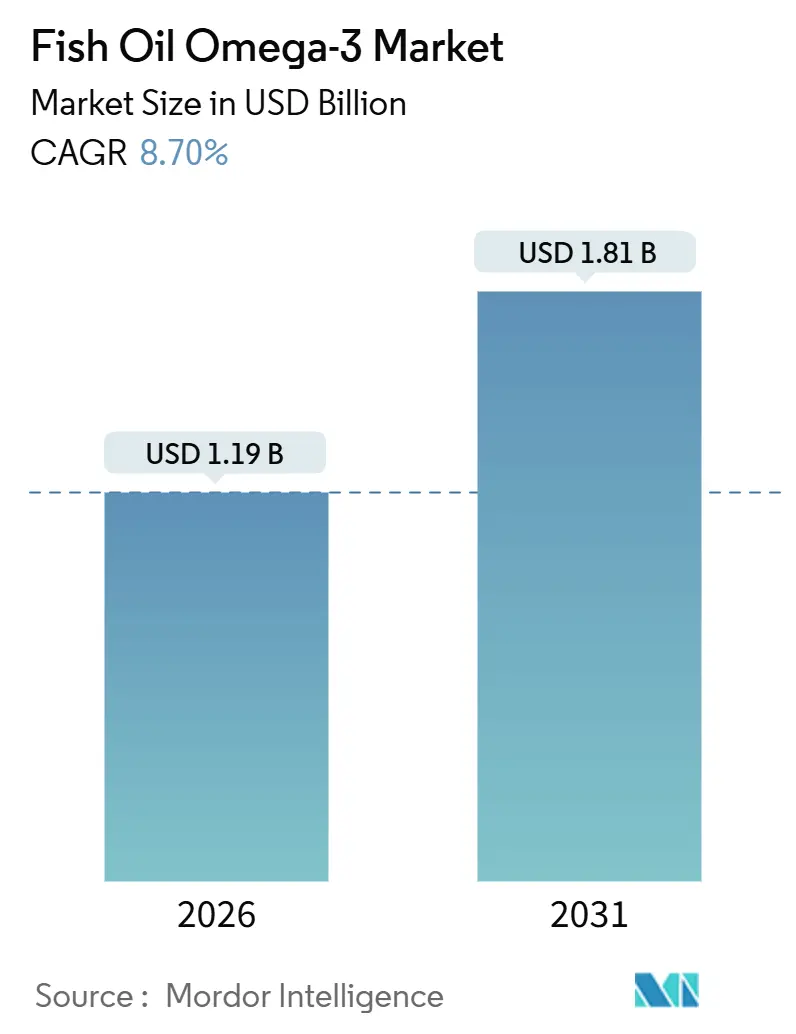
| Market Size (2026) | USD 1.19 Billion |
| Market Size (2031) | USD 1.81 Billion |
| Growth Rate (2026 - 2031) | 8.70 % |
| Fastest Growing Market | Asia Pacific |
| Largest Market | North America |
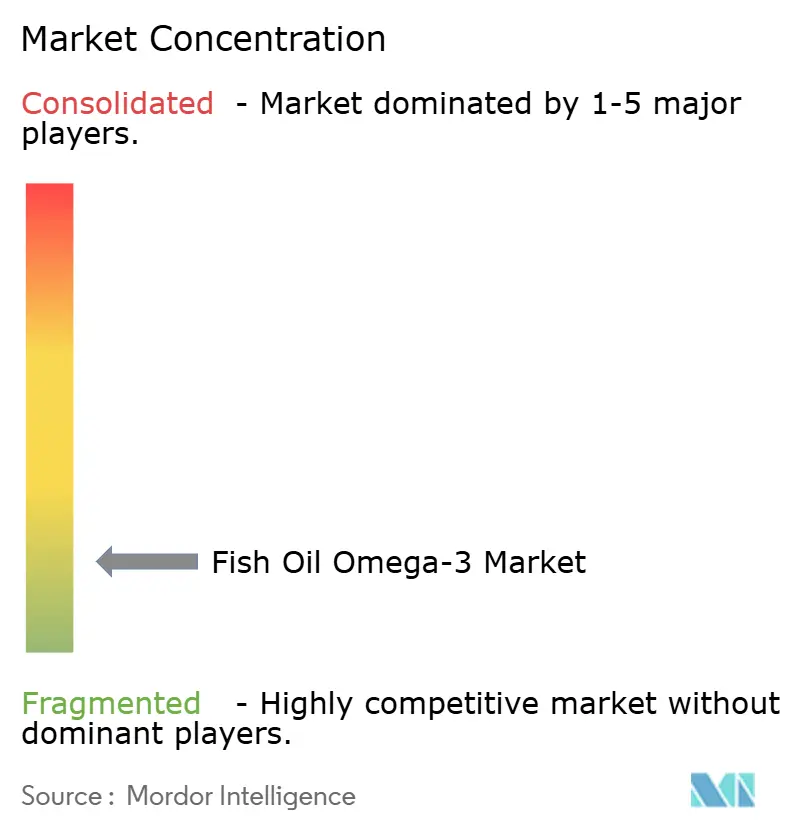
| Market Concentration | Low |
Major Players *Disclaimer: Major Players sorted in no particular order Image © Mordor Intelligence. Reuse requires attribution under CC BY 4.0. | |
Fish Oil Omega-3 Market Analysis by Mordor Intelligence
The fish oil omega-3 market size stands at USD 1.19 billion in 2026 and is projected to reach USD 1.81 billion by 2031, translating into an 8.7% CAGR over the forecast period. Surging prescription demand for high-dose eicosapentaenoic acid (EPA), a rebound in Peruvian anchoveta biomass, and the establishment of supercritical CO₂ purification hubs in Chile and Peru are expanding profit margins beyond the conventional dietary supplement arena. In November 2025, cardiology guidelines endorsed a daily intake of ≥2 g EPA for managing residual triglycerides, leading to a significant increase in volumes covered by insurance, as healthcare providers and patients increasingly adopt these recommendations. Concurrently, Norway's reformulations in aquafeed are ensuring elevated levels of EPA/DHA in salmon muscle, which is critical for maintaining the nutritional value of farmed salmon and supporting consumer demand. This, in turn, bolsters upstream crude oil demand, creating a ripple effect across the supply chain. Collectively, these dynamics signal a shift from basic oils to premium concentrates, reinforcing the optimistic long-term growth trajectory of the fish oil omega-3 market.
Key Report Takeaways
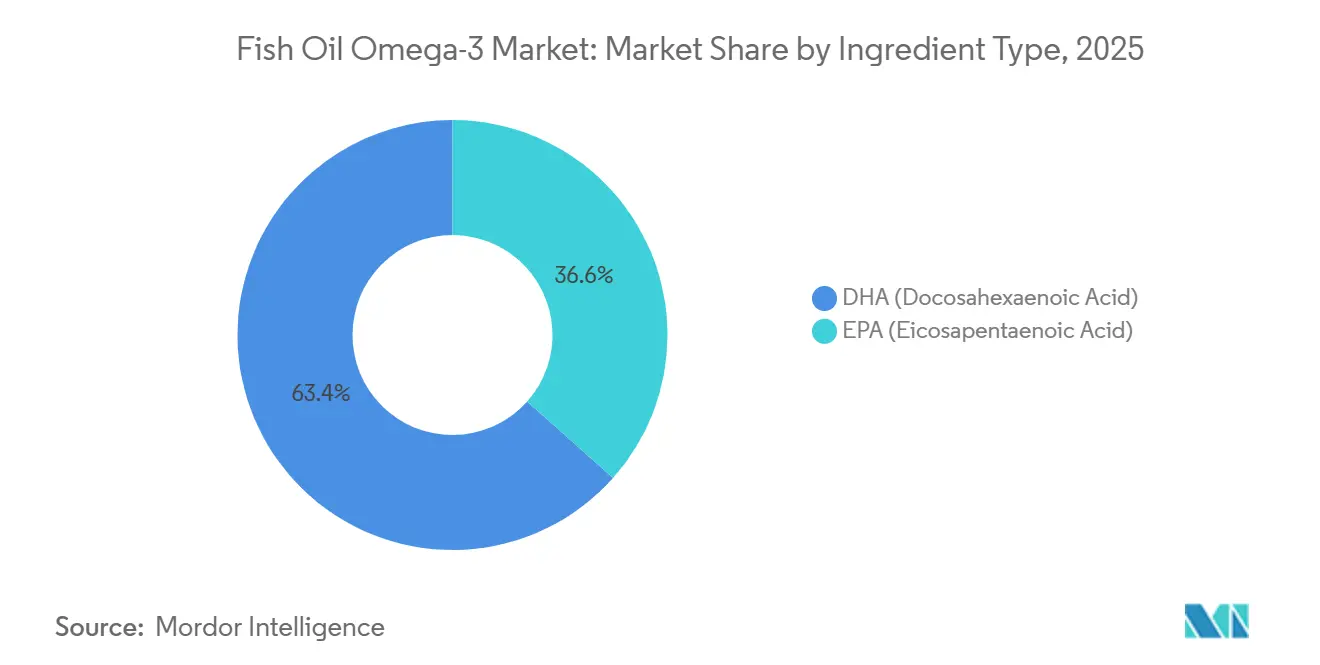
- By ingredient type, docosahexaenoic acid (DHA) led with a 63.42% fish oil omega-3 market share in 2025, whereas EPA is forecast to record a 10.04% CAGR through 2031
- By species, anchovy accounted for 27.03% share of the fish oil omega-3 market size in 2025, while salmon-derived oils are poised to expand at 9.51% CAGR to 2031
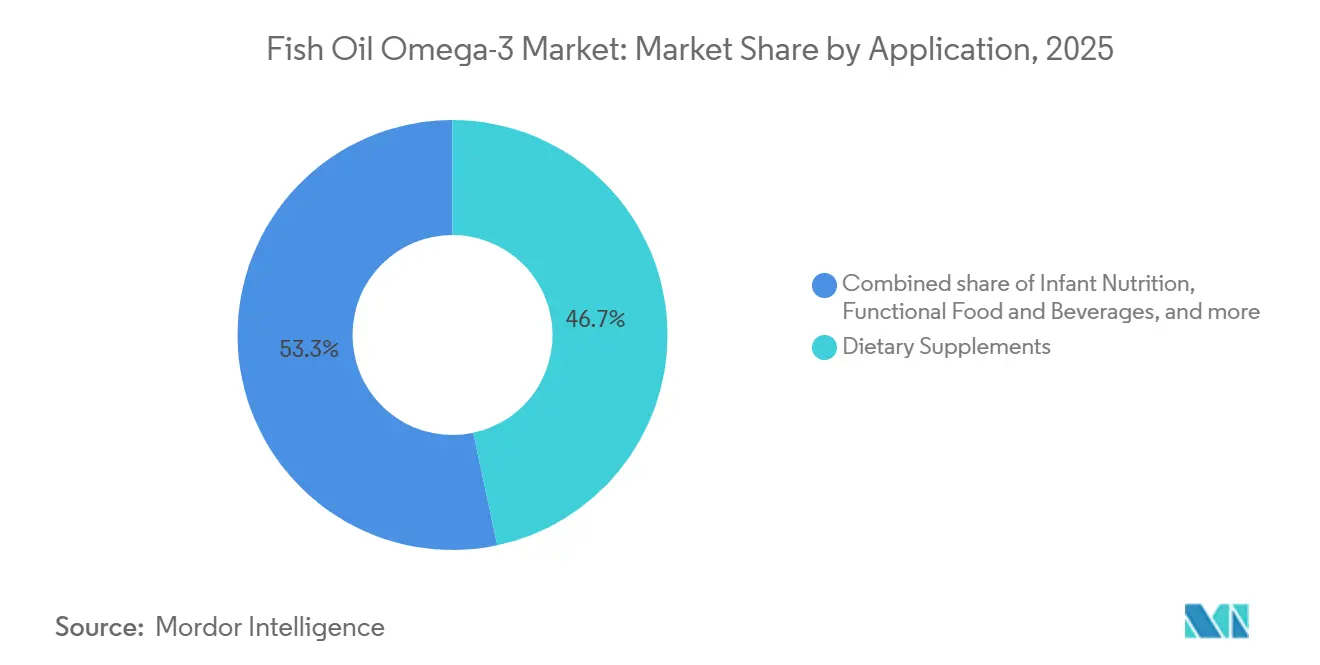
- By application, dietary supplements held 46.66% revenue share in 2025; infant nutrition represents the fastest-growing application, advancing at a 10.44% CAGR through 2031
- By end user, adults represented 78.44% of 2025 revenue, but geriatric cohorts will rise at 6.52% CAGR during 2026-2031
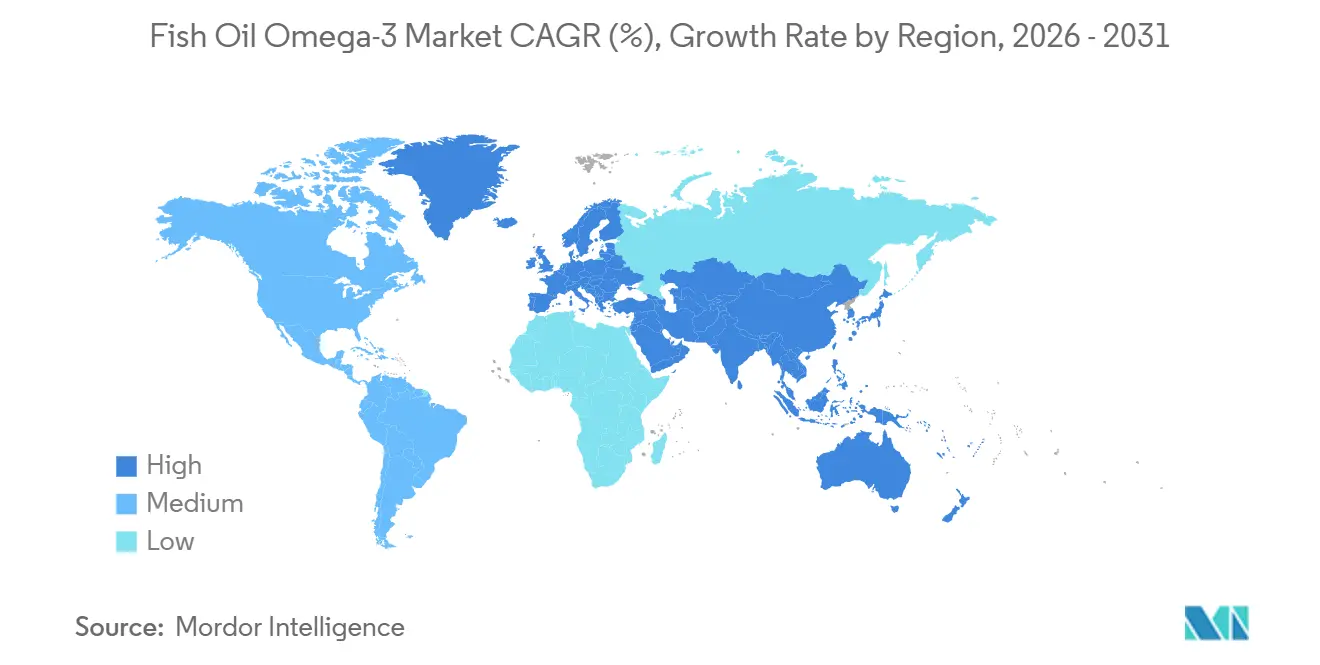
- By geography, North America captured 34.10% revenue in 2025, yet Asia-Pacific is projected to grow at 10.80% CAGR through 2031
Note: Market size and forecast figures in this report are generated using Mordor Intelligence’s proprietary estimation framework, updated with the latest available data and insights as of January 2026.
Market Trends and Insights
Drivers Impact Analysis of Fish Oil Omega-3 Market*
| Driver | (~) % Impact on CAGR Forecast | Geographic Relevance | Impact Timeline |
|---|---|---|---|
| Functional-food boom in EPA/DHA-fortified beverages | +1.8% | North America, Europe, Asia-Pacific urban centers | Medium term (2-4 years) |
| Prescription-grade EPA gaining cardiology guideline support | +1.5% | Global, early adoption in the United States, Germany, Japan | Short term (≤2 years) |
| Emergence of supercritical CO₂ purification hubs in South America | +0.9% | Chile, Peru | Long term (≥4 years) |
| Aquafeed reformulations to preserve omega-3 levels in salmon | +0.8% | Norway, Canada, Chile | Medium term (2-4 years) |
| GOED-led quality-seal adoption across Asia e-commerce | +0.7% | China, Japan, South Korea, India | Short term (≤2 years) |
| MSC-certified small-pelagic quotas unlocking premium pricing | +0.6% | Peru, Norway, Iceland | Medium term (2-4 years) |
| Source: Mordor Intelligence | |||
Functional-food boom in EPA/DHA-fortified beverages
In a bid to navigate "softgel fatigue," global beverage giants are infusing EPA and DHA concentrates into their ready-to-drink dairy and plant-based offerings. These liquid formats not only boost bioavailability but also allow for smaller dosages without compromising on label claims, making them a convenient and efficient alternative to traditional supplements. Unilever's 2024 micro-encapsulation patents underscore a strategic push towards taste-masking, effectively eliminating the fishy aftertaste that has hindered widespread acceptance and paving the way for broader consumer adoption. By strategically placing these products in convenience retail outlets, brands are capitalizing on impulse buys, extending their reach beyond traditional pharmacy aisles, and tapping into a wider audience. With a focus on cognitive and cardiovascular benefits, these brands are successfully attracting non-supplement users, broadening the consumer base for the fish oil omega-3 market and driving growth in this segment. The United States Food and Drug Administration's approval of qualified health claims regarding the relationship between Eicosapentaenoic acid (EPA) and Docosahexaenoic acid (DHA) consumption and the reduced risk of hypertension and coronary heart disease represents a pivotal shift in regulatory stance[1].
Prescription-grade EPA gaining cardiology guideline support
The American Heart Association recommended high-dose EPA for patients with triglycerides, even if they're on statins[2]. This endorsement paves the way for icosapent ethyl to be recognized as a reimbursable therapy, leading to a notable shift of volumes from over-the-counter shelves directly into hospital formularies. When insurers make bulk purchases, it not only enhances price visibility for refiners but also prompts upgrades at refineries, focusing on achieving concentrates with ≥96% purity. With the European Society of Cardiology's endorsement anticipated in 2026, a similar trajectory is expected in Germany, France, and Italy, mirroring the U.S. trend. All these developments underscore the strengthening of prescription adoption, bolstering the clinical revenue stream for the fish oil omega-3 market.
Emergence of supercritical co₂ purification hubs in South America
Chile’s Golden Omega and Peru’s TASA have set up supercritical CO₂ plants, ensuring compliance with European Pharmacopoeia monographs and eliminating solvent residues. These advanced facilities enable the production of high-purity pharmaceutical-grade fish oil omega-3, which commands 3-4 times the price of crude oil. This significant price premium supports capital-intensive expansions, allowing the companies to enhance and consolidate regional production capacity. By forging direct supply agreements with Japanese and South Korean pharmaceutical firms, they bypass European toll refiners, thereby capturing additional margins and improving profitability. Furthermore, financial support from multilateral lenders reduces their cost of capital, strengthening South America's competitive position in the global market. These strategic initiatives collectively embed long-term supply security and resilience into the fish oil omega-3 market.
Aquafeed reformulations to preserve omega-3 levels in salmon
Norwegian formulators Skretting and BioMar have re-engineered diets to ensure farmed salmon fillets contain 2-2.5 g of EPA/DHA per 100 g, restoring the fish's nutritional appeal and addressing consumer demand for healthier food options. By using retention agents to curb fatty acid oxidation, they've managed to lower marine oil inclusion rates without sacrificing flesh quality, which is critical for maintaining the product's market competitiveness. Retailers promoting "high-omega-3 salmon" command price premiums, channeling added value back to feed suppliers and incentivizing innovation in feed formulations. Cargill's EWOS division employs precision-feeding protocols, adjusting dosages based on growth phases to optimize feed-conversion efficiency and reduce waste. This heightened demand for aquafeed, driven by the need for sustainable and efficient production, in turn, bolsters upstream crude-oil use in the fish oil omega-3 market.
Restraints Impact Analysis of Fish Oil Omega-3 Market*
| Restraint | (~) % Impact on CAGR Forecast | Geographic Relevance | Impact Timeline |
|---|---|---|---|
| Volatile Peruvian anchoveta biomass and quota suspensions | -1.2% | South America, global buyers | Short term (≤2 years) |
| Surging microalgae capacity lowering entry barriers | -0.9% | US, Netherlands, Brazil | Medium term (2-4 years) |
| Polar contaminant limits tightening in EU and China | -0.7% | Europe, China | Short term (≤2 years) |
| Deep-sea freight decarbonization costs inflating CIF prices | -0.5% | Global trade lanes | Long term (≥4 years) |
| Source: Mordor Intelligence | |||
Volatile Peruvian anchoveta biomass and quota suspensions
Late in 2023, El Niño events led to a significant decline in anchoveta recruitment, prompting quota suspensions that caused crude oil prices to surge by 34% in just two months. This disruption highlighted the vulnerability of the anchoveta supply chain to climatic events. While a 3 million-tonne quota set for the first half of 2025 indicates a recovery in biomass, ongoing trends of ocean warming pose a long-term threat to the stability and predictability of this supply. Pharmaceutical companies, which depend on consistent EPA/DHA inputs for their validated dossiers, face challenges as any variance in supply can disrupt production and regulatory compliance. Although there is a shift towards using Norwegian herring or Chilean jack mackerel as alternative sources, this approach merely transfers the ecosystem risk rather than resolving it. Consequently, the volatility of anchoveta continues to exert significant pressure on the fish oil omega-3 market in the short term, raising concerns about the sustainability of the supply chain.
Surging microalgae capacity lowering entry barriers
Evonik and Corbion's Veramaris unit boosted Nebraska's fermentation capacity from 15,000 tons to 25,000 tons, significantly increasing the production of vegan EPA/DHA oils free from marine contaminants. These oils provide a sustainable alternative to traditional fish oils, catering to the growing demand for plant-based and environmentally friendly products. With declining costs in algae units, buyers are positioned to limit fish-oil prices, creating a shift in market dynamics. DSM-Firmenich predicts algae oils might capture 18-22% of supplement volumes by 2030, heightening competition and pressuring traditional fish oil producers to innovate. Modular bioreactors, bypassing coastal siting limitations, are streamlining supply chains by enabling production closer to demand centers. Meanwhile, the looming threat of commoditization is undermining upstream pricing power in the fish oil omega-3 market, potentially reshaping the competitive landscape.
*Our forecasts treat driver/restraint impacts as directional, not additive. The impact forecasts reflect baseline growth, mix effects, and variable interactions.
Fish Oil Omega-3 Market Segment Analysis
By Ingredient Type:
EPA Ascends to Pharmaceutical StatusWith a projected CAGR of 10.04%, EPA-based ingredients are poised to outpace the broader fish oil omega-3 market, eclipsing the growth of DHA, even though DHA commands a dominant 63.42% revenue share in 2025. Hospitals and prescription channels are increasingly gravitating towards EPA concentrates with a purity of ≥96%. These premium concentrates, priced at about three to four times more than balanced EPA/DHA blends, are enabling an expansion in value capture, even if the volumes remain modest. To cater to these specialized demands, refiners are harnessing advanced chromatography columns and fractionation systems. These technologies adeptly segregate crude fish oil into distinct EPA-rich and DHA-rich streams, ensuring compliance with the varied pharmaceutical and nutritional regulations. While DHA maintains its supremacy in infant formulas and cognitive-health products like gummies, its growth trajectory is notably slower. This deceleration underscores a strategic shift towards the more lucrative therapeutic EPA within the fish oil omega-3 landscape. Collectively, this dual demand profile bolsters pricing power for specialty-grade outputs in contrast to their commodity-grade counterparts.
The shifting product landscape is sculpting unique supply-chain dynamics for both EPA and DHA. Pharmaceutical-grade EPA is mandated to traverse GMP-compliant facilities, adhering to stringent cleaning and documentation standards. In contrast, DHA supplements generally align with dietary and nutraceutical benchmarks. Processors adept in managing both streams enjoy a strategic advantage, allowing them to pivot capacity between wellness and clinical applications as market regulations and reimbursement avenues shift. Research and development efforts are increasingly focusing on EPA pro-drugs and advanced delivery mechanisms. These innovations promise heightened bioavailability and the potential to expand approved medical indications in the coming decade. Meanwhile, capital markets are showing a pronounced preference for companies boasting dual-stream capabilities and advanced purification technologies, perceiving them as prime candidates to harness the full spectrum of opportunities within the fish oil omega-3 market.
By Species:
Salmon Oils Rise Amid Anchoveta VolatilityIn 2025, anchovy-derived oils dominated the fish oil omega-3 market, capturing a 27.03% volume share. This dominance was driven by bountiful Peruvian harvests and well-established supply chains, which efficiently deliver cost-effective EPA/DHA concentrates for both supplements and aquaculture feeds. When sourced sustainably, these small pelagic fish yield high omega-3 levels with minimal contaminants. This quality supports a wide range of applications, from nutraceuticals to animal nutrition, even in the face of quota fluctuations in the South Pacific. While herring and jack mackerel offer additional volumes, they face challenges with tightening quotas in the North Sea and Pacific. This dynamic reinforces the anchovy's stable baseline. In Norway, producers not only rely on wild catches but also refine salmon processing trimmings into low-contaminant oils. These oils, certified by MSC and Friends of the Sea, command sustainability premiums, helping to buffer revenue volatility. This diverse species mix guarantees a consistent throughput, even amidst the unpredictable nature of fishery yields.
Salmon oils are on a rapid ascent, with projections indicating a 9.51% CAGR growth rate through 2031. This surge is largely attributed to advancements in aquaculture, which are refining feed formulations and boosting the omega-3 content in farmed salmon fillets. Norwegian operations are turning salmon viscera by-products into premium concentrates. By leveraging dual certifications, they not only command elevated prices but also seamlessly integrate into retail marketing, positioning their salmon as a direct health benefit due to its high omega-3 content. This vertical integration fosters unique synergies: heightened demand for salmon fillets amplifies the availability of by-products, and the reverse is equally true. Such dynamics solidify salmon's pivotal role in the fish oil omega-3 value chain. Refiners are capitalizing on this trend, achieving monetization across multiple products and balancing the inherent risks of wild captures with the stability of farmed supplies. The overall trajectory highlights salmon's escalating significance in addressing the world's growing appetite for omega-3s.
By Application:
Infant Nutrition Surges Ahead of SupplementsIn 2025, dietary supplements dominated the fish oil omega-3 market, securing a 46.66% revenue share. This surge was fueled by consumer preference for convenient formats, such as capsules, soft gels, and liquids, delivering EPA/DHA benefits for heart, brain, and joint health. The segment's strength lies in the widespread awareness of omega-3 advantages and its diverse formats, appealing even to those averse to pills. This has allowed it to maintain its lead amidst consistent growth in both retail and e-commerce. While prescription therapies, like Lovaza, offer concentrated formulations for hypertriglyceridemia and command a premium value per unit, their overall market share remains limited due to lower sales volumes compared to over-the-counter alternatives. Functional foods and beverages, such as fortified milks and smoothies, make incremental contributions by targeting casual consumers. This blend of over-the-counter accessibility and pharmaceutical premium pricing underscores the market's diverse landscape.
Infant nutrition is the market's fastest-growing segment, projected to expand at a 10.44% CAGR through 2031. This growth is largely driven by mandates from the WHO and EFSA, emphasizing DHA's role in brain and eye development. To align with these stringent standards, formulators are focusing on low-odor, 24-month stable concentrates, carving out high-margin niches despite the smaller volumes. Regulatory changes, notably the EU's 2021 mandate for 20-50 mg DHA per 100 kcal, have further spurred adoption, especially among working parents seeking products that closely mimic breast milk. In response, processors are innovating with micro-encapsulated powders and pharma-grade formulations, catering to both the infant nutrition and prescription markets. This strategy not only hedges against market cyclicality but also ensures a foothold in both wellness and clinical sectors. By diversifying their portfolios, suppliers are well-positioned to reap benefits from both mainstream supplements and niche nutrition markets.

By End User:
Seniors Drive Value, Infants Drive GrowthIn 2025, adults commanded a dominant 78.44% share of the fish oil omega-3 market, driven by a surge in wellness-focused softgel adoption and an uptick in EPA prescriptions for heart health. This segment not only emphasizes heart and cognitive health but also taps into the burgeoning "beauty from within" trend, offering skin hydration solutions. These products, presented in user-friendly formats, resonate with a diverse audience. Meanwhile, children's gummies serve as a popular transition, bridging the gap between infant products and adult supplements, ensuring consistent family usage. Though infants represent a smaller segment, their fortified formulas command premium prices. The adult-centric focus highlights omega-3's preventive health significance, especially in countering lifestyle-induced deficiencies.
Geriatric consumers, the market's fastest-growing segment, are projected to expand at a 6.52% CAGR through 2031. As the elderly increasingly prioritize cognitive health and cardiovascular safety, their spending on clinical-grade products rises. This is evident in their focus on joint mobility, memory enhancement, and anti-inflammatory benefits. Recognizing the diverse needs, the industry tailors offerings - from flavored gummies for kids to potent capsules for seniors. This specialization, backed by rigorous research and development and claim validation, raises entry barriers. While established players navigate this intricate landscape to protect their market share, it's the infants, with their DHA-fortified formulas, who contribute the most incremental revenue. By diversifying portfolios to cater to all age groups, stakeholders effectively hedge against demand fluctuations in the fish oil omega-3 market.
Geography Analysis
North America Fish Oil Omega-3 Market
In 2025, Medicare Part D's reimbursement of icosapent ethyl helped North America secure 34.10% of the revenue. IMS Health highlighted this momentum, noting a robust 47% year-over-year growth with 2.3 million prescriptions recorded in Q4 2025. While Canada's over-the-counter market and Mexico's fortified-food initiatives bolster demand, the U.S. shines brightest, thanks to its advanced clinical infrastructure, which supports the development and distribution of high-quality omega-3 products. As generics enter the fray, competition heats up, leading to price pressures and increased innovation among manufacturers. Yet, premium formulations, endorsed by GOED and MSC seals, maintain a pricing advantage due to their superior quality and certifications, solidifying North America's dominance and profitability in the fish oil omega-3 market.
APAC Fish Oil Omega-3 Market
Asia-Pacific is poised to take the lead, eyeing a projected 10.80% CAGR through 2031. China's SAMR aligns contaminant limits with EU standards, guiding imports towards purer oils and ensuring compliance with stringent quality benchmarks. Japan's FOSHU initiative, championing EPA/DHA health benefits, and its aging demographic, ensure consistent demand, as older populations increasingly seek health supplements. In India, the integration of omega-3s into staple edible oils expands market reach, catering to a growing health-conscious consumer base. E-commerce platforms like Tmall and Rakuten are reshaping direct-to-consumer sales, allowing smaller global brands to access vast audiences without the overhead of physical stores, thereby democratizing market entry and fostering competition.
Europe Fish Oil Omega-3 Market
Germany, the UK, and Scandinavia, known for their supplement-centric cultures, anchor Europe's robust presence in the industry. These regions have a long-standing tradition of prioritizing health and wellness, which drives the demand for dietary supplements. Despite navigating stringent regulations, including compliance with the European Food Safety Authority (EFSA) standards, and championing sustainability through eco-friendly practices and packaging, Europe continues to assert its dominance in the global market. With the European Food Safety Authority at the helm, the region is making strides in global novel food approvals and safety evaluations[3]. Norway reaps rewards from its integrated approach, merging herring catches with salmon processing and top-tier purification. Though Southern Europe trails in per-capita consumption, there's a noticeable uptick, especially with functional drinks targeting heart health. Overall, Europe's regulatory landscape solidifies its role as a cornerstone in the global fish oil omega-3 market.
Regulatory Landscape
Regulation for fish oil omega-3 increasingly differentiates between dietary-supplement use, infant nutrition specifications, and pharmaceutical-grade concentrates, with documentation demands rising for identity, contaminants, and process controls. In the United States, the FDA elevated dietary supplement ingredient oversight in 2026 through Human Foods Program priority deliverables, including final guidance on New Dietary Ingredient (NDI) safety and identity documentation. The FDA also convened a March 2026 public meeting (Office of Dietary Supplement Programs docket) on the regulatory scope of dietary ingredients produced using novel or microbial methodologies.
In Europe, the regulatory pathway for omega-3 ingredients continues to evolve through novel food authorizations and safety opinions tied to specific sources and use-cases. The European Commission Implementing Regulation (EU) 2024/2062 amended conditions of use for Schizochytrium sp. oil, including lowering the authorized minimum DHA content to 15.0%, which affects how suppliers position algal DHA inputs versus marine oils across foods and supplements. In 2026, EFSA published a safety assessment for Schizochytrium sp. A2 oil for use in infant and follow-on formula, reinforcing the role of source-specific assessments in enabling infant nutrition formulations and raising the compliance bar for documentation and quality systems across supply chains.
Competitive Landscape
The fish oil omega-3 market concentration remains highly fragmented, with capacity spread across Peruvian fishmeal processors, Norwegian salmon-oil refiners, and Chilean supercritical specialists. In October 2024, KD Pharma acquired DSM-Firmenich's Marine Lipids, consolidating seven plants across three continents. Yet, this move still represents less than 15% of refined volumes, underscoring the industry's fragmentation. The limited market share, despite the scale of consolidation, highlights the complexities of operating in a highly diversified and competitive market where achieving dominance remains a significant challenge. In a related shift, BASF divested to Louis Dreyfus in September 2025, signaling a trend where large conglomerates are retreating from niche nutrition segments. This strategic exit creates opportunities for supply-chain-focused traders to strengthen their market presence, address emerging gaps, and adapt to evolving industry dynamics.
Major players are turning to microalgae fermentation, a sustainable alternative, to mitigate risks in the anchoveta market and reduce reliance on traditional fish oil sources. This approach not only addresses supply chain vulnerabilities but also aligns with the growing consumer preference for plant-based and environmentally friendly products. Meanwhile, mid-tier companies are adopting supercritical CO₂ technology, ensuring their products meet pharmaceutical-grade standards and comply with stringent regulations, all while catering to the rising demand for high-purity omega-3s. This technology enables the production of omega-3 oils with minimal impurities, making them suitable for sensitive applications such as infant nutrition and medical formulations. On another front, direct-to-consumer brands are leveraging blockchain traceability and GOED seals in the Asian e-commerce arena to combat counterfeiting. By fostering consumer trust and guaranteeing product authenticity, they've managed to command double-digit price premiums, further solidifying their market position in a region where counterfeit concerns are prevalent.
Key technological advancements, such as continuous chromatography, enzymatic esterification, and short-path distillation, are pivotal for enhancing product quality and production efficiency. Continuous chromatography allows for precise separation of omega-3 fatty acids, while enzymatic esterification improves bioavailability and stability. Short-path distillation, on the other hand, ensures the removal of contaminants without compromising the integrity of the product. Concurrently, as consumers and retailers heighten their demand for eco-friendly practices, sustainability certifications have become essential for accessing the retail market. These certifications, such as MSC (Marine Stewardship Council) and Friend of the Sea, validate responsible sourcing and production practices, which are increasingly influencing purchasing decisions. These diverse strategies underscore the competitive and ever-evolving landscape of the fish oil omega-3 market, where innovation and adaptability are paramount for success.
Fish Oil Omega-3 Industry Leaders
-
BASF SE
-
Pelagia AS
-
DSM-Firmenich
-
Olvea Group
-
Croda International plc
- *Disclaimer: Major Players sorted in no particular order
Fish Oil Omega-3 Market Companies Covered in this Report
- DSM-Firmenich
- BASF SE
- Croda International plc
- Omega Protein Corporation
- Corbion NV
- GC Rieber VivoMega
- Pelagia AS
- TripleNine Group A/S
- TASA (Tecnologica de Alimentos S.A.)
- Austevoll Seafood ASA
- Olvea Group
- Lysi hf
- Barleans Organic Oils
- Nordic Naturals, Inc.
- Cargill Inc. (EWOS)
- AlaskOmega (OmegaSea, LLC)
- Kobyalar Group
- Copeinca ASA
- Solutex GC
- Evonik Industries
- Golden Omega SA
Market Opportunities and Future Outlook
Clinical channel pull-through and higher-purity specifications continue to shift value from commodity oils toward concentrates, creating whitespace for refiners that can meet tight identity and quality requirements while scaling fractionation and purification. The November 2025 cardiology guidance endorsing daily intake of at least 2 g EPA for residual triglyceride management, alongside the United States reimbursement backdrop referenced in the report, supports continued premiumization of high-purity EPA streams and ongoing investment in concentrate-grade processing. At the same time, product-format innovation, including the micro-encapsulation work highlighted in the report context, widens addressable applications beyond softgels into functional foods and beverages, where taste-masking and stability remain key gates.
Supply diversification and feedstock integration are becoming more central opportunity areas as wild-catch volatility and quota actions affect availability and pricing for anchovy-based crude oil. For the first 2026 anchovy season, Peru’s Ministry of Production set a 1.91 million metric ton quota (down 36% year over year per the evidence pack) and later extended restrictions beyond the initial June 10, 2026 deadline, pushing buyers to qualify alternative sources and contracts more actively. That pressure is complemented by moves that expand non-anchovy supply options, including GC Rieber AS signing an agreement in January 2026 to acquire Biomega Group AS to strengthen utilization of salmon and trout by-products, and Mara Renewables scaling precision-fermented microalgae DHA announced in February 2026 for food, beverage, and animal nutrition applications. As Codex Alimentarius advances work in 2026 on standards for microbial omega-3 oils, suppliers with dual capability across marine and microbial inputs have a clearer route to sell standardized, specification-led ingredients into global food and supplement channels.
Recent Industry Developments in Fish Oil Omega-3 Market
- April 2026: dsm-firmenich launched Veramaris O3 Max Pure at Petfood Forum 2026, positioning it as a fish oil replacement omega-3 solution for pet food. The launch reinforces competitive pressure on marine-sourced omega-3 volumes by expanding commercial options for algal-origin EPA/DHA that sidestep wild-fishery variability.
- September 2025: BASF completed the sale of its Food and Health Performance Ingredients business, including omega-3 oils for human nutrition product lines, to Louis Dreyfus Company. The transaction reshaped supply ownership for established omega-3 portfolios and signaled continued portfolio pruning by large conglomerates in specialized nutrition ingredients.
- October 2024: dsm-firmenich completed the sale of its MEG-3 fish oil business to KD Pharma Group SA, transferring production assets including facilities in Piura, Peru and Mulgrave, Canada. The deal strengthened KD Pharma’s global manufacturing footprint and accelerated consolidation among processors serving both supplement and higher-specification omega-3 applications.
Fish Oil Omega-3 Market Report Scope and Research Methodology
Market Definition and Coverage
This market covers sales of omega-3 ingredients sourced from fish oil that are used in finished products and formulations, where the value is tracked at the fish oil omega-3 ingredient level across major consuming regions.
Scope exclusions: We exclude algae-based omega-3 and plant omega-3 sources, and we do not count general fish oil volumes that are not sold or specified as omega-3 (EPA/DHA) focused ingredients.
Segments Covered in This Report
- By Type
- EPA (Eicosapentaenoic Acid)
- DHA (Docosahexaenoic Acid)
- By Species
- Anchovy
- Cod Liver
- Salmon
- Tuna
- Other Species
- By Application
- Dietary Supplements
- Congnitive Health
- Heart Health
- Other Health Applications
- Infant Nutrition
- Functional Food and Beverage
- Other Applications
- Dietary Supplements
- By End User
- Adults
- Geriatric
- Children
- By Geography
- North America
- United States
- Canada
- Mexico
- Rest of North America
- Europe
- Germany
- United Kingdom
- France
- Italy
- Spain
- Russia
- Netherlands
- Poland
- Belgium
- Sweden
- Rest of Europe
- Asia-Pacific
- China
- India
- Japan
- South Korea
- Australia
- Indonesia
- Thailand
- Singapore
- Rest of Asia-Pacific
- South America
- Brazil
- Argentina
- Colombia
- Chile
- Peru
- Rest of South America
- Middle East and Africa
- Saudi Arabia
- United Arab Emirates
- Nigeria
- Egypt
- Morocco
- Turkey
- South Africa
- Rest of Middle East and Africa
- North America
Data Sources, Market Sizing, and Validation
Desk Research
Desk research was used to map the supply chain and build the first set of input assumptions around where fish oil omega-3 is produced, purified, and consumed. We relied on public and official data points such as FAO fisheries statistics, NOAA fisheries updates, Eurostat trade data, UN Comtrade import-export series, and public guidance from regulators such as the US FDA and EFSA on omega-3 related claims and safety limits.
To connect these macro signals to market value, we also reviewed annual reports and investor materials from ingredient makers and downstream brands, along with trade association notes and reputable press coverage around capacity additions, raw fish availability, and quality standards. Where helpful, paid subscriptions for company financials and patent databases were used to cross-check product focus and development intensity. These sources are illustrative rather than exhaustive, and many other public references were reviewed for collection, validation, and clarification.
Primary Interviews and Surveys
Primary work focused on interviews and structured questionnaires with people across ingredient production, refining and concentration, distribution, and downstream buying teams in supplements, infant nutrition, and animal nutrition. The respondent inputs were used to validate typical EPA and DHA concentration ranges, price movement expectations, species availability constraints, and how channel mix differs by region. This helped tighten assumptions and resolve conflicting desk inputs.
Distribution of primary research fieldwork respondents
| Company type | Respondent position | Region |
|---|---|---|
| Top tier: 34% | CXOs: 12% | APAC: 41% |
| Mid tier: 49% | Functional/Unit leaders: 43% | EMEA: 34% |
| Smaller Players: 17% | Managers: 45% | Americas: 25% |
Market-Sizing & Forecasting
Sizing started with a top-down demand pool build that reconstructs consumption from category indicators, then allocates it to fish oil omega-3 based on penetration and typical inclusion rates. In practice, we anchored the model on variables such as supplement usage trends, infant formula production direction, aquaculture feed demand signals, changes in EPA and DHA concentration preferences, and observed price bands by grade and purity.
Selective bottom-up approximations were then used as checks, where supplier revenue bands, sampled price per kg for common concentrates, and volume logic by application were used to confirm that totals stay realistic. When a data point was missing for a smaller country or a narrow end-use, the value was inferred using proxy indicators such as imports, population cohorts, and regional application splits that were confirmed during interviews. For forecasting, scenario analysis was applied around raw material availability, concentration mix shifts, and price normalization, and assumptions were aligned to what industry respondents described as the most likely path over the forecast period.
Data Validation & Update Cycle
Outputs were checked against independent signals such as trade flow direction, major capacity announcements, and whether implied per capita usage looked reasonable for key consuming markets. If a region showed an unusual jump, we revisited the assumptions behind application shares, prices, and conversion factors, then re-checked those points through follow-up expert outreach.
Before sign-off, the model goes through multi-step analyst reviews where calculations, unit consistency, and currency conversions are verified, and the narrative is aligned with the data trail. Reports are refreshed annually, and interim updates are made when material events occur, such as sharp raw fish supply disruptions or meaningful regulatory changes. Right before delivery, a final pass is performed so clients receive an updated view aligned to the latest available information.
Mordor Intelligence's Fish Oil Omega 3 Market Estimate Compared With Other Published Estimates
Published market sizes for fish oil omega-3 do not always match, and the gap usually comes from small choices made in scope, time base, and what is counted as omega-3 value versus broader fish oil value. Differences also show up when one study leans more on production-side assumptions, while another leans more on application demand and channel mix.
By tracking concentration-grade mix shifts and checking currency timing, Mordor Intelligence places the 2026 value closer to what buyers pay for EPA and DHA focused ingredients, instead of blending in adjacent non-omega-3 fish oil volumes or older price points. A second driver is the year selection, since some sources quote earlier base years and then apply a smoother growth curve that can dampen mid-period changes in pricing and premiumization.
Benchmark comparison
| Source | Market Size | Gaps in Research Methodology |
|---|---|---|
| Mordor Intelligence | USD 1.19 B (2026) | |
| Trade Publisher A | USD 1.80 B (2032) | Uses a longer forecast window with a 2022 starting point, and the scope leans toward broader application and channel coverage, which can smooth out near-term price and mix effects. |
| Industry Research Desk B | USD 1.10 B (2022) | Quoted as an earlier-year value, which will read lower if the model does not fully capture subsequent premium concentrate adoption and price progression by grade. |
The table mainly shows that the spread is explained by base-year timing and what is treated as omega-3 specific value versus adjacent fish oil use cases. Keeping assumptions tied to clear demand indicators and then pressure-testing them with supplier and buyer inputs helps keep the final estimate traceable and repeatable.
Key Questions Answered in the Report
What is the current value of the fish oil omega-3 market?
The fish oil omega-3 market size stands at USD 1.19 billion in 2026 and is forecast to reach USD 1.81 billion by 2031.
Which ingredient type is growing fastest?
EPA concentrates are poised for the strongest expansion, set to grow at a 10.04% CAGR through 2031 as prescription demand accelerates.
Why is Asia-Pacific the fastest-growing region?
Middle-class expansion, stricter purity regulations, and functional-food label approvals in China, Japan, and India drive a 10.80% regional CAGR.
How is freight decarbonization affecting prices?
IMO 2030 mandates add 15-20% surcharges to refrigerated shipping, increasing landed costs and compressing exporter margins.