
Monogenetic Disease Therapy Market Size and Share
| Study Period | 2020 - 2030 |
| Market Size (2025) | USD 36.28 Billion |
| Market Size (2030) | USD 60.58 Billion |
| CAGR (2025 - 2030) | 10.80% |
| Fastest Growing Market | Asia Pacific |
| Largest Market | North America |
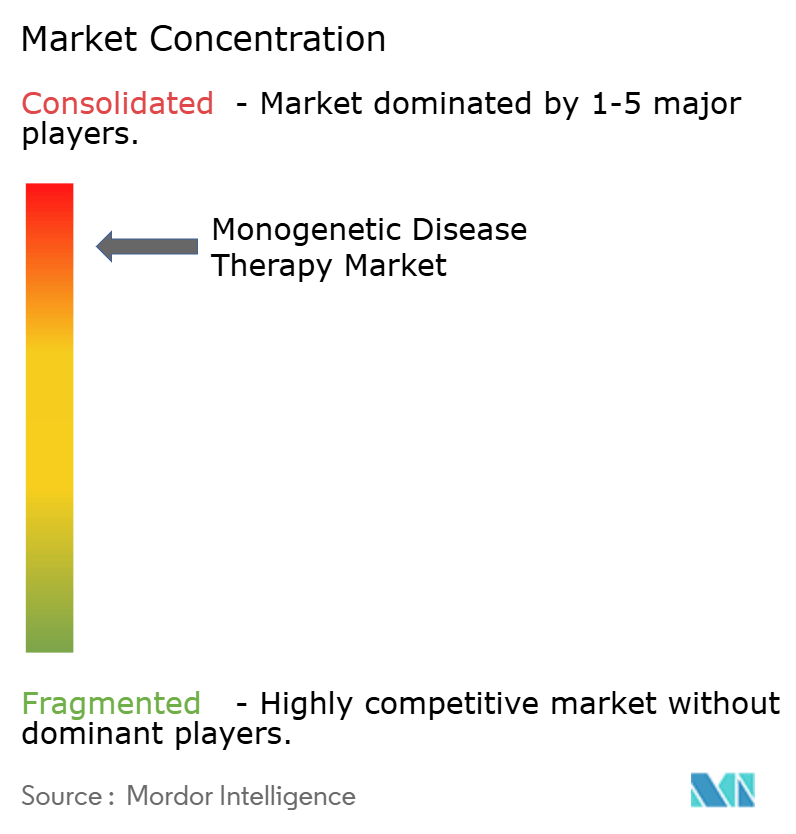
| Market Concentration | High |
Major Players *Disclaimer: Major Players sorted in no particular order |
Monogenetic Disease Therapy Market Analysis by Mordor Intelligence
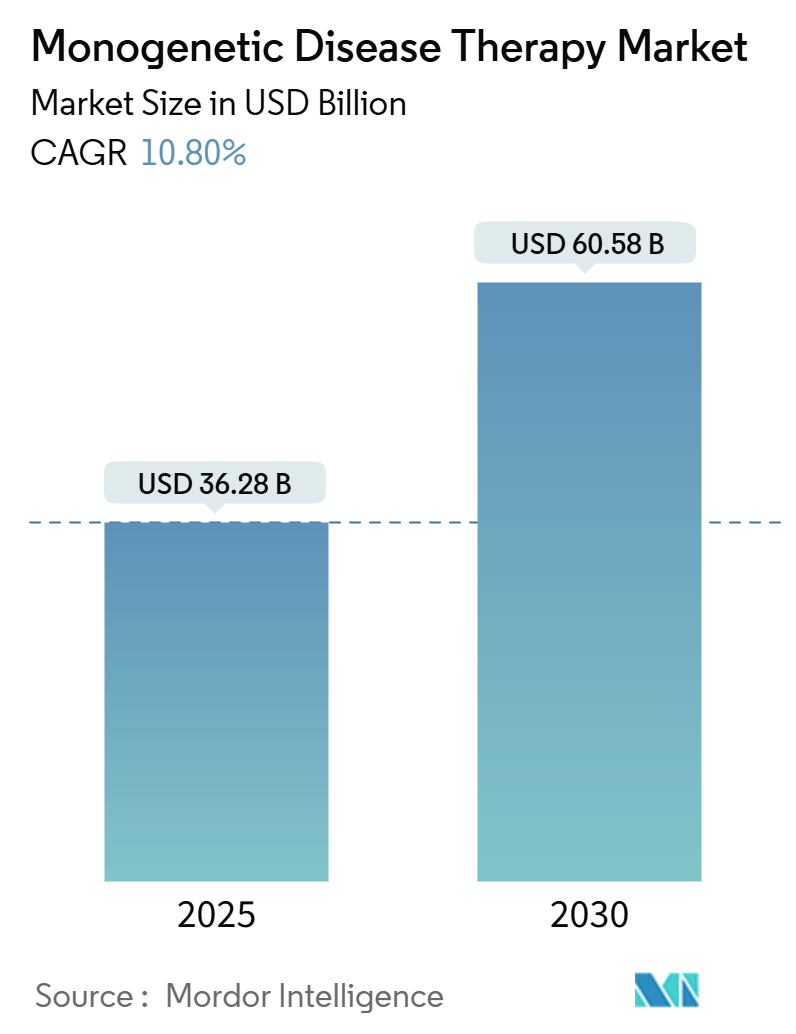
The Monogenetic Disease Therapy Market size is estimated at USD 36.28 billion in 2025, and is expected to reach USD 60.58 billion by 2030, at a CAGR of 10.80% during the forecast period (2025-2030).
Several factors, including the incidence of monogenetic diseases, heightened awareness of genetic disorders, and vigorous research and development (R&D) activities, significantly shape the market for therapies targeting these diseases.
Genetic predispositions, coupled with environmental influences, are escalating the incidence of monogenetic diseases. This surge results in a growing patient population in need of targeted therapies. As diagnoses for conditions like cystic fibrosis and muscular dystrophy rise, so does the demand for effective treatments. This burgeoning patient demographic propels pharmaceutical companies to intensify their investments in therapy development, thereby broadening the market. For instance, the Cystic Fibrosis Foundation Patient Registry Highlight 2023 reported that in the United States, around 33,288 individuals were registered with cystic fibrosis (CF) in 2023. This figure underscores a notable diversification in the population, with over 17% identifying as Hispanic, Black, or multiracial. The registry also noted 10,164 telehealth consultations, 100,648 clinic visits, and 61 lung transplants in 2023. Given the substantial burden of monogenetic diseases like sickle cell disease, the demand for effective therapies is pronounced. As the patient demographic expands, so does the market for these treatments.
Moreover, heightened awareness of genetic disorders not only facilitates early diagnoses but also encourages patient advocacy, amplifying the demand for cutting-edge therapies. As public interest in information and treatment options surges, healthcare systems are increasingly integrating genetic testing and counseling into standard care, further enriching the market for therapies addressing monogenetic diseases. For example, in September 2024, National Sickle Cell Awareness Month was celebrated, underscoring the importance of disease education and blood donations. Activities included community outreach to bolster screening and treatment accessibility.
Similarly, the Cystic Fibrosis Foundation, during CF Awareness Month in May 2024, spotlighted resilience and community storytelling via social media. Their campaigns aimed to illuminate the intricacies of CF and push for enhanced treatment access and research funding. Thus, rising awareness of genetic disorders not only champions early diagnoses and patient advocacy but also propels the demand for innovative therapies. As public interest in information and treatment options grows, healthcare systems are increasingly integrating genetic testing and counseling into standard care, further enriching the market for therapies addressing monogenetic diseases.
Vigorous R&D endeavors play a pivotal role in crafting new therapies for monogenetic diseases. Heightened investments and collaborations among stakeholders pave the way for groundbreaking innovations, with gene therapy being a prime contributor to market expansion. For instance, in September 2024, Genespire, a biotech firm focusing on off-the-shelf gene therapies for pediatric genetic conditions, secured a EUR 46.6 million (USD 52 million) Series B financing round. The round was co-led by Sofinnova Partners, XGEN Venture, and CDP Venture Capital's Large Venture Fund, in collaboration with Indaco SGR. Thus, a thriving R&D landscape not only ensures a consistent stream of new therapies but also fosters competition, potentially reducing patient costs and bolstering market growth.
In conclusion, the interplay of rising disease incidence, growing awareness, and vigorous R&D efforts paints a promising picture for the market of monogenetic disease therapies. Yet, challenges like high treatment costs, limited success rates, and regulatory hurdles loom, potentially tempering this growth trajectory.
Global Monogenetic Disease Therapy Market Trends and Insights
Gene and Cell Therapy Segment is Expected to Hold a Significant Share Over the Forecast Period
Gene and cell therapy for monogenic diseases utilize medications that target specific genetic mutations or the affected biochemical pathways. Key drivers fueling the growth of this cell and gene therapy segment include advancements in cell and gene therapy. These innovations enable treatments to directly address genetic mutations, thereby enhancing efficacy and improving patient outcomes. Furthermore, bolstered by both public and private funding, heightened investments in research and development have expedited the discovery of new drug candidates and gene therapies. Regulatory agencies, in a bid to foster innovation and attract investment, are fast-tracking the approval processes for breakthrough therapies. Collectively, these factors are catalyzing the segment's expansion.
Investment in research and development, particularly in genetics and rare diseases, has surged from pharmaceutical companies and various funding sources. This trend is poised to spur innovation in pharmacological treatments and subsequently drive market growth. For instance, in October 2023, Triveni Bio raised USD 92 million in Series A financing. Their goal is to develop gene therapy for monogenic diseases, especially targeting immunological and inflammatory disorders. This financial boost will not only advance their lead program through clinical trials but also expand their pipeline of genetically validated targets. Such funding influxes are set to accelerate the discovery and development of new pharmacological drug candidates, bolstering segment growth.
As awareness increases, more patients are being diagnosed with monogenic diseases, expanding the pool of individuals seeking effective treatments. This uptick in diagnoses naturally fuels the demand for pharmacological therapies. For instance, in July 2024, Prime Minister Modi inaugurated the National Sickle Cell Anemia Elimination Mission. This initiative aims to eradicate sickle cell disease as a public health concern by 2047. The mission plans to universally screen 7 crore individuals aged 0-40 years in high-prevalence regions. Highlighting the importance of education and community engagement, the initiative has introduced training programs for health workers. These programs are designed to inform communities about sickle cell anemia, correct misconceptions, and promote diagnostic testing and treatment. Thus, heightened awareness among both healthcare professionals and the public regarding genetic disorders is anticipated to drive segment growth.
Regulatory agencies are increasingly endorsing innovative therapies for monogenic diseases, expediting the approval processes for groundbreaking treatments. For instance, in December 2023, the United States Food and Drug Administration approved two landmark treatments, Casgevy and Lyfgenia. These are the inaugural cell-based gene therapies approved for treating sickle cell disease (SCD) in patients aged 12 and older. Such regulatory backing not only nurtures innovation but also incentivizes pharmaceutical companies to channel investments into research and development, further propelling segment growth.
In conclusion, the interplay of heightened R&D investments, rising awareness of genetic disorders, and a supportive regulatory landscape is set to fuel the growth of the gene and cell therapy segment for monogenic diseases in the coming years.
North America is Expected to Hold a Significant Market Share Over the Forecast Period
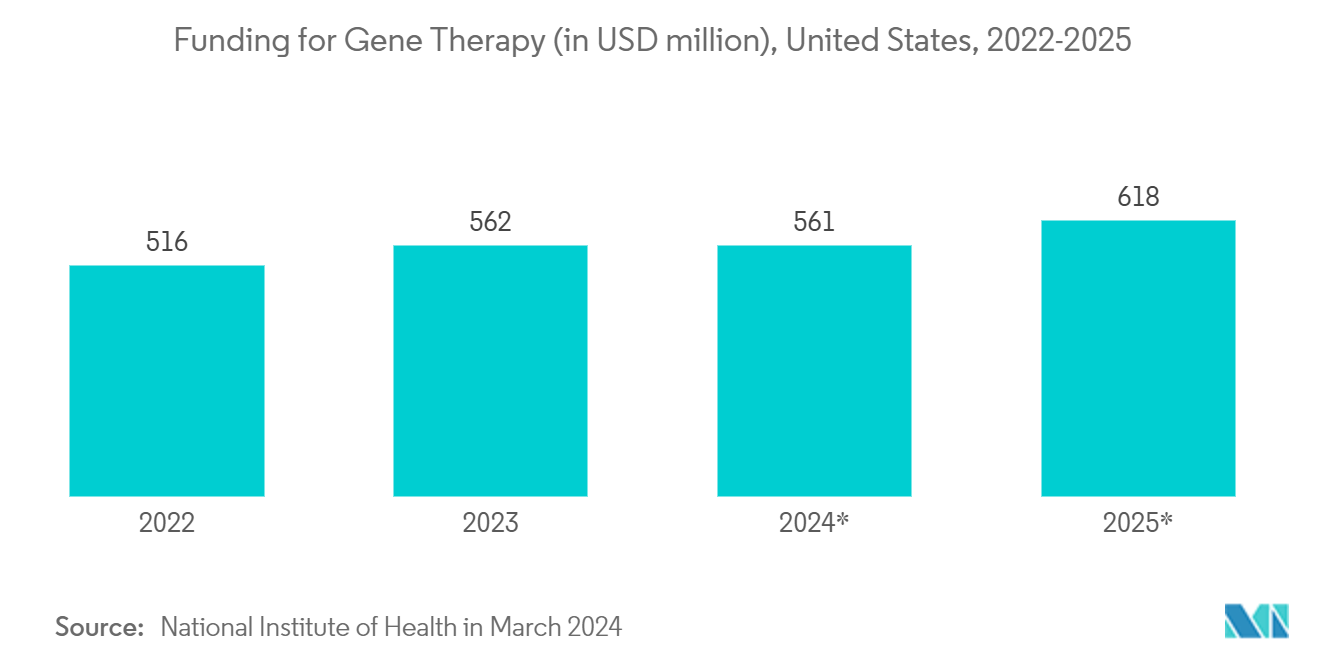
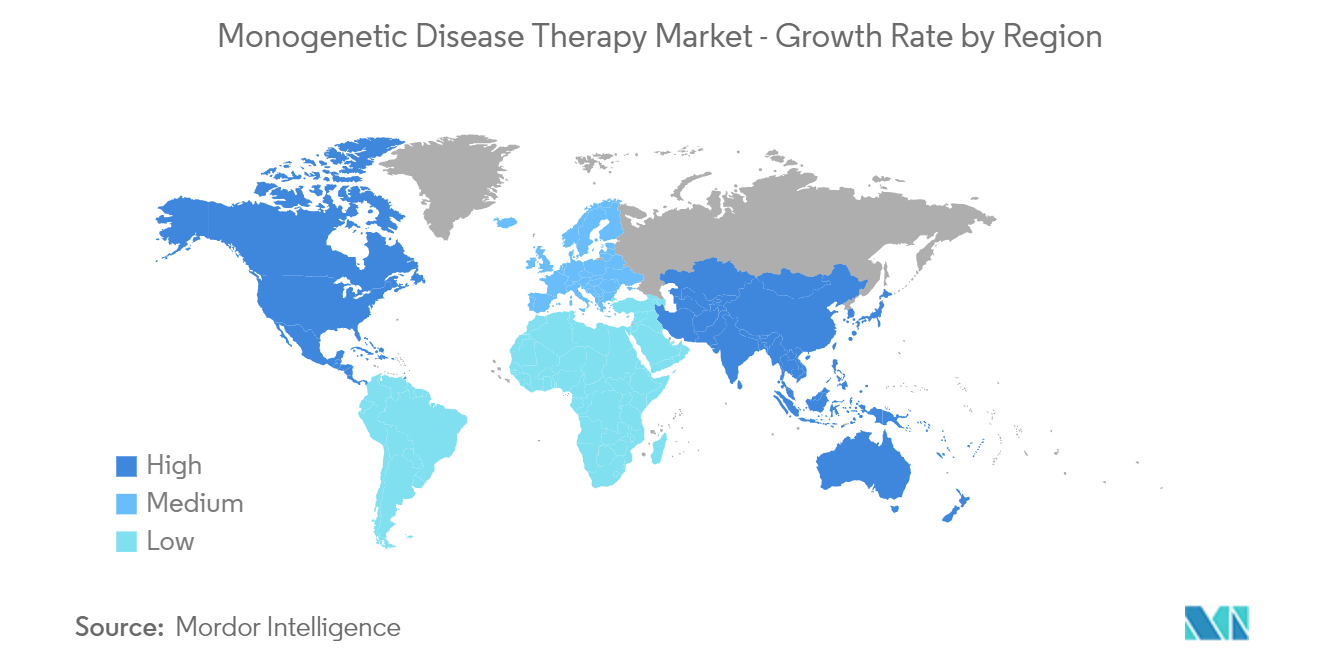
The North America region is poised to hold a major market share. Key drivers include increased government investments, advancements in gene therapy research and development, and a rising prevalence of targeted diseases.
As diagnoses of monogenic diseases rise, so does the demand for effective therapies. This expanding patient base not only enlarges the market for these treatments but also propels pharmaceutical companies to ramp up their research and development efforts. For instance, a January 2024 article in Taylor and Francis highlighted that Canada had approximately 6,500 individuals with Sickle Cell Disease (SCD) in 2023. Notably, Ontario, especially Toronto and its neighboring areas, represented over 3,500 of these cases. Thus, the increasing prevalence of monogenic diseases, including cystic fibrosis and sickle cell anemia, is likely to bolster the market for effective therapies.
Moreover, heightened public awareness and advocacy regarding genetic disorders have cultivated a more conducive environment for research and treatment advancements. For instance, in September 2023, JScreen, an organization championing genetic disease testing, launched a campaign highlighting families impacted by Tay-Sachs disease. Beyond Tay-Sachs, JScreen is actively working to mitigate other genetic disorders like cystic fibrosis and Gaucher disease. As awareness amplifies, the uptick in diagnosed patients with monogenic diseases is likely to fuel market growth.
Regulatory bodies, including the FDA, have expedited approval processes for gene therapies, paving the way for swift development and introduction of new treatments, which is anticipated to boost market growth. For instance, in April 2023, Vertex Pharmaceuticals Incorporated revealed that the U.S. Food and Drug Administration (FDA) approved the expanded use of TRIKAFTA (elexacaftor/tezacaftor/ivacaftor and ivacaftor). This newly approved scope encompasses children aged 2 to 5 years with cystic fibrosis (CF) holding at least one F508del mutation in the cystic fibrosis transmembrane conductance regulator (CFTR) gene. Furthermore, it includes any CFTR gene mutation responsive to TRIKAFTA, as validated by in vitro data. Such approvals of groundbreaking therapies not only enhance investor confidence but also ensure patients timely access to potentially life-saving treatments, likely propelling market growth.
In summary, bolstered R&D investments, heightened awareness of genetic disorders, and a favorable regulatory environment are set to drive market growth in the coming years.
Competitive Landscape
The monogenetic disease therapy market is consolidated with many market players focusing on advancement in novel medicine to deliver more efficient therapy to leverage growth opportunities in the market. Some of the major players are vigorously making collaborations, mergers, and acquisitions to consolidate the market position across the world. The several players in the monogenetic disease therapy market are Bayer AG, UniQure, Abbott Laboratories, Novartis, Vertex Pharmaceuticals, Sanofi AG, Pfizer Inc., and among others.
Monogenetic Disease Therapy Industry Leaders
-
Bayer AG
-
Novartis AG
-
Pfizer Inc.
-
Sanofi AG
-
Bluebird Bio
- *Disclaimer: Major Players sorted in no particular order
Recent Industry Developments
- September 2024: Vertex Pharmaceuticals Incorporated revealed that Health Canada has granted Marketing Authorization for PrCASGEVY (exagamglogene autotemcel). This therapy, based on autologous genome editing of hematopoietic stem cells, is approved for treating patients aged 12 and older. Specifically, it's aimed at those with sickle cell disease (SCD) experiencing recurrent vaso-occlusive crises (VOCs) or those with transfusion-dependent beta-thalassemia (TDT).
- September 2024: ReCode Therapeutics administered the initial dose to a patient in a Phase 1b study of RCT2100, an experimental inhaled mRNA therapy aimed at treating cystic fibrosis (CF). The design of RCT2100 focuses on delivering CFTR mRNA directly to the lung's target cells. This approach instructs the cells to produce a functional version of the CFTR protein, which is absent in certain individuals afflicted with CF.
Global Monogenetic Disease Therapy Market Report Scope
As per scope of the report, Monogenetic disease refers to a disorder caused by a mutation in a single gene. These diseases can be inherited in a straightforward manner, following patterns such as autosomal dominant, autosomal recessive, or X-linked inheritance. Examples include cystic fibrosis, sickle cell anemia, and Huntington's disease. Monogenetic therapy involves treatments specifically targeting these single-gene mutations. Approaches include gene therapy, which aims to correct or replace the faulty gene.
The market monogenetic disease therapy is segmented by inheritance pattern, therapy type, disease type, end-user, and geography. By inheritance pattern, the market is segmented as autosomal and chromosomal. By therapy type, the market is segmented into gene and cell therapy, enzyme replacement therapy (ERT), RNA- based therapy, stem cell therapy, CRISPR- based gene editing, and others. By disease type, the market is segmented into, cystic fibrosis, sickle cell anemia, Huntington's disease, and others. By geography, the market is segmented as North America, Europe, Asia-Pacific, Middle East and Africa, and South America. The report offers the value (in USD) for the above-mentioned segments. The market report also covers the estimated market sizes and trends for 17 different countries across major regions globally.
| Autosomal |
| Chromosomal |
| Gene and Cell Therapy |
| Enzyme Replacement Therapy (ERT) |
| RNA- based Therapy |
| Stem Cell Therapy |
| CRISPR- based Gene Editing |
| Others |
| Cystic Fibrosis |
| Sickle Cell Anemia |
| Huntington's Disease |
| Others |
| North America | United States |
| Canada | |
| Mexico | |
| Europe | Germany |
| United Kingdom | |
| France | |
| Italy | |
| Spain | |
| Rest of Europe | |
| Asia-Pacific | China |
| Japan | |
| India | |
| Australia | |
| South Korea | |
| Rest of Asia-Pacific | |
| Middle East and Africa | GCC |
| South Africa | |
| Rest of Middle East and Africa | |
| South America | Brazil |
| Argentina | |
| Rest of South America |
| By Inheritance Pattern | Autosomal | |
| Chromosomal | ||
| By Therapy Type | Gene and Cell Therapy | |
| Enzyme Replacement Therapy (ERT) | ||
| RNA- based Therapy | ||
| Stem Cell Therapy | ||
| CRISPR- based Gene Editing | ||
| Others | ||
| By Disease Type | Cystic Fibrosis | |
| Sickle Cell Anemia | ||
| Huntington's Disease | ||
| Others | ||
| Geography | North America | United States |
| Canada | ||
| Mexico | ||
| Europe | Germany | |
| United Kingdom | ||
| France | ||
| Italy | ||
| Spain | ||
| Rest of Europe | ||
| Asia-Pacific | China | |
| Japan | ||
| India | ||
| Australia | ||
| South Korea | ||
| Rest of Asia-Pacific | ||
| Middle East and Africa | GCC | |
| South Africa | ||
| Rest of Middle East and Africa | ||
| South America | Brazil | |
| Argentina | ||
| Rest of South America | ||
Key Questions Answered in the Report
How big is the Monogenetic Disease Therapy Market?
The Monogenetic Disease Therapy Market size is expected to reach USD 36.28 billion in 2025 and grow at a CAGR of 10.80% to reach USD 60.58 billion by 2030.
What is the current Monogenetic Disease Therapy Market size?
In 2025, the Monogenetic Disease Therapy Market size is expected to reach USD 36.28 billion.
Who are the key players in Monogenetic Disease Therapy Market?
Bayer AG, Novartis AG, Pfizer Inc., Sanofi AG and Bluebird Bio are the major companies operating in the Monogenetic Disease Therapy Market.
Which is the fastest growing region in Monogenetic Disease Therapy Market?
Asia Pacific is estimated to grow at the highest CAGR over the forecast period (2025-2030).
Which region has the biggest share in Monogenetic Disease Therapy Market?
In 2025, the North America accounts for the largest market share in Monogenetic Disease Therapy Market.
What years does this Monogenetic Disease Therapy Market cover, and what was the market size in 2024?
In 2024, the Monogenetic Disease Therapy Market size was estimated at USD 32.36 billion. The report covers the Monogenetic Disease Therapy Market historical market size for years: 2020, 2021, 2022, 2023 and 2024. The report also forecasts the Monogenetic Disease Therapy Market size for years: 2025, 2026, 2027, 2028, 2029 and 2030.
Monogenetic Disease Therapy Market Report
Statistics for the 2025 Monogenetic Disease Therapy market share, size and revenue growth rate, created by Mordor Intelligence™ Industry Reports. Monogenetic Disease Therapy analysis includes a market forecast outlook for 2025 to 2030 and historical overview. Get a sample of this industry analysis as a free report PDF download.