
Microarray Analysis Market Size and Share
Market Overview
| Study Period | 2020 - 2031 |
|---|---|
| Market Size (2026) | USD 6.54 Billion |
| Market Size (2031) | USD 8.90 Billion |
| Growth Rate (2026 - 2031) | 6.35 % |
| Fastest Growing Market | Asia-Pacific |
| Largest Market | North America |
| Market Concentration | Medium |
Major Players *Disclaimer: Major Players sorted in no particular order Image © Mordor Intelligence. Reuse requires attribution under CC BY 4.0. | |
Microarray Analysis Market Analysis by Mordor Intelligence
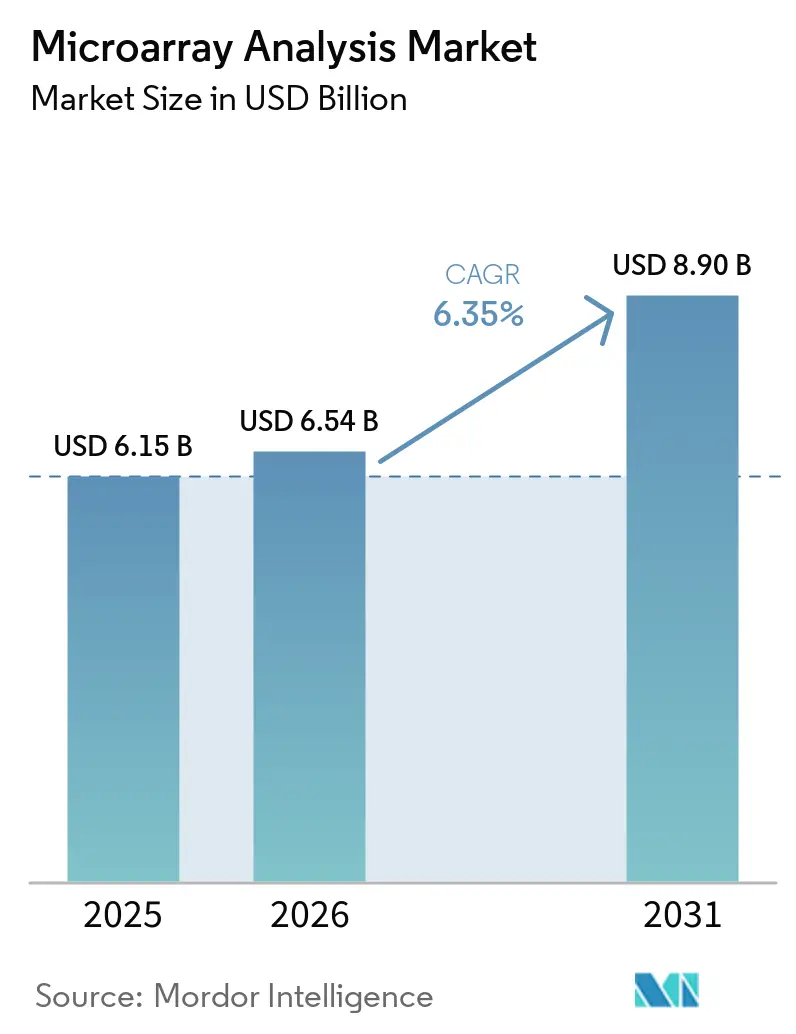
The Microarray Analysis Market size is expected to grow from USD 6.15 billion in 2025 to USD 6.54 billion in 2026 and is forecast to reach USD 8.90 billion by 2031 at 6.35% CAGR over 2026-2031.
The market continues to benefit from wider use of companion diagnostics in oncology pipelines, broader adoption of multi-omics workflows in pharmaceutical and academic settings, and the durable cost-per-sample advantage that arrays still hold in population-scale and pharmacogenomic screening. In this microarray analysis market, platform economics remain important because proprietary consumables, software layers, and workflow-specific reagents keep customers tied to installed systems over long usage cycles. The October 2025 launch of Thermo Fisher Scientific’s SwiftArrayStudio Microarray Analyzer raised the commercial benchmark for high-throughput laboratories by combining four genotyping steps in one system and returning results in as few as 30 hours for up to 1,536 samples in a standard work week. The microarray analysis market also remains protected in fixed-panel pharmacogenomics and large screening programs, where validated workflows, throughput, and procurement predictability still matter more than novel variant discovery. As hardware differentiation narrows, the microarray analysis market is shifting more of its commercial value toward cloud bioinformatics and AI-supported interpretation, where vendors can deepen software dependence even when instrument margins tighten.
Key Report Takeaways
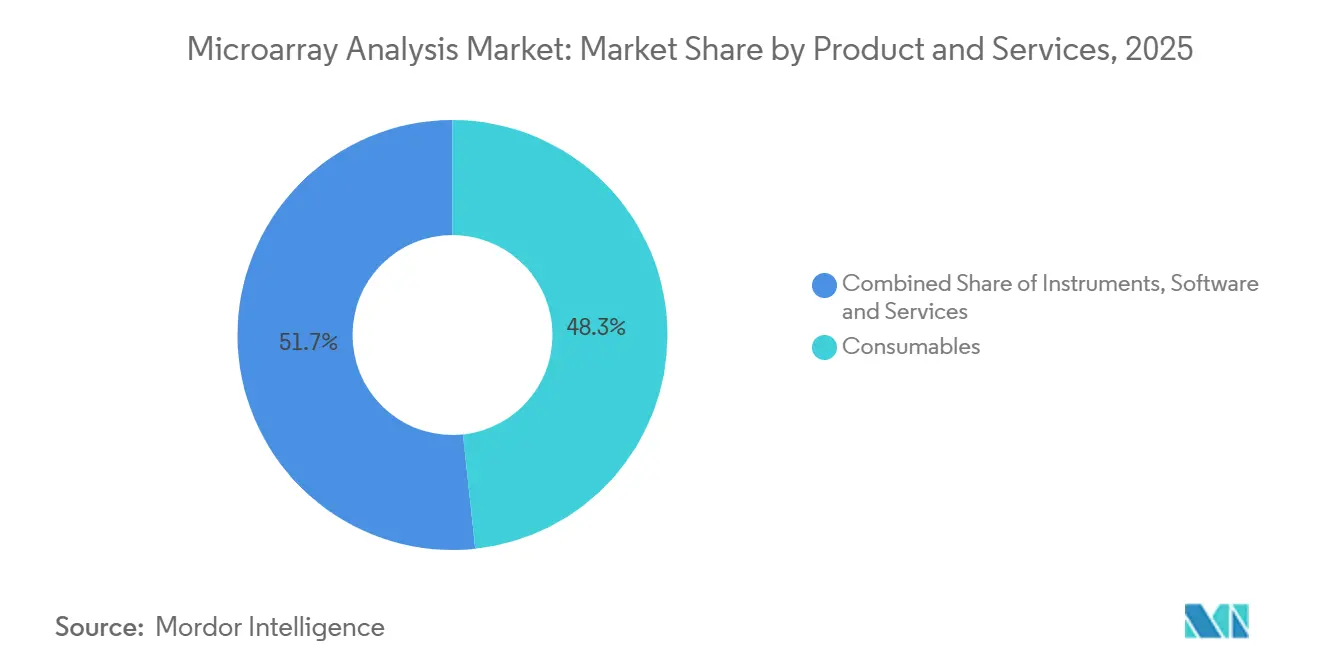
- By product and services, consumables held 48.31% of the microarray analysis market size in 2025, while instruments are projected to expand at an 8.38% CAGR through 2031.
- By type, DNA microarrays accounted for 42.24% of the microarray analysis market size in 2025, while protein microarrays are forecast to grow at a 7.52% CAGR through 2031.
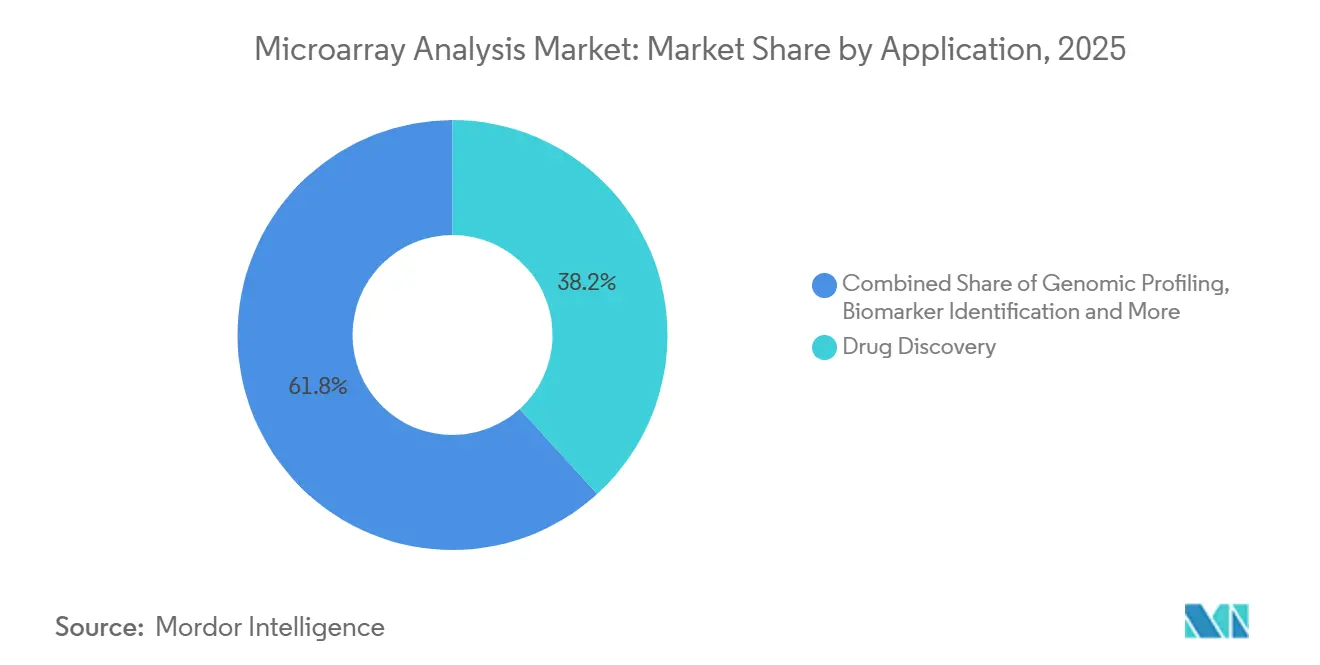
- By application, drug discovery represented 38.24% of the microarray analysis market in 2025, while genomic profiling is expected to advance at an 8.52% CAGR through 2031.
- By end user, academic and research centers held 28.52% of 2025 revenue, while molecular diagnostic laboratories are expected to grow at an 8.25% CAGR through 2031.
- By geography, North America held 46.22% of microarray analysis market share in 2025, while Asia-Pacific is forecast to expand at an 8.65% CAGR through 2031.
Note: Market size and forecast figures in this report are generated using Mordor Intelligence’s proprietary estimation framework, updated with the latest available data and insights as of January 2026.
Global Microarray Analysis Market Trends and Insights
Drivers Impact Analysis*
| Driver | (~) % Impact on CAGR Forecast | Geographic Relevance | Impact Timeline |
|---|---|---|---|
| Expanding Personalized Medicine And Companion Diagnostics Use Cases | +1.5% | Global, highest intensity in North America and Europe | Medium term (2-4 years) |
| Rising Genomics And Proteomics Research Funding | +1.2% | North America and Europe, with spillover to Asia-Pacific | Medium term (2-4 years) |
| Growth Of High-Throughput Biomarker Discovery Workflows | +0.9% | Global | Medium term (2-4 years) |
| AI-Assisted Array Design And Signal Interpretation Adoption | +0.8% | North America and Europe, emerging in Asia-Pacific | Medium term (2-4 years) |
| Lab Automation Demand For Sample-To-Insight Efficiency | +0.7% | Global | Short term (≤ 2 years) |
| Public Health And Agricultural Genomics Demand For Multiplex Screening | +0.5% | Asia-Pacific, South America, North America | Long term (≥ 4 years) |
| Source: Mordor Intelligence | |||
Expanding Personalized Medicine and Companion Diagnostics Use Cases
The microarray analysis market is gaining support from the broader role of companion diagnostics in oncology drug development. Regulatory pathways that allow clinical development and diagnostic assay validation to proceed in parallel have made array-based patient stratification more practical for mid-stage trials. This matters because drug developers can use established array chemistries earlier in study design and maintain them across later validation work. That approach also creates recurring consumable demand because the validated chemistry often stays linked to the program across the drug’s commercial life. The microarray analysis market benefits further when precision oncology testing expands access through commercial partnerships and connected multiomics strategies that keep arrays relevant within broader clinical workflows. In the microarray analysis market, this creates demand that is more durable than one-time research procurement because the testing workflow becomes part of the treatment development path.
Rising Genomics and Proteomics Research Funding
The microarray analysis market has a stable demand base because public research funding continues to support large academic and translational programs. The American Association for Cancer Research reported that the US National Cancer Institute received USD 7.35 billion for FY2026, which was USD 128 million above FY2025, while the NIH budget reached USD 47.2 billion for FY2026[1]American Association for Cancer Research, “Cancer Policy Monitor, February 10, 2026,” AACR, aacr.org. NIH funding priorities also continue to support bioinformatics, translational bioinformatics, and computational biology work that aligns with multi-omics studies and cross-platform analysis. In the microarray analysis market, the most important effect of this funding is not instrument purchases alone, but steady consumable use at medical centers and biobank programs processing large sample volumes. Thermo Fisher Scientific’s April 2026 collaboration with Singapore’s PRECISE-SG100K program shows how public and institutional genomics infrastructure can translate into long-cycle procurement for integrated proteomics and array-linked workflows. The microarray analysis market therefore retains a strong base of recurring demand even when private R&D budgets fluctuate.
AI-Assisted Array Design and Signal Interpretation Adoption
The microarray analysis market is moving toward software-led differentiation as AI tools reduce the burden of interpretation and data handling. QIAGEN’s May 2026 collaboration with NVIDIA linked graph-based AI to curated biomedical knowledge bases covering more than 70,000 scientific publications and serving over 150,000 scientists, which shows how vendors are embedding analytics more deeply into research workflows. Illumina’s DRAGEN Array v1.4.0 update in May 2026 added enhanced cytogenetics algorithms, GAINLOH calling support, and improved mosaic detection, showing how software refresh cycles can strengthen installed-base loyalty without a new instrument purchase. Scientific work is also moving in the same direction, with deep ensemble learning models being evaluated for cancer diagnosis from microarray data. In the microarray analysis market, that combination supports higher switching costs because laboratories that standardize on a specific analytical layer become less likely to move away from the full platform. The microarray analysis market also gains from this shift because AI support partly offsets shortages in specialist bioinformatics talent.
Growth of High-Throughput Biomarker Discovery Workflows
The microarray analysis market is benefiting from a clear move toward much larger biomarker discovery cohorts. Regeneron Genetics Center selected the Olink Explore HT platform in June 2025 for a 200,000-sample proteomics study of the Geisinger Health Study cohort, which shows how multiplex protein analysis is now operating at scales that were once associated mainly with DNA genotyping arrays. Protein array providers such as RayBiotech and Sengenics are also benefiting from demand for immune-signature and autoantibody profiling, which sequencing alone does not capture. This matters commercially because large cohort programs often generate validated biomarker panels that later move into diagnostic array products sold to clinical laboratories. A 2025 review in Frontiers in Big Data found that ensemble machine learning and hybrid feature-selection approaches are becoming the preferred methods for narrowing large biomarker sets from complex array datasets. In the microarray analysis market, high-throughput biomarker discovery is therefore supporting both current research demand and later clinical content development.
Restraints Impact Analysis*
| Restraint | (~) % Impact on CAGR Forecast | Geographic Relevance | Impact Timeline |
|---|---|---|---|
| Competition From Next-Generation Sequencing Substitution | -1.8% | Global, highest in North America and Europe | Medium term (2-4 years) |
| Limited Skilled Bioinformatics Talent For Array Data Pipelines | -0.9% | Global, acute in Asia-Pacific and Eastern Europe | Long term (≥ 4 years) |
| Instrument, Consumable, And Quality Compliance Cost Burden | -0.8% | Global, highest for smaller labs in emerging markets | Medium term (2-4 years) |
| Fluorophore And Specialized Reagent Supply Concentration Risk | -0.5% | Global, acute for specialist vendors | Medium term (2-4 years) |
| Source: Mordor Intelligence | |||
Competition from Next-Generation Sequencing Substitution
The microarray analysis market faces real substitution pressure from next-generation sequencing, but the effect is not uniform across applications. In exploratory research and novel variant discovery, sequencing has a clear advantage because arrays only interrogate known targets. A 2025 study in the International Journal of Molecular Sciences reported that long-read sequencing detected 2.86 times more structural variants than microarray-based short-read approaches in low-complexity and dark genomic regions. Even so, the microarray analysis market remains competitive in genome-wide association studies, pharmacogenomics, and clinical chromosomal analysis, where validated panels, throughput economics, and workflow familiarity still favor arrays. The American College of Medical Genetics and Genomics continues to recommend chromosomal microarray analysis as a first-tier clinical test in several developmental and neurodevelopmental settings, which supports ongoing clinical use[2]American College of Medical Genetics and Genomics, “Clinical Guidelines for Chromosomal Microarray Analysis as a First-tier Test,” ACMG, acmg.net. The main risk for the microarray analysis market over the later forecast years is that sequencing cost curves could narrow the price gap in large-cohort genotyping.
Limited Skilled Bioinformatics Talent for Array Data Pipelines
The microarray analysis market is also constrained by the shortage of professionals who can build, manage, and interpret array data pipelines. An Annual Review of Genomics and Human Genetics article in 2025 highlighted persistent workforce gaps in several regions, including parts of Central and Eastern Europe, sub-Saharan Africa, and Asia-Pacific. The burden is not shared evenly, because large pharmaceutical companies and major research hospitals can absorb higher computational staffing costs more easily than mid-sized CROs and independent laboratories. That creates a split in operating models, where well-funded institutions build custom workflows and smaller groups look for platform-led or cloud-based solutions. International training efforts are being promoted through cross-disciplinary models and consortia such as H3ABioNet and GOBLET, but those programs will take time to change the staffing base. In the microarray analysis market, this keeps adoption slower in places where array economics would otherwise be attractive.
*Our forecasts treat driver/restraint impacts as directional, not additive. The impact forecasts reflect baseline growth, mix effects, and variable interactions.
Segment Analysis
By Product and Services: Instruments Poised to Outpace Consumables
Consumables captured 48.31% of revenue in 2025, which kept them as the largest component of the microarray analysis market size within product and services. Their leading position reflects the recurring need for reagents, probes, chips, and related materials across the installed base of laboratory systems. This pattern is likely to remain firm in the early forecast period because many laboratories replace instruments only after several years, while consumables are purchased continuously. In the microarray analysis market, that creates a stable revenue stream even when capital spending slows. Thermo Fisher Scientific’s October 2025 launch of the SwiftArrayStudio Microarray Analyzer also reinforced the product stack by pairing a higher-throughput instrument with new array content for pharmacogenomics and population-scale GWAS work.
Instruments are projected to grow at an 8.38% CAGR between 2026 and 2031, which makes them the fastest-growing category in this part of the microarray analysis market. That pace reflects a replacement cycle in which automation-ready analyzers are displacing legacy scanners that require more manual intervention. Thermo Fisher stated that SwiftArrayStudio can process up to 1,536 samples in a standard five-day work week and can reduce hands-on time by up to 40%, which directly addresses throughput-sensitive purchasing in pharmacogenomics and agrigenomics laboratories. Software and services are also becoming more central in the microarray analysis industry because cloud bioinformatics and AI-assisted interpretation are shifting spending from one-time product sales toward recurring subscriptions. QIAGEN’s QIAsprint Connect, presented at SLAS 2026, shows how vendors are extending workflow control beyond analysis into upstream automation and sample preparation. As a result, boundaries between instruments, consumables, and software are narrowing inside the microarray analysis market.



By Type: DNA Arrays Lead, Protein Arrays Surge
DNA microarrays held 42.24% of revenue in 2025, which gave them the largest microarray analysis market share within the type segment. Their lead comes from long use in genome-wide association studies, cytogenetics, and pharmacogenomic screening, where validated probe sets and reference databases still provide a strong practical advantage. The October 2025 launch of Thermo Fisher’s Axiom PangenomePro Array added broader SNP content for more diverse ancestral populations, which helps address prior limits in genotyping panel representation. Illumina’s DRAGEN Array v1.4.0 update in May 2026 also showed continued investment in DNA array infrastructure through better cytogenetics, GAINLOH support, and improved mosaic detection. In the microarray analysis market, this keeps DNA arrays relevant where repeatability and established workflows matter more than exploratory sequencing depth.
Protein microarrays are projected to grow at a 7.52% CAGR through 2031, making them the fastest-growing type in the microarray analysis market. Demand is rising because high-plex protein profiling fits biomarker discovery, autoantibody screening, and companion diagnostic development that cannot be addressed by nucleic acid analysis alone. A May 2026 study in npj Precision Oncology reported 100% concordance across tissue, plasma, and urine samples in mutation-positive colorectal cancer cases using a plasmonic microarray-based KRAS detection approach. Tissue microarrays remain important for pathology research, while carbohydrate and peptide arrays support smaller but growing use cases in immunology and vaccine work. These adjacent formats expand the role of the microarray analysis market beyond established DNA workflows into a wider multi-omics setting.
By Application: Drug Discovery Leads as Genomic Profiling Grows
Drug discovery accounted for 38.24% of 2025 application revenue, which kept it as the largest application in the microarray analysis market. Pharmaceutical developers continue to use arrays for expression profiling, toxicogenomics, and target validation in early-stage screening programs. This demand tends to be steadier than some other research uses because multi-year service contracts between CROs and drug developers help smooth annual budget changes. In the microarray analysis market, these discovery programs also support later commercial demand because biomarkers identified in research often move into companion diagnostic development. QIAGEN’s Discovery Platform, shown at AACR 2026, reflects this shift by linking biological knowledge, omics data, and advanced analytics within oncology drug discovery workflows.
Genomic profiling is forecast to expand at an 8.52% CAGR through 2031, which makes it the fastest-growing application in the microarray analysis market. Growth is being supported by public health screening programs, newborn genetics initiatives, and large biobank efforts that favor fixed-panel genotyping at scale. Gene expression analysis continues to see steady use in academic and pharmaceutical studies, while biomarker identification and epigenetics are attracting more interest from developers working on disease mechanisms with methylation and multi-layer biology. A 2025 Molecular Biomedicine review described multi-omics biomarker strategies that combine genomic, proteomic, and epigenomic data, which supports the view that arrays are increasingly one layer inside broader analytical pipelines. This shift broadens how the microarray analysis industry is used without removing its cost and throughput advantages in fixed-panel settings.
By End User: Academia Anchors Volume, Diagnostic Labs Accelerate
Academic and research centers held 28.52% of 2025 revenue, which made them the largest end-user group in the microarray analysis market. Their lead reflects the fact that universities, academic hospitals, and research institutes operate a large share of installed array systems and account for steady grant-funded consumable demand. Federal research budgets remain important for this segment because they support both routine usage and large cohort projects. AACR reported that the NIH budget reached USD 47.2 billion in FY2026 and that the National Cancer Institute received USD 7.35 billion, which helps sustain procurement at institutions using genomics and multi-omics tools. Pharmaceutical and biotechnology companies also remain meaningful users across translational biomarker work, preclinical testing, and companion diagnostic programs in the microarray analysis market.
Molecular diagnostic laboratories are projected to grow at an 8.25% CAGR through 2031, making them the fastest-growing end-user group in the microarray analysis market. This reflects broader use of array-based genetic testing in reimbursed clinical settings and the expansion of hospital-based molecular pathology services. Cloud-connected workflows are also helping smaller laboratories adopt higher-plex testing without building large internal bioinformatics teams. That matters because it widens the customer base from major reference centers to regional clinical providers. In the microarray analysis industry, the strongest commercial effect is likely to come from validated, workflow-ready platforms that reduce operational complexity while maintaining turnaround speed.
Geography Analysis
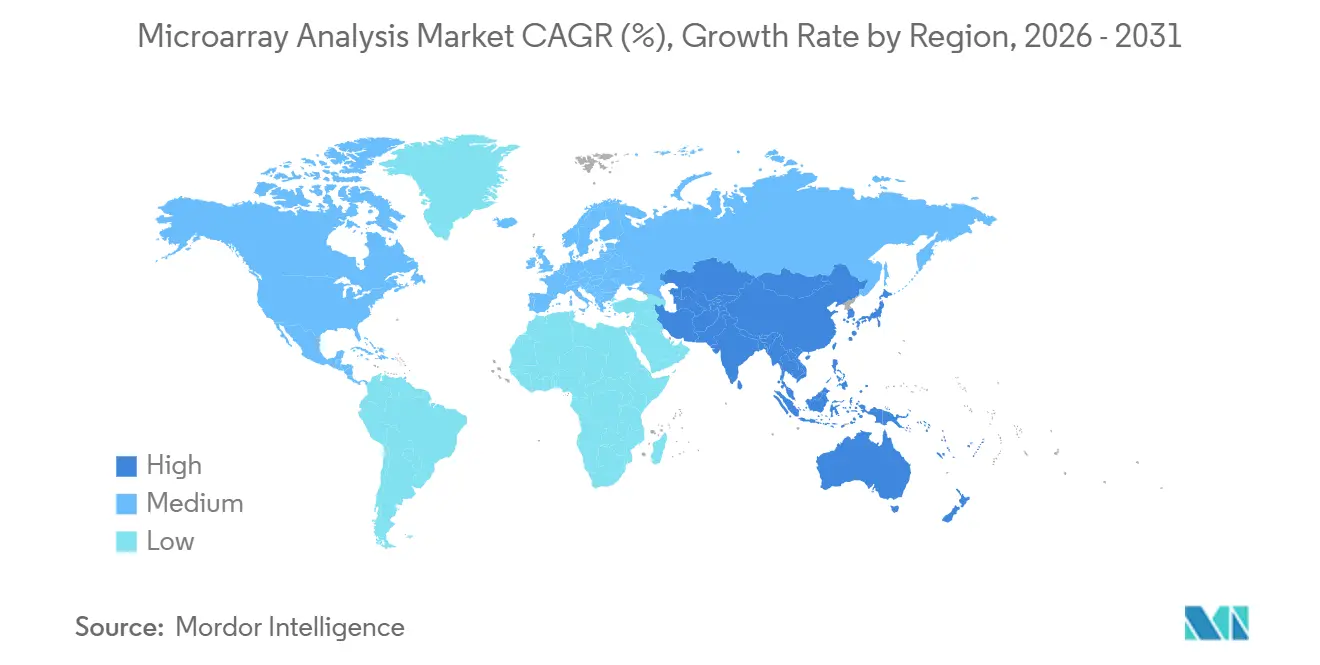
North America held 46.22% of the microarray analysis market share in 2025, which kept it as the largest regional contributor. The region benefits from high pharmaceutical and biotechnology R&D density, established reimbursement pathways for array-based testing, and a regulatory structure that supports companion diagnostic development. In the microarray analysis market, commercial activity is especially concentrated around Boston-Cambridge and the San Francisco Bay Area, where academic medical centers, CROs, and biopharmaceutical firms create dense demand clusters. Federal research support also remains a major foundation for regional demand. AACR reported that the National Cancer Institute received USD 7.35 billion in FY2026 under the Consolidated Appropriations Act, 2026, which supports long-cycle genomics spending across funded institutions.
Europe remains the second-largest region in the microarray analysis market, led by Germany, the United Kingdom, France, Italy, and Spain. Regional demand is supported by academic cytogenetics programs, pharmaceutical clinical trial networks, and public health genomics activity. Asia-Pacific is forecast to grow at an 8.65% CAGR through 2031, which makes it the fastest-growing regional block in the microarray analysis market. Growth is being driven by infrastructure investment in China, expanding multi-omics activity in India, and broader clinical profiling activity across Japan and other developed healthcare systems.
The microarray analysis market is still smaller in the Middle East and Africa and in South America, but both regions are showing more institutional activity. GCC countries are building biobanking and hospital genomics capacity, while South Africa remains an important reference point for chromosomal microarray testing in sub-Saharan Africa. South America is led by Brazil and Argentina, where university research networks and clinical trial activity support biomarker screening demand. The continuing Centers for Genomics Research Capacity Building opportunity, which remains active through October 2026, points to structured support for genomics infrastructure in lower-resource markets[3]NIH, “Centers for Genomics Research Capacity Building,” Simpler Grants, simpler.grants.gov.

Competitive Landscape
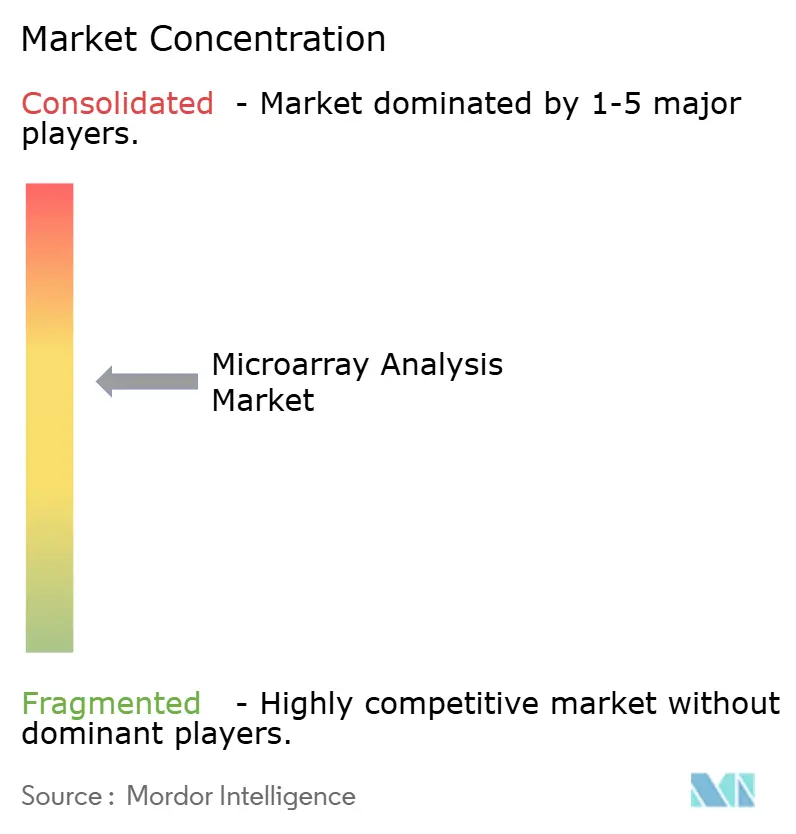
The microarray analysis market shows moderate consolidation, with Thermo Fisher Scientific, Illumina, and Agilent Technologies forming the core competitive group. Their advantage comes less from isolated array specifications and more from integrated ecosystems that combine substrate content, instrument workflow, automation, and bioinformatics. In the microarray analysis market, that structure makes installed-base control highly valuable because recurring consumables and software subscriptions can outlast any single hardware cycle. Thermo Fisher’s October 2025 SwiftArrayStudio launch illustrates this pattern by tying a new analyzer to fresh pharmacogenomics and pangenome array content within one commercial release. Illumina’s May 2026 DRAGEN Array software release shows a similar strategy, where software improvements deepen customer retention without requiring a hardware refresh.
The microarray analysis market is also becoming more competitive at the analytics layer. QIAGEN’s May 2026 collaboration with NVIDIA is a strong example because it connects graph-based AI with curated biomedical knowledge, making data interpretation part of the commercial platform rather than an external step. This matters because laboratories that standardize on a vendor’s interpretation environment face higher switching costs than those that only buy hardware. It also creates a new path for premium pricing even when instrument competition becomes tighter.
Mid-tier companies still hold meaningful space in the microarray analysis market by focusing on assay-level specialization. RayBiotech and Sengenics compete through protein arrays and autoantibody profiling, while PathogenDx and CapitalBio Technology differentiate in agricultural multiplex diagnostics and cost-oriented DNA formats. These firms do not need broad portfolios to remain relevant when they serve workflows with strong quality or regulatory demands. The result is a market that is consolidated around platform leaders, but not closed to focused specialists with clear application depth.
Microarray Analysis Industry Leaders
Thermo Fisher Scientific Inc.
Agilent Technologies, Inc.
Illumina, Inc.
Bio-Rad Laboratories, Inc.
Revvity, Inc.
- *Disclaimer: Major Players sorted in no particular order

Recent Industry Developments
- May 2026: Illumina and SPT Labtech introduced fireflyGO, a benchtop liquid handling and library preparation automation platform integrated with the MiSeq i100 Series for targeted oncology research. The system is designed to make next-generation sequencing more accessible and scalable in clinical oncology settings, complementing array-based genomic profiling workflows.
- October 2025: Thermo Fisher Scientific launched the Applied Biosystems SwiftArrayStudio Microarray Analyzer at the ASHG Annual Meeting in Boston, integrating four genotyping processes in a single automated device with 30-hour sample-to-result turnaround and 40% reduction in hands-on time. Two new arrays, Axiom PharmacoPro and Axiom PangenomePro, were launched concurrently for pharmacogenomics and population-scale GWAS applications.


Global Microarray Analysis Market Report Scope
As per the scope of the report, microarray analysis is a laboratory technique used to measure the expression levels of thousands of genes simultaneously. It involves hybridizing labeled cDNA or RNA samples to a grid of DNA probes fixed on a solid surface, allowing researchers to compare gene activity under different conditions, identify gene expression patterns, and analyze genetic variations.
The segmentation of the microarray analysis market is categorized by product and services, type, application, end user, and geography. By product and services, the market is divided into instruments, consumables, and software and services. By type, it includes DNA microarrays, protein microarrays, tissue microarrays, carbohydrate microarrays, and peptide microarrays. By application, the market covers genomic profiling, gene expression analysis, drug discovery, biomarker identification, and epigenetics. By end user, it is segmented into academic and research centers, pharmaceutical developers, biotechnology firms, and molecular diagnostic laboratories. By geography, the market is analyzed across North America, Europe, Asia-Pacific, the Middle East and Africa, and South America. The market report also covers the estimated market sizes and trends for 17 countries across major regions globally. For each segment, the market size and forecast are provided in terms of value (USD).
| Instruments |
| Consumables |
| Software and Services |
| DNA Microarrays |
| Protein Microarrays |
| Tissue Microarrays |
| Carbohydrate Microarrays |
| Peptide Microarrays |
| Genomic Profiling |
| Gene Expression Analysis |
| Drug Discovery |
| Biomarker Identification |
| Epigenetics |
| Academic and Research Centers |
| Pharmaceutical Developers |
| Biotechnology Firms |
| Molecular Diagnostic Laboratories |
| North America | United States |
| Canada | |
| Mexico | |
| Europe | Germany |
| United Kingdom | |
| France | |
| Italy | |
| Spain | |
| Rest of Europe | |
| Asia-Pacific | China |
| Japan | |
| India | |
| Australia | |
| South Korea | |
| Rest of Asia-Pacific | |
| Middle East and Africa | GCC |
| South Africa | |
| Rest of Middle East and Africa | |
| South America | Brazil |
| Argentina | |
| Rest of South America |
| By Product and Services | Instruments | |
| Consumables | ||
| Software and Services | ||
| By Type | DNA Microarrays | |
| Protein Microarrays | ||
| Tissue Microarrays | ||
| Carbohydrate Microarrays | ||
| Peptide Microarrays | ||
| By Application | Genomic Profiling | |
| Gene Expression Analysis | ||
| Drug Discovery | ||
| Biomarker Identification | ||
| Epigenetics | ||
| By End User | Academic and Research Centers | |
| Pharmaceutical Developers | ||
| Biotechnology Firms | ||
| Molecular Diagnostic Laboratories | ||
| By Geography | North America | United States |
| Canada | ||
| Mexico | ||
| Europe | Germany | |
| United Kingdom | ||
| France | ||
| Italy | ||
| Spain | ||
| Rest of Europe | ||
| Asia-Pacific | China | |
| Japan | ||
| India | ||
| Australia | ||
| South Korea | ||
| Rest of Asia-Pacific | ||
| Middle East and Africa | GCC | |
| South Africa | ||
| Rest of Middle East and Africa | ||
| South America | Brazil | |
| Argentina | ||
| Rest of South America | ||


Key Questions Answered in the Report
What is the current size of the microarray analysis market?
The microarray analysis market is valued at USD 6.54 billion in 2026 and is forecast to reach USD 8.90 billion by 2031 at a 6.35% CAGR.
Which product category leads revenue in microarray analysis?
Consumables led with 48.31% of revenue in 2025 because reagent and chip purchases recur across the installed instrument base.
Which application is growing the fastest through 2031?
Genomic profiling is the fastest-growing application, with an 8.52% CAGR through 2031, supported by biobank programs and public health screening use cases.
Why do arrays still remain relevant against sequencing platforms?
Arrays continue to hold a strong position in pharmacogenomics, GWAS, and clinical chromosomal analysis because validated fixed panels, throughput, and cost-per-sample still matter in those workflows.
Which end users are driving adoption the most?
Academic and research centers led revenue with 28.52% in 2025, while molecular diagnostic laboratories are growing the fastest at an 8.25% CAGR through 2031.
Which region offers the strongest growth opportunity?
Asia-Pacific offers the strongest growth outlook, with an 8.65% CAGR through 2031, while North America remained the largest regional market with a 46.22% share in 2025.
Page last updated on:





