
Gene Expression Analysis Market Size and Share
Market Overview
| Study Period | 2020 - 2031 |
|---|---|
| Market Size (2026) | USD 1.85 Billion |
| Market Size (2031) | USD 2.78 Billion |
| Growth Rate (2026 - 2031) | 8.46 % |
| Fastest Growing Market | Asia Pacific |
| Largest Market | North America |
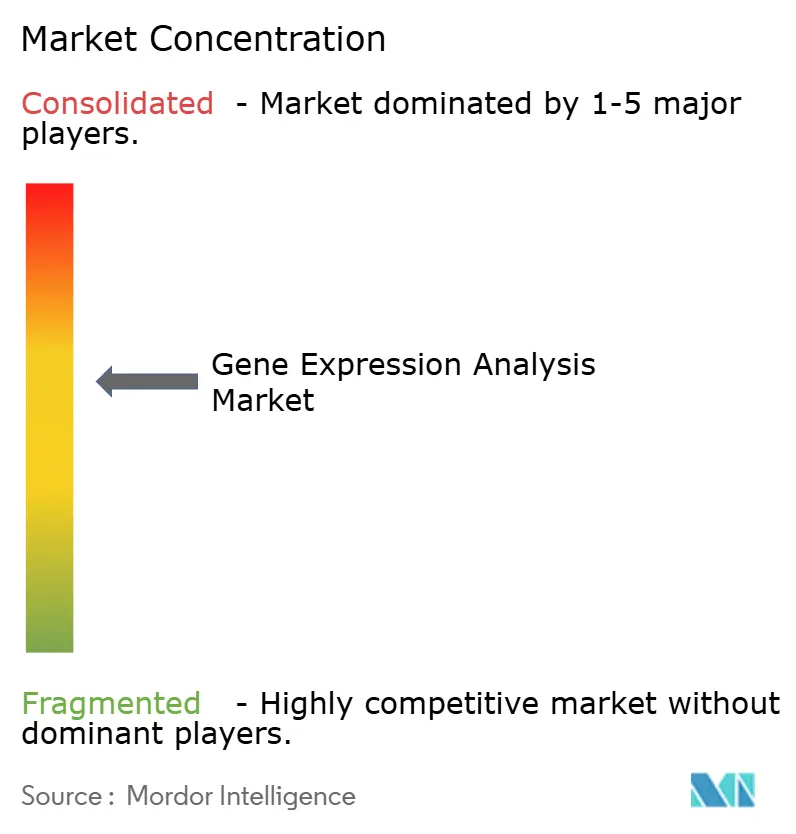
| Market Concentration | Medium |
Major Players *Disclaimer: Major Players sorted in no particular order Image © Mordor Intelligence. Reuse requires attribution under CC BY 4.0. | |
Gene Expression Analysis Market Analysis by Mordor Intelligence
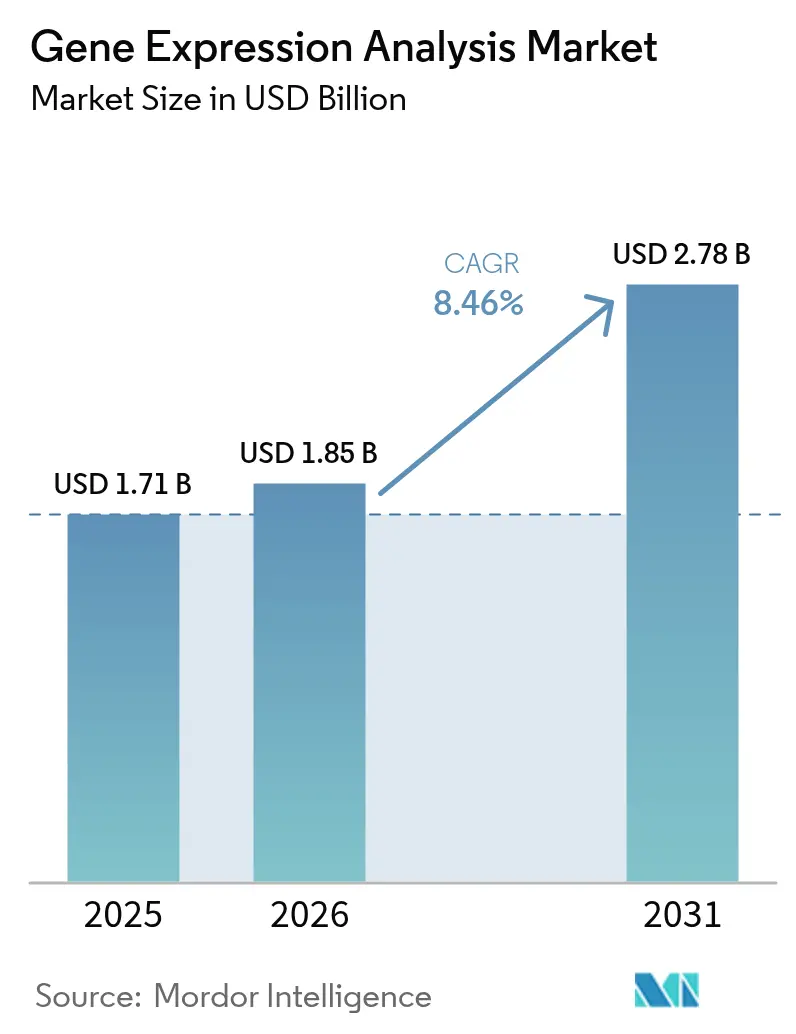
The Gene Expression Analysis Market size was valued at USD 1.71 billion in 2025 and estimated to grow from USD 1.85 billion in 2026 to reach USD 2.78 billion by 2031, at a CAGR of 8.46% during the forecast period (2026-2031).
This expansion reflects the steady integration of artificial intelligence into sequencing workflows, the widening clinical use of multi-omics profiling, and supportive reimbursement and regulatory frameworks. Demand accelerates as laboratories adopt spatial biology tools that map gene activity within intact tissue, and as governments channel funding toward genomic infrastructure that links research discoveries to routine patient care. Platform suppliers respond with faster, more accurate instruments, while service providers scale cloud-based bioinformatics that lessen the skills shortage. Consolidation among reagent vendors and instrument makers intensifies price competition, yet supply chain fragility for synthetic nucleotides and data-sovereignty rules remain persistent risks to growth.
Key Report Takeaways
- By technology, quantitative PCR held 33.98% of gene expression analysis market share in 2025, whereas spatial transcriptomics is set to expand at a 14.62% CAGR to 2031.
- By product type, reagents and consumables commanded 48.05% of the gene expression analysis market size in 2025, while services show the fastest trajectory with a 12.78% CAGR through 2031.
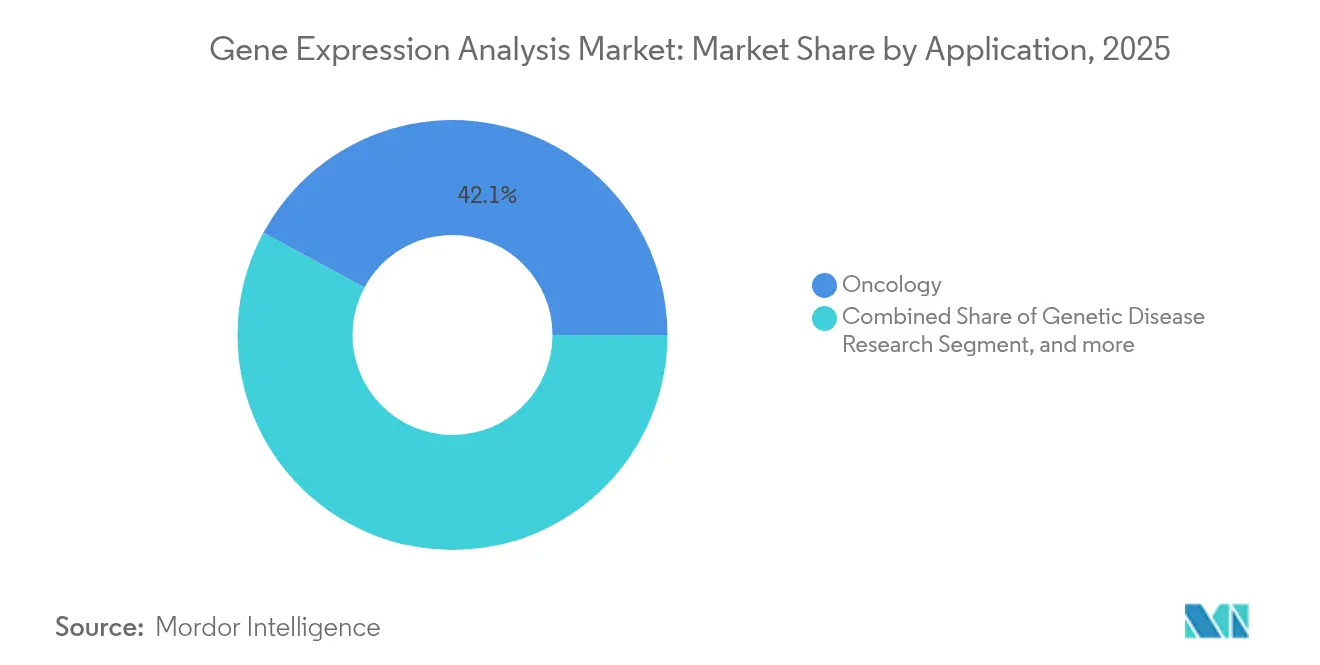
- By application, oncology generated 42.12% of 2025 revenue, whereas infectious disease diagnostics is expected to advance at a 16.10% CAGR until 2031.
- By end user, pharmaceutical and biotechnology companies accounted for 35.20% of revenue in 2025; diagnostic laboratories will rise the quickest with a 12.15% CAGR to 2031.
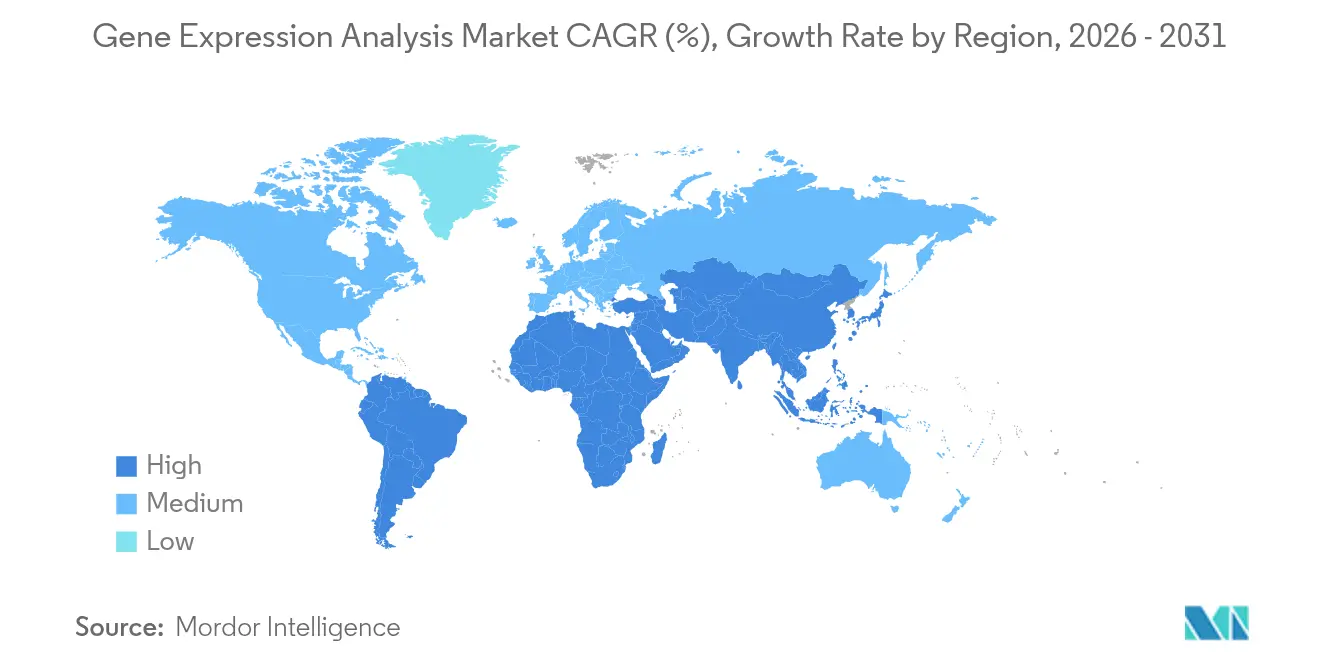
- By geography, North America led with 42.95% revenue share in 2025, while Asia-Pacific is forecast to grow at an 11.12% CAGR through 2031.
Note: Market size and forecast figures in this report are generated using Mordor Intelligence’s proprietary estimation framework, updated with the latest available data and insights as of 2026.
Market Trends and Insights
Drivers Impact Analysis of Gene Expression Analysis Market*
| Driver | (~) % Impact on CAGR Forecast | Geographic Relevance | Impact Timeline |
|---|---|---|---|
| Rapid Technological Advancement in NGS & qPCR Platforms | +2.1% | Global, with concentration in North America & Europe | Medium term (2-4 years) |
| Increased Government Funding for Genomics | +1.8% | Global, particularly strong in US, EU, China, India | Long term (≥ 4 years) |
| Growing Adoption of Precision Medicine | +1.6% | North America & EU leading, expanding to APAC | Medium term (2-4 years) |
| Integration of Spatial-Omics & Single-Cell Profiling | +1.4% | Global research hubs, clinical adoption in developed markets | Long term (≥ 4 years) |
| AI-Driven Bioinformatics Pipelines | +1.2% | Global, with early adoption in tech-advanced regions | Short term (≤ 2 years) |
| Cell & Gene-Therapy Manufacturing QC Demand | +0.9% | North America & EU, emerging in APAC | Medium term (2-4 years) |
| Source: Mordor Intelligence | |||
Rapid Technological Advancement in NGS & qPCR Platforms
Next-generation sequencing now reaches telomere-to-telomere assemblies that uncover structural variants and epigenetic marks missed by short-read systems. Oxford Nanopore’s long-read instruments deliver direct RNA data without amplification steps, while AI-enhanced base-calling lowers error rates and computing needs. Integration with quantitative PCR shortens confirmatory workflows and boosts total throughput. QIAGEN’s AI-powered Ingenuity Pathway Analysis converts raw reads into biological pathways that clinicians can interpret within hours. Collectively, these advances cut turnaround times and widen adoption in routine diagnostics.
Increased Government Funding for Genomics
National programs treat genomics as a competitiveness asset. The US National Institutes of Health assigned USD 27 million in 2024 to weave genomic data into learning health systems.[1]NIH Staff, “NIH Establishes Genomics-Enabled Learning Health Systems,” National Institutes of Health, nih.gov India finished sequencing 10,000 genomes in 2025 to create population-specific references.[2]Staff Writers, “Genome India Project Completes Sequencing of 10,000 Genomes,” The Scientist, the-scientist.com China’s Human Genome Project II proposal seeks to sequence 1% of the global population, while Australia’s Genomics Health Futures Mission earmarks AUD 500.1 million over ten years. Such funding shifts the focus from discovery science to clinical deployment and sustains long-term demand for sequencing capacity.
Growing Adoption of Precision Medicine
Fifteen US states now mandate insurance coverage for biomarker tests, lowering patient cost barriers and lifting test volumes. The FDA approved eight new cell and gene therapies in 2024, and regulators predict up to twenty approvals in 2025, anchoring genomic assays within drug-labeling requirements. Hospitals install robotic laboratories that double sequencing capacity and trim turnaround to under one day. Pharmaceutical firms design trials around pharmacogenomics, making companion diagnostics standard for approvals in oncology and neurology.
Integration of Spatial-Omics & Single-Cell Profiling
Spatial transcriptomics keeps cellular context intact, helping researchers visualize immune infiltration and tumor heterogeneity.[3]Staff Writers, “Telomere-to-Telomere Assembly With Nanopore Sequencing,” Nature, nature.com Platforms from 10x Genomics and Vizgen provide sub-cellular resolution, and AI tools map three-dimensional gene activity. Expansion microscopy boosts RNA detection without losing positional accuracy, thereby refining target discovery for immunotherapies. Drug developers exploit these insights to rank candidates by spatial gene signatures rather than bulk averages, improving trial success rates.
Restraints Impact Analysis of Gene Expression Analysis Market*
| Restraint | (~) % Impact on CAGR Forecast | Geographic Relevance | Impact Timeline |
|---|---|---|---|
| High Capital Costs of Advanced Sequencers | -1.8% | Global, particularly affecting emerging markets | Medium term (2-4 years) |
| Shortage of Skilled Bioinformaticians | -1.4% | Global, acute in APAC and developing regions | Long term (≥ 4 years) |
| Data-Sovereignty Regulations on Genomic Data | -1.1% | EU leading, expanding to US and APAC | Medium term (2-4 years) |
| Reagent Supply-Chain Fragility (Synthetic Nucleotides) | -0.8% | Global, with concentration risk in Asia manufacturing | Short term (≤ 2 years) |
| Source: Mordor Intelligence | |||
High Capital Costs of Advanced Sequencers
Top-tier spatial biology platforms often exceed USD 1 million per unit and require extra imaging modules and high-performance computing. Smaller laboratories in Latin America, Africa, and parts of Asia delay purchases or rely on service providers, which concentrates volume among well-funded hubs. Illumina’s target of USD 200 per genome remains distant, reinforcing cost barriers. Leasing agreements spread payments but increase total outlay and reduce user control over data pipelines.
Shortage of Skilled Bioinformaticians
Training programs lag behind the rapid evolution of multi-omics analytics. Spatial data demand expertise in image processing and statistical modeling that few graduates possess. Salary inflation places bioinformaticians out of reach for mid-sized hospitals, pushing institutions toward outsourced analysis. Emerging markets feel the pinch most, as local universities struggle to add genomics curricula and retain talent.
*Our forecasts treat driver/restraint impacts as directional, not additive. The impact forecasts reflect baseline growth, mix effects, and variable interactions.
Gene Expression Analysis Market Segment Analysis
By Technology:
Spatial Biology Drives InnovationThe gene expression analysis market size for technology segments with quantitative PCR retaining 33.98% revenue while spatial transcriptomics registers an unmatched 14.62% CAGR. Spatial tools preserve tissue context and reveal cell-cell interactions that bulk assays mask. Next-generation sequencing remains essential in diagnostics but now integrates long-read chemistry that resolves structural variants. Digital PCR gains users who need absolute quantification, and microarrays decline yet stay relevant for targeted panels.
Spatial methods reshape discovery pipelines. Oxford Nanopore’s Mk1D MinION provides bedside sequencing for infectious disease outbreaks, and its ElysION robot automates library prep. Comparative benchmarks show 10x Genomics’ Chromium Fixed RNA Profiling kit outperforming peers on sensitivity, while Becton Dickinson’s Rhapsody kit offers budget options. Artificial intelligence reduces run-time error correction, broadening usability. Together these trends elevate spatial biology’s profile and sustain high growth inside the gene expression analysis market.




By Product Type:
Services Accelerate GrowthServices posted a 12.78% CAGR, the fastest within the gene expression analysis industry, as labs outsource multi-omics analytics that exceed internal capacity. Reagents and consumables still delivered 48.05% of 2025 revenue, confirming their anchoring role in daily workflows. Cloud-hosted bioinformatics attracts hospitals and pharmaceutical sponsors seeking quick turnaround without hiring data scientists. Contract research organizations expand menu offerings, including single-cell analytics, to tap this demand.
Firms pivot toward higher-margin software and services. QIAGEN expanded its Digital Insights portfolio with five planned launches while BD partnered with Biosero to link flow cytometry and robotics. Instrument growth decelerates since platform life spans now exceed five years, yet upgrades remain necessary for spatial imaging add-ons. Robotic handling lowers contamination risk and keeps batch quality consistent, which appeals to diagnostic labs scaling test volumes.
By Application:
Infectious Disease Diagnostics SurgeInfectious disease diagnostics is set to climb at a 16.10% CAGR, narrowing the gap with oncology’s 42.12% share. Pandemic response funding and antimicrobial resistance monitoring sustain government spending on sequencing capacity. Genomic surveillance tracks variants and guides vaccine decisions, demonstrating real-time public health value.
Oncology remains the anchor application, expanding into liquid biopsy and minimal residual disease tests. The FDA and Thermo Fisher collaborate on the myeloMATCH precision medicine trial, embedding genomic stratification into therapy selection. Rare disease initiatives support steady genetic disease research, while the agriculture sector adopts expression profiling to enhance crop resilience. Environmental scientists combine transcriptomics with biodiversity surveys to monitor ecosystem change.
By End User:
Diagnostic Laboratories Lead GrowthDiagnostic laboratories will record a 12.15% CAGR through 2031, outpacing pharmaceutical and biotechnology companies that held 35.20% of 2025 revenue. Clinical labs invest in automation that enables same-day results, crucial for oncology treatment paths and infection control. Academic centers slow spending after initial infrastructure buildout, yet remain innovation hubs.
Pharmaceutical firms integrate companion diagnostics in almost every late-phase study, fueling reagent demand. Contract research organizations bridge capacity gaps by offering turnkey genomics. Hospitals test decentralized sequencing, but uptake is gradual because cost and compliance hurdles persist. QIAGEN’s QuantiFERON TB and QIAstat-Dx lines underscore how syndromic panels propel routine testing volumes.
Geography Analysis
North America Gene Expression Analysis Market
North America generated 42.95% of 2025 revenue and benefits from insurance mandates that compel coverage of biomarker tests. The National Institutes of Health investment in genomics-enabled health systems steers data into clinical workflows. FDA approvals of eight cell and gene therapies in 2024 confirm regulatory acceptance and stimulate test utilization. Canada expands precision medicine programs, while Mexico channels funds toward infectious disease sequencing; yet growth moderates as the market approaches maturity.
APAC Gene Expression Analysis Market
Asia-Pacific exhibits the fastest trajectory at 11.12% CAGR, and its share of the gene expression analysis market is rising quickly. India completed the 10,000-genome project that yields a culturally relevant reference set. China’s Human Genome Project II proposal underlines ambitions to sequence 1% of the global population, and Japan’s Omics Browser tailors multi-omics tools to East Asian genomes. Australia’s Genomics Health Futures Mission funds 88 projects despite coordination challenges. South Korea backs start-ups that combine AI and long-read sequencing.
EMEA and South America Gene Expression Analysis Market
Europe maintains steady expansion through Horizon research calls and national healthcare budgets. Robotic genomic testing at the UK’s Royal Marsden hospital doubles throughput and lowers errors. Germany and France streamline reimbursement for NGS tumor panels. The Middle East and Africa explore public-private genomics centers, with Saudi Arabia signing memoranda with QIAGEN. South America records slower gains; however, Brazil and Argentina join international collaborations that give laboratories affordable access to sequencing reagents.

Regulatory Landscape
Gene expression analysis workflows used in clinical decision-making fall under in vitro diagnostic and companion diagnostic requirements in major markets, which affects validation depth, labeling, and post-market obligations for gene expression profiling systems. In the United States, the FDA has long provided a pathway for gene expression profiling test systems through Class II special controls guidance (for example, breast cancer prognosis), reinforcing expectations for analytical performance, clinical performance, and risk controls for expression-based assays used in patient management.
In Europe, Regulation (EU) 2017/746 (IVDR) continues to tighten conformity assessment and clinical evidence requirements, especially for companion diagnostics that connect expression signatures with therapy selection under EMA-linked consultation processes. Standards activity is also raising the compliance floor: ISO published ISO 5649:2024 for laboratory-developed tests (LDTs) and ISO 21474-3:2024 for interpretation and reporting of multiplex molecular tests. In 2026, ISO work advanced an RNA quantification methods project toward committee drafting, supporting more harmonized expectations for gene expression measurement and reporting across laboratories and kit manufacturers.
Competitive Landscape
The gene expression analysis market features moderate consolidation. Leaders such as Thermo Fisher Scientific, Illumina, and QIAGEN bundle instruments, reagents, and software into integrated ecosystems. Thermo Fisher’s USD 3.1 billion Olink acquisition adds high-plex proteomics, reinforcing its spatial biology lineup. Bruker’s USD 392.6 million purchase of NanoString extends into spatial transcriptomics, targeting break-even by 2026. These deals signal that incumbents use M&A to secure differentiated capability rather than rely solely on internal R&D.
Mid-sized challengers exploit white-space niches. Oxford Nanopore leads portable long-read sequencing, while 10x Genomics dominates single-cell assays. BD’s partnership with Biosero links robotics to flow cytometry for automated sample prep. Software-centric entrants supply AI pipelines that trim interpretation times, easing the bioinformatics bottleneck. As barriers to instrument design drop, new firms compete on application specificity, yet scaling manufacturing and customer support remains arduous.
Price pressure persists as consumables revenue subsidizes affordable instrument placement. Raw material inflation and supply-chain disruptions add cost volatility, encouraging multi-sourcing strategies. Companies cultivate government relationships for large-scale sequencing programs that offer stable volumes. Branding now hinges on end-to-end workflow efficiency and data security assurances, not simply raw throughput specifications.
Gene Expression Analysis Industry Leaders
Quest Diagnostics Incorporated
PerkinElmer Inc.
Agilent Technologies
Promega Corporation
Illumina Inc.
- *Disclaimer: Major Players sorted in no particular order
Gene Expression Analysis Market Companies Covered in this Report
- Illumina
- Thermo Fisher Scientific
- QIAGEN
- Agilent Technologies
- Bio-Rad Laboratories
- Roche
- PerkinElmer
- Novogene Co., Ltd.
- Luminex
- Quest Diagnostics
- Promega
- Oxford Nanopore Technologies
- Pacific Bioscience
- Takara Bio
- BGI Genomics Co., Ltd.
- 10x Genomics
- NanoString Technologies Inc.
- Fluidigm
- Genscript
- Merck

Market Opportunities and Future Outlook
Spatial transcriptomics and multi-omics workflows are creating whitespace in analysis automation and data harmonization, particularly when laboratories need to convert high-plex tissue maps into actionable gene expression readouts without increasing headcount in bioinformatics. Academic tools released in 2026 underscore this demand, including publications describing SpatialCell AI (single-cell resolution enhancement from spot-based spatial data) and TranspaceR (high-throughput selection of spatially variable genes with automated cell-type labeling), both of which target bottlenecks in spatial analysis. This aligns with the market shift toward outsourced and cloud-enabled interpretation services.
A second opportunity area is clinical translation that bridges legacy expression datasets with current RNA-seq and targeted RNA sequencing, supporting longitudinal cohorts and real-world evidence programs that include both microarray and sequencing-era data. Peer-reviewed evidence in 2025 highlighted targeted RNA sequencing as a stand-alone diagnostic approach in oncology with high molecular data acquisition success across a large prospective series, while 2026 research introduced GANomics to translate between microarray and RNA-seq formats. Taken together, these developments support demand for end-to-end offerings that combine wet-lab expression assays with validated pipelines for cross-platform comparability, which is particularly relevant for diagnostic laboratories scaling testing volumes and for pharma teams linking trial biomarkers to clinical practice.
Recent Industry Developments in Gene Expression Analysis Market
- July 2026: Agilent Technologies launched the AI-powered xCELLigence RTCA eSight software module to automate label-free imaging analysis. The release expands Agilent's software footprint for complex biological readouts that frequently feed into downstream gene expression and multi-omics interpretation, supporting higher-throughput experimentation with more consistent analytics.
- July 2025: Quest Diagnostics launched an advanced pharmacogenomics (PGx) offering. This expands clinical adoption of genomics-informed care pathways and increases demand for molecular testing workflows where expression and transcript-informed interpretation are used alongside DNA-based markers.
- May 2024: The FDA approved Illumina's cancer biomarker test with two companion diagnostics to rapidly match patients to targeted therapies. This approval reinforces the regulated route for oncology-aligned molecular testing and supports further integration of expression-adjacent profiling and companion diagnostic development within routine cancer care.


Gene Expression Analysis Market Report Scope and Research Methodology
Market Definition and Coverage
For this study, the gene expression analysis market includes revenues earned from tools and services used to quantify gene expression at the RNA level, covering common workflows across labs and clinical settings.
Scope exclusions: We exclude standalone variant detection sequencing, pure bioinformatics software sales, and downstream proteomics.
Segments Covered in This Report
- By Technology
- Polymerase Chain Reaction (PCR)
- Quantitative PCR (qPCR)
- Digital PCR (dPCR)
- Next-Generation Sequencing (NGS)
- Microarrays
- Spatial Transcriptomics
- Others
- By Product Type
- Instruments
- Reagents & Consumables
- Services
- By Application
- Oncology
- Genetic Disease Research
- Infectious Disease Diagnostics
- Agriculture & Plant Genomics
- Other Applications
- By End-user
- Pharmaceutical and Biotechnology Companies
- Diagnostic Laboratories
- Academic & Research Centers
- Contract Research Organizations (CROs)
- Hospitals & Clinics
- By Geography
- North America
- United States
- Canada
- Mexico
- Europe
- Germany
- United Kingdom
- France
- Italy
- Spain
- Rest of Europe
- Asia-Pacific
- China
- Japan
- India
- Australia
- South Korea
- Rest of Asia-Pacific
- Middle East & Africa
- GCC
- South Africa
- Rest of Middle East & Africa
- South America
- Brazil
- Argentina
- Rest of South America
- North America
Data Sources, Market Sizing, and Validation
Desk Research
Desk research was used to map the overall demand environment and the typical spending mix across life science labs, before detailed assumptions were locked into the model. We leaned on public sources such as the US FDA databases for diagnostic context, NIH and NCBI resources for genomics activity signals, WHO publications for disease burden cues, and OECD and World Bank indicators for health and R&D intensity by country.
To convert this into a sizing-ready input set, we also reviewed sources such as customs and trade statistics for relevant lab equipment movement, patent databases for technology direction, and annual reports and investor presentations to understand how suppliers describe product adoption and any pricing changes. In a few cases, subscription databases for company financials, news, and patents were used to speed up cross-checks on revenue statements, launches, and M&A timelines. These desk research sources are illustrative only, and additional public and paid references were used for data collection, validation, and clarification.
Primary Interviews and Surveys
Primary interviews and structured surveys were used to test key assumptions that desk sources do not resolve well, especially the split between instruments, reagents, consumables, and fee-based services, and the real-world adoption pace by workflow. We spoke with manufacturers, distributors, lab directors, and procurement-focused roles, and the coverage was balanced across major demand hubs in APAC, EMEA, and the Americas so regional pricing and usage patterns could be normalized.
Distribution of primary research fieldwork respondents
| Company type | Respondent position | Region |
|---|---|---|
| Top tier: 32% | CXOs: 12% | APAC: 51% |
| Mid tier: 52% | Functional/Unit leaders: 36% | EMEA: 31% |
| Smaller Players: 16% | Managers: 52% | Americas: 18% |
Market-Sizing & Forecasting
Sizing starts with a top-down demand pool build-up where country level life science activity and clinical testing intensity are translated into likely gene expression workflow volumes, and then converted into spending using typical price bands. That first pass is corroborated with selective bottom-up approximations, such as sampled instrument placements, reagent pull-through per installed base, and channel checks on average selling prices, which are used to adjust totals when the first pass drifts.
Inputs that materially shape the model include the mix of qPCR, dPCR, microarrays, NGS based expression, and spatial transcriptomics usage, typical reagent and consumable consumption per run, service outsourcing penetration in pharma and academic settings, and the pace of new assay adoption in diagnostics and research. Where bottom-up inputs were incomplete for smaller countries, gaps were handled through proxying with comparable peers using R&D intensity, lab density, and healthcare spend patterns, followed by interview based sanity checks.
For forecasting, we used scenario analysis supported by simple trend fits on key variables. The scenarios were pressure-tested with experts on expected throughput growth, pricing progression, and technology substitution. This keeps the forecast explainable and repeatable, while still reflecting changes in workflow preference and budget cycles.
Data Validation & Update Cycle
Outputs were triangulated across multiple signals, including workflow adoption trends, supplier commentary, and the implied spend per lab or per run, and then checked for outliers at the country and regional level. When a number looked unusual, assumptions were revisited, and follow-up outreach was triggered to confirm whether the change came from pricing, mix shift, or a timing difference in recognition.
Before sign-off, the model goes through multi-step analyst review so formulas, unit conversions, and currency timing are consistent across regions and years. Reports are refreshed annually, and interim updates are made when material events affect pricing, technology direction, or demand. Right before delivery, a final review pass is completed so the view shared with clients is current.
Mordor Intelligence's Global Gene Expression Analysis Market Market Size Versus Other Published Estimates
Published market values for gene expression analysis often differ because the underlying scope and the counting rules are not the same, even when the titles look similar. Differences also show up when one publisher uses a service-only view, or when another folds in adjacent genomics activities that do not strictly measure expression.
The benchmark table shows a much smaller 2025 value than some other published figures. In Mordor Intelligence's model, only revenues tied to expression quantification workflows (instruments, reagents, consumables, and fee-based services across qPCR, dPCR, microarrays, NGS expression, and spatial transcriptomics) are counted, while standalone variant detection sequencing and pure bioinformatics software sales are left out.
Benchmark comparison
| Source | Market Size | Gaps in Research Methodology |
|---|---|---|
| Mordor Intelligence | USD 1.71 B (2025) | |
| Industry Research Publisher A | USD 4.74 B (2024) | Uses a broader definition that appears to include sequencing services and bioinformatics solutions, and the year basis differs, which inflates the comparable total versus an expression-only workflow view. |
| Industry Research Publisher B | USD 5.64 B (2025) | Bundles wider process steps and technique buckets, and does not clearly separate expression quantification from adjacent omics and analysis activities, which pushes the reported market higher for the same year. |
Taken together, the spread is mostly explained by what gets counted as gene expression analysis and how strictly expression workflows are separated from nearby genomics and software revenue. By keeping inputs tied to measurable workflow volumes and price bands, and then validating with supplier and lab checks, the result stays traceable to clear assumptions that can be revisited when the market shifts.


Key Questions Answered in the Report
What is the current value of the gene expression analysis market?
The gene expression analysis market is valued at USD 1.85 billion in 2026 and is projected to reach USD 2.78 billion by 2031.
Which technology segment is growing the fastest?
Spatial transcriptomics is expanding at a 14.62% CAGR through 2031 as it reveals spatial context that traditional bulk methods miss.
Why are diagnostic laboratories the fastest-growing end users?
Insurance mandates, automation, and the shift toward clinical genomics allow diagnostic labs to scale testing volumes at a 12.15% CAGR.
Which region offers the highest growth potential?
Asia-Pacific shows the highest regional CAGR at 11.12% because of large-scale government genomics initiatives in India, China, and Australia.
What are the main barriers to market growth?
High capital costs for advanced sequencers, a shortage of skilled bioinformaticians, data-sovereignty regulations, and reagent supply-chain fragility limit expansion.
How will consolidation shape competitive dynamics?
Strategic acquisitions such as Thermo Fisher’s purchase of Olink and Bruker’s acquisition of NanoString signal closer integration of spatial biology and AI analytics among leading vendors.
Page last updated on:


 Your data is secure and never sold or shared.


