
Magnetoencephalography Market Size and Share
Market Overview
| Study Period | 2019 - 2030 |
|---|---|
| Market Size (2025) | USD 325.70 Million |
| Market Size (2030) | USD 428.70 Million |
| Growth Rate (2025 - 2030) | 5.65 % |
| Fastest Growing Market | Asia Pacific |
| Largest Market | North America |
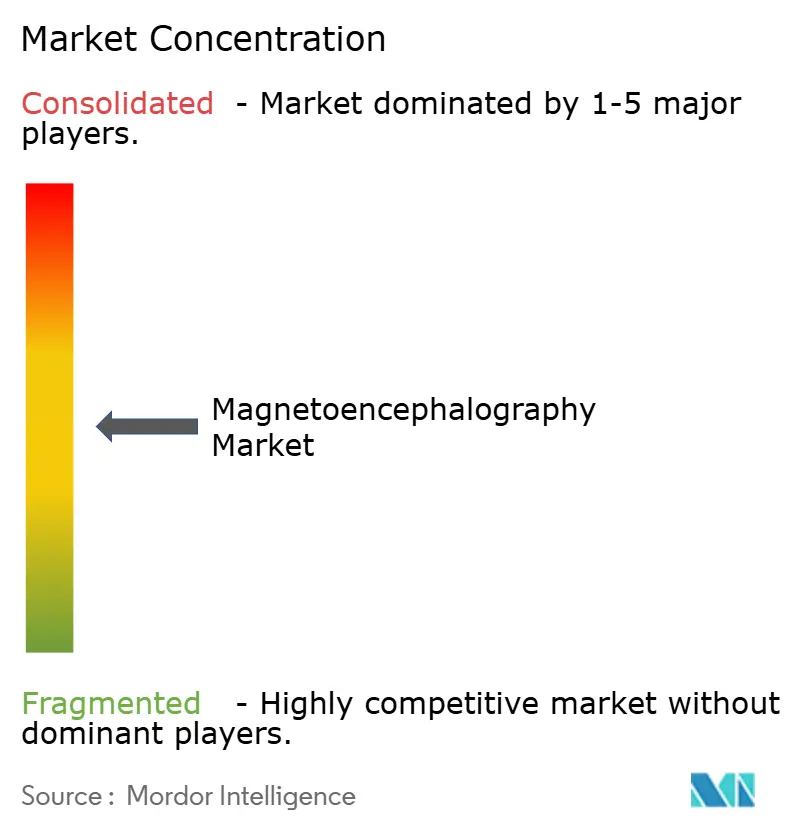
| Market Concentration | Medium |
Major Players *Disclaimer: Major Players sorted in no particular order Image © Mordor Intelligence. Reuse requires attribution under CC BY 4.0. | |
Magnetoencephalography Market Analysis by Mordor Intelligence
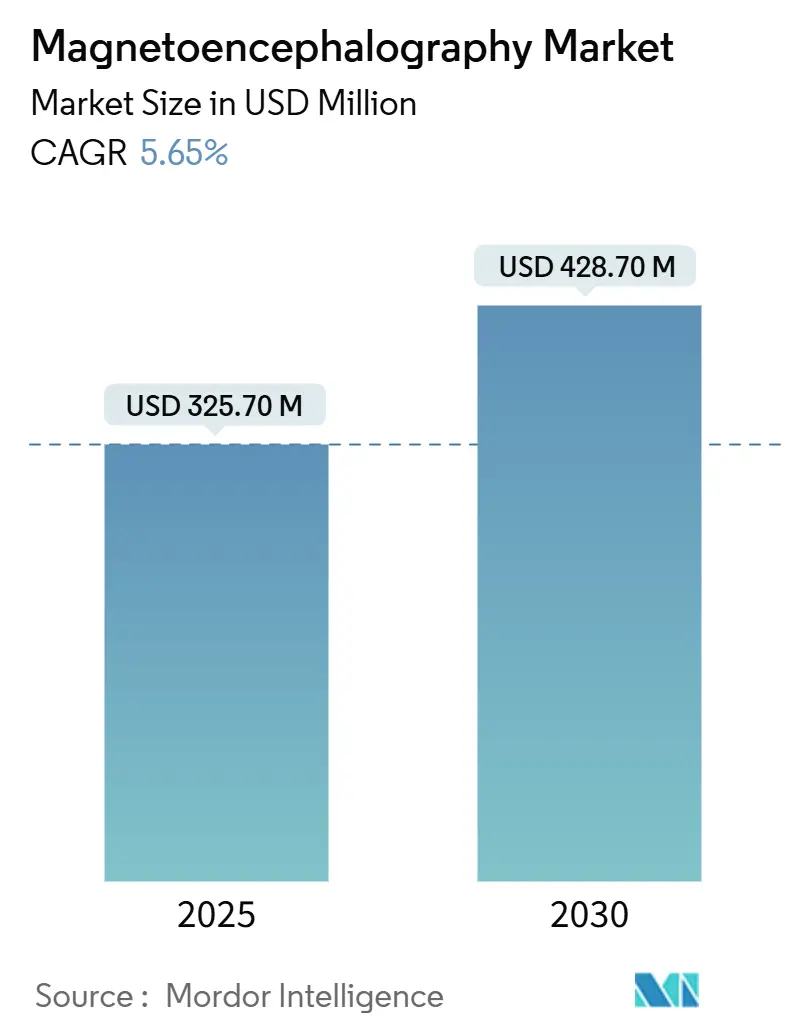
The Magnetoencephalography Market size is estimated at USD 325.70 million in 2025, and is expected to reach USD 428.70 million by 2030, at a CAGR of 5.65% during the forecast period (2025-2030).
Magnetoencephalography Market Overview
The magnetoencephalography industry is experiencing significant transformation driven by expanding healthcare infrastructure and increasing investment in neurological research facilities worldwide. Major healthcare institutions are upgrading their neurology departments with advanced imaging capabilities, while research centers are expanding their facilities to accommodate sophisticated MEG systems. According to the article published in June 2024 in the Journal of Japan Epilepsy Society, more than 200 whole-head MEG devices are currently in operation globally. These devices play a critical role in the healthcare industry, with their primary clinical application being in the field of epilepsy. They are extensively utilized to accurately localize brain regions that serve as sources of interictal epileptiform discharges (IEDs), thereby aiding in precise diagnosis and treatment planning. The integration of MEG facilities within comprehensive neurological centers has become a growing trend, particularly in academic medical centers and specialized neurological institutes.
Strategic partnerships and collaborations between technology providers and research institutions are reshaping the industry landscape. For instance, in August 2023, the National Institutes of Health (NIH) underscored this trend by allocating USD 2 million to UC San Diego's research center for advanced MEG systems. This move highlights the increasing emphasis on collaborative research and development. Such partnerships not only facilitate knowledge exchange but also accelerate technological innovations. As a result, MEG systems are being deployed more efficiently across diverse healthcare settings. Furthermore, the collaboration between academic institutions and industry players plays a pivotal role in developing standardized protocols and broadening the technology's clinical applications.
Globally, healthcare systems are embracing integrated imaging approaches, merging MEG with other diagnostic technologies for thorough neurological assessments. Modern neurological centers are co-locating MEG systems with complementary imaging modalities, including MRI and PET scanners. The high burden of neurological conditions is reflected in current statistics, with approximately 6.7 million Americans aged 65 and above experiencing Alzheimer's dementia in 2023, driving the need for advanced diagnostic capabilities.
The market is witnessing a notable shift toward improving accessibility and expanding the geographical reach of MEG technology. Healthcare providers are focusing on establishing regional centers of excellence for neurological imaging, making advanced diagnostic capabilities more accessible to broader patient populations. This expansion is supported by increasing insurance coverage for MEG procedures and growing recognition of its clinical value. The industry is also seeing the emergence of more compact and user-friendly MEG systems, with manufacturers focusing on developing solutions that require less specialized infrastructure while maintaining high diagnostic accuracy.
Global Magnetoencephalography Market Trends and Insights
Technological Advancements
Driven by ongoing technological innovations, the magnetoencephalography market is witnessing robust growth, leading to enhanced diagnostic capabilities and improved patient outcomes. For instance, in November 2024, the Neuro’s McConnell Brain Imaging Center reported a transformative milestone for its MEG Unit. This accomplishment not only strengthens the foundation for advanced neuroscience research at MEG but also establishes a groundbreaking precedent for integrating sustainability into research operations, ensuring long-term value and innovation in the field.
Furthermore, the emergence of portable and wearable MEG systems has significantly bolstered accessibility and user-friendliness. Companies like Leti are at the forefront, rolling out wearable brain scanners tailored for superior diagnosis of epilepsy and brain tumors.
Recent breakthroughs in sensor technology and data processing have further propelled the market forward. For instance, in June 2024, scientists from Tokyo Tech achieved a significant milestone by developing a high-resolution diamond quantum magnetometer for mapping brain activity, representing a major leap in precision imaging capabilities. The integration of advanced computing power and sophisticated hardware generated renewed interest in MEG scanners, leading to enhanced signal clarity and more user-friendly interfaces. These improvements are complemented by the development of new data processing algorithms and machine learning techniques that facilitate more complex MEG data analysis, enabling faster and more personalized treatment approaches for various neurological conditions.


Rising Prevalence of Neurological Disorders
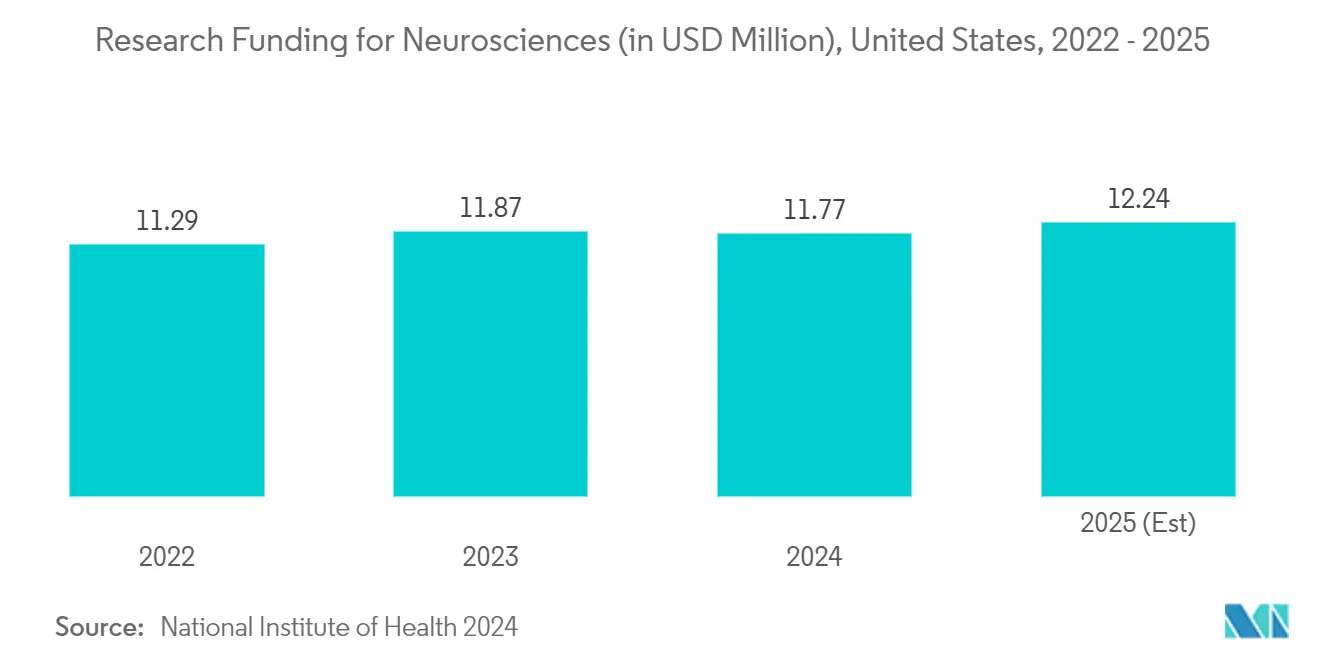
The increasing incidence of neurological disorders worldwide has become a significant driver for the magnetoencephalography market, creating an urgent need for advanced diagnostic and monitoring solutions. For instance, in 2024, an estimated 6.9 million Americans aged 65 and older are grappling with Alzheimer's, as highlighted in the 2024 Alzheimer's Disease Facts and Figures. Notably, 73% of these individuals are 75 or older, underscoring the escalating challenge posed by neurodegenerative diseases. This growing prevalence of Alzheimer's and other neurodegenerative conditions is driving the demand for advanced diagnostic tools, such as Magnetoencephalography (MEG), which offers non-invasive and precise brain imaging capabilities.
Meanwhile, a September 2024 update from the Australian Institute of Health and Welfare projects that, due to an aging and expanding population, the count of Australians with dementia could surge to 849,300 by 2058. This figure breaks down to 533,800 women and 315,500 men. The anticipated rise in dementia cases further emphasizes the need for innovative technologies like MEG to support early diagnosis and effective management of these conditions.
MEG has emerged as a pivotal tool in diagnosing and monitoring neurological conditions, especially epilepsy, the fourth most prevalent neurological disorder in the U.S. Its non-invasive, real-time monitoring of brain activity is invaluable for pre-surgical planning and optimizing treatments for epilepsy patients. MEG's prowess lies in its ability to detect neuromagnetic impulses undistorted as they traverse the skull and scalp. This has cemented its role not just in epilepsy but also in probing brain tumors, emotional states, pain perception, and other intricate neurological disorders. Given the escalating global prevalence of neurological conditions, this broad diagnostic capability of MEG is becoming ever more vital for healthcare systems seeking precision in diagnosis and monitoring.
Magnetoencephalography Market Application Segment Analysis
Clinical Segment in Magnetoencephalography Market
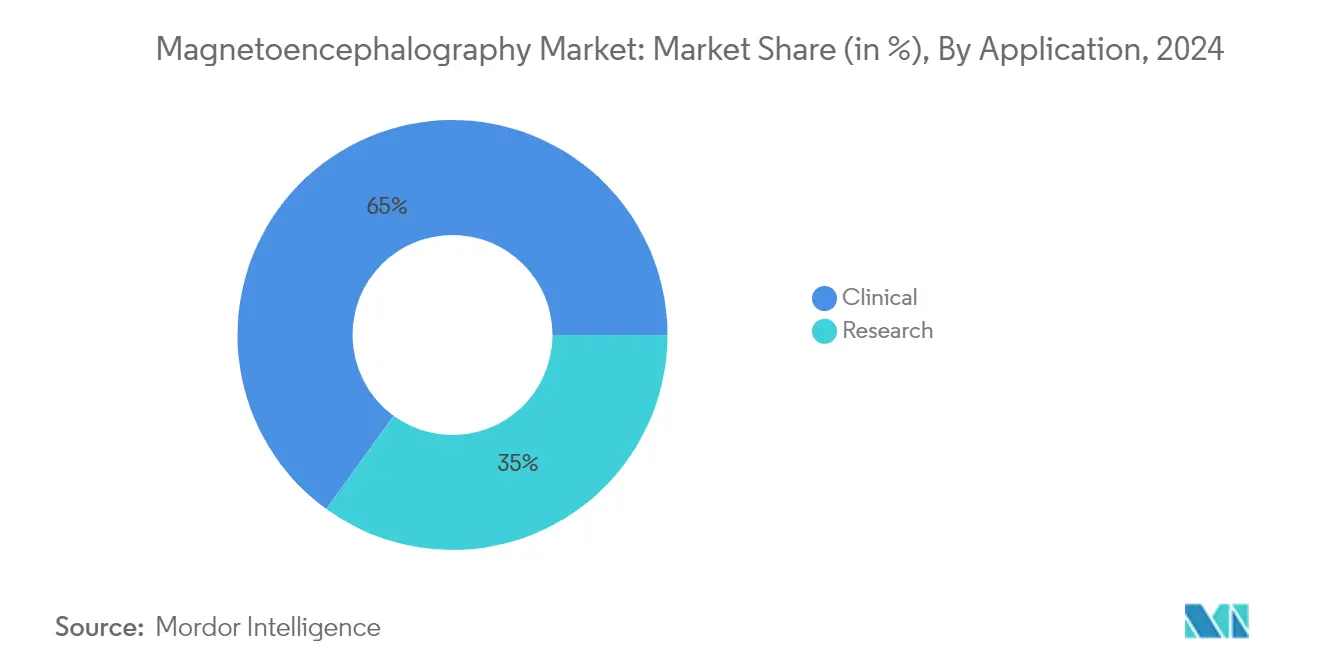
The Clinical segment dominates the global magnetoencephalography market, commanding approximately 65% of the market share in 2024. This significant market position is primarily driven by the increasing prevalence of neurological disorders and the growing adoption of MEG technology in clinical diagnostics. The segment's strength is particularly evident in applications such as epilepsy monitoring, stroke assessment, and dementia diagnosis, where precise brain activity mapping is crucial. The clinical segment's dominance is further reinforced by the expanding implementation of MEG systems in leading hospitals and specialized neurological centers worldwide. The integration of advanced data analytics and artificial intelligence in clinical MEG applications has enhanced diagnostic accuracy and treatment planning capabilities. Additionally, the segment's robust performance is supported by favorable reimbursement policies for neurological diagnostic procedures in developed markets and the increasing awareness of MEG's advantages over traditional neuroimaging techniques.
Research Segment in Magnetoencephalography Market
The research segment is emerging as the fastest-growing segment in the magnetoencephalography market and is projected to expand at a significant CAGR from 2025 to 2030. This remarkable growth trajectory is fueled by increasing investments in neuroscience research and the expanding applications of MEG in understanding brain functions. Academic and research institutions are increasingly adopting MEG technology to study cognitive processes, brain development, and neurological disorders. The segment's growth is further accelerated by technological innovations enabling more precise and detailed brain activity measurements. Collaborative research initiatives between academic institutions and healthcare organizations are creating new opportunities for MEG applications in experimental neuroscience. The integration of MEG with other neuroimaging techniques is opening new avenues for comprehensive brain research. Moreover, the growing focus on developing novel therapeutic approaches for neurological conditions is driving the demand for advanced MEG research capabilities.
Magnetoencephalography Market End User Segment Analysis
Hospitals Segment in Magnetoencephalography Market
The hospital segment dominated the magnetoencephalography market in 2024, commanding approximately 45% of the total market share. This significant market position is attributed to hospitals' comprehensive neurological departments, substantial patient volumes, and the ability to invest in advanced diagnostic technologies. Hospitals serve as the primary venues for intricate neurological diagnoses and treatments, especially for conditions like epilepsy and brain tumors that demand advanced MEG imaging. This segment's dominance is bolstered by rising healthcare expenditures, enhanced insurance coverage for advanced diagnostics, and the growing adoption of MEG technology in leading healthcare institutions. Furthermore, hospitals not only manage and operate costly MEG systems but also leverage their established referral networks, solidifying their market leadership. The presence of specialized neurologists and skilled technical personnel within hospitals further cements this segment's preeminence.
Imaging Centers Segments in Magnetoencephalography Market
The imaging centers segment represents a significant portion of the magnetoencephalography market, offering specialized diagnostic services with greater accessibility and flexibility compared to hospital settings. These centers are increasingly investing in MEG technology to expand their service offerings and compete with larger healthcare facilities. The segment benefits from shorter waiting times and focused expertise in neurological imaging procedures. Imaging centers are also developing strategic partnerships with hospitals and healthcare networks to enhance their market presence. The segment's growth is supported by increasing awareness of MEG technology among healthcare providers and patients. Additionally, imaging centers are adopting innovative business models to make MEG services more accessible while maintaining operational efficiency. Their role in providing specialized neurological imaging services continues to evolve with advancing technology and changing healthcare delivery models.
Other Segment in the Magnetoencephalography Market
Other segments, like specialty clinics and academic institutes, are emerging as a significant segment in the magnetoencephalography market. The growth of these segments is driven by increasing research funding for neurological studies, expanding applications in cognitive neuroscience, and growing collaboration between academic institutions and technology providers. Rising investments in brain mapping initiatives for specialty clinics further support the segment's expansion. Academic institutions are increasingly adopting MEG technology for both clinical research and educational purposes, creating a robust pipeline for future applications. The segment's growth is also fueled by technological advancements in MEG systems, making them more suitable for imaging and research applications.
Magnetoencephalography Geography Segment Analysis
Magnetoencephalography Market in North America
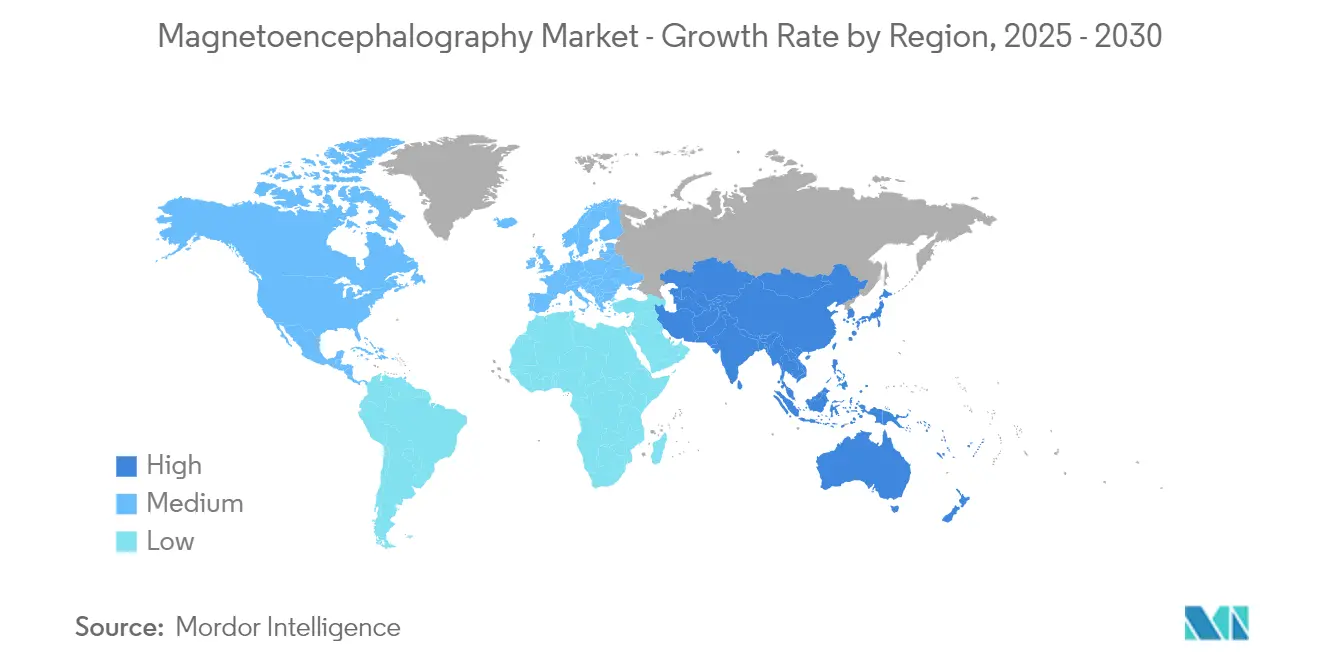
North America maintains its dominant position in the global magnetoencephalography market, commanding approximately 40% of the market share in 2024. This dominance stems from the region's cutting-edge healthcare infrastructure and significant investments in neurological research. With major players and advanced research facilities, North America has cultivated a thriving ecosystem for MEG technology. The region's emphasis on the early diagnosis and treatment of neurological disorders, bolstered by supportive reimbursement policies and healthcare regulations, fuels market growth. As neurological conditions rise among the aging population, healthcare providers are increasingly turning to advanced diagnostic technologies. North America's dedication to technological innovation, paired with its established distribution networks, fortifies its market stance. Furthermore, collaborations between academic institutions and industry leaders pave the way for ongoing technological progress and market growth.
Magnetoencephalography Market in the United States
The United States represents a crucial market for magnetoencephalography, driven by its advanced healthcare infrastructure and strong focus on neurological research. The United States healthcare system, supported by substantial research funding and technological advancements, provides a conducive environment for MEG technology adoption. Leading academic institutions and research centers drive innovation in MEG applications and techniques, while the presence of major market players and established distribution networks accelerates market penetration. The country's strategic focus on early disease detection and precision medicine aligns with the adoption of advanced diagnostic technologies like MEG. A strong emphasis on improving patient outcomes and healthcare quality continues to propel market growth. Additionally, sophisticated research facilities and ongoing clinical trials play a critical role in expanding MEG applications and driving market development. The United States' commitment to advancing neurological research and enhancing patient care standards further reinforces its competitive position in the global MEG market.
Magnetoencephalography Market in Europe
Europe's magnetoencephalography market has shown steady growth, with a notable rate in recent years and projections for continued significant expansion. Driven by a robust focus on healthcare innovation and research, the region's market is witnessing notable expansion. Countries in Europe have set up extensive networks of neurological research centers and specialized medical facilities, with a pronounced reliance on MEG technology. The region boasts leading academic institutions and research organizations, fueling ongoing innovation in MEG applications and techniques. With a strong emphasis on non-invasive diagnostic technologies, the region's healthcare systems are increasingly turning to MEG for neurological diagnostics. Government initiatives bolstering neuroscience research and development further enhance the market's growth prospects. Collaborative efforts among healthcare providers, research institutions, and technology developers have led to advancements in MEG systems and their applications. Moreover, heightened awareness about neurological disorders and the criticality of early diagnosis is propelling market growth throughout the region.
Magnetoencephalography Market in Asia-Pacific
The Asia-Pacific magnetoencephalography market is poised for substantial growth, with a significant CAGR over the forecast period. The region represents a significant growth opportunity due to its large patient population and rapidly developing healthcare infrastructure. Countries across the region are increasingly investing in advanced medical technologies to address the growing burden of neurological disorders. The combination of rising healthcare expenditure, improving access to advanced medical facilities, and growing awareness about neurological conditions is creating favorable conditions for market expansion. The region's academic and research institutions are increasingly adopting MEG technology for both clinical and research applications. Furthermore, the presence of a large aging population, particularly in countries like Japan and China, is driving the demand for advanced neurological diagnostic tools. The increasing focus on preventive healthcare and early disease detection, coupled with rising disposable incomes, continues to fuel market growth. Additionally, government initiatives to modernize healthcare infrastructure and improve access to advanced medical technologies are contributing to market development.
Magnetoencephalography Market in the Middle East and Africa
In the Middle East and Africa, the magnetoencephalography market is witnessing a surge fueled by rising healthcare investments and a burgeoning appetite for cutting-edge medical technologies. The region's healthcare landscape is rapidly evolving, with a pronounced tilt towards innovative diagnostic solutions. Notably, healthcare leaders in the GCC countries are now integrating advanced tools, such as MEG systems, into their neurological diagnostics arsenal. With a keen focus on medical tourism and the establishment of healthcare centers of excellence, the region is amplifying its embrace of sophisticated diagnostic technologies. Heightened awareness about neurological disorders and the criticality of early diagnosis is propelling market growth. Moreover, bolstered by collaborations with global healthcare entities and tech firms, the region is seamlessly ushering in advanced medical technologies. As the Middle East and Africa double down on healthcare modernization and elevating patient care standards, the stage is set for continued market expansion.
Magnetoencephalography Market in South America
Investments in healthcare infrastructure and heightened awareness of neurological disorders are fueling steady growth in South America's magnetoencephalography (MEG) market. Advanced diagnostic technologies, particularly MEG, are becoming more prominent in the region's healthcare systems, both in clinical and research contexts. Leading healthcare centers and academic institutions are setting up specialized neurological departments bolstered by cutting-edge imaging technologies. This push towards enhancing healthcare services and broadening access to advanced diagnostics is paving the way for market expansion. Moreover, partnerships with global research institutions and tech providers are streamlining knowledge transfer and tech adoption. With a concerted effort to modernize healthcare facilities and bolstering diagnostic capabilities, the region is poised for sustained market growth. Rising healthcare expenditures, coupled with a growing recognition of the importance of early neurological diagnoses, further underscore the market's development trajectory in South America.
Competitive Landscape
Top Companies in the Magnetoencephalography Market
The key players in the magnetoencephalography market include Compumedics Limited, Croton Healthcare, Ricoh USA, Inc., CTF MEG International Services LP, FieldLine Inc., Cerca Magnetics Limited, CEA-Leti and Elekta among others. These companies are focusing on continuous product innovation through significant investments in research and development to enhance the sensitivity, accuracy, and usability of MEG systems. The industry witnesses’ strategic collaborations between manufacturers and research institutions to advance technological capabilities and expand market reach. Companies are increasingly emphasizing the development of portable and hybrid MEG systems to improve accessibility and ease of use. Operational agility is demonstrated through the integration of advanced data processing capabilities and machine learning algorithms for complex MEG data analysis, while geographic expansion is pursued through partnerships with healthcare providers and academic institutions globally.
Market Structure Shows Moderate Consolidation Level
In the magnetoencephalography market, a blend of global giants and niche specialists creates a moderately consolidated landscape. Companies like Compumedics and Ricoh, with their vast resources and well-established distribution networks, solidify their foothold. Meanwhile, niche players like CTF MEG and FieldLine hone in on specialized technological advancements. The intricate nature of MEG technology, coupled with hefty R&D investment demands, sets high entry barriers. To navigate these challenges and broaden their reach, regional players frequently team up with larger corporations, gaining access to cutting-edge technologies.
The industry has witnessed strategic mergers and acquisitions aimed at technology acquisition and market consolidation. Companies are increasingly pursuing vertical integration strategies to strengthen their position across the value chain. Partnership agreements between manufacturers and healthcare facilities have become common, enabling companies to establish stronger market presence and enhance their product offerings. The competitive dynamics are further shaped by the increasing focus on developing markets in Asia Pacific and Latin America, where rising healthcare infrastructure investments create new opportunities for market players.
Innovation and Adaptability Drive Future Success
Technological innovation and adaptability to shifting healthcare demands are critical drivers of growth in the magnetoencephalography market. Established players must prioritize the development of cost-efficient, user-friendly MEG systems while maintaining stringent standards for accuracy and reliability. Strategic alliances with research institutions and healthcare providers are vital for accelerating product development and expanding market reach. Additionally, companies must allocate resources to build robust service networks and training programs to drive product adoption and strengthen customer retention. The ability to deliver integrated solutions that combine MEG with other imaging technologies will be a key competitive differentiator in the market.
Market participants can achieve competitive advantage by targeting specific applications or regional markets to develop specialized expertise. The emergence of portable and cost-effective MEG systems creates opportunities for new entrants to disrupt the market and challenge established competitors. Companies must also remain agile in addressing potential regulatory changes impacting medical device approvals and safety standards. The threat of substitution from alternative neuroimaging technologies underscores the need for continuous innovation and a clear value proposition highlighting MEG's unique benefits. Furthermore, success will depend on effectively engaging end-users concentrated in specialized medical centers and research institutions through focused marketing strategies and tailored support services.
Magnetoencephalography Industry Leaders
CTF MEG International Services LP
Compumedics Limited
Croton Healthcare
Ricoh USA, Inc.
Cerca Magnetics Limited
- *Disclaimer: Major Players sorted in no particular order

Recent Industry Developments
- May 2024: MYndspan, a company specializing in brain health technology, inaugurated its inaugural Magnetoencephalography (MEG) brain health center in Birmingham, United Kingdom. This strategic move aligns with the growing demand for advanced diagnostic tools like MEG, which provide non-invasive and precise insights into brain activity, addressing the increasing need for innovative solutions in the market.
- March 2024: Cerca Magnetics installed an OPM-MEG system at the University of Zurich's new Gloriarank building, a hub for advanced medical technology research. Situated on the Zentrum campus, near the University Hospital, ETH aims to broaden its medical technology research and industry collaborations with this new infrastructure.
- February 2024: University of Nottingham researchers employed an innovative MEG scanner to observe electrical activity in the brains of children as young as two years old, opening new opportunities for monitoring developmental milestones.


Global Magnetoencephalography Market Report Scope
As per the scope of the report, magnetoencephalography (MEG) is a noninvasive medical test that gauges the magnetic fields generated by the brain's electrical currents. Doctors use MEG to chart brain functions and pinpoint the precise origins of epileptic seizures.
The magnetoencephalography market is segmented by application, end user, and geography. By application, the market segments are divided into clinical and research. By clinical, the market is segmented into dementia, autism, schizophrenia, multiple sclerosis, stroke, epilepsy, and research. By end user, the market is segmented into hospitals, imaging centers, and other end users. By geography, the market is segmented into North America, Europe, Asia-Pacific, the Middle East and Africa, and South America. The market report also covers the estimated market sizes and trends for 17 countries across major regions, globally. The market size is provided for each segment in terms of value (USD).
| Clinical | Dementia |
| Autism | |
| Schizophrenia | |
| Multiple Sclerosis | |
| Stroke | |
| Epilepsy | |
| Research |
| Hospitals |
| Imaging Centers |
| Other End Users |
| North America | United States |
| Canada | |
| Mexico | |
| Europe | Germany |
| United Kingdom | |
| France | |
| Italy | |
| Spain | |
| Rest of Europe | |
| Asia-Pacific | China |
| Japan | |
| India | |
| Australia | |
| South Korea | |
| Rest of Asia-Pacific | |
| Middle East and Africa | GCC |
| South Africa | |
| Rest of Middle East and Africa | |
| South America | Brazil |
| Argentina | |
| Rest of South America |
| By Application | Clinical | Dementia |
| Autism | ||
| Schizophrenia | ||
| Multiple Sclerosis | ||
| Stroke | ||
| Epilepsy | ||
| Research | ||
| By End User | Hospitals | |
| Imaging Centers | ||
| Other End Users | ||
| Geography | North America | United States |
| Canada | ||
| Mexico | ||
| Europe | Germany | |
| United Kingdom | ||
| France | ||
| Italy | ||
| Spain | ||
| Rest of Europe | ||
| Asia-Pacific | China | |
| Japan | ||
| India | ||
| Australia | ||
| South Korea | ||
| Rest of Asia-Pacific | ||
| Middle East and Africa | GCC | |
| South Africa | ||
| Rest of Middle East and Africa | ||
| South America | Brazil | |
| Argentina | ||
| Rest of South America | ||


Key Questions Answered in the Report
How big is the Magnetoencephalography Market?
The Magnetoencephalography Market size is expected to reach USD 325.70 million in 2025 and grow at a CAGR of 5.65% to reach USD 428.70 million by 2030.
What is the current Magnetoencephalography Market size?
In 2025, the Magnetoencephalography Market size is expected to reach USD 325.70 million.
Which is the fastest growing region in Magnetoencephalography Market?
Asia Pacific is estimated to grow at the highest CAGR over the forecast period (2025-2030).
Which region has the biggest share in Magnetoencephalography Market?
In 2025, the North America accounts for the largest market share in Magnetoencephalography Market.
What years does this Magnetoencephalography Market cover, and what was the market size in 2024?
In 2024, the Magnetoencephalography Market size was estimated at USD 307.30 million. The report covers the Magnetoencephalography Market historical market size for years: 2019, 2020, 2021, 2022, 2023 and 2024. The report also forecasts the Magnetoencephalography Market size for years: 2025, 2026, 2027, 2028, 2029 and 2030.
Page last updated on:


 Your data is secure and never sold or shared.


