
Portable Magnetic Resonance Imaging Market Size and Share
Market Overview
| Study Period | 2020 - 2031 |
|---|---|
| Market Size (2026) | USD 4.64 Billion |
| Market Size (2031) | USD 6.23 Billion |
| Growth Rate (2026 - 2031) | 6.05 % |
| Fastest Growing Market | Asia-Pacific |
| Largest Market | North America |
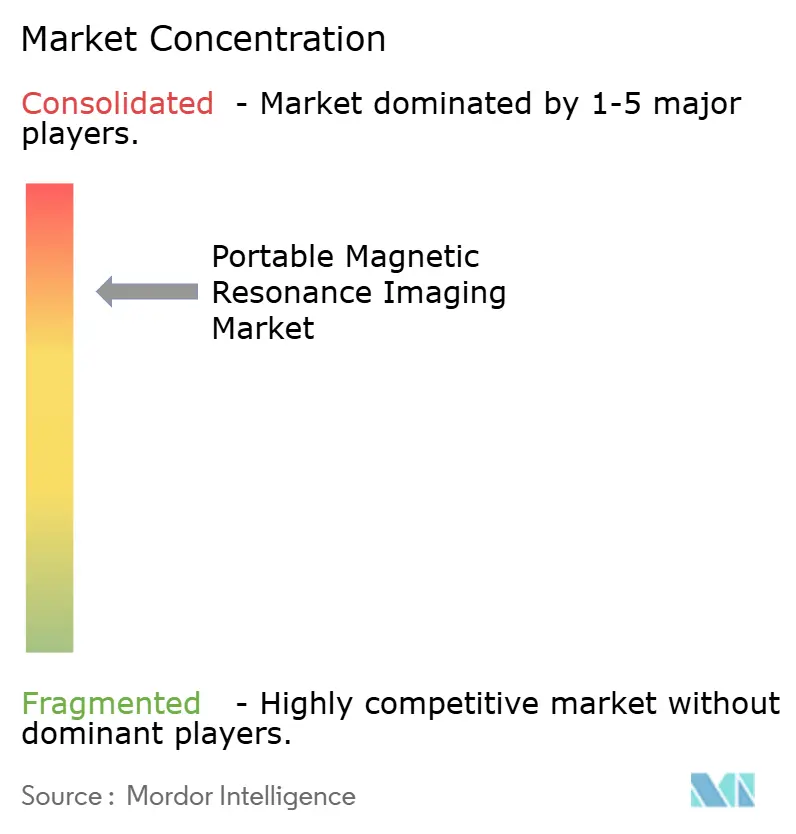
| Market Concentration | High |
Major Players
*Disclaimer: Major Players sorted in no particular order Image © Mordor Intelligence. Reuse requires attribution under CC BY 4.0. |
|
Portable Magnetic Resonance Imaging Market Analysis by Mordor Intelligence
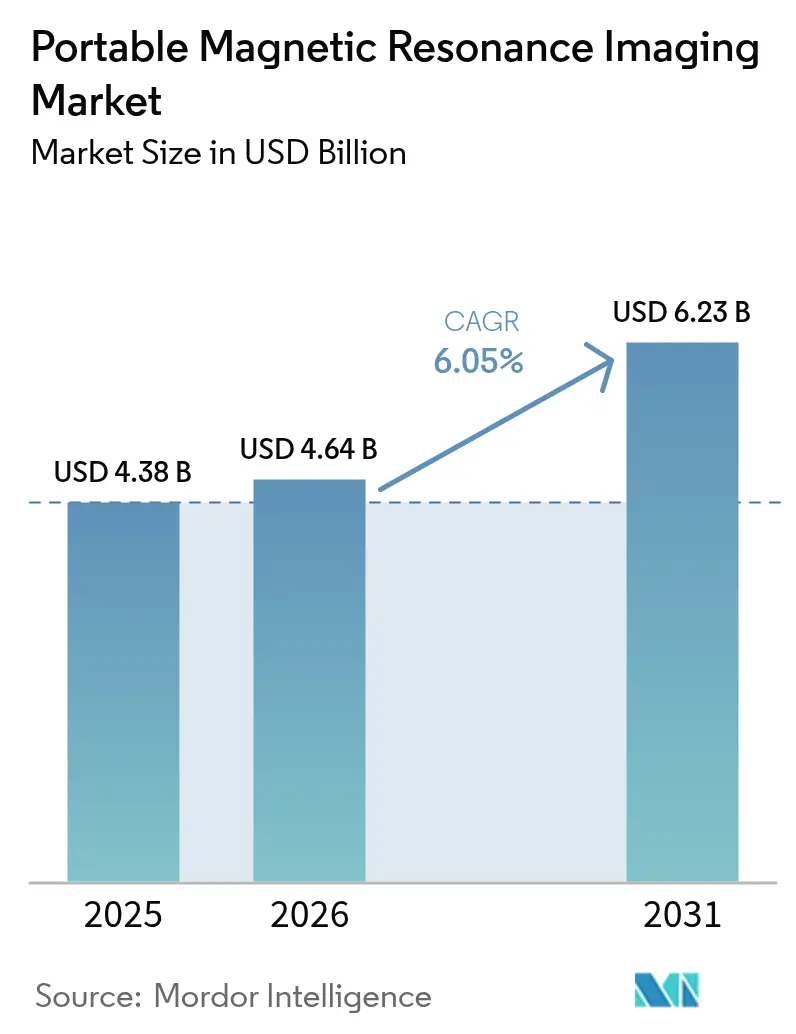
The Portable Magnetic Resonance Imaging Market size is projected to be USD 4.38 billion in 2025, USD 4.64 billion in 2026, and reach USD 6.23 billion by 2031, growing at a CAGR of 6.05% from 2026 to 2031.
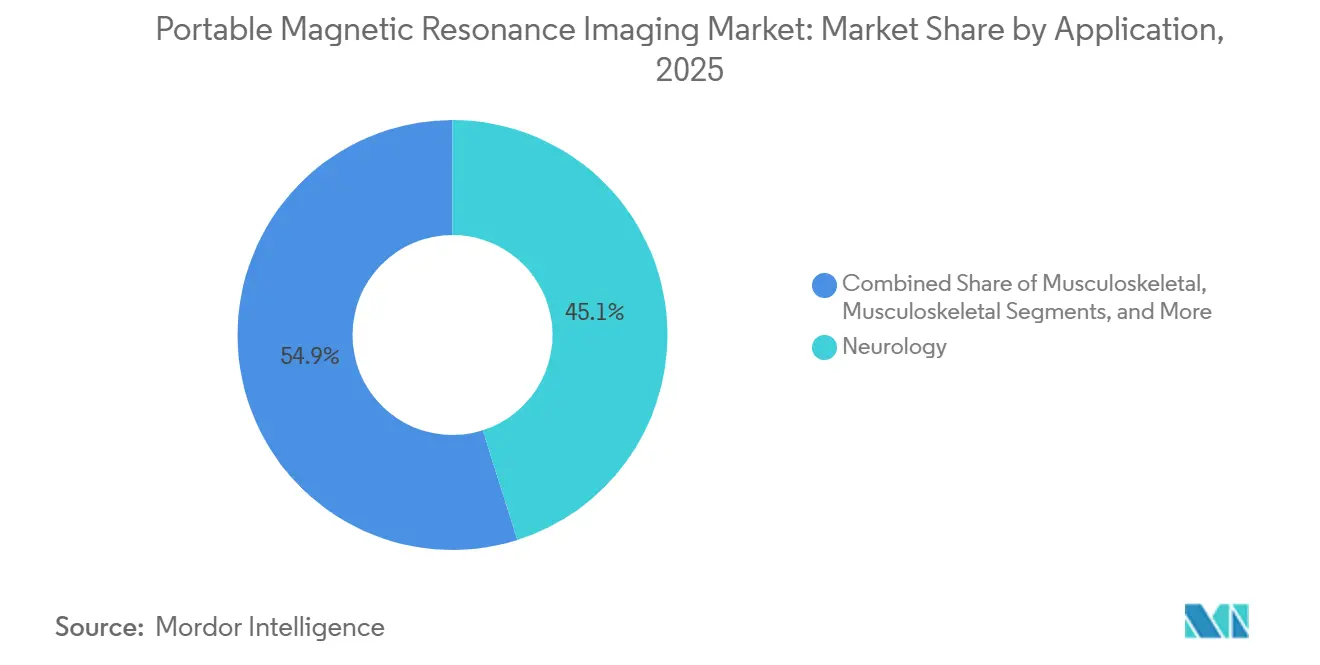
Falling prices of ultra-low-field hardware, now priced between USD 50,000 and 150,000, are expanding diagnostic capabilities from traditional shielded radiology suites to emergency departments, intensive care units, neonatal bays, and ambulatory clinics. In November 2024, the Intersocietal Accreditation Commission (IAC) updated its accreditation standards to formally approve portable systems for neurology offices. This regulatory development has opened reimbursement opportunities through the Centers for Medicare & Medicaid Services (CMS) and driven significant investments in outpatient care facilities. While the neurology segment accounted for 45.12% of application revenue in 2025, pediatrics and neonatal imaging are experiencing faster growth, as bedside scanning minimizes transport and sedation risks for fragile infants. Hardware innovations are also driving market transformation: Halbach permanent-magnet arrays eliminate the need for helium and complex cooling systems, reducing system weight to under 635 kg and enabling standard-floor installations without structural reinforcements.
Key Report Takeaways
- By application, neurology held 45.12% of the portable magnetic resonance imaging market share in 2025, while pediatrics and neonatal imaging is expanding at an 8.53% CAGR through 2031.
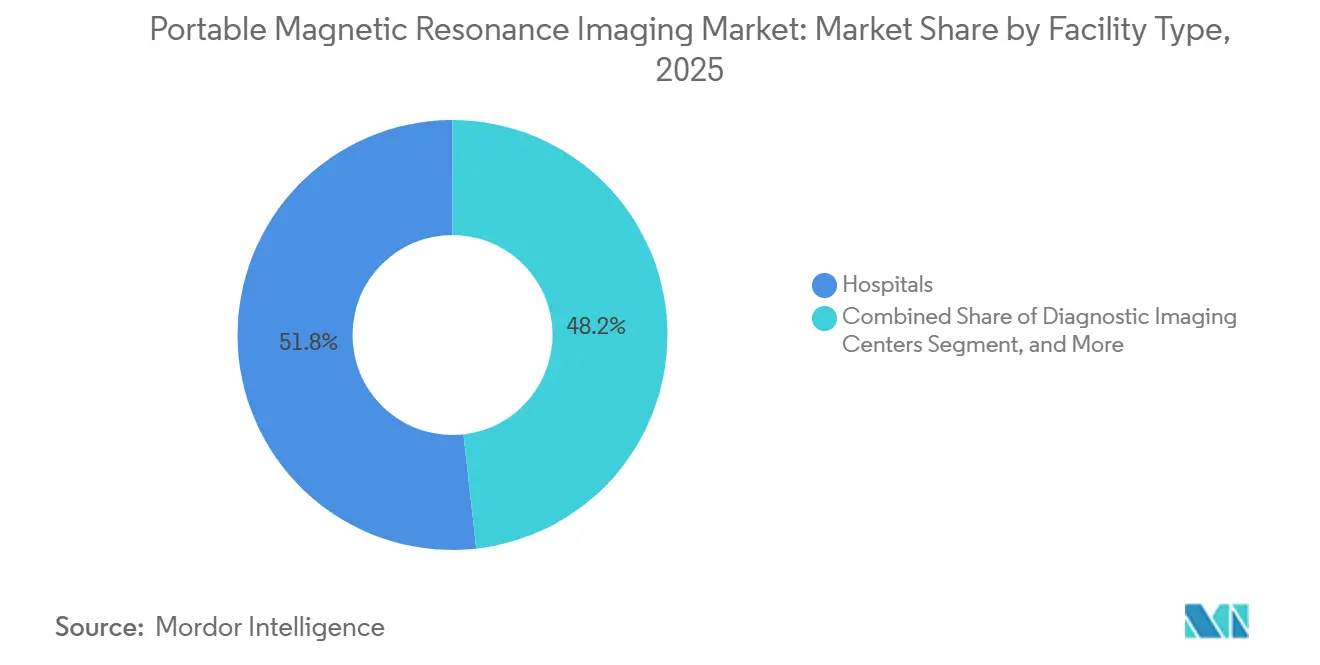
- By facility type, hospitals commanded 51.76% of 2025 revenue, whereas ambulatory surgery centers are forecast to grow at 8.91% CAGR between 2026 and 2031.
- By magnet strength, ultra-low-field systems captured 58.65% of 2025 sales and are projected to advance at 9.75% CAGR through 2031.
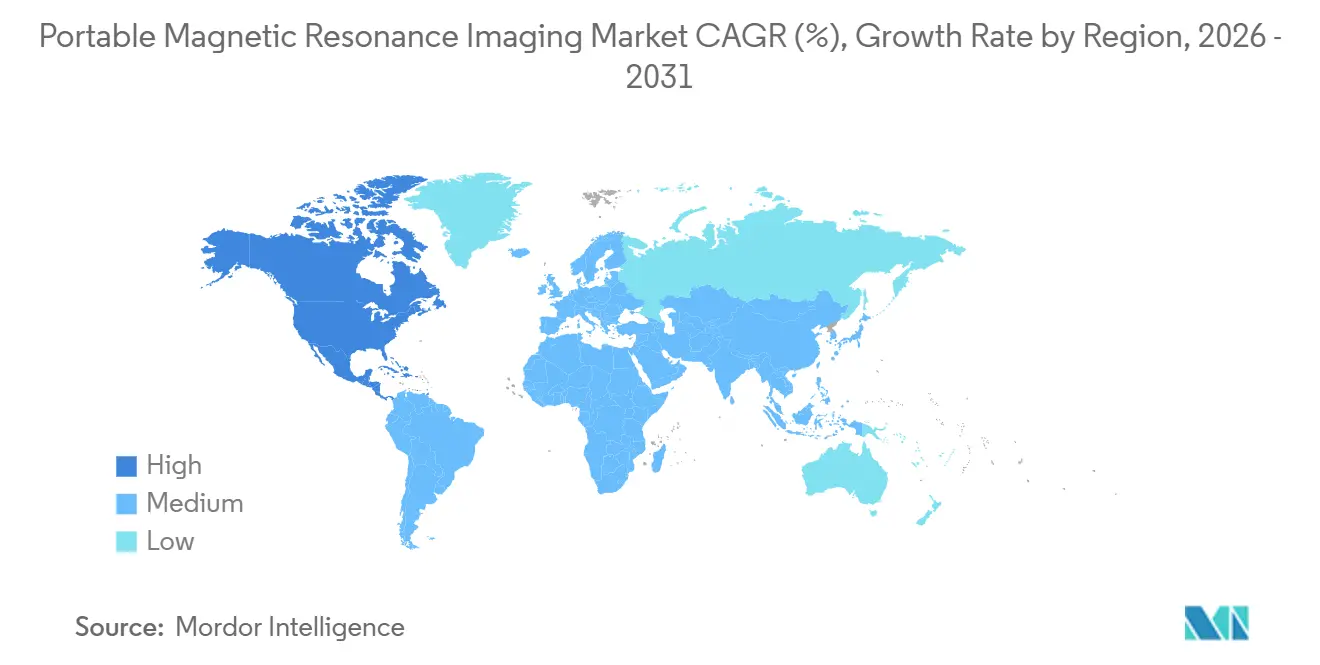
- By geography, North America accounted for 42.65% of the portable MRI market in 2025; Asia-Pacific is projected to expand at an 7.64% CAGR, the quickest regional trajectory through 2031.
Note: Market size and forecast figures in this report are generated using Mordor Intelligence’s proprietary estimation framework, updated with the latest available data and insights as of 2026.
Market Trends and Insights
Drivers Impact Analysis of Portable Magnetic Resonance Imaging Market*
| Driver | (~) Impact on CAGR Forecast | Geographic Relevance | Impact Timeline |
|---|---|---|---|
| Cost Advantage Over Conventional MRI | +1.8% | Global, strongest in North America & Asia-Pacific | Short term (≤ 2 years) |
| Technological Miniaturization Advancements | +1.5% | Global, led by North America & Europe | Medium term (2–4 years) |
| Growing Point-of-Care Diagnostics Demand | +1.3% | North America & Europe, spill-over to Asia-Pacific | Medium term (2–4 years) |
| Favorable Regulatory & Accreditation Reforms | +0.7% | North America, gradual uptake in Europe & Asia-Pacific | Short term (≤ 2 years) |
| Rural and Remote Healthcare Access Initiatives | +0.9% | Asia-Pacific core, spill-over to Middle East & Africa | Long term (≥ 4 years) |
| Expanding Venture and Strategic Investment Landscape | +0.4% | North America, selective activity in Asia-Pacific | Long term (≥ 4 years) |
| Source: Mordor Intelligence | |||
Cost Advantage Over Conventional MRI
Over a seven-year lifespan, the total ownership cost of a 0.064 T portable unit averages approximately USD 300,000, compared to around USD 5 million for a 1.5 T suite when accounting for cryogens, RF shielding, and HVAC upgrades[1]Yale School of Medicine, “Economic Analysis of Bedside MRI,” yale.edu. Community hospitals and ambulatory surgery centers can recover this investment in fewer than 1,000 scans, with many achieving it within 24 months, given reimbursement rates of nearly USD 400 per neurological study. Additionally, the ability to install scanners in spaces previously used for observation beds has significantly reduced installation timelines from the standard 18–24 months to less than 30 days. Rural hospitals in the United States, which previously referred MRI volumes to regional centers, are now retaining revenue locally. This shift enhances the availability of same-day stroke care while reducing patient transfer costs. Similar economic considerations are influencing middle-income markets in the Asia-Pacific region, where public budget limitations and floor-loading restrictions challenge traditional installations.
Technological Miniaturization Advancements
Since 2023, Halbach arrays utilizing neodymium-iron-boron segments have effectively optimized magnetic flux, achieving a nearly 40% reduction in system weight. This advancement has also eliminated reliance on helium, addressing challenges posed by the global helium shortage of 2024[2]Science, “Halbach Magnet Arrays for Portable MRI,” science.org. Researchers at the University of Hong Kong demonstrated a 2 mm in-plane resolution on a 0.05 T prototype by integrating advanced gradient coils with iterative reconstruction algorithms, highlighting untapped potential for hardware performance improvements. In 2024, Siemens Healthineers introduced the FreeStar 0.55 T air-cooled system, specifically designed for emerging markets lacking chilled-water infrastructure. Additionally, deep-learning networks trained on paired low-field and high-field datasets now generate synthetic T1, T2, and FLAIR contrasts from a single 10-minute acquisition, reducing traditional protocol times by up to 80%. These advancements—lighter magnet systems and AI-driven reconstruction—enable critical-care teams to conduct on-site scans for ventilated patients, minimizing risks associated with patient transport through elevators, hallways, and magnetically shielded areas.
Growing Point-of-Care Diagnostics Demand
In 2024, approximately 145 million emergency department visits were recorded in the United States, with neurological complaints accounting for 8% of these cases. Portable MRI technology has revolutionized the traditional CT-first diagnostic workflow by enabling bedside examinations[3]CDC, “National Hospital Ambulatory Medical Care Survey,” cdc.gov. This innovation reduces diagnostic delays from nearly 4 hours to under 1 hour, ensuring thrombolytic therapy can be administered within the critical 4.5-hour therapeutic window. A JAMA Neurology trial reported an 80.4% sensitivity and 96.6% specificity for detecting intracranial hemorrhage at 0.064 T, providing sufficient accuracy to guide real-time anticoagulant reversal decisions. In neonatal intensive care units, over 1,200 unsedated scans conducted at Cincinnati Children’s Hospital demonstrated zero transport-related adverse events, validating the technology’s potential to reduce risk. Additionally, ambulatory surgery centers are increasingly adopting portable extremity scanners to confirm implant positions following same-day knee and shoulder repairs. This practice has effectively reduced 30-day readmissions, protecting bundled-payment margins and enhancing operational efficiency.
Favorable Regulatory & Accreditation Reforms
In November 2024, the IAC introduced new standards requiring quality-control phantoms, technologist certification, and radiologist over-reads, aligning regulatory requirements for portable devices with those of fixed systems. In response, CMS clarified that accredited neurology offices are eligible to bill existing MRI CPT codes, resolving prior reimbursement uncertainties that had slowed adoption in community practices. In June 2025, the U.S. Food and Drug Administration approved Hyperfine’s Optive AI 510(k) submission within 90 days, reflecting increased institutional familiarity with ultra-low-field physics and AI-driven reconstruction technologies. In contrast, Europe’s regulatory environment remains more cautious. The Medical Device Regulation (MDR) necessitates post-market surveillance, delaying product launches by up to 18 months and prompting vendors to pursue pilot contracts while gathering follow-up data required by Germany’s Federal Joint Committee and France’s Haute Autorité de Santé. However, the UK’s national health services have initiated pilot funding for portable stroke networks, signaling potential reimbursement opportunities if outcome benefits are demonstrated.
Restraints Impact Analysis of Portable Magnetic Resonance Imaging Market*
| Restraint | (~) Impact on CAGR Forecast | Geographic Relevance | Impact Timeline |
|---|---|---|---|
| Image Quality and Resolution Limitations | -0.9% | Global, most acute in North America & Europe | Medium term (2–4 years) |
| Uncertain and Fragmented Reimbursement Policies | -1.2% | Europe & Asia-Pacific, limited North America impact | Short term (≤ 2 years) |
| Operational Expertise and Training Gaps | -0.5% | Asia-Pacific & Middle East, lower North America exposure | Medium term (2–4 years) |
| Rare-Earth Magnet and Supply-Chain Vulnerabilities | -0.3% | Global, peak exposure in Asia-Pacific hubs | Long term (≥ 4 years) |
| Source: Mordor Intelligence | |||
Image Quality and Resolution Limitations
Signal-to-noise ratios in 0.064 T systems are approximately 20 times lower than those in 1.5 T platforms, limiting spatial resolution to around 2–3 mm and resulting in up to 18% of acute lacunar infarcts being undetected compared to 3 T imaging. This diagnostic limitation restricts the use of these systems for complex oncology staging, pituitary microadenoma detection, and subtle demyelinating-plaque monitoring. Radiologists trained on high-field scanners experience longer reading times and reduced confidence when interpreting images from these systems, negatively impacting workflow efficiency in academic centers. While AI advancements have improved T2-FLAIR contrast-to-noise ratios to approach 0.35 T standards, global regulators have yet to define equivalence thresholds. As a result, hospitals remain responsible for confirmatory imaging on conventional systems, which diminishes the cost-saving potential that often justifies investment in these technologies.
Uncertain Reimbursement Pathways
In the U.S., CMS has informally allowed billing for traditional brain MRI CPT codes in IAC-accredited portable studies, but the absence of formal parity guidance has led to inconsistent payer approvals and delays in prior authorizations. Private insurers, such as UnitedHealthcare, require additional documentation to establish clinical necessity, further contributing to scheduling delays and reducing the efficiency of point-of-care services. In Europe, reimbursement frameworks are even less defined. Germany’s Diagnosis-Related Group catalog has yet to include ultra-low-field procedures, and the UK’s NICE has not issued technology-appraisal guidance, forcing vendors to rely on ad hoc pilot funding. Without clear reimbursement policies, community hospitals operating on tight budgets are hesitant to adopt these systems, extending return-on-investment timelines from the standard 3 years to over 5 years.
*Our forecasts treat driver/restraint impacts as directional, not additive. The impact forecasts reflect baseline growth, mix effects, and variable interactions.
Portable Magnetic Resonance Imaging Market Segment Analysis
By Application:
Neurology Commands, Pediatrics AcceleratesIn 2025, neurology contributed 45.12% of the revenue, driven by the adoption of portable scanners in emergency departments. These devices enabled efficient triaging of strokes and traumatic brain injuries, reducing time-to-thrombolysis to under 60 minutes. The portable magnetic resonance imaging market for neurology is projected to grow at a 5.6% CAGR through 2031, supported by IAC accreditation and CMS reimbursement, which are expanding outpatient applications in movement-disorder clinics. Pediatrics and neonatal imaging are advancing at the fastest pace, with an 8.53% CAGR. Over 1,200 scans conducted at Cincinnati Children’s Hospital demonstrated that bedside MRI eliminates transport-related desaturation events, a critical factor for infants weighing less than 2 kg. While musculoskeletal postoperative checks are limited by a 2–3 mm ceiling, ambulatory surgery centers continue to adopt these scans for same-day implant confirmations, helping reduce readmission penalties. In cardiology, applications remain exploratory, focusing on pericardial effusion screenings due to challenges with temporal resolution for perfusion analysis. However, research consortia are testing prototype sequences synchronized with ECG gating to expand the technology’s utility.
The portable magnetic resonance imaging market is diversifying beyond neuro-critical care, driven by advancements in AI algorithms that address image-quality gaps. Hospital networks integrating portable units with tele-neurology services report a 28-minute reduction in door-to-needle stroke workflows, delivering measurable outcome improvements under Medicare’s value-based purchasing guidelines. Pediatric hospitals highlight cost savings by eliminating the need for anesthesiology staffing during routine follow-up scans, with resource reallocation valued at approximately USD 1,200 per avoided sedation episode. As vendors refine musculoskeletal extremity coils, early adopters anticipate shifting 20% of postoperative orthopedic imaging from fixed suites, freeing capacity for high-margin reimbursable contrast studies. Across applications, AI-driven noise-reduction pipelines are enhancing operational efficiency by reducing radiologist fatigue and cutting interpretation time by an average of 15%, ultimately improving throughput and physician satisfaction.



By Facility Type:
Hospitals Lead, ASCs SurgeIn 2025, hospitals accounted for 51.76% of the revenue from neurodiagnostic facilities, reflecting the high demand for bedside neurodiagnostics in emergency and intensive care units. However, the hospital segment's dominance in the portable magnetic resonance imaging market is expected to decline slightly as ambulatory surgery centers (ASCs) expand at a robust rate of 8.91% through 2031. This growth is driven by increasing fee-for-service orthopedic volumes and bundled-payment mandates that penalize readmissions. Diagnostic imaging centers remain cautious, citing challenges such as reimbursement parity and the costs of radiologist adaptation. In contrast, rural stand-alone centers are leveraging portable units as cost-effective solutions to serve community clinics lacking comprehensive MR capabilities. Neurology offices, supported by IAC accreditation, are emerging as a promising market segment. This accreditation has enabled clear billing for office-based studies, reduced patient travel, and facilitated longitudinal disease monitoring.
Tertiary hospitals are increasingly adopting a dual-fleet model to optimize operations. High-field suites are allocated for oncology and cardiac contrast protocols, while portable devices are utilized for hyper-acute neurological screenings and ICU follow-ups. This approach enhances suite utilization and increases overall throughput by up to 12%. In the United States, ASCs, performing 23 million procedures annually, are integrating portable extremity MRI systems to ensure implant clearance before discharge. This practice not only replaces postoperative CT scans but also delivers cost savings of approximately USD 34 per patient by reducing radiation exposure and improving workflow efficiency. Corporate neurology chains are positioning portable systems as competitive differentiators, offering same-visit diagnoses to enhance patient satisfaction scores, which directly influence payer ratings. Additionally, across all facility types, the adoption of cloud-based AI is driving operational efficiency. Unified reporting dashboards are reducing IT overhead and enabling enterprise-wide standardization of protocols.
By Magnet Strength:
Ultra-Low-Field Dominates, Mid-Field EvolvesUltra-low-field devices, operating at less than 0.2 T, accounted for 58.65% of 2025 revenue and are projected to grow at a 9.75% CAGR. This growth is attributed to their cost-effectiveness, ease of installation, and ability to function on standard floors without requiring shielding renovations. The ultra-low-field portable magnetic resonance imaging market is expected to exceed USD 4 billion by 2031, reinforcing its importance in point-of-care neurotriage and pediatric monitoring. Low-field platforms, ranging from 0.2 to 0.5 T, such as Siemens’ Free.Star 0.55 T, are gaining traction among clinics seeking a balance between portability and enhanced image quality. However, air-cooling limitations restrict their adoption in power-grid-constrained regions. Compact mid-field scanners, like Aspect Imaging’s 1.0 T neonatal model, deliver near-diagnostic resolution but, due to their weight exceeding one ton, are categorized as semi-mobile rather than fully portable. On the research front, superconducting mid-field prototypes aim to achieve helium-free 1.5 T performance. However, their commercial viability depends on advancements in zero-boil-off magnet technology and the identification of clinical applications beyond those already addressed by fixed suites.
Diagnostic capabilities have traditionally been tied to field strength, but advancements in AI are redefining these boundaries. Hyperfine’s Optive AI is enhancing 0.064 T T2-FLAIR contrast to levels comparable to 0.35 T, challenging the conventional perception of ultra-low-field systems as limited to triage applications. Academic consortia are benchmarking 0.05 T whole-body prototypes against 0.2 T clinical scanners, indicating a future where sub-0.1 T imaging could be sufficient for musculoskeletal postoperative evaluations, prostate biopsy guidance, and limited abdominal assessments. As these algorithmic innovations secure FDA approvals, the combination of cost reductions and performance parity is expected to drive a shift in capital allocation. This shift could move investments away from traditional mid-field upgrades toward fleets of AI-enhanced ultra-low-field devices, accelerating the decentralization of the portable magnetic resonance imaging market.
Geography Analysis
North America Portable Magnetic Resonance Imaging Market
In 2025, North America captured 42.65% of global revenue, driven by rapid FDA approvals, well-established reimbursement frameworks, and strong adoption in academic hospitals. The United States hosts over 150 operational systems, primarily concentrated in comprehensive stroke centers and pediatric hospitals. However, the adoption is expanding into mid-tier community facilities, supported by IAC accreditation that resolves billing uncertainties. In 2024, Canada secured Health Canada approval and initiated provincial pilots aimed at reducing inter-facility transfers for critical-care patients. Meanwhile, private hospital chains in Mexico are deploying portable scanners in emergency departments to reduce costly cross-border referrals, a strategy gaining traction due to rising stroke incidence and limited neurointerventional capacity.
APAC Portable Magnetic Resonance Imaging Market
The Asia-Pacific region is projected to lead growth with a 7.64% CAGR through 2031, supported by China's RMB 100 billion county-hospital modernization initiative and India's Ayushman Bharat universal health program. Hyperfine's clearance in December 2025 positions the company to supply over 150,000 rural Indian facilities lacking high-field suites, though success depends on achieving per-scan costs below the USD 50 reimbursement threshold. Japan's aging population and high stroke incidence highlight significant clinical demand, but reimbursement challenges and conservative radiologist practices are slowing adoption. In Australia, the Royal Flying Doctor Service is piloting airborne units, focusing on ruggedization and power autonomy for challenging environments, with findings expected to inform humanitarian deployments in Pacific Island states. South Korea's innovation-friendly regulatory environment is enabling tertiary centers to explore AI-driven low-field cardiac sequences, which could unlock a new market vertical if upcoming studies confirm diagnostic equivalence for pericardial assessments.
EMEA and LATAM Portable Magnetic Resonance Imaging Market
Europe accounted for approximately 22% of 2025 revenue, constrained by MDR compliance costs and fragmented reimbursement systems. In Germany, the Federal Joint Committee's delay in assigning a DRG code has hindered national rollouts despite CE-mark approvals. The United Kingdom is funding NHS stroke-network pilots, but a shortage of radiologists and technologists is limiting expansion beyond the initial 15 sites. France and Italy are prioritizing the utilization of their existing high-field fleets, citing sufficient geographic coverage and established referral patterns. However, peripheral regions with aging infrastructure are expressing interest in portable solutions as interim measures until suite refurbishments are completed. In the Middle East, private hospitals catering to medical tourists are adopting portable MRI systems as a premium differentiator. Sub-Saharan Africa faces capital constraints but benefits from non-profit partnerships that integrate tele-radiology support. In Latin America, the market remains nascent, with Brazil testing portable systems on Amazon riverboats to deliver remote care, while Argentina's currency volatility continues to challenge import financing.

Regulatory Landscape
Portable magnetic resonance diagnostic devices are regulated as Class II devices in the United States under 21 CFR 892.1000, with market access commonly achieved via FDA 510(k) clearance. The quality management requirements also tightened operationally as the FDA Quality Management System Regulation (QMSR), incorporating ISO 13485:2016, took effect on February 2, 2026, raising documentation and audit-readiness expectations for portable MRI OEMs and key component suppliers.
In Europe, Regulation (EU) 2017/745 (MDR) continues to drive heavier clinical evaluation and post-market surveillance requirements than the US 510(k) pathway, shaping launch sequencing and evidence generation strategies. A key 2026 compliance milestone was the requirement for mandatory EUDAMED registration as of May 28, 2026, which increases traceability and administrative workload for manufacturers and authorized representatives. Safety and performance conformity is also shaped by IEC 60601-2-33 updates, including IEC Interpretation Sheet 2 (ISH2:2025) issued in November 2025, and country adoptions such as SANS 60601-2-33:2026 approved by SABS in April 2026, affecting verification testing and labeling for MRI equipment placed in those jurisdictions.
Value Chain Analysis
The portable MRI value chain starts with upstream materials and subsystems, including rare-earth magnet inputs (notably neodymium-iron-boron for Halbach-array permanent magnets), gradient and RF coil assemblies, power electronics, shielding and mechanical housings, and embedded compute for reconstruction. OEM manufacturing is characterized by precision assembly and calibration of magnets, gradients, and RF chains, plus software validation for image reconstruction and safety interlocks; cryogen-free architectures reduce exposure to liquid helium constraints, while superconducting approaches retain cryogenic dependencies and service complexity.
Downstream, vendors sell through direct enterprise channels to hospitals and through specialized imaging distributors for point-of-care deployments across neurology offices, ambulatory sites, and smaller facilities where rapid installation is a purchase driver. Service delivery typically combines on-site installation and preventive maintenance with cloud-connected software updates, creating recurring revenue via subscriptions that bundle hardware access, reconstruction software, and support. Regulatory and accreditation requirements (FDA 510(k), MDR technical documentation, and safety standards such as IEC 60601-2-33) shape supplier qualification, design controls, and post-market feedback loops, making quality system maturity and software lifecycle management central differentiators in the chain.
Competitive Landscape
Fewer than ten companies have obtained regulatory approvals for sub-0.5 T portable brain-imaging platforms. Among these, the top three players—Hyperfine, Siemens Healthineers, and Aspect Imaging—account for approximately 70% of the market share. Hyperfine has leveraged its first-mover FDA clearance in 2020 and SPAC funding to deploy over 175 units globally, capturing nearly half of the ultra-low-field segment. Siemens launched the Free.Star 0.55 T in 2024, positioning it as a cost-effective, helium-free solution for emerging markets while safeguarding its high-field product portfolio. Aspect Imaging has established a strong foothold in neonatal intensive care with its 1.0 T Embrace scanner, securing a defensible niche in high-resolution imaging despite its larger physical footprint.
Market strategies are increasingly centered on subscription-based pricing models that bundle hardware, cloud-hosted AI, and continuous software updates. This approach aligns vendor revenues with utilization rates and reduces capital expenditure barriers for smaller healthcare facilities. Hyperfine’s Optive AI, cleared in June 2025, offers deep-learning reconstruction capabilities that radiologists equate to a nearly half-tesla performance boost. This creates significant switching costs and strengthens Hyperfine’s competitive position with a defensible algorithmic advantage. Patent analysis highlights Hyperfine’s focus on Halbach geometry and AI pipelines, while Siemens is investing in zero-boil-off superconducting magnets, which are expected to feature in future mid-field portable devices. Chinese companies, such as United Imaging Healthcare, are adopting aggressive domestic pricing strategies supported by government localization programs.
However, their limited FDA and CE mark approvals restrict their operations to regional markets. Meanwhile, niche players like Promaxo are targeting specialized applications, such as prostate biopsy guidance, with portable 0.064 T systems integrated with trans-perineal navigation. This demonstrates how clinical specialization can offset the disadvantages of late market entry. Although competition in the portable magnetic resonance imaging market is intensifying, regulatory barriers, supply chain complexities, and lengthy hospital procurement cycles continue to moderate competitive pressures.
Portable Magnetic Resonance Imaging Industry Leaders
-
Siemens Healthineers
-
Hyperfine Inc.
-
Canon Medical Systems
-
Voxelgrids Innovations Pvt. Ltd.
-
PrizMed Imaging Solution
- *Disclaimer: Major Players sorted in no particular order
Portable Magnetic Resonance Imaging Market Companies Covered in this Report
- Aspect Imaging Ltd.
- Canon
- Cobalt Health
- Esaote
- Fujifilm Holdings Corp.
- GE HealthCare Technologies Inc.
- Hyperfine
- Koninklijke Philips
- Magnetica Ltd.
- MR Solutions
- Neoscan Solutions GmbH
- Oxford Instruments Plc
- PrizMed Imaging Solution Inc.
- Promaxo Inc.
- Shenzhen Anke High-Tech
- Shenzhen Basda Medical Apparatus
- Siemens Healthineers
- SpinTech Imaging
- Synaptive Medical Inc.
- United Imaging Healthcare Co. Ltd.
- Voxelgrids Innovations
Read Analysis of Portable Magnetic Resonance Imaging Companies

Market Opportunities and Future Outlook
A key opportunity is accelerating decentralization of neuroimaging into non-traditional MR locations such as emergency departments, ICUs, and office-based neurology practices. Infrastructure-light systems remove the need for shielded rooms and specialized utilities, which helps expand the set of facilities that can place portable units.
Reimbursement and accreditation catalysts already visible in-market include the November 2024 IAC accreditation update that formally recognized portable systems for neurology offices and CMS clarification enabling accredited offices to bill existing MRI CPT codes. Evidence-building and financing activity in 2026 also supports near-term scaling and broader procurement access. Hyperfine disclosed peer-reviewed economic data in early 2026 on acute-hospital use of its portable system and secured a USD 40 million loan facility in March 2026 to expand commercial reach, while clinical readouts such as the PRIME study data shared at SAEM in May 2026 highlighted multi-hour reductions in time-to-scan versus conventional MRI. Outside neurology, opportunity remains in pediatrics and neonatal bedside imaging where avoiding transport and sedation is operationally valuable, as well as in extending portable platforms through software-defined upgrades (AI reconstruction and protocol automation) that narrow the performance gap of ultra-low-field systems without adding major hardware complexity.
Recent Industry Developments in Portable Magnetic Resonance Imaging Market
- July 2026: Hyperfine announced the European launch of the next-generation Swoop system powered by Optive AI. The company also disclosed inclusion on the UniHA procurement listing for French public healthcare hospitals, supporting broader access to standardized purchasing channels across France.
- June 2026: Hyperfine reported record utilization milestones for the Swoop system across multiple US sites of care, including 500-scan thresholds at CHRISTUS Mother Frances Hospital and at Neurology of Central Florida for in-office imaging. These milestones reinforce the operational case for point-of-care MRI by indicating sustained workflow integration beyond early pilot use.
- November 2024: The Intersocietal Accreditation Commission (IAC) updated accreditation standards to formally approve portable MRI systems for neurology offices. The change aligned portable imaging quality controls more closely with fixed MRI expectations and supported reimbursement enablement by reducing uncertainty for office-based adoption.


Portable Magnetic Resonance Imaging Market Report Scope and Research Methodology
Market Definition and Coverage
For this study, the market counts revenues generated from portable MRI systems and related, sale-linked items that enable point-of-care magnetic resonance imaging across clinical facilities, with values captured at the equipment and solution level in the countries covered.
Scope exclusions: We exclude fixed-room MRI installations, imaging service revenue, and refurbishments that are resold without a clear portable-system transaction.
Segments Covered in This Report
-
By Application
- Neurology
- Musculoskeletal
- Cardiology
- Pediatrics / Neonatal
- Emergency & Trauma Care
- Other Applications
-
By Facility Type
- Hospitals
- Diagnostic Imaging Centers
- Ambulatory Surgery Centers
- Neurology Offices & Clinics
- Other Facility Types
-
By Magnet Strength
- Ultra-Low-Field (<0.2 T)
- Low-Field (0.2–0.5 T)
- Mid-Field (0.5–1.5 T) Compact
- Compact Super-Conducting (>1.5 T)
-
Geography
-
North America
- United States
- Canada
- Mexico
-
Europe
- Germany
- United Kingdom
- France
- Italy
- Spain
- Rest of Europe
-
Asia-Pacific
- China
- Japan
- India
- Australia
- South Korea
- Rest of Asia-Pacific
-
Middle East & Africa
- GCC
- South Africa
- Rest of Middle East & Africa
-
South America
- Brazil
- Argentina
- Rest of South America
-
North America
Data Sources, Market Sizing, and Validation
Desk Research
Desk work started by mapping the installed base and shipment direction for MRI and then narrowing it to portable form factors using product approvals, clinical adoption signals, and facility purchase behavior. We relied on public sources such as the US FDA device databases, the US Centers for Medicare and Medicaid Services for reimbursement and site-of-care context, OECD health statistics for imaging capacity indicators, and World Bank population and health-spend series to anchor demand pools.
To refine assumptions, we also reviewed materials like annual reports and investor presentations, reputable press coverage, and radiology society publications that discuss point-of-care imaging workflows and constraints. Where needed, paid subscriptions were used only for structured company financials and for patent lookups to understand technology direction and timing. These sources are illustrative, and many other public and paid references were used to collect, cross-check, and clarify the final data points.
Primary Interviews and Surveys
Primary work focused on validating what counts as a portable MRI sale in real procurement, and how pricing shifts with magnet strength, site setup needs, and service bundles. We spoke with a mix of device-side roles and clinical buyers, and we also checked assumptions with distributors and imaging stakeholders across the Americas, EMEA, and APAC so that regional adoption patterns and regulatory timing were not overgeneralized.
Distribution of primary research fieldwork respondents
| Company type | Respondent position | Region |
|---|---|---|
| Top tier: 33% | CXOs: 20% | APAC: 46% |
| Mid tier: 47% | Functional/Unit leaders: 33% | EMEA: 36% |
| Smaller Players: 20% | Managers: 47% | Americas: 18% |
Market-Sizing & Forecasting
Sizing used a top-down and bottom-up hybrid, where the top-down layer rebuilds demand by linking portable-eligible clinical settings to imaging workload and purchase readiness, and then translating that into system value using price bands by magnet class. Results were then checked with selective bottom-up approximations, such as sampled ASP times expected unit volumes by region, distributor channel checks, and partial supplier revenue roll-ups, which helped us adjust totals when one signal looked overstated.
Key inputs included the mix shift across ultra-low-field and low-field portable systems, replacement cycle expectations in hospitals and specialty clinics, adoption in emergency and trauma workflows, regulatory clearance timing by country, and typical configuration items that move ASP up or down (for example, shielding needs and software options). For forecasting, scenario analysis was used so base-case adoption could be aligned with what experts expect for training readiness, clinical evidence build-out, and budget cycles, while still stress-testing faster and slower uptake paths. When bottom-up visibility was thin in smaller countries, gaps were handled through regional ratioing anchored to healthcare capacity indicators and then rechecked through interview feedback.
Data Validation & Update Cycle
Outputs were validated through multiple checks that look for consistency across independent signals, including unit economics, country-level healthcare capacity markers, and observed adoption in key use settings. When values deviated beyond expected ranges, we revisited the drivers, re-ran sensitivity on pricing and uptake, and re-contacted sources where clarification was needed.
A second analyst review was completed before sign-off, and large variances were documented so assumptions stayed traceable. Reports refresh annually, with interim updates triggered by material events such as major approvals, product launches, and meaningful pricing moves. Before delivery, we perform a final pass to ensure the market numbers reflect the latest public information and interview learnings.
Mordor Intelligence's Portable Magnetic Resonance Imaging Market Size Measured Against Other Published Estimates
Published market sizes for portable MRI often vary because the scope boundary is not handled the same way, and because pricing and adoption timing assumptions can shift totals quickly in an early-stage category. Differences usually come from what is counted as a portable system transaction, how magnet-strength mix is priced, and how fast non-hospital sites are assumed to adopt.
The benchmark table shows a spread that mainly traces back to scope and pricing build-up choices rather than arithmetic errors, and in Mordor Intelligence's model the value includes portable MRI revenue across clinical facilities with magnet-strength level ASP bands, instead of using a single blended price or treating point-of-care deployments as a small add-on to conventional MRI.
Benchmark comparison
| Source | Market Size | Gaps in Research Methodology |
|---|---|---|
| Mordor Intelligence | USD 4.38 B (2025) | |
| Industry Research Publisher A | USD 4.38 B (2024) | Uses an earlier base year and appears to treat the market as manufacturer shipment value with limited country-level adoption checks, which can pull forward revenue recognition and compress local demand constraints. |
| Industry Research Publisher B | USD 1.30 B (2025) | Defines the market closer to portable MRI machines only and tends to exclude broader portable MRI solution revenue elements and higher-strength compact systems, which lowers ASP and reduces the counted addressable deployments. |
Looking across the three figures, the direction of the gap is consistent with how narrowly the product boundary is set and whether pricing is allowed to vary by magnet class and use setting. By tying the build-up to observable adoption signals and then validating with interview-based pricing and workflow realities, the resulting estimate stays easier to explain and repeat when conditions change.


Key Questions Answered in the Report
What CAGR is expected for portable MRI through 2031?
The market is projected to post a 6.05% CAGR from 2026 to 2031 based on current revenue trajectories.
Which clinical segment contributes the most revenue?
Neurology leads with 45.12% of 2025 revenue because portable MRI shortens stroke and head-trauma workflows.
Why do ambulatory surgery centers invest in portable MRI?
ASCs adopt portable scanners to confirm implant positioning before discharge, reducing readmissions and boosting bundled-payment margins.
How does ultra-low-field technology maintain image quality?
Vendors pair Halbach permanent magnets with deep-learning reconstruction that elevates 0.064 T images toward 0.35 T contrast-to-noise ratios.
Which region is forecast to grow fastest?
Asia-Pacific, supported by large rural-health initiatives in China and India, is expected to expand at 7.64% CAGR through 2031.
What are the principal barriers to adoption in Europe?
Fragmented reimbursement, MDR post-market studies, and radiologist staffing gaps slow widespread European deployment.
Page last updated on:


 Your data is secure and never sold or shared.


