
Market Overview
| Study Period | 2022 - 2031 |
|---|---|
| Forecast Data Period | 2026 - 2031 |
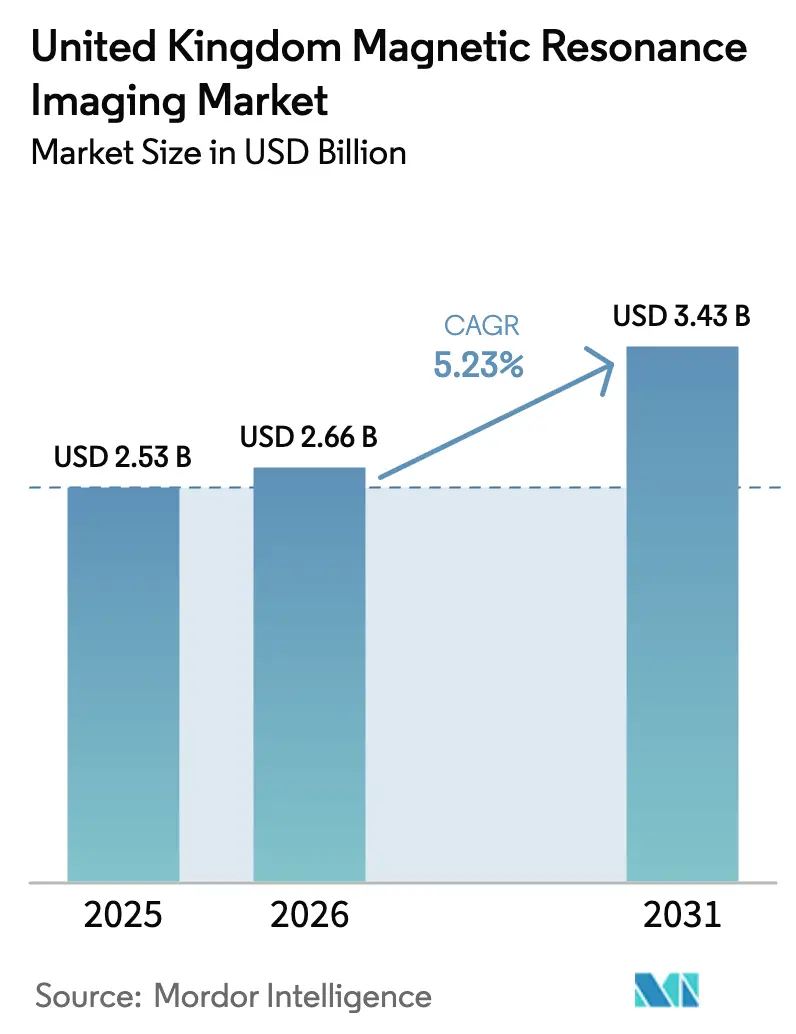
| Base Year Market Size (2025) | USD 2.53 Billion |
| Market Size (2026) | USD 2.66 Billion |
| Market Size (2031) | USD 3.43 Billion |
| Growth Rate (2026 - 2031) | 5.23 % |
| Market Concentration | Medium |
Major Players *Disclaimer: Major Players sorted in no particular order Image © Mordor Intelligence. Reuse requires attribution under CC BY 4.0. | |
United Kingdom Magnetic Resonance Imaging Market Analysis by Mordor Intelligence
The United Kingdom magnetic resonance imaging market size was valued at USD 2.53 billion in 2025 and estimated to grow from USD 2.66 billion in 2026 to reach USD 3.43 billion by 2031, at a CAGR of 5.23% during the forecast period (2026-2031). This expansion is fueled by centrally coordinated NHS procurement frameworks that deliver predictable order volumes, volume-discount pricing, and standardization benefits that lower the total cost of ownership for trusts. Rapid adoption of 3 tesla (3 T) platforms is accelerating throughput in neuro-oncology and musculoskeletal pathways, while AI-driven image reconstruction is reducing average scan times, thereby expanding daily slot capacity. In parallel, low-field, virtually helium-free systems are gaining traction as mobile and point-of-care solutions capable of servicing rural populations that experience historically long wait times. Intensifying vendor competition around helium-efficient magnets, integrated software ecosystems, and lifecycle service packages is likely to reinforce buyer bargaining power but will also favor manufacturers investing in domestic production footprints that mitigate post-Brexit logistics risks.
Key Report Takeaways
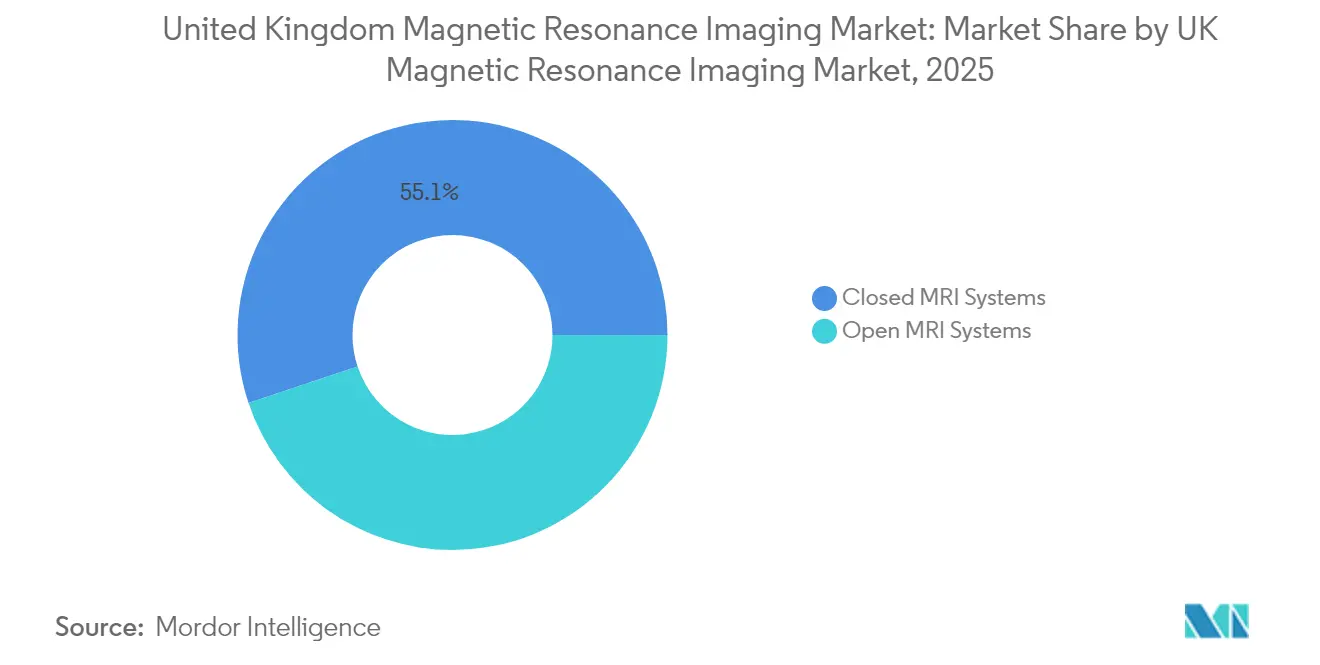
- By architecture, closed systems held 55.12% of the United Kingdom magnetic resonance imaging market share in 2025, while open systems are set to grow at a 6.88% CAGR through 2031.
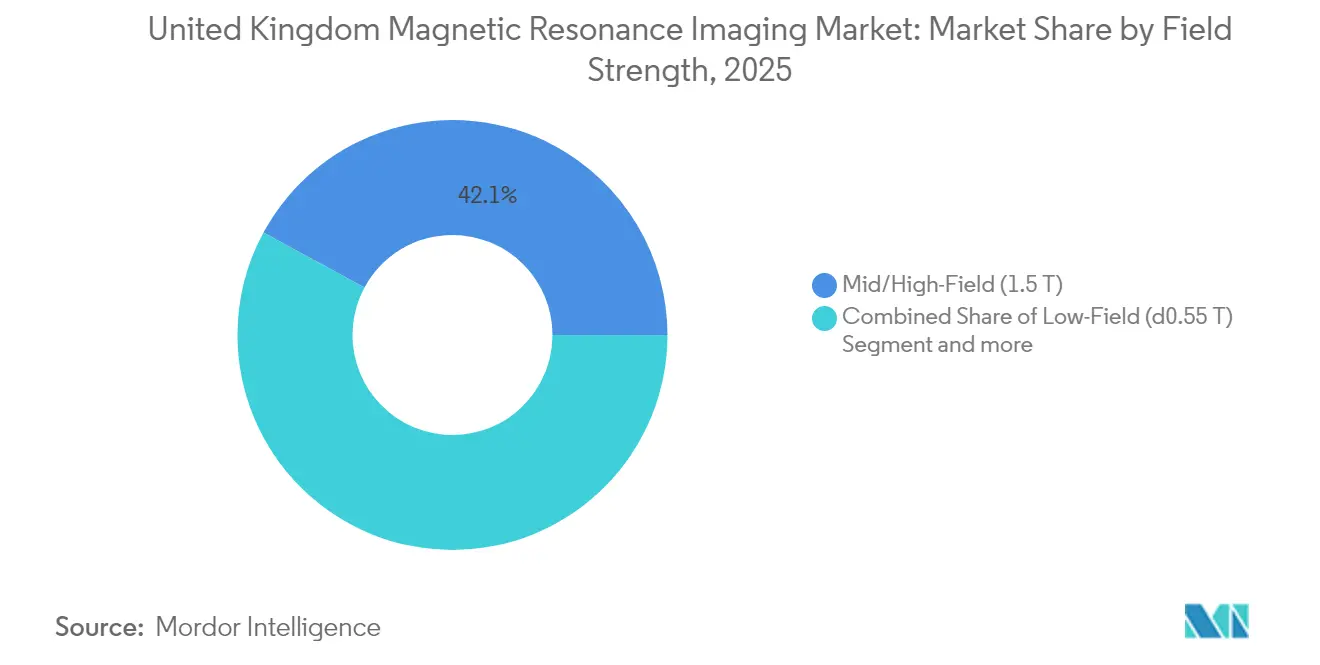
- By field strength, 1.5 T scanners accounted for 42.10% share of the United Kingdom magnetic resonance imaging market size in 2025, whereas low-field systems are projected to expand at a 6.19% CAGR through 2031.
- By application, neurology led with 31.10% revenue share in 2025 and cardiology is advancing at a 6.05% CAGR to 2031.
Note: Market size and forecast figures in this report are generated using Mordor Intelligence’s proprietary estimation framework, updated with the latest available data and insights as of 2026.
United Kingdom Magnetic Resonance Imaging Market Trends and Insights
Drivers Impact Analysis*
| Driver | (~) % Impact on CAGR Forecast | Geographic Relevance | Impact Timeline |
|---|---|---|---|
| Rising prevalence of chronic and age-related diseases | +1.2% | National, concentrated in aging populations | Long term (≥ 4 years) |
| Rapid adoption of 3 T scanners across NHS estates | +1.8% | National, NHS trust networks | Medium term (2-4 years) |
| AI-driven image reconstruction and workflow optimization | +1.1% | National, early adoption in teaching hospitals | Medium term (2-4 years) |
| Growth of point-of-care low-field MRI pilots in community settings | +0.7% | Regional, rural and underserved areas | Long term (≥ 4 years) |
| Expansion of intra-operative MRI suites for neuro-oncology surgery | +0.4% | National, tertiary care centers | Long term (≥ 4 years) |
| NHS imaging networks’ centralized procurement driving fleet standardization | +0.9% | National, NHS framework agreements | Short term (≤ 2 years) |
| Source: Mordor Intelligence | |||
Rising Prevalence of Chronic and Age-Related Diseases
The proportion of U.K. residents aged 65 years and older reached 19% in 2024 and is projected to climb to 22% by 2030, sharply increasing the incidence of neurodegenerative and musculoskeletal disorders that require advanced MRI diagnostics. MRI procedure volumes already exceed 4.3 million annually, and longitudinal NHS data show double-digit growth in dementia-related scans across northern England and Scotland. High-resolution 3 T systems provide the superior contrast needed for early Alzheimer’s and Parkinson’s detection, which shortens diagnostic odysseys and reduces downstream healthcare costs. Ultra-high-field research at the University of Cambridge demonstrates lesion-level sensitivity improvements that could translate into routine clinical protocols over the forecast period[1]. The linkage between demographic change and escalating neurological morbidity therefore places MRI at the center of age-friendly health-system planning. Vendor strategies that bundle geriatric-focused imaging protocols with AI-enriched post-processing are likely to secure procurement preference as trusts compete to meet government wait-time targets.
Rapid Adoption of 3 T Scanners Across NHS Estates
Centralized buying consortia now award multi-year lots for 3 T platforms, evidenced by recent installations at Imperial College Healthcare and University Hospital Southampton, both of which reported 20% reductions in repeat scans after commissioning higher field strengths[2]. These outcomes validate the NHS assumption that superior signal-to-noise ratios reduce indeterminate findings that would otherwise trigger follow-up appointments. Capital risk is mitigated by framework contracts that lock in service pricing for up to 12 years, enabling trusts to amortize premium scanners over predictable budgets. By embedding AI-assisted protocols such as Siemens Deep Resolve, hospitals have shown throughput gains of up to 50%, directly addressing an average national MRI wait of 23 days NHS.UK. Vendors offering field-upgrade paths—for example, from 1.5 T to 3 T—are expected to capture incremental share because the strategy preserves legacy infrastructure investments while boosting diagnostic breadth.
AI-Driven Image Reconstruction and Workflow Optimization
Artificial intelligence is emerging as a force multiplier for constrained workforces, with early adopters reporting that machine-learning reconstruction algorithms shorten head and spine examinations by 40% without compromising diagnostic integrity[3]. Automated slice planning, artifact suppression, and protocol selection minimize operator variability, which is critical in centers that rotate junior radiographers across multiple modalities. Workflow engines using natural-language order entry now preemptively flag mismatched protocols, trimming non-productive time between patients. Teaching hospitals in London and Manchester are piloting AI-driven scheduling dashboards that dynamically re-allocate idle slots to urgent outpatients, effectively squeezing an extra two cases per scanner each day. Over the forecast horizon, trusts that pair AI software with helium-efficient magnets can defer capital expenditure on additional systems, aligning technology rollout with financial sustainability directives.
Growth of Point-of-Care Low-Field MRI Pilots in Community Settings
Hyperfine’s CE-marked 0.064 T portable scanner, first deployed at King’s Health Partners in 2024, has validated bedside neuroimaging for stroke triage in intensive care units, shaving 25 minutes off door-to-diagnosis time and minimizing inter-facility transfers. Cornwall’s relocatable 1.5 T unit processes 7,000 scans annually and has cut average travel distances for rural patients by 90 miles, demonstrating a robust health-equity case for mobile models. The U.K.’s inaugural virtually helium-free MRI truck, unveiled at UKIO 2024, combines low-field magnets with closed-loop cooling to eliminate vent stacks, enabling parking outside community clinics without infrastructure upgrades. These pilots are informing NHS policy proposals that re-define imaging as a distributed service spanning hospitals, ambulatory centers, and mobile fleets. A successful scale-up could unlock a contiguous low-field segment that co-exists with the high-field hospital tier, reshaping vendor portfolios toward modular, ruggedized platforms.
Restraints Impact Analysis*
| Restraint | (~) % Impact on CAGR Forecast | Geographic Relevance | Impact Timeline |
|---|---|---|---|
| High upfront and lifecycle costs of MRI equipment | -1.40% | National, budget-constrained trusts | Medium term (2-4 years) |
| Stringent UKCA/CE regulatory and HTA approval processes | -0.80% | National, post-Brexit compliance | Short term (≤ 2 years) |
| Shortage of radiographers and MR-qualified physicists | -1.10% | National, acute in rural areas | Long term (≥ 4 years) |
| Volatile global helium supply affecting uptime | -0.60% | Global supply chain impact | Medium term (2-4 years) |
| Source: Mordor Intelligence | |||
High Upfront and Lifecycle Costs of MRI Equipment
Even with framework discounts, a new 3 T scanner and room build-out can exceed USD 3.5 million, stretching the capital envelopes of smaller district hospitals. Lifecycle economics further deteriorate when helium prices spike, as evidenced by Oxford Instruments’ disclosure that cryogen costs eroded its MRI service margins in 2024. Infrastructure retrofits—RF shielding, chiller upgrades, and cable rerouting—often add 35% to total spend, forcing trusts to defer replacements beyond the manufacturer’s recommended 10-year timeline. A secondary-market ecosystem has therefore emerged, offering certified refurbished 1.5 T systems at one-third the new-build price, although guarantees of uptime and software updates remain contentious.
Stringent UKCA/CE Regulatory and HTA Approval Processes
Post-Brexit divergence has compelled manufacturers to secure both UKCA and CE marks, doubling certification-testing fees and elongating launch timelines by up to nine months. The devolved administrations’ Health Technology Assessment committees add another review layer, requiring local clinical-effectiveness dossiers before capital allocation. Smaller manufacturers of specialty coils and contrast agents face disproportionate compliance burdens, potentially curbing innovation in ancillary technologies. While convergence initiatives are under discussion, near-term friction persists, slowing the entry of niche solutions that could alleviate workflow bottlenecks.
*Our forecasts treat driver/restraint impacts as directional, not additive. The impact forecasts reflect baseline growth, mix effects, and variable interactions.
Segment Analysis
By Architecture: Closed Systems Drive Premium Applications
Closed-bore systems generated USD 1.39 billion in 2025, equal to 55.12% of the United Kingdom magnetic resonance imaging market, owing to their superior magnetic homogeneity that supports functional brain mapping, spectroscopy, and time-resolved cardiac imaging. Institution-level evidence shows that closed platforms reduce motion artifacts in pediatric sedation cases, a critical KPI for trusts that benchmark image-repeat rates. Though the initial purchase price is higher, refurbishment cycles reveal that closed systems retain residual value 25% above open counterparts, which influences leasing strategies. In mobile deployments, logistical trade-offs around weight and cooling are increasingly offset by diagnostic versatility and patient throughput, leading mobile fleet operators to favor closed 1.5 T units over lighter, open low-field alternatives.
Open designs, typically operating at 0.3–0.5 T, captured USD 1.14 billion in 2025 and are projected to grow at a 6.88% CAGR until 2031, the fastest of any architecture category. The growth rate stems from patient-centric factors such as claustrophobia mitigation and bariatric accommodation, which win favor in community hospitals and imaging centers that compete on comfort scores. AI-based denoising is narrowing the image-quality gap with closed systems, expanding the clinical indications suitable for open magnets beyond simple orthopedic scans. As the U.K. health-service strategy pivots toward community-based diagnostics hubs, open platforms will likely see pilot funding, yet their absolute market share gain remains capped by limitations in advanced neuro and cardiac protocols.

By Field Strength: Low-Field Gains Traction Despite 1.5 T Leadership
Mid/high-field 1.5 T scanners contributed USD 1.07 billion, representing 42.10% of the United Kingdom magnetic resonance imaging market size in 2025, and remain the cornerstone for routine head, spine, and abdominal imaging. The modality’s mature workflow, abundant coil inventory, and favorable reimbursement profile support a utilization rate that exceeds 22 exams per day in high-volume centers. Economical helium-sparing upgrades and hybrid-system field-strength ramps are elongating fleet life, reinforcing 1.5 T dominance in the medium term.
Low-field systems at or below 0.55 T accounted for USD 162 million in revenue but will advance at a 6.19% CAGR, driven by their compatibility with plug-and-play electrical installations and helium independence. Pilot programs in Yorkshire demonstrated that low-field neuro protocols can triage stroke candidates within ambulances, compressing time-to-thrombolysis by six minutes on average. Vendor roadmaps illustrate a pipeline of multi-nuclear capabilities for low-field units, potentially expanding into metabolic imaging that sidesteps high-license-fee contrast agents.
At the other end, 3 T systems crossed USD 920 million in 2025 and will gain share in tertiary and private segments because of superior signal-to-noise performance, which translates into sub-five-minute neuro exams when paired with compressed-sensing software. Ultra-high-field platforms at 7 T and above remain niche but strategically important. The Nottingham 11.7 T initiative, funded at USD 52 million, exemplifies public-private collaboration that carries spillover benefits for domestic magnet manufacturers and cryogenics suppliers.
By Application: Cardiology Accelerates While Neurology Leads
Neurological imaging accounted for USD 787 million in 2025, equal to 31.10% of the United Kingdom magnetic resonance imaging market share, reflecting high prevalence of dementia, multiple sclerosis, and epilepsy diagnoses. Functional MRI and diffusion-tensor protocols are becoming routine for presurgical planning, driving demand for machines equipped with multichannel head coils and advanced gradient designs. NHS England’s Rapid Diagnostic Centre model integrates neuroimaging with genomics and blood biomarkers, positioning MRI as the central confirmatory tool for pathway triage.
Cardiac MRI generated USD 338 million but is poised to grow at a 6.05% CAGR, the fastest among applications. The British Heart Foundation and Society for Cardiovascular MRI advocate guideline updates that elevate MRI over CT for ischemia and cardiomyopathies, catalyzing procurement of scanners with wide-bore geometry and motion-correction algorithms. AI-enabled reconstruction reduces breath-hold requirements, making the modality accessible to frail or pediatric patients. Musculoskeletal and oncology indications collectively contributed more than USD 600 million, supported by sports-medicine demand ahead of the 2028 European Championships and expanding precision-oncology trial pipelines that rely on whole-body diffusion protocols.
Regulatory Landscape
MRI systems and related accessories placed on the Great Britain market are regulated as medical devices under the UK Medical Devices Regulations 2002 (UK MDR 2002), overseen by the Medicines and Healthcare products Regulatory Agency (MHRA). Manufacturers register devices with the MHRA and demonstrate conformity through the UKCA route, with transitional arrangements continuing to support CE marking for defined periods, which in turn affects launch sequencing and portfolio planning for global OEMs operating across the UK and EU.
Post-Brexit reform has focused on improving access and reducing duplication, including MHRA proposals and the development of international reliance routes that support streamlined pathways for devices already assessed by regulators such as the US FDA, Health Canada, and Australia’s TGA. In parallel, MRI-specific safety guidance for equipment entering the MR environment emphasizes clear labeling and adherence to established MR safety standards, reinforcing the need for site governance, training, and controlled-zone protocols across NHS trusts and independent providers.
Value Chain Analysis
The UK MRI value chain starts with global and regional OEMs supplying magnets, gradients, RF coils, and system software, supported by a domestic and European sub-supplier base for cryogenics, superconducting components, and service tooling. UK localization has increased in specific nodes, including Siemens Healthineers’ Oxford low-helium magnet manufacturing footprint, which supports helium-efficient cryostat supply for UK installations and service replacements, and Tesla Engineering’s role in the Nottingham 11.7 T program as an example of domestic capability in ultra-high-field components.
On the demand side, NHS trusts and imaging networks procure MRI systems through centrally coordinated routes, including NHS Supply Chain framework agreements for MRI scanners and related options and services, with listed suppliers such as Canon Medical Systems Limited, Esaote Europe BV, Fujifilm Healthcare UK Limited, GE Medical Systems Limited, Philips Electronics UK Limited, and Siemens Healthcare Limited. Downstream work includes site planning and RF shielding contractors, commissioning and acceptance testing with clinical physics support, and multi-year maintenance and uptime contracts, with managed service and lifecycle bundles influencing replacement timing, software and coil upgrades, and standardization decisions across trust estates.
Competitive Landscape
Siemens Healthineers, GE Healthcare, and Philips collectively capture roughly 60% of the United Kingdom magnetic resonance imaging market, leveraging integrated hardware-plus-software portfolios, nationwide service teams, and strong vendor-financing arms. Siemens’ USD 313 million dry-cool magnet plant in Oxford engineers helium-light cryostats that shave 30% off running costs, a differentiator amid tightening NHS budgets. GE’s collaboration with the University of Manchester embeds multi-nuclear spectroscopy capabilities in select 3 T models, appealing to oncology research consortia. Philips, through its Eindhoven-to-Cambridge innovation corridor, has fast-tracked AI-powered cardiac packages that achieved NICE technology appraisal endorsement in 2025.
Domestic firms occupy strategic niches. Tesla Engineering’s superconducting magnet business, headquartered in Storrington, won the USD 52 million contract to build the 11.7 T magnet for Nottingham, spotlighting sovereign capability in ultra-high-field components. Oxford Instruments supplies cryogenic accessories while pursuing helium-recycling skids that could retrofit legacy fleets. Hyperfine and United-Imaging aggressively court the low-field and value segments, but face regulatory friction and service-network deficits.
Competitive dynamics are shifting toward total cost of ownership, with trusts assigning 30% tender weighting to service uptime metrics. Vendors now bundle AI licenses, coils, contrast-injector interfaces, and cloud PACS seats into subscription models that convert lumpy capital budgets into predictable operational expenditure. Strategic alliances with cloud-service providers deliver edge-compute resources for on-scanner inference, further blurring the lines between equipment and software suppliers.
United Kingdom Magnetic Resonance Imaging Industry Leaders
-
Canon Medical Systems Corporation
-
GE Healthcare
-
Siemens Healthcare AG
-
Koninklijke Philips NV
-
Esaote SpA
- *Disclaimer: Major Players sorted in no particular order

Market Opportunities and Future Outlook
Two near-term whitespace areas are taking shape around distributed capacity and operating-cost resilience. Community and mobile delivery models are being tested through point-of-care and relocatable pilots, including Hyperfine’s CE-marked portable deployment at King’s Health Partners (2024) and Cornwall’s relocatable 1.5 T unit processing around 7,000 scans annually, which together show options for extending MRI access without relying only on major hospital expansions. Product designs that reduce infrastructure barriers, such as lower siting requirements and helium-light or helium-independent approaches, along with software that shortens protocols, are aligning with the reality of long waiting lists and constrained trust estates.
Procurement and market-access changes also create scope for suppliers that can compete on standardization, serviceability, and compliance readiness. NHS Supply Chain frameworks and the MedTech Commercial Strategy workstream (NHS England and DHSC) target less fragmented purchasing and reduced duplication across a sector with around GBP 13 billion of annual NHS spend, favoring vendors that can deliver consistent configurations, measurable uptime, and lifecycle pricing. At the same time, MHRA reliance mechanisms and the broader UK regulatory reform program improve entry routes for eligible devices already approved in the US, Canada, or Australia, which is relevant for newer MRI-adjacent software capabilities, including AI as a medical device, that are increasingly bundled with scanner sales and service contracts.
Recent Industry Developments
- June 2026: Siemens Healthineers / InHealth deployed the MAGNETOM Flow.Elite MRI system in a hybrid relocatable imaging environment in the UK, the first such helium-independent installation. The helium-free, modular deployment expands portable diagnostic capacity. The collaboration strengthens NHS flexibility in service delivery.
- June 2026: Siemens Healthineers - InHealth deployed the MAGNETOM Flow.Elite MRI system in a hybrid relocatable imaging environment, marking the first UK installation of this helium-independent technology in such a setting. The first UK installation demonstrates scalable capacity in portable form factors. The collaboration with InHealth broadens NHS access to helium-free imaging in mobile environments.
- March 2026: Canon Medical Systems - University Hospitals of Leicester NHS Trust launched the UK's first Canon Vantage Galan 3T/Supreme Edition MRI via a Managed Equipment Service partnership with Ergéa UK. The MES rollout expands premium 3T access within UK NHS networks. It signals Canon's MES model gaining traction for strategic site deployments.
Research Methodology Framework and Report Scope
Market Definition and Coverage
For this study, the United Kingdom magnetic resonance imaging market is defined as the value generated from MRI systems sold and installed in the country, along with the related upgrades and service revenue that is typically bundled with those systems.
Scope exclusions: We do not count general radiology IT, contrast media sales, or stand-alone imaging service revenue from hospitals and diagnostic centers.
Segmentation Overview
- By Architecture
- Closed MRI Systems
- Open MRI Systems
- By Field Strength
- Low-Field (≤0.55 T)
- Mid/High-Field (1.5 T)
- Very-High-Field (3 T)
- Ultra-High-Field (7 T +)
- By Application
- Neurology
- Oncology
- Musculoskeletal
- Cardiology
- Gastroenterology
- Other Applications
Data Sources, Market Sizing, and Validation
Desk Research
Desk research was used to map the installed base and the demand triggers that shape MRI purchasing in the United Kingdom, and then to set sensible ranges for pricing and replacement cycles. We leaned on public healthcare planning and activity signals, such as NHS England and UK government publications, the UK Health Security Agency where relevant to care backlogs, OECD health statistics, and ONS population and age-structure data.
To keep assumptions grounded, we also reviewed sources such as MHRA medical device guidance, peer reviewed radiology journals for utilization and field strength adoption trends, and reputable association publications tied to radiology workforce and scanning capacity. For company-level context, annual reports, UK subsidiary filings where available, and investor presentations were used to interpret mix shifts and service attachment. Paid subscriptions were used selectively for company financials and patent lookups, and to cross-check import-export shipment signals for high-value imaging components. This desk source list is illustrative, and many other public references were also consulted for data collection, cross-checking, and clarification.
Primary Interviews and Surveys
Primary work focused on validating the real purchase drivers and the practical constraints behind demand, including procurement cycles, replacement timing, and typical service contract structures. We spoke with a mix of OEM-facing stakeholders, imaging providers, clinical users, and maintenance and operations teams, and then used those conversations to confirm pricing bands and the share split between new installs and replacements. Since this is a single-country study, coverage was balanced across major UK health systems and private providers so we could test assumptions against on-the-ground scan volumes and capacity realities.
Distribution of primary research fieldwork respondents
| Company type | Respondent position |
|---|---|
| Top tier: 37% | CXOs: 20% |
| Mid tier: 42% | Functional/Unit leaders: 23% |
| Smaller Players: 21% | Managers: 57% |
Market-Sizing & Forecasting
Sizing starts from a top-down build where UK imaging demand and capacity signals are translated into expected MRI system requirements over time, and then converted into value using observed price and service attachment ranges. In practice, we used indicators such as scanner age profile and replacement cadence, likely uptake of 1.5T versus 3T systems, expected scan throughput per system, waiting list pressure and elective recovery plans, and capital spending patterns across public and private sites.
Those outputs were then checked with selective bottom-up approximations, where we roll up a sample of supplier shipments, typical ASP by field strength, and service contract attach rates, and then adjust for gaps where public disclosure is thin. When data points did not line up, we revisited the assumption that drove the mismatch, most often around average selling prices, refurbishment shares, or the timing of large framework purchases.
For forecasting, scenario analysis was used because MRI demand in the UK is strongly shaped by policy timing, budget releases, and capacity expansion initiatives, which can move faster or slower than a single trend line suggests. Each scenario is anchored to primary feedback on procurement timing, expected backlog clearance pace, and technology refresh priorities, and the final forecast path is the one that stayed consistent across the largest number of validated signals.
Data Validation & Update Cycle
We validate outputs through multiple checks that connect the model back to observable market signals, and then we do a second pass to make sure assumptions are consistent across the full time series. During review, unusual jumps in demand or value are flagged, investigated, and traced back to a driver such as a pricing step-change, a replacement wave, or an outlier procurement event.
Our analysts compare results with independent indicators like expected MRI procedure growth, changes in installed base, and published healthcare capacity constraints, and then re-contact selected respondents if a key input moves outside a reasonable band. Reports are refreshed annually, and interim updates are made if a material event changes outlook assumptions. Before delivery, a final validation pass is completed so clients receive the most current view available at the time.
Mordor Intelligence's United Kingdom Magnetic Resonance Imaging Market Size Compared With Other Published Estimates
Published market sizes for UK MRI often look far apart because each publisher draws the boundary in a different place, and then uses different price and volume anchors to translate demand into dollars. The spread is usually driven by what is counted as the market, how refurbished systems and service contracts are treated, and which year and currency conversion timing is used.
NHS imaging activity signals and scanner replacement timing checks are the evidence that tie Mordor Intelligence's estimate to a defined equipment-plus-attached-service spend pool, instead of a narrower view that only counts scanner shipments. Differences can also come from assuming aggressive 3T mix expansion or faster ASP erosion, and from not re-testing assumptions with UK procurement pathway feedback after major policy or budget updates.
Benchmark comparison
| Source | Market Size | Gaps in Research Methodology |
|---|---|---|
| Mordor Intelligence | USD 2.53 B (2025) | |
| Regional Consultancy A | USD 0.67 B (2022) | This figure appears closer to MRI system sales value only, with limited inclusion of multi-year service attachments and upgrades, and it uses an earlier base year with lower 3T penetration assumptions. |
| Industry Publisher B | USD 0.79 B (2029) | This estimate likely models a narrower equipment scope and applies a conservative demand curve tied to slow replacement cycles, which can understate value when service contracts and technology upgrades are bundled into procurement. |
The comparison shows that most gaps are explained by scope and timing rather than a disagreement on direction of growth. By separating equipment value from adjacent imaging services, and by keeping ASP and replacement cycle assumptions linked to observed UK capacity signals, we produce a number that is easier to trace back to repeatable steps and practical purchase behavior.
Key Questions Answered in the Report
How large is the United Kingdom magnetic resonance imaging market in 2026?
The United Kingdom magnetic resonance imaging market size is USD 2.66 billion in 2026.
What is the expected growth rate for MRI equipment demand in the U.K. over the next five years?
Demand is projected to rise at a 5.23% CAGR, taking revenue to USD 3.43 billion by 2031 (2026-2031).
Which MRI application segment is expanding the fastest across NHS trusts?
Cardiac imaging shows the highest growth trajectory, advancing at a 6.05% CAGR through 2031, fueled by British Heart Foundation research investments.
Why are low-field MRI systems gaining attention in the United Kingdom?
Low-field platforms enable mobile and point-of-care imaging that addresses rural access gaps and operate with little or no helium, lowering total operating costs.
What is driving the switch from 1.5 T to 3 T scanners in England?
Centralized NHS procurement favors 3 T systems because they reduce repeat scans, improve diagnostic confidence in neurology and oncology, and pair effectively with AI reconstruction tools that cut scan times.
How are manufacturers addressing helium supply challenges?
Major vendors are investing in dry-cool and low-helium magnet designs, exemplified by Siemens HealthineersÕ new Oxford plant that focuses on helium-efficient cryostats.