
Kids Travel Bags Market Size and Share
Market Overview
| Study Period | 2021 - 2031 |
|---|---|
| Market Size (2026) | USD 3.5 Billion |
| Market Size (2031) | USD 5.03 Billion |
| Growth Rate (2026 - 2031) | 7.50 % |
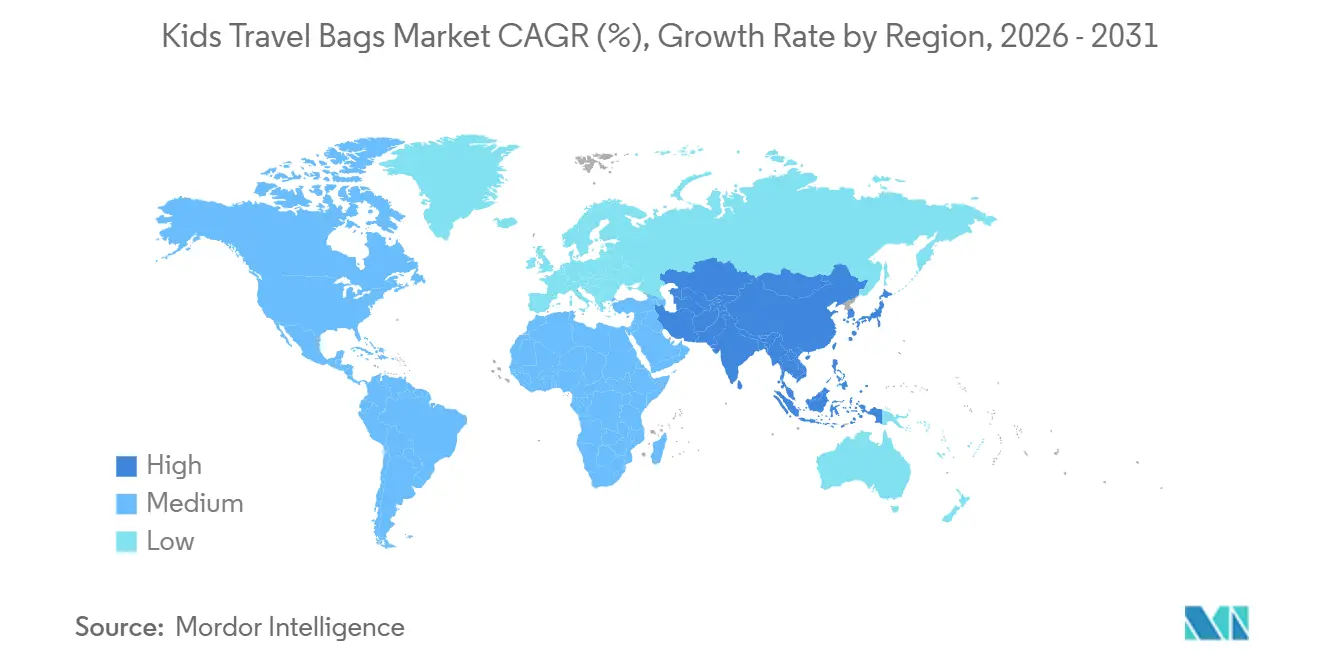
| Fastest Growing Market | Asia Pacific |
| Largest Market | North America |
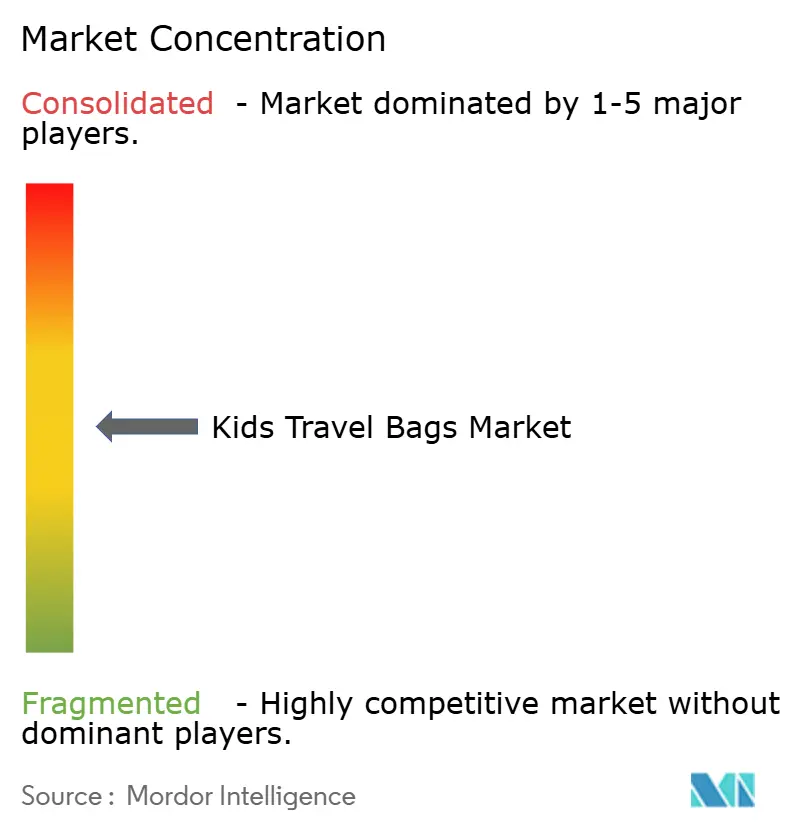
| Market Concentration | Medium |
Major Players *Disclaimer: Major Players sorted in no particular order Image © Mordor Intelligence. Reuse requires attribution under CC BY 4.0. | |
Kids Travel Bags Market Analysis by Mordor Intelligence
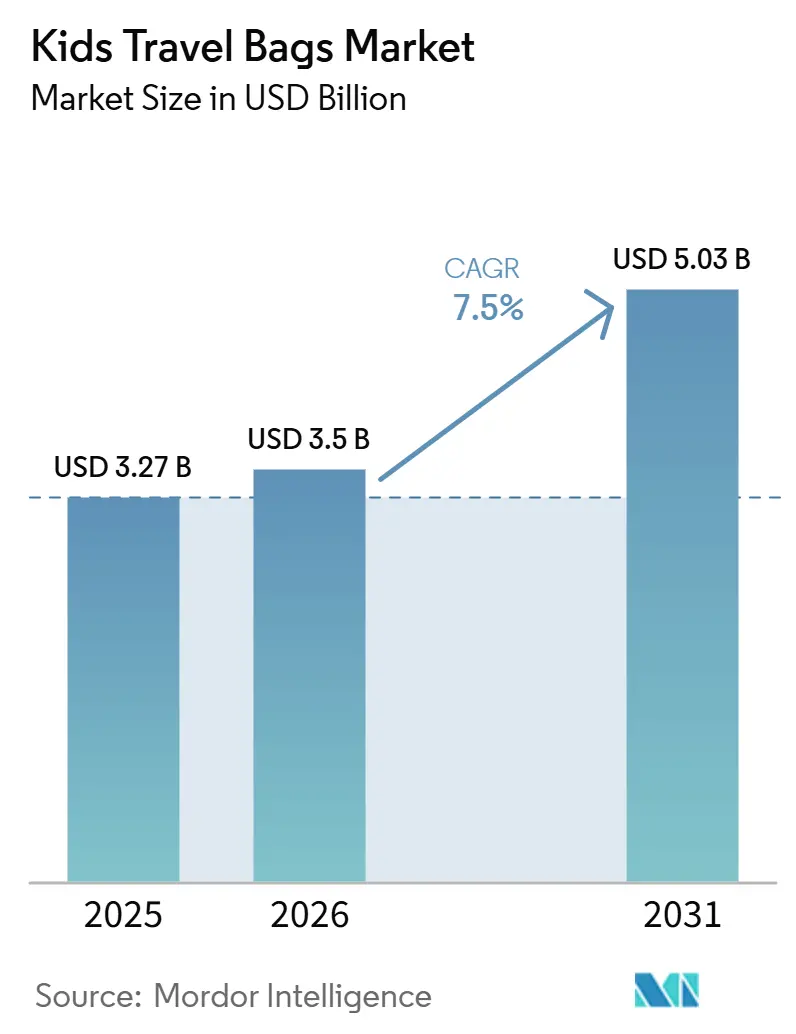
The kids travel bags market size is expected to grow from USD 3.27 billion in 2025 and is expected to reach USD 3.5 billion in 2026, and is forecast to reach USD 5.03 billion by 2031 at 7.5% CAGR over 2026-2031. A combination of stricter child-safety regulations, growing educational travel programs, and rapid material innovation anchors near-term growth. Online shopping habits that took hold during the pandemic remain sticky, allowing parents to compare features, track discounts, and read peer reviews with ease. At the same time, premium positioning built on smart tracking chips and recycled composites is encouraging households to trade up, even in price-sensitive regions. The maturation of omnichannel retailing, coupled with fast adoption of Bluetooth-enabled ride-on luggage, signals that the kids travel bags market will evolve beyond simple storage solutions into connected mobility systems.
Key Report Takeaways
- By material type, soft material type led with 72.05% of the kids travel bags market share in 2025, and hard material type is forecast to expand at an 7.78% CAGR through 2031.
- By category, the mass segment held 61.18% of the kids travel bags market size in 2025, and the premium segment is projected to advance at an 8.05% CAGR through 2031.
- By distribution channel, online retail stores commanded 59.23% share of the kids travel bags market size in 2025, and offline retail stores are growing at a 8.22% CAGR through 2031.
- By geography, North America contributed 39.45% of the kids travel bags market share in 2025, and Asia-Pacific is set to record the fastest 9.03% CAGR through 2031.
Note: Market size and forecast figures in this report are generated using Mordor Intelligence’s proprietary estimation framework, updated with the latest available data and insights as of January 2026.
Market Trends and Insights
Drivers Impact Analysis of Kids Travel Bags Market*
| Driver | (~) % Impact on CAGR Forecast | Geographic Relevance | Impact Timeline |
|---|---|---|---|
| Demand for eco-friendly and sustainable materials | +1.2% | Global, with strongest adoption in North America and EU | Medium term (2-4 years) |
| Licensed characters and themed designs | +1.0% | Global, particularly strong in North America and Asia-Pacific | Short term (≤ 2 years) |
| Growth of ride-on and scooter-integrated luggage | +0.8% | APAC core, spill-over to North America | Medium term (2-4 years) |
| Expansion of experiential learning trips and school excursions | +0.9% | Global, with emphasis on developed markets | Long term (≥ 4 years) |
| Rise of lightweight eco-friendly materials adoption | +0.7% | Global, led by premium segment adoption | Medium term (2-4 years) |
| Integration of smart tracking chips for parental peace-of-mind | +0.6% | North America and EU, expanding to APAC | Short term (≤ 2 years) |
| Source: Mordor Intelligence | |||
Surge in demand for sustainable and eco-friendly materials
Manufacturers are reshaping product development cycles in response to sustainability mandates, driven by regulatory pressures and consumer demand for eco-friendly options. Samsonite, committed to science-based climate targets, aims for 100% renewable electricity in operations and a 52% reduction in Scope 3 emissions by 2030 [1]. Moving beyond mere marketing, companies are genuinely embracing circular economy principles. For instance, Ninetygo has teamed up with Nongfu Spring to craft suitcases from post-consumer recycled polycarbonate, sourced from used water barrels. This initiative boasts an estimated 35% reduction in carbon emissions compared to conventional materials. Solo's Re: cycled Collection showcases the commercial potential of using ocean-bound plastics. Their production methods consume 50% less energy and 20% less water, with an ambitious goal of recycling 40 million bottles in the coming years. This push towards sustainability not only underscores environmental responsibility but also offers brands a chance to stand out in a competitive market, especially when integrating these values into durable designs for children's luggage.
Popularity of licensed characters and themed designs
Character licensing partnerships have transformed from mere logo placements to crafting immersive travel experiences for children. Bioworld's Disney-themed luggage collection stands as a testament to this shift. The collection boasts eye-catching designs, incorporates hidden Easter eggs, and draws color palettes from Disney's rich history. Moreover, it underscores durability, utilizing patent-pending materials for enhanced longevity. This licensing model not only diversifies revenue streams for manufacturers but also curtails marketing expenses by leveraging brand recognition. DELSEY's partnership with Jeep showcases the breadth of licensing, reaching beyond entertainment to lifestyle brands. Their luggage line captures Jeep's adventurous essence, featuring water-resistant materials and designs rooted in automotive heritage. Such collaborations empower manufacturers to set premium prices and lower customer acquisition costs, thanks to ingrained brand loyalty. However, these alliances come with challenges: a reliance on licensor relationships and the burden of ongoing royalty payments, which can strain margins in economic slumps.
Rise of luggage featuring ride-on and scooter integrations
Ride-on luggage has evolved from a mere novelty to a sophisticated solution, tackling travel challenges and keeping children entertained during delays. The Airwheel SQ3 epitomizes this evolution. It boasts patented features, including US11647820B2 and US16449688, and comes equipped with smart operation systems, Bluetooth capabilities, and wheels that glow through electromagnetic induction. Airwheel markets it for children aged 3 to 6. Yet, as products like Airwheel's emerge, regulatory bodies lag [2]. A case in point: Japan recently classified rideable electric suitcases as motorized vehicles, mandating safety equipment and driver's licenses, as reported by The Guardian. Such regulatory hurdles risk fragmenting the market. A product deemed safe in one region might face bans elsewhere, stunting the global reach of these innovations. As manufacturers push boundaries in areas like battery safety and speed control, they must also adeptly navigate these regulatory waters, balancing innovation with safety and liability concerns.
Increase in experiential learning trips and school excursions
Data from the National Education Association reveals that students engaged in field trips not only perform 59% better academically but also boast a 95% higher graduation rate. This correlation has spurred educational institutions to bolster their travel programs, despite facing challenges like costs, safety, and intricate planning. As educational travel gains traction, it aligns with academic calendars, presenting manufacturers with a chance to craft specialized products. These products could emphasize durability for frequent use, incorporate identification features for group management, and adhere to transportation size regulations. Studies have shown the importance of clear learning objectives and suitable equipment in field trip planning. This insight, coupled with Regis University's findings, suggests that luggage manufacturers aligning their products with educational goals could sway institutional purchasing decisions. While the institutional market promises higher volumes, it comes with extended sales cycles and procurement regulations, often favoring established suppliers with a solid track record.
Restraints Impact Analysis of Kids Travel Bags Market*
| Restraint | (~) % Impact on CAGR Forecast | Geographic Relevance | Impact Timeline |
|---|---|---|---|
| Counterfeit and unlicensed character luggage flooding e-commerce | -0.8% | Global, particularly severe in online marketplaces | Short term (≤ 2 years) |
| Stringent safety standards on child-contact materials | -0.5% | North America and EU regulatory markets | Medium term (2-4 years) |
| Price sensitivity and high cost of licensed products | -0.6% | Global, more pronounced in emerging markets | Short term (≤ 2 years) |
| Seasonal and sporadic demand | -0.4% | Global, varies by regional travel patterns | Long term (≥ 4 years) |
| Source: Mordor Intelligence | |||
Presence of counterfeit products
Counterfeit products threaten brand integrity and consumer safety. Amazon's launch of a Counterfeit Crimes Unit (CCU) underscores the enforcement challenges e-commerce platforms grapple with. The CCU has seized millions of counterfeit items and worked closely with law enforcement, highlighting the extensive resources needed to tackle sophisticated counterfeiting operations that prey on online marketplaces. Counterfeit luggage for children is especially concerning, as it may violate safety standards. Issues include the use of toxic materials, lack of structural integrity, and failure to meet flame-retardancy standards required for products meant for children. The rise of unlicensed character merchandise not only undermines legitimate licensing agreements but also confuses consumers, jeopardizing brand relationships cultivated over decades. E-commerce platforms strive to maintain an open marketplace while safeguarding brands. This delicate balance demands advanced detection algorithms and human oversight, increasing operational costs and potentially hindering product visibility for genuine sellers.
Child-contact materials face stringent safety standards
As safety agencies tighten testing requirements for children's products, regulatory compliance costs are on the rise. The Consumer Product Safety Commission (CPSC) has introduced an electronic filing mandate for certificates of compliance, adding layers of administrative complexity for importers [3]. The CPSC's proposed safety standards for toys with water beads, which set size restrictions and limit acrylamide, highlight the widening net of chemical safety regulations. These regulations might soon encompass materials and components used in luggage. Smaller manufacturers, often lacking the resources for extensive testing and the meticulous documentation required for five-year record-keeping, find these compliance requirements to be significant barriers to entry. With an 18-month timeline to adapt to the new eFiling requirements, existing importers face a compressed compliance window. This rush could disrupt supply chains that depend on swift product rollouts. While these regulatory shifts bolster established manufacturers with strong quality assurance systems, they may stifle innovation from smaller firms poised to introduce groundbreaking technologies or designs.
*Our forecasts treat driver/restraint impacts as directional, not additive. The impact forecasts reflect baseline growth, mix effects, and variable interactions.
Kids Travel Bags Market Segment Analysis
By Material Types:
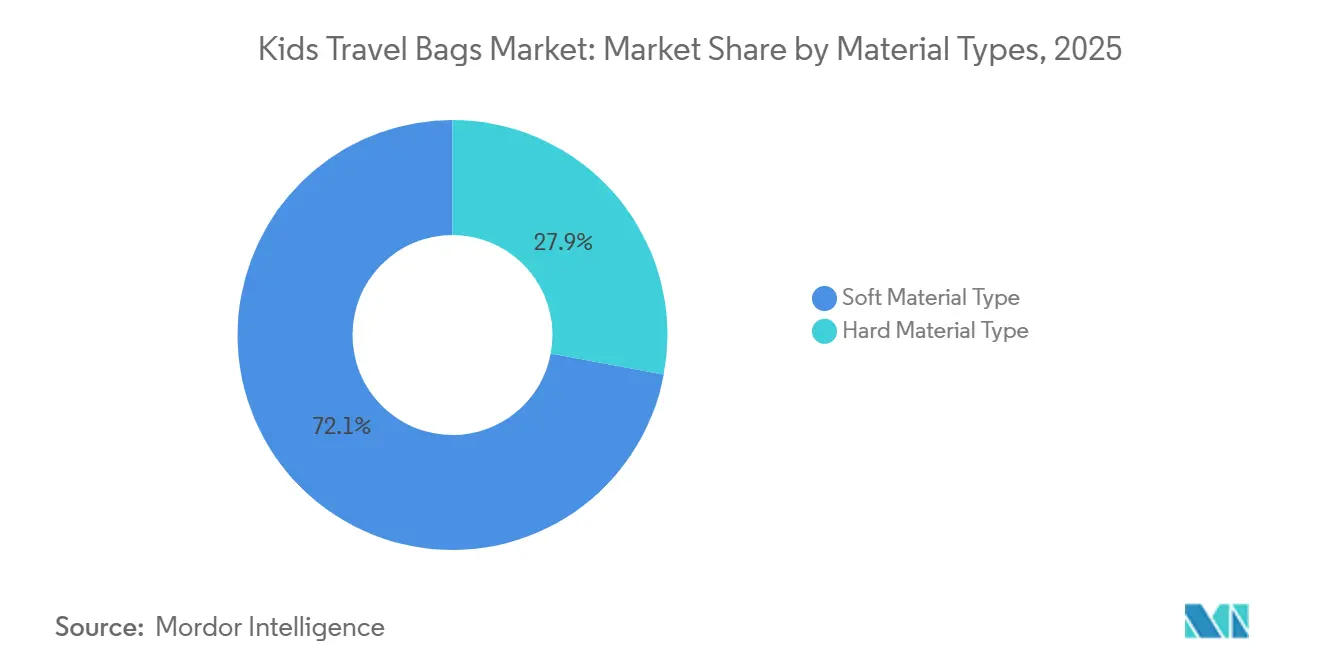
Hard Luggage Gains Despite Soft DominanceIn 2025, soft material type commands a dominant 72.05% market share, underscoring parental preferences for its lightweight and flexible designs. These designs not only cater to diverse packing needs but also mitigate injury risks during handling. The segment's supremacy is attributed to practical benefits: soft luggage is easier to stow in overhead compartments, boasts lower manufacturing costs for competitive pricing, and offers design flexibility. This flexibility allows for character licensing and vibrant graphics, making them particularly appealing to children. Meanwhile, hard material type, though a smaller segment, is on a rapid ascent, charting a 7.78% CAGR growth rate through 2031. This surge is fueled by hard luggage's enhanced security features and durability, which resonate with quality-conscious parents willing to pay a premium.
As families increasingly invest in electronic devices and educational materials for travel, there's a noticeable shift towards hard luggage. This shift underscores a growing consumer emphasis on product longevity and safeguarding valuable content. Tuplus's launch of carbon fiber composite suitcases, reinforced with aluminum and magnesium alloy frames, highlights the material innovations propelling hard luggage's popularity. Additionally, Covestro's Maezio thermoplastic composites offer superior impact resistance, setting a new standard against traditional materials. The premium status of hard luggage mirrors a wider trend in the premiumization of children's products, where parents increasingly prioritize safety and durability over mere cost. Furthermore, advancements in the production efficiency of thermoplastic composites are narrowing the cost disparity between hard and soft luggage. This trend could hasten the adoption of hard luggage as its price barriers continue to erode.
By Category:
Premium Growth Outpaces Mass Market FoundationIn 2025, the mass category commands a 61.77% market share, underscoring the price-sensitive nature of children's luggage purchases. Parents, often prioritizing affordability, lean towards mass-market options. This trend is largely due to the fleeting nature of children's size needs and their usage patterns. Mass-market products, benefiting from economies of scale in both manufacturing and distribution, offer competitive pricing, making travel more accessible to a wider demographic. Yet, the premium segment, with an 8.05% CAGR projected through 2031, indicates a notable shift in consumer behavior. Shoppers are now prioritizing quality, emphasizing durability, safety features, and brand reputation over mere cost.
Parents are increasingly inclined to invest in premium products, drawn by enhanced safety features, licensed character designs, and innovative functionalities like smart tracking. This segment enjoys the "lipstick effect," where parents, even in economic downturns, prioritize spending on quality children's products. They view such investments as crucial for family travel experiences and child safety. Safari Industries' debut of the "Urban Jungle" brand, featuring premium backpacks and duffel bags aimed at young consumers, highlights a trend. Manufacturers, as noted by Way2Wealth Brokers Pvt. Ltd., are broadening their premium offerings to tap into these lucrative, higher-margin opportunities. The growth of the premium segment indicates that successful manufacturers should adopt dual-market strategies. They must ensure mass-market accessibility while simultaneously cultivating premium brand equity through innovation and a focus on quality differentiation.
By Distribution Channel:
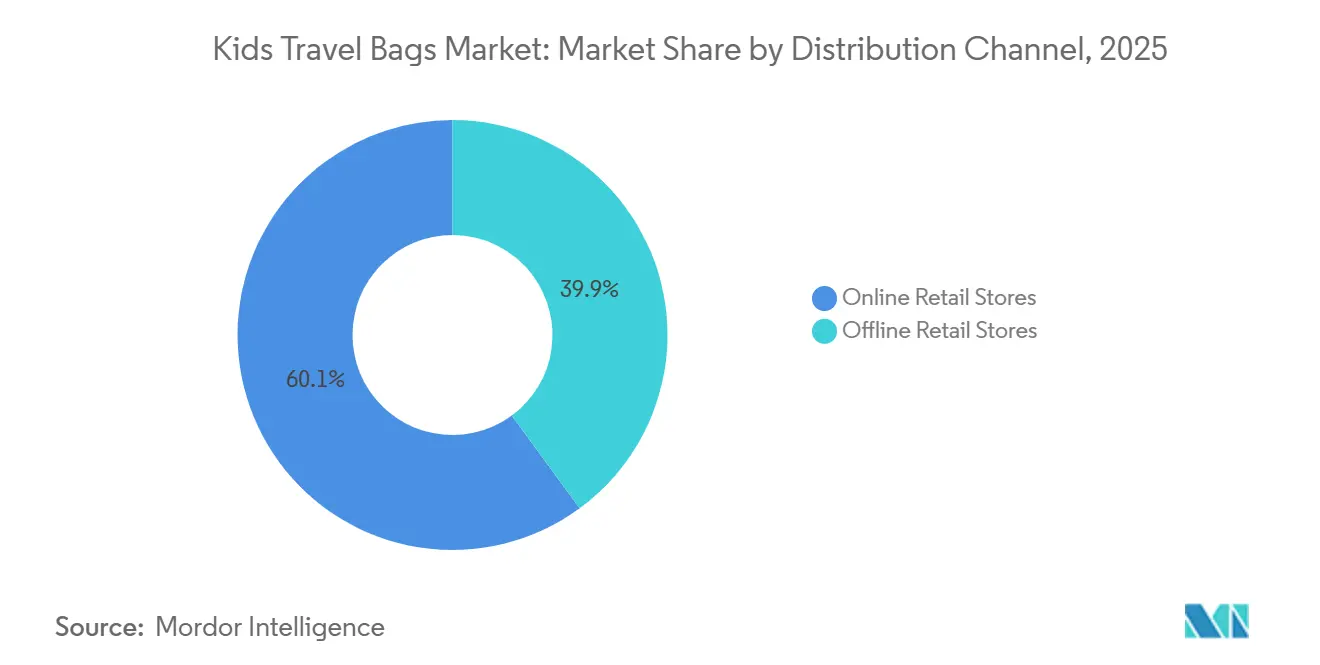
Digital Transformation Accelerates Offline InnovationIn 2025, online retail stores capture a commanding 60.04% market share, underscoring a digital shift in purchasing children's products. This shift, initially spurred by the pandemic, has continued momentum, bolstered by enhanced user experiences and competitive pricing. The allure of online shopping lies in its convenience: home delivery, a vast product selection, and customer reviews that guide purchasing choices. Additionally, online retailers benefit from lower overhead costs, allowing them to offer competitive prices. Parents value the online platform's ability to conduct thorough product research, compare features and prices across brands, and access detailed safety information before making decisions for their children.
Yet, even with the online surge, offline retail stores are witnessing a solid 8.22% growth projected through 2031. This trend underscores the enduring relevance of physical stores, especially for products where hands-on evaluation is key. Brick-and-mortar stores are evolving, embracing experiential retail concepts and product demonstrations, and offering immediate gratification, advantages that online platforms struggle to match. VIP Industries, with its renewed focus on distribution and marketing, aims to reclaim its market share, highlighting the pivotal role of physical stores in brand building and nurturing customer relationships. The rise of omnichannel strategies, blending online and offline experiences, signals a crucial insight: manufacturers must adeptly navigate both realms, harnessing their unique strengths to enhance market reach and elevate customer satisfaction.
Geography Analysis
North America Kids Travel Bags Market
In 2025, North America commanded a dominant 38.87% share of the kids travel bags market. This stronghold is largely attributed to stringent oversight from the CPSC, which not only elevates entry barriers but also bolsters premium pricing. Factors such as household affluence, regular domestic flights, and travel programs from charter schools underpin a steady demand. Parents typically refresh their purchases every two to three years, either to accommodate growth spurts or to benefit from enhanced safety features. With a regulatory mandate for digital certificates by 2026, suppliers who streamline and automate their documentation processes are set to secure their market position.
APAC and Europe Kids Travel Bags Market
Asia-Pacific is on track to achieve a 9.03% CAGR through 2031. This growth is fueled by an uptick in branded products in India. The burgeoning middle class, coupled with an expansion in organized retail, is driving up unit volumes. However, varying regulations, like Japan's unique classification for ride-on bags, necessitate swift product localization. Homegrown brands, such as Safari Industries, are extending their reach beyond metropolitan areas, further energizing the kids travel bags market. Meanwhile, Europe, though mature, remains a profitable landscape. Here, heightened environmental awareness and school exchange initiatives are propelling premium eco-friendly lines. Samsonite's strategic shift to 100% renewable energy and its experiments with circular design resonate with the sentiments of EU consumers, enhancing its brand prestige.
EMEA and South America Kids Travel Bags Market
Efficient customs processes within the Schengen zone bolster cross-border e-commerce, enabling niche Scandinavian brands to gain traction across Europe. Demand remains steady, thanks to predictable spikes during summer and winter breaks, aiding precise inventory management. While South America, the Middle East, and Africa emerge as potential markets, challenges persist. Although airport expansions and the rise of low-cost carriers enhance accessibility, hurdles like import tariffs and income disparities limit immediate market penetration. Innovative bundles, such as pairing school backpacks with mini suitcases, could pave the way for initial market entry. As tourism infrastructure evolves, retailers who adopt flexible pricing strategies and offer micro-financing solutions are likely to dominate, expanding the kids travel bags market in these regions.
Competitive Landscape
The kids travel bags market showcases a moderate concentration, indicating a balanced rivalry between established global players and nimble regional challengers. The Samsonite Group employs a multi-brand strategy, using American Tourister to target the mainstream market and Tumi for the luxury segment. This approach allows them to cover diverse market segments while optimizing resources by sharing factories and ERP systems. Their patent portfolio, which includes innovations like wheel assemblies and impact-absorbing corners, not only deters potential copycats but also justifies their premium pricing. Airwheel stands out by integrating smart modules and design patents, turning traditional luggage into ride-on toys, thereby solidifying its first-mover advantage.
Counterfeiting poses a continual challenge in the industry. In response, brands are embedding QR codes in their products, directing consumers to authenticity verification portals. Collaborating with Amazon’s Counterfeit Crimes Unit has expedited takedown processes for these brands, albeit at the cost of necessitating sustained legal budgets. On the other hand, regional players like Safari Industries are enhancing their profit margins by investing in automated molding lines and adopting direct retail formats. As sustainability becomes a baseline expectation, companies are promoting features like recycled zippers, vegan leathers, and closed-loop programs to appeal to environmentally-conscious parents. Strategic partnerships, such as Jeep's collaboration with DELSEY and Disney's tie-up with Bioworld, not only attract traffic from fan communities but also increase switching costs for consumers.
The appetite for mergers and acquisitions remains moderate in the industry. Established players are targeting niche backpack manufacturers with loyal school networks, while private equity funds are on the lookout for tech start-ups specializing in smart luggage, eyeing their potential integration into global distribution channels. New entrants in the kids travel bags market face the dual challenge of driving innovation while adhering to rigorous safety audits. This reality underscores the importance of having substantial financial backing and robust compliance systems for sustained success in the industry.
Kids Travel Bags Industry Leaders
-
Samsonite International S.A.
-
VIP Industries Ltd.
-
Delsey S.A.
-
Trunki (Magmatic Ltd.)
-
Disney
- *Disclaimer: Major Players sorted in no particular order
Kids Travel Bags Market Companies Covered in this Report
- Samsonite International S.A.
- VIP Industries Ltd.
- Delsey S.A.
- Heys International Ltd.
- Trunki (Magmatic Ltd.)
- Disney
- Totto (Nalsani S.A.)
- Osprey Packs Inc.
- Deuter Sport GmbH
- Vaude GmbH
- Adidas AG
- Nike Inc.
- Puma SE
- Herschel Supply Company Ltd.
- Skip Hop Inc.
- Modobag Inc.
- Zinc Sports Ltd.
- Stephen Joseph Inc.
- Wildkin Inc.
- Smiggle (Premier Investments Ltd.)
Recent Industry Developments in Kids Travel Bags Market
- June 2025: Emirates launched a comprehensive range of new toys and amenities tailored for children. In line with its commitment to responsible consumption, Emirates introduced a children's range featuring bags and plush toys crafted from a minimum of 50% recycled content. These materials include recycled post-consumer polyester and paper, both sourced from responsibly managed forests. Tiny travellers aged 0-2 years received new offerings, while kids aged 7-12 were presented with a bag from Emirates’ latest lifestyle collection. The new collection boasted a collectible Big City crossbody bag, Tech Pro bag, Explorer backpack, and Training Day duffle bag.
- May 2025: Away expanded its reach to a younger audience by launching its inaugural collection tailored specifically for kids. Departing from its usual muted tones, Away introduced vibrant color-block designs for the collection. The Kids Carry-On mirrors the design of Away's standard carry-on, albeit in a smaller size. It boasts the same beloved features as its adult counterparts: a durable polycarbonate shell, smooth-gliding wheels, and an efficient interior compression system.
- May 2025: ‘My toddlers loved it’, a popular luggage brand, adored by celebrities, unveiled its inaugural children's collection. Celebrities like Meghan Markle, Emily Blunt, Nick Jonas, and Harry Styles, along with flight attendants on TikTok, have shown their affection for the brand.
Global Kids Travel Bags Market Report Scope
The Kids Travel Bags Market refers to bags that are tailored to meet the needs of kids in terms of size, weight, safety, durability, and aesthetics, often featuring playful designs, cartoon characters, or ergonomic features. The Kids Travel Bags Market Report is Segmented by Material Types (Hard, Soft), Category (Mass, Premium), Distribution Channel (Online Retail Stores, Offline Retail Stores), and Geography (North America, Europe, Asia-Pacific, South America, Middle East, and Africa). The Market Forecasts are Provided in Terms of Value (USD).
Segmentation Overview
| Hard Material Type |
| Soft Material Type |
| Mass |
| Premium |
| Online Retail Stores |
| Offline Retail Stores |
| North America | United States |
| Canada | |
| Mexico | |
| Rest of North America | |
| Europe | Germany |
| United Kingdom | |
| Italy | |
| France | |
| Spain | |
| Netherlands | |
| Poland | |
| Belgium | |
| Sweden | |
| Rest of Europe | |
| Asia-Pacific | China |
| India | |
| Japan | |
| Australia | |
| Indonesia | |
| South Korea | |
| Thailand | |
| Singapore | |
| Rest of Asia-Pacific | |
| Middle East and Africa | South Africa |
| Saudi Arabia | |
| United Arab Emirates | |
| Nigeria | |
| Egypt | |
| Morocco | |
| Turkey | |
| Rest of Middle East and Africa | |
| South America | Brazil |
| Argentina | |
| Colombia | |
| Chile | |
| Peru | |
| Rest of South America |
| By Material Types | Hard Material Type | |
| Soft Material Type | ||
| By Category | Mass | |
| Premium | ||
| By Distribution Channel | Online Retail Stores | |
| Offline Retail Stores | ||
| By Geography | North America | United States |
| Canada | ||
| Mexico | ||
| Rest of North America | ||
| Europe | Germany | |
| United Kingdom | ||
| Italy | ||
| France | ||
| Spain | ||
| Netherlands | ||
| Poland | ||
| Belgium | ||
| Sweden | ||
| Rest of Europe | ||
| Asia-Pacific | China | |
| India | ||
| Japan | ||
| Australia | ||
| Indonesia | ||
| South Korea | ||
| Thailand | ||
| Singapore | ||
| Rest of Asia-Pacific | ||
| Middle East and Africa | South Africa | |
| Saudi Arabia | ||
| United Arab Emirates | ||
| Nigeria | ||
| Egypt | ||
| Morocco | ||
| Turkey | ||
| Rest of Middle East and Africa | ||
| South America | Brazil | |
| Argentina | ||
| Colombia | ||
| Chile | ||
| Peru | ||
| Rest of South America | ||
Key Questions Answered in the Report
What is the current value of the kids travel bags market?
The market is valued at USD 3.27 billion in 2025.
How fast is the sector expected to grow?
It is projected to register a 7.50% CAGR and reach USD 5.03 billion by 2031.
Which material segment is expanding the quickest?
Hard luggage is advancing at an 7.78% CAGR due to composite shells that boost durability.
Why is Asia-Pacific attracting investor attention?
Rising disposable income and a shift toward branded bags in India are propelling a 9.03% regional CAGR.