
Golf Bags Market Size and Share
Market Overview
| Study Period | 2021 - 2031 |
|---|---|
| Market Size (2026) | USD 1.31 Billion |
| Market Size (2031) | USD 1.66 Billion |
| Growth Rate (2026 - 2031) | 4.85 % |
| Fastest Growing Market | Asia-Pacific |
| Largest Market | North America |
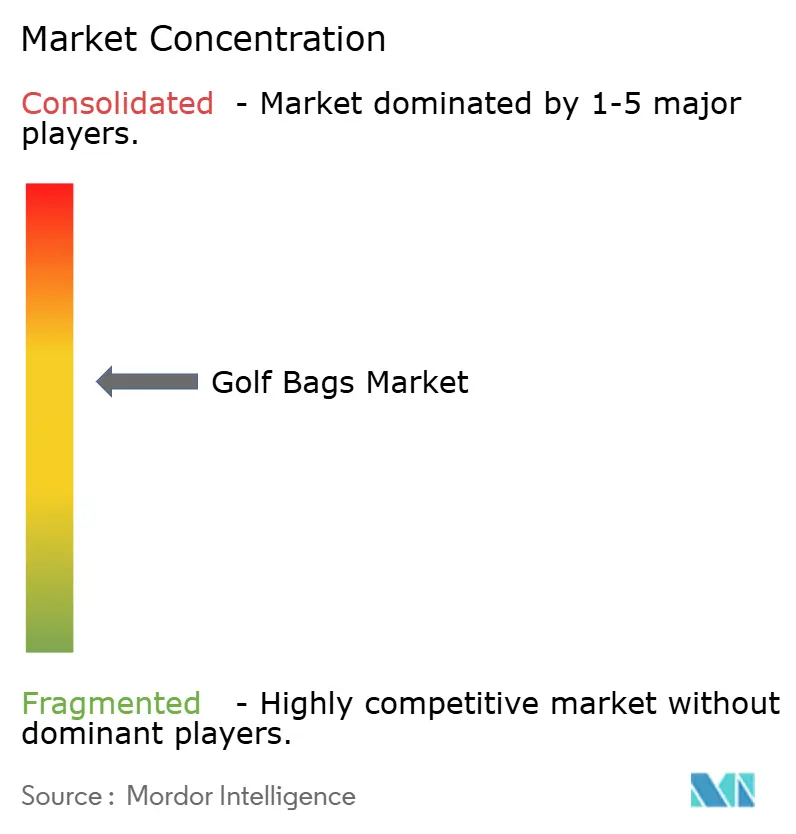
| Market Concentration | Medium |
Major Players *Disclaimer: Major Players sorted in no particular order Image © Mordor Intelligence. Reuse requires attribution under CC BY 4.0. | |
Golf Bags Market Analysis by Mordor Intelligence
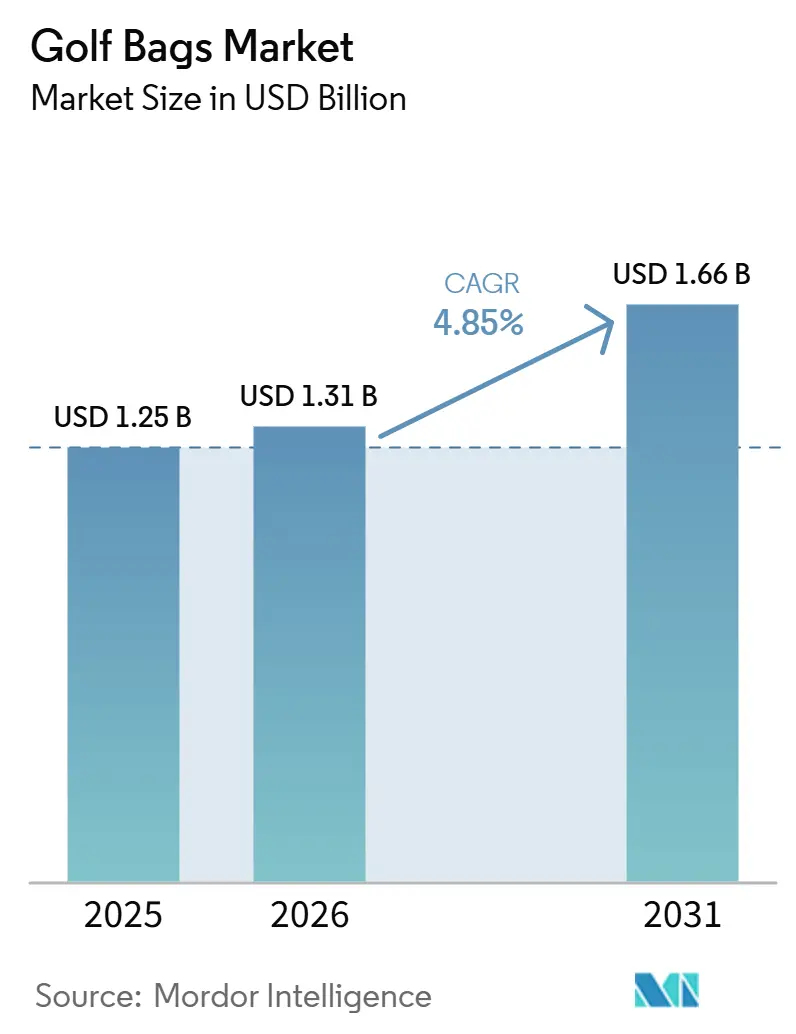
The golf bags market size was valued at USD 1.25 billion in 2025 and estimated to grow from USD 1.31 billion in 2026 to reach USD 1.66 billion by 2031, at a CAGR of 4.85% during the forecast period (2026-2031). The market is growing due to an expanding and increasingly diverse golfer base. Participation now extends beyond traditional on-course players to include off-course users, women, and a rising number of first-time entrants compared to earlier cycles. Many of these newer players are first-time buyers, driving demand beyond replacement purchases. The market is further supported by increased travel activity among golfers, with many purchasing bags for both regular play and travel, thereby raising the likelihood that households own multiple bags. Ongoing product design innovations are also narrowing the gap between premium and standard formats, making upgrades more justifiable and sustaining market activity across a wider range of price segments. Collectively, these factors support the continued expansion of the golf bags market.
Key Report Takeaways
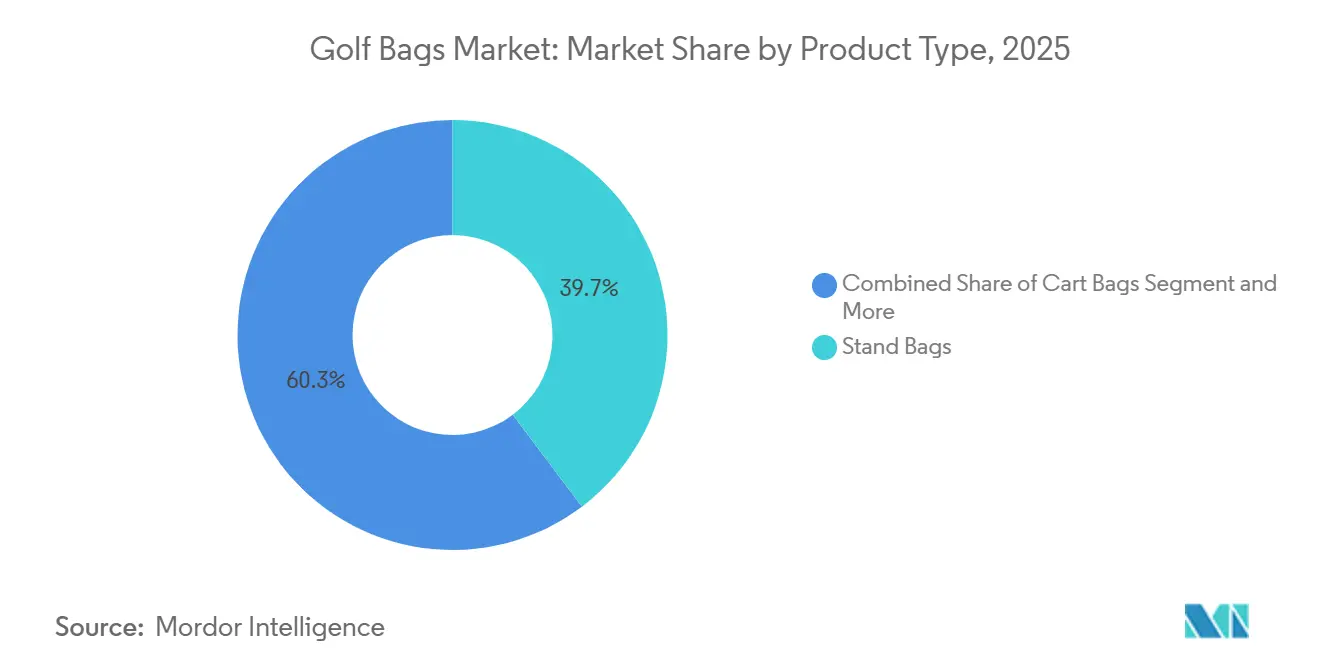
- By product type, stand bags held 39.72% of the golf bags market share in 2025; cart bags are projected to expand at a 5.91% CAGR through 2031.
- By material type, nylon accounted for 47.53% of the golf bag market in 2025, while polyester is set to grow at a 6.01% CAGR by 2031.
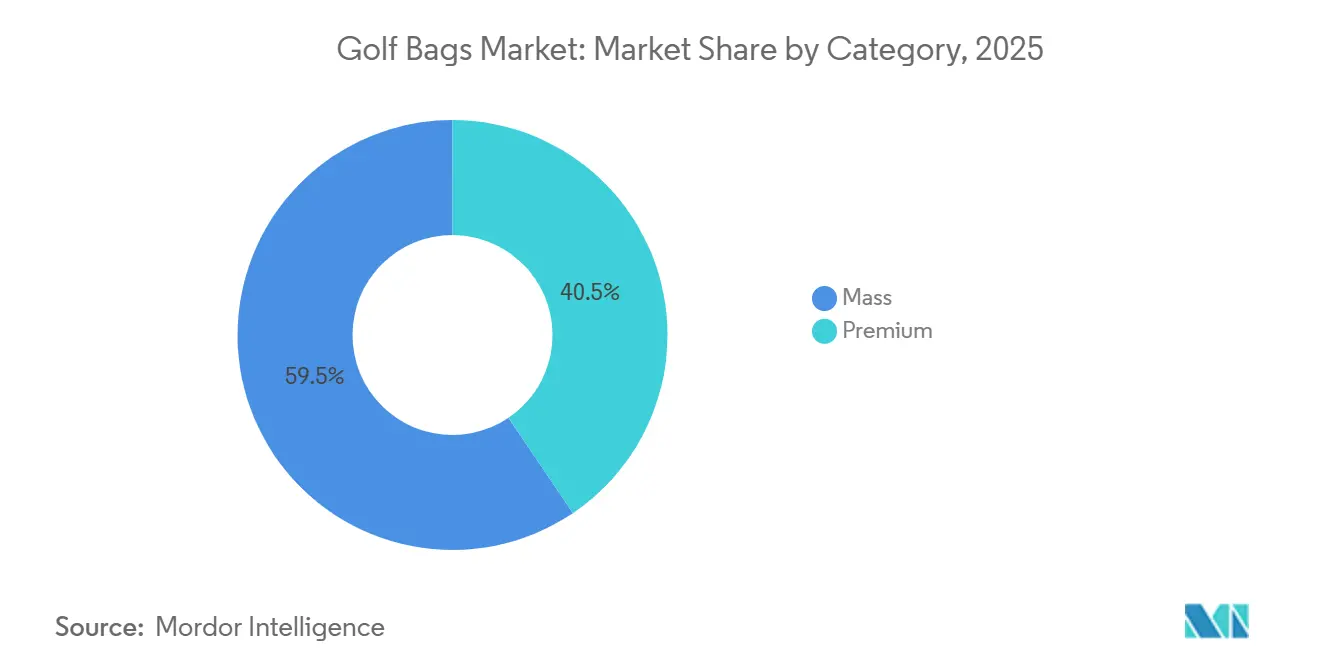
- By category, mass-market offerings accounted for a 59.46% share of the golf bags market in 2025; premium models are poised to grow at a 6.22% CAGR through 2031.
- By distribution channel, offline retail captured 65.59% of the golf bags market share in 2025, whereas online retail is forecast to advance at a 6.73% CAGR to 2031.
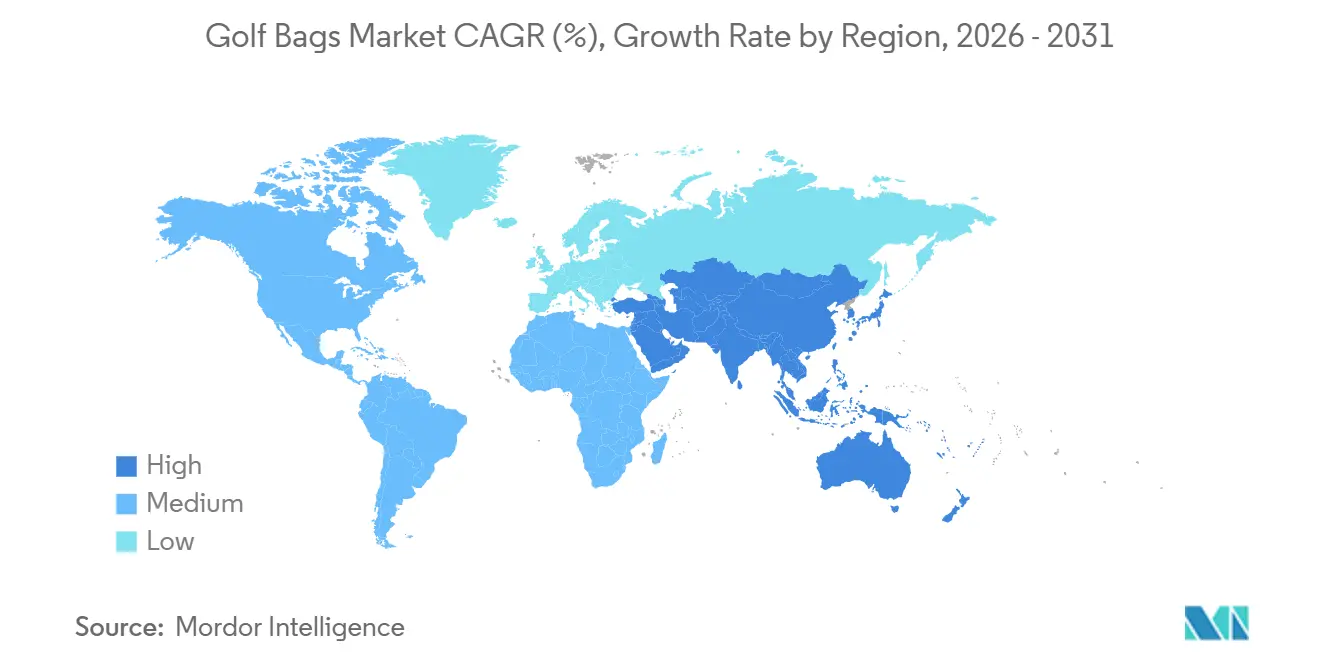
- By geography, North America led with 47.28% of the golf bags market share in 2025; Asia-Pacific represents the fastest-growing region and is projected to record a 6.68% CAGR through 2031.
Note: Market size and forecast figures in this report are generated using Mordor Intelligence’s proprietary estimation framework, updated with the latest available data and insights as of January 2026.
Market Trends and Insights
Drivers Impact Analysis of Golf Bags Market*
| Driver | (~) % Impact on CAGR Forecast | Geographic Relevance | Impact Timeline |
|---|---|---|---|
| Rising participation in golf | +1.4% | Global, with concentrated impact in North America and Asia-Pacific | Short term (≤ 2 years) |
| Growth in golf tourism and travel-ready equipment | +1.0% | North America and Europe core; spill-over to Asia-Pacific and Middle East and Africa | Medium term (2–4 years) |
| Advances in design and materials technology | +0.8% | Global, led by North America and Asia-Pacific manufacturing hubs | Medium term (2–4 years) |
| Expansion of golf courses and practice infrastructure | +0.5% | Asia-Pacific core, spill-over to Middle East and Africa and South America | Long term (≥ 4 years) |
| Sustainability-led materials and eco-friendly products | +0.4% | North America and Europe primary; early Asia-Pacific growth | Long term (≥ 4 years) |
| Customization demand from club fitting, branding, and team identity | +0.6% | North America and Europe primary; early Asia-Pacific growth | Long term (≥ 4 years) |
| Source: Mordor Intelligence | |||
Rising participation in golf
Rising participation in golf serves as a significant growth driver for the golf bags market. As reported by the National Golf Foundation (March 2026), the sport’s participant base has increased by 41% over the past six years (2019-2025), bringing it close to 50 million players for the first time[1]. Last year alone, over 48 million Americans played golf at traditional courses or off-course facilities that are making the game more accessible and engaging. With an average annual growth rate of 6% for past 6 years, the United States golf market is projected to exceed 50 million participants by the end of 2026[2]. This upward trend is fueled by expanded access to golf, the emergence of new facilities, and a growing awareness of the sport’s physical, mental, and social benefits, which continue to attract a broader and more diverse audience.
Growth in golf tourism and travel-ready equipment
According to National Golf Foundation (NGF) data published in April 2026, from 2022 through 2025, more than 12 million Americans traveled to play golf each year, with each of those four years recording either the highest or among the highest participation levels on record, reflecting increased consumer interest in experiential travel. The market has rebounded post-pandemic, generating more than USD 31 billion in travel-related expenditures in the United States and benefiting from new course openings at destinations such as Pinehurst and Bandon Dunes[3]. Rising airport travel numbers further indicate expanding demand for destination golf experiences. Additionally, growth in travel-ready golf equipment, focused on convenience and portability, has made it easier for golfers to take spontaneous and multi-day trips, supporting continued expansion in golf tourism.
Advances in design and materials technology
Advances in design and materials technology have contributed to growth in the golf bags market by enabling the production of lighter, more durable, and more functional bags. Innovations such as high-performance fabrics, water-resistant materials, and impact-resistant shells improve the overall quality and longevity of golf bags. Ergonomic design features, including padded straps, multiple compartments, and specialized storage solutions, enhance convenience and comfort during travel and on-course use. These improvements address the evolving needs of golfers by making it easier to carry equipment securely and efficiently. Continuous innovation in design and materials supports consumer interest and expands market opportunities within the golf bags segment.
Expansion of golf courses and practice infrastructure
The expansion and modernization of golf facilities continue to drive the golf bags market. According to the NGF's January 2026 industry overview, the United States has approximately 16,000 courses across nearly 14,000 facilities, with notable growth in recent years[4]. As of 2025, these facilities are spread across various states, supporting high usage rates and sustained demand for golf equipment. Facility utilization remains high as operators continue to develop and upgrade golf courses and practice areas. Infrastructure investments enhance the playing experience and encourage greater participation in the sport. This modernization trend directly supports the golf bags market by increasing demand for quality equipment tailored to a growing and diverse golfer base.
Restraints Impact Analysis of Golf Bags Market*
| Restraint | (~) % Impact on CAGR Forecast | Geographic Relevance | Impact Timeline |
|---|---|---|---|
| Counterfeit and grey-market bags eroding brand trust | -0.7% | Global; most acute in Asia-Pacific and via cross-border e-commerce platforms | Short term (≤ 2 years) |
| Competition from substitute leisure sports | -0.4% | Global, with highest intensity in North America and Western Europe | Medium term (2–4 years) |
| Increasing interest in virtual golfing | -0.5% | North America and Europe; early-stage in Asia-Pacific | Medium term (2–4 years) |
| High product durability limiting replacement cycles | -0.6% | Global; most acute in premium and mid-market segments | Long term (≥ 4 years) |
| Source: Mordor Intelligence | |||
Counterfeit and grey-market bags eroding brand trust
Counterfeit golf bags pose a significant concern in the broader market for fake golf products, affecting brand reputation and consumer trust. These counterfeit bags often imitate genuine designs but use inferior materials and construction, creating safety risks and causing customer dissatisfaction. Brands must protect these high-visibility products to maintain brand integrity and customer loyalty. In May 2026, the U.S. Golf Manufacturers Anti-Counterfeiting Working Group conducted four raids in China and seized more than 109,569 counterfeit clubs, components, tools, labels, headcovers, and other golf products bearing the trademarks of all Golf Group members. Authorities detained eleven suspects. This action follows additional police raids earlier in the year, bringing the total number of counterfeit golf products confiscated in 2026 to 214,780. The seized products included golf bags, clubs, and accessories, underscoring the ongoing threat of counterfeit products in the golf industry.
Competition from substitute leisure sports
Competition from substitute leisure sports presents a significant challenge to the golf bag market, as consumers increasingly explore alternative activities such as pickleball, disc golf, and outdoor fitness pursuits, which typically do not require specialized or expensive equipment. These emerging sports attract participants due to their lower costs, greater accessibility, and broader appeal among younger demographics seeking quick, social, and easy-to-learn recreational options. As a result, demand for traditional golf gear, including golf bags, may decline. Furthermore, the growing popularity of these alternative activities can shift consumer spending and leisure time away from golf and its associated products. This trend highlights the need for the golf industry to innovate and adapt to changing consumer preferences to maintain market relevance.
*Our forecasts treat driver/restraint impacts as directional, not additive. The impact forecasts reflect baseline growth, mix effects, and variable interactions.
Golf Bags Market Segment Analysis
By Product Type:
Stand Bags Anchor Volume, Cart Bags AcceleratingStand bags accounted for 39.72% of the golf bags market in 2025, driven by their alignment with the largest and fastest-growing participant cohort, recreational walking golfers who prioritize weight and portability over storage capacity. The post-pandemic normalization of on-course walking, combined with material innovations that have reduced premium stand bag weights to under 3 pounds, has reinforced stand bag dominance with no meaningful near-term threat from other formats.
Cart bags register the fastest product-type growth at a 5.91% CAGR through 2031, supported by an aging North American and European core golfer demographic that increasingly prefers motorized cart use, as well as the rising adoption of personal push-cart and electric caddy systems across Asia-Pacific markets. Staff/tour bags and other product types serve distinct but smaller niches: staff bags are primarily driven by pro tour branding cycles and team outfit programs, while travel bags represent a structurally growing sub-segment tied to the golf tourism surge, despite remaining a modest share of overall market.

By Material Type:
Nylon Holds Structural Lead, Polyester Closes the Innovation GapNylon held the largest material share, at 47.53%, in 2025, supported by years of proven performance in durability, water resistance, and weight efficiency, which have made it the default specification for mainstream and premium bag construction. Manufacturers are increasingly using ballistic and reinforced nylon grades while exploring emerging composite materials, including carbon fiber-reinforced polymer leg frames and structural biodegradable components. Although these innovations remain in the early stages of commercial application, they indicate the next cycle of material differentiation.
Polyester is the fastest-growing material segment at a 6.01% CAGR through 2031, driven by lower input costs that support price-competitive mass-market products in Asia-Pacific manufacturing chains, and by its compatibility with recycled fiber integration, which aligns with sustainability-oriented procurement among younger golfers. Recycled polyester now appears in an expanding range of golf bag constructions. Major equipment brands are establishing recycled synthetics as a viable performance material rather than a compromise specification.
By Category:
Mass Segment Holds Majority Position, Premium Conversion AcceleratingThe mass category accounted for 59.46% of the market value in 2025, primarily driven by recreational golfers worldwide. These consumers tend to prioritize functionality and price over brand prestige or advanced materials, making affordability a key factor in their purchasing decisions. This segment is particularly dominant in Asia-Pacific markets, where golf participation is growing at the entry level, and in price-sensitive regions such as South America and the Middle East. In these markets, golf is often viewed as an aspirational activity rather than an established leisure pursuit, reinforcing demand for accessible, value-driven products.
The premium category is growing at the fastest rate, with a CAGR of 6.22% projected through 2031. This growth is driven by the increasing influence of the custom-fitting ecosystem, which improves consumer experience and product personalization. The broader outdoor sports market is also shifting toward premiumization, as consumers seek higher-quality equipment that offers better performance and exclusivity. This reflects a shift in consumer preference toward more specialized, high-end golf products, even within a market traditionally dominated by mass-market offerings.
By Distribution Channel:
Offline Retail Remains Dominant, Digital Channels Reorder Competitive DynamicsOffline retail held the largest share of the golf bags market in 2025, accounting for 65.59%. Golfers often prefer to physically evaluate products, checking strap ergonomics, pocket configurations, and material feel, before making higher-priced purchases. Specialty golf retailers and pro shops maintain a competitive edge by offering personalized fitting assistance and same-day availability, which online channels cannot easily replicate. Competition among offline retailers is strongest in pro shops, where original equipment manufacturer brands benefit from established relationships with club professionals. Bag brands also use green-grass retail education programs and demo days to boost visibility and compete against larger incumbents with greater resources.
Online retail is the fastest-growing distribution channel, with a projected CAGR of 6.73% through 2031. This growth is driven by factors including user reviews, detailed specification comparisons, and direct-to-consumer (DTC) platforms that build trust among informed buyers. DTC brands continue to see increasing success as consumers favor direct engagement with manufacturers. The online channel also offers margin advantages by eliminating markdown pressure and enabling manufacturers to collect customer data for targeted lifecycle marketing.
Geography Analysis
North America Golf Bags Market
In 2025, North America commands a dominant 47.28% share of the global golf bags market. The region's robust brand loyalty and high discretionary spending bolster its premium purchases. Yet, a steep 187.6% tariff on golf bags from China is inflating landed costs, potentially nudging sourcing decisions towards Mexico or Southeast Asia. Retailers, wary of these tariff hikes, are stocking up in advance. However, if these tariffs persist, they might alter price sensitivity, risking a dip in consumer purchases due to potential price shocks.
Asia-Pacific Golf Bags Market
Asia-Pacific is on a rapid ascent, projected to grow at a 6.68% CAGR through 2031, fueled by a burgeoning middle class and a surge in golf course developments. As of May 2024, the Japan Golf Course Managers Association reported around 8.67 million golf participants in Japan. While Taiwan and mainland China boast regional OEM clusters that shorten production times and enable swift trend adaptations, geopolitical tensions pose a risk to the supply chain. Meanwhile, the success of women's golf is driving a surge in aspirational purchases, with local sponsorships turning televised wins into real equipment sales.
Europe Golf Bags Market
Europe sees steady growth, thanks in part to England's 2,423 golf courses, as highlighted by the National Golf Foundation (NGF) in 2023. Germany, with an annual addition of about 42,000 registered players, stands out as Europe's growth leader. Sustainability pushes brands to adopt recycled materials, especially those that can validate their carbon footprint and commitment to a circular economy. Prestigious courses in the UK, France, and Scandinavia not only draw golf tourists but also boost sales of destination-branded bags in their pro shops.
Competitive Landscape
The golf bags market is moderately consolidated, with a diverse mix of established equipment manufacturers, specialist bag brands, and newer direct-to-consumer (DTC) players competing across overlapping price segments. No single player dominates the entire category, as the market spans various product types, materials, channels, and regional markets. Major brands such as Acushnet Holdings Corp. (Titleist), Callaway Golf Company, PING, Inc., TaylorMade Golf Company, and Sun Mountain Sports benefit from long-standing trust built through their golf clubs, balls, and equipment, which supports their bag sales. Specialist brands like VESSEL, Club Glove, Jones Sports, and BIG MAX compete by focusing on design innovation, weight reduction, organization, and format, keeping the competitive landscape active.
Leading players are refining their product lines and strategic positioning. Acushnet Holdings Corp. (Titleist) launched new premium stand bags in March 2025, featuring redesigned leg systems, advanced materials, and waterproof options to strengthen its premium carry lineup. Callaway Golf Company shifted its strategic focus by selling a majority stake in Topgolf in January 2026, aiming to streamline its core golf equipment business and invest further in clubs, balls, bags, and the OGIO brand. PING, Inc. expanded its product offerings in 2025 as well by introducing lightweight bags to appeal to a broader audience. TaylorMade Golf Company focused on integrating premium materials into its latest bag collections in June 2026. Sun Mountain Sports continued expanding its range of high-performance, durable bags tailored for serious golfers as of June 2026. Across these players, product innovation, ecosystem expansion, and strategic focus are central to maintaining competitive advantage.
Emerging players are identifying niche opportunities by addressing gaps in sustainability, technology integration, and demographic-specific designs. Growth potential exists in sustainable materials, particularly at accessible price points, as consumer expectations shift toward eco-friendly products. Technology integration remains uneven, with high-end models adopting smart features more rapidly than mainstream options. Women-specific designs represent another area of opportunity, as many brands rely on cosmetic updates, superficial styling changes that do not enhance ergonomics or functionality, rather than substantive ergonomic and organizational improvements, despite a growing female golf participation base. Established players such as Sun Mountain Sports, Titleist, Callaway, PING, and TaylorMade hold advantages in brand protection, as anti-counterfeit measures are more effective when coordinated among major players, helping to safeguard premium segments amid ongoing market fragmentation.
Golf Bags Industry Leaders
-
Sun Mountain Sports
-
Acushnet Holdings Corp.
-
Callaway Golf Company
-
PING, Inc.
-
TaylorMade Golf Company
- *Disclaimer: Major Players sorted in no particular order
Golf Bags Market Companies Covered in this Report
- Sun Mountain Sports
- Acushnet Company (Titleist)
- Callaway Golf Company
- TaylorMade Golf Company
- Mizuno Corporation
- Cobra Golf
- Bridgestone Golf
- Wilson Sporting Goods
- OGIO International
- Club Glove
- VESSEL FWP LLC
- Jones Sports Co.
- BIG MAX Golf
- Bag Boy
- MGI Golf AUS
- Srixon/Cleveland Golf
- Nike, Inc.
- Tour Edge
- Parsons Xtreme Golf, LLC
- MNML Golf
- PING
Recent Industry Developments in Golf Bags Market
- April 2026: Sun Mountain Sports, in collaboration with Realtree, announced the launch of its limited edition Major Collection, featuring two products: the Matchplay 4-Way Stand Bag and the ClubGlider Meridian Travel Bag. The Matchplay 4-Way Stand Bag features a Realtree camo design with eight purpose-built pockets, including an apparel pocket, valuables pocket, and insulated cooler pouch, and four full-length dividers for club organization. Built with ballistic nylon and equipped with the X-Fit Dual Strap System, this bag retails at USD 435. The ClubGlider Meridian Travel Bag, priced at USD 450, is designed for travel with a patented kickstand, reinforced ballistic-style construction, and heavy-duty two-way zippers. Both products are available for a limited time through select retailers.
- April 2026: TaylorMade launched its 2026 Season Opener Collection, featuring a range of accessories tied to golf's most recognized tournament. The centerpiece is a limited-edition TaylorMade Staff Bag in an emerald green and white color palette with gold hardware. The bag includes azalea embroidery on the side panels, referencing the tournament's floral emblem, along with a detachable numbered patch representing the tournament's edition this year.
- February 2026: Titleist announced the launch of its latest Players S Stand Bags lineup, featuring a comprehensive redesign based on golfer testing and insights. The new models, Players S4, Players S4 StaDry, and Players S5, offer improved durability, lightweight performance, and enhanced organization. Key features include redesigned stand systems for reliable leg deployment and stability, new top cuff designs for easier club access, and upgraded materials with greater UV and water resistance. The Players S4 and S4 StaDry models feature a lightweight construction, with the StaDry version offering seam-sealed waterproof protection suited for damp conditions. The Players S5 offers greater storage capacity with a 5-way top cuff and additional pockets. All models include double straps, full-length dividers, magnetic tee pockets, and YKK zippers. These stand bags are now available worldwide.
Global Golf Bags Market Report Scope
Golf bags are specialized carrying equipment designed to store, organize, and transport golf clubs, balls, apparel, accessories, and other golfing essentials during play or travel. The Golf Bags Market is segmented by product type, material type, category, distribution channel, and geography. Based on product type, the market is segmented into stand bags, cart bags, staff/tour bags, and other product types. Based on material type, the market is segmented into nylon, polyester, leather, and other material types. Based on category, the market is segmented into mass and premium. Based on distribution channel, the market is segmented into offline retail and online retail. Based on geography, the market is segmented into North America, Europe, Asia-Pacific, South America, and the Middle East and Africa. For each segment, the market sizing and forecast have been done based on value (in USD).
Segmentation Overview
| Stand Bags |
| Cart Bags |
| Staff/Tour Bags |
| Other Product Types |
| Nylon |
| Polyester |
| Leather |
| Other Material Types |
| Mass |
| Premium |
| Offline Retail |
| Online Retail |
| North America | United States |
| Canada | |
| Mexico | |
| Rest of North America | |
| Europe | Germany |
| United Kingdom | |
| Italy | |
| France | |
| Spain | |
| Netherlands | |
| Poland | |
| Belgium | |
| Sweden | |
| Rest of Europe | |
| Asia-Pacific | China |
| India | |
| Japan | |
| Australia | |
| Indonesia | |
| South Korea | |
| Thailand | |
| Singapore | |
| Rest of Asia-Pacific | |
| South America | Brazil |
| Argentina | |
| Colombia | |
| Chile | |
| Peru | |
| Rest of South America | |
| Middle East and Africa | South Africa |
| Saudi Arabia | |
| United Arab Emirates | |
| Nigeria | |
| Egypt | |
| Morocco | |
| Turkey | |
| Rest of Middle East and Africa |
| By Product Type | Stand Bags | |
| Cart Bags | ||
| Staff/Tour Bags | ||
| Other Product Types | ||
| By Material Type | Nylon | |
| Polyester | ||
| Leather | ||
| Other Material Types | ||
| By Category | Mass | |
| Premium | ||
| By Distribution Channel | Offline Retail | |
| Online Retail | ||
| By Geography | North America | United States |
| Canada | ||
| Mexico | ||
| Rest of North America | ||
| Europe | Germany | |
| United Kingdom | ||
| Italy | ||
| France | ||
| Spain | ||
| Netherlands | ||
| Poland | ||
| Belgium | ||
| Sweden | ||
| Rest of Europe | ||
| Asia-Pacific | China | |
| India | ||
| Japan | ||
| Australia | ||
| Indonesia | ||
| South Korea | ||
| Thailand | ||
| Singapore | ||
| Rest of Asia-Pacific | ||
| South America | Brazil | |
| Argentina | ||
| Colombia | ||
| Chile | ||
| Peru | ||
| Rest of South America | ||
| Middle East and Africa | South Africa | |
| Saudi Arabia | ||
| United Arab Emirates | ||
| Nigeria | ||
| Egypt | ||
| Morocco | ||
| Turkey | ||
| Rest of Middle East and Africa | ||
Key Questions Answered in the Report
What is the current size of the golf bags business and where is it heading by 2031?
The golf bags market was valued at USD 1.25 billion in 2025, reached USD 1.31 billion in 2026, and is forecast to reach USD 1.66 billion by 2031 at a 4.85% CAGR.
Which product type leads demand in golf bags?
Stand bags led in 2025 with 39.72% share because they fit recreational and walking golfers who want portability and lighter carry weight.
Which sales channel is growing the fastest for golf bags?
Online retail is growing the fastest at a 6.73% CAGR through 2031, although offline retail still held the larger 65.59% share in 2025.
Why is the premium side of golf bags growing faster than the mass segment?
Premium bags are benefiting from stronger upgrade demand, brand-led purchases, and buyers who see the bag as part of a broader equipment identity, lifting premium CAGR to 6.22%.