
Kefir Market Size and Share
Market Overview
| Study Period | 2021 - 2031 |
|---|---|
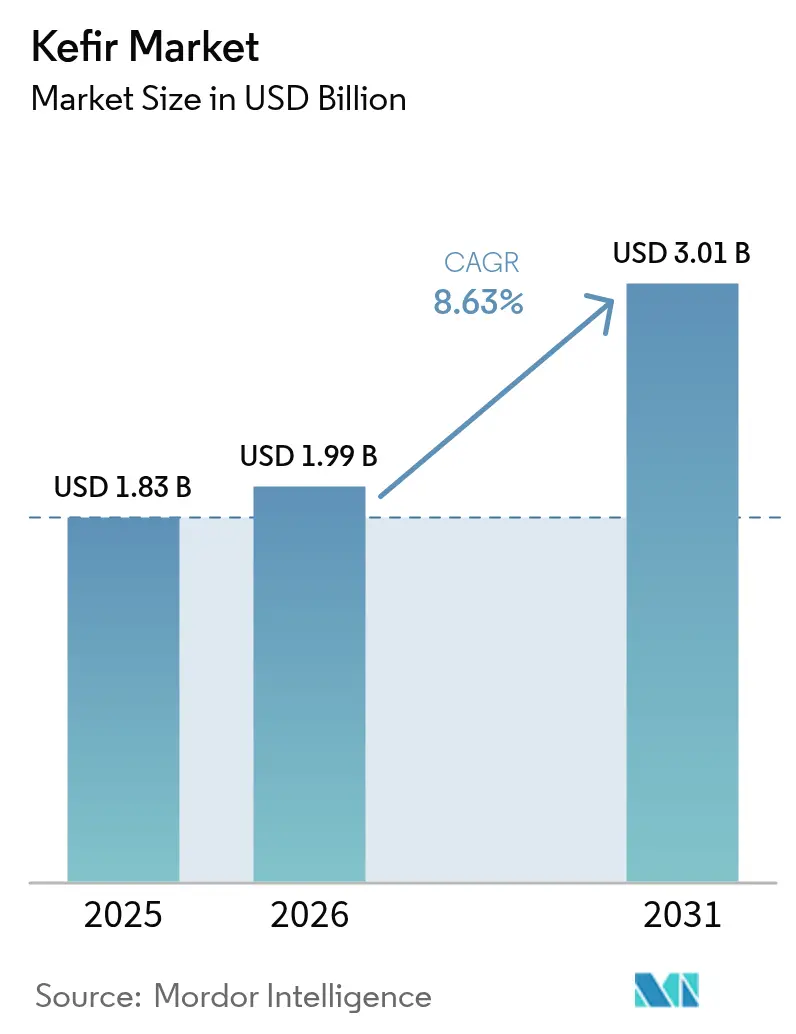
| Market Size (2026) | USD 1.99 Billion |
| Market Size (2031) | USD 3.01 Billion |
| Growth Rate (2026 - 2031) | 8.63 % |
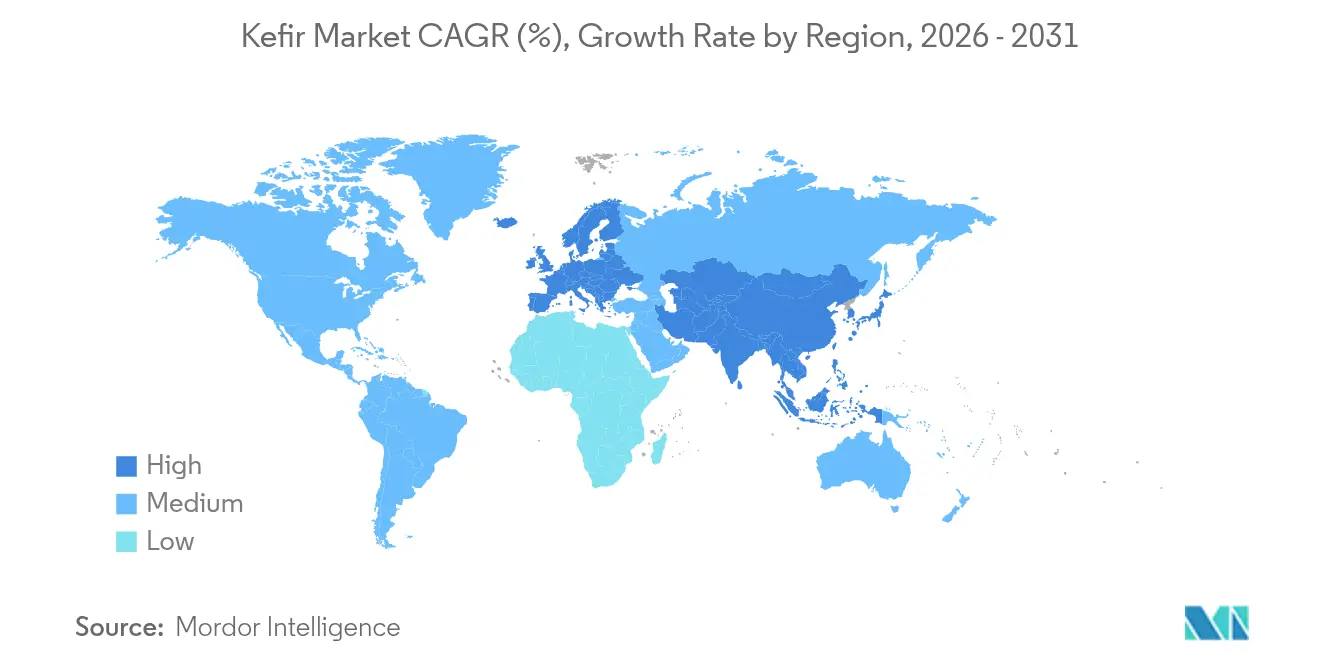
| Fastest Growing Market | Asia Pacific |
| Largest Market | Europe |
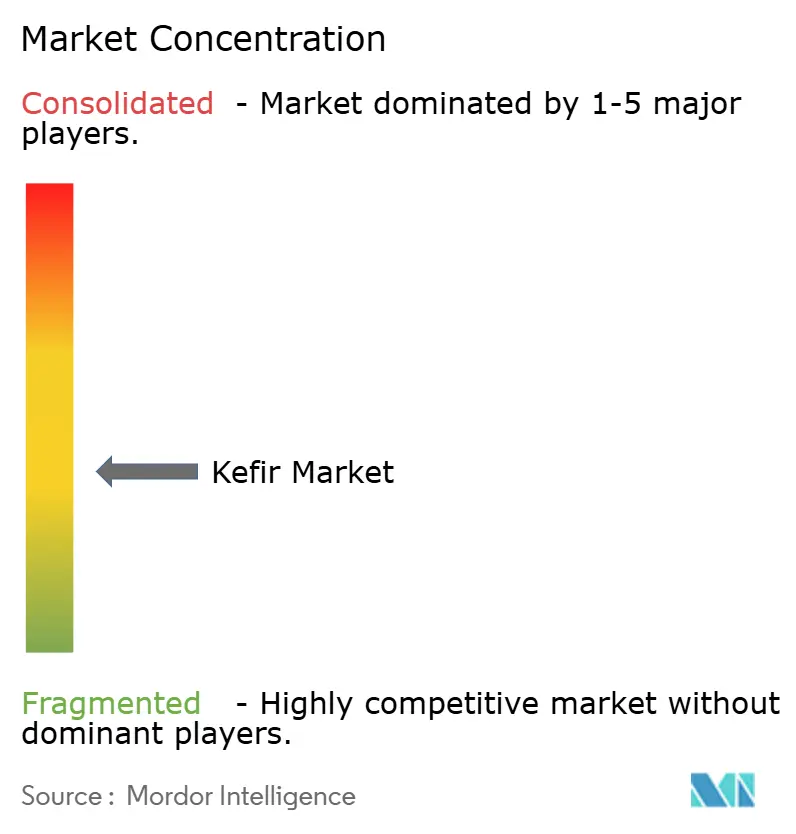
| Market Concentration | Medium |
Major Players *Disclaimer: Major Players sorted in no particular order Image © Mordor Intelligence. Reuse requires attribution under CC BY 4.0. | |
Kefir Market Analysis by Mordor Intelligence
The kefir market size was valued at USD 1.83 billion in 2025 and estimated to grow from USD 1.99 billion in 2026 to reach USD 3.01 billion by 2031, at a CAGR of 8.63% during the forecast period (2026-2031). Rising clinical evidence supporting kefir’s superior gut-health benefits over many commercial probiotic supplements continues to shift consumer preference toward naturally fermented products, while the United States Food and Drug Administration’s 2024 qualified health-claim decision for yogurt has created a halo effect across the wider fermented dairy aisle, including kefir[1]. Europe retains the highest regional demand, supported by long-standing consumption habits and a favorable regulatory climate, whereas Asia-Pacific is expanding fastest on the back of rapid urbanization and increasing awareness of digestive wellness. Conventional formulations dominate volume sales, yet premium organic, flavored, and plant-based variants capture consumers seeking clean-label, low-sugar, and lactose-free options, driving above-average growth in these sub-segments. Within distribution, supermarkets remain pivotal, but cafés and wellness-focused food service outlets are redefining trial exposure and brand storytelling through experiential formats.
Key Report Takeaways
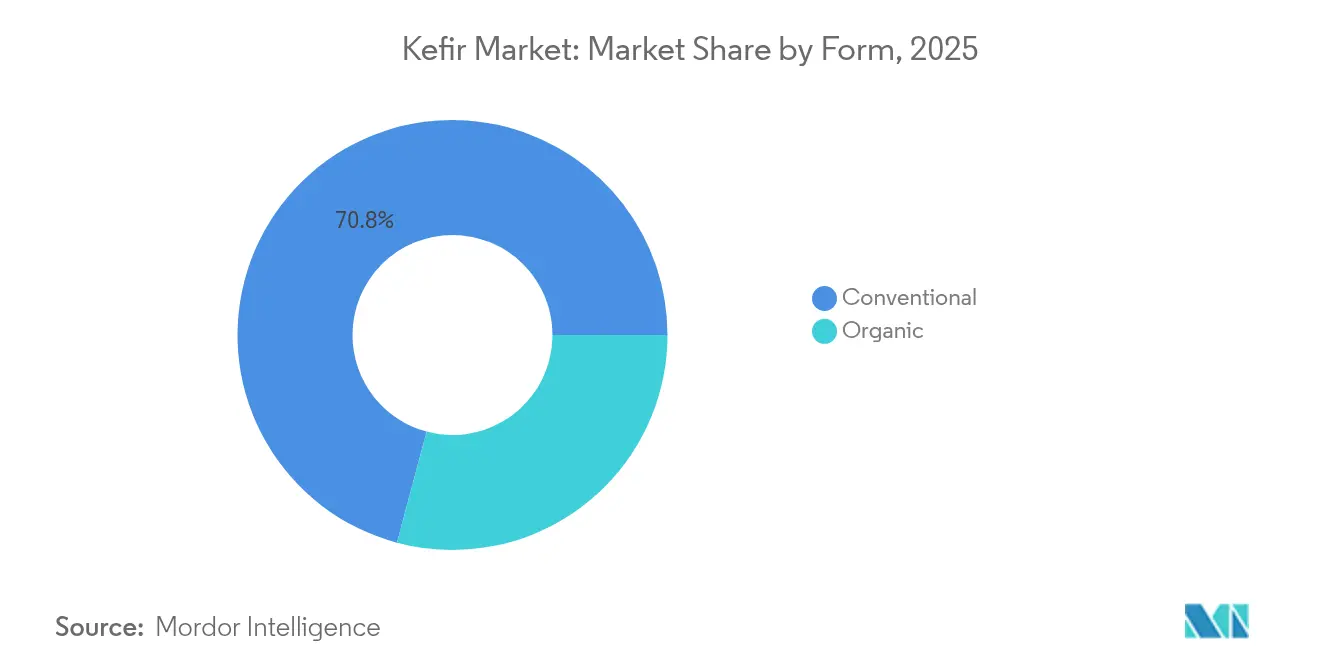
- By form, conventional products held 70.84% of the kefir market share in 2025, while organic variants are projected to climb at a 10.54% CAGR through 2031.
- By flavor, flavored offerings led with 63.45% revenue share in 2025; non-flavored kefir is forecast to expand at a 9.69% CAGR.
- By product type, milk kefir captured 79.72% of the kefir market size in 2025; water kefir is poised for the fastest 10.18% CAGR.
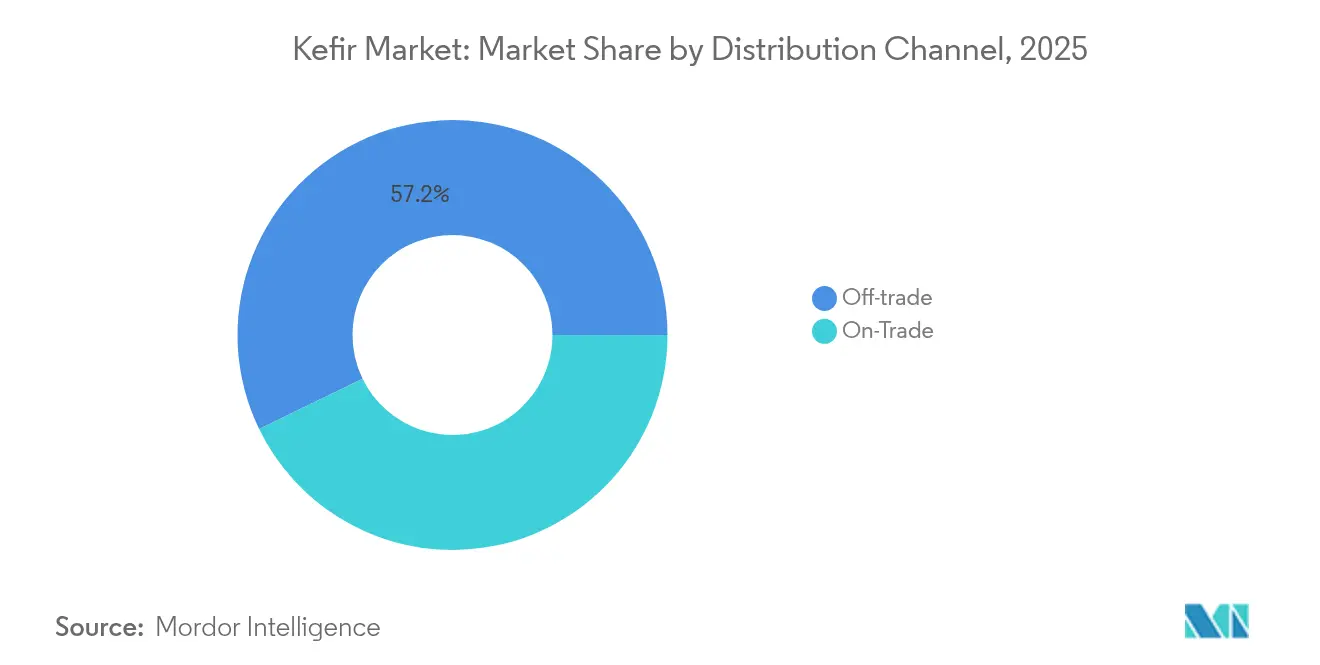
- By distribution channel, off-trade accounted for 57.20% of sales in 2025, whereas on-trade is advancing at a 10.39% CAGR to 2031.
- By packaging, bottles dominated with a 61.63% share in 2025; pouches are projected to register a 10.64% CAGR.
- By geography, Europe led with a 30.92% share in 2025, while Asia-Pacific is anticipated to post an 9.66% CAGR during 2026-2031.
Note: Market size and forecast figures in this report are generated using Mordor Intelligence’s proprietary estimation framework, updated with the latest available data and insights as of 2026.
Global Kefir Market Trends and Insights
Drivers Impact Analysis*
| Driver | (~) % Impact on CAGR Forecast | Geographic Relevance | Impact Timeline |
|---|---|---|---|
| Rising consumer focus on gut health boosts kefir demand | +1.8% | Global, strongest in North America and Europe | Medium term (2-4 years) |
| Growing popularity of probiotic-rich functional foods | +2.1% | Global, especially Asia-Pacific | Long term (≥4 years) |
| Innovation in flavors of kefir attracts wider demographics | +1.2% | North America and Europe, spreading to Asia-Pacific | Short term (≤2 years) |
| Celebrity and influencer endorsements enhance kefir’s image | +0.9% | North America and Europe | Short term (≤2 years) |
| Demand for clean-label, minimally processed beverages | +1.4% | Global, premium segments | Medium term (2-4 years) |
| Incorporation of kefir in weight-management and detox diets | +1.0% | North America and Europe | Medium term (2-4 years) |
| Source: Mordor Intelligence | |||
Rising Consumer Focus on Gut Health Boosts Kefir Demand
Dairy kefir contains a diverse range of beneficial microorganisms and bioactive compounds that improve gut microbiota composition and digestive health more effectively than probiotic yogurt and inulin-rich diets. The fermented dairy product's proven effectiveness in managing type 2 diabetes and cardiovascular diseases has increased its consumption among older consumers. Companies have successfully educated consumers about these health benefits through marketing campaigns and product labeling, which has driven market demand. Growing awareness of gut health benefits and digestive wellness among younger consumers has also expanded the market for premium kefir products, including organic and flavored variants.
Growing Popularity of Probiotic-Rich Functional Foods
The growing consumer awareness of probiotics and increased adoption of functional foods are expanding market opportunities, especially in plant-based probiotic products. The Food and Agriculture Organization's (FAO) proposed global probiotic guidelines, covering more than 200 countries, aim to standardize quality requirements and enhance international trade [2]. Advancements in manufacturing processes, including improved strain selection and fermentation techniques, enable producers to maintain probiotic counts above 20 billion CFUs per serving, which is higher than traditional yogurt products. Kefir's positioning as a functional food allows for premium pricing while addressing health benefits, including digestive health and immune system support.
Innovation In Flavors of Kefir Attracts Wider Demographics
The kefir market is expanding through flavor diversification and product innovations, driven by increasing consumer demand for functional beverages and probiotic-rich foods. Manufacturers are investing in research and development to create unique formulations that combine traditional fermentation methods with modern flavor preferences. This expansion reflects broader industry trends toward healthier beverage options and personalized nutrition. In November 2024, Lifeway Foods introduced 10 new organic kefir flavors, including Pink Dragon Fruit, Passionfruit Lychee, and Matcha Latte, targeting younger consumers while retaining the product's probiotic properties. These new flavors combine traditional fermented milk with exotic fruit extracts and natural ingredients to create unique taste profiles that appeal to health-conscious consumers. The market growth extends to water kefir products made from plant-based ingredients such as chickpea, almond, and rice, addressing the needs of lactose-intolerant and vegan consumers.
Celebrity and Influencer Endorsements Boost Kefir’s Image
Social media promotion of kefir's health benefits through influencer endorsements is increasing consumer adoption, especially among millennials and Gen Z who value wellness products recommended by trusted personalities. The traditional story of kefir's health benefits in the Caucasus region provides authentic content that spreads naturally across digital platforms. Wellness influencers effectively promote kefir's benefits for gut and skin health, leading companies like Biotiful to develop kefir-based skincare products. Influencer content now includes recipes and lifestyle integration, showing kefir's uses in smoothies, marinades, and baking. Consumers value authentic endorsements from influencers who regularly use kefir products rather than one-time promotional posts. Social media's reach allows smaller kefir brands to gain market share through targeted influencer partnerships that encourage product trials and repeat purchases.
Restraints Impact Analysis*
| Restraint | (~) % Impact on CAGR Forecast | Geographic Relevance | Impact Timeline |
|---|---|---|---|
| Competition from kombucha and yogurt-based beverages | -1.5% | Global, notably North America | Medium term (2-4 years) |
| Higher cost compared to regular dairy products | -1.2% | Emerging, price-sensitive markets | Long term (≥4 years) |
| High added-sugar perception among health-conscious consumers | -0.8% | Developed markets | Short term (≤2 years) |
| Limited shelf-life for water-kefir in tropical regions | -0.6% | Southeast Asia and Africa | Medium term (2-4 years) |
| Source: Mordor Intelligence | |||
Competition From Kombucha and Yogurt-Based Beverages
The competitive landscape shows kombucha gaining market share as a non-dairy probiotic beverage appealing to younger consumers, while yogurt-based drinks maintain their position through established consumer preferences and production efficiencies. In the online retail segment, kefir faces strong competition from kombucha brands that demonstrate stronger digital marketing and subscription-based sales models. As consumers find it challenging to differentiate between probiotic claims across products, kefir manufacturers must increase investment in consumer education and scientific validation to maintain premium pricing. The market competition now includes new product categories, such as Wonder Veggies' planned launch of probiotic fresh produce, which may lead to further market segmentation. To maintain market position, kefir producers must highlight their core advantages, including diverse probiotic strains and traditional fermentation processes, while developing new products that incorporate popular flavors from other beverage categories.
Higher Cost Compared to Regular Dairy Products
The production costs of kefir are high due to its specialized fermentation processes and probiotic strains, which restrict its accessibility to price-sensitive consumers. These processes require specific temperature controls, precise fermentation timing, and carefully selected bacterial cultures, making production more complex and expensive. The rising costs in the dairy industry, where milk prices exceed production costs, compound this issue. During economic downturns, consumers typically opt for basic dairy products instead of functional beverages like kefir, especially in emerging markets where product awareness is increasing but disposable income remains constrained. The small-scale production nature of kefir and its cold-chain distribution requirements, including temperature-controlled storage and transportation facilities, result in higher retail prices compared to conventional dairy products. Additionally, the short shelf life of kefir necessitates frequent production cycles and rapid distribution, further increasing operational costs.
*Our forecasts treat driver/restraint impacts as directional, not additive. The impact forecasts reflect baseline growth, mix effects, and variable interactions.
Segment Analysis
By Form: Organic Line Momentum Outpaces Conventional Scale
Conventional kefir products held 70.84% of the market share in 2025, while the organic kefir segment is expected to grow at a CAGR of 10.54% through 2031, driven by increasing consumer preference for clean-label and premium products. While conventional kefir continues to benefit from well-established supply chains and mainstream consumer promotions, it faces growth challenges as health-conscious buyers increasingly choose organic alternatives. Manufacturers have invested in improving their fermentation control methods to maintain consistent probiotic content without using synthetic stabilizers, a key requirement for organic certification. Several companies have found a middle ground by incorporating organic milk into standard processing methods, helping them manage costs while maintaining market credibility.
The evolving market landscape requires companies to build strong organic supply chain capabilities and develop certification expertise to remain competitive. Forward-thinking organic producers are distinguishing themselves by implementing automated milking systems and renewable energy solutions at the farm level, while adding value through non-GMO feed and grass-fed certifications. In response, conventional manufacturers are maintaining their market position by developing fortified product lines enriched with vitamin D, calcium, and collagen, particularly appealing to price-sensitive consumer segments.

By Flavor: Diversified Portfolios Extend Consumer Reach
The kefir market shows a clear consumer preference for flavored options, which currently command a 63.45% market share in 2025. This dominance reflects successful efforts by manufacturers to diversify their product offerings and make kefir more appealing to mainstream consumers. Meanwhile, non-flavored variants are experiencing notable growth, with a projected 9.69% CAGR through 2031, as consumers increasingly seek pure, minimally processed options. Lifeway's launch of 10 organic flavors, including innovative combinations like Taro Ube Latte and Pistachio Rose Vanilla, demonstrates how companies are actively responding to diverse consumer preferences, while non-flavored kefir continues to attract health-focused consumers who value its versatility in smoothies and cooking applications.
Market analysis reveals distinct regional patterns in flavor preferences, with tropical and Asian-inspired varieties performing particularly well in culturally diverse markets, while traditional berry and vanilla options maintain their appeal in established markets. Companies are responding to health-conscious consumer demands by developing reduced-sugar formulations that incorporate natural sweetening alternatives, ensuring that taste quality remains high while maintaining the product's probiotic benefits.
By Product Type: Water Kefir Disrupts Dairy Dominance
The kefir market continues to be dominated by traditional milk-based products, which account for 79.72% of market share in 2025. This dominance stems from widespread consumer acceptance and the product's well-documented probiotic benefits. Meanwhile, water kefir is emerging as a significant market player, with projections showing a robust CAGR of 10.18% through 2031, as consumers increasingly seek dairy-free alternatives to accommodate their dietary preferences and restrictions.
Recent technological breakthroughs in plant-based fermentation have enabled manufacturers to develop water kefir using chickpea, almond, and rice extracts. These alternatives now offer probiotic benefits comparable to traditional dairy-based versions. However, manufacturers must navigate several production hurdles, including product stability issues in tropical climates and the requirement for specialized knowledge in managing complex microbial cultures during the manufacturing process.
By Distribution Channel: Retail Remains Core While Foodservice Adds Experiential Value
Off-trade retailers, including supermarkets, hypermarkets, and convenience stores, account for 57.20% of the 2025 revenue through their established cold-chain logistics and high customer traffic. Multi-serve bottles are the primary packaging format in these outlets, with regular promotions driving household adoption. On-trade venues, particularly cafés and smoothie bars, are growing at a 10.39% CAGR as consumers experience kefir through blended beverages and breakfast bowls. This format enables potential customers to sample kefir before purchasing full bottles.
Manufacturers develop specific formulations for on-trade venues by modifying the product's viscosity and sweetness to enhance mixing capabilities. In the off-trade segment, direct-to-consumer online subscriptions maintain market share by offering convenient replenishment options, package deals, and collecting customer data for targeted marketing. The distribution across multiple channels helps stabilize the kefir market against variations in individual retail formats.
By Packaging Type: Bottles Retain Familiarity as Flexible Formats Gain Sustainability Kudos
Bottles held 61.63% share in 2025, valued for rigidity, shelf presence and a perceived premium feel. Glass versions, often reusable or returnable, win eco-minded consumers but add freight weight. Pouches, however, will register a 10.64% CAGR through 2031, propelled by lower material use and convenient, squeezable designs appropriate for on-the-go consumption. The kefir market size for pouch formats escalates as retailers devote more ambient floor-stand space to flexible packaging.
Aseptic technology allows both bottle and pouch SKUs to reach distant markets without strict refrigeration, albeit at the risk of eroding “freshly fermented” positioning. Smart labels that visualize probiotic viability are being piloted, strengthening consumer confidence and reducing wastage. Over the medium term, improvements in monomaterial recyclability promise to reconcile environmental and functional demands, positioning pouches as credible alternatives to traditional bottles
Geography Analysis
European consumers have embraced kefir products, giving the region a commanding 30.92% share of global consumption in 2025. This strong market position stems from generations of familiarity with fermented dairy products, supported by well-established distribution networks across Germany, United Kingdom, and France. Major food companies like Danone are capitalizing on this cultural acceptance by expanding their kefir offerings through new Activia product lines. While the region benefits from comprehensive regulatory frameworks that uphold probiotic health claims and quality standards, the varying interpretations of probiotic terminology and marketing regulations among Eurpean Union member states continue to present operational challenges .
Consumer behavior in Asia-Pacific is rapidly evolving, driving an impressive 9.66% CAGR through 2031 in the kefir market. The region's transformation is particularly evident in Japan, where consumers are increasingly choosing lactic acid beverages over traditional vegetable juices. This shift reflects broader regional trends of urbanization, rising disposable incomes, and growing health consciousness, making Asia-Pacific the most dynamic market for functional food products.
North America maintains its market strength through companies like Lifeway Foods, which dominates the United States kefir category. The region's innovation-friendly regulatory environment, featuring FDA qualified health claims and GRAS approvals for probiotic strains, continues to support product development. Meanwhile, the Middle East and Africa and South America show promise as emerging markets, driven by expanding middle-class populations and increasing health awareness. However, success in these regions requires carefully balanced strategies that address both infrastructure limitations and price sensitivity while maintaining product quality.
Regulatory Landscape
Global kefir regulation is anchored by the Codex Alimentarius Standard for Fermented Milks (CXS 243-2003), which was amended in December 2024 (including updates around food additive provisions) and is used as a reference point for product identity, permitted ingredients, and compositional compliance across many markets. In the United States, kefir formulation and strain use frequently route through the FDA framework for microbial ingredients, including GRAS notice pathways for certain cultures, while the FDA's 2024 qualified health-claim decision for yogurt has increased scrutiny and discipline around how fermented dairy benefits are communicated in adjacent categories such as kefir.
National and regional definitions create practical labeling and formulation constraints. China implemented GB 19302-2025 (National Food Safety Standard for fermented milk), tightening requirements such as inoculation and minimum milk solids, which affects how imported and locally produced kefir is standardized for mass retail. In Turkey, the Turkish Food Codex Fermented Milk Products Communique (No. 2022/44) sets microorganism expectations for kefir, including specified Lactobacillus species alongside yeasts, while Thailand's Ministry of Public Health notification for fermented milk similarly shapes allowable claims and product identity. In the EU, Regulation (EU) No 1308/2013 limits the sales denomination of dairy terms, creating friction for water kefir and other non-dairy products that must adopt compliant naming to stay on shelf.
Value Chain Analysis
The kefir value chain starts with dairy (primarily Grade A milk) or plant-based substrates for water kefir, followed by fermentation inputs (kefir grains or defined starter cultures), processing, packaging, and temperature-controlled distribution into off-trade retail and on-trade foodservice. Culture selection and fermentation control are central value-add steps because industrial lines must balance speed and consistency with maintaining microbial diversity and sensory profile. This is also where manufacturers differentiate by probiotic positioning and formulation, including lactose-free and organic lines.
Cold-chain logistics remains a key enabling layer for most milk kefir, as safety and shelf-life depend on hygienic filling and stable refrigerated handling. Downstream access is heavily influenced by retailer listings and consolidated distribution partners, which can scale successful SKUs quickly. Lifeway Foods highlighted this dynamic through broad 2025 retail placement expansion across major US chains, and it also pursued international distribution routes by shipping kefir products into the United Arab Emirates through supermarket and hypermarket channels. On the supplier and manufacturing side, the chain increasingly includes specialized culture houses, packaging suppliers for bottles and emerging pouches, and quality systems aligned to Codex definitions of fermented milks, with association-led benchmarks shaping expectations in some markets. Consolidation is also reshaping capabilities and bargaining power, shown by Muller UK and Ireland acquiring UK kefir producer Biotiful Gut Health in April 2025 to deepen functional dairy scale and portfolio breadth.
Competitive Landscape
The market demonstrates moderate fragmentation, with a balanced mix of global dairy companies and specialized fermented food producers working to capture consumer attention. Companies set themselves apart by investing in scientific validation of their bacterial strains, developing eco-friendly packaging, and creating new flavor profiles. Small and medium-sized producers maintain their market position through quick product development cycles and strong customer relationships, while larger firms leverage their resources for advanced technologies in fermentation, ingredient protection, and quality assurance.
The industry is moving toward consolidation as major dairy companies look to strengthen their presence in the kefir market, especially in Asia-Pacific. The market offers untapped potential in dairy-free alternatives and innovative product applications such as kefir-infused dressings and snack bars. Success increasingly depends on a company's ability to translate complex health benefits into clear, relatable messages that resonate across different cultural markets.
The growing influence of retailers and their private label products continues to shape market dynamics. This shift affects product placement decisions and creates pricing pressures for established brands, requiring companies to adapt their strategies to maintain market share and profitability.
Kefir Industry Leaders
-
Danone S.A.
-
Nestlé S.A.
-
Lifeway Foods Inc.
-
The Hain Celestial Group
-
Arla Foods AMBA
- *Disclaimer: Major Players sorted in no particular order
Market Opportunities and Future Outlook
Capacity and cold-chain capability buildout is a near-term opportunity lever, especially in markets where kefir is moving beyond niche health-food channels into mainstream retail and foodservice. Lifeway Foods advanced a multi-stage expansion at its Waukesha, Wisconsin facility, completing the first phase in September 2025 by doubling fermentation tanks, and holding a Phase Two ribbon-cutting in November 2025 tied to a USD 45 million expansion focused on cooling system upgrades that support fermentation and bottling. These investments are designed to support higher output and steadier supply for high-velocity formats, including multi-serve bottles and smaller single-serve SKUs used for trial, while also improving operational control for lactose-free and flavored lines.
Product and process innovation creates whitespace in shelf-stable and specialty formulations that address key restraints such as perishability and added-sugar perception. Academic and industry work on foam drying and lyophilization of kefir to create shelf-stable powders describes a pathway to reduce cold-chain dependence and enable new channels, including pantry and travel-friendly formats, while keeping functional positioning tied to live-culture performance. At the same time, improved culture design and tighter fermentation control, including AI-enabled optimization and synthetic microbial community approaches in industrial production, can help standardize flavor and probiotic delivery at scale. This supports expansion into dairy alternatives such as water kefir and into specialized bases such as goat milk or lactose-hydrolyzed formulations targeting lactose-sensitive consumers. EU-driven naming constraints also open a branding and portfolio opportunity for non-dairy players that can build compliant sub-brands without losing the functional-fermentation cue.
Recent Industry Developments
- June 2026: Lifeway Foods expanded Farmer Cheese distribution into 2,000 Walmart locations nationwide and then announced the product as a winner in the Good Housekeeping 2026 Snack Awards. The wider footprint strengthens cold-case presence alongside kefir and supports cross-merchandising and basket-building in mass retail channels.
- April 2025: Muller UK and Ireland acquired Biotiful Gut Health, a UK-based producer of kefir drinks and yogurts, to broaden its functional dairy portfolio. The deal increases competitive intensity in the UK kefir aisle by pairing incumbent scale and route-to-market with an established kefir brand platform.
- September 2024: Danone launched Activia kefir in the United Kingdom in drinkable and spoonable formats, highlighting 16 live culture strains and securing listings at major retailers including Waitrose, Tesco, and Morrisons. The move brings a large mainstream dairy brand into kefir, accelerating consumer trial through familiar branding and broad distribution.
Research Methodology Framework and Report Scope
Market Definition and Coverage
For this study, the kefir market is defined as the retail and foodservice value of fermented kefir beverages sold as milk kefir or water kefir, across flavored and non-flavored options, and including organic and conventional variants.
Scope exclusions: We exclude adjacent fermented dairy drinks that are not sold and labeled as kefir, as well as home-fermentation ingredients and equipment.
Segmentation Overview
- By Form
- Organic
- Conventional
- By Flavor
- Flavored Kefir
- Non-flavored Kefir
- By Product Type
- Milk Kefir
- Water Kefir
- By Distribution Channel
- Off-Trade
- Supermarkets/Hypermarkets
- Convenience Stores
- Online Retail Stores
- Other Retail Channels
- On-Trade
- Off-Trade
- By Packaging Type
- Bottles
- Pouches
- By Geography
- North America
- United States
- Canada
- Mexico
- Rest of North America
- Europe
- Germany
- France
- United Kingdom
- Spain
- Netherlands
- Italy
- Sweden
- Poland
- Belgium
- Rest of Europe
- Asia-Pacific
- China
- India
- Japan
- Australia
- South Korea
- Indonesia
- Thailand
- Singapore
- Rest of Asia-Pacific
- South America
- Brazil
- Argentina
- Chile
- Colombia
- Peru
- Rest of South America
- Middle East and Africa
- United Arab Emirates
- South Africa
- Nigeria
- Saudi Arabia
- Egypt
- Morocco
- Turkey
- Rest of Middle East and Africa
- North America
Data Sources, Market Sizing, and Validation
Desk Research
Desk research was used to build the base structure of the market model and to reduce reliance on assumptions that are hard to defend. We relied on public sources such as USDA and ERS dairy statistics, FAO food and agriculture data series, UN Comtrade trade flows for dairy and fermented beverage related codes, and Eurostat production and consumption indicators for key European countries.
To shape realistic pricing and channel structure, we also reviewed company annual reports and investor presentations, dairy and functional beverage association publications, and reputable press coverage on new product launches and label trends. In a few places, we used a paid subscription that supports company financials and another paid subscription that supports shipment-level import and export checks, mainly to sanity-test revenue ranges and cross-border movement. These examples are not exhaustive, and other sources were also used for data collection, validation, and research clarification.
Primary Interviews and Surveys
Primary work focused on interviews and short surveys with dairy and non-dairy beverage manufacturers, ingredient and culture suppliers, packaging partners, distributors, and retail channel managers, so the model reflects how kefir is actually sold and priced. Because this is a global market, we made sure perspectives were captured across the main consuming regions, and then the inputs were used to confirm product coverage, channel splits, and realistic price ladders (especially for organic and flavored lines).
Distribution of primary research fieldwork respondents
| Company type | Respondent position | Region |
|---|---|---|
| Top tier: 26% | CXOs: 15% | APAC: 45% |
| Mid tier: 59% | Functional/Unit leaders: 30% | EMEA: 32% |
| Smaller Players: 15% | Managers: 55% | Americas: 23% |
Market-Sizing & Forecasting
Market sizing was built using top-down and bottom-up logic, but the core run is top-down because kefir demand is best reconstructed from a packaged fermented beverage demand pool, followed by regional adoption and channel availability checks. Once that backbone was in place, selective bottom-up approximations were used to stress-test the totals, such as sampled brand revenue ranges, typical pack sizes, and price-per-liter ranges across off-trade and on-trade.
Key inputs that were tracked (illustrative) included organic versus conventional mix, flavored versus non-flavored share, milk kefir versus water kefir split, packaging mix (bottles versus pouches), and the shift of volume between supermarkets and online channels. In the forecast, we leaned on scenario analysis tied to variables that interviewees could validate, like expected shelf expansion, private label intensity, and price progression for premium lines as ingredient costs normalize. Where bottom-up signals were missing in smaller countries, proxy ratios were applied from comparable markets, and then re-checked against trade movement and per-capita dairy beverage consumption patterns.
Data Validation & Update Cycle
Outputs were validated through multi-step checks before sign-off, so obvious over-counting and under-counting could be identified early. We compared market totals against independent signals such as dairy beverage value growth, fermented product penetration cues, and import-export directionality for relevant categories, then investigated any large swings that did not match what channel participants were reporting.
A second analyst review was used to test sensitivity to pricing and mix assumptions, and re-contact was triggered when a result fell outside reasonable ranges for a region or channel. The report is refreshed annually, with interim updates when a material event occurs, and a final pre-delivery review is done so clients receive the latest adjusted view.
Mordor Intelligence's Kefir Market Estimate Compared With Other Published Estimates
Published kefir market values often vary because the boundary of what counts as kefir is not always consistent, and because years, channels, and product inclusions differ by publisher. Differences also show up when one estimate relies more on forward growth assumptions, while another stays closer to observed retail movement and price ladders.
By tracking packaging and channel splits and refreshing regional price-per-liter assumptions, Mordor Intelligence keeps the kefir total tied to sell-through style demand signals and avoids folding in nearby fermented dairy drinks that are marketed differently. Gaps also come from base year choices, currency conversion timing, and whether non-dairy kefir is counted fully or only where it is clearly labeled and distributed in mainstream channels.
Benchmark comparison
| Source | Market Size | Gaps in Research Methodology |
|---|---|---|
| Mordor Intelligence | USD 1.99 B (2026) | |
| Global Consultancy A | USD 1.32 B (2025) | Uses an earlier base year and a shorter forecast window, and its scope emphasis on product and channel groupings can understate premium pricing and newer packaging formats in faster-growing regions. |
| Industry Publisher B | USD 2.20 B (2026) | Tends to apply a broader inclusion around fermented beverage adjacencies and a more aggressive price progression, which can lift totals when organic and functional positioning is assumed to expand faster than shelf reality. |
The spread in the table is mainly explained by scope boundaries and the way price and mix are carried forward year to year. When the model is anchored to clear product definitions, channel structure, and practical price ladders, the resulting market number stays easier to replicate and to stress-test during decision making.
Key Questions Answered in the Report
What is the current kefir market size?
The kefir market generated USD 1.99 billion in 2026 and is projected to hit USD 3.01 billion by 2031 at an 8.63% CAGR.
Which segment leads the kefir market by product type?
Milk kefir dominates with 79.72% of 2025 revenue, reflecting consumer familiarity and broad retail availability.
How fast is water kefir growing?
Water kefir is forecast to expand at a robust 10.18% CAGR between 2026 and 2031, driven by lactose-free and vegan demand.
Which region shows the fastest kefir market growth?
Asia-Pacific is projected to record an 9.66% CAGR through 2031, fuelled by rising disposable incomes and probiotic awareness.
What packaging trend is emerging in the kefir industry?
Flexible pouches are the fastest-growing format at a 10.64% CAGR, supported by sustainability credentials and on-the-go convenience.