
Market Overview
| Study Period | 2020 - 2031 |
|---|---|
| Forecast Data Period | 2026 - 2031 |
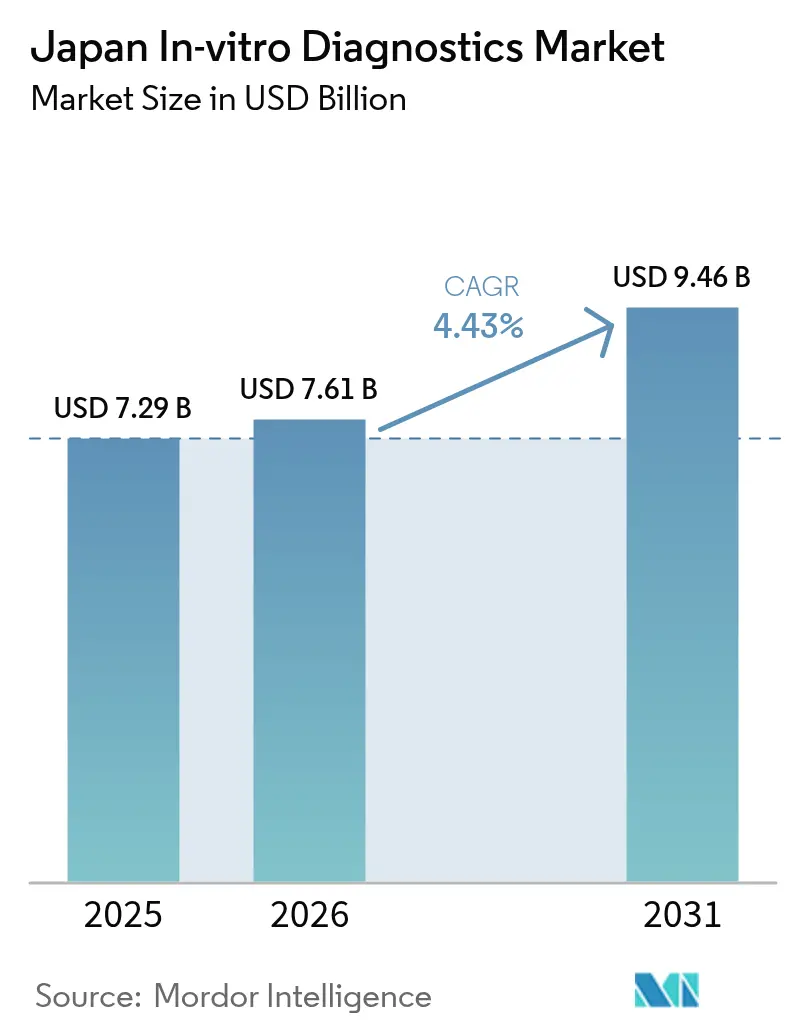
| Base Year Market Size (2025) | USD 7.29 Billion |
| Market Size (2026) | USD 7.61 Billion |
| Market Size (2031) | USD 9.46 Billion |
| Growth Rate (2026 - 2031) | 4.43 % |
| Market Concentration | Medium |
Major Players *Disclaimer: Major Players sorted in no particular order Image © Mordor Intelligence. Reuse requires attribution under CC BY 4.0. | |
Japan In-vitro Diagnostics Market Analysis by Mordor Intelligence
The Japan in-vitro diagnostics market size is expected to grow from USD 7.29 billion in 2025 to USD 7.61 billion in 2026 and is forecast to reach USD 9.46 billion by 2031 at 4.43% CAGR over 2026-2031. Growth is propelled by the nation’s aging population, precision-medicine programs, and the rapid uptake of artificial intelligence and laboratory automation. Enhanced reimbursement for preventive screening and the swift adoption of high-throughput analyzers are improving testing economics, while hospital consolidation is spurring investment in fully automated core laboratories. At the same time, point-of-care platforms are extending diagnostic reach to physician offices, retail clinics, and home-care settings, aligning with government targets for community-based care. The convergence of precision oncology and fast-track regulatory pathways is shortening time-to-market for breakthrough assays, enhancing Japan’s appeal as a launchpad for next-generation diagnostics.
Key Report Takeaways
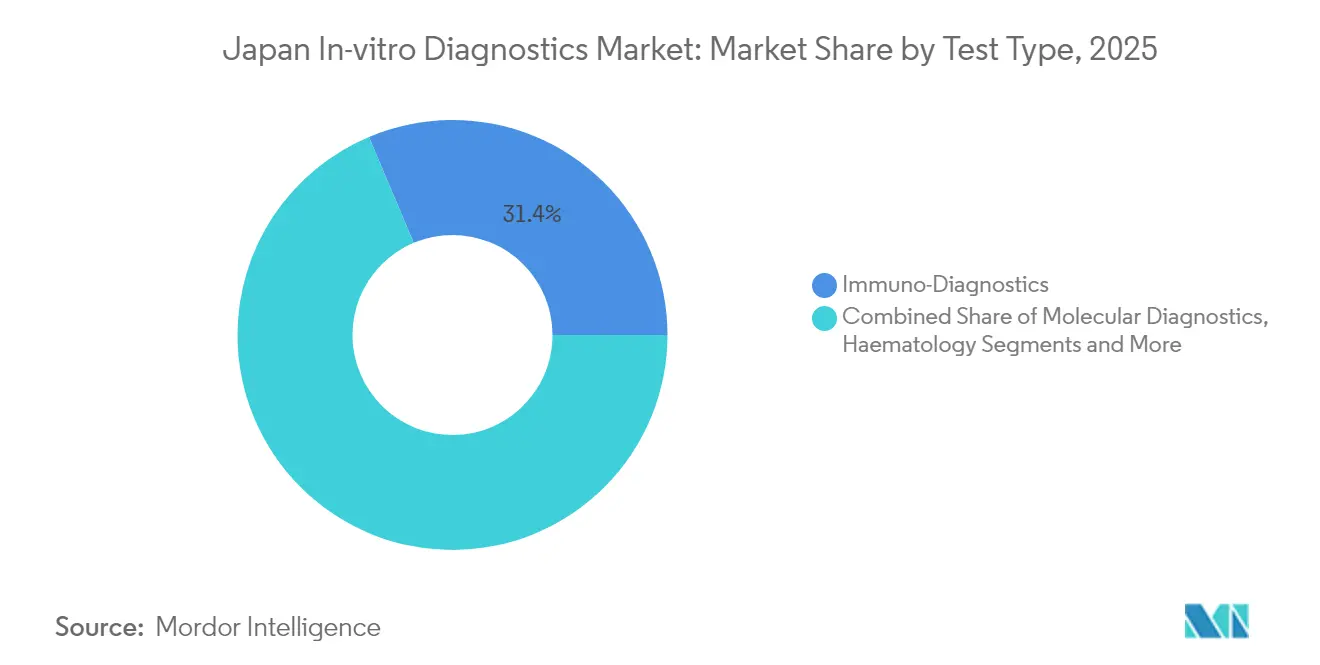
- By test type, immuno-diagnostics led with 31.35% of Japan in-vitro diagnostics market share in 2025; molecular diagnostics is advancing at an 7.86% CAGR through 2031.
- By product, reagents and kits accounted for 59.25% of the Japan in-vitro diagnostics market size in 2025, while software and middleware are expanding at a 8.55% CAGR to 2031.
- By usability, disposable IVD devices captured 67.10% share of the Japan in-vitro diagnostics market size in 2025 and are growing at 6.55% CAGR through 2031.
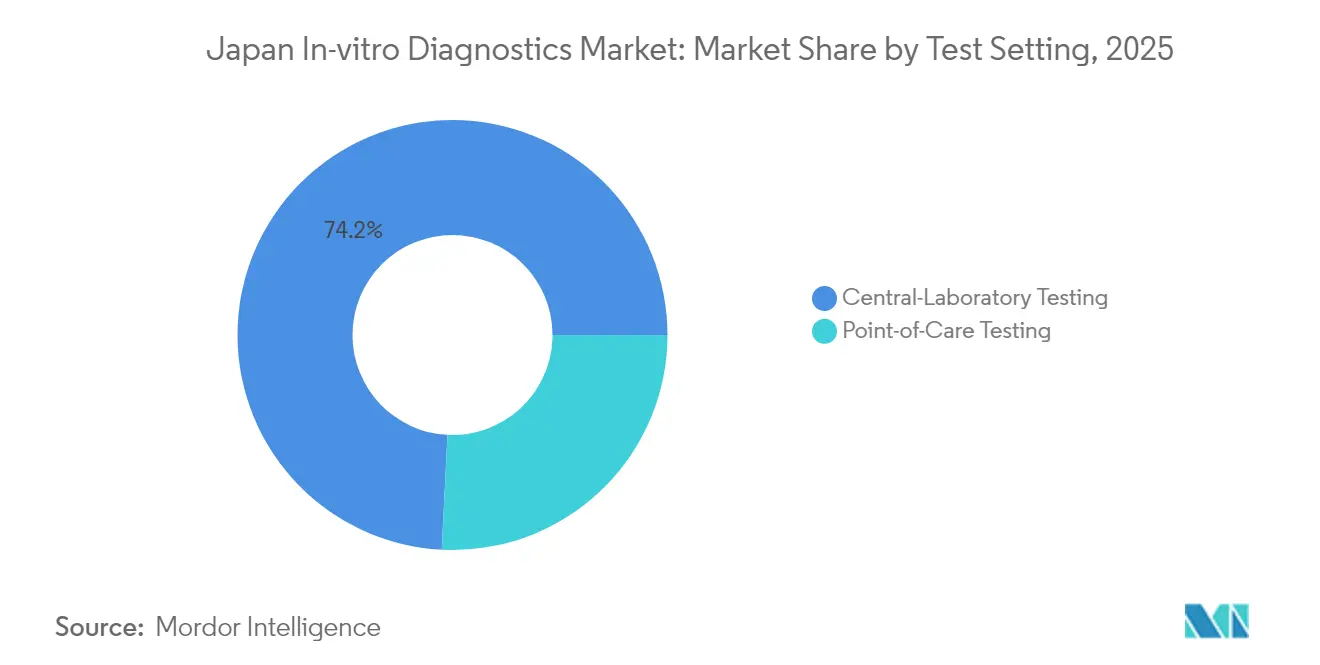
- By test setting, central-laboratory testing retained 74.20% share in 2025, whereas point-of-care testing is rising at 10.15% CAGR to 2031.
- By application, infectious-disease testing held 26.65% of Japan in-vitro diagnostics market share in 2025; oncology diagnostics is forecast to expand at a 8.98% CAGR to 2031.
- By end-user, hospital-based laboratories controlled 45.25% of the Japan in-vitro diagnostics market size in 2025, while physician-office and retail clinics are projected to grow at 7.62% CAGR through 2031.
Note: Market size and forecast figures in this report are generated using Mordor Intelligence’s proprietary estimation framework, updated with the latest available data and insights as of 2026.
Japan In-vitro Diagnostics Market Trends and Insights
Drivers Impact Analysis*
| Driver | (~) % Impact on CAGR Forecast | Geographic Relevance | Impact Timeline |
|---|---|---|---|
| Aging population & chronic-disease surge | +1.8% | Nationwide urban clusters | Long term (≥ 4 years) |
| Government oncology & precision-medicine funding | +1.2% | National tertiary centers | Medium term (2-4 years) |
| Corporate wellness & preventive mandates | +0.7% | Metropolitan employers | Medium term (2-4 years) |
| Shift to decentralized point-of-care platforms | +1.1% | Urban early adopters | Short term (≤ 2 years) |
| Reinforced infectious-disease preparedness | +0.6% | Nationwide | Short term (≤ 2 years) |
| Source: Mordor Intelligence | |||
Rising Chronic Disease Burden & Rapidly Aging Population Elevating Overall Diagnostic Demand
Japan’s 65-and-older cohort reached 29.1% of the total population in 2024, the world’s highest proportion[1]Shotaro Kinoshita and Taishiro Kishimoto, “Updating the Japanese Healthcare System to Meet the Needs of an Aging Society,” jmaj.jp. The prevalence of diabetes in 10 million adults and cardiovascular deaths comprising 27% of all mortalities are increasing longitudinal monitoring needs. Elderly patients undergo 2.3 times more laboratory tests than younger groups, inflating baseline test volumes across chemistry, hematology, and immuno-assay menus. Providers are embedding multi-biomarker geriatric panels into care pathways, reinforcing demand for comprehensive test menus. Healthcare outlays are projected to climb to JPY 89 trillion by 2040, steering hospitals toward high-throughput analyzers that maintain quality while curbing per-test costs.
Government-Backed Oncology & Precision-Medicine Programs Accelerating Advanced Molecular Testing
The Quad Cancer Moonshot, launched in September 2024, earmarks substantial funding for Indo-Pacific cancer control, with Japan supplying core genomic expertise. Fast-track PMDA review now shortens approval from 14 months to six for breakthrough tests, exemplified by the Toray APOA2-iTQ pancreatic assay cleared in 2023. Public funding has catalyzed adoption of digital PCR and next-generation sequencing as frontline tools for tumor-mutation detection. Hospitals are expanding companion-diagnostic laboratories to align with targeted-therapy reimbursement, pushing the Japan in-vitro diagnostics market toward higher-value molecular assays. The same platforms are migrating into rare-disease and inherited-disorder testing, broadening revenue streams for assay developers.
Preventive Health Mandates and Corporate Wellness Schemes Expanding Routine Screening Volumes
Seventy-eight percent of large Japanese employers now finance annual biomarker panels that exceed statutory requirements, driving routine chemistry and immuno-assay volumes up 15% per year. Tax credits rewarding firms that hit employee-health targets have tethered wellness spending to corporate profitability. Ministry data show companies with robust wellness programs cut healthcare costs by 23% and reduce absenteeism by 18%, cementing diagnostics’ role in human-capital strategies. Vendors are bundling metabolic, cardiac, and cancer-screening markers into cost-effective workplace panels, creating stickier reagent revenue. This demand is spurring middleware deployments that automate batch processing and integrate employer-reporting modules.
Technology Shift Toward Decentralized Point-of-Care Platforms Supporting Care-at-Home & Retail Clinics
Regulatory relaxation after COVID-19 and the Community-Based Integrated Care System are propelling point-of-care uptake at a 10.8% CAGR. Microfluidic and nanotechnology advances now deliver central-lab accuracy in handheld devices, shrinking turnaround times by 60% and cutting episode-of-care costs by 25%. Pharmacies and convenience-store clinics in dense urban districts spearhead adoption, while home-care physicians leverage bluetooth-enabled meters for remote monitoring. Manufacturers that package disposable cartridges with cloud dashboards are securing multi-year consumable contracts, reinforcing the Japan in-vitro diagnostics market’s pivot toward decentralized testing.
Restraints Impact Analysis*
| Restraint | (~) % Impact on CAGR Forecast | Geographic Relevance | Impact Timeline |
|---|---|---|---|
| Currency volatility & import dependence | -0.7% | Nationwide import-heavy segments | Medium term (2-4 years) |
| Hospital consolidation trimming central-lab capacity | -0.5% | Urban hospital clusters | Medium term (2-4 years) |
| Lengthy PMDA compliance cycles | -0.6% | National | Short term (≤ 2 years) |
| Source: Mordor Intelligence | |||
Currency Volatility & Import Dependence Inflating Reagent and Analyzer Costs
Roughly 60% of IVD systems are imported, exposing labs to yen depreciation that hit 15% against the dollar in 2024[2]Ministry of Finance Japan, “Foreign Exchange Rates – 2024 Average,” mof.go.jp. Reagent prices climbed 18% year-on-year, outpacing fee-schedule revisions and squeezing laboratory margins. To hedge forex risk, providers are shifting toward reagent-rental contracts that cut capital outlays but lock in higher long-term reagent spend. Sysmex responded by localizing analyzer production, buffering clients from currency swings and fortifying its domestic share. Persistent volatility continues to weigh on purchasing decisions for high-complexity molecular platforms.
Ongoing Hospital Consolidation Reducing Central-Lab Testing Capacity
A 15% reduction in acute-care facilities since 2024, driven by Ministry optimization, has concentrated test volumes into fewer mega-labs. Merged institutions eliminate redundant analyzers, temporarily dampening instrument sales even as retained labs upgrade to high-throughput tracks. Consolidated core facilities now demand integrated pre-analytic to post-analytic automation, benefitting vendors with broad hardware portfolios. For specialized molecular and flow-cytometry tests, volume remains distributed, requiring suppliers to support mixed centralized-decentralized models across the Japan in-vitro diagnostics market.
*Our forecasts treat driver/restraint impacts as directional, not additive. The impact forecasts reflect baseline growth, mix effects, and variable interactions.
Segment Analysis
By Test Type: Molecular Diagnostics Reshaping Precision Care
Molecular diagnostics contributed USD 1.88 billion to the Japan in-vitro diagnostics market size in 2025 and is projected to grow at an 7.86% CAGR through 2031, outpacing all other test categories. Immuno-diagnostics retained 31.35% share in 2025, underpinned by entrenched infectious-disease and hormone assays, whereas chemistry platforms remain indispensable for metabolic panels. Next-generation sequencing and digital PCR are accelerating oncology mutation screening, leveraging PMDA fast-track approvals that halve review times. Roche’s Sequencing by Expansion system, commercialized locally in February 2025, compresses whole-genome turnaround to under six hours, enabling same-day precision-oncology decisions. Concomitantly, high-sensitivity cardiac-troponin and brain-natriuretic-peptide immuno-assays are broadening acute-care utility, reinforcing immuno-diagnostics’ revenue base within the Japan in-vitro diagnostics market.
Adoption of multiplex PCR respiratory panels surged 35% post-pandemic as clinicians demanded rapid pathogen differentiation. Digital-enzyme-linked immunosorbent systems are improving lower-limit detection for autoimmune markers, enhancing early-stage disease management. Automated smear-differential hematology analyzers with AI-powered image recognition are boosting lab productivity amid workforce shortages. Microbiology segments integrate MALDI-TOF mass-spectrometry for same-day organism ID, critical for antimicrobial stewardship. Collectively, these technology inflections are galvanizing test-mix upgrade cycles that favor higher-margin reagents, sustaining robust revenue momentum.



By Product: Software Integration Driving Laboratory Evolution
Reagents and kits secured 59.25% of the Japan in-vitro diagnostics market share in 2025, reflecting the dominance of consumable-centric business models. Laboratories prioritize premium reagents to ensure assay reliability, supporting annual price elasticity despite reimbursement pressures. Instruments and analyzers demonstrate steady replacement demand as legacy equipment is swapped for fully automated racks that integrate pre-analytical robotics and middleware. The Japan in-vitro diagnostics market size for middleware grew 9% in 2025, propelled by Beckman Coulter’s cloud-native DxONE suite that optimizes consumable tracking and auto-validates results.
AI-enabled decision-support modules are now bundled with analyzer purchases, transforming software from ancillary to core value. Vendors monetize algorithm updates via subscription, stabilizing revenue streams beyond one-time capital sales. Consumables such as controls and calibrators log mid-single-digit growth tied to rising quality-assurance mandates. Hybrid procurement models—capital-free analyzer placement against reagent volume commitments—are gaining favor among budget-constrained public hospitals, reshaping vendor contract structures.
By Usability: Disposable Devices Dominate Infection Control Era
Disposable cartridges and sample-collection devices accounted for 67.10% of the Japan in-vitro diagnostics market size in 2025, buoyed by post-COVID infection-control norms. Single-use microfluidic chips in point-of-care glucose, HbA1c, and cardiomarker assays reduce cross-contamination risk and simplify logistics, key for understaffed rural clinics. Growth at 6.55% CAGR is further fueled by integrated lancet-to-result platforms adopted in community pharmacies. Manufacturers deploy recyclable polymers to address environmental scrutiny, aligning with Japan’s 2030 waste-reduction targets.
Reusable instrument components remain essential for high-throughput central labs where economics favor durable cuvettes and probe assemblies. Hybrid systems coupling benchtop analyzers with disposable reaction cuvettes balance throughput and bio-safety. Material-science advances such as fluoropolymer-coated flow cells extend reusable lifespan, tempering total-cost-of-ownership. Even so, disposable adoption is encroaching on traditional reusables in low-volume hospital wards, indicating a structural pivot toward single-use dominance across the Japan in-vitro diagnostics market.
By Test Setting: Point-of-Care Expansion Reshaping Care Delivery
Central laboratories generated 74.20% of testing revenue in 2025 through economies of scale and comprehensive menus, anchoring the Japan in-vitro diagnostics market. Consolidation into regional mega-labs is intensifying demand for track-based automation from specimen receipt to archived storage. The Japan in-vitro diagnostics market size for total-lab-automation modules expanded 7% in 2025 as hospital systems invested in efficiency upgrades.
Point-of-care testing, though smaller, is racing ahead at 10.15% CAGR, catalyzed by relaxed telemedicine rules and home-care expansion. Handheld multiplex immunoassay readers are now approved for pharmacy use, shrinking result times from days to minutes for CRP and influenza. Rural prefectures leverage mobile phlebotomy vans equipped with cartridge-based analyzers to maintain diagnostic coverage amid clinic closures. Middleware that harmonizes decentralized results with hospital electronic records is critical for continuity of care, driving cross-segment software sales.
By Application: Oncology Diagnostics Driving Precision Medicine
Infectious-disease assays delivered 26.65% of Japan in-vitro diagnostics market revenue in 2025, with continuous demand for hepatitis, HIV, and tuberculosis testing. Syndromic panels combining influenza A/B, RSV, and SARS-CoV-2 dominate winter respiratory seasons. Diabetes monitoring remains a staple, with HbA1c test frequency rising under corporate-wellness mandates. Oncology, however, stands out with a 8.98% CAGR through 2031 as liquid-biopsy and companion-diagnostic volumes escalate.
Roche’s VENTANA TROP2 RxDx, the first AI-driven lung-cancer companion diagnostic awarded Breakthrough Device status in April 2025, typifies innovation converging on precision oncology. Liquid biopsy for circulating tumor DNA reduces invasive biopsy burden and enables longitudinal surveillance, securing hospital adoption. Autoimmune and nephrology panels benefit from biomarker validation, extending menu breadth in multispecialty clinics. Cardiac biomarker expansion into high-sensitivity troponin supports rapid-rule-out protocols in emergency departments, enhancing throughput.
By End-User: Retail Clinics Emerge as Growth Frontier
Hospital laboratories anchored 45.25% of Japan in-vitro diagnostics market share in 2025, capitalizing on integrated acute-care pathways and round-the-clock operations. Consolidated systems procure bundled reagent contracts for chemistry, immunoassay, and hematology lines, commanding price concessions from vendors. Independent reference laboratories specialize in esoteric tests, attracting send-outs from smaller hospitals seeking cost efficiency.
Physician-office and retail clinics are recording the swiftest expansion at 7.62% CAGR, fueled by point-of-care platforms that deliver rapid results during a single consultation. ISO 15189 accreditation guidelines issued by the Japan Accreditation Board have standardized quality across these diverse sites, bolstering clinician confidence. Academic and research centers continue to pioneer next-generation sequencing and multi-omics assays, partnering with industry to validate novel biomarkers. Equipment suppliers tailor compact analyzers for cramped retail footprints and cloud-connected middleware for multi-site data aggregation, underscoring the Japan in-vitro diagnostics market’s end-user diversification.
Geography Analysis
Tokyo, Osaka, and Nagoya together generated a significant percentage of Japan's in-vitro diagnostics market value in 2025, supported by dense tertiary hospitals and advanced oncology centers. These metropolitan hubs are first adopters of AI-enabled histopathology and digital PCR, leveraging high patient volumes to justify capital investment. Continuous infrastructure upgrades, exemplified by Roche-Hitachi core-lab automation deployments, are compressing sample-to-answer times while easing workforce strain.
Semi-urban corridors along the Shinkansen rail network present mixed dynamics: midsize community hospitals rely on shared reference labs, while retail clinics fill primary-care gaps. Local governments subsidize preventive screenings, expanding immunoassay volumes beyond urban averages. Nevertheless, site-of-care testing in pharmacies is increasingly substituting for hospital draws, reflecting consumer expectations for convenience.
Rural prefectures face clinic closures and clinician shortages, prompting mobile diagnostic vans and telehealth-supported home sampling. Point-of-care analyzers with disposable cartridges circumvent cold-chain limitations and deliver critical testing for diabetes, coagulation, and infections. Government grants under the Medical DX Reiwa Vision 2030 aim to interconnect rural test results with urban specialists via cloud middleware, addressing regional disparities. By 2030, geographic polarization is projected to narrow as decentralized tools democratize access, cementing the Japan in-vitro diagnostics market’s nationwide footprint.
Regulatory Landscape
In Japan, in-vitro diagnostics (IVDs) are regulated under the Pharmaceuticals and Medical Devices (PMD) Act. The Ministry of Health, Labour and Welfare (MHLW) oversees manufacturing and marketing authorization, while the Pharmaceuticals and Medical Devices Agency (PMDA) conducts reviews and related consultations. IVDs are managed under a risk-based classification framework aligned with GHTF concepts (Classes I to IV). Eligible Class II and Class III products may use Third Party Certification via Registered Certification Bodies under Japanese Certification Standards, while higher-risk Class IV products require PMDA review and MHLW approval.
Quality and manufacturing oversight is anchored in QMS requirements harmonized with ISO 13485, with QMS inspection applications handled through PMDA processes. On the industrial-policy side, METI's Medical Device Industry Vision 2024 highlights support for clinical evidence generation and digital technology integration (including AI) in device development. METI also opened applications on March 31, 2026 for an FY2026 task force program focused on securing stable supplies of pharmaceuticals, medical devices, and medical supplies, reinforcing supply resilience for import-exposed IVD categories.
Competitive Landscape
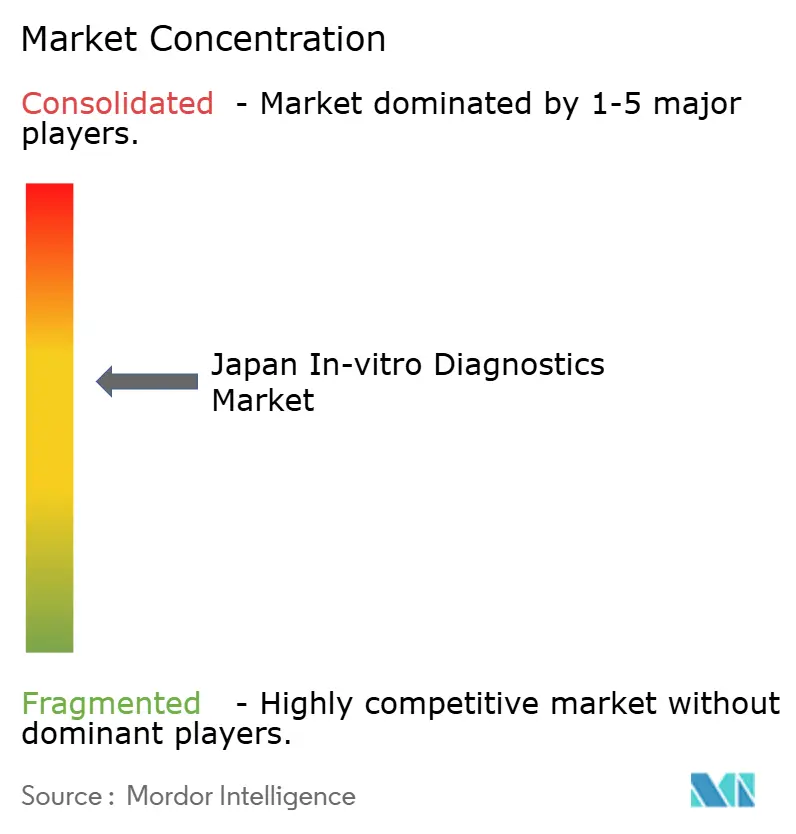
The top five suppliers—Sysmex, Roche Diagnostics KK, Fujirebio Holdings, Abbott Japan, and Beckman Coulter—collectively capture significant revenue, denoting a moderately concentrated environment. Sysmex leads hematology and coagulation segments, leveraging domestic manufacturing to hedge currency risk and appealing service networks. Roche dominates molecular oncology through its cobas and sequencing portfolios, supplemented by long-standing automation co-development with Hitachi High-Tech.
Domestic specialists such as Fujirebio excel in tumor markers and neurodegeneration assays, often partnering with multinationals for global distribution. Market players prioritize ecosystem solutions that bundle instruments, reagents, and middleware, boosting switching costs for laboratories. Strategic alliances—Sysmex–QIAGEN for genetic testing and Roche–PathAI for digital pathology—highlight a race to integrate AI across workflows. Vendors with deep PMDA regulatory expertise secure faster approvals, turning compliance mastery into market advantage.
White-space areas include liquid biopsy, multiplex home-collection kits, and recyclable disposable cartridges. Companies able to bridge diagnostic and therapeutic modalities via companion assays stand to tap Japan’s precision-medicine subsidies. Pricing competition remains rational; value-added service contracts and algorithm subscriptions protect margins amid reimbursement pressure. Overall, innovation velocity and domestic partnership depth will determine share shifts within the Japan in-vitro diagnostics market.
Japan In-vitro Diagnostics Industry Leaders
Abbott Laboratories
Roche Diagnostics KK
Sysmex Corporation
Danaher Corp.
Fujirebio Holdings Inc.
- *Disclaimer: Major Players sorted in no particular order

Market Opportunities and Future Outlook
Regulatory and standards updates in 2026 create a practical entry point for software-centric and AI-enabled IVD offerings. This is especially relevant where laboratories are adopting automation and middleware to address workforce constraints and consolidation-driven throughput needs. Staged implementation of PMD Act amendments beginning in May 2026 shifts IVD post-market obligations toward malfunction reporting frameworks. In parallel, the June 2026 enforcement of JIS T 2304:2026 introduces explicit requirements for AI-assisted diagnostic software, including traceability and explainability, which increases the value of compliant data management, model governance, and audit-ready middleware integrated into analyzer and point-of-care ecosystems.
Clinical whitespace is also widening in neurology and other biomarker-led categories, as vendors move beyond traditional infectious disease and core lab menus into higher-value immunoassays and blood-based markers that fit preventive and longitudinal monitoring pathways. Market evidence includes the February 2026 Fujirebio-Sysmex sales collaboration for dementia testing, built around Lumipulse immunoassay systems and dementia-related reagents, alongside continued momentum in laboratory automation and high-throughput workflows that support bundled offerings (instruments, reagents, and software). These shifts align with the market's high consumables weight, where reagents and kits remain the largest product share, and with faster scaling of decentralized testing across physician offices, retail clinics, and home-care settings, where connectivity and standardized quality controls support broader adoption.
Recent Industry Developments
- June 2026: Sysmex announced a collaboration with VolitionRx to optimize the Nu.Q NETs H3.1 assay on Sysmex platforms for diagnostic applications including sepsis and other acute and chronic diseases. The work links a novel biomarker assay with an established installed base, supporting faster clinical deployment pathways through platform standardization and workflow compatibility.
- February 2026: Fujirebio and Sysmex began a sales collaboration for dementia testing in which Sysmex exclusively sells Fujirebio's fully automated Lumipulse immunoassay systems and dementia-related reagents in agreed regions. The arrangement tightens instrument-reagent pairing and strengthens channel reach for neurodegeneration testing, a category where blood-based and automated immunoassays are gaining strategic focus.
- November 2025: Fujirebio (H.U. Group Holdings) filed for manufacturing and marketing authorization in Japan for a blood-based in vitro diagnostic test measuring pTau 217 and beta-Amyloid 1-42. The filing highlights the shift toward scalable, less-invasive biomarker testing workflows that can be run on automated immunoassay systems, supporting broader access beyond specialized centers.


Research Methodology Framework and Report Scope
Market Definition and Coverage
For this study, the Japan in vitro diagnostics market covers the value of IVD tests used on human samples outside the body, along with the related instruments and reagents that enable testing across lab and near-patient settings in Japan.
Scope exclusions: It excludes imaging-based diagnostics and therapeutic drugs, and it also excludes broad hospital services that are not directly tied to IVD test delivery.
Segmentation Overview
- By Test Type
- Clinical Chemistry
- Molecular Diagnostics
- Immuno-Diagnostics
- Haematology
- Microbiology
- Coagulation
- Others
- By Product
- Instruments and Analyzers
- Reagents & Consumables
- Software & Services
- By Usability
- Disposable IVD Devices
- Re-usable IVD Devices
- By Test Setting
- Central-Laboratory Testing
- Point-of-Care / Near-Patient Testing
- By Application
- Infectious Diseases
- Diabetes
- Oncology
- Cardiology
- Auto-immune Disorders
- Nephrology
- Others
- By End-User
- Hospital-based Laboratories
- Independent Diagnostic Labs
- Physician-Office / Retail Clinics
- Academic & Research Centers
Data Sources, Market Sizing, and Validation
Desk Research
Desk research was used to build the initial demand and supply picture for Japan IVD before modeling was finalized. We referenced public and official sources such as the Ministry of Health, Labour and Welfare (Japan), Japan customs and trade statistics, the OECD health statistics series, the World Health Organization, and peer-reviewed clinical journals that report testing patterns and disease burden.
To keep inputs practical, company annual reports and investor presentations were reviewed for product mix cues, pricing commentary, and demand drivers such as automation and test-menu expansion. Where needed, subscription databases covering company financials, patents, and shipment-level trade flows were used to cross-check trends and flag outliers in the desk view. These desk sources are illustrative only, and additional public references were also used for data collection, validation, and clarification.
Primary Interviews and Surveys
Primary work was carried out through expert interviews and structured surveys with manufacturers, distributors, lab operations leaders, and end users such as hospital labs and independent diagnostic labs across Japan. The discussions helped confirm how much demand is centralized in lab testing versus point-of-care, and they also clarified practical pricing behavior for high-volume assays compared with specialty tests. When desk assumptions did not match field feedback, model inputs were adjusted and then rechecked with follow-up calls.
Distribution of primary research fieldwork respondents
| Company type | Respondent position |
|---|---|
| Top tier: 25% | CXOs: 14% |
| Mid tier: 61% | Functional/Unit leaders: 39% |
| Smaller Players: 14% | Managers: 47% |
Market-Sizing & Forecasting
Sizing started from a top-down demand pool build, where national health utilization signals were converted into test volumes and then valued using representative assay and instrument pricing. The totals were then corroborated with selective bottom-up checks, such as rolling up a sample of supplier revenues in Japan and validating typical reagent-to-instrument mix and replacement cycles, so the final number did not overreact to one data series.
Key model inputs included the share of testing handled by hospital labs versus independent labs, the mix of routine chemistry and immunoassay volumes versus molecular and specialty testing, instrument placement and replacement timing, average reagent price trends under reimbursement and procurement pressure, and the pace of lab automation adoption. Forecasts were built using scenario analysis, where each scenario was tied to plausible ranges for test volumes, pricing, and mix shift that were stress-tested with primary respondents. For areas with thin public data, gaps were handled using conservative proxy ratios anchored to confirmed lab throughput and import patterns, and then adjusted only when multiple checks pointed the same way.
Data Validation & Update Cycle
Validation was handled through triangulation across independent signals, followed by step-by-step variance checks at both the total market level and the main input drivers. If an output moved sharply versus known testing activity or trade flow direction, the underlying assumptions were reviewed again and the most sensitive variables were recalibrated before sign-off.
An internal review pass is completed before release so logic, math, and unit consistency are aligned across the workbook and narrative. The report is refreshed annually, and interim updates are made when material events occur, such as reimbursement changes, major product approvals, or sudden shifts in testing behavior. Before delivery, the latest public releases are checked again so clients receive an updated view.
Mordor Intelligence's Vitro Diagnostics Japan Market Size Measured Against Other Published Estimates
Published market sizes for Japan IVD can vary even when the topic label looks the same, because the included product lines, the pricing basis, and the timing of the base year are not always aligned. Differences also come from how each model treats lab versus point-of-care testing, and whether growth assumptions are tied to test-volume reality or mainly to revenue trend extrapolation.
The main gap drivers in this market are usually whether software and broader lab services are counted inside IVD revenue, how reimbursement-linked pricing is translated into average selling prices, and whether import signals are used to confirm instrument demand in a country that relies on a mix of local supply and cross-border flows. The table points to the spread, and the tighter alignment to test-setting mix and reimbursement-aware ASP progression explains why the 2025 value lands where it does, with that treatment applied by Mordor Intelligence.
Benchmark comparison
| Source | Market Size | Gaps in Research Methodology |
|---|---|---|
| Mordor Intelligence | USD 7.29 B (2025) | |
| Industry Publisher A | USD 5.10 B (2025) | Often applies a narrower revenue scope that leans toward reagents and instruments and may undercount higher-value specialty testing, and it can also use smoother pricing that does not fully reflect reimbursement-led price pressure. |
| Market Intelligence B | USD 7.28 B (2025) | Shows a similar base-year number, although the scope can differ by adding software and services into the total, and the growth path may rely more on stated CAGR rather than test-volume and mix checks. |
Overall, the differences mostly come down to what is counted as IVD revenue and how pricing is normalized across test types and settings. By keeping inclusions explicit and then cross-checking the totals against practical demand signals, the resulting market size stays easier to audit and reuse when assumptions need to be updated.


Key Questions Answered in the Report
Which test category is expanding fastest?
Molecular diagnostics leads with an 7.86% CAGR through 2031, driven by precision-oncology initiatives.
How large is the point-of-care segment's growth?
Point-of-care testing is advancing at a 10.15% CAGR as decentralized care gains traction.
Which product type generates the bulk of revenue?
Reagents and kits contribute 59.25% of overall sales owing to recurring consumables demand.
Why are disposable devices gaining share?
Infection-control requirements and workflow simplicity pushed disposable devices to 67.10% share in 2025 and a 6.55% CAGR outlook.
What impact does hospital consolidation have on diagnostics vendors?
Consolidation reduces redundant central-lab capacity but spurs demand for high-throughput automation in remaining mega-labs, reshaping sales cycles.
Page last updated on:


 Your data is secure and never sold or shared.


