
Market Overview
| Study Period | 2020 - 2031 |
|---|---|
| Forecast Data Period | 2026 - 2031 |
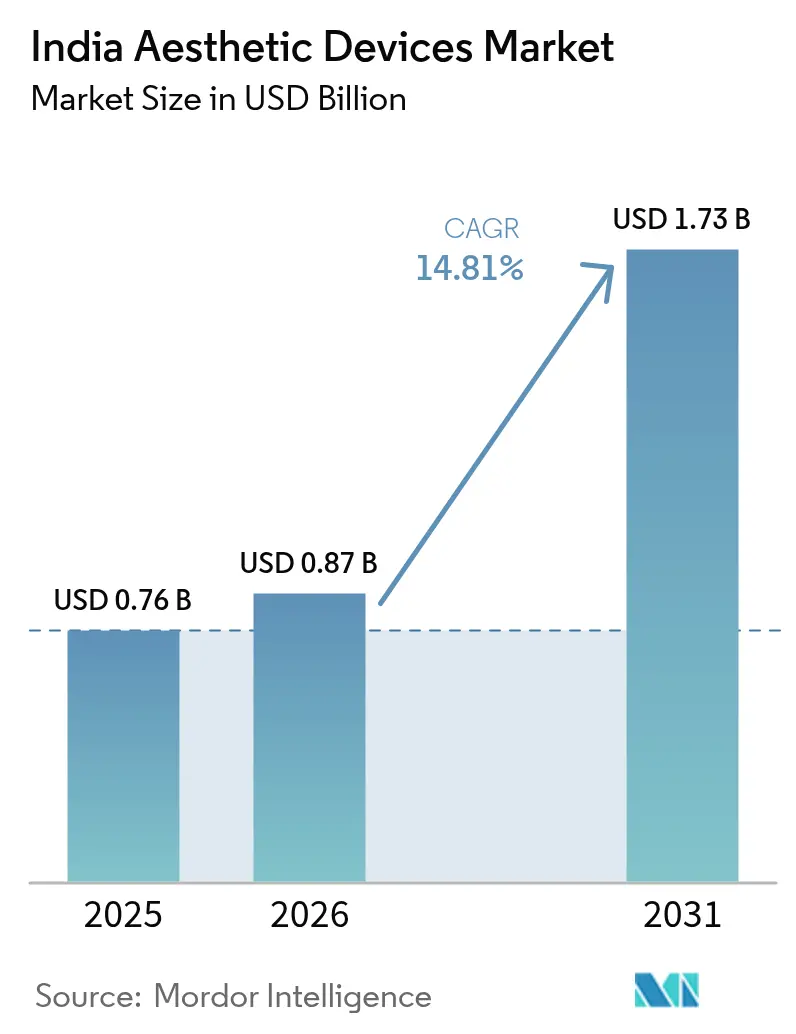
| Base Year Market Size (2025) | USD 0.76 Billion |
| Market Size (2026) | USD 0.87 Billion |
| Market Size (2031) | USD 1.73 Billion |
| Growth Rate (2026 - 2031) | 14.81 % |
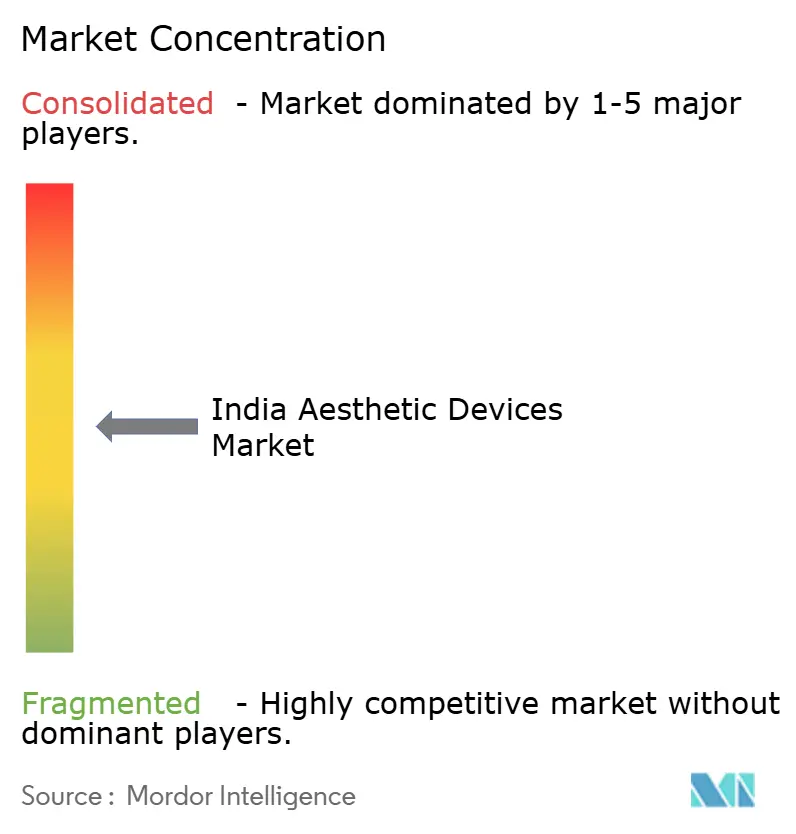
| Market Concentration | Medium |
Major Players *Disclaimer: Major Players sorted in no particular order Image © Mordor Intelligence. Reuse requires attribution under CC BY 4.0. | |
India Aesthetic Devices Market Analysis by Mordor Intelligence
The India Aesthetic Devices Market size is projected to be USD 0.76 billion in 2025, USD 0.87 billion in 2026, and reach USD 1.73 billion by 2031, growing at a CAGR of 14.81% from 2026 to 2031.
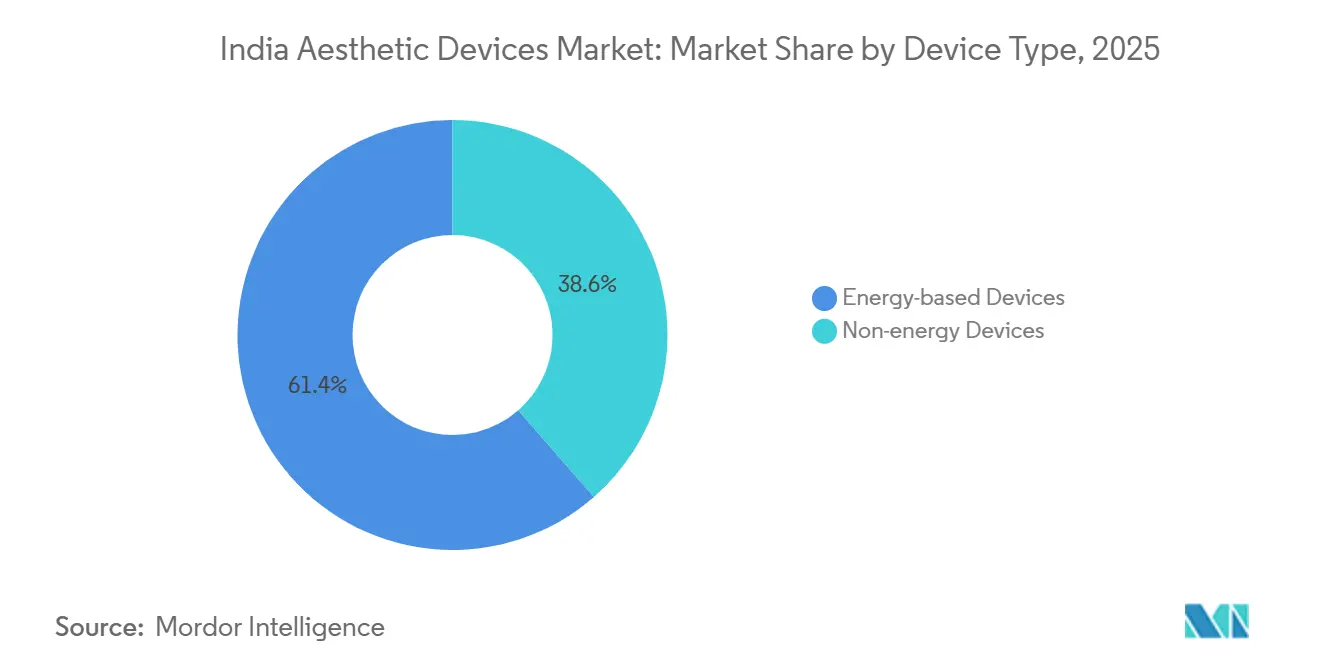
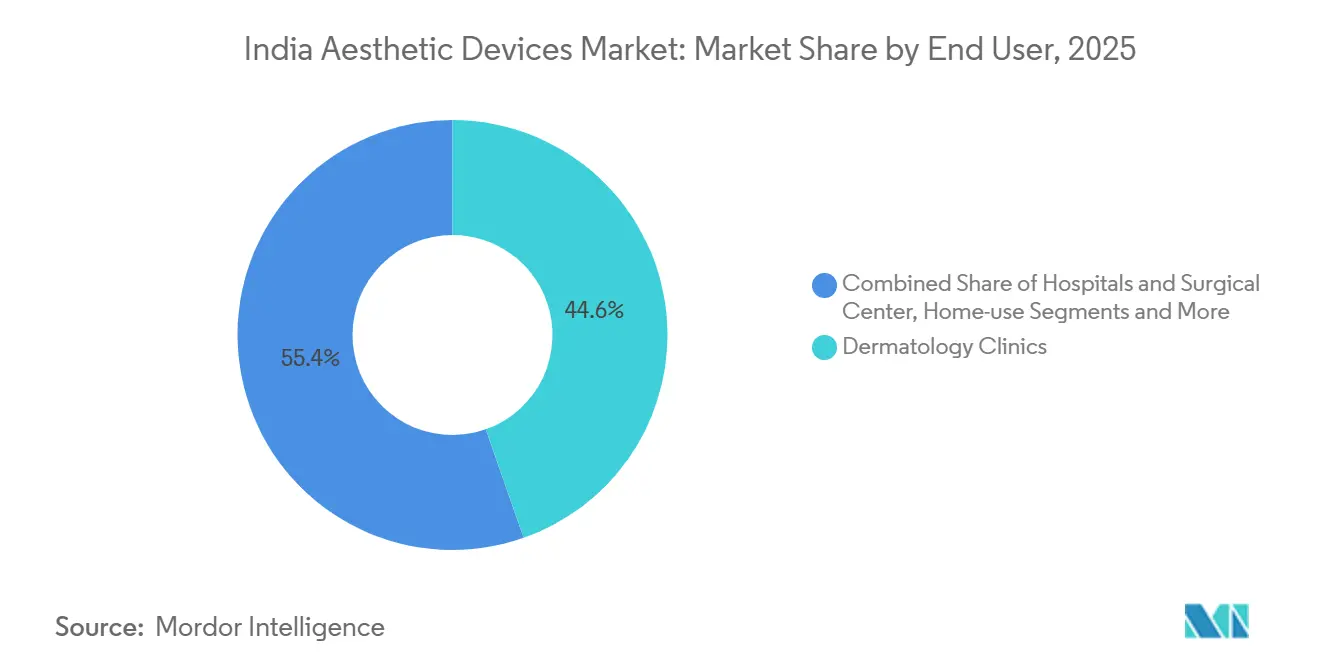
A favorable demographic profile, rising disposable incomes and the government’s Production-Linked Incentive (PLI) program, which approved 22 new med-tech plants by 2025, are accelerating local manufacturing capacity.[1] Energy-based systems held 61.43% share in 2025, yet non-energy platforms such as dermal fillers and injectables are projected to expand 16.67% annually thanks to shorter procedures and minimal downtime, making them attractive for time-pressed professionals. Hair-removal applications generated 23.75% of 2025 revenue, while body-contouring and cellulite-reduction devices are on track for 17.01% CAGR, supported by radiofrequency (RF) and high-intensity focused ultrasound (HIFU) technologies that reduce fat without surgery. Dermatology clinics dominated end-user revenue with 44.62% share, but home-use gadgets are climbing at 18.89% CAGR as e-commerce widens access. Male procedures, although only 16.86% of volume, are gaining 15.85% a year as workplace appearance expectations grow, and the 18-34 age group is rising 16.83% annually on the back of “tweakment” culture fueled by social media.
Key Report Takeaways
- By device type, energy-based systems led with 61.43% of the India aesthetic devices market share in 2025, while non-energy platforms are projected to expand at a 16.67% CAGR through 2031.
- By application, body contouring and cellulite reduction is forecast to advance at a 17.01% CAGR through 2031, overtaking legacy hair-removal growth rates.
- By end user, dermatology clinics held 44.62% of revenue in 2025, whereas home-use devices post the highest projected CAGR at 18.89% to 2031.
- By gender, female patients accounted for 83.14% share in 2025, yet male demand is expanding at a 15.85% CAGR over 2026-2031.
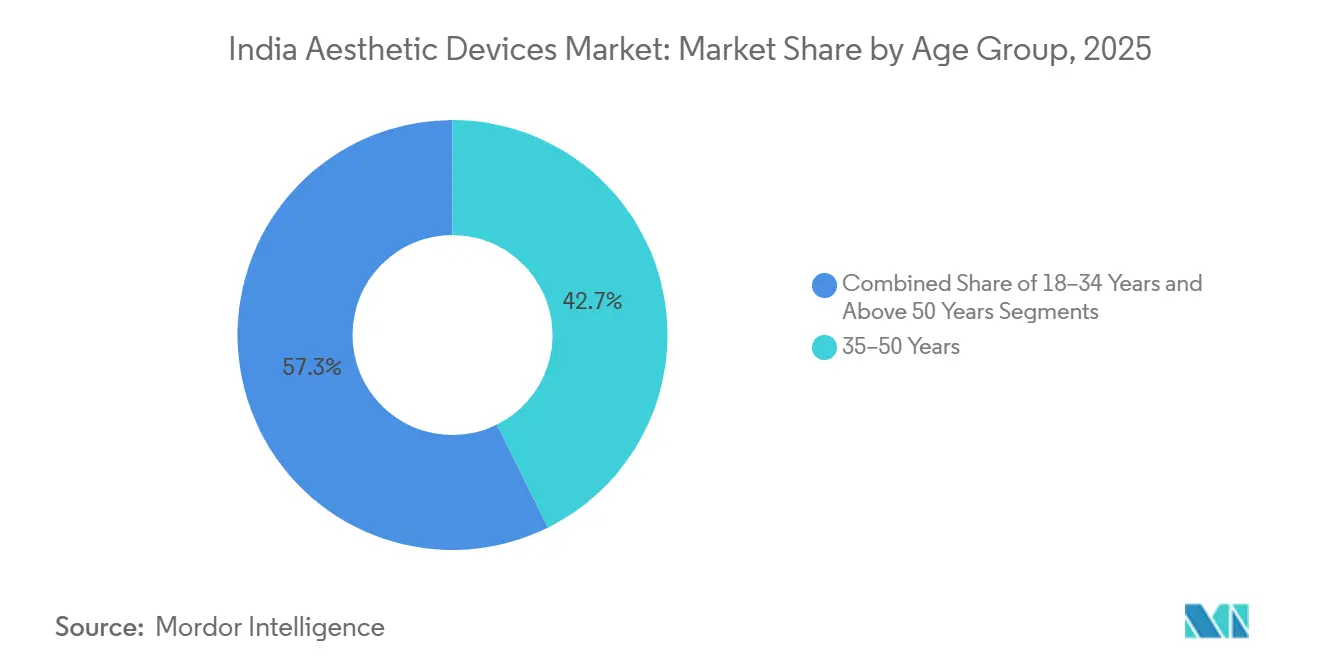
- By age group, the 35-50 years cohort captured 42.68% of the India aesthetic devices market size in 2025, while the 18-34 years segment is projected to log the fastest growth at a 16.83% CAGR through 2031.
Note: Market size and forecast figures in this report are generated using Mordor Intelligence’s proprietary estimation framework, updated with the latest available data and insights as of 2026.
India Aesthetic Devices Market Trends and Insights
Drivers Impact Analysis*
| Driver | (~) % Impact on CAGR Forecast | Geographic Relevance | Impact Timeline |
|---|---|---|---|
| Rising disposable incomes & beauty focus | +2.5% | Metros and tier-1 cities such as Delhi NCR, Mumbai, Bengaluru, Hyderabad, Chennai, Pune | Medium term (2-4 years) |
| Medical tourism & premium wellness boom | +2.0% | Delhi NCR, Mumbai, Bengaluru, Chennai; spillover in Goa, Kerala, Rajasthan | Long term (≥4 years) |
| Tech advances in energy-based & AI devices | +2.8% | National; earliest uptake in metro clinics with tier-1 spillover | Short term (≤2 years) |
| Government PLI scheme for med-tech | +1.8% | Manufacturing hubs in Gujarat, Tamil Nadu, Karnataka, Maharashtra | Long term (≥4 years) |
| Shift to non-invasive, home-use devices | +2.3% | Metros and tier-1 cities; nationwide via e-commerce | Medium term (2-4 years) |
| Localization to cut import dependence | +1.5% | Device parks in Gujarat, Tamil Nadu, Karnataka; national supply-chain benefits | Long term (≥4 years) |
| Source: Mordor Intelligence | |||
Increasing Awareness Regarding Aesthetic Procedures
Urban consumers view cosmetic enhancement as routine wellness rather than vanity, a perception shift amplified by celebrity endorsements and social-media narratives. India now ranks second in rhinoplasty volume and third in liposuction counts worldwide, giving clinics deeper case experience that feeds further acceptance. Male demand grows for gynecomastia correction and hair restoration, broadening the gender mix once skewed toward female clientele. Consultation numbers surge in tier-2 cities yet infrastructure gaps still limit procedural throughput outside metros. Training institutes respond by running short intensive programs, which in turn seed new clinics in smaller urban clusters.
Rising Disposable Incomes & Beauty-Conscious Consumers
India’s per-capita disposable income is growing 14.6% annually through 2027, widening the pool of consumers who can afford elective aesthetic treatments. Dual-income households in metros now direct 3-5% of discretionary spend to personal grooming, and the broader beauty-and-personal-care sector is on track to double to USD 30 billion by 2027. Elevated workplace grooming norms in IT services, banking and hospitality are prompting earlier intervention, with the typical first procedure age slipping from the mid-40s to the early-30s. Clinics bundle entry-level services with installment plans, lowering the trial barrier and sustaining demand for consumables.
Growing Medical Tourism & Premium Wellness Segment Expansion
India drew 7.3 million inbound medical travelers in 2024 and the segment could generate USD 16.21 billion by 2030, buoyed by cost advantages of 60-70% versus Western markets and streamlined e-visas under the “Heal in India” initiative. High-value visitors book facelifts, body contouring and laser resurfacing alongside wellness packages in Goa, Kerala and Rajasthan, allowing clinics to invest in flagship lasers such as PicoWay and Morpheus8 without fearing price push-back. Global patient expectations drive technology upgrades that later disseminate to domestic clientele.
Technological Advances in Energy-Based and AI-Integrated Devices
Artificial-intelligence modules embedded in devices now guide treatment parameters and predict outcomes, cutting operator dependency and elevating satisfaction. InMode’s Morpheus8 blends microneedling with bipolar RF for deep collagen remodeling, while BTL’s Emsculpt NEO couples RF heating with high-intensity focused electromagnetic fields to produce simultaneous fat reduction and muscle gains validated at 30% and 25%, respectively.[2] Picosecond-class lasers like PicoWay fragment pigment with less thermal damage, reducing sessions from eight to roughly five, thereby boosting clinic throughput.
Restraints Impact Analysis*
| Restraint | (~) % Impact on CAGR Forecast | Geographic Relevance | Impact Timeline |
|---|---|---|---|
| High device and treatment costs in tier-2/3 cities | -1.2% | Tier-2, tier-3 cities and rural pockets | Medium term (2-4 years) |
| Fragmented CDSCO pathways and long approval cycles | -0.9% | Nationwide | Short term (≤2 years) |
| Shortage of skilled practitioners outside metros | -0.7% | Tier-2, tier-3 cities and rural areas | Long term (≥4 years) |
| Proliferation of low-quality or grey-market devices | -0.8% | Nationwide, but acute in price-sensitive smaller cities | Medium term (2-4 years) |
| Source: Mordor Intelligence | |||
High Device and Treatment Costs Limiting Tier-2/3 Penetration
Capital equipment prices range from INR 15 lakh to INR 1.5 crore (USD 18,000-180,000), a hurdle for single-doctor clinics beyond major metros. May 2025 pricing data showed skin-rejuvenation sessions averaging INR 27,000-55,000 (USD 325-660), far above the spending power of most households. Banks treat aesthetic platforms as non-essential assets, so loans carry 12-15% interest with five-year ceilings, pushing up practice overhead. The National Pharmaceutical Pricing Authority does not cap these procedures, leaving prices to market forces. Consequently, the India aesthetic devices market still skews toward the top income decile, slowing rural penetration.
Fragmented Regulatory Pathways and CDSCO Approval Delays
Energy-based platforms fall into Class C or D under the Medical Device Rules 2017, demanding clinical data and ISO 10993 biocompatibility tests that stretch approval to 9-15 months.[3] Devices from non-GHTF nations undergo extra local trials, costing up to INR 1 crore (USD 120,000) and a further year in lead time. The January 2025 ban on refurbished imports erased an INR 1,500 crore (USD 180 million) gray channel but also removed a lower-cost option for budget clinics. While an expert panel is drafting rules, implementation is unlikely before 2027. These frictions delay innovation and allow established players to entrench share in the India aesthetic devices market.
*Our forecasts treat driver/restraint impacts as directional, not additive. The impact forecasts reflect baseline growth, mix effects, and variable interactions.
Segment Analysis
By Device Type: Non-Energy Platforms Gain Share
Energy-based systems captured 61.43% of the India aesthetic devices market share in 2025. Non-energy options—fillers, injectables and microdermabrasion kits—are projected to grow 16.67% a year because sessions last just 15-30 minutes and have little downtime. A microdermabrasion unit costs INR 1-3 lakh (USD 1,200-3,600), versus INR 25-50 lakh (USD 30,000-60,000) for a fractional CO₂ laser, so new clinics find entry barriers lower. Dermal-filler demand rises as certified injectors multiply in tier-1 cities, while hyaluronic-acid brands from Galderma and AbbVie lead supply.
Radiofrequency devices are expanding fastest within the energy cohort, favored for treating Fitzpatrick IV-V skin without risking post-inflammatory hyperpigmentation. InMode’s Morpheus8 marries RF with microneedling, and BTL’s Exilis Ultra combines RF and ultrasound in a single handpiece. High-intensity focused ultrasound (HIFU) gains ground for non-surgical facelifts, whereas intense pulsed light (IPL) fills a lower-price niche at INR 8-15 lakh (USD 10,000-18,000). All energy units must clear CDSCO Class C rules, prolonging market-entry lead times by up to a year, yet technology upgrades continue to refresh the India aesthetic devices market.
By Application: Body Contouring Outpaces Legacy Segments
Hair removal delivered 23.75% of 2025 application revenue and remains a core entry point for many clinics. Even so, body-contouring and cellulite-reduction procedures are set to expand at a 17.01% CAGR, the fastest among all uses. BTL’s Emsculpt NEO produced 30% fat reduction and 25% muscle gain in trials, reinforcing a non-surgical alternative narrative. Cryolipolysis brands such as CoolSculpting price a single area at INR 80,000-150,000 (USD 960-1,800) but still undercut surgical liposuction by roughly half.
Skin resurfacing with fractional CO₂ or erbium lasers forms the second-largest slice, treating acne scars and photoaging in the 40-60 age group. Picosecond lasers like Candela’s PicoWay shorten treatment cycles to three or four sessions. Facial injectables grow fastest in metros, while pigmented- and vascular-lesion therapies benefit from improved selectivity at 755 nm and 1,064 nm wavelengths. Together these shifts broaden procedure menus and enlarge the India aesthetic devices market.
By End User: Home-Use Devices Disrupt Clinic Dominance
Dermatology clinics generated 44.62% of end-user revenue in 2025, leveraging multi-device portfolios and medical credibility. Hospitals and surgical centers follow with roughly one-quarter share, bundling aesthetic add-ons with reconstructive or bariatric surgery for medical tourists. Medical spas differentiate through hospitality-style ambience but face patchy licensing, which could tighten under proposed IADVL oversight rules.
Home-use gadgets—LED masks, microcurrent rollers, low-energy RF wands—are gaining at an 18.89% CAGR. Amazon India, Nykaa and Flipkart expanded listings 40-plus percent in 2025, pairing EMI plans with influencer marketing to draw first-time buyers. Draft CDSCO guidance slots most at-home tools into Class A or B, allowing approval in 3-6 months. Although clinical power remains modest, convenience is helping this channel widen the India aesthetic devices market among tier-2 households.

By Gender: Male Aesthetic Adoption Accelerates
Female patients still represented 83.14% of demand in 2025. Nonetheless, male volume is climbing 15.85% annually as grooming culture spreads in IT, banking and media workplaces. India’s men’s-care retail segment is marching toward INR 35,000 crore (USD 4.2 billion) by 2028, and procedures such as beard-line laser sculpting, back-hair removal and abdominal contouring are part of the basket.
Device makers now market settings optimized for coarse male hair and thicker collagen. RF energy for muscle definition and higher fluence alexandrite lasers (18-22 J/cm²) headline campaigns on sports and business social networks. Higher consumable usage per session keeps male ticket sizes 10-15% above female equivalents, expanding clinic margins and enlarging the India aesthetic devices market.
By Age Group: Youth Cohort Embraces Preventative Aesthetics
The 35-50 bracket generated 42.68% of 2025 revenue, reflecting accumulated photoaging that drives corrective treatments. Yet the 18-34 cohort is forecast to rise 16.83% a year as social platforms normalize low-dose “baby Botox,” skin boosters and LED phototherapy. Millennials demand downtime under 48 hours and favor non-ablative fractional lasers over aggressive CO₂ peels.
Disposable income is lower for this group, so clinics push subscription bundles and EMI plans spreading costs across 12 months. Express sessions priced at INR 3,000-5,000 (USD 36-60) widen the funnel, while loyalty programs retain customers through quarterly maintenance visits. Older consumers (>50 years) remain fewer but spend more per visit on multi-modal plans, adding depth to the India aesthetic devices market.
Geography Analysis
Delhi NCR, Mumbai, Bengaluru, Hyderabad, Chennai and Pune collectively generated about 65-70 % of 2025 revenue, underscoring the metro-centric nature of the India aesthetic devices market. In Delhi NCR, Practo data put an average skin-rejuvenation ticket at INR 44,000 (USD 530), roughly 20 % above Pune or Chennai, mirroring higher real-estate and practitioner costs. Southern states also benefit from 46.4 % of postgraduate dermatology seats, helping them adopt picosecond lasers and HIFU earlier than northern peers.
Tier-2 cities such as Ahmedabad, Jaipur, Lucknow, Chandigarh, Kochi and Indore represent the next frontier for the India aesthetic devices market, powered by rising disposable income and chain-clinic rollouts from operators like Kaya and Oliva. Yet penetration remains hamstrung by INR 15-50 lakh (USD 18,000-60,000) device costs, limited specialist density and lower consumer awareness. Home-use gadgets sold on Amazon India and Flipkart are filling part of the gap, although lower clinical power caps repeat purchase rates because outcomes trail clinic systems by about 50 %.
Medical tourism funnels high-value patients into Delhi, Mumbai, Bengaluru and Chennai, reinforcing their dominance in the India aesthetic devices market. The “Heal in India” campaign drove 7.3 million inbound patients in 2024 and promises expedited e-visas plus Joint Commission International-accredited facilities. Simultaneously, the PLI program is dispersing manufacturing to Tamil Nadu, Gujarat, Karnataka and Maharashtra, shrinking device lead times from 90-120 days to 30-45 days. By 2031, local assembly could furnish 30-40 % of domestic energy-based demand, cutting landed costs and improving after-sales service for clinics in emerging cities—an inflection point for wider India aesthetic devices market adoption.
Regulatory Landscape
India regulates medical devices through the Central Drugs Standard Control Organisation (CDSCO) under the Medical Devices Rules (MDR), 2017, using a risk-based framework (Class A to D) that determines licensing and evidence requirements. In aesthetic care, many energy-based platforms used in clinical settings, including lasers and electrosurgical or RF systems, fall into higher-risk categories (often Class C or D), which extends compliance timelines and increases documentation requirements relative to low-risk home-use tools.
Policy is also influencing cost and sourcing decisions for clinics and OEMs. Government clarification in 2025 noted that imported medical devices typically attract 7.5%-10% basic customs duty plus a 5% health cess, while domestic devices are generally subject to 12% GST, reinforcing the economics of local assembly for qualifying product lines. In January 2026, the Association of Indian Medical Device Industry (AiMeD) submitted a memorandum to the Ministry of Finance and the Department of Pharmaceuticals requesting a tariff increase to 10%-15% on non-critical imported medical devices, keeping import-substitution measures prominent for capital equipment used in aesthetics.
Value Chain Analysis
The India aesthetic devices value chain begins with core component sourcing, including optics, laser sources, handpieces, RF generators, cooling systems, and embedded software, which remains heavily import-dependent. This is followed by OEM manufacturing and final assembly, regulatory clearance, channel distribution, and clinic deployment supported by ongoing consumables and service contracts. Import reliance is still highest for complex Class C/D equipment, while domestic capability is more established in lower-risk device categories, which pushes many premium energy-based systems through distributor-led models with centralized installation, training, and multi-year maintenance to protect uptime and outcomes.
Two bottlenecks increasingly shape the chain. First, compliance and testing capacity, since medical-use products must work through CDSCO pathways under MDR 2017, while electrical-safety validation and standards conformance add time and cost due to limited local testing depth in areas such as IEC 60601 electrical safety and IEC 62304 software processes. Second, industrial policy is expanding upstream capacity, including the PLI program (22 new med-tech plants approved by 2025) and related manufacturing initiatives, which widens the set of local partners available for assembly, servicing, and parts localization for aesthetic device OEMs and large clinic groups.
Competitive Landscape
Global OEMs include Candela, Lumenis, InMode, BTL, Alma Lasers, Cutera, Fotona and Sciton, shaping a moderately concentrated India aesthetic devices market. Their edge stems from direct sales, key-opinion-leader endorsements and multi-year service contracts that lock in consumable revenue. Indian pharmaceutical majors Galderma India, AbbVie, Merz Pharma and Piramal Enterprises dominate injectables, leveraging dermatology networks to cross-sell energy devices.
Competitive differentiation now pivots on multimodality. InMode’s Morpheus8 pairs bipolar RF with microneedling, while BTL’s Emsculpt NEO unites RF heating with high-intensity electromagnetic fields, producing simultaneous muscle gain and fat loss validated at 25 % and 30 %, respectively. Candela’s PicoWay picosecond laser disrupts pigment in trillionths of a second, cutting downtime and allowing clinics to charge 20-30 % premiums, a factor that lifts revenue density across the India aesthetic devices market.
Quality control remains a flashpoint. The Delhi High Court awarded Johnson & Johnson INR 3.34 crore (USD 400,000) for counterfeit losses, and Telangana regulators seized INR 4 lakh (USD 4,800) of unlicensed gear in February 2026. Industry groups are lobbying for mandatory QR-code traceability. Until then, sporadic enforcement means grey-market operators continue to undercut legitimate players, tempering price realization within the India aesthetic devices market but also opening whitespace for mid-tier, locally built platforms that meet CDSCO norms.
India Aesthetic Devices Industry Leaders
-
Alma Lasers
-
AbbVie
-
BTL India Pvt Ltd
-
Cutera Healthcare Pvt Ltd
-
Lumenis Be India Pvt Ltd
- *Disclaimer: Major Players sorted in no particular order
Market Opportunities and Future Outlook
Compliance-led product refresh and more formalization of the installed base are creating whitespace for suppliers that can combine regulatory readiness with faster deployment. From March 19, 2026, electrically powered aesthetic and skin-treatment devices with lasers and intense light sources became subject to mandatory Bureau of Indian Standards (BIS) certification under IS 302 (Part 1): 2024, creating an electrical-safety gate alongside CDSCO requirements for devices positioned for medical use. This favors manufacturers and importers that can supply complete certification dossiers, local after-sales infrastructure, and documented training pathways for dermatology clinics and hospital settings.
Demand-side consolidation is also strengthening enterprise procurement opportunities for OEMs and distributors beyond single-clinic sales. In June 2026, Bodycraft Clinic and Salon raised INR 120 crore in Series A funding from Singularity AMC to expand by 30 locations and invest in advanced clinical technology and AI-enhanced operations, reflecting more chain-led rollouts that can standardize device fleets, maintenance, and consumable usage. On the supply side, multi-technology platforms such as Derma Lasertech Pvt Ltds VirtuEx+ 2.0 (launched in April 2026, integrating CO2, Er:Glass, and Er:YAG) support multi-modality systems that broaden procedure menus per footprint, which is relevant for metro clinics seeking better room utilization and for tier-2 expansions looking for fewer platforms with wider indications.
Recent Industry Developments
- July 2026: Iniya Aesthetics introduced Eastern India's first EMSCULPT NEO system at its Kolkata center. The installation expands access to high-ticket body-contouring technology outside the largest metro clusters and strengthens competitive positioning for clinics marketing non-surgical fat reduction and muscle toning.
- June 2026: Bodycraft Clinic and Salon raised INR 120 crore in Series A funding from Singularity AMC to scale its clinic-salon network across India. The capital supports a larger, standardized footprint that can accelerate multi-site procurement of advanced aesthetic equipment and raise the bar for service quality and technology adoption among organized providers.
- June 2025: Alma Lasers launched the Alma Harmony multi-application platform in India. Bringing a consolidated energy-based system into the market supports clinic strategies that favor multi-modality devices to increase utilization rates and broaden procedure offerings without adding multiple standalone platforms.
Research Methodology Framework and Report Scope
Market Definition and Coverage
For this study, the India aesthetic devices market covers revenue from devices used to deliver cosmetic and appearance enhancing treatments in clinical and home use settings. This includes energy based systems and non energy device categories sold into India.
Scope exclusions: We exclude general beauty products and salon-only services that do not require an aesthetic device, and we also exclude purely surgical instruments that are not sold as aesthetic devices.
Segmentation Overview
- By Device Type
- Energy-based Devices
- Laser-based
- Radiofrequency
- IPL & Light-based
- Ultrasound / HIFU
- Non-energy Devices
- Dermal Fillers & Injectables
- Implants
- Microdermabrasion & Dermarollers
- Energy-based Devices
- By Application
- Skin Resurfacing & Tightening
- Hair Removal
- Body Contouring & Cellulite Reduction
- Facial Aesthetic Procedures
- Pigmented & Vascular Lesion Treatment
- Others
- By End User
- Dermatology Clinics
- Hospitals & Surgical Centers
- Medical Spas & Wellness Centers
- Home-use
- By Gender
- Female
- Male
- By Age Group
- 18–34 Years
- 35–50 Years
- Above 50 Years
Data Sources, Market Sizing, and Validation
Desk Research
Desk research started with mapping procedure pathways and how device revenues are recorded across importers, distributors, and providers, since the same unit can move through multiple hands before it is used. We referred to public sources such as Central Drugs Standard Control Organization notifications, Ministry of Health and Family Welfare publications, trade and customs statistics portals, National Medical Commission guidance, and peer reviewed dermatology and plastic surgery journals to understand adoption and safety norms.
To size inputs that are not cleanly available in public tables, we reviewed annual reports and investor presentations of listed participants, reputable press, and association websites tracking clinic and hospital expansion. We also used select paid subscriptions for company financials and intelligence, patents, and shipment level trade signals to test whether unit flows and pricing direction are consistent with the demand picture. These desk sources are illustrative only, and many other references were used for data collection, validation, and research clarification.
Primary Interviews and Surveys
Primary work focused on validating what is actually being bought and used in India across dermatology clinics, hospitals and surgical centers, medical spas, and distribution partners, because channel practices can shift quickly with promotions and training. We also checked typical selling prices, utilization ranges, and replacement cycles by device class, and then re-tested assumptions when responses showed sharp differences between major cities and smaller catchments.
Distribution of primary research fieldwork respondents
| Company type | Respondent position |
|---|---|
| Top tier: 30% | CXOs: 15% |
| Mid tier: 54% | Functional/Unit leaders: 28% |
| Smaller Players: 16% | Managers: 57% |
Market-Sizing & Forecasting
Our sizing starts with a top-down build where we reconstruct the demand pool using treated patient volumes and procedure mix for key aesthetic indications. Those totals are then tied to device utilization and replacement behavior across provider types. We corroborated the results with selective bottom-up approximations, mainly a sampled ASP multiplied by estimated units for major device classes, and then used distributor channel checks to spot gaps and adjust for double counting.
Inputs that influenced the model included procedure frequency for hair removal, skin resurfacing and tightening, and body contouring, average sessions per patient, typical installed base utilization (hours or sessions per week), replacement and upgrade cycle by platform type, and pricing progression for consumables linked to non energy categories. Where direct unit signals were missing, we used ranges from interviews and applied conservative midpoints, followed by sensitivity checks.
For forecasting, we ran scenario analysis to reflect how quickly provider capacity, training availability, and consumer affordability can shift demand, and then selected the best fit case after re-checking with expert consensus. Assumptions are kept repeatable, so an analyst can update the model when procedure volumes, pricing, or adoption rates change.
Data Validation & Update Cycle
Validation was done in multiple passes, starting with basic sanity checks on implied utilization, pricing, and replacement rates, then comparing outputs with independent signals such as clinic expansion, trade flow direction, and reported mix shifts by application. If the model showed sudden step changes that could not be explained by a policy update, a supply constraint, or a pricing event, we revisited the underlying driver and, when needed, re-contacted respondents for clarification.
Before sign-off, the model and key assumptions go through internal analyst review to confirm calculation logic and input consistency. Reports are refreshed annually, and interim updates are made when material events occur, followed by a final pre-delivery check to ensure clients receive the latest view.
Mordor Intelligence's India Aesthetic Devices Market Size Measured Against Other Published Estimates
Published market numbers for India aesthetic devices often do not match each other because the scope line is drawn differently, and because pricing and utilization are treated in different ways. Differences also come from the base year used, currency timing, and whether an estimate is anchored to procedure demand or to broader medical aesthetics spending.
Key gaps usually show up around what counts as a device market versus a wider aesthetics market, and whether injectables and implants are treated as device revenue or as broader treatment revenue. Another driver is how quickly average selling prices are assumed to change, since promotions, financing, and product mix can move pricing even when patient volume stays relatively stable.
Benchmark comparison
| Source | Market Size | Gaps in Research Methodology |
|---|---|---|
| Mordor Intelligence | USD 0.76 B (2025) | |
| Global Consultancy A | USD 1.86 B (2024) | This figure is published for the broader medical aesthetics market and can include procedure and service revenue across settings, which expands the denominator beyond device sales and shifts the base year to 2024. |
| Trade Journal B | USD 0.87 B (2026) | This estimate aligns to a later starting year and appears to emphasize forward pricing and adoption assumptions, which can lift the near term size when utilization and ASP are projected more aggressively. |
The spread in values is mainly explained by what is included in the revenue pool, and how base years and price paths are handled. By keeping the total tied to device categories sold into India and checking results against procedure demand and channel pricing, a clearer device-only picture is produced, which is the approach followed by Mordor Intelligence.
Key Questions Answered in the Report
What is the current size of the India aesthetic devices market and its expected 2031 value?
The market is valued at USD 0.868 billion in 2026 and is forecast to reach USD 1.73 billion by 2031.
Which device category is growing fastest?
Non-energy platforms, led by dermal fillers and injectables, are projected to grow at 16.67 % CAGR.
Which application shows the highest future growth?
Body contouring and cellulite reduction devices are forecast to expand at a 17.01 % CAGR through 2031.
How quickly are home-use aesthetic devices expanding?
Home-use gadgets are advancing at an 18.89 % CAGR as e-commerce channels broaden access.
What role does the PLI scheme play in market dynamics?
The PLI program funds new med-tech plants and could lift local assembly to 30-40 % of domestic energy-based sales by 2031, easing import reliance.