
Market Overview
| Study Period | 2020 - 2031 |
|---|---|
| Forecast Data Period | 2026 - 2031 |
| Base Year Market Size (2025) | USD 186.55 Million |
| Market Size (2026) | USD 211.21 Million |
| Market Size (2031) | USD 393.17 Million |
| Growth Rate (2026 - 2031) | 13.22 % |
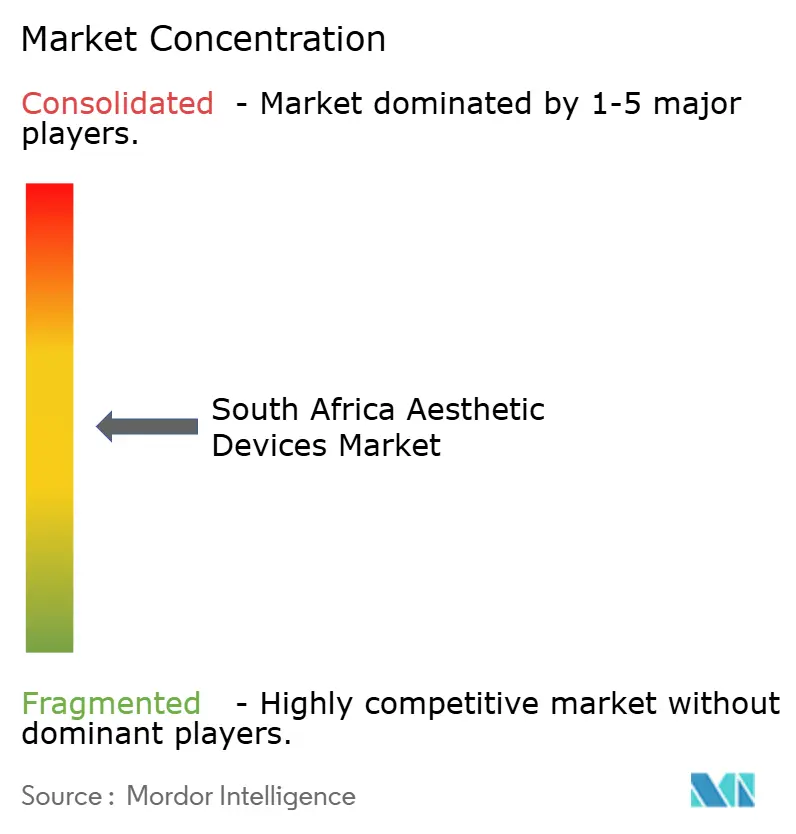
| Market Concentration | Medium |
Major Players *Disclaimer: Major Players sorted in no particular order Image © Mordor Intelligence. Reuse requires attribution under CC BY 4.0. | |
South Africa Aesthetic Devices Market Analysis by Mordor Intelligence
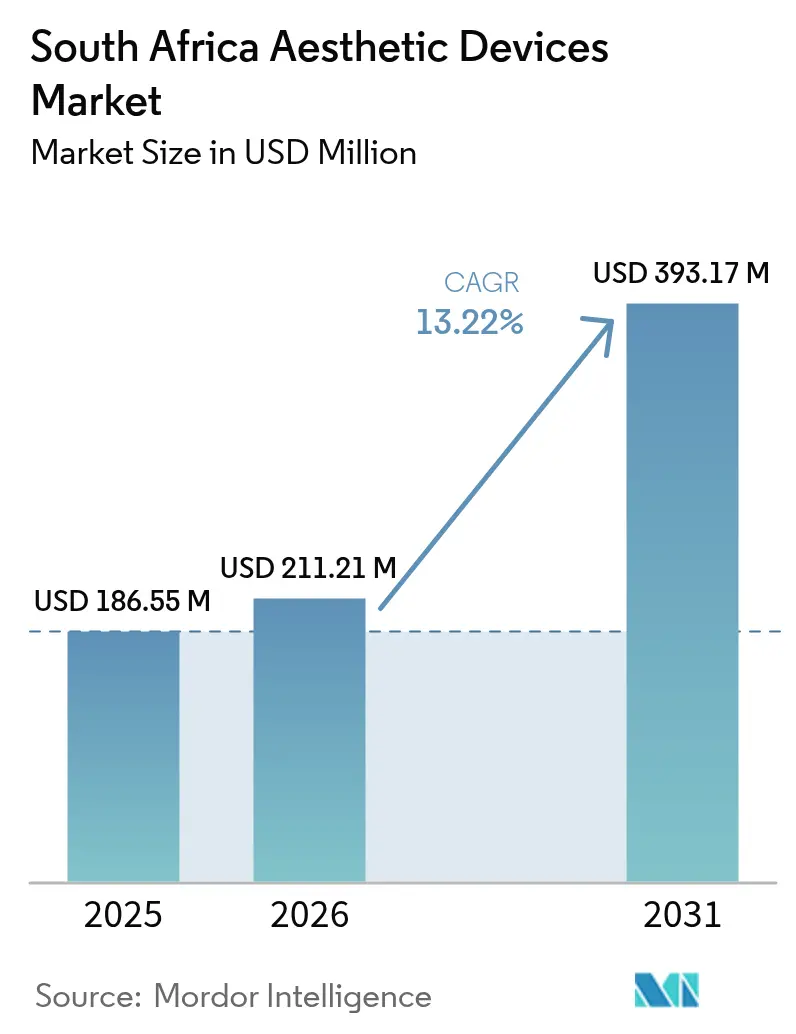
The South Africa Aesthetic Devices Market size is expected to grow from USD 186.55 million in 2025 to USD 211.21 million in 2026 and is forecast to reach USD 393.17 million by 2031 at 13.22% CAGR over 2026-2031.
Sustained demand for minimally-invasive procedures, a growing pool of qualified specialists, and South Africa’s role as a regional medical-tourism hub provide strong tailwinds. Energy-efficient device innovations help facilities mitigate chronic power-supply risks, while the International Society of Aesthetic Plastic Surgery (ISAPS) records show that non-surgical treatments already outnumber surgical interventions, underscoring the market’s device-centric growth path. Increasing male participation, especially among black professionals, further broadens the addressable patient base. At the same time, the South Africa aesthetic devices market faces structural hurdles ranging from out-of-pocket payment norms to intermittent load-shedding that raises operating costs for energy-based systems.
Key Report Takeaways
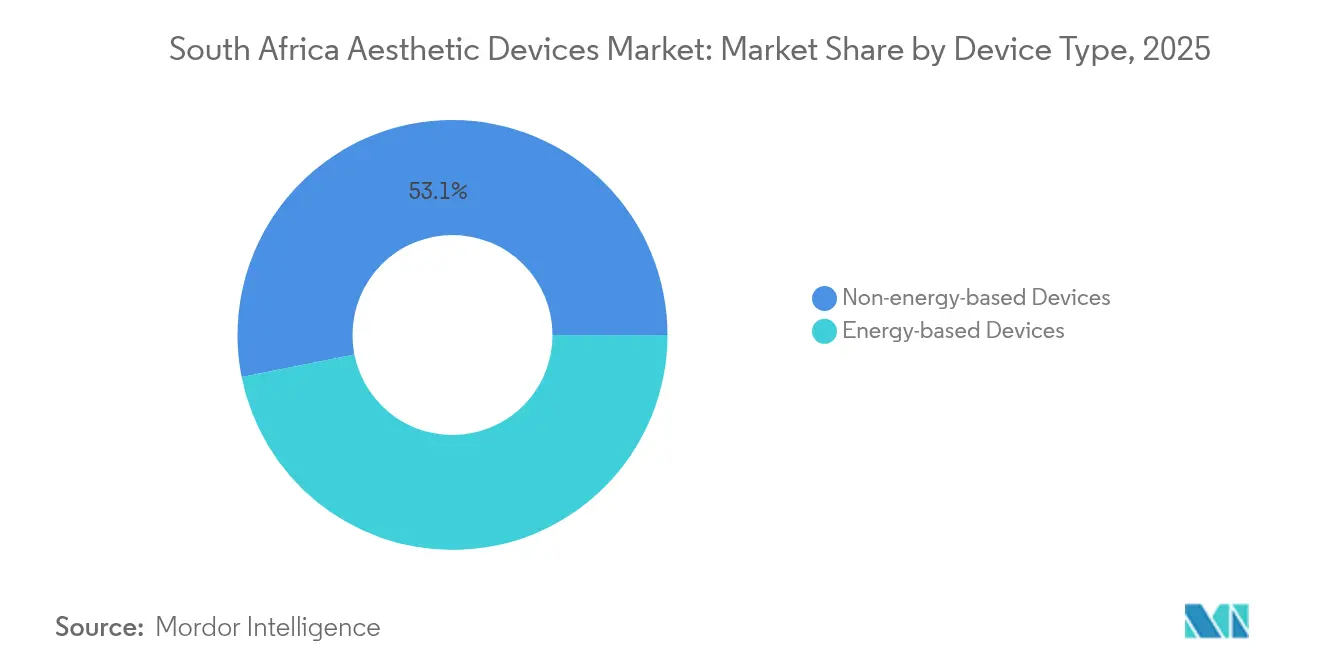
- By device type, non-energy-based devices held 53.12% revenue share in 2025; radio-frequency-based devices are forecast to expand at a 16.58% CAGR through 2031.
- By application, hair removal led with a 31.20% share of the South Africa aesthetic devices market size in 2025, while body contouring and cellulite reduction is set to grow at a 14.92% CAGR to 2031.
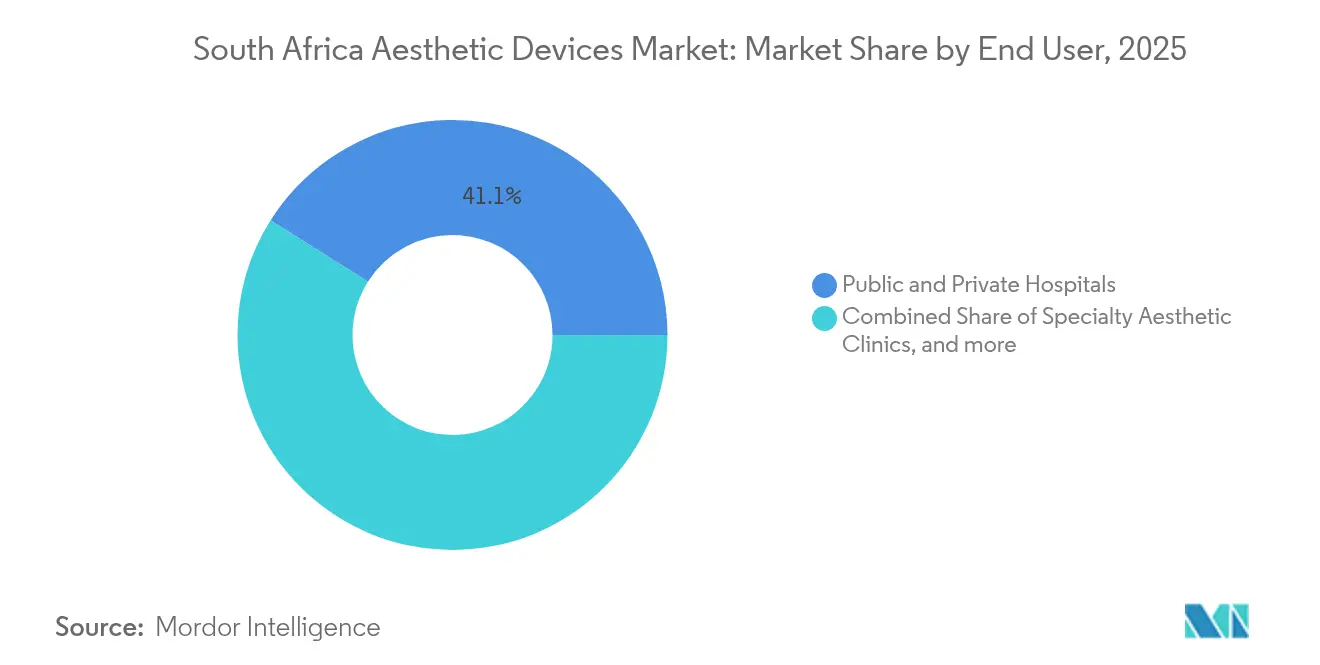
- By end user, public and private hospitals accounted for 41.05% of the South Africa aesthetic devices market share in 2025, whereas specialty aesthetic clinics are poised for the fastest 13.85% CAGR through 2031.
Note: Market size and forecast figures in this report are generated using Mordor Intelligence’s proprietary estimation framework, updated with the latest available data and insights as of 2026.
South Africa Aesthetic Devices Market Trends and Insights
Drivers Impact Analysis*
| Driver | (~) % Impact on CAGR Forecast | Geographic Relevance | Impact Timeline |
|---|---|---|---|
| Increased awareness of minimally-invasive procedures | +2.8% | Major metros including Johannesburg, Cape Town, Durban | Medium term (2–4 years) |
| Rising prevalence of skin disorders & obesity | +1.9% | National, skewed toward emerging middle-income cohorts | Long term (≥ 4 years) |
| Medical-tourism inflow | +1.2% | Regional hub drawing patients from sub-Saharan Africa | Medium term (2–4 years) |
| Expanding disposable income & aspirational spend | +0.9% | Urban middle class | Short term (≤ 2 years) |
| Post-pandemic surge in male demand | +0.8% | Urban, especially black professionals | Short term (≤ 2 years) |
| Social-media-enabled tele-consult platforms | +0.6% | Rural and semi-urban districts with mobile access | Long term (≥ 4 years) |
| Source: Mordor Intelligence | |||
Increasing Awareness of Minimally-Invasive Cosmetic Procedures
Social media normalizes aesthetic enhancements and rapidly diffuses treatment knowledge. ISAPS data show that non-surgical procedures represented 56.5% of all South African aesthetic interventions in 2023, led by 29,643 botulinum-toxin injections and 12,641 hyaluronic-acid filler sessions.[1] Celebrity endorsements reinforce safety perceptions, and tele-consultation apps widen specialist access for rural residents. Artificial-intelligence-guided treatment planning raises outcome predictability, addressing safety concerns. SAHPRA’s device-registration system ensures that only approved technologies reach clinics, further boosting patient confidence.[2]
Rise in Skin Disorders & Obesity Prevalence
Environmental stressors and genetic predispositions heighten incidences of hyperpigmentation, keloids, and post-inflammatory scars among black South Africans, sharpening demand for pigment-safe lasers and intense-pulsed-light systems. Simultaneously, national obesity rates spur interest in non-invasive fat-reduction and skin-tightening devices. Emerging male-grooming brands tailored to black-male skin, such as locally developed lines targeting razor-bump complications, illustrate untapped product-adjacency opportunities. Medical-aid schemes increasingly recognize functional benefits of scar-revision therapies, supporting partial reimbursement for select devices.
Growth in Medical Tourism Inflow
Competitive procedure pricing and English-language care attract patients from Namibia, Botswana, and beyond. Some Johannesburg plastic surgeons report that regional clients make up more than 80% of their caseloads. Dedicated recovery villas, safari-linked wellness packages, and internationally accredited clinics amplify South Africa’s value proposition. The multiplier effect lifts local hospitality sectors, justifying investments in advanced energy-based systems that command premium prices.
Expanding Disposable Income & Aspirational Spending
Despite broad macro-economic headwinds, the emerging middle class continues to channel discretionary funds into appearance-enhancing services as a marker of professional success. Academic research on conspicuous consumption among black professionals confirms status-signaling motivations behind elective healthcare purchases. Flexible payment plans and buy-now-pay-later options make high-ticket body-contouring packages more accessible, smoothing clinic cash flows.
Restraints Impact Analysis*
| Restraint | (~) % Impact on CAGR Forecast | Geographic Relevance | Impact Timeline |
|---|---|---|---|
| Lack of reimbursement; out-of-pocket model | -1.7% | National, hardest on lower-income groups | Long term (≥ 4 years) |
| High capital & maintenance cost of devices | -1.2% | National, severe for small practices | Medium term (2–4 years) |
| Electricity load-shedding disruptions | -0.8% | National, acute in public hospitals | Short term (≤ 2 years) |
| Counterfeit injectables eroding trust | -0.6% | Informal markets in metropolitan areas | Medium term (2–4 years) |
| Source: Mordor Intelligence | |||
Lack of Reimbursement; Out-of-Pocket Model
Full cash payment narrows access to advanced treatments, concentrating demand among affluent urbanites. Multi-session therapies such as cryolipolysis face higher patient-dropout risk due to cumulative cost. Although third-party financing products exist, high interest rates still deter middle-income consumers. Insurers seldom cover procedures even when functional benefits—for example, hyperhidrosis management—are clinically documented.
High Capital & Maintenance Cost of Advanced Devices
Cutting-edge lasers and energy-based platforms often exceed USD 100,000, and quarterly maintenance contracts add recurring overhead. Currency volatility inflates import costs, while limited rural technical support prolongs downtime. Backup-power investment has become non-negotiable: hospital chains estimate that generator-fuel spending rose 35% in 2025 alone.[3] As a result, smaller practices gravitate to lower-cost non-energy modalities or refurbished systems.
*Our forecasts treat driver/restraint impacts as directional, not additive. The impact forecasts reflect baseline growth, mix effects, and variable interactions.
Segment Analysis
By Device Type: Non-Energy Dominance Faces Technology Disruption
Non-energy-based products, led by botulinum toxin and dermal fillers, contributed 53.12% of the South Africa aesthetic devices market size in 2025 and remain the entry point for cost-conscious patients. Rapid-growing radio-frequency (RF) systems, however, are forecast to post a 16.58% CAGR as monopolar and bipolar platforms deliver visible tightening without incisions. AI-assisted ultrasound imaging is improving RF probe placement, elevating safety profiles. Portable diode lasers maintain popularity in mid-tier clinics because of versatile hair-removal and vascular-lesion settings. Top-end practices adopt hybrid RF-microneedling units that integrate depth-controlled needle cartridges, enhancing collagen remodeling while minimizing downtime. Emerging cryolipolysis and plasma-based resurfacing solutions find traction among patients seeking single-session body-sculpting or scar-revision options. SAHPRA’s impending device-registration regime could accelerate market consolidation by excluding substandard imports.
Energy-efficiency considerations shape capital-expenditure decisions; devices featuring sleep-mode and low-heat handpieces gain favor in load-shedding zones. Leasing models lower upfront cost barriers, allowing smaller clinics to trial premium lasers before full purchase. As competitive intensity rises, manufacturers bundle accreditation training and predictive-maintenance software, cementing brand loyalty. Secondary markets for refurbished lasers are expanding, offering entry-level providers a pathway into the South Africa aesthetic devices market without prohibitive capex.

By Application: Hair Removal Leadership Challenged by Body Contouring Innovation
Hair removal remained the highest-volume application, holding a 31.20% share of the South Africa aesthetic devices market in 2025, with diode and alexandrite lasers serving mixed-Fitzpatrick skin types effectively. Body contouring and cellulite-reduction technologies, nonetheless, are poised to deliver the fastest 14.92% CAGR, propelled by non-invasive fat-free and RF-based skin-tightening platforms that suit patients reluctant to undergo liposuction. Combination protocols using cryolipolysis followed by vibration-plate therapy shorten recovery and improve lymphatic drainage.
Skin-resurfacing demand rides on an aging yet professionally active population seeking subtle rejuvenation. Fractional CO₂ lasers and plasma-pen devices address post-inflammatory hyperpigmentation prevalent in darker skin tones, while pigment-safe 1064 nm lasers minimize risk of hypopigmentation. Acne-scar management deploys a multi-modality approach microneedling RF plus platelet-rich plasma to maximize collagen induction. Tattoo-removal volumes rise as workplace-appearance standards tighten, supporting investment in pico-second lasers with lower aberration risk.
By End User: Hospital Infrastructure Advantage Versus Clinic Specialization
Public and private hospitals retained 41.05% of the South Africa aesthetic devices market share in 2025 thanks to extensive infrastructure, higher bed capacity, and better emergency-support capabilities. Their embedded generator systems mitigate load-shedding downtime, safeguarding device longevity. Nevertheless, specialty aesthetic clinics are projected to surge at a 13.85% CAGR as physician-entrepreneurs capitalize on focused branding and premium service models. Clinics emphasize same-day protocols, private recovery pods, and membership-based loyalty schemes.
Other end users, including dermatology practices and medical spas, carve out niches through personalized skin-health programs that combine aesthetic and therapeutic interventions. Public-private joint ventures under the National Health Insurance roadmap open new geographic pockets by equipping regional hospitals with mid-tier laser equipment. Workforce-development grants subsidize nurse-aesthetician upskilling, improving device-utilization rates in semi-urban settings.
Geography Analysis
Johannesburg, Cape Town, and Durban anchor the South Africa aesthetic devices market, accounting for a combined majority of installed laser and RF capital due to higher disposable incomes and dense private-clinic networks. Gauteng province alone houses more than half of the country’s board-certified plastic surgeons, creating a robust referral pipeline. Cape Town attracts a disproportionate share of international “surgery-safari” patients seeking post-operative recuperation in coastal resorts, reinforcing local demand for high-end energy-based systems. Durban’s multicultural demographic accelerates adoption of pigment-safe lasers tailored for Fitzpatrick IV–VI skin.
Rural provinces such as Limpopo and the Eastern Cape witness growing but latent demand. Distance-decay studies confirm that patient utilization declines sharply beyond 15 km from specialist centers, underscoring tele-consultation’s role in bridging access gaps. Infrastructure-upgrade grants under National Health Insurance target secondary hospitals for refurbishment, including stable power and high-speed broadband—prerequisites for device uptime and remote-calibration services. Nonetheless, persistent poverty levels and limited credit access constrain uptake of multi-session treatments.
Power-supply reliability remains the key geographical differentiator. Clinics in Eskom’s high-risk load-shedding zones report 20% higher maintenance expenditure to protect sensitive optics. By contrast, facilities in the Western Cape leverage municipal energy-resilience plans, enabling longer operating hours and higher procedural throughput. SAHPRA maintains uniform regulatory standards across provinces, yet enforcement resources vary, leaving rural clinics more vulnerable to counterfeit consumables.
Regional medical-tourism flows further tilt market gravity toward urban hubs. Direct international flights into OR Tambo and Cape Town International Airports shorten patient itineraries, while accredited recuperation villas cluster around Table Mountain and Sandton. Provincial marketing agencies now position aesthetic wellness packages alongside wine-route tours, adding non-clinical revenue streams that subsidize advanced equipment purchases.
Regulatory Landscape
South Africa regulates aesthetic devices under the Medicines and Related Substances Act, 1965 (Act 101 of 1965), with the South African Health Products Regulatory Authority (SAHPRA) serving as the central regulator. Establishment licensing is a core gatekeeper requirement, as manufacturers, importers, exporters, distributors, and wholesalers of medical devices must hold a valid SAHPRA medical device establishment license, backed by a quality management system aligned to ISO 13485 expectations. SAHPRA also uses a four-tier, risk-based classification framework (Class A to Class D), which shapes compliance obligations and evidence expectations for higher-risk technologies.
In 2026, SAHPRA advanced two initiatives that affect market-entry pathways and compliance planning. In February 2026, SAHPRA published its Medical Devices Reliance Guideline (SAHPGL-MD-22), outlining reliance-based review options across pre-market and post-market activities. In March 2026, SAHPRA published the Medical Devices Registration Feasibility Study report, indicating movement toward a risk-based registration approach and giving importers and manufacturers clearer direction on future product-level regulatory readiness beyond establishment licensing.
Competitive Landscape
International manufacturers dominate premium energy-based segments, while local distributors compete on service responsiveness and flexible financing. Brands such as Allergan, Galderma, and Candela maintain top-of-mind status through continuous-education workshops, yet emerging Korean and Israeli vendors chip away with price-competitive RF-microneedling and pico-second platforms. Mid-tier clinics prize total cost of ownership above sticker price, scrutinizing consumable pricing and warranty length.
Service ecosystems differentiate winners in the South Africa aesthetic devices market. Vendors offering 24-hour technical hotlines, remote diagnostics, and loaner units minimize revenue-loss risk during downtime. Device-agnostic maintenance companies are also gaining ground, offering multi-brand service packages attractive to mixed-fleet facilities. Consolidation appears imminent: SAHPRA’s stricter registration regime raises compliance costs, likely nudging smaller importers toward mergers or exit.
Localized innovation centers around energy-efficiency. One Cape Town distributor retrofits RF platforms with smart-power modules that cut consumption by 18%. Several Johannesburg clinics pilot AI-driven predictive-maintenance dashboards that trigger spare-part orders before breakdowns. The competitive arena is not solely device focused; patient-experience enhancements digital appointment scheduling, virtual reality pain distraction become decisive tie-breakers.
South Africa Aesthetic Devices Industry Leaders
-
Alma Lasers
-
Galderma
-
Venus Concept
-
Abbvie (Allergan Inc.)
-
Sciton Inc.
- *Disclaimer: Major Players sorted in no particular order
Market Opportunities and Future Outlook
A near-term whitespace sits at the intersection of compliance readiness and service-backed distribution, as clinics and hospitals increasingly prioritize traceable supply, practitioner training, and device uptime for energy-based platforms operating under load-shedding constraints. SAHPRA activity in 2026, including the Medical Devices Registration Feasibility Study (March 2026) and the Reliance Guideline (February 2026), creates an execution window for manufacturers and distributors that can align technical files, classification rationale, and post-market processes to SAHPRA expectations, while using reliance where applicable for higher-risk categories. The same environment also supports growth in credible refurbishment, leasing, and maintenance ecosystems, where documented service histories and quality controls help reduce downtime and improve total cost of ownership for high-capex laser and RF systems.
Local manufacturing and translational capability also creates a pathway for localized components, accessories, and, over time, device subsystems, which can reduce foreign-exchange exposure and improve service turnaround times. In May 2026, the University of Cape Town's Biomedical Engineering Research Centre (BMERC) secured a SAHPRA medical device manufacturing license authorizing it to manufacture, distribute, and wholesale medical devices, reinforcing momentum in licensed, locally anchored production capability. Alongside SAHPRA finalizing a Local Manufacturing Policy in 2025, these steps support partnerships between global OEMs, South African license holders, and distributor networks to expand training, technical support, and compliant supply for fast-growing categories such as body contouring and skin tightening systems.
Recent Industry Developments
- June 2026: Medi Aesthetic Solutions announced the exclusive distribution launch of the Lysiwave body contouring device (Biotec Italia) in South Africa. The launch improves local access to device-led body contouring offerings through an in-country partner that can bundle installation, training, and service support for clinics scaling non-invasive procedures.
- August 2025: LG Chem divested its aesthetics unit to VIG Partners for USD 144 million. The transaction reshaped ownership and portfolio stewardship in hyaluronic-acid fillers, influencing how competing suppliers position continuity of supply, channel coverage, and product support in distributor-led markets such as South Africa.
- April 2024: SAHPRA launched a feasibility study on mandatory aesthetic-device registration. This signposted a shift toward tighter controls beyond establishment licensing, prompting importers and clinics to prioritize documented provenance and compliance planning for higher-scrutiny device categories.
Research Methodology Framework and Report Scope
Market Definition and Coverage
For this study, the market covers aesthetic devices used in South Africa for cosmetic improvement procedures performed in clinical settings, across energy based platforms and non energy based device categories, and counted as manufacturer level revenues in USD.
Scope exclusions: We do not count general surgical tools, skincare products, or therapies that are not delivered through the defined aesthetic device categories.
Segmentation Overview
- By Device Type
- Energy-based Devices
- Laser-based
- Light-based (IPL)
- Radio-frequency-based
- Ultrasound-based
- Cryolipolysis & Plasma-based
- Non-energy-based Devices
- Botulinum Toxin
- Dermal Fillers & Threads
- Chemical Peels
- Microdermabrasion
- Implants
- Mesotherapy & Others
- Energy-based Devices
- By Application
- Skin Resurfacing & Tightening
- Body Contouring & Cellulite Reduction
- Hair Removal
- Tattoo & Pigmentation Removal
- Breast Augmentation
- Acne & Scar Treatment
- Other Applications
- By End User
- Public & Private Hospitals
- Specialty Aesthetic Clinics
- Other End Users
Data Sources, Market Sizing, and Validation
Desk Research
Desk research was used to set the foundation for the demand pool and to keep the model tied to real procedure activity and trade flows in South Africa. We mainly referenced public sources such as Statistics South Africa, the South African Reserve Bank, the South African Revenue Service customs releases, SAHPRA public guidance and notices, and selected peer reviewed dermatology and plastic surgery journals for procedure and safety context.
On top of this, we reviewed company annual reports and investor presentations, official websites of local healthcare associations, and reputable news coverage for pricing signals, product launches, and clinic expansion announcements. Where needed, we also used a paid subscription for company financials and intelligence, and another for import and export shipment level checks, so assumptions on supply availability could be stress tested. The sources listed here are illustrative only, and many other public documents were also used for data collection, validation, and clarification.
Primary Interviews and Surveys
Primary work focused on confirming which device categories are actually purchased and used in South Africa, and how pricing is moving across imported systems, consumables, and service contracts. We spoke with a mix of distributors, clinic owners, hospital procurement teams, and practicing professionals across key metros and secondary cities, so desk based assumptions could be corrected where local adoption patterns differed.
Feedback was also used to validate the split between energy based systems and non energy based categories, along with typical replacement cycles, utilization levels, and what drives patients to specific procedures.
Distribution of primary research fieldwork respondents
| Company type | Respondent position |
|---|---|
| Top tier: 33% | CXOs: 13% |
| Mid tier: 47% | Functional/Unit leaders: 29% |
| Smaller Players: 20% | Managers: 58% |
Market-Sizing & Forecasting
Sizing was built using a top-down approach where procedure demand and installed base signals were translated into device revenues through penetration and replacement logic, and then corroborated with selective bottom-up approximations from supplier and channel checks. For example, expected demand for hair removal, skin resurfacing and tightening, and body contouring was converted into equipment needs using utilization ranges, average clinic throughput, and typical upgrade cycles.
Key inputs that shaped the model included the mix of energy based platforms (laser based, IPL or light based, radio frequency, ultrasound, and cryolipolysis or plasma systems), the share of non energy based categories (such as botulinum toxin and dermal fillers and threads, chemical peels, and microdermabrasion), average selling price bands for imported equipment, and the split of purchases across hospitals and aesthetic clinics. When data points were missing for smaller cities, assumptions were bridged using metro to non metro adoption ratios that were validated in interviews.
Forecasting was done using scenario analysis supported by a simple multivariate regression, where variables like procedure growth outlook, pricing progression, clinic expansion, and expected import availability were tested under base, conservative, and aggressive paths. The final forecast was kept practical, so each driver can be traced back to a measurable signal and a clear assumption that can be updated as the market changes.
Data Validation & Update Cycle
Validation was handled through cross checks between independent signals, such as procedure level direction, import trends for relevant device categories, and observed pricing in the channel. If a segment output moved too far from these signals, the driver assumptions were rechecked and, where needed, interview follow ups were triggered to confirm what changed.
Before sign off, the model goes through a multi step analyst review that focuses on year over year variance, unit economics reasonableness, and scope consistency across segments and end users. Reports are refreshed annually, and interim updates are added when major regulatory, currency, or demand events materially shift the outlook. Right before delivery, we do a final pass so clients receive the latest updated view.
Mordor Intelligence's South Africa Aesthetic Devices Market Size Versus Other Published Estimates
Published market values for South Africa aesthetic devices can vary even when the topic sounds the same, because the included product boundaries, exchange rate timing, and pricing progression assumptions differ from one publisher to another. Another common reason is that some estimates lean more on headline growth expectations, while others tie the model closer to procedure level activity and channel availability.
In our checks, the biggest gaps usually came from how non energy based categories are treated, whether clinic only demand is mixed with home use, and how average selling prices are moved forward during high FX volatility years. By refreshing ZAR to USD conversion timing, rechecking ASP bands with channel feedback, and rerunning variance checks against procedure adoption signals, Mordor Intelligence keeps the 2025 value aligned to what is being purchased and used in the country.
Benchmark comparison
| Source | Market Size | Gaps in Research Methodology |
|---|---|---|
| Mordor Intelligence | USD 186.55 M (2025) | |
| Regional Consultancy A | USD 100.26 M (2024) | Uses an earlier base year and a different timing for currency conversion, and it also appears to treat parts of the market closer to equipment only while not fully capturing ongoing non energy based device categories. |
| Industry Publisher B | USD 187.40 M (2026) | Starts the series later and concentrates on energy based platforms like laser and RF systems, which can undercount non energy based categories, while also applying a flatter price progression that reduces near term value growth. |
Taken together, the spread is mainly explained by scope boundaries, currency timing, and how ASP changes are applied as the market shifts. Our approach stays repeatable because every total is built from clear demand indicators, checked against channel reality, and then carried forward using assumptions that can be revisited each refresh.
Key Questions Answered in the Report
How fast is the South Africa aesthetic devices market expected to grow to 2031?
It is projected to advance at a 13.22% CAGR, moving from USD 211.21 million in 2026 to USD 393.17 million in 2031.
Which device category leads current sales?
Non-energy-based injectables and fillers hold 53.12% of 2025 revenue.
What is the fastest-growing application?
Body contouring and cellulite reduction is forecast to grow at a 14.92% CAGR through 2031.
Why are specialty clinics expanding faster than hospitals?
Focused branding, premium patient experiences, and lower fixed-asset intensity drive a forecast 13.85% CAGR for clinics.