
Aesthetic Threads Market Size and Share
Market Overview
| Study Period | 2020 - 2031 |
|---|---|
| Market Size (2026) | USD 153.63 Million |
| Market Size (2031) | USD 253.14 Million |
| Growth Rate (2026 - 2031) | 10.49 % |
| Fastest Growing Market | Asia Pacific |
| Largest Market | North America |
| Market Concentration | Medium |
Major Players *Disclaimer: Major Players sorted in no particular order Image © Mordor Intelligence. Reuse requires attribution under CC BY 4.0. | |
Aesthetic Threads Market Analysis by Mordor Intelligence
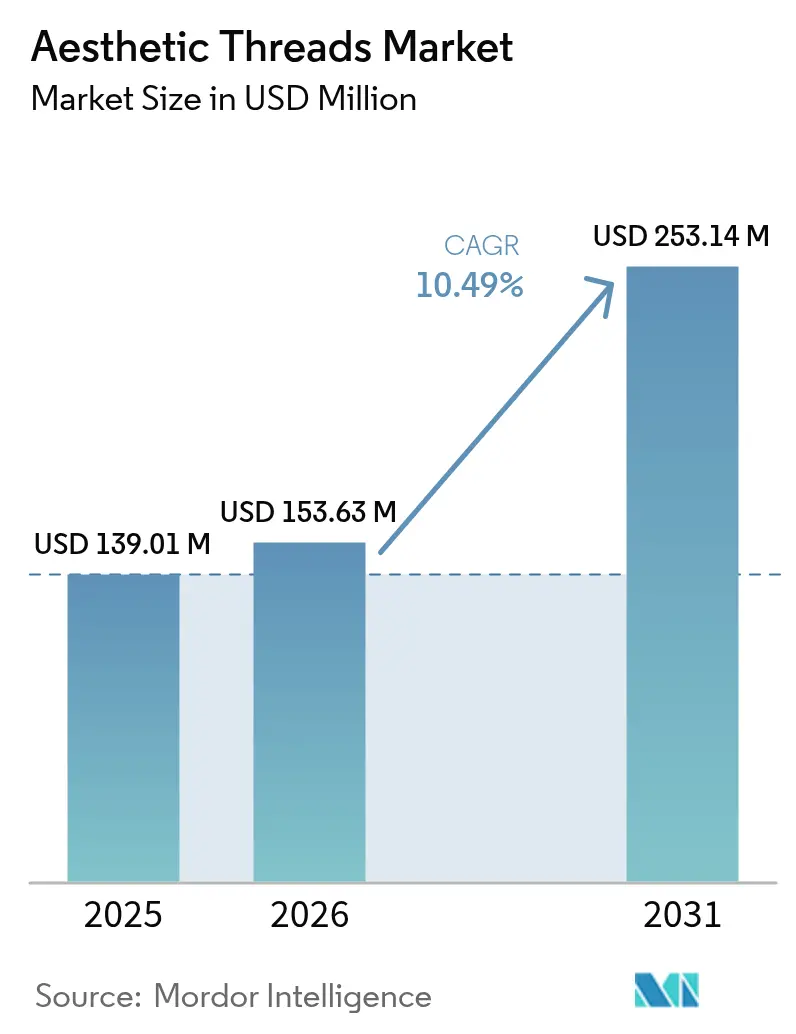
Aesthetic thread market size in 2026 is estimated at USD 153.63 million, growing from 2025 value of USD 139.01 million with 2031 projections showing USD 253.14 million, growing at 10.49% CAGR over 2026-2031. Growth is fueled by a rapid migration from surgical facelifts to minimally invasive lifting techniques that reduce downtime and post-operative risk. Advances in polydioxanone and polycaprolactone polymers enable sustained neocollagenesis, which extends visible results and supports premium price points. Clarified FDA pathways for barbed and cone thread clearances have lowered innovation barriers and attracted new device entrants. Regionally, North America retains an early-mover advantage owing to its dense medical-spa infrastructure, while Asia-Pacific is expanding fastest on rising disposable incomes and aesthetic procedure acceptance.
Key Report Takeaways
- By thread material, polydioxanone led with 64.98% of aesthetic thread market share in 2025, whereas polycaprolactone is forecast to expand at a 10.72% CAGR through 2031.
- By thread design, barbed products captured 42.72% revenue share in 2025, while cone threads are poised to grow at an 11.02% CAGR over the same period.
- By application, face lift and rejuvenation accounted for 56.35% of the aesthetic thread market size in 2025, and body lifting is advancing at a 10.71% CAGR to 2031.
- By end user, dermatology and cosmetic surgery centers held 53.10% of 2025 revenues, yet medical spas are projected to have a 11.63% CAGR through 2031.
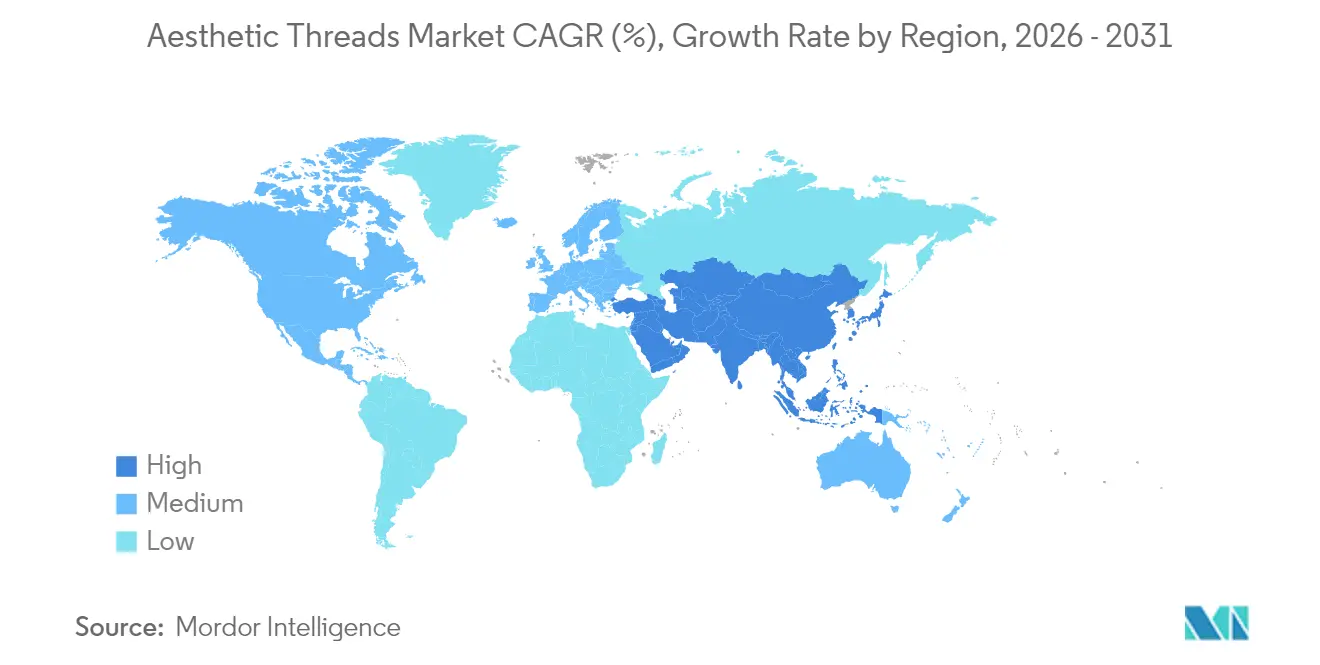
- By geography, North America accounted for 30.80% of 2025 revenues, whereas the Asia-Pacific region is projected to grow at a CAGR of 12.05%.
Note: Market size and forecast figures in this report are generated using Mordor Intelligence’s proprietary estimation framework, updated with the latest available data and insights as of 2026.
Market Trends and Insights
Drivers Impact Analysis of Aesthetic Threads Market*
| Driver | (~) % Impact on CAGR Forecast | Geographic Relevance | Impact Timeline |
|---|---|---|---|
| Surge in demand for minimally invasive facial rejuvenation | +2.1% | Global, strongest in North America and Europe | Medium term (2-4 years) |
| Rising adoption of PDO threads over dermal fillers | +1.8% | Global, particularly Asia-Pacific and North America | Short term (≤ 2 years) |
| Expansion of medical-spa chains offering thread lifts | +1.4% | North America and Europe, expanding to Asia-Pacific | Medium term (2-4 years) |
| Regulatory approvals for barbed and cone thread designs | +1.2% | Global | Long term (≥ 4 years) |
| AI-assisted patient-selection tools improving outcomes | +0.9% | North America and Europe first, global later | Long term (≥ 4 years) |
| Growing preference for sustainability-certified polymers | +0.7% | Europe and North America leading | Long term (≥ 4 years) |
| Source: Mordor Intelligence | |||


Surge in demand for minimally invasive facial rejuvenation
Patients favor procedures that deliver natural-looking lift without long recovery, raising thread-lift satisfaction to 95% at six months and 62% at one year. Younger consumers embrace “pre-juvenation,” and social platforms amplify peer testimonials that normalize early intervention. Combination therapies pairing threads with energy devices widen indications while keeping invasiveness low. Standardized training now shortens learning curves, reducing adverse events and enhancing word-of-mouth growth. As clinical data confirms durability comparable to mini-lift surgery, insurers are piloting partial reimbursements in select U.S. states.
Rising adoption of PDO threads over dermal fillers
PDO threads create a dual benefit of immediate lift plus collagen genesis that persists for up to 12 months. Their longer effect window makes procedures cost-effective relative to fillers that last 6–12 months. Threads also treat laxity more directly than volume-based injectables, appealing to patients wary of overfilled cheeks. Device makers have refined barb distribution, easing insertion and cutting chair time. Lower complication risk compared with permanent fillers persuades risk-averse clients and cautious practitioners to switch modalities.
Expansion of medical-spa chains offering thread lifts
U.S. spa locations rose from 8,899 in 2022 to 10,488 in 2023, with 84% of owners forecasting 2025 revenue growth as thread lifts become flagship services[1]Source: Madilyn Moeller, “2024 Medical Spa State of the Industry Executive Report Recap,” americanmedspa.org . Repeat visitation climbed to 73%, proving that maintenance cycles drive loyalty and cross-sell of adjunct treatments. Private-equity groups standardize protocols across chains, ensuring uniform safety and buying leverage for consumables. Suppliers now bundle training and starter kits, lowering entry barriers for new outlets. Consolidation accelerates geographic reach, exposing untapped suburban markets to minimally invasive lifts.
Regulatory approvals for barbed and cone thread designs
FDA guidance under 21 CFR 878 now lists specific product codes for aesthetic threads, shortening review cycles and clarifying data requirements. Triple clearance for the MINT PDO family showcases a viable roadmap for innovators seeking U.S. entry. Europe’s streamlined CE-marking under the Medical Device Regulation reduces time-to-market by roughly six months for evidence-rich dossiers. Harmonized rules lower R&D risk and enable simultaneous multi-region launches, which boosts revenue ramp speed. Clearer pathways attract venture backing for next-generation cone geometries that promise stronger anchoring and longer lift.
Restraints Impact Analysis of Aesthetic Threads Market*
| Restraint | (~) % Impact on CAGR Forecast | Geographic Relevance | Impact Timeline |
|---|---|---|---|
| Limited long-term clinical data on thread durability | -1.6% | Global, particularly affecting regulatory approvals | Medium term (2-4 years) |
| Risk of post-procedure complications in un-skilled settings | -1.3% | Global, with higher impact in emerging markets | Short term (≤ 2 years) |
| Intense pricing pressure from generic Asian manufacturers | -1.1% | Global, with strongest impact in North America & Europe | Short term (≤ 2 years) |
| Rising litigation linked to counterfeit products online | -0.8% | Global, particularly e-commerce channels | Medium term (2-4 years) |
| Source: Mordor Intelligence | |||
Limited long-term clinical data on thread durability
Most studies stop at 24 months, leaving a knowledge gap on five-year performance and collagen persistence. Absorption variability among brands complicates standardized outcome forecasts and heightens regulatory scrutiny. Agencies now request extended biocompatibility data, which lengthens R&D cycles and slows novel material roll-outs. Practitioners remain cautious, especially for newer polymers like PCL, until real-world evidence accumulates. This restraint tempers near-term adoption, particularly in publicly funded healthcare systems that demand robust longitudinal data before reimbursement approval.
Risk of post-procedure complications in un-skilled settings
Complications occur in more than 30% of poorly executed procedures, ranging from swelling to thread extrusion. Infection alone accounts for 31% of cases needing medical intervention, with 16% requiring surgical removal of threads. The rise of non-physician-run spas—67% of single-owner outlets lack an MD—elevates training gaps that drive adverse outcomes. Negative media coverage erodes consumer confidence and triggers tighter oversight, potentially delaying expansion into emerging regions. Manufacturers respond with certification courses and color-coded insertion guides, yet uptake remains uneven across fragmented spa networks.
*Our forecasts treat driver/restraint impacts as directional, not additive. The impact forecasts reflect baseline growth, mix effects, and variable interactions.
Aesthetic Threads Market Segment Analysis
By Thread Material:
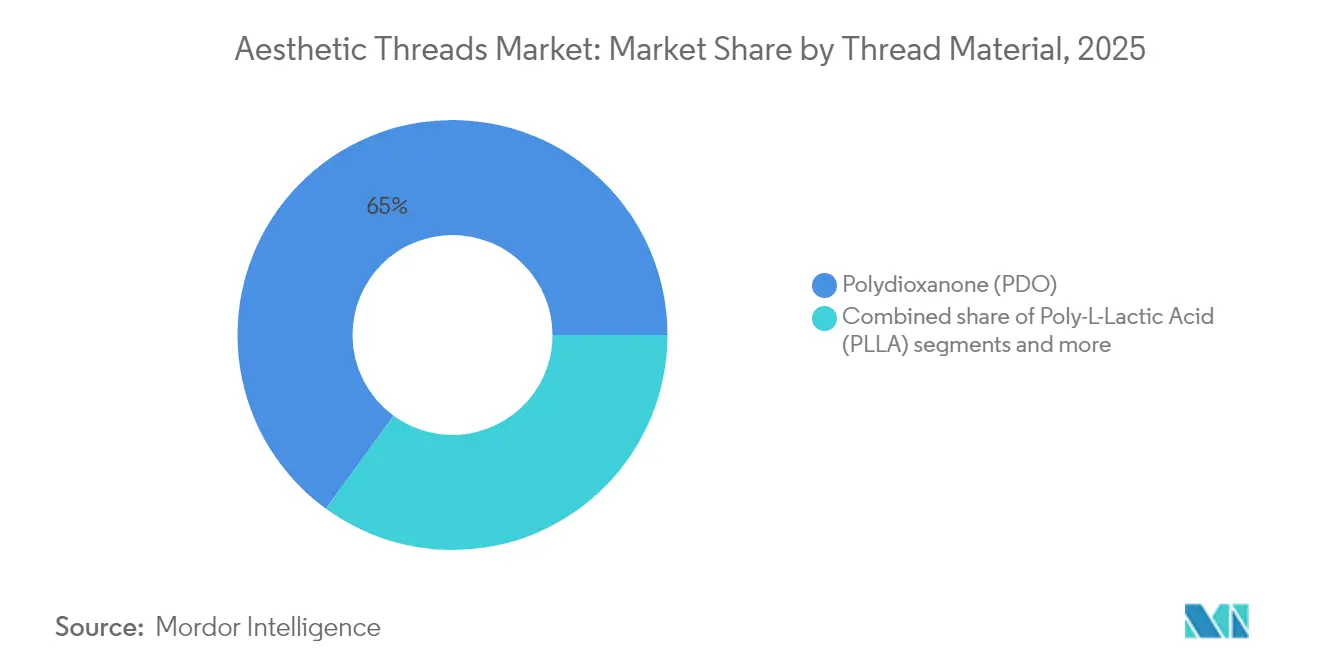
Longer-lasting polymers unlock premium positioningPolydioxanone retained 64.98% of 2025 revenue, meaning the aesthetic thread market share for this polymer remains dominant as clinics trust its six- to eight-month absorption window. Polycaprolactone, though smaller today, is forecast to post a 10.72% CAGR through 2031, expanding the aesthetic thread market size allocated to long-duration lifts that sustain collagen turnover for up to 24 months. Poly-L-lactic acid threads occupy a body-contouring niche where gradual remodeling justifies higher ticket prices, and poly-lactic-co-glycolic acid fills specialty indications demanding staged degradation timelines. Material selection now hinges on matching polymer life cycles to anatomical mobility so providers can tier service menus without lowering clinical predictability.
Starter kits that bundle PDO, PCL, and PLLA threads help new practices calibrate lift duration to patient downtime tolerance, while European buyers increasingly demand ISO-13432 certificates that verify bio-based feedstocks. Manufacturers have answered with PLA-blend lines that shrink landfill footprints and create an eco-premium tier attractive to Gen-Z consumers. As tariffs inflate Asian PDO prices by up to 54%, U.S. distributors hedge risk by adding domestically extruded threads, increasing supply resilience. Diversified sourcing lowers substitution costs if raw-material shortages hit a single resin, maintaining steady procedural volumes even during trade disruptions.


By Thread Design:
Cone geometry pushes anchoring boundariesBarbed products captured 42.72% of 2025 spending, so the aesthetic thread market share of barbs continues to eclipse other geometries thanks to immediate mechanical lift and broad practitioner familiarity. Cone threads, however, are slated for an 11.02% CAGR to 2031 as their multidirectional grip curbs migration and shortens chair time, expanding their slice of the aesthetic thread market size as clinics adopt them for challenging anatomic sites. Smooth mono threads remain staples for dermal collagen induction, while screw or tornado formats serve rotational anchoring needs in nasal or brow lifts.
Hybrid barb-cone constructs now in pilot studies promise dual-stage support—early physical lift followed by prolonged neocollagenesis—which could stretch visible results without extending polymer residency. FDA clearance timelines have dropped to 18 months for well-documented cone designs, accelerating commercial roll-outs and enticing venture backing. Color-coded cannulas paired to each design simplify insertion depth for new injectors and cut placement errors by 17% in early trials. Clinics increasingly combine strong barbed vectors along the jawline with finer mono threads across the mid-face, tailoring tensile maps while keeping consumable costs stable.
By Application Area:
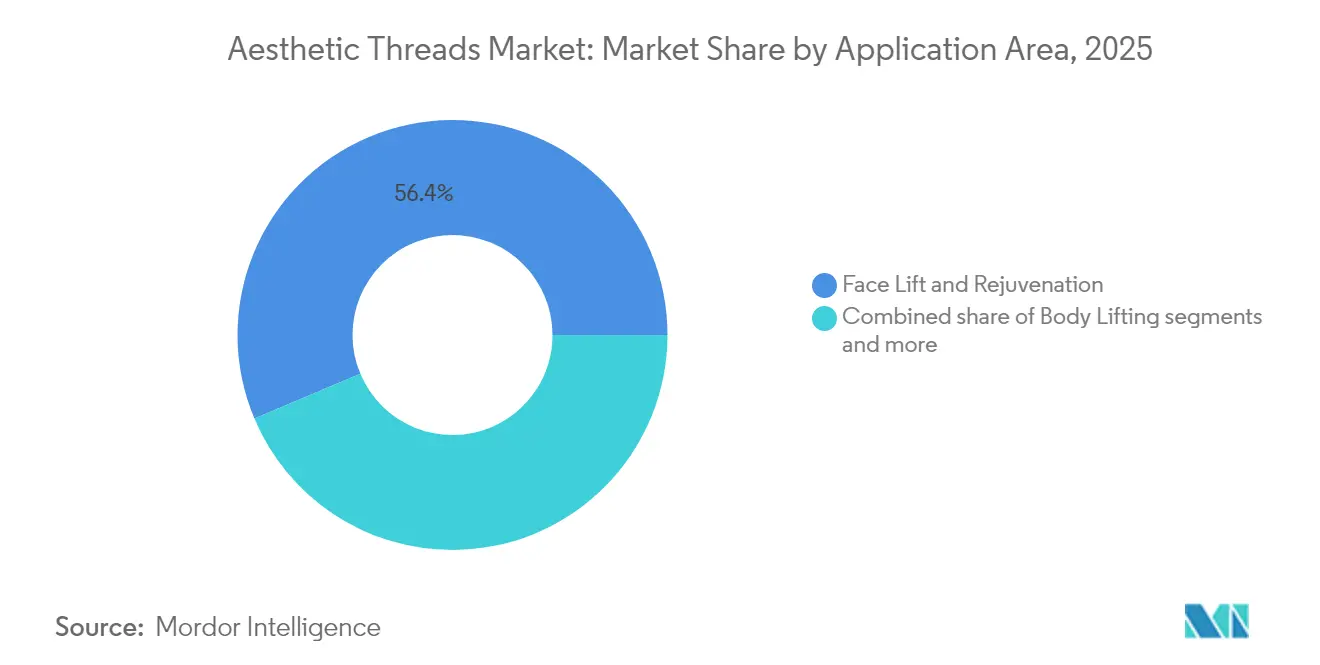
Body lifting extends non-surgical contouringFace lift and rejuvenation held 56.35% of 2025 procedure value, translating into the single largest contribution to the aesthetic thread market size for any indication. Body lifting shows the fastest 10.71% CAGR to 2031 as extended-length threads make arms, abdomen, and buttocks viable targets, widening the aesthetic thread market for clinics that previously relied on energy-based contouring devices. Neck and jawline contouring benefits from single-entry techniques that lower bruising risk, while nose reshaping with short screw threads posts 95% six-month satisfaction in a 553-patient study.
Manufacturers now supply 30 cm PCL threads with reinforced barbs that withstand arm-swing stress, expanding the portfolio for high-mobility zones. Clinics market staged packages—face first, body later—to spread cost over two fiscal quarters, increasing patient retention and average lifetime value. Early adopters report 90% six-month satisfaction for posterior-arm lifts, encouraging pay-per-click campaigns that showcase dramatic before-after galleries and drive booking conversions. Although longitudinal data is thin for thigh lifts, initial safety profiles remain acceptable, so practitioner societies plan multicenter registries to close evidence gaps over the next three years.
By End User:
Medical-spa networks democratize accessDermatology and cosmetic surgery centers generated 53.10% of 2025 revenue, reflecting their control of complex revision work and combination cases within the aesthetic thread market. Medical spas are projected to expand at 11.63% CAGR, outpacing all other channels as franchised operators standardize protocols and funnel social-media leads into high-margin thread packages. Hospitals and ambulatory centers maintain a steady share by tackling high-risk patients who need anesthesia options or adjunct energy devices.
AI-driven triage dashboards flag contraindications before appointments, cutting refund-eligible complications and boosting insurer confidence in covering select procedures. Vendors bundle basic AI subscriptions with bulk thread contracts, locking practices into annual reorder quotas that guarantee stable manufacturing demand. Private-equity roll-ups now control multi-state spa chains and negotiate exclusivity deals with thread suppliers, squeezing margins for independent clinics but assuring consistent training standards across their networks. These trends collectively widen consumer access, pushing total procedure volume beyond traditional dermatology channels and reinforcing the shift toward minimally invasive aesthetics.
Geography Analysis
North America Aesthetic Threads Market
North America commanded 30.80% of 2025 spending, making it the largest regional slice of the aesthetic thread market size as FDA clarity and 10,488 operating medical spas underpin robust consumer uptake. Baseline tariffs of 10% plus China-specific surcharges up to 54% inflate supply costs, so premium clinics pass expenses to affluent patients, while price-sensitive segments test domestic PDO lines to protect margins. Growth is therefore stable rather than explosive, anchored by demographic expansion and procedural refinements rather than first-wave novelty.
APAC Aesthetic Threads Market
Asia-Pacific records the fastest 12.05% CAGR to 2031, fueled by rising disposable income and a cultural emphasis on skin aesthetics that propels China’s medical-beauty sector toward 10% annual growth. Regional manufacturers in Korea and China supply competitively priced cone and barb designs, maintaining affordability despite trade headwinds and thus expanding the aesthetic thread market share for local brands. Medical-tourism hubs in Thailand and Singapore bundle thread lifts with other cosmetic services, supporting cross-border procedure flows that lift regional revenues.
EMEA and South America Aesthetic Threads Market
Europe delivers steady mid-single-digit growth as regulatory harmonization under the MDR and consumer preference for sustainability shift clinics toward bio-certified polymers. South America and the Middle East & Africa remain nascent but promising, with rising middle-class populations and government-backed medical-tourism corridors fostering double-digit uptake from a low base. Skill gaps and uneven regulatory oversight in these regions temper near-term acceleration, though multinational distributors offer turnkey training kits to speed market penetration.

Regulatory Landscape
In the United States, aesthetic threads generally operate under the FDA medical-device framework using 510(k) clearance pathways that align with absorbable surgical sutures and related general and plastic surgery device classifications (for example, under 21 CFR Part 878). This setup creates a practical split between cleared indications (typically soft tissue approximation) and how procedures are used in aesthetic practice, which raises the emphasis on tightly controlled labeling, promotional review, and post-market quality controls as manufacturers expand barbed and cone thread portfolios.
In Europe, aesthetic threads fall under the EU Medical Device Regulation (MDR 2017/745) and are frequently addressed under Annex XVI for products without an intended medical purpose. That channel places requirements on documentation and clinical evidence within the conformity assessment process. A key compliance milestone in 2026 is the FDA Quality Management System Regulation (QMSR) coming into effect on February 2, 2026, aligning quality system expectations more closely with ISO 13485. On March 20, 2026, the European Commission adopted delegated regulations C(2026) 1798 and C(2026) 1809, expanding the Well-Established Technologies (WET) list that can shape clinical evidence approaches for certain MDR Class IIb and III devices.
Value Chain Analysis
The aesthetic threads value chain starts with polymer inputs, predominantly polydioxanone, with growing use of longer-duration polymers such as polycaprolactone. It then moves through specialized thread extrusion or molding, needle and cannula integration, sterilization and packaging, and finally regulatory documentation and quality-system compliance before commercialization. Manufacturing is concentrated in established production clusters, notably South Korea for many PDO thread suppliers, before products typically move through regional distributors and training partners into dermatology and cosmetic surgery centers, and into an expanding base of medical spas and aesthetic centers.
Downstream, procedure outcomes depend heavily on practitioner technique and standardized protocols. Training, certification programs, and kit-based workflow design therefore work as enablers alongside distribution. Key bottlenecks include divergent regulatory requirements across regions, including EU MDR Annex XVI evidence and post-market obligations versus US pathways that often hinge on suture equivalence, as well as compliance risks when promotional messaging extends beyond the cleared or approved intended use. These factors raise the role of regulatory consultants, vigilance systems, and controlled-channel sales to limit exposure to enforcement actions and counterfeit supply.
Competitive Landscape
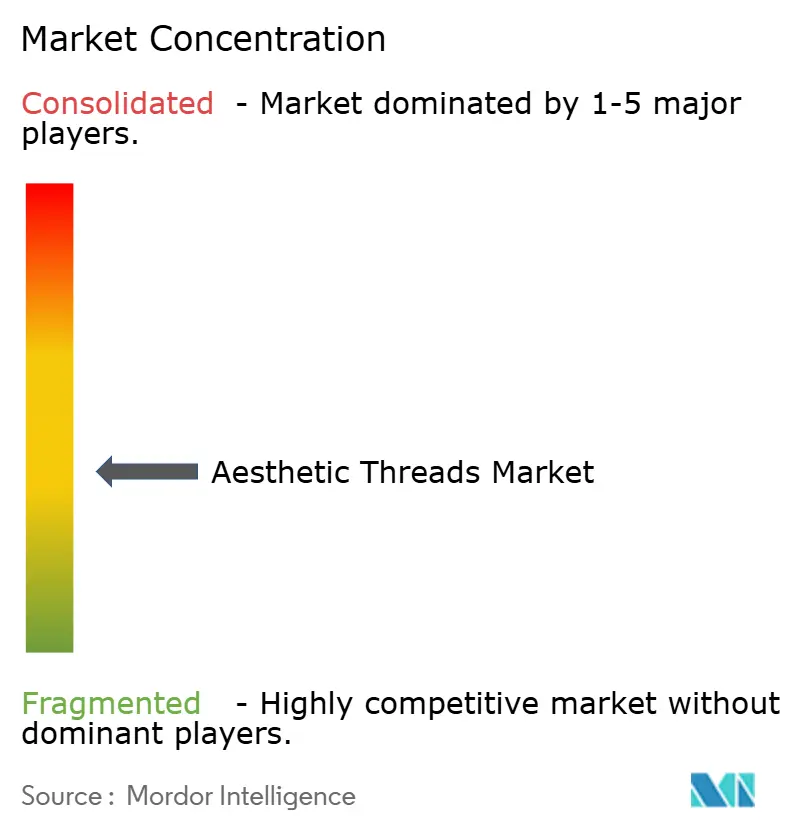
The aesthetic thread market is moderately fragmented, while scores of regional makers compete on price and niche applications. Crown Laboratories’ USD 381 million purchase of Revance Therapeutics signals a consolidation trend, creating vertically integrated injectable-and-thread portfolios that leverage shared physician networks. L’Oréal’s 10% equity stake in Galderma underscores strategic interest from beauty conglomerates seeking clinical credibility in dermatologic devices. HansBiomed leverages triple FDA clearance for its MINT PDO line to position itself as a safety benchmark in U.S. clinics, while Croma-Pharma competes on niche innovations like patented cone molding that promises stable tissue anchoring.
White-space opportunities lie in body-length threads and bioactive coatings that release peptides to extend lift without lengthening polymer life cycles, areas where start-ups such as Lynch Regenerative Medicine are actively filing patents. Supply-chain resilience has become a board-level priority as tariffs and freight volatility pressure Asian sourcing models; several Western brands now build near-shore extrusion facilities to hedge geopolitical risk. Competitive intensity is expected to rise as AI-enabled planning software becomes table stakes, forcing laggards to partner with tech vendors or risk losing share among data-driven medical-spa chains.
Aesthetic Threads Industry Leaders
Sutura Medical Technology LLC (Novathreads)
Croma Pharma GmbH
A. Menarini Industrie Farmaceutiche Riunite SRL
V Soft Lift AB
Sinclair
- *Disclaimer: Major Players sorted in no particular order
Aesthetic Threads Market Companies Covered in this Report
- Sinclair Pharma plc
- N-Finders Co., Ltd.
- HansBiomed Co., Ltd
- Croma Pharma GmbH
- Aptos
- Intraline Canada Inc.
- BENEV Company Inc.
- Sewon Cellontech Co., Ltd.
- Arch Glow Global Ltd.
- Estar Medical Ltd.
- Healux Corporation
- PDO Max Inc.
- Les Encres LLC
- Aptos International
- Invictus Surgical
- Adoderm GmbH
- SteriGraft Medical
- V Soft Lift AB

Market Opportunities and Future Outlook
Opportunities center on higher-performance thread designs and delivery formats that reduce variability in real-world outcomes, particularly in high-volume aesthetic settings. Product innovation around barbed and molded geometries provides visible evidence of this whitespace, including PDO MAX, Inc. introducing the Moulded Levo Max PDO Thread line in March 2024 using a twisted helical-cog design intended to enhance tissue lifting, and APTOS unveiling a sustained-release barbed thread concept (Namica Nano-Sphere) in September 2025 for mid-face lifting. Together, these launches point to an active focus on stronger anchoring and bioactive or longer-lasting effect profiles.
A second opportunity is in scalable service delivery and protocol standardization for medical-spa chains. These providers increasingly treat thread lifts as a flagship service and buy bundled training and starter kits to shorten ramp-up time for new locations. The demand for standardized protocols also ties to supply-side shifts toward resilience, including diversification of sourcing as tariffs and trade friction affect imported consumables, and to EU MDR Annex XVI compliance workstreams, where manufacturers that can support robust clinical evaluation and post-market surveillance packages tend to be better positioned with clinics tightening procurement around documented safety and traceability.
Recent Industry Developments in Aesthetic Threads Market
- May 2026: Sutura Medical Technology LLC (NovaThreads) had its BabyGlo regenerative PDO thread kit featured in the May/June 2026 issue of The Aesthetic Guide, highlighting a ready-to-use protocol that combines PDO threads with regenerative steps to streamline treatment workflow. The emphasis on packaged, repeatable protocols supports adoption in medical spas and multi-location aesthetic practices where consistency and staff turnover shape purchasing decisions.
- February 2025: Crown Laboratories completed its acquisition of Revance Therapeutics, consolidating aesthetic assets under a broader platform spanning injectables and adjacent physician-dispensed categories. The combination strengthens cross-selling and account coverage in dermatology and aesthetic clinics where bundled purchasing and integrated sales teams can influence consumable selection.
- May 2024: Croma-Pharma launched Countourel absorbable PDO threads featuring patented cone molding and blister packaging, expanding its thread portfolio for tissue elevation procedures. Product differentiation around fixation mechanics and packaging can support premium positioning in clinics that prioritize predictable handling and standardized storage for high-throughput scheduling.


Aesthetic Threads Market Report Scope and Research Methodology
Market Definition and Coverage
The aesthetic thread market is defined as the value of medical-grade threads placed under the skin using needles or cannulas to lift, support, or improve facial and related soft tissue appearance through minimally invasive procedures.
Scope exclusions: We exclude energy-based aesthetic devices, injectable dermal fillers, and surgical facelift procedures that do not use threads.
Segments Covered in This Report
- By Thread Material
- Polydioxanone (PDO)
- Poly-L-Lactic Acid (PLLA)
- Polycaprolactone (PCL)
- Poly-Lactic-co-Glycolic Acid (PLGA)
- By Thread Design
- Barb Threads
- Cone Threads
- Smooth / Mono Threads
- Screw / Tornado Threads
- By Application Area
- Face Lift & Rejuvenation
- Neck & Jawline Contouring
- Body Lifting (Arms, Abdomen, Buttocks, Thighs)
- Other Applications (Eyebrow, Nose Lift)
- By End User
- Hospitals & Clinics
- Ambulatory Surgical Centers
- Medical Spas & Aesthetic Centers
- Dermatology & Cosmetic Surgery Centers
- By Geography
- North America
- United States
- Canada
- Mexico
- Europe
- Germany
- United Kingdom
- France
- Italy
- Spain
- Rest of Europe
- Asia-Pacific
- China
- India
- Japan
- South Korea
- Australia
- Rest of Asia-Pacific
- South America
- Brazil
- Argentina
- Rest of South America
- Middle East and Africa
- GCC
- South Africa
- Rest of Middle East and Africa
- North America
Data Sources, Market Sizing, and Validation
Desk Research
Desk research was used to build the core fact base for procedure settings, regulatory direction, and the medical aesthetics demand context before any modeling assumptions were set. We referred to public sources such as the US FDA databases for device and adverse event signals, the American Society of Plastic Surgeons procedure statistics, International Society of Aesthetic Plastic Surgery country level indicators, and Centers for Medicare and Medicaid Services facility and provider context where relevant. Academic articles indexed in PubMed were also checked to understand common materials used in thread lifting and typical outcome duration, which later helped shape replacement cycles.
To round out the commercial view, we reviewed company annual reports, investor presentations, and press releases to identify product launches, geography expansion, and channel focus across clinics and hospitals. Where needed, paid subscriptions covering company financials and news were used to cross-check revenue exposure and corporate actions, and a patent database subscription was used to track innovation signals around absorbable materials and anchoring designs. The desk sources listed here are illustrative, and many other public references were also used for validation and clarification during the study.
Primary Interviews and Surveys
Primary work focused on validating how thread lift demand is actually generated, which settings perform the procedures, and how pricing moves by material and indication. We spoke with a mix of manufacturers, distributors, clinic operators, and practicing specialists across APAC, EMEA, and the Americas so assumptions on adoption, repeat procedures, and product mix could be corrected before finalizing totals.
Distribution of primary research fieldwork respondents
| Company type | Respondent position | Region |
|---|---|---|
| Top tier: 33% | CXOs: 17% | APAC: 45% |
| Mid tier: 48% | Functional/Unit leaders: 29% | EMEA: 33% |
| Smaller Players: 19% | Managers: 54% | Americas: 22% |
Market-Sizing & Forecasting
Market sizing was built using a top-down approach where procedure demand and clinical adoption signals were reconstructed by region and then translated into thread consumption and value. The model starts from the addressable pool for minimally invasive facial lifting and rejuvenation, applies adoption and setting splits (aesthetic clinics, cosmetic surgery centers, and hospitals), and then converts this into units using typical threads per procedure and repeat timing. To keep the numbers realistic, results were corroborated through selective bottom-up approximations, such as rolling up sampled supplier revenues by region, and checking average selling price ranges against channel feedback before totals were adjusted.
A few practical inputs that shaped the market math included the share of absorbable versus permanent threads, the mix between suspension and rejuvenating threads, typical threads used per indication (facelift and ptosis related use), regional pricing differences, and observed demand sensitivity to recovery time and perceived longevity. When data was missing for smaller countries, gaps were handled by using proxy ratios from similar markets with comparable clinic density and aesthetics spend patterns, followed by a review with local experts. For forecasting, scenario analysis was used around adoption speed and pricing, and then smoothed using multivariate regression anchored on procedure growth indicators and clinician capacity trends so that short-term spikes did not distort the forward curve.
Data Validation & Update Cycle
Validation was done through multiple checks so the final value stays consistent with real-world signals. Our team compared outputs against independent indicators like procedure volumes, clinic expansion activity, and product launch timing, and then reviewed variances by region to ensure there were no hidden double counts across settings. When a number looked out of line, the assumptions behind threads per procedure, price ranges, or adoption rates were reopened and, if needed, primary respondents were re-contacted to confirm what changed.
Before sign-off, the model and the written insights go through step-by-step analyst review so calculations, units, and currency conversions match the stated scope. Reports are refreshed annually, and interim updates are triggered when material events occur, such as major regulatory actions, supply disruptions, or sharp pricing resets. Right before delivery, a final review pass is performed so clients receive the latest updated view available at that time.
Mordor Intelligence's Aesthetic Thread Market Sizing Compared With Other Published Estimates
Published market sizes for aesthetic threads often do not match because each study draws the line differently on what counts as a thread product and what gets counted as a procedure driven revenue. Timing also matters, since some sources anchor the market to an older year and then apply a single growth rate without rechecking pricing and adoption in clinics.
The main gap comes from thread scope and procedure conversion, where Mordor Intelligence counts only suspension and rejuvenating threads used for lifting and collagen stimulation, and then sizes value using region-level adoption, threads per procedure, and current pricing checks instead of folding in adjacent minimally invasive aesthetics spend.
Benchmark comparison
| Source | Market Size | Gaps in Research Methodology |
|---|---|---|
| Mordor Intelligence | USD 153.63 M (2026) | |
| Industry Publisher A | USD 149.20 M (2024) | Uses an earlier base year and a longer horizon, and it emphasizes absorbable versus non-absorbable splits, which can miss near-term ASP changes and faster adoption in specific clinic channels. |
| Healthcare Publisher B | USD 138.90 M (2023) | Anchors sizing in 2023 with a steadier CAGR through 2030, and its scope leans on product type splits that may not fully capture rapid mix shifts between suspension and rejuvenating threads by indication. |
Taken together, the spread is mainly explained by base year choice, how closely procedure-to-thread conversion is modeled, and how often pricing and mix are refreshed. By keeping assumptions tied to observable clinical adoption and practical usage rates, the final estimate stays traceable to clear inputs that can be revisited and updated as market conditions change.


Key Questions Answered in the Report
What revenue will absorbable lifting threads generate in 2031?
Sales are projected to climb to USD 253.14 million on a 10.49% CAGR span.
Which polymer currently dominates clinical use?
Polydioxanone holds about 64.98% of 2025 revenue owing to predictable six- to eight-month absorption.
Which region grows fastest through 2031?
Asia-Pacific leads with a forecast 12.05% CAGR driven by rising disposable incomes and medical tourism.
Which thread design shows the highest growth?
Cone geometry posts an 11.02% CAGR thanks to multidirectional anchoring that limits migration.
Which service venue scales quickest?
Medical-spa chains expand almost 11.63% yearly as standardized protocols attract private-equity funding.
Page last updated on:


 Your data is secure and never sold or shared.


